This week’s Pandora Report covers recent cyberattacks targeting US hospitals in multiple states and other updates. New publications are listed, including a recent piece discussing the validity of Gabriel de Mussis’ account of the siege of Caffa. New events and announcements round out this week’s newsletter.
Hospitals in Three States Targeted by Cyberattacks
This week, Prospect Medical Holdings reported it was the target of a cyberattack, according to the AP, adding to a growing trend of violence and danger in the healthcare field. Prospect is an LA-based private equity company that runs 16 hospitals and 165 outpatient facilities in California, Connecticut, Pennsylvania, Rhode Island, and Texas. According to Axios, “The attack shuttered several emergency departments and required ambulances to be diverted from some hospitals, while health providers reverted to pen and paper in the immediate aftermath of the attack.”
“On Sunday, Eastern Connecticut Health Network’s website still reported closures of multiple services, including urgent care and elective surgeries, as it worked to restore systems. Pennsylvania-based Crozer Health and Rhode Island-based CharterCare still had posts on their websites alerting patients to the systemwide outage.”
“This is the latest in a surge of large-scale cyberattacks on health care facilities that have disrupted operations, with experts calling on better industry-wide efforts and federal regulations to harden defenses around America’s health care information infrastructure.”
Seiichi Morimura Dead at 90
Seiichi Morimura, author of the 1981 exposé, “The Devil’s Gluttony,” that detailed the horrors of Japan’s Unit 731, passed away on July 24 in Tokyo. The New York Times explained that “Mr. Morimura’s book sold more than 1.1 million copies within seven months of its publication. It was not the first account of Unit 731’s brutality — there were two others in the 1960s and ’70s — but Mr. Morimura’s was drawn from interviews with 60 Japanese participants in the program.”
‘“Mr. Morimura’s 246-page book is believed to be more accurate and more believable” than the others, The New York Times reported in 1982. The article quoted Mr. Morimura as saying: “This story should be told to all Japanese, to every generation. Japanese aggression should be written about to prevent another war.”’
Working Group on the Strengthening of the Biological Weapons Convention Convenes
The Working Group on the Strengthening of the Biological Weapons Convention is holding its second meeting currently in Geneva. CBW Events is posting daily updates about this and other working group meetings here.
20th CBRRNE Command Hosts Inaugural Joint Chemical, Biological, Radiological, Nuclear, Explosives Forum
Late last month, the Army’s 20th CBRNE Command hosted the first Joint Chemical, Biological, Radiological, Nuclear, Explosives Forum in Cockeysville, MD.
“Hosted by U.S. Army Brig. Gen. Daryl O. Hood, the commanding general of the 20th CBRNE Command, the event welcomed joint service Chemical, Biological, Radiological, Nuclear (CBRN) and Explosive Ordnance Disposal (EOD) personnel.”
“Headquartered on Aberdeen Proving Ground, Maryland, in Northeast Maryland’s science, technology and security corridor, the 20th CBRNE Command is home to 75 percent of the active-duty U.S. Army’s CBRN specialists and EOD technicians, as well as the 1st Area Medical Laboratory, CBRNE Analytical and Remediation Activity, five Weapons of Mass Destruction Coordination Teams and three Nuclear Disablement Teams.”
“This year’s forum highlighted the joint service personnel who confront and defeat CBRNE hazards in support of U.S. military operations around the world and civil authorities across the nation.”
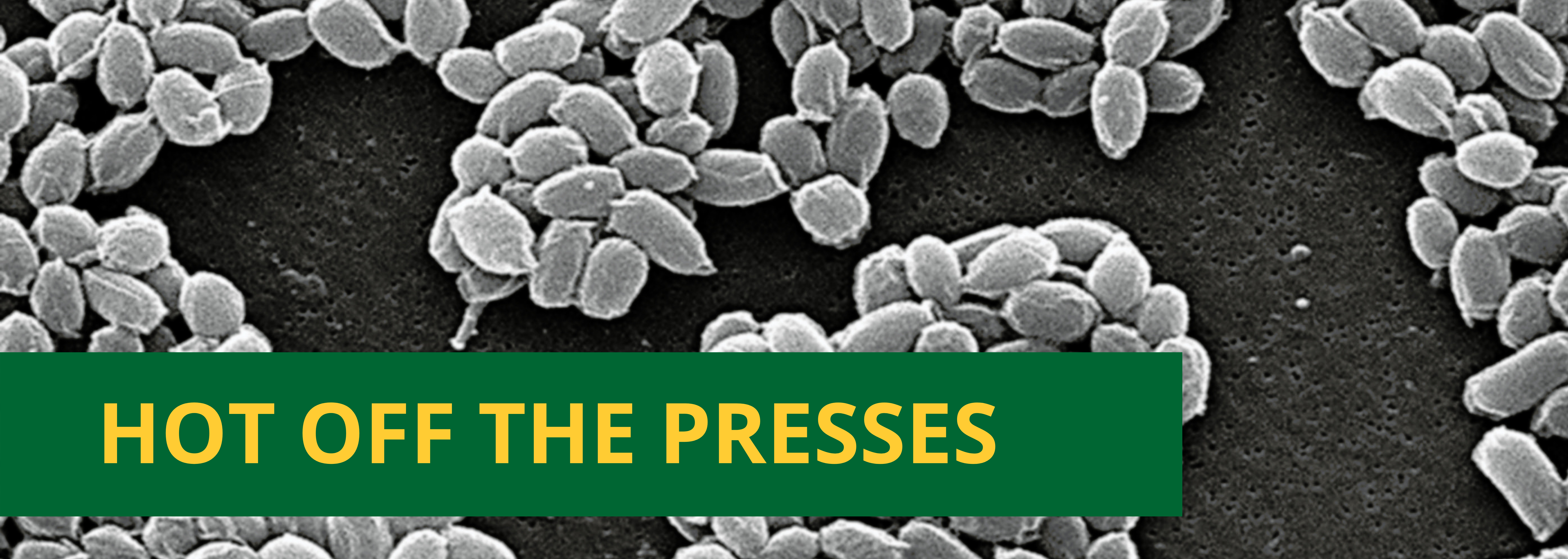
“Catapulting Corpses? A Famous Case of Medieval Biological Warfare Probably Never Happened”
Matt Field discusses Jean Pascal Zanders‘ work critically assessing Gabriele de Mussi’s account of the siege of Caffa and the enduring belief that Mongol invaders engaged in medieval biological warfare by hurling the bodies of plague victims over the walls and into the city in this piece for The Bulletin of the Atomic Scientists. Field writes in part:
“Since de Mussi’s work was re-discovered in a university library in Poland in 1842, researchers of weaponry, the plague, and biological warfare have picked up parts of its narrative. Look up “The Black Death” in the Encyclopedia Britannica and it’s right there: “With his forces disintegrating, Janibeg used trebuchets to catapult plague-infested corpses into the town in an effort to infect his enemies. From [Caffa], Genoese ships carried the epidemic westward…” The medieval allegations are in YouTube and TikTok videos by the History Channel and others, some with millions of views. In the academic literature the anecdote can be found in reputable publications ranging from the Journal of the American Medical Association to the CDC’s Emerging Infectious Diseases.“
“The problem is, there’s strong reason to doubt de Mussi.”
This piece offers good discussion of the historiography surrounding this story and how it gained traction, insight into the logistics of this hypothetical attack, and compelling arguments about the dangers of perpetuating false claims about historical biological warfare.
“Bird Flu Has Never Done This Before”
Katherine J. Wu discusses concerns that H5N1 may now be endemic in North America in this piece for The Atlantic. She explains in her introduction “At bird breeding grounds this spring and summer, the skies have been clearer and quieter, the flocks drastically thinned. Last year, more than 60 percent of the Caspian terns at Lake Michigan vanished; the flock of great skuas at the Hermaness reserve, in Scotland, may have shrunk by 90 percent. Now more broken bodies are turning up: a massacre of 600 arctic-tern chicks in the United Kingdom; a rash of pelicans, cormorants, gulls, and terns washed up along West African coasts. In recent months, Peruvian officials have reported the loss of tens of thousands of pelicans—by some estimates, up to 40 percent of the country’s total population.”
“The deaths are the latest casualties of the outbreak of H5N1 avian flu that’s been tearing its way across the world. In the past couple of years, more than 100 million domestic poultry have died, many of them deliberately culled; out in the wild, the deaths may be in the millions too—the corpses have just been too inaccessible and too numerous for scientists to count. “It’s been carnage,” Michelle Wille, a virologist at the Peter Doherty Institute for Infection and Immunity, told me. “For many species, we are losing decades of conservation work.”’
“Artificial Intelligence in Health Care: The Hope, the Hype, the Promise, the Peril”
From the National Academies: “The emergence of artificial intelligence (AI) in health care offers unprecedented opportunities to improve patient and clinical team outcomes, reduce costs, and impact population health. While there have been a number of promising examples of AI applications in health care, it is imperative to proceed with caution or risk the potential of user disillusionment, another AI winter, or further exacerbation of existing health- and technology-driven disparities.”
“This Special Publication synthesizes current knowledge to offer a reference document for relevant health care stakeholders. It outlines the current and near-term AI solutions; highlights the challenges, limitations, and best practices for AI development, adoption, and maintenance; offers an overview of the legal and regulatory landscape for AI tools designed for health care application; prioritizes the need for equity, inclusion, and a human rights lens for this work; and outlines key considerations for moving forward.”
“AI is poised to make transformative and disruptive advances in health care, but it is prudent to balance the need for thoughtful, inclusive health care AI that plans for and actively manages and reduces potential unintended consequences, while not yielding to marketing hype and profit motives.”
“Here’s the Intelligence Assessment of Donald Trump That the Government Can’t Write”
Schar School adjunct professor Donell Harvin recently published this Politico opinion piece. In it he explains that “Federal intelligence and national security agencies — from the FBI to DHS — are in universal agreement that domestic extremism and terrorism is the leading threat to the U.S. homeland. But homeland security officials are also trained to be apolitical, so here’s what they can’t tell you: Donald J. Trump poses a significant threat to homeland security.”
“While generally highly decentralized and fractured, violent extremist groups have begun to mesh over a unifying figure: Trump. The former president has become a focal point of domestic extremism, and by not denouncing them — and sometimes courting them — he has been adopted by these groups as a de facto spiritual leader. In some ways, Trump has also co-opted these groups to boost his own support. This, in my assessment, makes the former president a leading driver of domestic extremism, and an unprecedented danger to our security. The indictment of Trump for his push to overturn the 2020 election puts that in stark relief.”

Live Launch of the BWC National Implementation Measures Database
“At this side event to the BWC Working Group meeting, UNIDIR and VERTIC will launch the new BWC National Implementation Measures Database. The database is designed to strengthen the implementation of the BWC and enable States and Stakeholders to have a better understanding of different approaches to national implementation from around the world.”
“The event will consist of a demonstration of the Database website and will showcase the tool’s structure and functions. The demonstration will be followed by a Q&A session with the audience”
This event will take place on August 15 at 1:15 pm CEST. Register here.
Bio and Beer
Join the Institute for Biohealth Innovation for this event on August 23 at 4:30 pm in Manassas, VA with “special guest, Dr. Eric Van Gieson, who will discuss the journey and quest of exploring the host response and harnessing the epigenome as a diagnostic and prognostic landscape. He will provide insight into his time at DARPA and talk about future possibilities for universities and industry to jointly pursue biotechnology innovation. Enjoy an evening of networking, drinks, and fun!” RSVP here.
Empirical Research in Biosafety: Filling Key Data Gaps
This September 14 event will be hosted by Rocco Casagrande in Columbia, MD and virtually beginning at 5 pm EST.
“In this session, we will present data from our empirical work in biosafety and our work exploiting existing data sets to inform biosafety. We will discuss our methodological framework for studying aerosols generated by laboratory accidents, and present information on the aerosols produced by dropping microtiter plates and tissue culture flasks. Also in the physical sciences, we will present data on the rate that conical centrifuge tubes leak and the frequency that splashes occur when opening microcentrifuge tubes via various opening methods. We will discuss the rate of spills and splashes when pipetting as drawn from experiments using volunteers and blinded samples in clinical laboratories. Interestingly, this experiment also sheds light on the ability of the researcher to know when they are making mistakes and take corrective action. We will present data on the rate at which needle sticks can be expected in the laboratory. We will examine how biosafety findings are distributed amongst laboratories in several institutions and what can be learned about the culture of biosafety. We will discuss how knowledge of the frequency and causes of accidents can lead to means to improve reproducibility in the life sciences.”
Learn more and register here.
No Checkered Flag: The Perpetual Race Against Biological Threats
From the Bipartisan Commission on Biodefense: “The Commission’s next meeting, No Checkered Flag: The Perpetual Race Against Biological Threats, will be held on September 27, 2023 in Indianapolis, Indiana. The meeting will take place at the historic Indianapolis Motor Speedway, the home of the Indianapolis 500.”
“The focus of this meeting will be to provide the Bipartisan Commission on Biodefense with a better understanding of: (1) state and local efforts to strengthen public health and biodefense; (2) special security management of biological threats to mass gatherings; and (3) efforts to understand and mitigate the agricultural impact of biological threats to plants and animals.”
This all-day event will take place in Washington, DC on September 27 at 9 am EST. Learn more and register here.
Women Building Bio: Building Better
“Virginia Bio’s Women Building Bio Conference celebrates the contribution of women to the life sciences in the Commonwealth and beyond. The 8th annual conference theme, Building Better, will prompt us to explore how life sciences contribute to building a better future and highlight the increasingly significant role of women in it.”
This event will take place from 8:30-4 pm in Manassas, VA on September 28. Register here.
61st ISODARCO Course: Nuclear Order and International Security after Ukraine
“The war in Ukraine has had an enormous impact on global security, reviving nuclear fears, undermining the prospects for arms control, and shattering many of the norms and constraints that were the foundation of European security. ISODARCO 2024 will examine the global nuclear order in light of the Ukraine war, focusing on the states, the policies and the technologies that will shape the future in a much more difficult environment. How will we cope with this more dangerous world?”
This course will take place January 7-14, 2024, at the University of Trento. Learn more and register here.
Registration for GHS 2024 Now Open
Registration is now open for the Global Health Security 2024 conference in Sydney, Australia. This iteration will take place 18-21 June, 2024. The call for abstracts is also still open. “The mission of the Global Health Security conference is to provide a forum where leaders, researchers, policy-makers, and representatives from government, international organisations, civil society, and private industry from around the world can engage with each other, review the latest research and policy innovations, and agree solutions for making the world safer and healthier. To that end, our mission is to help foster a genuinely multidisciplinary community of practice that is committed to working collaboratively to enhance global health security and eliminate disease, irrespective of its origin or source.”

RUSI and NK News Launch New Nork Korea Reports Database
“A new RUSI and NK News initiative will provide access to high-quality, structured data from reports by the UN Panel of Experts on North Korea.”
“The database contains over 5,000 entities and their relationships, as described in successive reports by the UN Panel of Experts on North Korea from 2010 to 2023. The data allows countries and organisations to track sanctions compliance in a more easily accessible format. It is fully searchable and downloadable, and its fields are structured with ISO standards, making it easy to incorporate the data into existing databases.”
“This is a valuable tool for tracking sanctions compliance and promoting effective international sanctions implementation. It is particularly beneficial to smaller institutions, such as those in developing countries, who may often lack access to information and resources.”
Learn more and access the database here.
“Turning Listening into Action: A Proposal to Strengthen the NIH Guidelines”
A call from Acting NIH Associate Director for Science Policy, Lyric Jorgenson:
“As an unrepentant policy fanatic, I love talking about details, whether it be the implications of a strategically placed “shall” or where data should be in controlled access. However, most of the time, policymaking requires being a good listener. Listening is an underrated skill and is more than just waiting for your turn to speak. Typically, the scientific, ethical, legal, and social issues at the forefront of biomedical research are so complex that it is essential we turn to experts and members of the public to hear their perspectives before we can develop a policy responsive to their needs. Listening to this input and incorporating it into policymaking is vital to our work and to ensuring our policies hit the mark.”
“A recent case study in listening involves the Novel and Exceptional Technology and Research Advisory Committee, or as we like to call them, the NExTRAC. In 2020, we asked this committee to think through the different scenarios that may be used in gene drive research to advise on whether/how we should think about updating our existing biosafety policy framework. During its deliberations, the Committee also did a lot of listening, consulting with subject matter experts, and holding a public workshop. Ultimately, the NExTRAC produced some very thoughtful recommendations in its final report to the NIH.”
“Based on our internal deliberations and the NExTRAC’s recommendations, NIH is turning this listening into action by proposing some policy updates. The proposal is to revise the NIH Guidelines for Research Involving Recombinant or Synthetic Nucleic Acid Molecules (NIH Guidelines) to strengthen our infrastructure for ensuring this research continues to proceed responsibly. Specifically, the proposed revisions would incorporate specific considerations and requirements for NIH-supported research involving gene drive modified organisms in contained research settings.”
“It is important to emphasize that all the proposed actions at this time focus on working with gene drive modified organisms in contained research settings. This research is already performed around the globe in labs with biosafety precautions in place. However, as technology evolves, we must make sure that our policies keep pace. Thanks to the work of the NExTRAC, we believe this proposal will allow researchers to safely proceed with contained gene drive research. I encourage all interested stakeholders to view the full proposal and provide us with your feedback. Comments on the full proposal will be accepted until October 10, 2023, and must be submitted electronically. I look forward to hearing your thoughts!”
 The Pandora Report