This week’s edition covers the recently released Biodefense Posture Review from the Department of Defense, CDC’s looming budget cuts, and an illegal lab uncovered in Reedley, CA. Several recent publications, exciting upcoming events, and announcements are also included.
DOD Releases Biodefense Posture Review
The Department of Defense released its much anticipated Biodefense Posture Review (BPR), crafted under the leadership of the Under Secretaries of Defense for Policy and Acquisition and Sustainment. DOD’s press release reads in part, “We’re increasing collaboration and synchronizing efforts across the DOD enterprise—everything from policies and authorities, to research, acquisition, and investments—to meet the department’s biodefense requirements,” said William LaPlante, Under Secretary of Defense for Acquisition and Sustainment. “One of the most important reforms in the Biodefense Posture Review that we have already institutionalized is the Biodefense Council.”
“The Biodefense Council will build on the intense collaboration of the DOD biodefense enterprise over the past several years and will synchronize and integrate authorities and responsibilities to provide a more empowered and collaborative approach to biodefense.”
‘”The Biodefense Posture Review and the Biodefense Council will further enable the Department to deter biological weapons threats and, if needed, to operate in contaminated environments,” said John Plumb, Assistant Secretary of Defense for Space Policy. He adds, “As biological threats become more common and more consequential, the BPR’s reforms will advance our efforts not only to support the Joint Force, but also to strengthen collaboration with allies and partners.”‘
Biodefense Graduate Program alumna and assistant professor Saskia Popescu offered her comments on the BPR to the Council on Strategic Risks, saying “Ensuring agile preparedness and response measures through pathogen-agnostic means is a critical strategy for rapidly addressing emerging and evolving biological threats. From strengthening the Biological Select Agents and Toxins Biorisk Program through training and bias-reduction, to ensuring the capacity to characterize a biothreat within one week of sample acquisition, the emphasis within the Biodefense Posture Review on modernizing capabilities underscores the multifaceted response needed to address the complex threat landscape and the investments necessary to mitigate risk.”
“Perhaps one of the most challenging aspects of responding to a biological incident is cohesive and engaged partnerships across agencies and stakeholders. The Biodefense Posture Review directly calls out the need to strengthen these relationships through not only collaborative engagement with allies, but also interagency exercises that ensure alignment and role clarity.”
DOD summarized the findings of the BPR, stating “The BPR emphasizes the need for the combatant commands and services to improve readiness through training and exercises to identify and report capability shortfalls, aiding in the prioritization of the department’s modernization efforts.”
CDC Facing $1.5 billion Budget Cut
The CDC is facing about $1.5 billion in budget cuts as a result of the July debt ceiling negotiations, totaling about 10% of the agency’s total budget. STAT News explains the challenges this will likely pose beyond staffing, writing “What few realize is that more than three-quarters of the CDC budget goes to the states and contract research organizations in the form of public health and prevention activities by state and local health organizations and agencies, national public health partners and academic institutions. Among the many tasks undertaken by the CDC are those for surveillance, detection and mitigation of diseases ranging from sexually transmitted infections such as syphilis, chlamydia, gonorrhea, and trichomoniasis to viral pathogens like those causing influenza, SARS, MERS, Ebola and Covid-19.”
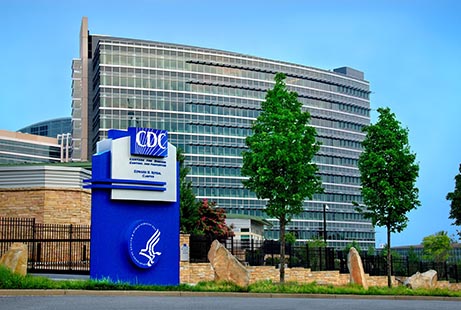
“One glaring example of why there is a need for more, not less, CDC public health services is Mississippi’s 900% increase in cases of congenital syphilis over the past six years. Congenital syphilis is associated with the rapid rise in the number of stillbirths and infant deaths, both directly attributable to inadequate prenatal health care. If the CDC is unable to meet the current demands for controlling a well-studied disease like syphilis with current budget resources, it will be woefully unable to prepare for, much less deal with, the next vector or food-borne illness. It is not a question of whether such an illness will occur; it is simply a question of when.”
Illegal Laboratory Uncovered in California
Last week, the agricultural city of Reedley in Fresno County, CA reported that its lone full-time code enforcement officer discovered a particularly shocking violation: an illegal, Chinese-owned laboratory in a warehouse. According to the AP: “Jesalyn Harper, the only full-time code enforcement officer for the small, agricultural city of Reedley in California’s Central Valley, was responding to a complaint about vehicles parked in the loading dock of a cold-storage warehouse when she noticed a foul smell and saw a garden hose snaking into the old building.”
“A woman in a lab coat answered her knock, and behind her were two others in plastic gloves and blue surgical masks, packing pregnancy tests for shipping. Harper said they spoke broken English and told her they were from China. Walking through the lab, she found dozens of refrigerators and ultralow-temperature freezers hooked to illegal wiring; vials of blood and jars of urine in shelves and plastic containers; and about 1,000 white lab mice being kept in crowded, soiled containers.”
“The women said the owner lived in China, provided a phone number and email address and asked her to leave. Alarmed by what she saw, Harper, whose work mostly entails ensuring people have permits for yard sales and are keeping their lawns mowed, contacted Fresno County health officials and then the FBI.”
Fresno’s ABC30 wrote, ‘”I am mighty proud of our little city, this was a bad player company, a bad actor company that was kicked out of Canada, they went to Texas, they got kicked out of Texas, they came to California, they went to Fresno, kicked out of Fresno went to Tulare, kicked out of Tulare went back to Fresno, kicked out of Fresno, came to Reedley,” said Reedley City Manager, Nicole Zieba.”
“Scientific and Technological Developments: Benefits and Risks for the Biological Weapons Convention”
“This report encapsulates the outcomes of the two-day conference entitled ‘Scientific and Technological Developments: Benefits and Risks for the Biological Weapons Convention’ held in October 2022 in New Delhi, India. It was organised by the UNODA in partnership with the Manohar Parrikar Institute for Defence Studies and Analyses (MP-IDSA). The Conference’s primary objective was to review developments in science and technology relevant to the Biological Weapons Convention (BWC) and to prepare for the Ninth BWC Review Conference.”
“The Conference report provides expert insights on the evolving science and technology landscape in the context of the BWC, including in the fields of synthetic biology, public health responses, neurotechnology and digitalization.”
“ChatGPT Could Make Bioterrorism Horrifyingly Easy”
Jonas Sandbrink recently published this piece with Vox, explaining “Advances in artificial intelligence have tremendous potential to have positive impacts on science and health. Tools like ChatGPT are revolutionizing how society works and learns, and artificial intelligence applied to biology has led to solving the decade-old protein folding problem and is transforming drug discovery. However, as artificial intelligence raises the ceiling of biological engineering and helps distribute these powers to a tremendous number of individuals, there is a serious risk that it will enable ill-intentioned actors like Aum Shinrikyo, to potentially devastating effect. As I have discussed in a recent preprint paper, large language models (LLMs) like ChatGPT, as well as novel AI-powered biological design tools, may significantly increase the risks from biological weapons and bioterrorism.”
“Blood Simple. Several Russian Journalists and Activists Were Poisoned in Europe.”
Michael Weiss’ writes’ piece for The Insider opens with “Elena Kostyuchenko, Natalia Arno, and Irina Babloyan, have long worked to expose the Kremlin’s lies. While traveling through Europe in the last year, each was poisoned by unknown toxins. Their cases remain unsolved. Why?”
“JPEO-CBRND Embraces the Need for Speed in Biodefense: How JPEO is Shaping its Biological Defense and Medical Strategies”
The Army recently released this article discussing JPEO-CBRND’s efforts to improve national public health emergency responses. It explains “JPEO-CBRND’s Joint Project Lead for CBRN Defense Enabling Biotechnologies (JPL CBRND EB) has led a significant investment in platform technologies and programs to improve preparedness for future threats. Platform technology refers to the use of standardized processes and tools to rapidly develop and manufacture MCMs in response to a threat. This approach is like setting up an assembly line that can be turned on when needed, rather than building the line from scratch each time a product is required. The goal is to have the ability to quickly develop and manufacture MCMs in response to a threat.”
“In addition to the use of platform technologies, another practice to ensure rapid development of MCMs is to quickly pivot from a prototype to a product that can be distributed in compliance with U.S. Food and Drug Administration (FDA) regulations for emergency use. This puts safe and effective medicines and drugs into the hands of warfighters faster, leveraging processes such as emergency use authorization (EUA) on the path to full FDA licensure, since the licensure process can take nearly decades for countermeasures to be available.”
“GCBR Organization Updates – August 2023”
This quarterly newsletter “aims to provide…updates from organizations working to reduce global catastrophic biological risks (GCBRs).” It includes updates from 1Day Sooner, CLTR, Convergent Research, CSR, Effective Giving, Gryphon Scientific, IFP, CHS, NTI bio, Open Philanthropy, and SecureBio.
“In Conversation with David P. Fidler (CFR) on the Proposed Pandemic Treaty, Global Health, and India”
Animesh Roul interviews David P. Fidler in this piece for the Society for the Study of Peace and Conflict. It explains in part, ‘”I do not think a pandemic treaty is a good response to the COVID-19 pandemic. Nothing in the WHO-sponsored negotiation process so far has changed my perspective,” says global health expert David P. Fidler, Senior Fellow at Council on Foreign Relations (CFR) and the author of “A New U.S. Foreign Policy For Global Health: COVID-19 and Climate Change Demand a Different Approach” (June 2023). Animesh Roul asked Mr Fidler about the proposed global accord on pandemic prevention, preparedness and response; key challenges before the proposed treaty, including the much-emphasized accountability framework; geopolitics; and the possible role of India in the negotiation process and beyond.”‘
IDA Health Watch – Issue 5
“In this issue of IDA Health Watch, Rear Adm. Paul Reed, Deputy Assistant Secretary for Health and Director of the Office of Disease Prevention and Health Promotion, discusses resilience in the post-pandemic world, the Healthy People 2030 initiative and the trajectory of communications strategy in public health. Other articles comment on current recruiting challenges, interventions targeting the fitness of recruits, and the vital conditions framework and foreign influences.”
“ARPA-H Should Zero In on Pandemic Prevention”
In this recent piece for Issues in Science and Technology, Jassi Pannu, Janika Schmitt, and Jacob Swett write “With a smaller budget than hoped for, ARPA-H must focus. Here’s how the new agency can synergize existing government efforts and advance breakthrough technologies that protect us all.”
“Shaping Health Security: In Conversation with UKHSA’s Chief Scientist”
UK Health Security Agency Chief Scientists Isabel Oliver discusses the agency’s recently released science strategy in this interview for Civil Service World, writing in part “Our mission in the UK Health Security Agency is to protect people from infectious diseases and environmental hazards – that is radiation, chemical, extreme weather events. To do this, we need to generate and apply the best scientific evidence. We need to detect threats, we need to understand them and the risks they pose to our health. But also importantly, we need to understand how to best protect health from those. We can only do that through our scientific activities.”
“The other important aspect of this is that UKHSA was established from a pandemic and in the middle of a pandemic. So we’ve been doing a lot of reflection about what must be learned from the pandemic, and how to secure the legacy. There were a number of areas that we know had to be strengthened or developed very quickly during the pandemic – one example is genomic surveillance. We’re very keen to make sure that we learn from that experience, but also that we build on the capabilities that were strengthened during the pandemic. We’ve got a really tough job to do because unfortunately, we live in a context where the risk from pandemics and other threats to health is increasing because of factors such as climate and environmental change, for example.”
“The Monkeys Who Died to Fight COVID”
This Texas Monthly piece discusses the work done at the Texas Biomedical Research Institute in San Antonio and controversy surrounding its work with primates. It explains in part, “When weighing the risk of emerging global health crises against the accumulated suffering of research animals, judgments about the proper balance are inevitably subjective. Even before Pfizer reached out in early 2020 about testing its COVID-19 vaccine, Texas Biomed’s virologists, immunologists, and geneticists had already begun studying the novel coronavirus. Researchers infected dozens of primates—including baboons, macaques, and marmosets—with the pathogen to observe the course of the disease. These animals endured the little-understood effects of COVID to help determine which species would be best suited for testing the anticipated treatments to come. All the infected animals were eventually euthanized.”
“The Secret to Preventing the Next Pandemic Might Be in Our Poop”
Jackie Flynn Mogensen recently published this piece on wastewater surveillance in Mother Jones. She writes ‘“Wastewater surveillance”—the practice of monitoring sewage for pathogens, contaminants, or drugs—has since become a game-changer in the fight against Covid, particularly as at-home testing has eclipsed testing in clinics. As Palmer and his colleagues noted in a recent 151-page report for the National Academies of Sciences, Engineering, and Medicine, dozens of cities and states across the US have used sewer data to track Covid outbreaks, identify hotspots for vaccination outreach, decide where to allocate treatments like monoclonal antibodies, and serve as an early alarm for individual communities like schools or universities.”
“In other words, the data contained in our poop has likely saved lives. That lesson may come in handy the next time a pathogen threatens humanity.”
What We’re Listening To 🎧
Poisons and Pestilence 16 Bonus Episode: Before the Storm with Al Mauroni
“In this episode we examine preparations by the US in the advent of Operation Desert Storm (2003) for dealing with what was believed at the time to have been a large Iraqi CBW capability- with Al Mauroni.” Listen here.

NEW: The Department of Defense’s Newly Released Biodefense Posture Review
“Please join the CSIS Bipartisan Alliance for Global Health Security on Wednesday, August 23, from 10:30 am to 11:30 am ET for an event on the Department of Defense’s Biodefense Posture Review. Directed by Secretary Austin in November 2021, the review is charged with synchronizing, modernizing, and elevating the Department’s approach to biodefense across the full spectrum of natural, accidental, and deliberate biological threats. The review drew upon both the office of the Assistant Secretary of Defense for Nuclear, Chemical, and Biological Defense Programs and the Assistant Secretary of Defense for Space Policy. Following a keynote address by Hon. Deborah Rosenblum, Assistant Secretary of Defense for Nuclear, Chemical, and Biological Defense Programs, CSIS Senior Associate RADM (ret.) Tom Cullison will moderate a roundtable conversation on the significance of the review, its priority elements, and how to move its recommendations forward. Participants will include Brandi Vann, Principal Deputy Assistant Secretary of Defense for Nuclear, Chemical, and Biological Defense Programs; Richard Johnson, Deputy Assistant Secretary of Defense for Nuclear and Countering Weapons of Mass Destruction Policy; and Asha George, Executive Director of the Bipartisan Commission on Biodefense.”
Register here.
NEW: Breaking Barriers 2023
CRDF’s Women in Science and Security Initiative is hosting the ninth annual Breaking Barriers event, which “will offer a variety of speakers, panels, and networking rooms to consider the ever-important topic of “Who Gets a Seat at the Table? Developing Diverse Spaces in Science and Security.” This event will take place on September 16 at 11:30 am EST on Zoom. Learn more and register here.
NEW: 2023 EPA International Decontamination Research and Development Conference-“Advancing Preparedness through Science and Collaboration”
“The clean-up of chemical, biological, or radiological (CBR) contamination incidents and natural disasters is a critical challenge for the United States. Understanding how to characterize and remediate affected areas of environmental contamination and waste is necessary for daily life to return.”
“The Decon Conference is designed to facilitate presentation, discussion, and further collaboration of research and development topics focused on an all-hazards approach to remediate contaminated indoor and outdoor areas, critical infrastructure, water distribution systems, and other environmental areas/materials.”
“This conference is free and open to the public. Content and presentations are geared towards the emergency response community, including local and state emergency mangers, homeland security officials, first responder coordinators, private sector industry, risk managers, educators in the field of emergency management, and others.”
This event will take place December 5-7 in Charleston, SC. Learn more and register here.
Bio and Beer
Join the Institute for Biohealth Innovation for this event on August 23 at 4:30 pm in Manassas, VA with “special guest, Dr. Eric Van Gieson, who will discuss the journey and quest of exploring the host response and harnessing the epigenome as a diagnostic and prognostic landscape. He will provide insight into his time at DARPA and talk about future possibilities for universities and industry to jointly pursue biotechnology innovation. Enjoy an evening of networking, drinks, and fun!” RSVP here.
Empirical Research in Biosafety: Filling Key Data Gaps
This September 14 event will be hosted by Rocco Casagrande in Columbia, MD and virtually beginning at 5 pm EST.
“In this session, we will present data from our empirical work in biosafety and our work exploiting existing data sets to inform biosafety. We will discuss our methodological framework for studying aerosols generated by laboratory accidents, and present information on the aerosols produced by dropping microtiter plates and tissue culture flasks. Also in the physical sciences, we will present data on the rate that conical centrifuge tubes leak and the frequency that splashes occur when opening microcentrifuge tubes via various opening methods. We will discuss the rate of spills and splashes when pipetting as drawn from experiments using volunteers and blinded samples in clinical laboratories. Interestingly, this experiment also sheds light on the ability of the researcher to know when they are making mistakes and take corrective action. We will present data on the rate at which needle sticks can be expected in the laboratory. We will examine how biosafety findings are distributed amongst laboratories in several institutions and what can be learned about the culture of biosafety. We will discuss how knowledge of the frequency and causes of accidents can lead to means to improve reproducibility in the life sciences.”
Learn more and register here.
No Checkered Flag: The Perpetual Race Against Biological Threats
From the Bipartisan Commission on Biodefense: “The Commission’s next meeting, No Checkered Flag: The Perpetual Race Against Biological Threats, will be held on September 27, 2023 in Indianapolis, Indiana. The meeting will take place at the historic Indianapolis Motor Speedway, the home of the Indianapolis 500.”
“The focus of this meeting will be to provide the Bipartisan Commission on Biodefense with a better understanding of: (1) state and local efforts to strengthen public health and biodefense; (2) special security management of biological threats to mass gatherings; and (3) efforts to understand and mitigate the agricultural impact of biological threats to plants and animals.”
This all-day event will take place in Washington, DC on September 27 at 9 am EST. Learn more and register here.
Women Building Bio: Building Better
“Virginia Bio’s Women Building Bio Conference celebrates the contribution of women to the life sciences in the Commonwealth and beyond. The 8th annual conference theme, Building Better, will prompt us to explore how life sciences contribute to building a better future and highlight the increasingly significant role of women in it.”
This event will take place from 8:30-4 pm in Manassas, VA on September 28. Register here.
61st ISODARCO Course: Nuclear Order and International Security after Ukraine
“The war in Ukraine has had an enormous impact on global security, reviving nuclear fears, undermining the prospects for arms control, and shattering many of the norms and constraints that were the foundation of European security. ISODARCO 2024 will examine the global nuclear order in light of the Ukraine war, focusing on the states, the policies and the technologies that will shape the future in a much more difficult environment. How will we cope with this more dangerous world?”
This course will take place January 7-14, 2024, at the University of Trento. Learn more and register here.
Registration for GHS 2024 Now Open
Registration is now open for the Global Health Security 2024 conference in Sydney, Australia. This iteration will take place 18-21 June, 2024. The call for abstracts is also still open. “The mission of the Global Health Security conference is to provide a forum where leaders, researchers, policy-makers, and representatives from government, international organisations, civil society, and private industry from around the world can engage with each other, review the latest research and policy innovations, and agree solutions for making the world safer and healthier. To that end, our mission is to help foster a genuinely multidisciplinary community of practice that is committed to working collaboratively to enhance global health security and eliminate disease, irrespective of its origin or source.”

NEW: Thematic Consultation on Potential Amendments to the Human Pathogens and Toxins Regulations
“Canada’s biomanufacturing sector has rapidly expanded, drawing attention to growth and new challenges to the oversight of Canada’s biosafety and biosecurity program. In response to this expansion, we are seeking input from interested and affected parties, to inform potential regulatory amendments under the Human Pathogens and Toxins Regulations (the Regulations).”
Learn more and participate in this consultation here through September 5.
RUSI and NK News Launch New Nork Korea Reports Database
“A new RUSI and NK News initiative will provide access to high-quality, structured data from reports by the UN Panel of Experts on North Korea.”
“The database contains over 5,000 entities and their relationships, as described in successive reports by the UN Panel of Experts on North Korea from 2010 to 2023. The data allows countries and organisations to track sanctions compliance in a more easily accessible format. It is fully searchable and downloadable, and its fields are structured with ISO standards, making it easy to incorporate the data into existing databases.”
“This is a valuable tool for tracking sanctions compliance and promoting effective international sanctions implementation. It is particularly beneficial to smaller institutions, such as those in developing countries, who may often lack access to information and resources.”
Learn more and access the database here.
“Turning Listening into Action: A Proposal to Strengthen the NIH Guidelines”
A call from Acting NIH Associate Director for Science Policy, Lyric Jorgenson:
“As an unrepentant policy fanatic, I love talking about details, whether it be the implications of a strategically placed “shall” or where data should be in controlled access. However, most of the time, policymaking requires being a good listener. Listening is an underrated skill and is more than just waiting for your turn to speak. Typically, the scientific, ethical, legal, and social issues at the forefront of biomedical research are so complex that it is essential we turn to experts and members of the public to hear their perspectives before we can develop a policy responsive to their needs. Listening to this input and incorporating it into policymaking is vital to our work and to ensuring our policies hit the mark.”
“A recent case study in listening involves the Novel and Exceptional Technology and Research Advisory Committee, or as we like to call them, the NExTRAC. In 2020, we asked this committee to think through the different scenarios that may be used in gene drive research to advise on whether/how we should think about updating our existing biosafety policy framework. During its deliberations, the Committee also did a lot of listening, consulting with subject matter experts, and holding a public workshop. Ultimately, the NExTRAC produced some very thoughtful recommendations in its final report to the NIH.”
“Based on our internal deliberations and the NExTRAC’s recommendations, NIH is turning this listening into action by proposing some policy updates. The proposal is to revise the NIH Guidelines for Research Involving Recombinant or Synthetic Nucleic Acid Molecules (NIH Guidelines) to strengthen our infrastructure for ensuring this research continues to proceed responsibly. Specifically, the proposed revisions would incorporate specific considerations and requirements for NIH-supported research involving gene drive modified organisms in contained research settings.”
“It is important to emphasize that all the proposed actions at this time focus on working with gene drive modified organisms in contained research settings. This research is already performed around the globe in labs with biosafety precautions in place. However, as technology evolves, we must make sure that our policies keep pace. Thanks to the work of the NExTRAC, we believe this proposal will allow researchers to safely proceed with contained gene drive research. I encourage all interested stakeholders to view the full proposal and provide us with your feedback. Comments on the full proposal will be accepted until October 10, 2023, and must be submitted electronically. I look forward to hearing your thoughts!”
 The Pandora Report