
Happy Friday the 13th! This week’s Pandora Report covers updates from the Biodefense Graduate Program, the 14th human case of avian influenza reported in the US, preparations for mpox clade II’s potential arrival in the US, and more. Luck is also on your side on this unlucky day as we have new professional opportunities in the announcement section and even more upcoming events.
Schar School Virtual Information Sessions
If you are interested in a career in biodefense or global health security or want to develop the knowledge and skills necessary to work at the nexus of health, science, and security, find out what the Schar School of Policy and Government has to offer. The Biodefense PhD Program will hold a virtual open house on Wednesday, September 18 from 5:30-7:30 PM ET. Register here. In addition, a virtual open house for all of the Schar School’s master’s and certificate programs will be held online on Monday, September 30, 7-8 PM ET. The Schar School offers flexible part-time or full-time options for graduate certificate and master’s degree programs that teach applicable, real-world skills for in-demand careers. Register here
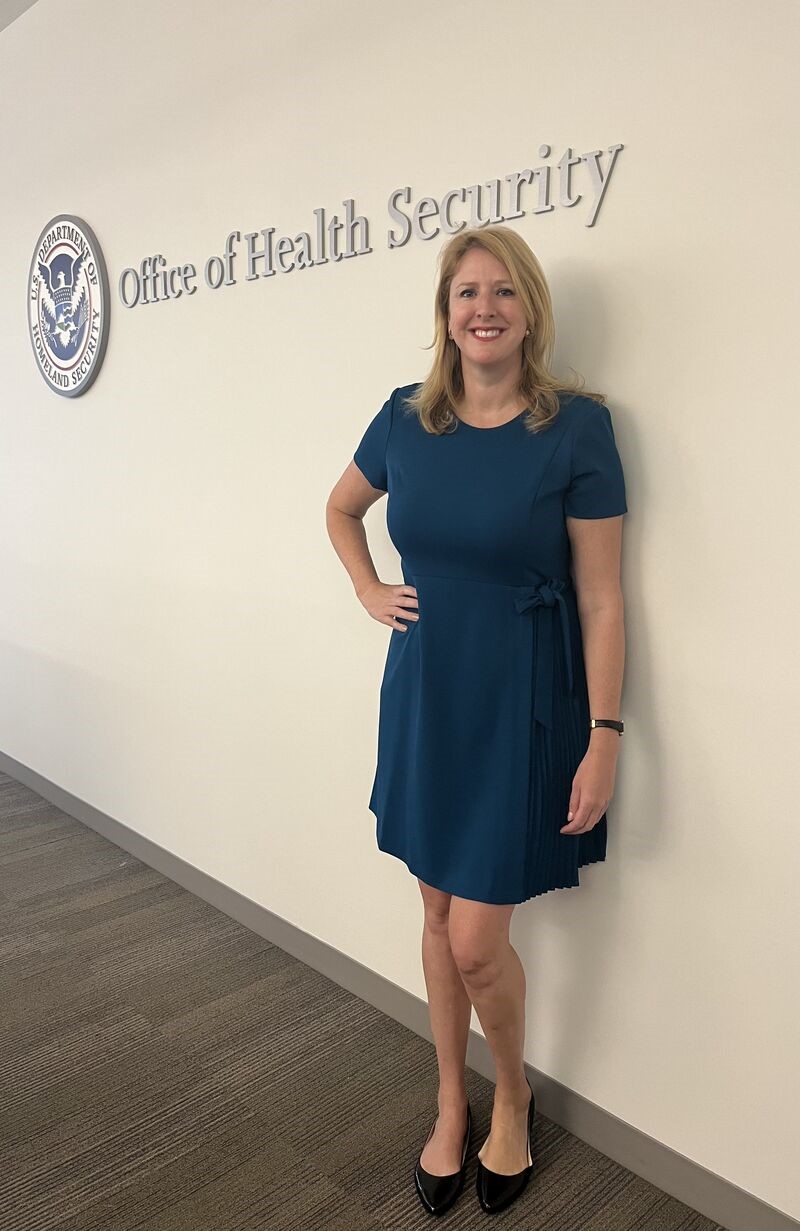
Biodefense Program Adjunct Professor Joins DHS
Dr. Ashley Grant, an adjunct professor in the Biodefense Graduate Program at the Schar School of Policy and Government at George Mason University, has joined the Office of Health Security in the Department of Homeland Security as the Senior Health Security and Biodefense Advisor, a career Senior Level position. The Office of Health Security serves as the primary authority on medical, workforce health and safety, and public health for DHS. In her new position, Dr. Grant will help mitigate the impact of biological threats, whether arising naturally, by accident, or through deliberate action.
Previously, Dr. Grant served as a principal scientist at the MITRE Corporation, as the senior biological scientist at the Government Accountability Office where she led government-wide technical performance audits focused on biosafety and biosecurity issues, as an American Association for the Advancement of Science (AAAS) Science and Technology Fellow in the Chemical and Biological Defense Program Office in the Department of Defense, and as an Christine Mirzayan Science & Technology Policy Graduate Fellow at the National Academies of Science on the Committee on International Security and Arms Control.
In the Biodefense Program, Dr. Grant teaches BIOD 604: Emerging Infectious Diseases: Viral Threats and BIOD 620: Global Health Security Policy. As a biodefense practitioner, Dr. Grant brings her real-world experience into the classroom and provides a role model for Biodefense students on how to bridge the gap between science and policy in the domains of homeland and national security.
14th Human Case of Bird Flu Reported in US Since March
Health officials in Missouri have reported a 14th human case of H5 avian influenza, this time in a person who had no contact with dairy cows or other animals associated with ongoing outbreaks across the country. All previous 13 cases, and an addition one in 2022, were in patients who had direct contact with infected animals. In a September 6 statement, the CDC explained that the case was identified through Missouri’s seasonal flu surveillance program and emphasized that risk to the general public remains low. California also reported two more outbreaks of H5N1 in dairy cows this week. The state continues to investigate how the virus spread to the two farms.
Read more: “5 Burning Questions About Missouri’s Mysterious H5 Bird Flu Case,” Helen Branswell, STAT
United States Preparing for Possible Arrival of Mpox Clade I
Senior officials in the Biden administration told reporters on a call yesterday that, because mpox infections continue to rise in Africa, the US is preparing for its own potential cases. Officials explained that the US government is “…expanding its mpox surveillance efforts, primarily through wastewater analysis, and is reaching out to the medical community to educate members on what to watch for, including the severity of clade 1 and how it spreads, according to officials.”
So far during this outbreak, there have been nearly 25,000 reported cases and 600 deaths. An outbreak of clade II (which is generally less severe than clade I) in 2022 spread to all US states, the District of Columbia, and Puerto Rico. The US recorded more than 33,000 cases and 60 deaths.

“Signs of Progress on Strengthening the Biological Weapons Convention”
Dan Regan and Christopher East recently published this post on the Council on Strategic Risks’ blog, covering a recent meeting of the Working Group on Strengthening of the Biological Weapons Convention (BWC). They write in part “Attending in an observer capacity, the Council on Strategic Risks (CSR) was heartened to witness the largely constructive discussions, most notably the progress on measures related to scientific and technological developments, and international cooperation and assistance…The session also marked an important milestone in the expansion of BWC member states. This was the first meeting in which Tuvalu and the Federated States of Micronesia were recognized as States Parties, having acceded to the BWC in June and July, respectively. This now brings the total number of States Parties to 187, an important step towards universalization of the treaty.”
Read more here.
Health Security Special Collection: NETEC International Partnerships and Programs Supplement
Health Security recently published a special collection of articles with the National Emerging Special Pathogens Training and Education Center (NETEC): “This supplement is truly unique because it compiles in a single volume descriptions of approaches taken by different countries and regions to achieve optimal clinical preparedness for and response to HCID cases and incidents. It explores the current state and prospects of HLIUs in managing HCIDs, emphasizing the national, regional, and global importance of these unique facilities and the expertise inherent to them. These papers underscore the opportunities and significance of sharing experiences, best practices, and establishing relationships with other teams in this specialized field to improve individual HLIU practices, as well as the broader field of HCID management.”
“Viral Outbreaks Threaten Our Food Supply. We’re Not Ready.”
The Bipartisan Commission on Biodefense’s Susan Brooks and Donna Shalala recently authored this op-ed focused on HPAI and other viral diseases for the IndyStar, writing in part “We are again behind in developing and manufacturing point-of-use diagnostic tests that we can distribute widely and gather information from easily. Without more data, experts are struggling to understand this virus, why it is infecting such a broad range of animals, and whether avians are really the original source of the virus. While current economic and health impacts to industry appear minimal so far, history tells us that could change quickly if the virus mutates. Indeed, media reports have already indicated that some dairy cows experience difficulty in recovering from the disease, while others never recover and are culled. Other studies suggest the possibility that the virus can spread in both directions between poultry and dairy herds, which could threaten to further fuel the outbreak.”
“Harris, Trump Try to Relitigate the Pandemic”
Politico’s Ben Leonard recaps the pandemic’s role in the recent presidential debate in this short piece.
“Poliovirus That Infected a Chinese Child in 2014 May Have Leaked from a Lab”
Kai Kupferschmidt discusses a recently-discovered possibility that a 2014 case of polio in China may have been the result of an accidental release of poliovirus from a research laboratory or vaccine production facility: “Researchers at the Pasteur Institute in Paris working under strict biosafety conditions recently opened an old box that contained a virological time capsule: four poliovirus samples, each with a handwritten label on the vial, sent to the institute more than 60 years earlier by Albert Sabin, a giant in the field of poliovirus research.”
“The viruses had to be destroyed, as part of a global campaign to get rid of old poliovirus samples. But first, the Pasteur team would sequence them to preserve their genetic information.”
“Now, a paper about those sequences, published in Virus Evolution in July, has raised an unexpected and troubling possibility: A poliovirus that infected a 4-year-old child in China in 2014 may have originated in a research laboratory or a vaccine production facility.”
“The Pivotal Decision That Led to a Resurgence of Polio”
Apoorva Mandavilli discusses how a decision to pare down the oral polio vaccine has led to an uptick in polio cases in this New York Times article: “The poliovirus that paralyzed a child in Gaza, the first case in the region in 25 years, has traveled a long path…It most likely arose in Nigeria and made its way to Chad, where it was first detected in 2019, according to genetic analysis. It emerged in Sudan in 2020 and then found a foothold in Egypt, in unvaccinated pockets of Luxor and North Sinai — next door to Gaza.”
“This journey was the consequence of a fateful decision by global health organizations to pare down the oral polio vaccine in 2016. The move, now called “the switch,” was intended to help eradicate the disease…Instead, the change has led to outbreaks of polio in dozens of countries and has paralyzed more than 3,300 children. A formal evaluation, commissioned by the global polio eradication program and led by two independent experts, was unflinching in its assessment: “The switch was an unqualified failure.”’
“Designing a New National Center for Disease Control”
Think Global Health recently published this interview with Chikwe Ihekweazu, former Director General of the Nigeria Centre for Disease Control, explaining in their introduction: “Early on in the COVID-19 pandemic, Chikwe Ihekweazu and his wife, Vivianne, knew they needed to write a book about their experience.”
“At the time, Ihekweazu was serving as the first director general of the Nigeria Centre for Disease Control, an organization he had helped build from scratch to prevent, detect, and respond to infectious disease threats in his home country.”
“Virtually overnight after COVID-19 arrived, Ihekweazu became the national spokesperson for keeping Nigerians informed about the rapidly evolving situation. He played a key role in coordinating the country’s public health response. The Ihekweazus’ new book, An Imperfect Storm: A Pandemic and the Coming of Age of a Nigerian Institution, is a personal account of navigating these challenges.”
“Ihekweazu had experience managing epidemics from HIV/AIDS to Ebola. That work, combined with his efforts during the COVID-19 pandemic, led to his current position as assistant director general at the World Health Organization’s Hub for Pandemic and Epidemic Intelligence in Berlin, where he and his colleagues use data analytics to prepare for future epidemics and pandemics.”
“Think Global Health interviewed Ihekweazu about his experiences and lessons learned over the years—including the critical role that institutions play in providing capacity and national and global levels to respond to infectious disease threats.”
“Anonymous Answers: What Are the Best Ways to Fight the Next Pandemic?”
From 80,000 Hours: “This is Part Two of our four-part series of biosecurity anonymous answers. You can also read Part One: Misconceptions.”
“Preventing catastrophic pandemics is one of our top priorities.”
“But the landscape of pandemic preparedness is complex and multifaceted, and experts don’t always agree about what the most effective interventions are or how resources should be allocated.”
“So we decided to talk to more than a dozen biosecurity experts to better understand their views. This is the second instalment of our biosecurity anonymous answers series.”
“Below, we present 12 responses from these experts addressing their views on neglected interventions in pandemic preparedness and advice for capable young people entering the field, particularly as it relates to global catastrophic risks.”
“‘The World’s Simply Not Noticing’: 2024 Likely to Be Deadliest Year for Aid Workers”
The Guardian’s Rebecca Root discusses the nearly 200 humanitarian workers’ deaths that have been documented so far this year in this piece: “By late August, 187 aid workers around the world, who play a vital role in delivering food, water and medical supplies during crises, had been killed, making 2024 likely to be the deadliest year ever for aid workers. Last year currently holds that title, when 280 lost their lives compared with 118 in 2022. The Israeli-Gaza war, where more than 280 aid workers have been killed since 7 October, as well as Sudan and South Sudan accounted for most of the deaths.”
“NASA, Partners Conduct Fifth Asteroid Impact Exercise, Release Summary”
From NASA: “For the benefit of all, NASA released a summary Thursday of the fifth biennial Planetary Defense Interagency Tabletop Exercise. NASA’s Planetary Defense Coordination Office, in partnership with FEMA (Federal Emergency Management Agency) and with the assistance of the U.S. Department of State Office of Space Affairs, convened the tabletop exercise to inform and assess our ability as a nation to respond effectively to the threat of a potentially hazardous asteroid or comet.”
Read more here.
“No Manhattan Project for AI, but Maybe a Los Alamos”
David Ignatius discusses the Biden administration’s forthcoming national security memo on AI in this Washington Post opinion piece, explaining in part: “The new approach won’t propose the “Manhattan Project for AI” that some have urged. But it should offer a platform for public-private partnerships and testing that could be likened to a national laboratory, a bit like Lawrence Livermore in California or Los Alamos in New Mexico. For the National Security Council officials drafting the memo, the core idea is to drive AI-linked innovation across the U.S. economy and government, while also anticipating and preventing threats to public safety.”
“The new strategy will focus on defense and intelligence agencies, aided by the just-created AI Safety Institute at the Commerce Department and its National Institute of Standards and Technology. The Pentagon, the intelligence community and Commerce will work to develop partnerships with the five private companies that dominate AI research, all of them American: Microsoft-backed OpenAI, Google’s DeepMind, Elon Musk’s xAI, Meta AI and the start-up Anthropic.”

ICYMI: Global Health Security 2024
The Global Health Security Conference 2024 concluded in June, but slides and videos from the conference are available here, and the Post-Conference Report is here: “In June 2024, the third Global Health Security conference returned to Sydney, Australia, where it all began some five years previously. GHS2024 was held at a time when the international community is still dealing with impacts arising from the COVID-19 pandemic even as new and previously believed conquered diseases are resurging and spreading internationally, threatening not only human health but also animal and environmental health. Added to this, environmental degradation and our shifting climate are presenting new challenges, while the introduction of artificial intelligence (AI), cuttingedge technologies, the proliferation of misinformation, disinformation, conspiracy theories, anti-science and anti-vax movements, as well as rising geopolitical tensions, has ensured that collectively we have a potent mix of challenges to confront in order to make the world safer and healthier for all. In this broader context, the need for a multisectoral, multidisciplinary meeting in which some of the world’s best minds examine the latest scientific evidence, identify gaps, build new partnerships, forge alliances, and build and strengthen a community of practice where we can learn from each other, has never been more important or critical.”
NEW: Complying with the New Biosecurity Requirements for Industry Webinar
“RTX BBN Technologies and Aclid invite you to a deep dive on the U.S. government’s “Framework for Nucleic Acid Synthesis Screening”. Discover its impact on biosecurity screening standards and the steps required to achieve compliance before the October 2024 deadline.”
“Hear from thought leaders from Battelle, International Biosecurity and Biosafety Initiative for Science (IBBIS), National Institute of Standards and Technology (NIST), US Department of Health and Human Services and Twist Bioscience!”
“Secure your spot now — registration closes on September 16 at 12:00pm ET.”
“The webinar takes place on September 19th, 2024 from 1:00pm – 2:00pm“
Register here.
NEW: Session on Public Stakeholder Perspectives for Potential Highly Pathogenic Avian Influenza A (H5N1) Research Priorities
From NASEM: “On Monday, September 23, from 12:00 pm to 5:00 pm ET, the National Academies of Sciences, Engineering, and Medicine will host an open online public listening session to hear perspectives from stakeholders on potential research priorities for the ongoing Highly Pathogenic Avian Influenza A (H5N1) outbreak. Members of the public are invited to participate and register to provide a presentation during this listening session.”
“This event will be held to inform planning for Potential Research Priorities to Inform Readiness and Response to Highly Pathogenic Avian Influenza A (H5N1): A Workshop.”
Learn more and register here.
NEW: MPOX: A Public Health Emergency of International Concern
From the Brown Pandemic Center: “On September 27th at 12:00PM ET the Pandemic Center will host a webinar titled Mpox: A Public Health Emergency of International Concern.“
“In August, the World Health Organization declared the mpox outbreak in the Democratic Republic of the Congo and neighboring countries a public health emergency of international concern (PHEIC). At the time of the declaration, the DRC had reported 27,000 mpox cases, mainly in children, and 1,100 deaths since the beginning of 2023. The WHO has since announced a six month plan to stanch the outbreak, which includes boosting surveillance, increasing staffing in affected countries and improving access to vaccines, among many other measures.”
“This webinar will convene a panel of experts to discuss the current situation and what the global health community should be doing. It will be hosted by Jennifer Nuzzo, Director of the Pandemic Center and Professor of Epidemiology at the Brown University School of Public Health. The panel will include:
Dr. Placide Mbala, Associate Professor, University of Kinshasa School of Medicine & Head of the Epidemiology and Global Health Division, National Institute of Biomedical Research, Democratic Republic of Congo
Dr. Christy Hutson, Senior Science Advisor for Clade I Mpox Response & Chief of the Poxvirus and Rabies Branch at CDC”
“This webinar is part of the Pandemics & Society series, created and sponsored by the Pandemic Center at the Brown University School of Public Health, which focuses on current pandemic threats and response systems as well as how to build preparedness for the future.”
Learn more and register here.
BSL4ZNet International Conference
“The Biosafety Level 4 Zoonotic Laboratory Network (BSL4ZNet) is an international group of federal institutions in Australia, Germany, United Kingdom, United States and Canada responsible for high-containment laboratories that allows countries to work together to respond to dangerous zoonotic diseases that spread between animals and people.”
“The 2024 BSL4ZNet International Conference is taking place in September 2024. This year’s theme is “Emerging disease meets innovative science. The working language of the BSL4ZNet is English. The 2024 BSL4ZNet International Conference will be presented in English only.”
“The 2024 BSL4ZNet International Conference includes 4 sessions:
- Wednesday, September 4: Threats and challenges – Delving into topics such as Highly Pathogenic Avian Influenza (HPAI), Climate-Related Risks, and the nuanced landscape of Science Communication amidst Misinformation/Disinformation Challenges.
- Wednesday, September 11: Innovation and emerging technologies – Innovation and Emerging Technologies: Exploring the latest advancements and breakthroughs in the realm of emerging technologies shaping our response to infectious diseases.
- Wednesday, September 18: Biosecurity and biosafety – Addressing critical issues surrounding biosecurity and biosafety measures, crucial pillars in combating zoonotic diseases
- Wednesday, September 25: Innovation for BSL4 activities and challenges – Featuring an enlightening panel discussion focusing on innovative approaches to address challenges inherent to BSL4 activities.”
Learn more and register here.
Pandemics, Climate, Health, Conflict: Preventing Future Shocks
From the Pandemic Action Network (PAN): “How can this year’s UN Summit of the Future (Sept. 22-23) serve as a springboard for action in the year ahead?”
“Join PAN, the Independent Panel for Pandemic Preparedness and Response, and RANA for Pandemics, Climate, Conflict: Preventing Future Shocks on Sept. 24. This event will include former Heads of State and government, senior policymakers, and non-governmental leaders sharing their perspectives on the current political state of play, opportunities, and actions necessary to ensure we are prepared to respond to, and prevent, future global shocks.”
“Please register to indicate interest. Confirmation, full program, and location details to follow. In-person space is limited for this event.”
Responsible AI: Design, Development, and Use
Join the Mason Autonomy and Robotics Center (MARC) for this 3-day in-person course on Responsible AI: Design, Development, and Use! As AI becomes increasingly pervasive across various domains, it is essential that we prioritize responsible principles, policies, and practices. Learn from top AI scholars and industry experts about ethical and safe AI deployment. You’ll also gain the critical skills to navigate the complexities of AI in business, healthcare, transportation and more.
Course Dates: October 15-17, 2024
Registration Deadline: October 8, 2024
FLUency: True Expertise and Effectiveness in the Battle Against Influenza
“This Commission meeting, FLUency: True Expertise and Effectiveness in the Battle Against Influenza, will be held on Tuesday, October 8th, in Washington, DC. The focus of this meeting will be to provide the Bipartisan Commission on Biodefense with a better understanding of: (1) national leadership to defend food and agriculture against influenza; (2) federal operational requirements for preparedness, coordination, and response; (3) biosurveillance, forecasting, and the need for diagnostic tests; and (4) front-line needs and partnerships in the fight against influenza.”
This event will take place in-person on October 8 from 9:20 am to 2 pm EST. Learn more and register here.
Register now: https://bit.ly/3zMvZOR

NEW: BWC Advanced Education Course
“State Parties, particularly from the Global South, often lack the resources, knowledge, and expertise to participate in the Biological Weapons Convention (BWC) diplomatic process more meaningfully. To address this challenge, UNIDIR, Diplo Foundation and FRS are organizing the BWC Advanced Education Course (BWCedu).”
“The course will equip key stakeholders – government officials in capital with responsibilities in BWC implementation, aspiring and active diplomats and life scientists working on BWC issues and biological threats – with the essential knowledge, skills and expertise to actively participate in the BWC diplomatic process and thus contribute to a stronger and more effective Convention.”
“The BWCedu comprises a five-month advanced education programme. Through this programme, 25 participants will gain in-depth knowledge of the Convention, the diplomatic landscape and relevant scientific advancements.”
“The course will employ diverse learning methods, including online lectures, real-time engagement through webinars with experts and Working Group delegates and a week-long interactive in-person session in Geneva. Course participants will be provided with access to a collection of resources and information to support independent study on aspects of the BWC.”
“In its first iteration, the comprehensive programme will focus on the current Working Group agenda items, including the two mechanisms on science & technology and international cooperation and assistance being developed for consideration at the Tenth Review Conference, or earlier at a Special Conference if requested by a majority of State Parties. The course will prepare participants for ongoing engagement in the evolving framework of the BWC, empowering them to contribute to informed decision-making.”
Applications close on September 29. Learn more and apply here.
Associate Professor (Health Security) – Practice Track Saw Swee Hock School of Public Health, National University of Singapore
“The Saw Swee Hock School of Public Health, National University of Singapore, is seeking an exceptional and motivated early to mid-career academic to join our faculty as an Assistant or Associate Professor in Health Security. This position is designed for candidates with expertise in health security, biosecurity or related fields, with a strong public health background, and who are passionate about research, teaching, and contributing to global health initiatives. The successful candidate will play a pivotal role in advancing the school’s Asia Centre for Health Security in improving health security across Asia and beyond. Details on the position can be found here.”
“The Asia Centre for Health Security (Asia CHS, https://asia-chs.org/) is a new research and policy centre in Singapore focused on preventing high-consequence biological risks of any origin. Asia CHS was established at the NUS Saw See Hock School of Public Health, in collaboration with the NTU’s Rajaratnam School of International Studies and the Singapore National Centre for Infectious Diseases. The centre was founded with philanthropic gifts from several Asian and European donors totaling more than $7M for the Centre’s first three years of operations.”
Call for Experts – Technical Advisory Group on Laboratory Services, Systems and Diagnostics in Health Emergencies
“The World Health Organization (WHO) is seeking experts to serve as members of the WHO Technical Advisory Group on Laboratory Services, Systems and Diagnostics in Health Emergencies (TAG-LAB). This “Call for experts” provides information about the advisory group in question, the expert profiles being sought, the process to express interest, and the process of selection.”
“Well-functioning and sustainable laboratory services, systems and diagnostics, operating according to international principles of equity, quality and safety, are essential to implement the International Health Regulations (2005)1 and achieve global health security. The World Health Organization (WHO) recently published the health emergency prevention, preparedness, response and resilience (HEPR) framework, describing the critical role of the laboratory to implement Collaborative Surveillance.”
“Laboratories also provide essential data to guide clinical care and inform coordination operations, as well as public health and social measures, in a range of emergency situations including outbreaks of pandemic and epidemic prone pathogens and humanitarian settings involving conflict, protracted crises and natural or man-made disasters. Considering this, a global strategy focused on laboratory services, systems and diagnostics for health emergencies is needed to address all of these contexts.”
“This strategy will connect global efforts and advance implementation of the laboratory components of the HEPR framework and World Health Assembly (WHA) Resolution 74.7 on strengthening WHO preparedness for and response to health emergencies that called for countries to “strengthen laboratory-based detection capacities”.”
“In this context, WHO is establishing a Technical advisory group on laboratory, services, systems and diagnostics for health emergencies (“TAG-LAB”). The TAG-LAB will act as an advisory body to WHO in this field.”
“The TAG-LAB is multidisciplinary, with members who have a range of technical knowledge, skills and experience relevant to virus evolution. Up to 25 Members may be selected. WHO welcomes expressions of interest from experts in laboratory services, systems or diagnostics, clinical scientists, academic researchers, healthcare professionals, or others with expertise in one or more of the following areas:
- Laboratory Systems
- Laboratory Services
- Diagnostics
- National and International Policy, Regulation and Guidance
- Biosafety
- Biosecurity
- Bioinformatics
- Clinical Management
- Outbreak Preparedness, Response and Resilience
- Emergency response in humanitarian settings involving conflict, protracted crises and natural or man-made disasters
- Academic Research
- Public Health
- Virology, Microbiology, Mycology, and Emerging or Re-emerging diseases”
Learn more and submit and expression of interest here by September 30.
Call for Experts: Health-Security Interface Technical Advisory Group (HSI-TAG)
“The World Health Organization (WHO) is seeking two experts to serve as new members of the Health-Security Interface Technical Advisory Group (HSI-TAG). This “Call for experts” provides information about the advisory group in question, the expert profiles being sought, the process to express interest, and the process of selection.”
“The concept of Health-Security Interface (HSI) applies to those public health activities whose performance involves to some extent the security sector broadly understood (e.g. international and non-governmental organizations, civil defense, military health personnel, law enforcement and armed forces, defense-related research programmes), certain international organizations and other entities with a security relevant mandate. These activities may include protection of health from traditional and emerging infectious disease threats; deliberate events and investigation of alleged use of chemical and biological agents including non-permissive environments and conflict zones; and any health activities performed in collaboration with security actors.”
“The HSI-TAG is multidisciplinary, with members who have a range of technical knowledge, skills and experience relevant to the Health-Security Interface.”
“Considering the recent developments and global trends, the Secretariat realized that there was a need to strengthen the following areas of expertise/experience, hence welcomes expressions of interest from:
- Bioterrorism experts (knowledge on pathogens of security concern, their microbiological characterization and application/modification for weaponization, diagnostics, countermeasures and containment measures),
- Decision/policy makers with hands-on experience dealing with significant deliberate event(s) (biological/chemical) response at the local, regional, or national level.”
“For the improved geographical and gender representation of the HSI-TAG members, the WHO Secretariat encourages applications from the WHO African, Western Pacific, European, Eastern Mediterranean and Pan American Health Organization/Americas regions and female or non-male gender identities.”
Learn more about the HSI and express interest by October 7 here.
The Nonproliferation Review Special Issue on Understanding the Nexus Between AI and WMD
“The emergence of artificial intelligence (AI) presents significant opportunities and challenges for WMD nonproliferation. On the one hand, AI introduces new risks in which state and non-state actors could employ these new technologies to enable weapons development and use. AI could introduce other existential risks, some of which we may not have imagined previously. However, AI also has the potential to be a powerful tool for detecting and analyzing proliferation risks, supporting arms-control verification and treaty negotiation, and gaining new insights into the decision calculus of proliferators. Even the benefits of AI come with major risks when applied to WMD nonproliferation. To harness these benefits, policy makers must also contend with a new set of risks, including cyber-vulnerabilities that are relatively new to WMD nonproliferation but inherent to AI systems that rely upon software, hardware, and penetrable networks. The breathtaking pace of progress in the development of AI demands urgent action from the WMD-nonproliferation community to get ahead of this curve. Policy makers confront a closing window to steer outcomes toward the positive and need new insights to help them navigate these challenges.”
“This special issue will examine specific risks and opportunities at the nexus of WMD and AI while highlighting some of the general implications of AI for the WMD-nonproliferation field. Authors will be expected to conduct interviews with subject-matter experts and/or engage in other original empirical research to ensure the paper makes an original contribution and provides a technical perspective to the ongoing discussion among scholars and policy makers (see journal guidelines for more information). We welcome submissions from both academic and policy angles, but we are targeting policy makers working at the nexus of AI and WMD as the primary audience for this issue.”
Learn more here.
 The Pandora Report