
This week’s Pandora Report discusses the 9th Meeting of the International Experts Group of Biosafety and Biosecurity Regulators, updates on the situation with USAID and from across the Trump administration, and more.
Biodefense MS Information Session
“Prospective students are invited to attend a information session to hear more about the Biodefense M.S. program offered at the Schar School. The online session will provide an overview of the program, as well as the application process, student experience and graduate outcomes. This session admissions will be led by the Graduate Admissions team.”
This sessions will take place at 12 pm EST on February 13. Learn more and register here.
9th Meeting of the International Experts Group of Biosafety and Biosecurity Regulators
The 9th Meeting of the International Experts Group of Biosafety and Biosecurity Regulators (IEGBBR) was held on February 3-5, 2025, in Pari, France. Since 2007, the biennial meeting has provided a crucial platform for experts from 11 member countries, as well as representatives from the World Health Organization (WHO) and the World Organisation for Animal Health (WOAH), to collaborate on enhancing global biosafety and biosecurity oversight mechanisms. This year, the meeting agenda includes: High Risk Biocontainment Facilities in Urban Areas; Global Biosafety and Biosecurity Challenges; and Biosafety and Biosecurity Concerns related to Emerging Issues. The IEGBBR was formed under the leadership of the Public Health Agency of Canada and comprises of biosafety and/or biosecurity regulatory authorities from 11 member countries. The purpose of the IEGBBR is to provide a forum for the sharing of knowledge and experience with regard to current human and zoonotic pathogen biosafety and biosecurity oversight issues.
Gerald Parker Reportedly Tapped to Lead White House Office of Pandemic Response
The White House has reportedly selected Gerald Parker, DVM, PhD, to lead the White House Office of Pandemic Response, according to CBS News. Parker is the Associate Dean for Global One Health at the Texas A&M College of Veterinary Medicine & Biomedical Sciences. He is also on the faculty of the Bush School of Government and Public Service at Texas A&M University, serving as the Director of the Pandemic and Biosecurity Policy Program at the Scowcroft Institute for International Affairs. Among Parker’s many accomplishments are previous stints as the Commander and Deputy Commander of the U.S. Army Medical Research Institute of Infectious Diseases, as well as time serving in the senior executive level as a federal civilian in DHS, HHS, and DOD, including serving as the Principal Deputy Assistant Secretary for Preparedness and Response at HHS, and Deputy Assistant Secretary of Defense for Chemical and Biological Defense at DOD. He is also the former chairperson of the National Science Advisory Board for Biosecurity, and he currently serves on the Defense Science Board Permanent Subcommittee for Threat Reduction.
Ashish Jha, MD, MPH, former White House COVID-19 response coordinator under President Biden, said in a statement to CBS News, “I’ve not been a fan of every choice that Donald Trump has made. And I’ve been very critical of many of them. This one is a very good choice,” describing Parker as “deeply knowledgeable, serious, not particularly partisan, but really just very focused on important issues.”
Shock and Awe as Trump Administration Dismantles USAID
If last week at USAID was chaotic, this week has proven to be a complete disaster. On Monday, Secretary of State Marco Rubio announced in a letter to lawmakers that he is the acting administrator of USAID, confirming his department’s de-facto takeover of the agency. Rubio explained in the letter that he has delegated authority to Pete Marocco, a Trump appointee who served at USAID under the first Trump administration and has been criticized by aid group and officials for, allegedly, intentionally dismantling the organization. Notably, Marocco is the one who drafted the initial order to freeze virtually all foreign aid.
On Tuesday, USAID’s previously-down website was updated with a simple announcement indicating all direct hire personnel will be placed on administrative leave globally by 11:59 pm EST on Friday, February 7. It does indicate there is an exception for mission-critical functions, core leadership, and specially designated programs, and that people in those roles would be notified of the expectation they continue working by 3 pm EST on February 6. The administration also ordered all overseas missions for USAID to shut down, and for all staff to be recalled by Friday. More than 6,000 USAID employees are currently overseas. According to CBS, just 294 are considered essential out of roughly 14,000 employees. Furthermore, it is unclear what will happen to foreign nationals who are employed by USAID at overseas missions.
The agency’s announcement explains in part that, “For USAID personnel currently posted outside the United States, the Agency, in coordination with missions and the Department of State, is currently preparing a plan, in accordance with all applicable requirements and laws, under which the Agency would arrange and pay for return travel to the United States within 30 days and provide for the termination of PSC and ISC contracts that are not determined to be essential. The Agency will consider case-by-case exceptions and return travel extensions based on personal or family hardship, mobility or safety concerns, or other reasons. For example, the Agency will consider exceptions based on the timing of dependents’ school term, personal or familial medical needs, pregnancy, and other reasons. Further guidance on how to request an exception will be forthcoming.”
One official told The Washington Post, “You find yourself in a foreign country, in all likelihood a place you moved to despite the terrorism or security risks, and you’re being treated as if you’re somehow an enemy of the state. That’s not even the worst of it. You know that your career matters far less than the lives of those you were trying to help, and … a lot of them are going to die without American aid.”
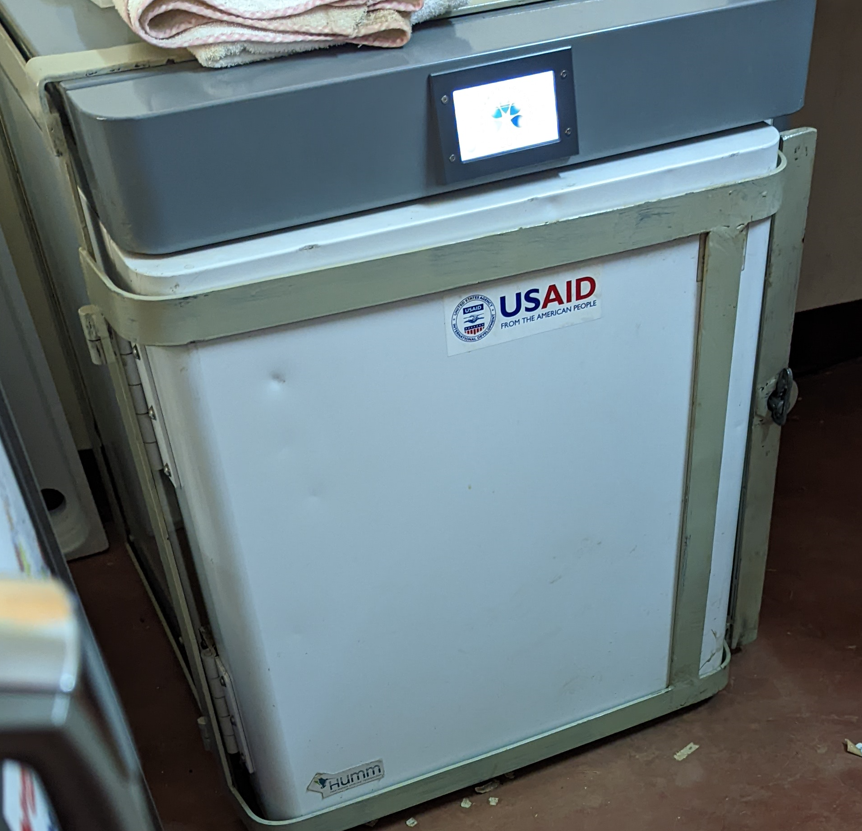
As the destruction unfolded at USAID, the White House released a fact sheet entitled “At USAID, Waste and Abuse Runs Deep,” that claims USAID “has been unaccountable to taxpayers as it funnels massive sums of money to the ridiculous — and, in many cases, malicious — pet projects of entrenched bureaucrats, with next-to-no oversight.”
The statement then lists 12 examples of this alleged waste and abuse, linking to questionable news sites like the Daily Caller and Breitbart. Several of them link to the Daily Mail, a British tabloid. One of the bulleted examples reads, “Millions to EcoHealth Alliance – which was involved in research at the Wuhan Lab”. Most of these claims were found to be false or misleading when fact checked. The statement then concludes with, “The list literally goes on and on — and it has all been happening for decades.”
In addition to the bizarre tone of this official White House statement, the cited examples are problematic. For starters, some of them are State Department grants, not USAID grants, while one of them actually comes from the first Trump administration. Some of them are so low that The Washington Post reports they were made at the ambassador level, without input from Washington. The White House has also incorrectly claimed USAID gave Politico over $8 million in funding. In reality, between 2023 and 2024, USAID paid Politico $44,000 for subscriptions to Politico publications. This is not an uncommon thing to do across the US government.
The claims made by the White House are part of a broader narrative that a large portion of the federal budget “goes to other countries.” In reality, as we discussed last week, it really only accounts for around 1% of the budget. Furthermore, much of this money does not ever leave the US, and the portion that does largely goes to NGOs, not host governments. Furthermore, much of this is obligated to go to US-based entities. An example of this is food aid, which has to be purchased in the US and must be shipped by US carriers. As a result, this attack on USAID and foreign aid in general is actually threatening to US farmers.
In a statement this week, President Trump said of the agency “It’s been run by a bunch of radical lunatics, and we’re getting them out, and then we’ll make a decision.” Irreversible decisions have already been made that will have far-reaching, long-lasting implications not just for USAID and the federal workforce, but for those receiving foreign aid through USAID and the organizations that facilitated that. PII and classified information has been accessed by the supposed Department of Government Efficiency, and lives have been upended, seemingly at the whim of Elon Musk.
Former Administrators React
A group of former USAID administrators issued a sharp rebuke of the administration’s attacks on the agency this week, including J. Brian Atwood, Peter McPherson, Andrew Natsios, Gayle Smith, and Samantha Power. In a statement signed by the former administrators, they explain “While we don’t agree on all issues, we wholeheartedly agree that USAID and America’s foreign assistance programs are vital to our interests, that the career men and women of USAID have served each of us well, and that it is the duty of the Administration and Congress to swiftly protect the Agency’s statutory role.”
They write later in the statement, “Failure to maintain the global engagement that foreign aid enables, to honor the men and women of our civilian service as we do those in the military, or weaken and even destroy the Agency is to the benefit of neither political party and the detriment of all Americans.”
Further Reading:
- “The End of Foreign Aid as We Know It,” Colum Lynch, Devex
- ‘”People Will Die”: The Trump Administration Said It Lifted Its Ban on Lifesaving Aid. That’s Not True,” Brett Murphy and Anna Maria Barry-Jester, ProPublica
- “Health Programs Shutter Around the World After Trump Pauses Foreign Aid,” Stephanie Nolen, The New York Times
- “As Trump Shuts Down USAID Missions, Officials Warn Ebola Outbreak in Uganda Will Spread,” Alexander Tin, CBS News
- “USAID Shutoff Will Hurt US Interests Around the Globe, Including Ukraine,” Patrick Tucker, Defense One
- “No, 90 Percent of Aid Is Not Skimmed Off Before Reaching Target Communities,” Rachel Bonnifield and Justin Sandefur, Center for Global Development
- “Merging USAID and State Could Make the U.S. Less Secure,” Rachel A. George, Foreign Policy
- “Abolishing USAID Is Both Unconstitutional and Disastrous,” Matthew M. Kavanagh and Luis Gil Abinader, Foreign Policy
- “USAID Provides Critical Benefits to US National Security,” Council on Strategic Risks
- “Democrats, Public Health Leaders Decry Trump Administration’s Takeover of Humanitarian Aid Agency USAID,” Heather Landi, Fierce Healthcare
- “The Status of President Trump’s Pause of Foreign Aid and Implications for PEPFAR and Other Global Health Programs,” Jennifer Kates, KFF
Further Trump Administration Updates
RFK Jr., Gabbard Advance Past Senate Committees
Tulsi Gabbard and RFK Jr. both cleared key hurdles on Tuesday in their efforts to be confirmed by the Senate. Both of their committee votes came down to the wire, with Republicans ultimately making the decision to back them after pressure from members of the administration. Both are thought to likely be confirmed by the full Senate.
CDC Restores Some Purged Files and Pages
Intense backlash following the purge of files on the CDC’s website seems to have prompted the reinstatement of some online resources. Last Friday, the agency suddenly removed thousands of pages from its site that included terms like “transgender,” “LGBT,” and “pregnant person,” rushing to meet a deadline to remove such terms from its website. While many pages have since been restored, many databases and pages on topics like contraception guidelines have not been restored. The site now has a banner explaining it is being modified to comply with President Trump’s executive orders.
Beyond ideological arguments, this has massive implications for public health. For example, the now gone pages on contraception provided lists of drug interactions for providers to consider when prescribing newer forms of birth control. Similarly, pages with vaccine information have yet to be restored, despite not being targeted by the executive order.
Note: All CDC datasets that were uploaded before January 28, 2025, have been uploaded to the Internet Archive and are available here.
NSF Flagging Research Grant Proposals for Reviews Based on DEI-Related Keywords
While the National Science Foundation has unfrozen its grant funding, a list of keywords that will flag proposals has reportedly been introduced at the organization. The list of keywords is extensive, according to an internal document that has been reviewed by media outlets and multiple NSF employees with knowledge of the review process who spoke under the condition on anonymity. Terms on the list allegedly include basic ones like biases, diversity, ethnicity, excluded, female, gender, historically, inequities, institutional, minority, racially, socioeconomic, systemic, trauma, underserved, victims, and women. While the list is concerning in general, many of these terms have multiple meanings, some of which would not fall under DEI.
This comes after a notice was given at the organization last week warning about activities that do not comply with the administration’s DEI executive order. A message to investigators said in part, “In particular, this may include, but is not limited to conferences, trainings, workshops, considerations for staffing and participant selection, and any other grant activity that uses or promotes the use of diversity, equity, inclusion and accessibility (DEIA) principles and frameworks or violates federal anti-discrimination laws.”
Further Reading:
- “White House Preparing Order to Cut Thousands of Federal Health Workers,” Liz Essley Whyte and Betsy McKay, The Wall Street Journal
- “The Damage to Federal Medical Research is Already Done,” Jane Smith-Rogers, Wired
- “Chaos Continues in Federal Health System,” Julie Rovner, KFF Health News
- “Removal of DEI Content from a Microbiology Group’s Website Shows Reach of Trump Executive Orders,” Usha Lee McFarling, STAT News
- “Trump’s Data Deletions Pose a Stark Threat to Public Health,” Chrissie Giles, The Bureau of Investigative Journalism
- “A Sense of Foreboding Hangs Over the National Institutes of Health,” Rob Stein, NPR
- “How RFK Jr.’s Assurances to Senators Contradict His Past Remarks,” Fenit Nirappil, Lauren Weber, and Caitlin Gilber, The Washington Post
- “RFK Jr. Confirmation Could Hinge on His Embrace of False Vaccine-Autism Link,” Fenit Nirappil, The Washington Post
- “The RFK Jr. Op-Ed the Los Angeles Times Didn’t Want You to Read,” Eric Reinhart, The New Republic
- “Pro-RFK Jr. Letter to the Senate Includes Names of Doctors Whose Licenses Were Revoked or Suspended,” Michelle R. Smith, AP News
Argentina Announces Exit from WHO
Argentinian President Javier Milei announced his intention to withdraw his country from the WHO this week. Milei, a self-described “anarcho-capitalist” who has sought to mirror Donald Trump, attributed this decision to the WHO’s management of the COVID-19 pandemic, which he said consisted of a “caveman quarantine that involved…one of the most outlandish crimes against humanity in history.”
This prompted immediate criticism from the Argentinian opposition as well as health organizations who are concerned this move will limit the country’s access to needed funding. Critics also say Milei is not able to do this unilaterally, requiring instead congressional approval. Milei’s administration refused to sign the WHO-supported Pandemic Treaty last year, citing concerns about national sovereignty.
H5N1 – “In Your Feeders” 02.07.25
By Meredith Fletcher, Pandora Report Associate Editor
As H5N1 spreads across the bird community, many people raise the question, “should I stop feeding the birds in my backyard?” The simple answer is…well it depends. If the bird flu is prevalent in your area, it may be best to stop. It also depends on what type of birds you feed. Right now, those known to be carriers of H5N1 are waterfowl such as ducks/geese, shorebirds (storks/plovers), raptors (hawks/owls) and songbirds such as robins and sparrows. Due to this, it is also spreading to domestic turkeys, chickens, ducks, geese and quail. It is important to note that domestic songbirds only have about a 3% chance of infection, so unless you also keep poultry, there is little risk. The virus is spread from these birds in their saliva, mucus and feces, which can be dropped on the ground and can contaminate areas if you have your own flock. In other H5N1 news, there was a new strain identified in Nevada cows on Wednesday, which led Louise Moncla (an evolutionary biologist specializing in bird flu) to say, “We need to now consider the possibility that cows are more broadly susceptible to these viruses than we initially thought.” While the virus is actively mutating, officials still say the person-to-person transmission risk is low, and little to be concerned about for the average person.

Strengthening a Safe and Secure Nucleic Acid Synthesis Ecosystem: Outcomes of EBRC Stakeholder Engagement
From EBRC: “The report describes central issues and perspectives on nucleic acid synthesis screening, including screening for sequences of concern, customer screening, follow-up screening, and law enforcement reporting. It describes best practices that providers, tool developers, customers, and other stakeholders can implement to further strengthen nucleic acid synthesis screening. It also recommends policies, capabilities, and infrastructure to support the adoption and improvement of screening practices.”
“EBRC developed this report based on information and expertise shared by stakeholders across industry, government, academia, and civil society in six virtual workshops (April–August 2024) and an in-person workshop (September 2024). We thank the 200+ stakeholders who engaged with this effort for their collaborative spirit and dedication to advancing nucleic acid synthesis screening.”
Read the report here.
“Bolstering US Biodefense: Recommendations for the New Administration”
This briefer from the Council on Strategic Risks’ Nolan Center offers recommendations for the Trump administration’s first year in office aimed at improving US biodefense. It explains in part, “In recent years, the US has shown both leadership and progress in establishing and implementing the most advanced policies yet for biodefense and biosecurity. Significant strategic advancements have included the strengthening of the US National Biodefense Strategy in 2018 and 2022, and the Department of Defense (DoD) completing its first-ever Biodefense Posture Review in 2023. Efforts to implement these ambitious strategies have included establishing DoD’s Generative Unconstrained Intelligent Drug Engineering (GUIDE) program to harness the Department of Energy’s supercomputing capabilities to design and evaluate medical countermeasures years faster than standard methodologies, the Advanced Research Projects Agency for Health (ARPA-H), and the Centers for Disease Control and Prevention (CDC) Center for Forecasting and Outbreak Analytics (CFA). Still, given the scale and urgency of the risks the nation faces, the new administration must continue to pursue ever-more ambitious approaches to addressing significant biological risks.”
Transmission Interrupted, “Behind the Scenes: Navigating the COVID-19 Pandemic in Hollywood”
“In this episode of Transmission Interrupted, join hosts Lauren Sauer and Rachel Lookadoo as they continue their Pathogens in Pop Culture series with a dive into the fascinating intersection of infectious diseases and the entertainment industry with esteemed guest, Dr. Saskia Popescu. Dr. Popescu, an internationally recognized infectious disease epidemiologist and global health security expert, shares her unique experiences providing epidemiological guidance and infection prevention strategies on film sets during the COVID-19 pandemic. From creative risk assessments and navigating ever-changing guidelines to the challenges of implementing health measures in diverse climate settings all around the world, Dr. Popescu provides a candid look behind the scenes of Hollywood’s pandemic response. Get a glimpse into how science intersects with Hollywood magic, revealing an industry more receptive and complex than meets the eye. Tune in as we uncover the balance between safety and storytelling, and explore the uncharted territory of infectious diseases in pop culture.”
Listen here.
“Engineering Tomorrow: DARPA’s Push into the Frontier of Synthetic Biology”
Jeff Buguliskis discusses the work of DARPA’s Biological Technologies Office in this piece from Synbiobeta: “For years, synthetic biology has offered tantalizing glimpses of what might be possible—personalized disease treatments, materials grown by microbes instead of extracted from petroleum, and sensors capable of detecting everything from emerging pathogens to chemical toxins. The allure has attracted investors and entrepreneurs, pushing startups to scale up with fermentation bioreactors and gene-editing technologies. But beyond the hype, we hit a sobering truth: biology is messy. Scale-ups that work beautifully on a lab bench often break down in a 10,000-liter tank. Promising genetic designs fail unpredictably because real-world conditions differ from the pristine order of the lab.”
“That’s precisely why now is the right time for deeper, broader investment in SynBio—and why the U.S. Defense Advanced Research Projects Agency (DARPA) is making its move. The mission at DARPA, known more widely for stealth planes and the internet, is to foresee threats, catalyze big ideas, and then supercharge them until they’re world-changing or prove unworkable. Mike Koeris, Director of DARPA’s Biological Technologies Office (BTO), envisions synthetic biology as the next great frontier in that legacy of breakthroughs. And he’s looking for new frontiers, people of science, a.k.a. Program Managers—“PMs,” as DARPA calls them—to push that frontier beyond what anyone could think possible, merging the digital realm of bits with the living realm of atoms.”
“The Value of a Biorisk Management System: Enabling Infectious Disease Laboratory Excellence on all Levels”
Patty Olinger and Stefan Wagener discuss the need for comprehensive biorisk management systems in this piece from Infection Control.tips: “Biosafety and biosecurity are essential components of modern laboratory operations, ensuring that safety and security are seamlessly integrated into daily practices. Far from being burdensome, a well-implemented biorisk management system empowers laboratories through a top management-driven approach to continual improvement, based on clear internal and external stakeholder-based policies and objectives that are monitored and assessed through key performance indicators. When possible, these measures should be embedded into workflows so effectively that they become part of day-to-day activities or culture. Such a system ensures that resources are directed toward addressing gaps, continually improving biosafety and biosecurity and fostering the integrity of research. This results in scientists taking ownership of biorisk management and focusing better on their core mission—innovative science. Moreover, a comprehensive biorisk management system extends benefits beyond the facility, safeguarding communities and the environment and rebuilding public trust with transparency and external stakeholder input.”
“Monitoring Snapshot 7”
From GP WMD Counter Disinfo: “DFRLab conducts a bimonthly analysis of data based on a search query including Ukrainian, Russian and English languages to identify when spikes of CBRN disinformation narratives are spreading. This report (10 December 2024 – 6 January 2025) saw an emergence of claims of Ukraine biolab origin of H5N1 (avian flu); an influx of unfounded allegations about alleged Ukrainian plans to attack various nuclear power plants (NPPs); and unfounded speculations around the possibility of Western involvement in the assassination of General Igor Kirillov, head of the Chemical, Biological, and Nuclear Defense Troops of the Russian Armed Forces.”
“Russia Consumer Watchdog Falsely Accuses US of Mishandling Pathogens in DR Congo”
Purity Mwambia debunks a claim from the Russia State Consumer Watchdog that the US and France are irresponsibly handling dangerous pathogens in the DRC in this piece for VOA. The claim states, “The activities of this laboratory are financed by the US Agency for International Development and the French Merieux Foundation. This circumstance once again confirms the irresponsible approach of Western countries when working with dangerous infections in the territory of third countries, when biological facilities are created without the proper infrastructure and samples of pathogens of dangerous diseases are accumulated without control.”
“HSToday Threat Forecast 2025: Global Terrorism”
Mahmut Cengiz, an Associate Professor and Research Faculty with Terrorism, Transnational Crime and Corruption Center (TraCCC) and the Schar School of Policy and Government at George Mason University, recently published this article in Homeland Security Today. He writes in part, “The effectiveness of terrorism as a strategic approach has been widely debated. While many scholars argue that terrorism can be a useful tactic for non-state actors, they often believe it ultimately fails to produce lasting, long-term results. However, the Taliban’s use of terror tactics and Hay’at Tahrir al-Sham’s (HTS) recent expansion in Syria challenge this view, suggesting that, in some cases, terrorism can effectively achieve its strategic goals. As a result, both the Taliban and HTS may serve as models for other jihadist groups with similar objectives in 2025. Consequently, shifting priorities within Western governments have contributed to HTS’s rise. The U.S. has focused more on the strategic threat posed by China, while the European Union has been preoccupied with the refugee crisis. In this context, Turkiye has played a central role in facilitating HTS’s growth in Syria, and its actions appear to have been tacitly supported by Western governments. Despite these developments, Syria’s future remains uncertain. There are ongoing concerns about whether an authoritarian and often corrupt Turkish government can help guide Syria toward a stable and representative political system. Moreover, ISIS continues to be the most active and powerful actor in Syria, responsible for about one-third of the country’s terrorist attacks in 2024. There also are concerns over whether Kurdish forces in northern Syria will continue to receive U.S. support in their fight against ISIS. As such, Syria is likely to remain a key issue on the global agenda for counterterrorism in 2025.”
“Feature Article: Organ-on-a-Chip—3D Printed Tissue Allows Researchers to Study Effects of Toxic Vapors”
This article is from the Department of Homeland Security: “The Science and Technology Directorate (S&T) and its Chemical Security Analysis Center (CSAC) have partnered with the Wake Forest Institute for Regenerative Medicine (WFIRM) to 3D print human lung cells and tissue onto microchips for state-of-the-art analysis of the hazards posed by toxic chemicals. S&T’s other partner, the Battelle Memorial Institute (BMI), is serving as the program’s evaluator.”

NEW: 2025’s National Security Challenges: A Hayden Center Open Forum
From the Hayden Center: Join the Michael V. Hayden Center for Intelligence, Policy, and International Security on Wednesday, February 12, 2025, at 7:00 pm ET as we host our third annual open forum examining the year’s national security challenges. At this event, YOU get to drive the discussion with your questions!
Our panel includes:
General (retired) Michael Hayden: former Director of both the Central Intelligence Agency & National Security Agency; the nation’s first Principal Deputy Director of National Intelligence; and Distinguished Visiting Professor at the Schar School of Policy and Government at George Mason University;
Jennifer Victor: Associate Professor of Political Science at the Schar School; Director of Schar School’s Democracy Lab Academic Community; author, researcher, and commentator; and recipient of the National Capitol Area Political Science Association Pi Sigma Alpha Award for undergraduate student mentoring in 2024 and of the George Mason University Teaching Excellence Award in 2019;
Andrew McCabe: Distinguished Visiting Professor at the Schar School; former Acting Director and Deputy Director of the Federal Bureau of Investigation; CNN senior law enforcement analyst; and co-host of UnJustified, the successor to Jack: A Special Counsel Podcast;
Greg Koblentz: Associate Professor and Director of Biodefense Graduate Programs and Associate Faculty at the Center for Security Policy Studies at the Schar School; Editor-in-Chief of The Pandora Report; Co-Director of the Global Labs Initiative; member of the Scientist Working Group on Biological and Chemical Security at the Center for Arms Control and Non-Proliferation in Washington, DC, and the Security Working Group of the Engineering Biology Research Consortium (EBRC); and author and researcher;
Larry Pfeiffer, Director of the Hayden Center, former Senior Director of the White House Situation Room, and former Chief of Staff at the CIA, will moderate the conversation.
Whether you join us in person or via livestream, we look forward to your incisive questions!
Learn more and register here.
NEW: Hubs of Illicit Trade in the Global Economy Book Discussion
From the Terrorism, Transnational Crime and Corruption Center (TraCCC): “This book, authored by a global team of researchers and experts, the Hubs of Illicit Trade (HIT) team, examines how centers of illicit trade pose myriad threats to global security and sustainable development.”
“The exponential growth of illicit trade, resulting in annual losses amounting to trillions of dollars for the global economy, is increasingly concentrated within specific geographic areas. These locales serve as safe havens for smugglers and their accomplices, fostering a criminal ecosystem that facilitates the convergence of various criminal activities. The book underscores the detrimental impact of these hubs, characterized by opaque governance and lax regulatory oversight. It explores the spectrum of illicit trade present in notorious hubs such as the Argentina-Brazil-Paraguay Tri-Border Area, Dubai, Panama, Belize, Guatemala, and Ukraine. Emphasizing the phenomenon of crime convergence associated with these hubs, the book offers actionable recommendations for disrupting their interconnected illicit supply chains, infrastructures, and networks.”
This hybrid event will take place on February 19 from 12-2 pm EST at George Mason’s Arlington campus. Learn more and RSVP here.
Cyberbiosecurity Summit
From Johns Hopkins APL and Bio-ISAC: “Advancements in biomanufacturing and biotechnology drive the science we need to thrive, everything from apples to vaccines. The Cyberbiosecurity Summit 2025 convenes leading experts in biotechnology, biosecurity, and cybersecurity to explore the intersection of these fields and discuss the strategies to create a safe, secure future for us all.”
This event will take place February 25-26 in Laurel, MD. Register here and review the call for sessions here (closes 12/12).
Sustainable Manufacturing: Building and Preserving a Resilient Medical Industrial Base
“Join industry and government partners for our second annual industry summit! During this event, leaders from IBMSC will share our strategic vision and organizational priorities. Speakers will also share potential opportunities for building and preserving the medical industrial base. This event will be in-person only and space is limited!”
This event will take place March 11-12 in Washington, DC. Learn more and register here.
Gaming Weapons of Mass Destruction Course – From Policy to Practice
From MORS: “Gaming Weapons of Mass Destruction (WMD – defined as Nuclear, Chemical, and Biological agents) will be a three-day course focused on developing and executing games related to WMD in all its forms. While the basics of WMD capabilities and game design will be discussed, this will be a course focused on the intersection of WMD and gaming. It will not be either a WMD or gaming course; for those topics see other offerings.”
“No prior experience is required for this course, though a basic familiarity with various agents and their effects would be helpful, as would a basic understanding of professional gaming and how it is used. The instructors will adapt in real time to class requirements (e.g., if the class is interested in animal and plant targets, the instructors have extensive experience in designing games on those subjects as well).”
This course will take place March 18-20 on Zoom. Learn more and register here.

NEW: Call for Experts-Personal Protective Equipment for Influenza A (H5N1) in High-Risk Farm Settings: A Workshop
“The National Academies is seeking suggestions for experts to participate in a new workshop on personal protective equipment (PPE) needs and best practices to protect workers in high-risk U.S. farm settings and control Influenza A (H5N1) transmission between livestock and humans. The workshop will examine the current state of knowledge on H5N1 transmission to humans and implications for PPE use in high-risk farm settings; approaches to overcoming barriers to implementation of PPE recommendations and best practices; the potential for novel technologies to enhance protection provided by PPE in farm settings; and health communication, education, training, and research needs.”
Learn more and submit nominations by February 14 at 5 pm ET here.
NEW: Research Opportunity, The Gene Synthesis Regulatory Landscape in Asia: Towards Enhanced Biosecurity
From the Asia Centre for Health Security: “DNA synthesis technology is revolutionising our ability to engineer biological systems, offering transformative benefits in areas like vaccine development and sustainable energy. However, it also presents significant risks, particularly the potential misuse of synthetic DNA to create harmful pathogens, raising concerns within the biosecurity community.”
“To minimise biosecurity concerns related to DNA synthesis, some governments and industry groups have adopted policies requiring or encouraging providers to screen DNA synthesis orders. However, there seems to be less comprehensive regulation and oversight of DNA synthesis activities across many Asian countries”
“The Asia Centre for Health Security (ACHS) is leading a study to map the policy and regulatory landscape of DNA synthesis screening across the region. Our research aims to identify gaps and opportunities in existing frameworks and provide actionable recommendations to support the revision of existing laws and policies and/or or the development of new policies for regulating DNA synthesis screening in Asia.”
“Case Study Researchers for a Research Project on DNA Synthesis Screening in Asia”
“We are seeking experienced researchers to contribute to this research project by developing country-specific case studies on the regulation of DNA synthesis screening across Asia. Learn more about the opportunity here.”
 The Pandora Report