This week’s Pandora Report includes news from the Biodefense Graduate Program, updates on how foreign aid cuts are continuing to impact organizations like the WHO, discussion of the United States’ measles outbreak, and more.
Biodefense MS Information Session
“Prospective students are invited to attend a information session to hear more about the Biodefense M.S. program offered at the Schar School. The online session will provide an overview of the program, as well as the application process, student experience and graduate outcomes. This session admissions will be led by the Graduate Admissions team.”
This session will take place on Tuesday, May 20 at 12 pm EDT. Register here.
Biodefense Graduate Program Celebrates Spring 2025 Graduation
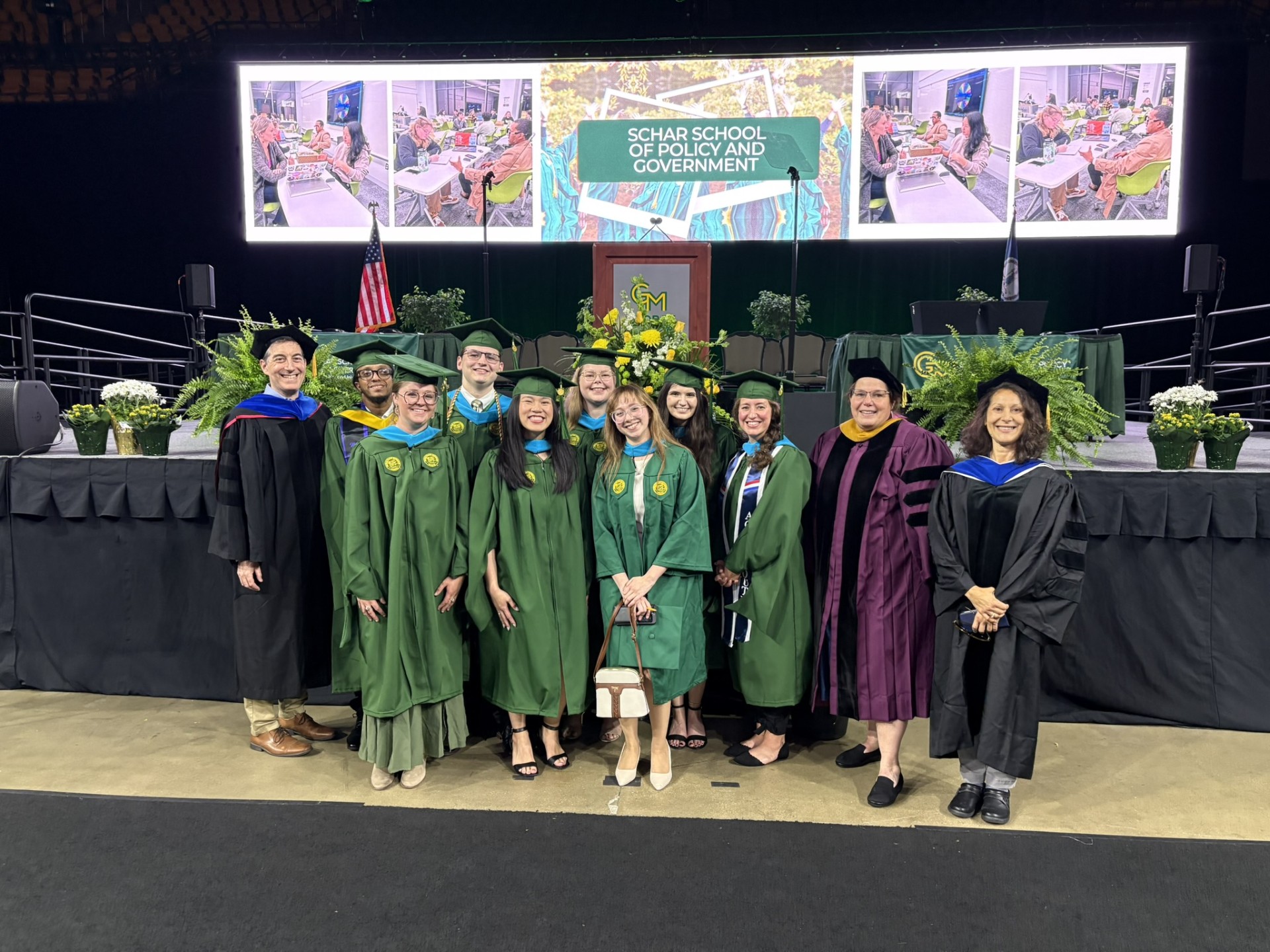
The Biodefense Graduate Program at the Schar School of Policy and Government at George Mason congratulates the following students for graduating on May 14 with a Master of Science in Biodefense: Samanta Aiken, Tracy Baughman, Diandra Cruz, Alex Delaney, Liesl Jensen, Margeaux Malone, Rachel Nas, Zaccary Saine, Myriam Sakly, Gioia Salamido, Christine Woods, and Yoftahie Zewdie. The program also congratulates Renee Katz, Brent Lee, and Matthew Stoffer for receiving a Certificate in Biodefense, Melissa Cox and Renee Katz for receiving a Certificate in Global Health and Security, and Sarah Certel and Dawie Tola for receiving a Certificate in Science, Technology, and Security. In addition, Margeaux Malone was named the Outstanding Biodefense MS student of the year for her stellar academic record and commitment to bridging the gap between science and policy to strengthen our defenses against zoonotic biological threats.
Biodefense Professor Receives Inaugural Schar School Adjunct Teaching Award
Dr. Katalin “Kati” Kiss received the Schar School’s inaugural award for adjunct teaching at this year’s graduation and award ceremony. Dr. Kiss is the longest-serving adjunct professor in the Biodefense Graduate Program, having taught BIOD 604: Emerging Infectious Diseases: Bacteria and Toxins since Fall 2015. This is a core course in the program that covers the biology and epidemiology of key biological threats from anthrax to Zika. Dr. Kiss has designed her course to be comprehensive and rigorous and yet provide students without a strong scientific background with the foundational knowledge they need to assess the risks posed by different bacterial and toxin threats. Students widely praise Dr. Kiss in their feedback such as “The professor made this class easy to understand especially for those without a science background” and “Dr. Kiss is amazing at explaining course concepts in a way that is easy to understand and entertaining at the same time.” Dr. Kiss also regularly serves on the qualifying exam committee for Biodefense doctoral students and has served as a mentor to numerous Biodefense students. Dr. Kiss has taught this course while conducting and managing research related to biodefense for the American Type Culture Collection (ATCC). As a result, Dr. Kiss has direct experience with several of the biological threats she teaches about which provides students with a unique perspective on the science of biodefense.

Schar School Hosting Major Terrorism Conference
George Mason University, in partnership with the Government Technology and Services Coalition’s Homeland Security Today, will host the inaugural “Counterterrorism 2025: Terrorism Trends, Tactics, and Targets” summit on Tuesday, June 3 in Arlington, Virginia. Convened by the Global Terrorism Trends and Analysis Center (GTTAC) at the Schar School of Policy and Government’s Terrorism, Transnational Crime and Corruption Center (TraCCC), this full-day event will examine the evolving landscape of global terrorism and the innovative strategies being developed to address this threat. Experts from across sectors will engage in discussions on emerging threats, including international and state-sponsored terrorism, lone actors, and newly designated groups such as Mexican cartels and transnational gangs. Key sessions will cover the use of cyber tools, drones, IEDs, and the potential threat of weapons of mass destruction. The summit will also highlight the role of data analytics, information sharing, and counter-narrative strategies in modern counterterrorism efforts, with a special focus on the work of GTTAC in supporting the U.S. Department of State’s global terrorism analysis. Biodefense Program director Dr. Gregory Koblentz will be moderating the panel on emerging technology and terrorism. For more information and to register, please visit this site.
Funding Cuts and Other Issues Continue to Pose Challenges to Foreign Aid and Relevant Organizations
WHO Scales Back, Announces Leadership Changes
The WHO recently announced it has reduced its management team by half as it prepares to scale back operations, four months after the US announced it will withdraw from the organization and slash its funding. WHO Director-General Tedros Adhanom Ghebreyesus told attendees at a budget committee hearing, “To be blunt, we cannot do everything,” as his organization faces a 21% budget cut for 2026-27.
A new WHO leadership team has also been announced that is much smaller than previous leadership teams have been. This change has also removed some long-standing leaders, including Mike Ryan, Deputy Director General and Emergencies Programme Director, and Bruce Aylward, Senior Advisor to the Director-General. These and other changes to key leadership are set to go into effect on June 16.

Foreign Aid Cuts Threaten Women’s Organizations Globally
UN Women recently published its latest report, “At a Breaking Point: The Impact of Foreign Aid Cuts on Women’s Organizations in Humanitarian Crises Worldwide.” The report uses the results of a rapid global survey that was conducted among 411 women-led and women’s rights organizations across 44 crisis contexts, ultimately finding that 90% of surveyed organizations have been impacted by funding cuts.
These cuts are pushing these organizations to their limits. 47% of those surveyed are expected to shutter within six months if their current funding situation persists. 51% have already been forced to suspend programs, including those that help support survivors of gender-based violence. Furthermore, 72% have had to lay off staff, many significantly so.
As UN Women highlights, 308 million people are in need of humanitarian assistance across more than 70 countries. This figure continues to rise amid escalating conflicts, climate change, food insecurity, and disease outbreaks. Women and girls are disproportionately affected by crisis, suffering from high rates of sexual violence, malnutrition, and preventable pregnancy-related deaths, among other things. These foreign aid cuts come at a time of greater needs, placing an especially severe burden on women and girls globally.
US Cuts $50 Million in Medical Aid to Zambia
US Ambassador to the Republic of Zambia, Michael Gonzales, tearfully announced this week that the US will cut $50 million in aid to Zambia for medications and medical supplies. However, this cut is not the result of the Trump administration’s broad cuts to foreign aid. Rather, this is the result of a lack of action on the behalf of the Zambian government after it was discovered in 2021 that donated medical supplies were being stolen. In fact, between 2021 and 2023, the US embassy sent “buyers” to more than 2,000 pharmacies across the country, focusing on those that sold the same kinds of drugs being donated by the US. They determined that 95% of these pharmacies were selling stolen drugs, with 45% selling drugs that were given to Zambia by the US for free for Zambians in need.
Ambassador Gonzales expressed frustration, explaining that the embassy met with representatives of the Zambian government 33 times in relation to this issue. He said that there was minimal action, with only a couple mid-level officials being arrested. He did also explain that the $50 million cut will not take effect until the end of the year, hopefully giving the Zambian government time to find alternative procurement avenues.
The ambassador said in a statement, “I’ve lost sleep over this. I’ve cried over this because I know that it’s not going to be senior officials or the senior people who are getting rich from this, who are going to hurt. I know it’s going to be the poor family in rural Zambia whose baby gets malaria and they won’t have access to antimalarials. It breaks my heart…But, I also have a duty to the American people, to the American taxpayer, to safeguard and ensure the good use of these resources.”
The US provides about $600 million in aid to Zambia annually, $450 million of which goes to health-related efforts. This has been extremely effective, with 98% of HIV-positive people in the country now aware of their status, and 99% of those on medication for the virus. Approximately 11% of the country is HIV-positive. More than half of the country lives below the international poverty line.
Further Reading:
- “How Hard Are USAID Cuts Hitting Africa’s Health Care?” Silja Fröhlich, Deutsche Welle
- “Gates Can’t Do It Alone,” Carmen Paun, Politico
- “How US Funding Cuts Could Derail Years of Progress in Burundi’s HIV Response,” UNAIDS
- “Brown Professor Sounds an Alarm: An Interview with Dr. Craig Spencer,” Matthew Kotcher, Brown Political Review
US Surpasses 1,000 Measles Cases
The number of measles cases in the US has risen to 1,024 as of today, with cases being reported across 30 states, including Alaska, Arkansas, California, Colorado, Florida, Georgia, Hawaii, Illinois, Indiana, Kansas, Kentucky, Louisiana, Maryland, Michigan, Minnesota, Missouri, Montana, New Jersey, New Mexico, New York, North Dakota, Ohio, Oklahoma, Pennsylvania, Rhode Island, Tennessee, Texas, Vermont, Virginia and Washington.
This is the first time in five years that the US has surpassed 1,000 cases, with the country now nearing the total number seen in 2019 when 1,274 cases were confirmed across the country over the course of the year. The CDC reports that 13% of measles patients in the US this year have been hospitalized, many of whom are under the age of 19. The CDC also reports that about 96% of cases are in unvaccinated people, while 1% are in those who have only received one dose of the MMR vaccine, and 2% are in those who received both doses. One dose is considered 93% effective, and two are considered 97% effective against measles.
Further Reading:
- “Unpacking RFK Jr.’s ‘Doublespeak’ on Vaccines,” Lauren Weber, The Washington Post
- “RFK Jr. Says People Shouldn’t Take His Medical Advice When Asked About Vaccines at Hearing,” Sara Moniuszko, CBS News
- “Trump Health Cuts Create ‘Real Danger’ Around Disease Outbreaks, Workers Warn,” Michael Sainato, The Guardian
Administration Cut $2.7 Billion in NIH Research Funding in First Three Months of 2025
A new committee report by the Senate HELP Committee’s minority staff criticizes the Trump administration for what the report calls its “war on science,” including termination of research funding, firing of thousands of federal employees, and removal of scientific data and guidelines from government websites. The report also claims that the administration cut $2.7 billion in research funding at the NIH through March, a figure much larger than previous estimates that put the number at about $1.8 billion.
The report also criticizes the administration for suppressing what scientists can say, controlling how scientists work together and make decisions, and erasing scientific data. Other key criticisms include failing to provide committee minority staff with any details in writing about mass firings within agencies and the functions fired employees served (despite multiple requests), as well as the administration’s undermining of the importance of vaccines in regards to the measles outbreak.
Further Reading:
- “Trump’s ‘Fear Factor’: Scientists Go Silent as Funding Cuts Escalate,” Warren Cornwall, Science
- “RFK Jr., DOGE Gutted Legally Required Offices. Courts May Undo It All.” Alice Miranda Ollstein and Sophie Gardner, Politico
- “The Hidden Ways Trump, DOGE are Shutting Down Parts of the U.S. Government,” Hannah Natanson and Maxine Joselow, The Washington Post
- “Importance of Reinstating CDC’s Healthcare Infection Control Practices Advisory Committee (HICPAC),” The Society for Healthcare Epidemiology of America
“Rapid National Response to Smallpox Attack in the United States”
The article “Rapid National Response to Smallpox Attack in the United States” by Biodefense MS alumnus Zachary Berliner (‘24) was recently published in Volume 21 of the Michigan Journal of Public Affairs (p. 53-61). In this analysis, based on a paper he wrote for Scott Wollek’s BIOD 710: Health Security Preparedness course, Zachary begins by briefly discussing the history of smallpox eradication and the investigations into the use of the variola virus as a bioweapon. The article then depicts the potential risks of future attacks and outbreaks, outlining the American population’s immunological vulnerability; the dual-use research of concern studies of Jackson et al. (2001), Rosengard et al. (2002), and Noyce et al. (2018); and the American government’s failures to adequately respond to the recent COVID-19 and mpox pandemics. He continues by describing the current structure of the government’s smallpox response and by highlighting its shortcomings. The post concludes with three major policy reforms. First, “the US government should sign a new, substantial contract with Bavarian Nordic, the [Jynneos] vaccine’s manufacturer” to make Jynneos the primary smallpox vaccine stored in the Strategic National Stockpile. Second, “the CDC should create a Rapid National Reporting Window that local health departments can use to report cases of smallpox and other diseases of bioterrorism risk directly to the CDC.” This Window will reduce bureaucratic gridlock in the pursuit of a federal outbreak response. Finally, Zachary proposes a Rapid National Response that “[resolves] the cooperation and efficiency issues” between SLTT health departments, CDC, ASPR, FEMA, HHS, DHS, and doctors by reducing redundancies. “With the implementation of these proposed policies, the United States government will be better equipped to respond efficiently to a smallpox attack and reduce civilian suffering.”
Along with his Biodefense MS, Zachary Berliner also holds an ScM in Molecular Microbiology and Immunology from the Johns Hopkins University Bloomberg School of Public Health. He is presently looking for policy and analysis opportunities focused on biodefense and health security, and he also has interests in counterterrorism and weapons of mass destruction.
“Identifying and Closing Gaps in the Federal Select Agent Program”
“In this report, RAND researchers provide an overview of expert-elicited gaps in the Federal Select Agent Program (FSAP) and suggested mitigation measures for those gaps. FSAP is one way in which the federal government attempts to keep researchers and the public safe from harmful pathogens. FSAP regulates the possession, use, and transfer of dangerous biological materials. Responsibilities include setting security standards for facilities and individuals working with those materials, assessing risk and reporting the standards and limitations on the type of work that can be conducted, performing inspections and investigating incidents of noncompliance, and mandating the requirements for the destruction of materials after work with them has concluded.”
Biodefense PhD program alumna Saskia Popescu co-authored this report.
“A Bio-Responsibility Strategy for Gain-of-Function Research Oversight”
Texas A&M’s Ben C. Snyder recently published this piece with Think Global Health, writing in part, “After more than a decade of debate over whether gain-of-function research poses unacceptable risks or provides valuable scientific and public health benefits that justify the risks, the executive order creates an opportunity to move past those disagreements. To do so, policymakers and scientists should advocate for a new independent agency devoted to bio-responsibility that can develop integrated, risk-based, and flexible models for U.S. government oversight of pathogen research.”
What We’re Listening to 🎧
Biosecurity: Changing the Game, Ep. 5, Taking Biological Threats Off the Table Through Next-Generation Global South Leadership
“In this episode, Dr. Dinah Nasike brings together a group of next generation leaders who have decided to get involved in taking biological threats off the table by pitching a powerful proposal to the world on the 100 Days Mission: The Biosecurity Emerging Leaders Declaration at the 61st Munich Security Conference.”
Listen here.
ICYMI: 2025 state of U.S. Biodefense Address
From the Bipartisan Commission on Biodefense: “Commission Executive Director Dr. Asha M. George delivered the first annual State of National Biodefense address. The increasing biological threat and uncertainty surrounding federal biodefense programs and capabilities necessitates a clear-eyed examination of the threat and US efforts to address critical capability gaps. This address lays out the current realities of national biodefense and the Commission’s vision for a future where the Nation can more effectively prevent, deter, prepare for, detect, respond to, attribute, recover from, and mitigate biological incidents.”
Watch the address recording here.
NEW: Biosecurity: A Priority in the Era of Pandemics and AI
From PAN: “The risks of new pandemic threats are compounding. Zoonotic spillover and uncontained outbreaks are well-known risks that are not yet well enough addressed. Today, focus must also turn to biosecurity and biosafety risks. Beyond naturally occurring infectious disease threats, the risks of a manmade pandemic — by accident or by design — must be mitigated.”
“Pandemic Action Network (PAN) and The Independent Panel for Pandemic Preparedness and Response will convene a public event, Biosecurity: A Priority in the Era of Pandemics and AI, on the sidelines of WHA78 to discuss opportunities and risks in our evolving global health, technological, and geopolitical landscape, and offer concrete next steps to prioritise biosecurity and biosafety efforts needed to keep the world safe and secure.”
This event will take place on May 21, 0700-0800 CET in Geneva. Register here.
NEW: The Second Annual State of the Science Address
From NASEM: “We invite you to join National Academy of Sciences President Marcia McNutt for the second annual State of the Science address, to be delivered on June 3 [3-5 pm EDT] in Washington, D.C. The event will explore the current status of the U.S. research enterprise and strategies for navigating a rapidly changing scientific landscape.”
“Register to Attend In Person or Virtually.”
NEW: What Does H5N1 Have to Do with the Prices of Eggs?
From NASEM: “The high cost of eggs has been one of the most visible societal impacts of H5N1 bird flu. First detected on U.S. poultry farms in February 2022 and in U.S. dairy cattle in 2024, the deadly bird flu strain has now spread to all fifty states. What are the risks to humans and susceptible animals, like cats? How are farmers coping with the disease, and what role do state and local officials play? How do costs along the supply chain translate to costs at the grocery store?”
“Join us for our second “Healthy Exchange” webinar in our Special Edition Bird Flu Series on June 3, 2025, from 1:00-2:30 PM ET for an informal discussion and Q&A with three animal health experts who will share their perspectives on managing the spread and impacts of bird flu.”
Register here.
Pandemic Readiness in an Uncertain World
From the Geneva Graduate Institute: “Based on lessons from the COVID-19 pandemic, The Independent Panel for Pandemic Preparedness and Response (The Independent Panel) recommended a package of evidence-based reforms as a blueprint for transforming global pandemic prevention, preparedness and response systems. Since delivering their main report, the Independent Panel Co-Chairs – Her Excellency Ellen Johnson Sirleaf and the Right Honourable Helen Clark – along with several members have continued to advocate for implementation of the package.”
“While some progress has been made since 2021, it has been uneven and insufficient, and today dangerous gaps remain in national, regional and global systems to prevent, prepare for, and respond to emerging infectious disease threats. Political leadership has waned to dangerously low levels. This year has been tumultuous, and the level of uncertainty presents wide-ranging consequences for achieving a world safe from the threat of another pandemic.”
“Yet despite the challenging geopolitical landscape, the World Health Organization (WHO) Member States have reached consensus on a proposal for a pandemic agreement, which will now be put to the 78th World Health Assembly for adoption. This is a critical moment, but leadership and continued action are needed to protect the world from pandemic threats.”
“Informed by four new policy briefs developed by The Independent Panel, this event will engage leaders and experts in an open conversation about the prospect of delivering pandemic preparedness and response reforms over the next 12-18 months, delving into global and regional challenges, barriers to progress, and potential levers for change.”
This hybrid event will take place on May 20, 12-2 pm CEST. Learn more and register here.
Biosecurity: A Priority in the Era of Pandemics and AI
From PAN: “The risks of new pandemic threats are compounding. Zoonotic spillover and uncontained outbreaks are well-known risks that are not yet well enough addressed. Today, focus must also turn to biosecurity and biosafety risks. Beyond naturally occurring infectious disease threats, the risks of a manmade pandemic — by accident or by design — must be mitigated.”
“Pandemic Action Network (PAN) and The Independent Panel for Pandemic Preparedness and Response will convene a public event, Biosecurity: A Priority in the Era of Pandemics and AI, on the sidelines of WHA78 to discuss opportunities and risks in our evolving global health, technological, and geopolitical landscape, and offer concrete next steps to prioritise biosecurity and biosafety efforts needed to keep the world safe and secure.”
This event will take place on May 21, 07.00-09.00 CET. Learn more and register here.
Assessing Research Security Efforts in Higher Education, A Workshop
“The National Academies of Sciences, Engineering, and Medicine cordially invites you to attend a workshop to consider potential measures of effectiveness and performance, and the data needed, to assess research security and protection efforts in higher education by a range of Federal agencies.”
“The workshop will be held on Thursday, May 22, 2025 from 9:00 AM to 4:00 PM U.S. Eastern and Friday, May 23, 2025 from 9:00 AM to 1:30 PM U.S. Eastern at the National Academy of Sciences Building, 2101 Constitution Avenue, NW, Washington, DC 20418. A remote participation option is available.”
Learn more and register here.
International Pandemic Sciences Conference
“Representatives from academia, industry, civil society and policy are invited to gather in Oxford, UK, and online from 30 June – 1 July 2025 for the International Pandemic Sciences Conference 2025.”
“This year’s conference theme, Getting Ahead of the Curve, will explore how we can work together to predict, identify and control epidemic and pandemic threats globally. ”
“Over two days of plenary, parallel and networking sessions, stakeholders from different sectors and communities will have the opportunity to share ideas, experiences and strategies on prediction, early detection and control of pandemic threats. ”
“The International Pandemic Sciences Conference 2025 is hosted by the Pandemic Sciences Institute at the University of Oxford.”
Learn more, register, and submit abstracts here.
SBA.4 International Synthetic Biology and Biosecurity Conference in Africa
From SynBio Africa: “The SBA 4.0 conference will serve as a platform for fostering connections among industry, academia, community groups, and policymakers. It will showcase innovative applications of synthetic biology and AI, and highlight ongoing efforts in biomathematics, biomanufacturing, one-health, biosafety and biosecurity. It will also facilitate networking and information exchange. Key focus areas include tackling agriculture, health, environmental management, and industry challenges. In Africa, synthetic biology is poised to drive the national development agenda by promoting a sustainable bioeconomy, supporting health and agricultural systems, and aiding environmental conservation and restoration. This event will provide a vital opportunity for stakeholders to discuss and strategize the integration of synthetic biology innovations, address policy, legal frameworks, and communicate the benefits of the technology.”
This conference will take place July 23-25 in Kigali. Learn more and register here.
CTD-SPECTRE 2nd Annual Symposium
“The CTD-SPECTRE Symposium on Tropical and Emerging Infectious Diseases for Clinicians and Translational Scientists 2025 offers a unique opportunity to connect with global experts, gain cutting-edge insights, and collaborate with peers dedicated to infectious disease research and treatment.”
“Taking place September 16 -19, 2025, at the historic Grand Galvez in Galveston, TX, this immersive symposium will unite clinicians, translational investigators, and trainees to explore the latest breakthroughs in tropical and emerging infectious diseases.”
Learn more and register here.
NEW: New WHO Course on Dual-Use Research and Responsible Use of the Life Sciences
The WHO Academy has made available a new training course designed to deepen your knowledge and enhance your approach to dual-use research and responsible use of the life sciences. This course examines these dual-use research issues and discusses ways to identify and mitigate potential biorisks as part of a multi-sectoral and cooperative approach across the One Health spectrum that promotes the safe, secure and responsible use of the life sciences to prevent accidents, unanticipated and deliberate misuse of biological materials, knowledge and emerging technologies. The course is multifaceted, accessible, adaptable, engaging, and interactive for a wide range of One Health audiences. Biodefense Program director Dr. Gregory Koblentz contributed to the development of the course. It’s a free, self-paced 3-hour course with a certificate of participation upon completion. You can enroll in the course here.
OPCW-The Hague Award 2025 Open for Nominations
“The Organisation for the Prohibition of Chemical Weapons (OPCW) in partnership with the City of The Hague has opened a call for nominations for the 2025 OPCW-The Hague Award. Full details of the eligibility criteria and requirements for nominations, as well as the online nomination form, are now available on the OPCW official website.”
Learn more about the award here.
WHO in Action – WHO Pandemic Fund Newsletter
The WHO recently created a newsletter providing updates on its Pandemic Fund and the projects it has in more than 70 countries focused on pandemic prevention, preparedness, and response activities. The first newsletter is available here and introduces the Pandemic Fund Navigator, shares stories from Bhutan, Kazakhstan, Mongolia, Sri Lanka, Togo, and Yemen, and more. Subscribe here.
 The Pandora Report