
This week’s Pandora Report covers more updates from HHS, including the MAHA Commission’s report that contained fake citations and RFK Jr.’s threat to ban government scientists from publishing in top medical journals, the US and Argentina’s effort to create an “alternative” to the WHO, and more.
Defining Sequences of Concern for Nucleic Acid Synthesis Screening
A distinguished group of biosecurity experts, including Biodefense Program director Professor Gregory Koblentz, published an article in Applied Biosafety, “The Case for Limiting “Sequences of Concern” to Those with Demonstrated Pathogenic Function,” on how to best use sequences of concern to screen synthetic nucleic acid orders. Screening synthetic nucleic acid orders for sequences of concern is a necessary part of a healthy biosecurity regime, but it exacts costs for nucleic acid providers. Taxonomy is and will remain a critical part of the decision-making process for screening, especially for viral sequences. But, moving forward, the function of a sequence will also be determinative of its level of concern, or lack thereof. Stakeholders continue to debate which functions are “of concern.” However these are ultimately adjudicated, nonviral sequences with unknown or hypothetical functions which, by definition, can bear no resemblance to sequences with concerning functions, must be considered innocent of harmful effects. To qualify as a nonviral sequence of concern, the sequence to which it is the best match must be demonstrated in the published literature to have a function of concern.
HHS Updates
MAHA Report Included Fake Citations, Likely AI Use
The “landmark” report released by the MAHA Commission (led by RFK Jr.) that the administration portrays as a “clear, evidence-based foundation” for actions on children’s health issues includes multiple fake citations. NOTUS first reported that the report included inaccurate citations before The New York Times verified and identified additional fake citations. The use of citations that incorrectly credit an author with a publication or cite non-existent publications is a frequent issue with generative AI, prompting many to suspect it was used in the production of this report. The White House has since blamed this on “formatting errors” and uploaded a new report with corrected citations.
Further Reading:
- “White House MAHA Report May Have Garbled Science by Using AI, Experts Say,” Lauren Webber and Caitlin Gilbert, The Washington Post
Secretary Kennedy Threatens to Ban NIH Scientists from Publishing in Leading Journals, Calls Them “Corrupt”
RFK Jr. continued his assault on institutions that conflict with his worldview this week, this time threatening on a podcast to prevent government scientists from publishing their work in major medical journals. While appearing on the podcast, Ultimate Human, Kennedy described the New England Journal of Medicine, the Journal of the American Medical Association, and The Lancet as “corrupt,” while claiming that they publish studies that are funded and approved by pharmaceutical companies. Kennedy said, “Unless those journals change dramatically, we are going to stop NIH scientists from publishing in them and we’re going to create our own journals in-house.”
This statement conflicts with prior ones made by the NIH director, Jay Bhattacharya. Bhattacharya recently told WELT that he supports academic freedom, which “means I can send my paper out even if my bosses disagree with me.” Battacharya and the FDA commissioner, Marty Makary, recently launched their own journal, the Journal of the Academy of Public Health, which they claim will promote open discourse.
Further Reading:
- “The Authoritarian War on Science,” Jessica Knurick
- “History May Not be Repeating but It Is Certainly Rhyming,” Fintan Steele, Genetic Engineering & Biotechnology News
- “Trump’s Call for ‘Gold Standard Science’ Has Prompted an Outcry: Here’s Why,” Jeff Tollefson and Dan Garisto, Nature
- “A Harvard Scientist Built a Database of 2,100 NIH Grant Terminations. Then His Own Funding Was Cut,” Anil Oza, STAT News
- “Gain of Fiction: How COVID Origins Motivated Defunding of U.S. Science,” Gigi Gronvall, Think Global Health
- “Federal Cuts Ripple Through a Bioscience Hub in Rural Montana,” Katheryn Houghton, KFF Health News
RFK Jr. Announces End of COVID-19 Vaccine Recommendation for “Healthy Children and Healthy Pregnant Women”
On Tuesday, Secretary Kennedy announced that HHS will no longer recommend the COVID-19 vaccine for healthy children and pregnant women. In a video posted to X, Kennedy said, “I couldn’t be more pleased to announce that as of today, the COVID vaccine for healthy children and healthy pregnant women has been removed from the CDC recommended immunization schedule. Last year, the Biden administration urged healthy children to get yet another COVID shot despite the lack of any clinical data to support the repeat booster strategy in children.”
However, the CDC has not removed the vaccine from the childhood vaccine schedule. Rather, according to an update CDC released on Thursday, the agency says healthy children ages six months to 17 years may get the vaccine provided that parents are “informed by the clinical judgement of a healthcare provider and personal preference and circumstances.” The new schedule does not include a recommendation for healthy pregnant women.
Further Reading:
- “CDC Blindsided as RFK Jr. Changes COVID-19 Vaccine Recommendations,” Lena H. Sun, The Washington Post
- “HHS Unilaterally Changes Vaccine Guidance, Providing No Justification, Imperiling American Infants,” E. Rosalie, InfoEpi Lab
CDC Functionally Silenced
HHS has taken over the CDC’s main social media accounts, according to emails reviewed by NPR, and they have gone over a month without posting new content. This comes as many of CDC’s newsletters have stopped being distributed all together, and CDC’s Health Alert Network has not dispatched any health alerts about disease outbreaks since March.
The reason? CDC is now not in control of its own social media and communications. Rather, most CDC communications now require approval from HHS before they can be posted, halting most newsletters and social media communications. Previously, HHS rarely reviewed the content of CDC’s social media posts or newsletters, which allowed CDC to communicate important information quickly and often.
CDC has more than 150 newsletters on a variety of topics that were previously sent weekly, monthly, and quarterly to tens of thousands of subscribers. Facts from these newsletters were often shared on CDC social media accounts, helping further spread important information. Furthermore, CDC’s MMWR was often cross-posted on multiple platforms. This is no longer the case because of this change, and it is having serious impacts on CDC and those who rely on the information it provides by putting political whims before communicating accurate, timely information to the public.
Further Reading:
- “CDC Communication Channels Go Silent, Raising Health Risk Concerns,” CS Staff, Campus Safety
- “Why is the CDC Located in Atlanta and Not D.C.? History Tied to Coca-Cola and Mosquitoes,” Rebecca Grapevine, NPR
Administration Chooses to Remain Silent on E. Coli Outbreak Linked to Single Lettuce Processor
An E. coli outbreak linked to a single lettuce processor that sickened multiple people, and killed a nine-year-old boy in Indiana, was not disclosed publicly by the administration. An internal FDA memo dated February 11 linked the outbreak to the lettuce processor and ranch dressing. However, in what experts have described as a break with common practice, officials never released any public communications about this outbreak following the investigation, including the name of the grower. While the investigation began under the Biden administration, the Trump administration chose to not release this information because, according to the FDA, no more contaminated product remains on the market.
Further Reading:
- “Silence on E. Coli Outbreak Highlights How Trump Team’s Changes Undermine Food Safety,” Stephanie Armour, KFF Health News
- “How Safe is the Food Supply After Federal Cutbacks? Experts Are Worried,” Yuki Noguchi, NPR
- “USDA Withdraws Proposal to Reduce Salmonella in Poultry,” Chris Dall, CIDRAP
HHS Cancels $766 Million Contract for Moderna Bird Flu Vaccine
Moderna was notified this week that HHS has withdrawn funds it awarded to the company in July 2024 and in January 2025 to pay for the development and purchase of its investigational vaccine designed to protect against potential pandemic influenza viruses, including H5N1. The funds were awarded to the company by the Biomedical Advanced Research and Development Authority. The vaccine, mRNA-1018, relies, as the name implies, on mRNA technology, which has drawn the ire of Secretary Kennedy despite mRNA vaccines like those for COVID-19 having been proven safe and effective.
Further Reading:
- “HHS Cancels $766 Million in Moderns Contracts for Vaccines for Flu Pandemics,” Helen Branswell and Matthew Harper, STAT News
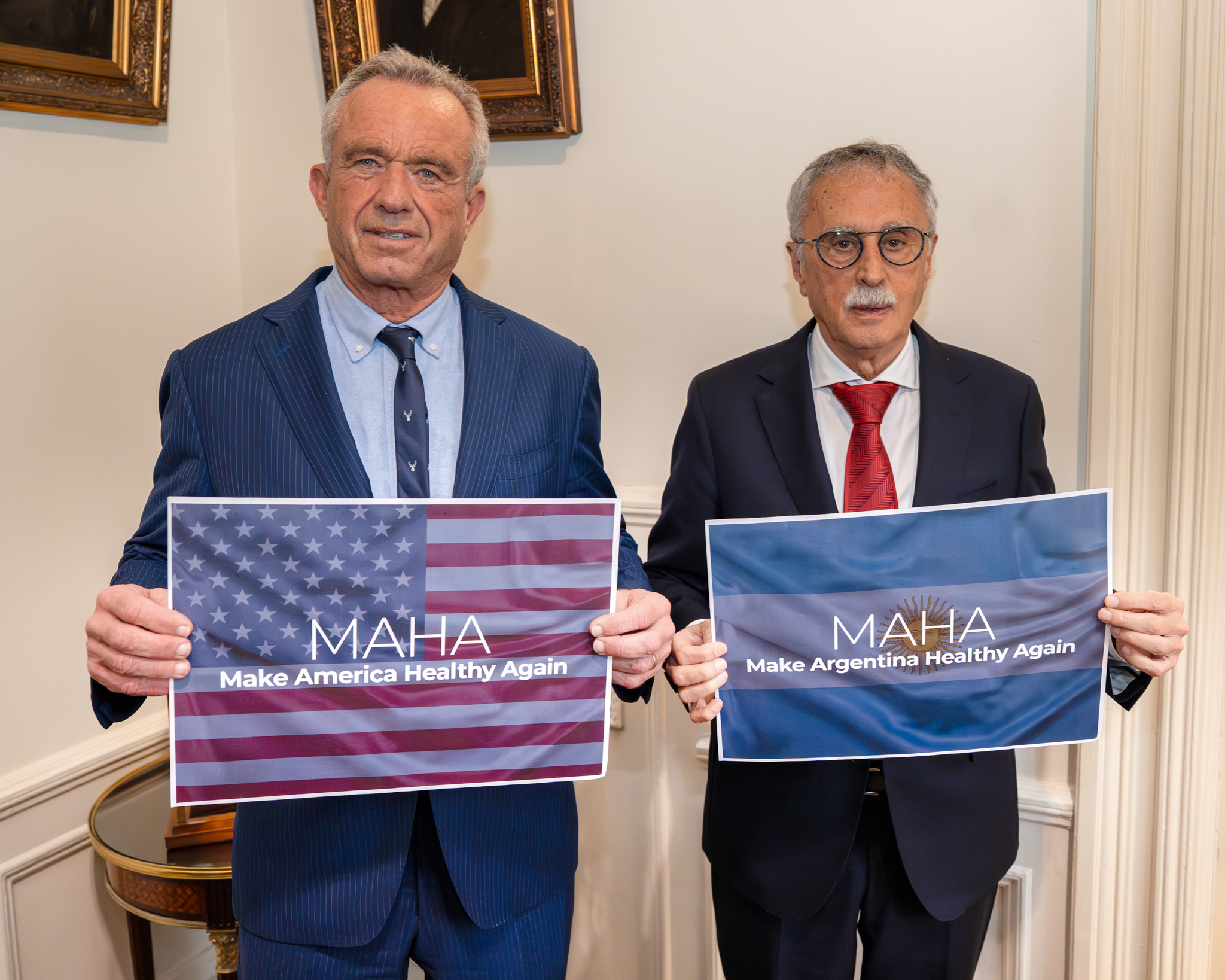
US and Argentina Launching “Alternative” to World Health Organization
The US and Argentina are reportedly in talks to form an “alternative international health system” that is separate from the WHO. In a joint statement released this week, HHS Secretary RFK Jr. and Argentine Minister of Health Mario Lugones commented on their countries’ decisions to withdraw from the WHO. Their statement read in part, ““The WHO’s handling of the COVID-19 pandemic revealed serious structural and operational shortcomings that undermined global trust and highlighted the urgent need for independent, science-based leadership in global health.”
It later continued, “There are well-documented concerns regarding the early management of the pandemic and the risks associated with certain types of research. Rather than ensuring timely transparency, the WHO failed to provide critical access to information, impairing countries’ ability to act swiftly and effectively, with devastating global consequences.”
“Young People Will be Key to Preventing the Next Pandemic”
Kirsten Angeles, Jose Garza-Martinez, Yorgo El Moubayed, Shrestha Rath, and Jon Arizti Sanz recently published this piece in The Bulletin of the Atomic Scientists, writing in part, “The COVID-19 pandemic laid bare the implications of this inequality: By late 2021, high-income countries, for example, were averaging more than one vaccine dose per person while low-income countries were administering fewer than four doses per hundred people. And while wealthy countries could develop and distribute vaccines, the African continent, by and large, could not. The recently adopted Pandemic Agreement, emphasizing thing like the need for stronger health systems, better resource sharing, and rapid local manufacturing of vaccines is a step in the right direction, but there is more that still needs to happen to address the world’s uneven ability to prepare for or respond to pandemics. Global health forums like the World Health Assembly, where the pandemic agreement was recently approved, need to fully incorporate the voices and expertise of young people in the Global South, where 90 percent of the world’s 15- to 24-year-olds live.”
“Are We Ready for a ‘DeepSeek for Bioweapons’?”
Steven Adler wrote this piece for LawFare, writing in part, “But, as of last week, we have a leading indicator of widespread models with dangerous capabilities. Specifically, Anthropic’s recent model release—Claude Opus 4—sounded a warning bell: It is the first AI model to demonstrate a certain level of capability related to bioweapons. In particular, Anthropic can’t rule out if the model can “significantly help” relatively ordinary people “create/obtain and deploy” bioweapons: “uplifting” their abilities beyond what they can achieve with other technologies (like a search engine and the internet). These dangerous capability evaluations have been conceived of as an “early warning system” for catastrophic AI capabilities, and the system has now been triggered.”
“The AI Threat to Public Health No One is Thinking About: A Fake Bioterrorist Attack”
Jay K. Varma recently published this opinion piece with STAT News, in which he writes “While I am deeply concerned about the long-term existential threat of AI and synthetic biology to create new or modified pathogens, my extensive experience detecting and controlling outbreaks around the world makes me fear a more immediate threat: a rogue actor using existing AI tools to simulate a bioterrorism attack that would destabilize a region or the world.”
“Cloud Labs and Other New Actors in the Biotechnology Ecosystem: Export Control Challenges and Good Practices in Outreach”
This SIPRI publication was written by Kolja Brockmann, Lauriane Héau and Giovanna Maletta: “The biotechnology ecosystem encompasses an expanding set of companies, start-ups, universities and other research organizations and a vibrant do-it-yourself biology community. Advances in biotechnology and the increasingly diverse profiles of new entrants to the ecosystem pose a range of chemical and biological weapon (CBW) proliferation risks and export control challenges. Among them, cloud laboratories (cloud labs) are an example of a new actor entering the biotechnology ecosystem that is pioneering a new business model. Cloud labs exemplify how developments in emerging technologies converge in a way that poses challenges for the application of export controls. Cloud lab providers offer fully automated, modular laboratories to customers for remote use to perform experiments and increasingly artificial intelligence-enabled research and analyses. Managing the CBW risks posed by cloud labs and other new actors in the biotechnology ecosystem requires awareness by relevant stakeholders and effective export control compliance measures. European Union member states and Australia Group participating states should therefore continue to assess and discuss the development of cloud labs, work to provide relevant guidance materials and develop good practices for conducting outreach activities targeting cloud lab providers and other relevant actors to reduce CBW proliferation risks.”
“The State of the World’s Animal Health”
From WOAH: “An inaugural global overview of animal health in a changing world. Published by The World Organisation for Animal Health (WOAH), the State of the World’s Animal Health provides a clear, evidence-based overview of the global animal health landscape. Drawing on WOAH’s robust data systems and the collective expertise of its Members and scientific network, the report delivers timely, objective analysis to inform action and guide progress toward a healthier, more resilient future for animals and people alike.”
What We’re Watching 🍿
“CB Defense Today: Fieldable Sequencing”
“CB Defense Today is an interview program where experts discuss innovations, technologies, and partnerships pertinent to the U.S. Army Combat Capabilities Development Command Chemical Biological Center (DEVCOM CBC) and the chemical and biological defense community.”
“In this episode, public affairs specialist Jack Bunja interviews Dr. Cory Bernhards, a research biologist at DEVCOM CBC, about how the Center’s work in DNA and RNA sequencing contributes to the lethality and readiness of warfighters.”
“Dr. Bernhards explains how DEVCOM CBC researchers are developing the capability for DNA and RNA sequencing in forward operating environments for Soldiers. They are also ensuring that all Soldiers can utilize this equipment, regardless of their background or training. Such capabilities enable our warfighters to easily maintain their readiness.”
Watch here.

The Second Annual State of the Science Address
From NASEM: “We invite you to join National Academy of Sciences President Marcia McNutt for the second annual State of the Science address, to be delivered on June 3 [3-5 pm EDT] in Washington, D.C. The event will explore the current status of the U.S. research enterprise and strategies for navigating a rapidly changing scientific landscape.”
“Register to Attend In Person or Virtually.”
What Does H5N1 Have to Do with the Prices of Eggs?
From NASEM: “The high cost of eggs has been one of the most visible societal impacts of H5N1 bird flu. First detected on U.S. poultry farms in February 2022 and in U.S. dairy cattle in 2024, the deadly bird flu strain has now spread to all fifty states. What are the risks to humans and susceptible animals, like cats? How are farmers coping with the disease, and what role do state and local officials play? How do costs along the supply chain translate to costs at the grocery store?”
“Join us for our second “Healthy Exchange” webinar in our Special Edition Bird Flu Series on June 3, 2025, from 1:00-2:30 PM ET for an informal discussion and Q&A with three animal health experts who will share their perspectives on managing the spread and impacts of bird flu.”
Register here.
International Pandemic Sciences Conference
“Representatives from academia, industry, civil society and policy are invited to gather in Oxford, UK, and online from 30 June – 1 July 2025 for the International Pandemic Sciences Conference 2025.”
“This year’s conference theme, Getting Ahead of the Curve, will explore how we can work together to predict, identify and control epidemic and pandemic threats globally. ”
“Over two days of plenary, parallel and networking sessions, stakeholders from different sectors and communities will have the opportunity to share ideas, experiences and strategies on prediction, early detection and control of pandemic threats. ”
“The International Pandemic Sciences Conference 2025 is hosted by the Pandemic Sciences Institute at the University of Oxford.”
Learn more, register, and submit abstracts here.
SBA.4 International Synthetic Biology and Biosecurity Conference in Africa
From SynBio Africa: “The SBA 4.0 conference will serve as a platform for fostering connections among industry, academia, community groups, and policymakers. It will showcase innovative applications of synthetic biology and AI, and highlight ongoing efforts in biomathematics, biomanufacturing, one-health, biosafety and biosecurity. It will also facilitate networking and information exchange. Key focus areas include tackling agriculture, health, environmental management, and industry challenges. In Africa, synthetic biology is poised to drive the national development agenda by promoting a sustainable bioeconomy, supporting health and agricultural systems, and aiding environmental conservation and restoration. This event will provide a vital opportunity for stakeholders to discuss and strategize the integration of synthetic biology innovations, address policy, legal frameworks, and communicate the benefits of the technology.”
This conference will take place July 23-25 in Kigali. Learn more and register here.
CTD-SPECTRE 2nd Annual Symposium
“The CTD-SPECTRE Symposium on Tropical and Emerging Infectious Diseases for Clinicians and Translational Scientists 2025 offers a unique opportunity to connect with global experts, gain cutting-edge insights, and collaborate with peers dedicated to infectious disease research and treatment.”
“Taking place September 16 -19, 2025, at the historic Grand Galvez in Galveston, TX, this immersive symposium will unite clinicians, translational investigators, and trainees to explore the latest breakthroughs in tropical and emerging infectious diseases.”
Learn more and register here.

NEW: [Training Programme] Disarmament and Non-Proliferation of WMD 2025
From the Asser Institute: “The global non-proliferation norms regarding the use and proliferation of weapons of mass destruction are under pressure. The threat posed by nuclear, chemical and biological weapons has reached levels of urgency not seen since the Cold War. Consequently, there is a growing demand for professionals with the necessary legal, technical and policy expertise to tackle the challenges of today’s non-proliferation and disarmament agenda. Register now for the fifteenth training programme on disarmament and non-proliferation of weapons of mass destruction, co-organised with the Organisation for the Prohibition of Chemical Weapons (OPCW) on 13-17 October 2025 in The Hague.”
“During this intensive training programme, you will receive a comprehensive overview of the international non-proliferation and disarmament framework. You will learn from renowned experts and practitioners in the field and engage in active discussions about key topics and current debates. The programme also provides you with the opportunity to build your professional network with experts in the field, as well as with your fellow participants.”
Learn more and register here.
New WHO Course on Dual-Use Research and Responsible Use of the Life Sciences
The WHO Academy has made available a new training course designed to deepen your knowledge and enhance your approach to dual-use research and responsible use of the life sciences. This course examines these dual-use research issues and discusses ways to identify and mitigate potential biorisks as part of a multi-sectoral and cooperative approach across the One Health spectrum that promotes the safe, secure and responsible use of the life sciences to prevent accidents, unanticipated and deliberate misuse of biological materials, knowledge and emerging technologies. The course is multifaceted, accessible, adaptable, engaging, and interactive for a wide range of One Health audiences. Biodefense Program director Dr. Gregory Koblentz contributed to the development of the course. It’s a free, self-paced 3-hour course with a certificate of participation upon completion. You can enroll in the course here.
 The Pandora Report