
Welcome to this week’s Pandora Report! This issue features the latest developments in AI-driven biotechnology and its implications for biosecurity; updates on the Ebola outbreak in the DRC and international response efforts; an analysis of political interference affecting U.S. public health agencies, research, and vaccine distribution; and profiles of GMU’s experts and students tackling biological and chemical weapons risks worldwide.
Thinking About Graduate Study in Biodefense?
The Schar School of Policy and Government has several upcoming recruitment events, including one for prospective PhD students:
🔗 See all upcoming events here.
☕ Plus: Regional coffee chats with faculty and admissions staff across Maryland, Virginia, and DC. Learn more here.
💡 Tuition Benefit: Master’s and certificate students living in Maryland and DC quality for in-state tuition rates. Learn more and register here.
Preventing Future Pandemics
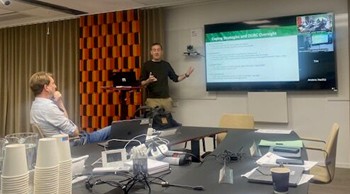
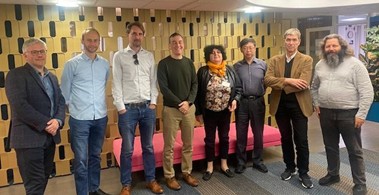
On October 2-3, Professor Gregory Koblentz, director of the Biodefense Graduate Program, participated in a workshop sponsored by the Institute for Futures Studies (IFFS) on ethical global governance to prevent human-made pandemics in Stockholm, Sweden. The workshop, organized by Anders Herlitz from IFFS and Nir Eyal from Rutgers University, brought together an international and multidisciplinary group of experts for two days of discussion on the risks posed by the accidental, reckless, or deliberate release of an engineered or synthetic pathogen capable of causing a pandemic and approaches to reducing these risks. Dr. Koblentz’s presentation, “Global Governance of Dual-Use Research as a Wicked Problem,” was based on his 2014 article, “Dual-Use Research as a Wicked Problem,” which explored why it has been so challenging for policy-makers to resolve the dilemmas generated by the dual-use nature of life sciences research and biotechnology. By the end of the workshop, participants agreed that the benefits of kanelbullar and chokladbollar outweighed the risks and endorsed continued research and production of these delicious Swedish treats.
GMU Biodefense Student Heads to SIPRI to Tackle Biological and Chemical Weapons Risks
Dr. Miranda Smith, a current student in George Mason University’s Biodefense Graduate Program, has joined the Stockholm International Peace Research Institute (SIPRI) as a researcher in its Weapons of Mass Destruction Programme. At SIPRI, she focuses on the governance of biological and chemical weapons in the context of emerging technologies — including synthetic biology, artificial intelligence, automated labs, and dual-use research. Before shifting to policy research, Miranda served as a U.S. Air Force pharmacist with a specialization in CBRN medical countermeasures and held roles across multiple U.S. federal agencies, including the Department of State, Health and Humans, and most recently, USAID, shaping global health security and biodefense strategy.
Erosion of Trust, Science, and Public Health: Impacts of Political Interference on U.S. Agencies and Research
The erosion of scientific expertise, independence, and integrity across U.S. public health agencies continues with the recent firing of Dr. Jeanne Marrazzo, former director of NIAID. Dr. Marrazzo is the latest in a series of institute directors and top scientists dismissed for speaking out against unscientific policies and political interference under the Trump administration and HHS Secretary Robert F. Kennedy Jr., reflecting a broader and troubling purge of talent across the NIH and other federal agencies, specifically targeting those who are politically misaligned with the current administration’s priorities on vaccines and public health.
This comes on the heels as six former U.S. surgeons general – appointed by both Republican and Democratic presidents – issued an unprecedented joint warning about Mr. Kennedy, stating that his leadership is endangering the nation’s heatlh. From the Washington Post: “…We are compelled to speak with one voice to say that the actions of Health and Human Services Secretary Robert F. Kennedy Jr. are endangering the health of the nation. Never before have we issued a joint public warning like this. But the profound, immediate and unprecedented threat that Kennedy’s policies and positions pose to the nation’s health cannot be ignored.”
They argue that Mr. Kennedy has systematically undermined the integrity of federal health agencies like the CDC, FDA, and NIH by prioritizing ideology and misinformation over science, causing low morale, resignations, and a loss of critical expertise. According to the surgeons general, he has promoted discredited vaccine claims, spread misinformation about the HPV and COVID-19 vaccines, and de-emphasized vaccination during the recent U.S. measles outbreak, contributing to preventable deaths. Also, by replacing the CDC’s Advisory Committee on Immunization Practices (ACIP) with unqualified members, some of whom endorse vaccine conspiracy theories, Mr. Kennedy threatens decades of public health progress, such as the eradication of smallpox, elimination of polio in the U.S., and prevention of millions of childhood infections through widespread immunization.
The consequence of this political interference also extends directly into the research enterprise. Sarah Stanley, an Associate Professor of Molecular and Cell Biology at the University of California, Berkely, recounts how routine experiments in her lab on tuberculosis (TB) were abruptly flagged and later terminated by the NIH, after being mischaracterized as “dangerous gain-of-function research” under a recent executive order. ’Gain of Function’ is a broad category of research that involves genetically altering an organism to give it new abilities. These techniques have been essential in developing new therapies for cancer, vaccines, and treatments to improve both agriculture and animal health. Staney notes that her lab’s long-standing methods—such as disabling TB genes to weaken the bacterium—are standard, low-risk techniques vital for developing new treatments. She warns that conflating safe, routine research with dangerous, high-risk experimentation threatens to stall lifesaving research and underscores the dangers of overly broad, politically driven oversight on research. “My work isn’t dangerous, but stopping research that could lead to cures could be,” she says, calling for transparent, scientifically informed, effective oversight that distinguishes real risks from safe, proven methods.
These disruptions to research and agency function have cascading effects on public health policy and vaccine delivery. The CDC, for example, has yet to issue final guidelines for administering COVID-19 vaccines, leaving both children and adults unable to access updated shots. The rollout has been chaotic and delayed – highly unusual for the CDC – which typically acts within hours or days due to the urgency of making shots available before the winter surge. Last month, the CDC’s ACIP added additional hurdles to getting vaccines but made more people eligible; however, the CDC has yet to accept those recommendations; instead freezing everything in limbo. “It’s a mess. And it’s an easily avoidable mess,” says Dorit Reiss, who studies vaccine policies at the University of California, San Francisco.
At the same time, ACIP reversed or weakened several long-standing protections – including ending the use of the combined MMRV vaccine for infants, shifting COVID-19 vaccine guidance for older adults to vague “shared clinical decision-making,” and reconsidering the historically-successful hepatitis B birth dose. This is following the acting CDC director, Jim O’Neill recently calling to break up the MMR vaccine into separate shots for measles, mumps, and rubella – despite no U.S.-approved monovalent vaccines nor any scientific evidence showing a benefit. Many are calling for the CDC to restore genuine transparency, ensure balanced expertise and independence, and support evidence while ensuring diverse expertise. From MedPage Today: “ACIP was once the gold standard – rigorous, independent, and trusted across the political spectrum. That excellence has been abandoned. The rule of law demands better. So do the American people. Unless independence, transparency, and legal integrity are restored, America’s vaccine defenses will continue to unravel – and lives will be the price.”
Lastly, the long-term consequences of this mismanagement extend to the biomedical innovation ecosystem as well. Under the Trump administration, billions in NIH research funding were abruptly frozen, directly affecting universities whose foundation discoveries led to transformative drugs such as Keytruda, Lyria, and others. By disrupting the steady flow of federal support for scientific research, political interference jeopardizes not only current public health measures but also the next generation of medical breakthrough. The combination of political interference, research disruption, public health policy chaos and confusion, and funding freezes on lifesaving research illustrates a cascade of harm – showing how ill-informed political decisions at the top can ripple across the entire U.S. health security apparatus, threating scientific progress, public health and safety, and ultimately, lives.
Further Reading:
- “RFK Jr.’s HHS Killed a Research Grant to Investigate Vaccine Safety, Then Asked the Researcher to Publicly Present Results,” Meg Tirrell, CNN
- “CDC Stops Recommending COVID-19 Shots for All, Leaves Decision to Patients,” Mike Stobbe, AP News
- “CDC Signs Off on Fall COVID Shots. It May Not Be Easy to Get One, Depending on Where You Live,” Erika Edwards, Berkeley Lovelace Jr., and Kaan Ozcan, NBC News
- “Acting CDC Director Calls to ‘Break Up’ the Measles, Mumps and Rubella Vaccine Into Three Shots,” Aria Bendix, NBC News
- “US Antibiotic Importation and Supply Chain Vulnerabilities,” Socal et al., 2025, JAMA Health Forum
Ebola in the DRC: Lessons from Past Outbreaks and Current International Response
As of October 7, the Ebola outbreak in the Democratic Republic of Congo (DRC) has climbed to 64 cases (confirmed or probable) and 43 deaths in Kasai province, representing a case fatality rate of approximately 66%. The CDC’s Center for Forecasting and Outbreak Analytics (CFA) released an updated scenario assessment for the outbreak, analyzing with moderate confidence, that the outbreak will most likely remain under 100 cases (Scenario A in its model). However, the agency noted several uncertainties that could shift conditions toward Scenario B later, reflecting a larger and more complex outbreak.
Health authorities in the DRC are implementing case isolation, contact tracing, and active surveillance, with vaccination campaigns reaching more than 20,000 people, including healthcare and frontline workers. For now, the outbreak remains geographically contained within the Bulape Health Zone of the Kasai province. Still, key uncertainties remain – including the potential for undetected transmission chains, limited accessibility to affected but remote areas (due to impassable roads, natural barriers, and the onset of rainy season); and the potential for spread from survivors through sexual contact. While containment efforts are improving, CDC experts warn that missed cases or delayed surveillance could still alter the trajectory of the outbreak.
In parallel, the European Union has mobilized a robust humanitarian and medical response to bolster local and international efforts. Through its Emergency Response Coordination Centre (ERCC), the EU has deployed a helicopter under its Humanitarian Air Flight operation to reach remote communities and delivered temporary field accommodation in Bulape province to host healthcare experts for 3 months. The EU has also allocated €1.8 million in emergency funding to strengthen on-the-ground response capacity and dispatched two Norwegian medical evacuation specialists to join the WHO’s coordination team. Drawing on lessons from past outbreaks, these coordinated efforts highlight the importance of rapid, data-driven, and well-resourced responses to emerging infectious diseases.
Further Reading:
- “Environmental Air Monitoring in International Airports: A Novel Approach for Enhanced Pathogen Surveillance,” Gratalo et al., 2025
- “Mpox Outbreaks Expose Global Vulnerability As Smallpox Immunity Fades, Experts Warn,” Racheal Abujah, Science Nigeria
- “Gaps in the Global Health Research Landscape for Mpox: An Analysis of Research Activities and Existing Evidence,” Furst et al., 2025, BMC Medicine
- “US COVID Declining After Reaching Peak,” Lisa Schnirring, CIDRAP
- “New Study Shows All-in-One Coronavirus Vaccines Could Save Millions of Lives in Future Pandemics,” CEPI
- “Tracking State Actions on Vaccine Policy and Access,” Jennifer Kates, Clea Bell, Josh Michaud, Elizabeth Williams, and Jennifer Tolbert, KFF
- “Reports Identify Weakness in Global Pipeline for New Antibiotics, Diagnostics,” Chris Dall, CIDRAP
- “Aid Cuts Hit Yemen Amid Measles Crisis,” Annalies Winny, Global Health Now
- “CEPI Backs New Research Into Vaccines Against Multiple Deadly Filoviruses,” CEPI
- “2024 Was A Record-Setting Year for Lifesaving Vaccines,” Bryan Walsh, Vox
AI and Biotechnology at the Edge: Designing Life, Weaponizing Code, and Rethinking Biosecurity
Recent advances in artificial intelligence (AI) have pushed biotechnology into uncharted territory. In a recent preprint from Stanford University, scientists have shown that AI can now design functional viruses from scratch. Using “genomic language models” trained on bacteriophage DNA, researchers created novel viral genomes that successfully infected E. coli strains, with some even outperforming their natural counterparts. The findings demonstrate that computers can now invent viable biological agents, marking a major turning point in biotechnology. The finding raises profound security questions – what happens if these same techniques are used to generate viruses that are lethal to humans? To address this, the U.S. must evolve from a prevention mindset to one of resilience: building computational countermeasures as quickly as threats emerge; expanding government-led, rapid-response manufacturing facilities to mass-produce emergency therapeutics and medicines; and adapting FDA regulations to enable real-time, AI-assisted defense responses. Without these steps, they warn, the line between innovation and catastrophe will continue to blur — and the next AI-generated virus might not be benign.
If AI can design new viruses, it can also be weaponized to design toxins. In a new Science study, Microsoft bioengineer Bruce Wittmann and colleagues conducted a “red-team” experience to test this exact risk. Using AI tools like a would-be bioterrorist, they created blueprints for proteins that could mimic deadly poisons and toxins like botulinum and ricin. When submitting their AI-designed proteins to DNA vendors, the companies’ screening software failed to detect many of the harmful sequences – one tool missed over 75% of potential toxins. “It’s just the beginning,” cautioned Dr. Jaime Yassif, Vice President for Global Biological Policy and Programs at the Nuclear Threat Initiative (NTI). “AI capabilities are going to evolve and be able to design more and more complex living systems, and our DNA synthesis screening capabilities are going to have to continue to evolve to keep up with that,” exposing a widening gap between the pace of AI innovation and the outmoded safeguards meant to prevent its misuse.
At the international level, policymakers are beginning to grapple with these same concerns. In a speech to the UN General Assembly, U.S. President Donald Trump announced plans to pioneer an AI verification system for the Biological Weapons Convention (BWC), a 50-year-old treaty that bans the development and use of biological weapons but currently lacks a formal verification mechanism. The proposal underscores a growing interest in using AI to strengthen global biosecurity – from assessing confidence-building measures reports, to analyzing safeguards related to data and open-source materials (including publications, patents, and financial information), to finally, detecting anomalies or outliers in large datasets. However, several technical and political challenges remain. Data availability and quality vary widely across countries, and AI models are only as reliable as the data they are trained on—a major concern in an era of misinformation and disinformation.
In terms of the political challenges, it would be difficult for many countries to entrust sensitive verification of bioweapons programs to an obscure algorithm. More critically, there is still no clear definition of what modern biological weapons programs look like, making it difficult for AI to accurately identify violations. Even if AI were used just to flag anomalies, countries would still need to reach consensus on inspection procedures, triggers, and governance mechanisms. Ultimately, AI is not a silver bullet for the verification gap of the BWC. However, it could play a supportive role to enhance data analysis and transparency, but real progress will still require political will, trust-building, and significant investment in the treaty’s verification infrastructure.
Further Reading:
- “Prioritizing Feasible and Impactful Actions to Enable Secure Artificial Intelligence Development and Use in Biology,” Josh Dettman, Emily Lathrop, Aurelia Attal-Juncqua, Matthew Nicotra, Allison Berke, RAND
- “AI Can Design Toxic Proteins. They’re Escaping Through Biosecurity Cracks,” Carolyn Y. Johnson, WP
- “AI-Designed Phages,” Asimov Press
- “AI Has Designed Thousands of Potential Antibiotics. Will Any Work?” Rachel Fieldhouse, Nature
- “How AI Can – and Cannot – Improve Verification of the Biological Weapons Convention,” James Revill, Bulletin of the Atomic Scientists
- “When AI Meets Biology: Promise, Risk, and Responsibility,” Eric Horvitz, Microsoft Research Blog
- “Preventing Beats Nonproliferation: Addressing the Risks of Mirror Life,” Mariano-Florentino Cuellar, Corey Hinderstein, and David Relman, Carnegie Endowment for International Peace
- “AI’s Potential To Accelerate Drug Discovery Needs A Reality Check,” Nature
NEW: Governance of Dual-Use Risks of Synthetic Biology: Recent Efforts in China
From the Asia Centre for Health Security: “Scientific progress in cutting-edge biotechnology has enabled the development of new medical countermeasures and disease surveillance capabilities. With the increasing ease of use and accessibility, and lower cost of biotechnology, unintentional misuse or deliberate abuse of dual-use cutting edge biotechnology will result in serious economic and security consequences.
Professor Zhang will explain how the Tianjin University Center for Biosafety Research and Strategy, the first scientific think tank focusing biotechnology-related biosecurity governance in China, raises awareness of the dual-use risks of biotechnology, develops solutions and policies to address these risks, and reinforces ethical practice in the scientific community.”
This event will take place from 6:00–7:00 pm (GMT+08:00) on October 23. Register here.
NEW: AI-Accelerated Biological Risk: Delving into Asia’s Challenges and Emerging Solutions
From Singapore AI Safety Hub: “As AI-enabled biodesign accelerates, so do the questions around responsible development, risk mitigation, and international cooperation. This 90-minute virtual roundtable brings together experts from AI safety, biosecurity research and policy to explore:
🔬 What are the most urgent AI-bio risks we face today—and which ones aren’t getting enough attention?
🌏 How does Asia’s unique regulatory and research landscape shape these challenges and opportunities?
🛡️ What solutions and interventions show the most promise for responsible governance?
🚀 What practical steps should researchers, policymakers, and practitioners prioritize in the next 12 months?
This panel will explore the convergence of AI and biosecurity—unpacking Asia’s unique challenges, emerging solutions, and the pathways toward responsible governance. From urgent risk assessment to practical next steps for researchers and policymakers, this is a conversation you won’t want to miss.”
This virtual roundtable will take place from 9:00 AM-10:30 AM EDT on Thursday, October 30. Register here.
NEW: Nexus Series: AI x Bio: Workshop 1
From AI for SynBio: “Agentic AI and Biological Design Tools reduce the required expertise for new biotech developments enabling new benefits and novel harms. To guard against these harms, technical and policy solutions leveraging these AI and biotech advances should be deployed proactively to help red-team and safeguard against misuse in an exponentially changing landscape. This workshop series will shape the safeguards necessary to prevent harm and empower the community with technical and policy resources for the changing threat landscape. The workshop seeks participation from academia, non-profits, industry, and government.”
This event will take place on November 13. Register here.
EMBRACE 2025 – Scientific Pathways to Biotoxin Preparedness Online Event
From CMINE: “Join us at the forefront of chemical and biological security for EMBRACE 2025 – a key event dedicated to cutting-edge research on biotoxins and human biomarkers of intoxication. This international symposium will spotlight ground-breaking scientific work and host the inauguration of EMBRACE’s Biotoxin Task Force.”
“What to Expect:
A unique opportunity to shape the scientific landscape of biotoxin threat preparedness and learn more about the EU EMBRACE project and the Biotoxin Task Force
A platform for showcasing innovation in biotoxin detection and response
Networking with global experts in biological forensics and toxicology”
This event will take place on October 15, 0900-1700 CEST. Register here.
The Formula for Better Health: A Book Event
From AEI: “The COVID-19 pandemic has underlined the importance of having a trusted and effective approach to public health. In The Formula for Better Health: How to Save Millions of Lives—Including Your Own, leading expert and former Centers for Disease Control and Prevention Director Tom Frieden lays out an approach to stop the world’s deadliest diseases. Drawing lessons from history as well as his own decades of experience, Dr. Frieden’s book connects science and strategy—offering practical tools to strengthen health care systems, protect communities, and save lives. Please join us for a book discussion with AEI President Robert Doar and Dr. Frieden to learn about the path to building a healthier future.”
This event will take place from 10:00-11:00am ET on October 16. Register here.
AI, Health, and the Future of Scientific Cooperation: A Seminar
From Harvard Kennedy School: “This seminar explores how artificial intelligence is transforming healthcare, global health, and the scientific enterprise: accelerating discovery, strengthening biosecurity, and reshaping international collaboration. Moderated by Dr. Syra Madad, fellow and biosecurity expert, the discussion will highlight both the opportunities and risks at the intersection of AI, medicine, and scientific cooperation in a rapidly evolving world.”
This event will take place from 12:00-2:00pm ET on October 20. Register here.
Improving Resiliency in the U.S. Pharmaceutical Supply Chain Through Make-Buy-Invest Strategic Actions: A Workshop
From NASEM: “The National Academies will convene a hybrid public workshop, October 22-23, to develop a framework to inform policymakers and stakeholders on how to apply Make, Buy, or Invest strategies across the U.S. pharmaceutical supply chain. Discussions will consider variables such as national security and health; drug manufacturing practices; systemic enablers to support implementation practices; methods to assess market conditions; and the roles of key public and private stakeholders to influence the resilience of the domestic drug supply chain.”
This event will take place from 8:30am-5:30pm ET on October 22-23. Register here.
Exploring Applications of AI in Genomics and Precision Health: A Workshop
From NASEM: “The National Academies’ Roundtable on Genomics and Precision Health will host a hybrid public workshop on October 28 to explore current and potential future applications for AI in genomics and precision health along the continuum from translational research to clinical applications. The workshop will:
- Explore the current implementation of AI in genomics and precision health (e.g., variant interpretation, data integration, patient and participant identification, return of results, treatment selection).
- Discuss potential benefits and challenges of future AI applications (e.g., data harmonization and security, workforce, and usefulness for all).
- Consider evaluations for and impact of the accuracy of, and bias inherent to, AI technologies in genomics-related research and clinical care.
- Examine lessons learned from applications of AI in other fields that may be transferable to genomics and precision health throughout the translational research process.”
This workshop will take place 8:30am-5:00pm ET on October 28. Register here.
Global Conference on Biological Threat Reduction
From the World Organisation for Animal Health: “In October 2025, WOAH is hosting its third Global Conference, with the goal of galvanising advocacy efforts to manage the rising risk of biological threats from across the world.”
“The Global Conference on Biological Threat Reduction – which will take place in Geneva on 28-30 October 2025 – will bring together top minds in the fields of
health-security, emerging technologies, and biothreat reduction policies, from the public and private sectors – to focus on the latest strategies, challenges and innovations in combating biological threats to our interconnected ecosystems.”
“The Conference will bring together approximately 400 participants from different sectors, including animal health, law enforcement and security, public health, international and regional organisations, investment and development partners, private sector and industry representatives, research, academia and regulatory authorities, youth organisations.”
“Attendees will engage in thought-provoking discussions and innovative technical presentations aimed at strengthening prevention, preparedness and response capabilities across the world.”
“The event will be guided by a narrative that traces WOAH’s commitment to biological threat reduction and the increasingly relevant role it plays at the health-security interface. Against the backdrop of an uncertain future, WOAH believes that synergies between sectors can drive positive change – making the world a safer and healthier place. ”
Learn more and register here.
GHS 2026
From GHS: “We’re excited to officially announce that the 4th Global Health Security Conference (GHS2026) will be held in Kuala Lumpur on the 9 – 12 June, 2026!”
“Building on the incredible momentum of GHS2024 in Sydney, we look forward to bringing together the global health security community once again – this time in one of Southeast Asia’s most vibrant and dynamic cities.”
“Registration and Call for Abstracts are now live!”
Learn more, submit abstracts, and register here.
NEW: Harvard LEAD Fellowship for Promoting Women in Global Health
From Harvard’s Global Health Institute: “To equip and empower more leaders in global health, the Harvard Global Health Institute, in collaboration with the Department of Global Health and Population at Harvard T.H. Chan School of Public Health, offers a transformational 1-year fellowship specifically designed to promote leadership skills in individuals in low- and middle-income countries who will, in turn, mentor future female leaders in global health. Candidates should be currently based/working in a LMIC, and plan to return there after their fellowship.
The fellowship experience provides global health leaders time to reflect, recalibrate, and explore uncharted territories. To date, fellows have come from 18 different countries, with representation from Africa, Asia, Eastern Europe, and South America. Their areas of focus have ranged from HIV/AIDS and healthcare to health policy at the highest levels of government. Past fellows’ areas of expertise span disciplines including research, advocacy, administration, and policy.”
Learn more and submit your application by November 30 here.
Scoville Peace Fellowship
“The fellowship ensures a pipeline of the brightest, most dedicated, and diverse next-generation experts into leading think tanks and advocacy groups in order to inspire creative new approaches to the pervasive challenges to peace and security. Its goal is to bridge the gap between academia and the professional world by providing an entree for mission-driven grads eager to learn about and contribute to public-interest organizations. The fellowship was established to honor longtime nuclear arms control activist Dr. Herbert (Pete) Scoville, Jr., a Ph.D. in physical chemistry and dedicated public servant, who encouraged young people to become involved in arms control and national security.”
Learn more and submit your application by October 20 here.
Notice of Funding Opportunity (NOFO) – Addressing Agricultural Biorisk Evidence Base Gaps with Applied Research
“There is a global recognition that the current evidence base to inform laboratory and on-farm biological risk management has gaps, and that applied agricultural biosafety and biosecurity policies are not always based on evidence. This notice of funding will support the design and implementation of applied agricultural biorisk research to address evidence gaps in working with high-consequence veterinary and agricultural pathogens as identified during the RAV3N Biorisk and Biosafety Gap Assessment Workshop or similar gap analysis like the WOAH working group agent specific biorisk gap analysis. ERGP is seeking proposals that address one or more key focus area components listed below. Each proposal will go through an internal ERGP and external expert review. Successful proposals should address at least one of the key focus areas and at least one component under that area.”
Learn more and submit your proposal by October 31 here.
Cyberbiosecurity Quarterly Call for Papers
“We are pleased to announce the launch of Cyberbiosecurity Quarterly, a new academic and trade journal dedicated to the intersection of cybersecurity and the bioeconomy. Published by Kansas State University’s New Prairie Press and sponsored by the Bioeconomy Information Sharing and Analysis Center (BIO-ISAC), this quarterly journal will serve as an important resource for professionals, researchers, and policymakers working to safeguard digital and physical biological infrastructures. Cyberbiosecurity is an emerging discipline that addresses the protection of biomanufacturing, biomedical research, synthetic biology, digital agriculture, and other life sciences sectors from digital threats. This journal will explore topics at the nexus of cybersecurity, digital biosecurity, and the bioeconomy, including but not limited to:
- Best practices for network configuration and management in biomedical environments (ingress/egress protection, segmentation, isolation, access control, traffic protection, etc.)
- Cybersecurity Vendor Management and Assessment
- Cyber and Digital Biosecurity Education for the Bioeconomy’s Workforce
- The Quality-Cybersecurity Tension in Practice and Techniques for Mitigation
- Threat Intelligence for Cyber-Physical Biological Systems
- Regulatory and Policy Perspectives on Cyberbiosecurity
- Incident Response and Risk Mitigation in Biomanufacturing
- AI and Machine Learning in Digital and Cyber Biosecurity”
Learn more and submit your papers here.
Applied Biosafety Call for Papers
“The Editors of Applied Biosafety are pleased to announce a forthcoming Special Issue focused on the myriad of topics associated with global biosafety management. This special issue will showcase examples of innovative approaches, creative solutions, and best practices developed and used around the world for managing risks associated with the handling, use, and storage of infectious biological agents, toxins, and potentially infectious materials in research and clinical settings.”
Learn more and submit by November 1 here.
64th ISODARCO Course
From ISODARCO: “In recent years, the global security landscape has become increasingly volatile, shaped by a convergence of geopolitical tensions, technological advancements, and evolving nuclear doctrines. The post-Cold War order that once provided a measure of predictability in global security has eroded. Conflicts such as the wars in Ukraine and Gaza, rising tensions in the Indo-Pacific, and strategic competition between major powers have reshaped alliances and strategic postures.”
“At the same time, disruptive technologies including artificial intelligence, quantum computing, hypersonic missiles, and cyber threats – are adding new layers of complexity to both nuclear and conventional deterrence dynamics. These technologies are not only distorting the information landscape but also compressing decision-making timelines and complicating signaling mechanisms, increasing the risk of miscalculation.”
“Effectively managing nuclear escalation risks in this environment will require a combination of innovative diplomacy, technological safeguards, and renewed dialogue mechanisms to rebuild trust, reduce misperceptions, and stabilize strategic relations.”
“The ISODARCO 2026 Winter Course presents an invaluable opportunity for students and experts to discuss and examine these dynamics in depth and explore approaches to re-establishing strategic stability and reducing nuclear dangers in a volatile world.”
This course will take place January 11-18, 2026, in Andalo. Learn more and apply here.
 The Pandora Report