Week in DC: Events

November 3, 2014

Kurdistan: From Pawn to Player
Date: November 3, 10:00am
Location: Johns Hopkins School of Advanced International Studies, Rome Auditorium, 1619 Massachusetts Ave NW, Washington DC 20036

Minister Falah Mustafa Bakir was appointed as the first Head of the Kurdistan Regional Government (KRG) Department of Foreign Relations in September 2006, tasked with administering KRG foreign policy and bolstering the Region’s relations with the international community for the government’s fifth cabinet. He was reappointed as the Head of the Department in each successive cabinet, including most recently the eighth cabinet in June 2014. Minister Bakir’s vision, dedication, and passion to serve the people and the government of Kurdistan have paved the way for a successful Department and rapidly expanding relations between the KRG and foreign governments.

The Minister previously served as the KRG’s liaison officer to the Coalition Provisional Authority in 2003 and to the Multi-National Forces’ Korean Contingent stationed in Erbil in 2004. He was a Senior Adviser to the KRG Prime Ministerfrom 2002 until 2004, when he was appointed Minister of State. Earlier in his career, Minister Bakir was the KRG Deputy Minister of Agriculture & Irrigation, from 1999 to 2002. Prior to that, he served as the Kurdistan Democratic Party (KDP) Public Relations Officer from 1996 to 1999. Minister Bakir joined the KDP’s International Relations/Public Relations office in 1991. The Minister regularly represents Kurdistan at regional and international events and conferences, and actively promotes political and economic ties with diplomats and businesspeople around the world.

At the same time, Minister Bakir promotes and encourages cultural and educational exchange programs, scholarships, and capacity-building programs designed to benefit Kurdistan’s youth. He regularly provides insight and analysis about the Kurdistan Region and its policies to journalists, researchers, think tanks, and postgraduate students. Minister Bakir obtained his undergraduate degree at the University of Mosul, his graduate degree in Development Studies at the University of Bath in the United Kingdom, and a senior manager’s executive program certificate at Harvard University’s Kennedy School of Government.

Register here.

From Hizbullah to the Islamic State
Date: November 3, 3:00pm
Location: Carnegie Endowment for International Peace, 1779 Massachusetts Ave NW, Washington DC 20036

From humble beginnings in the 1980s, Hizbullah’s political clout and public perception have trended upward, thanks to a communications strategy that has adapted to changes in the local and regional environment. Join Carnegie  for a discussion of the recently released book, The Hizbullah Phenomenon: Politics and Communication by Lina Khatib, Dina Matar, and Atef Alshaer. Carnegie Middle East Center Director Khatib will join Carnegie’s Joseph Bahout to discuss  how Hizbullah’s strategic communication has influenced other Islamist movements in the region, including the Islamic State. Carnegie’s Frederic Wehrey will moderate.

Register here.

Combating the Spread of Ebola: The U.S. Aid Effort in Liberia
Date: November 3, 6:00pm
Location: Women’s Foreign Policy Group, 1307 L Street NW, Washington DC

Helene Cooper is a Pentagon correspondent with The New York Times. She has just returned from a two-week assignment covering the Ebola outbreak in Liberia. Prior to her assignment at the Pentagon, Cooper covered the White House, was The Times’s diplomatic correspondent, and served as an assistant editorial page editor.

Cooper has reported from 64 countries, from Pakistan to the Congo. Prior to joining The Times, she worked for 12 years at the Wall Street Journal, where she served as a foreign correspondent, reporter, and editor. Born in Monrovia, Liberia, Cooper is the author of the New York Times best seller “The House at Sugar Beach: In Search of a Lost African Childhood”. She has appeared on Meet the Press, Washington Week, The Tavis Smiley Show, The Chris Matthews Show, and This Week, as well as twice as a clue on Jeopardy. She has received numerous award including: a Raymond Clapper award, Sandy Hume award, National Association of Black Journalists award, and an Urbino Press Award.

Elisabeth Bumiller (moderator) is deputy Washington bureau chief of The New York Times, where she oversees White House and domestic policy reporting. She was a Times Pentagon correspondent from 2008 to early 2013, a period when she traveled frequently with the Secretary of Defense and embedded with the American military in Afghanistan. Bumiller previously served as White House correspondent, political reporter and City Hall bureau chief for The New York Times. She also worked for The Washington Post in Washington, New Delhi, Tokyo and New York. In 2006 and 2007, Bumiller was a public policy scholar at the Woodrow Wilson Center and a Transatlantic Fellow at the German Marshall Fund. She has published three books, the most recent of which was Condoleezza Rice: An American Life. She serves on the WFPG Board of Directors.

Purchase tickets here.

November 4, 2014

Challenges and Opportunities in the Fight Against Drug-Resistant Tuberculosis: Lessons from the IOM Workshops
Date: November 4, 12:00pm
Location: Center for Global Development, 2055 L Street NW, Fifth Floor, Washington DC 20036

The increasing burden of drug-resistant tuberculosis introduces new challenges to traditional TB control and treatment programs, and calls upon the global health community to collaborate in new and different ways. From 2008 to 2013, the Institute of Medicine (IOM) convened six public workshops on the science and policy surrounding drug-resistant tuberculosis. The issues discussed ranged from biology, epidemiology, and surveillance to diagnosis, treatment, and infection control as well as the drug supply chain and needs of vulnerable populations. Dr. Gail Cassell, chair of the planning committee convening the IOM workshops, will present the themes, challenges, and opportunities emerging from the IOM initiative and discuss potential global actions and next steps to combat DR TB.

Register here.

The Challenges of Chemical Weapons Proliferation and Use
Date: November 4, 12:30pm
Location: The Stimson Center, 1111 19th Street NW, 12th Floor, Washington DC

During the Stimson Center’s 25th anniversary year, we are convening events to celebrate accomplishments and to consider hard work that lies ahead.  One source of pride is Stimson’s involvement in the issues surrounding the negotiation and ratification of the Chemical Weapons Convention.  The Organization for the Prohibition of Chemical Weapons is now 17 years old and the recipient of the 2013 Nobel Peace Prize “for its extensive efforts to eliminate chemical weapons”.  The OPCW, the United States and other member states explored new territory with the Syrian demilitarization effort, and are still digesting lessons learned. The Syrian government continues to use chemical weapons, and there are other outliers from the CWC and its obligations. Even so, the CWC has helped to strengthen norms against the use of chemical weapons. Please join us for a panel discussion on chemical weapons proliferation, norm-building, and the challenges ahead.

RSVP here.

Ukraine: The Way Forward
Date: November 4, 7:00pm
Location: GMU School for Conflict Analysis & Resolution, Arlington Campus, Metropolitan Building, Room 5183

The Ambassador will discuss current situation in Ukraine. He will also analyze the prospects for political, social, and economic development in Ukraine and for strengthening of Ukraine-US strategic partnership.

RSVP here.

November 5, 2014

Cyber Risk Wednesday: NATO’s Cyber Defense Mission and Capabilities
Date: November 5, 9:00am
Location: Atlantic Council, 1030 15th Street NW, 12th Floor, West Tower, Washington DC

The moderated panel discussion will analyze the new enhanced NATO Policy on Cyber Defense endorsed at the recent NATO summit in Wales, the cyber challenges facing the alliance and member states, and confidence-building measures in cyberspace. The event will also accompany the release of two publications: NATO’s Cyber Capabilities: Yesterday, Today, and Tomorrow analyzing NATO’s past, present, and future cyber organizations and capabilities and Confidence-Building Measures in Cyberspace: A Multi stakeholder Approach for Stability and Security –  the culmination of a NATO-funded effort to explore new approaches to cyber confidence building measures.

Register here.

The United States, Russia and ISIS
Date: November 5, 2:00pm
Location: Center on Global Interests, 1050 Connecticut Ave NW, 10th Floor, Washington DC

One year after planned U.S. strikes in Syria were sidelined by an unexpected proposal from Russia, the United States faces a new challenge in the region in the spread of the Islamic State. But while Russia is concerned about ISIS, it has expressed no intention to join the U.S.-led coalition and condemned any strikes without international approval. Amid U.S. sanctions and the ongoing conflict in Ukraine, can Washington and Moscow resuscitate their relationship by addressing the ISIS threat? More importantly—should they?

Please join Michael Kofman of the Kennan Institute and John C.K. Daly of the Jamestown Foundation for a discussion on U.S.-Russian differences in perception about ISIS, the consequences of the U.S. military campaign, and possible opportunities for U.S.-Russian counter terrorism cooperation on the issue. They will also explore the likelihood of a broader effort between the two countries to maintain stability in the Middle East following the U.S. pullout from Afghanistan at the end of 2014. CGI Program Director Konstantin Avramov will moderate the discussion. A Q&A with the audience will follow.

RSVP here.

Iran’s Strategic Penetration of Latin America
Date: November 5, 4:30pm
Location: Institute of World Politics, 1521 16th Street NW, Washington DC

In recent years, significant attention has focused upon the Islamic Republic of Iran’s nuclear ambitions, and the threat they pose to the United States and the West. Far less well understood, however, has been the phenomenon of Iran’s regional advance in America’s own hemisphere-an intrusion that has both foreign policy and national security implications for the United States and its allies. In this collection, noted specialists and regional experts examine the various facets of Iran’s contemporary presence in Central and South America, and detail what the Islamic Republic’s growing geopolitical footprint south of the U.S. border signifies, both for Iran and for the United States.

Register here.

Pathway to Civilian Medical Countermeasure Requirement Setting and Utilization
Date: November 5, 2014, 7:30pm
Location: George Mason University, Research Hall 163, Fairfax, VA

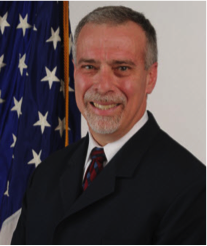
Richard I. Jaffe, M.S., Ph.D., MT(ASCP), Director, Medical Countermeasures, Strategy, & Requirements , Office of the Assistant Secretary for Preparedness and Response , U.S. Department of Health and Human Services (HHS), will discuss Civilian Medical Countermeasures as part of the George Mason Biodefense program’s Biodefense Policy Seminar series.

November 6, 2014

The Islamic State and Beyond: U.S. Military Strategy in the Middle East
Date: November 6, 11:00am
Location: Atlantic Council, 1030 15th Street NW, 12th Floor, West Tower, Washington DC

Please join the Atlantic Council’s Brent Scowcroft Center on International Security for a Commanders Series event with General Lloyd J. Austin III, commander of US Central Command, to discuss the US-led coalition campaign against the Islamic State and the broader role the US military will play in the Middle East in the coming years.

As one of the first military leaders into Iraq in 2003, General Austin has over a decade of first-hand, on-the-ground experience in the challenging operating environment of the Middle East theater. Often called a “soldier’s soldier,” General Austin currently leads Central Command which oversees US operations and military relationships with countries stretching from Afghanistan and Pakistan to the Central Asian nations to Iraq, Iran, Syria, Lebanon, Yemen, the UAE, and Egypt. Today, one of CENTCOM’s highest priorities is Operation Inherent Resolve against the Islamic State and how the US-led coalition can “degrade and destroy” the terrorist group. GEN Austin will discuss how the anti-Islamic State effort is progressing in Iraq and Syria, as well as the future of US military engagement in the Middle East.

Register here or watch online.

Lessons from the Latest War: What the Future Holds for the Israeli-Islamist Conflict
Date: November 6, 12:00pm
Location: Georgetown University, 37th and O Street NW, Copley Formal Lounge, Copley Hall, Washington DC

Dr. Rafael Frankel (Georgetown University) will present as part of the Program for Jewish Civilization’s fall lecture series.

RSVP requested. A light lunch will be served.

Afghanistan in Transition
Date: November 6, 12:00pm
Location: Johns Hopkins School of Advanced International Studies, Nitze Building, Kenney Herter Auditorium, 1740 Massachusetts Ave NW, Washington DC

Daniel F. Feldman is the Special Representative for Afghanistan and Pakistan (SRAP). He has served in the S/SRAP office since its creation in 2009, first as deputy and then as principal deputy to Ambassadors Richard Holbrooke, Marc Grossman, and James Dobbins. He has been deeply engaged in all aspects of U.S. policy formulation and implementation for both countries, including overseeing political transition issues, economic growth initiatives, regional integration efforts, international engagement with key partners, strategic communications, and Congressional outreach. For his service in the S/SRAP office, he was awarded the Secretary’s Distinguished Honor Award by Secretary Clinton.

Before reentering government, he was a law partner and co-chair of the international Corporate Social Responsibility group at Foley Hoag LLP, the only such legal practice in the U.S. His previous government experience includes serving as Director of Multilateral and Humanitarian Affairs at the National Security Council in the Clinton Administration, and as Counsel and Communications Adviser to the U.S. Senate Homeland Security and Governmental Affairs Committee.

He was Senior Foreign Policy and National Security Advisor to the Kerry presidential campaign in 2004, communications advisor and recount attorney for the Gore campaign in 2000, and a senior campaign advisor to Senator Mark Warner. He helped to found, and subsequently served on the board of, the National Security Network, and is a life member of the Council on Foreign Relations. He has been appointed a White House Fellow and a Henry Luce Scholar, and was a law clerk on the U.S. Court of Appeals for the Ninth Circuit and on the South African Supreme (Constitutional) Court. He is a graduate of Tufts University, Columbia Law School, and Princeton University’s Woodrow Wilson School.

Register here.

Pakistan’s Role in Afghanistan’s Transition
Date: November 6, 3:30pm
Location: Carnegie Endowment for International Peace, 1779 Massachusetts Ave NW, Washington DC

As the deadline for withdrawal of U.S. troops in Afghanistan approaches, Afghanistan’s neighbors will have a greater impact on shaping the country’s uncertain future. Samina Ahmed and Mark L. Schneider will discuss the transition with a particular focus on Pakistan’s role. They will look at civil-military divisions over Pakistan’s Afghanistan policy, assess the impact of cross-border militancy on Afghanistan’s stabilization, and discuss the implications of Pakistan’s involvement in a potential negotiation process between the Ashraf Ghani Ahmadzai government and the Taliban. Carnegie’s Frederic Grare will moderate.

Register here. 

Elections Under Crisis: Evaluating Ukraine’s Parliamentary Vote
Date: November 6, 4:00pm
Location: Elliot School of International Affairs, 1957 E Street NW, Suite 412, Voesar Conference Room, Washington DC

Ukraine’s October 26 parliamentary elections were held under extraordinarily challenging conditions. The on-going fighting in the Donetsk and Luhansk regions made it impossible for several of the precincts to vote. This presentation will address the capabilities of the Ukrainian state to hold elections. It will also assess the implications of the election outcomes for Ukraine’s future political and economic development.

RSVP here.

A Look at the Ebola Crisis (Searching for Solutions to the Ebola Epidemic)
Date: November 6, 4:30pm
Location: Johns Hopkins School of Advanced International Studies, 1717 Massachusetts Ave NW, Washington DC

A SAIS Africa Association discussion with Gilbert Burnham, co-director, Johns Hopkins Center for Refugee and Disaster Response. Open to the public and media.

For information or to RSVP, email africa.sais@gmail.com 

November 7, 2014

Pursuing Freedom and Democracy: Lessons from the Fall of the Berlin Wall
Date: November 7, 10:30am
Location: Heritage Foundation, Lehrman Auditorium, 214 Massachusetts Ave NE, Washington DC

On November 9, 1989, the Berlin Wall fell. Two years later, the Soviet Union collapsed and the Cold War came to an end. At stake during this war, which encompassed almost every nation, was whether the world would be dominated by the forces of totalitarianism led by the Soviet Union or inspired by the principles of economic, political, and religious freedom championed by the United States.

To commemorate the 25th anniversary of the fall of the Berlin Wall, our panel will discuss some of the lasting lessons of the Cold War. Do the ideas undergirding a regime matter? Does leadership matter or is history essentially determined by forces beyond our control? Are strength and resolve the dominant factors in crafting a national strategy, or does a prudent foreign policy guided by our founding principles of liberty and justice offer the best path for America?

Register here.
THIS WEDNESDAY: November Biodefense Policy Seminar

Title: Pathway to Civilian Medical Countermeasure (MCM) Requirement Setting and Utilization
Speaker: Richard I. Jaffe, M.S., Ph.D., MT(ASCP), Director, Medical Countermeasures, Strategy, & Requirements , Office of the Assistant Secretary for Preparedness and Response , U.S. Department of Health and Human Services (HHS)
Date: Wednesday, November 5, 2014
Time: 7:30 – 9:00pm; food will be served at 7:00pm
Location: Research Hall 163, George Mason University, Fairfax, VA
Dr. Richard Jaffe is an internationally recognized subject matter expert in the field of chemical, biological, radiological and nuclear defense issues with almost 30 years of technical and operational experience in government, academia, military, and industry.

Dr. Jaffe was the scientific lead for the Federal Bureau of Investigation’s AMERITHRAX case in 2001-2003 while working at Commonwealth Biotechnologies, Inc. in Richmond VA. There he led a scientific team that developed the molecular assays that provided the FBI the crucial scientific evidence to proceed in their investigation. From 2006-2012, as the Senior Medical Advisor to the Office of the Assistant Secretary of Defense for Nuclear and Chemical and Biological Defense/Chemical and Biological Defense Programs at the Pentagon, he helped lead, guide, and integrate the Department of Defense’s (DoD) policies in areas such as medical countermeasures (MCM), diagnostics, public health, and biosurveillance.

Dr. Jaffe is currently the Director of the Division of Medical Countermeasures, Strategy, and Requirements in the Office for Policy and Planning, Office of the Assistant Secretary for Preparedness and Response at HHS. The Division leads the efforts to develop policy initiatives, planning and analysis, activities for storage, dispensing, administration, etc., and requirements for MCM that help protect the U.S. civilian population during public health emergencies.

Dr. Jaffe received a Ph.D. in Microbiology and Immunology from Medical College of Virginia, a M.S. in Human Genetics from George Washington University, and a B.S. in Microbiology from the University of Maryland. He is a board certified Medical Technologist and served honorably in the United States Air Force before separating at the rank of Major.

Week in DC: Events

October 27, 2014

Ebola: U.S. Domestic and Foreign Policy Options
Date: October 27, 12:00pm
Location: Heritage Foundation, 214 Massachusetts Ave, NE, Lehrman Auditorium, Washington DC

Months after the outbreak of the Ebola virus in West Africa, the news of two American nurses becoming infected has sparked fear amongst the general U.S. population. With Ebola victims now in the United States, concerns are growing over the ability of the administration, Centers for Disease Control (CDC), and hospitals to control the spread of disease.

Join us for a discussion of the very real risks of the Ebola virus, but without the fear brought on by speculation and hype. Through clear communication of the nature of the threat and what policy options are available in the U.S. and in West Africa, the U.S. can make clear, rational decisions as to how to best deal with the current situation.

RSVP here to attend in person or watch online here.

Modern War in Theory and Practice: A Discussion with Dr. John Nagl on his new book Knife Fights
Date: October 27, 1:15pm
Location: New America Foundation, 1899 L Street NW, Suite 400, Washington DC

Knife Fights: A Memoir of Modern War in Theory and Practice by Dr. John Nagl, a retired Lieutenant Colonel in the U.S. Army and a former president of the Center for a New American Security, is a profound education in 21st Century warfare – its theory, its practice, and the often-tortured relationship between the two.

As an army tank commander in the first Gulf War, fresh out of West Point and Oxford, Dr. Nagl could already see that America’s military superiority meant that the age of conventional combat was nearing an end. He was an early convert to the view that America’s greatest future threats would come from asymmetric warfare – guerrillas, terrorists, and insurgents – and wrote Learning to Eat Soup with a Knife, a book that eventually became the bible of the counterinsurgency movement. Nagl argued it was necessary for the U.S. Army to understand the nature of the insurgency, but also to be more flexible in its response, adjusting its strategy to properly deal with the threat.

While Dr. Nagl worked with Gen. David Petraeus on rewriting core army doctrine in the middle of two wars, helping their new ideas win acceptance in one of the planet’s most conservative bureaucracies, he has not been blind to the cost or consequences of counterinsurgency, noting that in war, there are only bad choices; the question is really which ones are better and which ones are worse.

The New America Foundation is pleased to welcome Dr. Nagl for a discussion about his book, his work on the United States’ counterinsurgency efforts, and the revolution in modern warfare that he helped lead.

RSVP here to attend in person or watch online.

U.S.-Civil Military Relations After 9/11
Date: October 27, 1:30pm
Location: Alexander Hamilton Society-George Mason University, 4400 University Drive, East 201, Fairfax VA

The George Mason University chapter of the Alexander Hamilton Society will host Mackubin Thomas Owens for a discussion on U.S.-Civil Military Relations After 9/11. No registration is required. Refreshments will be served.

Mackubin Thomas Owens recently retired as professor of national-security affairs at the Naval War College. He is the editor of Orbis and a contributing editor to the National Review Online.

Previously, Dr. Owens served as the National Security Adviser to Senator Bob Kasten (R-WI) and Director of Legislative Affairs for the Nuclear Weapons Programs of the Department of Energy during the Reagan administration.

He is the author of US Civil-Military Relations After 9/11: Renegotiating the Civil-Military Bargain.

The New Threat in Town: Iraq, ISIS, and Managing the Crisis
Date: October 27, 6:30pm
Location: AU School of International Service, 4400 Massachusetts Ave NW, Mary Gordon Center, Butler Board Room, Washington DC

A panel discussion on the current security situation in Iraq regarding ISIS, the implications it has on the regional security of the Middle East, and how the United States can engage with the region in order to mitigate the situation from spiraling out of control. Panel speakers will include Dr. Tricia Bacon, Ambassador James F. Jeffrey from the Washington Institute, and Dr. Paul Salem from the Middle East Institute.

October 28, 2014               

Islamophobia, Extremism, and the Domestic War on Terror: A Discussion with Arun Kundani on his new book The Muslims are Coming!
Date: October 28, 12:15pm
Location: New America Foundation, 1899 L Street NW, Suite 400, Washington DC

In The Muslims Are Coming!: Islamophobia, Extremism, and the Domestic War on Terror, Arun Kundnani notes that the new front in the War on Terror is the homegrown enemy, domestic terrorists who have become the focus of sprawling counterterrorism structures in the United States and across Europe. Domestic surveillance by police forces and government agencies has mushroomed— at least 100,000 Muslims in America have been secretly under scrutiny. In Britain, police officers compiled a secret suspect list of more than 8,000 al-Qaeda “sympathizers,” and almost 300 children aged fifteen and younger were among the potential extremists investigated.

While the revelations by former National Security Agency contractor Edward Snowden have caused some to question the rise, even the legality, of these national surveillance states, Western governments continue to focus on the threats posed by homegrown extremists, particularly as the Islamic State attracts foreign fighters from around the world

Based on several years of research and reportage, in locations as disparate as Texas, New York, and Yorkshire, and written in engrossing, precise prose, Kundnani’s The Muslims Are Coming! is the first comprehensive critique of Western counter-radicalization strategies. He notes that the new policies and policing campaigns have been backed by an industry of freshly-minted experts and liberal commentators, and looks at the way these debates have been transformed by the embrace of a narrowly-configured and ill-conceived anti-extremism stance.

The New America Foundation is pleased to welcome Mr. Kundnani for a discussion about his book, his findings, and the impact the War on Terror has had on its targets.

Register here to attend in person or watch live online.

The Future Army: Win in a Complex World
Date: October 28, 6:30pm
Location: World Affairs Council, 1900 K Street NW, 2nd Floor, Washington DC

Today, the importance of national security rests heavily on the minds of many Americans. With multiple mounting crises around the world, it is often difficult to understand America’s role in foreign disputes and the necessary action our military must take to remain a mediating force in foreign lands.

General David G. Perkins is the Commanding General in the U.S. Army Training and Doctrine Command, who has experience in Europe, the United States, and the Middle East that affords him a distinct and experienced voice when speaking about the Army and the future of American security.

Join the World Affairs Council – Washington, DC in our Distinguished Speaker Series, as we host General David G. Perkins, as he speaks about ”The Future Army: Win in a Complex World.”

Register here.

October 29, 2014

Impressions from Putin’s 2014 Valdai Conference
Date: October 29, 12:00pm
Location: Georgetown University, McGhee Library, Room 301, 3700 O Street NW, Washington DC

Impressions From Putin’s 2014 Valdai Conference
CERES Director Dr. Angela Stent and IISS Senior Fellow Samuel Charap will report on their experience at the Valdai Discussion Club meeting. The Valdai Discussion Club is a global forum for the world’s leading experts on Russia to engage in a sustained dialogue about the country’s political, economic, social and cultural development. Since 2004, the Club has gathered annually in Russia and has regularly met with the leadership of the Russian Federation (including Vladimir Putin), as well as Russian business leaders, media, academics, and political groups.

Register here.

Ukraine Update: Elections, Conflict, and the Future of the EU’s Eastern Partnership
Date: October 29, 2:00pm
Location: The Brookings Institution, Falk Auditorium, 1775 Massachusetts Ave NW, Washington DC

In 2009, the European Union established its Eastern Partnership to advance political association and economic integration with six neighboring nations to its east. However, in November 2013, Ukrainian President Yanukovych refused to sign an association agreement with the EU, triggering mass protests in Ukraine that ultimately led to his departure and accusations that the EU “sleepwalked” into a conflict in Ukraine. Although the EU long asserted that the framework was never directed against Russia, the agreement with Ukraine was perceived in Moscow as a step too far. In the wake of the ongoing crisis between Ukraine and Russia, some are questioning whether the EU’s Eastern Partnership should be fundamentally altered—and, if so, how?

Against the backdrop of simmering conflict in eastern Ukraine, the Ukrainian people will go to the polls on October 26 to elect a new parliament. The new parliament members will then have to form a majority coalition and begin to tackle the pressing challenges facing the country. The herculean tasks include not just the violent conflict in the east and the troubled relationship with Russia, but needed economic and political reforms as well as measures to curb corruption. Questions remain about Ukrainian public expectations and potential tensions in the immediate aftermath of the vote.

On October 29, the Center on the U.S. and Europe at Brookings and the Heinrich Böll Foundation will host a panel discussion assessing next steps for Ukraine and the EU’s Eastern Partnership. The first panel will explore the Ukrainian election and what it means for politics within Ukraine, the Ukrainian economy, and Ukraine’s relations with Russia and the West. The second panel will focus on international perspectives on the EU’s Eastern Partnership and the EU’s role in supporting Ukraine in this time of turmoil.

RSVP here.

October 30, 2014

Is Democracy Possible in Russia?
Date: October 30, 9:30am
Location: National Endowment for Democracy, 1025 F Street NW, Suite 800, Washington DC

Vladimir Putin returned to the Russian presidency in 2012, facing mass opposition protests and weak economic growth. His response was a sharp turn toward authoritarianism, a trend that began with criminal charges against dozens of protesters on Bolotnaya Square and has accelerated with Russia’s armed intervention in Ukraine. Political repression and anti-Western propaganda have reached levels previously unseen in post-Soviet Russia, with political opposition and participation and most independent media eliminated. At the same time, economic sanctions have pushed an already stagnant economy toward recession.

These developments have created the need to reconfigure the sources of the Putin regime’s legitimacy. Whereas the implicit accord of Putin’s first two terms was to offer Russia’s citizens stable economic growth in exchange for their political disengagement; in his third term Putin seeks to compensate for declining standards of living with an artificial vision of Russia reborn as a great power.

In the short term, this strategy appears successful. Putin’s approval ratings have been at record highs for several months. However, an in-depth examination of Russia’s social, political, and economic trends suggests that the current political strategy may not be sustainable. Panelists Lilia Shevtsova, Leon Aron and Denis Volkov will discuss the factors that will shape political developments in Russia and the opportunities those developments might provide for reform. Leonid Gozman will provide comments.

RSVP here.

Brown Bag—Liberia: Challenges to Managing the Ebola Outbreak
Date: October 30, 12:30pm
Location: GMU School for Conflict Analysis and Resolution, 4400 University Drive, Metropolitan Building, Conference Room 5183, Fairfax, VA

Join Professor Agnieszka Paczynska and S-CAR PhD student Samuel Wai Johnson for a brown bag on Liberia and the challenges faced on both a state and local level in managing the Ebola outbreak.

Rules of Engagement—Pathogen Response to the Environment of Invasive Infection
Date: October 30, 12:30pm
Location: Georgetown University, Regents Hall 239, 3700 O Street NW, Washington DC

This open to the public seminar given by Dr. Aaron Mitchell of Carnegie Mellon University, will discuss pathogen response to the environment of invasive infection.

A Nuclear Deal with Iran? Weighing the Possibilities
Date: October 30, 2:00pm
Location: American Enterprise Institute, 1150 17th Street NW, 12th Floor, Washington DC

As global crises unfold, President Barack Obama appears to see one silver lining in the clouds on the foreign policy horizon: a nuclear deal with Iran. However, it appears increasingly likely that the November 24 deadline will come and go without a comprehensive agreement, and the stakes could not be higher. A bad deal that leaves too much of Tehran’s nuclear capabilities intact or enables Iran to develop nuclear weapons in the months or years to come could set off a nuclear arms race across the Middle East. Alternatively, a good deal could solve a problem at the heart of much of the turmoil in the region.

Are the United States and European powers prepared to renew sanctions if Iran refuses to comply with demands from the international community and International Atomic Energy Agency? Will the Iranians refuse to concede on any of their own red lines? Will the Obama administration sidestep Congress to achieve a nuclear deal? Please join us at AEI for a timely discussion just a few weeks ahead of the November deadline.

RSVP here.

This Week in DC: Events

October 21, 2014

Iranian Policy Toward the Iraqi and Syrian Crises
Date: October 21, 12:00pm
Location: Woodrow Wilson International Center for Scholars, 1300 Pennsylvania Ave NW, Washington DC

Tehran has had a longstanding alliance with Damascus over the past 35 years, and its relations with Baghdad have steadily improved since the ouster of Saddam Hussein in 2003. This has resulted in close ties between Iran and these two key Arab states. However, this has all been called into question since the eruption of the Syrian revolt in 2011, and moreover, the recent rise of ISIS and its challenge to the Iraqi state. Iran has become heavily involved in both conflicts since it has much at stake. Jubin Goodarzi will provide an overview of the evolving situation and focus on Iran’s policies, perspectives, interests, and options in the ongoing Syrian and Iraqi crises.

RSVP here or watch the webcast here.

Development of Vaccines Against Pathogenic Human Polyomaviruses
Date: October 21, 12:00pm
Location: Georgetown University, 3900 Reservoir Road NW, Washington DC

Christopher Buck, Ph.D., Head of the Tumor Virus Molecular Biology Section of NCI (NIH) in Bethesda, MD will speak about the development of vaccines against human polyomaviruses.

Winning Paktika: Counterinsurgency in Afghanistan
Date: October 21, 4:30pm
Location: Institute of World Politics, 1521 16th Street NW, Washington DC

Just days prior to deploying to combat in Afghanistan, Lieutenant Colonel Walter Piatt, commander of the 2nd Battalion, 27th Infantry “Wolfhounds” announced this visionary statement in front of an assembly of 800 infantrymen and their families. Naturally, none of the soldiers listening to the Colonel’s rhetoric thought it was possible to actually win the war without killing a single person. That hardly sounded like “war” at all. In fact, that simple concept was the very antithesis of the previous 10 months they had all spent training to explicitly kill people with speed and violence. Destroying the enemy was the fundamental focus of every infantryman. It was, of course, the very reason the infantry existed in the first place.

The Colonel, an infantryman himself no less, challenged his battalion’s conventional thinking that day and throughout the ensuing campaign. His striking pronouncement was the theoretical extreme of counterinsurgency doctrine. It emphasizes the importance of nation-building instead of man-hunting, construction instead of destruction, and dropping schools and wells into villages instead of artillery shells. That was his vision and that is what he led his infantrymen to do.

This is the story of the Wolfhounds in 2nd Platoon, Bravo Company through the eyes of a young platoon leader. He details their adventures on the frontier in a little-known dangerous place called Paktika Province, centrally located along Afghanistan’s volatile border with Pakistan. It is the story of ordinary men, cast into a treacherous and unfamiliar world with the mission to destroy the enemy’s sanctuary, not just the enemy. It is the story of triumph and failure, elation and frustration through a hard-fought struggle with their identity as infantrymen, evolving from trained tactical killers to strategic nation builders in their quest to win Paktika.

Register here.

October 22, 2014

Ensuring a Strong U.S. Defense for the Future: Findings of the National Defense Panel
Date: October 22, 10:00am
Location: Bipartisan Policy Center, 1225 I Street NW, Washington DC

In recent months, the U.S. military has been dispatched to the Middle East to fight ISIS, to Africa to combat Ebola and to Eastern Europe to deter Russia. Yet, automatic reductions to the defense budget, known as “sequestration,” remain the law of the land. Highlighting this tension between national security and fiscal restraint, Michèle Flournoy and Eric Edelman, members of the bipartisan, congressionally-mandated National Defense Panel, warned in a recent op-ed, “without budgetary relief, the U.S. armed forces soon will be at high risk of not being able to accomplish the national defense strategy.”

Join us for a discussion of the new findings of the National Defense Panel, the effects of sequestration on the U.S. military and how our national security can be sustainably resourced.

Register here.

A Dangerous World? Threat Perception and U.S. National Security
Date: October 22, 12:00pm
Location: Cato Institute, 1000 Massachusetts Ave NW, Washington DC

Featuring the editors John Mueller, Woody Hayes Senior Research Scientist, Mershon Center, Professor of Political Science at Ohio State University, and Senior Fellow, Cato Institute; and Christopher Preble, Vice President, Defense and Foreign Policy Studies, Cato Institute; with comments by Frank Hoffman, Senior Research Fellow, National Defense University; and James Fallows, National Correspondent, The Atlantic; moderated by John Samples, Vice President and Publisher, Cato Institute.

In 2012, Chairman of the Joint Chiefs of Staff Gen. Martin Dempsey contended that “we are living in the most dangerous time in my lifetime, right now.” In 2013, he was more assertive, stating that the world is “more dangerous than it has ever been.” Is this accurate? A Dangerous World? brings together leading experts on international security to assess the supposed dangers to American security. They examine the most frequently referenced threats, including wars between nations and civil wars, and discuss the impact of rising nations, nuclear weapons proliferation, general unrest, transnational crime, and state failures. Please join us for an illuminating analysis of current and future American national security.

To attend email here, or watch live online here.

Attack of the Drones: Responding to the Newest Type of Provocation
Date: October 22, 2:00pm
Location: Korea Economic Institute, 1800 K Street NW, Washington DC

Recently, North Korean drones have been found in South Korea. One of the drones was found to have flown near the Blue House. Pictures of the South Korean President’s residency, troops along the border islands with North Korea, and North Korea’s media reporting that Kim Jong Un viewed a military exercise that incorporated drone strikes all illustrate a new dynamic on the Korean peninsula. Intelligence gathering capabilities and potential for military attacks makes the usage of drones the latest threat the U.S.-South Korea alliance must address.

Join KEI as it hosts Dr. Van Jackson, Council on Foreign Relations and Center for a New American Security, who will examine North Korea’s drone and unmanned aerial vehicle (UAV) capacity while providing his recommendations on how the United States and South Korea should appropriately respond to avoid an escalation of military conflict. Dr. Jackson will, for the first time ever, present his framework on how to deal with future drone provocations.

RSVP here.

Ukraine Elections: An End to the Crisis?
Date: October 22, 2:00pm
Location: Center on Global Interests, 1050 Connecticut Ave NW, 10th Floor, Washington DC

The past 12 months have seen unpredicted and unprecedented disruption in Ukrainian politics. As the deadly conflict in the country’s east continues and economic indicators plummet, the outcome of Ukraine’s upcoming parliamentary elections will be a crucial factor in determining the future course of the country. Will the Petro Poroshenko Bloc’s “party of peace,” expected to win control of the parliament, be able to overcome the crisis facing Ukraine?

In anticipation of the Oct. 26 elections, please join CGI for a panel discussion exploring the recent changes in Ukraine’s domestic politics, the effects of the election on Ukrainian unity, and the implications for U.S.-Ukraine and Russia-Ukraine relations.

RSVP here.

Corruption, Crime, and Terrorism
Date: October 22, 3:00pm
Location: Carnegie Endowment for International Peace, 1779 Massachusetts Ave NW, Washington DC

The entangled threat of crime, corruption, and terrorism remain important security challenges in the twenty-first century. In her new book, Dirty Entanglements: Corruption, Crime, and Terrorism, Louise Shelley argues that their continued spread can be traced to economic and demographic inequalities, the rise of ethnic and sectarian violence, climate change, the growth of technology, and the past failure of international institutions to respond to these challenges when they first emerged.

Join Carnegie for a discussion with Louise Shelley. Milan Vaishnev will act as discussant, and Moisés Naím will moderate.

Register here.

Cyber Risk Wednesday: Landscape of the Cyber Threat
Date: October 22, 3:00pm
Location: Atlantic Council, 1030 15th Street NW, 12th Floor, West Tower, Washington DC

On 22 October, the Atlantic Council’s Cyber Statecraft Initiative will relaunch Cyber Risk Wednesdays, a series of events dedicated to a deeper discussion and understanding of solutions to systemic cyber risks.

Please join us for the first event in the series that will mark National Cybersecurity Awareness Month with a moderated discussion on the current cyber threat environment with Dmitri Alperovitch, cofounder & CTO at CrowdStrike and Tom Corcoran, senior policy advisor of the House Permanent Select Committee on Intelligence, moderated by Jason Healey, director of the Cyber Statecraft Initiative.

This year has had some of the worst headlines ever, with intrusions into trusted companies and not one but two Internet-wide vulnerabilities. Please join us on October 22 from 3:00 p.m. – 5:00 p.m. at the Atlantic Council for engaging and timely discussion on the current cyber threat landscape.

Register here.

Ukraine, Russia, and the International Order
Date: October 22, 3:00pm
Location: Woodrow Wilson International Center for Scholars, 1300 Pennsylvania Ave NW, 5th Floor, Washington DC

Over the last twenty-five years, the ideal of an integrated Euro-Atlantic community including Russia has gradually faded, as new dividing lines seem to be hardening on the European continent. The Ukrainian crisis and conflict with Russia have effectively brought an end to the post-Cold War era; it remains an open question what will be the outlines and nature of the new era that follows. Please join us as William H. Hill, former head of the OSCE Mission to Moldova, looks at the events in Ukraine from multiple vantage points. What happened in Ukraine and what are the prospects?  What motivated Russia’s conduct during the crisis, and what are Moscow’s likely courses of action in the near and medium term? What are U.S. perceptions, motives, and likely responses to the crisis?  Finally, what are the implications of the crisis for the Euroatlantic and global international order? Professor Hill will share his analysis on these questions and Kennan Institute Public Policy Scholar Michael Kofman will provide commentary.

RSVP here.

“No End in Sight” Documentary Screening & Discussion on Iraq
Date: October 22, 5:00pm
Location: Elliott School of International Affairs, George Washington University, Washington DC

The Middle East Policy Forum will show the documentary “No End in Sight,” which provides a critical and comprehensive look at the Bush Administration’s approach at the time of the U.S. intervention and its aftermath. Three experts featured in the film—Ambassador Bodine, Colonel Hughes, and Colonel Wilkerson—will discuss their experiences in Iraq and provide a contextual basis for the country’s ongoing descent into chaos.

This is a special event broken into different parts:
5:00 – 6:30 pm: Documentary Screening
6:30 – 7:00 pm: Light Supper
7:00 – 8:30 pm: Panel & Discussion

Awkward Engagement: Reflections on Doctor’s Without Borders’ Work in North Korea
Date: October 22, 6:00pm
Location: Johns Hopkins School of Advanced International Studies, 1619 Massachusetts Ave NW, Washington DC

Please join Doctors Without Borders/Médecins Sans Frontières (MSF), the US-Korea Institute at SAIS and the Sejong Society of Washington, DC, for an intimate discussion about MSF’s experience negotiating and working with North Koreans in past decades.

The panel will feature Laurence Binet, author of the soon to be released MSF and North Korea 1995-1998, which takes a critical look at the history of MSF’s activities linked to North Korea, including the difficult decision to withdraw from the country in 1998. She will be joined by MSF-USA Executive Director Sophie Delaunay, who was MSF’s Head of Mission for assistance programs for North Korean refugees in Asia in the period directly following the program closure.

Audience Q&A will follow the panel discussion. This event is free and open to the public. All remarks are strictly off the record. No cameras or video allowed. Seating is limited and granted on a first come, first serve basis.

RSVP here.

The Future of Weapons of Mass Destruction in 2030
Date: October 22, 7:30pm
Location: George Mason University, Merten Hall 1202, Fairfax, VA

Nuclear weapons are likely to play a more significant role in an increasingly multipolar global system, and technological advances will enable new forms of chemical and biological weapons. The proliferation and use of these weapons could be harder to prevent. To discuss the impact of technological change and the evolving geopolitical environment on the future of weapons of mass destruction, this Biodefense Policy seminar will feature John P. Caves, Jr., and Dr. W. Seth Carus of the Center for the Study of Weapons of Mass Destruction at National Defense University.

October 23, 2014

Reflections on Islamism: From the Muslim Brotherhood to the Islamic State
Date: October 23, 12:30pm
Location: Washington Institute for Near East Policy

Once again, Islamism has taken center stage in the Middle East. A generation ago, the pivotal events were the takeover of the Mecca mosque and the Islamic Revolution in Iran; a half-generation ago, the pivotal events were the horrific attacks of September 11. With the counterrevolution against the world’s oldest Islamist movement, the Muslim Brotherhood in Egypt, and the sudden and bloody emergence of its newest, the “caliphate” called the Islamic State, the complex face of Islamism is again capturing the attention of governments, journalists, analysts, and popular imagination. To inform our understanding of the changing face of Islamism and provide a scholarly context for the decisions policymakers need to make, The Washington Institute is pleased to host its seventh annual Zeev Schiff Memorial Lecture, featuring distinguished Israeli historian and diplomat Shimon Shamir.

This event will be live cast here.

China: Threat or Partner
Date: October 23, 5:00pm
Location: U.S. Navy Memorial Heritage Center, 701 Pennsylvania Ave NW, Washington DC

The protests in Hong Kong over the past few weeks serve as a stark reminder:  Despite the progress China has made as a global economic power, and the vital U.S.-Chinese economic relationship, China continues to repress human rights and democracy.  It is putting pressure on foreign companies inside China, while sewing up strategic resources in developing countries.  And its military build-up and claims on air and sea space in the East and South China Seas – even challenging U.S. military aircraft – remind us that China is a growing military challenge to the status quo in Asia.

Given all this – how should the United States formulate its own policy toward China?  Is strategic engagement still working – building a platform for a long-term, mutually beneficial U.S.-Chinese relationship, with China ultimately becoming a “responsible stakeholder” in the global community?  Or is such engagement failing – allowing China to dismiss human rights concerns and challenge security in Asia with no real pushback from the United States and its Allies.  And if the United States is to “get tough” with China – exactly what would that mean in practice?

We look forward to a lively debate, as leading U.S.-China experts tackle the question:  “China: Is Engagement Still Working?” the latest in our Debate and Decision Series events at the McCain Institute.

Register here.

Islam, Gender, and Democracy
Date: October 23, 5:00pm
Location: Georgetown University, Healy Hall, Riggs Library, 37th and O Streets NW, Washington DC

Since the Arab Awakening, the question of women’s rights has become, in the view of Western commentators, the litmus test for Muslim societies in the age of democracy and liberalism. The issue is often framed as the opposition between liberal advocates of secular democracy and religious opponents of women’s full equality.

A panel of scholars, including the Berkley Center’s José Casanova and Jocelyne Cesari, will examine this binary opposition and reframe the debate around Islam and women’s rights. Participants will provide a broader comparison across religious traditions and cultures through a discussion of religion, secularism, democracy, and gender equality in France, Iran, Turkey, Tunisia, Egypt, and the United States.

This event is cosponsored by the Berkley Center and the Georgetown Institute for Women, Peace, and Security. A reception will follow.

For more information and to RSVP, please visit the event page.

Week in DC: Events

October 14, 2014

U.S. Postal Inspection Service: Managing Global Threats to U.S. National Security and International Commerce
Date: October 14, 4:00pm
Location: Institute of World Politics, 1521 16th Street NW, Washington DC

U.S. Mail comprises nearly 50% of the world’s total mail volume, and a significant amount is sent to or from countries around the globe. The U.S. Postal Inspection Service, one of the oldest federal law enforcement agencies, and its Global Security and Investigations Team of U.S. Postal Inspectors, ensures the security of all U.S. Mail, including military and diplomatic mail, which transits to and from foreign postal administrations and U.S. installations overseas. Postal Inspectors protect postal revenues generated by international business development, liaison with foreign stakeholders and international organizations, and ensure that the sanctity of the mail is not hindered as it crosses national borders.

Join us as Postal Inspector in Charge Gregory S. Crabb of the Postal Inspection Service’s Revenue, Product & Global Security Group, discusses various topics, including:

– The Global Security and Investigations Team mission
– International mail security, including United Nations activities
– Post-Yemen parcel bomb security
– National security requirements, particularly export screening
– Prohibited mail, including intellectual property offenses and drugs and guns in inbound international mail
– Cyber security threats

Following the presentation, recruiters from the Postal Inspection Service will discuss how you can apply for a position as a federal U.S. Postal Inspector. Information on Inspector assignments and investigations will be shared as well.

Register here.

Marine Corps Intelligence and the “New Normal”
Date: October 14, 5:00pm
Location: Institute of World Politics, 1521 16th Street NW, Washington DC

General Michael S. Groen will address the convergence of chaos, instability and advanced technology and the Marine Corps’ approach to dealing with these factors.  He will review the Marine Corps philosophy towards professional development, the current state of affairs which he characterizes as the “New Normal,” and the Marine Corps’ plan for adapting to this new circumstance: the Marine Corps Intelligence, Surveillance and Reconnaissance Enterprise Plan.

Register here.

October 15, 2014

The Israeli-Palestinian Conflict: Has the U.S. Failed?
Date: October 15, 9:30am
Location: Phoenix Park Hotel, Ballroom, 520 North Capitol Street NW, Washington DC

The Middle East Policy Council invites you and your colleagues to our 78th Capitol Hill Conference. Live streaming of this event will begin at approximately 9:30 a.m. on Wednesday, October 15th and conclude at noon. A questions and answers session will be held at the end of the proceedings. Refreshments will be served.

RSVP acceptances only: info@mepc.org, 202-296-6767

Senator Levin on the New U.S.-Afghan Partnership
Date: October 15, 9:30am
Location: United States Institute of Peace, 2301 Constitution Ave NW, Washington DC

The inauguration on September 29th of Dr. Ashraf Ghani as the new president of Afghanistan, and head of a national unity government that includes runner-up candidate Abdullah Abdullah as chief executive, marks the first democratic and peaceful transition of power of one elected president to another in Afghanistan’s history. One of the first acts of the new government was to sign the Bilateral Security Agreement with the United States. This long-awaited agreement enables US troops to remain in Afghanistan beyond 2014, supporting the Afghan security forces and the new government, and paved the way for NATO to sign a similar agreement. This shift  offers an opportunity for Afghanistan and the US to restore a bilateral relationship that was badly strained during the final years of President Karzai’s term. For a discussion of the opportunities and pitfalls ahead, please join us in welcoming Senator Levin, closely involved with the U.S. effort in Afghanistan since 2001, and Stephen J. Hadley, Chairman of the Board at USIP and former assistant to the president for National Security Affairs.

RSVP here.

Crisis Communications: Protocols, Pitfalls, and Perceptions
Date: October 15, 12:00pm
Location: Bread for the World Institute, 425 3rd Street SW, Suite 1200, Washington DC

Join us for an off-the-record conversation about crisis communications led by Media Expert Ainsley Perrien of FleishmanHillard, a leading global public relations and communications consultancy. Perrien has significant expertise in print and new media, risk management, brand development, crisis communications, and litigation support.

Ainsley will lead a discussion about how development organizations should navigate the tricky waters of crises that happen in the field, and in the home office, with DAI’s Director of Communications, Steven O’Connor, and USAID’s Evan Matthew Papp, who manages the Public Affairs and Outreach portfolio for USAID’s Office of Transition Initiatives in the Bureau for Democracy, Conflict, and Humanitarian Assistance.

RSVP here.

Afghanistan’s National Unity Government: The Road Ahead
Date: October 15, 12:30pm
Location: Georgetown University, 37th and O Streets NW, Edward B. Bunn, S.J. Intercultural Center, ICC 270, Washington DC

Afghanistan just underwent a brutal political crisis that almost broke its executive office and significantly damaged Afghans confidence in electoral processes. With the direct intervention of the US government, President Ashraf Ghani and CEO Abdullah Abdullah formed a unity government that stands to be fraught with discord and power-wrangling. On the other hand, both leaders have committed to a range of much needed reforms; the recently inaugurated Ghani has already taken a number of steps to suggest that he is committed to their enactment. After the successful conduct of the first round of elections in April, what happened? And where will Afghanistan’s executive take the country from here?

Register here.

Fighting ISIS: The Future of American Foreign Policy in the Middle East
Date: October 15, 3:00pm
Location: American University School of International Service, Atrium, New Mexico and Nebraska Ave NW, Washington DC

Speakers include: Ambassador Akbar Ahmed, Ibn Khaldun Chair of Islamic Studies at American University’s School of International Service; Susan Glasser, Editor of POLITICO; and David Ignatius, Foreign Affairs columnist at the Washington Post. Moderated by David Gregory, Distinguished Journalist-in-Residence at American University’s SIS.

RSVP here or stream live here.

October 16, 2014

Pakistan: Audience Realities in an Unstable Media Landscape
Date: October 16, 9:00am
Location: Gallup World Headquarters, 901 F Street NW, Washington DC

The Broadcasting Board of Governors (BBG) and Gallup invite you to attend a research briefing on media use in Pakistan.

Pakistan remains relatively dangerous for journalists. In recent months, the two most-watched broadcasting channels — government broadcaster PTV and independent TV station Geo News — have been stormed by anti-government protesters. The country’s government also uses blasphemy laws to stifle both online and offline dissent.

Please join the BBG and Gallup for a conversation about media trends in Pakistan. The speakers will share data from research conducted June 3-30, 2014 on media use in the country, and review attitudinal data from the Gallup World Poll.

Register here.

The Future of European Collective Defense
Date: October 16, 10:00am
Location: Center for Strategic and International Studies, 1616 Rhode Island Ave NW, Washington DC

Please join us for a dialogue with Major General Walter Piatt on the future of European collective defense and our relationship with regional NATO and non-NATO partners. MG Piatt will discuss Secretary General Rasmussen’s concept of a Connected Forces Initiative and U.S. Army Europe’s participation in the Connected Training Initiative.

Register here.

Terrorist Financing Networks in the Middle East and South Asia: A Comparative Assessment
Date: October 16, 12:00pm
Location: Middle East Institute, 1761 N Street NW, Washington DC

The ascent of the Islamic State has raised critical questions about how terrorist organizations are being financed. A comparison of terrorist financing networks in South Asia and the Middle East can offer insights into the differences and similarities in the funding of global terrorist efforts and how money is making its way into the hands of violent terrorist groups.

The Middle East Institute’s Louis R. Hughes Lecture Series is pleased to present Dr. Amit Kumar (Center of National Policy, Georgetown University) for a discussion on the methods, motivations, and efficacy of terrorist financing networks. By comparing financing networks in South Asia and the Middle East, Dr. Kumar will explore possible linkages between the two regions and how these similarities can inform strategies to prevent terrorist financing. He will also examine implications for policy. MEI’s Marvin Weinbaumwill moderate.

Stabilizing Iraq: Lessons for the Next Chapter
Date: October 16, 4:45pm
Location: Center for Strategic and International Studies

The Center for Strategic and International Studies presents: The CSIS-Schieffer Series Dialogues Stabilizing Iraq: Lessons for the Next Chapter. This event is hosted by: Bob Schieffer, Chief Washington Correspondent, CBS News, Anchor, CBS News “Face the Nation.” It will include panelists: Dr. Kathleen Hicks, Senior Vice President; Henry A. Kissinger Chair; Director, International Security Program, CSIS; Stuart W. Bowen Jr., Former Special Inspector General for Iraq Reconstruction (2004-2013), Senior Adviser, CSIS; Karen DeYoung, Associate Editor and Senior National Security Correspondent, The Washington Post.

Register here.

October 17, 2014

Modi’s Transformative Moment?
Date: October 17, 9:00am
Location: Carnegie Endowment for International Peace, 1779 Massachusetts Ave NW, Washington DC

The first one hundred days of a new government can be tumultuous as power shifts hands and leaders make dramatic decisions, as evidenced by then Indian prime minister Vajpayee’s nuclear test soon after he assumed office in 1998. But Prime Minister Narendra Modi has thus far proceeded in a more nuanced fashion, making an assessment of his first four months in office more complicated.

Has continuity prevailed in India’s economic and foreign policies? Or does the new budget, new developmental initiatives, and recent summits with leaders of Japan, China, and the United States reflect a fundamentally new dispensation? Has change come about through Modi’s leadership, or through larger shifts in India’s social and institutional landscape? Christophe Jaffrelot and Milan Vaishnav will discuss Modi’s first few months in office and what it could mean for India.

Register here.

The North Korea Human Rights Act: A Decade Later
Date: October 17, 9:30am
Location: Korea Economic Institute, 1800 K Street NW, Suite 1010, Washington DC

While much of the attention on North Korea relates to its nuclear weapons program, the regime has a long record of human rights violations. In the fall of 2004, the United States Congress took up this issue with the intent of finding ways to improve the human rights situation in North Korea. The culmination of those efforts were the North Korea Human Rights Act, which was signed into law on October 18, 2004 by President George W. Bush. As the recent UN Commission of Inquiry report indicates, the issue of human rights in North Korea remains one of grave importance.

RSVP here.

Can the Obama Administration’s ISIS Strategy Work?
Date: October 17, 12:00pm
Location: Hudson Institute, 1015 15th Street NW, 6th Floor, Washington DC

Criticism of the Obama administration’s Middle East strategy is no longer restricted to the president’s usual opponents. Former defense secretary and CIA director Leon Panetta – the latest in a series of departed senior officials to go public with their misgivings – now suggests that the president’s own policies helped make possible the rise of the Islamic State in Iraq and Syria. “When we stepped out of Iraq,” Panetta observed in a recent interview, “we created this vacuum” – and ISIS is currently filling the space.

Can the same administration now make good its mistakes and repair the damage? Will a strategy limited to coalition aerial bombardment and ancillary assistance to local fighters be sufficient to “degrade and destroy” ISIS, or are the U.S. military officials and regional allies who argue that ground troops will be required correct? In either case, to what extent are longstanding, region-wide issues – like the anti-Sunni policies pushed by Iranian assets in Iraq and Syria – a fundamental obstacle to complete success against ISIS?

To address these and other directly related questions of Middle East strategy and diplomacy, Hudson Institute will host a timely discussion on October 17 with Lee Smith, Andrew J. Tabler, Faysal Itani, andHussain Abdul-Hussain.

Register here.

Week in DC: Events

October 8, 2014

NATO in the Face of a Rising Russia
Date: October 8, 2:00pm
Location: Center on Global Interests, 1050 Connecticut Ave NW, 10th Floor, Washington DC

As a result of the Ukraine crisis, Russia-NATO relations have reached their lowest point since the Cold War, with Russia’s annexation of Crimea awakening many in the alliance to the fact that Russia is prepared to use force to defend its interests in Eastern Europe.

Please join us for a discussion with former NATO consultant John Wallace as part of CGI’s new program exploring the long-term consequences of the conflict in Ukraine. Wallace will address, among other topics, NATO cohesion in the face of a reemerging Russia, the appointment of new Secretary-General Jens Stoltenberg, and the long-term prospects for Russia-NATO relations.

The Ukraine Crisis: Is Nuclear Conflict Likely?
Date: October 8, 3:00pm
Location: National Press Club, 529 14th Street, 13th Floor, Zenger Room, Washington DC 20045

Australia’s Dr. Helen Caldicott – a longtime advocate of citizen action to address nuclear and environmental crisis, founding President of Physicians for Social Responsibility and a 1985 Nobel Peace Prize nominee – believes the current crisis in Ukraine is evidence that the Cold War has not only returned and could well morph into a nuclear exchange between Russia and the U.S.

For the first time in recent history, Russia and the U.S. are in a state of confrontation. Both nations have recently conducted nuclear war games, and some reports suggest that the state of alert of their nuclear arsenals has been raised.

At a National Press Club Newsmakers news conference on Wednesday, October 8, Caldicott will argue that the Cold War has not only returned, but is heating up. The nuclear exchange she fears would result in ozone depletion, radioactive contamination, massive fire storms and a nuclear winter. Even without a nuclear confrontation, Ukraine hosts 15 nuclear power plants. Conventional warfare could cause several of them to melt down.

Like all Newsmakers events, the news conference is open to credentialed media and club members, free of charge. No advance registration is required.

Handwashing Inovations & Inspirations: A Discussion & Reception
Date: October 8, 4:30pm
Location: FHI 360, 1825 Connecticut Ave NW, Washington DC

Handwashing. It’s a simple behavior with a big impact. But, it is oftentimes overlooked. Given the role that hygiene can play in public health–from preventing the common cold to slowing the spread of infections like Ebola—embracing innovations in design, behavior change, and programming is becoming increasingly important.

Just one week before Global Handwashing Day, you are invited to join the Global Public-Private Partnership for Handwashing, FHI 360, Devex, & WASH Advocates to talk about what’s new in hygiene.

From hygiene integration to innovations in handwashing to insights into behavioral drivers, this year has been an exciting one for handwashing. Hear fast-paced talks from a diverse range of handwashing innovators to inform, inspire, and make us think. Then join us for a pre-Global Handwashing Day reception immediately after the presentations, to mingle and discuss how we can bring handwashing innovation into our programs to improve health around the world. This is a must-attend Global Handwashing Day event for anyone with an interest in the promotion of hygiene and health around the world.

Register here. 

October 9, 2014

Building a Cybersecurity Roadmap: Developing America’s Edge
Date: October 9, 9:30am
Location: Center for National Policy, 1250 I Street NW, Suite 500, Washington DC

The Center for National Policy and The Christian Science Monitor invite you to join us for the second in a series of cybersecurity events convening and promoting the most original thought leaders and cutting-edge practitioners in the field.

From Target to Transportation Command, 2014 has been characterized by a steady stream of reports of high profile cyber intrusions. This event will explore how the U.S. can develop the workforce, education and policy frameworks to slow the trend of cyber events.

Register here.

ISIS and the End of the Middle East as We Know It
Date: October 9, 12:30pm
Location: Woodrow Wilson International Center for Scholars, 1300 Pennsylvania Ave NW, 5th Floor Conference Room, Washington DC

While Western attention is caught by the rise of the so-called “Islamic State”, the real story may be the dissolution of order in the Middle East. How do we understand ongoing political and geopolitical shifts in the region and the rise of new types of actors such as the “Islamic State”? And what, if anything, can and should Western powers do?

Volker Perthes is the executive chairman and director of Stiftung Wissenschaft und Politik (SWP), German Institute for International and Security Affairs, Berlin. He received his doctorate from the University of Duisburg in 1990 and his habilitation in 1999. From 1991 to 1993, Perthes was an assistant professor at the American University of Beirut; he joined SWP in 1992 and headed the Research Group “Middle East and Africa” for several years. His previous teaching positions include the universities of Duisburg, Münster, and Munich; currently, Perthes is a professor at Humboldt University Berlin and Free University of Berlin. In addition, Perthes serves on various national and international bodies such as the Advisory Research Council of the Finnish Institute of International Affairs (FIIA) (as chairman), the International Advisory Council of the Shanghai Institute for International Studies (SIIS), the Hellenic Foundation for European & Foreign Policy (ELIAMEP), the TCCI Advisory Board of the Turkish Industry & Business Association (TÜSIAD), and the TTIP Advisory Council of the Federal Ministry for Economic Affairs and Energy. Perthes is a frequent commentator in German and international media.

Live webcast available here.

Yemen: Rethinking Fragile States and Counterterrorism
Date: October 9, 2:30pm
Location: Atlantic Council, 1030 15th Street NW, 12th Floor, West Tower, Washington DC

Please join the Rafik Hariri Center for the Middle East for an off-the-record discussion with Admiral Dennis Blair, former Director of National Intelligence, to discuss the US counterterrorism approach in Yemen and the need to develop a more effective operational model for the United States to address security threats emanating from fragile states with weak institutions.

Despite the importance of stability in the Arabian Peninsula for core US interests, there is scant evidence of innovative, ambitious thinking in Washington about how to effectively address the factors driving the growth of extremist networks and potential state failure. The discussion will explore the need for the United States to develop a longer-term, more integrated approach to mitigate such dangers beyond the current short-term tactical responses of drone strikes and investing in elite counterterrorism units.

This event will also mark the release of two Atlantic Council reports: “A Blueprint for US Policy in Yemen,” by former US Ambassador to Yemen Barbara K. Bodine and Deputy Director Danya Greenfield and; “Are Drone Strikes Undermining US Security Objectives in Yemen,” by Danya Greenfield and Assistant Director Stefanie A. Hausheer.

Register here.

Statesmen’s Forum: Secretary Jeh Johnson of the U.S. Department of Homeland Security: Border Security in the 21st Century
Date: October 9, 3:00pm
Location: Center for Strategic and International Studies, 1616 Rhode Island Ave NW, 2nd Floor Conference Center, Washington DC

CSIS is pleased to host Secretary Jeh Johnson for a public address on border security in the 21st century. He will address the state of security on the southwest border, the status of unaccompanied migrant children, and national immigration reform. Secretary Johnson was sworn in on December 23, 2013 as the fourth Secretary of Homeland Security. Previously, Secretary Johnson served as general counsel for the Pentagon and the Air Force, as well as being a private practice attorney.

RSVP here.

Russia and Ukraine: Hybrid War in the Donbas
Date: October 9, 3:30pm
Location: Woodrow Wilson International Center for Scholars, 1300 Pennsylvania Ave NW, 5th Floor Conference Room, Washington DC

Much discussion has taken place about the political implications and outcomes of the conflict in Ukraine, but these have been shaped by military realities on the ground. Michael Kofman will discuss the current military balance and the actual state of Ukraine’s military and defense industry. The tactics employed in this summer’s fighting by all sides will have implications that reverberate throughout the process of ceasefire and political settlement. It is important to understand the military nuances in order to gain perspective on Ukraine’s options in the future.  

RSVP here.

Don’t Wait for the Next War: A Discussion on Strategy with General Wesley K. Clark, USA (Ret.)
Date: October 5, 9:30am
Location: Atlantic Council, 1030 15th Street NW, 12th Floor, West Tower, Washington DC

Please join the Atlantic Council’s Brent Scowcroft Center on International Security to hear from General Wesley K. Clark (Ret.) as he outlines a strategy for American growth and global leadership. As a former supreme allied commander Europe and renowned military leader, General Clark is widely noted for being an exceptional strategic thinker. As the United States winds down from a decade of war and finds itself once again at the precipice of a new prolonged conflict, the country must chart a new strategic course to achieve success. Beyond those issues, terrorism, cybersecurity, financial instability, the rise of China, and global climate change will pose challenges and opportunities for the United States which, without a defined and robust strategy, would prove very difficult to effectively manage.

To meet these challenges, General Clark will outline what the United States should do to remain the global leader and prosper in this new global environment. He also will provide his rationale for why the United States should relearn the art of strategy to succeed now and into the future.

General Clark is a retired four-star general in the United States Army, and served as supreme allied commander Europe, where he led NATO forces to victory in Operation Allied Force, the war in Kosovo. He is chairman and CEO of Wesley K. Clark & Associates, a strategic consulting firm, and is the author of Winning Modern Wars and Waging Modern War. He serves as a board director of the Atlantic Council.

Register here.

Week in DC: Events

September 29, 2014

An Assessment of President Rouhani’s Visit to the United States
Date: September 29, 12:00pm
Location: Woodrow Wilson International Center for Scholars, 1300 Pennsylvania Ave NW, 5th Floor, Washington DC

During his U.S. trip to attend the UN General Assembly meeting last year when hopes were high for some kind of Iran-U.S. reconciliation, Iran’s newly-elected president, Hassan Rouhani, even had a friendly telephone conversation with President Obama. The frostier environment created by Iran’s leader, Ayatollah Khamenei, makes a repeat of that exchange or negotiations between Iranian and American officials highly unlikely. Still, U.S. officials and the international community will be eager to hear what Mr. Rouhani has to say in his UN speech and in his media appearances regarding Iranian policy on Syria and Iraq, ISIS, the current negotiations on Iran’s nuclear program, Russia’s incursions on Ukraine, and his promise to revive the economy and ease political controls at home. Please join us for an assessment of Mr. Rouhani’s 2014 trip to UNGA.

RSVP here.

Cybersecurity for Government Contractors
Date: September 29, 3:00pm
Location: Homeland Security Policy Institute, The Elliott School for International Affairs, 1957 E Street NW, 7th Floor, City View Room, Washington DC

This symposium will present a case study of a hypothetical government contractor as it suffers a cyber attack, navigates the real-world legal fallout, and considers an integrated approach to cyber risk management. The discussion will be based on the Briefing Paper, Cybersecurity for Government Contractors, available here.

Featured speakers include: The Honorable Michael Chertoff, Former Secretary, U.S. Department of Homeland Security, Chairman of The Chertoff Group, and Chairman, George Washington University Cybersecurity Initiative; Robert Nichols, David Fagan, and Other Experts from Covington & Burling LLP and The Chertoff Group

Register here.

September 30, 2014

Security and Justice in Post-Revolution Libya: Dignity, Dawn, and Deadlock
Date: September 30, 10:00am
Location: U.S. Institute of Peace, 2301 Constitution Ave NW, Washington DC

Following the 2011 Libyan revolution that removed Muammar Qaddafi from power, state security and justice institutions have struggled to reemerge to meet the needs of the people. In the resulting security vacuum, armed groups have assumed a role in security provision, many as quasi-state actors and yet outside of state command and control. Formal security and justice actors have been threatened, attacked, and assassinated.

With state security and justice institutions largely nonfunctioning, some communities have turned to vigilante justice, tribal leaders and elders, or resorted to self-help when faced with conflicts and disputes. As levels of violence intensify, many are left wondering: How did we get here, and what could be done to change the situation? To address these questions, on September 30 the U.S. Institute of Peace (USIP) will host a discussion on Libya’s security and justice landscape and the country’s current crisis. It will feature findings from new research by USIP and Altai Consulting on the landscape, perceptions and experience of security and justice in Libya.

RSVP here.

Understanding Islamism
Date: September 30, 12:00pm
Location: Heritage Foundation, 214 Massachusetts Ave NE, Lehrman Auditorium, Washington DC

The rapidly shifting political terrain in parts of the Middle East and North Africa over the last four years has been marked by the rise of Islamist parties. Religious-based political parties have long played an important role in the politics and democratic evolution of countries throughout the greater Middle East. However, the ideological underpinnings and anti-democratic practices of the Islamist elements among them pose risks to U.S. counterterrorism objectives and threaten religious freedom and other fundamental rights of the citizens in the countries in which they operate. In this context, how can the United States develop consistent policy approaches that simultaneously bolster liberal democratic development, help counter terrorist movements, and support American strategic interests? Join us as our panel discusses these important questions and offers their recommendations for U.S. policy moving forward.

RSVP here.

Meet Syria’s Rescue Workers: Saving Lives, Building Peace
Date: September 30, 2:00pm
Location: U.S. Institute of Peace, 2301 Constitution Ave NW, Washington DC

Syria is the world’s most dangerous place to be a civilian. But there is another side to the conflict: those focused on caring for civilians in the conflict are also seeking to build peace. Volunteers are coming to the rescue with no regard for sect or creed. Join the U.S. Institute of Peace, The Syria Campaign and the Syrian American Medical Society on September 30 as they bring together two of these courageous rescuers to discuss the future of peacebuilding in Syria.

Some 600 Syrians known as “White Helmets” or Syrian Civil Defense units, are organized volunteers who act as rescue workers in areas like Aleppo and Idlib provinces in the country’s northwest. They are unarmed and impartial, and operate on principles on “solidarity, humanity and impartiality,” as laid out in the Geneva Convention. In the last six months, they have recorded more than 2,500 lives saved. They run out after barrel bombs have dropped and dig through the rubble, often with their bare hands, in search of life.

The United States Institute of Peace, The Syria Campaign and the Syrian American Medical Society bring together two of these courageous rescuers to discuss the future of peacebuilding in Syria.

RSVP here.

Effective Multilateralism: The Experience of Chemical Weapons Elimination in Syria
Date: September 30, 5:00pm
Location: Georgetown University, Healy Hall 301, Riggs Library, 37th and O Streets NW, Washington DC

United Nations Secretary-General Ban Ki-moon announced the appointment of Sigrid Kaag of the Netherlands as Special Coordinator of the Organisation for the Prohibition of Chemical Weapons (OPCW)-United Nations Joint Mission to eliminate the chemical weapons programme of the Syrian Arab Republic on 16 October 2013.

Ms. Kaag will speak on her experiences in dealing with the extreme challenges she and her team encountered in eliminating the Syrian chemical weapons arsenal in the unpredictable storm of the Syrian Civil War.  She will address the problems, challenges, and potential opportunities that lie in constructive multilateral approaches to addressing chemical weapons in the Syrian Arab Republic.

Ms. Kaag brings a wealth of experience in international organizations and the diplomatic service, combined with country experience, notably in the Middle East. Prior, Ms. Kaag was Assistant Secretary-General of the Bureau of External Relations and Advocacy of the United Nations Development Programme (UNDP). She was Regional Director for the Middle East and North Africa of the United Nations Children’s Fund (UNICEF) in Amman, Jordan (2007-2010), and earlier as Chief of Staff to the Executive Director and Deputy Director of Programmes in New York.

RSVP here.

Putin’s Grand Strategy: The Eurasian Union and Its Discontents
Date: September 30, 5:30pm
Location: Johns Hopkins School of Advanced International Studies, Kenney Auditorium, 1740 Massachusetts Ave NW, Washington DC

Svante Cornell, director of the Central Asia-Caucasus Institute and adjunct professor of European and Eurasian Studies; S. Frederick Starr, founding Chairman of the Central Asia-Caucasus Institute and adjunct professor of European and Eurasian Studies; James Sherr, associate fellow and at Chatham House, The Royal Institute of International Affairs; Stephen Blank, senior fellow at the American Foreign Policy Council; Richard Weitz, senior fellow and director of the Center for Political-Military Analysis at the Hudson Institute, Johan Engvall, research fellow at the Central Asia-Caucasus Institute; and Mamuka Tsereteli, research director at the Central Asia-Caucasus Institute, will discuss the launch of the Central Asia-Caucasus Institute and Silk Road Studies Program’s new book Putin’s Grand Strategy: The Eurasian Union and Its Discontents.

A reception will precede this event at 5:00 p.m. Register here.

The Iranian Nuclear Talks: A View from London
Date: September 30, 6:00pm
Location: Johns Hopkins School of Advanced International Studies, The Rome Building, Room 806, 1740 Massachusetts Ave NW, Washington DC

Mark Fitzpatrick, Director of the Non-proliferation and Disarmament Program at the International Institute for Strategic Studies, will discuss this topic.

RSVP here.

Exploring ISIL: Context and Repercussions
Date: September 30, 6:30pm
Location: World Affairs Council, MAA Carriage House, 1781 Church St NW, Washington DC

Join World Affairs Council – Washington, DC for a discussion about ISIL; one of the most momentous and imposing insurgent groups facing America today. What is it? What is the United States’ response, and how will this impact the security of the region?

Our speaker panel includes the knowledgeable and versed voices of Dr. Shadi Hamid, fellow at the Brookings Institution and author of  Temptations of Power: Islamists and Illiberal Democracy in a New Middle East; Thomas Sanderson, the co-director and senior fellow in the Center for Strategic International Studies Transnational Threats Project, and Kate Brannen; a senior reporter at Foreign Policy covering the defense industry and influence on Capitol Hill who will be moderating the event.

Register here.

October 1, 2014

The Cost and Value of Biomedical Innovation: Implications for Health Policy
Date: October 1, 9:00am
Location: Brookings Institution

High-cost drugs and devices that address significant unmet medical needs have generated much attention lately. New treatments for many cancers and for infections like Hepatitis C have the potential to increase life expectancy and quality of life for affected patients. Many more such treatments are in development. While a number of important breakthroughs have occurred in the past several decades, the increasing ability to target treatments based on a better understanding of genomics, systems biology, and other biomedical sciences could lead to more technologies with broader effects for targeted populations. Thus, biomedical innovation may have substantial future implications for population health and health care costs.

On Wednesday, October 1, the Engelberg Center for Health Care Reform and theUSC Schaeffer Center for Health Policy and Economics will host a half-day forum to discuss the serious coverage challenges that accompany breakthrough treatments, such as the much-discussed new treatment for Hepatitis C, Sovaldi. Researchers will present economic modeling simulations that illustrate the value and long-term effects of such treatments; and explore potential policy solutions for financing  biomedical innovations.

Please note that this event is currently at capacity and in-person attendance is no longer available, but you may view the event via webcast by registering here.

Vladimir Putin and Russia’s Increasingly Aggressive Nuclear Threat
Date: October 1, 9:00am
Location: Hudson Institute, 1015 15th Street NW, 6th Floor, Washington DC

Over the past few weeks, President Vladimir Putin—already seeking to modernize his nuclear forces in violation of the 1987 Intermediate Nuclear Forces Reduction Treaty—has moved Russia into an increasingly visible and aggressive nuclear posture. In late August, Putin implicitly threatened to use nuclear weapons against non-nuclear nations including Ukraine and the Baltic States. Moreover, while Russian strategic bombers repeatedly violate U.S. and Canadian air defense space, Putin is in the midst of establishing a naval base on the New Siberian Islands.

What are Putin’s aims? What do these actions portend for the state of U.S. nuclear deterrence, arms control treaties, and the nuclear-free movement which President Barack Obama, among others, has championed? How should the U.S., NATO and Ukraine respond?

To explore these questions and others, please join us on Wednesday, October 1st at 9:00 am as noted experts Andrei Piontkovsky and William Schneider, Jr., both Hudson Institute fellows, and Roland Freudenstein, Deputy Director and Head of Research at the Wilfred Martens Centre for European Studies, as they discuss the ominous implications of Putin’s actions. Hudson Institute President and CEO Kenneth Weinstein will moderate the panel.

Register here.

Russia’s Stake in Ukraine
Date: October 1, 2:00pm
Location: Institute of World Politics, 1521 16th Street NW, Washington DC

David Satter, a former Moscow correspondent of the Financial Times of London, will discuss Russia’s Stake in Ukraine. He is the author of three books on Russia and the director of a documentary film and has followed Russian events for almost four decades. In May, 2013, he became an adviser to Radio Liberty and in September, 2013, he was accredited as a Radio Liberty correspondent in Moscow. Three months later, he was expelled from Russia becoming the first U.S. correspondent to be expelled since the Cold War.

David Satter is a fellow of the Foreign Policy Institute at the Johns Hopkins University School of Advanced International Studies (SAIS), a senior fellow of the Hudson Institute and a senior fellow of the Foreign Policy Research Institute in Philadelphia. He has also been a research fellow at the Hoover Institution at Stanford University. He teaches a course on Russian politics and history at the Johns Hopkins University School of Advanced Academic Programs and has been a visiting professor at the University of Illinois in Urbana-Champaign.

Register here.

Putin’s Kleptocracy—Who Owns Russia?
Date: October 1, 3:30pm
Location: Woodrow Wilson International Center for Scholars, 1300 Pennsylvania Ave NW, 6th Floor, Washington DC

Former Wilson Center Public Policy Scholar, Karen Dawisha, will present her new book “Putin’s Kleptocracy: Who Owns Russia?” with Elizabeth A. Wood joining her as a discussant. The book traces Putin’s sudden rise to power and examines the network of individuals who rose to power and riches along with him. Dawisha’s provocative new study further addresses the nature of Putin’s power vertical and the endemic corruption that accompanies his system.

RSVP here.

October 2, 2014

Book Talk: A Time to Attack: The Looming Iranian Nuclear Threat
Date: October 2, 5:00pm
Location: AU School of International Service, Beacon Conference Room (SIS 300), 4400 Massachusetts Ave NW, Washington DC

Georgetown University professor Matthew Kroenig will discuss his new book, A Time to Attack: The Looming Iranian Nuclear Threat. This event will be moderated by SIS professor Neil Shenai.

October 3, 2014

The UK Strategic Nuclear Deterrent and the Chevaline Program: An Overview
Date: October 3, 12:00pm
Location: Woodrow Wilson International Center for Scholars, 1300 Pennsylvania Ave NW, 5th Floor, Washington, DC

Chevaline was the codename given to a highly-secret program begun in 1970 to improve the penetration performance of the UK’s force of Polaris submarine-launched ballistic missiles in order to give them the capability to overcome Soviet ABM defenses deployed around Moscow. After much delay and cost escalation the new system was finally introduced in 1982, but it had already attracted major criticism for the expenditure involved, claims of project mismanagement, the rationale that underpinned its development, and its concealment from proper parliamentary scrutiny.

In this presentation Matthew Jones, UK Official Historian of the Chevaline program, will explore the program’s background, why it ran into so many problems, and how it became one of the most controversial episodes in post-war British defense policy.

A light lunch will be served at the event. RSVP here.

Week in DC: Events

September 22, 2014

Defeating ISIS: From Strategy to Implementation
Date: September 22, 12:00pm
Location: Washington Institute for Near East Policy

As the Obama administration formulates a strategy for confronting and defeating ISIS, its reluctance to deepen American involvement in Syria and Iraq raises questions about what form U.S. intervention will take going forward. The recent airstrikes near Mosul, Irbil, and elsewhere have been effective in achieving several limited objectives, but broader goals — such as rolling back the group’s large territorial gains and ultimately “destroying” ISIS — will likely require broader action. To discuss what the administration and its allies should do and how to do it, The Washington Institute is pleased to host a Policy Forum with Jean-Pierre Filiu, James Jeffrey, and Michael Eisenstadt.

Watch the livestream here.

The Rise of Lashkar-e-Taiba: A Look at One of South Asia’s Largest Terrorist Organizations
Date: September 22, 12:15pm
Location: New America Foundation , 1899 L Street NW, Suite 400, Washington DC

Although they are some of the world’s foremost terrorist groups, not much is widely known about Lashkar-e-Taiba (LeT), one of the largest terrorist organizations in South Asia that operates out of Pakistan and was responsible for the three day siege of the Taj Hotel in Mumbai in 2008 that killed 165 people. But now, former New York Times contributor Arif Jamal has documented the history, ideology, and global operations of LET and other groups in South Asia, bringing little-known facts about the dangers they pose to global security to light. In his book, Call for a Transnational Jihad: Lashkar-e-Taiba 1985-2014, Jamal shows through primary sources the links between the terrorist organizations in South Asia and those operating in other regions, demonstrating that the groups have a presence in more than 100 countries and are more inter-connected than many first believed.

By examining the rise of Lashkar-e-Taiba over the past three decades, Jamal makes it clear that the United States has treated the groups as a regional threat — not a global one. But as they have grown and become more deadly over the years, that policy is becoming more and more questionable.

New America is pleased to welcome Jamal for a discussion about his book, his thoughts on the future of LeT, and what the terrorist organizations history can tell us about their future.

RSVP here.

The Ukraine Crisis: The View from Odessa
Date: September 22, 1:00pm
Location: Woodrow Wilson International Center for Scholars, 6th floor, 1300 Pennsylvania Ave NW, Washington DC

Odessa has seen some of the worst violence and clashes outside of the war-torn eastern provinces of Ukraine but has received relatively little coverage. Join us for a discussion of Odessa’s perspective on the ongoing crisis with Volodymyr Dubovyk, Director, Center for International Studies, I. Mechnikov National University in Odessa.

RSVP here.

Schieffer Series: Jihad 3.0
Date: September 22, 4:45pm
Location: Center for Strategic and International Studies, 1616 Rhode Island Ave NW, Washington DC

The TCU Bob Schieffer College of Communication and CSIS cosponsor a monthly series of dialogues hosted by award-winning journalist Bob Schieffer to discuss the most pressing foreign and domestic issues of the day.

Panelists for Jihad 3.0 include The Honorable Juan C. Zarate, Former Deputy National Security Adviser for Combating Terrorism, Senior Adviser for CSIS, and Author, “Treasury’s War”; Dr. Jon Alterman, Senior Vice President, Zbigniew Brzezinski Chair in Global Security and Geostrategy and Director, Middle East Program, CSIS; and Julianna Goldman, Washington Correspondent for CBS News.

Register here.

September 23, 2014

A Symposium on The Ebola Crisis
Date: September 23, 8:00am
Location: Georgetown University, ICC Auditorum, 2nd Floor, 37th and O Streets NW, Washington DC

This half-day symposium features experts from government and academia and includes special remarks from Her Excellency Ellen Johnson Sirleaf, President of Liberia. RSVP and see the full schedule of speakers here.

Eastern Europe’s Most Difficult Transition: Public Health and Demographic Policy, Two Decades after the Cold War
Date: September 23, 9:00am
Location: Woodrow Wilson International Center for Scholars, 5th Floor, 1300 Pennsylvania Ave NW, Washington DC

Dr. Murray Feshbach was one of the first scholars to point out the devastating political and socio-economic effects of state communism’s failure to seriously address decaying public health and environmental conditions. His pioneering work remains relevant. More than two decades after the close of the Cold War, many health and demographic indicators in the former Warsaw-Pact states (including Russia) remain surprisingly inferior to those of the neighboring states of Western and Southern Europe.

In honor of Dr. Feshbach, this panel presents recent research that revisits the region’s health and demographic challenges and opportunities, in the context of today’s Europe. Richard Cincotta will present an analysis of mortality risk in the former Warsaw Pact states. Jack Goldstone will discuss the effects of Russian fertility policies. Ligia Paina will discuss Romania’s policy approach to ensure access to medical services for rural and underserved populations, in the context of ongoing migration of health professionals.

This event is being co-hosted by the Environmental Change and Security Program and the Kennan Institute.
RSVP here.

Jihadist Terrorism: A New Threat Assessment Report Release
Date: September 23, 10:00am
Location: Bipartisan Policy Center, 1225 I Street NW, Suite 1000, Washington DC 20005

With ISIS and international extremists dominating the international news coverage, the threat of terrorism is at the forefront of Americans’ minds. In light of these developments, the Bipartisan Policy Center will release a new threat assessment on September 23, authored by Peter Bergen, a member of BPC’s Homeland Security Project.

The report will examine threats from ISIS, Al-Qaeda and other jihadist groups, cybersecurity concerns, and drone strikes and drone proliferation. It is the second report in an annual series by BPC’s Homeland Security Project, which is led by former 9/11 Commission co-chairs Tom Kean and Lee Hamilton.

The event will feature a discussion about the contents of the new assessment with the authors and terrorism experts.

Register here.

Antiviral Targets for Human Noroviruses
Date: September 23, 12:00pm
Location: Georgetown University, 37th and O Streets NW, Washington DC

Featuring speaker Brent Korba, Ph.D., Research Professor at GUMC in the Department of Microbiology & Immunology.

September 24, 2014

Pakistan’s Long March: Reflections on the Anti-Government Protests in Islamabad
Date: September 24, 9:30am
Location: Woodrow Wilson International Center for Scholars, 5th Floor, 1300 Pennsylvania Ave NW, Washington DC

This summer, Pakistan was plunged into crisis as anti-government protestors converged on the capital city of Islamabad to demand the resignation of Prime Minister Nawaz Sharif. This protest movement marks the latest in a series of “Long Marches” Pakistan has experienced in recent decades. Anjum Altaf will discuss the primary drivers of this summer’s Long March, and consider whether it should be considered a success or a failure. He will also place the event in the broader context of the politics of agitation, with examples from countries including India, Ukraine, and the United States.

RSVP here.

Energy Security and the Ukraine Crisis
Date: September 24, 10:00am
Location: International Institute for Strategic Studies—US, 2121 K Street NW, Suite 801, Washington DC

The Ukraine crisis has intensified the debate about the energy relationship between Kiev and Moscow and, more widely, the political implications of the natural gas trade between Europe and Russia and Ukraine’s role as the key transit state. The prevailing narrative is that of an energy weapon used by Russia to blackmail Ukraine into submission and Europe into inaction. This discussion will show that it is Kiev that has blackmailed Moscow for twenty years to extract economic rents, and distorted Ukraine’s political economy in the process; that the security of supply issue in Europe is small, geographically limited, and remains unsolved because of EU rules and government inaction, not Russia’s might; and that the current crisis could have profound energy implications, especially if the Russia-Europe gas relationship is damaged beyond repair.

RSVP here.

Libya’s Civil War
Date: September 24, 12:00pm
Location: Carnegie Endowment for International Peace, 1779 Massachusetts Ave NW, Washington DC

Nearly three years after the fall of Muammar Qaddafi, Libya is in the throes of a bitter civil war. Its political and security institutions are split along complex fault lines that defy easy categorization. Further complicating the matter, Libya has become a flashpoint for a larger, regional proxy conflict between supporters of Islamist-oriented factions and the patrons of their opponents.

Frederic Wehrey will present the findings of a new Carnegie paper on the institutional roots of Libya’s violence and present options for how the United States and the international community can assist. Wolfram Lacher, Faraj Najem, and Dirk Vandewalle will act as discussants and share their own insights. Michele Dunne will moderate.

Register here.

Turkey: ISIS and the Middle East
Date: September 24, 1:30pm
Location: Georgetown University, McCarthy Hall, McShain Lounge, 37th and O Streets NW, Washington DC

Opening remarks by Dr. Gonul Tol, Executive Director of the Center for Turkish Studies at the Middle East Institute. The talk will be moderated by Dr. Sinan Ciddi, Executive Director of the Institute of Turkish Studies, and panelists include Dr. Denise Natali of the National Defense University, Dr. Kadir Ustun of the SETA Foundation at Washington, D.C., and Mutlu Civiroglu, Journalist and Kurdish affairs analyst.

Register here.

September 25, 2014

Pakistan: Importing America’s Federalism?
Date: September 25, 9:30am
Location: Atlantic Council, 1030 15th Street NW, 12th Floor (West Tower), Washington DC

Pakistan’s state policymaking space is in flux. Between the transition back to democracy in 2008, the devolution of a number of federal powers to the provinces in 2010, the increasing use of social media and connectivity, and a more active judiciary and civil society—the old images of slow-moving bureaucratic structure are no longer valid. However, what is replacing it is unclear. Recent populist social policy initiatives suggests that there is a growing appetite for social policy making which is visible and popular with voters. In this context, the current Pakistani administration has announced the creation of a national health insurance scheme. What level of data-based evidence is being used to both inform the policymaking and implementation process and to measure and evaluate the success of the project? The creation and implementation of the Affordable Care Act (ACA) presents an interesting and instructive American example for the use of data and evidence in policymaking and policy analysis.

Asif Memon will share his perspective gleaned from his work in Pakistan and his United States visit, part of the South Asia Center’s US-Pakistan Program Exchange Fellowship, to conduct research on this issue.

Register here.

September 26, 2014

Is There a Role for Religious Actors in Countering Radicalization and Violent Extremism?
Date: September 26, 10:30am
Location: U.S. Institute of Peace, 2301 Constitution Ave NW, Washington DC

Recent events in Iraq and Syria underscore the devastating impact of violent extremism. In fact, it is one of the most pressing issues facing the world today, affecting many regions and threatening to destabilize the global community. Efforts to counter violent extremism require strategic and sensitive approaches that take into account its myriad drivers and encourage collaboration across many sectors.  While civil society has an important role to play in countering violent extremism, religious actors are particularly well positioned to address some of its root causes, particularly in areas in which extremism is couched in religious terms.

At the end of September 2014, the Network of Religious and Traditional Peacemakers, Finn Church Aid, the Ministry of Foreign Affairs of Finland, and the U.S. Institute of Peace (USIP) will host the “Religious Actors Combatting Radicalization and Violent Extremism Symposium,” in Washington, DC and New York City. This symposium is bringing together nearly two dozen selected religious leaders, scholars and actors from around the world, including Nigeria, Sri Lanka, Syria and Libya who have been very involved in combatting violent extremism in their own communities.

On September 26th, 2014, USIP will host a public event featuring three panelists from the Symposium, who will present key insights drawn from the workshop and their own experiences.

RSVP here.

Week in DC: Events

September 15, 2014

Squaring the Iranian Nuclear Circle: Defining Uranium Enrichment Capacity and Other Key Issues
Date: September 15, 9:30am
Location: Carnegie Endowment for International Peace, Root Room, 1779 Massachusetts Ave NW, Washington DC

Next week, negotiators from the United States, other world powers, and Iran will resume talks in New York to try to reach a comprehensive nuclear deal.

While significant progress has already been made on a number of key issues, negotiators remain far apart on how to define the size and scope of Iran’s uranium enrichment program. But a win-win formula is possible, if both sides are willing to be creative and move beyond maximalist positions.

At this briefing, three leading experts will outline the key issues, the major hurdles, the political dynamics inside Iran, and realistic options for getting to “yes” — including a new Arms Control Association/International Crisis Group proposal on how to define Iran’s uranium enrichment program under a comprehensive deal.

Register here.

Dirty Entanglements: Corruption, Crime, and Terrorism
Date: September 15, 12:00pm
Location: George Mason University School of Policy, Government, and International Affairs,Founders Hall, Room 111, 3351 Fairfax Drive, Arlington, VA

TraCCC’s director will discuss her newly-published book, Dirty Entanglements: Corruption, Crime, and Terrorism, that provides insight into many of the world’s current crises. The book asserts that the entangled threat of crime, corruption, and terrorism deserves high-level attention because of its growth trajectory. Using lively case studies, this book analyzes the transformation of crime and terrorism and the business logic of terrorism. Louise I. Shelly concludes that corruption, crime, and terrorism will remain important security challenges in the twenty-first century as a result of economic and demographic inequalities in the world, the rise of ethnic and sectarian violence, climate change, the growth of technology, and the failure of nineteenth- and twentieth-century institutions to respond to these challenges when they emerged.

RSVP here.

American Isolationism: Is it a Myth or a Reality?
Date: September 15, 12:30pm
Location: Woodrow Wilson International Center for Scholars, 6th Floor Conference Room, 1300 Pennsylvania Ave NW, Washington DC

Journalists, policymakers, and pundits are once again debating whether Americans have turned away from the world. Officials from both sides of the aisle warn about an “isolationism dictated by the past.”

Contrary to this conventional view, new survey results from The Chicago Council on Global Affairs show most still want the U.S. to play an active role in the world. As global troubles brew in Iraq, Syria and Ukraine, what kind of foreign policy do Americans want? What do they see as the most effective ways to achieve US foreign policy goals?

Join us for the release of The Chicago Council’s 40th anniversary survey of Americans on foreign policy issues. Our expert panel will discuss the data, what it means for the future of US policy, and what policymakers should learn from the public.

RSVP here.

Nuclear Weapons Testing: History, Progress, Challenges
Date: September 15, 12:30pm
Location: U.S. Institute of Peace, 2301 Constitution Ave NW, Washington DC

The Embassy of Kazakhstan, the Embassy of Canada, Green Cross International, the Atom Project, and the Arms Control Association invite you to a mini-conference examining the human and security dimensions of nuclear testing, as well as the progress achieved to bring an end to nuclear weapons test explosions.

With presentations from: Ernest Moniz, U.S. Secretary of Energy  Rose Gottemoeller, U.S. Undersecretary of State for Arms Control and Intl. Security  Lt. Gen. Frank G. Klotz, U.S. Undersecretary of Energy and NNSA Administrator  Dr. Lassina Zerbo, Executive Secretary of the Preparatory Commission for the Comprehensive Nuclear-Test-Ban Treaty Organization

Following the event, a reception for participants will be held at USIP.

RSVP here.

September 16, 2014

Syrian Displacement: Views from the Region
Date: September 16, 10:00am
Location: Brookings Institution, Saul/ Zilkha Rooms, 1775 Massachusetts Ave NW, Washington DC

There are now more than three million Syrian refugees seeking protection and survival in the region. The initial generosity of host governments is increasingly challenged as the presence of the refugees puts strains on public services, infrastructure, housing stocks and political cohesion. Solutions to the bloody conflict appear more distant than ever and it is likely that the refugees will not be able to return to their homes in the near future. In Syria itself, over six million people have been displaced within their country’s borders and the United Nations estimates that over nine million people are in need of humanitarian assistance.

On September 16, the Brookings-LSE Project on Internal Displacement and the Office of the United Nations High Commissioner for Refugees (UNHCR) will present a first-hand view of Syria’s displacement crisis. Speakers will include Carol Batchelor of UNHCR Turkey, Brian Hansford of UNHCR and Andrew Tabler of the Washington Institute for Near East Policy. Elizabeth Ferris, senior fellow and co-director of the Brookings-LSE Project on Internal Displacement will moderate the event and offer opening remarks.

After the program, the panelists will take audience questions.

Register here.

U.S. Counterterrorism Assistance: Challenges and Opportunities from Latin America, the Middle East, and Africa
Date: September 6, 12:30pm
Location: Dirksen Senate Office Building, Room G-11

With the President’s announcement of a $5 billion Counterterrorism Partnerships Fund in late May, the Obama administration is greatly expanding U.S. foreign security assistance to combat terrorism around the world. Yet, reports on similar U.S. counterterrorism assistance in the past have shown many challenges with such assistance. Some of these challenges include U.S. trained military units being ineffective in addressing the security threat to the same forces committing serious human rights violations. By highlighting research and assessments done on U.S. counterterrorism assistance to countries in Latin America, the Middle East and Africa, this briefing will provide needed details on these challenges as well as opportunities to more effectively provide such U.S. security assistance.

Please join us for a discussion with: Dafna Rand, Leon E. Panetta Fellow and Deputy Director of Studies, Center for a New American Security; Adam Isacson, Senior Associate for Regional Security Policy, Washington Office on Latin America; Lesley Anne Warner, Africa Political-Military Analyst.

RSVP here.

September 17, 2014 

Subcommittee Hearing: Global Efforts to Fight Ebola
Date: September 17, 10:00am
Location: U.S. House Committee on Foreign Affairs, Subcommittee on Africa, Global Health, Global Human Rights, and International Organizations, 2172 Rayburn House Office Building, Washington DC 20515

Deal or No Deal: How To Negotiate Successful Nuclear Agreements
Date: September 17, 2:30pm
Location: Woodrow Wilson International Center for Scholars, 1300 Pennsylvania Ave, 5th Floor, Washington DC

When are nuclear agreements successfully negotiated? A combination of factors—technical, domestic political, and strategic—enabled Washington and New Delhi to conclude a civil nuclear accord in 2008. The US-India case offers useful lessons for negotiations in progress with Iran, and for possible future nuclear accommodation with Pakistan and North Korea (along with other cases such as South Korea, which seeks reprocessing rights). What conditions would enable such agreements to advance through the US political system and that of its negotiating partners? Would partial agreements be more domestically acceptable than comprehensive ones? Dinshaw Mistry, author of the new book The US-India Nuclear Agreement: Diplomacy and Domestic Politics, will discuss the India case. Robert Litwak will talk about Iran, Michael Krepon will address Pakistan, and Joel Wit will speak about North Korea.

RSVP here.

Biosurveillance and the Atypical Epidemic: The 2014 West African Ebola Epidemic
Date: September 17, 7:30pm
Location: George Mason University, Fairfax Campus, Research Hall 163

Dr. Michael Smith is the Director of the Critical Reagents Program (CRP) within the Medical Countermeasure Systems Joint Project Management Office (MCS JPMO) headquartered at Fort Detrick, Maryland. In this role, he manages the characterization, production, and distribution of reagents and consumables employed on deployed platforms and those under development by other programs.

Previously, he served in the United States Army’s 75th Ranger Regiment. He has also held several positions at the Defense Threat Reduction Agency (DTRA), including senior science and technology manager and most recently, acting division chief, Diagnostic and Disease Surveillance Division of the Joint Science and Technology Office. In December 2011, Dr. Smith became the director of the CRP within the Chemical Biological Medical Systems (CBMS) JPMO where he continued to serve through the transition of CBMS into the MCS JPMO. Mr. Smith assumed his current role as Director of the CRP in June 2013.

Dr. Smith earned a bachelor’s degree in Microbiology from the Pennsylvania State University. He continued his education and attained both a master’s degree and a doctor of philosophy degree in Molecular Microbiology from Yale University.

September 19, 2014

The Russia-China Axis
Date: September 19, 12:30pm
Location: Freedom House, 1301 Connecticut Ave, 4th Floor Conference Room, Washington DC

Freedom House is pleased to host Douglas Schoen to discuss his new book, The Russia-China Axis. He sees the United States as a nation in crisis, rendered nearly impotent by ongoing partisan warfare and unprepared to face an unprecedented partnership developing between Russia and China. From their support for rogue regimes in Iran, North Korea, and Syria to their military buildups and aggressive use of cyber warfare and intelligence theft, Moscow and Beijing are playing the game for keeps. Only a rebirth of American global leadership can counter the corrosive impact of this antidemocratic alliance.

Mr. Schoen is an influential Democratic campaign consultant, who was named Pollster of the Year in 1996 for his contributions to President Bill Clinton’s reelection campaign. His clients have included Mayor Michael Bloomberg, British Prime Minister Tony Blair, and three Israeli Prime Ministers. He is the author of multiple books and is a regular contributor to the Wall Street Journal, Washington Post, and other media outlets. He also serves on Freedom House’s Board of Trustees.

RSVP here.

Week in DC: Events

September 8, 2014 

Countering Terrorism in Pakistan’s Megacities: Exploring the Role of the Pakistan Police
Date: September 8, 10:00am
Location: U.S. Institute of Peace, 2301 Constitution Ave NW, Washington DC

Violence from terrorism, secessionist insurgency, sectarian conflict and ethnic turf wars is escalating in Pakistan’s megacities. Yet while the police force and its personnel remain ill-prepared and poorly equipped to meet the challenge, even skeptics recognize that police and law enforcement are the single most important institution in facing Pakistan’s counterterrorism challenge.

On September 8th, the U.S. Institute of Peace will convene a panel to explore ways to increase the capacity of Pakistan’s local police to counter terrorism in the nation’s urban centers. Reflecting findings from the USIP Special Report, “A Counter Terrorism Role for Pakistan’s Police Stations,” this panel will discuss the role of Pakistan’s local police in combating the country’s endemic violence and provide recommendations for ways in which Pakistan’s government and the international community can assist the police going forward.

RSVP here.

Ethics and Ebola: Challenges for Care Givers and for Public Health
Date: September 8, 12:15pm
Location: Johns Hopkins Hospital, 2117 Chevy Chase Conference Center, Sheik Sayed Tower, Baltimore, MD

Has the response to the Ebola outbreak thus far met ethical standards? As the crisis deepens, what is an ethically appropriate plan for addressing the needs of patients, caregivers, and those at risk if the virus spreads?

As the Ebola epidemic continues to worsen, the Johns Hopkins Berman Institute of Bioethics is dedicating its first bioethics seminar of the 2014-2015 academic year to the complex issues with a panel of experts on bioethics, epidemiology, and health systems.

Panelists: Nancy Kass, professor of bioethics and public health; Trish Perl, epidemiologist and professor of medicine; and Tim Roberton, a doctoral student at the Bloomberg School of Public Health who worked at the Ebola outbreak epicenter in Guinea in July.

This event is open to all; lunch will be provided for those in attendance. It will also be broadcast on the Johns Hopkins UStream channel.

U.S. Policy on Asia: Where Do We Go From Here?
Date: September 8, 5:00pm
Location: The George Washington University’s Elliot School of International Affairs, 1957 E Street NW, Washington DC

The George Washington University’s Sigur Center for Asian Studies and The Institute for Communitarian Policy Studies invite you to “US Policy on Asia: Where do we go from here,” with Dr. Kurt Campbell, Former Assistant Secretary of State for East Asian and Pacific Affairs and current Chairman/CEO of The Asia Group. The lecture will be followed by a discussion with Amitai Etzioni and then with the audience. The event is free and open to the public, but registration is required. To register, send an e-mail with your name and affiliation to icps.gwu.events@gmail.com.

The Turbulent Middle East: A Dialogue with Amb. Dennis Ross and Former Deputy National Security Advisor Elliott Abrams
Date: September 8, 7:00pm
Location: Georgetown University, Copley Hall, Copley Formal Lounge, 37th and O Street NW, Washington DC

Ambassador Dennis Ross is Distinguished Professor in the Practice of Diplomacy at Georgetown University and is the William Davidson Distinguished Fellow, Counselor at the Washington Institute for Near East Policy.

Elliott Abrams is an Adjunct for the Program for Jewish Civilization and is Senior Fellow for Middle Eastern Studies at the Council on Foreign Relations.

Ambassador Robert Gallucci, Distinguished Professor in the Practice of Diplomacy and former Dean of the SFS, will conduct the interview.

Register here.

September 9, 2014 

Iran Negotiations Update: Verification vs. Breakout Capacity
Date: September 9, 9:30am
Location: Atlantic Council, 103o 15th Street NW, 12th Floor, West Tower, Washington DC

Does a trade-off exist between more intensive verification measures placed on Iran’s nuclear program and the size of Iran’s enrichment capacity? With a new November 24 deadline for agreement, the Iranians have argued that more transparency should resolve concerns about breakout capacity – the ability to make enough fissile material for a nuclear weapon without rapid outside detection. The five permanent members of the UN Security Council plus Germany (P5+1) want limitations on the number and quality of Iran’s centrifuges to lengthen any potential breakout period. Iran may balk at these limits. Please join the Atlantic Council’s South Asia Center for a briefing on the ongoing negotiations with Iran and how some of these outstanding issues could be resolved.

The Iran Task Force, chaired by Ambassador Stuart E. Eizenstat, seeks to perform a comprehensive analysis of Iran’s internal political landscape, its role in the region and globally, and any basis for an improved relationship with the West. ITF is supported generously by the Ploughshares Fund.

Register here.

Putinism: The World According to Vladimir Putin
Date: September 9, 12:00pm
Location: Women’s Foreign Policy Group, 1615 M Street NW, Washington DC

Jill Dougherty is a Public Policy Scholar at the Woodrow Wilson International Center for Scholars. In January 2014, she was selected as a fellow at the Shorenstein Center on Media, Politics and Public Policy at Harvard University’s John F. Kennedy School of Government. She previously served as a CNN Correspondent and reported from more than 50 countries, including Russia, Iraq, Afghanistan, China and North Korea. Dougherty joined CNN when it was just beginning three decades ago. In her career at the network she served as Moscow Bureau Chief and Correspondent, White House Correspondent, Managing Editor Asia/Pacific based in Hong Kong, Foreign Affairs Correspondent and US Affairs Editor based in Washington, DC. Her strongest interest and area of expertise is Russia. From the moment she began learning the Russian language at age 13, Russia has been Dougherty’s passion. From her bachelor’s study in Slavic Languages and Literature at the University of Michigan—and subsequent study at Leningrad State University (Vladimir Putin’s alma mater)—to her graduate studies at Georgetown University where she wrote her thesis on Putin’s Soft Power Diplomacy, she has studied, worked and lived in Russia, in pursuit of understanding what Churchill called “a riddle wrapped in a mystery inside an enigma.” As an expert on Russia she appears frequently on CNN, has been featured in a TedX program, and her articles have appeared in Politico and the Huffington Post, among other publications.

Space is limited. Advance registration is required and tickets are $25 for WFPG Members, $35 for Non-Members. Click here to register. 

September 10, 2014

9/11 and the Future of U.S. Foreign Policy: A Speech by Vice President Richard B. Cheney
Date: September 10, 10:00am
Location: American Enterprise Institute, 1150 17th Street NW, 12th Floor, Washington DC

This September 11 marks 13 years since the terrorist attacks in New York City; Washington, DC; and Pennsylvania. Although a daring special operations mission has since taken out Osama bin Laden, the world is a much more dangerous place now than it was then. A staggering unfolding of foreign crises has left Iraq on the verge of state failure, enabled al Qaeda and the Islamic State of Iraq and Syria to metastasize across the Middle East and North Africa, and ignited fierce battles between Gaza and Israel.

Three years ago, former Vice President Richard B. Cheney sat down at AEI for a conversation about the 9/11 attacks, lessons learned and not learned, and the way forward. Ahead of the anniversary of 9/11, AEI welcomes Vice President Cheney back to deliver remarks on the current state and future of American foreign policy.

RSVP here.

World War One: What Were They Thinking? Lessons From the Catastrophe
Date: September 10, 12:30pm
Location: Woodrow Wilson International Center for Scholars, 1300 Pennsylvania Ave NW, 6th Floor, Washington DC

Why did a small number of European statesmen take the world into the seminal catastrophe of the Great War? The German Chancellor Otto Bismarck had warned in 1880 that “some damned foolish thing in the Balkans” might lead to a terrible war. The shots at Sarajevo did just that a hundred years ago. What have we learned?

RSVP here.

Ukraine: Summer’s Over
Date: September 10, 2:00pm
Location: Institute of World Politics, 1521 16th Street NW, Washington DC

As the fall semester begins at IWP, the Kościuszko Chair of Polish Studies will resume its Intermarium Lecture Series with Dr. Marek Jan Chodakiewicz’s presentation on Ukraine. Having explored the crisis-riven Central and Eastern European country in July, Dr. Chodakiewicz will share his observations on the situation in post-Maidan Ukraine, including the eastern Donetsk region plagued by a Russian-supported irredentist insurgency and the area of the MH17 crash site.

Register here.

Destroying Syria’s Chemical Weapons: One Year Later
Date: September 10, 3:00pm
Location: Center for Strategic and International Studies, 1616 Rhode Island Ave NW, 212 B Conference Room, Washington DC

Among the many atrocities of the Syrian civil war, the use of chemical weapons stands out as particularly brutal. The Assad regime’s accession to the Chemical Weapons Convention last year and the subsequent destruction of its declared chemical arsenal has helped reduce the risk of chemical weapons use again in that region. Destroying that arsenal quickly, securely and safely in a war-torn country, however, presented huge challenges. The U.S. role in mobilizing and coordinating the international response, as well as in the operational destruction of hundreds of tons of dangerous chemicals aboard the U.S. M/V Cape Ray, was a key factor in the success of the operation.

Please join us on September 10th as we look at how the United States helped rid Syria of chemical weapons and the lessons learned.

Register here.

The Militarization of Policing in Comparative Perspective
Date: September 10, 3:00pm
Location: AU School of International Service, 4400 Massachusetts Ave NW, Abramson Family Founders Room, Washington DC

GGPS will be hosting a panel discussion on “The Militarization of Policing in Comparative Perspective” with panelists Professor Jessica Trisko Darden and Professor Cathy Schneider. Discussion topics will include Indonesia, the US and France and a country from MENA or Africa.

Register here. 

September 11, 2014

TBD

September 12, 2014

TBD