Image of the Week: Psychedelic Bacterial Colonies

Image by Eshel Ben-Jacob/Tel Aviv University

This beautiful image is of P. vortex, a bacteria species discovered in the ’90s by Eshel Ben-Jacob and his colleagues at the University of Tel Aviv. In an attempt to better understand the new species, Ben-Jacob tweaked various growth conditions, like temperature, light exposure, or nutrient consistency, and recorded the bacteria’s response. He soon found that the colony responded as a unit, resulting in distinctive patterns of movement and growth. Add a little dye, and boom – bacterial art.

Our favorite quote: “‘The bacteria have to maintain order, but they also have to maintain flexibility, so that when conditions change they can better adapt to the environment,’ says Ben-Jacob. ‘We have an affinity for things that have the combination of the two, order and disorder. If you analyze classical music, it is the same thing. The things that we really like and are captivated by are things that have this mixture.'”


To learn more and check out some of his other work, see here.


Eastern Equine Encephalitis confirmed in Maryland horse

A horse in Worcester County, Maryland has tested positive for Eastern equine encephalitis (EEE),  a mosquito-bourne virus which can be fatal to horses and cause serious disease in humans. Although the County is spraying for mosquitoes, horse owners in the area are  strongly encouraged to discuss vaccinations with their veterinarians.

The US averages 15 cases of EEE a year, usually within southern and eastern states. Symptoms of EEE in humans include fever, vomiting, photophobia (fear of light), and headache, with siezures, coma and eventual death possible as secondary symptoms. The case fatality in humans can be as high as 60%, with survivors often experiencing severe brain damage.

For more information of the Worcester case, see here.

(image courtesy of CDC)

This Week in DC: (a few) Events

The highlight of this week’s meager offerings is Wednesday’s MERS talk, which is available via webcast for those of you in distant locales.

Tuesday, August 20

Al Qaeda and its Affiliates: On Life Support or an Imminent Threat?
Foundation for Defense of Democracies
12:00PM – 1:30PM

Twelve years after the September 11, 2001 terrorist attacks, and more than two years after Osama bin Laden was killed, how great of a threat is al Qaeda to the U.S. homeland and America’s interests abroad? Has the instability in Iraq, Syria, Yemen and throughout Africa allowed al Qaeda to grow in size and power? How should the latest threats against America’s diplomatic facilities, paired with the recent prison breaks in Pakistan, Iraq, Libya and elsewhere impact U.S. counterterrorism strategy? Please join FDD for a conversation with Eli Lake, Thomas Joscelyn, and Cliff May.

Wednesday, August 21

Leveraging Defense Community Resources for the Next Generation of Threats
NextGov’s Cybersecurity Series
7:30AM – 9:30AM

With new cybersecurity legislation and slashed defense budgets, federal and corporate plans for protecting Defense infrastructure are subject to serious alterations. How will these upcoming changes affect your day-to-day operations? Hear from leading DoD voices and policy experts and learn: what cyber vulnerabilities are taking priority on the Department of Defense’s agenda; how the Department of Defense best leverages public-private partnerships to fend off the most critical threats, and which sectors of the Defense Industrial Base are most heavily affected by budget cuts.

Insights from the Front Lines of the Middle East Respiratory Syndrome (MERS) Outbreak
UPMC Center for Health Security
10:00AM – 12:00PM

Dr. Ziad Memish, Deputy Minister of Health for Public Health, Kingdom of Saudi Arabia,will discuss Saudi Arabia’s effort to control and respond to the MERS-CoV outbreak.

(image courtesy of Dell/Flickr)

The Pandora Report 8.16.13

Highlights this week: MERS in India, Ebola!, new swine flu, a universal flu vaccine?, and not mad cow. Happy Friday!

Middle Eastern Respiratory Syndrome (MERS) Reaches India

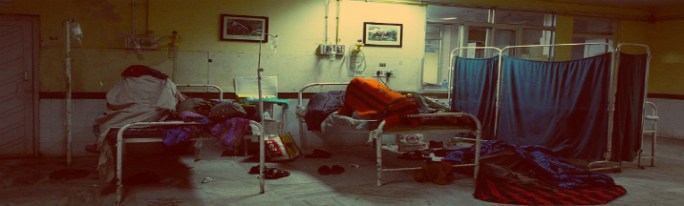
With a population of over 1.2 bilion people, India has understandably been on high alert for Middle Eastern Respiratory Virus. Last week a 40-year-old man who had just returned from Saudi Arabia became the country’s first case. The patient spent three day in his home in Vashi, a small town less than two hours south of Mumbai, before being admitted into the local hospital. No word yet on whether he has a family or close relatives living with him, but no new cases have been detected.

Times of India – “In the first suspected case of the Middle East Respiratory Syndrome Coronavirus (MERS-CoV) in the city, a Vashi resident has been quarantined at Kasturba Hospital in Chinchpokli. The 40-year-old man was admitted to the hospital’s ward 30, meant for infectious diseases, on Wednesday afternoon with complaints of fever and a progressing pneumonia (inflammation of lungs). The patient had returned to India on August 12 after spending 35 days in Saudi Arabia.”

Scientists Reveal How Deadly Ebola Virus Assembles

Just when you thought you knew Ebola, its proteins go and change shape on you. Scientists have discovered that the molecule responsible for the virus’ release of virions (VP40) is capable of changing shape to perform new functions.  This is a big deal, as up until now, proteins were generally believed to only be possible of forming one shape – one shape, one function. Researchers will be able to use this surprising piece of information to build antivirals tailored specifically to the VP40’s different shapes, enabling them to selectively target different points in the virus’ assembly. Which would be nice, because Ebola is scary.

Science Daily – “The results, five years in the making, revealed the Ebola VP40 protein exists as a dimer, not as a monomer as previously thought, and it rearranges its structure to assemble filaments to build the virus shell or “matrix” to release countless new viruses from infected cells. The study showed the protein also rearranges itself into rings in order to bind RNA and control the internal components of the virus copied inside infected cells. This “shape-shifting” or “transformer” behavior explains how the Ebola virus can control a multi-step viral lifecycle using only a very limited number of genes.”

New swine flu virus found by University of Hong Kong researchers

Scientists at the University of Hong Kong have unearthed a new influenza virus, nimbly dubbed porcine parainfluenza virus 1(PPIV-1), in 386 pig carcasses collected from slaughterhouses around Hong Kong. Despite the virus’ close similarity to existing human flu viruses, as long as meat is thoroughly cooked there is no immediate health threat to us. The stability of the virus’ genome suggested its primary host is pigs, in which it is also found to cause respiratory symptoms. However, study researchers have called for greater surveillance of imported animals – Hong Kong imports 3,000 pigs from mainland China daily – as well as a more thorough investigation into the virus’ source.

South China Morning Post – “But a top researcher behind the study, microbiologist Yuen Kwok-yung, warned it might mutate and jump from pigs to humans. ‘The new virus is closely related to some human influenza viruses,’ Yuen said. ‘We should watch for possible cross-species transmission from pigs to humans, just as in the case of [human] swine influenza H1N1 and the Nipah virus.'”

Universal Flu Vaccine: Pandemic Viruses May Give Clues

The best safeguard for beating the newest pandemic flu seems to be having lived through a couple already. According to new research, individuals who had been exposed to both the 1957 H2N2 and the 1977 H1NI pandemic influenza viruses had higher levels of broadly neutralizing antibodies.  These antibodies are better able to target the flu viruses’ “stalk” portion (rather than their “head”) which remains relatively conserved across strains. Before you start counting the number of times you’ve been laid up with the flu (or smartly got a flu shot), antibodies produced against seasonal flu won’t confer the same protection. For some reason, our body tends to produce antibodies against the “head” portion of regular winter flu viruses. However, researchers hope that by creating a seasonal flu shot which tricks your immune system into thinking it’s facing a pandemic virus,  a universal flu vaccine may be possible.

Live science – “Levels of broadly neutralizing antibodies increased modestly over time in the study participants, and were highest among those who’d been exposed to more than one pandemic. Levels of broadly neutralizing antibodies were 3.8-fold higher in those who had been exposed to both H2N2 and H1N1, compared with those exposed to only H1N1, the study found. The finding suggests a strategy for making a universal flu vaccine: create a vaccine that contains flu viruses with very different heads, but highly similar stalks, Miller told LiveScience.”

New virus could help rule out mad cow

We don’t spend a lot of time talking about pathogens which affect  exclusively agricultural and food security here at the Pandora Report, which isn’t to say they’re not critically important. Scientists have discovered and successfully characterized an astrovirus which produces symptoms similar to bovine spongiform encephalopathy (BSE), more commonly known as mad cow disease. Although the new virus is not zoonotic, researchers can use its sequenced genome to develop a quick an easy diagnostic test capable of ruling out BSE.  Currently, testing for BSE and other neurological diseases in cattle is very cost and labor intensive.

Futurity – “’Neurologic disease in cattle can be difficult to diagnose because there are a number of different causes, and pre-mortem sampling and analyses can be cumbersome and/or expensive,’ says corresponding author Patricia Pesavento, a veterinary pathologist in the University of California, Davis School of Veterinary Medicine…’Understanding the role of this virus is crucial for veterinarians as well as for the dairy and beef cattle industries,’ she says. ‘Additionally, finding new viruses helps us identify other, more remote viruses because it builds our knowledge of both the depth and breadth of viral family trees.'”

(image courtesy of Axel Drainville/Flickr)

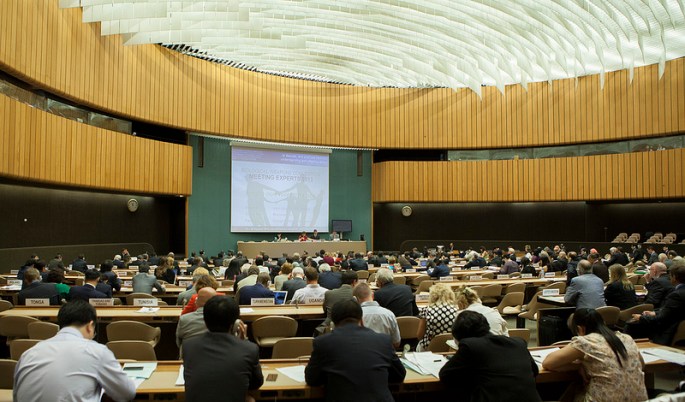
2013 Biological Weapons Convention Meeting of Experts underway

The 2013 Biological Weapons Convention (BWC)  Meeting of Experts is in its penultimate day at the Palais des Nations in Geneva.  The biennial meetings, which began in 2007 following the Sixth Review Congress,   bring together stakeholders from State Parties, NGOs, research institutions, and the sciences for collaboration both on the treaty itself and issues of importance to it. Agenda items for this year’s meeting include bolstering cooperation and assistance, particularly under Article X of the BWC, increasing the dismally low participation in the annual Confidence-building Measures (CBM), increasing national implementation of the treaty, and examining germane developments in scientific research.

A full list of all official documents, including papers submitted by State Parties, is available here (our favorite is the UK & Northern Ireland’s aptly titled paper, “We Need to Talk About Compliance“). The meetings, which began on Monday, will conclude tomorrow.

(Image courtesy of the US Mission Geneva/Flickr)

Image of the Week: Bacteria and Lightbulbs

Three enterprising students from the University of Wisconsin, Madison are trying to create a light bulb powered entirely by E.coli. “But, wait!” You might say. “E.coli doesn’t bioluminesce!” In order to overcome this slight hurdle, the students plan on inserting a strip of DNA into the bacteria’s genome which will enable the bug to glow in the dark. The light bulb itself will contain the modified bacteria, the necessary growth medium, and a set of specific microbes capable of recycling light to provide nutrients and eliminate waste – all of which together would produce a bulb which glows without electricity, aptly dubbed Biobulb (pictured below).

biobulb

Read more and fund the upstart project here!

(image courtesy of Cohn/Zaikan/Beckman, University of Wisconsin, Madison)


Mexico joins Australia Group

For those of you unfamiliar with the name, the Australia Group is an informal consortium of countries seeking to restrict unintentional transfer of dual-use chemical/biological materials, through participation in voluntary export controls. The group arose in 1984, following Iraq’s ability to purchase chemical weapons components through legitimate international channels. The Australia Group fills a critical niche internationally, helping to prevent the unintentional proliferation of WMD components. The group has since expanded from its 15 founding members to include 42 countries and the European Union, with Mexico joining yesterday as its 42 member.

From the press release:

In warmly welcoming Mexico to the Group, the other Australia Group members recognised the Government of Mexico’s steadfast efforts to bring Mexico’s export control system fully into line with AG common control lists and guidelines, and its determination to contribute even more effectively to the global effort to prevent the proliferation of CBW in the security interests of all members of the international community. Mexico has also underlined its continuing commitment to WMD non-proliferation and to strengthening international standards for best practice export controls.

In joining the Group, the Government of Mexico said it would contribute constructively to the achievement of the Group’s objectives and to support its principles, in the interest of disarmament, global security and non-proliferation. As an AG Participant, Mexico would also promote the fulfilment of international obligations created under the Biological Weapons Convention (BWC), the Chemical Weapons Convention (CWC) and UN Security Council Resolution 1540, among others.

Read the full release here.

(image via Kate Sheets/Flickr)

This Week in DC: Events

Want a way to beat the heat and avoid the crowds? Get thee to a think tank event. Here are the week’s best, again in one list because DC is operating at minimal capacity for most of this month.

Tuesday, August 13:
Between War & Peace: Do We Need New Tools For Messy Transitions?
Stimson
9:30 – 11AM

The office of the Special Inspector General for Iraq Reconstruction issued its final lessons learned report earlier this year. Among the recommendations was a call for establishing a new U.S. Office for Contingency Operations, for planning and implementing the diverse activities required in post-conflict deployments, not necessarily of the scale or purpose of the Iraq situation. Our panel will discuss the requirement for such a capability in the U.S. system, consider options to achieve greater planning and execution effectiveness, and also look at what tools and processes reside in the UN system.

Wednesday, August 14:
A Conversation with Amb. Raouf Adly Saad
Middle East Institute
12:00PM – 1:00PM

H.E. Ambassador Raouf Adly Saad served as the special envoy to Africa for Interim Egyptian President Adly Mansour. Prior to that he served as ambassador to both the Russian Federation and the European Union. Amb. Saad has held a number of other prominent positions within the Egyptian government, including as senior assistant to the minister of foreign affairs, assistant foreign minister for International Economic Relations, and member of parliament and chairman of the Foreign Relations Committee in the People’s Assembly. He has led several Egyptian delegations to international events, including the 7th Forum on Democracy, Development, and Free Trade in Doha, and the Meeting of the Economic and Social Council of the League of Arab States. He obtained his B.A. in economics and political science from Cairo University. Kate Seelye is senior vice president of the Middle East Institute, where she oversees MEI’s programs and communications. Prior to joining MEI, Seelye worked as a radio and television journalist covering the Arab world from 2000-2009 from her base in Beirut, Lebanon. She reported on the region for NPR, BBC’s The World, PBS’ Frontline/World and the renowned Channel Four British investigative news series, Unreported World. Prior to that she worked as a producer for the Newshour with Jim Lehrer on PBS.

Thursday, August 15:
Public Health Preparedness: Are We Ready for Disaster?
Alliance for Health Reform
12:15PM – 2:00PM

Following the terrorist attacks of September 11, 2001 and the subsequent anthrax assaults, the federal government began to reevaluate the nation’s preparedness for public health emergencies. Since then, the nation has been hit by massive floods, hurricanes and other disasters, and last year Hurricane Sandy swept up the east coast, crippling several states and nearly exhausting emergency services. Despite the continued need for a strong emergency response infrastructure to combat natural disasters, reemerging diseases, pandemics and food-borne illnesses, state health department budgets have been shrinking. What is the nation’s state of preparedness for public health emergencies? What are the consequences of continued budget cuts to local and state health departments? Is the nation prepared for future disasters at both the federal and local level? What resources do we need to be adequately prepared? What can we learn from past emergencies, such as the recent Hurricane Sandy, to be more prepared in the future? A distinguished panel of experts will address these and related questions.

The Pandora Report 8.9.13

Highlights include camels as MERS’ vectors, anti-bacterial chemicals hiding Salmonella, a new malaria vaccine, BioWatch in DC, H5N1 in Nepal, African Swine Fever in Belarus, and in case you missed it: mutating H7N9. Happy Friday!

Camels may be source of Middle East’s Sars-like virus

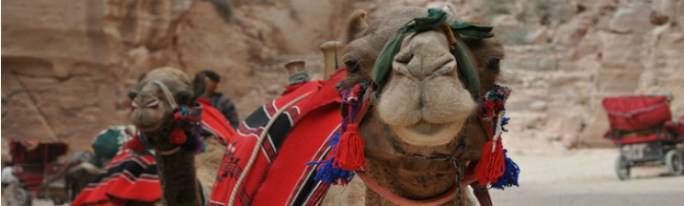
Can we all just take a moment to appreciate the level of epidemiological sleuthing which went in to uncovering this? Researchers attempting to determine the vector of Middle Eastern Respiratory Syndrome (MERS) ended up sampling 50 Omani racing camels, and 105 Canary Islander tourist camels. All camels sampled from Oman, and 15 of those from the Canary Island, possessed antibodies to MERS, indicating prior infection. While the presence of antibodies is compelling, the virus itself was not found in any of the dromedary (vocab word of the day, meaning an Arabian camel with one hump) camels sampled. Also, Oman has reported no human cases of MERS. However, with camels as a possible vector, follow up investigations into whether those people infected had any contact with camels, their meat, or their milk can be conducted.  MERS has infected 94 people to date, killing almost half.

The Guardian – “The scientists said the virus could be slightly different – maybe more transmissible in Oman – or the camels might have been kept in circumstances that made it less likely to spread in the Canaries. But it is also possible that the virus was brought in by one of the three oldest Canary Island camels, who arrived from Morocco more than 18 years ago. ‘We cannot rule out that the population might have once had an outbreak but that by the time of sampling, antibody titres had waned and no new introductions of the virus had occurred,’ they write. ‘The camels have contact with wild rodents, pigeons, and other doves, and possibly also bats. Seven insectivorous bat species, including three pipistrellus [species], are native to the Canary Islands, while Egyptian fruit bats (Rousettus aegyptiacus) have been introduced.'”

USDA reviews whether bacteria-killing chemicals are masking Salmonella

According to recent research, the use of stronger anti-bacterial chemicals at poultry-processing plants may be cloaking the presence of Salmonella and other foodbourne pathogens which remain on the processed meat. Apparently the more stringent chemicals are too strong for current Salmonella tests, potentially resulting in false negatives. The USDA has stepped in to further investigate the research’s claims. For those of you who (like me) didn’t know, apparently the bird is treated with four different chemicals on average.

Washington Post – “To check that most bacteria have been killed, occasional test birds are pulled off the line and tossed into plastic bags filled with a solution that collects any remaining pathogens. That solution is sent to a lab for testing, which takes place about 24 hours later. Meanwhile, the bird is placed back on the line and is ultimately packaged, shipped and sold. Scientists say in order for tests to be accurate, it is critical that the pathogen-killing chemicals are quickly neutralized by the solution — something that routinely occurred with the older, weaker antibacterial chemicals. If the chemicals continue to kill bacteria, the testing indicates that the birds are safer to eat than they actually are.”

Investigational malaria vaccine found safe and protective

A new, live-attenuated malaria vaccine has successfully completed Phase I clinical trials. The vaccine, known as PfSPZ Vaccine, has been shown in a recent NIH to be safe, immunogenic, and  effectively confer immunity. However, a significant drawback of the new vaccine is its intravenous administration – most vaccines are administered subcutaneously, intradermally, or, ideally, orally.  Nonetheless, researchers are optimistic, and a set of follow-up studies are scheduled. According the the WHO, in 2010 (most recent sampling year), malaria caused an estimated 219 million cases globally, with 660,000 deaths, predominantly amongst African children.

Medical Xpress – “The Phase I trial, which took place at the NIH Clinical Center in Bethesda, received informed consent from and enrolled 57 healthy adult volunteers ages 18 to 45 years who never had malaria. Of these, 40 participants received the vaccine and 17 did not. To evaluate the vaccine’s safety, vaccinees were split into groups receiving two to six intravenous doses of PfSPZ Vaccine at increasing dosages. After vaccination, participants were monitored closely for seven days. No severe adverse effects associated with the vaccine occurred, and no malaria infections related to vaccination were observed…Based on blood measurements, researchers found that participants who received a higher total dosage of PfSPZ Vaccine generated more antibodies against malaria and more T cells—a type of immune system cell—specific to the vaccine.”

DHS wants LRS Federal to continue collecting BioWatch air samples for another six months

BioWatch isn’t dead yet, at least if you live in the DC metro region. The Department of Homeland Security has decided to award LRS Federal a six-month contract extension for maintenance of BioWatch in the DC metro area. The $759,000 awarded in the renewal will go towards maintenance of the program, including salaries of those who collect the daily samples and upkeep. No new developments on Gen 3 writ-large.

Government Security News Magazine – “LRS Federal currently manages the teams that perform daily sample collections and routine equipment maintenance on portable air sampling units located throughout the National Capital Region’s ‘BioWatch Jurisdiction,’ in Washington, DC; Baltimore, MD; Richmond, VA; and elsewhere. The notice says that LRS is the only firm that can continue supporting the program’s immediate requirements. ‘Otherwise, the Government will be without support to detect and mitigate the threat of biological air-borne pathogens,’ it added.”

International Recap:

Nepal: H5N1 is still raging in Nepal, with the government considering an extension of the current ban on poultry-product sales. In the weeks following this most recent outbreak, the  Nepali government had come under fire for apparently pandering to poultry groups, resulting in an increase in the virus’ spread. However, it has since began a widespread campaign of restriction of poultry sales and culling. Fears of the virus spreading south to neighboring India remain.  Read more here.

Belarus: It’s not often we get to write about Belarus, Europe’s last dictatorship (no Putin jokes, please). The Eastern European country is currently experiencing an outbreak of African Swine Fever, which only affects pigs. Belarus has admitted difficulty in containing the outbreak. We’ve been unable to track down official numbers (it’s Belarus), but concerns over the disease spreading to Western Europe are mounting. Read more here.

In case you missed it:

– Researchers Mutating H7N9, increasing virulence and able to transmit person-to-person

(image courtesy of Jason Wain/Flickr)

Researchers mutating H7N9, increasing virulence and P2P transmission

Twenty-two researchers from labs across the world submitted a letter to Nature and Science yesterday detailing their proposed “gain-of-function” research on the avian influenza virus H7N9. Their work would genetically engineer H7N9 to make it both more virulent and more readily transmissible person-to-person. The research sounds controversial, not the least because one of the scientists involved is Dr. Ron Fouchier, whose on gain-of-function work on H5N1 ingnited furious debate over what should research should and shouldn’t be published. However, there is a very real possibility that H7N9 will naturally mutate to transmit effectively between people. We already know that the virus is just a single amino acid mutation away from becoming easily transmissible between people. Indeed, news of the first confirmed case of such transmission was published in the British Medical Journal this week. With a 60% fatality rate and a completely naive global population, the results would be catastrophic. The proposed research would give us an idea of potential pandemic scenarios, giving us a head start on potential vaccine and antiviral development.  It may be controversial, but it’s absolutely necessary.

For the full letter, see here.

(image credit: Yoshihiro Kawaoka University of Winsconsin, Madison)