
Welcome to this week’s Pandora Report! Happy Halloween! 🎃 This issue uncovers the real horrors haunting U.S. public health: anti-science bills eroding trust and slashed PhD admissions threatening the next generation of scientists; explores rising biosecurity and chemical threats, from U.S. biotech gaps to Kazakhstan’s global oversight initiatives; and tracks Europe’s early bird flu wave, BWC verification innovations, and must-read pandemic preparedness insights. We also spotlight upcoming events, fellowships, and calls for papers shaping the future of global health security.
🎃 The Scariest Story This Halloween: How American Public Health is Falling Apart 😱
By Carmen Shaw, Co-Managing Editor of the Pandora Report
This Halloween, the real horrors haunting the U.S. research and public health ecosystem aren’t ghouls or ghosts – they’re policy decisions and administrative chaos. From statehouses pushing anti-science laws to universities slashing PhD admissions amid federal funding cuts, America’s public health system faces a frightening test of endurance.
An AP investigation revealed that more than 420 anti-science bills have been introduced across many U.S. statehouses this year – targeting long-standing protections like vaccines, milk safety, and fluoride. Many of these efforts have been coordinated by allies of the HHS Secretary Robert F. Kennedy Jr. and Trump administration officials, aiming to reshape laws and minds nationwide.
Experts warn that the very programs under attack have saved millions of lives: vaccination programs have prevented an estimated 154 million deaths since 1974, while fluoridation and pasteurization have dramatically reduced cavities and foodborne illness. Yet, in a political climate increasingly hostile to science, facts are losing their footing against the rapid onslaught of misinformation, disinformation and populist rhetoric.
The damage is showing. According to new poll from Axios/Ipsos, public trust in federal health agencies is plummeting. Confidence in the CDC has fallen to 54%, down from 66% in December 2024, while trust in the FDA dropped to 52% from 60%. Support for childhood vaccinations has also slipped, with just 74% of Americans now agreeing that parents should follow the CDC’s recommended schedules – down from 81% in March 2025.
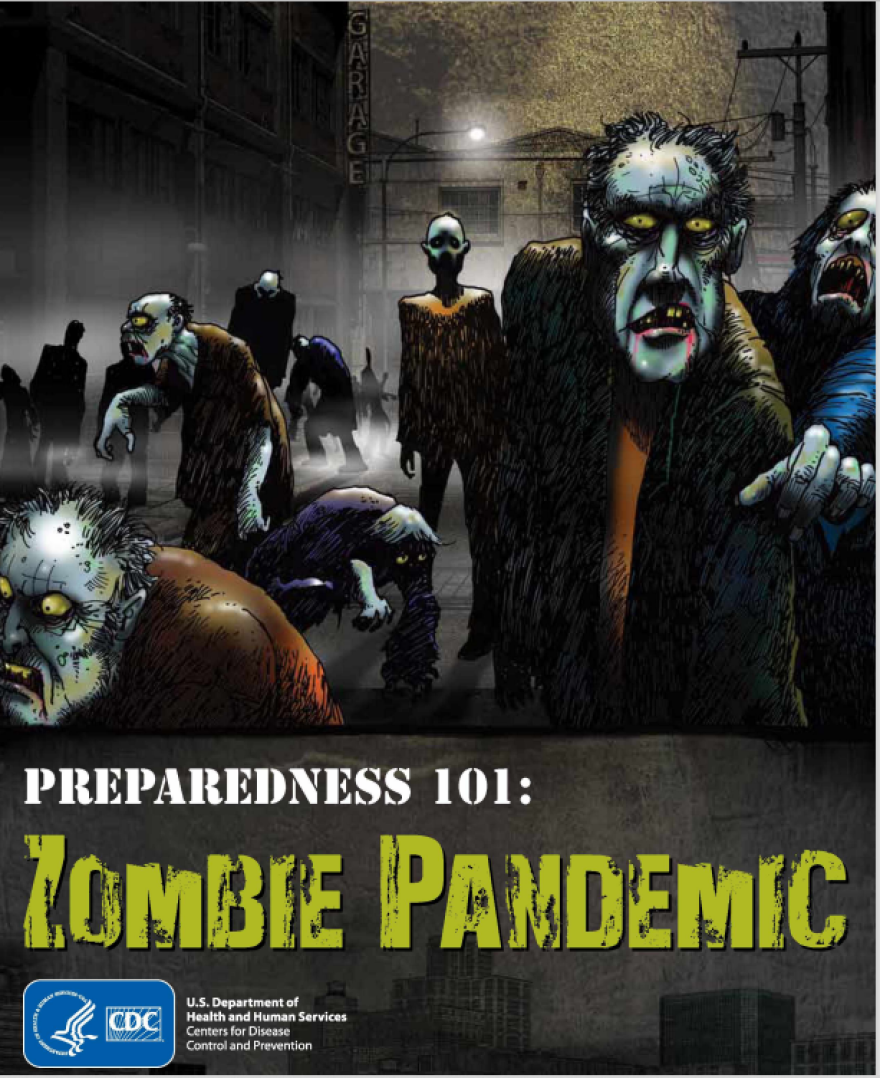
These numbers mirror the rough year the CDC has had under the Trump-Kennedy administration. Following months of upheaval, the agency has lost roughly a third of its workforce through firings, resignations, or administrative leave. Many of those caught in the purge led chronic disease programs, measured health and nutrition across the U.S., or provided mental health support for employees after the August shooting at CDC headquarters. Additionally, the fates of more than 600 workers continues to hang in the balance now that a federal judge has temporarily blocked their terminations.
The administration tied the firings to the shutdown, while other officials had offered a piteous “system glitch” as the cause for the termination notices that were sent and later rescinded, but few buy that explanation. “It seemed like intentional chaos for the sake of chaos so that nobody knew what was going on,” said one CDC employee, speaking anonymously out of fear of retribution.
Some observers believe the administration’s moves are retaliatory. “What they want to do is humiliate the CDC in the same way that they felt humiliated by it during COVID,” said Dr. Nirav Shah, who resigned in February as the CDC’s principal deputy director. The fallout has already frozen key operations: the agency’s ACIP (Advisory Committee on Immunization Practices) has indefinitely postponed its October meeting, potentially leaving the U.S. without a mechanism to update routine vaccination recommendations for 2026 and jeopardizing the pipeline for new vaccines.
The crisis extends beyond federal agencies. As Nature reports, universities nationwide are slashing PhD admissions by up to 75%, with some halting recruitment entirely. The cuts follow sweeping freezes on federal science funding, and now the administration is asking all US universities to support its priorities, really, ideological directives, including a ban on diversity programs, in exchange for better access to future federal research grants.
Experts warn this coercive use of funding power could result in a “lost generation” of scientists. Graduate students perform much of the hands-on research that drives biomedical and biodefense innovation – and without them, labs go quiet. “If this persists for a number of years,” economist Donna Ginther told Nature, “The scientific workforce will shrink,” and with it, America’s capacity for discovery.
Further Reading:
- “Who benefits from the MAHA anti-science push?” Michelle R. Smith and Laura Ungar, AP News
- “The CDC diaspora fights back,” Jonathan Cohn, The Bulwark
🧪Biosecurity Nightmares: Biotech, Dual-Use Risks, and Chemical Threats 👻
Preparing for a Biotech-Powered Future in the U.S.
As biotechnology advances at an unprecedented rate, so do the risks – and the stakes – for national security. The U.S. is moving to ensure its defense and security apparatus can keep pace, especially as China makes significant gains in both civilian and military biotechnology applications. House lawmakers recently passed an amendment to the fiscal 2026 National Defense Authorization Act (NDAA) requiring the Secretary of Defense to establish training programs for Pentagon personnel on biotechnology and its convergence with emerging technologies like AI and quantum computing. Led by Rep. Chrissy Houlahan (D-PA) and informed by findings from the National Security Commission on Emerging Biotechnology (NSCEB), the initiative aims to equip U.S. defense personnel to understand, evaluate, and respond to developments in biotech across research, risk assessment, testing and evaluation, and operational deployment.
The private sector is also stepping up in the bio-domain. Valthos Inc., a New York-based biodefense startup company received $30 million in funding to develop AI-driven software to detect emerging bioweapon threats and refine medical countermeasure designs. The company’s work comes at a critical time: U.S. biotechnology funding has dropped to its lowest levels in more than a decade, even as AI advancements increase both the potential and the risks of biotech misuse. Companies like Valthos are now on the frontline of preventing biotech innovations from being weaponized.
Global Moves Toward Biosecurity Oversight in Kazakhstan
Internationally, Kazakhstan continues to push the frontiers of global biosecurity. In 2020, during the COVID-19 pandemic, President Kassym-Jomart Tokayev advanced the establishment an International Agency for Biosafety (IABS) to strengthen oversight under the Biological and Toxin Weapons Convention (BTWC). Five years later, Kazakhstan held a seminar in Almaty to mark the BTWC’s 50th anniversary and explore ways to reinforce the treaty. Developed in consultation with states and experts, the draft final report outlines mechanisms for international cooperation, review of scientific and technological developments, while considering the creation of a working group to address verification and compliance. This initiative also navigates potential overlaps with existing organizations such as WHO, WOAH, and FAO. Looking forward, Kazakhstan may transform IABS into a “testbed” for technical studies, enabling scientists and civil society to develop models that inform Geneva negotiations while remaining flexible in the face of emerging biological threats.
Chemical Weapons Remain a Global Threat
The shadow of chemical weapons continues to loom over global security. France has issued a new arrest warrant for ousted Syrian president Bashar al-Assad over deadly chemical attacks in Adra, Douma, and Eastern Ghouta in August 2013, which reportedly killed or injured nearly 1,500 people. This marks France’s third arrest warrant for Assad, who is now living in Russia following his ousting in December 2024. Charges include complicity in crimes against humanity and war crimes, and a separate warrant issued for Talal Makhlouf, a former Syrian Republican Guard commander.
African Civil Society Acts Against Chemical Weapons
Meanwhile, African civil society is taking historic steps to address chemical weapons concerns closer to home. At the 85th Session of the African Commission on Human and Peoples’ Rights in Banjul, the NGO Forum passed a resolution addressing chemical weapons use in Sudan’s Khartoum, Al-Jazirah, Sennar, and Darfur states. The measure calls on Sudan to fully cooperate with the Organization for the Prohibition of Chemical Weapons, allowing independent investigations into the reported attacks. While Sudan, a party to the Chemical Weapons Convention (CWC), has previously denied using such weapons, the Forum found the government’s assurances insufficient, citing inadequate transparency and enforcement measures. Adoption of the resolution represents a milestone for African human rights advocacy in holding Sudan accountable and could influence both regional and international mechanisms for monitoring chemical weapons use.
Further Reading:
- “NIST Center for AI Standards and Innovation Selects Signature Science, LLC for AI Safety Basic Ordering Agreement,” Signature Science, LLC
- “Mapping the limitations of current AI systems,” AI Security Institute
- “Cybersecuring the modern bioeconomy,” Eleonore Pauwels, KAS
- “Why data protection is key to global animal health security,” Pascaline Bossard, The Animal Echo
Europe Implements Emergency Measures Amid Growing Bird Flu Threat
By: Margeaux Malone, Pandora Report Associate Editor
A concerning wave of H5N1 highly pathogenic avian influenza is sweeping across Europe, prompting urgent biosecurity measures and large-scale culling operations as authorities work to prevent viral spread. Bird flu has already triggered 56 outbreaks across ten European countries and Britain since August, marking the earliest widespread seasonal occurrence in at least a decade, although the total number of outbreaks still remains lower than in 2022 when the bird flu crisis hit its peak.
Poland, the EU’s top poultry producer, along with Spain and Germany have been hit especially hard. German authorities recently announced the country has culled more than 400,000 poultry with detections across 30 farms housing chickens, ducks, geese, and turkeys. Experts noted the current outbreak resembles Germany’s devastating 2021 bird flu wave, which forced the country to cull over 2 million birds.
In response to the mounting crisis, preventive action is being implemented across the EU and the United Kingdom. Great Britain and Northern Ireland are implementing an Avian Influenza Prevention Zone on November 1st, requiring all flock owners to follow strict biosecurity protocols. While birds can still go outdoors, keepers must ensure wild birds cannot access their food or water, and mandatory cleaning and disinfection rules must be followed.
As migration season continues, veterinary and human health authorities across Europe remain on high alert, recognizing that vigilance and biosecurity compliance are critical to preventing further escalation of this agricultural and public health challenge.
Meanwhile, the United States faces readiness challenges as migratory birds continue to drive up avian flu cases across the country, with infections detected in 62 commercial and backyard flocks across 17 states in the last month, affecting nearly 6.6 million birds. Public health officials warn that federal response has been hampered by staff cuts at both the Centers for Disease Control and Prevention (CDC) and Department of Agriculture (USDA), along with the government shutdown, which has suspended critical activities like weekly calls among animal health laboratories. The shutdown is also preventing USDA participation in a key meeting of top animal health experts next week. Concerns have been intensifying in public health circles since the administration gutted the White House Office of Pandemic Preparedness this summer and pulled funding for an mRNA vaccine for bird flu in humans. Despite a $1 billion comprehensive strategy to fight bird flu announced by the administration in February, which focused primarily on biosecurity audits and financial relief for impacted farmers, experts warn that shrinking resources and information blackouts are making it increasingly difficult to make evidence-based decisions about how to respond to this pandemic-potential threat.
Further Reading:
- This ‘minor’ bird flu strain has potential to spark human pandemic,” Rachel Fieldhouse, Nature
- “Avian Flu detected on more Minnesota turkey farms”, Stephanie Soucheray, CIDRAP
- “What does it mean if a deadly strain of bird flu has been found on Australia’s Heard Island?,” ABC News (Australian Broadcasting Corporation)
- “A one-shot flu vaccine can beat avian flu strains before they appear,” Paul Arnold, Medical Xpress.
- “Bird flu virus has ‘everything it takes to trigger a pandemic,’ warns WHO virologist,” Franziska Müller, EuroNews
GMU Biodefense Alumni Tackles BWC Verification with Open-Source Intelligence (OSINT)
Dr. Yong-Bee Lim, a GMU PhD Biodefense alumni and Associate Director, Global Risk at the Federation of American Scientists (FAS), recently co-authored a paper exploring how open-source intelligence (OSINT) could bolster verification of the Biological Weapons Convention (BWC).
OSINT, a type of intelligence-gathering discipline, involves information collection, analysis, and methods application, offers a “layered” approach to help fact-check, investigate suspicious activities, and examine areas of concern or interest. While the BWC established critical norms against the development of biological weapons, it continues to face deep challenges – especially in verification, interstate friction and distrust, and issues with intentional treaty violation. The authors argue that OSINT, which has already proven effective in tracking other weapons of mass destruction, could now help strengthen the BWC’s architecture and support international norms as biological data continues to proliferate.
Read the article commentary: The BWC at 50: Exploring OSINT Opportunities and Challenges in the BWC Ecosystem
Learn more about Dr. Yong-Bee Lim and his work: FAS bio page
Book Review – The Big One: How We Must Prepare for Future Deadly Pandemics
By: Shreya Rajkumar, MS Biodefense student at GMU’s Schar School of Policy and Government
“The Big One” is the stuff of nightmares, a pandemic more deadly, transmissible, and long-lasting than COVID-19, and precisely what Michael Osterholm and Mark Olshaker address in their aptly named book, The Big One: How We Must Prepare for Future Deadly Pandemics. This book is not the first to dissect US preparedness for a pandemic or offer suggestions for improvements, nor it is the first to warn the public about the ramifications of a devastating “Disease X.” However, The Big One brings a much-needed dose of humility and reality that cuts through the noise surrounding current discussions about pandemics and public health.
Combining Osterholm’s decades of public health experience with Olshaker’s storytelling and analytic writing, The Big One is a comprehensive review of US pandemic preparedness and response. The authors succeed in making the book accessible to those without a background in public health and infectious disease yet still relevant to practitioners in those fields. Whether discussing basic science, disease transmission, public health mandates, vaccines, risk communication, biosurveillance, or politics, Osterholm’s strong voice carefully explains public health concepts, addresses the failures of the past, and recommends improvements for the future.
There are many public health actions that Osterholm criticizes in The Big One, of which the most consequential may be the public health establishment’s reluctance to admit its mistakes. As the former state epidemiologist for the Minnesota Department of Health and consultant to a variety of national and international public health agencies, Osterholm is a prominent member of this establishment and concedes several instances where he was wrong and had to re-evaluate his arguments. By doing this, he reaffirms his dedication to the scientific method, accepting new data, and speaking uncomfortable truths. Osterholm holds prominent public health organizations accountable for their reluctance to do the same during the earlier days of the COVID-19 pandemic. Examples include when public health officials continued supporting contact tracing even when it was shown that asymptomatic transmission severely complicated those efforts, and when public health organizations persisted in stating that the virus was spread through droplets despite scientific evidence demonstrating aerosol-based transmission.
At the same time, The Big One pushes back against anti-science rhetoric and encourages increased funding for innovative public health programs. Vaccines and respirators are two such areas the book argues in favor of. Specifically, the authors call for a funding schedule like that of the Department of Defense, where technologies receive investments prior to the point of need, and new products are continuously funded and developed. After all, “The Big One” will be poised to take millions of lives, so these costs will be worth it.
One of the clever ways The Big One cuts through the noise of debates on pandemic preparedness and response is the use of fiction. Framed as a tabletop simulation, each chapter of The Big One feeds into an overarching plot where the world responds to a novel coronavirus outbreak. Fiction has an ability to grab the attention of the public that is hard to match. Consider Richard Preston’s The Cobra Event, which captivated then-President Bill Clinton and resulted in his administration’s efforts to counter bioterrorism. The scenarios presented in The Big One could have a similar effect as Osterholm and Olshaker expertly illustrate concepts that the chapters dive into, making it easier for the reader to imagine the public health factors that the authors analyze.
In the more technical parts of the chapters, a combination of humility and reality form the basis for Osterholm’s recommendations. As early as the prologue, the authors state, “Indeed, it [humility] is an acknowledgement of reality.” This “acknowledgement” and its role as the foundation for future improvements is something that other public health experts echo in their work. Former CDC director Tom Friedman’s newest book, Formula for Better Health: How to Save Millions of Lives-Including Your Own, impresses upon the reader the formula: “See, Believe, Create.” According to Frieden, managing public health crises begins with identifying an issue and believing it exists and can be fixed, before taking action to create solutions. Some of the issues Osterholm addresses and proposes solutions for include misinformation (which could be combatted by an independent third-party validation bureau) and lengthy school closures (which could be shortened and enacted only during periods of high disease transmission, inspired by the logic behind declaring “snow days”).
I must admit to some shortfalls in The Big One. The early chapters first touch upon basic science, disease transmission, non-pharmaceutical interventions, and vaccines before pivoting to address communication, disease reporting, and politics. This sequence implies the order of priorities in responding to a pandemic, and we see this play out in the book’s tabletop simulation, to the detriment of the fictional government. Because they neglect to combat misinformation in favor of focusing on vaccine development, the administration struggles to play catch-up in the wake of rampant disinformation in the media. I would have preferred to see communication, surveillance, and politics be addressed concurrently to the progression from pathogen identification to vaccine development to show an increased importance on those concepts. For a book that communicates so well, it is ironic that it waits until its second half to properly address the topic of communication.
Another criticism regards the fictional president’s actions and their consequences. In the scenario, the president listens to scientists and employs honest, empathetic communication in the style of World War II-era leaders like Franklin D. Roosevelt and Winston Churchill. However, in the epilogue section, it is revealed that the president’s efforts could not save their re-election campaign. It would be hypocritical for a book rooted in humility and accepting reality to present a scenario where perfect decisions result in perfect endings. However, in a world where political leaders have a vested interest in being re-elected, one must wonder how helpful this example is in convincing officials to champion science and adopt empathetic honest communication. Perhaps this dose of reality is too strong.
Despite these flaws, The Big One remains a refreshing read. In the context of biodefense and health security, the succinct nature of the book allows the authors to address an exhaustive list of factors in pandemic preparedness and response, and to propose many tailored future steps. Any of these ideas, such as the improper use of mathematical modeling, could be an interesting topic of study on their own. The willingness to hold public health agencies accountable and the discussion around politics in public health are also valuable aspects of the book.
When “The Big One” inevitably hits, we will either find ourselves in the role of the fictional officials who lament the lack of proactive pandemic preparedness programs, or we will be in a situation where we have built upon the lessons from COVID to enact a more effective response. As Osterholm and Olshaker state at the end of The Big One, “we have seen what’s coming. The choice of how we prepare for and face it is up to us.” Indeed, this is one last humble act of the book, for we have not only “seen what’s coming” in this book, but also “how to prepare for and face it.” The only question left is whether we will act on what we have learned.
NEW: Bridging Perspectives in COVID’s Wake: Science Policy, and Public Trust in Crisis Response
From AEI: “As we move beyond the acute phase of the COVID-19 pandemic, we need to thoughtfully examine the health outcomes and policy decisions that shaped our collective response to the crisis. Structured around Stephen Macedo and Frances Lee’s In COVID’s Wake: How Our Politics Failed Us, this flagship event will feature a fireside chat with the authors and panel discussions examining how scientific evidence, policy implementation, and public communication intersected during the pandemic. These conversations aim to build mutual understanding among leading public health, science, and policy experts and identify lessons that can strengthen our response to future challenges.
This event is part of a broader collaboration between Johns Hopkins University faculty and American Enterprise Institute scholars.”
This event will be from 2:00 – 5:45 PM ET in Baltimore, MD on Thursday, November 6. Register here.
DC Biosecurity Happy Hour at Blackfinn DC!
This will be an informal event for biosecurity enthusiasts and professionals in DC to get to know each other outside of email and Zoom calls and talk about new ideas in this space.
The next event will be from 5:30 – 7:30 PM ET in Washington, DC, on Monday, November 3. Register here.
Nexus Series: AI x Bio: Workshop 1
From AI for SynBio: “Agentic AI and Biological Design Tools reduce the required expertise for new biotech developments enabling new benefits and novel harms. To guard against these harms, technical and policy solutions leveraging these AI and biotech advances should be deployed proactively to help red-team and safeguard against misuse in an exponentially changing landscape. This workshop series will shape the safeguards necessary to prevent harm and empower the community with technical and policy resources for the changing threat landscape. The workshop seeks participation from academia, non-profits, industry, and government.”
This event will take place on November 13. Register here.
GHS 2026
From GHS: “We’re excited to officially announce that the 4th Global Health Security Conference (GHS2026) will be held in Kuala Lumpur on the 9 – 12 June, 2026!”
“Building on the incredible momentum of GHS2024 in Sydney, we look forward to bringing together the global health security community once again – this time in one of Southeast Asia’s most vibrant and dynamic cities.”
“Registration and Call for Abstracts are now live!”
Learn more, submit abstracts, and register here.
The Human Biosafety Health Foundation – A New Hub for Biosafety in the Mediterranean
From the Human Biosafety Health Foundation: “The Human Biosafety Health Foundation has been established to promote research, training, and international cooperation in the fields of biosafety, public health, and health resilience. The Foundation aims to serve as a Mediterranean hub for the development of shared and innovative strategies in response to global challenges related to conventional and non-conventional biological threats, climate change, and health emergencies. The Scientific Committee is composed of medical officers and biosafety experts in high biocontainment transport from the Italian Air Force, ensuring a highly qualified, interdisciplinary, and operationally secure approach. By bringing together academic expertise, institutions, and civil society, the Foundation seeks to build an integrated network for health security, based on knowledge, prevention, and prediction.”
Learn more and get involved here.
Cyberbiosecurity Quarterly Call for Papers
“We are pleased to announce the launch of Cyberbiosecurity Quarterly, a new academic and trade journal dedicated to the intersection of cybersecurity and the bioeconomy. Published by Kansas State University’s New Prairie Press and sponsored by the Bioeconomy Information Sharing and Analysis Center (BIO-ISAC), this quarterly journal will serve as an important resource for professionals, researchers, and policymakers working to safeguard digital and physical biological infrastructures. Cyberbiosecurity is an emerging discipline that addresses the protection of biomanufacturing, biomedical research, synthetic biology, digital agriculture, and other life sciences sectors from digital threats. This journal will explore topics at the nexus of cybersecurity, digital biosecurity, and the bioeconomy, including but not limited to:
- Best practices for network configuration and management in biomedical environments (ingress/egress protection, segmentation, isolation, access control, traffic protection, etc.)
- Cybersecurity Vendor Management and Assessment
- Cyber and Digital Biosecurity Education for the Bioeconomy’s Workforce
- The Quality-Cybersecurity Tension in Practice and Techniques for Mitigation
- Threat Intelligence for Cyber-Physical Biological Systems
- Regulatory and Policy Perspectives on Cyberbiosecurity
- Incident Response and Risk Mitigation in Biomanufacturing
- AI and Machine Learning in Digital and Cyber Biosecurity”
Learn more and submit your papers here.
AIxBio Research Fellowship
From ERA: “ERA, in partnership with the Cambridge Biosecurity Hub, is now accepting applications for our AIxBio Fellowship – an eight-week, fully-funded research programme focused on addressing biosecurity risks amplified by advances in frontier AI. Running from 25th January to 22nd March, 2026 in Cambridge, UK, this fellowship offers researchers the opportunity to design and execute concrete research projects at the AIxBiosecurity interface.”
Learn more and submit your application by November 5 here.
Harvard LEAD Fellowship for Promoting Women in Global Health
From Harvard’s Global Health Institute: “To equip and empower more leaders in global health, the Harvard Global Health Institute, in collaboration with the Department of Global Health and Population at Harvard T.H. Chan School of Public Health, offers a transformational 1-year fellowship specifically designed to promote leadership skills in individuals in low- and middle-income countries who will, in turn, mentor future female leaders in global health. Candidates should be currently based/working in a LMIC, and plan to return there after their fellowship.
The fellowship experience provides global health leaders time to reflect, recalibrate, and explore uncharted territories. To date, fellows have come from 18 different countries, with representation from Africa, Asia, Eastern Europe, and South America. Their areas of focus have ranged from HIV/AIDS and healthcare to health policy at the highest levels of government. Past fellows’ areas of expertise span disciplines including research, advocacy, administration, and policy.”
Learn more and submit your application by November 30 here.
64th ISODARCO Course
From ISODARCO: “In recent years, the global security landscape has become increasingly volatile, shaped by a convergence of geopolitical tensions, technological advancements, and evolving nuclear doctrines. The post-Cold War order that once provided a measure of predictability in global security has eroded. Conflicts such as the wars in Ukraine and Gaza, rising tensions in the Indo-Pacific, and strategic competition between major powers have reshaped alliances and strategic postures.”
“At the same time, disruptive technologies including artificial intelligence, quantum computing, hypersonic missiles, and cyber threats – are adding new layers of complexity to both nuclear and conventional deterrence dynamics. These technologies are not only distorting the information landscape but also compressing decision-making timelines and complicating signaling mechanisms, increasing the risk of miscalculation.”
“Effectively managing nuclear escalation risks in this environment will require a combination of innovative diplomacy, technological safeguards, and renewed dialogue mechanisms to rebuild trust, reduce misperceptions, and stabilize strategic relations.”
“The ISODARCO 2026 Winter Course presents an invaluable opportunity for students and experts to discuss and examine these dynamics in depth and explore approaches to re-establishing strategic stability and reducing nuclear dangers in a volatile world.”
This course will take place January 11-18, 2026, in Andalo. Learn more and apply here.
 The Pandora Report