Pandora Report 5.2.2025

This week’s Pandora Report includes a new opportunity to learn about GMU’s Biodefense MS program, the publication of a new PRC whitepaper on COVID-19 origins, discussion of the second Trump administration’s first 100 days and its impact on public health, and more.

Biodefense MS Information Session

“Prospective students are invited to attend a information session to hear more about the Biodefense M.S. program offered at the Schar School. The online session will provide an overview of the program, as well as the application process, student experience and graduate outcomes. This session admissions will be led by the Graduate Admissions team.”

This session will take place on Tuesday, May 20 at 12 pm EDT. Register here.

Strengthening Global Accountability for Chemical Weapons Use

 The German Foundation for Peace Research (DSF) has published a new report, “Investigating and penalizing chemical weapons use. Global security governance and compliance with multilateral disarmament treaties” by Alexander Kelle and Oliver Meier. The report seeks to answer the qeustion: What enables the accountability network in the chemical weapons regime to identify those responsible for CW use in Syria—and pave the way for penalties? Their analysis highlights key factors behind the network’s effectiveness: informality, strong motivation, trust built through personal ties, and flexible rule interpretation to advance accountability.

PRC Suggests (Again) COVID-19 Originated in the US

China’s State Council Information Office released a whitepaper this week titled, “COVID-19 Prevention, control and Origins Tracing: China’s Actions and Stance”. In the paper, China accuses the US of politicizing the search for the origins of SARS-CoV-2, citing a lawsuit in Missouri that ended in a $24 billion ruling against the PRC for the hoarding of PPE and other medical equipment and concealing the initial outbreak of COVID-19. The whitepaper also highlights the determination of the WHO/PRC joint study that found a lab leak origin was “extremely unlikely”. The release of the publication came shortly after the White House launched a website supporting the lab leak pandemic origin theory.

Trump Administration Updates

The First 100 Days of the Second Trump Administration

The first 100 days of this administration have proven detrimental to public health. More than 20,000 jobs in the field were terminated, billions of dollars in funding has been axed or threatened, the administration’s draft budget proposal is setting the stage for a potential $40 billion funding cut to HHS, and even drinking water fluoridation is in jeopardy. The turmoil is already weakening public trust in relevant organizations. Polling from Harvard’s T.H. Chan SPH and the de Beaumont Foundation found 44% of US adults sampled have indicated new leadership in charge of federal public health agencies will make them trust health recommendations from those agencies less than they previously did.

Further Reading:

HHS Pauses Work at NIAID’s Integrated Research Facility

NIAID’s Integrated Research Facility, which specializes in multidisciplinary research and is one of the few places in the world that can do medical imaging on animals in BSL-4 containment, was ordered to stop work this week. Employees were told that the facility will be ending its studies on Lassa fever, SARS-CoV-2, and EEE. The animals used in these studies will not be euthanized, and DHS officials will padlock the facility’s BSL-4 freezers.  Gigi Kwik Gronvall, a senior scholar at the Johns Hopkins Center for Health Security, told Wired “The sacrifice to research is immense…If things are unused for a period of time, it will cost more money to get them ready to be used again.”

This seems well in line with Secretary Kennedy’s agenda. He promised he would attempt to shut down NIH research on infectious diseases, incorrectly claiming that the federal government’s funding for infectious disease research far surpasses that for chronic diseases. A spokesperson for NIH characterized the facility’s shuttering as a “research pause,” apparently blaming staff members for the shutdown. However, Connie Schmaljohn, Director of the Integrated Research Facility at Fort Detrick, was placed on administrative leave, casting doubts on this claim.

HICPAC Members Terminated, Webpage Archived

Several members of the CDC’s Healthcare Infection Control Practices Advisory Committee (HICPAC) reportedly have received termination letters, and the committee’s webpage has been archived, prompting many to assume its days are numbered. HICPAC helps to develop guidance for preventing and controlling healthcare-associated infections. It gained attention in recent years after some groups criticized its revisions to some of its infection control guidance. Experts are now concerned that the loss of this committee would be incredibly damaging to infection prevention, likely leading to many more patients suffering healthcare-associated infections.

NIH Stops Funding for New Projects with Subawards to Foreign Institutions

The NIH announced on Thursday that it will no longer allow grants to have any subawards that go to foreign institutions as part of a broader effort to eventually end the subaward process all together. A subaward is created when a grant recipient gives some of their funding from NIH to another institution that will then carry out part of the work under that grant. The complete change is expected to be in place by September 30. About 15% of NIH grants had a “foreign component” in 2023, according to reporting from Nature, meaning this move will have far-reaching implications.

Further Reading:

“Are We Ready for the Next One?”

Emily Gaines Buchler authored this article about future pandemics for Johns Hopkins Magazine, writing in part “Although the scientific community lacks consensus on whether COVID-19 originated in the Wuhan market or elsewhere, most scientists agree on another matter: We can expect more pandemics to come, owing to factors like climate change, mass migration, globalization, and human encroachment on wildlife and insect ecosystems. According to the center’s director Tom Inglesby, who served in COVID-related advisory roles during the pandemic at the White House and in the Department of Health and Human Services, “as temperatures change, people are moving around the world more rapidly than ever before … and intruding into ecosystems that used to be made up entirely of animals or insects.” This, in turn, creates opportunities for humans to get infected by new diseases and disease strains.”

“A WHO Director on the Future of Polio Eradication”

Think Global Health’s Allison Krugman interviews Hamid Jafari, the WHO’s polio chief for the Eastern Mediterranean, about what the global fight against polio looks like post-USAID funding in this article. Krugman explains part of the issue in the article’s intro, writing “Among the many programs affected, the World Health Organization (WHO)–led Global Polio Eradication Initiative (GPEI) is facing uncertainty because 21% of its budget has been historically funded by the United States. The partnership already needed an additional $2.3 billion to meet its goal of eradicating polio by 2029—and must now plan for an additional $133 million no longer arriving this year from the United States.”

“Global Antimicrobial Resistance and Use Surveillance System (GLASS) Report: Antibiotic Use Data for 2022”

From WHO: “This Global Antimicrobial Resistance and Use Surveillance System (GLASS) report describes global progress in GLASS-AMU surveillance and antibiotic use in 2022, reported by 60 countries. It supplements the 2016–2022 GLASS-AMU data on the GLASS dashboard.”

Read WHO’s news release about this report and its findings here, and a similar piece from CIDRAP here.

“A Call for Built-in Biosecurity Safeguards for Generative AI Tools”

Wang et al. recently published this Correspondence article in Nature Biotechnology, in which they explain in part “The power of generative AI lies in its ability to generalize from known data to the unknown. Deep generative models can predict novel biological molecules that might not resemble existing genome sequences or proteins. This capability introduces dual-use risks and serious biosecurity threats — such models could potentially bypass the established safety screening mechanisms used by nucleic acid synthesis providers, which presently rely on database matching to identify sequences of concerns. AI-driven tools could be misused to engineer pathogens, toxins or destabilizing biomolecules, and AI science agents could amplify risks by automating experimental designs.”

Read Science‘s discussion of this proposal here.

“The Age of AI in the Life Sciences: Benefits and Biosecurity Considerations”

From NASEM: “Artificial intelligence (AI) applications in the life sciences have the potential to enable advances in biological discovery and design at a faster pace and efficiency than is possible with classical experimental approaches alone. At the same time, AI-enabled biological tools developed for beneficial applications could potentially be misused for harmful purposes. Although the creation of biological weapons is not a new concept or risk, the potential for AI-enabled biological tools to affect this risk has raised concerns during the past decade.”

“This report, as requested by the Department of Defense, assesses how AI-enabled biological tools could uniquely impact biosecurity risk, and how advancements in such tools could also be used to mitigate these risks. The Age of AI in the Life Sciences reviews the capabilities of AI-enabled biological tools and can be used in conjunction with the 2018 National Academies report, Biodefense in the Age of Synthetic Biology, which sets out a framework for identifying the different risk factors associated with synthetic biology capabilities.”

“AI Can Accelerate Scientific Advance, but the Real Bottlenecks to Progress are Cultural and Institutional”

Abi Olvera recently published this article in The Bulletin of the Atomic Scientists, writing in part “But the biggest blocks to accelerating the pace of scientific advance may not be technical at all. From grant committees that favor incremental and focused over novel or interdisciplinary research, to academic systems that reward individuals rather than teams, to laboratories that are ill-equipped for automation, the challenges of advancing science lie in the funding, structuring, and guidance of scientific work. Artificial intelligence tools can help speed some important research, but transforming the pace at which science progresses will require addressing deep cultural and institutional barriers, too.”

“Strategic Investments the U.S. Should Make in the Bioeconomy Right Now”

Nazish Jeffery wrote this article for FAS, explaining in part “In 2023, the U.S. bioeconomy generated 643,992 domestic jobs and contributed $210.4 billion to the U.S. GDP, establishing it as a significant economic force. This impact is largely due to its broad and diverse scope. While the U.S. bioeconomy does not have a consensus definition, nearly all versions of the definition include biotechnology as a central driver. Consequently, a wide range of industries are encompassed within the bioeconomy (Table 1). Previous administrations, including the previous Trump Administration, have championed and advanced biotechnology and biomanufacturing. The Biden Administration released the Executive Order on Advancing Biotechnology and Biomanufacturing Innovation for a Sustainable, Safe, and Secure American Bioeconomy (Bioeconomy EO) focused on expanding domestic biomanufacturing capacity, streamlining regulations for biotech products, and expanding market opportunities. With a new chapter ahead of us, the United States is presented with incredible challenges and opportunities in the face of China’s dominance in this space.”

“50 Years After Vietnam War, Millions Still Battle Chemical Weapons Impact”

This Euro News article includes reporting from Jerry Fisayo-Bambi on the effects of chemical weapons on Vietnam, where more than three million people still suffer serious health issues associated with the agents used by the US in the country during the Vietnam War. Fisayo-Bambi also discusses what the Trump administration’s cuts to USAID funding mean for Vietnam and its people as dioxin hotspots continue to spread across much of the country.

“The Threat of Inaction in Response to Violations of International Law: A Syrian Case Study”

Elisabeth Baer discusses the international legal ramifications of not prosecuting Bashar al-Assad and his senior officials in this article for the Small Wars Journal, writing in part “The continued failure to prosecute Assad and his senior officials threatens to undermine international law and the Western-led rules-based order. The situation in Syria, therefore, serves as an excellent case study of the international community’s ineffective response to war crimes and violations of international law. It demonstrates a fundamental weakness in the enforceability of international statutes, highlights the dangers of the lack of substantive action, and threatens to cause irreparable damage to the standing of the US and its allies on the world stage. To address this dangerous precedent, it is crucial to understand the structural and geopolitical factors limiting both past and potential actions and responses from the international system and consider recommendations for possible solutions to this dangerous precedent.”

ICYMI: Building Resilience: Enhancing Biosafety, Biosecurity, and Pandemic Preparedness

From Brookings: “On April 30, the Center on Regulation and Markets will hold a public event to examine how we can become more resilient against biological threats by enhancing biosafety, biosecurity, and pandemic preparedness.”

Watch the recording here.

ICYMI: The healthcare system in North Korea: How it Looks and Works

“The Korea Health Policy Project presents “North Korea’s International Health Engagement: Past, Present, and Future.” This four-part webinar series brings together leading experts to discuss the current state of public health in North Korea, policy priorities, and prospects moving forward. In each session a moderated discussion will follow afterward. This seminar is the product of collaboration with the National Committee on North Korea (NCNK), United States Institute of Peace (USIP), 38 North, Council of Korean Americans (CKA), and the Program in Global Surgery and Social Change at the Harvard Medical School.”

Watch here.

NEW: Biosecurity: A Priority in the Era of Pandemics and AI

From PAN: “The risks of new pandemic threats are compounding. Zoonotic spillover and uncontained outbreaks are well-known risks that are not yet well enough addressed. Today, focus must also turn to biosecurity and biosafety risks. Beyond naturally occurring infectious disease threats, the risks of a manmade pandemic — by accident or by design — must be mitigated.”

“Pandemic Action Network (PAN) and The Independent Panel for Pandemic Preparedness and Response will convene a public event, Biosecurity: A Priority in the Era of Pandemics and AI, on the sidelines of WHA78 to discuss opportunities and risks in our evolving global health, technological, and geopolitical landscape, and offer concrete next steps to prioritise biosecurity and biosafety efforts needed to keep the world safe and secure.”

This event will take place on May 21, 07.00-09.00 CET. Learn more and register here.

Region 3 RESPTCs Special Pathogens Workshop

“Join the Region 3 Regional Emerging Special Pathogen Treatment Centers (RESPTCs) for a free, full-day, hands-on training focused on caring for patients with high-consequence infectious diseases.”
“Open to all experience levels—this workshop is geared toward Pennsylvanians but welcomes participants from across Region 3: D.C., Delaware, Maryland, Pennsylvania, Virginia, and West Virginia.”

This workshop will take place on May 7 from 7:30 am through 3 pm at the Greater Philadelphia Expo Center. Learn more and register here.

Astrobiodefense: Biological Threats and the Next Frontier

From the Bipartisan Commission on Biodefense: “This Commission meeting, Astrobiodefense: Biological Threats and the Next Frontier, will be held on May 8, 2025. The focus of this meeting will be to provide the Bipartisan Commission on Biodefense with a better understanding of how to strengthen international astrobiodefense and planetary protection efforts through: (1) current government astrobiodefense efforts; (2) new scientific and technological advances for astrobiodefense; and (3) collaborative efforts and public-private partnerships to improve astrobiodefense. More information will be provided as the event date approaches.”

This event will take place on May 8 from 10 am-3:40 pm ET in Washington, DC. Register here.

Assessing Research Security Efforts in Higher Education, A Workshop

“The National Academies of Sciences, Engineering, and Medicine cordially invites you to attend a workshop to consider potential measures of effectiveness and performance, and the data needed, to assess research security and protection efforts in higher education by a range of Federal agencies.”

“The workshop will be held on Thursday, May 22, 2025 from 9:00 AM to 4:00 PM U.S. Eastern and Friday, May 23, 2025 from 9:00 AM to 1:30 PM U.S. Eastern at the National Academy of Sciences Building, 2101 Constitution Avenue, NW, Washington, DC 20418.  A remote participation option is available.”

Learn more and register here.

International Pandemic Sciences Conference

“Representatives from academia, industry, civil society and policy are invited to gather in Oxford, UK, and online from 30 June – 1 July 2025 for the International Pandemic Sciences Conference 2025.”

“This year’s conference theme, Getting Ahead of the Curve, will explore how we can work together to predict, identify and control epidemic and pandemic threats globally. ”

“Over two days of plenary, parallel and networking sessions, stakeholders from different sectors and communities will have the opportunity to share ideas, experiences and strategies on prediction, early detection and control of pandemic threats. ”

“The International Pandemic Sciences Conference 2025 is hosted by the Pandemic Sciences Institute at the University of Oxford.”

Learn more, register, and submit abstracts here.

SBA.4 International Synthetic Biology and Biosecurity Conference in Africa

From SynBio Africa: “The SBA 4.0 conference will serve as a platform for fostering connections among industry, academia, community groups, and policymakers. It will showcase innovative applications of synthetic biology and AI, and highlight ongoing efforts in biomathematics, biomanufacturing, one-health, biosafety and biosecurity. It will also facilitate networking and information exchange. Key focus areas include tackling agriculture, health, environmental management, and industry challenges. In Africa, synthetic biology is poised to drive the national development agenda by promoting a sustainable bioeconomy, supporting health and agricultural systems, and aiding environmental conservation and restoration. This event will provide a vital opportunity for stakeholders to discuss and strategize the integration of synthetic biology innovations, address policy, legal frameworks, and communicate the benefits of the technology.”

This conference will take place July 23-25 in Kigali. Learn more and register here.

CTD-SPECTRE 2nd Annual Symposium 

“The CTD-SPECTRE Symposium on Tropical and Emerging Infectious Diseases for Clinicians and Translational Scientists 2025 offers a unique opportunity to connect with global experts, gain cutting-edge insights, and collaborate with peers dedicated to infectious disease research and treatment.”

“Taking place September 16 -19, 2025, at the historic Grand Galvez in Galveston, TX, this immersive symposium will unite clinicians, translational investigators, and trainees to explore the latest breakthroughs in tropical and emerging infectious diseases.”

Learn more and register here.
NEW: OPCW-The Hague Award 2025 Open for Nominations

“The Organisation for the Prohibition of Chemical Weapons (OPCW) in partnership with the City of The Hague has opened a call for nominations for the 2025 OPCW-The Hague Award. Full details of the eligibility criteria and requirements for nominations, as well as the online nomination form, are now available on the OPCW official website.”

Learn more about the award here.

NEW: WHO in Action – WHO Pandemic Fund Newsletter

The WHO recently created a newsletter providing updates on its Pandemic Fund and the projects it has in more than 70 countries focused on pandemic prevention, preparedness, and response activities. The first newsletter is available here and introduces the Pandemic Fund Navigator, shares stories from Bhutan, Kazakhstan, Mongolia, Sri Lanka, Togo, and Yemen, and more. Subscribe here.

NEW: SIPRI Researcher, Biological Weapons or Biological and Chemical Weapons, WMD

“SIPRI’s Armament and Disarmament Cluster is hiring a Researcher, with specific focus on biological weapons or biological and chemical weapons, to join the Weapons of Mass Destruction (WMD) Programme.”

“The Weapons of Mass Destruction (WMD) Programme at SIPRI seeks to contribute to the understanding of trends and developments pertaining to nuclear, chemical and biological weapons. It considers their implications for an increasingly complex security landscape and seeks to identify approaches to address the risks and challenges WMD pose. To this end, the Programme examines the political, institutional, legal and technical aspects of WMD governance, focusing on international efforts at arms control and disarmament, materials security and non-proliferation, and risk reduction.  Recent research in chemical and biological weapons at SIPRI focuses on strengthening global norms against chemical weapon use, risks at the convergence of biology and technology, and implications of dual-use research in the life sciences.”

Learn more and apply here by May 16.

NTI|bio Hiring Program Associate/Program Officer, Global Biological Policy and Programs

“NTI – a global security organization driving systemic solutions to nuclear, biological, and emerging technology threats imperiling humanity – is seeking a Program Associate/Program Officer (title to be determined based on candidate experience) to join the Global Biological Policy and Programs (NTI | bio) team.”

“This position reports to the Vice President, or other senior manager, of the NTI | bio team. This is a full-time hybrid position, working a minimum of three days per week in our Washington, DC office.”

“NTI | bio is focused on reducing catastrophic biological risks, and we are working toward this goal by strengthening biotechnology governance; bolstering biosecurity in countries around the world; strengthening international capabilities to uphold the norm against bioweapon development and use; driving progress in global health security; and building the biosecurity field.”

Learn more and apply here.

Call for Experts: Health-Security Interface Technical Advisory Group (HSI-TAG)

From WHO: “The World Health Organization (WHO) is seeking experts to serve as members of the Health-Security Interface Technical Advisory Group (HSI-TAG). This “Call for experts” provides information about the advisory group, the expert profiles being sought, the process to express interest, and the process of selection.”

The deadline to express interest is May 5.

Pandora Report 4.25.2025

This week’s Pandora Report covers the WHO’s workforce reductions, the Trump administration’s full backing of the lab leak SARS-CoV-2 origin theory, yet more troubles at HHS, and more.

Science, Service, and Strategy: How One Soldier Is Shaping the Future of Biodefense

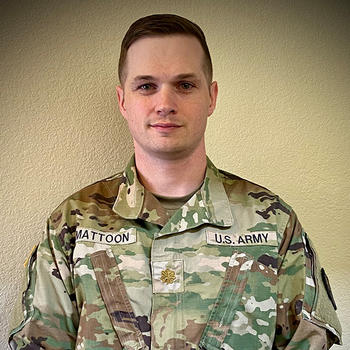
The Schar School recently published a feature on Biodefense MS alumnus MAJ Geoffrey Mattoon: “For Army Major Geoffrey Mattoon, the path to and through higher education wasn’t a straight line; it was a deliberate decision shaped by years of military service, a background in science, and a desire to meet the rising challenges of national security in a tense world.”

MAJ Mattoon

Read more about MAJ Mattoon’s career and time at GMU here.

WHO Shrinking Geneva HQ Divisions

As part of WHO’s reorganization, it has been announced that the organization will shrink its program divisions even more than previously thought, from ten down to four. The revamped structure will include health systems as a key pillar, while disease control departments and preventative health teams (including health promotion and environment, climate, and health) all falling under one division-Health Promotion, Disease Prevention & Control. The other divisions will be Business Operations and Compliance and Health Emergency Preparedness & Response. It remains unclear how many staff members at WHO headquarters will be cut.

Trump Administration Updates

Administration Backs Lab Leak SARS-CoV-2 Origin Theory

The administration has now set covid.gov and covidtests.gov, websites which once provided information about the COVID-19 pandemic and access to at-home test kits, to redirect to a White House webpage dedicated to the lab leak origin theory of SARS-CoV-2. This theory remains unsupported by direct evidence and has split the Intelligence Community, with three agencies supporting it (two with low confidence and one with moderate confidence). The White House has begun describing it as a “confirmable truth” despite these unresolved issues.

Angela Rasmussen, a virologist at the University of Saskatchewan in Canada, said of the new page and its five bulleted claims “Every one of the five pieces of evidence supporting the lab leak hypothesis … is factually incorrect, embellished, or presented in a misleading way…But making evidence-based arguments in good faith about the pandemic’s origin is not the purpose of this document. This is pure propaganda, intended to justify the systematic devastation of the federal government, particularly programs devoted to public health and biomedical research.”

Screenshot from the White House webpage

Congressional Republicans have long since backed this theory, relying heavily on everything from discredited translations of documents from the Wuhan Institute of Virology and heavy politicization of mitigation measures and figures like Anthony Fauci, the former NIAID director, who is singled out on the White House’s new webpage. The site also states “Public health officials often mislead the American people through conflicting messaging, knee-jerk reactions, and a lack of transparency,” providing unusual commentary about a federal public health response that was launched under President Trump.

DOGE Has Access to 19 HHS Systems

According to a court filing, the Department of Government Efficiency (DOGE) has access to 19 different sensitive information systems and databases within HHS. The filing was submitted as part of the discovery process of a lawsuit filed by the American Federation of Labor and the Congress of Industrial Organizations against the federal government. HHS did not disclose DOGE access to nine of these systems. The systems include PHI and are at CMS, NIH, Office of the Secretary, CDC, ACF, and HRSA.

In related news, FDA databases that physicians, public health experts, and others in healthcare and allied health fields depend on for drug safety and manufacturing information are being neglected because of DOGE-directed layoffs. This creates dangerous blind spots with providers left without access to basic information about the drugs they are prescribing. Affected databases include FDA-Approved Drugs, the National Drug Code Directory, and the Drug Registration and Listing Database.

CDC Reviewing Vaccine Guidelines

The Advisory Committee on Immunization Practices, a CDC advisory panel, met last week to discuss potential changes to immunization recommendations. This meeting was previously postponed following RFK Jr.’s confirmation in February. Changes are being considered for vaccines for COVID-19, RSV, HPV, and other infectious diseases. Proposed changes include limiting COVID-19 vaccine recommendations to only for adults over 65 and those with certain health conditions and reducing the number of recommended doses for HPV vaccines.

FDA Allegedly Preparing Plans to End Routine Food Safety Inspections, Claims to Pursue Artificial Dye Ban

Multiple federal health officials have told the media that the FDA is currently preparing plans to end most of its food safety inspections, with this work being outsourced to state and local authorities instead. The plans may need congressional approval before they can be enacted. An FDA spokesperson said in a statement, “The claim that the FDA is suspending routine food safety inspections is false. FDA is actively working to ensure continuity of operations during the reorganization period and remains committed to ensuring critical programs and inspections continue.”

The FDA already delegates some less risky inspections through contracts with 43 states and Puerto Rico, and it is thought some higher risk inspections would remain the responsibility of FDA under these plans. It is unclear what would happen to states and territories that do not have such contracts to conduct food inspections if these plans are enacted. The FDA milk quality testing program was suspended this week following massive jobs cuts across the agency, which have also caused staffing issues in the Office of Inspections and Investigations, including reducing the number of surveillance inspections.

The revelation of these alleged plans was followed later this week by an announcement from Secretary Kennedy and FDA Commissioner Makary that FDA will work to remove some artificial dyes from the US food supply (Kennedy also claimed “sugar is poison” during a press conference about this). Eight dyes are being targeted, including Blue No. 1 and No. 2, Citrus Red No. 2, Green No. 3, Orange B, Red No. 40, and Yellow No. 5 and No. 6. However, it remains unclear how Kennedy and the FDA commissioner plan to accomplish this. Thus far, Kennedy has only said that he spoke with major food manufacturers and that they reached an “understanding”.

Limited research does suggest that some people may be more sensitive to certain dyes and additives than others. However, no research suggests this is the case for every person, or even most people. Furthermore, requiring natural dyes in food manufacturing is expected to add up to 10% to manufacturing costs while potentially harming supply chains, a tough bite to chew in a country where food costs have risen nearly 24% between 2020 and 2024. These estimated impacts will be especially detrimental in food deserts, where the most vulnerable populations already struggle to access nutritious, affordable, and culturally appropriate food. This is all assuming that HHS somehow compels food manufacturers to adopt natural dyes across the board too, something that is unlikely to be done voluntarily.

Commissioner Makary also claimed during this press conference that requirements for using natural dyes in place of artificial ones is standard practice in Europe and Canada. This is demonstrably false. In fact, seven of the eight dyes listed by Makary are allowed in Canada and under EFSA regulations. Many European countries and Canada require disclosure of artificial dyes and other additives on food packaging labels, with the EFSA using a system of assigned digit codes on labels for different additives, which has not gone without its share of criticism. Meanwhile, the US requires these ingredients and all others to be named fully on food labels, typically requiring use of chemical names in doing so. Fear-based arguments about food dyes in the US and other food systems often depend very heavily on ignorance of food labeling standards and inaccurate assumptions about the US food system and its strict labeling regulations, as is clearly demonstrated in this case.

Hollow “understandings” reached with food corporation executives and non-factual claims about food labeling standards around the world will not help Americans. Further research on the health impacts of artificial dyes is warranted, though it is difficult to see how that will happen now that the administration has taken an axe to federal research programs. The much more acute threat to the US food system, however, is the dismantling of the guardrails and safety mechanisms that many have come to take for granted in this country. The US has enjoyed one of the safest food systems in the world thanks to the tireless work of inspectors and countless others at organizations like the FDA and USDA. This system and the practical, evidence-based leadership that built it are no more.

Further Reading:

Minnesota Legislators Propose Bill Classifying mRNA Vaccines as WMDs

Republican members of the Minnesota House of Representatives have introduced a bill that would classify mRNA vaccines as weapons of mass destruction as well as criminalize their manufacture, distribution, and possession. The bill, which its authors are calling the “mRNA Bioweapons Prohibition Act,” states that it would require state and local officials to enforce the ban, which extends to “any product that uses or contains messenger ribonucleic acid (mRNA) technology.” State Rep. Walter Hudson, one of the bill’s authors, says the bill “would need significant amendment to become law,” further stating it is a “bold opening position” in an effort to “provoke productive conversation about these issue” and to eventually “arrive at a reasonable legislative response.”

Further Reading:

Study Finds Measles Likely to Become Endemic in the US

Amid the largest US measles outbreak since 2000, a new simulation model published in JAMA this week predicts that measles may become endemic in the US once again within 25 years in the absence of a 5% higher MMR vaccination rate. Furthermore, it predicts a further 10% decline in MMR vaccination could cause 11.1 million measles cases in that length of time. A summary of the model and its implications is available here from CIDRAP.

Further Reading:

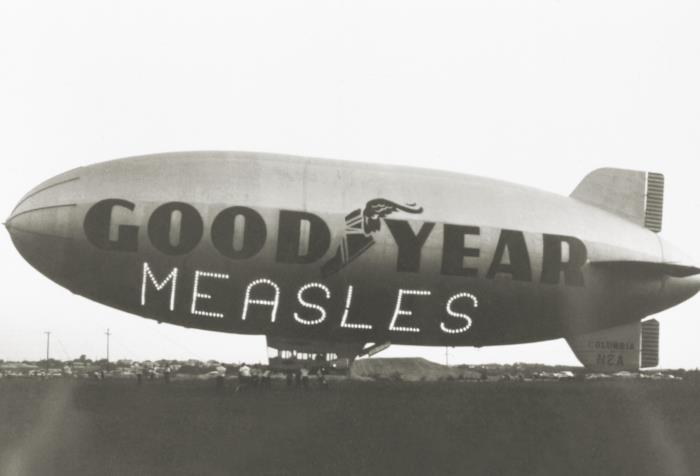
“This historic image was captured during a measles vaccination campaign, and depicted a tethered Goodyear blimp, that was equipped with a lighted sign along its side displaying the word, “MEASLES”, which was used to stimulate the public to go out and get one’s measles vaccination.”| Credit: CDC PHIL

“Dead Sheep Tell No Tales: Aum Shinrikyo’s Alleged Sarin Tests in Australia Never Happened”

Biodefense PhD candidate Chris Quillen recently published a new article titled “Dead Sheep Tell No Tales: Aum Shinrikyo’s Alleged Sarin Tests in Australia Never Happened” in the journal Studies in Conflict and Terrorism.  The article refutes the Australian Federal Police’s claim that Aum Shinrikyo tested sarin nerve agent in Australia killing 29 sheep by examining the circumstantial evidence offered at the time and updating it with new information.  While this story has been repeated continuously over the last three decades by numerous researchers, the evidence for these tests is so weak that Quillen argues it is time to stop claiming these tests happened.  According to this new research, Aum Shinrikyo did not produce or test sarin in Australia or in any country besides their native Japan.  Instead, the personnel, chemicals, and equipment present at the Aum-owned property were more consistent with their exploration and mining of uranium in a brief and ill-fated attempt to develop nuclear weapons.  The existence of this myth has warped both the threat perceptions around terrorist capabilities with chemical and, to a lesser extent, biological weapons and the government reactions to this threat.  The continued perpetuation of this myth only serves to reinforce these negative trends.  While Aum members have been found guilty of numerous crimes, sarin testing on sheep in Australia is not one of them.

“Choking, Shaking, Foaming at the Mouth: Syrians Recount Gas Attack”

Carlotta Gall and Saad Alnassife recount several weeks spent in the suburbs of Damascus with a team of reporters from The New York Times in this piece. The team interviewed survivors of chemical weapons attacks perpetrated by the Assad regime, as well as CW and war crimes investigators in the country.

“2025 Next Generation for Biosecurity Challenge: How Do You Define Bioweapons?”

Lauren Maynor discusses the BWC, the evolving biothreat landscape, and the Next Generation for Biosecurity Competition in this piece for NTI, writing in part “Fifty years ago, the Biological Weapons Convention (BWC) was established to effectively prohibit the development, production, acquisition, transfer, stockpiling, and use of biological and toxin weapons. The biothreat landscape has significantly changed since the BWC was signed with today’s scientists able to leverage artificial intelligence and other advanced capabilities to engineer biological systems, increasing concerns about dual use risks. In the Ninth Annual Next Generation for Biosecurity Competition, NTI | bio and competition co-sponsors ask participants to examine this ever-evolving threat landscape and consider if it changes the definition of biological weapons.”

“Toolkit on Effective CBRN Planning and Response for Policymakers and CBRN Managers”

From UNICRI: “Chemical, biological, radiological and nuclear (CBRN) incidents pose a significant threat to global safety and security. These events can result in devastating human, environmental, and economic consequences, while also undermining public trust and social stability. Effectively managing CBRN risks requires a coordinated and strategic approach—one that goes beyond immediate response to include long-term planning, capacity building, and interagency collaboration.”

“To address this need, UNICRI has developed the Toolkit on Effective CBRN Planning and Response for Policymakers and CBRN Managers. The publication is designed to support decision-makers—such as policymakers, emergency management officials, and CBRN managers—by providing practical, step-by-step guidance to strengthen national strategies for both planning and responding to CBRN incidents.”

“Accelerating the Use of Pathogen Genomics and Metagenomics in Public Health”

From NASEM: “Advances in genome sequencing technologies, like next-generation sequencing, provide powerful tools that have vastly improved the detection and classification of pathogens and disease outbreaks and support data-driven public health responses. In July 2024, the National Academies Forum on Microbial Threats hosted a public workshop to explore opportunities to advance the use of pathogen genomics and metagenomics data in the U.S. public health system. Speakers considered the application of these technologies to monitoring disease, characterization of emerging pathogens, rapid public health response to outbreaks, and biomedical research.”

“This Proceedings of a Workshop highlights the presentations and discussions that occurred at the workshop.”

“Cyber-Biosecurity Challenges in Next-Generation Sequencing: A Comprehensive Analysis of Emerging Threat Vectors”
From Anjum et al.: Next-generation sequencing (NGS) has transformed genomic research and healthcare by enabling the rapid and cost-effective sequencing of DNA and RNA, surpassing traditional techniques such as Sanger sequencing. This technological leap has had a profound impact on fields including biomedical research, personalised medicine, cancer genomics, agriculture, and forensic sciences. With its widespread adoption, NGS has made genomic information more accessible, facilitating the sequencing of millions of genomes. However, the growing reliance on NGS has also brought significant challenges related to cyber-biosecurity, particularly the protection of genomic data against cyber threats such as unauthorised access, data breaches, and exploitation. Genomic data is inherently sensitive, and vulnerabilities in NGS technologies, software, data-sharing practices, and open-access databases expose it to risks concerning data confidentiality, integrity, and privacy. While NGS data plays an indispensable role across numerous sectors, research addressing the cyber-biosecurity of these technologies remains fragmented. Most existing studies focus narrowly on specific areas, such as microbial sequencing or system architecture, and fail to provide a holistic perspective on the security challenges that span the entire NGS workflow. Additionally, the lack of interdisciplinary collaboration between the biotechnology and cybersecurity communities further exacerbates these gaps. This paper seeks to bridge these gaps by thoroughly examining cyber-biosecurity threats throughout the NGS workflow. It introduces a tailored taxonomy specifically designed for NGS, aimed at increasing stakeholder awareness of potential vulnerabilities and threats. Key insights include identifying vulnerabilities at various stages of the NGS process—from data generation to analysis and storage—and categorising these threats systematically. The study highlights critical gaps in current research, underscoring the need for interdisciplinary collaboration between experts in biotechnology and cybersecurity. It calls for focused efforts to mitigate risks associated with unauthorised access, data misuse, and exploitation. Failure to address these vulnerabilities could result in severe consequences, such as breaches of medical confidentiality, ethical concerns, and the potential for misuse in malicious applications like genetic warfare or bioterrorism. By providing a comprehensive analysis, this paper advocates for intensified research efforts and collaborative strategies to protect genomic data and ensure its ethical and secure use.”

🎧 What We’re Listening To

Public Health on Call, Ep. 884, Why Biosafety Standards Vary Around The World

“News about HKU5, a new bat coronavirus with the ability to spread to humans, was met with concerns in the scientific community—mostly because of how the research was done. In this episode: Johns Hopkins virologist Andy Pekosz talks about the different levels of biosecurity in laboratories where scientists study some of the world’s most dangerous viruses, how these standards vary worldwide, and what that could mean for studying future viruses with pandemic potential.”

Listen here.

The Interconnect, Unlocking Biotech’s Potential

“In this episode of The Interconnect, Stanford University Professor of Bioengineering Drew Endy and CFR Senior Fellow for Global Health Luciana Borio discuss the future of U.S. biomanufacturing and how biotechnology innovations—including bioluminescent plants and next-gen vaccines—are becoming more a part of daily life.”

Listen here.

Biosecurity: Changing the Game, Ep. 3, The 100 Days Mission

“In this edition of Biosecurity: Changing the Game, Dr. Dinah Nasike and her guests discuss the 100 Days Mission – an ambitious initiative developed after the Covid-19 pandemic meant to ensure that vaccines, diagnostics and treatments are developed, produced and distributed within 100 days of a major disease outbreak.”

Listen here.

NEW: Discover the Pathogen Data Network

“Pathogens like the flu and Salmonella require global surveillance and research for effective public health responses. While FAIR and equitable data access is crucial, challenges include scattered data, diverse data types, and a lack of sharing frameworks. The Pathogen Data Network (PDN) addresses these issues by creating a global consortium and linked data ecosystem for infectious disease research and public health. Coordinated by the SIB Swiss Institute of Bioinformatics with 12 international partners, PDN aims to cover genomics, transcriptomics, proteins, and more, funded by NIH NIAID BRC (U24AI183840).”

This overview and demo event will take place on April 29, 09:00 – 10:00 GMT-4. Learn more and register here.

NEW: Building Resilience: Enhancing Biosafety, Biosecurity, and Pandemic Preparedness

From Brookings: “The world just lived through the COVID-19 pandemic, with more than 7 million reported direct deaths globally, more than 775 million reported cases, more than 14 million indirect excess deaths, and likely millions more unreported deaths. At the same time, bird flu is currently spreading widely among birds and cattle herds in the U.S., increasing the likelihood for another potential pandemic. Despite the devastating effects of pandemics on people and economies around the world, most countries, including the U.S., seem ill-prepared for another pandemic, whether caused by a natural spillover, by a lab accident, or intentional misuse.”

“On April 30, the Center on Regulation and Markets will hold a public event to examine how we can become more resilient against biological threats by enhancing biosafety, biosecurity, and pandemic preparedness.”

“Viewers can join the conversation and ask questions in advance by emailing events@brookings.edu and on X @BrookingsEcon using the hashtag #BuildingResilience.”

This event will take place on April 30, 2-5:15 pm EDT. RSVP here.

NEW: Region 3 RESPTCs Special Pathogens Workshop

“Join the Region 3 Regional Emerging Special Pathogen Treatment Centers (RESPTCs) for a free, full-day, hands-on training focused on caring for patients with high-consequence infectious diseases.”
“Open to all experience levels—this workshop is geared toward Pennsylvanians but welcomes participants from across Region 3: D.C., Delaware, Maryland, Pennsylvania, Virginia, and West Virginia.”

This workshop will take place on May 7 from 7:30 am through 3 pm at the Greater Philadelphia Expo Center. Learn more and register here.

What Everyone Should Know About Bird Flu (H5N1)

From NASEM: “It’s been a little over a year since H5N1 avian influenza or “bird flu” was first detected in U.S. dairy cows, and many questions remain about the highly pathogenic virus.”

“In response, the National Academies’ Health and Medicine Division and Division on Earth and Life Studies are holding a special edition “Healthy Exchange” webinar series addressing the topic. The first webinar in the series, “What Everyone Should Know About Bird Flu (H5N1),” will take place on April 29, 2025. Subject matter experts will provide general information about the virus and explain how we got here, who’s at risk, and what’s at stake. ”

Learn more and register here.

NACCHO Preparedness Summit-Pathway to Recovery in the Aftermath of Disasters

From NACCHO: “The Preparedness Summit is the place for you to reenergize while gaining the knowledge, resources, and relationships necessary to prepare for and respond to public health emergencies. Join more than 2,500 attendees—who work in all levels of the government (federal, state, and local), emergency management, volunteer organizations, healthcare coalitions, and academia—to share best practices, build partnerships, advance your skillset, and take away innovative solutions and practical strategies to address the vulnerabilities in our country’s health security system.”

This year’s summit will take place April 29-May 2 in San Antonio. Learn more and register here.

Astrobiodefense: Biological Threats and the Next Frontier

From the Bipartisan Commission on Biodefense: “This Commission meeting, Astrobiodefense: Biological Threats and the Next Frontier, will be held on May 8, 2025. The focus of this meeting will be to provide the Bipartisan Commission on Biodefense with a better understanding of how to strengthen international astrobiodefense and planetary protection efforts through: (1) current government astrobiodefense efforts; (2) new scientific and technological advances for astrobiodefense; and (3) collaborative efforts and public-private partnerships to improve astrobiodefense. More information will be provided as the event date approaches.”

This event will take place on May 8 from 10 am-3:40 pm ET in Washington, DC. Register here.

Assessing Research Security Efforts in Higher Education, A Workshop

“The National Academies of Sciences, Engineering, and Medicine cordially invites you to attend a workshop to consider potential measures of effectiveness and performance, and the data needed, to assess research security and protection efforts in higher education by a range of Federal agencies.”

“The workshop will be held on Thursday, May 22, 2025 from 9:00 AM to 4:00 PM U.S. Eastern and Friday, May 23, 2025 from 9:00 AM to 1:30 PM U.S. Eastern at the National Academy of Sciences Building, 2101 Constitution Avenue, NW, Washington, DC 20418.  A remote participation option is available.”

Learn more and register here.

International Pandemic Sciences Conference

“Representatives from academia, industry, civil society and policy are invited to gather in Oxford, UK, and online from 30 June – 1 July 2025 for the International Pandemic Sciences Conference 2025.”

“This year’s conference theme, Getting Ahead of the Curve, will explore how we can work together to predict, identify and control epidemic and pandemic threats globally. ”

“Over two days of plenary, parallel and networking sessions, stakeholders from different sectors and communities will have the opportunity to share ideas, experiences and strategies on prediction, early detection and control of pandemic threats. ”

“The International Pandemic Sciences Conference 2025 is hosted by the Pandemic Sciences Institute at the University of Oxford.”

Learn more, register, and submit abstracts here.

SBA.4 International Synthetic Biology and Biosecurity Conference in Africa

From SynBio Africa: “The SBA 4.0 conference will serve as a platform for fostering connections among industry, academia, community groups, and policymakers. It will showcase innovative applications of synthetic biology and AI, and highlight ongoing efforts in biomathematics, biomanufacturing, one-health, biosafety and biosecurity. It will also facilitate networking and information exchange. Key focus areas include tackling agriculture, health, environmental management, and industry challenges. In Africa, synthetic biology is poised to drive the national development agenda by promoting a sustainable bioeconomy, supporting health and agricultural systems, and aiding environmental conservation and restoration. This event will provide a vital opportunity for stakeholders to discuss and strategize the integration of synthetic biology innovations, address policy, legal frameworks, and communicate the benefits of the technology.”

This conference will take place July 23-25 in Kigali. Learn more and register here.

CTD-SPECTRE 2nd Annual Symposium 

“The CTD-SPECTRE Symposium on Tropical and Emerging Infectious Diseases for Clinicians and Translational Scientists 2025 offers a unique opportunity to connect with global experts, gain cutting-edge insights, and collaborate with peers dedicated to infectious disease research and treatment.”

“Taking place September 16 -19, 2025, at the historic Grand Galvez in Galveston, TX, this immersive symposium will unite clinicians, translational investigators, and trainees to explore the latest breakthroughs in tropical and emerging infectious diseases.”

Learn more and register here.

NTI|bio Hiring Program Associate/Program Officer, Global Biological Policy and Programs

“NTI – a global security organization driving systemic solutions to nuclear, biological, and emerging technology threats imperiling humanity – is seeking a Program Associate/Program Officer (title to be determined based on candidate experience) to join the Global Biological Policy and Programs (NTI | bio) team.”

“This position reports to the Vice President, or other senior manager, of the NTI | bio team. This is a full-time hybrid position, working a minimum of three days per week in our Washington, DC office.”

“NTI | bio is focused on reducing catastrophic biological risks, and we are working toward this goal by strengthening biotechnology governance; bolstering biosecurity in countries around the world; strengthening international capabilities to uphold the norm against bioweapon development and use; driving progress in global health security; and building the biosecurity field.”

Learn more and apply here.

Call for Experts: Health-Security Interface Technical Advisory Group (HSI-TAG)

From WHO: “The World Health Organization (WHO) is seeking experts to serve as members of the Health-Security Interface Technical Advisory Group (HSI-TAG). This “Call for experts” provides information about the advisory group, the expert profiles being sought, the process to express interest, and the process of selection.”

The deadline to express interest is May 5.

Pandora Report 4.18.2025

This week’s Pandora Report includes discussion of the WHO’s draft pandemic agreement, UN OCHA staffing cuts, more chaos and uncertainty at HHS, updates on H5N1, and more.

Center for Health Security launches One Health website

The Johns Hopkins Center for Health Security this week launched a new One Health website, providing a hub for tools and strategies to promote integrated and sustainable health solutions across human, animal, and environmental systems. Zoonotic diseases—those that jump from animals to humans—are driving many recent outbreaks. The One Health tools developed by our team help governments and academic partners strengthen disease prevention, detection, and response. These tools have been successfully implemented in seven countries, providing governments with adaptable methods for improving One Health coordination globally.

WHO Pandemic Agreement Moves Forward

WHO Member States have concluded negotiations and made significant progress on the draft pandemic agreement. The negotiations have spanned more than three years and have resulted in a proposal that aims to strengthen global collaboration on prevention, preparedness, and response to future pandemic threats. The draft will be presented at next month’s World Health Assembly (WHA). Negotiators failed to finalize a draft last year before the WHA because of long-standing disputes between low- and high-income countries.

Further Reading:

OCHA to Cut Staff by 20%

The United Nations Office for the Coordination of Humanitarian Affairs (OCHA) has announced plans to cut its workforce by a fifth, marking yet more crisis for the humanitarian sector. The organization faces a $58 million funding gap this year, prompting OCHA to look to reduce its workforce from 2,600 staff in 60 countries down to around 2,100 staff in fewer locations. Locations set to see a reduction in OCHA presence and operations include Cameroon, Colombia, Eritrea, Türkiye, Iraq, Libya, Nigeria, Pakistan, and Zimbabwe. Furthermore, the organization will no longer have a presence in The Hague.

Hungary and Slovakia Claim FMD Outbreaks Are Related to Bioterrorism

Both Hungary and Slovakia have suggested, without evidence, that outbreaks of foot and mouth disease (FMD) in the countries are linked to bioterrorism. FMD is incredibly contagious in animals like cows, pigs, sheep, and goats, typically requiring culling of flocks and establishment of exclusion zones to prevent further spread. Because of threats to animal agriculture, these outbreaks are incredibly serious. However, neither country has provided evidence to support its claims of linkage to bioterrorism, and experts have speculated the virus was likely transmitted by accident.

RFK Jr. Continues to Make Controversial Claims

Secretary Kennedy continued to make inflammatory statements over the last week, including at a welcome event at FDA. Over the course of forty minutes, Kennedy claimed that the “deep state” is real, referenced the CIA’s MKUltra project, and accused the very FDA staff he was addressing of becoming a “sock puppet” of the industries they regulate. Kennedy later said “President Trump always talks about the deep state, and the media, you know, disparages him and says that he’s paranoid. But the deep state is real. And it’s not, you know, just George Soros and Bill Gates and a bunch of nefarious individuals sitting together in a room and plotting the, you know, the destruction of humanity.”

Sec. Kennedy, who formerly chaired an anti-vaccine activist group, even said “every institution that is created by human beings” is inevitably captured by powerful interests. He then urged FDA employees to take advantage of his leadership under which he promised “the Department of Health and Human Services would not be subjected to undue influence and would listen to “dissidents.”‘

Kennedy also said during his remarks, “Because of my family’s commitment to these issues, I spent 200 hours at Wassaic Home for the Retarded when I was in high school,” referring to the Wassaic State School for the Mentally Retarded in Wassaic, New York. “So I was seeing people with intellectual disabilities all the time. I never saw anybody with autism.”

Kennedy’s fixation on people with autism was further showcased this week during a news conference about a new report from the CDC that shows that rates of autism have increased among 8-year-olds. Over the course of these remarks, Kennedy claimed autism is not caused by genetics, instead insisting there must be an “environmental toxin” involved. Kennedy also claimed that autism “destroys” children, while also saying that autistic people do not hold jobs, write poetry, play baseball, or go on dates, appearing to lump anyone with autism into the group of those with high support needs.

Kennedy portrayed the report as evidence for what he describes as the “autism epidemic” while claiming that the condition is “preventable”. However, the very CDC report he was presenting states that this increase seen in certain communities “…might be due to differences in availability of services for early detection and evaluation and diagnostic practices…Another reason for differences in prevalence could be whether children have insurance coverage or meet eligibility criteria for access to early intervention services.”

This all comes after Kennedy set an arbitrary deadline to find what is “behind” autism by September. This fixation, combined with Kennedy’s anti-vaccine rhetoric and his obsession with the debunked link between vaccines and autism, paint a very grim picture for the future of the organization he oversees.

Further Reading:

Bird Flu On the Rise

By Meredith Fletcher, Pandora Report Managing Editor

Despite suggestions from California researchers, H5N1 shows no evidence of slowing down. This virus has a global threat potential, and American leaders are not doing enough work to slow it down. Bird flu continues to mutate in the direction of human to human transmission, starting in cattle and moving to domestic animals. As the HHS responds by allocating millions to the response, the federal government continues to fire scientists crucial to the efforts. While there is still no human transmission and public health leaders assure the public the risk remains low, scientists disagree and are urging for action. H9N2 (a subtype of avian influenza) also continues to rise, with three more cases appearing in China. These infections typically appear in children and cause mild to serious illness. Will we see the next pandemic with H5N1? Only time and mutations will tell.

Further Reading:

“Fentanyl Should Not be Designated as a WMD. Period.”

Al Mauroni recently published this piece with West Point’s Modern War Institute, writing in part, “There are both legal and policy challenges in trying to regulate fentanyl analogues as chemical weapons and WMD. Let’s look at the legal aspects of the argument. The low lethal dose and high number of overdoses do not make fentanyl a chemical weapon under federal law. There are several federal laws that define what a WMD is, so that is a point of confusion in and of itself. The most applicable statue is 18 USC 2332a, which notes that a person who unlawfully uses, threatens, or attempts or conspires to use a WMD against any US person or property can face a significant prison term or even the death penalty. This includes any weapon that is designed or intended to cause death or serious injury through the release, dissemination, or impact of a toxic or poisonous chemical. There is no limitation as to the amount of chemical or the amount of people injured, as one might expect from a mass-casualty event. This is usually the go-to law when the FBI investigates a terrorist WMD incident.”

“Congressionally Established Commission Lays the Groundwork to Maintain US Leadership in Biotechnology”

Kyle Wilgus discuses NSCEB’s final report in this piece from the Council on Strategic Risks: “With its rapid pace of development and biotechnology’s convergence with artificial intelligence, this report comes at a pivotal moment for US security. Leadership in the development of biotechnologies and the norms guiding their use are reaching a convergence point. Failing to significantly prioritize the biotech field risks forfeiting America’s leading role in this industry to China. The Commission’s timely report highlights this risk and lays out an action plan for ensuring and maintaining American dominance in biotechnology by out-innovating China…Moreover, the fact that the Commission came to an extensive number of recommendations that its members unanimously endorsed is extraordinary. This should give Congressional leaders and other US policy makers high confidence that taking these actions would meet with widespread support.”

“Containing Ebola in a Shifting World”

Syra Madad interviews Henry Kyobe Bosa in this piece for the New York Academy of Sciences’ Blog: “In a world confronted with a growing tide of infectious disease threats, the 2025 Sudan virus outbreak in Uganda serves as a stark reminder that epidemic intelligence must evolve from being reactive to anticipatory.”

“Increased human encroachment into wildlife habitats, and shifting global health funding landscapes, means that diseases like Ebola, once considered rare and geographically isolated, are emerging with greater frequency and unpredictability.”

“To better understand the shifting dynamics of this outbreak and its implications for the future of global health security, I spoke with Henry Kyobe Bosa, PhD, Uganda’s National Incident Commander for Epidemics. A distinguished public health leader, Colonel in the Uganda People’s Defense Forces, and seasoned epidemiologist, Dr. Kyobe has led responses to some of the most complex health emergencies in the region, including Uganda’s COVID-19 response and the current Sudan Ebola outbreak.”

“In this timely and sobering conversation, Dr. Kyobe shares firsthand insights into the evolving trajectory of this year’s Ebola outbreak, the innovations and tools Uganda is using to contain it, and the global lessons we must heed. Dr. Kyobe’s remarks have been lightly edited for clarity and length.”

“Global Partnership led Signature Initiative to Mitigate Biological Threats in Africa (SIMBA), a Driving Force to Advance Continental Biosafety and Biosecurity Initiative”

Africa CDC’s Yenew Kebede and Brown’s Wilmot James recently published this piece discussing the Signature Initiative to Mitigate Biological Threats in Africa (SIMBA), writing in part “The positive impact of SIMBA in Africa in strengthening health security is seen during outbreak response. During the recent MVD response in Rwanda, biosafety and biosecurity and sample transportation training was organized quickly using the training curriculum already available and trained experts were deployed immediately to support the response. SIMBA also brought positive changes on the implementation of IHR as seen in the changes in the scores in the recent joint external evaluation, an increase by 20% in Nigeria for example (unpublished data). The launching of the Health Security in Africa (HSPA) under SIMBA will help strengthen the early warning surveillance and leadership and coordination mechanisms. Continued investment is key in this continental initiative to strengthen key public health functions to mitigate the impact of biological threats in Africa.”

🎧 What We’re Listening To

Transmission Interrupted: Pathogens in Pop Culture: Fungal Pathogens and The Last of Us
From NETEC: “Could a fungus cause the next pandemic? If you’ve watched HBO’s hit series ‘The Last of Us’ or played the popular video game, then you may be familiar with the concept: a mass outbreak of an infectious fungus turns humans into zombies. But could the scenario played out in ‘The Last of Us’ actually happen in real life? Join hosts Lauren Sauer and Rachel Lookadoo and special guest Dr. Arturo Casadevall as they take a closer look at the science behind fungal pathogens and separate myth from reality.”

Listen here.

NEW: Assessing Research Security Efforts in Higher Education, A Workshop

“The National Academies of Sciences, Engineering, and Medicine cordially invites you to attend a workshop to consider potential measures of effectiveness and performance, and the data needed, to assess research security and protection efforts in higher education by a range of Federal agencies.”

“The workshop will be held on Thursday, May 22, 2025 from 9:00 AM to 4:00 PM U.S. Eastern and Friday, May 23, 2025 from 9:00 AM to 1:30 PM U.S. Eastern at the National Academy of Sciences Building, 2101 Constitution Avenue, NW, Washington, DC 20418.  A remote participation option is available.”

Learn more and register here.

Digital Technologies for Epidemic Intelligence

From ACHS: “How do risks change during an emerging infectious disease threat? Traditional surveillance methods demonstrate specific limitations when applied to complex or rapidly evolving outbreak situations. Newer digital technologies and event-based surveillance can provide early alerts, data from blind spots or novel ways to integrate data…Dr. Oliver Morgan, Director of the WHO Hub in Berlin, will discuss the potential applications and limitations of emerging digital technologies in strengthening multidisciplinary strategies for epidemic prevention, prediction, and preparedness.”

This webinar will take place on April 22 from 7-8 pm (GMT+8:00). Learn more and register here.

Advancing Biotechnology for a Secure Tomorrow

On April 24MITRE and the National Security Commission on Emerging Biotechnology (NSCEB) will host a conference that will explore the economic and national security implications of emerging biotechnologies. Join us to discuss the NSCEB’s final report and recommendations followed by a series of in-depth discussions on the promotion and protection of the US bioeconomy. Register now!

What Everyone Should Know About Bird Flu (H5N1)

From NASEM: “It’s been a little over a year since H5N1 avian influenza or “bird flu” was first detected in U.S. dairy cows, and many questions remain about the highly pathogenic virus.”

“In response, the National Academies’ Health and Medicine Division and Division on Earth and Life Studies are holding a special edition “Healthy Exchange” webinar series addressing the topic. The first webinar in the series, “What Everyone Should Know About Bird Flu (H5N1),” will take place on April 29, 2025. Subject matter experts will provide general information about the virus and explain how we got here, who’s at risk, and what’s at stake. ”

Learn more and register here.

NACCHO Preparedness Summit-Pathway to Recovery in the Aftermath of Disasters

From NACCHO: “The Preparedness Summit is the place for you to reenergize while gaining the knowledge, resources, and relationships necessary to prepare for and respond to public health emergencies. Join more than 2,500 attendees—who work in all levels of the government (federal, state, and local), emergency management, volunteer organizations, healthcare coalitions, and academia—to share best practices, build partnerships, advance your skillset, and take away innovative solutions and practical strategies to address the vulnerabilities in our country’s health security system.”

This year’s summit will take place April 29-May 2 in San Antonio. Learn more and register here.

Astrobiodefense: Biological Threats and the Next Frontier

From the Bipartisan Commission on Biodefense: “This Commission meeting, Astrobiodefense: Biological Threats and the Next Frontier, will be held on May 8, 2025. The focus of this meeting will be to provide the Bipartisan Commission on Biodefense with a better understanding of how to strengthen international astrobiodefense and planetary protection efforts through: (1) current government astrobiodefense efforts; (2) new scientific and technological advances for astrobiodefense; and (3) collaborative efforts and public-private partnerships to improve astrobiodefense. More information will be provided as the event date approaches.”

This event will take place on May 8 from 10 am-3:40 pm ET in Washington, DC. Register here.

International Pandemic Sciences Conference

“Representatives from academia, industry, civil society and policy are invited to gather in Oxford, UK, and online from 30 June – 1 July 2025 for the International Pandemic Sciences Conference 2025.”

“This year’s conference theme, Getting Ahead of the Curve, will explore how we can work together to predict, identify and control epidemic and pandemic threats globally. ”

“Over two days of plenary, parallel and networking sessions, stakeholders from different sectors and communities will have the opportunity to share ideas, experiences and strategies on prediction, early detection and control of pandemic threats. ”

“The International Pandemic Sciences Conference 2025 is hosted by the Pandemic Sciences Institute at the University of Oxford.”

Learn more, register, and submit abstracts here.

SBA.4 International Synthetic Biology and Biosecurity Conference in Africa

From SynBio Africa: “The SBA 4.0 conference will serve as a platform for fostering connections among industry, academia, community groups, and policymakers. It will showcase innovative applications of synthetic biology and AI, and highlight ongoing efforts in biomathematics, biomanufacturing, one-health, biosafety and biosecurity. It will also facilitate networking and information exchange. Key focus areas include tackling agriculture, health, environmental management, and industry challenges. In Africa, synthetic biology is poised to drive the national development agenda by promoting a sustainable bioeconomy, supporting health and agricultural systems, and aiding environmental conservation and restoration. This event will provide a vital opportunity for stakeholders to discuss and strategize the integration of synthetic biology innovations, address policy, legal frameworks, and communicate the benefits of the technology.”

This conference will take place July 23-25 in Kigali. Learn more and register here.

CTD-SPECTRE 2nd Annual Symposium 

“The CTD-SPECTRE Symposium on Tropical and Emerging Infectious Diseases for Clinicians and Translational Scientists 2025 offers a unique opportunity to connect with global experts, gain cutting-edge insights, and collaborate with peers dedicated to infectious disease research and treatment.”

“Taking place September 16 -19, 2025, at the historic Grand Galvez in Galveston, TX, this immersive symposium will unite clinicians, translational investigators, and trainees to explore the latest breakthroughs in tropical and emerging infectious diseases.”

Learn more and register here.

NEW: NTI|bio Hiring Program Associate/Program Officer, Global Biological Policy and Programs

“NTI – a global security organization driving systemic solutions to nuclear, biological, and emerging technology threats imperiling humanity – is seeking a Program Associate/Program Officer (title to be determined based on candidate experience) to join the Global Biological Policy and Programs (NTI | bio) team.”

“This position reports to the Vice President, or other senior manager, of the NTI | bio team. This is a full-time hybrid position, working a minimum of three days per week in our Washington, DC office.”

“NTI | bio is focused on reducing catastrophic biological risks, and we are working toward this goal by strengthening biotechnology governance; bolstering biosecurity in countries around the world; strengthening international capabilities to uphold the norm against bioweapon development and use; driving progress in global health security; and building the biosecurity field.”

Learn more and apply here.

Call for Experts: Health-Security Interface Technical Advisory Group (HSI-TAG)

From WHO: “The World Health Organization (WHO) is seeking experts to serve as members of the Health-Security Interface Technical Advisory Group (HSI-TAG). This “Call for experts” provides information about the advisory group, the expert profiles being sought, the process to express interest, and the process of selection.”

The deadline to express interest is May 5.

Pandora Report 4.11.2025

This week’s Pandora Report includes news from the Schar School, updates on the chaos at the US Department of Health and Human Services, H5N1, and much more.

Biodefense Alum Promoted

Keith Ludwick, Biodefense PhD ’16, was recently promoted to Full Professor at American Military University, where he has taught for seven years.  He is a full-time doctoral faculty in the Doctorate of Strategic Intelligence program, teaching courses on technical policy concerning intelligence, cyber security, and artificial intelligence.  He serves as dissertation chair on numerous doctoral dissertation committees and as second reader for many others, mentoring students with research interests in artificial intelligence, cybersecurity, terrorism, and technology policy.  He is a retired Special Agent of the FBI and President/CEO of The Ludwick Agency, a private investigative and security consulting firm specializing in elder financial fraud.  His forthcoming book, Stop Scamming Me:  An Expert’s Guide to Living the Fraud Free Life, will be released in late Spring 2025.

Schar School Highly Rated for Homeland Security Graduate Program

The Schar School of Policy and Government at George Mason University was recognized by U.S. News and World Report as having the No. 4 graduate program in the country for homeland security in 2025, the eighth year in a row that the program was ranked in the top 10 nationally. This achievement was due in large part to the success of the Biodefense Graduate Program. The program has been active for twenty years and has over 400 alumni working in the public, private, non-profit, and academic sectors in the United States and around the world. The Schar School’s other graduate programs continue to excel as well, with all of its ranked programs placing in the top 50 nationally and the top 25 among public universities. Most notably, the public affairs program rose to No. 1 in Virginia, ranking 36th nationally and 24th among public universities. “Students choose the Schar School the strong depth of our faculty expertise and the opportunity to interact with thought leaders in various fields of policy and government studies,” said Mark Rozell, dean of the Schar School of Policy and Government. “These rankings reflect the rising reputation of the Schar School for high-quality degree programs that prepare students for success.” 

CEPI Launches New Biosecurity Webpage and Resource

The Coalition for Epidemic Preparedness Innovations (CEPI) has launched a new webpage dedicated to biosecurity: cepi.net/biosecurity. This platform offers insights into CEPI’s biosecurity efforts, access to the September 2024 CEPI Biosecurity Strategy, and the new CEPI Biosecurity Implementation Plan for 2025–2026 that was just published. The CEPI Biosecurity Implementation Plan outlines 11 objectives categorized by strategic priority and provides details on CEPI’s planned activities, goals, and timelines for the next two years. CEPI has also revised its Third-Party Code, which sets forth principles and requirements for CEPI awardees across a range of areas, to incorporate biosafety and biosecurity.

NSCEB Report: US Close to Falling Behind China in Biotechnology

A recent report from the National Security Commission on Emerging Biotechnology (NSCEB) finds that the US is dangerously close to falling behind China in biotechnology competition. The report further explains that such a change “would signal a global power shift toward China” in addition to calling for an additional $15 billion in new biotechnology funding to counter the PRC’s rise over the next five years, more than $1 billion of which would go to the Department of Defense.

Senator Todd Young, Chair of the NSCEB, said in a press release about the report, “The United States is locked in a competition with China that will define the coming century. Biotechnology is the next phase in that competition. It is no longer constrained to the realm of scientific achievement. It is now an imperative for national security, economic power, and global influence. Biotechnology can ensure our warfighters continue to be the strongest fighting force on tomorrow’s battlefields, and reshore supply chains while revitalizing our manufacturing sector, creating jobs here at home.”

Death by a Thousand Cuts Continues Across HHS

This week at HHS was characterized by the promise of yet more layoffs at NIH, court battles over medical research funding cuts, and even more funding cuts to universities. Also present were more odd claims from HHS Secretary RFK Jr., more critical programs found to be in jeopardy, and more calls for Kennedy’s resignation.

Kennedy Expresses (Limited) Support for Measles Vaccination, Says His Outbreak Response Should be “Model for the World”

A second child was killed by measles in Texas recently, as the outbreak continues to spread. The child was just eight-years-old, and had no underlying health conditions. The Texas Department of Health and Human Services reports that she died from measles pulmonary failure. Cases in Texas have surpassed 500, and New Mexico recently reported that a third county in the state is affected as cases have spread to Oklahoma, Kansas, and Mexico.

Secretary Kennedy, after attending the girl’s funeral, posted on his X account a statement that included, “The most effective way to prevent the spread of measles is the MMR vaccine.” However, he then followed that with claims that he has met with physicians “who have treated and healed some 300 measles-stricken Mennonite children using aerosolized budesonide and clarithromycin…” along with a photo of himself with the families of the two dead children. While on his trip, he also claimed that his response to the outbreak should be a “model for the world.”

Further Reading:

Kennedy “Champions” Chronic Disease Prevention, Oversees Cuts of Key Research, Claims He is Unfamiliar with Health Program Cuts

Secretary Kennedy has frequently spoken of the “existential threat” of the United States’ chronic disease burden, promising to focus HHS’ efforts on addressing chronic diseases, even going so far as to propose a pause on infectious disease research to do so. It is interesting, then, that since his tenure began in February, he has overseen the elimination of key grants and contracts that directly addressed chronic diseases, including obesity, diabetes, and dementia, which are all among the country’s top health problems. However, Kennedy claims he is unfamiliar with these and other cuts.

In his first network TV interview since taking office, Secretary Kennedy discussed topics ranging from the MMR vaccine to major government funding cuts and healthcare costs with CBS News. When asked by CBS News’ Jon LaPook about massive cuts, including the $11 billion proposed cut to state and local health departments, Kennedy said, “No, I’m not familiar with those cuts. We’d have to go…the cuts were mainly DEI cuts, which the president ordered.”

When shown a $750,000 grant to the University of Michigan focused on adolescent diabetes that was cancelled, Kennedy said “I didn’t know that, and that’s something we’ll look at.” He also added that he could not speak to whether or not this should be considered a “DOGE cut” or not.

Kennedy later said of the Michigan grant, “I just, I’m not familiar with that particular study. But there’s a number of studies that were cut that came to our attention and that did not deserve to be cut, and we reinstated them. Our purpose is not to reduce any level of scientific research that’s important.”

Further Reading:

Kennedy Promises to Find Cause of “Autism Epidemic” by September

Secretary Kennedy claimed in a cabinet meeting at the White House this week that HHS will “know what has caused the autism epidemic” by September. He said in part, “At your direction, we are going to know by September. We’ve launched a massive testing and research effort that’s going to involve hundreds of scientists from around the world. In September, we will know what has caused the autism epidemic and we’ll be able to eliminate those exposures.”

President Trump praised Kennedy for this September goal before speculating that the answer to reducing the number of autism diagnoses could be “you stop taking something, you stop eating something or maybe it’s a shot, but something’s causing it.”

While it is true that estimated autism rates have risen in the last two decades, this is largely attributed to better awareness, a broader definition of autism spectrum disorder (ASD), and improved access to healthcare and services, allowing more people to be screened and diagnosed with ASD. Furthermore, it is unclear why Kennedy believes his agency will have an actual answer to this question by September.

Kennedy Blocked from VAERS

Peter Marks, the former head of the Center for Biologics Evaluation and Research, told the AP in an interview this week that, while he agreed to allow RFK Jr. and his team to read reports from the Vaccine Adverse Event Reporting System (VAERS), he refused to allow them to directly edit information in the system. Marks then told AP, “Why wouldn’t we? Because frankly we don’t trust (them),” using profanity “They’d write over it or erase the whole database.” Marks also told the AP that he did seek to work with Kennedy to address his concerns regarding vaccine transparency, but that he found the secretary on wanted “confirmation of his misinformation and lies.”

Further Reading:

APHA Director Calls on Kennedy to Resign

The executive director of the American Public Health Association (APHA), Georges C. Benjamin, issued a statement calling for the resignation of Secretary Kennedy this week. In the statement, titled “Secretary Kennedy and His Policies are a Danger to the Public’s Health,” Benjamin cited several of Kennedy’s actions since taking leadership at HHS, including staff cuts, the ouster of Peter Marks, funding cuts for state and local public health agencies, fatphobic comments the secretary made towards West Virginia Governor Patrick Morrisey, and more. Benjamin also wrote in part, “Americans deserve better than someone who is trying to impose his unscientific and judgmental view of public health and science. We deserve better than RFK, Jr. He demonstrated his incompetence in only a few weeks.”

Further Reading:

Center for Drug Evaluation and Research at Risk

Axios reported this week that, amidst the upheaval at FDA, the user fee system that funds review of new drugs, devices, and diagnostic tests is now at risk. Drug and device manufacturers spend billions annually in user fees to ensure that their products are evaluated in a timely fashion. However, Secretary Kennedy has described these fees as a sign of what he claims is “coziness” between the FDA and the industries it regulates. As it stands, 83% of the payroll for FDA’s Center for Drug Evaluation and Research is covered by these fees, meaning cutting these fees would almost certainly lead to furlough of these staff members. This is especially concerning as job cuts at HHS have already eliminated product review staff, jeopardizing timely conclusions in pending evaluations.

NIH Freezes Additional $250 Million in Federal Research Funding to Columbia

The Trump administration has frozen all NIH funding for research grants at Columbia University, cutting off $250 million to the private institution. This comes after the administration cut $400 million in federal funding to the university last month. However, after Columbia agreed to enact different reforms demanded by the president, it was thought there would be a reprieve. NIH is reportedly both blocking new funding and ceasing payments for work on existing projects. NIH will also require prior approval to access any existing disbursements.

US Foreign Aid Cuts Continue to Devastate

The administration has fired the remaining health officials who oversaw care for more than 500,000 children and 600,000 pregnant women with HIV in low-income countries. These teams managed programs that aimed to prevent newborns from acquiring HIV from their mothers and to provide effective treatment to those who are positive. These teams were eliminated last week. Many of those fired are now awaiting re-assignment to the CDC, according to the State Department and USAID. The programs are still funded by PEPFAR, but their future is uncertain with nobody left to manage them or disburse funds.

Further Reading:

Tariffs Threaten Pharmaceutical Imports, Laboratories

Donald Trump’s tariffs and trade wars are threatening Americans’ access to pharmaceuticals, though the administration has excluded them from retaliatory tariffs for now. According to data collected last year by the IQVIA Institute for Human Data Science, generic medications make up 90% of prescriptions in the US, nearly half of which are imported from India. India exports about $9 billion in generic drugs to the US annually. In total, nearly 50% of generic drugs in the US are imported, leaving many concerned about further tariffs from the administration.

Trump’s tariffs are already impacting laboratories as the costs of labware and specialist scientific instruments continue to rise. This is especially troubling given the administration’s unprecedented budget cuts and grants cancellations. Drew Kevorkian, CEO of ARES Scientific which provides research equipment to many university laboratories, told Nature News, “We’re already doing quotes today that are 20% more than they were yesterday…I think almost everybody is going to see a price increase of some sort.”

H5N1 is Claiming Lives

By Meredith Fletcher, Pandora Report Associate Editor

As the Bird Flu continues to devastate the American poultry market, it is causing more devastation overseas, claiming two lives this past month. A 2-year-old girl from India’s Andhra Pradesh state died on March 15. Investigators say that there were no infections amongst her family and no infected poultry outbreaks nearby. The suspected source of infection is the raw meat she ate prior. On April 1, 2025, a 3-year-old girl in Mexico became the country’s first human case, after spending two days in critical condition. Her cause of death is listed as respiratory complications from H5N1. Of her family members, all have tested negative, and investigators continue to search for cause of infection. According to the World Health Organization, since January 2003, there have been 954 human cases of Bird Flu, and, of those, 464 cases were fatal, giving H5N1 a case fatality rate of 54%.

“Mpox Activity in Africa on Pace to Pass 2024 Total”

This article from CIDRAP discusses fluctuating mpox activity across different countries in Africa, explaining that activity in the region during the first three months of 2025 nearly reached 50% of all that for 2024. The Democratic Republic of the Congo (DRC), Uganda, and Burundi accounted for 95% of the confirmed cases in recent weeks. However, test coverage is low (18.4%) in the DRC now due to ongoing conflict, making it difficult to collect and transport samples, especially in light of foreign aid cuts.

“Dropping U.S. Biodefenses: Why Cuts to Federal Health Agencies Make Americans Less Safe”

Stephanie Psaki and Beth Cameron authored this article for Just Security, explaining how HHS is central to the United States’ biological readiness and what the devastating cuts across the organization likely mean for US security. They write in part, “HHS Secretary Robert F. Kennedy Jr. framed these changes as part of his “Make America Healthy Again” agenda, citing recent declines in life expectancy, while neglecting to mention that those declines were largely due to the COVID-19 pandemic. The Trump administration’s stated goals are to streamline HHS, save taxpayer money, focus more on chronic illness, and make HHS more responsive and efficient. It claims it can make these reforms without impacting critical services. In practice, however, the administration has cut essential funding that was helping states and cities prepare for outbreaks; reassigned leaders who were stopping biological threats in other countries from spreading; undermined the United States’ ability to quickly review and approve treatments and vaccines during an emergency; and disrupted essential work to create vaccines, tests, and treatments for dangerous diseases. These approaches do not make America healthy. They make America less safe.”

“A Call to Action for Global Health Security”

NTI’s Lauren Maynor, Sara Kaufman, and David Stiefel wrote this call to action for World Health Day, discussing the impacts of US funding cuts in the context of global health security, writing in part “These cuts are coming at a time when global health security has already proven to need more focused attention, including for epidemic and pandemic preparedness. In 2021, the Global Health Security Index (GHS Index) found that all countries remain dangerously unprepared for future public health threats. Recent actions taken by the U.S. administration will only further exacerbate this risk. Terminating research, dismissing world class disease detectives, and defunding capacity building can only lead to a less secure future with unnecessary loss of lives and livelihoods.”

“How to Stop Bioterrorists from Buying Dangerous DNA”

Steph Batalis and Vikram Venkatram recently published this article in The Bulletin of the Atomic Scientists, writing in part “Along with new possibilities, however, the ability to custom-order genes also has the potential to open up new risks. Some DNA codes for genes from pathogens and toxins—sequences that could cause harm if misused. To limit such an outcome, experts from industry, government, and academia recommend screening orders and customers before filling an order.”

Politics and the Life Sciences Spring 2025 Issue

The spring 2025 issue of Politics and the Life Sciences includes two articles on the BWC: “BWC Confidence-Building Measures: Increasing BWC Assurance Through Transparency and Information Sharing,” and “Diplomacy Disrupted: A Mixed-Methods Analysis of Russian Disinformation at the Ninth Review Conference of the Biological and Toxin Weapons Convention”.

“Global Chemical, Biological, Radiological and Nuclear Data Suite”

Markus K. Binder authored this START research brief: “This report highlights some core themes and insights drawn from the data speaking to VSNA (Violent Non-State Actors) and CBRN (Chemical, Biological, Radiological, and Nuclear) threats and trends. The CBRN Date Suite is broken down into multiple component datasets. The VSNA CBRN Event Database records 593 distinct events across 106 variables covering the period 1990 to 2024 to breakdown events by country, motivating ideology, and year. The VSNA CBRN Actor Database is an actor (individual)-level database that brings together available open- source data on the demographic, educational, and experiential backgrounds of all identifiable individual non-state users and attempted users of CBRN weapons or devices. The Criminal CBRN Database documents events perpetrated by criminal (not terrorist) threat actors often employing the same agents as ideological threat actors, frequently with little or no regard for the potential to harm the public, or on occasion with the active intent to causing general harm, that would have otherwise been excluded from CBRN databases because of their lack of a criminal element.”

“Inspectors Say More Than 100 Chemical Weapons Sites Could Remain in Syria”

NYT’s Megha Rajagopalan reports on the suspected 100+ chemical weapons sites thought to still remain in Syria in this article. This has raised international concerns about the potential for these weapons to fall into the hands of terrorist organizations following the fall of President Bashar al-Assad’s regime in December 2024. As she explains, the Organisation for the Prohibition of Chemical Weapons is working with Syria’s new leadership to secure and dismantle these chemical weapons to prevent their misuse, which experts are cautiously optimistic about.

“Douma City Marks the 7th Anniversary of the Chemical Massacre Committed by Ousted Regime”

This article from the Syrian Arab News Agency discusses the seventh anniversary of the horrific chemical warfare attacks against civilians in Douma. It also covers the current government’s commitment to justice and accountability, urging the international community to support these efforts as well as those to combat terrorism and CW use.

NEW: What Everyone Should Know About Bird Flu (H5N1)

From NASEM: “It’s been a little over a year since H5N1 avian influenza or “bird flu” was first detected in U.S. dairy cows, and many questions remain about the highly pathogenic virus.”

“In response, the National Academies’ Health and Medicine Division and Division on Earth and Life Studies are holding a special edition “Healthy Exchange” webinar series addressing the topic. The first webinar in the series, “What Everyone Should Know About Bird Flu (H5N1),” will take place on April 29, 2025. Subject matter experts will provide general information about the virus and explain how we got here, who’s at risk, and what’s at stake. ”

Learn more and register here.

NEW: CTD-SPECTRE 2nd Annual Symposium 

“The CTD-SPECTRE Symposium on Tropical and Emerging Infectious Diseases for Clinicians and Translational Scientists 2025 offers a unique opportunity to connect with global experts, gain cutting-edge insights, and collaborate with peers dedicated to infectious disease research and treatment.”

“Taking place September 16 -19, 2025, at the historic Grand Galvez in Galveston, TX, this immersive symposium will unite clinicians, translational investigators, and trainees to explore the latest breakthroughs in tropical and emerging infectious diseases.”

Learn more and register here.

Digital Technologies for Epidemic Intelligence

From ACHS: “How do risks change during an emerging infectious disease threat? Traditional surveillance methods demonstrate specific limitations when applied to complex or rapidly evolving outbreak situations. Newer digital technologies and event-based surveillance can provide early alerts, data from blind spots or novel ways to integrate data…Dr. Oliver Morgan, Director of the WHO Hub in Berlin, will discuss the potential applications and limitations of emerging digital technologies in strengthening multidisciplinary strategies for epidemic prevention, prediction, and preparedness.”

This webinar will take place on April 22 from 7-8 pm (GMT+8:00). Learn more and register here.

Advancing Biotechnology for a Secure Tomorrow

On April 24MITRE and the National Security Commission on Emerging Biotechnology (NSCEB) will host a conference that will explore the economic and national security implications of emerging biotechnologies. Join us to discuss the NSCEB’s final report and recommendations followed by a series of in-depth discussions on the promotion and protection of the US bioeconomy. Register now!

International Symposium on Transboundary and Emerging Zoonotic Diseases  

“The International Symposium on Transboundary and Emerging Zoonotic Diseases is designed to showcase many aspects of the partner institutions’ findings, to serve as a forum for scientists far and wide to present their own findings, and to interact and network extensively with partners. In addition, keynote speakers, each a well-recognized leader in a specific aspect of transboundary or emerging diseases, will present on topics to help guide the overall discussions. Abstracts are welcome for both oral and poster presentations.”

This symposium will take place April 28-30 in Manhattan, Kansas. Learn more and register here by April 4.

NACCHO Preparedness Summit-Pathway to Recovery in the Aftermath of Disasters

From NACCHO: “The Preparedness Summit is the place for you to reenergize while gaining the knowledge, resources, and relationships necessary to prepare for and respond to public health emergencies. Join more than 2,500 attendees—who work in all levels of the government (federal, state, and local), emergency management, volunteer organizations, healthcare coalitions, and academia—to share best practices, build partnerships, advance your skillset, and take away innovative solutions and practical strategies to address the vulnerabilities in our country’s health security system.”

This year’s summit will take place April 29-May 2 in San Antonio. Learn more and register here.

Astrobiodefense: Biological Threats and the Next Frontier

From the Bipartisan Commission on Biodefense: “This Commission meeting, Astrobiodefense: Biological Threats and the Next Frontier, will be held on May 8, 2025. The focus of this meeting will be to provide the Bipartisan Commission on Biodefense with a better understanding of how to strengthen international astrobiodefense and planetary protection efforts through: (1) current government astrobiodefense efforts; (2) new scientific and technological advances for astrobiodefense; and (3) collaborative efforts and public-private partnerships to improve astrobiodefense. More information will be provided as the event date approaches.”

This event will take place on May 8 from 10 am-3:40 pm ET in Washington, DC. Register here.

International Pandemic Sciences Conference

“Representatives from academia, industry, civil society and policy are invited to gather in Oxford, UK, and online from 30 June – 1 July 2025 for the International Pandemic Sciences Conference 2025.”

“This year’s conference theme, Getting Ahead of the Curve, will explore how we can work together to predict, identify and control epidemic and pandemic threats globally. ”

“Over two days of plenary, parallel and networking sessions, stakeholders from different sectors and communities will have the opportunity to share ideas, experiences and strategies on prediction, early detection and control of pandemic threats. ”

“The International Pandemic Sciences Conference 2025 is hosted by the Pandemic Sciences Institute at the University of Oxford.”

Learn more, register, and submit abstracts here.

SBA.4 International Synthetic Biology and Biosecurity Conference in Africa

From SynBio Africa: “The SBA 4.0 conference will serve as a platform for fostering connections among industry, academia, community groups, and policymakers. It will showcase innovative applications of synthetic biology and AI, and highlight ongoing efforts in biomathematics, biomanufacturing, one-health, biosafety and biosecurity. It will also facilitate networking and information exchange. Key focus areas include tackling agriculture, health, environmental management, and industry challenges. In Africa, synthetic biology is poised to drive the national development agenda by promoting a sustainable bioeconomy, supporting health and agricultural systems, and aiding environmental conservation and restoration. This event will provide a vital opportunity for stakeholders to discuss and strategize the integration of synthetic biology innovations, address policy, legal frameworks, and communicate the benefits of the technology.”

This conference will take place July 23-25 in Kigali. Learn more and register here.

NEW: Call for Experts: Health-Security Interface Technical Advisory Group (HSI-TAG)

From WHO: “The World Health Organization (WHO) is seeking experts to serve as members of the Health-Security Interface Technical Advisory Group (HSI-TAG). This “Call for experts” provides information about the advisory group, the expert profiles being sought, the process to express interest, and the process of selection.”

The deadline to express interest is May 5.

Ninth Annual Next Generation for Biosecurity Competition Open for Applications

From NTI|bio: “The Ninth Annual Next Generation for Biosecurity Competition is now open. NTI | bio hosts this competition to provide a platform for the next generation of global leaders in biosecurity to develop original concepts and share them with the wider biosecurity community. This year’s co-sponsors include 80,000 Hours, CBWNet, the iGEM Foundation, the InterAcademy Partnership (IAP), the International Biosecurity and Biosafety Initiative for Science (IBBIS), the United Nations Office of Disarmament Affairs (UNODA), and Women of Color Advancing Peace, Security, and Conflict Transformation.”

“This year, the competition invites innovative and creative papers focused on how to define “biological weapons,” given the ever-evolving biothreat landscape. The full prompt is provided below.”

Learn more here.

NOFO, Addressing Agricultural Biorisk Evidence Base Gaps with Applied Research
“There is a global recognition that the current evidence base to inform laboratory biological risk management has gaps, and that biosafety and biosecurity policies are not always based on evidence.1 This notice of funding will support the design and implementation of applied biorisk research to address evidence gaps in working with high-consequence veterinary and agricultural pathogens as identified during the RAV3N Biorisk and Biosafety Gap Assessment Workshop2 or similar gap analysis like the WOAH working group agent specific biorisk gap analysis.1  ERGP is seeking proposals that address one or more key focus area components listed below. Each proposal will go through an internal ERGP and external expert review. Successful proposals should address at least one of the three key focus areas and at least one component under that area.”

“This funding opportunity aims at the design and implementation of applied biorisk research to address evidence gaps in working with high-consequence veterinary and agricultural pathogens.”

“This work will contribute to recommended guidance on laboratory biosafety and agricultural biosecurity, using research techniques to evaluate the application and effectiveness in operational contexts. All proposals must make a clear experimental plan for how the applicant will test the application and outcomes of their focus area(s)/component(s) in their facility.”

Learn more and submit application by April 14 here.

Pandora Report 4.4.2025

This week’s Pandora Report includes updates from the Biodefense Graduate Program, discussion of the last week’s happenings at HHS, H5N1 updates, and more.

Schar School Faculty, Students Participate in NIU Conference

Biodefense PhD candidate Chris Quillen presented his research at the Intelligence Studies Consortium’s 5th Spring Conference on March 19, 2025.  Organized by the National Intelligence University, the Intelligence Studies Consortium brings together students from leading universities with intelligence-related programs including the Schar School at George Mason.  This year’s conference was hosted by Howard University and included panels and posters presented by students from George Mason University as well as Howard University, the Institute of World Politics, James Madison University, Marymount University, National Intelligence University, the University of Massachusetts-Lowell, and the University of New Hampshire.  The conference included three student panels on Strategic Intelligence and Great Power Competition, Emerging Technologies, and Violent Non-State Actors.

Chris’s presentation titled “Dead Sheep Tell No Tales: Aum Shinrikyo’s Alleged Sarin Tests in Australia Never Happened” was part of the Violent Non-State Actors Panel.  His research focused on debunking the allegations made by the Australian Federal Police that the Japanese doomsday cult Aum Shinrikyo conducted animal testing with sarin nerve agent in the Australian Outback back in 1993.  Despite forensic evidence indicating the presence of a sarin degradation product onsite, the bulk of the evidence indicates Aum lacked the requisite personnel, precursor chemicals, and equipment to have developed and tested sarin in Australia at that time.

Faculty and students from the Schar School were well-represented throughout the conference.  Ellen Laipson, the Director of the Master’s in International Security degree program and the Center for Security Policy Studies, moderated the Violent Non-State Actors panel which included Chris’s presentation.  Adjunct faculty member James Danoy appeared on the “IC Legends” panel discussing his long career in the U.S. Intelligence Community.  Master’s in Public Policy candidate Yenting Lin also presented a poster on his research on “Social Media and Algorithms: Growing Far-Right Masculinities and White Supremacy.”

Chaos Intensifies at HHS

All is far from well in the Department of Health and Human Services this week. For starters, Secretary Kennedy, who pledged “radical transparency,” has shuttered much of the organization’s teams responsible for communications, media relations, and FOIA operations. There have also been massive layoffs across the whole organization (with the “help” of Elon Musk and AI, of course), shrinking the HHS workforce to 62,000, with many not learning they had been fired until their badges did not work in the security line when they arrived at their offices Tuesday morning. BARDA is reportedly merging with ARPA-H, the SAMHSA team at the Office of Population Survey has been completely eliminated, and many in senior leadership have been put on administrative leave as HHS looked to fire 10,000 employees on top of the 10,000 that took buyout or retirement offers. The entire situation can only be described as chaos.

Top Vaccine Regulator Forced Out

Last Friday, the administration pushed Peter Marks, who had served as director of FDA’s Center for Biologics Evaluation and Research since 2016, out of HHS, offering him the choice to either resign or be fired. Marks chose to resign, effective April 5. Marty Makary, the new FDA Commissioner, signed off on his removal as his first major act in office. This comes after HHS reportedly tapped a vaccine skeptic with a long track record of promoting false claims about connections between immunizations and autism to conduct a study of possible links between the two.

Marks wrote in part of his resignation letter, “My hope is that during the coming years, the unprecedented assault on scientific truth that has adversely impacted public health in our nation comes to an end so that the citizens of our country can fully benefit from the breadth of advances in medical science. Though I will regret not being able to be part of future work at the FDA, I am truly grateful to have had the opportunity to work with such a remarkable group of individuals as the staff at FDA and will do my best to continue to advance public health in the future.”

Office of Infectious Disease and HIV/AIDS Policy Eliminated

The HHS Office of Infectious Disease & HIV/AIDS Policy has been entirely eliminated, along with CDC’s Division of HIV Prevention. Furthermore, more than 200 federal research grants related to HIV and AIDS have been terminated. Both the HHS and CDC offices are reportedly being merged with a different program in HHS, but there are concerns about this given the distinct responsibilities each office has. Other cuts include the elimination of the Office of Health Equity, dissolving of the Birth Defects Center, cutting the National Center for Environmental Health’s Division of Environmental Health, and much more that is laid out here.

CDC Layoffs Threaten the Nation’s Health

Roughly 18% of the CDC’s workforce has been fired, amounting to 2,400 employees. The administration is still demanding that CDC cuts $2.9 billion of its spending on contracts, in addition to the firings, just two weeks after DOGE asked CDC to cut 35% of its spending. Those laid off include 25% employees of the National Center for HIV, Viral Hepatitis, STD, and Tuberculosis Prevention, and about 1/3 of employees at the CDC’s Injury Center. Furthermore, about 1/3 of employees at the National Center for Chronic Disease Prevention and Health Promotion were fired, which is interesting given how much Secretary Kennedy says he cares about addressing chronic diseases in the US.

Jay Bhattacharya Removes NIH Chiefs from Posts

On his first day in office, NIH Director Jay Bhattacharya removed the directors of the National Institute of Allergy and Infectious Diseases, the National Institute of Child Health and Human Development, the National Institute of Minority Health and Health Disparities, and the National Institute of Nursing Research from their jobs and placed them on administrative leave. Some of the directors were offered reassignments to the Indian Health Service, the part of HHS tasked with providing medical care and public health services to Native American reservations and Alaska Native communities. This is an unprecedented move, as virtually all institute heads at the NIH remain in office despite administration transitions.

NIOSH and World Trade Center Health Program Gutting

John Howard, the longtime director of the National Institute of Occupational Safety and Health (NIOSH), was suddenly fired along with hundreds of staff members at this already undermanned organization. In an especially disgusting development, the administration has, in slashing NIOSH, practically cut off the World Trade Center (WTC) Health Program. This program provides medical monitoring and treatment of WTC-related health conditions suffered by 9/11 survivors and first responders. The administration previously tried to reduce this program’s budget by 20% in February, but that funding was quickly restored after public backlash once it was reported this would limited critical research into cancers and illnesses in this population.

USA Today explained in their article on this update that, “When a firefighter is newly diagnosed with a 9/11-related disease, it must be certified by the World Trade Center Health Program before treatment can begin, said Andrew Ansbro, president of the Uniformed Firefighters Association of Greater New York. By cutting NIOSH staff ‒ including doctors ‒ new medical certifications and treatments can’t occur.”

Agency for Healthcare Research and Quality (AHRQ) Slashed

AHRQ, a tiny agency dedicated to collecting survey data on US healthcare expenditures, experiences, and outcomes and funding research aimed at improving the safety and delivery of health care, has also fallen victim to the Trump administration. On April 1, the administration cut the agency and fired around 50% of its remaining staff (the agency once had close to 2,000 employees). It remains unclear why AHRQ was specifically targeted by the administration.

FDA Planning to Operate with Fewer Food and Drug Inspections

This week, around 170 workers were cut from FDA’s Office of Inspections and Investigations, according to CBS News, as part of HHS layoffs of more than 10,000 employees. While Secretary Kennedy said these layoffs would not directly cut FDA inspection staff, the agency’s remaining leadership is reportedly grappling with how to deal with major delays and disruptions caused by the loss of administrative and management staff who supported inspectors.

One official told CBS that one of the biggest impacts of these actions is that the office’s travel operations division is now gone. This division was responsible for tasks like booking flights and working with the State Department to secure translators needed for inspections of drugmakers and food produces abroad. Another official said of this, “As of yesterday, all front-line investigators will now be spending significant time processing their own travels and related administrative requirements, rather than spending that time in firms ensuring the American consumer is protected.”

Dallas Measles Clinics Forced to Close Amid Budget Cuts

Dozens of measles vaccination clinics in Dallas County, Texas have been shuttered following steep HHS budget cuts. The move, which was accompanied by the laying off of 21 county health workers, came following HHS’s cut of $11.4 billion nationwide in funding for local public health agencies. While the funding was originally allocated during the COVID-19 pandemic, it was being used in 2025 to help with other public health initiatives like prevention, surveillance, and testing of more diseases.

Last week, HHS Director of Communications Andrew Nixon said in a statement “The COVID-19 pandemic is over, and HHS will no longer waste billions of taxpayer dollars responding to a non-existent pandemic that Americans moved on from years ago. HHS is prioritizing funding projects that will deliver on President Trump’s mandate to address our chronic disease epidemic and Make America Healthy Again.

This has caused mass layoffs and program suspensions at many local health agencies across the country, though a judge blocked the cut temporarily yesterday. Further actions are poised to cut $1 billion in grants to address mental health and substance use issues under the Substance Abuse and Mental Health Services Administration.

Scientists, Health Groups Sue NIH Over “Ideological Purge”

A group of scientists and health groups filed a lawsuit against the NIH this week, arguing that an “ideological purge” of research funding is illegal and threatens medical cures. The suit aims to restore grant funding and end terminations at the organization, arguing that they violate NIH’s usual science-based review process, orders from Congress to tackle health equity and disparities, and federal regulations.

Further Reading:

Chaos Continues Elsewhere in the Administration and Beyond

Administration Created Draft EO to Declare Illicit Fentanyl a WMD

The Secretaries of Commerce, Defense, Justice, and State reportedly received a copy of a draft executive order in which the president would designate illicit fentanyl a WMD. This seemingly echoes the contents of a bill filed in January in the House by Rep. Lauren Boebert of Colorado called the “Fentanyl is a WMD Act” that aims to “…require the Assistant Secretary for the Countering Weapons of Mass Destruction Office of the Department of Homeland Security to treat illicit fentanyl as a weapon of mass destruction, and for other purposes.” Similar efforts have been made by state-level Republican leaders in recent years as well.

The draft EO reads in part:

I hereby determine and order:

The flow of illicit fentanyl into the United States through illicit distribution networks has created a national emergency, including a public health crisis in the United States, as outlined in the Presidential Memorandum of January 20, 2025 (America First Trade Policy), Proclamation 10886 of January 20, 2025 (Declaring a National Emergency at the Southern Border of the United States), and Executive Order 14157 of January 20, 2025 (Designating Cartels and Other Organizations as Foreign Terrorist Organizations and Specially Designated Global Terrorists).

It later continues:

Section 1. As President of the United States, my highest duty is the defense of the country and its citizens. I will not stand by and allow our citizens to be poisoned by illicit drugs from other countries that are flooding into our country, having our law trampled upon, our communities to be ravaged, or our families to be destroyed. Accordingly, I declare illicit fentanyl to be a Weapon of Mass Destruction as defined in 50 U.S.C. Section 2902

Section 2. Within 14 days of the date of this order, the Attorney General and the Secretary of Homeland Security shall take all appropriate action, in consultation with the Secretary of State, to make operational recommendations to implement this order.

Al Mauroni recently wrote a post on his Substack discussing why this is both bad policy as well as incredibly flawed logic. As he explains, DOD is already dedicating time and resources to trying to justify developing countermeasures to fentanyl, despite it never having been used as a weapon in any conflict. Worse, he explains, this may be an attempt to justify military action, similar to what the US did prior to the invasion of Iraq in the early 2000s. Unfortunately, this modern example even includes Attorney General Pam Bondi waving around a block of fake fentanyl on stage, a sight arguably reminiscent of that of then Secretary of State Colin Powell holding up a model of a vial of anthrax while presenting on alleged Iraqi BW to the UN Security Council.

National Academies Scientists Call on Administration to Stop “Assault” on Science

2,000 top researchers, all of whom are members of the National Academies of Sciences, Engineering, and Medicine, published an open letter this week calling on the Trump administration to stop its “wholesale assault” on science in the US. In part of their letter, they plainly explain what is at risk beyond the livelihoods of researchers affected by funding cuts in the US, writing “If our country’s research enterprise is dismantled, we will lose our scientific edge. Other countries will lead the development of novel disease treatments, clean energy sources, and the new technologies of the future. Their populations will be healthier, and their economies will surpass us in business, defense, intelligence gathering, and monitoring our planet’s health. The damage to our nation’s scientific enterprise could take decades to reverse.”

Trump Administration Reveals Plan to Congress to ‘Abolish’ USAID

The Trump administration has finally outlined its plans to fully abolish USAID and merge what remains of it with the State Department. The administration plans to propose legislation that will formally “abolish USAID as an independent establishment” in its budget request to Congress for FY 2026, according to a Congressional notification sent last week. As USAID was created by Congress, Congress would need to pass a law to legally eliminate the agency, though it is unclear if the administration will wait for lawful congressional approval before moving forward.

In documents obtained by Devex, the administration reveals that it has cut $75.9 billion in programming, accounting for 86% of USAID’s programs, more than the 83% previously reported by Secretary of State Marco Rubio. Documents reveal the extent of what has been cut, including the United States’ $4 billion COVAX contract, $2.6 billion in funding to Gavi, $1.3 billion in funding to the Global Partnership for Education, and more. However, it is unclear how much of this funding has already been paid out.

WHO Proposes One Billion Dollar Budget Cut for 2026-27

The WHO has proposed cutting its 2026-27 budget by $1.1 billion down to $4.2 billion. The organization has also announced a plan to shed many jobs, citing a $600 million funding hole this year. The US was the largest funder to the WHO, providing $1.2 billion during 2022-23. The sudden loss of such a large contributor is a large part of the WHO’s financial woes, with the Director-General saying in an email to staff, “The United States’ announcement, combined with recent reductions in official development assistance by some countries to fund increased defence spending, has made our situation much more acute.”

Further Reading:

How Firing Scientists Amid a National Outbreak is a Bad Idea

By Meredith Fletcher, Pandora Report Associate Editor

Over the past three weeks Donald Trump has fired over 25,000 federal employees across 18 different agencies, including the National Parks, the FDA and HHS. Nearly half a dozen FDA senior veterinarians were included in that firing sweep. Of course, they worked on the bird flu outbreak. More specifically, they worked on determining the source of bird flu found in pet food, leading to recalls. Iowa Capital Dispatch reported that state officials echo the concern that these firings will threaten our ability to track and respond to the increasing bird flu crisis. Scientists also rely on federal labs to conduct their research, and the removal of funding puts all public health research at risk. Firing national scientists is a bad idea, simply put, because it ruins out ability to contribute to biosecurity, public health and medicine. RFK Jr. wrote on Twitter that the firing sweep purpose was to “realign HHS with its core mission: to stop the chronic disease epidemic and Make America Health Again…” As we learned through COVID-19, not preparing for infectious disease outbreaks leads to crisis.

“GMU Biodefense Alumni at Work: Tackling Antimicrobial Resistance at Wilton Park”

Jay Bickell, a Biodefense MS student, recently wrote this summary of three Biodefense PhD Program alumni’s (Jomana Musmar, Yong-Bee Lim, and Saskia Popescu) participation in a workshop at Wilton Park, Through the Kaleidoscope: Antimicrobial Resistance, Conflict and Security. Bickell writes in part, “At the Wilton Park AMR event, these three exceptional GMU alumni engaged with experts across diverse fields including philosophy, national security, veterinary medicine, cultural anthropology, and synthetic biology. A common reflection from all three alumni was the remarkable collaboration and kindness among attendees — a sentiment that clearly extends to Dr. Musmar, Dr. Lim, and Dr. Popescu themselves. Interestingly, the final Kaleidoscope report does not explicitly define the connection between its title and AMR, leaving room for interpretation. In a kaleidoscope, mirrors angled towards each other reflect objects within them, creating shifting patterns. Two people will never see the exact same pattern in a kaleidoscope because of slight differences in their viewing angles and the way the mirrors and objects are arranged. Similarly, AMR is an evolving challenge, with new complexities and solutions emerging as it Interestingly, the final Kaleidoscope report does not explicitly define the connection between its title and AMR, leaving room for interpretation. In a kaleidoscope, mirrors angled towards each other reflect objects within them, creating shifting patterns. Two people will never see the exact same pattern in a kaleidoscope because of slight differences in their viewing angles and the way the mirrors and objects are arranged. Similarly, AMR is an evolving challenge, with new complexities and solutions emerging as it is examined from the perspectives of different disciplines. The diverse expertise of Dr. Musmar, Dr. Lim, and Dr. Popescu, spanning policy, biosecurity, public health, and more, reflects the creativity needed to tackle AMR, and how interdisciplinary collaboration is shaping the evolving landscape of health security.”

“Ready or Not 2025: Protecting the Public’s Health from Diseases, Disasters, and Bioterrorism”

From Trust for America’s Health: “As the Nation grapples with a multistate measles outbreak, bird flu, and an increasing number and intensity of weather-related events this annual TFAH report measures states’ preparedness for public health emergencies and makes recommendations to strengthen the nation’s public health system and improve emergency readiness.”

“Oversight of Gain-of-Function Research with Pathogens: Issues for Congress”

Todd Kuiken recently authored this CRS paper outlining considerations for members of Congress regarding GoF research, explaining in part, “Congress may be faced with competing and, in some instances, conflicting national and international priorities when weighing options addressing the risks and benefits of GOF and life sciences research more broadly. Determining whether changes to U.S. biosafety and biosecurity policies are necessary to minimize risks, maximize benefits, and better incorporate and address stakeholder concerns involves weighing complex and intertwined policy issues. Experts on each side invoke the public’s well-being as reasoning for their positions.”

“DNA as a Power Tool in Hybrid Warfare”

This article from the Swedish Defence University discusses the Greyzone Genomics research project and how it is analyzing the likelihood of new hybrid warfare methods based on genetic technology emerging in the near future.

“Working Paper on Norm Contestation in the CW Prohibition Regime”

From CBWNet: “The new working paper by Alexander Kelle analyzes the evolving debate over non-transfer and international cooperation norms in the Chemical Weapons Convention (CWC). The paper tracks how states, particularly the Non-Aligned Movement (NAM) and developed nations, have contested these norms across CWC Review Conferences. While NAM states push for stronger international cooperation, developed countries prioritize non-proliferation obligations, such as export controls. The research highlights persistent divisions and their impact on global chemical weapons governance, predicting that conflicting norm interpretations may persist for the foreseeable future.”

“Working Paper on the Role of Industry on Norms against CW and BW”

From CBWNet: “The new working paper by Ralf Trapp explores the crucial role of industry in the implementation of the Chemical Weapons Convention (CWC) and the Biological Weapons Convention (BWC). The paper highlights how industry engagement has shaped CWC negotiations, compliance measures, and verification mechanisms. As discussions on strengthening the BWC advance, the paper underscores the need for greater industry involvement to address evolving security challenges while balancing regulatory and business interests.”

“New Hope for the Destruction of Syria’s Chemical Weapons”

“CBNW Magazine Editor Patrick Norén tracks developments in addressing Syria’s chemical weapons program since the fall of Bashar al-Assad in December 2024.”

“Cross-Platform Multilingual Campaign Amplifies Biolabs Conspiracy Targeting US an Armenia”

Sopo Gelava discusses a Kremlin disinformation campaign in this piece for DFR Lab, writing in part “A cross-platform, multilingual campaign claims the United States is running secret biological experiments in Armenia. The campaign spread on Kremlin-aligned news websites, Telegram, and X. Actors in this campaign cited an article published on the English-language website mynews24.co.uk. The article, titled “Unveiling Washington’s Secret Biolab Experiments in Armenia,” was published on February 14, 2025, by Oliver Evans; the DFRLab could not verify the author’s identity.”

What We’re Listening To 🎧

The Ongoing Transformation: The Rise of Deadly Fungal Pathogens

“Fungi are ubiquitous in nature—in fact, you’re likely breathing in fungal spores as you read this. Most fungi are harmless to healthy people. But changes in the global climate, in human settlement patterns, and even in our own body temperatures have made fungal pathogens an increasing health threat.”

“On this episode, host Jason Lloyd interviews Angel Desai, an infectious disease specialist and associate professor at the University of California Davis Medical Center. Desai and George R. Thompson III cowrote “Foiling the Growing Threat of Fungal Pathogens” in the Winter 2025 Issues. Desai discusses what fungal pathogens are, why they are becoming more dangerous, and how the public health community can respond.”

Listen here.

Tech, Policy, and Our Lives, The Next National Security Race: How Biotech is Rewriting Global Power

“A primer on the growing importance of biotechnology in the 21st century intended to be a complement to the upcoming final report of the U.S. National Security Commission on Emerging Biotechnology”

Listen here.

ICYMI: Fireside Chat with Dr. Matthew Meselson, a Catalyst of the Biological Weapons Convention

From Diplo Foundation: “This year marks the 50th anniversary of the Biological Weapons Convention (BWC) coming into force—a landmark achievement in global disarmament. At the heart of this historic milestone is Dr Matthew Meselson, a pioneering scientist whose work not only shaped molecular biology but also transformed arms control.”

Watch the event recording here.

ICYMI: 50 Years of the Biological Weapons Convention: What Comes Next?

From NASEM: “This event will reflect on the past 50 years of the Biological Weapons Convention, identifying key accomplishments, lessons learned, and insights that will guide the next 50 years. We will explore the evolving role of science and technology in shaping the future of the BWC and its relevance in eliminating biological weapons. Additionally, the event will highlight opportunities for innovation in nonproliferation, emphasizing the need to broaden participation across sectors, disciplines, and countries, and engage new experts.”

Watch the event recording here.

Digital Technologies for Epidemic Intelligence

From ACHS: “How do risks change during an emerging infectious disease threat? Traditional surveillance methods demonstrate specific limitations when applied to complex or rapidly evolving outbreak situations. Newer digital technologies and event-based surveillance can provide early alerts, data from blind spots or novel ways to integrate data…Dr. Oliver Morgan, Director of the WHO Hub in Berlin, will discuss the potential applications and limitations of emerging digital technologies in strengthening multidisciplinary strategies for epidemic prevention, prediction, and preparedness.”

This webinar will take place on April 22 from 7-8 pm (GMT+8:00). Learn more and register here.

Advancing Biotechnology for a Secure Tomorrow

On April 24MITRE and the National Security Commission on Emerging Biotechnology (NSCEB) will host a conference that will explore the economic and national security implications of emerging biotechnologies. Join us to discuss the NSCEB’s final report and recommendations followed by a series of in-depth discussions on the promotion and protection of the US bioeconomy. Register now!

International Symposium on Transboundary and Emerging Zoonotic Diseases  

“The International Symposium on Transboundary and Emerging Zoonotic Diseases is designed to showcase many aspects of the partner institutions’ findings, to serve as a forum for scientists far and wide to present their own findings, and to interact and network extensively with partners. In addition, keynote speakers, each a well-recognized leader in a specific aspect of transboundary or emerging diseases, will present on topics to help guide the overall discussions. Abstracts are welcome for both oral and poster presentations.”

This symposium will take place April 28-30 in Manhattan, Kansas. Learn more and register here by April 4.

NACCHO Preparedness Summit-Pathway to Recovery in the Aftermath of Disasters

From NACCHO: “The Preparedness Summit is the place for you to reenergize while gaining the knowledge, resources, and relationships necessary to prepare for and respond to public health emergencies. Join more than 2,500 attendees—who work in all levels of the government (federal, state, and local), emergency management, volunteer organizations, healthcare coalitions, and academia—to share best practices, build partnerships, advance your skillset, and take away innovative solutions and practical strategies to address the vulnerabilities in our country’s health security system.”

This year’s summit will take place April 29-May 2 in San Antonio. Learn more and register here.

Astrobiodefense: Biological Threats and the Next Frontier

From the Bipartisan Commission on Biodefense: “This Commission meeting, Astrobiodefense: Biological Threats and the Next Frontier, will be held on May 8, 2025. The focus of this meeting will be to provide the Bipartisan Commission on Biodefense with a better understanding of how to strengthen international astrobiodefense and planetary protection efforts through: (1) current government astrobiodefense efforts; (2) new scientific and technological advances for astrobiodefense; and (3) collaborative efforts and public-private partnerships to improve astrobiodefense. More information will be provided as the event date approaches.”

This event will take place on May 8 from 10 am-3:40 pm ET in Washington, DC. Register here.

International Pandemic Sciences Conference

“Representatives from academia, industry, civil society and policy are invited to gather in Oxford, UK, and online from 30 June – 1 July 2025 for the International Pandemic Sciences Conference 2025.”

“This year’s conference theme, Getting Ahead of the Curve, will explore how we can work together to predict, identify and control epidemic and pandemic threats globally. ”

“Over two days of plenary, parallel and networking sessions, stakeholders from different sectors and communities will have the opportunity to share ideas, experiences and strategies on prediction, early detection and control of pandemic threats. ”

“The International Pandemic Sciences Conference 2025 is hosted by the Pandemic Sciences Institute at the University of Oxford.”

Learn more, register, and submit abstracts here.

SBA.4 International Synthetic Biology and Biosecurity Conference in Africa

From SynBio Africa: “The SBA 4.0 conference will serve as a platform for fostering connections among industry, academia, community groups, and policymakers. It will showcase innovative applications of synthetic biology and AI, and highlight ongoing efforts in biomathematics, biomanufacturing, one-health, biosafety and biosecurity. It will also facilitate networking and information exchange. Key focus areas include tackling agriculture, health, environmental management, and industry challenges. In Africa, synthetic biology is poised to drive the national development agenda by promoting a sustainable bioeconomy, supporting health and agricultural systems, and aiding environmental conservation and restoration. This event will provide a vital opportunity for stakeholders to discuss and strategize the integration of synthetic biology innovations, address policy, legal frameworks, and communicate the benefits of the technology.”

This conference will take place July 23-25 in Kigali. Learn more and register here.

Ninth Annual Next Generation for Biosecurity Competition Open for Applications

From NTI|bio: “The Ninth Annual Next Generation for Biosecurity Competition is now open. NTI | bio hosts this competition to provide a platform for the next generation of global leaders in biosecurity to develop original concepts and share them with the wider biosecurity community. This year’s co-sponsors include 80,000 Hours, CBWNet, the iGEM Foundation, the InterAcademy Partnership (IAP), the International Biosecurity and Biosafety Initiative for Science (IBBIS), the United Nations Office of Disarmament Affairs (UNODA), and Women of Color Advancing Peace, Security, and Conflict Transformation.”

“This year, the competition invites innovative and creative papers focused on how to define “biological weapons,” given the ever-evolving biothreat landscape. The full prompt is provided below.”

Learn more here.

Blueprint Biosecurity Hiring

Blueprint Biosecurity, a non-profit, is hiring a Government Affairs Director and Project AIR Program Director. Both positions are based in Washington, DC. Read more about Blueprint Biosecurity’s work and the challenges this organization is tackling here. Apply by April 6.

Apply for the 2025 Youth for Biosecurity Fellowship

“The global norm against biological weapons cannot be maintained without the inclusion of youth voices in the multilateral discussions taking place in the framework of the Biological Weapons Convention (BWC). Youth perspectives are key to create innovative solutions and generate long-term engagement. There are benefits to including the perspectives of young people from developing countries, where over 90% of the world’s youth reside.”

“Organized by the United Nations Office for Disarmament Affairs in Geneva, in partnership with key international actors that empower youth in science diplomacy and global biosecurity, the Youth for Biosecurity Fellowship provides a unique learning and networking experience in the framework of the Biological Weapons Convention.”

“Launched in 2019 as a Biosecurity Diplomacy Workshop, the Youth for Biosecurity Initiative organized its first fellowship in 2023. For the third edition, the fellowship will provide the opportunity for 20 competitively selected young scientists from the Global South to join an online interactive training programme prior to a field visit during the meeting of the BWC Working Group on the Strengthening of the Convention in Geneva.”

Learn more and apply by April 7 here.

NOFO, Addressing Agricultural Biorisk Evidence Base Gaps with Applied Research
“There is a global recognition that the current evidence base to inform laboratory biological risk management has gaps, and that biosafety and biosecurity policies are not always based on evidence.1 This notice of funding will support the design and implementation of applied biorisk research to address evidence gaps in working with high-consequence veterinary and agricultural pathogens as identified during the RAV3N Biorisk and Biosafety Gap Assessment Workshop2 or similar gap analysis like the WOAH working group agent specific biorisk gap analysis.1  ERGP is seeking proposals that address one or more key focus area components listed below. Each proposal will go through an internal ERGP and external expert review. Successful proposals should address at least one of the three key focus areas and at least one component under that area.”

“This funding opportunity aims at the design and implementation of applied biorisk research to address evidence gaps in working with high-consequence veterinary and agricultural pathogens.”

“This work will contribute to recommended guidance on laboratory biosafety and agricultural biosecurity, using research techniques to evaluate the application and effectiveness in operational contexts. All proposals must make a clear experimental plan for how the applicant will test the application and outcomes of their focus area(s)/component(s) in their facility.”

Learn more and submit application by April 14 here.

GMU Biodefense Alumni at Work: Tackling Antimicrobial Resistance at Wilton Park

Jay Bickell is a student in the MS Biodefense program at the Schar School of Policy and Government at George Mason University. In her current position as a Staff Scientist at MRIGlobal, Jay supports biorisk management programs for various commercial, academic, and government clients.

In August 2024, three alumni of the George Mason University (GMU) Biodefense PhD program— Dr. Jomana Musmar, Dr. Yong-Bee Lim, and Dr. Saskia Popescu —could be found in the United Kingdom at the Wilton Park workshop Through the Kaleidoscope: Antimicrobial Resistance, Conflict and Security. This workshop convened leading experts to assess the growing biosecurity threats posed by antimicrobial resistance (AMR).

Wilton Park, for some background, is an Executive Agency of the UK Foreign, Commonwealth & Development Office that was established after World War II as a hub for international policy discussions. Today, it serves as a discreet space where experts come together and roll up their sleeves to address some of the most complex global challenges. For many individuals, being invited to attend a Wilton Park event can be considered one of the greatest honors and highlights of a career, and receiving an invitation is no easy feat. Attendance at Wilton Park events requires deep subject matter expertise, background checks, and a strong professional network. Housed in a beautiful 16th century mansion in the English countryside, Wilton Park looks and feels more like Downton Abbey than a traditional think tank.

The Kaleidoscope dialogue brought together approximately 40 high-level experts from the United States and the United Kingdom. The workshop report, published in March 2025, highlights that “AMR increases the risks of public health system collapse, accelerates biosecurity concerns, and heightens societal vulnerabilities.” In particular, the report underscored the growing threat of multidrug resistance to both military and civilian operations particularly in conflict zones. The presence of three GMU Biodefense alumni at such an important gathering is a testament to both their individual achievements and the strength of the GMU Biodefense program.

Dr. Jomana Musmar (PhD Biodefense, 2017)

Since earning her doctorate, Dr. Musmar has played a key role in U.S. health security policy within the Office of the Assistant Secretary for Health. She manages the Presidential Advisory Council on Combating Antibiotic-Resistant Bacteria (PACCARB). Established under an executive order in 2014, PACCARB provides advice and recommendations to the Secretary of Health and Human Services on programs and policies to combat antibiotic resistance in human, animal, and environmental health. Dr. Musmar recently expanded her role to Deputy Director of Strategic Initiatives, overseeing national strategies on vaccines, STIs, HIV/AIDS, and viral hepatitis. At Wilton Park, she contributed her expertise on antimicrobial resistance and emphasized how environmental and agricultural factors can act as force multipliers in the security implications of AMR.

Dr. Yong-Bee Lim (PhD Biodefense, 2021)

Since earning his doctorate Dr. Lim has been with the Council on Strategic Risks where his work has focused on the intersection of biosecurity, health security, emerging technologies, and the ways risks can converge, interact with, and exacerbate each other. However recent congratulations are in order as Dr. Lim just started a new position as an Associate Director of the Global Risks team at the Federation of American Scientists. His extensive national and international biosecurity network helped secure him a seat at the Wilton Park Kaleidoscope dialogue, where he not only contributed his expertise but also facilitated a guided discussion session and helped review the final event report. Reflecting on the experience, he emphasized that while there is a lot of work to be done to address AMR, there are actionable solutions and dedicated professionals working toward them.

Dr. Saskia Popescu (PhD Biodefense, 2019)

Earning her doctorate just before the COVID-19 pandemic began, Dr. Popescu’s expertise in clinical infection prevention and biodefense landed her in a role developing a hospital bio-preparedness program. She then transitioned to an infection prevention role at Netflix, supporting continuity of operations during a global health crisis. She currently works as a policy researcher for RAND while also serving as an adjunct professor at GMU and an assistant professor at the University of Maryland. Her unique blend of infection prevention, AMR, and biosecurity expertise made her an invaluable contributor at Wilton Park, where she provided a frontline public health perspective. Dr. Popescu also helped review the final event report, and her briefing, AMR and Public Health, is featured in the report’s expert contributions section.

A Kaleidoscope of Perspectives

At the Wilton Park AMR event, these three exceptional GMU alumni engaged with experts across diverse fields including philosophy, national security, veterinary medicine, cultural anthropology, and synthetic biology. A common reflection from all three alumni was the remarkable collaboration and kindness among attendees — a sentiment that clearly extends to Dr. Musmar, Dr. Lim, and Dr. Popescu themselves. Interestingly, the final Kaleidoscope report does not explicitly define the connection between its title and AMR, leaving room for interpretation. In a kaleidoscope, mirrors angled towards each other reflect objects within them, creating shifting patterns. Two people will never see the exact same pattern in a kaleidoscope because of slight differences in their viewing angles and the way the mirrors and objects are arranged. Similarly, AMR is an evolving challenge, with new complexities and solutions emerging as it is examined from the perspectives of different disciplines. The diverse expertise of Dr. Musmar, Dr. Lim, and Dr. Popescu, spanning policy, biosecurity, public health, and more, reflects the creativity needed to tackle AMR, and how interdisciplinary collaboration is shaping the evolving landscape of health security.

Left to right: Dr. Jomana Musmar, Dr. Saskia Popescu, and Dr. Yong-Bee Lim at Wilton Park

Pandora Report 3.28.2025

This week’s Pandora Report discuses the 50th anniversary of the Biological Weapons Convention, as well as updates on the Trump administration, H5N1, measles, and more.

Biodefense Professor Discusses Biological Weapons Convention at 50th Anniversary Event

Professor Sonia Ben Ouagrham-Gormley, deputy director of the Biodefense Graduate Program at the Schar School, spoke at a National Academies of Science, Engineering, and Medicine meeting celebrating the 50th anniversary of the Biological Weapons Convention (BWC) on March 26, 2025. The panel, composed of U.S. Ambassador Bonnie Jenkins (former Under Secretary of State for Arms Control and International Security), Professor Ben Ouagrham-Gormley, and Richard Stone (Science), covered a broad range of issues relating to the achievements of the BWC, its main challenges, existing state and terrorist threats, and ways to improve implementation of the treaty. During her introductory remarks, Professor Ben Ouagrham-Gormley noted that the BWC is strong and worth celebrating in spite of its weaknesses. She went on to highlight that due to the lack of specific biological weapon activity signatures, the main objective of future verification measures for the BWC should focus on preventing and disrupting suspected BW programs rather than preventing and detecting illicit programs. She also noted the importance of improving assessments of the threat posed by emerging technologies to more clearly evaluate their potential role in a bioweapon’s life cycle. The panel concluded with a dynamic discussion with participants, during which Professor Ben Ouagrham-Gormley’s suggestion to focus on disruption rather than detection gained a lot of interest.

Further Reading:

NGO Formerly Led by RFK Jr. Hosting CDC Clone Website

A clone of the CDC’s website that is full of false and misleading claims about vaccines and other health topics is being hosted by the Children’s Health Defense (CHD), an anti-vaccine non-profit organization formerly led by now Secretary of Health and Human Services Robert F. Kennedy Jr.. While the site (realcdc.org) is now unavailable, it reportedly uses the CDC’s logo, its real social media links, and authoritative language in its claims. The New York Times reported on Saturday that the site was taken down at the direction of Secretary Kennedy, raising concerns about the legality of this site and the secretary’s connection to it.

Further Reading:

Bhattacharya Confirmed as NIH Director

The Senate confirmed Jay Bhattacharya as the next Director of the National Institutes of Health on Tuesday. The votes were split along party lines, 53 to 47. Bhattacharya is a controversial figure, most notably for his criticism of the government’s COVID-19 response and of the very agency he will now lead. He has also indicated he will follow along with Secretary Kennedy’s goals of scaling back research on infectious diseases in order to focus more on chronic conditions. The NIH is also currently reeling from actions of the administration, including massive budget cuts and mass firings, meaning Bhattacharya will have quite the mess to manage.

Further Reading:

Trump Nominates Monarez for CDC Director

President Trump has selected Susan Monarez as his nominee to lead the Centers for Disease Control and Prevention, aiming to make permanent the acting role she has held at the agency since January. Monarez’s nomination replaces that of David Weldon, a Florida physician and former congressman whom the White House feared could not garner enough Senate votes to be confirmed. Monarez holds a PhD in microbiology and immunology, and she previously led the Advanced Research Projects Agency for Health. If confirmed, she would be the first CDC director confirmed by the Senate under a change that was passed by Congress in 2022 requiring confirmation.

Further Reading:

Trump Administration Set to End Support for Gavi

The United States’ financial support for Gavi, a public–private global health partnership that aims to increase access to immunization in poor countries, is set to be terminated by the Trump administration. Gavi is estimated to have saved 19 million children since its establishment 25 years ago with the US contributing 13% of its budget.

This decision was included in a 281-page document that USAID sent to Congress on Monday, listing all of the foreign aid projects it plans to continue and terminate. The document indicates that the administration has chosen to continue just 898 USAID awards, while ending 5,341 others. These kinds of changes are already having substantial impacts for efforts to combat diseases like HIV/AIDS and TB. Experts have also warned the sudden withdrawal of US global health funding is not something that can be filled in by philanthropic and charitable organizations. Ultimately, these decisions mean lives are being lost and both the US and world are less safe.

ODNI 2025 Annual Threat Assessment Fails to Mention Climate Change

This week, the two Congressional select committees on intelligence hosted the heads of ODNI, CIA, NSA, DIA, and FBI to hear their testimony about current global threats. The testimony stems from the Annual Threat Assessment of the US Intelligence Community. The assessment for 2025 is unusual, however, in the fact that it is the first such assessment in a decade to not mention climate change at all.

As analysis from CSR highlighted, even a textbox discussing challenges in Russia and the Arctic is devoid of the term, let alone any mention of the climate, environment, or melting ice. This is strange given how consistently the IC has warned about this problem in the last decade, making these assessments under both Democratic and Republican administrations. As that same analysis points out, this means the US is operating with a massive blind spot.

Last year’s assessment mentions the topic several times, rightly explaining that climate change can serve as an accelerant to conflict while also placing more of the global population at greater risk “…from extreme weather, food and water insecurity, and humanitarian disasters, fueling migration flows and increasing the risks of future pandemics as pathogens exploit the changing environment.” That all certainly did not absolve itself in the last year, so this sudden omission is very concerning.

Bird Flu Pandemic?

By Meredith Fletcher, Pandora Report Associate Editor

H5N1 continues to be an American problem, and global leaders are pointing to the possibility of a global pandemic. Despite Bird Flu not yet having human to human transmission, the UK has added it to its list of emerging infections. While the disease is not new, it has mutated over the years from birds to cows and now domestic animals such as cats. On Tuesday March 24, the UK reported its first case in sheep on a Yorkshire farm where H5N1 had been detected, pointing to its continued adaptability. There have been cases detected in12,702 wild birds, 168,266,734 cases in poultry across 51 jurisdictions and 993 dairy hears in 17 states. American politicians, such as RFK Jr., continue to support a “no intervention” plan — suggesting to let it spread through farms and breed the chickens that survive the disease. While he has no background in agriculture, his idea is backed by the Agriculture Secretary Brooke Rollins. Many scientists agree that this is a bad idea and could lead to the pandemic potential, human to human transmission, but with bird flu spreading and egg prices rising, Americans are calling for a solution.

Texas Parents of Dead Child Stand by Their Choice Not to Have Their Children Vaccinated

With the US having now recorded more than 500 cases of measles, the parents of the six-year-old child who was killed by the disease in Texas are standing by their decision not to vaccinate. According to the Texas Tribune, the parents told Children’s Health Defense (the organization that was led by RFK Jr.) that the experience did not convince them that vaccination is necessary and that “…they would still say ‘Don’t do the shots.'” Of her surviving children, the mother said “The measles wasn’t that bad. They got over it pretty quickly.”

The article explains further that the couple’s daughter was sick with the measles for several days before her labored breathing prompted them to take her to Covenant Children’s Hospital in Lubbock. While in the hospital, the girl was intubated, and she died just a few days later. The father of the dead child said later in the video that, “Also the measles are good for the body for the people…You get an infection out.”

Meanwhile, children in West Texas are being treated for vitamin A toxicity after RFK Jr. directed the CDC to update its guidance on measles to promote the use of vitamin A. Cases in Texas and New Mexico also rose 20% in just three days this week. Texas now has more than 400 cases, which surpasses the number reported in the state for the entirety of 2024, demonstrating that this is anything but a good thing.

Keep the Dream Alive: Schar School Rallies Support on Mason Vision Day—and How You Can Help

When the federal government slims down, the ripple effects reach farther than the halls of Congress. They hit homes, families, and, in some cases, the students working toward careers in policy and governance. 

That’s why this year, Mason Vision Day—George Mason University’s annual 24-hour period of giving—the Schar School of Policy and Government is turning its focus to a lifeline for those hit hardest: the Schar School Student Emergency Assistance Fund. (See the Mason Vision Day Schar School web page for information on how to participate.)

Mason Vision Day is April 3.

“Selecting the Schar School Student Emergency Assistance Fund for Mason Vision Day was an obvious choice,” said Schar School Dean Mark J. Rozell. “This fund was originally established at the start of the pandemic in 2020. With $60,000 raised, more than 50 Schar School students were able to pursue their degrees because of our community’s generosity.” 

Read more about Mason Vision Day and the affects the current administration is having on Schar School students here.

“Bird Flu Spillover Increases the Risk of Dangerous Human Variants”

Michaela Simoneau, Maclane Speer, and Sophie Hirshfield (a Biodefense MS Program alumna) recently published this CSIS article: “Bird flu, or H5N1, now infects over 40 different mammalian species, a dramatic rise from just a few years ago, increasing opportunities for the virus to mutate and become more transmissible or lethal to humans…As the virus becomes endemic in wild animal populations and continues to spread among poultry and dairy cattle, disrupting the agricultural industry and threatening human health, the United States needs a broader, long-term, multidimensional strategy for viral control.”

“2025 Scowcroft Institute Pandemic Policy Summit: A Year of H5N1 and How to Move Forward”

Biodefense MS student Emily McHarg recently wrote this event summary about the Scowcroft Institute’s Pandemic Policy Summit for the Pandora Report. Read about Emily’s experience and knowledge gained from the Summit here.

“Forging the Biological Weapon Convention: A Brief History of the Creation of the BWC”

To mark the 50th anniversary of the Biological Weapons Convention, Neha Suresh, a biosecurity researcher and science communicator with a background in molecular biology, has written an article that examines the BWC’s history, the forces that shaped it, and the persistent challenges that undermine its effectiveness. The BWC stands at a critical juncture. Born from a moment of moral clarity and scientific foresight, it represents an attempt to build a shield against one of humanity’s darkest impulses. But its inherent flaws – the lack of verification and the reliance on trust – have left it vulnerable. You can read the article here.

“The Next 50 Years: Strengthening the Biological Weapons Convention – Explained”

NTI’s Gabrielle Essix, David Stiefel, and Jaime M. Yassif recently authored this explainer on the BWC in its future, writing in their intro “Biological weapons pose a significant threat to international security, health, and the global economy. To address this, the Biological and Toxin Weapons Convention (BWC) entered into force 50 years ago today, becoming the first multilateral disarmament treaty to ban the production of an entire category of weapons. As the world marks this anniversary, we reflect on the BWC’s importance and outline a path forward to strengthen its effectiveness.”

“Motivating Policymakers to Safeguard Modern Biology”

NTI’s Hayler Severance recently authored this piece discussing policymaking challenges in regards to modern biology, writing in part “Threats posed by the misuse of modern biology are growing. Emerging technologies are reducing the barriers for bad actors to cause catastrophic harm. But policymakers can step in to reduce these risks. To do so they not only need proposed solutions, but they must understand the challenges and be motivated to act…NTI focuses on developing solutions and delivering action. Doing so requires that we clearly communicate and connect with decision makers who are not necessarily experts in the field. This is how we do that.”

“The Coming Global Health Crisis: America is Retreating, and China Won’t Fill the Void”

Thomas J. Bollyky and Yanzhong Huang recently published this article in Foreign Affairs: “Critics of the Trump administration’s early actions on global health—withdrawing from the World Health Organization (WHO) and paralyzing U.S.-funded international health programs—fear that those moves will cede Washington’s long-standing leadership role to Beijing. American power and prestige, they charge, will wane, and China’s will grow…The reality is worse. A U.S. retreat on global health, if sustained, will indeed open the door for China to exploit the abrupt, chaotic withdrawal of U.S. programs in some strategic regions.”

“From AIDS to Swine Flu: Global Cooperation on Emerging Diseases”

Josh Michaud recently published this article in World Politics Review, writing in part “This year, every country in the world has had to confront H1N1 influenza, also known as “swine flu.” The newly identified influenza virus caused great concern when it appeared unexpectedly in Mexico and the United States, before spreading quickly to all continents around the globe. But we are now breathing a collective sigh of relief after discovering that — so far, at least — the health impact of this virus has not been much greater than that of the “seasonal” influenza viruses we face every year.”

“The Silent Epidemic: Mpox’s Resurgence in Africa Calls for Urgent Global Health Action”

Wilmot James, Richard Migisha and Nikki Romanik authored this article for Daily Maverick: “Without US funding, there has been immediate disruption to controlling the mpox outbreak. Now is the time for global health leaders, philanthropic organisations and other high-income nations to step up and fill the void left by the funding withdrawal.”

“Priority Pathogens: The Disease Families Which Require Urgent Scientific Research”

From UK HSA: “…UKHSA has now published its own perspectives. Through its Priority Pathogen Families reference tool, the agency is highlighting 24 pathogen families where it believes further research is most needed in the interests of biosecurity – uniquely, this tool includes pathogen families of a global concern, as well as those already impacting on the nation’s public health (endemic disease)…In this blog post we take a look at the new Priority Pathogen Families reference tool and how it will help focus and guide preparedness efforts against some of the top threats to public health.”

“How to Delete Your 23andMe Data After the Company Filed for Bankruptcy”

NPR’s Manuela López Restrepo discusses data concerns in the wake of 23andMe’s bankruptcy declaration, along with providing instructions for removing personal data from the company’s system and revoking permission for genetic data to be used in research.

NEW: The Biological Weapons Convention at 50: Taking Stock and Looking Ahead

From UNIDIR: “This UNIDIR-United Nations Office for Disarmament Affairs (UNODA) event will assess progress within the Working Group on the Strengthening of the BWC, established at the 9th BWC Review Conference, and outline the next steps for reinforcing this critical treaty. The event will feature opening remarks from the Chair of the BWC, brief updates from the Friends of the Chair on the agenda items of the Working Group, and a questions and answer session with the participants.”

This event will take place online on April 2, 13:15-14:45 CET. RSVP and learn more here.

NEW: 2025 Next Generation for Biosecurity Competition Informational Webinar

From NTI: “The ninth annual Next Generation for Biosecurity Competition is now open for applications. NTI | bio hosts this competition to provide a platform for the next generation of global leaders in biosecurity to develop original concepts and share them with the wider biosecurity community. This year’s co-sponsors include 80,000 Hours, CBWNet, the iGEM Foundation, the InterAcademy Partnership (IAP), the International Biosecurity and Biosafety Initiative for Science (IBBIS), the United Nations Office of Disarmament Affairs (UNODA), and Women of Color Advancing Peace, Security, and Conflict Transformation.”

“This webinar is open to anyone interested in applying to the 2025 competition. It will feature a summary of competition requirements, a moderated panel discussion with experts in the biosecurity community, and an opportunity for Q&A.”

Learn more about this webinar taking place on April 3 at 9 am EDT here.

NEW: Digital Technologies for Epidemic Intelligence

From ACHS: “How do risks change during an emerging infectious disease threat? Traditional surveillance methods demonstrate specific limitations when applied to complex or rapidly evolving outbreak situations. Newer digital technologies and event-based surveillance can provide early alerts, data from blind spots or novel ways to integrate data…Dr. Oliver Morgan, Director of the WHO Hub in Berlin, will discuss the potential applications and limitations of emerging digital technologies in strengthening multidisciplinary strategies for epidemic prevention, prediction, and preparedness.”

This webinar will take place on April 22 from 7-8 pm (GMT+8:00). Learn more and register here.

NACCHO Preparedness Summit-Pathway to Recovery in the Aftermath of Disasters

From NACCHO: “The Preparedness Summit is the place for you to reenergize while gaining the knowledge, resources, and relationships necessary to prepare for and respond to public health emergencies. Join more than 2,500 attendees—who work in all levels of the government (federal, state, and local), emergency management, volunteer organizations, healthcare coalitions, and academia—to share best practices, build partnerships, advance your skillset, and take away innovative solutions and practical strategies to address the vulnerabilities in our country’s health security system.”

This year’s summit will take place April 29-May 2 in San Antonio. Learn more and register here.

Astrobiodefense: Biological Threats and the Next Frontier

From the Bipartisan Commission on Biodefense: “This Commission meeting, Astrobiodefense: Biological Threats and the Next Frontier, will be held on May 8, 2025. The focus of this meeting will be to provide the Bipartisan Commission on Biodefense with a better understanding of how to strengthen international astrobiodefense and planetary protection efforts through: (1) current government astrobiodefense efforts; (2) new scientific and technological advances for astrobiodefense; and (3) collaborative efforts and public-private partnerships to improve astrobiodefense. More information will be provided as the event date approaches.”

This event will take place on May 8 from 10 am-3:40 pm ET in Washington, DC. Register here.

Five Years After COVID-19: Is Texas Better Prepared for the Next Public Health Crisis?

From the Texas Tribune: “Texas entered the COVID-19 pandemic five years ago already at a disadvantage, with an unhealthy and uninsured population, an underfunded public health system and workforce shortages spread across the health care system. While some hoped the pandemic might force improvements, all of these long-standing issues remain, or are worse, than before.”

“Today, Texas’ spending on public health funding is worse than before the pandemic. Vaccine hesitancy is surging. Local health authorities have fewer tools to protect their constituencies. Growing distrust of science, expertise and authority have unraveled the hard-earned lessons from COVID.”

“Faced with the newest bird flu strain and the resurrection of the once-eradicated measles disease, can the state and local leaders change the enduring legacy of COVID-19 before the next pandemic ravages the state?”

This event will take place on April 2 at 11:30 am CDT. Register here.

Advancing Biotechnology for a Secure Tomorrow

On April 24MITRE and the National Security Commission on Emerging Biotechnology (NSCEB) will host a conference that will explore the economic and national security implications of emerging biotechnologies. Join us to discuss the NSCEB’s final report and recommendations followed by a series of in-depth discussions on the promotion and protection of the US bioeconomy. Register now!

International Symposium on Transboundary and Emerging Zoonotic Diseases  

“The International Symposium on Transboundary and Emerging Zoonotic Diseases is designed to showcase many aspects of the partner institutions’ findings, to serve as a forum for scientists far and wide to present their own findings, and to interact and network extensively with partners. In addition, keynote speakers, each a well-recognized leader in a specific aspect of transboundary or emerging diseases, will present on topics to help guide the overall discussions. Abstracts are welcome for both oral and poster presentations.”

This symposium will take place April 28-30 in Manhattan, Kansas. Learn more and register here by April 4.

International Pandemic Sciences Conference

“Representatives from academia, industry, civil society and policy are invited to gather in Oxford, UK, and online from 30 June – 1 July 2025 for the International Pandemic Sciences Conference 2025.”

“This year’s conference theme, Getting Ahead of the Curve, will explore how we can work together to predict, identify and control epidemic and pandemic threats globally. ”

“Over two days of plenary, parallel and networking sessions, stakeholders from different sectors and communities will have the opportunity to share ideas, experiences and strategies on prediction, early detection and control of pandemic threats. ”

“The International Pandemic Sciences Conference 2025 is hosted by the Pandemic Sciences Institute at the University of Oxford.”

Learn more, register, and submit abstracts here.

SBA.4 International Synthetic Biology and Biosecurity Conference in Africa

From SynBio Africa: “The SBA 4.0 conference will serve as a platform for fostering connections among industry, academia, community groups, and policymakers. It will showcase innovative applications of synthetic biology and AI, and highlight ongoing efforts in biomathematics, biomanufacturing, one-health, biosafety and biosecurity. It will also facilitate networking and information exchange. Key focus areas include tackling agriculture, health, environmental management, and industry challenges. In Africa, synthetic biology is poised to drive the national development agenda by promoting a sustainable bioeconomy, supporting health and agricultural systems, and aiding environmental conservation and restoration. This event will provide a vital opportunity for stakeholders to discuss and strategize the integration of synthetic biology innovations, address policy, legal frameworks, and communicate the benefits of the technology.”

This conference will take place July 23-25 in Kigali. Learn more and register here.

Ninth Annual Next Generation for Biosecurity Competition Open for Applications

From NTI|bio: “The Ninth Annual Next Generation for Biosecurity Competition is now open. NTI | bio hosts this competition to provide a platform for the next generation of global leaders in biosecurity to develop original concepts and share them with the wider biosecurity community. This year’s co-sponsors include 80,000 Hours, CBWNet, the iGEM Foundation, the InterAcademy Partnership (IAP), the International Biosecurity and Biosafety Initiative for Science (IBBIS), the United Nations Office of Disarmament Affairs (UNODA), and Women of Color Advancing Peace, Security, and Conflict Transformation.”

“This year, the competition invites innovative and creative papers focused on how to define “biological weapons,” given the ever-evolving biothreat landscape. The full prompt is provided below.”

Learn more here.

Blueprint Biosecurity Hiring

Blueprint Biosecurity, a non-profit, is hiring a Government Affairs Director and Project AIR Program Director. Both positions are based in Washington, DC. Read more about Blueprint Biosecurity’s work and the challenges this organization is tackling here. Apply by April 6.

Call for Experts-Mirror Image Biology: Pushing the Envelope in Designing Biological Systems – A Workshop
From NASEM: “Most biological molecules are chiral entities where their mirror images have different structures and functional characteristics. Scientists have begun synthesizing left-handed DNA and RNA and creating proteins that can write left-handed nucleic acids. This, and other related research, is described as “mirror biology” and includes research toward creating mirror-image self-replicating living systems. The National Academies will host a foundational workshop on mirror biology, focusing on the state of the science, trends in research and development, risks and benefits of this research, and considerations relating for future governance of relevant enabling technologies.”

“We invite you to submit suggestions for experts to participate in this activity. The call for experts closes on March 31, 2025 at 11:59 PM EDT.

Submit recommendations here.

Apply for the 2025 Youth for Biosecurity Fellowship

“The global norm against biological weapons cannot be maintained without the inclusion of youth voices in the multilateral discussions taking place in the framework of the Biological Weapons Convention (BWC). Youth perspectives are key to create innovative solutions and generate long-term engagement. There are benefits to including the perspectives of young people from developing countries, where over 90% of the world’s youth reside.”

“Organized by the United Nations Office for Disarmament Affairs in Geneva, in partnership with key international actors that empower youth in science diplomacy and global biosecurity, the Youth for Biosecurity Fellowship provides a unique learning and networking experience in the framework of the Biological Weapons Convention.”

“Launched in 2019 as a Biosecurity Diplomacy Workshop, the Youth for Biosecurity Initiative organized its first fellowship in 2023. For the third edition, the fellowship will provide the opportunity for 20 competitively selected young scientists from the Global South to join an online interactive training programme prior to a field visit during the meeting of the BWC Working Group on the Strengthening of the Convention in Geneva.”

Learn more and apply by April 7 here.

NOFO, Addressing Agricultural Biorisk Evidence Base Gaps with Applied Research
“There is a global recognition that the current evidence base to inform laboratory biological risk management has gaps, and that biosafety and biosecurity policies are not always based on evidence.1 This notice of funding will support the design and implementation of applied biorisk research to address evidence gaps in working with high-consequence veterinary and agricultural pathogens as identified during the RAV3N Biorisk and Biosafety Gap Assessment Workshop2 or similar gap analysis like the WOAH working group agent specific biorisk gap analysis.1  ERGP is seeking proposals that address one or more key focus area components listed below. Each proposal will go through an internal ERGP and external expert review. Successful proposals should address at least one of the three key focus areas and at least one component under that area.”

“This funding opportunity aims at the design and implementation of applied biorisk research to address evidence gaps in working with high-consequence veterinary and agricultural pathogens.”

“This work will contribute to recommended guidance on laboratory biosafety and agricultural biosecurity, using research techniques to evaluate the application and effectiveness in operational contexts. All proposals must make a clear experimental plan for how the applicant will test the application and outcomes of their focus area(s)/component(s) in their facility.”

Learn more and submit application by April 14 here.

2025 Scowcroft Institute Pandemic Policy Summit: A Year of H5N1 and How to Move Forward

Emily McHarg is a student in the MS Biodefense program at the Schar School of Policy and Government at George Mason University.

On March 25, 2024, the first case of H5N1 was confirmed in dairy cattle in the United States. Since then, dairy cattle in 17 states have experienced H5N1 outbreaks, there have been 70 human cases of H5N1, including one death, and millions of poultry birds have been culled.  Now, a year later, government, academia and industry are reflecting on lessons learned while still being in the thick of the outbreak.

On March 18, 2025, almost a year after the first case of H5N1 was detected in dairy cattle in the United States, the 2025 Scowcroft Institute Policy Summit was convened to bring together experts from government, academia, and industry to examine the response to H5N1, discuss current challenges, and identify strategies for moving forward.  H5N1 has been a hot topic over the past year, and it has kept government, academia, industry, and the general public on the edge of their seats tracking this outbreak in real time.  Unfortunately, we don’t know how close we are to a pandemic strain of H5N1, but it’s been a fear of researchers since H5N1 was first discovered, and it feels like we are moving closer to that fear becoming realized.

The summit consisted of four different panels and a presentation on the following topics: Etiology and Epidemiology of H5N1, a Presentation from Voices of the Industry, a Student Simulation Presentation, Lessons Observed Through a Year of H5N1, and the Policy to Move Forward.  This report provides an overview, details, and comments on those sessions.

Etiology and Epidemiology of H5N1

High Path Avian Influenza (HPAI) H5N1 was discovered in waterfowl in Southern China in 1996 and began to circulate globally in the early 2000s.  The current strains of the virus have spread to more species and to regions of the world that had not previously seen outbreaks. Understanding the transmission of H5N1 is therefore important for monitoring the virus and protecting public health.

This panel consisted of Dr. Kiril Dimitrov, Assistant Director for Microbiology and Research at the Texas A&M Veterinary Medical Diagnostic Laboratory; Dr. Jeff Bender, Professor of Environmental Health and Director of the National Institutes of Occupational Safety and Health at the University of Minnesota; and Dr. James Lawler, Associate Director of the Global Center for Health Security, Deputy Medical Director for the Nebraska Biocontainment Unit, and Professor of Medicine in Infectious Disease at the University of Nebraska Medical Center.  The panelists stressed the virus’s capability to mutate and undergo recombination, and the danger of transmission either mammal-to-mammal or farm-to-farm.  Dr. Dimitrov acknowledged that 85% of poultry farms have HPAI H5N1 infections from migratory birds, but the majority of dairy farms have been infected with H5N1 from farm-to-farm transmission, which highlights the importance of implementing biosecurity measures on farms.  Dr. Bender emphasized the impact and stigma especially in rural communities of a farm having been infected by H5N1, underscoring the need for better protections for farmworkers, producers, and veterinarians.  According to the Centers for Disease Control and Prevention (CDC), the greatest concern currently is for those working on poultry and dairy farms dealing with H5N1 infections.  However, Dr. Lawler pointed out that this virus is being detected in wastewater surveillance across the country in places with neither known human infections nor dairy or poultry farm infections.

There are unanswered questions about transmission and this virus is acting in ways that no one expected, notably its ability to infect cows, which up until a year ago was not considered possible.  Dr. Dimitrov shared that the samples taken from an infected cat’s brain contained more viral load than one is able to grow in a laboratory setting, underscoring this virus’s ability to surprise the scientific community.  The way this virus has startled government, academia and industry has significant consequences for public messaging and Dr. Lawler noted that the way the H5N1 outbreak is being downplayed to the public is especially dangerous.  He also discussed how the foundation of science is to be transparent and tell the truth, even during a post-COVID era where public mistrust of science and government is high.  Most Americans have probably found out about this outbreak through rising egg prices and may not understand the significance and potential pandemic threat of the virus, which raises the question of how and what to communicate to the public.

Voices of the Industry

This presentation on perspectives from the dairy industry on H5N1was given by Miquela Hanselman, Director of Regulatory Affairs at the National Milk Producers Federation.  Ms. Hanselman emphasized that the industry has long prepared for an outbreak of Foot and Mouth Disease (FMD), not an H5N1 outbreak.  She noted the collaboration between the federal government and industry on responding to this outbreak in dairy cattle.  For example, the industry urged the Food and Drug Administration (FDA) to conduct studies on the effectiveness of pasteurization against any H5N1 virus in milk and the CDC used feedback from the industry to incorporate into their farmworkers’ surveys.  Ms. Hanselman also acknowledged that the H5N1 outbreak has affected the dairy industry differently than other livestock industries.  She noted that prior to this outbreak biosecurity on dairy farms was not as high of a priority, unlike on poultry farms.  Dairy farms are adopting biosecurity best practices now, including addressing potential pathways for introduction, such as establishing a line of separation or “moat” around the farm.  So far, there has not been a noticeable impact on the demand for dairy products, and the prices of those products have not increased as much as they have for eggs.  Ms. Hanselman also underscored the policies that the federal government has developed including required testing before moving lactating cattle across interstate lines, the optional Dairy Herd Status Program, and the National Milk Testing Strategy. However, she noted that there have been different levels of buy-in from industry and farms, depending in part on if there was a perceived need on the ground.

Student Simulation

At their College Station campus, Texas A&M hosted a student simulation focused on how to respond to an outbreak of a genetically engineered H5N1 strain with students taking on roles within federal and state governments, international health agencies, and more.  Three students, Abby Heye, Samuel Park, and Alexander Alvarado, shared their experiences in the simulation and discussed the challenges they encountered.  Notably, one of the most common problems they faced was one that government, academia and industry are facing right now: how to make decisions based on incomplete information and how aggressively to respond. 

Lessons Observed Through a Year of H5N1

This panel consisted of Janet Bailey, CEO of Kansas Dairy, Dr. Samantha Holeck, State Veterinarian of New Mexico, and Michaela Simoneau, Associate Fellow at the Center for Strategic and International Studies.  Ms. Bailey emphasized how much the dairy industry depends on consumer confidence and lauded FDA’s pasteurization studies as contributing to reassuring the public of the safety of dairy products.  She underscored that having concerns like that extinguished early in the outbreak was vital for the industry.  However, other parts of the federal government’s response have presented issues, including that this virus in dairy cattle cannot be categorized as HPAI and does not fall under the USDA framework devised for the poultry industry responding to HPAI infections on their farms.  Ms. Bailey discussed how this virus affects dairy cattle much differently than poultry. for example, many cows are recovering from this virus, while poultry are required to be culled once a farm discovers an infection due to the high mortality rate in poultry and to be eligible for indemnity payments.

While the existing regulatory framework may not have been devised with H5N1 infections among dairy cattle in mind, Dr. Holeck mentioned that the dairy industry has been training for an outbreak of FMD for years.  However, Dr. Holeck highlighted that this outbreak was such a surprise, so the training for FMD may not have prepared the industry as much as was hoped for.  Dr. Holeck also emphasized the disconnect between government and industry, and the fear that industry has of regulation, informed by their concerns not being understood.  For example, Dr. Holeck emphasized that even seemingly simple biosecurity practices, including farmworkers wearing personal protective equipment like goggles, may be harder to mandate on dairy farms, considering environmental factors like farmworkers having limited visibility and potentially being kicked by cows.  Hearing directly from those who work either in the industry or closely with industry regarding the issues they are facing is important to continue informing best practices to keep farmworkers, producers, and veterinarians safe throughout this outbreak.

There are other compounding factors to this outbreak that Ms. Simoneau brought up including the new administration’s actions that may impact the federal government’s response to H5N1 such as cuts at the CDC and the National Institutes of Health, a potential withdrawal from the World Health Organization, and ongoing reviews of current programs and funding.  She also emphasized how important an operationalized One Health approach with comprehensive testing is, especially considering that the risk of H5N1 to humans can change on a dime with additional mutations to the virus.  However, numerous problems exist including the lack of funding at the state and local level, a lag in identifying spillover events, uncertainty surrounding the efficacy of the vaccines in the Strategic National Stockpile if the virus mutates, and the number of rural hospitals that have been shuttered, thus limiting access to medical treatment.  Having representatives from industry, state government, and academia discuss the lessons learned from this year and identify problems that exist underscored how important integrating the boots on the ground, state, national, and international level responses are.

The Policy to Move Forward

Hosted by the Scowcroft Institute of International Affairs at the Bush School of Government and Public Service and the USA Center for Rural Public Health Preparedness at Texas A&M University, the goal of the summit was to identify actionable solutions and produce a white paper to guide policymakers in how to respond to this ongoing outbreak, which will be published in the future.  This panel consisted of Dr. Rebecca Katz from the Georgetown Center for Global Health Science and Security, Dr. Robert Hagevoort from New Mexico State University, Dr. Ashley Peterson from the National Chicken Council, and Miquela Hanselman from the National Milk Producers Federation to discuss how to move forward.

Dr. Hagevoort opened the discussion by talking about how public trust needs to be built before a pandemic, posing challenges during a new, unexpected outbreak.  He also questioned what the goal is with our response to H5N1 — are we aiming for eradication or can we adapt to live with this virus? Should the virus be built into the business models for these industries? Is eradication even possible at this point? These central questions dominated this panel, and there was a disconnect between the industry and public health perspectives.

Dr. Peterson represented the broiler chicken perspective, which is distinct from the perspective of the egg layer industry, especially in terms of using a vaccine in poultry.  She advocated for protecting export markets and acknowledged that the broiler industry is concerned with using a vaccine because it can mask infections in poultry, which could cause trade partners to seek another source for products.  Dr. Peterson underscored that for the broiler chicken industry, eradication is the ultimate goal, which Ms. Hanselman echoed on behalf of the dairy industry. However, Dr. Katz believed that at this point, it is not possible to eradicate the virus, but that doesn’t mean strong steps cannot be taken to limit the spread.  Considering the high number of infected species with H5N1 (currently detected in about 50 mammal species and 500 avian species), it is understandable how insurmountable eradication feels.  In addition, the virus’s presence in wild migratory birds with global migration patterns adds additional challenges.

Dr. Katz also focused on how the regulatory space has changed since the decision in Chevron U.S.A., Inc. v. Natural Resources Defense Council, Inc., and mentioned a court case to track in the U.S. District Court for the District of South Dakota.  In November 2024, the New Civil Liberties Alliance filed a complaint against the USDA and its Animal and Plant Health Inspection Service (APHIS) regarding a rule requiring electronically readable ear tags for monitoring the movement of certain cattle across state lines. Dr. Katz believed this case could have important consequences for disease surveillance. She also emphasized the importance of an operationalized One Health approach to fully understand the outbreak and be able to respond, especially if the virus mutates and becomes the next pandemic if the United States does not do enough to contain the current outbreak.  With conflicting goals and expectations, it is hard to chart a path forward for what the federal government’s response should be, but that is the challenge of this outbreak.  It is affecting industries in vastly different ways and posing unique challenges while also threatening public health.

Final Thoughts: The OODA Loop

Developed by Air Force Colonel John Boyd, the OODA loop, which stands for orient, observe, decide, act, is a decision-making model that rewards those who make timely decisions based on current and often incomplete information, but which are not necessarily the “right” decisions. This model was mentioned several times throughout the conference as a way to remind everyone to evaluate where we currently are in the “loop” and where we should be.  Over the past year, we have answered some vital questions, and while there are even more unanswered questions, this must not hinder our imperative to act.  The threat of mutation and spillover events and the potential consequences for public health are too high for inaction.  Major General Dr. Paul Friedrichs gave the closing keynote speech and emphasized that it will take at least 50 years for us to know if we made the “right” decisions, so right now we just need to act.

Forging the Biological Weapon Convention: A Brief History of the Creation of the BWC

Neha Suresh is a molecular biologist, biosecurity researcher, and science communicator — nsuresh.contently.com.

The Biological Weapons Convention (BWC) stands as a monument to international ambition: the first multilateral treaty to comprehensively ban an entire category of weapons of mass destruction (WMD). The treaty’s origins are deeply rooted in the horrors of 20th-century warfare, advancements in biotechnology, and the geopolitical tensions of the Cold War.

March 26, 2025 marks the 50th anniversary of the convention entering into force. This is the optimum time to re-examine the BWC’s history, the forces that shaped it, and the persistent challenges that undermine its effectiveness. The goal of this article is not to serve just as a historical exercise, but as a vital examination of our present vulnerabilities to biological threats and the future of global biosecurity.

From Early Bioweapons to the Geneva Protocol

The use of biological agents in warfare is an ancient practice. Armies of the past contaminated water supplies with animal carcasses, and medieval sieges involved hurling plague-infested corpses into besieged cities. However, the industrialization of warfare in the 20th century transformed biological weapons (BW) into tools of mass destruction, capable of inflicting devastation on an unprecedented scale. 

The 1925 Geneva Protocol prohibited the use of chemical and biological weapons in war. This prohibition reflected global revulsion at the chemical atrocities of World War I. It also reflected allegations of Germany’s use of anthrax and glanders against Allied livestock during that conflict. However, the Protocol deliberately did not ban the development, production, or stockpiling of BW. This limitation was a significant flaw that allowed nations to continue pursuing biological weapons programs. 

Japan, even after signing the Protocol, established Unit 731 in Manchuria by 1932 and weaponized Bacillus anthracis and Yersinia pestis, among other pathogens, under the guise of public health research. The Soviet Union initiated tularemia studies at military microbiological institutes

World War II further eroded the Geneva Protocol’s credibility, driven by two key developments:

The Cold War Catalyst

The post-World War II era was marked by rapid progress in biotechnology, fueled by research into vaccines, antibiotics, and genetic engineering. These advancements, paradoxically, also enhanced offensive BW capabilities. For example, the U.S. developed anti-crop agents and optimized Bacillus anthracis for aerial dispersal during its offensive program from 1943 to 1969. The Soviet Union clandestinely weaponized B. anthracis, Y. pestis, and smallpox virus, masking its activities under the guise of civilian research. 

By the 1960s, advances in microbiology, such as lyophilization (freeze-drying) of pathogens and aerosolization techniques, led to the development of more stable and deployable BW, raising concerns that existing laws were insufficient. The dual-use nature of these technologies, having both peaceful and military applications, complicated efforts to distinguish legitimate scientific research from weapons development. 

A pivotal shift occurred in 1969 when the U.S. unilaterally renounced bioweapons. President Richard Nixon, citing BW’s “massive, unpredictable, and potentially uncontrollable consequences” as incompatible with U.S. interests, ordered the destruction of existing stockpiles. This move, partly influenced by the success of nuclear deterrence and the impracticality of BW for strategic goals, created diplomatic space for multilateral negotiations. Initially hesitant due to suspicions of U.S. biodefense programs, the Soviet Union, as part of its strategy to engage diplomatically, gradually supported a ban, despite not intending to comply with it. 

Negotiating the BWC: Drafting a “General Purpose” Treaty

In July 1969, the UK submitted a draft convention to the UN General Assembly, proposing a total ban on BW development and production. This proposal emphasized the existential risk of BW proliferation and the need for a “general purpose” treaty, distinct from the limited scope of the Geneva Protocol. The proposal gained traction through the Eighteen Nation Committee on Disarmament (ENCD), a multilateral forum that included the United States and the Soviet Union, where non-aligned states advocated for stringent verification measures. However, these demands were ultimately deferred due to Cold War tensions. 

Article I of the BWC enshrines its core obligation: never under any circumstances to “develop, produce, stockpile, or otherwise acquire or retain” microbial or toxin agents for hostile purposes. While this broad language aimed to encompass emerging technologies, the BWC treaty omitted formal verification mechanisms, relying instead on Article V’s formal consultative process and Article VI’s opaque process for lodging complaints via the UN Security Council. The Soviet Union initially opposed separating chemical and biological weapons into distinct treaties and sought a single convention covering both. However, it eventually accepted a standalone Biological Weapons Convention that classified toxins under the broader “biological” umbrella. Meanwhile, the United States resisted constraints that could limit its biodefense activities..

Why did initial calls for BWC verification fail?

The inclusion of verification measures in the BWC was a point of contention from the beginning. Despite calls for verification, the Cold War rivalry prevented the inclusion of any intrusive inspection mechanism. The U.S. and USSR harbored deep suspicions that the other was secretly continuing BW programs under the guise of defensive research. The Soviets feared U.S. intelligence operations disguised as inspections, while the U.S. was concerned that a clandestine Soviet BW program would evade detection. 

Entry into Force and Early Challenges

The BWC entered into force on March 26, 1975, following ratification by 22 states, including its three depositary governments (the Soviet Union, the United Kingdom, and the United States). By 2023, 188 nations had joined the Convention, though key holdouts (such as Egypt, Israel, and Syria) highlight ongoing geopolitical divides. Early adherence was bolstered by the treaty’s perceived symbolic value, but implementation lagged, with few states enacting robust national legislation to criminalize BW activities and the confidence-building measures (CBMs) suffered from inconsistent reporting. 

In 1979, an anthrax outbreak in Sverdlovsk (now Yekaterinburg) exposed the USSR’s clandestine BW program. Soviet authorities attributed the deaths to tainted meat, but U.S. intelligence linked the outbreak to an accidental release from a military facility. This was later confirmed after the Soviet Union’s collapse. The incident reinforced concerns about compliance and the lack of verification tools. Information from Soviet and Russian defectors revealed the extent of Soviet breaches of the treaty, such as the weaponization of smallpox and Marburg viruses by the Biopreparat network (1973-1992) at facilities nominally dedicated to vaccine development. Subsequent revelations about Iraq’s BW program in the 1990s—including the weaponization of Bacillus anthracis, botulinum toxin, and aflatoxins—further eroded confidence and prompted renewed calls for compliance measures. 

The BWC in the 21st Century: Adapting to New Threats

The BWC faces a complex landscape in the 21st century. Rapid advancements in synthetic biology, CRISPR gene editing, and gain-of-function research have dramatically increased the dual-use risks. The proliferation of high-containment labs ( 51 BSL-4 facilities in operation worldwide) has made comprehensive monitoring more challenging.

The COVID-19 pandemic served as a brutal reminder of the devastating potential of both natural and potentially engineered pathogens. The pandemic has revitalized discussions around the BWC’s Article X, which focuses on peaceful international cooperation. Initiatives like the WHO’s BioHub Facility and the Global Partnership Against WMD’s biosecurity projects aim to better integrate the BWC with the global health framework. 

However, the BWC has also made significant progress since its inception. Since the Ninth Review Conference in 2022, BWC implementation has shown meaningful progress. More countries have enacted national legislation criminalizing biological weapons activities, supported by initiatives like the Global Partnership’s legal workshops and the launch of BWCImplementation.org, which tracks national measures. CBM participation also reached record highs in 2022 and 2023, with over half of States Parties submitting reports—an important step toward greater transparency in the absence of formal verification. These developments reflect growing global commitment to strengthening the BWC and closing long-standing implementation gaps.

Some old tensions remain. Developed nations, wary of dual-use risks, push for stronger verification and biosafety standards. Developing countries emphasize the need for equitable access to biotechnology for public health and economic development. This divide continues to hinder the BWC’s ability to effectively address both global biosecurity and scientific collaboration. 

The old debates about verification have resurfaced, but progress remains elusive. In the 1990s, efforts to introduce more stringent monitoring were blocked, culminating in the U.S. rejection of a 2001 verification protocol. While the Ninth BWC Review Conference in 2022 rekindled discussions through the creation of a new Working Group, a consensus is still out of reach. 

Conclusion: The BWC’s Legacy and Unfinished Agenda

The BWC stands at a critical juncture. Born from a moment of moral clarity and scientific foresight, it represents an attempt to build a shield against one of humanity’s darkest impulses. But its inherent flaws – the lack of verification and the reliance on trust – have left it vulnerable. 

As biotechnology empowers more actors and makes the engineering of biological agents easier, the BWC must adapt or risk becoming obsolete. Enhanced transparency, equitable cooperation, and innovative monitoring tools are essential if the Convention is to remain relevant in an age of unprecedented biological risks. The ongoing work of the 2023-2026 Working Group offers a chance to rewrite the narrative, and to ensure that the future is not defined by the weaponization of life itself.

Further reading:

  1. The Historical Context of the Origins of the Biological Weapons Convention (BWC) | Science and Technology Studies, University College London
  2. Biological warfare and bioterrorism: a historical review
  3. Biological warfare. A historical perspective
  4. Living Weapons by Gregory D Koblentz

Pandora Report 3.21.2025

This week’s Pandora Report provides updates on bird flu, measles, the Trump administration’s cuts to NIH and universities’ funding, and more.

Keep the Dream Alive: Schar School Rallies Support on Mason Vision Day—and How You Can Help

When the federal government slims down, the ripple effects reach farther than the halls of Congress. They hit homes, families, and, in some cases, the students working toward careers in policy and governance. 

That’s why this year, Mason Vision Day—George Mason University’s annual 24-hour period of giving—the Schar School of Policy and Government is turning its focus to a lifeline for those hit hardest: the Schar School Student Emergency Assistance Fund. (See the Mason Vision Day Schar School web page for information on how to participate.)

Mason Vision Day is April 3.

“Selecting the Schar School Student Emergency Assistance Fund for Mason Vision Day was an obvious choice,” said Schar School Dean Mark J. Rozell. “This fund was originally established at the start of the pandemic in 2020. With $60,000 raised, more than 50 Schar School students were able to pursue their degrees because of our community’s generosity.” 

Read more about Mason Vision Day and the affects the current administration is having on Schar School students here.

Bird Flu by the Numbers

By Meredith Fletcher, Pandora Report Associate Editor

While California agriculture officials say the bird flu is “slowing down”, cases across the United States continue to rise. According to the latest CDC update, there have been 70 human cases since 2024, 989 infected dairy herds across 17 states and over 90.9 million birds infected, and even more killed to prevent spread. H5N1 has been detected in 336 commercial flocks and 207 backyard flocks in the United States. There have also been dozens of cases reported in cats, and potential contaminations reported across organic cat food companies such as Savage Cat Food. Public Health officials continue to assure Americans that the risk of human to human transmission remains low, and some scientists suggest there may be preexisting immunity, thanks to seasonal flu. Currently, the only continent not to have been affected by the bird flu is Australia. Globally, it has infected more than 528 species of bird. As H5N1 cases continue to rise, the disease has made itself clear that it’s not going anywhere anytime soon. However, how bad it will get is still up for debate. 

Further Reading:

Measles Continues to Spread in Texas and Beyond

Texas is on track to be the cause of a national epidemic of measles if the state does not start vaccinating more people, say public health experts. The state has reported more than 200 cases in just 50 days, prompting health officials to predict it could take Texas a year or more to contain the spread. Stephen Simpson writes in The Texas Tribune, “With cases continuously rising and the rest of the country’s unvaccinated population at the outbreak’s mercy, Texas must create stricter quarantine requirements, increase the vaccine rate, and improve contact tracing to address this measles epidemic before it becomes a nationwide problem, warn infectious disease experts and officials in other states.”

The two dose series of the MMR vaccine is 97% effective at preventing infection. Yet multiple affected counties have seen childhood MMR vaccine rates drop in recent years. This is especially problematic as, once a person is infected, only supportive care is available to help them. There is no antiviral medication for this disease, and it can cause severe disease.

Despite this, Secretary of Health and Human Services Robert F. Kennedy Jr. continues to push vitamins, steroids, and cod liver oil as viable treatments for measles. In a sharp rebuke of the HHS Secretary’s inaction on this matter, former US Surgeon General Jerome Adams wrote in an op-ed, “Kennedy’s legacy will be defined not by what he has said in the past but by what he does now. He will be remembered either as the vaccine skeptic who turned vaccine champion or as the man at the helm of HHS when America made measles great again. For the sake of our public health, and our children, we should all hope it’s the former, not the latter.”

Mass Budget Cuts Continue to Cause Immense Damage

Officials at the National Institutes of Health (NIH) have reportedly urged scientists to remove any and all references to mRNA vaccine technology in their grant applications, potentially signaling the agency will abandon this very promising research area. According to KFF Health News, this technology is being studied at NIH for the prevention and treatment of infectious diseases like influenza and AIDS, in addition to other diseases like cancer.

The agency is also struggling in many other areas. Issues quickly arose following the firing of probationary employees who worked in the occupational health and safety division. Furthermore, the administration’s cuts have led to the suspension of training programs at NIH, leaving many future and early career scientists left without funding or clear paths forward. The NIH’s funding programs do not just facilitate life-saving research and the building of future generations of scientists. They also, in FY 2024, supported more than 408,000 jobs and generated more than $94.5 billion in new economic activity.

The administration has also targeted individual universities. For example, Columbia University recently had $400 million in federal grants and contracts cancelled by the administration. This is allegedly in response to the university’s “continued inaction in the face of persistent harassment of Jewish students” and that more cancellations “are expected to follow.” This has left graduate students, postdocs, and others suddenly without research funding and their source of income.

The effects of this are also being felt globally. The World Health Organization issued its strongest warning yet this week about the consequences of the sudden cessation of US global health funding. WHO Director-General Adhanom Ghebreyesus also called on the Trump administration to reconsider its withdrawal of funding from international aid programs. However, barring that possibility, Tedros said the US has a responsibility to manage its withdrawal in such a way that it does not endanger the lives of those dependent on these programs.

Further Reading:

“Rapid National Response to Smallpox Attack in the United States”

Biodefense MS alumnus Zachary Berliner (‘24) recently published the post “Rapid National Response to Smallpox Attack in the United States” on the official blog of the Michigan Journal of Public Affairs. In this analysis, based on a paper he wrote for Dr. Scott Wollek’s “Health Security Preparedness” course, Zachary begins by briefly discussing the history of smallpox eradication and the investigations into the use of the variola virus as a bioweapon. The article then depicts the potential risks of future attacks and outbreaks, outlining the American population’s immunological vulnerability; the dual-use research of concern studies of Jackson et al. (2001), Rosengard et al. (2002), and Noyce et al. (2018); and the American government’s failures to adequately respond to the recent COVID-19 and mpox pandemics. He continues by describing the current structure of the government’s smallpox response and by highlighting its shortcomings.

The post concludes with three major policy reforms. First, “the US government should sign a new, substantial contract with Bavarian Nordic, the [Jynneos] vaccine’s manufacturer” to make Jynneos the primary smallpox vaccine stored in the Strategic National Stockpile. Second, “the CDC should create a Rapid National Reporting Window that local health departments can use to report cases of smallpox and other diseases of bioterrorism risk directly to the CDC.” This Window will reduce bureaucratic gridlock in the pursuit of a federal outbreak response. Finally, Zachary proposes a Rapid National Response that “[resolves] the cooperation and efficiency issues” between SLTT health departments, CDC, ASPR, FEMA, HHS, DHS, and doctors by reducing redundancies. “With the implementation of these proposed policies, the United States government will be better equipped to respond efficiently to a smallpox attack and reduce civilian suffering.”

Along with his Biodefense MS, Zachary also holds an ScM in Molecular Microbiology and Immunology from the Johns Hopkins University Bloomberg School of Public Health. He is presently looking for policy and analysis opportunities focused on biodefense and health security, and he also has interests in terrorism studies and counterterrorism measures.

The Necessity of Introducing a Korean Nucleic Acid Synthesis Screening System

HyunJung “Henry” Kim, Biodefense PhD ’20 and research fellow at the Institute for National Security Strategy in South Korea, has published a report on the need for Korea to develop a nucleic acid synthesis screening system. Dr. Kim warns that “South Korea’s lack of oversight of nucleic acid synthesis poses a significant risk, particularly in international regulatory and standardization efforts. Falling behind in these developments could undermine the credibility of domestic companies and researchers in global markets, potentially leading to South Korea’s exclusion from the global bioeconomy and biotechnological supply chains.” Kim recommends that Korea develop “National Nucleic Acid Synthesis Screening Guidelines” that align with similar policies already in place in the United States and United Kingdom as well as with screening models proposed by NGOs such as the International Biosecurity and Biosafety Initiative for Science (IBBIS).

“Defending Synthetic DNA Orders Against Splitting-Based Obfuscation”

Tayouri et al. recently uploaded this preprint to bioRxiv: “Biosecurity screening of synthetic DNA orders is a key defense against malicious actors and careless enthusiasts producing dangerous pathogens or toxins. It is important to evaluate biosecurity screening tools for potential vulnerabilities and to work responsibly with providers to ensure that vulnerabilities can be patched before being publicly disclosed. Here, we consider a class of potential vulnerabilities in which a DNA sequence is obfuscated by splitting it into two or more fragments that can be readily joined via routine biological mechanisms such as restriction enzyme digestion or splicing. We evaluated this potential vulnerability by developing a test set of obfuscated sequences based on controlled venoms, sharing these materials with the biosecurity screening community, and collecting test results from open source and commercial biosecurity screening tools, as well as a novel Gene Edit Distance algorithm specifically designed to be robust against splitting-based obfuscations.”

“Biosecurity Community Divided Over Best Ways to Mitigate Risks”

Anemone Franz recently authored this article for The Bulletin of the Atomic Scientists, writing in part, “The field of biosecurity encompasses a wide range of threats that require coordinated efforts across disciplines and geographic borders. The COVID-19 pandemic underscored the immense risks posed by biological agents and the urgency of preparing for future biological threats. While there is broad agreement on the need to address these challenges, significant disagreements remain on the best approaches to prevent and mitigate biosecurity risks.”

“To better understand the full spectrum of views within the field, my colleague Tessa Alexanian and I conducted interviews with leading experts in the biosecurity community who were granted anonymity so they could be candid in their remarks. These conversations involved 15 experts, ranging from policymakers to researchers across both public and private sectors. They revealed a common understanding of the necessity for comprehensive, interdisciplinary strategies to tackle biosecurity risks, but they also highlighted key points of contention on critical issues, including the role of artificial intelligence in exacerbating biological threats, the handling of information hazards, and the effectiveness of medical countermeasures in catastrophic scenarios.”

“Improving Biosecurity with A Three-legged Stool Approach”

Lauren Maynor recently authored this post for NTI|bio, writing in part “The use of AI makes it easier to manipulate biology to achieve a desired end-state in a shorter amount of time as compared to the traditional experimental process. For example, AI-enabled capabilities can allow scientists to develop targeted medical countermeasures to more effectively prevent or treat disease. These tools are already being applied in pandemic preparedness to help researchers predict how a virus will evolve to create more protective vaccines. However, a malicious actor could abuse these same capabilities, using them to alter a pathogen to evade available countermeasures, or to make pathogens more virulent or more transmissible among people. Without guardrails, AI-enabled tools could make it easier to deliberately misuse biological knowledge, tools, and techniques, and the consequences could be catastrophic.”

“The Age of AI in the Life Sciences”

From NASEM: “Artificial intelligence (AI) applications in the life sciences have the potential to enable advances in biological discovery and design at a faster pace and efficiency than is possible with classical experimental approaches alone. At the same time, AI-enabled biological tools developed for beneficial applications could potentially be misused for harmful purposes. Although the creation of biological weapons is not a new concept or risk, the potential for AI-enabled biological tools to affect this risk has raised concerns during the past decade.”

“This report, as requested by the Department of Defense, assesses how AI-enabled biological tools could uniquely impact biosecurity risk, and how advancements in such tools could also be used to mitigate these risks. The Age of AI in the Life Sciences reviews the capabilities of AI-enabled biological tools and can be used in conjunction with the 2018 National Academies report, Biodefense in the Age of Synthetic Biology, which sets out a framework for identifying the different risk factors associated with synthetic biology capabilities.”

“Commemoration of the 1988 Halabja Chemical Weapons Attack”

This statement was made by OPCW Director-General, Fernando Arias on the anniversary of the 1998 CW attack in Halabja, Iraq. Read the statement here.

ICYMI: How Can Science Fiction Help Design Better Science and Tech Policies?

“Careless algorithms, disaster refugees, computer girlfriends: many predicaments of our time came to life in science fiction long before they became science reality. Fiction can be a tool to explore the consequences of technological change more fully; as Ed Finn writes in Issues, “Good science fiction does not dream up just the automobile, but also the traffic jam.” Putting the future in context—in its own imagined world—forces writers to grapple with questions and consequences that could otherwise easily be glossed over (and often are).”

“How can we use fiction to fix our current “traffic jams”? Issues is partnering with Arizona State University’s Center for Science and the Imagination on Future Tense Fiction, a speculative fiction project that uses imagination to examine how science, technology, policy, and society might shape our futures.”

Watch the event recording here.

NEW: Building Trust in the H5N1 Response: Perspectives from the Field

From NASEM: “Avian influenza is a growing threat to both human and animal health. In March 2024, avian influenza (H5N1) was detected for the first time ever in dairy cattle. The ongoing H5N1 outbreak in the United States has impacted livestock, diminished livestock production, decimated wildlife, and resulted in human infections. The potential for viral mutation and transmission poses a continued threat to human health. Despite the urgency of this evolving situation, response has been hindered by a lack of trust among key stakeholders. Varying policies at national, state, and local levels have led to challenges in mitigation efforts. Following a National Academies workshop on potential research priorities to inform the H5N1 response, the National Academies Forum on Microbial Threats will host a webinar in which agriculture producers and workforce health specialists will discuss their perspectives on steps that would build greater trust between producers and health officials to enable a more coordinated One Health response.”

“The Forum invites individuals who have been involved in response to the ongoing North American H5N1 outbreak to share their experiences and perspectives on building trust between agriculture producers and public health officials. Comments may be used to develop discussion questions and identify key topics of discussion for the webinar.”

This event will be livestreamed on March 27 at 2 pm ET. Access the stream and learn more here, and submit comments by March 27 here.

NEW: Advancing Biotechnology for a Secure Tomorrow

On April 24MITRE and the National Security Commission on Emerging Biotechnology (NSCEB) will host a conference that will explore the economic and national security implications of emerging biotechnologies. Join us to discuss the NSCEB’s final report and recommendations followed by a series of in-depth discussions on the promotion and protection of the US bioeconomy. Register now!

NEW: International Symposium on Transboundary and Emerging Zoonotic Diseases  

“The International Symposium on Transboundary and Emerging Zoonotic Diseases is designed to showcase many aspects of the partner institutions’ findings, to serve as a forum for scientists far and wide to present their own findings, and to interact and network extensively with partners. In addition, keynote speakers, each a well-recognized leader in a specific aspect of transboundary or emerging diseases, will present on topics to help guide the overall discussions. Abstracts are welcome for both oral and poster presentations.”

This symposium will take place April 28-30 in Manhattan, Kansas. Learn more and register here by April 4.

NEW: International Pandemic Sciences Conference

“Representatives from academia, industry, civil society and policy are invited to gather in Oxford, UK, and online from 30 June – 1 July 2025 for the International Pandemic Sciences Conference 2025.”

“This year’s conference theme, Getting Ahead of the Curve, will explore how we can work together to predict, identify and control epidemic and pandemic threats globally. ”

“Over two days of plenary, parallel and networking sessions, stakeholders from different sectors and communities will have the opportunity to share ideas, experiences and strategies on prediction, early detection and control of pandemic threats. ”

“The International Pandemic Sciences Conference 2025 is hosted by the Pandemic Sciences Institute at the University of Oxford.”

Learn more, register, and submit abstracts here.

Building Trust in the H5N1 Response: Perspectives from the Field

From NASEM: “Since avian influenza (H5N1) was first detected in dairy cattle in March 2024, H5N1 has resulted in human infections, diminished livestock production, and decimated wildlife populations. Uncoordinated policies at the national, state, and local levels have challenged mitigation efforts, and mistrust has hindered the urgent response needed for the rapidly evolving threat. The National Academies Forum on Microbial Threats will host a public webinar on March 27 where agricultural producers and workforce health specialists will explore strategies to build greater mutual trust and a coordinated One Health response.”

This webinar will take place on March 27 at 2 pm ET. Register here.

Five Years After COVID-19: Is Texas Better Prepared for the Next Public Health Crisis?

From the Texas Tribune: “Texas entered the COVID-19 pandemic five years ago already at a disadvantage, with an unhealthy and uninsured population, an underfunded public health system and workforce shortages spread across the health care system. While some hoped the pandemic might force improvements, all of these long-standing issues remain, or are worse, than before.”

“Today, Texas’ spending on public health funding is worse than before the pandemic. Vaccine hesitancy is surging. Local health authorities have fewer tools to protect their constituencies. Growing distrust of science, expertise and authority have unraveled the hard-earned lessons from COVID.”

“Faced with the newest bird flu strain and the resurrection of the once-eradicated measles disease, can the state and local leaders change the enduring legacy of COVID-19 before the next pandemic ravages the state?”

This event will take place on April 2 at 11:30 am CDT. Register here.

NACCHO Preparedness Summit-Pathway to Recovery in the Aftermath of Disasters

From NACCHO: “The Preparedness Summit is the place for you to reenergize while gaining the knowledge, resources, and relationships necessary to prepare for and respond to public health emergencies. Join more than 2,500 attendees—who work in all levels of the government (federal, state, and local), emergency management, volunteer organizations, healthcare coalitions, and academia—to share best practices, build partnerships, advance your skillset, and take away innovative solutions and practical strategies to address the vulnerabilities in our country’s health security system.”

This year’s summit will take place April 29-May 2 in San Antonio. Learn more and register here.

Astrobiodefense: Biological Threats and the Next Frontier

From the Bipartisan Commission on Biodefense: “This Commission meeting, Astrobiodefense: Biological Threats and the Next Frontier, will be held on May 8, 2025. The focus of this meeting will be to provide the Bipartisan Commission on Biodefense with a better understanding of how to strengthen international astrobiodefense and planetary protection efforts through: (1) current government astrobiodefense efforts; (2) new scientific and technological advances for astrobiodefense; and (3) collaborative efforts and public-private partnerships to improve astrobiodefense. More information will be provided as the event date approaches.”

This event will take place on May 8 from 10 am-3:40 pm ET in Washington, DC. Register here.

SBA.4 International Synthetic Biology and Biosecurity Conference in Africa

From SynBio Africa: “The SBA 4.0 conference will serve as a platform for fostering connections among industry, academia, community groups, and policymakers. It will showcase innovative applications of synthetic biology and AI, and highlight ongoing efforts in biomathematics, biomanufacturing, one-health, biosafety and biosecurity. It will also facilitate networking and information exchange. Key focus areas include tackling agriculture, health, environmental management, and industry challenges. In Africa, synthetic biology is poised to drive the national development agenda by promoting a sustainable bioeconomy, supporting health and agricultural systems, and aiding environmental conservation and restoration. This event will provide a vital opportunity for stakeholders to discuss and strategize the integration of synthetic biology innovations, address policy, legal frameworks, and communicate the benefits of the technology.”

This conference will take place July 23-25 in Kigali. Learn more and register here.

NEW: Ninth Annual Next Generation for Biosecurity Competition Open for Applications

From NTI|bio: “The Ninth Annual Next Generation for Biosecurity Competition is now open. NTI | bio hosts this competition to provide a platform for the next generation of global leaders in biosecurity to develop original concepts and share them with the wider biosecurity community. This year’s co-sponsors include 80,000 Hours, CBWNet, the iGEM Foundation, the InterAcademy Partnership (IAP), the International Biosecurity and Biosafety Initiative for Science (IBBIS), the United Nations Office of Disarmament Affairs (UNODA), and Women of Color Advancing Peace, Security, and Conflict Transformation.”

“This year, the competition invites innovative and creative papers focused on how to define “biological weapons,” given the ever-evolving biothreat landscape. The full prompt is provided below.”

Learn more here.

NEW: Blueprint Biosecurity Hiring

Blueprint Biosecurity, a non-profit, is hiring a Government Affairs Director and Project AIR Program Director. Both positions are based in Washington, DC. Read more about Blueprint Biosecurity’s work and the challenges this organization is tackling here. Apply by April 6.

Call for Experts-Mirror Image Biology: Pushing the Envelope in Designing Biological Systems – A Workshop
From NASEM: “Most biological molecules are chiral entities where their mirror images have different structures and functional characteristics. Scientists have begun synthesizing left-handed DNA and RNA and creating proteins that can write left-handed nucleic acids. This, and other related research, is described as “mirror biology” and includes research toward creating mirror-image self-replicating living systems. The National Academies will host a foundational workshop on mirror biology, focusing on the state of the science, trends in research and development, risks and benefits of this research, and considerations relating for future governance of relevant enabling technologies.”

“We invite you to submit suggestions for experts to participate in this activity. The call for experts closes on March 31, 2025 at 11:59 PM EDT.

Submit recommendations here.

Apply for the 2025 Youth for Biosecurity Fellowship

“The global norm against biological weapons cannot be maintained without the inclusion of youth voices in the multilateral discussions taking place in the framework of the Biological Weapons Convention (BWC). Youth perspectives are key to create innovative solutions and generate long-term engagement. There are benefits to including the perspectives of young people from developing countries, where over 90% of the world’s youth reside.”

“Organized by the United Nations Office for Disarmament Affairs in Geneva, in partnership with key international actors that empower youth in science diplomacy and global biosecurity, the Youth for Biosecurity Fellowship provides a unique learning and networking experience in the framework of the Biological Weapons Convention.”

“Launched in 2019 as a Biosecurity Diplomacy Workshop, the Youth for Biosecurity Initiative organized its first fellowship in 2023. For the third edition, the fellowship will provide the opportunity for 20 competitively selected young scientists from the Global South to join an online interactive training programme prior to a field visit during the meeting of the BWC Working Group on the Strengthening of the Convention in Geneva.”

Learn more and apply by April 7 here.

NOFO, Addressing Agricultural Biorisk Evidence Base Gaps with Applied Research
“There is a global recognition that the current evidence base to inform laboratory biological risk management has gaps, and that biosafety and biosecurity policies are not always based on evidence.1 This notice of funding will support the design and implementation of applied biorisk research to address evidence gaps in working with high-consequence veterinary and agricultural pathogens as identified during the RAV3N Biorisk and Biosafety Gap Assessment Workshop2 or similar gap analysis like the WOAH working group agent specific biorisk gap analysis.1  ERGP is seeking proposals that address one or more key focus area components listed below. Each proposal will go through an internal ERGP and external expert review. Successful proposals should address at least one of the three key focus areas and at least one component under that area.”

“This funding opportunity aims at the design and implementation of applied biorisk research to address evidence gaps in working with high-consequence veterinary and agricultural pathogens.”

“This work will contribute to recommended guidance on laboratory biosafety and agricultural biosecurity, using research techniques to evaluate the application and effectiveness in operational contexts. All proposals must make a clear experimental plan for how the applicant will test the application and outcomes of their focus area(s)/component(s) in their facility.”

Learn more and submit application by April 14 here.