The Pandora Report

Highlights include NCov’s mechanism of action, Dengue in Key West (Spring Breakbone?)(sorry, very sorry), the ongoing debate around stocking up on vaccines we may never use, will Assad use biological weapons?, Zithromax and irregular heartbeats, and using bacteria to deliver vaccines for us. Happy Friday!

Novel Virus Entry Portal Found

On the heels of the WHO confirming the 15th case of NCov, it’s now known that the virus utilizes the DPP4 host cell protein for entry.

The Scientist – “Dutch researchers have identified the host cell protein that allows a recently discovered coronavirus to enter its target cells, according to a study published today (March 13) in Nature. The structure of the protein, called DPP4, appears to be conserved between bats and humans, suggesting that the new findings will help shed light on zoonotic transmission of the virus, as well as provide a target for potential vaccines.”

Mosquito-borne dengue virus lands in Key West

Dengue, also known as “breakbone fever”, continues to be one of the most significant “neglected” tropical diseases, with its occurence  seeing a 30-fold increase over the last five decades. It’s re-emergence in the US, therefore, is disturbing but unfortunately not especially surprising.

LA Times – Although the mosquito-borne dengue virus was thought to be fully eradicated in the continental United States, the Centers for Disease Control and Prevention confirmed Wednesday that the tropical disease had indeed returned…after reviewing 93 dengue cases diagnosed in Florida in 2009 and 2010, study authors identified a specific strain of the virus in patients who had not recently traveled outside the country. The strain differed from those cases in which the patient had recently traveled.”

Wary of Attack With Smallpox, U.S. Buys Up a Costly Drug

This debate strikes at the heart of preparedness – do we invest in the smallpox vaccine now, in the off chance a bioterrorist attack with the pathogen occurs, or spend the money elsewhere and risk catastrophic casualties? While those of you born before 1980 (the year we stopped vaccinating) may be shrugging internally, there is some debate about the potency of the vaccine 20 years on. There’s not an easy answer.

New York Times -“The United States government is buying enough of a new smallpox medicine to treat two million people in the event of a bioterrorism attack, and took delivery of the first shipment of it last week. But the purchase has set off a debate about the lucrative contract, with some experts saying the government is buying too much of the drug at too high a price.”

Syria might be prepared to use chemical and biological weapons – US national intelligence director

Meanwhile, in Syria, (unverfiable) reports continue that Assad has already begun using chemical weapons on the rebels. Once again, it’s a poorly-kept secret that Syria had (has?) a clandestine BW program.

Radio Free Russia – “The erosion of the Syrian regime’s authority is accelerating and the ‘increasingly beleaguered’ government, which has been unable to defeat insurgents with conventional weapons, might be prepared to use chemical weapons, according to James R. Clapper, the director of national intelligence.”

FDA says Zithromax can cause fatal irregular heart rhythm

Zithromax, an anti-biotic used to treat everything from respiratory infections to STDs, is now known to cause “potentially fatal” tachycardia.

Reuters – “Last May, a study in the New England Journal of Medicine compared the risk of cardiovascular death in patients who took Zithromax with those who took several other antibiotics, including amoxicillin. It found that patients who took Zithromax, made by Pfizer Inc, had higher rates of fatal heart rhythms.”

Researchers trick bacteria to deliver a safer vaccine

Ha! Stupid bacteria. No, we’re kidding – any step towards development of elderly-, child-, and immunocompromised-friendly vaccines is good news.

R&D Magazine – “Vaccines that employ weakened but live pathogens to trigger immune responses have inherent safety issues, but Yale University researchers have developed a new trick to circumvent the problem—using bacteria’s own cellular mistakes to deliver a safe vaccine. The findings, published online in Nature Communications, suggest new ways to create novel vaccines that effectively combat disease but can be tolerated by children, the elderly, and the immune-compromised who might be harmed by live vaccines.”

Image of the Week: Petri Paintings

Klari Reis’ “Petri projects” was too pretty not to pass along, even if they’re not technically bacteria. Our favorite, “Prince”, is pictured below. Check out more of the artist’s work on her website.

Klari Reis' work, "Prince"
Klari Reis’ work, “Prince”

This Week in DC: Events

The George Mason Biodefense Policy Series inaugural lecture is 7:20 PM March 20th, 2013. The event will feature Dr. Charles Bailey, Executive Director of the National Center for Biodefense and Infectious Diseases who also manages a Biosafety Level -3 containment laboratory. For more information see here. We hope to see you there!

DC Events

 Tuesday, March 12th, 2013

  1. Talking to Terrorists
    12:15 – 1:45PM
    New America Foundation

    Dr. Anne Speckhard, Adjunct Associate Professor of Psychiatry at Georgetown University Medical School, spent over a decade conducting research in the field and engaging terrorists in dialogue. She traveled through the West Bank and Gaza, into the prisons in Iraq, down the alleyways of the Casa Blanca slums, inside Chechnya, and into the radicalized neighborhoods of Belgium, the UK, France and the Netherlands. Please join the New America Foundation’s National Security Studies Program for a conversation with Dr. Speckhard about her experiences and the conclusions she draws in her new book, Talking to Terrorists: Understanding the Psycho-Social Motivations of Militant Jihadi Terrorists, Mass Hostage Takers, Suicide Bombers and Martyrs.
  2. How Post 9/11 Antiterror Laws are Being [Used] Globally to Crush Press Freedom panel
    6:30PM
    National Press Club
    According to the Committee to Protect Journalists, a record-high 231 journalists were in prison in 2012. Of that number, at least 132 journalists were imprisoned on anti-state charges such as terrorism, treason and subversion. Notable standouts in this category include Turkey, which at present is calculated to have incarcerated at least 42 journalists and four media workers…The panel will be moderated by NPC Press Freedom Committee Vice Chair Rachel Oswald and will be followed by a question and answer session.

Wednesday, March 13th, 2013

  1. Uranium is not just a Rock: The Case of Arctic Yellowcake
    9:00-10:30AM
    CSIS
    The Kvanefjeld project in Greenland is potentially the world’s fifth largest reserve of uranium. For the past 25 years, extracting uranium in Greenland has been prohibited by a ‘zero tolerance’ policy on mining radioactive elements in both Greenland and Denmark. In 2009, however, the Greenland Self-Government acquired full authority over its natural resources, a major step for the island’s development and economic independence. Today, the public debate centers not only on whether to lift the ban and allow uranium extraction as a by-product of Kvanefjeld’s massive reserves of rare earth elements, but also how to ensure a nationally-appropriate and robust regulatory body is built from scratch. CSIS and the Danish Institute for International Studies (DIIS) are pleased to invite you to a discussion with Cindy Vestergaard, a visiting fellow in the CSIS Proliferation Prevention Program, as we explore the challenges facing Denmark and Greenland as they consider how Greenland might become one of the world’s top five suppliers of uranium
  2. Security Challenges During a Time of Transition: The 21st Century Defense Initiative’s Fourth Annual Military and Federal Fellow Research Symposium
    10:00AM – 4:00PM
    Brookings Institution
    On March 13, the 21st Century Defense Initiative at Brookings will host its fourth annual Military and Federal Fellow Research Symposium, featuring the independent research produced by the members of each military service and the federal agencies who have spent the last year serving at think tanks and universities across the nation. Organized by the fellows themselves, the symposium provides a platform for building greater awareness of the cutting-edge work that America’s military and governmental leaders are producing on key policy issues.
  3. Behind the Firewall at DHS: One-on-One with Richard Spires
    11:00AM – 2:15PM
    Center for National Policy
    As a result of the recent expansion of the government’s cyber security program, CNP Fellow for Cybersecurity Jessica Herrera-Flanigan and DHS Chief Information Officer Richard Spires discuss the potential threats posed by sequestration on the DHS cyber mission, the growing importance of the cyber security field to national security and what it means for the Department of Homeland Security.

Thursday, March 14th, 2013

  1. Strategy, Not Math: The Emerging Consensus on National Security in an Era of Austerity
    12:00PM
    CATO Institute
    In November 2010 Secretary of Defense Robert Gates complained that the military cuts outlined by the Bowles-Simpson Deficit Reduction Commission were exercises in math, not strategy. Since then, a number of high-profile studies have done the opposite: they have focused on revising the Pentagons roles and missions following the end of the war in Iraq and ongoing troop reductions in Afghanistan, and documented the savings that might result from a change in strategy. The authors of three recent studies will discuss and compare their major recommendations. Although these reports differ on the military’s core missions and the force structure those missions may require, they agree that change is needed. Wise strategists must recognize the new fiscal reality and decide to adapt before hard choices are forced upon them.
  2. How Americas War on Terror became a Global War on Tribal Islam
    3:00-5:00PM
    Brookings Institution
    Brookings Nonresident Senior Fellow Akbar Ahmed-the Ibn Khaldun chair of Islamic Studies at American University and former Pakistani high commissioner to the United Kingdom- examines the tribal societies on the borders between nations who are the drones’ primary victims. He provides a fresh and unprecedented paradigm for understanding the war on terror, based in the broken relationship between these tribal societies and their central governments. Following Ahmed’s presentation, Mowahid Shah, a former Pakistani minister, and Sally Quinn, editor-in-chief of the Washington Post’s ‘On Faith,’ will join the conversation. Khalid Aziz, a leading official from Pakistan, formerly in charge of Waziristan, will offer recorded remarks via video.
  3. Containing Russias Nuclear Firebirds: Harmony and Change at the International Science and Technology Center
    4:00 – 5:30PM
    Woodrow Wilson Center
    In Containing Russias Nuclear Firebirds, Glenn E. Schweitzer explores the life and legacy of the International Science and Technology Center in Moscow. He makes the case that the centers unique programs can serve as models for promoting responsible science in many countries of the world.

Fridays are pretty slow in DC. Check back next Monday for next week’s events! 

The Pandora Report

Highlights include our CRE soapbox (it’s only 4%!), NCov updates, the surprising news about flu droplets (oh it’s surprising), Hong Kong  and the risks of high population density, the resilience of viruses, and an overview of pandemics. Happy Friday!

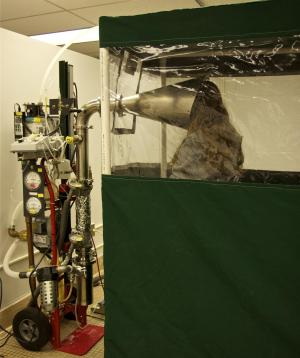
The Gesundheit II machine collects the breath exhaled from flu sufferers.   (Credit: Donald Milton)
The Gesundheit II machine collects the breath exhaled from flu sufferers.
(Credit: Donald Milton)

CDC- Making Health Care Safer

Drug-resistant CRE (carbapenem-resistant Enterobacteriaceae) has been in the news often this week, following the CDC’s warning about the bacteria. Now, clearly this is a concern, but before we freak out let’s look at some of the figures behind this story. First, the statistic regarding CRE’s case fatality- almost every news source we’ve seen has indicated it’s 50% – aren’t what they seem. What the sources don’t say is that it’s 50% if, and only if, the infection becomes septicemic. Septicemia as a result of almost any bacterial infection is very dangerous. Second, CRE is really only of concern amongst the immunocompromised and those in long-term treatment for prior conditions. If you’re a healthy adult in possession of an active immune system, you’re chances of becoming infected are minuscule. Third, yes the rate of infection from CRE has increased in the last decade, but again let’s keep the actual number in mind – four percent.

Antibiotic-resistant pathogenic bacteria are a real concern, and steps should absolutely be taken to mitigate their growth and prevent their spread. However, disproportionately scaring the public is not the way to do that, and can be detrimental in the long run – the “boy who cried wolf” anyone? But our soapbox aside, check out the CDC’s review if you haven’t already.

CDC – “Untreatable and hard-to-treat infections from CRE germs are on the rise among patients in medical facilities. CRE germs have become resistant to all or nearly all the antibiotics we have today. Types of CRE include KPC and NDM. By following CDC guidelines, we can halt CRE infections before they become widespread in hospitals and other medical facilities and potentially spread to otherwise healthy people outside of medical facilities.”

Novel coronavirus infection – update

Yesterday the WHO reported another fatality from the novel coronavirus, bringing the total number of cases up to 14 and the fatalities to eight. This case is of special concern because it remains unclear how the man became infected.

WHO – “The Ministry of Health in Saudi Arabia has informed WHO of a new confirmed case of infection with the novel coronavirus (NCoV). The patient, a 69-year-old male, was hospitalized on 10 February 2013 and died on 19 February 2013. Preliminary investigation indicated that the patient had no contact with previously reported cases of NCoV infection and did not have recent history of travel.”

Study provides new clues to how flu virus spreads

According to this study, the tiny aerosol droplets of flu we exhale when sick contain nine-times the amount of virus than the larger cough/sneeze generated droplets. So the next time an infected colleague/friend/loved one walks toward you, make them stop four feet away and calmly explain that their breath is infectious. (GMU Biodefense is not responsible for the implications of you calling the breath of a colleague/friend/loved one infectious).

Medical Express – “People may more likely be exposed to the flu through airborne virus than previously thought, according to new research from the University of Maryland School of Public Health. The study also found that when flu patients wear a surgical mask, the release of virus in even the smallest airborne droplets can be significantly reduced. ‘People are generally surprised to learn that scientists don’t know for sure how flu spreads,’ says Donald Milton, M.D., Dr.P.H., who directs the Maryland Institute for Applied Environmental Health and led the study of influenza virus aerosols published in the journal PLoS Pathogens…”

Hong Kong Prison Homes Spur Virus Risk Decade After SARS

Population density remains an important factor in understanding pandemic potential, and Hong Kong is close to the top of the list in terms of people-per-square-mile. As housing prices continue to increase, many of the city’s 7.2 million residents are settling for smaller and more cramped living quarters.

Bloomberg – “Hong Kong electrician Chan, who shares a mold-stained toilet with his neighbors, says he’d move out if it weren’t for the rising cost of accommodation. Last year, residents were forced to bathe using a shared kitchen sink for six months when a plastic shower hose in the communal bathroom broke, Chan said…Chan Sung-ming says the coughs and sneezes echoing through the plywood walls of his windowless, 60- square foot Hong Kong apartment get him thinking: is there a bug going around and could it be deadly?”

Virus overcomes ‘enormous hurdle’ to survive

Wonderful. As if viruses aren’t good enough at surviving against all possible odds in the first place. For things that technically aren’t alive (I know, I know, I read the piece about viral immune systems as well – they’re still undead in my book), they are disturbingly resilient.

Futurity – “Researchers have uncovered a virus inside a host with a non-standard nuclear genetic code—one that differs from the standard genetic code that almost all living things use to produce proteins.’The finding is significant because it shows that these viruses can overcome what appears to be an insurmountable change in the host genome,’ says researcher Derek J. Taylor, professor of biological sciences at the University at Buffalo.’So the fact that we haven’t previously seen any viruses in these species with a modified genetic code may not be because the viruses can’t adapt to that shift. It may be that we haven’t looked hard enough.'”

Bioterrorism and the Pandemic Potential

A good overview of the basics of pandemics (I tend to disagree with their bioterror assessment, but to each their own!)

STRATFOR – “”The potential for a disease to spread is measured by its effective reproduction number, or R-value, a numerical score that indicates whether a disease will propagate or die out. When the disease first occurs and no preventive measures are in place, the reproductive potential of the disease is referred to as R0, the basic reproduction rate. The numerical value is the number of cases a single case can cause on average during its infectious period. An R0 above 1 means the disease will likely spread (many influenza viruses have an R0 between 2 and 3, while measles had an R0 value of between 12 and 18), while an R-value of less than 1 indicates a disease will likely die out. Factors contributing to the spread of the disease include the length of time people are contagious, how mobile they are when they are contagious, how the disease spreads (through the air or bodily fluids) and how susceptible the population is. The initial R0, which assumes no inherent immunity, can be decreased through control measures that bring the value either near or below 1, stopping the further spread of the disease.”

Image of the Week

[Technically a video, but there you have it] – Insect wings lacerating bacteria. Yes, lacerating.

From Nature – “The veined wing of the clanger cicada kills bacteria without any chemical action — one of the first natural surfaces found to do so. An international team of biophysicists now has now come up with a detailed model (and some cool CGI) of how this defence works on the nanoscale.”

Biodefense Policy Seminar

George Mason Biodefense is very excited to launch the Biodefense Policy Seminar, the D.C. area’s premiere speaker series focused on biodefense and biosecurity issues. The monthly seminars – free and open to the public – feature leading figures within the academic, security, industry, and policy fields of biodefense. Our speakers for the next few months include Dr. Charles Bailey, Executive Director at the National Biodefense Center, Dr. Alexander Garza, Assistant Secretary for health affairs and Chief Medical Officer of the Department of Homeland Security, and Dr. Daniel Gerstein, Deputy Undersecretary for Science & Technology at the Department of Homeland Security.

Bailey-picMarch Seminar Speaker: Dr. Charles Bailey
When: Wednesday, March 20th, 2013, 7:20 – 8:30PM
Where: Johnson Center Meeting Room B, George Mason University, 4400 University Drive, Fairfax, VA 22030

Charles Bailey is the Executive Director of the National Center for Biodefense and Infectious Diseases. He manages a Biosafety Level -3 containment laboratory and conducts translational research aimed at developing diagnostics, antiviral drugs, therapeutics and vaccines against biological threat pathogens or newly emerging infectious diseases. Prior to joining George Mason, Dr. Bailey served in the US Army for 25 years where he conducted research on arthropod borne viral diseases in the US, Southeast Asia and Africa. Dr. Bailey also served as a senior analyst with the Defense Intelligence Agency and as an analyst for the Battelle Memorial Institute.
RSVP

The Pandora Report

(Image Credit: Cody Hough).

Highlights include secondary transmission of vaccinia through sex, humidity – good for something?!, two new cases of H1N1 in Taiwan, another H5N1 fatality in Cambodia, viruses with immune systems, and avian influenza (no, not that one- it’s H7N3) in Mexico. Happy Friday!

Vaccinia as an…STD?

This is one of the ongoing problems with the ACAM2000 vaccine – it sheds. More specifically, you shed for a couple days after receiving the vaccine. Which means you can pass it on, in a number of different ways.

MMWR – “On June 24, 2012, CDC notified Public Health Services, County of San Diego Health and Human Services Agency, of a suspected case of vaccinia virus infection transmitted by sexual contact. The case had been reported to CDC by an infectious disease specialist who had requested vaccinia immune globulin intravenous (VIGIV) (Cangene Corporation, Berwyn, Pennsylvania) for a patient with lesions suspicious for vaccinia. The patient reported two recent sexual contacts: one with a partner who recently had been vaccinated against smallpox and a later encounter with an unvaccinated partner. Infections resulting from secondary transmission of vaccinia virus from the smallpox vaccinee to the patient and subsequent tertiary transmission of the virus from the patient to the unvaccinated partner were confirmed by the County of San Diego Public Health Laboratory.”

Higher Indoor Humidity Inactivates Flu Virus Particles

High levels of humidity – the bane of DC metro riders, women who straighten their hair, and people who don’t like being able to drink their air – are apparently very good for keeping the flu at bay:

Science Daily – “Higher humidity levels indoors can significantly reduce the infectivity of influenza virus particles released by coughing, according to research published February 27 in the open access journal PLOS ONE by John Noti and colleagues from the National Institute for Occupational Safety and Health, Centers for Disease Control and Prevention. The researchers tested the effect of relative humidity on the capacity of flu virus released in a simulated ‘cough’ to re-infect cells. They found that an hour after being released in a room at a relative humidity of 23% or less, 70-77% of viral particles retained their infectious capacity, but when humidity was increased to about 43%, only 14% of the virus particles were capable of infecting cells.”

 Two New H1N1 Deaths in Taiwan

Full credit to Taiwan and China: during the Chinese New Year a huge swath of the population travels, creating a really tremendous logistical challenge in terms of disease surveillance. Both states have nonetheless managed to keep a sharp eye on new cases of influenza:

The China Post – “The H1N1 flu strain claimed two lives this month, as the number of diagnosed influenza cases surged due to increased travel over Chinese New Year, the Centers for Disease Control (CDC, 疾病管制局) said yesterday. During the recent flu season, 365 cases of influenza were reported, resulting in 29 deaths, according to the CDC, which has attributed 26 of the deaths to the H3N2 virus strain and three deaths to H1N1. The first victim to be claimed by H1N1 earlier this month, a 48-year-old man, had reported flu-like symptoms of fever, soreness and pain on Jan. 19, but did not seek medical attention until Jan. 24. The man died on Feb. 5 despite the efforts of doctors. The second victim, a 38-year-old woman, became feverish and felt discomfort on Feb. 14, but did not receive medical attention until Feb. 18 when she was rushed to the ER. She was resuscitated but died on Feb. 21.”

Ninth New Human Case of Avian Influenza H5N1 in Cambodia in 2013

The man was known to have come in contact with infected poultry in his village. Cambodia is having difficulty halting the disease incidence due to the ongoing practice of slaughtering poultry within residences. This practice is also thought to explain the disproportionately high incidence of the disease amongst children – approximately 20 of the 30 cases of H5N1 in Cambodia have occurred in children under the age of 14.

WHO – “The ninth case, a 35-year-old man from Kbal Ou village, Me Sar Chrey commune, Stueng Trang district in Kampong Cham province, was confirmed positive for influenza H5N1 on 23 February 2013 by Institut Pasteur du Cambodge. He developed fever on 8 February 2013 and his condition worsened on 10 February 2013 with fever, frequent cough, and dyspnea….The man is the ninth person this year and the 30th person to become infected with the H5N1 virus, and the 27th person to die from complications of the disease in Cambodia.”

Viruses pass major test to enter ranks of living

What do you think? Should viruses be classified as “living”?

Discovery News – “Viruses can acquire fully functional immune systems, according to new research that bolsters the controversial theory that viruses are living creatures. Until now, scientists thought that viruses existed only as primitive particles of DNA or RNA, and therefore lacked the sophistication of an immune system. The study, published in the journal Nature, is the first to show that a virus can indeed possess an immune system, not to mention other qualities commonly associated with complex life forms.”

Avian Influenza Outbreak in Mexico Raises Concerns about Price Speculation

Just as a FYI – stick it in the back of your mind for the time being.

The Poultry Site – “The dreaded avian influenza has returned to central Mexico again this year, this time causing significant poultry deaths in Guanajuato state, writes Carlos Navarro, Editor of SourceMex. The outbreak of the H7N3 virus—which had forced poultry farmers in the state of Guanajuato to destroy more than 2 million birds as of the end of February — affects municipalities in northern Guanajuato as well as in Jalisco state.”

In Case You Missed it (you wouldn’t have if you followed us on Twitter!)

– Analysis: Emerging deadly virus demands swift sleuth work
– New Bioterrorism Vaccine Gets First Test In Humans
– Brazil dengue cases almost triple as new strain spreads
DHS awards contract for utilities plant at NBAF

The Pandora Report

credit: Alex Alishevskikh
The Russian Meteor (image credit: Alex Alishevskikh)

Highlights include person-to-person transmission of the NCov, new drug to stop drug-resistant flu, plant viruses: yes they exist, sweat more to prevent TB, blacklegged ticks are spreading an unnamed disease (blackleggedia?), and did the meteor bring a virus which will kill us all? More news to come. Happy Friday!

Note: No updates on the deaths of two people in China from H5N1 – the cases were of particular concern due to the inability of health investigators to establish connections between either case and infected poultry. Person-to-person? We’ll keep you posted. 

Human-to-Human Spread of New Virus Lifts Threat to EU

The UK patient infected with the novel coronavirus (NCov) after travelling in the Middle East has died, raising the number of deaths to seven (out of thirteen known infections). The virus was not thought to be contagious until two family members of the sickened UK patient also became infected.

Bloomberg – “Two probable cases of human-to-human transmission of the new coronavirus that’s killed six people increase the pathogen’s threat to the European Union, according to the bloc’s disease-tracking agency. The appearance of a mild case of the disease caused by the virus also raises concern because it suggests more people may be infected than are known, have few or no symptoms, and are spreading the bug to others, the European Centre for Disease Prevention and Control said in a report late yesterday.”

New Flu Drug Stops Drug-Resistant Strains of Virus in Its Tracks

One of the reasons why the Influenza viruses are so difficult to handle is their phenomenal ability to mutate. Due the prevalence and high infectivity of the viruses, drug resistance is understandably a  cause for serious concern. A group of University of British Columbia researchers are seeking to mitigate this concern by developing drugs which inhibit neuraminidase binding in drug-resistant strains.

Science Daily – “Published online February 21 in the journal Science Express, the study details the development of a new drug candidate that prevents the flu virus from spreading from one cell to the next. The drug is shown to successfully treat mice with lethal strains of the flu virus. In order to spread in the body, the flu virus first uses a protein, called hemagglutinin, to bind to the healthy cell’s receptors. Once it has inserted its RNA and replicated, the virus uses an enzyme, called neuraminidase, to sever the connection and move on to the next healthy cell.”

Enemies no longer

Plants don’t get a lot of attention here at GMU Biodefense, which is unfair because they’re so prevalent. Plants have feelings too, right? Well no, but they can still catch viruses.

The Economist – “History casts a long shadow. Many of the first bacteria to be discovered were agents of disease, and that is how most people perceive bacteria to this day, even though less than 1% of them are pathogens. Something similar is turning out to be true of viruses, as Marilyn Roossinck of Pennsylvania State University told the AAAS meeting in Boston. Dr Roossinck works on plant viruses and she has assembled evidence suggesting a lot of such viruses are harmless to their hosts, and in some cases may actually be beneficial. That has implications for biology. It also has implications for agriculture.”

Scientists Unveil Secrets of Important Natural Antibiotic

So I have some bad news everyone. Apparently in addition to making you happier and prolonging your life, exercise may also save you from TB. Or, to be explicit, the secretion of the natural antibiotic dermcidin in sweat effectively kills bacteria which may enter at open cuts or wounds. The bad news? This makes avoiding exercise that much harder.

Science Daily – “These natural substances, known as antimicrobial peptides (AMPs), are more effective in the long term than traditional antibiotics, because germs are not capable of quickly developing resistance against them. The antimicrobials can attack the bugs’ Achilles’ heel — their cell wall, which cannot be modified quickly to resist attack. Because of this, AMPs have great potential to form a new generation of antibiotics.”

New tick-borne bacteria found in Shasta County

Blacklegged ticks are well established vectors for Lyme disease. However, the arthropods are now apparently carrying a recently discovered bacteria, Borrelia miyamotoi, which causes an as-yet-unnamed disease. The bacterium was first found to be pathogenic to humans in 2011, with the first US cases occurring in New England in January of this year. It’s now been found on the West Coast.

The Record Searchlight – “The bacteria have been found in ticks in 19 of California’s counties, including Shasta, Siskiyou and Trinity counties, according to the state Department of Public Health. Symptoms of the disease are similar to Lyme disease, which is caused by a bacteria called Borrelia burgdorferi, according to the state…It could be that the disease hasn’t been found in Shasta County, or anywhere else in California, because no one has been looking for the bacteria in sick people, district Vector Ecologist John Albright told the trustees during a board meeting Tuesday.”

Oddball Piece: Chelyabinsk meteor brought a dangerous virus to Earth?

OK, technically this shouldn’t be an oddball piece. There are whole scientific theories dedicated to the possibility of life on our planet being starting with alien bacteria, right? It’s just, we saw this and immediately thought, “Killer Viruses from Outer Space!!” Which made us laugh. So we included it. Happy Friday? [extra points if you can tell us what a “canny bolide” is]

The Voice of Russia – “This space guest which paid us a visit could actually be a Trojan Horse and physical damage from its explosion could be nothing compared to other potential dangers. This canny bolide that managed to sneak away from telescopes might have brought new viruses or bacteria to Earth.”

WHO Novel Coronavirus Update

The case number of the novel coronavirus (NCov) has increased to 13 with the World Health Organization announcing a new case in Saudi Arabia. Thus far seven of the 13 patients have died.

World Health Organization – “The patient was hospitalized on 29 January 2013 and died on 10 February 2013. The case was laboratory-confirmed on 18 February 2013. Further investigation into this case is ongoing.

In the United Kingdom, the Health Protection Agency continues to investigate the family cluster where three members of the family tested positive for NCoV infection. One member of this family, who had an underlying health condition, has died.”

Read more here.

The Pandora Report

Highlights include H5N1 is making health investigators in China very nervous, the reasons why we are still leery of mutating it in the lab, bureaucratese strikes PAHPA, polymer sheets in bandages = less infection, the US fighting Ebola, and human life! now featuring bacteria. Happy Friday!

Bird Flu Death In China Sparks Fear Of Human-Transmitted H5N1 Strain

OK, now before you start making plans for that bird-flu apocalypse bunker, just put down the canned beets and listen for a sec.  It’s too early to tell. It’s entirely possible the health investigators missed a link. But also, and forgive the soapbox, this is exactly why things like a scientific moratorium on the potential aerosolization of H5N1 is so potentially dangerous.

International Business Times – “Health authorities in Guiyang, Guizhou province, announced that the 21-year-old woman, Shuai Pengyue, died on Wednesday due to multiple organ failure as a result of the flu. Shuai was one of two women reported in the area to have contracted the new strain of the avian influenza. Health officials have investigated the two of them and concluded that neither patient was in contact with poultry before showing symptoms of the illness. Victim proximity is important to note because typically, the bird flu is contracted by being in contact with poultry. In this case, health officials worry this could be signs that the H5N1 strain can now be transmitted between humans.”

The Deadliest Virus

This clearly isn’t a black and white issue, and both sides of the debate raise valid points. Here’s a good presentation of why we aren’t all gung-ho H5N1.

Harvard Magazine – “BIRD FLU (H5N1) has receded from international headlines for the moment, as few human cases of the deadly virus have been reported this year. But when Dutch researchers recently created an even more deadly strain of the virus in a laboratory for research purposes, they stirred grave concerns about what would happen if it escaped into the outside world. ‘Part of what makes H5N1 so deadly is that most people lack an immunity to it,’ explains Marc Lipsitch, a professor of epidemiology at Harvard School of Public Health (HSPH) who studies the spread of infectious diseases. ‘If you make a strain that’s highly transmissible between humans, as the Dutch team did, it could be disastrous if it ever escaped the lab.’…Lipsitch, who directs the Center for Communicable Disease Dynamics at HSPH, thinks the risks far outweigh the rewards. Even in labs with the most stringent safety requirements, such as enclosed rubber ‘space suits’ to isolate researchers, accidents do happen. A single unprotected breath could infect a researcher, who might unknowingly spread the virus beyond the confines of the lab.”

Senate Panel Approves Revised Biodefense Proposals

PAHPA reauthorization, new and apparently improved in the Senate. The extent of the improvement? Changing bill language from “redployment” to “reassignment”. Yes, apparently this is a significant difference. No, representative was available to clarify why/how. No, we are not speculating.

NTI – “The Senate Health, Education, Labor and Pensions Committee sent the full chamber its own version of the Pandemic and All-Hazards Preparedness Reauthorization Act in place of a bill approved by the House of Representatives last month. The proposals are nearly identical, but the latest text would still require House endorsement upon receiving Senate approval. Congress failed in its previous session to reconcile separate reauthorization drafts endorsed by each side. ‘This was a reauthorization of this important act, and … we not only reauthorized it, we made it better,’ Senator Richard Burr (R-N.C.) said in a morning session to mark up the legislation.”

Polymer controls bacteria and prevents antibiotic resistance

If viable, the potential implication of such bandages would be significant, especially in areas of higher risk of infection –  triage centers during a disaster or soldiers in theatre, for example.

The Engineer – “Researchers at KTH Royal Institute of Technology in Stockholm have discovered an antibacterial polymer that can be used in products including sportswear and bandages. It is claimed the discovery could be an important breakthrough in the search for environmentally-friendly ways to control bacteria while preventing antibiotic resistance and resistant bacteria.‘We have managed to find an antibacterial polymer that attaches stably to cellulose and therefore cannot be released into the environment,’ said Josefin Illergård, a chemistry researcher at KTH.”

US offers Shs26b to fight Ebola, Marburg

It’s bad form here at Mason Biodefense to go too long without talking about Ebola, but luckily the virus is remaining quiet. So instead, a little blurb about US efforts to keep it that way.

Uganda Daily Monitor – “The $10m (about Shs26b) project dubbed Emerging Pandemic Threat Programme aims at equipping doctors and veterinarians to strengthen their coordination in carrying out joint research and and treatment of zoonotic diseases.”

We are living in a bacterial world, and it’s impacting us more than previously thought

Are humans still human if the majority of our genome is derived from a common ancestor we share with bacteria? Is that a silly question? Maybe. For a thorough and thought-provoking piece on the role of bacterial species in our humanity, read below.

Phys.org – “Throughout her career, the famous biologist Lynn Margulis (1938-2011) argued that the world of microorganisms has a much larger impact on the entire biosphere—the world of all living things—than scientists typically recognize. Now a team of scientists from universities around the world has collected and compiled the results of hundreds of studies, most from within the past decade, on animal-bacterial interactions, and have shown that Margulis was right. The combined results suggest that the evidence supporting Margulis’ view has reached a tipping point, demanding that scientists reexamine some of the fundamental features of life through the lens of the complex, codependent relationships among bacteria and other very different life forms.”