Bragging about our Faculty: Round 1

Dr. Gregory Koblentz has a new review out in the journal Terrorism and Political Violence, on Nicholas H. Bergman (Ed.)’s book “Bacillus anthracis and Anthrax”.

“This book provides a comprehensive review of the scientific community’s understanding of the bacteria Bacillus anthracis and the disease it causes, anthrax. This book is not just about biology though. As two of the book’s contributors observe, ‘the history of the anthrax vaccine attests to how biomedical science is influenced by society’s perception of the threat posed by infectious diseases and vice versa’ (p. 269). This is true of the broader B. anthracis research agenda as well. Research on B. anthracis in the United States declined significantly after the late 1960s, around the time that the United States renounced its offensive biological warfare program. Interest in the bacteria was rekindled in the 1980s by a suspicious outbreak of inhalation anthrax in the Soviet city of Sverdlovsk in 1979 (which was later determined to have been the result of an accident at a military biological weapon facility in the city). This book is a product of the latest surge in interest in this fascinating bacteria, galvanized by the 2001 anthrax letter attack.”

Friday News Roundup!

Subscribe to the Roundup and get all the best news in your inbox instead – less clicking means more time for other things (like checking the GMU Biodefense Facebook page)!Click here to sign up. 

Highlights include cannibalistic Salmonella, more BioWatch problems, DHS wanting to know if you’re sick, pigs and airborne Ebola, a new Ebola outbreak (juxtaposition unintentional, I swear), the UK government going in big for synthetic bio, and a political look at the fungal meningitis outbreak. Happy Friday!

Study finds how bacteria inactivate immune defenses

Don’t let the spellings put you off (the English – “defence,” honestly), their study is quite interesting. Apparently Salmonella prevents bacteria-killing enzymes from reaching your lysosomes, making the lysosomes essentially harmless. What does Salmonella do with the suddenly defenseless lysosomes? Raids them for nutrients, of course. It’s a bug eat bug world people.

Phys.org – “A new study by researchers at Imperial College London has identified a way in which Salmonella bacteria, which cause gastroenteritis and typhoid fever, counteract the defence mechanisms of human cells. One way in which our cells fight off infections is by engulfing the smaller bacterial cells and then attacking them with toxic enzymes contained in small packets called lysosomes. Published today in Science, the study has shown that Salmonella protects itself from this attack by depleting the supply of toxic enzymes. Lysosomes constantly need to be replenished with fresh enzymes that are generated from a factory within our cells. These enzymes are carried from the factory along a dedicated transport pathway.”

Anti-terrorism expert advises against BioWatch upgrade

More problems for the hapless BioWatch. First it emerged that the Gen 2 BioWatch kits had difficulty with the sensitivity of its “multiplex” assays – assays selected to detect multiple pathogens at once –  which were quietly phased out following a series of problems with basic detection and false positives (double whammie). Now BioWatch 3 is at serious risk of being de-funded, in favor of increased spending on disease surveillance and communications instead. Which is more important?

LA Times – “Homeland Security Secretary Janet Napolitano’s top expert on anti-terrorism technology has privately advised her to spike a long-planned, multibillion-dollar upgrade of BioWatch, the nation’s troubled system for detecting a biological attack. Dr. Tara O’Toole, the department’s undersecretary for science and technology, doubts that the so-called Generation 3 version of BioWatch could be relied on to detect anthrax, smallpox, plague or other deadly germs in the event of a biological attack, scientists familiar with the matter said.O’Toole is also concerned that the cost of the upgrade — $3.1 billion for the initial five years — would divert money from measures she considers more beneficial, such as establishing computer links between hospitals, large HMOs and public health agencies to speed the distribution of medicine after an attack, the scientists said.”

Homeland Security to Test Social Media as Disease-Tracking Tool

Homeland Security gets Facebook, and is now checking to see if you’re sick. I’m not sure if this is really cool or a really creepy.

Livescience – “Can Facebook or Twitter reveal the spread of the ordinary cold or a possibly deadly pandemic? The U.S. Department of Homeland Security wants to find out by monitoring popular social media networks in a yearlong project. The project will search for disease-related warning signs by using publicly available data found through Facebook, Twitter and blogs, according to news site NextGov. Accenture, a global consulting firm, won a $3 million contract from the Department of Homeland Security to set up a pilot program that will try to predict possible public health crises.”

Terrifying Prospect of the Day: Ebola May Go Airborne

I feel like at some point I’ve asked us all to take a minute and be grateful that Ebola isn’t normally transmissible via airborne routes. According to the study, Ebola-infected pigs managed to transmit the virus to macaques housed in the same room (bad day to be a pig or a macaque), despite the lack of direct contact. Don’t freak out yet – of the 2,200 cases of human Ebola, just 13 occurred without a known direct-contact.

Science News – “Transmission of the virus — which causes an often fatal hemorrhagic fever in people and primates — was thought to require direct contact with body fluids from an infected animal or person. But in the new study, published online November 15 in Scientific Reports, piglets infected with Ebola passed the virus to macaques housed in the same room even though the animals never touched…Although pigs transmitted Ebola in the laboratory, there is still no evidence that anyone has been sickened from contact with infected pigs in Africa, where the virus occurs naturally, or that the virus passes through the air under normal conditions, says study coauthor Gary Kobinger, an infectious disease researcher at the University of Manitoba in Winnipeg, Canada. ‘It’s definitely not an efficient route of transmission.’ ”

Ebola Outbreak in Uganda Kills Two

Ebola emerges again in Uganda (via direct contact, jeez). For an interesting argument that Ebola, Marburg, and Lassa shouldn’t be classified as “emergent”, check out this article in Science.

BBC – “A fresh outbreak of the deadly Ebola virus in Uganda has killed at least two people, the health minister has said.Christine Ondoa said two members of the same family died over the weekend not far from the capital – and a third person was also suspected to have died in that area of the haemorrhagic fever.”

UK Awards $32M for New Synthetic Biology Research

C’mon people, we can’t let the Brits out innovate us. Sure, first it’s larger funding for synthetic bio, next thing you know they’ll be forcing us all to switch to “Biodefence”.  No, in all seriousness, increased funding and government interest in synthetic biology is a good thing – which we should try and match!

GenomeWeb – “The UK has pumped £20 million ($31.8 million) into several new research projects pursuing biotechnology and bioenergy goals as part of a new push to capitalize on the potential of synthetic biology technologies. The Biotechnology and Biological Sciences Research Council on Friday said it provided the majority of the funding for the six new projects, but £3 million came from industry partners and £2 million was provided by the UK’s Engineering and Physical Sciences Research Council.”

Elections Have Consequences: Fungal Meningitis and Compounding Pharmacies

The fungal meningitis outbreak has continued to grow, with 480 cases and 33 deaths. For an interesting take on the why we use compounding pharmacies at all , and the politics behind the outbreak’s inception, check out the Scientific American article below.

Scientific American blog – “Compounded drugs used to be mixed by a relatively small and generally local pharmacy and are intended for a specific patient. The law regulating compounding pharmacies, in fact requires that each compounded drug be prepared based upon a prescription from a physician for a specific patient. They are custom produced to meet specific allergies, for example, or to mask flavor. However, New England Compounding Center (NECC), was were essentially acting as a small pharmaceutical company, mass producing the steroids for injection…But, as in keeping with tradition, the main question has been, ‘Why doesn’t the FDA regulate compounding pharmacies?'”

British Medical Journal Slams Roche on Tamiflu

Via the Boston Globe

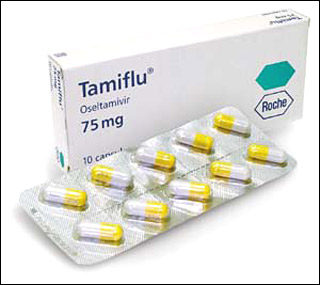
LONDON — A leading British medical journal is asking the drug maker Roche to release all its data on Tamiflu, claiming there is no evidence the drug can stop the flu.

The drug has been stockpiled by dozens of governments worldwide in case of a global flu outbreak and was widely used during the 2009 swine flu pandemic.

On Monday, one of the researchers linked to the BMJ journal called for European governments to sue Roche.

‘‘I suggest we boycott Roche’s products until they publish missing Tamiflu data,’’ wrote Peter Gotzsche, leader of the Nordic Cochrane Centre in Copenhagen. He said governments should take legal action against Roche to get the money back that was ‘‘needlessly’’ spent on stockpiling Tamiflu.

World Health organization spokesman Gregory Hartl said the agency had enough proof to warrant its use for unusual influenza viruses, like bird flu.

In a statement, Roche said it had complied with all legal requirements on publishing data and provided Gotzsche and his colleagues with 3,200 pages of information.


This Week in DC: Events

Tuesday, November 13, 2012

The U.S. Department of Homeland Security Contract Spending and the Supporting Industrial Base
8:00AM – 9:30AM
CSIS

The Defense-Industrial Initiatives Group is releasing a report on contracting by the Department of Homeland Security and on the industrial base that supports it. The report covers the years 2004 to 2011 and analyzes top-line DHS contract spending on products, services, and research and development as well as spending across six key components: the US Coast Guard, the Transportation Security Administration, Immigration and Customs Enforcement, Customs and Border Protection, the Federal Emergency Management Agency, and the Office of Procurement Operations. In addition, the brief analyzes trends in the types of contracts awarded, the funding mechanisms used, the level of competition, the top 20 contractors and the shares that small, medium, and large companies have accounted for in the homeland security market.

This session is on the record and will be webcast. Copies of the report will be made available at the event and will be posted online. A light breakfast will be served.

RSVP here.

Conditions for Progress: Strengthening America’s Health Care Ecosystem
Newseum
8:00AM – 10:30 AM

Health care represents nearly 18 percent of the nation’s GDP, and produces significant macroeconomic drivers such as innovation, R&D, and millions of jobs over the long term. Such a significant part of our economy, not to mention our individual and collective health, must be understood in the context of an interconnected system facing significant challenges that are not limited to any one sector. Changes in policy in the coming years that impact one area in the health care ecosystem can have effects across the spectrum of care delivery, patient outcomes, and medical progress. Join National Journal for a discussion on the state of the health care ecosystem, the connections between the numerous issues that lie ahead, the consequences of policy and business decisions, and the innovative solutions that can help strengthen the ecosystem for the

RSVP here.

Yemen and the Fight Against a Resurgent al Qaeda
Brookings Institution
10:00 – 11:30 AM

Rife with political turmoil, Yemen has proven fertile ground for al Qaeda-linked groups in the post 9/11 era. Until the beginning of 2012, the United States cooperated with the regime of Ali Abdullah Saleh, but his departure—orchestrated with U.S. support—raises questions for future counterterrorism cooperation. How much ground has al Qaeda gained in Yemen despite setbacks in Pakistan? Can the United States effectively manage events in Yemen without becoming entangled in another costly ground war?

RSVP here.

Wednesday, November 14

Impact of Sequestration to Federal R&D
American Association for the Advancement of Science
12:00-1:30PM

This Capitol Hill luncheon briefing, hosted by the AAAS Office of Government Relations in conjunction with the House Research & Development Caucus, reviews the potential budgetary impacts of sequestration on federal science agencies, and identify what these cuts might mean for researchers at the cutting edge.

Comprehensive Conflict Management in Euro-Atlantic Security
American Institute for Contemporary German Studies
12:00-1:30PM

The need for the so-called ‘Comprehensive Approach’ has been acknowledged by international actors such as the US and the EU. This approach aims at bridging institutional and policy gaps in international conflict management and at improving conflict management coherence.

RSVP here.

Cybersecurity Priorities: Looking Forward to the Upcoming Administration
Homeland Security Policy Institute
3:30-5:00PM

Join The George Washington University Cybersecurity Initiative on Wednesday, November 14th for an inaugural event featuring former Secretary of Homeland Security Michael Chertoff, Chairman of the House Permanent Select Committee on Intelligence Mike Rogers, and Chairman of the House Homeland Security Subcommittee on Oversight, Investigations and Management Michael McCaul. Through this event we aim to continue the dialogue on how best to address our nation’s cyber vulnerabilities and help to frame the cyber priorities for the next administration.

Register here.

Foreign Affairs Symposium
Institute of World Politics
4:00PM – 5:30PM

Topics include: the American Worldview; Geopolitics of the Moment; Russia, Central Europe, and the Intermarium; China and the U.S.

RSVP to kbridges@iwp.edu.

Thursday, November 15

The Role of Sport in Natural Disaster Recovery: The Case of Christchurch, New Zealand
Georgetown School of Foreign Service
12:00 – 1:30PM

Dr Thorpe will present findings from one of the first in-depth studies examining the role of sport and physical activity in the resilience and recovery of individuals and communities affected by a natural disaster. Drawing upon interviews conducted with ‘lifestyle sport’ participants living in Christchurch before, during and after the devastating February 2011 earthquake, and engaging Henri Lefebvre’s theory of rhythmanalysis, she describes the earthquake as an arrhythmic experience that prompted many to rethink the importance of sport and physical activity in their everyday lives, and for their connections to space, place, family and community.

RSVP here.

Ending the Communicable-Non Communicable Diseases Divide: Pink Ribbon Red Ribbon Leveraging HIV Platforms to Address Women’s Cancers
O’Neill Institute for National and Global Health Law
1:20-3:20PM

Dr. Oluwole, MD, MRCP, FRCP (Pediatrics), is the founding Executive Director of Pink Ribbon Red Ribbon Initiative at the George W. Bush Institute. Prior to assuming this role, she was the Director of the Center for Health Policy and Capacity Development at FHI360 and the Project Director for the Africa’s Health in 2010 project for six years. In that position, she managed a multi-million dollar project and empowered African institutions/governments to plan, manage and evaluate effective and tailored health programs, including maternal, newborn and child health, family planning, nutrition, infectious diseases, health systems strengthening and gender/gender-based violence.

Report Launch: A New US Defense Strategy for a New Era
National Press Club
2:00-4:00PM

Facing the fiscal crisis of the US and recognizing the changing international environment, The Peter G. Peterson Foundation & the Stimson Center convened 15 senior defense practitioners and observers in a Defense Advisory Committee. The committee reached a consensus on the defense strategy the US should pursue in the coming years. The committee also found that the strategy could be implemented even within current budget constraints. The strategy rests on the comparative strengths and weaknesses of the US military. The committee captured the basis of this strategy in 10 operating principles.

RSVP here.

Ramifications of cyber attacks for space and nuclear deterrence
Stimson Center
2:00-3:30Pm

Deterrence of unwanted actions in space is linked to deterrence in the nuclear and cyber domains. Of the three, mechanisms for deterrence against nuclear attack are most highly developed. Space deterrence mechanisms are a work in progress. Of the three domains, restraints on cyber deterrence are weak. What are the ramifications of cyber attacks for space and nuclear deterrence?

RSVP here.

Friday, November 16

Debt and Defense
Center for Strategic and International Studies
9:00-11:00AM

The International Security Program invites you to an event on the defense implications of sequestration, the fiscal cliff, and a possible deficit-reduction compromise. What will this national debate mean for defense planning, force posture, civil-military relations, and inter-Service cooperation in the years ahead?

RSVP here.

Friday News Roundup!

Subscribe to the Roundup and get all the best news in your inbox instead – less clicking means more time for other things (like checking the GMU Biodefense Facebook page)! Click here to sign up. 

Highlights include Meth as a home flu remedy, the PAHPA re-authorization, Salmonella: a force for good?, MRSA in your water (joke – that was a joke), the Ebola-related woes of the poor orangutan, and belly button bacteria.

Methamphetamine Reduces Human Influenza A Virus Replication

Now normally I am all for home flu remedies, but if it involves a black-windowed basement and a set-up out of Breaking Bad, I think I’ll pass.

Original Paper – “Methamphetamine (meth) is a highly addictive psychostimulant that is among the most widely abused illicit drugs, with an estimated over 35 million users in the world. Several lines of evidence suggest that chronic meth abuse is a major factor for increased risk of infections with human immunodeficiency virus and possibly other pathogens, due to its immunosuppressive property. Influenza A virus infections frequently cause epidemics and pandemics of respiratory diseases among human populations. However, little is known about whether meth has the ability to enhance influenza A virus replication, thus increasing severity of influenza illness in meth abusers. Herein, we investigated the effects of meth on influenza A virus replication in human lung epithelial A549 cells.”

Congress must act on Pandemic and All-Hazards Preparedness bill

Hurricane Sandy illustrated clearly the ongoing need for funding preparedness planning. Congress is taking up the Pandemic and All-Hazards Preparedness Reauthorization Act in the coming weeks, which seeks to ensure funding for planning remains in place.

The Hill – “When Congress returns this month for the post-election Lame Duck session, they will have the opportunity to vote on legislation that would solidify the commitment of the federal government to protecting our nation’s critically ill and injured patients in the event of a disaster or emergency. If enacted, the Pandemic and All-Hazards Preparedness Reauthorization Act of 2011 – better known as PAHPA – would provide the resources necessary to improve the nation’s public health and medical preparedness, streamlining the federal government’s disaster planning and strengthening national preparedness for and responses to medical and public health emergencies and disasters, whether deliberate, accidental or natural.”

Arizona State University scientists engineer bacterial vaccine delivery system

Salmonella, making itself useful for something other than dramatic weight loss.

Vaccine News – “Arizona State University scientists have successfully engineered a strain of Salmonella bacteria capable of acting as a delivery system for vaccine antigens. The ASU team used the bacteria to protect mice against a lethal influenza strain, but they believe the approach is adaptable enough to be used against many different pathogens…’The technology that we’re describing in this paper can be used to develop a vaccine against any virus, any parasite, any fungus, whereas this was never possible before the development of recombinant attenuated bacterial strains like those produced in our lab,’ Dr. Roy Curtiss, the team’s leader, said.”

Deadly ‘Superbug’ Found in Water Treatment Plants

MRSA in your neighborhood bunnies, MRSA at your neighbourhood water treatment plant. MRSA: the world’s worst neighbor.

Smithsonian –  “Researchers from the University of Maryland and the University of Nebraska Medical Center have found that at least four water treatment plants in the United States contain superbugs, the methicillin-resistant Staphylococcus aureus and the methicillin-susceptible Staphylococcus aureus. The concern is that the plants are putting sewage workers at risk for contracting the bacteria, and that plants that do not treat water with chlorine may be leaving the most lethal strains.”

Orangutans infected by mystery Ebola-like virus

Something very similar to the African Ebola viruses are popping up outside of Africa (dun dun dun anyone?) in, of all places, the already blighted Bornean orangutans.

New Scientist – “They are already the most endangered great apes. Now orang-utans may face an additional threat: Ebola virus, or something a lot like it. Bornean orang-utans have antibodies that recognise not just the Asian species of Ebola virus, but all four African Ebola viruses and a similar African virus called Marburg. None of the African viruses has ever been seen outside Africa before. The discovery was discussed at a conference last week by the study’s leader, Chairul Anwar Nidom of Airlangga University in Surabaya, Indonesia.”

Plunging into the Unknown: Belly Button Bacteria and You

And for your Friday fluff piece (no pun – ok, pun slightly intended), belly button bacteria (or BBB, for people in the know):

PLOS blog – “Have you ever looked up at the night sky and wondered what kinds of life might exist out there? Well, you can look down – at your belly button that is – and wonder the exact same thing. According to research published today in PLOS ONE, the belly button is home to an array of bacterial life ranging from the common (like Staphylococci) to the rare (like Archaea which have never been found before on human skin). Some bacteria, like those belonging to the Bacillus genus… are feisty – they battle against fungi and viruses.”

Palm-to-Face Story of the Week

First things first, big congratulations to President Obama! Irrespective of where you stand politically, I think no political ads for another two years is a blessing for which we can all be grateful.

Now, to the face-palming. In the wake of Sandy, this FAQ on NOAA’s website has been receiving some attention:

Subject: C5c) Why don’t we try to destroy tropical cyclones by nuking them?

Now, I am a firm believer that there are no stupid questions. What’s depressing about this question is therefore the general, persistent lack of education on WMD  behind it. This unfortunately holds true not only for nuclear, but for chemical, radiological, and biological weapons as well. Ask the average person how many people a standard “dirty bomb” would kill, and I’ll wager their answer would be too high by an order of magnitude –  (don’t believe me? good for you, always check sources).

“Who cares?” you may ask.  As long as security sector professionals and academics understand the threat, what does it matter if the average American, who undoubtedly has much more pressing things to worry about, doesn’t?

It matters tremendously. We all fear what we don’t understand, and in some cases that fear can be as debilitating as the threat itself. For instance, in 1995, members of the Aum Shinrikyo cult released the chemical agent sarin on the Tokyo subway. Of the 5,510 people attended to at local hospitals, nearly 85 percent were “worried well” – those patients who were completely healthy, with  no symptoms and no exposure, but self-reported anyway. A similar phenomenon occurred after the 2001 Anthrax Letters attack. Demand for the drug Cipro (the antimicrobial used to treat anthrax) soared, even in places completely removed from the attacks (nearly a third of clinicians in Wisconsin and Minnesota were asked by patients for Cipro). According to some estimates, the number of these “worried well” patients in a given disaster can outnumber legitimate patients by 20:1. Now clearly, even experts on WMD can succumb to fear, but a better informed populace – one which knows sarin has a clear checklist of symptoms, or  that anthrax isn’t contagious – is less likely to panic.

Education on WMD is critical for preventive reasons too.  Understanding the absolute basics of how nuclear weapons are made is critical to really understanding the Iranian threat. Understanding the potential impact of chemical weapons is critical to understanding our concerns over the Syrian stockpile. Understanding the threat of biological weapons is critical to recognizing the importance of  strengthening international norms against their use.

Moral of the story? Education is important. Maybe we should designate a “National Educate-a-Friend on CBRN” day. It should be sooner rather than later though – the East Coast has another Nor’easter coming in, and there are already murmurs we should heat it out of existence with mists of plutonium-239.

For those of you curious about NOAA’s response to the hurricane-nuke scenario, see here.

Movie Review: Argo

By: Ashley Negrin, GMU Biodefense MS Program

3.5/4 Petri Dishes

For anyone who may be on the fence about shelling out $10.50 for a ticket to Argo, let me just assure you that you will not be disappointed.  I am not just saying this because of my infatuation with political thriller movies or with Ben Affleck, but Affleck proves, yet again, that he has certainly got a knack for directing.  The plot, based on the true story of the unusual rescue of six Americans during the 1979 Iranian hostage crisis, keeps the audience engaged right from the beginning.  Affleck plays the role of Tony Mendez, the CIA operative who spearheaded the creative plan to rescue the hostages from the Canadian ambassador’s home in Tehran.  The casting of Alan Arkin and John Goodman as two Hollywood professionals helping to create the fake movie that brings the hostages home provides the perfect amount of comic relief in an otherwise humorless situation.  Sporting the true late 1970s style of feathered hair and polyester suits, the cast successfully takes the audience back to 1979 and 1980 to experience the suspenseful events surrounding the little-known rescue of the six hostages.

For me, what made this film so interesting was its focus on the six American hostages.  While the movie begins with scenes of the Iranians protesting outside of, and then storming the U.S. Embassy, the true focus is on the story of the six Americans hiding out in the Canadian ambassador’s home.  It shows a different aspect of a crisis we have all studied.  It can be difficult to keep an audience in suspense when the ending of the story is already known, but Argo successfully keeps you engaged and eagerly waiting to see how the hostages make it home.

At the heart of the movie is the notion of international cooperation and diplomacy, and the benefits of both.  This mission could not have moved forward or ended in success without the critical aid of Canada, which Affleck understands and illustrates in the film.  While the film does not depict exactly what happened during the course of these events (it is a Hollywood movie after all), it is an entertaining and dramatized look at a once classified operation.  Ultimately, this is a very enjoyable film for anyone interested in politics and international affairs, history, or Ben Affleck.

This Week in DC: Events

The best of the free security and health events in DC this week – don’t forget the Biodefense Social is this Saturday (see below for more details)!

Monday, November 5
Research and Development for Global Health
10:00 – 11:00 AM (Video Archive)
Center for Strategic and International Studies

Over the past decade, China and India have emerged as hotbeds of innovation for new biomedical products that have benefitted millions of people throughout the developing world. At this session expert panelists will discuss each nation’s contributions in this area; describe the policy priorities that have set the stage for recent R&D activities; identify barriers to continued R&D expansion; and discuss the optimal mix of incentives and regulations that can stimulate further growth in this sector.
Watch the video here.


Tuesday, November 6
Vote!

Wednesday, November 7
Innovation for a Secure Future
11:30 AM – 2:00 PM
Elliot School of International Affairs

The Center for International Science and Technology Policy presents a Science and Technology Policy Seminar Series Lecture. Dr. Ray O Johnson will discuss the relationships between universities and industry and the importance of both for a secure future.
RSVP to  cistp@gwu.edu

Thursday, November 8
The Law of Cyber warfare: Can The Current Legal Regime Hack It?
10:30 AM – 2:30 PM
AU Washington College of Law

The symposium will examine whether cross-border cyberattacks qualify as acts of war under international law, whether the difficulties of distinguishing civilian and military targets require a special legal regime to govern cyber warfare, and how legislation that has been passed or is currently being considered by the U.S. Congress will affect the international context of such attacks.
RSVP here.

Friday, November 9
Cyber as a Form of National Power
5:00-6:30 PM
Institute of World Politics
RSVP to kbridges@iwp.edu.

Saturday, November 10
George Mason Biodefense Mixer!

8:00PM to 10:00PM
Brion’s Grille
10621 Braddock Road,
University Mall Shopping Center,
Fairfax, VA

Pay-to-Attend Events

Friday, November 9
2012 Symposium on Preventing Catastrophic Threats and FAS Awards
Federation of American Scientists
Cost: $250 (individual ticket)
On November 9, 2012, just three days after the national election, FAS will host a day-long symposium that features distinguished speakers who will recommend to the new administration how to respond to catastrophic threats to national security. Policy and technological issues include conventional, nuclear, biological, and chemical weapons; biotechnology; nuclear safety; electricity generation, distribution, and storage; and cyber security.
Register here.

Friday News Roundup!

Subscribe to the Friday News Roundup and get the week’s most important news, with only the slightest veneer of snark, in one email. Click here!

Highlights include: microbiologists and the ER – a match made in heaven, the CDC testing RIDTs,  Malaysia and BW (not what you think), bacterial voyeurism, more drug contamination at the infamous NECC, and vaccinia – now in technicolor!

How Investigating Bacteria Will Change Health Care In Hospitals

How I see this playing out: ‘Excuse me, pardon me – ooh that looks bad – don’t mind me, just need to collect samples of the ER floor here.’

“Jack Gilbert, a microbiologist from the University of Chicago…and a group of microbiologists will take over a brand new hospital in an experiment called the ‘Hospital Microbiome’. The goal of ‘Hospital Microbiome’ is to try to see what microbes and viruses will move in to the hospital and how patients and hospital staff impact the variety of microbes that live in the hospital. Gilbert and his team will track the bacteria in the hospital before it opens and as it starts accepting staff and patients. This data will help hospital administration, doctors, nurses, and researchers get a better understanding of how these bacteria and viruses make their way around a hospital, sometimes causing dangerous infections in the patients.”

For a link to the Hospital Mircobiome study itself, click here.

CDC Evaluation of 11 Commercially Available Rapid Influenza Diagnostic Tests (RIDT)

To absolutely no one’s surprise, tests were better at detecting influenza when given higher concentrations of virus.

CDC in MMWR – “The findings in this report further emphasize the importance of collecting respiratory specimens when the amount of influenza virus is at its peak (within 24–72 hours of symptom onset). The high virus concentrations at which the evaluated FDA-cleared RIDTs detected recent circulating viruses might exceed levels expected in clinical specimens, even those collected at the peak of virus load in the specimen (2–4). Although all RIDTs were able to detect virus at the highest virus concentrations, some were unable to detect certain viruses at any subsequent dilution.”

This is What Your Cells Look Like on Vaccinia

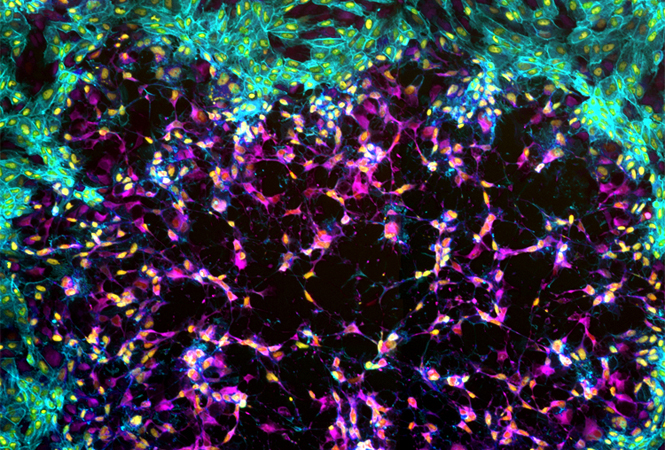
Researchers at two Australian universities have captured in trippy fluorescent detail the progression of vaccinia virus through cells (extra point if you know what vaccinia is used for – yes just one point, you should know!)   The giant cloud of pink is the virus, with the halo of healthy host cells surrounding in green.

Image: Green fluorescent protein expressing vaccinia virus (pink) spreads from a single infected cell through an entire monolayer of green monkey kidney cells (blue with yellow nuclei) over three days.

For other equally impressive photographs, check out the full gallery. Who knew viruses could be so pretty?

Malaysia to Prepare Law on Biological Warfare

Everyone give it up for Malaysia.

NTI – “Malaysian Defense Minister Ahmad Zahid Hamidi said on Tuesday the nation would prepare legislation aiming to address the threat of conflict involving biological agents, Bernama reported. ‘Biological warfare is a new war which can happen not only in Malaysia but also in the ASEAN region,’ Zahid said, referring to the territory covered by the 10 member states of the Association of Southeast Asian Nations.”

Researchers “Watch” Antibiotics Attack Tuberculosis Bacteria Inside Cells

What about the rights of microbes? Don’t they get any privacy? Occupy petri dishes! Just kidding, tuberculosis is awful.

Infection Control Today – “Weill Cornell Medical College researchers report that mass spectrometry, a tool currently used to detect and measure proteins and lipids, can also now allow biologists to ‘see’ for the first time exactly how drugs work inside living cells to kill infectious microbes. As a result, scientists may be able to improve existing antibiotics and design new, smarter ones to fight deadly infections, such as tuberculosis. The new study was published in an early online edition of Science.”

Further Drug Contamination by Pharmacy at Center of Fungal Meningitis Outbreak

Things are going from bad to worse for the New England Compounding Center, the pharmacy at the center of the multi-state fungal meningitis outbreak. According to the FDA, two additional products from the pharmacy have tested positive for bacterial contamination. Three batches of  injectable betamethasone and one batch of cardioplegia solution tested positive for a combined eight bacterial species, including the (rarely) pathogenic Bacillus idriensis and Bacillus circulans.

The total number of cases of fungal meningitis associated with the pharmacy’s Exserohilum rostratum contaminated drugs has reached 386, with 28 fatalities in 19 states (CDC).

In case you missed it:

– US increases funding to combat influenza and emerging disease threats (FAO)
– Cranking Up Biosecurity (The Scientist)

How Superstorm Sandy’s Floods Can Make You Sick

National Geographic – “Public health officials caution that stagnant water from floods can pose significant health risks, many of which can worsen with time. David Doyle, a spokesperson for New York’s Office of Emergency Management, cautioned that flood debris can hide broken bottles and even animals. He also urged people to avoid moving water, noting that just 6 inches (15 centimeters) of it can sweep someone off their feet.”

“Urban runoff in large cities is generally considered safer than rural runoff, which can include animal fecal bacteria produced from agriculture. Yet urban sewage treatment plants that are overwhelmed during major flood events can spill untreated sewage into waterways. It can then end up on streets and clog storm drains. Other urban contaminants include motor oil, gasoline, and trash.”

More here.