Week in DC: Events

September 22, 2014

Defeating ISIS: From Strategy to Implementation
Date: September 22, 12:00pm
Location: Washington Institute for Near East Policy

As the Obama administration formulates a strategy for confronting and defeating ISIS, its reluctance to deepen American involvement in Syria and Iraq raises questions about what form U.S. intervention will take going forward. The recent airstrikes near Mosul, Irbil, and elsewhere have been effective in achieving several limited objectives, but broader goals — such as rolling back the group’s large territorial gains and ultimately “destroying” ISIS — will likely require broader action. To discuss what the administration and its allies should do and how to do it, The Washington Institute is pleased to host a Policy Forum with Jean-Pierre Filiu, James Jeffrey, and Michael Eisenstadt.

Watch the livestream here.

The Rise of Lashkar-e-Taiba: A Look at One of South Asia’s Largest Terrorist Organizations
Date: September 22, 12:15pm
Location: New America Foundation , 1899 L Street NW, Suite 400, Washington DC

Although they are some of the world’s foremost terrorist groups, not much is widely known about Lashkar-e-Taiba (LeT), one of the largest terrorist organizations in South Asia that operates out of Pakistan and was responsible for the three day siege of the Taj Hotel in Mumbai in 2008 that killed 165 people. But now, former New York Times contributor Arif Jamal has documented the history, ideology, and global operations of LET and other groups in South Asia, bringing little-known facts about the dangers they pose to global security to light. In his book, Call for a Transnational Jihad: Lashkar-e-Taiba 1985-2014, Jamal shows through primary sources the links between the terrorist organizations in South Asia and those operating in other regions, demonstrating that the groups have a presence in more than 100 countries and are more inter-connected than many first believed.

By examining the rise of Lashkar-e-Taiba over the past three decades, Jamal makes it clear that the United States has treated the groups as a regional threat — not a global one. But as they have grown and become more deadly over the years, that policy is becoming more and more questionable.

New America is pleased to welcome Jamal for a discussion about his book, his thoughts on the future of LeT, and what the terrorist organizations history can tell us about their future.

RSVP here.

The Ukraine Crisis: The View from Odessa
Date: September 22, 1:00pm
Location: Woodrow Wilson International Center for Scholars, 6th floor, 1300 Pennsylvania Ave NW, Washington DC

Odessa has seen some of the worst violence and clashes outside of the war-torn eastern provinces of Ukraine but has received relatively little coverage. Join us for a discussion of Odessa’s perspective on the ongoing crisis with Volodymyr Dubovyk, Director, Center for International Studies, I. Mechnikov National University in Odessa.

RSVP here.

Schieffer Series: Jihad 3.0
Date: September 22, 4:45pm
Location: Center for Strategic and International Studies, 1616 Rhode Island Ave NW, Washington DC

The TCU Bob Schieffer College of Communication and CSIS cosponsor a monthly series of dialogues hosted by award-winning journalist Bob Schieffer to discuss the most pressing foreign and domestic issues of the day.

Panelists for Jihad 3.0 include The Honorable Juan C. Zarate, Former Deputy National Security Adviser for Combating Terrorism, Senior Adviser for CSIS, and Author, “Treasury’s War”; Dr. Jon Alterman, Senior Vice President, Zbigniew Brzezinski Chair in Global Security and Geostrategy and Director, Middle East Program, CSIS; and Julianna Goldman, Washington Correspondent for CBS News.

Register here.

September 23, 2014

A Symposium on The Ebola Crisis
Date: September 23, 8:00am
Location: Georgetown University, ICC Auditorum, 2nd Floor, 37th and O Streets NW, Washington DC

This half-day symposium features experts from government and academia and includes special remarks from Her Excellency Ellen Johnson Sirleaf, President of Liberia. RSVP and see the full schedule of speakers here.

Eastern Europe’s Most Difficult Transition: Public Health and Demographic Policy, Two Decades after the Cold War
Date: September 23, 9:00am
Location: Woodrow Wilson International Center for Scholars, 5th Floor, 1300 Pennsylvania Ave NW, Washington DC

Dr. Murray Feshbach was one of the first scholars to point out the devastating political and socio-economic effects of state communism’s failure to seriously address decaying public health and environmental conditions. His pioneering work remains relevant. More than two decades after the close of the Cold War, many health and demographic indicators in the former Warsaw-Pact states (including Russia) remain surprisingly inferior to those of the neighboring states of Western and Southern Europe.

In honor of Dr. Feshbach, this panel presents recent research that revisits the region’s health and demographic challenges and opportunities, in the context of today’s Europe. Richard Cincotta will present an analysis of mortality risk in the former Warsaw Pact states. Jack Goldstone will discuss the effects of Russian fertility policies. Ligia Paina will discuss Romania’s policy approach to ensure access to medical services for rural and underserved populations, in the context of ongoing migration of health professionals.

This event is being co-hosted by the Environmental Change and Security Program and the Kennan Institute.
RSVP here.

Jihadist Terrorism: A New Threat Assessment Report Release
Date: September 23, 10:00am
Location: Bipartisan Policy Center, 1225 I Street NW, Suite 1000, Washington DC 20005

With ISIS and international extremists dominating the international news coverage, the threat of terrorism is at the forefront of Americans’ minds. In light of these developments, the Bipartisan Policy Center will release a new threat assessment on September 23, authored by Peter Bergen, a member of BPC’s Homeland Security Project.

The report will examine threats from ISIS, Al-Qaeda and other jihadist groups, cybersecurity concerns, and drone strikes and drone proliferation. It is the second report in an annual series by BPC’s Homeland Security Project, which is led by former 9/11 Commission co-chairs Tom Kean and Lee Hamilton.

The event will feature a discussion about the contents of the new assessment with the authors and terrorism experts.

Register here.

Antiviral Targets for Human Noroviruses
Date: September 23, 12:00pm
Location: Georgetown University, 37th and O Streets NW, Washington DC

Featuring speaker Brent Korba, Ph.D., Research Professor at GUMC in the Department of Microbiology & Immunology.

September 24, 2014

Pakistan’s Long March: Reflections on the Anti-Government Protests in Islamabad
Date: September 24, 9:30am
Location: Woodrow Wilson International Center for Scholars, 5th Floor, 1300 Pennsylvania Ave NW, Washington DC

This summer, Pakistan was plunged into crisis as anti-government protestors converged on the capital city of Islamabad to demand the resignation of Prime Minister Nawaz Sharif. This protest movement marks the latest in a series of “Long Marches” Pakistan has experienced in recent decades. Anjum Altaf will discuss the primary drivers of this summer’s Long March, and consider whether it should be considered a success or a failure. He will also place the event in the broader context of the politics of agitation, with examples from countries including India, Ukraine, and the United States.

RSVP here.

Energy Security and the Ukraine Crisis
Date: September 24, 10:00am
Location: International Institute for Strategic Studies—US, 2121 K Street NW, Suite 801, Washington DC

The Ukraine crisis has intensified the debate about the energy relationship between Kiev and Moscow and, more widely, the political implications of the natural gas trade between Europe and Russia and Ukraine’s role as the key transit state. The prevailing narrative is that of an energy weapon used by Russia to blackmail Ukraine into submission and Europe into inaction. This discussion will show that it is Kiev that has blackmailed Moscow for twenty years to extract economic rents, and distorted Ukraine’s political economy in the process; that the security of supply issue in Europe is small, geographically limited, and remains unsolved because of EU rules and government inaction, not Russia’s might; and that the current crisis could have profound energy implications, especially if the Russia-Europe gas relationship is damaged beyond repair.

RSVP here.

Libya’s Civil War
Date: September 24, 12:00pm
Location: Carnegie Endowment for International Peace, 1779 Massachusetts Ave NW, Washington DC

Nearly three years after the fall of Muammar Qaddafi, Libya is in the throes of a bitter civil war. Its political and security institutions are split along complex fault lines that defy easy categorization. Further complicating the matter, Libya has become a flashpoint for a larger, regional proxy conflict between supporters of Islamist-oriented factions and the patrons of their opponents.

Frederic Wehrey will present the findings of a new Carnegie paper on the institutional roots of Libya’s violence and present options for how the United States and the international community can assist. Wolfram Lacher, Faraj Najem, and Dirk Vandewalle will act as discussants and share their own insights. Michele Dunne will moderate.

Register here.

Turkey: ISIS and the Middle East
Date: September 24, 1:30pm
Location: Georgetown University, McCarthy Hall, McShain Lounge, 37th and O Streets NW, Washington DC

Opening remarks by Dr. Gonul Tol, Executive Director of the Center for Turkish Studies at the Middle East Institute. The talk will be moderated by Dr. Sinan Ciddi, Executive Director of the Institute of Turkish Studies, and panelists include Dr. Denise Natali of the National Defense University, Dr. Kadir Ustun of the SETA Foundation at Washington, D.C., and Mutlu Civiroglu, Journalist and Kurdish affairs analyst.

Register here.

September 25, 2014

Pakistan: Importing America’s Federalism?
Date: September 25, 9:30am
Location: Atlantic Council, 1030 15th Street NW, 12th Floor (West Tower), Washington DC

Pakistan’s state policymaking space is in flux. Between the transition back to democracy in 2008, the devolution of a number of federal powers to the provinces in 2010, the increasing use of social media and connectivity, and a more active judiciary and civil society—the old images of slow-moving bureaucratic structure are no longer valid. However, what is replacing it is unclear. Recent populist social policy initiatives suggests that there is a growing appetite for social policy making which is visible and popular with voters. In this context, the current Pakistani administration has announced the creation of a national health insurance scheme. What level of data-based evidence is being used to both inform the policymaking and implementation process and to measure and evaluate the success of the project? The creation and implementation of the Affordable Care Act (ACA) presents an interesting and instructive American example for the use of data and evidence in policymaking and policy analysis.

Asif Memon will share his perspective gleaned from his work in Pakistan and his United States visit, part of the South Asia Center’s US-Pakistan Program Exchange Fellowship, to conduct research on this issue.

Register here.

September 26, 2014

Is There a Role for Religious Actors in Countering Radicalization and Violent Extremism?
Date: September 26, 10:30am
Location: U.S. Institute of Peace, 2301 Constitution Ave NW, Washington DC

Recent events in Iraq and Syria underscore the devastating impact of violent extremism. In fact, it is one of the most pressing issues facing the world today, affecting many regions and threatening to destabilize the global community. Efforts to counter violent extremism require strategic and sensitive approaches that take into account its myriad drivers and encourage collaboration across many sectors.  While civil society has an important role to play in countering violent extremism, religious actors are particularly well positioned to address some of its root causes, particularly in areas in which extremism is couched in religious terms.

At the end of September 2014, the Network of Religious and Traditional Peacemakers, Finn Church Aid, the Ministry of Foreign Affairs of Finland, and the U.S. Institute of Peace (USIP) will host the “Religious Actors Combatting Radicalization and Violent Extremism Symposium,” in Washington, DC and New York City. This symposium is bringing together nearly two dozen selected religious leaders, scholars and actors from around the world, including Nigeria, Sri Lanka, Syria and Libya who have been very involved in combatting violent extremism in their own communities.

On September 26th, 2014, USIP will host a public event featuring three panelists from the Symposium, who will present key insights drawn from the workshop and their own experiences.

RSVP here.
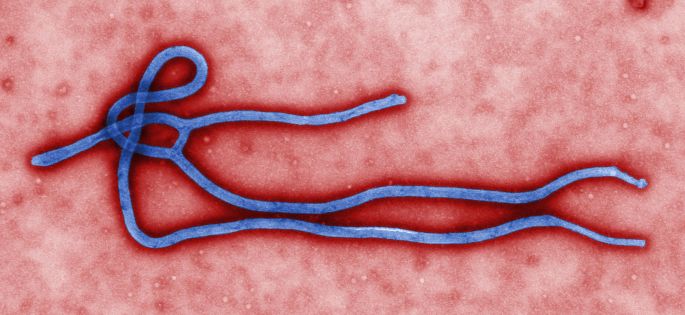
Dr. Gregory Koblentz discusses Ebola on CTV News

In case you haven’t watched the news today (or looked at a newspaper, or been on the internet), yesterday, President Obama pledged he would send 3,000 American military personnel to West Africa in order to help with the Ebola outbreak which is continues to ravage that region.

George Mason University Biodefense Deputy Director, Dr. Gregory Koblentz was on CTV News this morning to discuss the continuing outbreak and reaction to the President’s decision.

Watch Dr. Koblentz’s interview here

If you’re interested in learning more about the West African Ebola outbreak, join us tonight at 7:00 for the September Biodefense Policy Seminar featuring Dr. Michael Smith, of the Department of Defense, who will discuss, “Biosurveillance and the Atypical Epidemic: The 2014 West African Ebola Epidemic”. The talk will be held at the GMU Fairfax Campus in Research Hall room 163.

Week in DC: Events

September 15, 2014

Squaring the Iranian Nuclear Circle: Defining Uranium Enrichment Capacity and Other Key Issues
Date: September 15, 9:30am
Location: Carnegie Endowment for International Peace, Root Room, 1779 Massachusetts Ave NW, Washington DC

Next week, negotiators from the United States, other world powers, and Iran will resume talks in New York to try to reach a comprehensive nuclear deal.

While significant progress has already been made on a number of key issues, negotiators remain far apart on how to define the size and scope of Iran’s uranium enrichment program. But a win-win formula is possible, if both sides are willing to be creative and move beyond maximalist positions.

At this briefing, three leading experts will outline the key issues, the major hurdles, the political dynamics inside Iran, and realistic options for getting to “yes” — including a new Arms Control Association/International Crisis Group proposal on how to define Iran’s uranium enrichment program under a comprehensive deal.

Register here.

Dirty Entanglements: Corruption, Crime, and Terrorism
Date: September 15, 12:00pm
Location: George Mason University School of Policy, Government, and International Affairs,Founders Hall, Room 111, 3351 Fairfax Drive, Arlington, VA

TraCCC’s director will discuss her newly-published book, Dirty Entanglements: Corruption, Crime, and Terrorism, that provides insight into many of the world’s current crises. The book asserts that the entangled threat of crime, corruption, and terrorism deserves high-level attention because of its growth trajectory. Using lively case studies, this book analyzes the transformation of crime and terrorism and the business logic of terrorism. Louise I. Shelly concludes that corruption, crime, and terrorism will remain important security challenges in the twenty-first century as a result of economic and demographic inequalities in the world, the rise of ethnic and sectarian violence, climate change, the growth of technology, and the failure of nineteenth- and twentieth-century institutions to respond to these challenges when they emerged.

RSVP here.

American Isolationism: Is it a Myth or a Reality?
Date: September 15, 12:30pm
Location: Woodrow Wilson International Center for Scholars, 6th Floor Conference Room, 1300 Pennsylvania Ave NW, Washington DC

Journalists, policymakers, and pundits are once again debating whether Americans have turned away from the world. Officials from both sides of the aisle warn about an “isolationism dictated by the past.”

Contrary to this conventional view, new survey results from The Chicago Council on Global Affairs show most still want the U.S. to play an active role in the world. As global troubles brew in Iraq, Syria and Ukraine, what kind of foreign policy do Americans want? What do they see as the most effective ways to achieve US foreign policy goals?

Join us for the release of The Chicago Council’s 40th anniversary survey of Americans on foreign policy issues. Our expert panel will discuss the data, what it means for the future of US policy, and what policymakers should learn from the public.

RSVP here.

Nuclear Weapons Testing: History, Progress, Challenges
Date: September 15, 12:30pm
Location: U.S. Institute of Peace, 2301 Constitution Ave NW, Washington DC

The Embassy of Kazakhstan, the Embassy of Canada, Green Cross International, the Atom Project, and the Arms Control Association invite you to a mini-conference examining the human and security dimensions of nuclear testing, as well as the progress achieved to bring an end to nuclear weapons test explosions.

With presentations from: Ernest Moniz, U.S. Secretary of Energy  Rose Gottemoeller, U.S. Undersecretary of State for Arms Control and Intl. Security  Lt. Gen. Frank G. Klotz, U.S. Undersecretary of Energy and NNSA Administrator  Dr. Lassina Zerbo, Executive Secretary of the Preparatory Commission for the Comprehensive Nuclear-Test-Ban Treaty Organization

Following the event, a reception for participants will be held at USIP.

RSVP here.

September 16, 2014

Syrian Displacement: Views from the Region
Date: September 16, 10:00am
Location: Brookings Institution, Saul/ Zilkha Rooms, 1775 Massachusetts Ave NW, Washington DC

There are now more than three million Syrian refugees seeking protection and survival in the region. The initial generosity of host governments is increasingly challenged as the presence of the refugees puts strains on public services, infrastructure, housing stocks and political cohesion. Solutions to the bloody conflict appear more distant than ever and it is likely that the refugees will not be able to return to their homes in the near future. In Syria itself, over six million people have been displaced within their country’s borders and the United Nations estimates that over nine million people are in need of humanitarian assistance.

On September 16, the Brookings-LSE Project on Internal Displacement and the Office of the United Nations High Commissioner for Refugees (UNHCR) will present a first-hand view of Syria’s displacement crisis. Speakers will include Carol Batchelor of UNHCR Turkey, Brian Hansford of UNHCR and Andrew Tabler of the Washington Institute for Near East Policy. Elizabeth Ferris, senior fellow and co-director of the Brookings-LSE Project on Internal Displacement will moderate the event and offer opening remarks.

After the program, the panelists will take audience questions.

Register here.

U.S. Counterterrorism Assistance: Challenges and Opportunities from Latin America, the Middle East, and Africa
Date: September 6, 12:30pm
Location: Dirksen Senate Office Building, Room G-11

With the President’s announcement of a $5 billion Counterterrorism Partnerships Fund in late May, the Obama administration is greatly expanding U.S. foreign security assistance to combat terrorism around the world. Yet, reports on similar U.S. counterterrorism assistance in the past have shown many challenges with such assistance. Some of these challenges include U.S. trained military units being ineffective in addressing the security threat to the same forces committing serious human rights violations. By highlighting research and assessments done on U.S. counterterrorism assistance to countries in Latin America, the Middle East and Africa, this briefing will provide needed details on these challenges as well as opportunities to more effectively provide such U.S. security assistance.

Please join us for a discussion with: Dafna Rand, Leon E. Panetta Fellow and Deputy Director of Studies, Center for a New American Security; Adam Isacson, Senior Associate for Regional Security Policy, Washington Office on Latin America; Lesley Anne Warner, Africa Political-Military Analyst.

RSVP here.

September 17, 2014 

Subcommittee Hearing: Global Efforts to Fight Ebola
Date: September 17, 10:00am
Location: U.S. House Committee on Foreign Affairs, Subcommittee on Africa, Global Health, Global Human Rights, and International Organizations, 2172 Rayburn House Office Building, Washington DC 20515

Deal or No Deal: How To Negotiate Successful Nuclear Agreements
Date: September 17, 2:30pm
Location: Woodrow Wilson International Center for Scholars, 1300 Pennsylvania Ave, 5th Floor, Washington DC

When are nuclear agreements successfully negotiated? A combination of factors—technical, domestic political, and strategic—enabled Washington and New Delhi to conclude a civil nuclear accord in 2008. The US-India case offers useful lessons for negotiations in progress with Iran, and for possible future nuclear accommodation with Pakistan and North Korea (along with other cases such as South Korea, which seeks reprocessing rights). What conditions would enable such agreements to advance through the US political system and that of its negotiating partners? Would partial agreements be more domestically acceptable than comprehensive ones? Dinshaw Mistry, author of the new book The US-India Nuclear Agreement: Diplomacy and Domestic Politics, will discuss the India case. Robert Litwak will talk about Iran, Michael Krepon will address Pakistan, and Joel Wit will speak about North Korea.

RSVP here.

Biosurveillance and the Atypical Epidemic: The 2014 West African Ebola Epidemic
Date: September 17, 7:30pm
Location: George Mason University, Fairfax Campus, Research Hall 163

Dr. Michael Smith is the Director of the Critical Reagents Program (CRP) within the Medical Countermeasure Systems Joint Project Management Office (MCS JPMO) headquartered at Fort Detrick, Maryland. In this role, he manages the characterization, production, and distribution of reagents and consumables employed on deployed platforms and those under development by other programs.

Previously, he served in the United States Army’s 75th Ranger Regiment. He has also held several positions at the Defense Threat Reduction Agency (DTRA), including senior science and technology manager and most recently, acting division chief, Diagnostic and Disease Surveillance Division of the Joint Science and Technology Office. In December 2011, Dr. Smith became the director of the CRP within the Chemical Biological Medical Systems (CBMS) JPMO where he continued to serve through the transition of CBMS into the MCS JPMO. Mr. Smith assumed his current role as Director of the CRP in June 2013.

Dr. Smith earned a bachelor’s degree in Microbiology from the Pennsylvania State University. He continued his education and attained both a master’s degree and a doctor of philosophy degree in Molecular Microbiology from Yale University.

September 19, 2014

The Russia-China Axis
Date: September 19, 12:30pm
Location: Freedom House, 1301 Connecticut Ave, 4th Floor Conference Room, Washington DC

Freedom House is pleased to host Douglas Schoen to discuss his new book, The Russia-China Axis. He sees the United States as a nation in crisis, rendered nearly impotent by ongoing partisan warfare and unprepared to face an unprecedented partnership developing between Russia and China. From their support for rogue regimes in Iran, North Korea, and Syria to their military buildups and aggressive use of cyber warfare and intelligence theft, Moscow and Beijing are playing the game for keeps. Only a rebirth of American global leadership can counter the corrosive impact of this antidemocratic alliance.

Mr. Schoen is an influential Democratic campaign consultant, who was named Pollster of the Year in 1996 for his contributions to President Bill Clinton’s reelection campaign. His clients have included Mayor Michael Bloomberg, British Prime Minister Tony Blair, and three Israeli Prime Ministers. He is the author of multiple books and is a regular contributor to the Wall Street Journal, Washington Post, and other media outlets. He also serves on Freedom House’s Board of Trustees.

RSVP here.

Week in DC: Events

September 8, 2014 

Countering Terrorism in Pakistan’s Megacities: Exploring the Role of the Pakistan Police
Date: September 8, 10:00am
Location: U.S. Institute of Peace, 2301 Constitution Ave NW, Washington DC

Violence from terrorism, secessionist insurgency, sectarian conflict and ethnic turf wars is escalating in Pakistan’s megacities. Yet while the police force and its personnel remain ill-prepared and poorly equipped to meet the challenge, even skeptics recognize that police and law enforcement are the single most important institution in facing Pakistan’s counterterrorism challenge.

On September 8th, the U.S. Institute of Peace will convene a panel to explore ways to increase the capacity of Pakistan’s local police to counter terrorism in the nation’s urban centers. Reflecting findings from the USIP Special Report, “A Counter Terrorism Role for Pakistan’s Police Stations,” this panel will discuss the role of Pakistan’s local police in combating the country’s endemic violence and provide recommendations for ways in which Pakistan’s government and the international community can assist the police going forward.

RSVP here.

Ethics and Ebola: Challenges for Care Givers and for Public Health
Date: September 8, 12:15pm
Location: Johns Hopkins Hospital, 2117 Chevy Chase Conference Center, Sheik Sayed Tower, Baltimore, MD

Has the response to the Ebola outbreak thus far met ethical standards? As the crisis deepens, what is an ethically appropriate plan for addressing the needs of patients, caregivers, and those at risk if the virus spreads?

As the Ebola epidemic continues to worsen, the Johns Hopkins Berman Institute of Bioethics is dedicating its first bioethics seminar of the 2014-2015 academic year to the complex issues with a panel of experts on bioethics, epidemiology, and health systems.

Panelists: Nancy Kass, professor of bioethics and public health; Trish Perl, epidemiologist and professor of medicine; and Tim Roberton, a doctoral student at the Bloomberg School of Public Health who worked at the Ebola outbreak epicenter in Guinea in July.

This event is open to all; lunch will be provided for those in attendance. It will also be broadcast on the Johns Hopkins UStream channel.

U.S. Policy on Asia: Where Do We Go From Here?
Date: September 8, 5:00pm
Location: The George Washington University’s Elliot School of International Affairs, 1957 E Street NW, Washington DC

The George Washington University’s Sigur Center for Asian Studies and The Institute for Communitarian Policy Studies invite you to “US Policy on Asia: Where do we go from here,” with Dr. Kurt Campbell, Former Assistant Secretary of State for East Asian and Pacific Affairs and current Chairman/CEO of The Asia Group. The lecture will be followed by a discussion with Amitai Etzioni and then with the audience. The event is free and open to the public, but registration is required. To register, send an e-mail with your name and affiliation to icps.gwu.events@gmail.com.

The Turbulent Middle East: A Dialogue with Amb. Dennis Ross and Former Deputy National Security Advisor Elliott Abrams
Date: September 8, 7:00pm
Location: Georgetown University, Copley Hall, Copley Formal Lounge, 37th and O Street NW, Washington DC

Ambassador Dennis Ross is Distinguished Professor in the Practice of Diplomacy at Georgetown University and is the William Davidson Distinguished Fellow, Counselor at the Washington Institute for Near East Policy.

Elliott Abrams is an Adjunct for the Program for Jewish Civilization and is Senior Fellow for Middle Eastern Studies at the Council on Foreign Relations.

Ambassador Robert Gallucci, Distinguished Professor in the Practice of Diplomacy and former Dean of the SFS, will conduct the interview.

Register here.

September 9, 2014 

Iran Negotiations Update: Verification vs. Breakout Capacity
Date: September 9, 9:30am
Location: Atlantic Council, 103o 15th Street NW, 12th Floor, West Tower, Washington DC

Does a trade-off exist between more intensive verification measures placed on Iran’s nuclear program and the size of Iran’s enrichment capacity? With a new November 24 deadline for agreement, the Iranians have argued that more transparency should resolve concerns about breakout capacity – the ability to make enough fissile material for a nuclear weapon without rapid outside detection. The five permanent members of the UN Security Council plus Germany (P5+1) want limitations on the number and quality of Iran’s centrifuges to lengthen any potential breakout period. Iran may balk at these limits. Please join the Atlantic Council’s South Asia Center for a briefing on the ongoing negotiations with Iran and how some of these outstanding issues could be resolved.

The Iran Task Force, chaired by Ambassador Stuart E. Eizenstat, seeks to perform a comprehensive analysis of Iran’s internal political landscape, its role in the region and globally, and any basis for an improved relationship with the West. ITF is supported generously by the Ploughshares Fund.

Register here.

Putinism: The World According to Vladimir Putin
Date: September 9, 12:00pm
Location: Women’s Foreign Policy Group, 1615 M Street NW, Washington DC

Jill Dougherty is a Public Policy Scholar at the Woodrow Wilson International Center for Scholars. In January 2014, she was selected as a fellow at the Shorenstein Center on Media, Politics and Public Policy at Harvard University’s John F. Kennedy School of Government. She previously served as a CNN Correspondent and reported from more than 50 countries, including Russia, Iraq, Afghanistan, China and North Korea. Dougherty joined CNN when it was just beginning three decades ago. In her career at the network she served as Moscow Bureau Chief and Correspondent, White House Correspondent, Managing Editor Asia/Pacific based in Hong Kong, Foreign Affairs Correspondent and US Affairs Editor based in Washington, DC. Her strongest interest and area of expertise is Russia. From the moment she began learning the Russian language at age 13, Russia has been Dougherty’s passion. From her bachelor’s study in Slavic Languages and Literature at the University of Michigan—and subsequent study at Leningrad State University (Vladimir Putin’s alma mater)—to her graduate studies at Georgetown University where she wrote her thesis on Putin’s Soft Power Diplomacy, she has studied, worked and lived in Russia, in pursuit of understanding what Churchill called “a riddle wrapped in a mystery inside an enigma.” As an expert on Russia she appears frequently on CNN, has been featured in a TedX program, and her articles have appeared in Politico and the Huffington Post, among other publications.

Space is limited. Advance registration is required and tickets are $25 for WFPG Members, $35 for Non-Members. Click here to register. 

September 10, 2014

9/11 and the Future of U.S. Foreign Policy: A Speech by Vice President Richard B. Cheney
Date: September 10, 10:00am
Location: American Enterprise Institute, 1150 17th Street NW, 12th Floor, Washington DC

This September 11 marks 13 years since the terrorist attacks in New York City; Washington, DC; and Pennsylvania. Although a daring special operations mission has since taken out Osama bin Laden, the world is a much more dangerous place now than it was then. A staggering unfolding of foreign crises has left Iraq on the verge of state failure, enabled al Qaeda and the Islamic State of Iraq and Syria to metastasize across the Middle East and North Africa, and ignited fierce battles between Gaza and Israel.

Three years ago, former Vice President Richard B. Cheney sat down at AEI for a conversation about the 9/11 attacks, lessons learned and not learned, and the way forward. Ahead of the anniversary of 9/11, AEI welcomes Vice President Cheney back to deliver remarks on the current state and future of American foreign policy.

RSVP here.

World War One: What Were They Thinking? Lessons From the Catastrophe
Date: September 10, 12:30pm
Location: Woodrow Wilson International Center for Scholars, 1300 Pennsylvania Ave NW, 6th Floor, Washington DC

Why did a small number of European statesmen take the world into the seminal catastrophe of the Great War? The German Chancellor Otto Bismarck had warned in 1880 that “some damned foolish thing in the Balkans” might lead to a terrible war. The shots at Sarajevo did just that a hundred years ago. What have we learned?

RSVP here.

Ukraine: Summer’s Over
Date: September 10, 2:00pm
Location: Institute of World Politics, 1521 16th Street NW, Washington DC

As the fall semester begins at IWP, the Kościuszko Chair of Polish Studies will resume its Intermarium Lecture Series with Dr. Marek Jan Chodakiewicz’s presentation on Ukraine. Having explored the crisis-riven Central and Eastern European country in July, Dr. Chodakiewicz will share his observations on the situation in post-Maidan Ukraine, including the eastern Donetsk region plagued by a Russian-supported irredentist insurgency and the area of the MH17 crash site.

Register here.

Destroying Syria’s Chemical Weapons: One Year Later
Date: September 10, 3:00pm
Location: Center for Strategic and International Studies, 1616 Rhode Island Ave NW, 212 B Conference Room, Washington DC

Among the many atrocities of the Syrian civil war, the use of chemical weapons stands out as particularly brutal. The Assad regime’s accession to the Chemical Weapons Convention last year and the subsequent destruction of its declared chemical arsenal has helped reduce the risk of chemical weapons use again in that region. Destroying that arsenal quickly, securely and safely in a war-torn country, however, presented huge challenges. The U.S. role in mobilizing and coordinating the international response, as well as in the operational destruction of hundreds of tons of dangerous chemicals aboard the U.S. M/V Cape Ray, was a key factor in the success of the operation.

Please join us on September 10th as we look at how the United States helped rid Syria of chemical weapons and the lessons learned.

Register here.

The Militarization of Policing in Comparative Perspective
Date: September 10, 3:00pm
Location: AU School of International Service, 4400 Massachusetts Ave NW, Abramson Family Founders Room, Washington DC

GGPS will be hosting a panel discussion on “The Militarization of Policing in Comparative Perspective” with panelists Professor Jessica Trisko Darden and Professor Cathy Schneider. Discussion topics will include Indonesia, the US and France and a country from MENA or Africa.

Register here. 

September 11, 2014

TBD

September 12, 2014

TBD

Week In DC: Events

September 2, 2014

War or Words: The Impact of Russian State Television Propoganda on the Russian Internet

Date: September 2, 4:00pm
Location: Elliot School of International Affairs, George Washington University, 1957 E Street NW, Suite 412, Voesar Conference Room, Washington DC

Following Russia’s annexation of Crimea and support for separatists in eastern Ukraine, Russian state television has portrayed the government in Kyiv as a “fascist junta” while stoking popular support for President Vladimir Putin among its domestic audience. This presentation will examine the central components of this Kremlin effort, developing a case study of Dmitry Kiselev’s Sunday evening broadcast “News of the Week,” the WWII and Cold War frames he employs, the reaction of the Russian internet audience to the frames, and what this data tells us about the relationship between television and the internet in Russia. It will assess whether Putin is a prisoner of his own propaganda, and how such Kremlin propaganda may be influencing Russian society.

RSVP here.

September 3, 2014

Challenges to India’s Nuclear Doctrine
Date: September 3, 9:30am
Location: Atlantic Council, 1030 15th Street NW, 12th Floor, West Tower, Washington DC

India’s nuclear policy faces significant challenges from the opacity of Pakistan’s strategic nuclear thinking and its development of tactical nuclear weapons. The combustible mixture of these factors has not only made it prickly for India to find coherence in its long-term policies, but it has also increased the threat of a nuclear standoff between the two countries. The status-quo is unacceptable for India because Pakistan upholds an ambiguous nuclear doctrine that could have perilous effects if India were to retaliate against an attack on Indian soil. Critics of India’s No First Use policy argue that it abrogates the duty of the state to protect its citizens by leaving them vulnerable to a first strike. Can India find a way to strengthen its long-term security without risking nuclear escalation? Please join the Atlantic Council’s South Asia Center for a discussion with Vice Admiral Vijay Shankar PVSM on India’s nuclear doctrine and the challenges that it will face in the future.

Register here.

September 4, 2014

Where Defense Dollars Go: Understanding the FY2015 Defense Budget
Date: September 4, 10:00am
Location: Center for Strategic and Budgetary Assessments

The U.S. Department of Defense is one of the largest organizations in the world, managing global security responsibilities with numerous international allies and partners. What does it take to fund DoD? Where does that money go? How is DoD coping in the current fiscal environment? What gaps exist between the strategy outlined in the Quadrennial Defense Review and the capabilities funded by the latest budget request?

CSBA Senior Fellow Todd Harrison will present the report’s findings and take questions from the audience.

The report examines the Pentagon’s most recent budget proposal, including military compensation costs, readiness funding, cost projections for major acquisition programs, and the request for Overseas Contingencies Operations.

The report estimates the gap between the strategy and defense program called for in the QDR and the budget caps currently in effect—a gap that totals into the hundreds of billions over the FYDP.  The report concludes that the Pentagon has not budgeted enough to fully resource its strategy nor has it revised its strategy to fit within the budget constraints set by Congress.  If this strategy-resource gap is not resolved, it will inevitably lead to greater risk in executing an already under-resourced strategy and defense program.

Watch the Live Webcast here.

The European Union at the Crossroads: Completing Integration or Hastening Disintegration
Date: September 4, 12:00pm
Location: Georgetown University, 37th and O Street NW, Edward B Bunn, S.J. Intercultural Center, ECR, ICC 701, Washington DC

Join us on Thursday, September 4 at noon for a lecture with Stephan Leibfried, University of Bremen, on ‘The European Union at the Crossroads: Completing Integration or Hastening Disintegration’.

During the latter half of the twentieth century, national welfare states in Europe served effectively as a safety net for market integration after 1957 and for global markets after the 1970s. Today, Europe is at a crossroads: Can the national welfare state and national varieties of capitalism remain broadly compatible as the EU system comes under national and transnational stress? Europe has a choice between an American-style exclusive safety net and a European-style inclusive and systematic safety net. When considering the question, it may be helpful to consider what Europe does and what it hopes to do in the future to determine ultimately what form of statehood the EU may take.

Register here.

Ensuring a Strong U.S. Defense for the Future
Date: September 4, 2:00pm
Location: U.S. Institute of Peace, 2301 Constitution Ave NW, Washington DC

The U.S. Institute of Peace is pleased to host a discussion of the report by the National Defense Panel, “Ensuring a Strong U.S. Defense for the Future,” with the Hon. Michèle Flournoy and LTG (Ret.) Michael Maples.

After more than a decade of active combat, the United States faces an evolving security environment characterized by challenges in Asia, turmoil in the Middle East, and an emboldened Russia that has destabilized Europe. With sequestration budget cuts ahead, the U.S. government also faces new fiscal constraints. Amid these regional and economic dynamics, the rapid global proliferation of technology provides both opportunity for and threats to American security and values. Against this backdrop the Department of Defense released its Quadrennial Defense Review (QDR) in March. The report, which provides policy planning guidance for the next two decades, was controversially received by Congress.

Following the QDR’s release, the congressionally-mandated National Defense Panel (NDP), co-chaired by Dr. Bill Perry and General John P. Abizaid, was tasked to evaluate the 2014 QDR. The expert panel, per its mandate, assessed the QDR’s findings related to force size, structure, and posture against a rapidly evolving security environment.

The U.S. Institute of Peace, which was tasked by Congress to facilitate the review of the QDR in both 2014 and2010, is pleased to a detailed discussion of the panel’s report, “Ensuring a Strong U.S. Defense for the Future.” The report presents the panel’s findings and recommendations on the QDR and on reforms to planning and policy for both the Department of Defense and Congress. It also comments on the current funding trends and the impact of a return to sequestration in 2016.

RSVP here.

The Global War on Terrorism: Is It Time to Double Down?
Date: September 4, 5:30pm
Location: The Burke Theatre, 701 Pennsylvania Ave NW, Washington DC 20004

Recent gains by extremist groups in Iraq, Syria, and across Africa raise the question of whether extreme Islamist terrorism is making a comeback — and whether the United States should do more to fight back.  But is terrorism indeed worse now than when al Qaeda was at its peak, or has the decimation of al Qaeda leadership left disparate, more localized, and less effective terrorist groups?  Would a renewed, strong effort by the United States to go after global jihadists make us safer from these terrorists — or would this only help stimulate further terrorist recruits and violent acts against U.S. interests?   Hear leading experts debate these questions and more in our next McCain Institute Debate: “The Global War on Terrorism:  Is it Time to Double Down?”

Confirmed panelists include: Fran Townsend, Former Assistant to President George W. Bush for Homeland Security & Counterterrorism; Mike Morrell, Former Acting Director, CIA; Daniel Benjamin, Former Ambassador-at-Large, U.S. State Department; and Philip Mudd, Former Deputy Director, CIA Counterterrorist Center. Juan C. Zarate, Former Deputy National Security Advisor for Combating Terrorism, will serve as the panel moderator.

Register here.

This Week in DC: Events

August 25, 2014 

Turkey, Iraq, and the Kurdistan Regional Government
Date: August 25, 2:00pm
Location: Woodrow Wilson International Center for Scholars, 1300 Pennsylvania Ave NW, 6th Floor Conference Room, Washington DC

The advances of ISIS have reheated the debate on the future of Iraq. The country is threatened by a new wave of violence and destruction, as a large swath of territory has turned into a conflict zone and an uprising has shaken the political order. The relative stability of Northern Iraq appeared to be strengthened, as the Kurdistan Regional Government (KRG) initially managed to keep the conflict at bay in the territories it controls. However the recent advances of ISIS have also underscored the fragile security environment in the country to which the KRG is also subject. The developments also highlighted the delicate position of many ethnic and religious groups most notably Turkmen, Yazidis and Christians. Turkey has both opportunities and challenges in Iraq, and keeps a close eye on the situation there. In this discussion, experts will address the future of Iraq and the KRG in the context of the current crisis, and will shed light on Turkey’s perspectives on the KRG, energy issues, minorities, and Iraq in general.

This event is co-organized by the Center for Middle Eastern Strategic Studies (ORSAM).

RSVP here.

August 26, 2014

What About Jordan: Does Regional Crisis Threaten the Security of a Longstanding American Ally?
Date: August 26, 12:00pm
Location: Hudson Institute, 1015 15th Street NW, 6th Floor, Washington DC 20005

A U.S. ally for more than half a century, the Hashemite Kingdom of Jordan is one of the pillars of American Middle East policy. But this longtime bulwark of stability in an otherwise dangerous and volatile region is now being buffeted by powerful—and unwelcome—winds of change. Two of its bordering neighbors, Syria and Iraq, are engulfed in civil wars featuring both active Iranian involvement and well-resourced Sunni extremists like the Islamic State. Moreover, the role of Hamas in West Bank politics remains an unsettled question. Domestically, Jordan has been suffering a severe refugee crisis for more than a decade, to which the Syrian conflict alone has recently added another million-plus civilian exiles. Can Jordan continue to manage the various emergencies on its doorstep? What can the American government do to help one of its key Middle East partners?

On August 26th, Hudson Institute will host an expert panel—Senior Fellow and moderator Lee Smith joined by Faysal Itani, Salameh Nematt, and David Schenker—for a discussion about the present state and future prospects of Jordan and its central role in American Middle East policy.

Event will be streamed live online here.

August 27, 2014

The Islamic State of Iraq and Syria: Return of the Caliphate?
Date: August 27, 2:00pm
Location: Washington Times, 3600 New York Ave NE, Washington DC

In June, the Islamic State of Iraq and Syria (ISIS, also called ISIL) — a former al-Qaeda affiliate fighting against the Syrian government of Bashar al-Assad — declared itself simply the “Islamic State” (the IS).  Claiming to have reestablished the Caliphate (in Arabic: Khilafah) that existed from 632 AD until it was abolished in 1924 by Mustafa Kemal Ataturk, founder of the Turkish Republic, the IS controls large parts of Iraq including the city of Mosul and the predominantly Sunni areas abutting Syria, Saudi Arabia, and Jordan.  In addition, the IS has reportedly seized over $400 million looted from Mosul’s central bank, as well as gold bullion, in addition to potential oil revenues from fields in Syria and Iraq.  IS has applied a ruthless set of policies, seemingly designed both to demonstrate its ideological bona fides and to terrify its enemies: crucifixions and beheadings, forced conversion of Christians, and destruction of Islamic shrines.

To register, email William Selig.

August 28, 2014

Public Opinion and War
Date: August 28, 2:00pm
Location: Cato Institute, 1000 Massachusetts Ave NW, Hayek Auditorium, Washington DC

Featuring Adam Berinsky, Professor of Political Science, MIT; John Mueller, Professor of Political Science, Ohio State University, Senior Fellow, Cato Institute; Jason Reifler, Senior Lecturer in Politics, University of Exeter; and Trevor Thrall, Associate Professor of Public and International Affairs, George Mason University; moderated by Justin Logan, Director of Foreign Policy Studies, Cato Institute.

When and why does the American public support war? Washington politicians and pundits often puzzle over these questions as they try to win support for their policies, but there is a large body of academic research on public opinion and war. Do events, such as casualties or the prospect of victory, affect support more, or do partisan identities or other attachments play a larger role? What sorts of arguments should hawks and doves make if they hope to win support for their views? Please join four leading political scientists as they examine the causes of public support for war.

Register here or watch online.

Fatal Assistance
Date: August 28, 5:00pm
Location: Center for Global Development, 2055 L Street NW, 5th Floor, Washington DC 20036

CGD is pleased to announce a screening of Fatal Assistance, part of our film series, Global Development Matters.

Haitian born filmmaker Raoul Peck takes us on a 2-year journey inside the challenging, contradictory and colossal rebuilding efforts in post-earthquake Haiti. Through its provocative and radical point of view, Fatal Assistance offers a devastating indictment of the international community’s post-disaster idealism. The film dives headlong into the complexity of the reconstruction process and the practices and impact of worldwide humanitarian and development aid, revealing the disturbing extent of a general failure. We learn that a major portion of the money pledged to Haiti was never disbursed, nor made it into the actual reconstruction. Fatal Assistance leads us to one clear conclusion: current aid policies and practice in Haiti need to stop immediately.

Following the screening of the film, CGD Senior Fellows Vijaya Ramachandran and Michael Clemens will provide commentary, before opening the floor to questions from the audience.

Register here.

This Week in DC: Events

 August 19, 2014

History Impeded Future Progress in Northeast Asia
Date: August 19, 2:00 – 5:30pm
Location: Heritage Foundation, Lehrman Auditorium, 214 Massachusetts Ave NE, Washington DC 20002

The United States and its allies face growing security threats in Asia from North Korea and China. Given these challenges, it is critical that trilateral U.S.-Japan-South Korea relations remain strong. Yet Tokyo-Seoul relations are strained due to a difficult legacy of historical problems. What are the challenges to reconciliation and what steps can Japan and South Korea take? What role should Washington play to redirect attention toward common allied objectives? Join us for an expert discussion on Japan-Korea relations, and what it means from a U.S. perspective.

RSVP here.

August 20, 2014

Preempting Environmental and Human Security Crises in Africa: Science-Based Planning for Climate Variability Threats
Date: August 20, 10:00am
Location: Woodrow Wilson International Center for Scholars, 6th Floor, 1300 Pennsylvania Ave NW, Washington DC

According to the Intergovernmental Panel on Climate Change, devastating impacts of climate variability are already being observed in Africa through increased wildfires, shrinking rivers, reduced crop yields, increased water and vector-borne diseases, and other forms. In coming decades, these climatic changes are predicted to impact human and state security via increased resource conflict, radicalization, economic crises, and humanitarian disasters. These threats all have global implications and require urgent rethinking of African and international security strategy. To this end, the Wilson Center’s Africa Program and Environmental Change and Security Program, in partnership with the Africa Center for Strategic Studies, will host a dialogue aiming to more effectively link science-based analysis of climate variability with security planning.

This dialogue will build on the findings of the Water, Energy and Security in Africa Conference at the Stellenbosch Institute for Advanced Study, which explored innovative and sustainable strategies for minimizing negative impacts of climate variability on human security across Africa, with specific focus on case studies from Lake Chad, Lake Victoria, and the Nile and Congo River basins. The dialogue will entail a moderated discussion with African water security experts and policymakers aiming to identify lessons learned from mitigation and adaptation interventions to date as well as strategies for future collaboration.

RSVP here.

The Ukraine Crisis and Russia’s Place in the International Order
Date: August 20, 2:00pm
Location: Carnegie Endowment for International Peace, 1779 Massachusetts Ave NW, Washington DC

For over two decades, the United States and Europe have been trying to integrate Russia into the international order. This post-Cold War strategy yielded some success, but has now come crashing down over following Russia’s aggressive turn and the ensuing crisis over Ukraine. The United States is seeking to isolate President Putin while Russia is trying to distance itself from what it sees as a Western-dominated order. President Obama says this is not the beginning of a new Cold War, but a new era seems all but inevitable, with potentially severe consequences for the global economy, counter-terrorism, the non-proliferation regime and climate change.

On August 20, 2014, the Foreign Policy program at Brookings will host a discussion on what Russia’s foreign policy turn means for the international order and for U.S. foreign policy. Thomas Wright, fellow with the Project on International Order and Strategy (IOS), will moderate a conversation with Brookings President Strobe Talbott, Senior Fellow Clifford Gaddy of Brookings’ Center on the United States and Europe (CUSE) and Susan Glasser, editor at Politico Magazine.

Following the discussion, the panelists will take questions from the audience. Register here.

Scientific Statecraft: What is it, who does it, and why it’s important
Date: August 20, 4:30pm
Location: Institute of World Politics, 1521 16th Street NW, Washington DC 20036

Prof. Billauer will give an overview of all the areas in which science can impact policy, and discuss the work of several scientists who left their mark on world policy.

Barbara Billauer, Research Professor of Scientific Statecraft at The Institute of World Politics, is also the founder of the Foundation for Law and Science Centers (FLASC Inc.), a non-profit educational organization dedicated to teaching judges and policy-makers the principles of the scientific method, where she designed a patent-pending method of teaching science to lay-decision makers. Formerly an active trial lawyer who handled complex medical malpractice, pharmaceutical, toxic tort, and environmental cases, she currently serves on a UNESCO Bioethics Expert Advisory Committee where she is working on a judicial education project.

Prof. Billauer is a graduate of Cornell University (Hons.) and holds a J.D. degree from Hofstra University, a Master’s Degree in Occupational Health and Safety from New York University, has done advanced work in Bioethics, and holds a certificate in Risk Management Sciences from John Hopkins University where she completed doctoral studies in public health. She has served on numerous Boards, has published extensively and lectured nationally on various science-policy issues including national security. She has also written the entry on Benjamin Franklin for the John Wiley Encyclopedia of Political Thought, forthcoming this October.

Register here.

This Week in DC: Events

August 11, 2014

Teleconference: Gaza Conflict Resumes After Ceasefire Ends
Date: August 11, 10:00am
Location: Woodrow Wilson International Center for Scholars

The breakdown in the 72-hour Egyptian-brokered ceasefire and the resumption of the conflict between Israel and Hamas threatens to take the Gaza crisis to a new level. What are the prospects for escalation and/or for negotiations to de-escalate the situation? Can the requirements of the parties somehow be reconciled? What is the role of the Palestinian Authority and Egypt going forward? And what is the American role?

Join us BY PHONE as two veteran analysts of Israeli-Palestinian politics and security strategy discuss these and other issues.

Toll-Free Conference Line: 888-947-9018
Conference Line: 517-308-9006
Passcode: 13304

August 14, 2014

Preventing Violence in the Name of God: The Role of Religion in Diplomacy
Date: August 14, 10:00am
Location: Carnegie Endowment for International Peace, 1779 Massachusetts Ave NW, Washington DC 20036

In his remarks at the launch of the State Department’s Office of Faith-Based Community Initiatives, Secretary of State John Kerry admonished, “We ignore the global impact of religion…at our peril,” and told Foreign Service officers “to go out and engage religious leaders and faith-based communities in our day-to-day work.” At a time when religious violence inflames much of the Middle East, the question of how diplomacy and religion can interact takes on high operational importance. What is the Department of State doing to fulfill Secretary Kerry’s instructions? What are the scope and limits of cooperation?

These are among the questions to be addressed in presentations by Jerry White (Conflict and Stability Operations, Department of State) and Arsalan Suleman (Organization for the Islamic Conference, Department of State), followed by comments from Ambassador Thomas R. Pickering (former Undersecretary of State). MEI Scholar and retired Foreign Service officer Allen Keiswetter will moderate the panel.

Register here.

Which Poses the Bigger Threat to U.S. National Security—Iran or Non-State Sunni Extremism?
Date: August 14, 12:00pm
Location: Hudson Institute, 1015 15th Street NW, 6th Floor, Washington DC 20005

With the belief that Iran’s nuclear weapons program constituted the greatest threat to U.S. interests in the Middle East, Barack Obama entered the White House hoping to achieve a historic reconciliation with the Islamic Republic. But the administration’s current policies throughout the region suggest that the White House no longer sees Iran as the key problem. Rather, it views the clerical regime as a potential partner, particularly when it comes to combating Sunni extremists like al Qaeda and ISIS. As Obama has explained in several interviews, the Iranian regime, while problematic, represents a real nation-state and rational actor that looks out for its interests and responds to incentives—which is not the case for non-state actors.

The White House has re-prioritized American strategy in the Middle East. Its policies in Syria and Iraq demonstrate that it now sees groups like al Qaeda and ISIS—rather than Iran—as the key threat to American interests. The question is whether the Obama administration has got it right. And if it’s wrong, what are the likely consequences?

On August 14th, Hudson Institute Senior Fellow Lee Smith will moderate an expert panel featuring Michael Doran, Hillel Fradkin, and Brian Katulis to discuss whether non-state Sunni extremism or Iran constitutes the major strategic threat to American interests in the region.

Register here.

This Week in DC: Events

August 5, 2014

Tunisia’s Democratic Successes: A Conversation with the President of Tunisia
Date: August 5, 11:00am
Location: Atlantic Council, 1030 15th Street NW, 12th Floor, West Tower, Washington DC

Please join us for a conversation with Tunisian President, Moncef Marzouki to discuss successes to date and the how the country can address pressing economic and security challenges as its democratic transition continues.

With both presidential and parliamentary elections due late this year, Tunisia once again faces imminent milestones in its political history. Although many challenges remain, Tunisia has made significant progress since 2011 in the development of democratic institutions and a culture of pluralism. Tunisian President Moncef Marzouki will join the Atlantic Council for an exclusive engagement to discuss successes to date and the how the country can address pressing economic and security challenges as its democratic transition continues. In 2012, the Atlantic Council awarded President Marzouki its Freedom Award in recognition of his unique role and the achievements of the Tunisian people.

Watch this event online.

The Gaza Crisis: No Way Out? Policy Options and Regional Implications
Date: August 5, 2:00pm
Location: Carnegie Endowment for International Peace, Root Room, 1779 Massachusetts Ave NW, Washington DC 20036

The war between Israel and Hamas in Gaza has lasted less than a month, but has already surpassed the 2008 war in physical destruction and human cost. While U.S. Secretary of State John Kerry works intensely to achieve an immediate cease-fire, both Israelis and Palestinians appear prepared for a protracted conflict, and regional players jockey for advantage. Many question whether the United States still has enough clout and influence to bring about a cease-fire, never mind a negotiated peace agreement that would resolve the tensions underlying this crisis.

On Tuesday, August 5, the Center for Middle East Policy at Brookings will host a panel discussion examining the dynamics of the Israeli-Palestinian conflict, the U.S. handling of the crisis, and the regional implications and influences. Brookings Vice President for Foreign Policy and former U.S. Special Envoy to the Israeli-Palestinian Negotiations Martin Indyk will share his observations and insights. He will be joined by fellows Natan Sachs and Khaled Elgindy, a former adviser to the Palestinian negotiating team. Tamara Wittes, director of Brookings’s Center of Middle East Policy, will moderate the discussion.

After the program, the panelists will take audience questions.

Register here.

Putting the South Caucasus in Perspective
Date: August 5, 3:00pm
Location: Woodrow Wilson International Center for Scholars, 1300 Pennsylvania Ave NW, 6th Floor Conference Room, Washington DC

Armenia, Azerbaijan, and Georgia have been independent states for more than 23 years. Although geographically contiguous, they differ in language, religion, and political and security orientation. How is each country faring in state-building, developing democracy, and improving economic performance? What are their relationships with Russia and the West, and with each other? How does their historical experience influence current developments, and what are their long term prospects? Join us for a town hall discussion of these and other issues with two of the most prominent academic experts of the South Caucasus, Professors Ronald Suny and Stephen Jones. The discussion will be moderated by Wilson Center Global Fellow, Ambassador (ret.) Kenneth Yalowitz.

RSVP here.


August 6, 2014

Privacy vs. Democracy: The Challenge for Japan and Australia
Date: August 6, 4:00pm
Location: Woodrow Wilson International Center for Scholars, 1300 Pennsylvania Ave NW, 4th Floor, Washington DC

Protecting privacy is as critical as information sharing. In a democracy, protecting information goes hand-in-hand with ensuring individual liberty, and the rapid development of digital technology has made the protection of privacy even more important.  One key challenge for democratic governance is formulating policies to ensure information privacy protection.  In contrast to the United States and Western Europe, where privacy regulation started in the early 1970s, privacy regulation began to develop in Japan and Australia only in the 1980s, but each country has slowly developed comprehensive privacy regulation since then.  Japan scholar and Minnesota State University professor Eiji Kawabata will examine the development of privacy policy in Japan and Australia, and assess policies that would be effective in balancing privacy protection and ensuring national security.

RSVP here.

Loved? Liked? Respected? The Success and Failure of U.S. Public Diplomacy
Date: August 6, 6:00pm
Location: Washington Institute for Near East Policy, 1828 L Street NW, Suite 1050, Washington DC

Public diplomacy – the art of one government influencing the public opinion of another country – is complicated and controversial, particularly in an age when social media can spark a revolution. In this special program for interns, LINK, on behalf of the Washington Institute for Near East Policy, will host a debate on the value of U.S. public diplomacy. To analyze the role of public diplomacy in the Middle East – with particular attention to the crisis in Gaze, the ISIS campaign in Iraq, the ongoing conflict in Syria, and escalating terrorist threats in the region – Institute’s Executive Director Robert Satloff will stand off against the former U.S. ambassador to Turkey and Iraq, James Jeffrey in a debate moderated by Viola Gienger of the United States Institute of Peace.


August 7, 2014

Elections Worth Dying For? A Selection of Case Studies from Africa
Date: August 7, 12:00pm
Location: International Foundation for Electoral Systems, 1850 K Street NW, Suite 500, Washington DC

The book Elections Worth Dying For? A Selection of Case Studies from Africaexamines the roots of violence within election processes in Africa from a variety of perspectives. Using recent case studies written by leading specialists in electoral processes in Africa, the International Foundation for Electoral Systems (IFES) shows how electoral violence and prevention efforts fit within the context of the entire electoral cycle.

The forthcoming series of case studies examines how violence and its rate of incidence are affected by electoral management bodies, election technology, political finance, the media, women, youth and, importantly, political parties, among others. IFES believes the lessons taken from this study can support the prevention of electoral violence and encourage free and fair elections in Africa, and around the world.

Join IFES for a special book launch event. IFES’ event, taking place during the week of the U.S.-Africa Leaders Summit, underlines the importance of engaging in questions of potential election violence and how to best mitigate it through a series of broad-ranging case studies.

RSVP here. 

AIDS 2014: What Happened and What’s Next?
Date: August 7, 2:00pm
Location: Kaiser Family Foundation Offices, 1330 G Street NW, Washington DC

The Kaiser Family Foundation and the Center for Strategic and International Studies (CSIS) will hold a briefing to assess the major outcomes of the 2014 International AIDS Conference (AIDS 2014), held from July 20-25 in Melbourne, Australia. The discussion will touch on the latest scientific developments; the current funding climate for the AIDS response; the impact of anti-LGBT laws on efforts to address HIV/AIDS around the world; and other major contributions to the field emerging from the conference.

Panelists will include Chris Beyrer, President of the International AIDS Society; Ambassador Deborah L. Birx, the U.S. Global AIDS Coordinator; and Stephen Morrison, Senior Vice President and Director, Global Health Policy Center at CSIS. Jen Kates, Kaiser Family Foundation Vice President and Director of Global Health and HIV Policy, will moderate the panel discussion.


August 8, 2014

Beyond North Waziristan
Date: July 28, 10:30am
Location: Atlantic Council, 1030 15th Street NW, 12th Floor, West Tower, Washington DC

As the Pakistani army wages a long-awaited operation, Zarb-e-Azb, against militant sanctuaries in North Waziristan, there are questions about how effectively it confronts the long-term challenge of terrorism in the region. This offensive has disrupted the former main operational base for Pakistani militants, Afghan insurgents, al Qaeda, and central Asian militants. Although the Army has seized control of main towns and put militants on the defensive, there are concerns that a significant part of the militant nexus fled the area for safer havens prior to the operation. The Army and government must now contend with the formidable challenges of sheltering and rehabilitating nearly a million displaced persons, stemming new threats from militants who fled to other parts of the country or Afghanistan, and responding to charges from the United States and Afghanistan of not taking sufficient military action against the Haqqani Network. How is the Nor th Waziristan operation impacting militant groups operating in the region, and the overall stability of Pakistan? Can the United States, Afghanistan, and Pakistan work together to address sanctuaries for insurgents on both sides of the border? Ikram Sehgal and Hassan Abbas will highlight the progress, pitfalls, and implications of Pakistan’s strategy in North Waziristan.

Register here.

This Week in DC: Events

July 28, 2014

The Elusive Final Deal with Iran: Developments and Options Going Forward
Date: July 28, 12:00 – 1:30pm
Location: JINSA, Large Conference Hall, 1st Floor, 1307 New York Ave NW, Washington DC 20005

JINSA’s Gemunder Center for Defense and Strategy will hold a lunch panel discussion with its Iran Task Force on the outcome of negotiations for a comprehensive deal on Iran’s nuclear program. The panel will also discuss steps going forward for U.S. policy to prevent a nuclear Iran.

Register here.

Changing Security Environment and Geopolitical Dynamics of East Asia
Date: July 28, 1:15 – 2:45pm
Location: Johns Hopkins School of Advanced International Studies, Kenney Auditorium, 1717 Massachusetts Ave NW, Washington DC 20036

Jung Hoon Kim, member of the National Assembly for South Korea, will discuss this topic.

RSVP here.

Nuclear Politics on the Korean Peninsula
Date: July 28, 3:00 – 5:15pm
Location: Carnegie Endowment for International Peace, 1779 Massachusetts Ave NW, Washington DC 20036

The evolving security environment around the Korean Peninsula presents new challenges and opportunities for addressing the North Korean nuclear threat. What do South Koreans expect from Beijing after Chinese President Xi Jinping’s recent visit to Seoul? What do South Korean aspirations for full nuclear fuel cycle capabilities mean for dealing with North Korea and for the balance of power in the region? What do these trends mean for the U.S.-ROK alliance?

This event is co-sponsored by the Korea Economic Institute.

Register here.

July 29, 2014

National Security and Climate Change: What Do We Need to Know?
Date: July 29, 2:00 – 4:00pm
Location: Woodrow Wilson International Center for Scholars, 1300 Pennsylvania Ave NW, Washington DC 20004

What do a White House senior advisor, a member of Congress, scientists, military planners, and business people have in common? At a June 4 symposium in Seattle organized by the Jackson Foundation and PNNL, they all agreed that climate change is having an impact on national security that will only increase with time. Thirty-six leaders from federal agencies, state and local government, research organizations, business, and academia participated in the symposium titled “The Intersection of National Security and Climate Change – What do Decision-makers Need to be Prepared?”

This briefing will focus on the key recommendations and consensus points that emerged from the June discussion and highlight the next steps for action.

RSVP here.

Hearing: Iran Nuclear Negotiations: From Extension to Final Agreement?
Date: July 29, 2:00pm
Location: U.S. House Committee on Foreign Affairs, 2172 Rayburn House Office Building, Washington DC 20515

House Committee on Foreign Affairs Chairman Ed Royce, in response to the four month extension in the nuclear talks, said:  “I don’t see an extension of funding to Iran as progress.  It looks like the Iranians won extra time with a good cop-bad cop routine, backing off the Supreme Leader’s absurd claim for 190,000 centrifuges. This tells me Iran, with centrifuges spinning, thinks time is on its side.  Increased economic pressure would strengthen our hand, but the Administration opposes it.  It should welcome congressional efforts to ratchet up the economic pressure on Iran.  Any deal should be graded on its technical merits, not in the hopes of a partnership with Iran on Iraq and other issues, as some have argued.  Iran’s terrorist-backing activities, including illicitly shipping missiles to Hamas, demands even higher standards of verification for any deal.  Everything about Iran’s nuclear program signals ‘nuclear bomb,’ yesterday, today, and I worry tomorrow.”

The following witnesses are scheduled to testify: The Honorable Wendy R. Sherman, Under Secretary for Political Affairs, U.S. Department of State, and The Honorable David S. Cohen, Under Secretary for Terrorism and Financial Intelligence, U.S. Department of the Treasury.

The Health Consequences of Aerial Spraying of Illicit Crops: The Case of Columbia
Date: July 29, 3:00pm
Location: Center for Global Development, 2055 L Street NW, Fifth Floor, Washington DC 20036

What are the unintended health consequences of the drug war? Adriana Camacho will present a recent paper exploiting the variation in aerial spraying on illicit crops across time and space in Colombia. The paper employs a panel of individual health records in order to study the causal effects of aerial spraying of herbicides (Glyphosate) on health-related outcomes.

Camacho and coauthor Daniel Mejia Londono find that an increase in the amount of aerial spraying in a municipality increases the number of medical consultations related to the exposure of Glyphosate for the municipality’s inhabitants. Moreover, while there is no evidence of effects on respiratory diseases, the paper finds strong negative effects on dermatological problems and miscarriages.

Register here.

July 30, 2014

The Iraq Meltdown: What Next?
Date: July 30, 12:00pm
Location: Heritage Foundation, Lehrman Auditorium, 214 Massachusetts Ave NE, Washington DC

The swift collapse of Iraqi security forces in northern Iraq in the face of an al-Qaeda-spearheaded Sunni insurgency is a disastrous setback for U.S. counterterrorism and Middle East policies that will have dangerous regional spillover effects. The Islamic State, formerly known the Islamic State of Iraq and Syria, and before that as Al-Qaeda in Iraq, now poses a rising threat to the United States and U.S. allies. Congressman Jim Bridenstine (R-OK) will discuss Iraq and the broader implications for the American foreign policy. Following his remarks, a panel of experts will discuss the current trends in Iraq.

RSVP here.

Subcommittee Hearings: Twenty-Years of U.S. Policy on North Korea: From Agreed Framework to Strategic Patience
Date: July 30, 3:00pm
Location: U.S. House Committee on Foreign Affairs, 2172 Rayburn House Office Building, Washington DC 20515

In the Subcommittee on Asia and the Pacific, Chairman Chabot says of this hearing, “In 1994, the Clinton Administration announced to the world the signing of the Agreed Framework that was supposed to result in a nuclear weapons-free North Korea.  Twenty-years later, the goal of denuclearization in North Korea is no closer to reality.  Rather, Pyongyang’s nuclear and missile weapons programs continue to make progress, threatening the stability of the entire Asia region. After 20 years of failed policies, it is time for a new approach to North Korea. The regime’s efforts to proliferate, counterfeit, and undermine are well-known and documented—as are North Korea’s systematic and horrific human rights abuses. This hearing will examine whether the Administration intends to cripple the North Korean regime by considering more targeted sanctions or whether the failed policy of “strategic patience” will continue. 

Scheduled witnesses include, The Honorable Glyn Davies, Special Representative for North Korea Policy in the Bureau of East Asian and Pacific Affairs at the U.S. Department of State, and The Honorable Robert King, Special Envoy for North Korean Human Rights in the Office of the Special Envoy for Human Rights in North Korea, at the U.S. Department of State.

July 31, 2014

The North Korean  Economy: Challenges and Opportunities for Reform
Date: July 31, 9:00am
Location: Korean Economic Institute, 1800 K Street NW, Suite 1010, Washington DC 20006

In an era of globalization, North Korea remains one of the most isolated economies in the world. While normally still functioning as a planned economy, Pyongyang has pledged in recent years that no North Korean will “have to tighten their belts again.”

However, to truly fulfill that pledge, North Korea will need to engage in the types of reform that China, South Korea, and others have been advocating.  What steps has North Korea taken under Kim Jong-un to reform the economy and how successful have they been? What challenges are posed by the remnants of a failing state system trying to continue to function alongside emergent markets? How could international financial institutions help North Korea undertake economic reform?  What obstacles does North Korea face in developing a normal functioning economy?

Please join the Korea Economic Institute of America and the Korea Institute for International Economic Policy for a discussion on these and other issues that face the North Korea economy today.

RSVP here.

Gaza: Breaking the Viscous Cycle, A Conversation with Dr. Salam Fayyad, Former Prime Minister of the Palestinian Authority
Date: July 31, 3:30pm
Location: Atlantic Council, 1030 15th Street NW, 12th Floor, West Tower, Washington DC

Renewed conflict between Israel and Hamas and other Palestinian militant groups in the past two weeks has resulted in over 700 casualties, more than 4,500 wounded, and the displacement of tens of thousands. Secretary of State John Kerry continues rounds of meetings in the region in an attempt to forge another ceasefire agreement to end the crisis and to lay the foundation for longer-term negotiations on the future of Israeli-Palestinian relations. Amid fierce fighting, Hamas political leader Khaled Mashal continues to reject a ceasefire until all of Hamas’s conditions are met in full. Acknowledging that there has been some progress toward cementing a deal, Secretary Kerry remarked on Wednesday that there is still work to be done.

Please join the Atlantic Council on Thursday, July 31, 2014 from 3:30 p.m. to 5:00 p.m. to welcome Dr. Salam Fayyad, former prime minister of the Palestinian Authority and new Atlantic Council distinguished statesman, as he discusses the current state of affairs in Gaza and the future of Israeli-Palestinian relations.

Register here.


MARK YOUR CALENDARS

Colin Powell: In Life and Leadership
Date: August 4, 7:00pm
Location: George Washington University, Lisner Auditorium, 730 21st Street NW, Washington DC 20052

Few American leaders know better than Colin Powell the axiom that war is a continuation of politics by other means. He is that rare leader who has seen the issue of war and peace from all sides, as a soldier on the ground in Vietnam, as a four-star general, as national security adviser, chairman of the Joint Chiefs of Staff, and as the country’s first black secretary of state. Along the way, Powell has picked up a few thoughts on reaching goals and turning dreams into reality.

This evening, Powell, one of America’s most admired public figures, talks about what he has learned along the way to now. The interviewer is Frank Sesno, director of the School of Media and Public Affairs at George Washington University.

Copies of Powell’s book, It Worked for Me: In Life and Leadership (Harper), are available for sale and signing.

Member Tickets, $35; General Admission Tickets, $45. Tickets are available for purchase here.