This Week in DC: Events

Monday, March 17

U.S. Global Health Diplomacy and the Role of Ambassadors
Date: March 17, 9:30 – 11:00am
Location: The Kaiser Family Foundation, 1330 G Street NW, Washington DC 20005

In recent years, the U.S. government has increasingly made global health issues a key element of its diplomatic efforts – most notably in the creation of a new Office of Global Health Diplomacy at the State Department in 2013, which includes a goal of supporting U.S. Ambassadors and embassies to enhance the focus on global health as part of their diplomatic engagement. How does diplomacy intersect with global health, and how is the new focus on global health diplomacy reshaping the work of U.S. Ambassadors with partner countries? How does this new office relate to and coordinate with other parts of the U.S. government’s global health architecture and foreign policy?

To provide insight into these questions, the Kaiser Family Foundation is hosting a panel discussion of U.S. Ambassadors, featuring Ambassador to Malawi Jeanine Jackson, Ambassador to Haiti Pamela White, and Ambassador to Papua New Guinea, Solomon Islands, and Vanuatu Walter North at 9:30 a.m. ET on Monday, March 17. The event will also feature remarks from Ambassador Leslie Rowe, acting special representative in the Secretary’s Office of Global Health Diplomacy and former U.S. Ambassador to Mozambique and to Papua New Guinea, on the role of the new office. Jen Kates, Kaiser Family Foundation’s vice president and director of global health and HIV policy, will provide opening remarks and moderate the panel discussion.

RSVP required.

Ground Truth Briefing: Crimea at a Crossroads?
Date: March 17, 11:00am – 12:00pm
Location: Woodrow Wilson International Center for Scholars

Miscommunication, misinterpretation, and misinformation have abounded in the last weeks as Ukraine’s crisis has careened from violence in the capital and mass protests throughout the country, perilously close to the brink of war in Crimea. What are Russia’s intentions? What can Ukraine do to maintain its territorial integrity and prevent further bloodshed? Now more than ever, a clear picture of what is going on in Crimea, Ukraine and the region is vitally important. Join us by phone to discuss the situation with key experts.

RSVP here.

CANCELLED
Beyond the Arab Spring: U.S. Engagement in a Changing Middle East Date: March 17, 11:30am – 1:00pm
Location: Woodrow Wilson International Center for Scholars, 1300 Pennsylvania Ave NW, Washington DC 20004, 5th Floor

The panelists will consider how a range of domestic and regional changes in the Middle East have generated new challenges for U.S. diplomacy. This event is co-sponsored with the United States Institute of Peace and is the 6th and final in a series of presentations on “Reshaping the Strategic Culture of the Middle East.”

RSVP here.

Bioethics TED-style talks
Date: March 17, 7:00 – 8:30pm
Location: Georgetown University, 37th and O Streets NW, Washington DC 20057, Gaston Hall

March 17th focuses on bioethics in the clinic, at the bedside, and beyond, exploring enduring issues in medical ethics like informed consent, physician obligation, and disability ethics, all the way to cutting-edge technologies like genetic and cognitive enhancement that challenge our conception of what it means to be ill, or to be well, or even to be human.

Each talk will be followed by audience Q&A. Ask a compelling question, and that thought might reach a global audience.

CANCELLED
Biodefense Policy Seminar
Date: March 17, 7:20pm
Location: George Mason University, 4400 University Drive, Fairfax VA 22030, Mason Hall D003

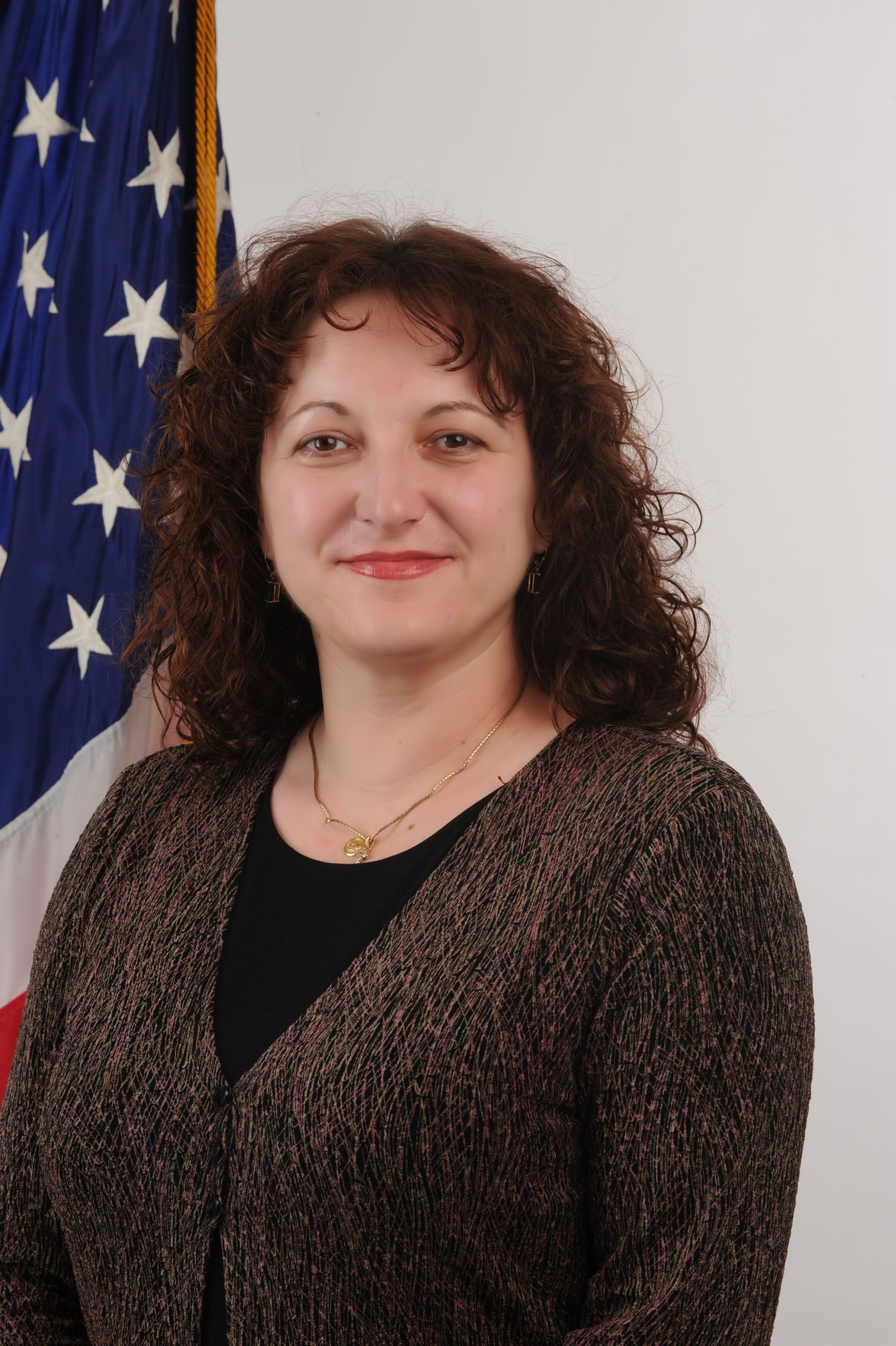
Our March Biodefense Policy Seminar features Dana Perkins, Senior Science Advisor, DHHS — member of the 1540 Committee Group of Experts. Dr. Perkins earned a Master’s Degree in Biochemistry from the University of Bucharest, Romania. She also earned a PhD in Pharmacology and Experimental Therapeutics in 2002 from the University of Maryland, Baltimore, where she specialized in Microbiology/Neurovirology. In 2012-2013, Dana Perkins served in a US Government-seconded position as a member of the Group of Experts supporting a subsidiary body of the United Nations Security Council, the 1540 Committee. The 1540 Committee was established pursuant to resolution 1540 (2004) to monitor the implementation of this resolution worldwide. In her prior position with the US Department of Health and Human Services (HHS), she led the Biological Weapons Nonproliferation and Counterterrorism Branch in the Office of Policy and Planning, Office of the Assistant Secretary for Preparedness and Response (ASPR). At HHS/ASPR, some of her responsibilities and duties included providing subject matter expertise, inter-agency coordination, and senior level policy advice on the scientific (biodefense and biosecurity) and public health aspects of national and international emergency preparedness and response; directing and coordinating national and international progress on issues related to biodefense and biosecurity; developing and reviewing policies on biosecurity, biological weapons nonproliferation, and health security; and performing expert analysis and preparing implementation plans to support the US Government biodefense and biosecurity policy.

Tuesday, March 18

 Should the United States Give Up on Arab Democracy?
Date: March 18, 12:00pm
Location: Georgetown University, 37th and O Streets NW, Washington DC 20057, Copley Hall, Formal Lounge

The unhappy results of what was once known optimistically as the “Arab Spring” have led many analysts to suggest that the United States should stop supporting democracy in the Arab world. It doesn’t work, the argument goes, and things end up worse rather than better. In this view, President Obama was right to dump the Bush “Freedom Agenda” because the end of the regimes in Libya, Syria, Egypt, and Tunisia has resulted only in violence and instability. Moreover, our policies have offended many of our friends in the region.

But are these arguments correct? Can the United States be indifferent to the effort to build democracy in the Arab world? Are there ways for the United States to help those struggling for democracy, more effectively and at lower cost? The topic of the lecture is the current condition and future prospects of democracy in the Arab world, and the challenge this presents to American foreign policy.

Wednesday, March 19

Did the Military Intervention in Libya Succeed?
Date: March 19, 11:00am
Location: Cato Institute, 1000 Massachusetts Ave NW, Washington DC 20001,  Hayek Auditorium

On March 19, 2011, the United States and nineteen allied states launched an air assault against the Libyan military. President Obama and other leaders argued that military action would protect Libyan civilians, aid the progress of democracy there and across the region, and buttress the credibility of the U.N. Security Council, which had passed a resolution demanding a cease fire. By October, local rebel militias had killed Libya’s long-time ruler, Muammar el-Qaddafi, and overthrown his government. Three years later, it is time to ask whether the intervention worked. Did it protect Libyans or, by prolonging the civil war and creating political chaos, heighten their suffering? Is Libya becoming a stable democracy, a failed state, or something else? Did the intervention help other revolutions in the region, heighten repression of them, or was it simply irrelevant? Should the United States help overthrow other Middle Eastern dictators?

Registration required.

The Future of the Alliance: Revitalizing NATO for a Changing World
Date: March 19, 2:30 – 3:30pm
Location: Brookings Institution

On March 19, the Center on the United States and Europe (CUSE) will host NATO Secretary-General Anders Fogh Rasmussen for a Statesman’s Forum address on the importance of the transatlantic alliance and how the North Atlantic Treaty Organization (NATO) is evolving to address new common security challenges. As the crisis in Ukraine shows that security in the Euro-Atlantic area cannot be taken for granted, the secretary-general will discuss NATO’s essential role in an unpredictable world. He will outline the agenda for the September NATO summit in Wales as a critical opportunity to ensure that the alliance has the military capabilities necessary to deal with the threats it now faces, to consider how NATO members can better share the collective burden of defense and to engage constructively with partners around the world.

Anders Fogh Rasmussen took office as North Atlantic Treaty Organization’s 12th secretary-general in August 2009. Previously, he served in numerous positions in the Danish government and opposition throughout his political career, including as prime minister of Denmark from November 2001 to April 2009.

Brookings Senior Fellow and CUSE Director Fiona Hill will provide introductory remarks and moderate the discussion. After the program, Secretary-General Rasmussen will take questions from the audience.

This event will be live webcastRegister here.

Russian Missile Modernization: Developments and Implications for U.S. Security
Date: March 19, 3:00 – 4:30pm
Location: Rayburn House Office Building, Capitol Hill

As the Ukrainian crisis intensified, Russia launched an Intercontinental Ballistic Missile (ICBM) as part of a regularly scheduled test.  While Russia’s planned test was known in advance by the U.S., the test was a symbolic demonstration of Russian military prowess during a time of acute international tension.

Russian efforts to improve its ballistic missile arsenal long predate the Ukrainian crisis.  In 2012, Madelyn Creedon, Assistant Secretary of Defense for Global Strategic Affairs, in her statement before the Senate Foreign Relations Committee warned that:

“Like the United States, Russia will have to limit the number of strategic warheads it deploys to comply with the 1,550 limit of the Treaty. This limit will constrain Russia as it modernizes its strategic nuclear delivery systems with the deployments of several substantially MIRVed new strategic missiles, including the MIRVed Yars ICBM, new Borey-class missile submarines carrying 16 MIRVed Bulava SLBMs, and, in the event it is deployed during the life of the Treaty, a planned new ‘heavy’ ICBM to replace the SS-18 that will almost certainly carry several MIRVs.”

On March 19, 2014, the George C. Marshall Institute will host a discussion to review Russian missile modernization efforts, the implications for U.S. security, and responses to this growing threat.

As the principal nuclear threat to the United States, Russia’s activities to improve the quality of its arsenal have significant implications for our own nuclear modernization and missile defense plans, while also raising concerns about treaty violations.

The event will feature presentations from:

  • Dr. Mark Schneider, Senior Analyst at the National Institute for Public Policy; and
  • The Honorable Paula DeSutter, formerly Assistant Secretary of State for Verification, Compliance, and Implementation

Bioethics TED-style talks
Date: March 19, 7:00 – 8:30pm
Location: Georgetown University, 37th and O Streets NW, Washington DC 20057, Gaston Hall

March 19th focuses on bioethics at the beginning and end of life, diving deep into the issues that confront us all: the ethics of creating and destroying early human life, the issues around retaining dignity at the end of life, the morality of physician-assisted suicide, and more.

Each talk will be followed by audience Q&A. Ask a compelling question, and that thought might reach a global audience.

Thursday, March 20

Cybersecurity: The Much Admired Problem
Date: March 20, 9:00am
Location: Elliott School of International Affairs, 1957 E Street NW, City View Room, 7th Floor, Washington DC

Cyberspace, the ubiquitous fusion of information and communication technologies, has transformed the way that Americans work and play and has also markedly changed the U.S. national security landscape. Threats in and to cyberspace are causing anxiety at all levels in this country, encouraged by news of identity theft, intellectual property piracy, the Mandiant report on China’s cyber activities against US institutions, and repeated warnings of an impending “cyber Pearl Harbor.” A key issue is the fact that the cybersecurity problem is not well understood; it is much admired but not resolved. This talk will review the historical technical and policy drivers that created this hydra-headed beast, and their implications for cybersecurity. It will also provide a high-level overview of current cyber threats and attack objectives. The metaphor of public health will be used to posit approaches for significant containment of cybersecurity risk through scientific understanding, public “cyber hygiene,” and their integration with national and international legal and policy frameworks.

RSVP here.

Global Health Insecurity? New Pneumonia Viruses in China and the Middle East
Date: March 20, 1:30 – 2:30pm
Location: Georgetown University Law Center, 600 New Jersey Ave NW, McDonough Hall 205,  Washington DC 20001

Dr. Daniel Lucey is an infectious disease and public health physician who teaches on global emerging infectious disease outbreaks and public health countermeasures in the Department of Microbiology and Immunology at Georgetown University Medical Center (GUMC). His Infectious Disease training and MPH were at Harvard 1985-1988, after medical residency at UCSF, and medical school and college at Dartmouth. After working at the NIH and Washington Hospital Center until 2002, he co-founded a graduate program on emerging infectious diseases and biohazardous threat agents at GUMC. He has traveled widely in Asia, Africa, and the Middle East to exchange information regarding infectious diseases such as SARS, influenza, Nipah, HIV, anthrax, and MERS. He is an author on over 100 papers and book chapters.

The Future of Syria: A Conversation with Robert Ford
Date: March 20, 4:00pm
Location: Woodrow Wilson International Center for Scholars

The crisis in Syria shows no signs of abating. Prospects for an internal political agreement or an external intervention to defuse let alone end the civil war seem improbable at best. Meanwhile the humanitarian, political, and strategic costs for Syria and the region mount daily. Please join us for a conversation with Ambassador Robert Ford on the current situation in Syria and prospects for the future.

RSVP here.

Friday, March 21

Is the Indian Nuclear Tiger Changing Its Stripes? Data, Interpretation, and Fact
Date: March 21, 9:30am
Location: Atlantic Council, 1030 15th Street NW, 12th Floor, West Tower Washington DC

India’s nuclear posture and some of its operational practices are beginning to mimic those of the nuclear P-5. Prominent arms controllers contend that India’s national security managers are poised to repeat the worst mistakes of the superpowers nuclear competition from the Cold War years, with negative consequences for deterrence, crisis, and arms race stability in South Asia and the Asia-Pacific. Gaurav Kampani of the Norwegian Institute of Defense Studies and Toby Dalton of the Carnegie Endowment for International Peace will discuss the existing data to determine if the case for nuclear alarmism is justified.

Register here.

Pan American Health Organization Commemoration of World Tuberculosis Day 2014
Date: March 21, 2:00 – 4:00pm
Location: Pan American Health Organization, 525 23rd Street NW Washington DC 20037

The commemoration of World Tuberculosis Day seeks to raise and/or reactivate awareness on the persistence of the burden of TB in the world, as well as of the efforts made for its prevention and control. Throughout the years, this commemoration has offered the opportunity to mobilize the political, economic and social commitment for prevention and control of TB in PAHO countries.

For the 2014 campaign, PAHO embraces the same concept proposed at a global level by the World Health Organisation and the Stop TB Partnership to adequately search for, diagnose and treat TB patients, using the slogan:

Tuberculosis is still undiagnosed in many places, especially in large cities
Diagnosis and Treatment for All

We hope you can join us for this exciting event which will include; opening remarks from PAHO Director Dr. Carissa Etienne, video presentations on good practices in TB case detection in vulnerable populations in the Americas, patient testimony, two panel discussions with various international speakers and the opportunity for questions and answers.

The event will be followed by a drinks reception in the lobby.

If you are unable to join us there will be a live stream of the event accessible at:www.livestream.com/opsenvivo. Register here.

Make it Count: Evaluating Population, Health, and Environment (PHE) Programming
Date: March 21, 3:00  – 4:30pm
Location: Woodrow Wilson International Center for Scholars, 1300 Pennsylvania Ave, NW Washington DC 20004

Evaluation is a critical part of any development programming. Rigorous evaluations identify the successes, failures, and gaps in a given project, accumulating lessons learned that hopefully lead to more effective programming. Breaking new ground through their small-scale, community-based, and multi-sectoral approach, population, health, and environment (PHE) programs require a rethinking of traditional evaluation methods. Join us in a discussion about the history of PHE program evaluations and the path forward with John Pielemeier, an independent consultant focused on design, evaluation, and management of international development programs and projects, Vik Mohan, medical director of Blue Ventures, and Roger-Mark De Souza, director of population, environmental security, and resilience at the Wilson Center.

Register here.

This Week in DC: Events

Monday, March 10

Ukraine on the Brink: A Conversation with Yevgeny Kiselyev
Date: March 10, 2:15-4:00pm
Location: Carnegie Endowment for International Peace

The situation in Ukraine remains extremely tense. Each day brings dramatic developments from the region and a marked deterioration in Russia’s relations with the United States and other Western governments.

Renowned television journalist and political analyst Yevgeny Kiselyev will discuss the ongoing crisis in Ukraine. Kiselyev has been a preeminent voice in Russian and Ukrainian media and political circles for more than two decades. Carnegie’s Andrew S. Weiss will moderate the discussion.

Registration required.

Tuesday, March 11

Advancing the Kerry Peace Process
Date: March 11, 12:00- 1:30pm
Location: Human Rights Campaign, 1640 Rhode Island Avenue, NW, Washington DC 20036

The Middle East Institute’s George and Rhonda Salem Family Foundation Lecture Series presents a discussion about the current status of the peace process and the challenges faced by Secretary of State John Kerry as he seeks to forge a historic agreement. The talk will feature three veteran peace process experts – Daniel Levy, Aaron David Miller, and Shibley Telhami – who will analyze the obstacles and opportunities and assess the next steps key actors and international players must take to ensure the success of the negotiations.

Registration required.

Toppling Qaddafi: Libya and the Limits of International Intervention
Date: March 11, 5:00-6:00pm
Location: Johns Hopkins School of Advanced International Studies, The Rome Building, Room 806

Christopher Chivvis, adjunct professor in the European and Eurasian Studies Program and senior political scientist at the RAND Corporation, will discuss his new book Toppling Qaddafi: Libya and the Limits of International Intervention. Karim Mezran, adjunct professor of Middle East Studies at SAIS, will join the discussion.

Iran Nuclear Deal: Breakthrough or Failure?
Date: March 11, 5:00pm
Location: Jack Morton Auditorium at GW, 805 21st St NW, Washington DC

The interim nuclear agreement with Iran has been hailed by proponents as a major step forward:  delaying Iran’s progress toward a nuclear weapon capacity, and giving time for further negotiations aimed at ratcheting back the program.  These advocates see a new kind of leader in President Rouhani, and want to show moderates in Iran that cooperation with the rest of the world yields benefits — such as sanctions relief.   However, skeptics argue that the nuclear deal steps back from five UN Security Council Resolutions demanding that Iran stop nuclear enrichment, and starts to unwind sanctions on Iran, without Iran being obliged to unwind its nuclear program.  They see Rouhani buying time for Iran’s program while giving up nothing.  What comes next?   Is the interim agreement a diplomatic success on the road to further progress, or will it serve only to cement Iran’s nuclear program?  Hear leading American experts debate “The Iran Nuclear Deal:  Breakthrough or Failure” — the latest in our debate and decision series at the McCain Institute.

Panelists include: Robert Einhorn, Senior Fellow, The Brookings Institution; Karim Sadjadpour, Senior Associate, Carnegie Endowment for International Peace; Bret Stephens, Deputy Editor, The Wall Street Journal; and Reuel Gerecht, Senior Fellow, Foundation for Defense of Democracies. Award-winning journalist and former CNN Chief White House Correspondent Jessica Yellin will serve as the debate moderator.

To register for the debate, click here.

Wednesday, March 12

The Future of Global Nuclear Security Policy Summit
Date: March 12, 8:00-10:00am
Location: The Knight Broadcast Studio at the Newseum, Third Floor, 555 Pennsylvania Ave NW, Washington DC 20001

Early in his first term in office, President Obama identified nuclear terrorism as “the most immediate and extreme threat to global security” and hosted the first Nuclear Security Summit in Washington, DC, with a goal to secure all vulnerable nuclear materials. Years later, supporters and critics of the Obama administration alike continue to underscore the importance of this task as focus turns now to the third Nuclear Security Summit, this time in The Hague in late March.

The 2014 Summit is being held at a time of both progress and peril in the international effort to secure the materials that could be used to build a nuclear bomb. Since 2012, seven countries have removed all or most of these dangerous materials from their territories, bringing the number of countries now storing weapons-usable materials down to 25, according to a new report out by the Nuclear Threat Initiative. Despite this progress, there is much work to be done. Terrorist organizations continue to seek weapons of mass destruction, materials are still stored at hundreds of sites with varying levels of security, and the International Atomic Energy Agency each year receives reports of more than a hundred incidents of theft and other unauthorized activity involving nuclear and radiological material.

What tangible results should we expect out of The Hague summit in two weeks? What work remains to be tackled by leaders over the next two years on the road to 2016? Is Congress a support or a hindrance? And as we approach the 5th anniversary of President Obama’s Prague speech, laying the foundation for his broad nuclear agenda and addressing nuclear weapons in the 21st century, how is his legacy on nuclear issues taking shape?

RSVP required.

Securing America’s Future in the New “Interwar Years”
Date: March 12, 9:00am-4:00pm
Location: Brookings Institution, Falk Auditorium, 1775 Massachusetts Ave, NW, Washington DC 20036

The fifth annual Military and Federal Fellow Research Symposium, hosted by the Center for 21st Century Security and Intelligence at Brookings, will feature the independent research produced by the members of each military service and federal agencies who have spent the last year serving at think-tanks and universities across the nation. Organized by the fellows themselves, it is intended to provide a platform for building greater awareness of the cutting-edge work that America’s military and governmental leaders are producing on key policy issues.

The theme of this symposium will be “Securing America’s Future in the New Interwar Years,” reflecting post-Afghanistan security priorities, fiscal austerity and burgeoning challenges. Panel discussions will focus on fellows’ independent research findings in the areas of emerging grand strategy, enduring regional issues, opportunities and challenges for unmanned systems and developing the force for the future. Dr. David Kilcullen, author and president of Caerus Associates, a global strategic design consulting firm, will deliver opening remarks, and Lieutenant General Edward C. Cardon, commander U.S. Army Cyber Command, will give a keynote address.

After each panel, participants will take audience questions. Dress is business attire or working uniform. Lunch is provided.

Registration required.

Cold Peace: China-India Rivalry in the Twenty-First Century
Date: March 12, 11:00am-12:00pm
Location: Heritage Foundation, Lehrman Auditorium

The 21st Century is likely to witness Asia’s two largest civilizations – China and India – join the United States in an elite club of global superpowers. By some economic indicators, the two Asian giants are already the second and third largest economies in the world, and they are developing world-class militaries to complement that economic clout. While Beijing and Delhi have spent the past 50 years free from armed conflict, elements of rivalry have shadowed the relationship since the two countries went to war in 1962 over their disputed Himalayan border. In the 21st Century, the rivalry has evolved in unpredictable ways, as India has moved toward a strategic partnership with the U.S. and has expressed growing concerns about Chinese aggression and militarism.

In Cold Peace: China–India Rivalry in the Twenty-First Century, Jeff M. Smith examines the complex layers of the contemporary China–India rivalry. He draws from over 100 interviews with subject-matter experts, government officials, and military officers in India, China, and the United States between November 2011 and July 2013. Additionally, he brings the special benefit of his rare and unique field research at the disputed China–India border in Ladakh and Arunachal Pradesh; at the contested town of Tawang in the Himalayas; at Dharamsala, the seat of the Tibetan Government in Exile; at the Andaman and Nicobar Islands; and on Hainan Island, which administers China’s South China Sea territories.

Registration required for in person attendance or watch online.

Understanding Brazil’s Nuclear Policy
Date: March 12, 12:00-2:00pm
Location: Carnegie Endowment for International Peace, 1779 Massachusetts Ave NW, Washington DC 20036

For a country whose importance in the global nuclear order is of potentially great significance, remarkably little is understood about the domestic drivers behind Brazil’s nuclear policy decision making. Brazil is moving toward industrializing a full nuclear fuel cycle. It operates nuclear power plants and plans to build more. It is the only non-nuclear-weapon state to work on a nuclear-powered submarine. And it does not shy away from being a confident voice on the matters of global nuclear politics.

Based on numerous conversations over two years with Brazilian policy experts, academics, former and current officials, and representatives of the nuclear industry, Togzhan Kassenova will reflect on how Brazilians think about and explain their country’s nuclear policy. The discussion will mark the release of Kassenova’s new report Brazil’s Nuclear Kaleidoscope: An Evolving Identity. Copies of the report will be available. George Perkovich will moderate.

Lunch will be served beginning at 12:00 p.m. The event will begin at 12:30 p.m. Join the conversation on Twitter @carnegienpp with #NuclearBrazil.

Registration required.

Crisis in the Horn: How Can the U.S. Support a More Stable and Secure Somalia?
Date: March 12, 12:30- 2:00pm
Location: Johns Hopkins School of Advanced International Studies, The Bernstein-Offit Building, Room 500

J. Peter Pham, director of the Atlantic Council’s Africa Center; Harun Maruf, senior editor and international broadcaster at Voice of America’s Somalia Service; and Peter Lewis, associate professor and director of the African Studies Program, will discuss this topic.

Thursday, March 13

Do Defense Plans and Budgets Add Up? The Quadrennial Defense Review in Context
Date: March 13, 12:15-1:30pm
Location: Rayburn House Office Building, Room 2226 Washington DC

The Quadrennial Defense Review (QDR) was intended to determine the size and cost of the armed forces America needs to fulfill its strategic obligations. However, since its creation, the effort has largely failed to meet expectations. With the latest strategy just released, did the Pentagon get it right this time?

Please join Represenative Randy Forbes (R-VA), AEI, the Heratige Foundation, and the Foreign Policy Initiative for a timely discussion on the 2014 QDR and the future of American defense strategy in an era of constrained budgets.

RSVP required.

Hearing: Advancing U.S. Interests Abroad: The FY 2015 Foreign Affairs Budget
Date: March 13, 1:30pm
Location: 2172 Rayburn House Office Building, Washington DC 20515

Scheduled Witness, Secretary of State John F. Kerry.

The Future of Energy: North American Energy Security
Date, March 13, 5:30pm
Location: The Embassy of Canada, 501 Pennsylvania Ave NW, Washington DC

Young Professionals in Foreign Policy (YPFP) and Young Professionals in Energy (YPE) are pleased to invite you to the second event in the ongoing seriesThe Future of Energy.  Please join us on Thursday, March 13th from 5:30-7:30 pm at the Canadian Embassy for an in depth discussion of Canadian federal and provincial level energy and climate change policy and the U.S.-Canada relationship that underpins these vital issues.

We will hear from Ms. Sheila Reirdon, Minister of Political Affairs at the Embassy, as well as a panel of provincial representatives from the provincial governments of Alberta, Manitoba, Ontario, and Quebec.

RSVP required.

Friday, March 14

QDR 2014: A Post-War Defense Strategy?
Date, March 14, 10:00-11:30am
Location: Reserve Officer Association Building, 1 Constitution Ave NE, Washington DC

The United States Army War College’s Strategic Studies Institute, in partnership with the Reserve Officers Association Defense Education Forum, is proud to sponsor a 90 minute panel discussion “QDR 2014: A Post-War Defense Strategy?” Panelists will offer an assessment of QDR 2014 and its recommended strategic course from a variety of angles ranging from threats, challenges, and major trends; force shape and size; foreign partnerships; technology and innovation; and budget.

Panel members include Dr. John R. Deni, Strategic Studies Institute; Mr. Ben Fitzgerald, Center for a New American Security; Mr. Nathan Freier, Strategic Studies Institute; Dr. Maren Leed, Center for Strategic and International Studies; and Mr. Russell Rumbaugh, The Stimson Center.

Registration required.

Lebanon’s Neutrality Toward the Syrian Conflict: Hot Air or Realistic Promise?
Date: March 14, 10:30am-12:00pm
Location: Atlantic Council, 1030 15th Street NW, 12th floor-West Tower, Washington DC

To prevent the Syrian conflict from completely destabilizing Lebanon, its government has maintained an official policy of disassociation. Yet even if rival factions can agree to maintain this policy of neutrality in the new cabinet formed on February 15, its relevance to reality on the ground would be unclear. In truth, Hezbollah, its domestic rivals, and Lebanon’s security forces have been involved in the Syrian conflict to varying degrees since it began. It is now increasingly clear that the longer the war goes on, the harder it will be for Lebanon’s political factions to keep up the pretense of neutrality. Without an agreement to limit infighting over and involvement in Syria, Lebanon’s government is unlikely to make progress on reforms, economic development, or addressing the country’s other serious challenges.

Please join us for a discussion on the prospects of Lebanese neutrality towards Syria’s civil war, and the critical implications for security and stability in Lebanon. Bilal Saab is a senior fellow at the Atlantic Council’s Brent Scowcroft Center, specializing in the politics, security, and defense-industrial affairs of the Gulf and the Levant. Dr. Paul Salem is vice president for policy and research at the Middle East Institute. Faysal Itani, who focuses on the Levant at the Atlantic Council will moderate the discussion.

Registration required.

Explaining the Latest Developments in Ukraine
Date: March 14, 12:00-1:00pm
Location: Elliot School of International Affairs, 1957 E Street, NW, Room 505, Washington DC

After three months of protests kicked off by former President Viktor Yanukovych’s refusal to sign an Association Agreement with the European Union, Ukraine’s parliament removed him from office and set new presidential elections for May. Shortly afterwards, Russia invaded Crimea, pouring thousands of troops across the international border to gain decisive control of the region. Please join us for a discussion of these issues and their subsequent developments, as well as the economic situation in Ukraine, and an analysis of the international response.

Sergiy Kudelia is an assistant professor of political science at Baylor University in Texas. Anders Aslund is a senior fellow at the Peterson Institute for International Economics. Matthew Rojansky is the director of the Kennan Institute.

RSVP required.

Nuclear Security and Japan’s Plutonium Path
Date: March 14, 1:30-3:30pm
Location: The Brookings Institution, Falk Auditorium, 1775 Massachusetts Ave, NW Washington DC

At the third Nuclear Security Summit in The Hague, beginning March 24, world leaders will announce new initiatives to secure or eliminate stocks of plutonium and highly-enriched uranium, key building blocks of nuclear weapons that could be stolen by terrorists. But some nations are still producing these materials or plan to begin doing so on an industrial scale.

Japan’s government has just announced a Basic Energy Plan that renews the country’s commitment to plutonium as a fuel for nuclear reactors. The centerpiece of that effort, the Rokkasho Nuclear Fuel Reprocessing Facility, is set to open as early as October 2014 as one of the world’s largest plutonium production installations. The size and suitability of the facility have raised concerns, not only within Japan but in the region and in Washington. What is the status of the policy debate over Japan’s nuclear energy policy, including the Rokkasho plant? Why has Japan’s government chosen to proceed with the plant’s construction and operation? How does the Japanese government plan to deal with the plutonium produced in the plant? And how will Japan’s nuclear energy policy, and especially the operation of Rokkasho, impact efforts to secure and eliminate nuclear materials?

On March 14, the Brookings Institution, the Stanley Foundation and the Center for Public Integrity will host a panel to discuss these issues. Brookings Senior Fellow Robert Einhorn, former special advisor to Secretary of State Hillary Clinton, will serve as moderator. Panelists include Douglas Birch, senior national security reporter for the Center for Public Integrity; R. Jeffrey Smith, managing editor for national security at the Center for Public Integrity; Matthew Bunn, a principal investigator at the Kennedy School’s Project on Managing the Atom, Harvard University; and Ambassador Nobuyasu Abe, director for the Center for the Promotion of Disarmament and Non-Proliferation and former U.N. undersecretary-general for disarmament affairs.

Following the discussion, panelists will take questions from the audience.

Registration required.

UPDATED: Biodefense Policy Seminar: March 31, 2014, 7:20pm

Seminar Title:  ”Biological weapons non-proliferation, biosecurity and counter-terrorism: an international perspective”
Speaker: Dr. Dana Perkins
Date: Monday, March 31st, 2014
Time: 7:20PM
Location: Mason Hall, Room D003

danaOur March Biodefense Policy Seminar features Dana Perkins, Senior Science Advisor, DHHS — member of the 1540 Committee Group of Experts. Dr. Perkins earned a Master’s Degree in Biochemistry from the University of Bucharest, Romania. She also earned a PhD in Pharmacology and Experimental Therapeutics in 2002 from the University of Maryland, Baltimore, where she specialized in Microbiology/Neurovirology. In 2012-2013, Dana Perkins served in a US Government-seconded position as a member of the Group of Experts supporting a subsidiary body of the United Nations Security Council, the 1540 Committee. The 1540 Committee was established pursuant to resolution 1540 (2004) to monitor the implementation of this resolution worldwide. In her prior position with the US Department of Health and Human Services (HHS), she led the Biological Weapons Nonproliferation and Counterterrorism Branch in the Office of Policy and Planning, Office of the Assistant Secretary for Preparedness and Response (ASPR). At HHS/ASPR, some of her responsibilities and duties included providing subject matter expertise, inter-agency coordination, and senior level policy advice on the scientific (biodefense and biosecurity) and public health aspects of national and international emergency preparedness and response; directing and coordinating national and international progress on issues related to biodefense and biosecurity; developing and reviewing policies on biosecurity, biological weapons nonproliferation, and health security; and performing expert analysis and preparing implementation plans to support the US Government biodefense and biosecurity policy.

Charles Duelfer at GMU

From the February 2014 Biodefense Policy Seminar, Charles Duelfer spoke to attendees about his role as Special Advisor for the Director of Central Intelligence for Iraq WMD and as a member of the ISG who investigated Iraq’s WMD program. An insightful conversation on chemical weapons around the world is also included.

This Week in DC: Events

Tuesday, March 4

Joint Subcommittee Hearing: Iran’s Support for Terrorism Worldwide
Date: March 4, 10:00am
Location: 2172 House Rayburn Office Building, Washington, DC 20515

Chairman Ted Poe (R-TX) says, “Iran is the world’s largest state sponsor of terrorism and a threat to peace and security not only in the Middle East, but around the globe. Using its Revolutionary Guard Corp, Iran funds, arms, trains, and commands terrorists worldwide. While it is most known for directing its proxy Hezbollah in Lebanon and Syria, Iran has also sponsored attacks in countries including India, Thailand, Georgia, Kenya, and even here at home in the United States. As the Administration negotiates with Iran over its nuclear program, we must not lose focus and forget Iran’s involvement in terrorism. This hearing will examine how to stop Iran’s proxy warfare.”

Chairman Ileana Ros-Lehtinen (R-FL) says, “The Administration has asked the American people to put a lot of faith in it as it continues to negotiate with Iran over Tehran’s nuclear program, yet it continues to keep the details of the Joint Plan of Action shrouded in secrecy. To make matters worse, the Administration is asking the American public to trust that it can ensure that Iran plays by the rules, but we have 35 years of overwhelming evidence that tells us that Iran is simply untrustworthy.  And while all of the focus of these negotiations has been on Iran’s nuclear program, what has gone largely ignored is just how dangerous the Iranian regime truly is. Iran is the world’s foremost state sponsor of terrorism and it seeks to harm the U.S. and our allies at every turn, yet the Administration carries on as if Iran’s nuclear program exists in a vacuum – as if it is unrelated to Iran’s terror activities. This hearing will serve as an important reminder of the dangers of dealing with the rogue regime in Iran, and why it is absolutely critical that Congress continue to press for increased sanctions against Tehran until it completely dismantles its entire nuclear program.”

Witnesses for this committee hearing include:

  • The Honorable Pete Hoekstra, Shillman Senior Fellow at The Investigative Project on Terrorism (Former Chairman of the U.S. House Permanent Select Committee on Intelligence)
  • Matthew Levitt, Ph.D., Director and Fromer-Wexler Fellow Stein Program on Counterterrorism and Intelligence at The Washington Institute for Near East Policy
  • Mr. J. Matthew McInnims, Resident Fellow at the American Enterprise Institute

Nuclear Abolition and the Catholic Peace Tradition
Date: March 4, 4:30 PM – 6:00 PM
Location: Third Floor Conference Room, Berkeley Center for Religion, Peace & World Affairs at Georgetown University, 3307 M Street, Washington, DC 20007

At this welcome event, Fr. Drew Christiansen, S.J. will explain his work in the Berkley Center’s new Church and the World Program in light of his life as a Jesuit “on the boundary” between the Church and world. In particular, he will discuss Georgetown’s Catholic Nuclear Threat Initiative and its parallel sources in Catholic social teaching and in US policy. He will trace the roots of recent Catholic advocacy for abolition of nuclear weapons in Catholic theology, the Church’s commitment since Pacem in Terris to the promotion of human rights, and the Vatican’s “diplomacy of conscience.” RSVP required

Thursday, March 6

PONI Lunch with Brig. Gen. Jim Dawkins
Date: March 6, 12pm-1:30pm
Location: Room C-115, Center for Strategic and International Studies, 1616 Rhode Island Avenue, NW, Washington, DC 20036

Please join the Project on Nuclear Issues for a lunch talk with Brigadier General Jim Dawkins, Jr. General Dawkins currently serves within the National Nuclear Security Administration’s Defense Programs as the Principal Assistant Deputy Administrator for Military Application (PADAMA). He is responsible for maintaining global nuclear deterrence through effective planning, maintenance, and enforcement of a safe, secure, and reliable nuclear weapons stockpile and its associated materials, capabilities, and technologies. In his role as PADAMA, he serves as a bridge between the National Nuclear Security Administration and the DoD on joint nuclear operational and infrastructural matters, engaging in frequent dialogue with the various military services concerning weapons issues specific to each service and supporting related programming and budget matters pertinent to the NNSA and the DOD.

General Dawkins was commissioned in 1989 from Air Force Officer Training School. He has commanded at the wing, group and squadron level. Prior to his current position, he was the commander, 5th Bomb Wing, Minot AFB, N.D.

General Dawkins will speak about his experiences across the nuclear enterprise and its challenges for the future at this off the record event. To attend, register here or contact Sarah Weiner at (202)741-3878 with questions.

This Week in DC: Events

Monday, February 24th

Corruption and Business in Russia: National Problem, Regional Solutions
Wilson Center
9:15 AM

There is a perception that it is not possible to do business in Russia without engaging in corruption. While corruption in Russia is a fact of life, individual businesses are employing a range of strategies to reduce their exposure and give them access to international partners. The Center for International Private Enterprise (CIPE) and the Kennan Institute present expert findings on this timely issue. Jordan Gans-Morse, an assistant professor of political science at Northwestern University, will present his research on how non-oligarchic firms are surviving in an atmosphere of endemic corruption. The firms’ coping mechanisms and the means they use to settle business disputes shed light on the course of Russia’s future economic development. Based on extensive field research, Gans-Morse is at work on a book about law, property rights, and corruption in Russia. CIPE Moscow Program Officer Natalya L. Titova will speak on a CIPE initiative in Russia that is helping regional business to meet international anti-corruption standards in order to join international value chains.

The Future of Land Power and U.S. Ground Forces
Brookings Institution
10:00 AM

Following the prolonged ground war in Iraq, and the continued International Security Assistance Force (ISAF) presence in Afghanistan, the United States military is shifting focus from large invasion forces to other strategies for handling threats. Additionally, cuts to the military are reshaping ideas for power projection and the use of force. Cooperation among branches of the military will be critical in the time ahead, and the United States must continue to plan for the possibility of land conflict, whether we want to be involved or not. On February 24, the Center for 21st Century Security and Intelligence at Brookings will hold an event on the future of land power and U.S. ground forces. The first panel will consist of Major General William Hix and Major General Christopher Haas, both of the U.S. Army, Colonel Jim Zientek of the U.S. Marine Corps, and Brookings Senior Fellow Peter W. Singer. Major Generals Hix and Haas, and Colonel Zientek, served on a recent military task force created to develop strategic land power concepts for U.S. ground forces. The event’s second panel will include Commanding General of the Maneuver Center of Excellence Major General H.R. McMaster, Brookings Senior Fellow Michael O’Hanlon, and Brookings Senior Fellow William Galston who is also a retired U.S. Marine. They will offer their unique perspectives on the future of land power.

Event 1: Atoms for Dream: Holding the American Umbrella in the Atomic Driving Rain
U.S.-Japan Research Institute
10:00 AM

On March 11, 2011 the expansion of the nuclear accident definitively signaled the end of our ‘Bountiful Postwar’. This incident was the result of the economic growth that we ourselves demanded. In Postwar Japan, before we realized it, nuclear energy was transformed from the fear or radiation exposure into an object of hope, and received as a symbol of dreams and peace. In the context of the public’s everyday life and sense of society, how was this spectacle of a bright future desired and accepted? Taking as its object Postwar Japan’s embrace of nuclear energy, this talk will investigate the transition from ‘The nuclear powered sunshine’ of the Cold War Period to the ‘Radioactive Rain’ of the Post Cold War Period. The US-Japan relationship has always been the essential moment in this history. This talk will also show the sharp difference on the representations of nuclear energy in the Japanese and American popular culture.

Tuesday, February 25th

The State of the International Order
Brookings Institution
12:00 PM

On February 25, Foreign Policy at Brookings will launch “The State of the International Order,” a new report that examines the purposes of international order; takes a snapshot of major trends; and analyzes 11 key challenges to the order, ranging from great power security competition to changing dynamics of trade. The discussion will also address the debate taking shape in Washington regarding the future of American power and the role of the United States in the world. The panelists will include Brookings Senior Fellow Bruce Jones, Senior Fellow Robert Kagan, Fellow Thomas Wright and Visiting Fellow Jeremy Shapiro. Acting Vice President and Director of Foreign Policy Ted Piccone will moderate the discussion.

Africa Rising: Challenges and Opportunities for Developments
SAIS
12:30PM

Florizelle Liser, professorial lecturer in the African Studies Program and assistant U.S. trade representative for Africa in the Office of the United States Trade Representative; Teddy Ruge, entrepreneur and co-founder of Universal Music Publishing Group, Hive Colab, and Remit.ug; and Kalmongo Coulibaly, economist at Overseas Private Investment Corporation, will discuss this topic.

Wednesday, February 26th

The NSA Scandal and the Future of Transatlantic Relations, a conversation with Dr. Jürgen Rüttgers
Georgetown BMW Center for German and European Studies
9:00 AM

Prime Minister (ret.) Dr. Jürgen Rüttgers is a member of the board of the Konrad-Adenauer-Stiftung, Chairman of the board of Stiftung Bundeskanzler-Adenauer-Haus, member of the Council of the Auschwitz-Birkenau Foundation and President of the German branch of the Jerusalem Foundation. He is currently working as an attorney and lecturing Political Science at Bonn University. Born in Cologne in 1951, he studied History and Law at Cologne University from which he holds an LL.D. (1979).

Hearing: International Wildlife Trafficking Threats to Conservation and National Security
House Committee on Foreign Affairs
10:00 AM

Chairman Royce on the hearing: “Wildlife trafficking is a global problem that criminal networks and even terrorists are profiting from. The black market for ivory and other illegal wildlife products is worth an estimated $10 billion, a market ideal to fund deadly terrorist attacks or weapons for rebel groups. Committee members will have an opportunity to press the Administration on its recently released National Strategy for Combating Wildlife Trafficking, specifically how the strategy will be implemented, and how it will provide the tools to better target wildlife criminals.”

Fighting Terrorism under the Rule of Law: The Israeli Experience
Heritage Foundation
2:00PM

“Since our country has been at war for over a decade, Americans are vaguely familiar with concepts like rules of engagement, friendly fire, and the law of armed conflict. Our collective knowledge is informed by anecdotes, movies, the news, and documentaries – most from a decidedly American-centric viewpoint. Join us as we hear from the Israeli Defense Force (IDF) Deputy Military Advocate General Colonel Eli Bar-On, as he discusses the challenges posed to his country by non-state actors and the phenomenon of asymmetrical warfare. A 20-year veteran of the IDF, Colonel Bar-On will share his experiences and thoughts on the application of the law of armed conflict and international law in order to preserve the lives of both civilians and soldiers alike on both sides of the battlefield. A former military prosecutor, defense counsel, judge, legal advisor, and Deputy Military Advocate General, Colonel Bar-On takes us inside the challenges and threats to his country, and how Israel fights terrorism under the rule of law.”

Thursday, February 27th

Asylum in Latin America & Snowden
DC Bar
12:00 PM

A moderated panel discussion and catered luncheon will be held from 12 pm to 2 pm at the D.C. Bar located at 1101 K St. NW, Washington, DC, 20005. The program is sponsored by the Inter-American Legal Affairs Committee of the International Law Section of the D.C. Bar and the Inter-American Bar Association. Panelists include American University Professor Shana Tabak, Journalist Mark Weisbrot, Co-Director of the Center for Economic and Policy Research, and Bruce Zagaris, Esq., Partner at Berliner, Corcoran & Rowe, LLP. The program will be moderated by Henry Saint Dahl, Secretary General of the Inter-American Bar Foundation. This luncheon program is sponsored by the Inter-American Affairs Committee of the International Law Section, in cosponsorship with the Inter-American Bar Association.

TONIGHT: February Biodefense Policy Seminar feat. Charles Duelfer

Our February Biodefense Policy Seminar is tonight! The Biodefense Policy Seminars are monthly talks focused on biodefense and biosecurity broadly conceived. Free and open to the public they feature leading figures within the academic, security, industry, and policy fields. Launched in the Spring of this last year, the Seminars have been a tremendous success.

cduelferFebruary Biodefense  Policy Seminar
Speaker: Charles Duelfer
Date: Tuesday, February 11th, 2014
Time: 7:20 PM
Location: Research Hall, Room 163, GMU Fairfax Campus

We  are delighted to announce our February speaker, renowned WMD expert Mr. Charles Duelfer. Charles Duelfer was the Special Advisor to the Director of Central Intelligence for Iraq WMD. He led the Iraq Survey Group (ISG) investigation in Iraq, which conducted the investigation of Iraq’s WMD programs. The ISG was a unique intelligence organization of over 1600 military and civilian staff that investigated Iraq WMD programs. It used all possible collection and analytic capabilities in a hostile environment. The Duelfer Report (2004) is the definitive work on the relationship of the Saddam Regime to WMD.

Previously, Mr. Duelfer was the Deputy Executive Chairman of the UN Special Commission on Iraq (UNSCOM) from 1993 until its termination in 2000. For the last several months of its existence he was the acting chairman.

Duelfer also served in the Political-Military Bureau of the State Department for several years in a variety of capacities including directing regional security programs in Africa (including Somalia, Sudan and Chad), Latin America, and the Middle East. He also participated in the policy development for nuclear weapons and arms control subjects.

From 2006-2008, Duelfer was chairman and CEO of Transformational Space Corporation, a small entrepreneurial company developing a launch system for transportation to low earth orbit. Presently he is Chairman of Omnis, Inc, a consulting firm in McLean, Virginia.

He is the author numerous articles on security and intelligence and the book, Hide and Seek: The Search for Truth in Iraq (Public Affairs Books 2009).

This Week in DC: Events 2.10.14

Our featured event for this week is Tuesday’s February Biodefense Policy Seminar, featuring former Deputy Executive Chairman of the UN Special Commission on Iraq (UNSCOM) Charles Duelfer. Mr. Duelfer will discuss the politics of WMD destruction in Iraq and Syria. Dinner will be provided by Cafe Rio  – join us!

Monday, February 10, 2014 

The Muslim Brotherhood: Evolution of an Islamist Movement
Elliot School of International Affairs
12:00 PM

Carrie Rosefsky Wickham will discuss her recent release: The Muslim Brotherhood: Evolution of an Islamist Movement. Wickham’s current research focuses on the origins of political opposition in authoritarian settings, focusing on the rise of Islamic activism in Egypt and other Arab states. She is also the author of Mobilizing Islam: Religion, Activism, and Political Change in Egypt. Limited copies of the book will be available for students. A light lunch will be served with a book signing to follow.

Will a Counterterrorism Operation in Pakistan Succeed under Current Conditions?
Atlantic Council
1:00 PM

Pakistan’s new government has yet to announce its long-awaited new security strategy. Prime Minister Nawaz Sharif, on January 28, announced the formation of a four-member committee to pursue dialogue with the Tehrik-e Taliban Pakistan (TTP). Many expected the government to abandon efforts to bring the TTP to the table after similar moves failed last year. The TTP, while expressing interest in dialogue, has continued violent attacks within Pakistan, leading Prime Minister Sharif to condition peace talks on a cessation of attacks. The prime minister continues to entertain a military option, stating, “We have to win this fight, whether by dialogue or by war.” What are the conditions under which the military of Pakistan can and will tackle the internal insurgency? Is the civilian component of the impending plan ready? Imtiaz Gul, an Islamabad-based expert will review Pakistan’s likely counterterrorism strategy and its potential for success.

International Uranium Film Festival
Heinrich Böll Foundation
Monday – Wednesday, starting at 4:00 PM

The Heinrich Böll Foundation and the Goethe-Institut are pleased to invite you to The International Uranium Film Festival in Washington DC. The International Uranium Film Festival is the first festival of its kind that addresses the problems and challenges related to nuclear and radioactive issues. After premiering in Rio de Janeiro in 2011, the festival has traveled to major cities around the world, including São Paulo, Recife, Salvador & Fortaleza in Brazil; Lisbon and Porto in Portugal; Berlin and Munich in Germany; and ten major cities in India including New Delhi, Hyderabad and Mumbai. The festival is now – for the first time – coming to Washington DC. Screenings will take place on three consecutive nights, followed by a panel discussion featuring some of the film directors and policy experts.

 Tuesday, February 11, 2014

Process and Politics of WMD Destruction: Iraq and Syria
GMU Biodefense Policy Seminar
Research Hall, Room 163, GMU Fairfax Campus
7:20 PM

The February Biodefense Policy Seminar speaker is former Deputy Executive Chairman of the UN Special Commission on Iraq (UNSCOM) Mr. Charles Duelfer. Charles Duelfer was the Special Advisor to the Director of Central Intelligence for Iraq WMD. He led the Iraq Survey Group (ISG) investigation in Iraq, which conducted the investigation of Iraq’s WMD programs. The ISG was a unique intelligence organization of over 1600 military and civilian staff that investigated Iraq WMD programs. It used all possible collection and analytic capabilities in a hostile environment. The Duelfer Report (2004) is the definitive work on the relationship of the Saddam Regime to WMD. Previously, Mr. Duelfer was the Deputy Executive Chairman of the UN Special Commission on Iraq (UNSCOM) from 1993 until its termination in 2000. For the last several months of its existence he was the acting chairman. Duelfer also served in the Political-Military Bureau of the State Department for several years in a variety of capacities including directing regional security programs in Africa (including Somalia, Sudan and Chad), Latin America, and the Middle East. He also participated in the policy development for nuclear weapons and arms control subjects. From 2006-2008, Duelfer was chairman and CEO of Transformational Space Corporation, a small entrepreneurial company developing a launch system for transportation to low earth orbit. Presently he is Chairman of Omnis, Inc, a consulting firm in McLean, Virginia. He is the author numerous articles on security and intelligence and the book, Hide and Seek: The Search for Truth in Iraq (Public Affairs Books 2009).

Cryptocurrencies: The New Coin of the Realm?
New America Foundation
12:15 PM

In 2009, the mysterious and pseudonymous Satoshi Nakamoto launched Bitcoin, the world’s first online cryptocurrency. Backed by no government or hard assets, the currency’s value has skyrocketed and plunged repeatedly. And yet, a diverse group of entrepreneurs, businesses and would-be money launders has followed Bitcoin’s trajectory avidly. The receptivity indicates a real demand for an Internet-centric medium of exchange, without banks and without fees. Yet the rise of “criminal eBays” like the Silk Road, which allow for the anonymous purchase of illegal items with the cryptocurrency, have also brought the digital cash to the attention of government authorities. Beyond monitoring illicit activity, should regulators have a role in this new financial system? Could Bitcoin-or another cryptocurrency-become a universal alternative currency? Will we ever be able to use a cryptocurrency at our local bodega?

Wednesday, February 12, 2014

Rethinking State-Building in Muslim-Majority States: Grounded View From Somalia
SAIS
12:30 PM

William Reno, professor of political science and program director for the Department of African Studies at Northwestern University, will discuss this topic.

Thursday, February 13, 2014

Inside Aleppo: New Tools for Understanding the Syrian Conflict
American Security Project
8:30 AM

The American Security Project will host Dr. David Kilcullen and Mr. Nate Rosenblatt of Caerus Associates who will provide a briefing on findings from what may be the most detailed, publicly available assessment of the ongoing conflict in Syria to date. Findings will be based on four months of in-depth, time-series research from within Aleppo, Syria’s largest, most diverse, and most economically relevant city. Today, Aleppo is one of the most divided cities in the country. Tomorrow, its future may resemble that of other, large, non-capital cities in post-conflict Middle Eastern states such as Libya’s Benghazi or Iraq’s Mosul.

Will China Democratize?
National Endowment for Democracy
4:00 PM

A year ago the International Forum for Democratic Studies convened a panel entitled “China at the Tipping Point?” based on the series of articles that appeared under that title in the January 2013 Journal of Democracy. It is also approximately a year since the turnover of power within the Chinese Communist Party that brought President Xi Jinping to the country’s top leadership position. Many observers expected that Xi would prove to be a reformer, but so far there is little evidence that this has been the case, at least with respect to political reform. This panel will evaluate developments over the past year and examine in what ways China may be moving closer to or farther from a “tipping point.” The panelists are contributors to Will China Democratize?, a Journal of Democracy book edited by Andrew J. Nathan, Larry Diamond, and Marc F. Plattner that was published by Johns Hopkins University Press in the fall of 2013.

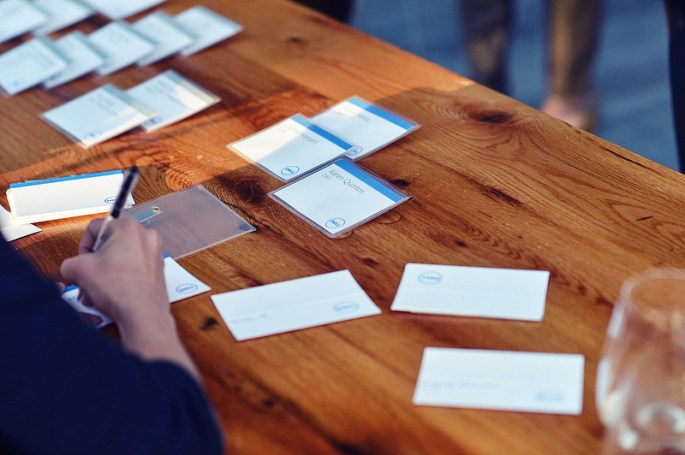
(Image: Dell/Flickr)

This Week in DC: Events

Some of the best of the week’s free and open to the public events on security, health, and policy.

Monday, February 3, 2014

Complexity-Aware Monitoring
Aspen Institute
8:15 – 9:45AM

How can we monitor effectively in a dynamically changing and unpredictable situation? Many monitoring approaches measure the predicted – desired results, planned implementation strategies and forecasted pathways of change – using indicators expected to provide useful information over the life of the project. Complexity-aware monitoring is intended to compliment performance monitoring by tracking the unpredictable. Three principles and five recommended approaches monitor the unforeseen and unforeseeable so that projects can remain relevant and responsive. Recommended approaches include sentinel indicators, stakeholder feedback, process monitoring of impacts, most significant change, and outcome harvesting. Complexity is commonly misconstrued as synonymous with conflict. However, most development contexts contain a mix of simple, complicated and complex aspects. Complex aspects are characterized by interrelationships, non-linear causality, and emergence. Complexity-aware monitoring approaches are useful in a wide variety of programming contexts. USAID’s “Complexity-Aware Monitoring Discussion Note” is intended to raise questions, stimulate dialogue, and — most of all — inspire experimentation. At this breakfast, Heather Britt and Melissa Patsalides will discuss complexity-aware monitoring and USAID’s efforts to support experimentation with these approaches in the Agency.

Tuesday, February 4, 2014

Negotiations on Iran’s Nuclear Program
U.S. Senate Committee on Foreign Relations
10:00AM

Witnesses: The Honorable Wendy Sherman, Under Secretary for Political Affairs, U.S. Department of State; The Honorable David S. Cohen, Under Secretary for Terrorism and Financing, U.S. Department of Treasury; Mr. David Albright, President, Institute for Science and International Security; Mr. Mark Dubowitz, Executive Director, Foundation for Defense of Democracies.

Peace and Stability in Afghanistan Post-2014: What Role for Regional Actors?
Atlantic Council
2:00PM

In 2012, the Friedrich Ebert Foundation (FES) established a network of policy groups in Afghanistan, Central Asia, India, and Pakistan for a regional project entitled “Envisioning a Secure and Independent Afghanistan Post 2014. Perspectives and Strategies for Constructive Conflict Resolution from the Neighborhood.” The project participants—high-ranking and influential policymakers, scholars, and journalists—met on a regular basis to build trust and mutual understanding and to formulate policy guidelines for the region, resulting in a joint declaration to be presented at this discussion. Khalid Aziz, Convener, Pakistan Policy Group; Ashok Mehta, Convener, India Policy Group; Sanat Kushkumbayev, Convener (Kazakhstan), Central Asia Policy Group; and Haron Amin, Facilitator, Afghanistan Policy Group will also join the discussion.

Subcommittee Hearing: Terrorist Groups in Latin America: The Changing Landscape
U.S. House Foreign Affairs
2:00PM

Panel I: Gino Costa, Ph.D., President, Ciudad Nuestra.
Panel II: Ms. Celina B. Realuyo, William J. Perry Center for Hemispheric Defense Studies, Professor of Practice of National Security Affairs, National Defense University; Mr. Douglas Farah, Senior Associate, Americas Program, Center for Strategic and International Studies; Mr. Michael Shifter, President, Inter-American Dialogue.

Wednesday, February 5, 2014

Hearing: Al-Qaeda’s Resurgence in Iraq: A Threat to U.S. Interests
U.S. House Committee on Foreign Affairs
10:00AM

Chairman Royce on the hearing: “Al-Qaeda controls more territory today than it ever has before, and much of that is in western Iraq where it has recently captured significant cities. These terrorists continue to exploit sectarian conflicts that the Iraqi government has failed to resolve, and Iraq is now on the verge of civil war. Our hearing will examine al-Qaeda’s resurgence in Iraq and its threat to regional and global security.”

Thursday, February 6, 2014

NIH Global Health Interest Group 2014 Symposium: The Role of Genomics Research in Global Health
Global Health Interest Group
10:00AM – 4:00PM

Symposium featuring Scientific topics in genomics and global health, including: Microbiome Infectious diseases Inherited/genetic conditions Non-communicable diseases Genetic engineering. Sessions on global health careers will also be included. Please click the link for more information on confirmed speakers.

Conversations in Bioethics
Georgetown Medicine
5:00PM

The Kennedy Institute of Ethics is proud to invite you to the inaugural Conversations in Bioethics, an annual campus-wide discussion of a crucial bioethics issue. This year’s topic is medical error. Did you know that preventable medical error is the third leading cause of death in the US today? One sixth of all deaths in the US can be traced to medical error, the equivalent of a jumbo jet crashing each day. Shouldn’t we be talking about this? We think so. Join distinguished national experts John James, PhD, former chief toxicologist at NASA and founder of Patient Safety America, Brian Goldman, MD, emergency physician-author and host of the CBC’s White Coat, Black Art, and Beth Daley Ullem, MBA, nationally-recognized advocate for patient safety and quality and SFS alum, for a lively discussion and Q&A moderated by Maggie Little, PhD, Director of the Kennedy Institute of Ethics.

Friday, February 7, 2014

Brian Kelley Memorial Lecture: Counterintelligence after Snowden
Institute of World Politics
6:30 PM

Featuring William M. Nolte, Former Director of Education and Training, Office of the Director of National Intelligence.

This Week in DC: Events

Highlights of the week’s free international security, terrorism, and politics events.

Monday, January 27, 2014

Conflict in Syria: Geneva II and the Road Ahead
The Washington Institute
12:30PM

As the international community prepares to meet on the Syria crisis in Montreax and Geneva on January 22 and 24, many questions remain regarding what can be agreed on at the negotiating table — and to an even greater extent, what can be implemented on the ground. To discuss the outcome of the scheduled talks and the road ahead, The Washington Institute is pleased to host a Policy Forum featuring the varied perspectives of three Washington Institute experts on Syria: Andrew J. Tabler, Jeffrey White, and Aaron Y. Zelin. Tabler will focus on the regime and the opposition, White on the military situation, and Zelin on Salafi dynamics. Ambassador James F. Jeffrey will introduce the speakers and offer commentary. Andrew J. Tabler is senior fellow in the Program on Arab Politics at the Washington Institute and author of In the Lion’s Den: An Eyewitness Account of Washington’s Battle with Syria. Jeffrey White is a defense fellow at the The Washington Institute and widely sought out as a commentator on military issues involving Syria, Israel, Hezbollah, the Gaza conflict, and Iran. Aaron Y. Zelin is the Richard Borow fellow at The Washington Institute, where his research focuses on how jihadist groups are adjusting to the new political environment in the era of Arab uprisings and Salafi politics in countries transitioning to democracy.

Religion, Foreign Policy, and National Security: Why religion and Religious Freedom Matter
Institute of World Politics
4:30 PM

Knox Thames serves as the Director of Policy and Research at the U.S. Commission on International Religious Freedom (USCIRF). The Commission is an independent, U.S. government advisory body established to monitor religious freedom conditions worldwide and make policy recommendations to the President, the Secretary of State, and the Congress. Mr. Thames is also an Adjunct Professor at the U.S. Army War College and is a member of the State Department’s Religion and Foreign Policy Working Group. Before USCIRF, he was the lead State Department officer on religious freedom issues in multilateral fora, such as the UN and OSCE, serving in the Office of International Religious Freedom. Mr. Thames was also Counsel for six years at the U.S. Commission on Security and Cooperation in Europe (the Helsinki Commission), focusing on religious freedom and religious tolerance, issues involving refugees and internally displaced persons, and democracy and human rights in Central Asia. From 2004-2012, the State Department appointed Mr. Thames to the OSCE Panel of Experts on Freedom of Religion or Belief, and in 2010 he was invited to join the Council on Foreign Relations as a term member.

Tuesday, January 28th, 2014

Joint Subcommittee Hearing: Implementation of the Iran Nuclear Deal
House Committee on Foreign Affairs
2:00PM

Witnesses: The Honorable Mark D. Wallace, Chief Executive Officer, United Against Nuclear Iran, (Former United States Ambassador to the United Nations); Mr. Gregory S. Jones, Senior Researcher, Nonproliferation Policy Education Center; Mr. Olli Heinonen, Senior Fellow, Belfer Center for Science and International Affairs, Harvard University, (Former Deputy Director General of the International Atomic Energy Agency); Mr. David Albright, Founder and President, Institute for Science and International Security.

Wednesday, January 29th, 2014

Energy and Insecurity: Iran, Middle East, Russia, and Eurasia
Georgetown University
6:00PM

Chaired by CERES Director Dr. Angela Stent. Panel Discussion with: The Honorable David Goldwyn, Dr. Jan Kalicki, Dr. Raad Alkadiri, and Dr. Brenda Shaffer. The event will celebrate the recent publication of Energy and Security: Strategies for a World in Transition (co-editors Jan Kalicki and David Goldwyn) by Wilson Center Press and Johns Hopkins University Press.

Thursday, January 30th, 2014
Defense Budget in 2014: A Conversation with Russell Rumbaugh
American Security Project
12:30PM

Since sequestration and passage of the new budget the Defense Department has been adjusting to a reduced funding environment – and 2014 won’t be much different. The speaker will discuss the outlook for Pentagon spending in 2014. Russell Rumbaugh is a senior associate at Stimson and director of its Budgeting for Foreign Affairs and Defense program. He is a widely recognized expert on the institutions, processes, and budgets of US national security This discussion will be on the record. Join us for a conversation on the current state and future prospects for defense budget.