Because most research scientists (and their lab assistants) we know are so busy in the lab, they don’t have time for things like “lives” or “culture”. Luckily bacteria is pretty?
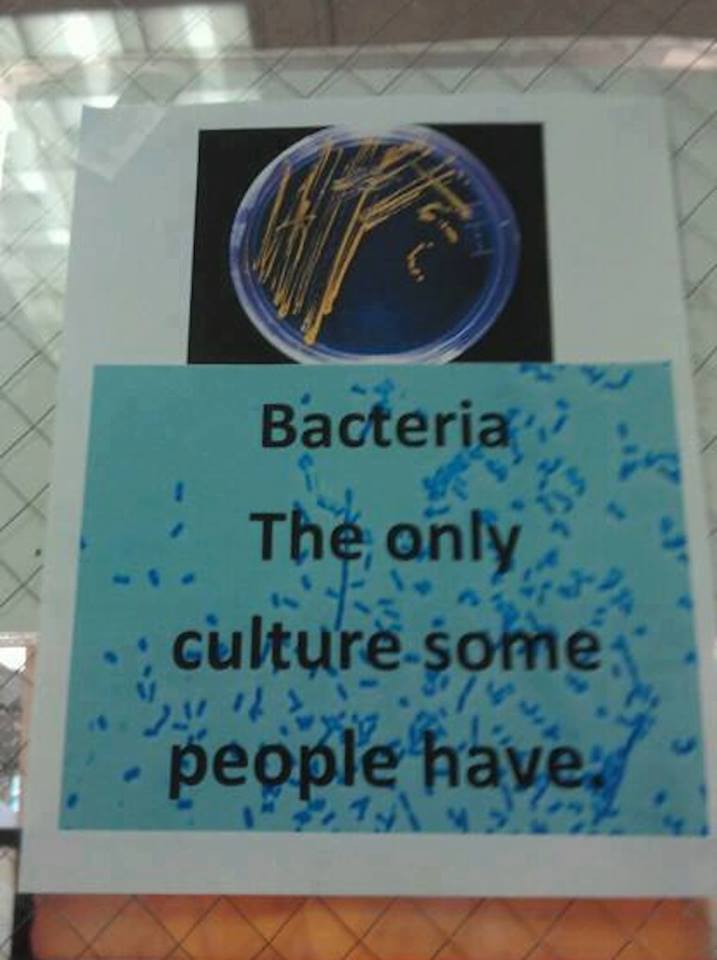
(image via Science is Awesome)

Because most research scientists (and their lab assistants) we know are so busy in the lab, they don’t have time for things like “lives” or “culture”. Luckily bacteria is pretty?
(image via Science is Awesome)
This week’s image could obviously only be of the two newly discovered, absolutely massive, Pandoravirus. This gorgeous image comes to us via The Scientist magazine. The new viruses are so large, and their DNA so distinct from anything we have seen before, some argue they should be classified as a distinct kingdom.

(image courtesy of the Scientist/Chantal Abergel/Jean-Michel Claverie)
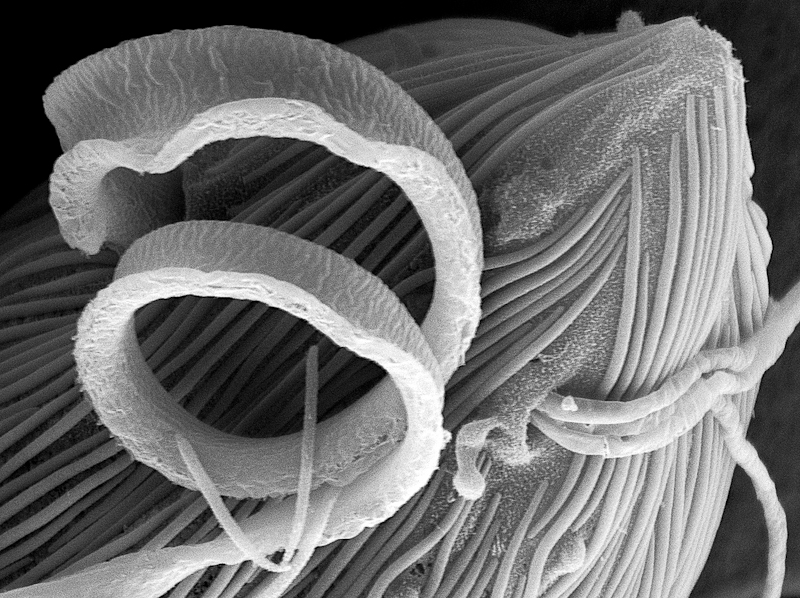
Our image this week is by photographer and microbiologist, Kevin J. Carpenter. The image below, taken through a scanning electron microscope, features an “anterior view of the protist Foaina sp.” For those of you in the San Francisco Bay Area, Dr. Carpenter’s work is on display at the Exploratorium Museum (basically the coolest science museum around). A second gallery is also opening in late September at the Beaty Biodiversity Museum in Vancouver, Canada. Check out his website for more information and more great images.

“Nanoparticles ranging in size from 100nm to 500nm. The nanoparticles are used as a drug delivery carrier providing an inert support that stabilises the drugs and allows them to be released in a sustained manner once inside the body. They are made of polylactic-co-glycolic acid (PLGA) and can be introduced either orally or by injection.”
Scanning electron micrograph 2006
(image courtesy of Wellcome Images)

Via The Scientist
These posters date to WWI, where chemical weapons were first introduced and widely used. The posters were developed to educate soldiers to detect certain smells, giving them a few (often unhelpful) seconds warning in which they could put their gas masks on. Click the images for larger pictures.


This week’s image comes to us via the American Society for Microbiology, and is credited to NIAID. Pictured below is an SEM of a dead yeast particle undergoing phagocytosis.

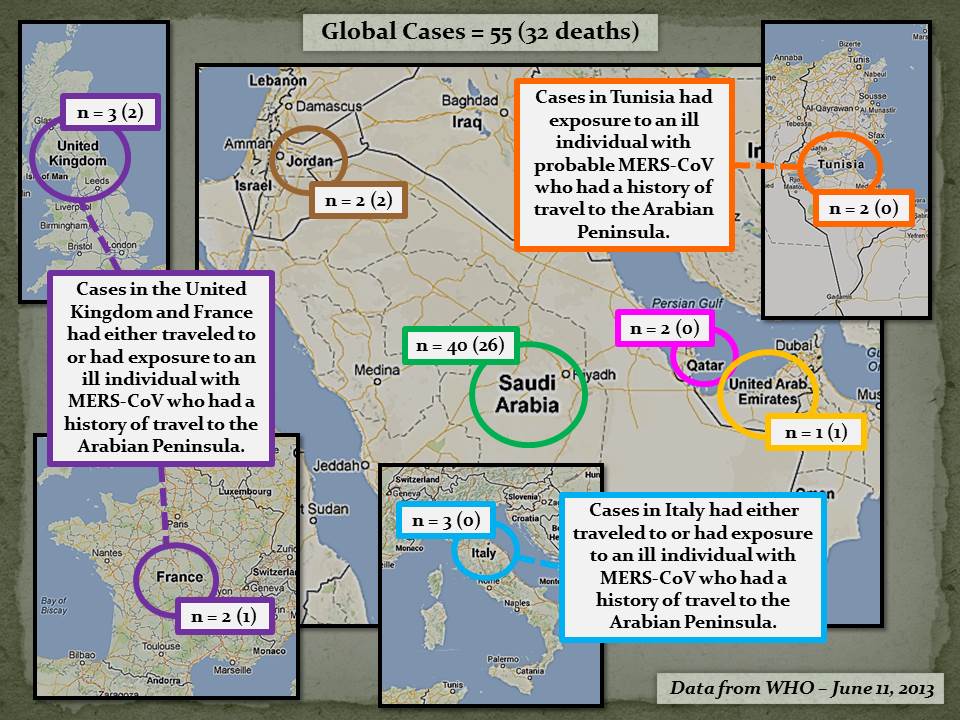
Another case of the Middle Eastern Respiratory Syndrome (MERS) has appeared in France in the last 24 hours, bringing the total number of laboratory confirmed cases worldwide to 56. Health officials are particularly anxious to maintain surveillance of the virus ahead of the annual Muslim pilgrimage to Mecca this October, which is expected to bring over three million travelers from around the world to the Saudi Arabian city.
Now in pastels – white blood cells! Pictured in the grey color below, a white blood cell is seen here engulfing Aspergillus fumigatus spores. A. fumigatus is a fungus is readily found in soil, which can cause severe lung infections in the immunocompromised.

Via The Scientist (Image credit: Priyanka Narang, Manfred Rohde, and Matthias Gunzer, Helmholtz Centre for Infection Research, PLoS Pathogens)
News reports are indicating that in at least two cases, H7N9 seems resistant to the antiviral Tamiflu. This troubling development prompted our image of the week – yes we’ve all heard of it, have followed the case counts closely, have written about it week after week, but who amongst us has stared the virus down, mano-a-mano? Now’s your chance –

Um, is anyone else reminded of a different highly pathogenic virus? Starts with an “E” and ends with hemorrhaging? No? Just us? Filamentous morphology aside, the virus’ ability to evade a key antiviral is definitely not good news.
 The Pandora Report