Friday News Roundup!

Subscribe to the Roundup and get all the best news in your inbox instead – less clicking means more time for other things (like checking the GMU Biodefense Facebook page)! Click here to sign up. 

Highlights include Meth as a home flu remedy, the PAHPA re-authorization, Salmonella: a force for good?, MRSA in your water (joke – that was a joke), the Ebola-related woes of the poor orangutan, and belly button bacteria.

Methamphetamine Reduces Human Influenza A Virus Replication

Now normally I am all for home flu remedies, but if it involves a black-windowed basement and a set-up out of Breaking Bad, I think I’ll pass.

Original Paper – “Methamphetamine (meth) is a highly addictive psychostimulant that is among the most widely abused illicit drugs, with an estimated over 35 million users in the world. Several lines of evidence suggest that chronic meth abuse is a major factor for increased risk of infections with human immunodeficiency virus and possibly other pathogens, due to its immunosuppressive property. Influenza A virus infections frequently cause epidemics and pandemics of respiratory diseases among human populations. However, little is known about whether meth has the ability to enhance influenza A virus replication, thus increasing severity of influenza illness in meth abusers. Herein, we investigated the effects of meth on influenza A virus replication in human lung epithelial A549 cells.”

Congress must act on Pandemic and All-Hazards Preparedness bill

Hurricane Sandy illustrated clearly the ongoing need for funding preparedness planning. Congress is taking up the Pandemic and All-Hazards Preparedness Reauthorization Act in the coming weeks, which seeks to ensure funding for planning remains in place.

The Hill – “When Congress returns this month for the post-election Lame Duck session, they will have the opportunity to vote on legislation that would solidify the commitment of the federal government to protecting our nation’s critically ill and injured patients in the event of a disaster or emergency. If enacted, the Pandemic and All-Hazards Preparedness Reauthorization Act of 2011 – better known as PAHPA – would provide the resources necessary to improve the nation’s public health and medical preparedness, streamlining the federal government’s disaster planning and strengthening national preparedness for and responses to medical and public health emergencies and disasters, whether deliberate, accidental or natural.”

Arizona State University scientists engineer bacterial vaccine delivery system

Salmonella, making itself useful for something other than dramatic weight loss.

Vaccine News – “Arizona State University scientists have successfully engineered a strain of Salmonella bacteria capable of acting as a delivery system for vaccine antigens. The ASU team used the bacteria to protect mice against a lethal influenza strain, but they believe the approach is adaptable enough to be used against many different pathogens…’The technology that we’re describing in this paper can be used to develop a vaccine against any virus, any parasite, any fungus, whereas this was never possible before the development of recombinant attenuated bacterial strains like those produced in our lab,’ Dr. Roy Curtiss, the team’s leader, said.”

Deadly ‘Superbug’ Found in Water Treatment Plants

MRSA in your neighborhood bunnies, MRSA at your neighbourhood water treatment plant. MRSA: the world’s worst neighbor.

Smithsonian –  “Researchers from the University of Maryland and the University of Nebraska Medical Center have found that at least four water treatment plants in the United States contain superbugs, the methicillin-resistant Staphylococcus aureus and the methicillin-susceptible Staphylococcus aureus. The concern is that the plants are putting sewage workers at risk for contracting the bacteria, and that plants that do not treat water with chlorine may be leaving the most lethal strains.”

Orangutans infected by mystery Ebola-like virus

Something very similar to the African Ebola viruses are popping up outside of Africa (dun dun dun anyone?) in, of all places, the already blighted Bornean orangutans.

New Scientist – “They are already the most endangered great apes. Now orang-utans may face an additional threat: Ebola virus, or something a lot like it. Bornean orang-utans have antibodies that recognise not just the Asian species of Ebola virus, but all four African Ebola viruses and a similar African virus called Marburg. None of the African viruses has ever been seen outside Africa before. The discovery was discussed at a conference last week by the study’s leader, Chairul Anwar Nidom of Airlangga University in Surabaya, Indonesia.”

Plunging into the Unknown: Belly Button Bacteria and You

And for your Friday fluff piece (no pun – ok, pun slightly intended), belly button bacteria (or BBB, for people in the know):

PLOS blog – “Have you ever looked up at the night sky and wondered what kinds of life might exist out there? Well, you can look down – at your belly button that is – and wonder the exact same thing. According to research published today in PLOS ONE, the belly button is home to an array of bacterial life ranging from the common (like Staphylococci) to the rare (like Archaea which have never been found before on human skin). Some bacteria, like those belonging to the Bacillus genus… are feisty – they battle against fungi and viruses.”

Palm-to-Face Story of the Week

First things first, big congratulations to President Obama! Irrespective of where you stand politically, I think no political ads for another two years is a blessing for which we can all be grateful.

Now, to the face-palming. In the wake of Sandy, this FAQ on NOAA’s website has been receiving some attention:

Subject: C5c) Why don’t we try to destroy tropical cyclones by nuking them?

Now, I am a firm believer that there are no stupid questions. What’s depressing about this question is therefore the general, persistent lack of education on WMD  behind it. This unfortunately holds true not only for nuclear, but for chemical, radiological, and biological weapons as well. Ask the average person how many people a standard “dirty bomb” would kill, and I’ll wager their answer would be too high by an order of magnitude –  (don’t believe me? good for you, always check sources).

“Who cares?” you may ask.  As long as security sector professionals and academics understand the threat, what does it matter if the average American, who undoubtedly has much more pressing things to worry about, doesn’t?

It matters tremendously. We all fear what we don’t understand, and in some cases that fear can be as debilitating as the threat itself. For instance, in 1995, members of the Aum Shinrikyo cult released the chemical agent sarin on the Tokyo subway. Of the 5,510 people attended to at local hospitals, nearly 85 percent were “worried well” – those patients who were completely healthy, with  no symptoms and no exposure, but self-reported anyway. A similar phenomenon occurred after the 2001 Anthrax Letters attack. Demand for the drug Cipro (the antimicrobial used to treat anthrax) soared, even in places completely removed from the attacks (nearly a third of clinicians in Wisconsin and Minnesota were asked by patients for Cipro). According to some estimates, the number of these “worried well” patients in a given disaster can outnumber legitimate patients by 20:1. Now clearly, even experts on WMD can succumb to fear, but a better informed populace – one which knows sarin has a clear checklist of symptoms, or  that anthrax isn’t contagious – is less likely to panic.

Education on WMD is critical for preventive reasons too.  Understanding the absolute basics of how nuclear weapons are made is critical to really understanding the Iranian threat. Understanding the potential impact of chemical weapons is critical to understanding our concerns over the Syrian stockpile. Understanding the threat of biological weapons is critical to recognizing the importance of  strengthening international norms against their use.

Moral of the story? Education is important. Maybe we should designate a “National Educate-a-Friend on CBRN” day. It should be sooner rather than later though – the East Coast has another Nor’easter coming in, and there are already murmurs we should heat it out of existence with mists of plutonium-239.

For those of you curious about NOAA’s response to the hurricane-nuke scenario, see here.

Friday News Roundup!

Subscribe to the Friday News Roundup and get the week’s most important news, with only the slightest veneer of snark, in one email. Click here!

Highlights include: microbiologists and the ER – a match made in heaven, the CDC testing RIDTs,  Malaysia and BW (not what you think), bacterial voyeurism, more drug contamination at the infamous NECC, and vaccinia – now in technicolor!

How Investigating Bacteria Will Change Health Care In Hospitals

How I see this playing out: ‘Excuse me, pardon me – ooh that looks bad – don’t mind me, just need to collect samples of the ER floor here.’

“Jack Gilbert, a microbiologist from the University of Chicago…and a group of microbiologists will take over a brand new hospital in an experiment called the ‘Hospital Microbiome’. The goal of ‘Hospital Microbiome’ is to try to see what microbes and viruses will move in to the hospital and how patients and hospital staff impact the variety of microbes that live in the hospital. Gilbert and his team will track the bacteria in the hospital before it opens and as it starts accepting staff and patients. This data will help hospital administration, doctors, nurses, and researchers get a better understanding of how these bacteria and viruses make their way around a hospital, sometimes causing dangerous infections in the patients.”

For a link to the Hospital Mircobiome study itself, click here.

CDC Evaluation of 11 Commercially Available Rapid Influenza Diagnostic Tests (RIDT)

To absolutely no one’s surprise, tests were better at detecting influenza when given higher concentrations of virus.

CDC in MMWR – “The findings in this report further emphasize the importance of collecting respiratory specimens when the amount of influenza virus is at its peak (within 24–72 hours of symptom onset). The high virus concentrations at which the evaluated FDA-cleared RIDTs detected recent circulating viruses might exceed levels expected in clinical specimens, even those collected at the peak of virus load in the specimen (2–4). Although all RIDTs were able to detect virus at the highest virus concentrations, some were unable to detect certain viruses at any subsequent dilution.”

This is What Your Cells Look Like on Vaccinia

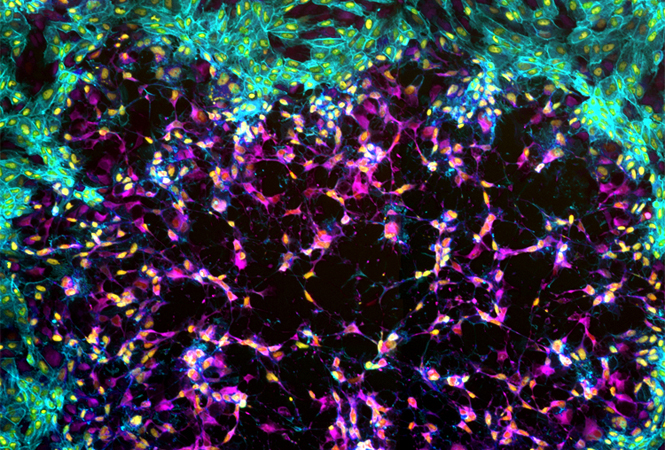
Researchers at two Australian universities have captured in trippy fluorescent detail the progression of vaccinia virus through cells (extra point if you know what vaccinia is used for – yes just one point, you should know!)   The giant cloud of pink is the virus, with the halo of healthy host cells surrounding in green.

Image: Green fluorescent protein expressing vaccinia virus (pink) spreads from a single infected cell through an entire monolayer of green monkey kidney cells (blue with yellow nuclei) over three days.

For other equally impressive photographs, check out the full gallery. Who knew viruses could be so pretty?

Malaysia to Prepare Law on Biological Warfare

Everyone give it up for Malaysia.

NTI – “Malaysian Defense Minister Ahmad Zahid Hamidi said on Tuesday the nation would prepare legislation aiming to address the threat of conflict involving biological agents, Bernama reported. ‘Biological warfare is a new war which can happen not only in Malaysia but also in the ASEAN region,’ Zahid said, referring to the territory covered by the 10 member states of the Association of Southeast Asian Nations.”

Researchers “Watch” Antibiotics Attack Tuberculosis Bacteria Inside Cells

What about the rights of microbes? Don’t they get any privacy? Occupy petri dishes! Just kidding, tuberculosis is awful.

Infection Control Today – “Weill Cornell Medical College researchers report that mass spectrometry, a tool currently used to detect and measure proteins and lipids, can also now allow biologists to ‘see’ for the first time exactly how drugs work inside living cells to kill infectious microbes. As a result, scientists may be able to improve existing antibiotics and design new, smarter ones to fight deadly infections, such as tuberculosis. The new study was published in an early online edition of Science.”

Further Drug Contamination by Pharmacy at Center of Fungal Meningitis Outbreak

Things are going from bad to worse for the New England Compounding Center, the pharmacy at the center of the multi-state fungal meningitis outbreak. According to the FDA, two additional products from the pharmacy have tested positive for bacterial contamination. Three batches of  injectable betamethasone and one batch of cardioplegia solution tested positive for a combined eight bacterial species, including the (rarely) pathogenic Bacillus idriensis and Bacillus circulans.

The total number of cases of fungal meningitis associated with the pharmacy’s Exserohilum rostratum contaminated drugs has reached 386, with 28 fatalities in 19 states (CDC).

In case you missed it:

– US increases funding to combat influenza and emerging disease threats (FAO)
– Cranking Up Biosecurity (The Scientist)

How Superstorm Sandy’s Floods Can Make You Sick

National Geographic – “Public health officials caution that stagnant water from floods can pose significant health risks, many of which can worsen with time. David Doyle, a spokesperson for New York’s Office of Emergency Management, cautioned that flood debris can hide broken bottles and even animals. He also urged people to avoid moving water, noting that just 6 inches (15 centimeters) of it can sweep someone off their feet.”

“Urban runoff in large cities is generally considered safer than rural runoff, which can include animal fecal bacteria produced from agriculture. Yet urban sewage treatment plants that are overwhelmed during major flood events can spill untreated sewage into waterways. It can then end up on streets and clog storm drains. Other urban contaminants include motor oil, gasoline, and trash.”

More here.

Viral Research Faces Clampdown

Stay tuned for the Mason review:

“Federal health agencies in the United States have acted to tighten security surrounding research on two deadly pathogens. The move is intended to enhance public safety, but some fear that it may hamper research in the United States and abroad.

Earlier this month, US health agencies added the SARS virus to its list of select agents — pathogens and toxins that it deems to have the “potential to pose a severe threat to public health and safety”. In addition, the agencies last week opened a public consultation about whether they should designate strains of H5N1 avian influenza virus that are transmissible between mammals as ‘Tier 1’ select agents — a newly created class subject to the strictest levels of biosecurity. The consultation comes after the Intragovernmental Select Agents and Toxins Technical Advisory Committee advised the agencies that the virus could “potentially overwhelm the health care system”.

More here.

Friday News Roundup!

Highlights this week include crowd-sourcing biological warfare (um…), West Nile (is anyone else freaked out that the mozzies still haven’t died off?) Biowatch’s now-very-public flaws, bonds and bioterrorism, wishing Mr. Salk Happy Birthday, and, for good measure, marburg. Keep an eye on Hurricane Sandy, have a plan handy (see what I did there?) – Happy Friday!

Hacking the President’s DNA: When Synthetic Biology Meets National Security

One of the many perks of studying biodefense are those moments when you have to take a break from a given article, textbook, or powerpoint slide because it’s starting to legitimately scare you.  So, in time for Halloween (and the election – don’t forget to vote!), voila:

Forbes – “While no use of an advanced, genetically targeted bio-weapon has been reported, the authors of this piece—including an expert in genetics and microbiology (Andrew Hessel) and one in global security and law enforcement (Marc Goodman)—are convinced we are drawing close to this possibility. Most of the enabling technologies are in place, already serving the needs of academic R&D groups and commercial biotech organizations. And these technologies are becoming exponentially more powerful, particularly those that allow for the easy manipulation of DNA.”

West Nile Cases Pass 4,700 Mark Nationwide: CDC

You would imagine with the behemoth storm they’re predicting this weekend (“snow to the left! rain to the right!”) (which is in no way a belittlement of preparedness – at the very least have an emergency kit ready) and the cold front coming in, the mosquitoes all be gone. No such luck.

HealthDay/the CDC – “The number of West Nile virus cases this year has surpassed 4,700, U.S. health officials reported Thursday, and the number of deaths has reached 219, up from 183 last week. The 4,725 cases mark the highest number reported through the fourth week of October since 2003. The best way to avoid the virus is to wear insect repellent and support local programs to eradicate mosquitoes. Typically, 80 percent of people infected with the virus develop no or few symptoms, while 20 percent develop mild symptoms such as headache, joint pain, fever, skin rash and swollen lymph glands, according to the CDC.”

BioWatch technology couldn’t detect lethal germs, tests found

No editorial needed here – the title pretty much says it all. Good grief.

Los Angeles Times – “For two years, the nationwide BioWatch system, intended to protect Americans against a biological attack, operated with defective components that left it unable to detect lethal germs, according to scientists with direct knowledge of the matter. The federal official who oversaw installation of the components was quietly shifted to a position with no responsibility for BioWatch, and the entire episode was kept out of public view. The U.S. Department of Homeland Security, which oversees BioWatch, opened an internal investigation, whose status remains confidential.”

U.S. agency rejects using bonds to develop drugs for bioterrorism threats

In other news, the US government remains unsure how best to fund bioterrorism research and prevention (it’s all the PhDs – no one ever knows what to do with a PhD). Prodigal child, anyone?

Washington Post – “A U.S. Department of Health and Human Services office has rejected an industry proposal to use government bonds to fund the development of drugs countering bioterrorism threats. Small biotechnology companies, including Annapolis-based PharmAthene, asked the federal government last year to switch to bond financing from contracts, which are seen in the industry as costly and a sometimes unreliable revenue source when used for drug development… Using bonds to pay for drug development would allow scientific research to continue uninterrupted without being subject to the costs and delays associated with competing for federal contracts, Eric Richman, Pharm­­Athene’s president and chief executive, said in interviews last year.”

Marburg Reaches Kampala

The marburg outbreak continues in Uganda, reaching its capital of Kampala. However, according to the WHO and the Ugandan health minister, the epidemic “is under control” and the city remains safe for travel. So far, marburg has been confirmed in  four of the six suspected cases. More here.

October 24th: World Polio day

Let’s all take a moment to silently thank Jonas Salk (born October 24), the talented virologist who developed the polio vaccine in 1955. Before Salk’s vaccine, polio crippled thousands annually – in the 1952 epidemic, nearly 60,000 cases were reported in the US alone. Using Salk’s vaccine polio was completely eradicated from the US by 1979, and from the entire Western Hemisphere by 1994. Why hasn’t polio been eradicated globally? Why indeed.

UN News – ” ‘We have all the necessary tools to eradicate this disease, so now there is the question of political and societal will to make sure that the emergency plans are fully implemented and that they are fully financed,’ said the spokesperson for the World Health Organization (WHO) Global Polio Eradication Initiative, Oliver Rosenbauer…’We have seen time and time again that this is a virus which spreads to polio free areas and causes devastating outbreaks. If we don’t finish the job now we could see within the next decade 200,000 new cases every single year all over the world. Given that we are under two hundred cases now we consider this a true humanitarian catastrophe that has to be averted at all costs.’ ”

For an interactive timeline of the emergence and eradication of polio, see here.


Death toll from West Nile virus tops 200

By Marice Richter

DALLAS | Wed Oct 24, 2012 1:44pm EDT

(Reuters) – The U.S. outbreak of West Nile virus has killed 219 people this year, after another 36 deaths from the mosquito-borne disease were reported last week, government figures showed Wednesday.

In what is the second-worst year on record for the disease, the total number of cases of West Nile virus across the United States grew to 4,725, with 194 new cases reported, according to the Centers for Disease Control and Prevention.

Although the pace of new cases has slowed since the outbreak’s peak in the late summer, new cases continue to be reported, particularly in states where warm temperatures persist. This year’s outbreak has trailed only 2003 in total cases.

Just over half of the cases reported to the CDC this year have been of the severe neuroinvasive form of the disease, which can cause meningitis and encephalitis.

Read more here.

Friday News Round-up!

Highlights include potential Syrian BW, fungal meningitis, West Nile (stupid mosquitoes), developments in the quest for the fabled universal flu vaccine,  gut bacteria using viruses to take out rival bacteria (it’s a bug-eat-bug world, eh?), quorum sensing  (bacterial moochers may be good for you), and the President’s Bioethics Commission report on Genomics and Privacy.

Are Syrian shells raining biological agents down on Lebanese?

Christian Science Monitor – “Residents in Nourat al-Tahta and other villages under routine Syrian shellfire are complaining of unexplained symptoms may indicate artillery shells have been filled with a biological agent, but weapons experts discount the panicky assumptions.

Nazir Shrayteh, a doctor from the nearby village of Dousi, says he has received an unusually large number of patients from villages under shellfire in recent months complaining of rashes and diarrhea.

‘Since May we have been getting these skin problems,” he says. “I don’t know what it is, but I feel something odd is going on.’ ”

Biological weapons sites concern in Syrian civil war

The Guardian – “The United States has sent military troops to the Jordan-Syria border to help bolster Jordan’s military capabilities in the event that the violence in Syria spreads, according to defence secretary Leon Panetta.

Speaking at a Nato conference of defense ministers in Brussels, Panetta said the US has been working with Jordan to monitor chemical and biological weapons sites in Syria and also to help Jordan deal with refugees moving across the border.”

Multi-State Fungal Meningitis Death Toll Grows to 14

The fungal meningitis outbreak has spread to an 11th state, with over 170 cases and 14 fatalities.

ABC News – “State and local health officials have now contacted more than 12,000 of the estimated 14,000 people exposed to the steroid, which is thought to be contaminated by one or more species of fungus. The compounding pharmacy at the center of the fungal meningitis outbreak was not following the requirements of its state license, according to a spokeswoman for the Massachusetts Department of Public Health.”

The New England Compounding Center in Framingham, Mass., shipped more than 17,000 vials of a steroid — now implicated in the outbreak — to pain clinics in 23 states.”

CDC statement and latest news here.

West Nile case rate highest in nearly a decade

CDC – “As of October 9, 2012, 48 states have reported West Nile virus infections in people, birds, or mosquitoes. A total of 4,249 cases of West Nile virus disease in people, including 168 deaths, have been reported to CDC. Of these, 2,123 (50%) were classified as neuroinvasive disease (such as meningitis or encephalitis) and 2,126 (50%) were classified as non-neuroinvasive disease.

The 4,249 cases reported thus far in 2012 is the highest number of West Nile virus disease cases reported to CDC through the second week in October since 2003. Almost 70 percent of the cases have been reported from eight states (Texas, California, Louisiana, Mississippi, South Dakota, Michigan, Oklahoma, and Illinois) and over a third of all cases have been reported from Texas.”

A universal vaccine for all influenza A and B viruses?

Phys.org – “A research group from The Scripps Research Institute, Crucell Vaccine Institute, Gustav Wieds Vej (Denmark), and The University of Hong Kong, building upon their earlier work with influenza A viruses, has now discovered a similar phenomenon for neutralizing influenza B viruses. Their breakthrough results, aided by the U.S. Department of Energy (DOE) Office of Science’s Advanced Photon Source (APS), Stanford Synchrotron Radiation Lightsource (SSRL), and Advanced Light Source (ALS) pave the way for development of a universal vaccine for all influenza A and B viruses.”

Mad Max in your stomach: some gut bacteria produce their own viral bio-weapons

The Raw Story – “In a paper published Monday in the journal Proceedings of the National Academy of Sciences, scientists say that bacteria in the gut can manufacture and use viruses as weapons against other rival bacteria in what the website LiveScience.com calls ‘intestinal shootouts.’

Scientists hope to find a way to use this process to fight hostile bacteria in what could be a new way of treating infections, including diseases that are resistant to mankind’s current arsenal of antibiotics like multidrug-resistant tuberculosis, Methicillin-resistant Staphylococcus aureus (MRSA) and the new strains of antibiotic-resistant gonorrhea, diseases that are currently threatening patients around the world.”

Scientists focus on quorum sensing to better understand bacteria

Phys.org – “In a study appearing in the Oct. 12 issue of the journal Science, University of Washington researchers examine the pathogen Pseudomonas aeruginosa, which colonizes in the lungs of cystic fibrosis patients. While most cells “cooperate” with each other by producing and sharing public goods when there are enough of their “friends” around, researchers have found that certain individual cells, known as “cheater cells,” share in the use of these extracellular products without releasing any of these products themselves.

In Pseudomonas aeruginosa these cheaters are quorum sensing mutants that don’t make public goods in response to increasing population density. When the researchers manipulated the environment so that the cost of cell cooperation was high (so that the bacterial group had to produce a lot of public goods to survive), the cheater cells overtook the cooperating producer cells, the cooperators then became too rare, and the population collapsed. From this sequence of events, the researchers induced destabilization of cooperation.

‘Perhaps, one day, we’ll be able to manipulate infections so that bacterial cooperation is destabilized and infections are resolved,’ said Dr. Peter Greenberg, UW professor of microbiology and one of the three authors of the study.”

President’s Bioethics Commission Releases Report on Genomics and Privacy

Press release – “The Presidential Commission for the Study of Bioethical Issues today released its report concerning genomics and privacy. The report, Privacy and Progress in Whole Genome Sequencing, concludes that to realize the enormous promise that whole genome sequencing holds for advancing clinical care and the greater public good, individual interests in privacy must be respected and secured. As the scientific community works to bring the cost of whole genome sequencing down from millions per test to less than the cost of many standard diagnostic tests today, the Commission recognizes that whole genome sequencing and its increased use in research and the clinic could yield major advances in health care. However it could also raise ethical dilemmas.

‘Scientists and clinicians must have access to data from large numbers of people who are willing to share their private information.  This in turn requires public trust that any whole genome sequence data shared by individuals with clinicians and researchers will be adequately protected,’ said Commission Vice Chair James W. Wagner, Ph.D .”

For the full report, see here.