Week in DC: Events 2.1-2.5.2016

Monday, February 1st, 2016
Defense Strategy For The Next PresidentBrookings Institution
Time: 10-11:30am
Location: Brookings Institution1775 Massachusetts Ave, NW, Washington, D.C. 20036(map)
As President Obama’s second term winds down and the 2016 presidential election draws ever closer, the United States finds itself involved in two wars and other global hotspots continue to flare. As is often the case, defense and national security will be critical topics for the next president. Questions remain about which defense issues are likely to dominate the campaigns over the coming months and how should the next president handle these issues once in office. In addition, with the defense budget continuing to contract, what does the future hold for U.S. military and national security readiness, and will those constraints cause the next president to alter U.S. strategy overseas?On February 1, the Center for 21st Century Security and Intelligence at Brookings will host an event examining defense and security options for the next president. Panelists will include Mackenzie Eaglen of the American Enterprise Institute, Robert Kagan of Brookings, and James Miller, former undersecretary for policy at the Department of Defense. Brookings Senior Fellow Michael O’Hanlon, author of “The Future of Land Warfare” (Brookings Institution Press, 2015), will moderate the discussion.Panelists will take audience questions, following the discussion.

The Billion Dollar Spy: A True Story Of Cold War Espionage And Betrayal- Woodrow Wilson International Center for Scholars
Time: 4-5:30pm
Location: Woodrow Wilson Center1300 Pennsylvania Ave., NW, Washington, D.C. 20004(map)
From 1979 until 1985, the CIA ran an immensely productive spy in the heart of the Soviet military-industrial complex in Moscow. Author David E. Hoffman will describe this singularly-important operation, based on declassified CIA cables and his new book, The Billion Dollar Spy, and argue that despite the many achievements of technology in espionage, human sources are still vital. David E. Hoffman is a contributing editor at the Washington Post. He was pre­viously foreign editor, bureau chief in Jerusalem and Moscow, and White House correspon­dent. He is the author of The Billion Dollar Spy: A True Story of Cold War Espionage and Beytrayal (2015), The Dead Hand: The Untold Story of the Cold War Arms Race and Its Dangerous Legacy (2009) which won the Pulitzer Prize, and The Oligarchs: Wealth and Power in the New Russia (2002).

Tuesday, February 2nd, 2016
Why Food Security Matters– Johns Hopkins School of Advanced International Studies
Time: 12:30pm
Location: Johns Hopkins SAIS – Rome Building1619 Massachusetts Ave., N.W., Washington, D.C. (map)
Kimberly Flowers is director of the CSIS Global Food Security Project, which examines and highlights the impact of food security on U.S. strategic global interests. The project evaluates current efforts and provides long-term, strategic guidance to policymakers to ensure that U.S. foreign assistance programs are efficient, effective, and sustainable. Prior to joining CSIS in 2015, Ms. Flowers was the communications director for Fintrac, an international development company focusing on hunger eradication and poverty alleviation through agricultural solutions. From 2005 to 2011, she worked for the U.S. Agency for International Development, serving overseas as a development, outreach, and communications officer in Ethiopia and Jamaica, supporting public affairs in Haiti directly after the 2010 earthquake, and leading strategic communications for the U.S. government’s global hunger and nutrition initiative, Feed the Future. Ms. Flowers began her international development career in 1999 as a Peace Corps volunteer in Bulgaria, where she founded a young women’s leadership camp that continues today. She also served as a Peace Corps volunteer in Jamaica where she worked in youth development. She is a magna cum laude graduate of William Jewell College, studied at Oxford University, and is an alumna of the Pryor Center for Leadership Development.
RSVP Here

Australia’s Global Security And Defense Challenges– Heritage Foundation
Time: 11am-noon
Location: Heritage Foundation214 Massachusetts Ave NE, Washington, D.C. 20002(map)
Join us to hear The Honorable Kevin Andrews, former Minister for Defense, discuss Australia’s path forward in an increasingly complex Asia-Pacific security environment.More About the Speakers The Honorable Kevin Andrews, MPFormer Minister for Defense, Australia Continue reading “Week in DC: Events 2.1-2.5.2016”

Week in DC: Events 1.25-1.29.2016

Monday, January 25, 2016
Is Russia Punching Above Its Weight?Center for Strategic and International Studies
Time: 10-11:30am
Location: Center for Strategic and International Studies1616 Rhode Island Ave NW, Washington, DC 20036(map)
The past year has seen Russia deploying military forces to Syria to bolster the Assad regime, continuing a robust series of exercises on its western borders, and continuing to face accusations of military involvement in East Ukraine. Ruslan Pukhov, Director of the Centre for Analysis of Strategies and Technologies in Moscow, will discuss Russia’s goal and its activities, the extent to which these are commensurate with its real military capabilities, and the technological, economic, and demographic foundations on which those capabilities rest.

Islam, Gender, And Extremism : Muslim Women In The Fight Against ISIS And Beyond– New America Foundation
Time: 12:15-1:45pm
Location: New America740 15th Street NW Suite 900 Washington, DC 20005(map)
ISIS has attracted an unprecedented number of women to jihadist extremism while simultaneously carrying out a brutal campaign of sexual violence against women under its control. Yet much of the discussion of community responses remains the province of men. As calls for counter-narratives to ISIS proliferate and theological arguments against ISIS are mobilized – what role will Muslim women play in contesting ISIS’ interpretation and in shaping today’s Muslim communities more broadly? Asra Nomani is an investigative journalist who worked for fifteen years at the Wall Street Journal and conducted an in-depth investigation into the murder of her friend and colleague Daniel Pearl. She is the author of Standing Alone: An American Woman’s Struggle for the Soul of Islam (2006) and co-founder of the Muslim Reform Movement, an organization that advocates for secular governance, gender parity, and social justice. Nadia Oweidat is a Senior Non-Residential Fellow at New America. She holds a D.Phil. in Oriental Studies from the University of Oxford and teaches Islamic Thought and Extremism at Georgetown University. Prior to her doctoral studies, Dr. Oweidat worked as a Research Associate at the RAND Corporation where she led several research projects. Her expertise spans a wide range of contemporary issues such as the Arab Spring, countering violent extremism, the relationship between Iran and the Arab world, the radicalization of Muslim youth, and Internet trends among Arabic speakers. Ani Zonneveld is the founder and president of Muslims for Progressive Values and, through its #ImamforShe initiative, campaigns to empower Imams and religious leaders across the world to stand up for the rights of women and girls in their community as an inoculation against extremism. A full bio of Ms. Zonneveld can be found here. New America is pleased to welcome Ms. Nomani, Dr. Oweidat, and Ms. Zonneveld for a discussion of gender, Muslim communities, and the fight against ISIS.

Tuesday, January 26, 2016
Navigating Against Cyber Attacks: Nonprofits & Data Security– Forum One
Time: 12:30-2pm
Location: OpenGov Hub1110 Vermont Ave NW #500, Washington, DC 20005(map)
Large Event Room
In 2015 alone, hackers gained access to more than one hundred million personal records stored by organizations from Anthem Health Insurance to the U.S. Office of Personnel Management. With cyber criminals relentlessly targeting organizations of all sizes in the private and public sectors, it is clear that nonprofits are also not safe from the threat of data breaches. While many nonprofits have implemented firewalls and https protocols for sensitive digital information, paper-based forms or processes for encrypting and anonymizing personally-identifiable data remains a huge challenge. In other cases, nonprofits may find themselves altogether ill-prepared, with inadequate data security policies and practices in place to safeguard against digital attacks. Join Forum One on January 26th for a panel discussion with data security experts to share anecdotes, best practices, and approaches to addressing this critical challenge.

Iraqi Youth: Agents Of Change Or Soldiers Of Conflict?– United States Institute of Peace
Time: 1-2:30pm
Location: US Institute of Peace2301 Constitution Avenue NW, Washington, D.C. (map)
Please join USIP and IREX for a webcast event with two Iraqi university leaders who work closely with youth on issues of employment and opportunity. These representatives provide unique insight on the perspectives of young Iraqis and their involvement in civil society, the public sector and attitudes toward violent extremism. The two speakers will be joined by USIP’s Linda Bishai, who works to engage youth in civil society and political dialogue and who will discuss effective options for constructive alternatives to violent extremism. Join the conversation on Twitter, and pose questions for the panel, with #IraqiYouth.

Continue reading “Week in DC: Events 1.25-1.29.2016”

Week in DC: Events 1.18-1.22.2016

Monday, January 18, 2016
Happy Martin Luther King Jr. Day!

Tuesday, January 19, 2016
Ballistic Missile Defense System Update Center for Strategic and International Studies
Time: 2-3pm
Location: Center for Strategic and International Studies1616 Rhode Island Ave NW, Washington, DC 20036 (map)
Follow @CSIS #CSISLive
Featuring:Vice Admiral James D. SyringDirector, U.S. Missile Defence Agency
Hosted by:Dr. Thomas KarakoSenior Fellow, International Security Program, CSIS
This event is made possible by the generous support of the Boeing Company.

Defense-Industrial Policy Series: Acquisition For Special Operations Forces Atlantic Council
Time: 4:30pm
Location: Atlantic Council1030 15th St NW, Washington, DC 20005 (map)
Room: 12th Floor (West Tower)
Please join the Atlantic Council for an address and conversation with James F. Geurts, the Acquisition Executive for US Special Operations Command.
Mr. Geurts will discuss the challenge of planning and executing acquisitions to equip our forces’ most elite warriors.
Discussion topics will include:
• The unique role of US SOCOM in planning and acquisition management;
• How acquisition for special forces differs from and parallels the military departments; and
• The key technology and system priorities of US SOCOM heading into the FY17 budget and programs. Continue reading “Week in DC: Events 1.18-1.22.2016”

Week in DC: Events 1.11-1.15.2016

Monday, January 11, 2016
Space Weapons And The Risk Of Nuclear ExchangeAtlantic Council
Time: noon-2pm
Location: Atlantic Council1030 15th St NW, Washington, DC 20005 (map), Room: 12th Floor (West Tower)
January 11 marks the ninth anniversary of China’s first anti-satellite (ASAT) test, which made China the third country—after the United States and the former Soviet Union—to test a destructive ASAT capability. The 2007 test galvanized a debate in the United States about America’s increasing vulnerability to counterspace technologies. Many scholars believe that over the last few years, China has invested in counterspace capabilities that challenge the US “command of the commons.” China’s 2007 test also sparked a debate on an arms race in space that could someday trigger an inadvertent nuclear exchange between the United States and China, or between India and China.

On January 11, 2016—building on a 2015 feature published by the Bulletin of the Atomic Scientists in its Development and Disarmament Roundtable series—the South Asia Center along with the Bulletin of the Atomic Scientists will convene a panel of experts to discuss the danger that anti-satellite weapons pose to global security. Panelists will include Dr. Nancy Gallagher, Senior Research Scholar at the University of Maryland’s School of Public Policy; Dr. Joan Freese, Professor of National Security Affairs at the US Naval War College; Dr. Gaurav Kampani, Nonresident Fellow at the Atlantic Council’s South Asia Center. The panel will be moderated by Mr. Lucien Crowder, Senior Editor at the Bulletin of Atomic Scientists. The conversation will be initiated with a special keynote address by Ms. Mallory Stewart, Deputy Assistant Secretary for Emerging Security Challenges and Defense Policy at the US Department of State.

Leaders Speak – Defense Secretaries- National Committee on U.S.-China Relations
Time: 5-6:30pm
Location: Omni Shoreham Hotel2500 Calvert St NW, Washington, DC 20008 (map), Diplomat Ballroom
Our 50th Anniversary celebrations will begin with the first in our Leaders Speak series: Defense Secretaries Harold Brown, William Perry, William S. Cohen, and Chuck Hagel, in conversation with National Committee President Steve Orlins, will reflect on their experiences and lessons learned, as well as their suggestions for the future of the U.S.-China security relationship.

Tuesday, January 12, 2016

Subcommittee Hearing: The U.S. Response To North Korea’s Nuclear ProvocationsU.S. House Committee on Foreign Affairs
Time: 9am-noon
Location: Rayburn House Office Building45 Independence Ave SW, Washington, DC (map)
Speakers: Victor Cha- Ph.D., Mr. Bruce Klingner Continue reading “Week in DC: Events 1.11-1.15.2016”

Week in DC: Events 12.14-12.18.2015

Monday, December 14, 2015
The Wisdom Of A Grand Nuclear Bargain With Pakistan- Atlantic Council
Time: 3:30pm
Location: Atlantic Council1030 15th St NW, Washington, DC 20005 (map)
Room: 12th Floor (West Tower)
Earlier this year, various news outlets reported that the Obama administration was exploring a nuclear deal with Pakistan. The deal would work to better incorporate Pakistan into the global nuclear order, exchanging legitimacy for its accepting nuclear constraints. Many analysts believe Pakistan’s nuclear weapons program poses a substantial threat to international and South Asian security. One of four nuclear weapons states outside the normative and legal apparatus of the Nuclear Nonproliferation Treaty, Pakistan is assessed to have the fastest growing nuclear arsenal in the world.
The South Asia Center will convene a panel of experts including Dr. Toby Dalton, Co-Director of the Nuclear Policy Program at the Carnegie Endowment for International Peace, Dr. Sameer Lalwani, Deputy Director of Stimson’s South Asia Program, and Dr. Gaurav Kampani, Nonresident Senior Fellow at the Atlantic Council’s South Asia Center, to discuss policy options to address international concerns over Pakistan’s nuclear arsenal.

Political Transition In East-Central Europe And The End Of The Cold War, 1985–1991Woodrow Wilson International Center for Scholars
Time: 4-5:30pm
Location: Woodrow Wilson Center1300 Pennsylvania Ave., NW, Washington, D.C. 20004(map)
Csaba Békés argues that the eventual Soviet acceptance of internal political changes in East-Central Europe in 1989 by no means meant that Gorbachev was ready to give up the Soviet sphere of influence in the region as well.  His efforts to preserve control over the area were greatly facilitated by the fact that until the end of 1990 the Western powers, which welcomed the internal political transition,   contrary to the interpretation of mainstream literature  did not support the aspirations for independence of the states of the region, not even in the form of neutrality.

Tuesday, December 15, 2015
Reducing The Risk Of Nuclear War In The Nordic/Baltic Region The Stimson Center
Time: noon-1:30pm
Location: Stimson Center1211 Connecticut Ave NW, Washington, DC 20036 (map) Room: 8th Floor
RSVP HERE
Northern Europe is currently experiencing escalating political and military tensions that are rekindling fears of war between Russia and NATO. Any such conflict would inherently include a risk of nuclear weapons use. The Stimson Center, partnered with Project High Hopes, is examining the results of such nuclear exchanges and, more importantly, developing initiatives to avoid such catastrophes. Continue reading “Week in DC: Events 12.14-12.18.2015”

Week in DC: Events 12.7-12.11.2015

Monday, December 7, 2015
Ebola Surveillance & Laboratory Response – Lessons for Global Health SecurityScreen Shot 2015-12-03 at 9.34.57 AM
Time/Location:
Time: 4:30pm-6pm
Location: Robinson A-203 at George Mason University.
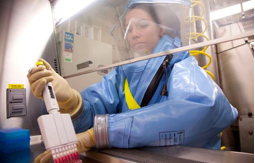
As the recently released Harvard-London School of Hygiene and Tropical Medicine Independent panel on the Global Response to Ebola indicates, the West African Ebola epidemic highlighted
many gaps in national and international health and response systems that are critical for protecting global health security.  Join leaders and experts who helped to lead the U.S. response for Ebola to discuss the international response to the epidemic, the importance of robust biosurveillance systems, and how the experience with Ebola influences our approach to Global Health Security. Speakers:

  • Dr. Matthew Lim, Senior Policy Advisor for Global Health Security, HHS, fmr Civil-Military Liaison Officer to WHO
  • May Chu, Ph.D. fmr Assistant Director for Public Health, Office of Science Technology and Policy, White House; Senior Science Advisor, CDC
  • Jeanette Coffin, Manager U.S. mobile laboratory deployment, MRIGlobal

Feeding Our Cities: Challenges To Urban Food SecuritySociety for International Development
Time: noon-1pm
Location: PwC1730 Pennsylvania Avenue NW, Suite 600 Washington, DC (map)
Thousands of people move into developing cities each day. Given the rapid urban expansion, cities must adapt to accommodate new urbanites, which often draws attention to the increased pressure on existing infrastructure, city services, housing, and other fundamental services. Perhaps the most fundamental of these services is the expectation for a city to facilitate access to food for its residents. As cities experience increasingly complex logistics due to infrastructure not built to accommodate rapid population growth, food security presents a significant challenge in many urban areas. The discussion aims to provide an overview of the urban food security challenges that developing cities face, focusing the role that strengthening urban supply chains play in creating more food secure cities.

Tuesday, December 8, 2015
Conflict Prevention And Resolution Forum: The Future Of Goal 16: Peace And Inclusion In The Sustainable Development Goals– Johns Hopkins School of Advanced International Studies
Time: 9:30-11am
Location: Johns Hopkins SAIS – Nitze Building1740 Massachusetts Ave., N.W., Washington, D.C. 20036 (map)
Room: Kenney-Herter Auditorium
The Sustainable Development Goals (SDGs) make a clear link between conflict and development, thanks to the powerful language about peace in the preamble to the along with the inclusion of Goal 16 on “peaceful and inclusive societies.” This emphasis recognizes that protracted conflict undermined the Millennium Development Goals (MDGs) in many countries, and it creates a new international focus on peacebuilding as one of the solutions to development challenges. How did the international community shift its thinking toward peace and inclusion in the SDGs, and where do we go from here? The inclusion of peace as a goal in the SDGs was not a foregone conclusion, and panelists will discuss both how advocacy helped ensure a role for peacebuilding in the SDGs and what that means for the next 15 years. They will also discuss the challenge that remains for governments, organizations, and individuals to implement and evaluate these global goals. Continue reading “Week in DC: Events 12.7-12.11.2015”

Week in DC: Events 11.30-12.4.2015

Monday, November 30, 2015
Renewed Violence In The Central African Republic: The Roots Of A Political CrisisUnited States Institute of Peace
Time: 12:30-2pm
Location: US Institute of Peace2301 Constitution Avenue NW, Washington, D.C. (map)
Leaders and citizens of the Central African Republic, with the support of the international community, are currently focusing resources and energy on laying the groundwork for a peaceful constitutional referendum and elections in the coming months. But sustained peace in in the country will require longer-term efforts as well, because the recent crisis is rooted in decades of poor governance and persistent insecurity. After the elections, Central African Republic policymakers and the international community will be challenged to lay the groundwork for the new government by addressing the longstanding grievances that contribute to the cyclical nature of the violence in CAR. The panel will bring together some of the foremost experts on the Central African Republic’s recent history of rebellion and instability, including the two most recent coups, international intervention efforts, the country’s political economy, and the ongoing series of United Nations and regional peacekeeping efforts. The experts will draw on their contributions to Making Sense of the Central African Republic, published by Zed Books, to make policy recommendations for the crucial remaining steps in CAR’s political transition and beyond. Pose questions for the panel on Twitter with #CARUSIP.

Tuesday, December 1, 2015
3-D Printing The Bomb? The Challenge For Nuclear NonproliferationCarnegie Endowment for International Peace
Time: 10:30am-12pm
Location: Carnegie Endowment for International Peace1779 Massachusetts Ave. NW, Washington, D.C. 20036 (map)
3-D printing has opened the world to a revolution in manufacturing. But this new technology may enable the most sensitive pieces of a nuclear weapons program to be more easily produced and transferred undetected around the globe. The United States should‬ ‪lead an international effort to prevent a 3-D printing-enabled cascade of nuclear weapons proliferation before it is too late.
Tristan Volpe and Matthew Kroenig will launch their new article, “3-D Printing the Bomb? The Nuclear Nonproliferation Challenge,” and explore how the United States can adopt both top-down and bottom-up strategies to combat this threat to international security‪. ‬Bruce Goodwin will moderate. Continue reading “Week in DC: Events 11.30-12.4.2015”

Week in DC: Events 11.23-11.27.2015

It’s a slow week in events – Enjoy your Thanksgiving!

Monday, November 23, 2015
The “Pitiless” War: A Strategy After The Paris Attacks– German Marshall Fund
Time: 10-11:15am
Location: The German Marshall Fund of the United States1744 R st. NW Washington, DC 20009 United States(map)
In the aftermath of the November 13 terrorist attacks in Paris committed by the self-proclaimed Islamic State group (ISIS), French President François Hollande declared that “….we are going to lead a war which will be pitiless.” What is the proper military, intelligence, and diplomatic response to counter to these recent brutal attacks against Western targets? What role will the United States play going forward? What does Europe need to do differently to meet this threat? What should the transatlantic alliance do about Syria and Iraq? With Hollande scheduled to meet U.S. President Barack Obama in Washington on November 24, and with these questions in mind, The German Marshall Fund of the Unites States (GMF) is pleased to invite you to an on-the-record discussion with three distinguished experts who all recently served in senior U.S. government positions and shaped current policies to address the ISIS threat.

Webinar: Understanding ISIS: Paris, Beirut, And U.S. Policy– Institute for Policy Studies
Time: 4-5pm
IPS Middle East expert Phyllis Bennis will discuss the new developments in Paris and Beirut, in the refugee crisis in Europe and the U.S., and discuss solutions that promote true diplomacy over military action. Terrorism survives wars, people don’t. Last week’s attacks in Paris left over 100 people dead. In Beirut, car bombs killed 43 people. Shortly before these attacks, President Obama defended his “war on terror” and said that ISIS was contained. As the civilian death toll rises and the refugee crisis grows, the U.S. global war on terror continues — and continues to fail, ultimately because you can’t bomb terrorism out of existence. In this 1-hour webinar, IPS Middle East expert Phyllis Bennis will discuss the new developments in Paris and Beirut, in the refugee crisis in Europe and the U.S., and discuss solutions that promote true diplomacy over military action.


Week in DC: Events 11.16-11.20.2015

Monday, November 16, 2015
Global Security Forum 2015: Russia’s Strategic Vision– Center for Strategic and International Studies
Time: 9:30-10:45am
Location: Center for Strategic and International Studies1616 Rhode Island Ave NW, Washington, DC 20036(map)
Featuring: Ambassador Thomas Pickering Former Ambassador to the United Nations, the Russian Federation, India, Israel, and Jordan.
Michael Vickers Former Under Secretary of Defense for Intelligence
Moderator:  Olga Oliker Senior Adviser and Director, Russia and Eurasia Program, CSIS

Countering Terrorism In Tunisia: Prospects For Security Sector ReformProject on Middle East Democracy
Time: noon-1:30pm
Location: Open Society Foundations1730 Pennsylvania Ave NW #700, Washington, DC 20006 (map)
This event is co-sponsored by the Project on Middle East Democracy and the Legatum Institute.
A light lunch will be served at the beginning of the event.
Despite the immense progress Tunisia has made in its transition since the Jasmine Revolution, significant challenges—both internal and external—threaten the future of Tunisia’s democracy. As major terrorist attacks have negatively affected the country’s security and economic stability, Tunisia’s government has struggled to find an appropriate and effective response to counter the threat of terrorism. The Legatum Institute’s upcoming publication The Ministry Strikes Back: Could Counterterrorism Undermine the Revolution in Tunisia? analyzes successive Tunisian governments’ responses to terrorism and considers the relation between these responses and the future of the country’s democratic transition. How can governments effectively counter terrorism without threatening civil liberties? What reforms are needed to make Tunisia’s security sector effective, accountable, and in line with international human rights standards? And how can the United States and the international community play a productive role in encouraging and facilitating these reform efforts?

Tuesday, November 17, 2015
Lessons Encountered: Learning From The Long War Institute for National Strategic Studies
Date: 3:30-5:30pm
Location: National Defense University, Abraham Lincoln Hall
Room: Abraham Lincoln Hall Auditorium
Lessons Encountered is an edited volume which began as an effort to answer two questions from General Martin E. Dempsey, 18th Chairman of the Joint Chiefs of Staff: What were the costs and benefits of the campaigns in Iraq and Afghanistan, and what were the strategic lessons of these campaigns?
Please join us on 17 November as editors Drs. Collins and Hooker and the book’s contributing authors unpack the major findings and takeaways from this extensive examination. The event will be followed by a reception in the Lincoln Hall South Atrium.
R.S.V.P. by 15 November 2015

Wednesday, November 18, 2015
George Mason University SGPIA Master’s Open House
Time: 6:30pm
Location: Arlington Campus, Founders Hall, Room 126 or attend virtually!
We invite you to attend an open house to learn more about the School of Policy, Government, and International Affairs. We will be discussing the different master’s degrees within SPGIA, including our Biodefense master’s and online master’s program. The session will provide an overview of our master’s degree programs, an introduction to our world-class faculty and research, and highlights of the many ways we position our students for success in the classroom and beyond. Our admissions and student services staff will be on hand to answer your questions. Continue reading “Week in DC: Events 11.16-11.20.2015”

Week in DC: Events 11.9-11.13

Monday, November 9, 2015
The Strategic Lessons of the Campaigns in Afghanistan and IraqInstitute of World Politics
Time: 4:30pm
Location: Institute of World Politics1521 16th Street NW Washington, DC (map)
Dr. Joseph J. Collins, the Director of the Center for Complex Operations at National Defense University will speak on the new NDU book, Lessons Encountered:  Learning from the Long War. The book began as two questions from then-Chairman of the Joint Chiefs, General Martin Dempsey: what have been the costs and benefits of our operations in Iraq and Afghanistan; and what are the strategic lessons that one can draw from these two campaigns in the Long War.  The speaker will summarize the 500-page book with an emphasis on the strategic lessons that were identified, and hopefully one day, learned.

Tuesday, November 10, 2015
Responding to Looming Cyber Threats – The New RealityInformation Technology and Innovation Foundation
Time: 8-11:15am
Location: Information Technology and Innovation Foundation1101 K Street, N.W. Suite 610, Washington, D.C. 20005(map)
Please join Arent Fox LLP, the Information Technology and Innovation Foundation (ITIF), and George Washington University’s Center for Cyber and Homeland Security (CCHS) on Tuesday, November 10, for an engaging policy forum where cyber security leaders from industry, government, and academia will discuss the ever-changing landscape of cyber security threats, the role that policymakers can play in reducing risk to the enterprise, and best practices for responding to cyber incidents in a global economy.
Companies today face an unprecedented level of cyber security threats as a result of increases in the number of attacks and the sophistication of the attackers. Each week brings new headlines about data breaches and computer system failures that hurt the customers, profits, and reputations of US businesses. In addition, many companies are confronted with rising compliance costs as government regulators take enforcement actions against those who fail to provide sufficient security safeguards for customer data. And the security threat will be even greater in the future as companies expand their digital footprints with new investments in technologies like cloud computing, mobile devices, and the Internet of Things. The current state of cyber security is not sustainable, but changing it will require thoughtful leadership from both the public and private sector.
Registration and networking will begin at 8:00 am with coffee and light breakfast. The speaking program will begin at 8:30 am.

Climate Change & Food Security: Challenges And Options At Global And National ScalesInternational Food Policy Research Institute
Time: 12:15-1:45pm
Location: International Food Policy Research Institute2033 K St NW, Washington, DC 20006 (map)
Room: 4th Floor Conference Center
As we become increasingly aware of the impacts of heat, drought and other extreme weather events, climate challenges that once seemed a concern for the distant future are becoming more immediate. The impacts of climate change on agricultural commodities and trade need to be analyzed in the context of implications for agricultural production, food security, and resource use. In addition, climate change raises very real and important timescale and planning horizon issues not normally at the forefront of the more traditional economic development research agenda.
As scientists, advocates, researchers, and political leaders prepare to head to Paris for Conference of Parties (COP21) a panel of experts lays out some of the most urgent aspects of climate change and agriculture. Join IFPRI as new results on the impact of climate change on agriculture and food security from the International Model for Policy Analysis of Agricultural Commodities and Trade (IMPACT) are presented, along with a modeling framework and results designed to assist national decision- and policy-makers address climate change and mitigation goals in a politically and economically sustainable way. Following presentations by senior IFPRI researchers Alex de Pinto and Keith Wiebe, a panel of experts will share their views and recommendations. Continue reading “Week in DC: Events 11.9-11.13”