Event Review: Editing Biosecurity, Needs and Strategies for Governing Genome Editing

By Justin Hurt, GMU Biodefense

On December 3rd, 2018, the New America policy study organization hosted an event entitled “Biosecurity in the Age of Genome Editing,” a panel discussion moderated by Daniel Rothenberg of Arizona State University. The discussion centered around the findings of the recently released study, Editing Biosecurity, Needs and Strategies for Governing Genome Editing, and included authors Jesse Kirkpatrick of Arizona State University, Greg Koblentz and Edward Perello, both from George Mason University, and Megan Palmer and David Relman, both from Stanford University. Each author spoke about specific portions of the study, a two-year project designed to ascertain the inherent risks and security challenges regarding the rapidly developing field of genome editing, which includes such technologies as the highly promising but potentially risky CRISPR gene editing technique. Continue reading “Event Review: Editing Biosecurity, Needs and Strategies for Governing Genome Editing”

Pandora Report 11.30.2018

Next week is your chance to attend two amazing biodefense events – one hosted by GMU Biodefense featuring Dr. Kadlec of ASPR and the second on biosecurity in the age of genome editing. You can find all the details below!

Preventing Pandemics and Bioterrorism: Past, Present, and Future
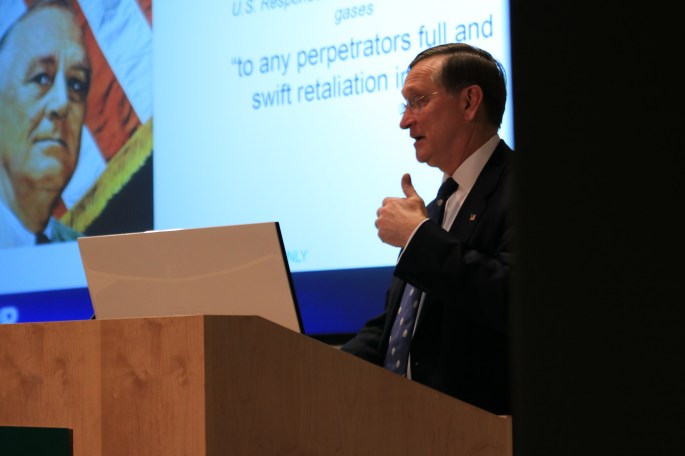
Are you attending our event on the evening of Tuesday, December 4th? Special guest Dr. Robert Kadlec, Assistant Secretary for Preparedness and Response (ASPR) of the Department of Health and Human Services, will be discussing lessons learned for pandemic preparedness since the 1918-1919 influenza pandemic, plans for implementing the new National Biodefense Strategy, and the importance of education for the future of biodefense. Following his speech and Q&A session, you are invited to an informal reception for academic and professional members of the biodefense community to socialize and network. Hors d’oeurves and drinks will be provided. Seats are limited, so make sure you save your spot and RSVP.

Biosecurity in the Age of Genome Editing
Claims of CRISPR use in babies brought forth a flurry of discussion surrounding the ethics and uses of genome editing. This technology promises major beneficial contributions, yet it has the potential to radically alter the security landscape. Next week, on Monday, December 3rd, New America will be hosting an event on the biosecurity implications of genome editing. “In a new report Editing Biosecurity: Needs and Strategies for Governing Genome Editing based on two years of study by researchers from George Mason University, Stanford University, and New America examines the issue and provides concrete and actionable options for policy makers.” This is a great opportunity to learn from and chat with experts in the field on the potential for genome editing technologies to be misused for nefarious purposes and the implications for biosecurity.

Reflections on the 5th Ministerial Meeting of the Global Health Security Agenda
We’re excited to provide you with a full recap of the 5th Ministerial Meeting of the GHSA. Within this summary, you’ll find reflections from NextGen Health Security Network’s Coordinator Jamechia Hoyle, GMU Global Health Security Ambassadors Annette Prieto and Saskia Popescu, and several other attendees. This is a great review of the international meeting in Bali, Indonesia, and the topics that were just as diverse as the biological threats we seek to prevent. From antimicrobial resistance to financing preparedness at the national level, and even strengthening hospital response, we hope you find the review of this exciting meeting as captivating as it was for us to attend!

DRC Ebola Outbreak Updates
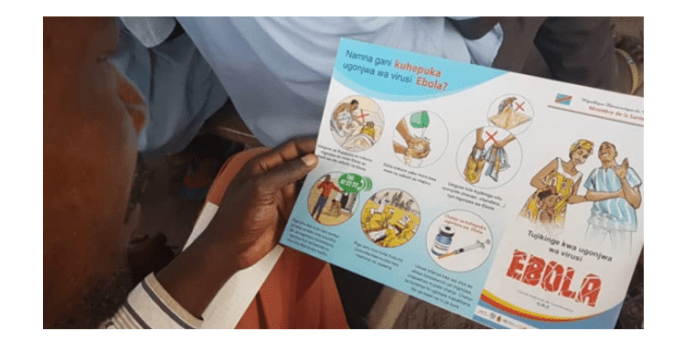
Ebola continues to spread within the DRC. On November 26th, 33 more cases were reported, and then on Thursday, it was reported that the total cases have reached 426, 379 of which are confirmed, and a total of 245 deaths. This outbreak is now the second largest ever. Health centers have been a source for transmission, as nosocomial transmission tends to be a theme in Ebola outbreaks. Additional efforts have been directed to infection prevention and control measures, as well as training and disinfection products. Unfortunately, cases have also been seen in babies – on November 20th, 7 newborn babies and 6 children 2-17 years of age were identified as cases. Approval was given to test experimental treatment as well. “The health ministry said in a Nov 24 announcement that an ethics committee at the University of Kinshasa has approved a protocol for testing four experimental Ebola treatments, which are currently being used on an emergency basis in Ebola treatment centers. They are mAb114, Zmapp, remdesivir, and Regeneron’s REGN-EB3 antibody. The authorization for emergency or compassionate use, however, doesn’t provide for the standardized collection of data on the efficacy and safety of each treatment the health ministry said. The ministry statement indicates that the clinical trial started last week on three of the four treatments (Zmapp, mAb114, and remdesivir) at Beni’s Ebola treatment center. Future trials could be extended to other sites and include REGN-EB3. However, for now, the other Ebola treatment centers will continue to administer the drugs on a compassionate basis.”

The Red Box- A New Healthcare Approach to Infection Control?
GMU Biodefense doctoral student and infection preventionist Saskia Popescu discusses a new approach to improving patient interactions without decreasing isolation precautions during hospitalization of infectious patients. “Although these methods are pivotal to patient and staff safety, donning and doffing PPE is time-consuming, and therefore, often a barrier for health care workers to make frequent visits to a patient’s room. This can often leave patients feeling isolated and create a negative association with isolation precautions for both the staff and patients during their hospitalization. It can also negatively impact medical care. To circumvent these issues, investigators on a new study tested a strategy for supporting isolation precautions while encouraging more health care worker-patient interaction through the use of a ‘red box’. Just like a red line in the operating room and peri-op areas, the red box was a visual reminder. It was a designated area on the floor of a patient’s room created using red duct tape that extended 3 feet beyond the door of the room, but stopped more than 6 feet from the patient. The use of PPE was required outside of the red box; however, while inside, the health care workers could communicate with the patient without the use of PPE, while still maintaining a safe distance from the patient and contact with the environment.”

Unseen Interactions Play An Important Role in Disease Transmission
Sometimes, all it takes is a small moment in time for a disease to spread. A recent study looked to these tiny, often ignored moments in bat populations to see how disease may be transmitted by unseen interactions. “A new study by investigators at the University of California–Santa Cruz set out to find out more about this moment by evaluating disease transmission in bats frequently impacted by the fungal infection, white-nose syndrome. This infection can devastate bat populations and the investigators were hoping to understand the under-the-radar (pun intended) connections between bats that might facilitate the spread of the disease. For the study, the investigators dusted bats with a fluorescent powder that glowed under ultraviolet light to track ‘cryptic connections.’ They evaluated 8 bat hibernation sites in the upper Midwest (fun fact: abandoned mine tunnels are prime bat spots!) in which they found up to 4 different bat species. Prior to ‘dusting’ the bats with the powder, the team observed the bats’ social networks and measured direct physical contacts between bats that were hibernating together in groups, as well as contact between those bats that moved between groups.”

Foundation of Evidence Base for Health Security Implementation – Special Supplement of Healthy Security
In the latest supplement of Health Security, joint efforts with CDC and partners are described. “The foundation of this work is detailed in a series of articles and commentaries in a special supplement to Health Security, “Building the Evidence Base for Global Health Security Implementation,” published Nov. 27 and produced in collaboration with the Johns Hopkins Center for Health Security. In the articles, CDC and global health security partners describe outcomes and lessons learned from multiple countries throughout Africa, Asia, and Latin America that are implementing activities to enhance public health capacities in disease prevention, detection, and response. CDC and partners have gathered and are sharing these lessons on specific approaches and interventions that are most effective in enhancing a country’s capacity for health security. The world has, in recent years, seen a series of alarming public health emergencies that have resulted in thousands of lives lost and billions of dollars in economic losses.”

Stories You May Have Missed:

  • AFM Task Force Created – “The Centers for Disease Control and Prevention (CDC) announced yesterday the creation of the Acute Flaccid Myelitis (AFM) Task Force, which will search for the cause of the mysterious polio-like condition. ‘I want to reaffirm to parents, patients, and our Nation CDC’s commitment to this serious medical condition,’ said CDC Director Robert Redfield, MD, in a press release. ‘This Task Force will ensure that the full capacity of the scientific community is engaged and working together to provide important answers and solutions to actively detect, more effectively treat, and ultimately prevent AFM and its consequences’.”
  • GMU Biodefense PhD Student Spotlight – Curious about our array of biodefense doctoral students? Check out this spotlight on Saskia Popescu. “It was her strong interest in both the medical side of the field and the policy side that drew her to Mason’s Biodefense Program. ‘The program brings it all together to understand the complexities of health security,’ she says. ‘We have experts from both fields coming to the classroom who can speak to all aspects, which is huge’.”


Reflections on the 5th Ministerial Meeting of the Global Health Security Agenda

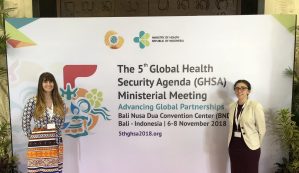
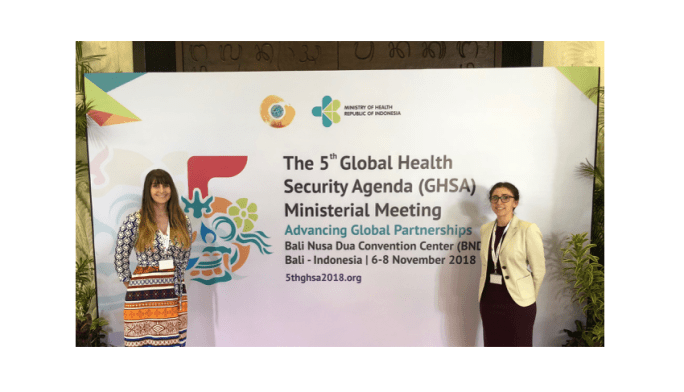
On October 6-8, 2018, the 5h Global Health Security Agenda (GHSA) Ministerial Meeting was held in Bali, Indonesia. This summit aimed “to review the work done to date by GHSA, successes and challenges encountered, and to chart the way forward. Under the theme ‘Advancing Global Partnerships’, the meeting will further elaborate on the existing and possible partnerships at the global and regional levels, as well as a broader engagement of the non-governmental stakeholders in the whole process of our work.” The GHSA is growing with partnership including 64 nations, international organizations, and non-governmental stakeholders.

In partnership with Next Generation Global Health Security Network, GMU’s Schar School Biodefense graduate program sponsored two student fellowships to attend through the George Mason Global Health Security Student Ambassador program. These two students, Annette Prieto and Saskia Popescu, represented GMU Biodefense and have provided a report on their experiences in conjunction with NextGen’s coordinator, Jamechia D. Hoyle, and other NextGen representatives. This is the second year for the George Mason Global Health Security Student Ambassador program and you can read the recap of last year’s summit in Uganda here.

We’re pleased to provide you with reflections from these three days focused on the past, present, and future of the GHSA. Below you’ll find brief sections of and links to the reflections from Dr. Hoyle, and our student ambassadors. You can also access the entire page here (also available in the Word doc here), which includes all reflections from Dr. Hoyle, the student ambassadors, and members of the Next Generation Global Health Security Network.

Next Generation Global Health Security Network Coordinator, Jamechia D. Hoyle
“The 3-day event included a variety of high-level updates and more intimate discussions in side events on next steps under the newly-launched GHSA 2024. Under the GHSA 2024 Framework, the initiative will move toward a more structured approach with “clear governance, collaboration structures and processes, increased engagement of the broader GHSA community, tracking and measurement of progress and enhanced accountability for delivery on commitments”. With over 100 countries expected to complete an external evaluation of health security capacity under this new framework, GHSA members and relevant partners remain committed to undergo planning and resource mobilization to address gaps. However, as repeatedly discussed during the Ministerial Meeting, a key issue remains: financing health security.” Continue reading…

George Mason Global Health Security Student Ambassadors

Saskia Popescu, Biodefense Doctoral Candidate
“While the DRC battles an outbreak of Ebola virus disease and influenza hits the Northern Hemisphere, one might think that antimicrobial resistance was an afterthought at this meeting. The GHSA and those invested in its future are used to putting out fires and still battling the slow burning threats, like antimicrobial resistance, which means that this topic was a frequent point of discussion. Throughout the presentations and sessions, the topic of antimicrobial resistance was frequently brought up, especially in the context of One Health. In the U.S. alone, 23,000 people die a year as a result of resistance infections. The latest WHO reportsreveal a global issue in which the most common infections are increasingly becoming drug resistant. From the agricultural sector to healthcare and the environment, combatting antimicrobial resistance is extremely challenging and many at the meeting vocalized their concerns with such a chimeric dilemma.” Continue Reading..

Annette Prieto, Biodefense MS Candidate
“Although the theme for the 5th Global Health Security Agenda (GHSA) Ministerial Meeting was “Advancing Global Partnerships,” session 3 was the first session that offered insight into the many ways global partnerships can and should be approached for the GHSA 2024. The panel was composed of diverse leaders from different sectors and countries, highlighting the importance of using a multi-sectoral method to achieve the overarching targets of GHSA 2024. The panel discussed a wide range of topics. The first panelist, Dr. Nick Adkin, Deputy Director of Global Health Security, Department of Health and Social Care, United Kingdom, started the session with a specific but enormous problem to global health security: antimicrobial resistance (AMR). AMR affects not only public health, but also trade and food safety.” Continue reading..


GMU Biodefense Student Ambassador GHSA Reflection – Annette Prieto

Annette Prieto, M.S. Biodefense Candidate Schar School of Policy and Government, George Mason University Vice President, Next Generation Global Health Security Network Mason Chapter – USA

Although the theme for the 5th Global Health Security Agenda (GHSA) Ministerial Meeting was “Advancing Global Partnerships,” session 3 was the first session that offered insight into the many ways global partnerships can and should be approached for the GHSA 2024. The panel was composed of diverse leaders from different sectors and countries, highlighting the importance of using a multi-sectoral method to achieve the overarching targets of GHSA 2024.

The panel discussed a wide range of topics. The first panelist, Dr. Nick Adkin, Deputy Director of Global Health Security, Department of Health and Social Care, United Kingdom, started the session with a specific but enormous problem to global health security: antimicrobial resistance (AMR). AMR affects not only public health, but also trade and food safety. As Dr. Adkin stressed, AMR is currently undermining progress already made in the public health field and has the potential to make everyday procedures—like hip replacements and chemotherapy—too risky to perform. Therefore, there is a great need for the global community to work together to fight against AMR. Although it would have been nice to hear how AMR is currently being explicitly battled, it was encouraging to see that many countries had action plans on fighting AMR and that environmental aspects are now being incorporated in the Action Package. Continue reading “GMU Biodefense Student Ambassador GHSA Reflection – Annette Prieto”

NextGen Health Security GHSA Reflections – Jamechia Hoyle

Dr. Jamechia Hoyle, Coordinator Next Generation Global Health Security Network, Visiting Scholar/Assistant Professor, Taipei Medical University, Adjunct Professor, George Mason University – Taiwan/USA

The 5thGlobal Health Security Agenda (GHSA) Ministerial Meeting, hosted by the Government of Indonesia, under the theme “Advancing Global Partnerships” showcased many success stories and overall increased capacity towards realizing a world safe and secure from infectious disease threats. In a time where the Democratic Republic of Congo is facing its 10thoutbreak of Ebola, cholera is spreading throughout Yemen, and the threat of pandemic influenza looms dedicated multisectoral commitments to preparedness are more important than ever. Continue reading “NextGen Health Security GHSA Reflections – Jamechia Hoyle”

GMU Biodefense Student Ambassador GHSA Reflection – Saskia Popescu

Saskia Popescu, MPH, MA, CIC – PhD Candidate, Biodefense George Mason University -USA

The infectious disease threats that jeopardize global health security are vast and evolve as technology becomes more sophisticated, populations grow, and the world gets a bit smaller. Efforts to reduce these vulnerabilities to infectious diseases have to be just as diverse and resilient. Despite strategies at the international, national, and local level, outbreaks continue to stress critical infrastructure. The Global Health Security Agenda (GHSA) seeks to address these vulnerabilities and gaps to help strengthen national capabilities in preparing for, detecting, and responding to infectious disease threats. The GHSA is an especially unique approach to address biological threats as it utilizes multisectoral partners and reaches far beyond the scope of government, non-governmental organizations (NGOs), and academia. In truth, to address the unique predicament of infectious disease, a new strategy was needed and the GHSA is just that. The 5thMinisterial Meeting of the GHSA was recently held in Bali, Indonesia, to address the most pressing issues facing global health security, assess our current state, and look towards the future with the release of the 2024 Framework. Continue reading “GMU Biodefense Student Ambassador GHSA Reflection – Saskia Popescu”

Pandora Report 11.23.2018

We hope you had a lovely Thanksgiving! Salmonella is always a risk with turkey but since our readers are fellow biosafety gurus, we’re pretty sure you’ve already scrubbed the kitchen down to the last microbe! Have you reserved your spot for Dr. Robert Kadlec’s talk Preventing Pandemics and Bioterrorism: Past, Present, and Future on December 4th?

Biosecurity in the Age of Genome Editing
In 2013, researchers demonstrated the use of a new genome editing tool called CRISPR, which allows scientists to add, delete, or modify genes more precisely, faster, and cheaper than ever before. This technology promises major beneficial contributions, yet it has the potential to radically alter the security landscape. A new report, “Editing Biosecurity: Needs and Strategies for Governing Genome Editing,” based on two years of study by researchers from George Mason University, Stanford University, and New America examines the issue and provides concrete and actionable options for policy makers. To discuss the results of the study, New America welcomes Gregory Koblentz, Associate Professor and Director of the Biodefense program at the Schar School at George Mason University; Edward Perello, a research fellow at the Institute for Philosophy and Public Policy at George Mason University; Jesse Kirkpatrick, a New America International Security Program Fellow and Assistant Professor at George Mason University, Megan Palmer, Senior Research Scholar, Center for International Security and Cooperation, Stanford University, and David Relman, Professor of Microbiology & Immunology, Senior Fellow at the Freeman Spogli Institute for International Studies at Stanford University, and Chief of Infectious Diseases at the Veterans Affairs Palo Alto Health Care System. This even will be held on Monday, December 3rd, 2018, from 1-2:45pm EST, at New America. You can RSVP here.

Chemical Weapons – OPCW Meetings 
No, we’re not talking about the strong cologne/perfume a family member wore to holiday dinner, but rather the truly horrifying weapons that utilize chemicals to cause harm. This week the OPCW (Organisation for the Prohibition of Chemical Weapons) is hosting the Conference of the States Parties (CSP23) to the Chemical Weapons Convention & Review Conference (RC4). The CSP23 involves all 193 members of the OPCW and “oversees the implementation of the CWC, promotes the treaty’s objectives and reviews compliance with the treat” while the RC4 is every five years and “is an opportunity for all States Parties to review the operations of the Chemical Weapons Convention and set a strategic direction for the OPCW for the next five years and beyond.” You can find webcasts of the events here. If you’re looking for in-depth reviews of each day, get the scoop from CBW Events, which provides detailed accounts of the day’s events. Alicia Sanders-Zakre of the Arms Control Association is live tweeting as well (@Azakre) throughout the meetings. On Monday, it was reported that the U.S. and the UK were clashing with Russia regarding the new investigation team. “The U.S. and Western powers on Monday clashed with Russia and others over whether the global chemical weapons watchdog could start apportioning blame for poison gas and nerve agent attacks. At a heated session of the Organization for the Prohibition of Chemical Weapons’ annual conference, both sides bitterly fought over a June decision for the group to set up a new investigative team which could name the perpetrators of chemical attacks — a major change in the group’s rules.” An interview with the new Director General of the OPCW, Fernando Arias, was recently published here, where he noted that “I am committed to working with our member-states to protect, defend, and uphold the CWC. This means implementing the mandate given to the organization by the convention, as well as the decisions adopted by the executive council and the plenary body, the Conference of the States-Parties. I will also respect and develop the important work undertaken by my predecessors and their teams.” If you’re needing a refresher on CW, check out the latest book published by the Royal Society for Chemistry, Preventing Chemical Weapons: Arms Control and Disarmament as the Sciences Converge. There was also a publication in Science on preventing chemical weapons as sciences converge – “Concerns about such malign applications of chemical technology are exacerbated by the unstable international security environment and the changing nature of armed conflict, ‘where borderlines between war, civil war, large-scale violations of human rights, revolutions and uprisings, insurgencies and terrorism as well as organized crime are blurred’. It is thus essential that the global community regularly review the nature and implications of developments in chemistry, and its convergence with the life and associated sciences, and establish appropriate measures to prevent their misuse.”

E coli Outbreak – Don’t Eat Romaine Lettuce!
The CDC is warning people not to eat any romaine lettuce amid an E coli O157:H7 outbreak. “So far 32 illnesses have been confirmed in 11 states, and the Public Health Agency of Canada (PHAC) has identified 18 people in Ontario and Quebec infected with the same E coli fingerprint. California (10) and Michigan (7) have reported the most cases, with smaller numbers reported by Connecticut, Illinois, Massachusetts, Maryland, New Hampshire, New Jersey, New York, Ohio, and Wisconsin. Regarding the US cases, the CDC said illness onsets range from Oct 8 to Oct 31, and 13 people have been hospitalized, including one with hemolytic uremic syndrome, a potentially fatal kidney complication. No deaths have been reported.” Reminder – officials have expanded the warning to all romaine lettuce – bagged, mixes, etc.

Review of the Blue Ribbon Study Panel “Biodefense Indicators: Progress in Implementing the National Blueprint for Biodefense”
GMU Biodefense graduate students Michael Krug and Alexandria Tepper have provided us with a recap of this November 14th meeting. “The panel’s initial remarks involved assessing the progress of the federal government to the threat of a biological element, whether it be naturally-occurring, man-made, or accidental, since the release of the panel’s  Blue Ribbon Blueprintin 2015. Senator Lieberman was determined to reinforce the idea that the Blue Ribbon Blueprint should ‘provide a roadmap to improving how we prepare for, defend against, and respond to biological threats of all natures.’ The tone reflected by the chairs acknowledged that the progress made by the federal government has been promising but incomplete.”

Ebola Outbreak Updates & A Tour of the NIH Special Clinical Studies Unit
More peacekeepers and aids have been killed by armed rebels near the Ebola hotspot in the DRC (Beni). Seven UN peacekeepers were killed this weekend. “The action against the armed rebels, who have been responsible for several attacks against civilians in Beni that have stymied response activities, involved the UN mission known as MONUSCO and government armed forces. Their target was the Allied Democratic Forces (ADF).” On Thursday, 13 new cases were reported in the DRC, including 7 cases in Katwa. This brings the total case count  to 386 (339 confirmed, 47 probable, and 219 deaths). “Five of the new cases from Katwa were family members of a confirmed case-patient who died earlier this month. According the Ministry of Health, the family refused vaccination and follow-up before agreeing to be treated in a Butembo Ebola treatment center. The single cases from Oicha and Mutwanga are related to cases from Beni, officials said.” Care for these patients can be tricky when it comes to maintaining infection prevention practices. The NIH just gave a tour of their Special Clinical Studies Unit (SCSU), which is a special isolation unit used for the medical care of patients with high consequence pathogens, like Ebola. ” There, protected by negative air pressure and varying levels of biosecurity, volunteers can be safely exposed to the flu, respiratory syncytial virus (RSV), mosquitoes, or other infectious diseases or vectors for study purposes, without risk to other patients in the Clinical Center. They can also receive care while researchers study their reactions to pathogens in experiments that may lay the foundation for improved vaccines and treatments.”

Review Essay – Rhodeshia’s Improbably Dirty War
Kathleen M. Vogel is reviewing Glenn Cross’s (he’s a GMU Biodefense PhD alum!) account of the Rhodesian use of biological weapons. Vogel points to the recent Salisbury incident – “There are ongoing deliberations by the Organisation for the Prohibition of Chemical Weapons (OPCW), the implementing body of the Chemical Weapons Convention, to determine an international response to this breach of the global norm against chemical-weapons use. The Salisbury incident has underscored long-standing domestic and international concerns about the use of chemical and biological (CB) agents by state and non-state actors.” Cross’s book discusses the sordid history of Rhodesian use of chemical and biological weapons from 1975-1980 – “Dirty War is the culmination of nearly two decades of painstaking research and interviews of dozens of former Rhodesian officers who either participated or were knowledgeable about the top secret development and use of CBW. The book also draws on the handful of remaining classified Rhodesian documents that tell the story of the CBW program. Dirty War combines all of the available evidence to provide a compelling account of how a small group of men prepared and used CBW to devastating effect against a largely unprepared and unwitting enemy. ”

Global Health Security Meets Infection Prevention 
GMU Biodefense PhD student and Global Health Security Ambassador Saskia Popescu gives us a preview of the 5th Ministerial Meeting for the GHSA (more to come, so keep an eye out in the coming weeks!). “Overall, the 5th Ministerial Meeting of the GHSA was a profound experience, not only for an infection prevention epidemiologist like myself, but as a person dedicated to public health and preventing the spread of infectious diseases. It was inspiring to see participants from private industry to government working to help facilitate capacity building from the ground up.  The GHSA is a particularly unique effort in that it brings together so many different people—from private companies to government health officials and even academia. In many ways, this is a perfect example of the diverse efforts needed to address health security vulnerabilities. In a single day, I was fortunate to chat with Swiss health officials on antimicrobial resistance and bioterrorism, university professors on hospital infection prevention as a preparedness tool, and GE healthcare on their efforts to fund health care capability building.”

Stories You May Have Missed:

  • WHO Reports on Global Antibiotic Consumption – “The WHO has been working to strengthen national capacity to monitor antimicrobial consumption across 57 low- and middle-income countries. These efforts have focused on workshops and educational sessions, as well as technical support, to help better understand consumption trends on an international level. In the case of this report, the WHO defined consumption as ‘estimates of aggregated data, mainly derived from import, sales, or reimbursement databases’ while use was defined as ‘data on antibiotics that were taken by individual patients’.”

Review of the Blue Ribbon Study Panel “Biodefense Indicators: Progress in Implementing the National Blueprint for Biodefense”

By Michael Krug and Alexandria Tepper

On November 14th, 2018, the Blue Ribbon Study Panel on Biodefense presented a discussion session entitled “Biodefense Indicators: Progress in Implementing the National Blueprint for Biodefense”. The five-hour event was composed of a series of expert panels spanning multiple fields, agencies, and backgrounds. The panels were moderated by five co-chairs from the Blue-Ribbon Study Panel, including: Senator Joseph Lieberman, Governor Thomas Ridge, Senator Tom Daschle, Representative Jim Greenwood, and Kenneth Wainstein. The discussion centered around the steps being taken to bring the strategies mentioned in the White House’s 2018 National Biodefense Strategy to a reality.

The panel’s initial remarks involved assessing the progress of the federal government to the threat of a biological element, whether it be naturally-occurring, man-made, or accidental, since the release of the panel’s  Blue Ribbon Blueprintin 2015. Senator Lieberman was determined to reinforce the idea that the Blue Ribbon Blueprint should “provide a roadmap to improving how we prepare for, defend against, and respond to biological threats of all natures.” The tone reflected by the chairs acknowledged that the progress made by the federal government has been promising but incomplete. The recent release of the 2018 National Biodefense Strategywas a major step forward in attempting to recognize and fix the shortcomings surrounding the biological threat facing the United States.  Gov. Tom Ridge explained the difficulties facing the Blue Ribbon’s cause, saying “The threat is real. It’s not sexy. Nobody’s talking about it. Whether it’s natural or generated by design, it’s a real problem. I’m interested in discussing today how we go forward as a country.” This statement reverberated the purpose of the panel and the uphill challenges facing the implementation of the National Biodefense Strategy process. Continue reading “Review of the Blue Ribbon Study Panel “Biodefense Indicators: Progress in Implementing the National Blueprint for Biodefense””

Pandora Report 11.16.2018

We’re back from the 5th Ministerial Meeting of the Global Health Security Agenda (GHSA)! We’ll be reporting out on this event in the coming weeks, so keep an eye out for all things GHSA. Influenza season is ramping up and you’ll want to check out the latest article on looking beyond the decade of vaccines.

Preventing Pandemics and Bioterrorism: Past, Present, and Future
We’re just weeks away from this exciting event – are you registered? Preventing Pandemics and Bioterrorism: Past, Present, and Future is a special event in celebration of the 15th anniversary of the George Mason University Biodefense Program at the Schar School of Policy and Government. We invite you to attend this exciting opportunity to hear from Dr. Kadlec of ASPR about lessons learned for pandemic preparedness since the 1918-1919 influenza pandemic, plans for implementing the new National Biodefense Strategy, and the importance of education for the future of biodefense. Following his speech and Q&A session, you are invited to an informal reception for academic and professional members of the biodefense community to socialize and network. Make sure to RSVP soon as seats are limited for this December 4th event.

Russian Disinformation & the Georgian “Lab of Death”
A recent BBC investigation has found some disturbing information regarding Russian media making false claims about a U.S.-funded lab in Georgia. “The Russian Foreign Ministry, Defence Ministry and pro-Kremlin media claimed recently that untested drugs were given to Georgian citizens at the lab, resulting in a large number of deaths. The US has accused Russia of disinformation in order to distract attention away from incidents such as the Salisbury poisonings.” This episode is part of a series the BBC is providing on disinformation and fake news.

Ebola Outbreak Updates
The Ebola virus disease outbreak in the DRC continues to grow. 15 cases were reported on Monday as well as another violent attack in Beni. “WHO Director-General Tedros Adhanom Ghebreyesus, PhD, said on Twitter that he had been briefed on a violent attack that occurred in Beni on the night of Nov 10. ‘All WHO staff safe, but my heart goes out to families who have lost loved ones in this appalling and unacceptable attack, which we condemn in the strongest terms,’ he wrote. According to a local media report translated and posted by H5N1 Blog, which focuses on infectious disease news, at least five civilians were killed and several children kidnapped in an attack by rebels with the Allied Democratic Forces (ADF) in Beni’s Mayimoya district. The report said two other people were killed in two other attacks the same day in Beni’s Runwenzori neighborhood, one linked to ADF rebels and the other by suspected Mai Mai militia members.” The latest situation report lists 333 cases and 209 deaths, with 31 new confirmed cases reported during the reporting period (Nov 5-11). Early this morning, the DRC announced three more cases and 1 death. Health officials are also reportedly planning to launch a clinical trial of three antibody treatments and an antiviral drug, within the area. These drugs are currently in utilization in the Ebola treatment centers within the area but only under compassionate use. The UK is contributing funds to help Uganda step up prevention and preparedness efforts as well. “On a recent visit to The Medical Research Council/Uganda Virus Research Institute (URVI) and the London School of Hygiene and Tropical Medicine Research Unit in Entebbe, UK Minister for Africa Harriett Baldwin announced that the UK will support Uganda’s National Task Force with up to £5.1 million ($6.6 million USD) to support Ebola preparedness and prevention efforts in Uganda. This funding will support surveillance in high-risk districts at the border with the Democratic Republic of Congo (DRC); risk reduction communication in communities; infection prevention and control measures as well as provide for improved case management.” Peter Salama, WHO Emergency Response Chief, has noted that the outbreak could last another six months – “It’s very hard to predict timeframes in an outbreak as complicated as this with so many variables that are outside our control, but certainly we’re planning on at least another six months before we can declare this outbreak over,”.

ELBI Fellowship Application Opens
The Emerging Leader for Biosecurity Initiative (ELBI) run by the Center for Health Security is now accepting applications. This is a great opportunity that several Biodefense students have been able to take advantage of for the last several years. GMU Biodefense has had several fellows – Yong-Bee Lim  is currently an ELBI fellow and Saskia Popescu, Siddha Hover, and Francisco Cruz have represented our biodefense program in previous years. If you’re a current GMU biodefense student or alumni and are interested in applying and plan to request a letter of recommendation from the Biodefense program director, please do so ASAP. Dr. Koblentz asks that applicants send a copy of their application materials (personal statement, essay, and current resume or cv) and an unofficial GMU transcript by December 5, 2018.

 One Health in the 21st Century Workshop
The One Health in the 21st Century workshop will serve as a snapshot of government, intergovernmental organization and non-governmental organization innovation as it pertains to the expanding paradigm of One Health. One Health being the umbrella term for addressing animal, human, and environmental health issues as inextricably linked, each informing the other, rather than as distinct disciplines. This snapshot, facilitated by a partnership between the Wilson Center, World Bank, and EcoHealth Alliance, aims to bridge professional silos represented at the workshop to address the current gaps and future solutions in the operationalization and institutionalization of One Health across sectors. The workshop will be held on November 26th at the Wilson Center. You can RSVP here.

USDA ARS 5th International Biosafety & Biocontainment Symposium: Biorisk and Facility Challenges in Agriculture
Registration is open for this February 11, 2019 event! The symposium will provide 2.5 days of scientific presentations and exhibits regarding agricultural biosafety and biocontainment.

WHO Report on Surveillance of Antibiotic Consumption
The WHO has just released their report on global antibiotic consumption and the surveillance methods surrounding efforts to reduce antimicrobial resistance. “Since 2016, WHO has supported capacity building in monitoring antimicrobial consumption in 57 low- and middle-income countries through workshops, trainings and technical support. At this stage, 16 of these countries were able to share their national data with WHO. Other countries are currently in the process of data collection and validation.In total, 64 countries and Kosovo1 contributed data on antibiotic consumption for this report, with the bulk of data coming from the European region and countries with pre- existing, mature surveillance systems. The consumption data showed wide intra- and interregional variation in the total amount of antibiotics and the choice of antibiotics consumed. The overall consumption of antibiotics ranged from 4.4 to 64.4 DefinedDaily Doses (DDD) per 1000 inhabitants per day.”

Stories You May Have Missed:

  • Influenza Vaccine Efficacy Among Patients with High-Risk Medical Conditions in the U.S. – Researchers utilized data from the US Influenza Vaccine Effectiveness Network from 2012-2016 to analyze vaccine effectiveness (VE) “of standard-dose inactivated vaccines against medically-attended influenza among patients aged ≥6 months with and without high-risk medical conditions. Overall, 9643 (38%) of 25,369 patients enrolled during four influenza seasons had high-risk conditions; 2213 (23%) tested positive for influenza infection.Influenza vaccination provided protection against medically-attended influenza among patients with high-risk conditions, at levels approaching those observed among patients without high-risk conditions. Results from our analysis support recommendations of annual vaccination for patients with high-risk conditions.”


Pandora Report: 11.3.2018

November 3rd is One Health Day – how are you celebrating? Just a friendly reminder that the Pandora Report will be on hiatus next week as we’ll be attending the GHSA Ministerial Meeting. Follow us on Twitter (@PandoraReport) to get live updates from Bali!

Schar School of Policy and Government Hosts Preventing Pandemics and Bioterrorism: Past, Present, and Future
Join us on December 4th for Preventing Pandemics and Bioterrorism: Past, Present, and Future, featuring Robert Kadlec, M.D., Assistant Secretary for Preparedness and Response (ASPR)  Health & Human Services, Office of the Secretary. We are excited to announce this special event in celebration of the 15th anniversary of the George Mason University Biodefense Program at the Schar School of Policy and Government. We invite you to attend this exciting opportunity to hear from Dr. Kadlec about lessons learned for pandemic preparedness since the 1918-1919 influenza pandemic, plans for implementing the new National Biodefense Strategy, and the importance of education for the future of biodefense. Following his speech and Q&A session, you are invited to an informal reception for academic and professional members of the biodefense community to socialize and network. Make sure to RSVP here to save your spot!

GMU Master’s Open House
Now is your time to start a future in biodefense – earn a MS in biodefense at George Mason University! Whether it’s online or in person, we’re the place to be for all things health security – from anthrax to Zika. In fact, we’re sending two of our graduate students to the Global Health Security Agenda Ministerial Meeting in Bali next week to act as student ambassadors! Don’t miss the Master’s Open House on Thursday, November 15th at 6:30pm at our Arlington Campus. This is a perfect opportunity to chat with faculty and learn about the admissions process, what it takes to earn a degree in biodefense, and the type of courses you’ll get to enjoy (hint: they’re seriously awesome and diverse).

NextGen GHSA Side Event – Bali
Will you be at the GHSA Ministerial Meeting next week? Look for our two GMU student ambassadors and attend this wonderful event! The Next Generation Global Health Security Network was established in 2014 to engage and facilitate contributions by emerging scholars, scientists, and professionals from government and non-governmental institutions to the Global Health Security Agenda and other global health security initiatives. During the GHSA NextGen Side Event, Tuesday, November 6 from 7:30-9:00, conference attendees will have an opportunity to learn about the innovative project from the winning team of the NTI-sponsored “Biosecurity Competition”, collaborative projects with other GHSA partners, and upcoming priority activities aligned with the strategic vision to promote education, innovation and participation of our members in the GHSA.

NTI’s 2018 Next Generation for Biosecurity Competition
Speaking of the GHSA Ministerial Meeting…NTI|bio has just announced the winner of their collaboration with the Next Generation Global Health Security Network – the 2018 Next Generation for Biosecurity Competition. “NTI | bio, in partnership with the Next Generation Global Health Security Network, is pleased to announce the winners of the 2018 Next Generation for Biosecurity Competition: Peter Babigumira Ahabwe, Infectious Diseases Institute, Uganda; Dr. Frances Butcher, Oxford School of Public Health, UK; and Javier Rodriguez, National Commission of Atomic Energy, Argentina. Their proposal, ‘Act Like a Pro: Scenario-Based eLearning for the Next Generation of Biosecurity Learners,’ is an openly accessible online platform for students and entry-level professionals.  The ‘Act Like a Pro’ platform will also feature a forum for peer-to-peer discussion, monitored by a biosecurity expert. The winning team was selected from proposals received across 14 countries and six continents.  Proposals were evaluated by an international expert panel of 24 judges from seven countries across five continents.  The winning team will receive $15,000 to implement their proposal and will be honored during the GHSA Ministerial.  This competition underscores the importance of promoting a global cadre of multi-sectoral, young professionals dedicated to reducing catastrophic biological risks.”

Stay Connected – GMU Biodefense
Are you a GMU biodefense alum or current student? Make sure to update your information with our Stay Connected program so that we can share the latest news with you and brag about the awesome things you’re doing!

One Health Day
The connection between human, animal, and environmental health is undeniable. Check out this TED talk on human canaries in the coal mine, which discusses veterinary pathology and disease transmission between humans and animals. On November 3rd, we celebrate this day internationally – “One Health Day answers the urgent need for a One Health trans-disciplinary approach towards solving today’s critical global health challenges. It is a timely initiative that gives scientists and advocates a powerful voice for moving beyond current provincial approaches to emerging zoonotic infectious diseases, antimicrobial resistance, climate change, environmental pollution, food safety, comparative/translational medicine and many other problems, to a holistic default way of doing business.”

Conversation with Director Robert Redfield of CDC: The Latest on the DRC Ebola Outbreak
Don’t miss this even on Monday, November 5th, from 10-11am in the Dirksen Senate Office Building. “Robert Redfield, Director for the Centers of Disease Control and Prevention, will join Tom Inglesby, Director of the Johns Hopkins Center for Health Security, for a moderated discussion followed by time for questions and answers. The purpose of this seminar is to discuss the latest events in the DRC Ebola outbreak, the serious challenges involved and the possible trajectory of the outbreak, how CDC and the US government are involved, and what is needed to control the outbreak. Our goal is to provide the Hill community and other stakeholders with the most valuable and current information on this outbreak and how the United States is participating in the international response.” You can RSVP here.

Pandora Report YouTube Channel 
On top of bringing you a weekly dose of biodefense news, we also have a YouTube channel for informative videos! The latest upload is a speech Dr. Koblentz (GMU biodefense graduate program director and professor) gave at the 2016 UN Security Council meeting.

Stories You May Have Missed:

  • Ebola Outbreak Update – “Health officials in the Democratic Republic of the Congo (DRC) said yesterday that an Ebola case has been detected in a previously unaffected health zone, which is located between the two current hot spots, and that eight more cases have been confirmed, based on reports yesterday and today. Also, the World Health Organization (WHO) again said the increase in Beni and Butembo is concerning, as security incidents threaten residents and frontline workers and pockets of resistance pose tough challenges”. The total case counts are now 285 with 250 confirmed and 180 deaths.
  • New MERS-CoV Cases – “The World Health Organization (WHO) today released an overview of eight new MERS cases reported in Saudi Arabia from Sep 17 to Oct 15. Of the eight cases, three proved fatal. With the new cases, the total global number of laboratory-confirmed MERS-CoV (Middle East respiratory syndrome coronavirus) cases reported to WHO since 2012 is 2,262 with 803 associated deaths. Three of the new cases were in Riyadh, and two were in Buraydah. Taif, Najran, and Asyah also reported one new case each. None of the patients were healthcare workers, and all but one were men. Patients’ ages ranged from 22 to 66.”