
Pandora Report 10.4.2024

This week’s Pandora Report covers the recently-reported outbreak of Marburg virus disease in Rwanda, the recent discovery of four more Missouri healthcare workers who experienced respiratory symptoms after caring for a patient infected with H5 avian influenza, new human cases of bird flu in California, and more.

Upcoming Virtual Information Sessions on the Biodefense Graduate Program

If you are interested in a career in biodefense or global health security or want to develop the knowledge and skills necessary to work at the nexus of health, science, and security, find out what the Schar School of Policy and Government has to offer. 

A virtual open house for the MS in Biodefense will be held online on Thursday, October 17, 7 to 8 p.m. ET The Biodefense Program offers flexible part-time or full-time options that teach applicable, real-world skills for bridging the gap between science and policy.  The online session will provide an overview of the program, as well as the application process, student experience and graduate outcomes.  Register here.

The Schar School PhD programs will be holding a virtual open house on Wednesday, October 30 from 6-7:30 PM. Please join Dr. Gregory Koblentz, director of the Biodefense Graduate Program, to learn more about the Biodefense PhD program and ask any questions you may have. Register here.

Marburg Outbreak Confirmed in Rwanda

Last week, the Rwanda Ministry of Health announced that it had confirmed cases of Marburg virus disease (MVD) in the country. Blood samples taken from symptomatic people were tested using RT-PCR, and were found to be positive for Marburg virus. So far, there have been 36 confirmed cases and eleven deaths across at least seven of the country’s 30 districts. As of last week, over 70% of cases were in healthcare workers from two locations in Kigali, the nation’s capital. More than 300 contacts have been traced so far.

This is the first time MVD has been reported in the country, and the WHO has emphasized that it is likely the disease will spread to neighboring countries, many of which are currently struggling amid the mpox outbreak. There is currently no available treatment or vaccine for MVD. WHO has assessed the risk of this outbreak to be very high nationally, high regionally, and low globally.

MVD, formerly known as Marburg hemorrhagic fever, is severe, often fatal in humans, and is caused by a virus in the Filoviridae family, which also includes Ebola virus. Egyptian fruit bats are natural hosts of the virus; it is spread from them to people, and it then spreads further via human-to-human transmission. While the average MVD case fatality rate is about 50%, this has varied from 24% to 88% during past outbreaks. Early supportive care improves survival odds.

Experts are concerned as there were already more than two dozen confirmed cases by the time the Rwandan government announced the outbreak. It can take as long as 21 days between exposure and symptom onset with MVD. Furthermore, because Rwanda has never had an outbreak before, healthcare professionals may have not been suspicious of MVD and did not think to test for it. All of these are worrying signs that the disease may have been circulating in the country for a few weeks before the announcement.

The Centers for Disease Control and Prevention issued a Health Alert Network Health Advisory on Thursday to inform clinicians and health departments in the US about the outbreak and advise them to be aware of the potential for imported cases.

Read more:

World Leaders Announce Target of 10% Fewer Superbug Deaths by 2030

World leaders gathered during a meeting at the UN General Assembly announced a new political declaration on antimicrobial resistance (AMR) that was signed by 193 member states. Each year, AMR is linked to 4.7 million deaths, and that number is projected to reach 8.2 million by 2050. The declaration calls for increased action across sectors like farming, pharmaceutical manufacturing, environmental protection, and healthcare to combat AMR. Furthermore, it calls for financial support for poorer countries, who are most affected by this issue, and to commit to scaling up efforts in order to reduce AMR-related deaths by 10% by the end of the decade. The declaration also invites the Quadripartite organizations (WHO, UN Environment Programme, World Organisation for Animal Health, and the Food and Agriculture Organization of the UN) to create an independent panel to provide scientific evidence to support strategies to combat AMR. They will also update a global AMR action plan by 2026.

Avian Influenza Updates

Four More Missouri Healthcare Workers Develop Respiratory Symptoms After Contact with Bird Flu Patient

Four more healthcare workers who came into contact with a hospitalized bird flu patient in August are now confirmed to have later developed mild respiratory symptoms, bring the total to six. The Missouri patient had no contact with infected animals. One worker tested negative on a flu test, while the others’ symptoms were discovered too late to do testing. Missouri is continuing to investigate this situation with CDC’s assistance.

New Human Cases in California

CDC has confirmed two additional human cases of H5 bird flu from specimens submitted by California. Both cases are in people with occupational exposure to infected cattle. While California’s investigation is ongoing, there is no known link or contact between the two cases, which suggests these are two separate instances of animal-to-human spread of the virus. As the identification of H5 in people with exposure to infected animals is expected, CDC has not changed its risk assessment for the general public.

Read more:

ISC Announces Expert Group for the Biological Weapons Convention

The International Science Council (ISC) recently announced the formation of its Expert Group dedicated to enhancing the Biological Weapons Convention (BWC). In May, ISC and the UN Office for Disarmament Affairs were jointly awarded a grant by the Geneva Science Policy Interface to strengthen the BWC. In a statement, ISC said this “…initiative is a significant step toward integrating scientific advancements into the operations of the BWC, addressing the critical need for a structured mechanism to review relevant science and technology developments.”

It further explained that “The ISC project “Science-policy synergies for the Biological Weapons Convention” fosters collaboration between BWC delegates and scientific experts, developing methodologies that build mutual understanding and trust. By facilitating targeted discussions and creating tailored knowledge products, the initiative aims to equip delegates with tools to tackle current and future biological threats, enhancing the BWC’s effectiveness in global biosecurity.”

Learn more here.
“Inside HHS’ ‘One-Stop Shop’ for Health sector Cybersecurity”

Federal News Network’s Justin Doubleday interviews Biodefense PhD Program alumnus and Schar School adjunct professor Brian Mazanec in this article and accompanying Federal Drive episode. Mazanec is currently the deputy director of the Administration for Strategic Preparedness and Response’s Center for Preparedness. He discusses how his organization is responding to recent attacks like the Change Healthcare ransomware attacks and what HHS can offer health organizations recovering from major cyber incidents.

“Anonymous Answers: How Can We Manage Infohazards in Biosecurity?”

Anemone Franz and Tessa Alexanian discuss input from eleven experts on how to best manage infohazards in biosecurity in the third part of this series from 80,000 Hours. Answers focus on helping researchers use information responsibly, limiting secrecy to improve problem solving, considering the effects of withholding information, and more.

“Vanishing Workforce: An Antimicrobial Resistance Threat”

James Anderson, Chair of the AMR Industry Alliance, discusses the decline of the antimicrobial research and development field, its importance to the fight against AMR, and how this decline can be reversed, writing in his conclusion, “Ultimately, to meet the need for new antimicrobials that can stay ahead of the resistant bacteria, both the public and private sectors should invest in the people who are responsible for the discovery of antimicrobials to attract and retain the best scientists into the future.”

“Proceedings of Workshop: Mitigating Arboviral Threat and Strengthening Public Health Preparedness”

From NASEM: “Arboviruses, or viruses carried by arthropods like mosquitoes or ticks, are responsible for hundreds of thousands of deaths worldwide each year. As the climate changes globally, the geographic distribution of these diseases, including Zika, dengue, chikungunya, West Nile, and yellow fever, are steadily expanding. The National Academies Forum on Microbial Threats hosted a public workshop in December 2023 to explore avenues of threat reduction from known and emerging arboviral diseases in the context of public health preparedness and capacity building. The workshop featured talks from experts in entomology, public health, ecology, virology, immunology, disease modeling, and urban planning.”

“This proceedings highlights the presentations and discussions that occurred at the workshop.”

“WHO Technical Advisory Group on the Responsible Use of the Life Sciences and Dual-Use Research: Report of the Meeting, Geneva, Switzerland, 16-18 April 2024”

“The WHO Technical Advisory Group on the Responsible Use of the Life Sciences and Dual-Use Research (TAG-RULS DUR) was established to provide independent advice to WHO on the monitoring and mitigation of biorisks, the advances in the life sciences and related technologies, the governance of dual-use research and the responsible use of the life sciences. The first hybrid meeting of the group took place at WHO headquarters in Geneva, from 16 to 18 April 2024, in order to provide the opportunity for TAG-RULS DUR members to exchange on WHO and related advisory groups activities relevant to their areas of work; to discuss current and upcoming activities related to the implementation of the WHO Global Guidance Framework for the responsible Use of the Life Sciences and to provide technical guidance to WHO.”

Read the meeting report here.

“Exclusive: Sen. Todd Young on biosecurity, National Security Commission on Emerging Biotechnology (NSCEB)”

“Sen. Todd Young (R-IN) was recently named Chair of the National Security Commission on Emerging Biotechnology (NSCEB), established by Congress to recommend policy on biotech and national security. Bio.News spoke to him in an exclusive interview about the work of the commission, the BIOSECURE Act and PASTEUR Act, and more.”

1540 Compass Second Issue

“The second issue of the 1540 Compass explores the critical components of United Nations Security Council resolution 1540 (2004), with a focus on border and export control systems crucial for its full and effective implementation. This edition particularly underscores the significance of clauses in operative paragraph 3, highlighting the global commitment to securing a world where proliferation risks are minimized through robust domestic controls.”

“This issue offers a comprehensive look at the implementation, especially across Africa, examining the varied approaches to managing exports of biological weapons-related materials. It presents a range of contributions and in-depth interviews that delve into national efforts to develop voluntary action plans and regional collaborations.”

“Discussions also extend to the impact of emerging technologies, including artificial intelligence, on the resolution, especially concerning the need for end-user controls in exports. The edition further explores strategic trade controls with best practices from selected countries that have effectively implemented such measures.”

“A significant portion of this issue is dedicated to addressing the challenges of proliferation finance, providing insights into the complexities of this area without an official definition and offering practical recommendations for future approaches.”

“In recognizing the role of civil society in preventing weapons of mass destruction proliferation, the journal includes discussions on how various stakeholders can collaborate with governments and international organizations to ensure compliance with the resolution.”

“This issue also introduces a new Letters-to-the-Editor section, encouraging a thoughtful and nuanced discussion within the dedicated community towards enhancing global security through stringent border and export controls.”

“Reforming the Australia Group to Better Combat Biological Threats”

Kyle Wilgus discusses recent moves by the Department of Commerce’s Bureau of Industry and Security to remove export controls on biological materials and technologies for companies and individuals residing in nations participating in the Australia Group. He argues that this is an important step in strengthening biotechnology and broader technological innovation because it “…incentivized free, unburdened trade in biological materials and technologies among its members and showcased the potential impact of the Australia Group.” He argues that, in the future, the group should build on this progress by “reformulating and expanding to better mitigate the ever-evolving spectrum of biological threats.”

“Healthy Ecosystems, Healthy Humans”

Tomas Weber discusses how biodiversity acts as a barrier against disease as “Flourishing ecosystems safeguard humans from a panoply of zoonotic illnesses,” in this piece from Hopkins Bloomberg Public Health. He covers multiple drivers of biodiversity loss and research work that is being done to help combat these effects.

“‘He Began to Complain of Sharp Pain in the Stomach”: Official Documents Obtained by The Insider Confirm Navalny Was Poisoned in Prison”

Roman Dobrokhotov re-visits Navalny’s death in this piece, writing in part “The Insider has obtained access to hundreds of official documents related to Russian opposition leader Alexei Navalny’s death in the Polar Wolf penal colony in the Russian Far North on Feb. 16, 2024. Officially, Navalny’s death was attributed to natural causes, and Russia’s Investigative Committee stated in July that the case “does not have a criminal nature.” However, the contents of the documents in The Insider’s possession demonstrate that Russian authorities consistently removed references to symptoms Navalny was noted by prison doctors to have been suffering — symptoms that did not fit with the Russian state’s official cause of death. As medical experts confirm, these symptoms clearly indicate that Navalny was poisoned.”

“Chemical Terrorism Threat Perceptions”

 In his latest working paper, Alexander Kelle of the Arms Control and Emerging Technologies program at IFSH Hamburg examines the evolving salience of chemical terrorism within the CWC framework and the contribution of the OPCW. He finds that responses have been linked most often to the international cooperation and assistance norms, and regularly noted the work of the Open-Ended Working Group on Terrorism. Read the working paper here.

ICYMI: NTI|Bio Briefs Capitol Hill on Innovative Solutions to Biotechnology Risks

From NTI: “Against a backdrop of growing risks associated with advances in bioscience and biotechnology, NTI | bio and the Center for Arms Control and Non-Proliferation (CACNP) hosted a September 17 Congressional staff briefing on “Preventing Biological Catastrophe and Protecting the U.S. Bioeconomy.”’

“The event, which explored opportunities for Congress and the White House to mitigate the risks, featured a panel discussion on safeguarding evolving capabilities that arise from the combination of artificial intelligence with biotechnology and providing oversight of dual-use life science research of concern. Participants included:

Dr. Ryan Ritterson, specialist lead, Deloitte.

Mr. Daniel Gastfriend, director for Biodefense and Pandemic Preparedness, National Security Council

Dr. Gregory Koblentz, associate professor and director of the Biodefense Graduate Program, George Mason University”

Read more here.

NEW: Synthesis Screening Workshop 2-Securing Bioproduction Against an Evolving Threat Landscape

From AI for SynBio: “Advances in AI are changing the threat landscape in many fields, including in the field of biology. With AI assisted design tools, the complexity and obfuscation potential of the synthetic biological materials is expected to increase. Conversely, the same AI advances can be deployed to help screen DNA/RNA synthesis requests before they can be used for malicious purposes. This workshop seeks insight on current and future advances that will shape both the threat and countermeasure landscapes and prepare the community for the changing threat landscape. The workshop seeks perspectives from academia, industry, and government….The Fall Workshop will focus on the evolving landscape in the years beyond 2026 with an eye towards 2030.”

This hybrid event will take place on October 9. Learn more and register here.

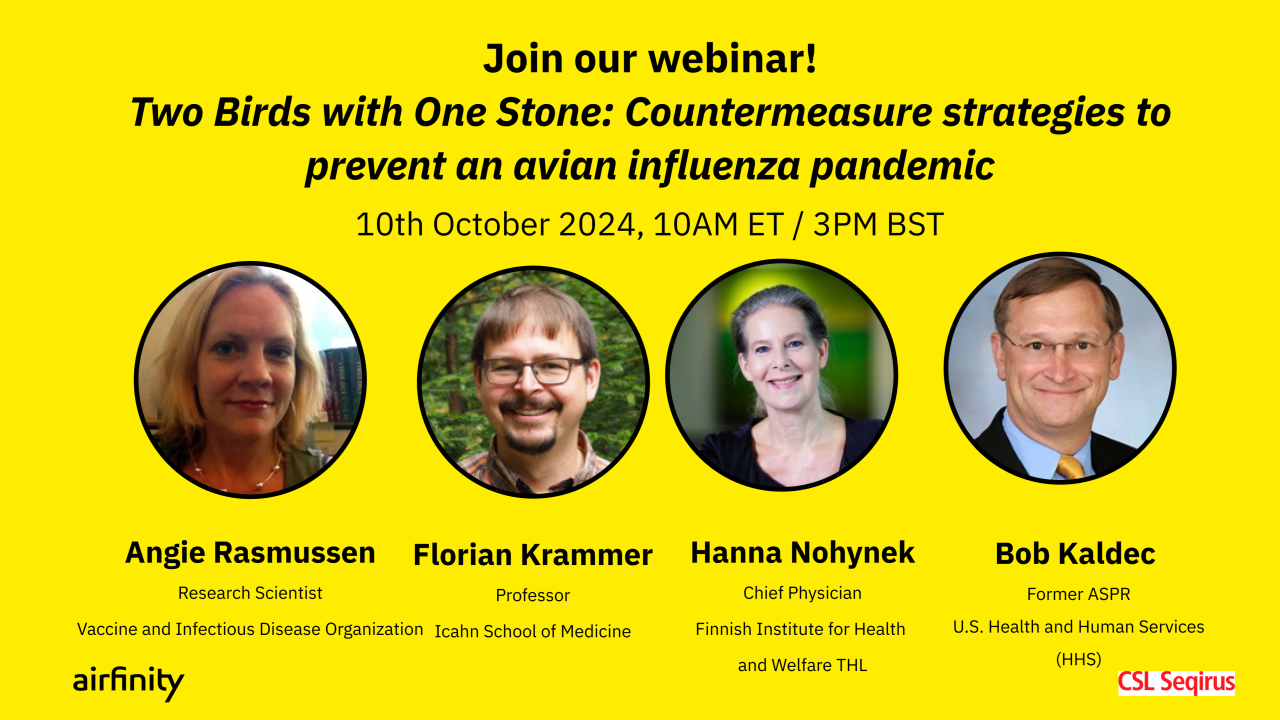
NEW: Airfinity Avian Influenza Webinar

“Join Airfinity and its expert panelists in a discussion of the current avian influenza outbreak. Key topics will include the evolution of the virus, the potential of a recombination event and the current state of pandemic preparedness.”

This event will take place on October 10 at 10 am ET. Learn more and join here.
NEW: Potential Research Priorities to Inform Readiness and Response to Highly Pathogenic Avian Influenza A (H5N1)

“The National Academies will host a 2-day virtual public workshop, October 22-23, to explore research priorities for the ongoing H5N1 outbreak in the U.S. Recognizing the interconnection between people, animals, and their shared environment, this workshop will take a One Health approach to bring together federal government agencies, the academic community, and the private sector, as well as other relevant stakeholders across the health, agriculture, and food safety sectors.”

“Workshop discussions will focus on basic science and research areas of concern and may help inform future research that could provide local, national, and global communities with information about virus transmission, mitigation of risks, and appropriate measures to prevent the spread of disease.”

Learn more and register here.

NEW: One Health and the Politics of COVID-19 Book Launch

The Writer’s Center is hosting a book launch for Dr. Laura Kahn’s new book, One Health and the Politics of COVID-19 (blurb below) on November 23 at 2 pm EST in Bethesda, MD. Learn more and RSVP here.

One Health and the Politics of COVID-19 unpacks the mysteries of COVID-19’s origins to impart important lessons for future outbreaks. The One Health concept recognizes the interconnected links among the health of humans, animals, plants, and the environment. By comparing the history, science, and clinical presentations of three different coronaviruses—SARS-CoV-1, MERS, and SARS-CoV-2 (COVID-19)—Kahn uncovers insights with important repercussions for how to prepare and avoid future pandemics. The One Health approach provides a useful framework for examining the COVID-19 pandemic. Understanding the origins of this zoonotic disease requires investigating the environmental and molecular biological factors that allowed the virus to spread to humans. The book explores the many ways in which the wild animal trade, wet markets, and the camel industry contributed to the spread of the earlier SARS-CoV-1 and MERS coronaviruses. For SARS-CoV-2 (COVID-19), Kahn examines the biosafety, biosecurity, and bioethics implications of gain-of-function research on pandemic potential pathogens. This book is a must read to understand the geopolitics of the COVID-19 pandemic.”

Responsible AI: Design, Development, and Use

Join the Mason Autonomy and Robotics Center (MARC) for this 3-day in-person course on Responsible AI: Design, Development, and Use!  As AI becomes increasingly pervasive across various domains, it is essential that we prioritize responsible principles, policies, and practices. Learn from top AI scholars and industry experts about ethical and safe AI deployment. You’ll also gain the critical skills to navigate the complexities of AI in business, healthcare, transportation and more.
Course Dates: October 15-17, 2024
Registration Deadline: October 8, 2024

FLUency: True Expertise and Effectiveness in the Battle Against Influenza

“This Commission meeting, FLUency: True Expertise and Effectiveness in the Battle Against Influenza, will be held on Tuesday, October 8th, in Washington, DC. The focus of this meeting will be to provide the Bipartisan Commission on Biodefense with a better understanding of: (1) national leadership to defend food and agriculture against influenza; (2) federal operational requirements for preparedness, coordination, and response; (3) biosurveillance, forecasting, and the need for diagnostic tests; and (4) front-line needs and partnerships in the fight against influenza.”

This event will take place in-person on October 8 from 9:20 am to 2 pm EST. Learn more and register here.

Register now: https://bit.ly/3zMvZOR

Bio and Beer (October 10)

From the Northern Virginia BioHub: Join us for a panel discussion with local investors as they share their funding priorities, insights on what’s ahead, and tips for meaningful engagement. Also, connect with our dynamic community of professionals from industry, academia, healthcare, investment, and government for a fun evening of networking!

Our panelists include:

  • Deborah Hemingway, Managing Partner, Ecphora Capital
  • Bibhash Mukhopadhyay, Managing Partner, Sound Bioventures
  • Kevin O’Connell, Senior Vice President, In-Q-Tel

Register to attend for free at: https://ibi.gmu.edu/event/october-2024-bio-beer/

Location: JLL Tysons Office, 1800 Tysons Boulevard, McLean, Virginia 22102

Hosted by: The Northern Virginia BioHub

Signature Sponsor: JLL

Additional Sponsors: Virginia Bio, the Prince William County Department of Economic Development, and George Mason University’s Institute for Biohealth Innovation

External Review of Ethical, Legal, Environmental, Safety, Security, and Societal Issues of Engineering Biology Research and Development

From NASEM: “Engineering biology holds significant potential to transform the U.S. and global economy, with promise to deliver innovative solutions in health, climate, energy, food and agriculture, and more. As research and development in engineering biology and other areas of the bioeconomy advance, addressing the societal issues related to these technologies is imperative. As requested by the CHIPS and Science Act, this study will conduct an evaluation of the ethical, legal, environmental, safety, security, and other societal issues related to engineering biology, and make recommendations on research needs related to these issues and means to effectively incorporate their consideration into research practice.”

“The National Academies of Sciences, Engineering, and Medicine (NASEM) will appoint an ad hoc committee to review and make recommendations on the ethical, legal, environmental, safety, security, and other appropriate societal issues related to engineering biology research and development. The committee will address the scholarship and practice of addressing these issues, focusing specifically on:

(1) An assessment of the current knowledge and practice on assessing and mitigating various societal issues including ethical, legal, environmental, safety, and security issues.
(2) A description of the gaps and needs relating to such issues, focusing on approaches for co-generation of assessment approaches and design of products, technologies, and services with users of engineering biology research and development
(3) Actionable recommendations on how the National Engineering Biology Research and Development Initiative, established by the CHIPS and Science Act, can address the identified gaps and needs.
(4) Actionable recommendations on how researchers across the range of disciplines engaged in engineering biology can best incorporate considerations of such societal issues into the development of research proposals and the conduct of research.”

“NASEM will produce a consensus report presenting the results of its work and offering its findings, conclusions, and recommendations.”

“We invite you to submit suggestions for experts to participate in this activity. The call for experts closes on October 16, 2024 at 11:59 (ET).”

Recommend an expert here.

DARPA Invites Proposals for AI Biotechnology Pitch Days Dec. 5-6

“DARPA funds the research and development of technologies with the potential for transformational impact, central to delivering on the agency’s mission to create and prevent strategic surprise for national security. The agency’s Biological Technologies Office focuses on the natural world to derive revolutionary capabilities centered on:

  • Foundational technologies that promote simulation and prediction of biological systems and outcomes, like simulation, foundational models, and data generation,
  • Warfighter readiness, health, and recovery, such as medical countermeasures, diagnostics, health IT and medical devices, and
  • Operational support of U.S. forces to enable their execution of missions across the spectrum, ranging from fibers for garments to distributed, point-of-need manufacturing.”

“To capitalize on these new opportunities and further accelerate the pace of scientific and technological discovery and development, DARPA looks to include targeted and limited-scope investments via an AI BTO solicitation seeking proposals on technologies focused at the intersection of artificial intelligence and biotechnology.”

‘“AI BTO seeks to fund proposals that catalyze the formation of future research projects by clarifying the opportunity space and de-risking technical barriers to achieving high impact,” said BTO Director Dr. Michael Koeris. “To this end, the office is providing $4.5 million to support up to 45 revolutionary catalyst projects and will be finalizing research agreements day of. We look forward to reviewing the novel biotechnology approaches to further our national security mission.”’

“BTO leadership is interested in engaging first-time or non-traditional proposers and seeks revolutionary approaches to emerging or anticipated Department of Defense challenges. During these events, BTO will introduce five new overarching topics that align with AI/ML applications:

  • Prediction and Health
  • Autonomous Science
  • Biomanufacturing/Synthetic Biology
  • Challenges with Scale
  • Exciting Frontiers”

Pitch Days

“DARPA will host AI BTO Pitch Days on December 5-6, 2024, in the Washington, DC, region to select and award AI BTO catalyst projects. To be considered for AI BTO Pitch Day participation, offerors must submit a short white paper consisting of a technical description of the proposer’s idea in response to one of the focus areas listed above.”

“DARPA will notify offerors if they are selected for further evaluation via an in-person Pitch Day presentation to a panel of BTO program managers at the AI BTO Pitch Day event.”

“If selected for award at Pitch Day, DARPA may issue a Research Other Transactions award for one of three award scenarios – $100,000, $200,000, or $300,000. The maximum amount of government funding given to any single proposer will be $300,000.”

“To submit a white paper, register at https://usg.valideval.com/teams/aibto_2024/signup. The deadline is Friday, October 9, 2024 by 4:00PM EDT. Late applications will not be accepted.”

“Additional information is available on SAM.gov.”

Call for Experts: Health-Security Interface Technical Advisory Group (HSI-TAG)

“The World Health Organization (WHO) is seeking two experts to serve as new members of the Health-Security Interface Technical Advisory Group (HSI-TAG). This “Call for experts” provides information about the advisory group in question, the expert profiles being sought, the process to express interest, and the process of selection.”

“The concept of Health-Security Interface (HSI) applies to those public health activities whose performance involves to some extent the security sector broadly understood (e.g. international and non-governmental organizations, civil defense, military health personnel, law enforcement and armed forces, defense-related research programmes), certain international organizations and other entities with a security relevant mandate. These activities may include protection of health from traditional and emerging infectious disease threats; deliberate events and investigation of alleged use of chemical and biological agents including non-permissive environments and conflict zones; and any health activities performed in collaboration with security actors.”

“The HSI-TAG is multidisciplinary, with members who have a range of technical knowledge, skills and experience relevant to the Health-Security Interface.”

“Considering the recent developments and global trends, the Secretariat realized that there was a need to strengthen the following areas of expertise/experience, hence welcomes expressions of interest from:

  • Bioterrorism experts (knowledge on pathogens of security concern, their microbiological characterization and application/modification for weaponization, diagnostics, countermeasures and containment measures),
  • Decision/policy makers with hands-on experience dealing with significant deliberate event(s) (biological/chemical) response at the local, regional, or national level.”

“For the improved geographical and gender representation of the HSI-TAG members, the WHO Secretariat encourages applications from the WHO African, Western Pacific, European, Eastern Mediterranean and Pan American Health Organization/Americas regions and female or non-male gender identities.”

Learn more about the HSI and express interest by October 7 here.

Pandora Report 2.16.2024

This week’s issue covers the death of Aleksei Navalny, OSTP’s recently released updated Critical and Emerging Technologies List, and the recent death of a Kenai Peninsula man who contracted Alaskapox in September. As always, new publications and upcoming events are included.

Russian Authorities Report Aleksei Navalny Dies in Prison

Aleksei Navalny, a prominent political opponent of Vladimir Putin who was poisoned by a Novichok agent in 2020, was reported dead today by authorities with Russia’s Federal Penitentiary Service. Navalny, 47, reportedly lost consciousness on Friday morning after going on a walk. Navalny was serving multiple prison sentences in a penal colony 40 miles north of the Arctic Circle at the time of his death. The charges included a nine-year sentence for embezzlement and fraud and a 19-year sentence for “extremism.” Critics and Navalny’s supporters argue that the charges were politically motivated.

The New York Times explained in its announcement that “Leonid Volkov, Navalny’s longtime chief of staff, said he was not yet ready to accept the news that Mr. Navalny was dead. “We have no reason to believe state propaganda,” Volkov wrote on the social platform X. “If this is true, then it’s not ‘Navalny died,’ but ‘Putin killed Navalny,’ and only that. But I don’t trust them one penny.”’

President Biden said in a statement at the White House “We don’t know exactly what happened, but there is no doubt that the death of Navalny was a consequence of something that Putin and his thugs did.” Biden also “warned there could be consequences, saying he was “not surprised” but “outraged” by the opposition leader’s passing.”

White House OSTP Releases Updated Critical and Emerging Technologies List

The White House Office of Science and Technology Policy released this week an updated list of critical and emerging technologies (CETs) that it deems potentially significant to US national security. This year’s updated list includes biotechnologies. ‘“This list supports our ongoing efforts to grow and strengthen U.S. technological leadership,” said OSTP Deputy Director for National Security Stephen Welby. “It will also be a useful resource as we continue to engage allies and partners to ensure that CETs yield tangible benefits for society and are aligned with our democratic values.”’

As the White House’s press release explains, “The National Security Strategy notes that technology is central to today’s geopolitical competition and to the future of our national security, economy and democracy. United States and allied leadership in technology and innovation has long underpinned our economic prosperity and military strength. In the next decade, critical and emerging technologies are poised to retool economies, transform militaries, and reshape the world. The United States is committed to a future where these technologies increase the security, prosperity, and values of the American people and like-minded democracies. Today’s update to the CET list builds upon earlier lists and may inform government-wide and agency-specific efforts supporting U.S. technological competitiveness and national security. More information and the full update can be found here.”

Alaskapox: First Death Reported

Health officials in Alaska recently reported that a man died in January after contracting Alaskapox virus (AKPV). “Alaskapox is a type of orthopoxvirus that infects mammals, including humans, and causes skin lesions. Other orthopoxviruses include the now-eradicated smallpox virus as well as mpox, which was previously known as monkeypox and experienced an outbreak of thousands of cases worldwide in 2022,” NPR explains.

Authorities have warned that immunocompromised people may be at higher risk for becoming severely ill from the virus, but so far the only known cases have been confined to Alaska. The same NPR article explains further that “…officials believe that last month’s case is the first fatality from the newly discovered virus — as well as the first known case outside the state’s interior — and authorities are now urging doctors across the state to be on the lookout for signs of the disease.”

According to Prevention, “The Alaskapox virus was first identified in a patient in Fairbanks, Alaska, in 2015, and since then, six additional cases have been reported in the area. While the disease has a small number of documented cases so far, after news broke of the first reported death from the virus, it’s understandable to be concerned.”

The virus is thought to spread through contact with infected animals and there have been no documented cases of it spreading from person to person. However, because of the transmission modes of other viruses in the same family, officials are advising those with Alaskapox lesions to cover them with bandages.

“Emerging Technology and Risk Analysis”

From the RAND Corporation: “RAND researchers working in the Homeland Security Operational Analysis Center (HSOAC), an FFRDC operated by RAND on behalf of the U.S. Department of Homeland Security, examined the effects of emerging technologies on DHS missions and capabilities. This series of reports considers how increases in the pace of technological innovation and adoption will affect components across the Department’s mission areas.”

“The first works in this series include a volume on risk factors from additive manufacturing. While the risks posed by 3D printed firearms are a common feature of news stories, the authors describe other malign uses, such as producing illicit materials and manufacturing counterfeit goods. Additional volumes in the series describe the potential risks of synthetic pandemics, and the increasing threat of intelligent drone swarms. New reports will be added to this page in the coming months.”

This effort is led by Daniel M. Gerstein, a Senior Policy Researcher at RAND and an alumnus of the Biodefense PhD Program.

“COLUMN: Is Pakistan a New Safe Haven for ISIS and Al Qaeda?”

Schar School associate professor Mahmut Cengiz recently authored this column for Homeland Security Today. In it, he writes in part, “Ongoing debates revolve around whether ISIS and Al Qaeda have lost their operational capacity and strength in the Middle East and intensified their attacks in the Sahel region, confirmed by increasing terror attacks in Mali, Niger, and Burkina Faso. Still, both groups have grown their attacks in Pakistan as well, which has recorded exponentially rising terror attacks since the Taliban overthrew the Afghan government in August 2021. The Taliban’s takeover has dramatically impacted terrorism trends in the region. ISIS-Khorasan (ISIS-K), an ISIS affiliate based in Afghanistan, has received greater attention and filled the vacuums left by the Taliban that deployed terrorist tactics and got a victory in its two-decade-long clashes against the US-backed Afghan governments. Taliban’s weak performance in the government has caused growing grievances that have generated a favorable environment for ISIS-K to flourish in the region and spread its influence in all provinces of Afghanistan.”

“Mind the Gap: America Needs an Office of Technology Net Assessment”

Vivek Chilukuri recently authored this piece for Lawfare arguing that recent misses on technologies like semiconductors and 5G point to a need for the US to create an Office of Technology Net Assessment to help better understand long-term technology trends. They write in part, “Today, there is a grave and growing gap in Washington’s long-term analysis: technology competition. Although the ONA has done laudable analyses of key technology trends, its focus on how those trends specifically affect the U.S. military misses the ever-expanding role technology plays in national and economic security. And within the ONA, technology competes with many other analytic priorities, even as technology leadership becomes more central to national power and the U.S.-China strategic competition in particular.”

Disease X – The 100 Days Mission to End Pandemics

“An important new book on pandemic control, DISEASE X – The 100 Days Mission to End Pandemics, will be published in the UK on 2nd February. This compelling narrative by Kate Kelland, Chief Scientific Writer at the Coalition for Epidemic Preparedness Innovations (CEPI), draws on her unique access to key players and their experiences at the frontlines of pandemic planning and response and takes the reader inside global efforts to prevent future outbreaks from exploding into deadly crises.”

“Distilling insights from health security experts, examining epidemics and pandemics of the past and present, and analysing what governments, societies and their people got right and wrong in the response to COVID-19 and other devastating disease outbreaks, Kelland explores why and how viruses—tiny as they are—can wreak enormous havoc on our way of life. But she also tells a story of hope, giving readers a glimpse of a future where the threat of pandemics has been neutralised by a prepared and collaborative world.”

Learn more here and purchase here.

“New Biosecurity Groups Aims to Prevent Biotech Disasters”

Robert Service covers the recently launched International Biosecurity and Biosafety Initiative for Science (IBBIS) in this news piece for Science: “Biosecurity experts today launched a new international nonprofit designed to prevent modern biotechnology from causing harm. Known as the International Biosecurity and Biosafety Initiative for Science (IBBIS), the group aims to develop technological and policy guardrails to reduce the risk that biotech tools, such as the ability to synthesize and edit DNA, are accidentally or deliberately used to create deadly toxins and pathogens.”

“New Report to Offer a Responsible Path Forward for Research With Pandemic Risks”

Sarah Starkey recently published this piece discussing the upcoming publication of the final report from the Bulletin of the Atomic Scientists‘ Independent Task Force on Research with Pathogen Risk. It explains “On February 28, 2024, at 10:00 a.m. ET. the Bulletin of the Atomic Scientists will release the final report of its Independent Task Force on Research with Pathogen Risk at the United Nations headquarters in New York. The report will offer recommendations on how to make research with pandemic risks more safe, secure, and responsible. The task force is composed of members with expertise in biosafety, biosecurity, epidemiology, ethics, governance virology, and other related areas.”

“WHO Member States Are Negotiating a Pandemic Treaty. But Will Countries Follow the New Rules?”

Elliot Hannon, Nina Schwalbe, and Susanna Lehtimaki recently authored this piece for The Bulletin of the Atomic Scientists. They explain in their piece: “When the negotiations first began, the world was still mired in the pandemic, creating a sense of urgency and optimism that stronger commitments, greater authority, increased accountability, and dedicated resources could be had. The aim was to create a new set of state commitments, improving a number of key areas: building resilient national health systems as a first line of defense, strengthening surveillance measures to quickly detect outbreaks, and enhancing equitable access to pandemic countermeasures such as vaccines, among other issues.”

“The negotiations have revolved around these issues, but remarkably little attention has been paid to state compliance and implementation of the accord. No matter how these larger differences get resolved, other existing international treaties have shown that without greater accountability to generate compliance with the agreement, the best intentions of the pact won’t matter. The response to COVID-19 laid bare that reality: Signing an accord, even one that is legally binding, does not mean that countries will implement it.”

“CDC’s Labs Are Making a Comeback. Now They Need Support”

Jill Taylor, Ewa King, and Scott Becker recently published this opinion piece in Scientific American covering CDC’s failures in the early days of the COVID-19 pandemic, particularly its release of a flawed diagnostic test for SARS-CoV-2. They explain in part, “Several published reports have documented in significant detail the events and decision points at CDC that led to its test’s failure. Ultimately, it originated in the fact that testing laboratories at CDC have historically not had adequate levels of staff and resources consistent with the agency’s responsibility as the nation’s premier public health laboratory. Its laboratories have also not had appropriate organizational standing or fiscal authority to drive policy and process for test development and deployment in biological emergencies. Few CDC scientists have the federal qualifications required of a diagnostic laboratory director, and most of CDC’s laboratory leaders report to senior health professionals who lack the specific education and training needed to oversee essential laboratory quality and performance standards. We think that CDC should rely more on special federal pay authorities for health care professionals and scientists to address the urgent need for clinically qualified staff for these laboratory oversight roles, similar to how the NIH and the Veterans Administration handle positions needing specialized expertise.”

“Investment Map: Funding in Your State”

From CDC: “The Antimicrobial Resistance (AR) Investment Map showcases CDC activities in the U.S. and abroad to combat antimicrobial resistance. Users can get printable global-, state-, and city-specific fact sheets that describe how CDC is investing directly in the response to antimicrobial resistance at each level.”

“The map currently shows fiscal year 2023 extramural funds that support CDC’s antimicrobial resistance activities. CDC distributed the largest extramural portion of funding to support all 50 state health departments, several local health departments, and Puerto Rico, Guam, and the U.S. Virgin Islands. The map also includes fact sheets highlighting CDC’s innovation work with partners to combat antimicrobial resistance. The information is updated yearly.”

Learn more here.

“Creating Support Systems for Employees and Researchers Receiving Public Harassment”

Tara Kirk Sell and Beth Resnick describe the FlagIt report and response system and the development of similar systems in this piece for JPHMP Direct, writing in their introduction “Since the COVID-19 pandemic, many members of the public health community have been subject to pushback against public health measures and harassment from members of the public. This harassment can take many forms, including harmful or vulgar emails, social media posts, or phone calls; doxxing (making private identifying information public); and other intimidation or bullying against the recipient. After Johns Hopkins Bloomberg School of Public Health (Bloomberg School) faculty and staff reported receiving such harassment related to their public health work, the School established the FlagIt report and response system to support any individuals (faculty, staff, or students) within the Bloomberg School community facing such harassment. Development of this system is described in our JPHMP article entitled, “Development of the FlagIt Report and Response System for Concerning or Harassing Messages Related to Public Health Work.”

“Practical Playbook for Addressing Health Information”

New from Johns Hopkins Center for Health Security, this playbook “…guides users in preparing for and responding to health misinformation, which is a growing public health challenge.”

“The playbook takes a hands-on approach to help public health practitioners, medical professionals, and health communicators recognize and respond to health-related rumors and misinformation. It provides detailed tools, checklists, templates, and examples written in plain language to support users in:

  • preparing for health-related rumors
  • deciding when to act to address rumors
  • determining which actions to take to address misinformation
  • developing relevant and timely messaging, and
  • gathering feedback about those messages.”

“UV Light Kills Viruses. Why Isn’t It Everywhere?”

Vox covers the pros and cons of using UV light to help disinfect spaces: “Ultraviolet light is an incredibly powerful disinfectant. Study after study has proven that it can obliterate viruses and bacteria, and yet it’s not often thought about as a defense against germs. In fact, when most people think of UV, they think of the harmful rays from the sun that cause cancer — not the PR you want when advertising, obviously. Luckily, a few years after the pandemic lockdowns, researchers have found a type of UV that isn’t strong enough to penetrate human skin but still effectively stops the germs. Could it be our next defense?”

“Chemical Plants, Terrorism and Regulations May Be Back on the Agenda”

Jeff Johnson discusses the expirations of CFATS in this piece for the Society of Environmental Journalists, focusing in large part how executives at multiple chemical industry associations are pushing for renewal of the regulations: “Last month, the manufacturers announced at a briefing their intention to refire efforts to get a federal bill and regulations into a law that would make DHS the enforcer with oversight, inspection and auditing authority.”

“The novelty of industrial chemical makers pushing for greater government regulations and inspections was not lost on speakers at the Jan. 16 briefing.”

‘“I spend a good portion of my day job pushing back against federal regulatory overreach,” said Chris Jahn, CEO of the American Chemistry Council, a trade association of chemical makers. “But this is a unique situation in which regulators and industry are aligned. Our companies should not be forced to go it alone; we need a partner that can provide threat information and security expertise.”’

What We’re Listening To 🎧

Science Diction Podcast | Synthetic Biology

“MRIGlobal’s Science Diction podcast dives in with research scientists to offer insight into synthetic biology—how it works like circuitry, the diseases it may help defeat, and how it is changing the landscape of diagnostics, biosecurity, and even food security.”

Listen here.

New: Disarmament Courses Series in French

From UNIDIR: “Les progrès de la biotechnologie génèrent de nouvelles opportunités, mais engendrent également certains risques en matière de double usage des agents biologiques et à toxines et vis-a-vis du respect de la Convention sur l’interdiction des armes biologiques (CIABT) de 1972.”

“Ce premier évènement en 2024 d’une série de rencontres francophones sur le désarmement présentera la CIABT et fournira une analyse plus approfondie des risques biologiques contemporains y compris en lien avec l’intelligence artificielle et le cyber. L’événement offrira également un éclairage sur les perspectives des travaux en cours du groupe de travail de la CIABT institué par la 9ème Conférence d’examen en novembre 2022.”

This event will take place on February 20 at 9 am CET in the Palais des Nations. It will take place in French with no interpretation into other UN official languages provided. Learn more and register here.

New: Regulating Risky Research: The Science and Governance of Pathogens of Pandemic Potential

From AEI: “The COVID-19 pandemic has renewed public interest in gain-of-function (GOF) research of concern on pathogens of pandemic potential. Are laboratory experiments to make pathogens more transmissible or virulent necessary for scientific progress? Do such experiments pose unacceptable risk? As Congress and the executive branch consider regulatory reforms, we sorely need constructive, evidence-based discussions of the benefits and drawbacks of GOF research of concern, including which policy changes best serve the public interest.”

“Please join AEI and distinguished guests for a two-part conversation examining the science and policy of GOF research of concern. Panelists will grapple with issues related to biosecurity and risk, pandemic preparedness, oversight and the role of Congress, scientific freedom and ethical responsibility, and possible avenues for reform.”

This hybrid event will take place on February 21 at 2:45 pm. Learn more and RSVP here.

New: Launch of the 2024 National Blueprint on Biodefense

From the Bipartisan Commission on Biodefense: “On the 10th anniversary of its inception, the Bipartisan Commission on Biodefense will release its 2024 National Blueprint on Biodefense: Immediate Action Needed to Defend Against Biological Threats.”

“Please join us for this momentous event at the Congressional Auditorium, Capitol Visitor Center, on April 17th at 4:30pm.”

“The Bipartisan Commission on Biodefense (formerly the Blue Ribbon Study Panel on Biodefense) was established in 2014 to provide a comprehensive assessment of the state of United States biodefense efforts and to issue recommendations that foster change.  Subsequently, the Commission has briefed White House Administrations (including then Vice President Biden); testified before Congress; convened numerous meetings with experts; released 12 reports; produced the graphic novel Germ Warfare; and mobilized biodefense conversations and actions in the private and public sectors.”

Learn more and register here.

ICYMI-“Event Summary: Kazakhstan’s Actions to Address Nuclear and Biological Risks”

This summary from the Council on Strategic Risks covers a discussion panel hosted by the Council and the Carnegie Endowment for International Peace focused on Kazakhstan’s leadership in the reduction of nuclear and biological weapons risks. The “summary highlights key themes from the discussion and builds upon the publication of a new report from the Council on Strategic Risks written by Christine Parthemore and Andy Weber titled “Lessons From Kazakhstan: On the Front Lines on Nuclear and Biological Risks.” The discussion centered around the complexities faced by Kazakhstan in those early years of independence from the Soviet Union, including the brave decision to relinquish its nuclear arsenal and its biological weapons program. The discussion turned to the current security environment and Kazakhstan’s vision for advancing nonproliferation and biosecurity through its role as chair of the Treaty on the Non-Proliferation of Nuclear Weapons (NPT) Preparatory Committee and its proposal for an International Agency for Biological Security.”

ICYMI-February 8, 2024: The Capitol Hill Steering Committee on Pandemic Preparedness & Health Security

From Johns Hopkins Center for Health Security: “Policy Frontiers: Realizing the Benefits, Managing the Risks of Artificial Intelligence-Driven Biotechnology”

“The in-person panel discussion delved into the impact and implementation of the President’s AI Executive Order related to the convergence of AI and biotechnology, challenges and opportunities that still need to be addressed, and Congress’ role in governance of these rapidly evolving technologies.”

Watch here.

Enhancing the Global Food System’s Resilience to Biological Threats

“This virtual event, hosted by the Scowcroft Institute of International Affairs at Texas A&M, will take place on February 20, 1:00-2:30 PM [EST].”

“A year after the Biden Administration’s National Security Memorandum on Strengthening the Security and Resilience of United States Food and Agriculture (NSM-16), Scowcroft is convening stakeholders from across industry, academia, and government to identify the policies and technologies needed to safeguard the world’s food system against biological threats. Planned topics include microbial food production, AI-enabled crop disease surveillance, and genomic engineering to improve plant disease resistance, among others.”

“For more details, find a draft agenda here

Speakers include:

  • David Stiefel, National Security Policy Analyst, National Security Division, USDA and former Director for Biodefense on the National Security Council
  • Nils Justen, Policy Analyst, National Security Commission on Emerging Biotechnology (NSCEB)
  • Shannon Nangle, CEO and Co-Founder, Circe Biosciences 
  • Seth Murray, Professor Butler Chair, Soil and Crop Sciences, Texas A&M University
  • Yiping Qi, Professor, Plant Sciences and Landscaping, University of Maryland”

Register here.

The Advancing Threat Agnostic Biodefense Webinar Series

From PNNL: “Join us as we welcome Dr. Tony Goldberg, professor in the School of Veterinary Medicine at the University of Wisconsin-Madison. His talk, titled “Assessing the Zoonotic Risk of Pre-emergent Viruses” will be Tuesday, February 20, at noon PT.

“Exploration of the “virosphere” is in its golden age. The sheer number of new viruses discovered daily, and the fact that most cannot be cultured, creates enormous uncertainty about where to allocate attention and resources. It is not an intractable problem, however, to distinguish those few viruses that are likely to emerge as zoonoses from the many others that are not. This talk describes two diametric approaches to addressing this problem.”

Learn more and register here.

Presidential Advisory Council on Combating Antibiotic-Resistant Bacteria Public Meeting

“The 24th PACCARB public meeting will be held virtually on February 22, 2024. This will be the second of two meetings to address the task provided to the PACCARB by the Secretary of HHS to address antimicrobial resistance globally. The focus of the meeting will be on international implementers and the gaps, challenges, and opportunities they see to combat AMR globally – specifically focusing on low- and middle-income countries. Current times are tentative and subject to change.”

This event will take place on February 22, at 9 am. Submit public comments and register to attend here.

GP Nonproliferation and Strategic Trade Hub Virtual Launch & Demo  

“The Strategic Trade Research Institute (STRI) invites you to participate in the Global Partnership Nonproliferation and Strategic Trade Hub Virtual Launch and Demo event taking place on February 27, 2024, from 9:00-10:00 am EST.”

“Please join us to learn about the main features of the Hub, how to use it, and how it can be useful and impactful for nonproliferation and export control professionals. The event will feature Andrea Viski, Director of STRI, as well as introductory remarks from the Hub’s sponsor, the United Kingdom’s Counter-proliferation and Arms Control Center (CPACC).”

Learn more and register here.

International Conference, CBRNE Research & Innovation

“The last 40 years have demonstrated that both military and civilian populations could be exposed to highly hazardous CBRNE agents following conflicts, natural outbreaks and disasters, industrial incidents or terrorist attacks.”

“Worldwide, researchers, responders and industrial capacities have been commited to provide adapted response to these challenges.”

“Building on the success of the first 5 International Conferences « CBRNE Research and Innovation » which took place in Antibes (2015), Lyon (2017), Nantes (2019), on line (2021) and Lille (2022), we want to give you a new opportunity to build up or strengthen collaborative networks in Strabourg (March 19th – 21rst 2024).”

“The CBRNE R&I Conference is specifically devoted to scientific updates, responders’ feedbacks and expression of needs. It also includes workshops and demonstrations of innovative materials, technologies and procedures, according to the following themes: DETECTION – IDENTIFICATION, PROTECTION – DECONTAMINATION, MEDICAL COUNTERMEASURES, RISKS & CRISIS MANAGEMENT.”

“Looking forward to your proposals for communication and to welcoming you at Strasbourg in March 2024!”

Learn more here.

Artificial Intelligence and Automated Laboratories for Biotechnology: Leveraging Opportunities and Mitigating Risks

From the National Academies’ Board on Life Sciences: “Please join us April 3-4, 2024 for a hybrid workshop on the opportunities and mitigation of risks of the use of artificial intelligence and automated laboratories (i.e., self-driving labs) for biotechnology.”

“The workshop will consider opportunities to leverage AI and laboratory automation capabilities for discovery and development, explore methods and approaches to identify, track, and forecast the domestic and international development of such technologies, and convene experts across sectors to highlight recent advances and explore implications for the development and use of these technologies.”

Learn more and register here.

Registration for GHS 2024 Now Open

Registration is now open for the Global Health Security 2024 conference in Sydney, Australia. This iteration will take place 18-21 June, 2024. The call for abstracts is also still open. “The mission of the Global Health Security conference is to provide a forum where leaders, researchers, policy-makers, and representatives from government, international organisations, civil society, and private industry from around the world can engage with each other, review the latest research and policy innovations, and agree solutions for making the world safer and healthier. To that end, our mission is to help foster a genuinely multidisciplinary community of practice that is committed to working collaboratively to enhance global health security and eliminate disease, irrespective of its origin or source.”

SBA.3 International Synthetic Biology, and Biosecurity Conference in Africa

“Join us for the SBA.3 International Synthetic Biology and Biosecurity Conference in Africa, a groundbreaking event that brings together experts, researchers, and enthusiasts in the field of synthetic biology. This in-person conference will take place at the Laico Regency Hotel from Wed, Jul 17, 2024 to Friday, Jul 19, 2024.”

“Get ready to dive into the exciting world of synthetic biology and explore its potential applications in Africa. From cutting-edge research to innovative solutions, this conference offers a unique opportunity to learn, network, and collaborate with like-minded individuals.”

“Discover the latest advancements, trends, and challenges in synthetic biology through engaging keynote speeches, interactive workshops, and thought-provoking panel discussions. Immerse yourself in a vibrant atmosphere where ideas flow freely and new connections are made.”

“Whether you’re a seasoned professional or just starting your journey in synthetic biology, this conference provides a platform to expand your knowledge, exchange ideas, and contribute to the growth of the field in Africa.”

“Don’t miss out on this extraordinary event that promises to shape the future of synthetic biology and biosecurity in Africa. Mark your calendars and join us at the SBA.3 International Synthetic Biology and Biosecurity Conference in Africa!”

Learn more and register here.

Pandora Report: 1.13.2023

Happy Friday! This week we cover DoD’s upcoming chem-bio defense changes, a recent accelerated preview from researchers at Boston University’s NEIDL, the arrest of an Iranian man in Germany on suspicion of planning an attack using ricin and cyanide, and more. We also include several new publications and podcasts, including our own Dr. Saskia Popescu’s piece about her experience catching COVID-19 as an epidemiologist working in infection prevention. We also have new events listed, including an upcoming Schar School graduate open house where you can learn more about the Biodefense Graduate Program. Stay safe and enjoy the MLK Day weekend!

Pentagon to Overhaul Chem-Bio Defense Despite Budget Trimming

Amid anticipation of the release of its first biodefense posture review, the Department of Defense (DoD) announced this week it is overhauling its approach to countering chemical and biological weapons. In a new document, “Approach for Research, Development and Acquisition of Medical Countermeasures and Test Products,” the Office of the Deputy Assistant Secretary of Defense for Chemical and Biological Defense explains that the Chemical and Biological Defense Program will expand the foci of its medical countermeasure development efforts. According to Politico, rather than continuing to focus on developing countermeasures for a specific list of threat agents, “Officials are launching a new plan to develop medical treatments, vaccines and personal protective equipment that can adapt to a range of evolving biological and chemical threats, said Ian Watson, DoD’s deputy assistant secretary for chemical and biological defense.”

Politico continued, quoting Deputy Assistant Secretary of Defense for Chemical and Biological Defense Ian Watson-“U.S. officials are particularly concerned about adversaries that already have advanced chemical and biological capabilities and have proven themselves willing to use them. Russia and China now have the technology necessary both to tweak current threats — from toxins to naturally occurring pathogens — to make them more deadly and to create new weapons, Watson said.”

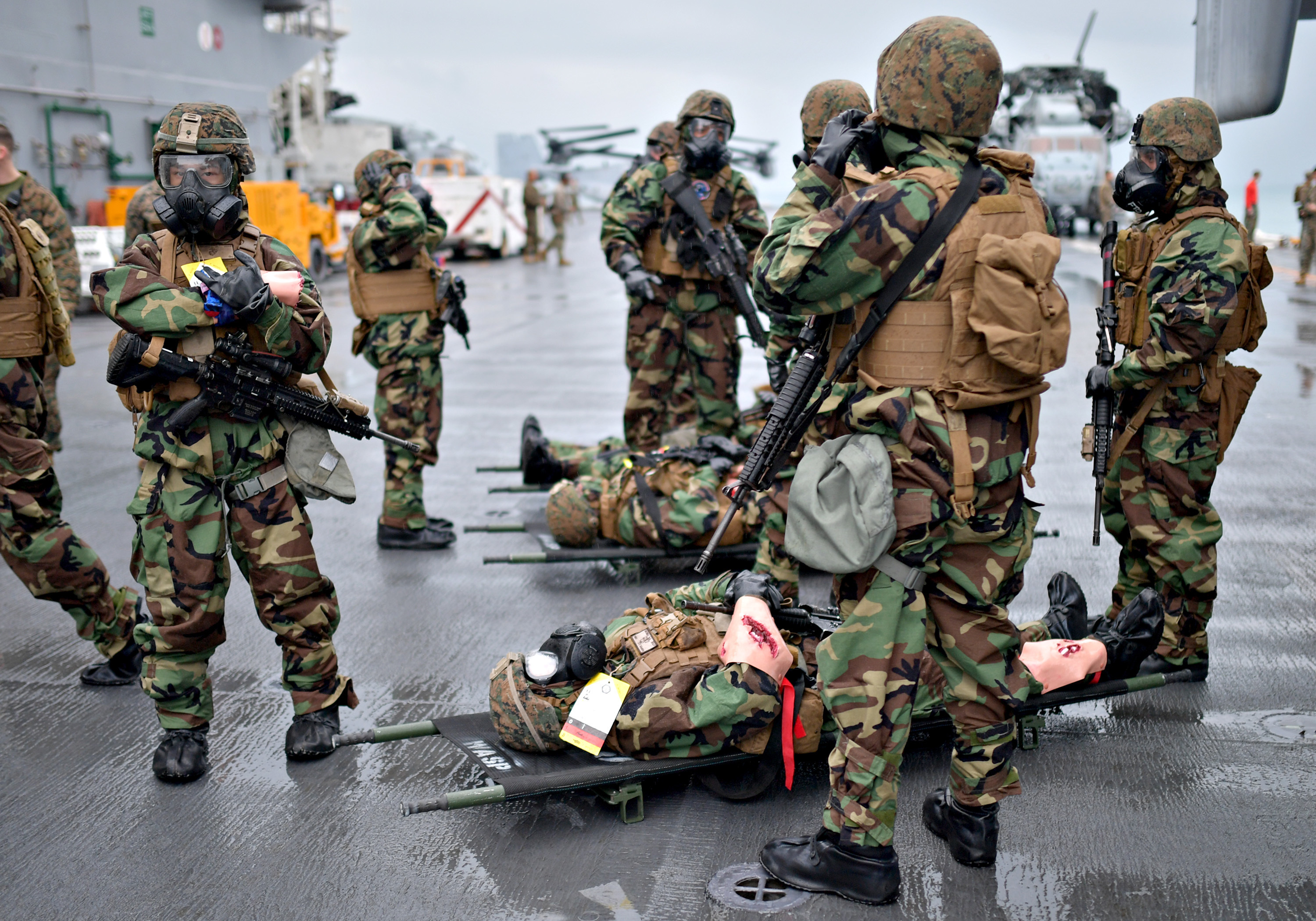
“U.S. Sailors and Marines, assigned to the 31st Marine Expeditionary Unit (MEU), take part in a chemical, biological, radiological and nuclear (CBRN) mass casualty drill on the flight deck of the amphibious assault ship USS Wasp (LHD 1) East China Sea, Oct. 22, 2018. Wasp, flagship of Wasp Amphibious Ready Group, with embarked 31st MEU, is operating in the Indo-Pacific region to enhance interoperability with partners and serve as a ready-response force for any type of contingency. (U.S. Navy photo by Mass Communication Specialist 1st Class Daniel Barker)

The same article referenced Biodefense Graduate Program Director Dr. Gregory Koblentz, explaining “Gregory Koblentz…said the decision by the administration to look more holistically at chemical and biological threats is a strategic national security decision — one that could help the U.S. keep pace with countries such as China, Russia and Iran.” Koblentz was quoted later, saying “There’s definitely a much higher kind of salience and appreciation of how nation-states are using these technologies,” Koblentz said. “Until fairly recently, the focus has mostly been on ISIS and Al Qaeda using chemical and biological terrorism. This [strategy] might be another kind of paradigm shift.”

However, this announcement comes amid cuts to DoD’s chem-bio program funding overall. Roll Call reported recently that the nearly $2 billion in funding dedicated to all these programs will be cut by about $126 million, even in light of their comparatively slow growth and concerns brought about by the COVID-19 pandemic. Furthermore, the Chemical Biological Defense Program received $1.26 billion in appropriations in the last omnibus spending bill-$66 million less than was requested.

Roll Call discussed these funding concerns with Andrew Weber, former Assistant Secretary of Defense for Nuclear, Chemical & Biological Defense Programs under President Obama, and David Lasseter, former Deputy Assistant Secretary of Defense for Countering Weapons of Mass Destruction under President Trump and a visiting fellow at George Mason’s National Security Institute. Both indicated the funding for these programs needs to more than double, with Lasseter saying “Increasing the current investment to around $3 billion per year, while ensuring efficient and effective program execution, will enable the CBDP to develop cutting-edge capabilities like rapid, ruggedized point-of-care diagnostics, stand-off detection, predictive wearables, advanced protective suits and innovative platform technologies as well as stock and replenish existing medical countermeasures.”

It isn’t all doom and gloom, however. Check out this recent post from George Mason University about a Mason research team’s work to help USAMRIID find broad-spectrum therapeutics for to treat HFV infections-“Mason Collaboration Receives $3.2 million to Help Military Personnel Combat Hemorrhagic Diseases”

Months After Firestorm Surrounding SARS-CoV-2 Experiments, NEIDL Publishes Article on BA.1 Attenuation

In late October, news and social media were full of debate regarding a preprint authored by researchers at Boston University’s National Emerging Infectious Diseases Laboratories. As Science explained at the time of the controversy, “They took the gene for Omicron’s surface protein, or spike protein, which SARS-CoV-2 uses to enter cells and added it to the genome of a “backbone” virus—a variant of SARS-CoV-2 from Washington state that was identified soon after the pandemic first emerged in Wuhan, China, in early 2020. The objective was to tease apart whether Omicron’s spike protein explains why it is less pathogenic (meaning it causes less severe disease). The answer could lead to improved COVID-19 diagnostic tests and better ways to manage the disease, the preprint authors say.” As there had been no approval from NIAID, debates swirled over the benefits and safety of the research, and if it violated rules on NIH-funded gain of function (GoF) studies.

Now the same team has published an article that is available for accelerated preview in Nature, again attracting attention and sparking debate. This comes amid broader debates about risky research, including GoF research itself and calls to broaden definitions of what kinds of experiments require special reviews and safety measures. In April last year, Biodefense Graduate Program Director Dr. Gregory Koblentz delivered a statement addressing this topic to the NIH, highlighting the problems the term “gain of function” has brought in policy debates. In his remarks regarding the Department of Health and Human Services Framework for Guiding Funding Decisions about Proposed Research Involving Enhanced Potential Pandemic Pathogens, Koblentz said “The first positive aspect of the Framework is that it does not use the term “gain of function.” The introduction of this term into the discussions on dual-use research in 2011-2012 triggered a long and unproductive debate about how to define this category of research. Carving out “gain of function” as somehow distinct or separate from dual-use research muddied the debate and continues to cause confusion today.”

This topic recently garnered attention again as the omnibus appropriations bill progressed through Congress before being signed into law by President Biden. As we discussed last week, the new legislation also takes aim at GoF research, after GOP lawmakers pushed the administration to halt federally-funded GoF research, citing beliefs that such research is responsible for the COVID-19 pandemic. On page 3,354 of the more than 4,100 page bill, it reads, “(1) IN GENERAL.—Beginning not later than 60 days after the date of the enactment of this Act, the Secretary of Health and Human Services shall not fund research conducted by a foreign entity at a facility located in a country of concern, in the estimation of the Director of National Intelligence or the head of another relevant Federal department or agency, as appropriate, in consultation with the Secretary of Health and Human Services, involving pathogens of pandemic potential or biological agents or toxins listed pursuant to section 351A(a)(1) of the Public Health Service Act (42 U.S.C. 262a(a)(1)).” It also requires the Office of Science and Technology Policy to review and update federal policy on potential pandemic pathogen research.

German Police Detain Iranian Man Accused of Plotting Attack, Acquiring Cyanide and Ricin

This week, Deutsche Presse-Agentur (DPA) reported that German police arrested a 32-year-old Iranian man on suspicion of planning an attack motivated by Islamic extremism. Police wearing protective gear entered the man’s apartment in Castrop-Rauxel, northwest of Dortmund, late Saturday night. According to Herbert Reul, State Minister for Internal Affairs, the police acted on a “serious tip” that prompted them to respond the very night they received it. News reports indicate that an allied intelligence service alerted Germany that the man was planning an attack. Though he is thought to have acquired cyanide and ricin, it is unclear how developed his plan was. However, Düsseldorf prosecutors later told DPA that “no toxic substances” were found in the initial search of the apartment.

Outgoing Eskom CEO Survives Cyanide Poisoning

Andre de Ruyter, the outgoing CEO of Eskom-South Africa’s state-owned electricity company-, reportedly survived an attempt to poison him with cyanide last month. De Ruyter, who will step down in March, fell ill after he was served a cup of coffee laced with the agent on December 12. According to Insider, “After drinking the coffee, De Ruyter became “weak, dizzy, and confused,” EE Business Intelligence reported, citing an unnamed source. He was shaking, vomiting, and eventually collapsed, the source said. The Financial Times reported sources as saying that De Ruyter was nauseous and became confused after the drinking the coffee. According to the FT, the coffee machine at Eskom’s office was out of order at the time of the incident, and he was served a coffee from a different source.”

The same news report also explained that, “Since taking over as CEO of Eskom, De Ruyter has attempted to crack down on corruption within South Africa’s energy sector, EE Business Intelligence reported. He has, however, also clashed with the country’s government, and in December, Eskom was accused of “actively agitating for the overthrow of the state” by South Africa’s energy minister Gwede Mantashe.”

Prison Colony Where Alexei Navalny is Held Suffers Flu Outbreak

Alexei Navalny, the prominent Putin critic who survived an attempted poisoning in 2020, is reportedly in worsening health amid a flu outbreak in the colony he is held in east of Moscow. Navalny claims that prison authorities intentionally placed a man sick with influenza next to him as a “bacteriological weapon,” and that he has been denied basic medications despite suffering a fever and cough. Last month, Navalny said he suffers from worsening back pain from long periods of time spent in the colony’s punishment cell and that he has been injected with multiple unknown drugs. He has also Tweeted through his lawyers that the authorities intentionally moved a mentally unstable man who howls at night into a cell near him.

Though his current symptoms are not life-threatening, there is speculation that this could be part of a deliberate attempt to make Navalny, Putin’s most out-spoken domestic supporter, die from natural causes. The Schar School’s Dr. Mark N. Katz, an expert on Russia, told Newsweek “”If Putin had wanted Navalny dead, he could have easily arranged for this.” He added “Putin may think he’ll be better off if Navalny dies from illness than directly at the hand of the state.” Russia denies any role in the 2020 attack against Navalny, which used a Novichok agent, a group of nerve agents developed in the Soviet Union. Navalny is currently serving an 11.5 year prison sentence on trumped up charges supporters say were created to silence him.

“Understanding Biosafety and Biosecurity in Ukraine”

Biodefense PhD student Ryan Houser, Biodefense Graduate Program Director Dr. Gregory Koblentz, and Dr. Filippa Lentzos of King’s College London recently published this piece in Health Security. Their abstract reads: “The Russian invasion of Ukraine in February 2022 was accompanied by unfounded Russian allegations of bioweapon activities in Ukraine conducted by the United States and its allies. While false, such allegations can cause substantial damage to disarmament efforts and international cooperation for strengthening disease surveillance and global health security. The purpose of this article is to describe Ukraine’s biosafety, biosecurity, and dual-use policies and to provide important context for understanding the unwarranted Russian allegations. Moreover, the analysis of Ukraine’s biorisk management system highlights some of the international efforts underway to ensure that life sciences research across the world is conducted safely, securely, and responsibly. With the help of international partners, Ukraine has strengthened its biorisk management governance, as well as identified areas for improvement that it is working to address.”

“When the Infection Prevention Epidemiologist Gets COVID-19”

In this piece for Infection Prevention Today, Biodefense PhD Program alumna and current Schar School Assistant Professor, Dr. Saskia Popescu, discusses what it was like to catch COVID-19 in late 2022 as someone working in infection prevention. She offers insights into the pressures and guilt that many professionals have grappled with throughout this pandemic, writing “Safety isn’t binary, but rather a spectrum of risk and choice, and ultimately, it’s important to consider those individuals around us. I wish I would have been more vigilant in masking but am grateful I had the resources and capacity to mask and isolate appropriately when symptoms began. A friend recently joked that I had lost my street “cred” as an infection preventionist, which was both comical and a bit eye-opening. Mostly, it highlights much of the guilt or even shame many of us experience when we feel as if we’ve failed at the very thing we specialize in. I still beat myself up at times for getting COVID-19 and knowing better as an infectious disease specialist, but I also don’t want to associate any sense of shame with an infectious disease. We have all learned lessons during this pandemic, and a sustainable approach to COVID-19 will likely be one of the most important in the greater context of public health and infectious disease response.”

“Building the CDC the Country Needs”

The Center for Strategic & International Studies recently published this report by Drs. J. Stephen Morrison and Tom Inglesby discussing the current state of CDC and the findings of the CSIS Commission on Strengthening America’s Health Security’s review of the agency. They explain, “This CSIS report enumerates the essential, concrete, near-term steps that will return CDC to a pathway of high performance: clarifying and better integrating CDC’s core domestic and global missions; enhancing CDC’s leadership and transparency by bolstering its communications and federal engagement capacities; creating a much stronger competency in Washington; and bolstering its operational and surge capabilities through updated frontline engagement, workforce development, data analysis, and budget flexibility. Across all reforms, greater attention to equity and accountability will be essential.”

“The Global Risks Report 2023”

In the 18th edition of the Global Risks Report, the World Economic Forum discusses the findings of the latest Global Risks Perception Survey. The report addresses current crises, risks that are likely to be severe in the next decade, and mid-term future challenges centered around natural resource shortages. It finds that the cost of living will continue to dominate global risks in the next two years while failure to mitigate climate change will be the defining issue of the next decade, leading a formidable list that includes other issues like geoeconomic confrontation and widespread cybercrime and cyber insecurity.

What We’re Listening To 🎧

The BWC Global Forum: Biotech, Biosecurity & Beyond

This podcast series from the Johns Hopkins Center for Health Security aims to “…support BWC States Parties, policymakers and policy experts, and scientists understand advancements in biology and biotechnology and their impact on the Biological & Toxin Weapons Convention (BWC).” Currently, episodes include “De-Extinction Technologies”, “Human Genome Editing”, and “Wastewater Surveillance”. Learn more and listen here.

The Retort Episode 7-Toxin and Bioregulator Weapons

In this latest episode of the Retort, the University of Bath’s Dr. Brett Edwards discusses toxin and bioregulator weapons with Drs. Lijun Shang and Malcolm Dando. Check it out here.

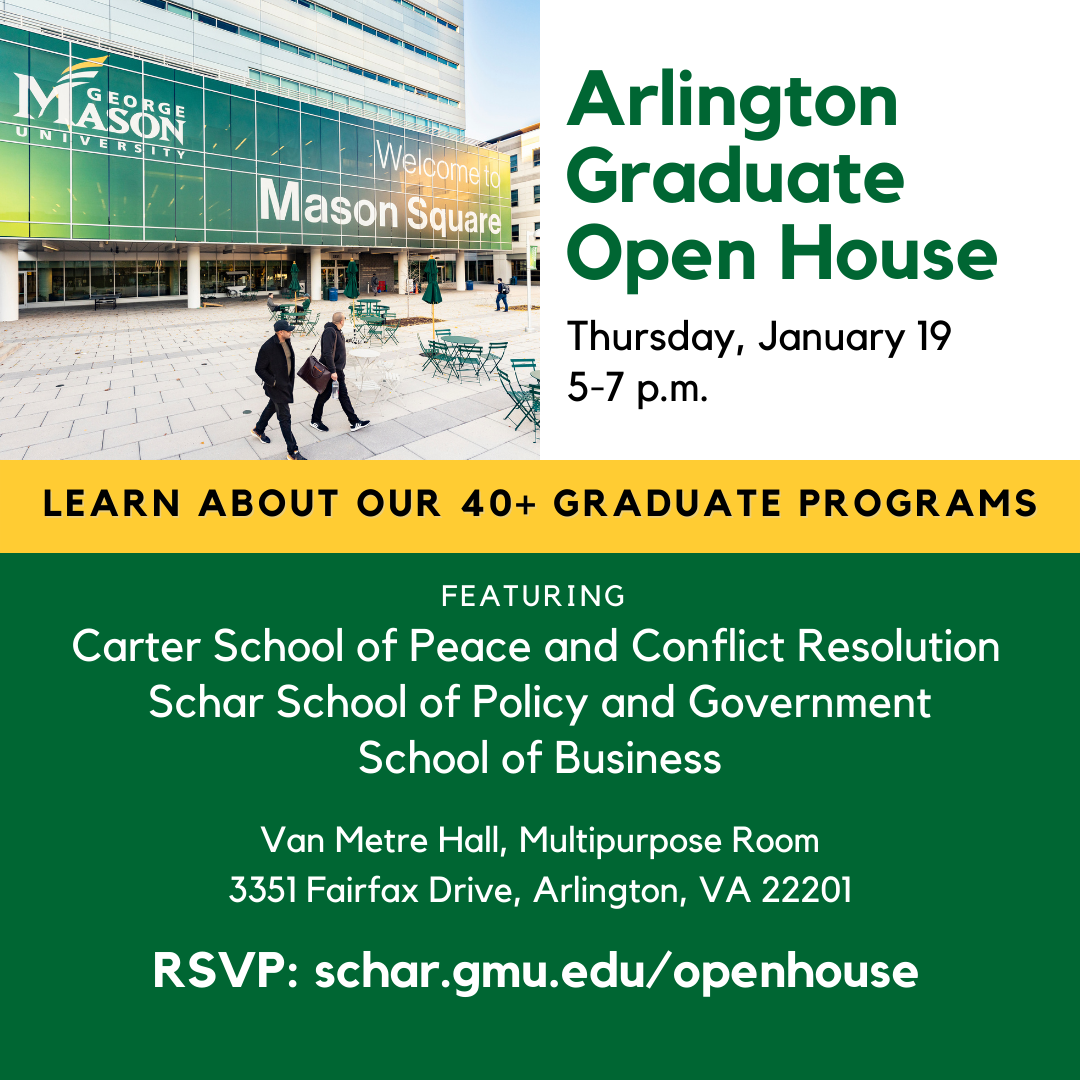
George Mason Arlington Graduate Open House

Join us for the Graduate Open House on Thursday, January 19, from 5-7 p.m. on George Mason University’s Arlington Campus to learn more about the Biodefense Program and 40+ other programs from the Schar School of Policy and Government, the School of Business, and the Carter School for Peace and Conflict Resolution. At the in-person event, explore your graduate school options, connect with our representatives, and find out where a Mason graduate degree can take you next. Come early and work on your application with us! A computer lab is reserved starting at 4:30 p.m. for you to start your application and staff members will be on hand to answer your questions. Register today!

Opportunities, Threats and Proliferation Challenges Deriving from Bio-Technology and Bio-Engineering

“The International Affairs Institute (IAI) of Rome and the Vienna Center for Disarmament and Non Proliferation (VCDNP) cordially invite you to attend the next Young Women and Next Generation Initiative (YWNGI) public webinar event entitled: “Opportunities, Threats and Proliferation Challenges deriving from Bio-Technology and Bio-Engineering” which will be held on 16th January 2023 from 3:00 to 4:30 p.m. Central European Time (CET) via Zoom.

The webinar will feature remarks by Dr Angela Kane, former UN High Representative for Disarmament Affairs and Senior Fellow at the Vienna Center for Disarmament and Non Proliferation (VCDNP); Dr Filippa Lentzos, Associate Professor in Science & International Security at King’s College London; and Dr James Revill, Head of the WMD and Space Security Programmes at the United Nations Institute for Disarmament Research (UNIDIR).” Learn more and register here.

Wastewater-Based Disease Surveillance for Public Health Action

“The National Academies’ Water Science and Technology Board and Health and Medicine Division invite you to a public release webinar of “Wastewater-Based Disease Surveillance for Public Health Action,” on Thursday, January 19, 2023 from 2-3 p.m. ET. The report explains how community-based wastewater disease surveillance has been useful during the COVID-19 pandemic in helping to inform important public health decisions. It also examines the value of wastewater surveillance applications for other infectious diseases, and presents a vision for the future of wastewater surveillance on a national scale.” Learn more and register here.

Closing the Knowledge Gaps

“BIO-ISAC, in partnership with the Department of Homeland Security and Johns Hopkins Applied Physics Laboratory, will host a one-day event (with remote participation available) on January 24, 2023.”

“This gathering of thought leaders across the industry and its partners will address knowledge gaps about the bioeconomy itself. The event is expected to deliver recommendations that demonstrate the scope and breadth of industry impacts, identify specific safety needs and goals, and carve the path forward for a secure future.” Learn more and register here.

Novel Applications of Science and Technology to Address Emerging Chemical and Biological Threats

For the first time since 2019, this Gordon Research Conference is back, this time in sunny Ventura, CA. “The Chemical and Biological Defense GRC is a premier, international scientific conference focused on advancing the frontiers of science through the presentation of cutting-edge and unpublished research, prioritizing time for discussion after each talk and fostering informal interactions among scientists of all career stages. The conference program includes a diverse range of speakers and discussion leaders from institutions and organizations worldwide, concentrating on the latest developments in the field. The conference is five days long and held in a remote location to increase the sense of camaraderie and create scientific communities, with lasting collaborations and friendships. In addition to premier talks, the conference has designated time for poster sessions from individuals of all career stages, and afternoon free time and communal meals allow for informal networking opportunities with leaders in the field.” The conference will be held March 19-24, 2023. Learn more and apply here by February 19.

Special Call for Papers-Journal of Science Policy & Governance

The Journal of Science Policy & Governance recently announced a special call for papers “and competition to provide policymakers with a new perspective on how scientific expertise could be useful to the complex brew of 21st foreign policy and national security challenges, resulting in a special issue on Policy and Governance on Science, Technology and Global Security.” The journal invites “students, post-doctoral researchers, policy fellows, early career researchers and young professionals from around the world to submit op-eds, policy position papers and other articles addressing foreign policy and national security challenges. These include concerns about the use of nuclear or radiological weapons driven by the war in the Ukraine, hypersonic weapons, immigration driven by climate change, and emerging threats in cybersecurity and biosecurity.” The deadline for submission is April 30.

Additionally, there will be a science policy writing workshop on January 30 in addition to two webinars on February 20 and March 30 (one on Policy and Governance on Science and Technology and one on Foreign Policy and National Security, respectively) to help prospective authors prepare their submissions. Learn more about these events and register here.

Weekly Trivia Question

You read the Pandora Report every week and now it’s time for you to show off what you know! The first person to send the correct answer to biodefense@gmu.edu will get a shout out in the following issue (first name last initial). For this week, our question is “In 1980, a Frenchman entered a cave while visiting Mount Elgon National Park, Kenya. A week later he became seriously ill, eventually dying in a Nairobi hospital. Which cave did he enter and what disease killed him?”

Shout out to Stephen M. for winning last week’s trivia! The correct answer to “Before perpetrating the infamous Tokyo subway sarin attack in 1995, this Japanese cult attempted to disseminate botulinum neurotoxin and Bacillus anthracis, among other agents. What was the name of this cult prior to its split/name change in 2007?” is Aum Shinryko.