GMU Biodefense Policy Brief Series

The CBRN Policy Brief Series provides the Program’s faculty and affiliated research scientists a platform for providing expert analysis on current issues in domestic and international security.

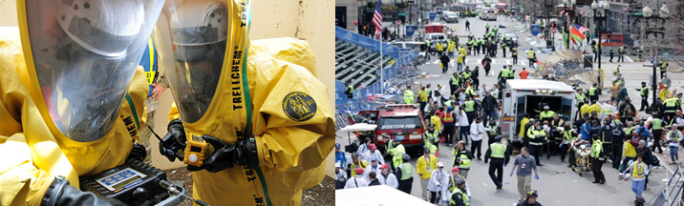
CBRN Policy Brief #1, Is the US Prepared for a Chemical Attack, is written by Dr. Alexander Garza, GMU Biodefense Affiliate Research Scientist and former Assistant Secretary for Health Affairs and Chief Medical Officer at the Department of Homeland Security. Dr. Garza’s policy brief analyzes federal government preparedness, in terms of prevention, detection, and response, to a chemical weapons attack on US soil.

Read the full brief here.

Image of the Week

News reports are indicating that in at least two cases, H7N9 seems resistant to the antiviral Tamiflu. This troubling development prompted our image of the week – yes we’ve all heard of it, have followed the case counts closely, have written about it week after week, but who amongst us has stared the virus down, mano-a-mano? Now’s your chance  –

Here’s looking at you,  H7N9  (image courtesy of CDC)

Um, is anyone else reminded of a different highly pathogenic virus? Starts with an “E” and ends with hemorrhaging? No?  Just us? Filamentous morphology aside, the virus’ ability to evade a key antiviral is definitely not good news.

The Persistence of Anti-Vaccination Groups

needleby GMU Biodefense grad Ryan Gearheart

So where does this hostility and fear come from? From a historical perspective, anti-vaccination groups have existed since the start of state endorsed vaccination programs, and while the basic arguments are the same, the explosion of the Internet and increasing use of scientific jargon have allowed anti-vaccination groups to garner credibility and reach wider audiences. Today’s anti-vaccination groups and parents have been extremely vocal about what they perceive to be unsafe vaccines and vaccines’ correlation with increasing autism rates. Much of their anger can be traced back to the original Wakefield et al. (1998) article – now retracted – suggesting a link between enterocolitis infection, measles-mumps-rubella (MMR) vaccinations, and subsequent increases in autism in the observed children.[1] Indeed, many of the parents suspecting a link between the MMR vaccines and the onset of autism funneled their cases to Dr. Wakefield over the course of several years, thereby affecting the scientific body of knowledge (Moore & Stilgoe, 2009, p. 668). Despite several major studies disproving the link between vaccinations containing the preservative thimerosal[2] and autism, as well as discrediting MMR vaccination-linked autism (MMR vaccines did not and do not contain thimerosal), enlivened parents continue to voice their opposition and seek legal compensation.

According to an article by Harris and O’Connor (2005): “Parents have filed more than 4,800 lawsuits – 200 from February to April alone – pushed for state and federal legislation banning thimerosal and taken out full-page advertisements in major newspapers.” Because of the National Childhood Vaccine Injury Act of 1986 – created with the goal of preventing vaccine manufacturers from being sued out of business – all lawsuits regarding possible vaccine injuries must go through a special vaccines court, as opposed to civil court, thereby preventing class-action lawsuits from being filed (Kirkland, 2012, p. 238). Running from 2002 through 2010, Anna Kirkland (2012) cites the unusual nature of the vaccine-autism cases: “Because holding so many hearings was untenable, the cases were consolidated into the Omnibus Autism Proceeding (OAP) so that the causation issues could be tried in six test cases” (p. 238). With so much on the line for everyone involved in these cases, both sides undertook immense boundary work to discredit the other party and establish their own credibility zones.[3] How is it possible that such a resounding scientific consensus has failed to establish consensus in the overall public? Kirkland’s 2012 study, “Credibility Battles in the Autism Litigation,” does much to elaborate on how the petitioners – parents with autistic children – perceived the OAP as a “stacked deck” with the sole intent of protecting national vaccination campaigns (p. 254). Alternatively, Kirkland (2012) goes on to note that the “special masters” presiding over the hearing felt that they had done everything in their power to give the petitioners a chance to build the best case possible (p. 255). Of course, reaching an outcome agreeable to both sides was impossible from the start: “One significant schism in credibility zones in the OAP…lay between the mainstream toxicology and medical communities and the alternative autism community, with different labs, tests, standards, practices, and foundational assumptions for each” (Kirkland, 2012, p. 243). Without an agreed to set of facts, or even “foundational assumptions” to work from, the OAP’s attempt to reconcile the emotionally charged vaccine-autism issue was likely to fail from the start.

Continued anti-vaccination opposition reinforces the fact that the scientific community and the United States Government have been unable to establish cognitive authority because of some parents’ contextualization and, ultimately, rejection of mainstream scientific authority. Donald MacKenzie (1990) notes that these disputes are only natural when one considers that: “Knowledge is indeed a network wherein different kinds of test are performed against differently constructed backgrounds, with no one test – not even “use” – and no one background being accepted by all as the ultimate arbiter” (p. 378). As Stephen Turner (2001) notes:

What counts as “expert” is conventional, mutable and shifting, and that people are persuaded of claims to expertise through mutable, shifting conventions does not make the decisions to accept or reject the authority of experts less than reasonable in the sense appropriate to liberal discussion. To grant a role to expert knowledge does not require us to accept the immaculate conception of expertise (p. 146).

Wynne’s (1991) theory regarding society’s contextualization of scientific information holds particularly true here when considering the proximity of childhood vaccinations (one to two years of age) and the general timeframe for diagnosing autism in children (three to four years of age). It is not hard to understand why a parent would link childhood vaccinations to autism under these circumstances, even if scientific studies demonstrate no causal link between them.

Similar to the HCWs’ concerns described in the previous subsection, the overwhelming boundary-work undertaken to dismiss Wakefield’s work as ‘not-science’ has been insufficient to reassure parents with autistic children.

Additionally, parents with these concerns may be even less likely to give their children a live vaccine based on fears of their children actually contracting influenza – a fear likely to be higher than seen with the standard, inactivated vaccines – and compound fears regarding potential neurological disorders. This would mean that mass vaccination programs focusing on children are even more likely to encounter fierce opposition from anti-vaccination groups and concerned parents. Adverse events are an especially salient concern considering the recent Finnish study linking the 2009-2010 Pandemrix vaccine, produced by GlaxoSmithKline (GSK), to narcolepsy in children (Pohjanpalo, 2011). The damage to vaccination programs should be even greater given that Helsinki is establishing a pooled fund to pay for the children’s medical costs, in addition to the ongoing fallout from the Wakefield et al. (1998) article. Given previous and ongoing concerns about vaccines’ links to autism and various other neurological disorders, healthcare and scientific personnel are going to be hard pressed to maintain what social and cognitive authority they still possess. As such, it will be increasingly important that the United States Government undertake a public relations campaign – using (generally) trusted sources such as the CDC and trusted, local healthcare providers – to accurately convey the risks and costs associated with influenza, as well as the community-wide benefits which can be achieved through mass-vaccinations of school-aged children.

Emily Martin (1998) proposes that the anti-vaccination movement may also be reflective of a new culture of health in the United States, wherein “…the very bodies of people are being categorized into two types: those that can survive the present intensely competitive environment and those that cannot” (p. 33). Martin (1998) takes her argument one step further and pushes the idea that the rigidity of scientific communication regarding vaccine safety has lost some of its purchase in the mainstream public because it is no longer culturally gripping – that is to say, a vaccine might be seen as “crudely bludgeoning the delicate adjustment of the finely tuned immune system at a time when there is no actual threat” and thereby “be seen as undermining health” (p. 33). If the United States Government and the scientific community are unable to convey that vaccines are a far cry from bludgeoning tools for the immune system, but are rather statistically safe and effective methods for molding it in advance of a life-threatening illness or pandemic, “good” science may gradually find itself unable to quickly achieve high vaccination rates prior to, and immediately after, the start of a pandemic. Therefore, it is absolutely essential for the United States Government and any other governments hoping to use and enforce a national vaccination campaign, to understand that opposition groups can use the government’s own findings and seemingly callous scientific communication as evidence of government conspiracies to promote vaccinations, while simultaneously downplaying and/or ignoring specific subsets of the population that may suffer elevated risks of adverse effects. Consequently, it is imperative for the United States Government to identify which credibility zones are most important to the survival of its vaccination campaigns and to focus its efforts there in the event of a pandemic.[4]

It will also be critical for the United States Government and mainstream healthcare community to address anti-vaccine groups on the Internet. Multiple studies have shown that user-generated information on the Internet, alternatively known as “Web 2.0”, supply large amounts of misinformation to users, often with the same themes: childhood diseases are not as severe as the public is led to believe; the threat from childhood diseases is either minimal or does not exist; vaccines are not safe; vaccines are not effective; vaccines contain poisons, such as ether, antifreeze, etc.; civil liberties infringement; that a government-biopharmaceutical conspiracy exists because vaccines are profitable; and the list goes on (Jacobson, Targonski, & Poland, 2007; Kata, 2010; Kata, 2012; Busse, Wilson, & Campbell, 2008; Keane et al., 2005; Betsch & Sacshe, 2012; Bean, 2011; Betsch et al., 2012; Manfredi et al., 2010; Downs, de Bruin, & Fischhoff, 2008; Spier, 2002; Leask & McIntyre, 2003; Witteman & Zikmund-Fisher, 2012; Poland & Jacobson, 2001; Poland, Jacobson, & Ovsyannikova, 2009; Leask, Chapman, & Robbins, 2010). However, any attempt to counteract the anti-vaccine movement online must understand that this issue cannot be “fixed” by an educational campaign – the anti-vaccine movement has found a niche in a “postmodern” society that places an emphasis on individuals’ values, “prioritizing risk over benefit,” and promotes “the well-informed patient” (Kata, 2010, p. 1714). In this postmodern society, anyone is free to challenge the expertise of established authorities and, in effect, to become “lay experts” – an oxymoronic term itself – capable of forming and following their own knowledge and judgments (Kata, 2012).

Moreover, the broad distrust of government and mainstream healthcare harbored by anti-vaccine groups means that no amount of epidemiological statistics, no matter how extensive the study or its statistical power, will be able to override personal experience and anecdotal evidence. Nevertheless, efforts must be taken to improve the number of “hits” government and mainstream healthcare websites receive on the first page of search results, given the high number of people seeking healthcare and vaccination information on the internet (Kata, 2010; Kata, 2012; Betsch & Sachse, 2012; Bean, 2011; Betsch et al., 2012; Witteman & Zikmund-Fisher, 2012; Leask, Chapman, & Robbins, 2010). This is a particularly important endeavor given that anti-vaccination websites like the NVIC portray themselves as neutral information providers, advocating safer vaccines and informed choice – inarguable points intended to draw in larger audiences – while putting out information that is almost entirely anti-vaccine. Furthermore, distrust and/or frustration with mainstream healthcare have led to a resurgence in the number of people seeking complementary and alternative healthcare (CAM) in the U.S (Ernst, 2002). For those parents of autistic children, suffering from an ill-defined disease with few, if any, treatment options according to mainstream healthcare, it is unsurprising that many would turn to alternative healthcare treatments to find hope and a potential cure for their children. Still, many within the CAM community – certified and uncertified practitioners alike – actively and/or passively dismiss vaccines as ineffective at best and harmful at worst. The United States Government and mainstream healthcare community cannot afford to lose a credibility battle in doctors’ offices because they have failed to provide hope to parents at the cost of vaccination rates.

—————————————————————-

[1] Wakefield’s original article never explicitly stated a link between MMR vaccinations and autism, although the potential linkage could not be dismissed by the authors. As such, the original authors had called for further investigation. Nevertheless, the publicity surrounding this research led in no small part to significant decreases in MMR vaccination rates in the United Kingdom – predictably leading to upticks in measles outbreaks – and, to this day, continues to be cited by various anti-vaccination groups as evidence of a major government-biopharmaceutical conspiracy aimed at hiding any evidence of harm.

[2] Thimerosal is an organic ethyl mercury compound – approximately 50 percent ethyl mercury by weight – used as a preservative in many vaccines (Kirkland, 2012, p. 242). Although the toxic, neurological effects of methyl mercury – the type most commonly found in fish and the natural environment – are well documented, thimerosal never underwent the extensive safety testing of later preservatives, effectively having been “grandfathered” in prior to the creation of the Environmental Protection Agency.

[3] “Credibility zones are spaces of knowledge production for communities that have their own sources and forms of sustenance…” (Kirkland, 2012, p. 240).

[4] For an in-depth look at credibility zones and their impacts on mainstream consensus, see: Jasanoff, S. (2004). Sates of Knowledge: The Co-Production of Science and Social Order. New York: Routledge.

 

Dr. Gregory Koblentz on Syria

While Syria has taken a bit of a back seat to the domestic developments of last week, the questions surrounding the use of chemical weapons there remain as pressing as ever. Last Tuesday, the Senate Foreign Relations Committee, in a landslide 15-3 vote, to arm the Syrian rebels.

Dr. Gregory Koblentz, Council on Foreign Relations Stanton Nuclear Security Fellow and GMU Biodefense Deputy Director, has discussed the implications of this vote and the ongoing situation in Syria in numerous news pieces and interviews. In a recent Reuters piece on the decision to arm the rebels, Dr. Koblentz argued that while it would be possible for the United States to selectively choose which groups to arm, doing so requires a thorough, US-conducted assessment of the situation on the ground.

Dr. Koblentz also recently published a piece in the Atlantic, America’s Best Options in Syria, from which our favorite excerpt is below:

“In combination, however, they could have a significant impact on the conflict over the longer term. Combining stronger efforts to train and equip the rebels with sanctions that cut off Damascus from importing more weapons would help level the playing field between rebel and government forces. As better-armed rebels make gains on the battlefield against increasingly stretched government forces, the prospect of a negotiated settlement that provides amnesty for lower-ranking Baath Party officials and officers in the military might gain more traction. If even after adopting these measures, the stalemate between the rebels and regime forces continue, political efforts to halt the conflict are stymied, and the government continues using chemical weapons, then the United States and international community will be better able to argue that they have exhausted all non-military means of halting the conflict. At that point, it might be necessary to turn to the ultimate game changer — the United States military.”

In addition to this numerous contributions to various news pieces on Syria (VOA, Radio Free Europe, DPA, and USA Today), Dr. Koblentz has also appeared in a number of television  interviews with international news organizations, including a recent interview with CCTV:

The Pandora Report

Highlights include patenting the NCoV, swine flu’s preference for the young, H7N9 and ferrets (always ferrets), getting closer to a universal flu vaccine, synthetic biology and a H7N9 vaccine, and ricin. Happy Friday!

SARS-like virus patent complicating diagnosis: Saudi

If you’re shaking your head at recent news detailing the spread of the novel coronavirus, and wondering why officials in these countries can’t seem to keep the virus contained, wait a second. One of the reasons health officials in the Middle East are struggling with quick diagnosis is that Saudi Arabia already entered into bilateral agreements with certain drug companies, resulting in the patenting of the virus. This means that every time a new lab (say in a new country or region) wants to work with the virus (due to its emergence locally), they need to get permission. Now, the virus was patented for reasons of vaccine and anti-viral drug development. However, instances like this get to the heart of the ongoing difficulties in the relationship between big pharma and government in relation to vaccines and drug development.

AFP – “WHO chief Margaret Chan expressed outrage at the information. ‘Why would your scientists send specimens out to other laboratories on a bilateral manner and allow other people to take intellectual property right on new disease?’ she asked. ‘Any new disease is full of uncertainty,’ she said…’I will follow it up. I will look at the legal implications together with the Kingdom of Saudi Arabia. No IP (intellectual property) should stand in the way of you, the countries of the world, to protect your people,’ she told the [WHO] delegates to thundering applause.”

Swine Flu Pandemic of 2009 More Deadly for Younger Adults

It’s good to be young, unless a swine flu pandemic happens to be raging. According to new study, the 2009 H1N1 virus was especially virulent in the population under 65. Why? Those over 65 years had some degree of prior immunity, due to exposure to similar strains in their past – a phenomena known as “antigenic recycling”.

Science Daily – “The bulk of pneumonia and influenza deaths typically occur in people older than 65, but when H1N1 became the dominant flu strain in 2009, the accompanying rise in pneumonia and flu deaths took place within age groups that usually have low mortality rates. Overall, there were 53,692 pneumonia and influenza deaths in 2009, of which 2,438 were considered “excess,” or above the number expected. In 2010, there were about 50,000 deaths from pneumonia and flu, of which 196 were considered excess.”

H7n9 Bird Flu Virus Is Capable of Human Spread, Ferret Studies Show

Life is hard for ferrets (image credit: B. Lilly/Flickr)

In case you were wondering, H7N9 is in fact entirely capable of spread between humans. In a study which will no doubt launch another round of polemic debate, researchers in China infected ferrets with the virus strain, and recorded transmission of the virus to other ferrets located four inches away. The research is expected to help Chinese containment and response efforts, should the virus become more virulent. The last new case of H7N9 occurred on May 8th.

Bloomberg – “The findings support the need to reconsider management of live poultry markets, especially in urban areas, in case H7N9 becomes endemic in poultry, increasing the opportunities for the virus to evolve ‘to acquire human-to-human transmissibility,’ the authors said. ‘If this virus acquires the ability to efficiently transmit from human-to-human, extensive spread of this virus may be inevitable, as quarantine measures will lag behind its spread,’ the Chinese researchers said.”

Universal flu jab ‘edges closer’

The pharmaceutical company Sanofi has developed a virus/protein hybrid that may protect against multiple strains of flu. The vaccine fuses the highly conserved H1 glycoproteins to a “transporter protein”, which then (for some reason) form spontaneous spheres. In ferret trials, the vaccine offered protection to numerous different H1 strains. Still, flu viruses are notoriously good at mutating – no word yet on if the virus would remain viable in instances of antigenic drift.

BBC News– “Prof Sarah Gilbert, who works on universal vaccines at Oxford University, told BBC News: ‘It is an improvement on the current vaccine. It’s not a ‘universal vaccine’ but it’s definitely a step in the right direction.’ She said it might be able to get over the problems of ‘mis-match’ when there are differences between the seasonal vaccine and the flu being targeted. However, the vaccine has not yet been tested in people. Clinical grade vaccine has not yet been developed so even safety trials are thought to be a year away.”

Synthetic Biologists Engineer A Custom Flu Vaccine In A Week

Within a week of receiving a strain of H7N9 close to the one circulating in China, researchers at Novartis and the J. Craig Venter Institute had synthesized a vaccine. Yes, there are still hurdles to effective mass production, and no the FDA has not yet approved the new strategy, but a week turnaround time is phenomenal. It is significantly easier to send a virus’ genetic code around the world, and have scientists build their own vaccine than to it is to carefully package and send the virus itself.

Popular Science – “That turnaround time is weeks faster than the current best vaccine-making methods…The new method uses synthetic biology, or the creation of biological materials, such as viruses, without using nature’s usual reproductive methods…’I think it does have great potential for more rapidly preparing vaccines for new strains as they evolve,’ Robert Finberg, chair of the University of Massachusetts Medical School and a flu researcher, told the Boston Globe.”

 In case you missed it:

Man arrested in Spokane ricin letter scare

Man Arrested in Spokane Ricin Letter Scare

Matthew Ryan Buquet was arrested yesterday after two envelopes containing ricin were traced back to him.

(image courtesy of Spokane County Sheriff’s Office)

The envelopes, intended for U.S. District Judge Fred Van Sickle and a downtown post office, were intercepted before any injuries occurred. Preliminary reports indicate that the form of ricin mailed was too crude for easy ingestion or inhalation. No information has been released regarding Buquet’s potential motives. Buquet has entered a not guilty plea in response to charges of mailing threatening communications.

Image of the Week

West Nile virus (the mosquito/tickborne encephalitic virus) has been in the news a lot recently (albeit in a much quieter way than it’s flashier cousins) – last year alone there were 5,674 confirmed cases of the virus, the highest since 2003. What is less commonly known is that West Nile virus (WNV) was only introduced into the US in 1999. Pictured below are three maps illustrating the virus’ incredible (and alarmingly rapid) spread across the country.

(all maps courtesy of the CDC)

1999

Introduced in New York State, notice that by the end of 1999 all human cases of WNV were limited to the state of New York.

First introduced in NY, here we have the 1999 map of all cases of WNV in the US.

2001

By 2001, the virus had spread to nearly 30 states, with human cases in 10 states.

WNV cases in 2001
WNV cases in 2001 – the disease exists in humans across the North East and Southern states.

2003

By 2003, the virus was present in humans in 45 of the 48 contiguous states, with just Oregon and Washington remaining  WNV-free.

WNV cases in 2003
WNV cases in 2003

Today, cases of West Nile Virus have occured in all 48 contiguous states, with the numbers of cases often continuing to grow. The moral of the story? Viruses are very resilient. In order to so effectively and quickly spread across the country, the virus had to survive several brutal winters (known as “overwintering”) – remember, this is virus originating in the significantly warmer climates of the African continent.  We were very lucky that while WNV has the capacity to be severely pathogenic (encephalitis is no joke), 80% of those infected are asymptomatic. What if it had been Rift Valley Fever instead?

This Week in DC: Events

Don’t forget, our May Biodefense Policy Seminar,  featuring Dr. Daniel Gerstein, Deputy Under Secretary for Science & Technology in the Department of Homeland Security, is this Thursday evening! Dr. Gerstein’s talk, “National Security and Arms Control in the Age of Biotechnology”, will examine emerging threats at the nexus of arms control and advancements in biotechnology.  Come and ask questions at 7:20 PM in the Meese Conference Room, Mason Hall!

DC EventsTuesday, May 20

Threat and Response: Combating Advanced Attacks and Cyber-Espionage
Center for Strategic and International Studies
9:00 AM – 12:30 PM

Speakers from across the government and private sectors will discuss burgeoning threats in cybersecurity.

How Arab Public Opinion Is Reshaping the Middle East
Brookings Institution
3:00 – 4:00 PM

The Arab awakening that began in 2011 is transforming the Middle East in ways that continue to surprise seasoned observers. As new political leaders and movements struggle for power and work to shape the region’s future, one thing is clear: public opinion is more consequential now than it has arguably ever been. How Arabs view themselves and the world around them will have enormous consequences for the region and the larger international community in the years ahead. How are changes in Arab public opinion shaping the changes occurring across the region? Have the U.S. and its allies done enough to understand and support the voices of Arabs seeking greater representation and opportunity?

Wednesday, May 21st

Politics, Higher Education and Healthcare in the Austerity Era
Brookings Institution
9:00 AM – 12:00 PM

Since the onset of the Great Recession, public discussion has centered on whether spending or austerity is the best path to economic recovery. As evidenced by the sequestration, recurring debt ceiling fights and the ongoing euro crisis, clear policy prescriptions to kickstart anemic economies remain elusive. Often lost in the public discussion surrounding government budgets, though, is consideration of austerity’s implications for national politics and how policy is enacted and implemented. How has the debate surrounding spending versus budget-cutting shaped the political conversation in the United States? What has been austerity’s impact on the policy-making process?

Health Diplomacy as a Weapon in the Battle for Hearts and Minds
NextGen Foreign Policy Network
6:30PM – 8:00 PM

Global health is increasingly recognized as an important part of international relations, that can have a direct or indirect impact on national security. Health diplomacy enables countries to project a positive image in nations where they are not always welcome, but where their medical expertise is needed. At the same time, health diplomacy can also be an incredible human adventure, with floating hospitals treating thousands of patients on ships.

Thursday, May 23

National Security and Arms Control in the Age of Biotechnology
GMU Biodefense Policy Seminar Series
7:20PM – 8:30PM

The Biodefense Policy Seminars are the D.C. area’s premiere speaker series focused on biodefense and biosecurity issues. The monthly seminars – free and open to the public – feature leading figures within the academic, security, industry, and policy fields of biodefense. Past speakers have included Dr. Charles Bailey, Executive Director at the National Biodefense Center and Dr. Alexander Garza, former Assistant Secretary for Health Affairs and Chief Medical Officer of the Department of Homeland Security.

About the May Speaker: Dr. Daniel M. Gerstein has served as the Deputy Under Secretary for Science & Technology in the Department of Homeland Security since August 2011. He is also an Adjunct Professor at American University in Washington, DC at the School of International Service (SIS) where he teaches graduate level courses on biological warfare and the evolution of military thought. Dr. Gerstein has extensive experience in the security and defense sectors in a variety of positions while serving as a Senior Executive Service (SES) government civilian, in uniform, and in industry. Before joining DHS, he served as the Principal Director for Countering Weapons of Mass Destruction (WMD) within the Office of the Secretary of Defense (Policy). He has served on four different continents participating in homeland security and counterterrorism, peacekeeping, humanitarian assistance, and combat in addition to serving for over a decade in the Pentagon in various high level staff assignments.

Iran: The Battle for the Presidency
Woodrow Wilson International Center for Scholars
12:30 – 1:30 PM

Iran’s Council of Guardians will announce the list of candidates for the next president of Iran on May 22-23. Our panel of experts will discuss the candidates, their platforms, and their likely impact on future domestic and foreign policy.


The Pandora Report

Highlights include H7N9 winding down in China, the WHO’s most recent nCoV update, H5N1 in elephant seals, FMD diagnostics, and why not to get in the water. Happy Friday!

Another H7N9-hit Chinese province ends emergency response

China is winding down it’s H7N9 response as cases of the new flu strain diminish. The most recent province to end it’s emergency response is Zhejiang, where no new cases have been seen in almost a month. Full kudos to China for handling the containment so effectively. Do we think the US would have fared as well?

Xinhua – “Medical observations on all those who had close contact with the H7N9-infected people in Zhejiang have ended, and there have been no further infections, said a statement from the seventh meeting of the Zhejiang provincial prevention and control mechanism for human infections of H7N9, which was held on Thursday. The virus has not been detected among live poultry or in relevant environments over the past three weeks in Zhejiang, the statement added. The province will continue to closely monitor H7N9.”

WHO: Coronavirus Update

The World Health Organization (WHO) continues to monitor the development of the novel coronavirus (nCoV), after two health care  attending to infected patients themselves became ill. Since the virus’ emergence in September, there have been 40 laboratory confirmed cases and 20 fatalities in six countries across the Middle East and Europe.

WHO – “The two patients are health care workers who were exposed to patients with confirmed nCoV. The first patient is a 45-year-old man who became ill on 2 May 2013 and is currently in a critical condition. The second patient is a 43-year-old woman with a coexisting health condition, who became ill on 8 May 2013 and is in a stable condition. Although health care associated transmission has been observed before with nCoV (in Jordan in April 2012), this is the first time health care workers have been diagnosed with nCoV infection after exposure to patients. Health care facilities that provide care for patients with suspected nCoV infection should take appropriate measures to decrease the risk of transmission of the virus to other patients and health care workers. Health care facilities are reminded of the importance of systematic implementation of infection prevention and control (IPC).”

UC Davis researchers find swine flu virus in elephant seals

Yes, elephant seals are that big (Image credit: Daniel Costa/NASA/JPL)

Another reason to keep a safe distance from the already rather frightening elephant seal – they may be carrying H1N1. A UC Davis study examining 900 of the large sea mammals off the Northern Californian coast revealed two asymptomatic carriers and 28 seals who possessed  H1N1 antibodies. Can we please all take a moment to silently thank the poor grad students (and you know  they were grad student) who had to very bravely swab the nasal cavities of 900 different elephant seals?

Sacramento Bee – “The scientists detected the H1N1 virus in free-ranging northern elephant seals off the Central California coast a year after the 2009 human swine flu pandemic began. UC Davis researchers have been studying flu viruses in wild birds and marine mammals since 2007.The aim of the research is to understand how viruses emerge and travel among animals and people, according to a university press release.”

Novel cell line identifies all foot-and-mouth virus serotypes

Plum Island scientists have developed a novel cell line capable of rapidly detecting foot-and-mouth (FMD) disease in field samples. FMD is an incredibly contagious and deadly disease affecting cloven-hoofed animals, for which we do not vaccinate.

Phys.org – “The cell line was created by Agricultural Research Service (ARS) scientists at the Plum Island Animal Disease Center, Orient Point, N.Y. ARS is USDA’s chief intramural scientific research agency. The research, published online in the Journal of Clinical Microbiology, supports the USDA priority of promoting international food security. Being able to rapidly detect the virus during outbreaks would allow researchers to quickly develop the appropriate vaccine among the seven serotypes and dozens of subtypes, thereby saving valuable time and millions of dollars.”

CDC: Majority of pools contaminated by feces

For all of us out there who have been saying, for year, try to avoid public pools, we have vindication. The next time someone dismissively waves away your warnings with that catch-all “chlorine”, forward them this article.

LiveScience – “Researchers at the Centers for Disease Control and Prevention (CDC) found genetic material from E. coli bacteria in 58 percent of public pools they tested during the summer of 2012. They also found genetic material from bacteria called Pseudomonas aeruginosa, whichcan cause skin rashes and ear infections, in 59 percent of pools. The fecal material in pools comes from swimmers not showering before getting into the water, and from incidents of defecation in pools, according to the report.”

May Biodefense Policy Seminar

Dan-Gerstein (1)May Seminar: National Security and Arms Control in the Age of Biotechnology
Speaker
: Dr. Daniel M Gerstein
When: 7:20PM, Thursday, May 23rd, 2013
Where: Meese Conference Room, Mason Hall, George Mason University

The Biodefense Policy Seminars are  the D.C. area’s premiere speaker series focused on biodefense and biosecurity issues. The monthly seminars – free and open to the public – feature leading figures within the academic, security, industry, and policy fields of biodefense. Past speakers have included Dr. Charles Bailey, Executive Director at the National Biodefense Center and Dr. Alexander Garza, former Assistant Secretary for Health Affairs and Chief Medical Officer of the Department of Homeland Security.

Dr. Daniel M. Gerstein has served as the Deputy Under Secretary for Science & Technology in the
Department of Homeland Security since August 2011. He is also an Adjunct Professor at American University in Washington, DC at the School of International Service (SIS) where he teaches graduate level courses on biological warfare and the evolution of military thought. Dr. Gerstein has extensive experience in the security and defense sectors in a variety of positions while serving as a Senior Executive Service (SES) government civilian, in uniform, and in industry. Before joining DHS, he served as the Principal Director for Countering Weapons of Mass Destruction (WMD) within the Office of the Secretary of Defense (Policy). He has served on four different continents participating in homeland security and counterterrorism, peacekeeping, humanitarian assistance, and combat in addition to serving for over a decade in the Pentagon in various high level staff assignments.