The Pandora Report 8.30.13

Highlights include MERS case updates, dengue raging through Central America, Syria’s CW (obviously), eastern equine encephalitis, and the cetacean morbillivirus. Happy Friday, and a very happy Labor Day Weekend to everyone! Stay away from the dolphins!

WHO: MERS global case count 108, 50 deaths 

MERS continues to spread throughout Saudi Arabia, with an additional four cases confirmed today. The total global case count is now 108, with a fatality rate of just below 50%. Two of Saudi Arabia’s four most recent cases involved immunocompromised patients, while the other two are children aged 16 and seven respectively. Interestingly, both children are currently asymptomatic, despite testing positive for the virus. The World Health Organization (WHO) has not recommended travel restrictions to Saudi Arabia, promoting instead strong surveillance and testing measures.

World Health Organization – “Globally, from September 2012 to date, WHO has been informed of a total of 108 laboratory-confirmed cases of infection with MERS-CoV, including 50 deaths.Based on the current situation and available information, WHO encourages all Member States to continue their surveillance for severe acute respiratory infections (SARI) and to carefully review any unusual patterns. Health care providers are advised to maintain vigilance. Recent travellers returning from the Middle East who develop SARI should be tested for MERS-CoV as advised in the current surveillance recommendations”.

Dengue fever epidemic sparks public health emergency in Central America

Central America is currently experiencing a serious Dengue outbreak, with over 120,000 cases in three states across the region. If not effectively contained, a number of external factors will likely result in the outbreak “exploding”. The rainy season in the area is set to last another three months, with high heat resulting in ideal breeding grounds for dengue’s mosquito vector. Containment of the outbreak in Honduras particularly has proven challenging, prompting the state to turn to the Red Cross for help. The 2010 outbreak of dengue in the area lead to 1.6 million cases, of which 49,000 were severe. Dengue eradication efforts are hampered by its infection through four, distinct serotypes, no one of which offers cross-protection against the other three.

The Guardian – “The poor suburbs of Central American capitals are the main targets for campaigns to raise public awareness. Poor housing, the lack of a mains water supply and the accumulation of household waste make such neighbourhoods an ideal breeding ground for mosquitoes. The authorities have dispatched paramedics, police and the military to remote villages in order to stamp out the epidemic in the areas most at risk. Latin America is particularly exposed to dengue epidemics, which recur on a three- to five-year cycle. In 2010 the fever caused 132 deaths. ‘Aedes aegypti was eradicated in the subcontinent in the mid-20th century, but with increasing global trade it returned in the 1970s, from Asia,’ says Philippe Brémond, an epidemiologist at France’s Institute of Research for Development (IRD).”

Syria’s Red Line

We know everyone’s talking about chemical weapons in Syria (ourselves included), and with President Obama now apparently set on unilateral (ugh) military action in the area, we wager everyone will continue to talk about Syria for a good while longer. We’re including Jeanne Guillemin’s review article because it’s a thorough overview of the storied history and political maneuverings of chemical weapons use. Read it and be an expert.

The Boston Review – “When the present crisis in Syria is resolved, as inevitably it will be, the CWC [Chemical Weapons Convention] must be made universal. It almost is: 188 states adhere to it; 7 are holdouts (Israel, Syria, Egypt, Myanmar, Angola, North Korea, and South Sudan). Syria must allow its chemical weapons to be identified, contained, and destroyed. It should have been done years ago. Israel and Egypt must also be persuaded to join the treaty and comply with it, before more chaos erupts. ‘Almost universal’ is simply not good enough.”

Eastern equine encephalitis threat level raised to ‘high’ in four communities

Ongoing detection of eastern equine encephalitis (EEE) in four communities in Massachusetts has prompted local health authorities to raise threat levels to “high”, encouraging residents to avoid outdoor evening activities until the end of the mosquito season. Although most cases of EEE are aysmptomatic, in severe cases the virus can cause permanent brain damage and death. We can’t remember if we already posted this, but here is an excellent Nature article explaining why it would actually be totally fine if we exterminated all mosquitoes.

Boston – “The EEE threat is high in Easton, Raynham, Taunton, and West Bridgewater. Residents in high-risk areas are urged to avoid evening outdoor events for the remainder of the mosquito season, said the statement from the Massachusetts Department of Public Health…There has been one human case of EEE this year, in a Norfolk County woman in her 80s, who died earlier this month. There were seven cases of EEE in 2012, including three deaths.Symptoms of EEE show up about 3 to 10 days after a person is bit by an infected mosquito and they include high fever, a stiff neck, headache, and lack of energy.”

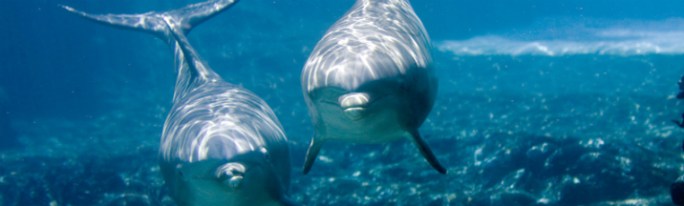
Because People Will Ask: Measles-like virus may be cause of dolphin deaths on U.S. coast

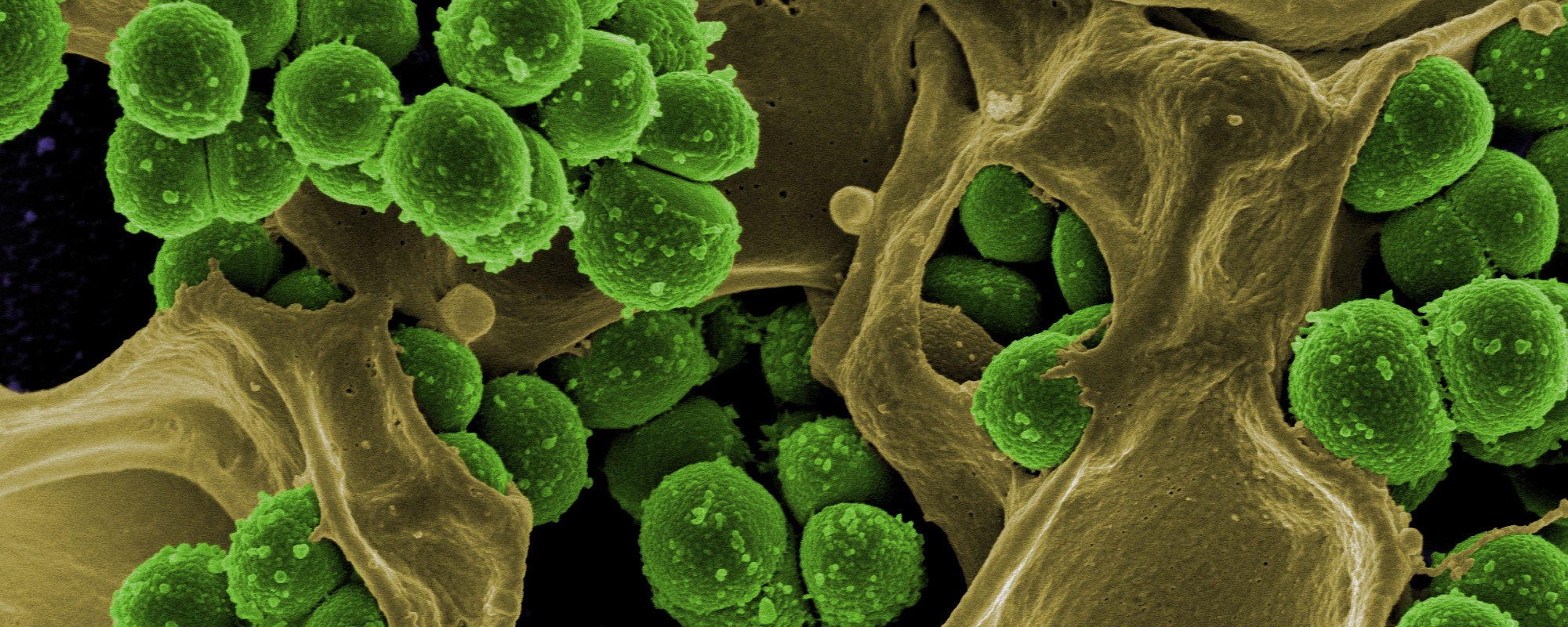
Included so you can assure concerned friends and families that the virus, which is killing bottlenose dolphins up and down the East Coast, cannot be transmitted to humans. Since July, 333 dolphins – 10 times the normal number for the same period – have died from cetacean morbillivirus, a measles-like virus which is thought to cause immunosuppression.  Virginia’s beaches have seen the highest number of strandings, at 174 n the last couple months. While the virus cannot be transmitted to humans, beach goers are advised not to approach any stranded dolphins, as they may carry other bacterial or fungal infections.

National Geographic – “‘Along the Atlantic seaboard, this [outbreak] is extraordinary,’ Rowles said. The last morbillivirus outbreak in the region occurred from June 1987 to May 1988, and resulted in the deaths of at least 900 bottlenose dolphins. Officials are unsure of how long the current outbreak will last. ‘Typically, outbreaks will last as long as there are susceptible animals,’ Rowles said. But if it plays out like the 1987-1988 outbreak, ‘we’re looking at mortality being higher and morbillivirus traveling southwards and continuing until May 2014,’ she added. Right now, experts think this current outbreak is probably due to a dip in herd immunity.”

(image credit: Jeff Kraus/Flickr)
In-Depth: The Syrian “Red Line” and the Importance of Multilateral Action

The Chemical Weapons Red Line: a tedious response to the Syrian crisis and how international treaties should guide multilateral reaction

By Chris Brown, PhD Candidate

Inspectors from the United Nations (UN) are expected to report their findings on Saturday about whether chemical weapons (CW) were used in rocket attacks in Syria last week. Depending on the degradation rate and other properties of a chemical agent, if any, used in the attack, the UN investigation may also reveal what kind of weapon(s) was deployed. Sarin and VX nerve agents top the list of likely possibilities given the types of symptoms and number of casualties reported after the attacks. But determining if and which chemical agent(s) was used in Syria is only the beginning of what should be a far more complex investigation before any international action occurs. It is crucial to determine who used the agent, against whom, and what international legal obligations the user was bound by at the time of use. Only then can the international community establish a clear basis for action in Syria.

Popular opinion at present holds that Syrian President Bashar al-Asaad’s forces likely deployed CW against rebel groups and civilians. Despite the fact that the regime risks loss of power by inviting international intervention as a result of CW use, and that CW use would signal waning confidence in its forces’ ability to maintain control through conventional tactics; international opposition to the al-Asaad government, led largely by the U.S., maintains that the ruling government is to blame. “There is also very little doubt, and should be no doubt for anyone who approaches this logically, that the Syrian regime is responsible for the use of chemical weapons on August 21st outside of Damascus,” White House Spokesman Jay Carney said Tuesday.[1] Claims that Syrian rebel forces have the know-how and motivation to launch CW attacks lose strength given that the alleged CW-containing rockets were fired on a rebel-controlled region of Damascus, where civilians in the area sympathize with opposition forces.[2]

Given the assumption that Syrian forces used CW against rebels, the international intolerance for the use of CW on moral grounds alone seems to compel some sort of action. But there is little legal footing on which to base an intervention under the 1993 Chemical Weapons Convention (CWC), the primary international agreement aimed at preventing this kind of behavior by outlawing production, stockpiling and use of CW. Why? Syria never signed the treaty.

Other international agreements can and should be invoked in this situation, however. Despite not being a state party to the CWC, Syria has been a party to the Geneva Protocol since 1968.[3] The Geneva Protocol prohibits use of CW, but does not outlaw development and stockpiling, an omission that is commonly interpreted as prohibiting only first-use of CW in conflicts. Unless more conclusive evidence surfaces that rebel forces deployed CW against Syrian troops first, Syria is presumably in violation of its obligations under the Geneva Protocol, breaches of which are handled through the United Nations (UN) Security Council.

However, the formal channel of redress for Geneva Protocol violations pits the U.S. against China and, perhaps more importantly, Russia, a fairly reliable backer of the al-Asaad government. Despite the fact that Russian and Chinese participation in diplomatic efforts failed to stop alleged Syrian CW use several weeks before reports of other gas attacks in the spring leaves both states less than poised to veto U.N. security council authorization of action, Russia is reportedly bolstering its naval forces in the Mediterranean Sea. At best, this is a sign of solidarity with al-Asaad and surely an indicator that Obama and U.N. Ambassador Samantha Power will have no easy time securing the security council nod for military strikes against Syria.

Though some indirect options for continuing to support rebel forces in Syria remain viable—providing them with effective medical countermeasures and protective equipment against the state forces’ CW, for instance—direct military intervention (e.g., missile strikes) may be the only effective action left in the U.S. toolbox. However, direct U.S. action stands to produce a number of negative consequences that must be considered, including provocation of Syria’s allies, including Iran; and loss of support from Russia and China against other atrocities in the ongoing Syrian conflict. Moreover, the U.S. must be able to guarantee the stability of any new Syrian government and its ability to safely and securely handle whatever CW, biological weapons (BW), or other weapons of mass destruction may be in al-Asaad’s stockpile if and when he is ousted.

With either course of action—continued indirect support or new direct intervention—it is worth considering two additional tasks: first, at the outset of any new Syrian government, implementation of the same type of coercive diplomacy that was employed in dealing with Iraq’s BW programs in the early 1990s. The terms of the ceasefire with Iraq after the first Gulf War required Iraq to ratify the Biological and Toxin Weapons Convention.[4] If the international community (or the U.S. alone) helps a new government ascend to power in Syria, or intervenes to defeat or subdue the al-Asaad regime, it would be wise to insist that Syria accede to the CWC. Second, Syria’s alleged acquisition or development from component chemicals of sarin gas may also warrant further investigation into the supplier of materials or foreign assistance. The CWC prohibits any export of Schedule 1 chemicals (including sarin and its methylphosphonyl difluoride precursor). A state party to the CWC guilty of helping Syria acquire or develop sarin would likely be in violation of the treaty and should face appropriate consequences.

Chris Brown is a PhD candidate in biodefense at George Mason University. He holds a Master of Public Health in biostatistics and epidemiology from the University of Nebraska Medical Center, and received his undergraduate degree in biology with a minor in Spanish from the University of Louisville. Contact him at cbrown12@gmu.edu or on Twitter @ckbrow07.


[1] Jay Carney, “Press Briefing by Press Secretary Jay Carney,” August 27, 2013, accessed August 28, 2013, http://www.whitehouse.gov/the-press-office/2013/08/27/press-briefing-press-secretary-jay-carney-8272013/.

[2] Eyder Peralta, “Is It Possible the Syrian Rebels (Not Assad) Used Chemical Weapons?,” National Public Radio, August 27, 2013, accessed August 28, 2013, http://www.npr.org/blogs/thetwo-way/2013/08/27/216172145/is-it-possible-the-syrian-rebels-not-assad-used-chemical-weapons.

[3] “Protocol for the Prohibition of the Use of Asphyxiating, Poisonous or Other Gases, and of Bacteriological Methods of Warfare,” June 17, 1925, accessed May 1, 2013, http://www.icrc.org/applic/ihl/ihl.nsf/States.xsp?xp_viewStates=XPages_NORMStatesParties&xp_treatySelected=921B4414B13E58B8C12563CD002D693B/.

[4] “NTI Country Profiles, Iraq, Overview,” Nuclear Threat Initiative, December 2011, accessed May 1, 2013, http://www.nti.org/country-profiles/iraq/.

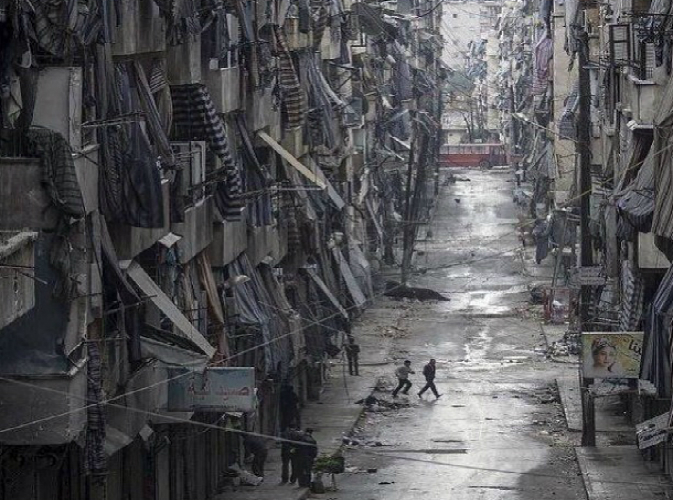
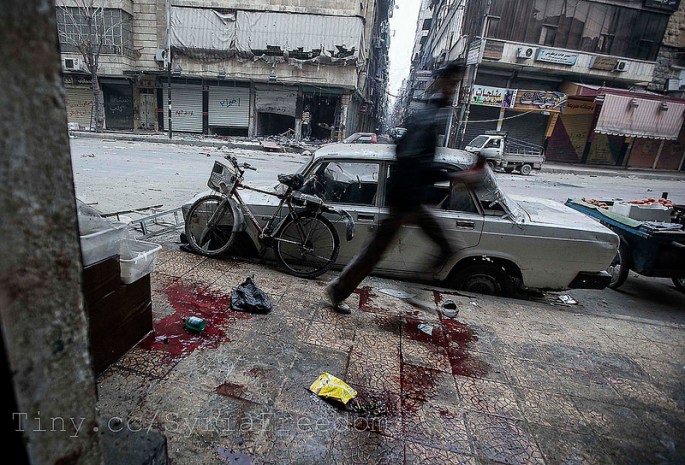
(image courtesy of Syria Freedom House/Flickr)

Slideshow: The Chemical Weapons of Syria

In the face of what seems to be recent chemical weapons use by the Assad regime on the Syrian rebels, and potential US military action as a result, now is a good time to gain a basic understanding of the key chemical weapons in play. Charles Blair, writing in his capacity as a columnist with the Bulletin of Atomic Scientists, has a new multimedia piece out in which he succinctly describes the history and effects of six of the most common chemical weapons agents used today.

View the full slideshow here.

(image courtesy of R. Sameer/Flickr)

Image of the Week

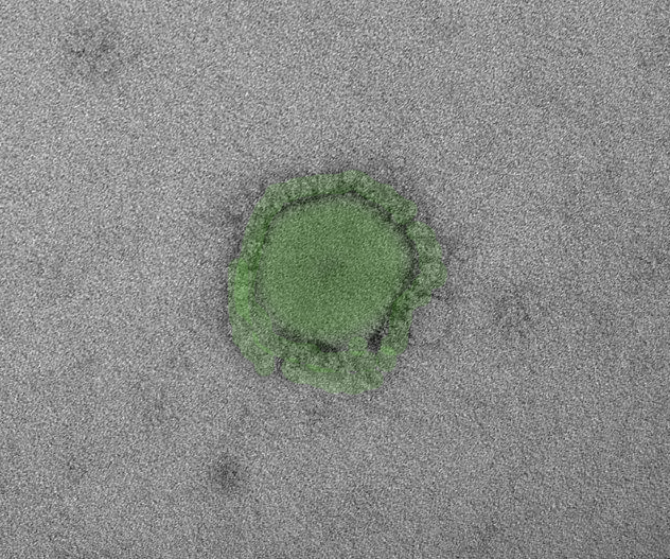
This week’s image depicts the vacuole of a Vero cell, within which Coxiella burnetii, the bacteria which causes Q fever, is growing. Infection with just one of those green bacterium can cause Q fever in humans, an often asymptomatic disease which can occasionally result in respiratory symptoms, enlarged liver and spleen, and rarely, death. Q fever is found throughout the world, and is transmitted to humans primarily through interaction with contaminated livestock.

c.burnetti niaid(Image via NIAID/Flickr, click for larger image)

Qatar announces new Mers case

Qatar just confirmed it’s second case of Middle Eastern Respiratory Syndrome (MERS) virus in just a week. The patient is a 29-year old male, who is believed to have become infected with the virus following interaction with an infected individual. The patient is in intensive care in Doha, and is listed as in critical condition. It is unknown whether the newest patient had underlying health conditions which rendered him immunocompromised.

Read more here.

(image of MERS virus via Cynthia Goldsmith/Azaibi Tamin/CDC with false color added)

In-depth: Defending against Chemical Weapons

As the death toll continues to mount from Assad’s alleged use of chemical weapons on the Syrian rebels, we thought it’s high time for a refresher on our own chemical weapons defense. What would the US do if a terrorist group released toxic gas on American soil? Before you dismiss it as unlikely, remember that nearly twenty years ago the Japanese cult and terrorist group Aum Skinrikyo released the chemical agent sarin on the Tokyo subway, killing thirteen, injuring nearly 50, and causing temporary symptoms in a thousand other rush-hour commuters. The Japanese health system successfully processed the 5,500 people who rushed hospitals on the day of the attack, and the contaminated subway line was up and running by the next morning. Would we be as well prepared?

Read our CBRN Policy Brief, “Is the US Prepared for a Chemical Attack” and understand our current mechanisms of response. The Brief is written by Dr. Alexander Garza, GMU Biodefense Affiliate Research Scientist and former Assistant Secretary for Health Affairs and Chief Medical Officer at the Department of Homeland Security. Dr. Garza’s Policy Brief analyzes federal government preparedness, in terms of prevention, detection, and response, to a chemical weapons attack on US soil.

Full brief available here

(image courtesy of Bernd Daub/Flickr)

This week in DC: Slightly more events

We cast a slightly broader net this week. We’re especially interested in the Brookings Institution’s discussion of the next steps in US-Russian foreign policy (Wednesday).

Monday, August 26

1) Extended Deterrence And Strategic Stability In Northeast Asia
Stimson Center
9:00am – 10:30am

With the simultaneous emergence of a nuclear-armed North Korea and a China that is modernizing and diversifying its nuclear posture, extended deterrence and strategic stability are under new stress in Northeast Asia. How these new challenges are managed will affect the credibility of U.S. extended deterrence in other regions, including Europe.

2) Environmental Stress & Middle Eastern Instability
Stimson Center
1:00pm-2:30pm

The discussion will explore perspectives from U.S. development and research communities on the roles that rising pressures on natural resources and the emerging impacts of climate change can potentially play in contributing to political unrest and economic instability across the Middle East. As case studies, speakers will examine the interplay between state fragility and environmental issues in Syria and Yemen.

Tuesday, August 27

China’s Rise to Global Economic Power: What Does it Mean for the United States?
Wilson Center
2:30pm – 4:00pm

The Chinese economy’s ability to emerge from the global financial crisis seemingly unscathed while the United States slowly climbs out of recession bolsters a widespread image of a strong People’s Republic of China (PRC) rising against the backdrop of a declining United States of America. China’s economic growth in recent years, however, has slowed down, raising the question of whether it is foreordained that China will become the world’s premier economic power. Frank Lavin, former U.S. Under Secretary of Commerce, will be at the Wilson Center to offer his thoughts on China’s rapid emergence as a major economic and political force. He will argue that China’s continued growth in power and affluence will bring challenges, but not a new Cold War. Nor is it likely to be linear.

Wednesday, August 28

1) A New Look at American Foreign Policy: A Series of Discussions
Heritage Foundatin
12:00pm – 1:00pm

American foreign policy is in flux. Libertarian-minded conservatives are joining liberals in their critiques of military interventions, defense budgets and the surveillance practices of the National Security Agency. “Neo” conservatives like John McCain are lining up with liberals in denouncing libertarian conservatives as “isolationists.” Liberals and conservatives alike are unhappy with the Obama Administration’s tepid support for humanitarian interventions in Syria and its failure to advance human rights abroad – normally touchstones of liberal internationalism. Are fundamental ideological changes in American foreign policy afoot? Join us for this first in a series of discussions regarding this question, what the dangers and opportunities are and whether they afford an opportunity to take a “new look” at American foreign policy.

2) The U.S.-Russia Relationship: What’s Next?
Brookings Institution
2:00pm – 3:30pm

While President Obama intends to travel to St Petersburg for the G20 summit on September 6 and 7, there has been no word on whether there will be a bilateral meeting with President Putin on the margins of the summit. Clearly, U.S.-Russian relations have entered troubled times. On August 28, the Center on the United States and Europe will host a panel discussion to address these developments and future prospects for the bilateral relationship between Washington and Moscow. Brookings Senior Fellows Clifford Gaddy, Steven Pifer and Angela Stent will take part. Brookings Visiting Fellow Jeremy Shapiro will moderate. Following opening comments, the panelists will take questions from the audience.

3) Salon 101: Exploring Opposing Perspectives in Egypt
International Peace & Security Institute
2:00pm-5:00pm

Exploring Opposing Perspectives in Egypt: Since the deposition of President Morsi, unrest in Egypt has dominated international news. The outpouring of public sentiment, mass rallies and protests, and conflicting ideologies have left observers scrambling for answers. In a situation characterized by extreme tension, charged opinions, and a lack of clear-cut responses, this Salon 101 event will bring together topic experts to grapple with participants for a way forward in Egypt’s current political crisis.

Blair discusses Syrian CW use on Rachel Maddow Show

GMU Biodefense Adjunct Professor and Federation of American Scientist Senior Fellow on State and Non-State Threats Charles Blair was interviewed by MSNBC’s Rachel Maddow yesterday on Syrian chemical weapons use. Blair discussed the difficulty of ascertaining, as outsiders, whether or not the claims of chemical weapons use against the Syrian rebels are legitimate. Watch the full interview below.

The Pandora Report 8.23.13

Highlights this week include MERS in tomb bats, H7N9 and its lurking cousins, Ebola of CCHF?, the history of CW and BW, and nanotech. Happy Friday!

Reservoir of MERS may be Egyptian Tomb Bat. Yes tomb bat, as in, mummies, curses, and tomb bats.

Researchers may have uncovered the reservoir of the recently emerged Middle Eastern Respiratory Syndrome virus (MERS). Scientists took DNA samples from 96 bats living at an abandoned site just 12 kilometers from the MERS index case. Once the DNA samples were sequenced, the scientists involved discovered that the fecal pellet of one bat species, the Egyptian tomb bat, shared a 182-nucleotide snippet of DNA with MERS. It’s possible that more of viral genome was present; however, when the frozen bat samples were clearing US customs, the customs officers opened and left the samples out, at room temperature, for two days (don’t even get us started on all the things wrong with that situation). Still, this latest development brings us a step closer to understanding the virus and its mechanism of action.

Science Magazine – “Sequencing the nucleic acids isolated from the samples yielded a clue: The fecal pellet of the insect-eating Egyptian tomb bat (Taphozous perforatus) contained a piece of viral RNA identical to that of the virus isolated from the patient in Bisha, the scientists reported online in Emerging Infectious Diseases yesterday…Still, the finding is another interesting piece in the MERS puzzle, says Marion Koopmans, an infectious diseases researcher at the National Institute for Public Health and the Environment in the Netherlands, who was not involved in the work. She points out that the fragment is not only short but also comes from one of the least variable parts of the viral genome, so the full genomes of bat and human virus could still differ significantly. Nonetheless, the finding ‘points at bats as a reservoir for this virus,’ Koopmans writes in an e-mail.”

China bird flu analysis finds more virus threats lurking

Scientists in China have analyzed other strains of H7 flu, and have determined that several of the strains are capable of jumping to humans. A couple strains have already been shown to successfully infect ferrets. It’s thought that H7N9, like other pandemic strains of avian influenza, began in water fowl, was transmitted to domestic poultry,  reassorted with H9N2, and then infected people. The moral of the story? Other avian pandemics may be waiting in the wings (pun only slightly intended).

Reuters – “To trace the evolution of H7N9 and its path into humans, researchers led by Maria Huachen Zhu and Yi Guan of the University of Hong Kong conducted field surveillance around the main H7N9 outbreak region and mapped out, or sequenced, genetic codes of a large number of bird flu viruses they found…They also found another previously unrecognized H7N7 virus strain had emerged and is circulating in poultry in China. In experiments testing this strain, they discovered it has the ability to infect ferrets – an animal model often used by scientists to find out more about what flu might do in humans – suggesting it could jump into people in future.”

Deadly Hemorrhagic Fever Appears in Uganda

Local health officials are scrambling to identify a small outbreak of hemorrhagic fever in Uganda, with conflicting reports seperately identifying the causative virus as Crimean-Congo Hemorrhagic Fever (CCHF) and Ebola. Four patients have been hospitalized, with a fifth already dead from the virus. In a disturbing complication, one patient has apparently “escaped from the hospital” following collection of blood samples, prompting understandable fears of exacerbation of the virus’ spread. Both CCHF and Ebola are highly pathogenic, causing body pain, severe hemorrhaging, and death.

Daily Monitor – “Efforts to verify with the Health ministry whether the disease is Ebola or the Crimean- Congo haemorrhagic fever were futile as the officials did not answer our telephone calls. ‘The four patients have been put in isolation for close monitoring,’ Dr Otto said. The district health officer said the first patient at the hospital presented symptoms similar to that of Ebola which prompted him to take blood samples to Entebbe. Dr Otto urged the public to remain calm, saying a medical team was on the ground to handle the situation.

Scientific American In-Depth Report: The Specter of Chemical and Biological Weapons

Scientific American just put up a good overview of both recent developments in and the broad history of chemical and biological warfare. The pieces included are more chem-heavy (unsurprisingly), but it’s still a good refresher, especially with Syria apparently escalating again. Take a moment to check it out.

Nano Breakthrough For Navy Lab; Tiny Sensors To Detect Explosives, Bio Weapons, Rotten Food

Researchers at the Naval Research Laboratory want to use nanowires to detect everything from biological weapons to spoilt food. For the first time, researchers were able to overcome the difficulty associated with creating the wires. Until now, nanowires have had to be grown, making mass production extremely difficult. However, researchers have found a way to etch the wires, rather than grow them, making embedding them in uniforms or refrigerators possible.

Breaking Defense – “‘The big thing with getting to this point is finding a way to produce this in a scaleable and reproducible fashion,’ principal investigator Christopher Field told me… Basically, the Navy scientists etch a cluster of nanowires and put a small amount of power pulsing through them. When a molecule from an explosive’s gas or a chemical weapon brushes against the nanowires this disrupts the charge. Then scientists analyze the disruption to discover what caused it.”

(image courtesy of Marie and Alistair Knock/Taraji Blue/Flickr)

Blair on Syrian Chemical Weapons

Charles Blair, GMU Biodefense Adjunct Professor and the Senior Fellow on State and Non-State Threats at the Federation of American Scientists, was quoted extensively in the Washington Post’s piece yesterday on Assad’s possible use of chemical weapons against the rebels.

Speaking on the grisly effects of nerve agents, Blair explained, “There’s muscle twitching. Then, as the muscle twitching gets more and more spasmodic, mucus comes out of the nose and mouth and you basically go into convulsions on the ground. People don’t survive this.”

Syrian President Bashar al-Assad is accused of using nerve agent, possibly sarin, on sleeping civilians in the suburbs of Damascus. UN Inspectors have not yet been granted access to the areas of the alleged attack. Estimates of the death toll range from 136 to 1300, with no way for outside validation.

For information on a potential US response to a chemical weapons attack, see our CBRN Policy Brief, “Is the US Prepared for a Chemical Attack?“, by Dr. Alex Garza, GMU Biodefense Affiliate Research Scientist and former Assistant Secretary for Health Affairs and Chief Medical Officer at the Department of Homeland Security.

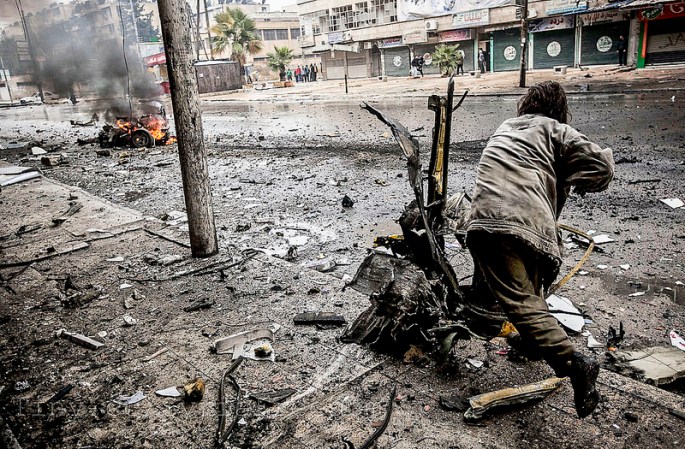
(image courtesy of Syria Freedom House)