It’s the Revenge of the Fifth! This week we are discussing ongoing poisonings of schoolgirls across Iran, the WHO’s announcement that it is ending the COVID-19 PHEIC declaration, the House Energy and Commerce Committee’s request for a GAO scientific audit, and more. We also have several new publications, including many from Biodefense PhD students and alumni. There are new events as well, including an upcoming event on climate change and national security with the Schar School’s Hayden Center.
Iran Schoolgirl Poisoning Attack Threat Continues
Since November, more than 13,000 schoolgirls in Iran have reportedly been hospitalized due to poisonings in twenty-eight of Iran’s thirty-one provinces. Mahnaz Vahdati discussed this recently for the Atlantic Council, writing in part “Since the first poisoning incident in November 2022, thousands of female students in different regions of the country have reported experiencing severe symptoms, including shortness of breath, dizziness, numbness in limbs, and nausea, after inhaling scents often described as citrus and chloride. In the first few weeks, reports of schoolgirl poisonings were limited to the holy city of Qom. However, the frequency and geographic spread of the incidents quickly escalated, such that many parents across the country refused to send their daughters to school. In the meantime, the Islamic Republic’s response followed a pattern similar to past crises: denial, cover-ups, silencing of protesting students and families, and detention of at least one journalist covering the issue. The Islamic Republic’s inadequate and irresponsible response to the safety of schoolgirls quickly fueled public outrage, prompting parents and teachers in at least twenty cities to gather in front of the Education Ministry buildings, demanding accountability for the perpetrators.”
They continued “From the outset, many individuals and analysts directed blame toward the government. Since the beginning of the Women, Life, Freedom movement in September 2022, young women and girls—particularly those in high schools and universities—have been at the forefront of this movement. Consequently, girls’ schools were repeatedly targeted and attacked by security forces. Some analysts believe that serial attacks against girls’ schools are a means of punishment and revenge by the government against female students. They argue that the government seeks to control and silence one of the main sites of protests by creating fear among female students. This theory suggests that the government, which has failed to indoctrinate the young generation—Generation Z—through ideological education, may also be allowing its extremist supporters to act against schoolgirls. As Nadia Aghtaie, a senior lecturer on Gender and Violence at the University of Bristol, states, “Currently, education in Iran is a mobilizing force for women, and the government’s attempt to Islamize society through education has failed. This is why insiders want to reverse the government’s education policies and force girl students to stay at home.”
An anonymous analyst in Tehran authored a piece about this for the Stimson Center, writing “Originally, it seemed that religious extremists with Taliban-like mentality were responsible, especially given the fact that the attacks began in Qom not long after nationwide protests erupted over the death in police custody of a young woman, Mahsa Amini, for wearing supposedly inadequate hijab. Since then, however, the security forces’ lack of concern; the crackdown on people who raised questions about the attacks; the suppression of students, their families, and medical staff; and a disinformation campaign by the government, the parliament, and the judiciary have only intensified suspicions that the regime is responsible.”
They continued, writing “Mohammad Reza Hashemian, an emergency room doctor at Daneshvari hospital in Tehran, told the Ham-Mihan newspaper that the gas used in the attack “is a complicated combination of several gas agents impossible for ordinary people to access.” He added that the compound “has been cleverly produced” to cause illness but not death. Students have said they smelled rotten fish, rotten oranges, and diesel fuel before experiencing dizziness, headaches, nausea, and partial and mild paralysis.”
“The health ministry, despite weeks of testing, has yet to announce any cause. A ministry statement said tens of its best scientists had tested the samples but have not been able to isolate and identify the gas involved. Worse, the ministry has downplayed the severity of the incidents, saying that “in 95 percent of the cases, symptoms were the result of mental and psychological tensions and not gas attacks.” Yet, the minister contradicted his ministry’s own official statement, saying the symptoms “may have been due to a mild poisoning by an unknown factor.”’
They conclude with “It seems that Khamenei has learned a lot from his mentor, Putin. And like the Russian dictator known for his brutality in Chechnya and now Ukraine, it will be hard for him to escape ultimate blame.”
Amnesty International said in a statement, “The rights to education, health and life of millions of schoolgirls are at risk amid ongoing chemical gas attacks deliberately targeting girls’ schools in Iran. Since November 2022, thousands of schoolgirls have been poisoned and hospitalized. The authorities have failed to adequately investigate and end the attacks and dismissed girls’ symptoms as “stress”, “excitement” and/or “mental contagion”.”
Vahdati urges in their conclusion, “As the primary organization responsible for promoting children’s rights under the UN Convention on the Rights of the Child (UNCRC), UNICEF must immediately start a prompt investigation into these incidents. Furthermore, the World Health Organization (WHO) and Organization for the Prohibition of Chemical Weapons (OPCW) must utilize their technical expertise to discover the nature of these poisonings and deliver their findings to the UN Human Rights Council. Additionally, given that several analyses suggest a potential link between these attacks and the recent protests in Iran, it is within the mandate of the fact-finding mission on Iran, recently established by the UN Human Rights Council, to investigate these poisonings in the context of the government’s response to these protests. Their findings can be the basis for the decision-making process of international courts and the UN Human Rights Council.”
“Through these channels, the international community must take decisive and expeditious measures to ensure accountability and safeguard the human rights of Iranian citizens, especially women and girls. Further passivity by international organizations conveys the message that hardliners and extremists in Iran will not face any consequences on the international stage, regardless of how heinous their actions might be.”
WHO Ends COVID-19 Emergency Designation, US CDC Reportedly to End COVID-19 Community Level Tracking, Walensky Out as CDC Director
The John Hopkins Coronavirus Resource Center’s Beth Blauer, Lauren Gardner, Sheri Lewis and Lainie Rutkow authored an opinion essay in the New York Times this week in which they explain, “The four of us spent the last three years immersed in collecting and reporting data on Covid-19 from every corner of the world, building one of the most trusted sources of information on cases and deaths available anywhere. But we stopped in March, not because the pandemic is over (it isn’t), but because much of the vital public health information we need is no longer available.”
They continue, writing “This is a dangerous turn for public health. The data on cases and deaths is critical for tracking and fighting the coronavirus, which has killed more than 1.1 million people in the United States and nearly 6.9 million worldwide. For the week of April 13 to April 19, 1,160 people were reported to have died from the virus in the United States. This is, in all likelihood, an underestimate…Unfortunately, nearly all states have stopped frequent public reporting of new cases and deaths, making it difficult to enable us to see how the virus is trending. And the widespread use of at-home tests has meant that most positive results almost never get recorded in public health databases, making it virtually impossible to detect and monitor outbreaks in a timely way.”
This comes amid reports the CDC will end its community levels tracking of COVID-19, President Biden’s ending of the pandemic emergencies in the US, and the WHO’s announcement today that it will end its COVID-19 emergency declaration. The WHO said in a statement today, “On 5 May 2023, more than three years into the pandemic, the WHO Emergency Committee on COVID-19 recommended to the Director-General, who accepted the recommendation, that given the disease was by now well-established and ongoing, it no longer fit the definition of a PHEIC [public health emergency of international concern]. This does not mean the pandemic itself is over, but the global emergency it has caused is, for now. A Review Committee to be established will develop long-term, standing recommendations for countries on how to manage COVID-19 on an ongoing basis.”
Regarding the CDC’s decision, the Guardian reports “Instead of using its colour-coded Covid-19 tracking system that focuses on the spread of the virus by counties, the CDC will pivot its tracking focus mostly to hospitalisation rates, CNN first reported on Friday.”
With the US national emergency over, the US public health emergency expiring next week, and the WHO’s announcement today, Dr. Rochelle Walensky submitted her letter of resignation as the Director of CDC to President Biden today. The AP reports “Walensky, 54, has been the agency’s director for a little over two years. In her letter to Biden, she expressed “mixed feelings” about the decision and didn’t say exactly why she was stepping down, but said the nation is at a moment of transition as emergency declarations come to an end.”
So is this the end of the COVID-19 era? Not quite. As many have already pointed out today, the WHO’s announcement won’t change much, particularly as so many countries have already seemingly abandoned all COVID-19 precautions. It does mark a significant point as ending the PHEIC is a move many point to as the closest thing to the definitive end of a pandemic. The first week of April saw 525,841 cases of COVID-19 reported globally, which is a far cry from the 45 million reported weekly at the pandemic’s height, but it’s still far from a small number of cases, particularly as global reporting declines. Furthermore, as Dr. Raed Dweik recently explained for the Cleveland Clinic, the death rate is still pretty high. He explained “While the death rate has dropped significantly from its peak in January 2021 — when more than 102,000 people died in a single week — the numbers still fluctuate. That’s partly because of the virus and partly because reporting procedures differ from country to country. For example, only 260 people officially died of COVID-19 on April 4, 2023; but 2,438 deaths were reported just three days earlier. To put that number in perspective, the worst day on record saw approximately 20,000 COVID-19 deaths reported.”
So where does that leave us? In the end, there have been 765,222,932 confirmed cases of COVID-19 and 6,921,614 deathsthat the WHO knows about. The world is fundamentally different in many ways because of this pandemic, especially because several million of us are no longer here because of it. While these kinds of administrative changes may not mean much to many, the fact is people are still contracting and dying from this disease every day, it remains a highly politicized issue, and it has showed us how vulnerable many of us are. The PHEIC may be over, but the hard work to get ready for the next pandemic has just begun.
House E&C Committee Republicans Ask GAO to Conduct Scientific Audit on Prospecting Unknown Viruses
The House E&C Committee announced this week that “House Energy and Commerce Committee Chair Cathy McMorris Rodgers (R-WA), Subcommittee on Oversight and Investigations Chair Morgan Griffith (R-VA), and Subcommittee on Health Chair Brett Guthrie (R-KY) today asked the Government Accountability Office (GAO) to conduct a scientific audit to analyze whether the dangers of prospecting for unknown viruses outweighs the benefits.” This requested scientific audit would address several questions outlined in the announcement, including “Have any of these activities resulted in the infection of research personnel or the spread of pathogens in a larger geographic area? and “What is known about whether field-based collection of virus samples from wildlife and the environment improves our ability to predict, prevent, and respond to pandemics?”
“The request comes on the heels of an Oversight and Investigations Subcommittee hearing titled “Biosafety and Risky Research: Examining if Science is Outpacing Policy and Safety,” which was held on Thursday, April 27.” Biodefense Graduate Program Director Dr. Gregory Koblentz was a witness at this hearing.”
“Who Will Vaccinate People During the Next Pandemic? The US Public Health Sector is Falling Behind”
In this piece for the Bulletin of the Atomic Scientists, Kimberly Ma discusses the warning signs that US public health remains unprepared for the next pandemic, paying particular attention to the instability of the public health work force. She writes in part, “Despite its critical role in responding to biological threats (and more), public health has always faced difficulty with sufficient investment. Each year, or with each crisis, Congress passes funding for the CDC, which then distributes resources to states. Despite arguably greater needs, the CDC has suffered an overall 2 percent budget decrease over the past decade (after adjusting for inflation). And while Congress may point to one-time pandemic-era funding pots like the Infectious Disease Rapid Response Reserve Fund, these are primarily restricted to COVID-19 response activities; they’re the opposite of the sustained, steady funding needed.”
She writes in her conclusion “The Biden administration will lift the COVID-19 public health emergency declaration on May 11, an official end, of sorts, to the pandemic response in the United States. To ensure US biodefense capabilities are robust and ready, whether for the next variant tomorrow or a bioweapon attack in ten years, every single critical component, public health staff included, cannot just exist, hanging by a thread. Rather, they all need to be well-resourced, diverse, and thriving.”
Kimberly Ma is a Biodefense PhD student and a senior analyst at ASTHO. She is currently a Bulletin Editorial Fellow.
“Can a 50-Year-Old Treaty Still Keep the World Safe From the Changing Threat of Bioweapons?”
Jen Kirby tackles the changing threat landscape for Vox in this piece, quoting several biodefense rockstars, including Drs. Yong-Bee Lim and Saskia Popescu, both alumni of the Biodefense Graduate Program:”Biological weapons are the “poor man’s atom bomb,” said Yong-Bee Lim, the deputy director of the Converging Risks Lab and Biosecurity Projects Manager at the Council on Strategic Risks. They are weapons that can often be built on the cheap, using materials found in nature. Even before the world understood what caused disease, countries used things against their enemies they knew carried contagion: catapulting plague-infested corpses over fortified walls, or giving or selling clothes or blankets from smallpox patients.”
Kirby continues writes later in the piece, “Biological attacks can also be difficult to verify because pathogens are naturally occurring, and even if scientists detect a new one, it’s difficult — if not impossible — to know if it’s something that has been deliberately created or something that emerged accidentally from nature or a lab. And given what Covid-19 demonstrated about the cracks in our defense against biological threats — and how little has been done to fix them over the past few years — a future bioweapon might “prey upon those existing vulnerabilities that haven’t been addressed,” said Saskia Popescu, a biodefense expert at George Mason University.”
Kirby covers a broad spectrum of issues in this piece, including disinformation, writing in their conclusion “In the meantime, the threats to the BWC are accelerating. The world is a more dangerous and tense place. Disinformation around bioweapons is also eroding the taboo against the use. This includes Russia’s playbook of continued accusations about bioweapons in Ukraine and elsewhere. But a top Republican recently claimed, with zero evidence, that the Chinese spy balloon shot down over the Atlantic Ocean in February was equipped with bioweapons.”
“Battling Catastrophic Biological Threats: Cost-Effective Solutions for National Security”
New from the Council on Strategic Risks: “This report begins by outlining biological risks and their evolution, followed by discussions on approaches to addressing these risks and how the landscape is changing. It concludes by demonstrating the cost-effectiveness of pursuing more aggressive investment to mitigate these risks to save lives.”
“The 21st century presents an increasingly challenging and complex risk landscape, with thousands of biological laboratories worldwide and rapid democratization of biology. Countering biological threats is imperative for the US, as every goal of national and strategic importance is jeopardized by these risks. The article suggests investing additional resources in developing pathogen-agnostic defensive measures and other steps to reduce pandemic risks, which could save countless lives in the future.”
This report was edited by Dr. Yong-Bee Lim, an alumnus of the Biodefense MS and PhD programs, Deputy Director, Converging Risks Lab and Biosecurity Projects Manager, Council on Strategic Risks.
“A Road Map for a World Protected from Pandemic Threats”
This new report from Her Excellency Ellen Johnson Sirleaf and the Right Honourable Helen Clark “warns that patchy and limited implementation of recommendations from previous reports reviewing major outbreaks, including Ebola in West Africa in 2014-2016, left gaps and contributed directly to the COVID-19 outbreak becoming a pandemic.” They aim to “provide a global road map that if implemented in full, will contribute to protecting the world’s peoples from the development of another devastating pandemic like COVID-19. The leaders underscore the role of the UNGA to commit to a comprehensive reform agenda that can ensure the multisectoral, multilateral collaboration required, led by Heads of State and Government.”
“The CWC at 25: From Verification of Chemical Weapons Destruction to Attribution of Their Use”
In this recent article in the Nonproliferation Review, Alexander Kelle discusses the changing security environment and its impact on the CWC: “This article analyzes the shifting focus of the Chemical Weapons Convention (CWC) during the first 25 years of its implementation, from the verification of destruction of declared chemical-weapon (CW) stockpiles to the attribution of CW use. The article identifies the repeated use of chemical weapons by Syria and the resultant creation of a new attribution norm under the CWC as a critical juncture in the regime’s evolution. Repeated calls for accountability for the use of so-called Novichok nerve agents for assassination purposes serve as the first manifestation of the new attribution norm. The article further outlines steps CWC states parties should take in the context of the Fifth CWC Review Conference in May 2023 to prepare the CW-prohibition regime for its next 25 years of operation by (1) adapting the implementation of key regime norms following the anticipated completion of CW destruction later in 2023 and (2) incorporating the investigation and attribution work of the Investigation and Identification Team into the programmatic work of the OPCW.”
“Lost in the Gap: Toxin and Bioregulator Weapons”
In this piece for Arms Control Today, Michael Crowley and Malcolm Dando discuss the widening gap between the BWC/CWC and rapidly advancing science. They write in part “Building on the existing capabilities of the chemical, life, and associated sciences and postulating potential research trajectories, it can be imagined how the malign application of future developments, if insufficiently regulated, could enable states to chemically manipulate and subjugate large swaths of their own or foreign populations. Although such repressive capabilities are speculative now, the world’s rapidly increasing knowledge of and ability to manipulate the body’s bioregulatory pathways, coupled with advances in wide-area agent dissemination, mean that such threats are likely to increase in the coming years if not addressed now.”
“The BWC and CWC were primarily intended to prevent and address the development and use of biological and chemical weapons in armed conflict and to facilitate the destruction of all extant weapons production capacity and stockpiles. There are serious questions about whether these conventions and the associated control regimes can respond adequately to the diverse and potentially malign applications of the chemical and life sciences on the battlefield and beyond. The CWC review conference beginning May 15 will be an important indicator about whether that treaty can meet the challenges of today and tomorrow.”
Informing Blueprint 2.0: Know the Enemy
Join the Bipartisan Commission on Biodefense on May 9, at 10:30 am. This meeting will “Provide the Bipartisan Commission on Biodefense with a better understanding of: (1) prevention; (2) deterrence; and (3) attribution of biological threats. This is the fourth Commission meeting to inform our refresh of the National Blueprint for Biodefense.” Learn more and register here.
The Heat is On: Climate Change, the Arctic, and National Security
“Join the Michael V. Hayden Center for Intelligence, Policy, and International Security as we host a discussion on climate change and its intersection with national security and intelligence. In October 2022, the Biden Administration released its National Security Strategy, in which climate change is noted as one of the most significant challenges for all nations. In February 2023, the Office of the Director of National Intelligence followed with its Annual Threat Assessment, in which climate change is mentioned first on the topic of shared global challenges. The growing concerns of climate change have greatly impacted traditional security challenges, and are affecting migration, agriculture-dependent communities, natural resources, illicit activities, violence, and geopolitics. Additionally, it has spurred a dramatic growth in strategic competition over critical minerals, technologies, and economic opportunities in the Arctic.”
This hybrid event will take place on May 10 at 7 pm EST. Register for the in-person event here, and for the livestream here.
Benchtop DNA Synthesis Devices: Capabilities, Biosecurity, Implications, and Governance
From NTI: “Synthetic DNA is used by bioscience laboratories globally and plays a fundamental role in a wide range of science and biotechnology advances. A new generation of benchtop DNA synthesis devices will soon enable users to print DNA more quickly and easily. This advanced technology has the potential to disrupt the DNA synthesis market and its associated biosecurity practices and could allow malicious actors to more easily obtain pathogen or toxin DNA.”
“This new report, Benchtop DNA Synthesis Devices: Capabilities, Biosecurity Implications, and Governance, draws on more than 30 interviews with experts from benchtop DNA synthesis companies, the broader biotechnology industry, the biosecurity and bioscience research communities, and other sectors. The report addresses the anticipated capabilities, biosecurity implications, and governance of benchtop DNA synthesis devices, and it makes recommendations for future oversight.”
“Refreshments will be served from 10:30 am. The event will start promptly at 11:00 am.”
Learn more and register for this May 10 hybrid event here.
Nobel Prize Summit-Truth, Trust and Hope
Taking place May 24-26 this year in DC and virtually, this Nobel Prize Summit asks “How can we build trust in truth, facts and scientific evidence so that we can create a hopeful future for all?”
“Misinformation is eroding our trust in science and runs the risk of becoming one of the greatest threats to our society today.”
“Join us at this years’ Nobel Prize Summit which brings together laureates, leading experts and you in a conversation on how we can combat misinformation, restore trust in science and create a hopeful future.”
Learn more and register here.
Building Capacity for Dual-Use Oversight in the Life Sciences through the IEGBBR
Join the International Experts Group of Biosafety and Biosecurity Regulators for this virtual event on May 30 at 7 am EDT. This event will discuss “how to identify, assess, and mitigate dual-use concerns in the life sciences – two examples of oversight measures in a national oversight system”. Register here.
CSWMD 2023 Annual Symposium: WMD in the Decisive Decade
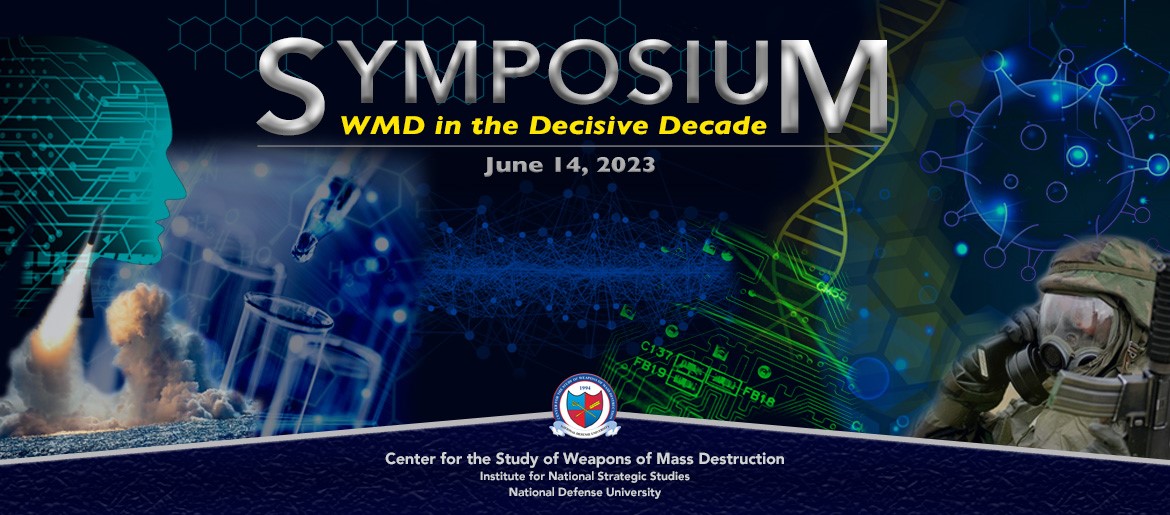
“The National Defense University’s Center for the Study of Weapons of Mass Destruction (CSWMD) invites you to join us on 14 June 2023 for the virtual Annual CSWMD Symposium, titled WMD in the Decisive Decade.”
“This year’s symposium will explore the cognitive impacts WMD has on strategic decision making and the challenges associated with operating in an environment where WMD has been employed. It will be an opportunity for the WMD community to engage with officials and thought leaders on current WMD challenges at the unclassified level, including keynote addresses by Richard Johnson, Deputy Assistant Secretary of Defense for Nuclear and CWMD Policy and Rebecca Hersman, Director of the Defense Threat Reduction Agency.”
“For more information and to register for this event click here. Please RSVP by 9 JUNE 2023.”
“We look forward to hosting you for the event. For more information about the WMD Center and reference our research, please visit our website at https://wmdcenter.ndu.edu/ and follow us on Twitter and on LinkedIn.”
Gordon Research Conference: Cross-Cutting Science Facilitating Collaboration Across the Threat-Science Research Community
“The Nonproliferation, Counterproliferation and Disarmament Science GRC is a premier, international scientific conference focused on advancing the frontiers of science through the presentation of cutting-edge and unpublished research, prioritizing time for discussion after each talk and fostering informal interactions among scientists of all career stages. The conference program includes a diverse range of speakers and discussion leaders from institutions and organizations worldwide, concentrating on the latest developments in the field. The conference is five days long and held in a remote location to increase the sense of camaraderie and create scientific communities, with lasting collaborations and friendships. In addition to premier talks, the conference has designated time for poster sessions from individuals of all career stages, and afternoon free time and communal meals allow for informal networking opportunities with leaders in the field.”
This conference will take place July 9-14 in Ventura, CA. Learn more and register here.

Weekly Trivia Question
You read the Pandora Report every week and now it’s time for you to show off what you know! The first person to send the correct answer to biodefense@gmu.edu will get a shout out in the following issue (first name last initial). Our question this week is: What nerve agent has the military designation “GB”?
Shout out to Jeffrey L. for correctly answering last week’s question. Our question was: “Before their famous work finding the source of the 1854 cholera outbreak in London’s Soho district, which physician administered chloroform to Queen Victoria during childbirth?” The answer is John Snow.

