Happy Friday! This week we’re covering the end of the US COVID-19 public health emergency, the upcoming CWC Review Conference, and the resumption of the NIH’s funding for the EcoHealth Alliance’s bat coronavirus research. Several new publications and events are also covered, including new books on cyberbiosecurity and infodemics.
Congrats to Our Graduating Biodefense Students
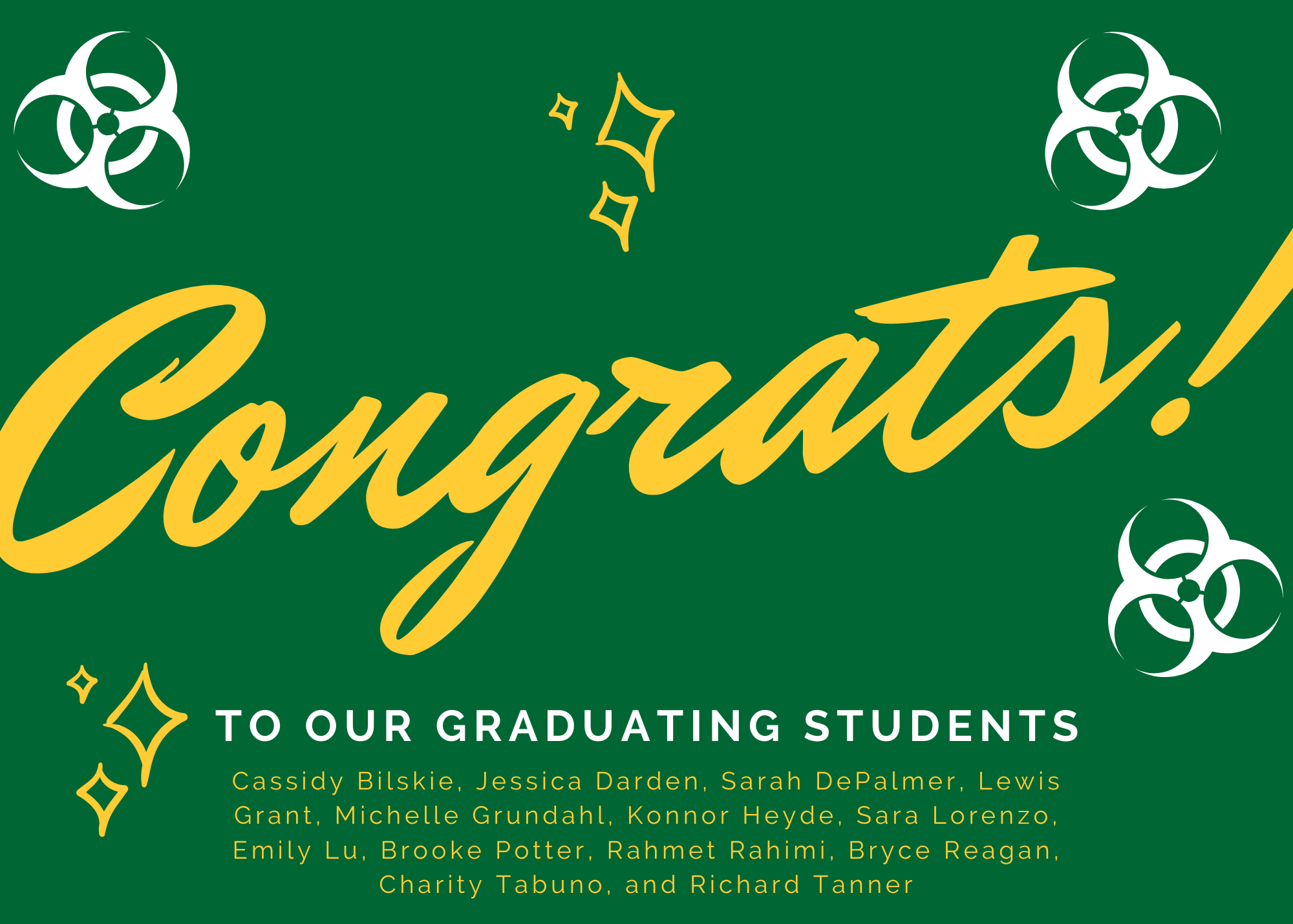
A big congratulations to all of our graduating Biodefense MS students this semester, and a special shout out to Cassidy Bilskie-this year’s Outstanding Masters Student in Biodefense Award recipient! We’re so proud of you all and can’t wait to see what you do next!
Biodefense PhD Student Wins BioRisk Reduction Award
“PhD student Ryan Houser recently won an award from BioRisk Reduction for this work within the organization. Ryan was awarded the Stanley Hall Award which was handed out at the company’s 2022 Awards meeting. Stanley Hall was a dear friend of the CEO and President Ryan McAllister who he came to know through officiating K-12 football during the McAllister’s time in graduate school. The relationships and life skills McAllister possess from this time are as important to his personal and career success as his scientific knowledge and understanding. Early in the COVID-19 pandemic, Stanley was unfortunately taken from us by the illness, despite being a younger athletic individual. Stanley’s name lives on through the annual Stanley Hall award within BioRisk Reduction to the team member who best represents some of Stanley’s best qualities: Role Model to their peers, Loyal to their team, and Amicable.”
“Houser started with Biorisk Reduction in October 2021 as an Associate Team Member. He was promoted to Team Member in June 2022. Houser also serves as a Class III Consultant and a Business Biosafety Committee (BBC) Community Member within Biorisk Reduction. Houser has supported various ongoing projects which include facilitating and translating biosafety-related education and training programs (First Aid and Airborne Pathogen Training), academic journal publications, and a novel Credentialing Program.”
“BioRisk Reduction is a global network of experts in infectious disease who have come together to reduce the stress, time, and cost for clients associated from every day diseases such as COVID-19. Our network is comprised of Scientists, Physicians, Nurses, Public Health Professionals, High Containment Researchers and Engineers, Combat Medics, Legal analysts, Educators, Public Safety Officers, and other professionals. BioRisk Reduction provides communities and businesses direct access to infectious disease experts both virtually or in-person. BioRisk Reduction Business to Business and professional development services include Consulting, Technical Writing, Education and Training, Risk Assessments, and Committee Accreditation. For more information inquire through email at mailto:bioriskreduction@bioriskreduction.com or phone at tel:3072280981. http://www.bioriskreduction.com“
US COVID-19 Public Health Emergency Ends
The United States officially ended the COVID-19 public health emergency yesterday, May 11, over three years after its initial declaration. This came on the heels of the WHO announcing last week that it no longer considers COVID-19 a public health emergency of international concern. The Washington Post explains that “Starting in early 2020, the emergency declaration, along with subsequent declarations, legislation and administrative actions, gave the federal government flexibility to waive or modify certain rules in the Medicare and Medicaid programs as well as in private health insurance. The goal has been to help the nation fight the worst public health crisis in a century and help some patients get care in a time of shutdowns.”
“As this long emergency period expires, experts say, the biggest impact for consumers will be the end of free coronavirus tests — both at-home tests and those performed by clinicians and analyzed by commercial labs — with broad implications for people’s ability to get timely covid diagnoses, prevent disease transmission and track the virus.”
Importantly, this will also impact COVID-19 data collection tools. With hundreds of people dying from the disease in the US every day, this is especially concerning. In fact, COVID-19 was the fourth leading cause of death in the United States in 2022, down from third place in 2020 and 2021. COVID-19 was superseded only by unintentional injuries (including drug overdoses and car wrecks), heart disease, and cancer. The New York Times writes “The death rate went down by a lot, but we also want to emphasize we’re not out of the woods here,” said Dr. Robert Anderson, the chief of the mortality statistics branch at the National Center for Health Statistics. “There are still a lot of people who died, and we’re still seeing deaths in 2023 as well.”
This comes at a time when the US is seeing a shakeup in public health leadership, with CDC Director Rochelle Walensky announcing her resignation last week and the Biden administration struggling to find a new pandemic czar. Politico quoted GMU Biodefense Assistant Professor Dr. Saskia Popescu on this problem, writing “This is a critical resource to ensuring there is awareness for biopreparedness at the highest level,” said Saskia Popescu, an epidemiologist and assistant professor in George Mason University’s biodefense program, adding that among its chief jobs will be breaking “a cycle of neglect in preparedness efforts.’…Still, the top job is proving a difficult sell amid worries the director will get stuck with a long to-do list and little influence to get it done.”
While these are concerning signs that US public health might struggle even more in the coming years, there is some positive news. It was recently reported that a bipartisan group of senators are attempting to revive efforts to create a national COVID-19 taskforce. This would be modeled after the 9/11 Commission and it would be tasked with investigating the federal government’s response to the pandemic in addition to debates about the virus’s origin.
Check out this Q&A piece from The Conversation about what the end of the COVID-19 national emergencies means in terms of domestic policies and the end of the pandemic.
CWC Review Conference Begins Next Week
The Fifth Review Conference (RC) for the Chemical Weapons Convention (CWC) will be held next week from May 15 through 19 in The Hague. The RC is a special session convened by the Conference of the States Parties every five years to examine the CWC’s operation, evaluate its implementations status, and outline priorities for the OPCW for the next five years. Event schedules, press releases, relevant documents, webcasts, and more can be accessed at: https://www.opcw.org/calendar/rc.
Ahead of the big event, here are some relevant recent works to check out:
“The Future of Chemical Disarmament in an Eroding Global Order”-This conference report and annotated bibliography from Lawrence Livermore National Laboratory’s Center for Global Security Research address questions about how the CWC and OPCW can adapt to technical and political challenges, lessons learned from the treaty’s first 25 years, and what prospects there are for continued progress in chemical disarmament.
“Countering the Future Chemical Weapons Threat”– In this piece for Science, Dr. Tuan Nguyen explains that “After decades of difficult negotiations, the Chemical Weapons Convention (CWC) was adopted in 1993 and entered into force on 29 April 1997, banning the development, production, stockpiling, transfer, and use of chemical weapons (CW). As the CWC celebrates the 25th anniversary of its entry into force, it can document considerable success, much of it attributed to the CWC implementing body—the Organisation for the Prohibition of Chemical Weapons (OPCW). Yet, facing a volatile international security environment and an everchanging chemical industry, the OPCW must transform to meet its mission and remain an exemplar for multilateralism. As the next CWC review conference approaches in 2023, a next-generation OPCW 2.0 can be effective and credible only if it reinforces international norms against CW, anticipates future challenges posed by advancements in science and technology (S&T), incorporates more qualitative elements into the verification and compliance system, and keeps pace with technological change.”
“Report of the Scientific Advisory Board on Development in Science and Technology to the Fifth Special Session of the Conference of the States Parties to Review the Operation of the Chemical Weapons Convention”-This Director General report covers findings from the OPCW’s Scientific Advisory Board, noting issues and concerns in CWC implementation like developments in science and technology such as AI and the convergence of different fields of science. It offers several recommendations, including ones focused on how best to address increasing threats posed by newly scheduled chemicals and CNS-acting chemicals.
“Developing a Plan B for the Chemical Weapons Convention 5th Review Conference”-In this piece for the European Leadership Network, Alexander Ghionis discusses the polarization and lack of consensus in recent years, driven in large part by Syria’s use of CW. He argues “…State Parties should pursue agreements on individual issues likely to command consensus rather than seeking to adopt a watered-down consensus final document with little vision or impetus to shape the future.”
“Two Years On, Syria’s Suspension from the OPCW Was Beneficial”-The Foundation for the Defense of Democracies’ Andrea Stricker tackles efforts led by Russia, China, and Iran to prevent the OPCW from fully functioning, both in holding CWC violators accountable and in conducting routine business. She writes in part “Building such a coalition will require intensive diplomacy. Officials close to the OPCW say that while Damascus’ suspension was “one hundred percent useful” for the OPCW’s functioning, there is no appetite to suspend Russia. Western countries still prefer Moscow inside the system. What they evidently fail to grasp: so long as Russia remains a member in good standing, the Kremlin will undermine serious efforts to eliminate chemical weapons.”
“Ponghwa Chemical Factory: North Korea’s Chemical Facilities: Site Profile 1”-The first of the Royal United Services Institute for Defence and Security Studies’ site profiles, this report covers North Korea’s Ponghwa Chemical Factory in Sinŭiju: “This report on the Ponghwa Chemical Factory is the first in a series exploring different chemical production facilities throughout North Korea. The project seeks to map out the North Korean chemical industry and its potential links to a chemical weapons programme. There is nothing in open sources that suggests this site is involved in producing chemical weapons. However, it is the main oil refinery in North Korea and, as such, would provide the building-block raw materials for the production of organic chemicals. Ponghwa Chemical Factory is therefore a central part of North Korea’s chemical industry, and no networked assessment of the country’s national industrial-chemical capacity, and its potential to produce chemical warfare agents (CWAs) would be complete without analysis of a site producing these basic raw materials.”
“The report covers a brief history of the site from its construction and commissioning in the 1970s through to satellite imagery demonstrating that it is still operational. Individual areas are identified and analysed in relation to their purpose. Finally, local links to the site are explored to give it a wider context within the area.”
“The features and areas of the site are consistent with those expected in a refinery, making it unlikely that it is directly involved in the manufacture of chemical weapons. The site manufactures various fractions from crude oil. These fractions include liquid petroleum gas/refinery gas, petrol/gasoline, kerosene/paraffin, diesel oil, heavy fuel oil and bitumen/tars/coke.”
EcoHealth Alliance Back in Bat Business
The NIH has resumed its grant funding to the EcoHealth Alliance, providing the organization with $576,000 annually for the next four years to continue its research on bat-origin coronaviruses. Science explains “The new 4-year grant is a stripped-down version of the original grant to the EcoHealth Alliance, a nonprofit research organization in New York City, providing $576,000 per year. That 2014 award included funding for controversial experiments that mixed parts of different bat viruses related to severe acute respiratory syndrome (SARS), the coronavirus that sparked a global outbreak in 2002–04, and included a subaward to the Wuhan Institute of Virology (WIV). The new award omits those studies, and also imposes extensive new accounting rules on EcoHealth, which drew criticism from government auditors for its bookkeeping practices.”
“But EcoHealth’s embattled director, Peter Daszak, says his group is pleased: “Now we have the ability to finally get back to work,” he says.”‘
Cyberbiosecurity: A New Field to Deal with Emerging Threats
“Biocybersecurity applies cybersecurity research to the field of biology, and, to a lesser degree, applies biological principles to the field of cybersecurity. As biologists increasingly research, collaborate, and conduct research online, biocybersecurity has become crucial to protect against cyber threats. This book provides an overview of biocybersecurity through the lens of researchers in academia, industry professionals, and government, in both biology and cybersecurity fields. The book highlights emerging technologies, and identifies emerging threats connected with these technologies, while also providing a discussion of the legal implications involved.”
“This book takes on a multidisciplinary approach, and appeals to both professionals and researchers in the synthetic biology, bioinformatics, and cybersecurity fields.”
“Benchtop DNA Synthesis Devices: Capabilities, Biosecurity Implications, and Governance”
From NTI: “Synthetic DNA is used by bioscience laboratories globally and plays a fundamental role in bioscience, biotechnology, and biomanufacturing advances applied to a range of areas from agricultural products to pharmaceuticals to advanced fuels. A new generation of benchtop DNA synthesis devices—machines designed to be used on any lab workbench—will soon enable users to print DNA more quickly and easily in their own laboratories. This new technology could disrupt the traditional DNA synthesis market, in which customers order DNA online from a select set of providers, making it harder to safeguard DNA synthesis technology and to prevent bad actors from obtaining the building blocks of dangerous pathogens. A new NTI | bio report released today, Benchtop DNA Synthesis Devices: Capabilities, Biosecurity Implications, and Governance, describes the status of this rapidly advancing technology, explains the risks for biosecurity, and recommends action and oversight by governments, industry, and the scientific community to reduce the risks.”
“We Could Easily Make Risky Virological Research Safer”
New York Times opinion writer David Wallace-Wells recently published this piece discussing biosecurity risks and recent recommendations from the National Science Advisory Board for Biosecurity. He writes in part “Lab accidents happen, and they aren’t especially rare. A 2014 USA Today investigation by Alison Young, whose book “Pandora’s Gamble: Lab Leaks, Pandemics, and a World At Risk” is a shocking accounting of the problem, identified more than a thousand accidents reported to federal regulators from 2008 to 2012. Some were not especially dangerous. But if you’ve read accounts of them at any point over the course of the Covid-19 pandemic as debate continued over its origins, chances are they’ve shaken you a bit. Many of the touchstone examples have been tied to quotidian causes — sloppy procedures and lax oversight. But lately debate has focused on the dangerousness of the experiments themselves, in part because knowing what is risky suggests what extra precautions might be taken and in part because it raises a more bracing fundamental question: What kind of work is worth this risk?”
“In January the National Science Advisory Board for Biosecurity issued a series of draft recommendations for tightening regulation and oversight. The proposed framework would expand the list of pathogens that would require rigorous review and close some loopholes that allowed some researchers to avoid that oversight. But for the moment, the recommendations sit in a kind of regulatory limbo, awaiting a green light from the White House and implementation at the National Institutes of Health.”
“The Rise and Fall of the Raccoon Dog Theory of COVID-19”
In this piece for The Intercept, Jimmy Tobias discusses recent debate about Jesse Bloom’s recent preprint. Tobias explains “Late last month, Jesse Bloom, a computational virologist at the Fred Hutchinson Cancer Center in Seattle released a paper in which he analyzed raw genomic data from hundreds of environmental swabs that Chinese scientists collected from cages, carts, and other surfaces at the Huanan Seafood Wholesale Market in Wuhan, China. The swabs were collected beginning on January 1, 2020, after Chinese authorities abruptly shut down the market amid the worsening Covid-19 outbreak in the city.
“…the raw data from the environmental swabs have long been seen as a possible clue to what happened at the Huanan Seafood Wholesale Market. But the data only became available to the global research community in 2023, after years in which Chinese Center for Disease Control and Prevention and its researchers kept it out of the public domain. The data has since sparked a firestorm of discussion, including numerous stories in mainstream news outlets that have relied on the data to report a link between raccoon dogs and Covid’s origin. Bloom’s new paper helps clarify what has become something of a confused, and confusing, media spectacle.”
“Bloom’s paper, which was published as a preprint on bioRxiv on April 26, found that the data from the swabs provide no evidence one way or another about whether raccoon dogs or other animals at the market were infected with SARS-CoV-2. It also highlights what is perhaps the most significant limitation of the data from the environmental swabs collected by Chinese scientists. The swabs were collected, Bloom writes, “at least a month after the first human infections in Wuhan.”’
Managing Infodemics in the 21st Century
“This open access book on infodemic management reviews the current discussions about this evolving area of public health from a variety of perspectives.”
“Infodemic management is an evidence-based practice underpinned by the science of infodemiology that offers guidance to better manage pandemic and epidemic risks and more quickly tackle new and resurgent health threats. Infodemic management has added much visibility and recognition for the importance of social-behavioural sciences, health communication, participatory and human-centered approaches, and digital health as complementary scientific and practical approaches that also must be strengthened in public health practice through a whole-of-society and whole information ecosystem approach. This volume makes a case that health of the information ecosystem in the digital age has emerged as the fourth ecosystem that public health is challenged by, along with the triad of environment-human-animal health.”
“The book brings together scientists and practitioners across disciplines to offer insights on infodemic management. The tools, methods, analytics, and interventions that they discuss in the context of acute health events also can be applied to other public health areas. Topics covered include:
- People’s Experience of Information Overload and Its Impact on Infodemic Harms
- Smart Health! Expanding the Need for New Literacies
- To Debunk or Not to Debunk? Correcting (Mis)information
- Partnering with Communities for Effective Management of Health Emergencies”
“Managing Infodemics in the 21st Century is required reading for public health practitioners in need of an overview of this evolving field of practice that has made major scientific and practical leaps forward since early 2020. Global, regional, and local health authorities are increasingly recognizing the need to expand their capacities for infodemic management in their efforts to better prepare for future health emergencies. This book is the resource they need to build toward a mature infodemic management process. The text also can be used as supplemental reading for graduate programs and courses in public health.”
“Lessons Learned from the COVID-19 Pandemic – May 2023”
From the ECDC: “This document aims to collate and present the lessons identified from the public health stakeholders who responded to the COVID-19 pandemic. It is intended to serve as input for countries revising their pandemic or emergency preparedness plans.”
“A structured review of the response to a public health threat in order to learn lessons for future response should be built into the continuous preparedness cycle of anticipation, response and recovery from an incident. The COVID-19 pandemic presents a unique example of public health response to a severe incident and lessons should be quickly identified and used for the updating of pandemic preparedness plans. After-Action Reviews (AAR) and In-Action Reviews (IAR), for which ECDC has developed guidance, are valuable tools to assist countries in this process.”
“During 2021 and 2022, ECDC carried out a number of activities to identify lessons and collect insights from the response to the COVID-19 pandemic. These activities took the form of an internal exercise with ECDC experts; a review of country lessons reports; discussions with the Member States and two consultation sessions: an expert consultation on the evaluation and implementation of non-pharmaceutical interventions (NPIs), and an expert meeting on lessons learned from the COVID-19 pandemic. Lessons from these activities were collected systematically, initially in nine thematic areas. The information was then further collated into four lesson areas, each one representing a critical component of the response to a health threat:
- Lesson Area 1: Investment in the public health workforce
- Lesson Area 2: Preparing for the next public health crisis
- Lesson Area 3: Risk communication and community engagement
- Lesson Area 4: Collection and analysis of data and evidence.”
“This report presents the lessons identified in each of the areas, together with activities and future action where ECDC can contribute. Discussions on the prioritisation of ECDC follow-up actions are ongoing with the countries of the EU/EEA (European Union/European Economic Area) through the ECDC networks and governing bodies.”
“COP 28 Will be the First to Dedicate a Day to Health and Climate”
In this piece for the Bulletin of the Atomic Scientists, Fiona Harvey discusses the upcoming UN Climate Change Conference and the decision to dedicate more time during it to health issues. She writes in part, “The next UN climate summit will be the first to consider health issues in depth, with a meeting of global health ministers to highlight the consequences of the climate crisis for wellbeing.”
“Sultan Al Jaber, the president of Cop28, which will take place in Dubai this November, said on Tuesday: “We will be the first Cop to dedicate a day to health and the first to host a health and climate ministerial. And we need to broaden our definition of adaptation to enable global climate resilience, transform food systems and enhance forestry land use and water management.”’
“Ministers from around the world are gathered in Berlin this week for the Petersberg Climate Dialogue, an annual meeting on climate held by the German government. Al Jaber, addressing the conference, vowed to use Cop28 to fulfill the goals of the 2015 Paris agreement.”
“At Cop28, countries will for the first time formally assess progress since Paris, a process known as the global stocktake. This is likely to show that most countries are falling well short of the cuts in greenhouse gases needed to limit global temperature rises to 1.5C, the more stringent of the two goals in the Paris agreement, in line with scientific advice.”

ICYMI: A Roadmap for Biosecurity
This Milken Institute event was hosted on May 1, and moderated by Biodefense PhD alumnus Dr. Yong-bee Lim. “Many experts refer to climate change as a “threat multiplier” because it can exacerbate such global stressors as poverty, food insecurity, and political instability. Climate change is also linked to an increased risk of infectious diseases, as rising temperatures enable more pathogens to survive and spread. That risk is compounded as we encroach ever more on the natural habitat, creating more opportunities for human-animal interaction, thus increasing the risk for zoonotic spillover. To mitigate these risks, there must be greater coordination across and within government agencies, but the public sector cannot and should not do it alone. In this panel, experts will lay out a path to enable broader multi-sectoral and multi-stakeholder collaboration in responding to the threats to global biosecurity.”
Watch the event recording here.
Nobel Prize Summit-Truth, Trust and Hope
Taking place May 24-26 this year in DC and virtually, this Nobel Prize Summit asks “How can we build trust in truth, facts and scientific evidence so that we can create a hopeful future for all?”
“Misinformation is eroding our trust in science and runs the risk of becoming one of the greatest threats to our society today.”
“Join us at this years’ Nobel Prize Summit which brings together laureates, leading experts and you in a conversation on how we can combat misinformation, restore trust in science and create a hopeful future.”
Learn more and register here.
Building Capacity for Dual-Use Oversight in the Life Sciences through the IEGBBR
Join the International Experts Group of Biosafety and Biosecurity Regulators for this virtual event on May 30 at 7 am EDT. This event will discuss “how to identify, assess, and mitigate dual-use concerns in the life sciences – two examples of oversight measures in a national oversight system”. Register here.
CSWMD 2023 Annual Symposium: WMD in the Decisive Decade
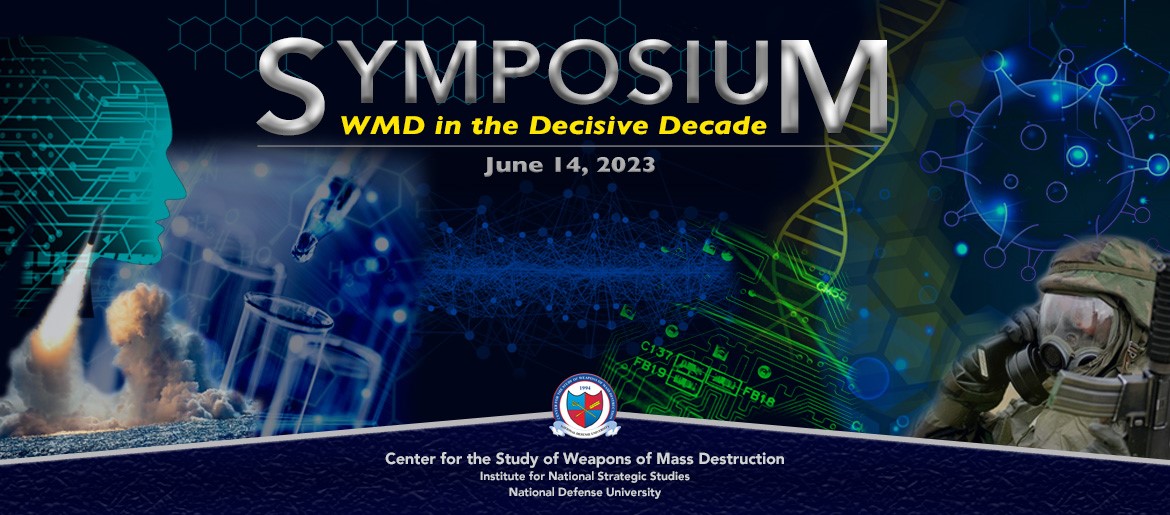
“The National Defense University’s Center for the Study of Weapons of Mass Destruction (CSWMD) invites you to join us on 14 June 2023 for the virtual Annual CSWMD Symposium, titled WMD in the Decisive Decade.”
“This year’s symposium will explore the cognitive impacts WMD has on strategic decision making and the challenges associated with operating in an environment where WMD has been employed. It will be an opportunity for the WMD community to engage with officials and thought leaders on current WMD challenges at the unclassified level, including keynote addresses by Richard Johnson, Deputy Assistant Secretary of Defense for Nuclear and CWMD Policy and Rebecca Hersman, Director of the Defense Threat Reduction Agency.”
“For more information and to register for this event click here. Please RSVP by 9 JUNE 2023.”
“We look forward to hosting you for the event. For more information about the WMD Center and reference our research, please visit our website at https://wmdcenter.ndu.edu/ and follow us on Twitter and on LinkedIn.”
Gordon Research Conference: Cross-Cutting Science Facilitating Collaboration Across the Threat-Science Research Community
“The Nonproliferation, Counterproliferation and Disarmament Science GRC is a premier, international scientific conference focused on advancing the frontiers of science through the presentation of cutting-edge and unpublished research, prioritizing time for discussion after each talk and fostering informal interactions among scientists of all career stages. The conference program includes a diverse range of speakers and discussion leaders from institutions and organizations worldwide, concentrating on the latest developments in the field. The conference is five days long and held in a remote location to increase the sense of camaraderie and create scientific communities, with lasting collaborations and friendships. In addition to premier talks, the conference has designated time for poster sessions from individuals of all career stages, and afternoon free time and communal meals allow for informal networking opportunities with leaders in the field.”
This conference will take place July 9-14 in Ventura, CA. Learn more and register here.
Call for Feedback: Questionnaire on the United States Government’s Definition for Long COVID
The National Academies’ Committee on Examining the Working Definition for Long COVID invites you to participate in a questionnaire about how to best define Long COVID from different perspectives.
The term Long COVID was developed by patients experiencing lingering symptoms of COVID-19. Long COVID is a serious global issue with medical, social, economic, and personal impacts.
Results of this questionnaire and other input being gathered in Spring 2023 will be reviewed by the National Academies committee to understand more about defining Long COVID.
The questionnaire should take approximately 10-15 minutes to complete and will remain open through May 12, 2023. Submit feedback here.
To learn more about the study, please visit the project webpage.
Weekly Trivia Question
You read the Pandora Report every week and now it’s time for you to show off what you know! The first person to send the correct answer to biodefense@gmu.edu will get a shout out in the following issue (first name last initial). Our question this week is: On what date did the CWC enter into force?
Shout out to Detlef M. for correctly answering last week’s question. Our question was: “What nerve agent has the military designation “GB”?” The answer is sarin.
 The Pandora Report