The summer heat is in full effect for many of us, but you can take a minute to cool off while you read this week’s newsletter. This edition covers the findings of the OPCW’s fact-finding mission in Kharbit Massasneh, Syria, the introduction of the Disease X Act of 2023 and a move to reauthorize the Pandemic and All-Hazards Preparedness Act in the Senate, and recent reporting on infectious disease-related consequences of climate change. New publications and other content, upcoming events, and more are also included. ☀️☀️☀️
OPCW Announces Conclusion of Fact-Finding Mission in Kharbit Massasneh, Syria
The Organisation for the Prohibition of Chemical Weapons announced this week that its Fact-Finding Mission “…concluded that there are no reasonable grounds to determine that chemicals were used as a weapon in the reported incidents which occurred in Kharbit Massasneh on 7 July 2017 and 4 August 2017.”
OPCW explained the situation further, writing “On 26 October 2017, the Syrian Arab Republic reported to the OPCW Technical Secretariat a “mortar attack with poisonous gas” on positions of the Syrian Arab Army in Kharbit Massasneh resulting in several casualties among soldiers. The Syrian Arab Republic requested the Technical Secretariat to investigate both incidents.”
“The FFM obtained information regarding the incidents from different sources, including interviews with witnesses, videos, and photographs of medical records. In addition, the FFM exchanged correspondence and held meetings with the Syrian Arab Republic to clarify inconsistencies observed in the course of its investigation.”
“Based on the examination of all data obtained and collected and on the analysis of all evidence taken as a whole, the FFM concludes that there are no reasonable grounds to determine that chemicals were used as a weapon in any of the two reported incidents.”
“The FFM report was shared with States Parties to the Chemical Weapons Convention as well as transmitted to the United Nations Security Council through the UN Secretary-General.”
The full report is available here.
Happenings On the Hill
Senators Baldwin and Tillis introduce Disease X Act of 2023
Last week, Senators Tammy Baldwin (D-WI) and Thom Tillis (R-NC) introduced the Disease X Act of 2023 in the US Senate after it was introduced in the House last month. As Sen. Baldwin’s office notes, “The Disease X Act of 2023 protects Americans by establishing a Disease X Medical Countermeasures Program at the Biomedical Advanced Research and Development Authority (BARDA) in the Department of Health and Human Services (HHS) by:
- Providing funding of $40 million per year for five years specifically for Disease X MCMs;
- Clarifying the HHS may award contracts, grants, and cooperative agreements, or enter into other transactions, to promote the development of Disease X MCMs;
- Directing BARDA to accelerate and support the advanced research, development, and procurement of countermeasures and products to address Disease X threats; and
- Requiring products developed using funding from the Disease X Program be substantially manufactured in the United States.”
“The Disease X Act of 2023 has been supported by the Johns Hopkins Center for Health Security, Biotechnology Innovation Organization, Infectious Diseases Society of America, Dr. Caroline Schuerger, Research Fellow, Georgetown Center for Security and Emerging Technology, Dr. Steph Batalis, Research Fellow, Georgetown Center for Security and Emerging Technology, Ginkgo Bioworks, Institute for Progress (IFP), Big Cities Health Coalition, FluGen Inc., US Biologic, Inc., Vir Biotechnology, The Gerontological Society of America, Helix, New Orleans BioInnovation Center, American Society for Microbiology, The Medical Countermeasures Coalition, 1Day Sooner, and Dr. Gregory D. Koblentz, Director, Biodefense Graduate Program, Schar School of Policy and Government, George Mason University.”
Senate HELP Committee Release Staff-Level Discussion Draft to Reauthorize Pandemic and All-Hazards Preparedness Act
This week, the staffs of Senator Bernie Sanders (I-VT) (Chairman of the Senate Health, Education, Labor and Pensions (HELP) Committee), Senator Bill Cassidy (R-LA) (Ranking Member of the HELP Committee), and Senators Bob Casey (D-PA) and Mitt Romney (R-UT) released and are seeking feedback on a staff-level bipartisan discussion draft to reauthorize the Pandemic and All-Hazards Preparedness Act (PAHPA).
According to the same press release, “Outside of the staff-level agreement, the Chair’s staff is requesting feedback on policy to require that all BARDA and CDC-supported products be sold to the Federal Government or in the U.S. commercial market at the lowest price among G7 countries (Canada, France, Germany, Italy, Japan, and the United Kingdom) and at a reasonable price. Brackets surrounding this provision in Title VI – Additional Policies Outside the Staff Agreement for Stakeholder Feedback – indicate that this policy has not been agreed to.”
“Also outside of the staff-level agreement, the Ranking Member’s staff is requesting feedback on policy to incentivize the development of more medical countermeasures (MCMs) by extending the Priority Review Voucher program through the duration of PAHPA and (1) providing a new, non-transferrable priority review voucher to companies that develop new MCMs on top of the transferrable voucher they currently receive; and (2) including threats to the Armed Forces. Brackets surrounding this provision in Title VI – Additional Policies Outside the Staff Agreement for Stakeholder Feedback – indicate that this policy has not been agreed to.”
“The Senate HELP Committee is requesting comments on the discussion draft. Comments must be submitted to PAHPA2023Comments@help.senate.gov by Monday, July 10, at 10:00 a.m. ET, to be considered.”
“Last month, the HELP Committee held a hearing to consider the reauthorization of PAHPA and heard from experts including Assistant Secretary for Preparedness and Response Dawn O’Connell, CDC Director Rochelle Walensky, and FDA Commissioner Robert Califf.”
The full text of the draft is available here.
Worse Than High A/C Bills…Mosquitoes Are Thriving as Incidences of Certain Diseases Increase
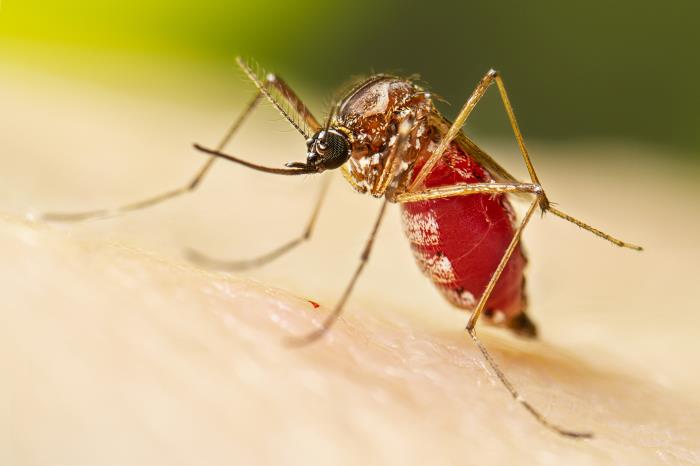
With global hottest day records recently broken and frustration over experiencing climate change in action at a high, concerns about mosquitoes and a number of infectious disease are also rising. CNN reported this week “For the first time in decades, the US Centers for Disease Control and Prevention is warning of several locally acquired cases of malaria in the United States – news that has thrust mosquitoes into the spotlight. While it’s too soon to know whether these specific cases are connected to climate change, scientists have been warning that malaria could become more common in the US as temperatures rise there.”
“There have been locally spread outbreaks in Texas, Florida, Hawaii and Arizona. And last week, the European Centre for Disease Prevention and Control warned that the Aedes albopictus species – which can transmit dengue and chikungunya – is pushing northwards and westwards in Europe as climate change grips the world’s fastest warming continent.”
On a related note, MRI Global also recently posted a featured news piece discussing the spread of five disease drive by climate change, covering Sin Nombre virus, schistosomiasis, malaria, Lyme disease, and Valley fever. They explain in their introduction, “With recent changes in weather toward warm and humid conditions as a result of changes in climate, infectious diseases that are spread to humans through nonhuman vectors are candidates for changes in their geographic location. These changes will potentially affect the ability of those vectors to survive, both increasing and decreasing areas of disease prevalence. To address these vectors and resulting emerging infectious diseases, it is necessary to utilize AI/ML and “team science” across a variety of areas like infectious disease surveillance, animal-human-plant health, ecology, and the environment.”
They conclude with “While the multifaceted effects of climate change are complex, one of them is believed to be the increased incidence of infectious diseases. A team science approach is necessary to help mitigate the threat. “

“A New U.S. Foreign Policy for Global Health”
From CFR: ‘“The United States should, at long last, treat pandemics and global warming as [major] threats to its national interests—especially the vital interests of security and economic power,” argues Senior Fellow for Global Health and Cybersecurity David P. Fidler in a new Council Special Report. The United States needs “a new foreign policy on global health that protects those national interests through pandemic preparedness and climate adaptation strategies.”’
“The report, A New U.S. Foreign Policy for Global Health: COVID-19 and Climate Change Demand a Different Approach, examines U.S. global health policy before and during COVID-19 to identify why the United States failed “to protect vital national interests, develop public and global health capabilities, and maintain domestic and global solidarity against health threats.”’
‘“The United States,” Fidler writes, “was unprepared for a pandemic and is not ready for climate change—despite global health involvement, warnings about both threats, and no competition from authoritarian countries for global health leadership.”’
“Warning that “U.S. foreign policy on global health faces the worst domestic and international conditions it has ever encountered,” Fidler argues that a “new strategy for U.S. foreign policy on global health is needed to address the security, capability, and solidarity failures that COVID-19 and climate change have exposed.”’
“One Health High-Level Expert Panel Annual Report 2022”
From WHO: “This second annual report summarizes the activities and results achieved by the One Health High-Level Expert Panel (OHHLEP) during the year 2022, according to the updated work plan agreed by the Quadripartite Partners in 2021. The report highlights main outputs and deliverables produced by OHHLEP over the calendar year 2022.”
“2023 Emerging Technologies and Scientific Innovations: A Global Public Health Perspective”
From WHO: “This publication presents the findings of a global horizon scan of innovations in science and technology that could help solve global health challenges. An expert group scored over 100 innovations for their potential impact and the chance of wide adoption within 5, 5–10 or > 10 years. They also discussed enablers that would facilitate adoption of the innovations.”
“Animal Markets and Zoonotic Disease in the United States”
This recent report from the Brooks McCormick Jr. Animal Law & Policy Program at Harvard Law School and the Center for Environmental & Animal Protection at New York University challenges assumptions and assesses the threats human-animal interactions pose to American public health. The authors explain in their introduction, “At the end of this discussion, we are left with the uneasy but unavoidable conclusion that, at present, the United States has no comprehensive strategy to mitigate zoonotic risk. While zoonotic risk cannot be eliminated, it can be reduced. Closer examination of these policy insights may foster ideas regarding how regulation can be better conceptualized and designed both to reflect and reduce such risk. This report provides a springboard for such conversations and begins laying the groundwork for much-needed reform. Recognizing the risks is an important first step, for only then will we be able to make clear-eyed appraisals of whether each practice is worth the danger it poses and what might be done to tip the scales in favor of prevention.”
“Pull Incentives for High-Value Antimicrobials”
From the Council of Canadian Academies: “Antimicrobial resistance (AMR) is a serious health threat with the potential to become a full-blown crisis as treatment options dwindle. In Canada, 26% of infections are resistant to the medicines generally first prescribed to treat an infection, a rate that could rise to 40% or beyond in the coming decades (see When Antibiotics Fail).“
“Timely, secure, and stable access to effective antimicrobials will be essential to mitigate future infectious disease pandemics and AMR. However, new antimicrobials have limited profitability because to curb resistance development, they are intended to be used sparingly ― in severe cases as a treatment of last resort.”
“Due to poor returns on investment and other barriers, traditional market forces alone are not enough to ensure the commercial launch and market sustainability of new antimicrobials in Canada. Economic pull incentives offer one method through which high-value antimicrobials ― those used to treat infections in humans for which there are no or few other options ― may be introduced and remain available in the Canadian market.”
What We’re Watching 🍿
“MATCH Demonstrated How DLT Can Reconcile Discrepancies in International Trade of Dual-Use Chemicals”
From the Stimson Center: “Discrepancies in declared trade of dual-use chemicals controlled under the Chemical Weapons Convention are a challenge for national authorities and chemical industry to reconcile.”
“This animated video provides an overview of the Stimson Center’s Monitoring and Tracking Chemicals (MATCH) proof-of-concept, demonstrating how distributed ledger technology (DLT), also known as blockchain, can automate and streamline data sharing and regulatory reporting between industry trade partners and national authorities within the prototype’s fictional ecosystem.”
“MATCH was developed in partnership with DLT developer OARO, with financial contribution by Global Affairs Canada’s Weapons Threat Reduction Program.”
What We’re Listening To 🎧
Transmission Interrupted-Pathogens in Pop Culture: Contagion, Outbreak, and Pathogen Response
“On this episode of Transmission Interrupted, join hosts Lauren Sauer and Rachel Lookadoo, along with guest Syra Madad, as they discuss the impact of the COVID-19 pandemic on emergency management, public health, and health care systems. They explore the challenges faced by hospitals, social vulnerabilities highlighted by the pandemic, and the importance of investing in resources for communities.”
“Additionally, they delve into the prevalence of infectious disease outbreaks in pop culture, including the movies Outbreak and Contagion. The speakers also discuss the tools and strategies used for emergency preparedness and response, how these have evolved over time, and the importance of prevention in addition to preparedness. Tune in to learn more about the impact of infectious diseases and pandemics on our society and health care systems.”
Listen here.

Summer Certificate Course on Combating Transnational Organized Crime and Illicit Trade: A Focus on the Americas

“The University for Peace (UPEACE), the Terrorism, Transnational Crime and Corruption Center (TraCCC) at the George Mason University, and the Anti-Illicit Trade Institute (AITI) are pleased to offer the second edition of the online Summer Certificate Course on Combating Transnational Organized Crime and Illicit Trade: A Focus on the Americas.”
“The course aims to improve students’ comprehension of the dynamics of transnational organized crime, focusing on money laundering, corruption, illicit trade, security, trade zones, state fragility, and the UN Sustainable Development Goals (Agenda 2030). The main objective of the course is to identify how different types of crimes impact the capacity of the state to manage and mitigate internal and external threats. The course will also push participants to think about organized crime from a more nuanced perspective, specifically as an aspect of social conflict, emphasizing that the challenges for promoting peace are embedded in local, regional, and global contexts. Students will receive a certificate upon successful completion of the course.”
Learn more and register here.
Online Conversations: Reflections on the Fifth Review Conference and Looking Ahead
With the Fifth Five-Year Review Conference (RC-5) behind us and the end of United States chemical weapons stockpile destruction approaching, 2023 is a year of important milestones for the CWC. We will meet to assess the past, present, and future civil society participation in the CWC.
You are invited to join us for a CWC Coalition virtual discussion on Wednesday, July 12, 2023 at 4 pm CET. Topics will include:
- A substantive overview of the Fifth Five-Year CWC Review Conference (if you missed it, here is the article from the June 2023 issue of Arms Control Today on the conference)
- A discussion of civil society engagement at RC-5 and what can be improved for future Conferences of States Parties
- Planning what is ahead: upcoming milestones, CWCC workshops, and other opportunities for civil society engagement
CWC Coalition Project Coordinator Mina Rozei will moderate a discussion on Coalition members’ thoughts on RC-5. Paul Walker, Chair of the CWC Coalition, will provide a brief update on the CWC Coalition’s work and upcoming plans for Coalition-organized events.
Please help us get your feedback by filling out this quick survey with your thoughts on the RevCon by Monday, July 10.
This discussion will be off-the-record. This session is open to all members of the CWC Coalition, and other members of civil society committed to supporting the goals of the Chemical Weapons Convention.
Register here.
Registration for GHS 2024 Now Open
Registration is now open for the Global Health Security 2024 conference in Sydney, Australia. This iteration will take place 18-21 June, 2024. The call for abstracts is also still open. “The mission of the Global Health Security conference is to provide a forum where leaders, researchers, policy-makers, and representatives from government, international organisations, civil society, and private industry from around the world can engage with each other, review the latest research and policy innovations, and agree solutions for making the world safer and healthier. To that end, our mission is to help foster a genuinely multidisciplinary community of practice that is committed to working collaboratively to enhance global health security and eliminate disease, irrespective of its origin or source.”

7th Annual Next Generation for Biosecurity Competition Open for Applications
“The seventh annual Next Generation for Biosecurity Competition is now open. NTI | bio, along with the Next Generation for Global Health Security (GHS) Network (NextGen), the iGEM Foundation, 80,000 Hours, SynBio Africa, and the Global Health Security Network (GHSN), hosts this competition to provide a platform for the next generation of global leaders in biosecurity to produce and present original research to the wider biosecurity community.”
“Applicants for the 2023 competition should design a policy proposal that promotes biosecurity-by-design as a way to bolster emerging bioeconomies. Competition judges seek innovative and creative papers focused on safeguarding science and technology development against misuse by promoting responsible innovation in countries with emerging bioeconomies…”
“Winners of the Biosecurity Competition will be awarded the following:
- Online publication of their paper on the NTI website
- The opportunity of travel to, attend, and present during a side event at a prestigious international biosecurity event, such as the Biological Weapons Convention Meeting of States Parties”
Learn more here.
Journal of Responsible Innovation – Special Issue Call for Papers
How Do Scandals Shape the Understanding and Practice of Responsible Research and Innovation?
“Scientific scandals are particularly important to our understanding and practice of responsible research and innovation (RRI). There is a shared belief that research scandals are most instrumental in shaking up scientific systems (Robaey, 2014) and a shared recognition of a rising frequency of research misconduct (Fanelli 2009, Drenth, 2010, Kornfeld and Sandra, 2016, O’Gardy, 2021, Roy and Edwards, 2023). Yet there is a dearth of systematic examination on how irresponsible research activities shape governance and scientific norms and on how we should engage with scandals or scandalous individuals responsibly and effectively to inform the future (Vinck, 2010, Owen, Macnaghten and Stilgoe, 2012, Meyer, 2022). This special issue aims to fill this gap. We invite empirically grounded and conceptually rigorous investigations on the mutual impacts of scandals and RRI.”
Key deadlines: 300 words abstract by 15 October 2023. Full papers by 31 January 2024
Learn more and submit here.
Weekly Trivia Question
You read the Pandora Report every week and now it’s time for you to show off what you know! The first person to send the correct answer to biodefense@gmu.edu will get a shout out in the following issue (first name last initial). Our question this week is: The spread of bovine spongiform encephalopathy (commonly known as mad cow disease) to humans is believed to cause what disease?
Shout out to Drew F. for correctly answering our trivia question last week! Our question was “What 2002 book by Richard Preston, author of The Hot Zone, primarily focuses on smallpox and anthrax?” The answer is The Demon in the Freezer.

