The Pandora Report

Highlights include dengue blowing up on the global stage,  mutant superbugs and the scientists who kill them, Ebola in Bangladeshi bats, stopping Influenza dead by messing with its internal clock,  cholera in Cuba, and Syria’s apparent use of chemical weapons (more leaked diplomatic cables). Happy Friday!

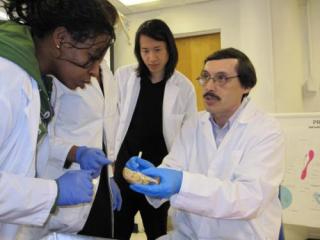
(image credit: Microbe World)

WHO: Dengue has ‘Epidemic Potential”

The World Health Organization released a report assessing  and improving upon the world’s current commitments to combating the “neglected” tropical diseases. Ranking pretty high amongst the 17 tropical diseases featured is dengue, which has seen a 30-fold increase in occurrence globally over the last half century.

WHO – “In 2012, dengue ranks as the most important mosquito-borne viral disease with an epidemic potential in the world… its human and economic costs are staggering. The world needs to change its reactive approach and instead implement sustainable preventive measures that are guided by entomological and epidemiological surveillance.”

MUTANTS…or How Scientists Stalked a Lethal Superbug – With the Killers Own DNA

Is this the tagline to a summer blockbuster or a piece about using innovative epidemiology to fight antibiotic resistant bacteria?  “Why not both?  Who’s connected to Spielberg on LinkedIn? (Are you connected to Mason Biodefense on LinkedIn? You really should be)

Wired – “With each passing year, the problem of superbugs—bacteria such as Klebsiella that have evolved resistance to all, or nearly all, antibiotics available—has grown progressively more dire. Gone are the days when pharmaceutical companies could roll out generation after generation of new medications to replace those that bacteria had already surmounted. Such drugs have become much harder to find; and even when they are found, the market for them is far less lucrative than for molecules that combat such high-profile killers as cancer or AIDS. As a result, the flow through the antibiotics pipeline has slowed to a trickle. From 1983 through 1987, the FDA approved 16 new systemic antibiotics; from 2008 through 2011, it approved just two. Rather than administer some new wonder drug, then, the Clinical Center could only quarantine these KPC-positive patients and give them harsh drugs like colistin, an antibiotic so toxic it was all but abandoned in the 1970s. An estimated 90,000 people die every year from infections they acquire in US hospitals—more than the number that die from Alzheimer’s, diabetes, or influenza.”

Bats are Reservoir for Ebola Virus in Bangladesh

This is our first Ebola piece of 2013, for those of you keeping track, and it therefore an interesting one. According to a study in the CDC’s most recent Emerging Infectious Diseases, approximately four percent of a sample of 276 fruit bats in Bangladesh possessed antibodies for Ebola. Filoviruses in Asia? No thanks.

“These results suggest that Rousettus fruit bats are a reservoir for Ebola, or a new Ebola-like virus in South Asia. The study extends the range of this lethal disease further than previously suspected to now include mainland Asia. ‘Research on Filoviruses in Asia is a new frontier of critical importance to human health, and this study has been vital to better understand the wildlife reservoirs and potential transmission of Ebola virus in Bangladesh and the region,’ said Dr. Kevin Olival, lead author and Senior Research Scientist at EcoHealth Alliance.”

Scientists Try To Thwart Flu Virus By Resetting Its Clock

Having had the stupid flu, we here at the Mason Biodefense blog are well and truly read for it to disappear off the face of the planet. Scientists at Mount Sinai School of Medicine are trying to help influenza along the path to oblivion by tricking the virus to prematurely leave the cozy warmth of its host cell. Exposed, our immune system can then gobble it up like any other irrelevant antigen.

NPR – “A study in Cell Reports describes how researchers tapped into the flu’s internal clock as they search for ways to keep the virus from spreading. Flu viruses hijack the machinery inside host cells to replicate. The theft is a complicated process that takes time. A virus enters the nucleus of the cell, copies itself thousands of times and then breaks out before the immune system attacks. Every minute counts. To trick the flu, researchers fiddled with how fast the escape protein accumulates inside cells. Speed up the protein production, and the virus leaves the cell before it has made enough copies to infect someone else.”

Cholera Cases Reported in Cuba

Cholera is an awful disease, not least because it’s forever ruined the phrase “rice water” for many of us (sorry, sorry – if you don’t have a slightly macabre sense of humor coming into  Biodefense, you will going out). It’s still not known how the disease,  which before 2012 had been absent for over a century, was resurfaced in Cuba.

CNN – “A statement from the Cuban Health Ministry said so far there were 51 confirmed cases in the new outbreak. The statement did not say if anyone had died from the disease, a bacterial infection of the small intestine, which causes severe diarrhea and vomiting in infected people…The Health Ministry statement Tuesday said the latest outbreak appeared to be caused by a food vendor who had not followed proper sanitary procedures”

Leaked State Department Cable: Syria Has Used Chemical Weapons

According to Foreign Policy, a leaked State Department cable has indicated that the Syrian government used chemical weapons against the rebels last month.  Out of respect for those of you working or interning with State,  no excerpts from the article will be posted.
The Pandora Report: Special Edition

The theme of this special edition Pandora Report is medical countermeasures. Highlights include the 2012 Public Health emergency Countermeasure Enterprise Plan and Strategy (not as wordy as it sounds), raxibacumab’s approval to treat inhalation anthrax, new smallpox antivirals, and Emergent BioSolutions’ manufacturing an experimental influenza vaccine. Happy…er, Monday?

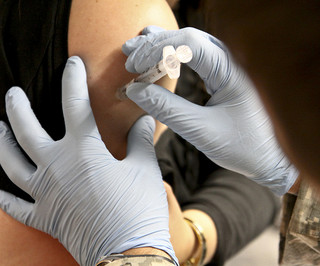
(image credit: USACE Europe District)

2012 HHS Public Health Emergency Medical Countermeasures Enterprise

The Department of Health and Human Services (HHS) released its 2012  Public Health Emergency Medical Countermeasures Enterprise (PHEMCE) Implementation Plan and Strategy last month. This version updates the orginal 2007 version of the Strategy and Plan, by expanding “efforts needed to improve national capability and capacity to respond to major public health threats.”

HHS – “The U.S. Government has a responsibility to protect the health and safety of its citizens. The American people continue to face a host of national health security threats from chemical, biological, radiological, and nuclear (CBRN) agents and emerging infectious diseases. Under the leadership of HHS, the Public Health Emergency Medical Countermeasure Enterprise (PHEMCE) is the coordinating body for the federal agencies in charge of protecting the civilian population from potential adverse health impacts through the use of medical countermeasures, which are medicines, devices, or other medical interventions that can lessen the harmful effects of these threats. The 2012 HHS PHEMCE Strategy articulates the strategic direction and will guide policies and decisions for the end-to-end mission of the PHEMCE. The companion 2012 HHS PHEMCE Implementation Plan describes the activities and programs that HHS, in collaboration with its interagency partners, is undertaking over the next five years to increase MCM preparedness for national health security threats.”

FDA approves Raxibacumab to Treat Inhalational Anthrax

Although only just being officially approved, under a special licensing agreement the US government has been steadily adding raxibacumab to the Strategic National Stockpile for a few years now. The drug’s efficacy stems from its targeting of Bacillus anthracis‘ toxins, instead of the bacteria itself. Raxibacumab is also the first adrug to be approved under the two animal rule (which I know you’re all entirely familiar with…yes? oh here).

FDA – “The U.S. Food and Drug Administration today approved raxibacumab injection to treat inhalational anthrax, a form of the infectious disease caused by breathing in the spores of the bacterium Bacillus anthracis. Raxibacumab also is approved to prevent inhalational anthrax when alternative therapies are not available or not appropriate. Raxibacumab is a monoclonal antibody that neutralizes toxins produced by B. anthracis that can cause massive and irreversible tissue injury and death. A monoclonal antibody is a protein that closely resembles a human antibody that identifies and neutralizes foreign material like bacteria and viruses. Anthrax is a potential biological terrorism threat because the spores are resistant to destruction and can be easily spread by release in the air.”

ST-246(R) to be Branded Arestvyr(TM)

Eradication has definitely not spelled the end to the smallpox debate. The argument generally falls along two lines A) As it’s eradicated, should we still be prioritizing its antivirals over other, more defined needs? Or B) As it’s eradicated, and therefore almost everyone under the age of 32 is entirely vulnerable, shouldn’t stockpiling antivirals be a top priority? SIGA clearly falls in the later camp.

Globe Newswire – “SIGA Technologies, Inc. (Nasdaq:SIGA), a company specializing in the development of pharmaceutical agents to fight pathogens capable of use as bioweapons, today announced that its smallpox antiviral, previously known as ST-246®, would be branded as Arestvyr™ for all purposes, including commercial sales and seeking full marketing approval of the antiviral as a smallpox treatment. “We are pleased to announce use of the Arestvyr™ name for our proprietary smallpox antiviral treatment,” said Dr. Eric A. Rose, Chairman and Chief Executive Officer of SIGA. “ST-246 (Tecovirimat) is becoming increasingly better known around the world as we work to deliver two million courses of our treatment to the United States Government’s Strategic National Stockpile. Adopting the Arestvyr™ name is another step in our commercial-stage transformation. SIGA is also pleased to confirm that it has received payment of the $12.3 million milestone previously invoiced to the U.S. government under SIGA’s Strategic National Stockpile contract.”

Emergent licenses flu vaccine for new federal biodefense center

Just in time for our raging flu season (well not really, because as we all know vaccines take a good long while to produce), Emergent Biosolutions, our nation’s supplier of the current anthrax vaccine, is on the way to producing an experimental flu vaccine.

Gazette.net – “Back in June, Emergent BioSolutions, the Rockville biotech that sells the only approved anthrax vaccine to the federal government, won a federal grant worth up to $220 million to establish a new biodefense development and manufacturing center in Maryland. Late last week, the company announced that it acquired the license to manufacture and sell an experimental pandemic influenza vaccine to help meet its commitment under that grant. Under its deal with VaxInnate of Cranbury, N.J., Emergent said in a statement, it gains exclusive rights to the candidate, a recombinant vaccine that has the potential to be produced quickly and cost-effectively with high yields. VaxInnate will continue to develop the candidate under its current contract with the Biomedical Advanced Research and Development Authority, while Emergent will produce it, using flexible manufacturing technology. Emergent also works with the federal authority to develop a second-generation anthrax vaccine.”

The Pandora Report

Will be out Monday! So sorry for the delay everyone, the flu epidemic which has swept the nation has swept the GMU Biodefense blog as well. Apparently writing about disease does not make one immune. Stay healthy and check back Monday morning.

Bragging About Our Faculty: Round VII

(image credit Issac Shepherd)

GMU Biodefense Faculty member Dr. Gregory Koblentz, who is also the Stanton Nuclear Security Fellow at the Council on Foreign Relations, was interviewed by Executive Magazine for a piece on Syrian chemical weapons:

“’The United States and other nations have issued strong statements to deter the Assad regime from using chemical weapons. It is hard to think of how the Assad regime could use chemical weapons where the benefits outweigh the costs,’ says Gregory Koblentz, a proliferation and terrorism expert at the Council on Foreign Relations (CFR). Indeed, the use of chemical weapons has become understood as the “red line” that would prompt western military intervention in the Syrian conflict. One possible situation for chemical weapons use, however, is if the regime is on the verge of collapse, says Koblentz. In such a scenario, ‘these rational cost-benefit calculations may not apply.’ But then again, ‘the issue becomes whether [Assad’s] order can be transmitted to chemical weapons-armed units in the field and if those orders would be obeyed.’ ”

Read the full piece here

The Pandora Report

Welcome to the first Report of 2013! Highlights include moving Plum Island to Kansas, studying the novel coronavirus which has us a little spooked, the earliest start to the flu season in 9 years, studying cells after antibiotic exposure, and giant panda blood (it’s relevant, I swear). Happy Friday!

Federal officials sign land transfer for Kansas biosecurity lab

Chalk up another victory to the government in the ongoing battle to build that animal research lab in Kansas. Unsurprisingly, many people feel very uncomfortable with the idea of a scientists handling foot-and-mouth in their backyard, especially if their backyard is a large dairy farm. It looks plans to complete the lab in Kansas are nonetheless underway.

Kansas City Star – “Department of Homeland Security officials have signed a land transfer agreement that allows for the construction of a new federal animal research lab near Kansas State University in Manhattan. Gov. Sam Brownback and members of the state’s congressional delegation announced that the move indicated the federal department is committed to building the $1.14 billion National Bio and Agro-Defense Facility. Kansas was selected for the animal research lab after a lengthy competition in 2009. The Homeland Security Department will acquire about 46 acres for the lab near the north end of Kansas State. Research will be conducted on deadly animal pathogens, including foot and mouth disease.”

Hamilton lab researching spread of deadly virus

The novel coronovirus popping up in the Middle East is getting some very serious attention here in the US. Corona being a bit of a dark horse – see SARS – determining whether this new form is transmissible person-to-person remains a priority.

San  Francisco Chronicle – “Scientists at a western Montana laboratory are teaming with researchers at a university in the Netherlands to determine whether a newly discovered, deadly virus can spread from person to person. The new coronavirus was identified when a man died in Saudi Arabia in September. Five others died in Qatar and Saudi Arabia in November, the Ravalli Republic reported Thursday. Five other people were sickened by the virus, but they recovered. Until an outbreak of severe acute respiratory syndrome, or SARS, killed 900 people and sickened 8,000 in 2003, most scientists viewed coronaviruses as relatively harmless.”

Flu Activity Picks Up Nationwide

According to the CDC, the 2012-2013 flu season has had the earliest start in nearly a decade, with 29 states reporting “high levels of influenza-like-illness” (ILI). For those of you interested, the CDC publishes weekly reports on just the flu (alliteratively named “FluView“), which details things like the prevalence of the strains identified. For instance, last week,  79% of the Influenza- positive tests reported to the CDC were Influenza-A, and of that 79%, 98% were H3N2, and 2% were H1N1.  Moral of the story? Get your flu shot.

CDC – “Influenza activity continues to increase in the United States and most of the country is now experiencing high levels of influenza-like-illness (ILI), according to CDC’s latest FluView report. “Reports of influenza-like-illness (ILI) are nearing what have been peak levels during moderately severe seasons,” according to Dr. Joe Bresee. CDC continues to recommend influenza vaccination and antiviral treatment when appropriate at this time. ‘While we can’t say for certain how severe this season will be, we can say that a lot of people are getting sick with influenza and we are getting reports of severe illness and hospitalizations,’ says Bresee, who is Chief of the Epidemiology and Prevention Branch in CDC’s Influenza Division.”

New strategy for bacteria antibiotic resistance

In our most science-y piece of the week, we look at the using micofluidics to study antibiotic resistance in TB. For the first time, scientists are able to monitor cell growth pre- and post-exposure to antibiotics, with some interesting results. Contrary to popular belief, bacteria which survived the antibiotics often did not stopped dividing, and therefore remained “very dynamic.”

Homeland Security Newswire – “Scientists used microfluidics to observe the behavior of individual tuberculosis-like bacteria in the presence of antibiotics. Their observations call into question the prevailing theory of bacterial resistance, and they have proposed a new explanation for why some bacteria become resistant. The research is published 4 January 2013 in the journal Science. It is often difficult completely to eliminate a bacterial infection with antibiotics; part of the population usually manages to survive. This phenomenon has been known for quite some time, dating back nearly to the discovery of penicillin. For more than fifty years, scientists have believed that the resistant bacteria were individuals that had stopped growing and dividing.”

Odd Piece of the Week: Giant Panda Blood

(image credit: Smithsonian Wild)

According to a new study conducted by researchers at the Life Sciences College of Nanjing Agricultural University in China, giant panda bloods is replete with a compound called cathelicidin-AM, which can kill bacteria in under an hour (standard antibiotics take closer to six hours). Before you start to wonder, aghast, how one farms giant panda blood, let me stop you – the compound can be synthesized, without any pandas present, in labs.

Discovery News – “Giant panda blood may hold the secret to curing superbug illnesses in humans as well as other diseases, according to new research. The teddy bear-like animals would hardly seem to be associated with industrial strength cleanser and potent antibiotics, but their link with these possible cure alls now appears to have been forged. The primary component in giant panda blood is called cathelicidin-AM. It was found after analyzing the panda’s DNA.”

Biodefense in 2012: Year in Review

2012 has been an interesting year, and contrary to all apocalyptic predictions and Hollywood blockbusters, here we still stand. And look back.  Here, in no uncertain terms, is the best and worst of 2012 for the broad and beautiful field of biodefense (all further alliteration will be kept to a minimum). Check out the slideshow below for a quick view, with all of our carefully selected choices explained in detail below.

This slideshow requires JavaScript.

Biggest Controversy
While this technically started in December of last year, enough of the saga also known as “To Publish or Not to Publish” occurred this year that we don’t feel bad including it. The uproar surrounding the potential publication of two studies involving H5N1 and ferrets (“Airborne Transmission of Influenza A/H5N1 Virus Between Ferrets” and “Experimental adaptation of an influenza H5 HA confers respiratory droplet transmission to a reassortant H5 HA/H1N1 virus in ferrets “) was unprecedented. Setting aside for one moment the claims regarding exaggeration, the more controversial of the two studies sought to genetically engineer a strain of H5N1 to make it capable of aersolized transmission between humans (the virus as it occurs currently in nature isn’t effectively transmitted through aerosol). For the first time ever, the National Science Advisory Board for Biosecurity stepped in and asked the authors of both papers (one of which was based in the Netherlands) to hold publication while they reviewed them  for reasons of security.  Although both papers have subsequently been published, the controversy brought the issue of dual-use research into sharp detail.

2nd Biggest Controversy
#2 was a close enough runner-up to merit mention. The decision on the part of the Centers for Disease Control and Prevention (CDC) to include SARS on the select agent list, as well as the potential inclusion of H5N1, has created a good deal of contentious debate within the scientific community. Critics argue that the new regulations will significantly shrink the number of labs allowed to work with the pathogens, limiting both the reaction capacity in a pandemic and the general progression of knowledge. Proponents, however, argue that the more stringent regulations limit the likelihood of dangerous information on weaponizing the pathogens falling into the hands of terrorists. Will 2013 bring a resolution? We’ll see.

Most Exciting New Technology
While there were many honorable mentions (sensing the smallest virus particlesmRNA vaccines) the one which struck us most was Lawrence Livermore National Laboratory’s military uniforms capable of repelling both biological and chemical agents. The uniforms are made of a carbon nanotube fabric which is capable of switching quickly from a breathable “open” state to a more rigid, “protective” state when an agent is detected. The fabric is still a ways away from large-scale production, but the potential of the idea to be adapted for civilian use landed it on our list.

Most Beleaguered Government Program
BioWatch. With or without the L.A. Times’ laser-like interest in the program, BioWatch has had its fair share of troubles. Developing a good assay means finding the ideal place along the two axises of  sensitivity and selectivity, and BioWatch seems to have difficulty with both. First came news that the program’s multiplex assays, which were used for two years before being phased out, were  not selective enough to distinguish between virulent pathogens and their innocuous cousins. This was followed by news that the sensitivity of many of the detectors led to an “unacceptable number of false positives”. While the Department of Homeland Security seems to be standing by the program, funding for its Generation 3 iteration remains uncertain.

Best New(ish) Legislation
Although it hasn’t passed the Senate yet, in December the Pandemic and All Hazards Preparedness Reauthorization Act (H.R. 6672) passed the House handily, in a 383-16 vote. The Act, which seeks to bolster medical countermeasures in response to a potential CBRN attack, reauthorizes portions of  Bioshield and the 2005 PAHPA.

Most Disturbing Rumor
It’s not often that governments admit to possessing secret stockpiles of biological weapons, so when they do it tends to be noteworthy. Especially if said government also happens to be embroiled in a bloody civil war. Despite the insistence of Bashar al Assad’s regime that “no chemical or biological weapons will ever be used, and I repeat, will never be used”, the announcement of the stockpiles sparked immediate debate in the international community. Pundits weighed in from all sides (“Syria’s Assad Will Use Chemical Weapons, Says Former General, Now Defector” vs “Why Assad Won’t Use Chemical Weapons“). Meanwhile the war has raged on, with concerns mounting as to the ongoing security of the stockpiles, and unconfirmed rumors emerging that Assad has used chemical weapons on rebel forces.

Here’s a few things we’re watching out for in 2013

Second Least Popular Day in April: the 3rd
April 3rd, 2013 is the day on which new Department of Health and Human Services (HHS) guidelines regarding labs working with Tier 1 pathogens go into effect. Under the new rules, non-Tier 1 labs have one week to handle samples of  Tier 1 agents before they must either destroy them or pass them along to a Tier 1 – licensed lab. This is all fine and dandy until further verification or comparison of those destroyed samples are needed. Between this and the SARS addition, neither HHS nor the CDC is in contention for most popular government agency.

Best Pieces from the GMU Biodefense Blog

– Destroying Rinderpest: Dr. Roger Breeze, Former Director of Plum Island, Comments – Dr. Breeze is the former Director of Plum Island, current President of the Centuar Science group, and GMU adjunt faculty member.

– An Evolving Threat vs A Stodgy Bureaucracy  – Julia Duckett is a current GMU Biodefense PhD student – her review of the NRC report, “Determining Core Capabilities in Chemical and Biological Defense Science and Technology”, is both incisive and fair.

Most Exciting Upcoming Film
In the spirit of the festive season, we’d like to end on a happier note (please notice Ebola was not mentioned once this entire post, despite the outbreak in Kampala and the rumors of aerosol transmission via pigs). The resurgence of zombies in popular culture definitely gives us better street cred here at GMU Biodefense (our unofficial tagline is “Preventing the Zombie Apocalypse since 2003”).  And while I’m certain many of you biodefense enthusiasts out there are more excited about seeing the film World War Z (global virus leads to zombie apocalypse), if you only see one zombie film next year, make it Warm Bodies. Can love cure the walking dead? See it and let us know (or better yet, send us a review!)

fireworks02And that’s our list! Thank you to all you faithful readers (hi to those of you in the UK and Russia!), it’s been a pleasure writing for you.

As always, send us your comments, suggestions, and/or questions. Otherwise, wishing everyone a pathogen-free New Year!

The Pandora Report

Using bat genes to stay healthy

Merry Holiday Season to all! And stay tuned Monday for George Mason Biodefense’s “year in review”, examining the most interesting and relevant developments in biodefense over 2012.  For now, highlights include the ongoing mystery of the Spanish Flu, bats as the elixir of eternal good health, the fiscal cliff (it’s inescapable) interrupting post-Sandy aid,  the inevitably of another global flu pandemic (yes, this is news. Sort of. Read the article), and the ongoing uncertainty regarding the causes of this year’s West Nile epidemic. Happy Friday and a safe and happy New Year!

The Worst Pandemic in History

Slate has a really interesting piece on the study of the 1918 Spanish Influenza pandemic, which I’ll be the first to admit, legitimately frightens me. In just under a year, the virus infected nearly 40% of the world’s population, resulting in over 50 million deaths.

Slate – “Ninety-five years ago in the little town of Brevig Mission, Alaska, a deadly new virus called Spanish influenza struck quickly and brutally. It killed 90 percent of the town’s Inuit population, leaving scores of corpses that few survivors were willing to touch. The Alaskan territorial government hired gold miners from Nome to travel to flu-ravaged towns and bury the dead. The miners arrived in Brevig Mission shortly after the medical calamity, tossed the victims into a pit two meters deep, and covered them with permafrost. The flu victims remained untouched until 1951, when a team of scientists dug up the bodies, cracked open four cadavers’ rib cages, scooped out chunks of their lungs, and studied the tissue in a lab. But they were unable to recover the virus and threw out the specimens. Nearly 50 years later, scientists dug up another victim from the same site, this time a better preserved, mostly frozen, obese woman, and successfully extracted viral RNA. In 2005, a team of scientists finally completed the project, sequencing the full genome of the viral RNA. But they still don’t know exactly why it caused the Spanish flu pandemic.”

How Bat Genomes Could Help Make You Healthy

A group of scientists with possibly the best team name ever – the Bat Pack – have determined that it may be bats’ ability to fly that helps inure them from of the nastier zoonotic bugs (ebola, SARS, etc). Maybe Batman was on to something?

Popular Science – “A new genetic analysis shows how bats avoid disease and live exceptionally long lives–information researchers could use to design drugs for people. Though they can rapidly spread pathogens that afflict humans, bats somehow avoid getting sick from viruses like Ebola, SARS, and other deadly bugs. A new genetic analysis of two very different bat species shows how the animals avoid disease, and live exceptionally long lives. It may all be related to their ability to fly, researchers say. This research comes from the “Bat Pack,” a team of scientists at the Australian Animal Health Laboratory, and the Beijing Genome Institute. The team sequenced the genomes of a huge fruit bat and a tiny insectivorous bat and found both were missing a gene segment that can cause extreme immune reactions to infection. In most mammals, the so-called ‘cytokine storm’ that results from an invading virus is actually what kills, not the virus itself. This inflammatory response doesn’t happen in bats.”

Fiscal Cliff Discussions Get in Way of Post-Sandy Relief Measure

Homeland Security Newswire – “The post-Sandy rebuilding effort in the northeast has been stalled by the debate going on in Congress about a solution to the national debt…Lawmakers from New York, New Jersey, Connecticut, and several other states are still waiting for support for a measure which would allow speeding up of clean-up efforts construction, but with the focus on the fiscal cliff, the $60 billion White House Sandy relief request has taken a back seat. Last Thursday legislators from the affected states pleaded with their colleagues to separate the disaster relief package — which, when the states’ requests are added, could total $100 billion — from the fiscal cliff conversations”.

Global Flu Pandemic ‘Inevitable,’ Expert Warns

By “expert” they mean head of the pharmaceutical company currently attempting to manufacture a universal flu vaccine. Which isn’t to say he’s wrong! Rather, as one GMU Biodefense faculty member is fond of saying (and quite rightly),  always check your sources.

USNWR – “A new global flu pandemic within the next couple years is inevitable, one prominent flu vaccine manufacturer says. Joseph Kim, head of Inovio Pharmaceuticals, which is currently working on a “universal” flu vaccine that would protect against most strains of the virus, says the world is due for a massive bird flu outbreak that could be much deadlier than the 2009 swine flu pandemic. ”I really believe we were lucky in 2009 [with the swine flu] because the strain that won out was not particularly lethal,’ he says. ‘Bird flu kills over 60 percent of people that it infects, regardless of health or age. It is a phenomenal killing machine—our only saving grace thus far is the virus has not yet jumped to humans.'”

West Nile Virus Surge Unexplained

Although the specific causative agents have yet to be pinpointed, scientists have established that this year’s epidemic was not a result of significant viral mutation. Silver lining?

Medpage – “During the summer, the CDC realized that this year was on track to be one of the worst for West Nile virus infections, and as reported cases continue to be tallied the reason for the resurgence remains unclear. As of Dec. 11, the official case count was 5,387, the second highest total since the mosquito-borne virus first emerged in New York in 1999. There were 9,862 total cases reported in 2003, a number padded by excessive testing in one state that year. Human infections have now been identified in all 48 contiguous states and the District of Columbia, with the hardest hit being Texas (32%), California (8%), and Louisiana (6%). Current numbers of neuroinvasive disease cases (2,734) and deaths (243) rank third behind those recorded for 2002 and 2003.”

The Pandora Report

Highlights include H5N1 research for everyone, a gift all Biodefense students can get behind, finally detecting the tiniest virus, why bacteria are to blame for you eating that third piece of fruitcake, USAID’s PREDICT program, and staying away from the hand dryer. Happy Friday!

The End of Days for H5N1 Moratorium?

H5N1 research is out of the dog (ferret?) house, following a lifting of a year long ban, put in place after the controversial “Airborne Transmission of Influenza A/H5N1 Virus Between Ferrets” study. Stay tuned for the GMU Biodefense review of the decision.

The Scientist – “After a 2-day meeting in Bethesda, Maryland, this week, government officials have finally reached a consensus on a policy to review requests to research the potentially dangerous H5N1 influenza virus. The new policy could end a longstanding debate that began when two research groups published studies showing their ability to create viruses that are transmissible between mammals. The National Institutes of Health policy, which is to take effect next month, will effectively lift a 12-month ban on H5N1 research that started in January. But some countries may not wait. ‘I suspect that we will be seeing a lifting of the moratorium on the part of people who are not NIH-funded,’ Anthony Fauci, the head of the National Institute of Allergy and Infectious Diseases (NIAID), said at the meeting…”

Preparing for Bioterrorism

Unsure what to get the Biodefense student who has it all? Look no further! The Alfred P. Sloan foundation has released a book helpfully titled “Preparing for Bioterrorism”, which is about, you guessed it, bioterrorism. Download it for free from their website, pass it along to your favorite BIOD student, and then sit back and bask in your gift-giving glory.

Get it here (be sure to check out the forward by D.A. Henderson, available here).

citytechprof
Dr. Kolchenko

Groundbreaking research leads to detection of smallest virus particle, implications for early treatment of disease

Vasily Kolchenko (great name, great mustache) and his team, by attaching a nano-antenna to a light-sensing device, have managed to detect the smallest virus particles.

Phys.org – “…Their work has made it possible, for the first time, to detect the smallest virus particle. Since even one viral particle can represent a deadly threat, the research likely will make an important contribution to ongoing research on early detection of such diseases as AIDS and cancer. Until the research team announced their discovery this year in Applied Physics Letters (July 27, 2012), no instrument or methodology had been successful in reliably and accurately detecting a single virus particle, which is in the size range of a nanoparticle. (About 80,000 nanoparticles side by side would have the same width as a human hair.) The research will potentially have an immense impact on the general public, aiding disease detection at its earliest stage when fewer pathogens are present and medical intervention can be most effective.”

Are Bacteria Making You Hungry?

I know defending against our nation’s proclivity towards baked goods isn’t necessarily an issue of biodefense, but it’s the holiday season, and as the pounds are added on, any and all scapegoats are appreciated (George Mason Biodefense is in no way condoning unhealthy eating habits. A balanced diet and frequent exercise are the best way to remain healthy).

Science Daily – “Over the last half decade, it has become increasingly clear that the normal gastrointestinal (GI) bacteria play a variety of very important roles in the biology of human and animals. Now Vic Norris of the University of Rouen, France, and coauthors propose yet another role for GI bacteria: that they exert some control over their hosts’ appetites. Their review was published online ahead of print in the Journal of Bacteriology.”

USAID Emerging Pandemic Threats Program Trains 1,500 in Infectious Disease Surveillance, Diagnostics and Outbreak Response and Identifies 200 Novel Viruses

Microbial and infectious disease experts from around the world came together earlier this month for the 20th annual meeting of the Institute of Medicine (IoM)’s Forum on Microbial Threats.

“Over the past three years, the PREDICT Project of the U.S. Agency for International Development’s (USAID) Pandemic Influenza and Other Emerging Threats (PIOET) program has trained 1,500 people in surveillance, diagnostics, and outbreak response; has discovered 200 novel viruses related to groups known to cause disease in humans; and has standardized animal sampling protocols as part of detecting and preventing pathogens of pandemic potential from spilling over from animal to human populations – and vice versa. These figures were presented by Stephen Morse, PhD, of Columbia University and Co-Director of the PREDICT Project during a panel…on “Disease Detection, Emergence and Spread: Tools and Approaches for Infectious Disease Surveillance and Detection” .

Why Paper Towels are Important

Using an air dryer in the bathroom is always better, right? Especially one of the automatic ones that you don’t have to touch? Wrong.  In doing your bit to stop the spread of flu this holiday season, consider reaching for the towel. From the Mayo Clinic:

“Hand hygiene has the potential to prevent diseases and reduce health care–associated infections. The proper drying of hands after washing should be an essential component of effective hand hygiene procedures. Most studies have found that paper towels can dry hands efficiently, remove bacteria effectively, and cause less contamination of the washroom environment. From a hygiene standpoint, paper towels are superior to air dryers; therefore, paper towels should be recommended for use in locations in which hygiene is paramount, such as hospitals and clinics. The provision of paper towels should also be considered as a means of improving hand hygiene adherence among health care workers. Our findings may have implications for health professionals and medical educators aiming to design effective programs to promote hand hygiene practices.”

Destroying Rinderpest: Former Director of Plum Island Comments

RInderpest
Rinderpest

Last week the World Organization for Animal Health (OIE) called for the destruction of remaining stocks of the eradicated cattle virus, Rinderpest. Commenting on the news is Dr. Roger Breeze, GMU Biodefense adjunct faculty, current President of the Centaur Science Group,  and former Director of the Plum Island Animal Disease Center.

Dr. Roger Breeze:

“In 2011, the developing world celebrated global eradication of Rinderpest, a lethal viral disease of cattle responsible for catastrophic outbreaks in Europe that started with the Mongol invasions, frame our emergency response to epidemics to this day, and were the direct triggers for establishment of the veterinary profession and the International Office of Epizootics (OIE, the World Organization for Animal Health). Beyond catastrophic were the consequences of the Great African Rinderpest epidemic that began when an invading Italian Army brought Rinderpest-infected cattle from India into Ethiopia in 1887. At least 90% of cattle died and the infection spread throughout Africa, depriving people of their food, transport, draft animals and family life-savings at a stroke and precipitating a severe famine, enormous mortality and wars that rippled through the continent for a decade.

Like smallpox, Rinderpest was eradicated with 20th century technologies – a live attenuated vaccine made in the developing world and simple immunological tests – backed by a surprisingly inexpensive but sustained international effort based on grass-roots capabilities and enthusiastic participation of the herdsmen most concerned. The world community that conceived, funded and sustained these efforts deserves enormous credit.

Now we face a different challenge – accidental or deliberate release of Rinderpest into a global cattle population that is totally susceptible and through much of Africa and Asia ill supported by veterinary surveillance services. Live attenuated Rinderpest vaccine strains and virulent challenge strains exist in laboratories and vaccine facilities formerly engaged in the global eradication campaign. The OIE and the United Nations Food and Agriculture Organization (FAO) are leading international efforts to destroy remaining stocks of Rinderpest virus or to transfer these to secure Biosafety level 3 laboratories so that unauthorized access to virus is prevented and any work is conducted under appropriate biological safety. Clearly this is something to be encouraged, although one wishes for a somewhat stronger verb. The OIE and FAO are also developing a contingency plan (as yet unpublished) for a vaccine bank and diagnostic support should an outbreak occur. This is also a wise investment.

But the OIE is the World Organization for Animal Health not Animal Biodefense and OIE and FAO both operate on shoestring budgets that do not allow for a global Rinderpest preparedness plan that can be sustained over decades to come. A deliberate attack on North American or European animal agriculture with native or synthetic Rinderpest virus would cause significant damage, although nothing like historic outbreaks (there is a saying that “a good barb wire fence will stop Rinderpest”). The tragedy would be a deliberate release that re-infected the developing world to reverse the major economic gains of the past 20 years and condemn the poorest of the poor to hunger, starvation and death. President Obama’s National Strategy for Biosurveillance and the National Strategy for Countering Biological Threats clearly set out what we as a nation need to work towards at home and abroad with our international partners to counter these natural and deliberate threats to people, animals and plants. Let’s finish the job with Rinderpest by ensuring a global preparedness capability that stands the test of time.”

The Pandora Report

Highlights include Russia quietly upping it’s chem/bio defense spending (*cough* Syria *cough*), the MSP discussing the BWC (breaking news: Cuba has complaints)(no offense Cuba), the bugs in your great great times 100 grandfather’s belly, a new journal article on immune escape and pandemic mortality, annnd how to win a million dollars (math. it’s always math). Happy Friday!

Credit: Al Arabiya News

Russia to Spend $183 million on Chemical, Bio Defense in 2013

Russia, possibly a little nonplussed by Assad’s suddenly revitalized interest in his WMD, is investing 5.6 billion rubles ($183 million) on bolstering their defenses against chemical and biological weapons (FYI: Syria is just over 600 miles south of Russia – for comparison, that’s less than the length of California). Make all the dual-use jokes you want, I think the Russians are on to something.

Ria Novosti –  “MOSCOW, December 11 (RIA Novosti) – Russia will spend over 5.6 billion rubles ($183 million) on improving defense against chemical and biological threats in 2013, a Defense Ministry official said on Tuesday. ‘The overall spend on measures to defend against chemical and biological threats in 2013 will be around 5.65 billion rubles,’ the head of Russia’s Nuclear, Chemical and Biological Defense (NBCD) department Maj. Gen. Yevgeny Starkov said.”

2012 Meeting of State Parties for the 1972 Biological Weapons Convention Concludes

Stay tuned for the Final Report.

“Thursday morning provided an opportunity for delegates to raise any further issues within the topics allocated to the MSP. The following countries took the floor: on cooperation and assistance: Republic of Korea, Algeria and Iran (national); on science and technology: Chile and the United Kingdom; on national implementation: Algeria, Japan and Chile; and on confidence-building measures: Japan. Most interventions followed up on themes that had been previously raised.”

Too Many Antibiotics? Bacterial Ecology That Lives On Humans Has Changed in Last 100 Years

Apparently the bugs living in our ancestors (of the ancient variety) were more similar to “non-human primates” than to your average American today. Why? Overuse of antibiotics, especially in the last century.

Science Daily – “A University of Oklahoma-led study has demonstrated that ancient DNA can be used to understand ancient human microbiomes. The microbiomes from ancient people have broad reaching implications for understanding recent changes to human health, such as what good bacteria might have been lost as a result of our current abundant use of antibiotics and aseptic practices…’The results support the hypothesis that ancient human gut microbiomes are more similar to those of non-human primates and rural non-western communities than to those of people living a modern lifestyle in the United States,’ says Lewis. ‘From these data, the team concluded that the last 100 years has been a time of major change to the human gut microbiome in cosmopolitan areas.’ ”

The age distribution of mortality due to influenza: pandemic and peri-pandemic

This study evaluates impact of “immune escape” on elderly mortality rates during pandemics, with immune escape here referring to the “stepwise increase in mortality among the oldest elderly.” It’s always interesting to see how pandemics affect specific age populations.

BMC Medicine – “In all influenza pandemics of the 20th century, emergent viruses resembled those that had circulated previously within the lifespan of then-living people. Such individuals were relatively immune to the emergent strain, but this immunity waned with mutation of the emergent virus. An immune subpopulation complicates and may invalidate vaccine trials. Pandemic influenza does not ‘shift’ mortality to younger age groups; rather, the mortality level is reset by the virulence of the emerging virus and is moderated by immunity of past experience. In this study, we found that after immune escape, older age groups showed no further mortality reduction, despite their being the principal target of conventional influenza vaccines. Vaccines incorporating variants of pandemic viruses seem to provide little benefit to those previously immune. If attack rates truly are similar across pandemics, it must be the case that immunity to the pandemic virus does not prevent infection, but only mitigates the consequences.”

Algorithms for Threat Reduction

For those of you so inclined, the Defense Threat Reduction Agency, in partnership with the National Science Foundation, has an “Algorithm for Threat Reduction” competition with a $1 million prize.

NSF – “This program solicits proposals from the mathematical sciences community in two main thrust areas: mathematical and statistical techniques for genomics, and mathematical and statistical techniques for the analysis of data from sensor systems.”

In case you missed it:

–  Why Assad Won’t Use His Chemical Weapons Foreign Policy
Syria Warns Opposition May Use WMD Al Arabiya News