This Week in DC: Events

Be sure to check out GMU’s event on Thursday, “The Nexus of Crime and Terrorism”, featuring the Defense Intelligence Agency’s Director of the Defense Combating Terrorism Center.

Seized drugs on the Mexico-US border (image credit: Tom Barry with CIP)

Tuesday, December 11, 2012

  1. Syria in Transition: An Insider’s View
    New America Foundation
    12:15-1:30PMWhile fears of chemical weapons and of an impending “failed state” dominate discussions on Syria, a narrative is being largely lost: civil leaders inside Syria who are taking matters into their own hands. Please join the New America Foundation’s Middle East Task Force for a conversation with Mohammed A. Ghanem, senior political advisor at the Syrian American Council, who has just returned from Syria. Ghanem will discuss how Syrian civilians are creating a government of their own and how this movement may impact the country’s future.
    RSVP on the event website.
  2. Afghanistan: Endgame or Persisting Challenge with Continuing Stakes?
    Brookings Institution
    2:00 – 3:00PMOn December 11, Foreign Policy at Brookings will host the launch of a new book, Aspiration and Ambivalence: Strategies and Realities of Counterinsurgency and State-Building in Afghanistan (Brookings, 2012), by Brookings Fellow Vanda Felbab-Brown. Aspiration and Ambivalence analyzes the past decade of U.S. and international efforts in Afghanistan and offers detailed recommendations for dealing with the precarious situation leading up to the 2014 transition and after. In her book, Felbab-Brown argues that allied efforts in Afghanistan have put far too little emphasis on good governance, concentrating too much on short-term military goals to the detriment of long-term peace and stability. Felbab-Brown will be joined by Ronald E. Neumann, president of the American Academy of Diplomacy and former U.S. Ambassador to Afghanistan (2005-07). Vice President Martin S. Indyk, director of Foreign Policy, will provide introductory remarks and moderate the discussion.
    Register here.

Wednesday, December 12

  1. Human Resource Development in New Nuclear Energy States
    Brookings Institution
    12:00 – 1:00PM
    On December 12, the Energy Security Initiative at Brookings will host a discussion of its latest research paper, ‘Human Resource Development in New Nuclear Energy States: Case Studies from the Middle East.’ Based on case studies from three countries in the Middle East, the paper offers a series of recommendations on human resource related risks for emerging market nations looking to enter the civil nuclear sector. Following a presentation of the report’s findings and recommendations, Senior Fellow Charles Ebinger, director of the Energy Security Initiative, will moderate a discussion with its authors.After the program, panelists will take audience questions.
    Register here.
  2. 6th Annual Terrorism Conference: Implications of the Arab Spring for Insurgencies, the Jihadist Movement and al-Qaeda
    PAY-TO-ATTEND ($115)
    The Jamestown Foundation
    8:30AM – 4:15PM

    Panels include “The Periphery and the Core: The Evolution of AQ and Its Affiliates”, “The Syrian Uprising: Militant Magnet and Regional Reactions,” and “AQ Affiliates and Jihadist Strategies: From North Africa to the Sahel,” with concluding remarks by GMU Adjunct Faculty General Michael Hayden.
    Purchase tickets here.

Thursday, December 13

  1. Missile Defenses and American Security
    American Foreign Policy Council
    9:00AM – 12:30PMFor three decades, the American Foreign Policy Council (AFPC) has played an important role in the U.S. foreign policy debate. Founded in 1982, AFPC is a non-profit organization dedicated to bringing information to those who make or influence the foreign policy of the United States. AFPC is widely recognized as a source of timely, insightful analysis on issues of foreign policy, and works closely with members of Congress, the Executive Branch and the policymaking community. It is staffed by noted specialists in foreign and defense policy, and serves as a valuable resource to officials in the highest levels of government.
    RSVP to  events@afpc.org 

  2. The Nexus of Crime and Terrorism: New Security Challenges in the 21st Century
    George Mason University Arlington Campus
    12:00- 2:00PMGeorge Mason University’s Terrorism, Transnational Crime, and Corruption center  will host a talk by David M. Cattler, director of the Defense Combating Terrorism Center (DCTC) at the Defense Intelligence Agency. Please call TraCCC at 703-993-9757 or e-mail traccc@gmu.edu to secure a seat.
  3. Toward More Effective Disaster Philanthropy
    Center for Strategic and International Affairs
    5:00-8:00PMFollowing a natural disaster, philanthropy plays a vital role in aiding affected communities and can have an equally critical role in building long term community resilience. As private entities, philanthropists can operate with flexibility across sectors and creativity that generates unique contributions across the lifecycle of disasters—from preparedness to recovery. Please join CSIS and the Irene W. and C.B. Pennington Foundation for an on-the-record panel discussion exploring how to move toward more effective disaster philanthropy.
    RSVP here.
  4. Export Controls Reform
    PAY-TO-ATTEND ($35 non-members)
    Washington International Trade Association
    8:30-10:30AM
    Many believe the current U.S. export control system, although crucial, has become a multi-layer unwieldy behemoth that no longer serves the national security of the United States. The cornerstone of the on-going Export Control Reform Initiative is to overhaul the control lists. Our expert panel will focus on the progress of revising the two control lists, the national security benefits of clearer control lists, the proposed structure of the revised United States Munitions List and the Commerce Control List, and the engagement and role of the Congressional oversight committees. The panel will also discuss the Export Control Reform Initiative’s prospects for the ultimate objectives of the ‘four singularities’: single licensing agency, single control list, single IT platform, and single primary export enforcement department.
    Register here (by COB Wednesday, December 12)

Friday, December 14

  1. Egypt on the Brink (Again)
    Washington Institute for Near East Policy
    12:00-2:00PM
    Nearly two years after throngs filled downtown Cairo to demand the ouster of Hosni Mubarak, tens of thousands are back demanding the ouster of his elected successor, Muhammad Morsi. For the ruling Islamists, winning the planned December 15 national referendum on a new constitution would be the turning point that ends the current crisis; for their opponents, the hastily scheduled referendum only stokes more fury at a democratic transition gone terribly awry.To discuss the fast-moving events in Egypt and their implications for U.S. policy and regional security, The Washington Institute will host a Policy Forum luncheon with Steven Cook, Shalom Cohen, and Eric Trager.
    Request an invitation, watch the live webcast, or follow on twitter.

Monday, December 17

  1. The World in 2013 – Admiral Mike Mullen and Jessica Mathews
    Carnegie Endowment for International Peace
    12:30-2:00PMHow will President Obama use American power in 2013? Will the United States ever restore its fiscal health? And how can Obama ensure the U.S. rebalance toward Asia succeeds?Join us for an in-depth conversation between Admiral Mike Mullen and Carnegie’s Jessica T. Mathews as they discuss the foreign policy landscape confronting the president in 2013.
    Register to attend here.

Charles Blair: Why Assad Won’t Use His Chemical Weapons

Check out GMU adjunct faculty member and Federation of American Scientists Senior Fellow Charles Blair’s comprehensive piece on Foreign Policy about Assad’s weapons.

“Since the Syrian uprising began in March 2011, concerns over the country’s chemical arsenal have largely reflected the fear that terrorists might steal them in the chaotic aftermath of Bashar al Assad’s overthrow. Military use against the Free Syrian Army seemed less likely, largely because the use of unconventional weapons would violate international law and norms. If it broke that taboo, the regime would risk losing Russian and Chinese support, legitimizing foreign military intervention, and, ultimately, hastening its own end. As one Syrian official said, “We would not commit suicide.”

But this week chemical anxieties shifted. President Barack Obama warned Syria that “[t]he use of chemical weapons is and would be totally unacceptable” — a comment echoed by Secretary of State Hillary Clinton and Secretary of Defense Leon Panetta, both of whom said that use of the arsenal would cross a “red line” for the United States. Despite these admonitions — and a barrage of reports that Syria is preparing to deploy its chemical arsenal — it remains doubtful that Damascus is at the point where the use of chemical weapons against rebels makes tactical or strategic sense.”

Read more here.

The Pandora Report

Highlights include Syria’s Chemical Weapons (will they won’t they?), Ebola for breakfast, stronger regulations for H5N1 research (blame the ferrets), first responders and zombies, the bacteria are planning our overthrow, and more Syria (hey at least it’s not Ebola). Happy Friday!

Why Assad Won’t Use His Chemical Weapons (and why you should still be worried)

FAS Fellow and GMU Adjunct Faculty Charles Blair (he’s brilliant) has an excellent piece in Foreign Policy on Syria’s  chemical weapons. Check it out below!

“Since the Syrian uprising began in March 2011, concerns over the country’s chemical arsenal have largely reflected the fear that terrorists might steal them in the chaotic aftermath of Bashar al Assad’s overthrow. Military use against the Free Syrian Army seemed less likely, largely because the use of unconventional weapons would violate international law and norms. If it broke that taboo, the regime would risk losing Russian and Chinese support, legitimizing foreign military intervention, and, ultimately, hastening its own end. As one Syrian official said, ‘We would not commit suicide.'”

Health Concerns Raised as Ugandans Add Primates to the Menu

Today’s holiday special is two sausages with eggs Benedict and Ebola.  All meals come with complimentary cup of coffee (no refills).

Voice of America – “Uganda’s recent flood of Congolese refugees is having unexpected side-effects: some Ugandans are adopting the Congolese custom of eating primates, a new trend that may be linked to outbreaks of Ebola and represents a potential threat to the country’s endangered chimpanzee population. According to sanctuary director Lily Ajarova, while primate consumption is not unusual in Africa, Uganda has no history of the practice. Although her team has yet to find Ugandans eating chimpanzees in particular, they fear that Ugandans who are known eat various primates may soon go the way of their chimp-eating neighbors to the west.”

Proposed H5N1 Research Reviews Raise Concerns (Paywall)

Should experiments which may result in the generation of potentially dangerous information be published? Should they be conducted at all? As a biodefense student, I tend to say yes, absolutely – exercise caution, but stringent secrecy seems to do more harm than good. It’s a slippery slope.

Science – “Researchers are giving a mixed reception to a draft U.S. government plan to do more stringent funding reviews of certain kinds of H5N1 avian influenza research—and perhaps even require some studies to be kept secret. The proposal, presented last week at a meeting of the National Science Advisory Board for Biosecurity, is the latest fallout from the controversy surrounding two studies in which scientists engineered the H5N1 virus and led to a voluntary moratorium on such potentially risky “gain-of-function” studies. The new proposal seeks to help biosecurity experts for funding agencies identify problematic experiments before they begin.”

First responders drill response to a “Night of the Walking Dead” scenario

zombie_0

Looks like DHS is finally wising and preparing for something of which we’re all actually afraid. All I’m saying is, CDC has been on this for years.  

Homeland Security Newswire – “DHS funds were approved to pay the $1,000 fee for a week-long conference at Paradise Point Resort and Spa in San Diego; the marquee event of the summit was its highly-promoted ;zombie apocalypse’ demonstration; Strategic Operations, a tactical training firm, was hired to put on a ‘zombie-driven show’ designed to simulate a real-life terrorism event; the firm performed two shows on Halloween, which featured forty actors dressed as zombies getting gunned down by a military tactical unit”

Did Bacteria Fuel World’s Worst Extinction?

For all the germaphobes out there, we give you reason to be afraid of the little suckers. And of all the inglorious ways to wipe out a planet – methane gas, I ask you.

LiveScience – “Nickel-eating bacteria may have worsened the world’s worst mass die-off by producing huge amounts of methane, a new study suggests. The study is the latest attempt to explain how most of the world’s ocean species died off in just a few hundred thousand years at the end of the Permian era, about 250 million years ago. The researchers presented their findings Tuesday (Dec. 4) here at the annual meeting of the American Geophysical Union.

Red Cross in touch with Syrian government on biological, chemical arms

(The Syrian situation from the NGO perespective) You know things are dire when the Red Cross starts making contingency plans. Has anyone else started uneasily refreshing their knowledge on the rumored extent of Syria’s BW cache?

Reuters – “The International Committee of the Red Cross (ICRC) has been in touch with the Syrian government about both biological and chemical weapons whose use is illegal under international humanitarian law, its president said on Thursday. The humanitarian agency is making “contingency planning” in the event that any chemical weapons are used, especially to protect its nearly 100 aid workers deployed in Syria, but remains focused on the wider needs of the civilian population.”

Predicting, preventing, and controlling pandemics

(Thanks to GMU Biodefense MS student Deborah Harden for passing this along)

“About 60 percent of infectious diseases are caused by viruses, bacteria, and other pathogens that make the jump to humans from other species; this includes some of the most devastating disease outbreaks of the past thirty years, including HIV/AIDS, Ebola, and SARS; despite the huge and rising toll of such diseases, many gaps remain in our understanding of how these “zoonoses” evolve, develop, and spread — gaps that must be filled if we are to succeed in preventing or at least reducing the impact of a next pandemic

About 60 percent of infectious diseases are caused by viruses, bacteria, and other pathogens that make the jump to humans from other species. This includes some of the most devastating disease outbreaks of the past thirty years, including HIV/AIDS, Ebola, and SARS. Despite the huge and rising toll of such diseases, many gaps remain in our understanding of how these “zoonoses” evolve, develop, and spread — gaps that must be filled if we are to succeed in preventing or at least reducing the impact of a next pandemic.

A new paper published in the Lancet by Stephen S. Morse, Ph.D., professor of Epidemiology at Columbia University’s Mailman School of Public Health, and colleagues, lays out a series of research and surveillance opportunities that could help bridge these gaps and move the global pandemic strategy from response to pre-emption and prediction. The paper, ‘Predicting and Preventing the Next Pandemic Zoonosis’, is part of a special Lancet series that explores the ecology, drivers, and dynamics of zoonoses with a view toward improving prediction of the next pandemic and reducing the human and economic costs.”

Read more here.

This Week in DC: Events

Anwar Al-Awlawki, notoriously adept in using youtube to spread al Qaeda's message
Anwar Al-Awlawki, notoriously adept in using youtube to spread al Qaeda’s message

Tuesday, December 4

  1. Security Challenges for Europe: Missile Defense, Nuclear Weapons and Conventional Weapons
    Johns Hopkins SAIS
    8:45AM- 1:00PM

    Policymakers and scholars will discuss this topic during two separate panels. Note: The comments of Brad Roberts, U.S. deputy assistant secretary of Defense, will be not for attribution.
    RSVP here.

  2. Countering Online Radicalization in America
    Bipartisan Policy Center
    10:00 – 11:00AM

    From Al Qaeda to white supremacists, the internet plays an increasingly important role in radicalizing homegrown and domestic terrorists. BPC’s Homeland Security Project will release its latest report, Countering Online Radicalization in America, which explains how online radicalization works and what needs to be done to counter it. Based on extensive research and dozens of interviews with experts and policymakers, it sets out a balanced and practical approach, which respects American values while protecting the homeland from terrorism. The co-chairs will outline their conclusions, and a panel discussion will follow.
    Register here.

  3. ‘Innovation Economics’ at the Center for Science and Technology Policy
    GMU Center for Science and Technology Policy & Information Technology and Innovation Foundation
    12:00-1:15PM

    Rob Atkinson will be hosting an event on Innovation Economics: The Race for Global Advantage at George Mason University’s Center for Science and Technology Policy (School of Public Policy), as part of the monthly seminar series that explores new ideas and work-in-progress with the Washington-area research community. It’s open and free to all interested researchers with a special invitation extended to graduate students.
    RSVP to David Hart atdhart@gmu.edu 

Wednesday, December 5

  1. The Next Phase of Hiring Reform at DoD: Innovative Strategies for Finding Top Talent
    National Press Club
    7:30-10:00AMHiring reform officially took flight in 2010 and strides have been made by defense and civilian agencies alike in reducing time to hire. Job announcements have become more concise and the federal government is becoming more applicant friendly. The next phase of hiring reform will have to go beyond these advancements to focus on candidates themselves – how to attract the best and brightest and how to select them from huge candidate pools.
    RSVP here.
  2. 2012 Defense Forum Washington: The Fiscal Cliff
    ($15 USNI Member/Government/Non-Profit, $25 Attendee)
    United States Navy Memorial & Naval Heritage CenterThe Fiscal Cliff: what does this mean for defense and national security?
    Register here.
  3. The Price of Freedom Denied: Religious Conflict in the 21st Century
    Johns Hopkins SAIS
    12:00 – 2:00PMBrian Grim, senior researcher and director of cross-national data at the Pew Research Center’s Forum on Religion and Public Life, will discuss this topic.
    RSVP to slee255@jhu.edu.
  4. The Last Refuge: Yemen, Al-Qaeda, and America’s War in Arabia
    New America Foundation
    12:15-1:45 PMOver the past few years, U.S. counterterrorism officials have frequently highlighted the blows America has dealt to al-Qaeda, especially those to its central command in Pakistan and Afghanistan. But officials also continue to warn about the persistent threat posed by al-Qaeda affiliates and sympathizers that have flourished in places such as Yemen and North Africa. Gregory Johnsen, a Ph.D. candidate at Princeton and one of the preeminent scholars of al-Qaeda in the Arabian Peninsula, examines the organization’s last strongholds in his new book The Last Refuge: Yemen, Al-Qaeda, and America’s War in Arabia. In a recent piece for the New York Review of Books, Robert Worth called Johnsen’s book, “an authoritative and deftly written account of al-Qaeda’s Yemeni incarnation.” Please join the New America Foundation’s National Security Studies Program for a conversation with Gregory Johnsen about The Last Refuge and the future of U.S. efforts to counter the violent ideology espoused by al-Qaeda supporters in Yemen.
    RSVP on at the website.
  5. National Security in an Era of Global Upheaval
    American Security Project
    12:30 – 1:30PM
    A conversation with National Journal Senior Correspondent James Kitfield to discuss politics, defense, and national security. Topics of discussion will include the following questions: What does a period of reset and retrenchment looks like for a superpower feeling overextended?What should America focus on, and what are the major challenges to our national security?
    RSVP to events@americansecurityproject.org.
  6. What Can Data Tell Us About Trends in Terrorism?
    New America Foundation
    3:00 – 4:ooPMThe first-ever Global Terrorism Index (GTI) provides a metric for policymakers to track terrorism and its related factors in order to inform a practical debate about the future of terrorism. It presents a new methodology to assess the countries which have been most impacted by terrorism and highlights the countries that have seen the largest growth and reduction in terrorism activity over the last 10 years.
    Register here.
  7. An Evening with the Palestinian Ambassador
    George Mason University – Arlington Campus
    7:30PM – 9:00PMPlease join the Center for World Religions, Diplomacy and Conflict Resolution as we welcome Palestinian Ambassador Areikat to come and speak to the S-CAR and Mason Community at the Arlington Campus. CRDC’s Co-Executive Director, Aziz Abu Sarah, will introduce the Ambassador, and Dr. Jamil Shami, President for the Middle East in Higher Education, Inc., will moderate the event.
    RSVP to  crdc@gmu.edu.

Thursday, December 6

  1. Transatlantic Risk Governance: New Security Risks
    Carnegie Endowment for International Peace
    9:00AM – 4:00PMBringing together an interdisciplinary group of scholars and experts from Germany and the United States, this workshop examines several new security risks in the transatlantic context. The workshop is part of a project on “New Systemic Risks: Challenges and Opportunities for Transatlantic Cooperation,” which examines the chances and impediments for transatlantic risk management. After analyzing economic and resource risks at workshops over the summer, this workshop focuses on new emerging challenges, such as geoengineering, space and cyber security, as well as unknown risks.
    Register here.

Friday, December 7

  1. Whither U.S. and EU Farm Policy?
    Johns Hopkins SAIS
    12:00 – 3:00PMTassos Haniotis, director of economic analysis, perspectives and evaluations, and director-general of agriculture and rural development at the European Commission, and Joe Glauber, chief economist at the U.S. Department of Agriculture, will discuss this topic.
    RSVP to saisag@jhu.edu.

GMU Biodefense Perspective: Changes to the Select Agent List

By Tom Krietzer, Biodefense MS student
X-ray of a SARS patient
X-ray of a SARS patient’s lungs

The bio-security/ scientific progress dilemma is not one to go away. Obviously, those charged with bio-security will always attempt to ensure that only certain people have access to these agents. Those persons with access need to be vetted for security concerns for obvious reasons.

 
The scientific community will always feel that security/safety professionals stymie scientific progress for unnecessary rules and regulations. Those within the scientific community regularly showcase annoyance towards safety/security experts because the inherent openness of science contradicts the operational security requirements in bio-security.
 
My opinion, the change is warranted to ensure that those with access are vetted for proper security concerns. Scientists may see this as a detriment, but we need to ensure that those who have access should have access.
Disagree with Tom? The FAR is accepting comments on the rule change now – give them a piece of your mind (it can be a friendly piece) by commenting on the rule change here.

Pandora Report

Highlights include bacteria eating your cell’s weapons, using DNA sequencing to stop superbugs dead, CRE: scary and surprisingly prevalent, Yersinia enterocolitica trying to make a name for itself, and the WHO changing the way it reports H5N1. Happy Friday!

Bacteria hijack host cell process, create their own food supply to become infectious

Bacteria that turn your cells weapons into food. Now, if there’s one thing I’ve learned as a biodefense student, it’s that bacteria are very good at turning a surprising variety of things into food.

Phys.org – “Bacteria that cause the tick-borne disease anaplasmosis in humans create their own food supply by hijacking a process in host cells that normally should help kill the pathogenic bugs, scientists have found. This bacterium, Anaplasma phagocytophilum (Ap), secretes a protein that can start this process. The protein binds with another protein produced by white blood cells, and that connection creates compartments that siphon host-cell nutrients to feed the bacteria, enabling their growth inside the white blood cells”

Real-Time Genetics Could Squash “Superbug” Outbreaks before They Spread

This iteration of the Science article was included due to their use of the words “squash” and “dastardly”.

Scientific American – “Genetic sequences of drug-resistant bacteria have helped scientists better understand how these dastardly infections evolve—and elude treatment. But these superbugs are still claiming lives of many who acquire them in hospitals, clinics and nursing homes. And recent outbreaks of these hard-to-treat infections can spread easily in healthcare settings. Researchers might soon be able to track outbreaks in real time, thanks to advances in sequencing technology. So say Mark Walker and Scott Beaston, both of the School of Chemistry and Molecular Biosciences and Australian Infectious Disease Research Center at the University of Queensland in Australia, in an essay published online November 29 in Science. ‘Genomic sequencing can provide information that gives facilities a head start in implementing preventive measures,’ they wrote.”

Deadly Bacteria that Defy Drugs of Last Resort

CRE

CRE is apparently present in 42 states, and has a case fatality of close to 40 percent (due to its extremely strong capacity for AB resistance.

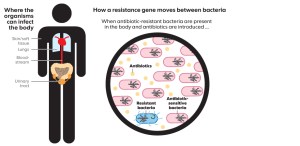
USA Today – “A new family of antibiotic-resistant bacteria, known as CRE, is raising concerns across the medical community because of its ability to cause infections that defy even the strongest antibiotics. The antibiotic resistance is spread by mobile pieces of DNA that can move between different species of bacteria, creating new, drug-defying bugs.”

Resistant Bacteria in Pork — And Problematic Pharmaceuticals Too

Yersinia enterocolitica, apparently tired of living in the shadow of its flashy cousin, Yersinia pestis is apparently taking revenge by lodging itself in approximately 69% of  pork chops and ground pork. We understand the whole family rivalry, entero, but leave the pork chops alone, eh?

Wired – “Bad news today from an investigation conducted by Consumers Union that was released on the web and will be published in the January issue of the nonprofit’s magazine, Consumer Reports. Tests on pork chops and ground pork, bought in six cities under a variety of labels, showed high rates of contamination with a range of bacteria, many of which were antibiotic-resistant — and also showed evidence of a drug so controversial that it is banned in some other countries…”

WHO alters H5N1 reporting

Like so many of us who spend a lot of time online, the WHO is apparently fed up with having to constantly update it’s webpage:

Vaccine News – “The World Health Organization recently announced that it will begin reporting human cases of H5N1 avian influenza every month on its influenza webpage. The WHO said that cases of human infection with H5N1 will now only be reported on its Disease Outbreak News webpage when they are unusual or represent an increased risk for extended infections. WHO Member States will still be required to inform the organization of every sporadic incidence of human infection by H5N1 and novel virus infection as rMaking a Flu Vaccine Without the Virusequired by WHO’s international health regulations.

In case you missed it:

– Galapagos tests new antibiotics for resistant bacteria

– Making a Flu Vaccine Without the Virus

This Week in DC: Events

Homeland Security turns 10, lots of think tanks celebrate. Also featured are our nuclear policy and food security plans.

Tuesday, November 27

  1. The Price of Greatness: The Next Four Years
    Foreign Policy Initiative Forum
    8:00 – 4:30 PM
    The Foreign Policy Initiative (FPI) invites you to its 2012 Forum to be held on Tuesday, November 27th, at the Newseum’s Knight Conference Center, where Members of Congress, foreign dissidents, and leading policy experts will discuss “The Price of Greatness: The Next Four Years of U.S. Foreign Policy.”No registration fee. RSVP here.
  2. Less Is Better: Nuclear Restraint at Low Numbers
    Carnegie Endowment for International Peace
    3:30 -6:00 PM
    In his recent paper Less Is Better: Nuclear Restraint at Low Numbers, funded by the Nuclear Threat Initiative, Malcolm Chalmers explores the steps that other nuclear-armed states would need to take to enable progress to low numbers. Please join the Carnegie Nuclear Policy Program and the Nuclear Threat Initiative for a discussion of the paper’s key findings with a reception to follow. Joan Rohlfing will deliver opening remarks. James Acton will moderate.
    Register here.

Wednesday, November 28

  1. Evaluating Current U.S. Global Food Security Efforts and Determining Future U.S. Leadership Opportunities
    U.S. Senate Committee on Foreign Relations
    10:00 AM
    Witnesses from USAID, Oxfam America, Catholic Relief Services, and Global Agricultural Development Initiative – the Chicago Council on Global Affairs
  2. Homeland Security: A Look Back and Ahead
    Center for Strategic & International Studies
    10:00 AM – 12:00 PM
    Please join HSPI and CSIS for a discussion featuring Senator Joseph Lieberman, Chairman of the Senate Homeland Security and Governmental Affairs Committee. Senator Lieberman will look back and ahead, addressing key past events as well as homeland security challenges for the future.
    RSVP here.
  3. Department of Homeland Security at 10: Past, Present, and Future
    Open Society Foundation
    12:00 PM – 2:00 PM
    On November 25, 2002, then President George W. Bush signed the Homeland Security Act, which established the Department of Homeland Security and called for the largest federal government reorganization since the creation of the Department of Defense in 1947. On Wednesday, November 28, join the American Constitution Society for Law and Policy and the Open Society Foundations for a panel discussion covering a decade of DHS accomplishments, successes, failures, and controversies, as well as suggested national security policies looking forward.
    RSVP here.

Thursday, November 29

  1. Nuclear Statecraft: History and Strategy in America’s Atomic Age
    Woodrow Wilson International Center for Scholars
    3:30PM – 5:00PM
    We are at a critical juncture in world politics. Nuclear strategy and policy have risen to the top of the global policy agenda, and issues ranging from a nuclear Iran to the global zero movement are generating sharp debate. The historical origins of our contemporary nuclear world are deeply consequential for contemporary policy, but it is crucial that decisions are made on the basis of fact rather than myth and misapprehension. In Nuclear Statecraft, Francis J. Gavin challenges key elements of the widely accepted narrative about the history of the atomic age and the consequences of the nuclear revolution.
    RSVP here.

Friday, November 30

  1. Inside Syria
    New America Foundation
    12:15-1:45PM
    Please join the New America Foundation’s National Security Studies Program for a discussion with award-winning war reporter Janine Di Giovanni about her experiences inside Syria. Di Giovanni, whose on-the-ground reporting on the war was recently featured in The New York Times, Granta and Newsweek, is a contributing editor at Vanity Fair, has won five major journalistic awards, was one of the only reporters to witness the fall of Grozny, Chechnya, and has written five books, the last of which recently won Memoir of the Year in Britain.
    RSVP here.

The Pandora Report (or the “News Roundup” formerly known as “Friday”)

Name change time! We got tired of being confused with weed-killer, and besides, the Pandora Report has a certain snazz to it, don’t you think? If you hate it let us know, and we’ll brainstorm anew. Hope your respective Thanksgivings’ were appropriately filling! To the news:

Highlights include virus hunting in Cameroon, Mycoplasma zombies (for real), bacterial altruism, bacteria chatting about battle plans, Scottish honey as a potential MRSA treatment, and Ebola (of course).

What if a Deadly New Virus Jumped from Animals to Humans?

Not a lot here that you probably don’t already know, but it’s always a good idea to know how the media covers emergent diseases (if only so that you’re not completely flummoxed when someone asks about efficacy of bush meat hunters acting as viral sentinels). Also, I nominate “virus huntering” as an official choice for our degree concentration.

TIME – “In a rapidly interconnected world, the dangers and threats posed by virulent strains of terrifying infectious diseases has only multiplied. On the watch for deadly pandemics is Nathan Wolfe, acclaimed virus hunter and member of the 2011 class of the TIME 100. Wolfe spoke to the World Economic Forum, in collaboration with TIME, about future pandemics on the horizon.”

Mycoplasma “Ghosts” Can Rise From the Dead

For those of you too lazy to Google, Mycoplasma are interesting because they lack a cell wall (making them harder to kill)(antibiotics often target cell walls, as an easy way to distinguish between invading and host cells [human cells don’t have cell walls]).

The Artful Amoeba (Scientific American) – “As the titles of journal articles go, it’s hard to find one more elegant, enticing and — notably, if you’ve been in the business long — succinct than ‘Gliding Ghosts of Mycoplasma mobile’. But the substance of “Gliding Ghosts” is even better than the promise. That’s because the cellular propulsion system of Mycoplasma mobile does something extraordinary: with the addition of ATP, M. mobile‘s gutted and very much dead remains can get up and move as if they were alive.”

Engineered Bacteria Can Make the Ultimate Sacrifice for the Good of the Population

A little bacterial altruism, just in time for the holidays.

Science Daily– “Scientists have engineered bacteria that are capable of sacrificing themselves for the good of the bacterial population. These altruistically inclined bacteria, which are described online in the journal Molecular Systems Biology, can be used to demonstrate the conditions where programmed cell death becomes a distinct advantage for the survival of the bacterial population.”

Microbiology: Eavesdropping on bacterial conversations

Quorum sensing strikes again – helping bacteria coordinate their battle strategies to maximize making you sick.

Nanowerk News– “For decades, microbiologists thought that bacteria act individually, unaware of their multitudinous counterparts involved in causing the same infection. In the past two decades, however, they have discovered that many species of bacteria ‘communicate’. In fact, bacteria can signal to each other that their numbers are sufficient to launch a coordinated attack. Now, by working with Burkholderia cenocepacia, an opportunistic pathogen that infects cystic fibrosis patients, a research team led by Lian-Hui Zhang from the A*STAR Institute of Molecular and Cell Biology (IMCB) has described a previously unknown quorum-sensing system that is present in many human bacterial pathogens… ”

Sweet Medicine: Using Honey to Treat MRSA?

Those Scots. Now if only this treatment extended to other Scottish products ending in “y” [or “tch”], we would really be onto something.

The Scotsman – “Honey produced by thousands of Portobello bees may be used in the fight against killer superbugs like MRSA. Research from Queen Margaret University [Scotland] has shown that honey from the seaside is effective at killing common strains of bacteria which cause wound infections. The pilot research study – which got under way at the end of last year – found the locally produced honey was as effective at combating bugs as manuka honey from New Zealand. Funding is now being sought by the university to establish if it can fight antibiotic resistant bugs like MRSA.”

Uganda: Ebola – Why Uganda Is So Prone

Deforestation and encroachment of humans into wildlife habitats are both described as possible exacerbating factors of the Luweero Ebola outbreak.

All Africa – “In four months, the deadly viral haemorrhagic fevers have hit Uganda three times, killing at least 29 people in Uganda. An ongoing outbreak of a different strain of Ebola, following previous attacks of Ebola and Marburg, raises the question why we are becoming so vulnerable to these viral attacks. First to be hit, in July, was the western district of Kibaale, where Ebola claimed 17 lives including 12 from the same family.”

Head in the Sand

image by Antoon Foobar

This has been around for a while now, but for those of you who haven’t seen it:

Cops outraged after NYU class requires students to plot a terrorist attack” (NYP) – the article details NYU professor (and decorated  Navy veteran) Marie-Helen Maras, and her requirement that students produce a 10-15 page paper “hypothetically [planning] a terrorist attack”.

The course has been criticized in both the media ( Fox News, the Daily Mail) and anonymous sources within the NYPD – “When told of the term paper, one ranking police officer who lost coworkers on 9/11 called it ‘the most ridiculous thing I’ve ever heard.’… ‘I’m disgusted,’ said the source. ‘What is this, we have our students do the work for the terrorists?’”

I’m just going to come right out and say it – this is completely absurd. It’s absurd on multiple levels. First, it’s not as if Maras’ exercise is unprecedented. It’s a standard Red Team/Blue Team exercise – in which one simulates an attack on one’s self – which have been used by everyone from the military to the intelligence and government agencies to think tanks (check out the RAND Corp chem/bio Red Team exercise) for decades. The benefits of this type of exercise are evident and unique – as the Central Intelligence Agency Tradecraft Primer states, “…Red Team analysis is aimed at freeing the analyst from the prison of a well-developed mind-set… [it] transforms the analyst into an ‘actor’ operating within the adversary’s culture and political milieu. This form of ‘role playing’ is useful when trying to replicate the mind-set of authoritarian leaders, terrorist cells, or other nonWestern groups that operate under very different codes of behavior or motivations.” In order to understand how our enemies will attack us, we first need to understand our enemy.

Like most security studies programs, the GMU Biodefense curriculum includes similar exercises – we pick a target, choose a biological agent, and plan an attack. When asked about the exercises, Dr. Trevor Thrall, Director of the GMU Biodefense program, clarified, “Though I can certainly understand how people may feel sensitive about discussing terrorist strategies in public venues, it is ridiculous to imagine that such exercises somehow create terrorists or provide training that would-be terrorist could not get in other ways.”

“What these exercises in fact do is provide emerging counter-terrorism professionals an opportunity to hone their thinking about the threats posted by terrorist organizations. The more time we spend figuring out how and why terrorism works, the better we will do at preventing and responding to terrorism. As a result we would never ask our faculty to shy away from red team/blue team exercises and the like,” he said.

As students, yes, we were pretty sure that our Google searches were being red-flagged in a dark room somewhere (as well they should have been), and yes, there were even moments of surprisingly visceral unease (again, as well there should have been). However, completing the assignment was one of the most illuminative and useful exercises of my education to date. Echoing Dr. Thrall’s comments, Tom Kreitzer, a Biodefense MS student and federal emergency response official, said, “Red teaming exercises are incredibly important for those already in, or attempting to join, the emergency response or intelligence fields.”

The exercises taught us that there are certain things you simply cannot know – cannot even realize you don’t know – until you actually try to do them. Planning the terrorist attack helped us not only to discover the hurdles bioterrorists face – and there are many – but it  also helped us illuminate potential US weaknesses. Identifying these weaknesses enables us to correct them before they can be exploited. If they can’t be corrected, it enables us to develop strategies, allocate resources, increase security, and plan.

One of the most serious and in some ways sad admonitions of the 9/11 Commission Report was that of the “lack of imagination” on our part. If we could have imagined worse, expected worse, thought humanity capable of worse, we maybe would have been better prepared. This is what makes the condemnation of Professor’s Maras’ assignment so troubling. By penalizing those attempting to teach the value of imaginative thinking, we risk trapping ourselves again in the status quo – a mistake we cannot afford to make again.