Walker, October Seminar Speaker, on Destroying Chemical Weapons

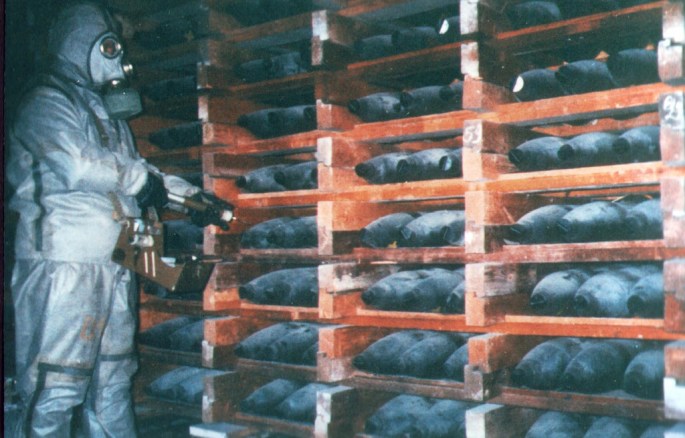
As destruction efforts in Syria seem to be continuing apace, the question many of us have asked ourselves is how does one destroy a chemical weapon? Dr. Paul Walker concisely addresses this in his recent Bulletin of Atomic Scientists piece, “How to destroy chemical weapons?”. To hear more, be sure to join us next Wednesday evening for our October Biodefense Policy Seminar featuring Dr. Walker, who will discuss efforts to destroy Syrian CW at length. For more information, please visit our events page.

Bulletin of Atomic Scientists – “The recent news that Syrian President Bashar al-Assad is willing to accede to the international Chemical Weapons Convention (CWC) has raised the question: How might one actually go about eliminating Syria’s chemical munitions?

The CWC entered into force in 1997. Seven CWC member countries have declared existing chemical weapons stockpiles—Albania, India, Iraq, Libya, Russia, South Korea, and the United States. Three of these—Albania, India, and South Korea—completed stockpile destruction in the last few years. Three more—Libya, Russia, and the US—expect to complete their destruction programs over the next decade. And Iraq, which joined the convention in 2009, is planning the destruction of its chemical weapons equipment and agents left from the 1991 Gulf War.

There are essentially three broad categories of destruction approaches, all used successfully in the above programs. These approaches can be mixed and matched, depending on the type, size, quantity, and condition of the agents, munitions, and containers…”

Read more here.

(image: Jen Spie/Flickr)

This Week in DC: Events

The government may be shutdown, but apparently DC isn’t. Here are a smattering of the week’s science, international security, and public health events. 

Monday, October 7, 2010

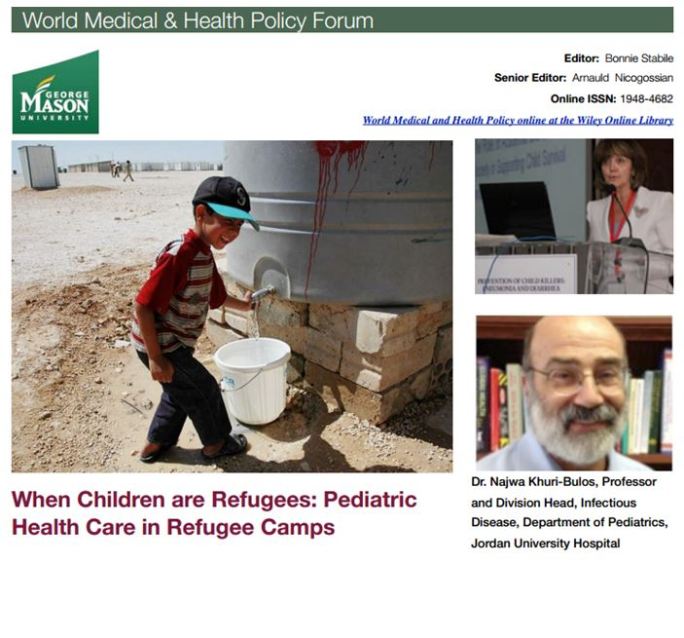
When Children are Refugees: Pediatric Health Care in Refugee Camps
George Mason University, Founders Hall, Arlington, VA
9:00am – 11:00AM

Co-sponsored by the World Medical & Health Policy journal, the Policy Studies Organization, the Center for International Medical Policy and Practice at the School of Public Policy and the Biodefense Program in the Department of Public and International Affairs at George Mason University. Dr. Khuri-Bulos, has written and spoken on “The Role of Immunization in Achieving the Millennium Development Goals,” and is responsible for the immunization program Jordan established for children living at Zaatari. Dr. Waldman, former Technical Director of the USAID-funded BASICS program, a global child survival effort, is President of the Board of Directors of Doctors of the World-USA.

Deciphering Russian Policy on Syria: What Happened…and What’s Next
Wilson Center
12:00 – 1:00PM

Since the Arab Spring arrived in Syria in 2011, Russia has strongly supported the Assad regime’s efforts to suppress its opponents, while the U.S. has remained relatively uninvolved. But when, in August 2013, over 1,400 people were killed in a chemical weapons attack (believed to have been perpetrated by the Syrian government), President Obama declared his intention to launch a military strike against Syria once he obtained Congressional approval for it. Russian Foreign Minister Lavrov then proposed that Syrian chemical weapons be placed under international control. While the Obama Administration has embraced this proposal, it is still not clear whether it can be implemented or if (even if it is) Russia and the U.S. can work together to resolve the conflict in Syria.

A New Look at American Foreign Policy: The Third in a Series of Discussions
Heritage Foundation
12:00PM – 1:00PM

For decades, libertarians and conservatives have been at odds over American foreign policy. But perhaps a conversation is possible today between classical liberals and conservatives on the nature of American foreign policy. Some are trying to find a “middle way” that is less doctrinaire. At the same time the “neo” conservative phase of hyper military interventionism is a spent force in conservative circles. Therefore, the time may be ripe for an open and honest conversation among some libertarians and conservatives about the future of American foreign policy. It may be possible a new consensus could be found between Americans who consider themselves classical liberals and traditional conservatives on the purposes of American foreign policy. Join us as Heritage continues the discussion regarding this question, what the dangers and opportunities are and whether they afford an opportunity to take a “new look” at American foreign policy.

Domestic Barriers to Dismantling the Militant Infrastructure in Pakistan
US Institute of Peace
2:00 PM

Pakistan’s inability to tackle Islamist militancy within its borders and to prevent cross-border attacks from its soil remains a constant worry for the world. While the Pakistani state pledges lack of capacity to deal with the various facets of the militant challenge, the world is unconvinced of the ‘will’ of the Pakistani leadership to fight with determination. The Pakistani security establishment has been seen as selectively targeting certain Islamist outfits while ignoring, supporting, or abetting others

Revolutionary Mosquitoes: Malaria, Yellow Fever, and Independence in the Americas, 1776-1825
Wilson Center
4:00PM – 5:30 PM

John McNeill argues that yellow fever and malaria, both mosquito-borne diseases, helped make the Americas free. In the campaigns of 1780-81 in the Carolinas and Virginia, in the Haitian Revolution of 1791-1804, in the wars of independence in the Spanish Americas of 1808-25, locally born and raised soldiers and militia enjoyed a strong advantage over European troops in terms of their resistance to these two infections. Did disease tip the military balance?

Tuesday, October 8

Rethinking U.S. Nuclear Weapons Policy
CATO Institute
12:00 PM

Featuring Benjamin Friedman, Research Fellow in Defense and Homeland Security Policy, Cato Institute; and Christopher Preble Vice President for Defense and Foreign Policy Studies, Cato Institute; moderated by Laura Odato, Cato Institute. The United States maintains nearly 1,600 deployed nuclear weapons and a triad of systems—bombers, intercontinental ballistic missiles (ICBMs), and submarine-launched ballistic missiles (SLBMs)—to deliver them. Current plans call for modernizing all three legs of the nuclear triad, which could cost taxpayers over $100 billion. A just-released Cato paper explains why a triad is no longer necessary. U.S. nuclear weapons policies have long rested on Cold War–era myths, and the rationales have aged badly in the two decades since the Soviet Union’s demise. Two of the paper’s authors, Benjamin Friedman and Christopher Preble, will discuss the origins of the nuclear triad and explain why a far smaller arsenal deployed entirely on submarines would be sufficient to deter attacks on the United States and its allies and would save roughly $20 billion annually.

Security and Governance in Somalia: Consolidating Gains, Confronting Challenges, and Charting the Path Forward
U.S. Senate Committee on Foreign Relations
3:00PM

For more information, visit the website here.

Wednesday, October 9

Towards an International Response Framework: Emergency Preparedness in the Asia-Pacific
Banyan Analytics
9:00AM – 4:00PM

How should the USG prepare to respond to future Asian disasters, especially CBRNE? What are the response and assistance expectations of our Asian friends and allies? How necessary and practical is an International Response Framework (IRF)? What should an IRF look like?

NSA Surveillance: What we know, What to do About it
CATO Institute
10:00 AM

Since June, news reports based on documents leaked by former National Security Agency contractor Edward Snowden have revealed the depth and breadth of NSA surveillance activities. The NSA scandal’s many dimensions include: mass domestic surveillance of telephone call information; allegations that officials deceived Congress, the courts, and the public about the nature of the NSA’s programs; alleged access to the Internet’s backbone and the traffic of major Internet companies; and systematic efforts to undercut the use of the encryption that secures communications and financial information. Please join us on October 9 at a conference focusing on these issues and more, featuring keynote addresses by Senator Ron Wyden (D-OR), Rep. Justin Amash (R-MI), and Rep. F. James Sensenbrenner (R-WI). Conference speakers and panels will explore the reporting challenges, legal issues, technology and business dimensions, and potential for reforms related to NSA surveillance. Additional information on speakers and panel topics will be posted soon.

Thursday, October 10

Rise of Radical Islamism in the South Caucasus: The Threat and Response
Hudson Institute
9:00 AM – 2:30 PM

The conference topic is especially timely as the U.S. continues its withdrawal from Afghanistan, instability mounts in North Africa and the Middle East, and Tehran continues to reject international calls for a halt to its enrichment activities. This turmoil also underscores the importance of strong and stable American allies in a region, the South Caucasus, of increasing importance to U.S. interests. While Iran is using home-grown Shia Islamists to undermine the secular nature of Azerbaijan, the growing influence of Salafi groups in the North Caucasus is now spilling into neighboring countries. At the same time, poorly designed and inadequately executed responses by various governments have contributed to this increase in extremism. Given this situation, how can South Caucasian governments and the international community prevent the spread of radicalism and promote traditions of tolerant Islam that allow co-existence and cooperation among Christians, Jews, and Sunni and Shia Muslims? What is the U.S. security strategy and vision for the Caucasus region? What is Iran’s strategy in the South Caucasus and to what extent should the region shape U.S.-Iran relations?

NSA Surveillance Programs and the Najibullah Zazi Terrorist Threat
Brookings Institution
10:30AM – 12:00PM

The extensive National Security Agency surveillance programs revealed this summer by former U.S. intelligence contractor Edward Snowden have been defended by the United States government, citing their role in preventing terrorist attacks at home and abroad. The most frequently cited example of such success is the thwarting of the September 2009 al Qaeda terrorist plot – led by Najibullah Zazi, an Afghan-American – to attack the New York City subway system. Pulitzer-prize winning journalists Matt Apuzzo and Adam Goldman have just finished an in depth investigation of the Zazi threat, and in their new book, Enemies Within: Inside NYPD’s Secret Spying Unit and Bin Ladin’s Final Plot Against America (Touchstone, 2013), they outline how the plot was foiled and what the plot reveals about the al Qaeda threat today.

Streamlining US Visa Policies for Scientists, Engineers, and Students
GMU Technology, Science, and Innovation Policy Research Seminars
12:00 – 1:30 PM

This monthly seminar series, sponsored by George Mason University’s Center for Science and Technology Policy (School of Public Policy), explores new ideas and work-in-progress with the Washington-area research community. It’s open and free to all interested researchers with a special invitation extended to graduate students. The seminars are held at the George Mason University’s School of Public Policy (Founders Hall) on the Arlington campus, a short walk from the Orange Line’s Virginia Square/GMU Metro stop (map). The seminar starts at about 12:00 and concludes no later than 1:30. CSTP will provide coffee and cookies — participants are welcome to bring a brown bag lunch. Driving Directions can be found here.

October Biodefense Policy Seminar

We are delighted to have Dr. Paul Walker, chemical weapons destruction expert and recently named Laureate of the prestigious Right Livelihood Award join us to discuss destruction of Syria’s chemical weapons arsenal. As always, the seminar is free and open to the public.

October Seminar Title: “Syria and Chemical Weapons: Building a World Free of Weapons of Mass Destruction”
Speaker: Dr. Paul Walker
Date: Wednesday, October 16, 2013 at 7:20PM
Location: Meese Conference Room, Mason Hall, GMU Fairfax Campus

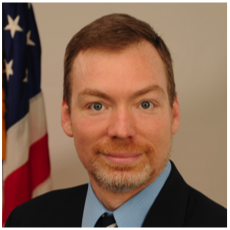
Paul-Walker_imagePaul Walker will join us to discuss Syrian proliferation concerns. Dr. Walker is the International Director of the Environmental Security and Sustainability (ESS) Program for Green Cross International (GCI) and manages the Washington DC office for GCI and its US national affiliate, Global Green USA. The ESS Program is an international effort to facilitate and advocate the safe and environmentally sound demilitarization, nonproliferation, and remediation of nuclear, chemical, biological, and conventional weapons stockpiles.  Walker has worked, spoken, and published widely in the related areas of international security, threat reduction, non-proliferation, weapons demilitarization, and environmental security for over three decades and took part in the first on-site inspection by US officials of the Russian chemical weapons stockpile at Shchuch’ye in the Kurgan Oblast in 1994. Since that time he has worked closely with the Organization for the Prohibition of Chemical Weapons (OPCW), US and Russian officials, the US Cooperative Threat Reduction (CTR) Program, the G-8 Global Partnership, and other multilateral regimes to help foster cooperative, timely, and safe elimination of nuclear, chemical, and biological weapons and related systems. He has helped to permanently eliminate over 50,000 tons of chemical weapons and millions of munitions in six countries to date. Dr. Walker was also recently awarded the 2013 Right Livelihood Award, widely known as the alternate Nobel Peace Prize. To read more about the award and Dr. Walker’s work, visit their website here.

This Week in DC: Events

Lots of events to take your mind of the possible government shutdown tomorrow.

Tuesday, October 1, 2013

Narrative and Syria: Popular Discourses that limit alternative conflict resolution options with Rich Rubenstein
GMU School for Conflict Analysis and Resolution
2:00 – 4:00PM

This roundtable will explore how certain discourses consciously or unconsciously limit certain alternative conflict resolution options. This will be a discussion, so please bring your thoughts regarding various discourses relating to this conflict including stories told by rebels, regime supporters, USG people, peace advocates, etc.

Strategy: A History [Book Discussion]
Woodrow Wilson Center for International Scholars
4:00 – 5:30PM

In Strategy: A History, Sir Lawrence Freedman, one of the world’s leading authorities on war and international politics, captures the vast history of strategic thinking, in a consistently engaging and insightful account of how strategy came to pervade every aspect of our lives.A brilliant overview of the most prominent strategic theories in history, from David’s use of deception against Goliath, to the modern use of game theory in economics, this masterful volume sums up a lifetime of reflection on strategy.

Successfully Conducting Information, Psychological, and Military Deception Operations
Institute of World Politics
4:00 – 6:00PM

Brigadier General Thomas Draude, USMC (Ret.) was in charge of the Marine Corps Information Operations during the Gulf War. He successfully oversaw the Military Deception & Psychological Operations that resulted in diverting Iraqi forces from the main attack by U.S. Marine and Army forces during the beginning of Operation Desert Storm. He will talk about the history of conducting successful information and military deception operations including during the Gulf War and the effective use of these operations in the future. Brigadier General Draude is the President of the Marine Corps University Foundation and a professor at the Marine Corps University at Marine Corps Base Quantico.

Wednesday, October 2nd

An Assessment of Rouhani’s Visit to New York: Real Diplomacy or Failed Expectations?

Woodrow Wilson International Center for Scholars
12:00 – 1:00PM

Two experts will provide a candid assessment of how realistic diplomacy may be after Presidents Barack Obama and Hassan Rouhani spoke at the United Nations General Assembly.

Cybersecurity One-on-One Luncheon
Politico
12:00PM

Join POLITICO for Cybersecurity one-on-one conversations focused on the intersection of policy and information security. This event will be held as part of the Visa Global Security Summit.

Thursday, October 3rd

Cybersecurity Summit
Washington Post
8:30AM – 12:30PM

The 2013 Cybersecurity Summit at The Washington Post will bring together leading national security officials, industry experts and those who write about them, including syndicated columnist David Ignatius. What are top officials most focused on and why? We will discuss efforts to defend the nation’s critical infrastructure, financial system, and intellectual property. What is the current thinking about the government outsourcing of cyber security efforts and its collaboration with private industry? How safe is the information stored in the Cloud? Few issues are as urgent as the concern about cyber theft and cyber espionage. The full program will live stream on their website Oct. 3.

Hearing – Al-Shabaab: How great a threat?
House Committee on Foreign Affairs
9:45 AM

Chairman Royce on the hearing: “We’’ve known for some time that the al-Qaeda-affiliated terrorist group al-Shabaab remains a threat in the Horn of Africa. Following the recent brutal attack on Nairobi’s Westgate shopping mall, it is critical that the United States and our allies reassess the threat that al-Shabaab poses outside of Somalia and outside the region. This hearing will examine the extent of the al-Shabaab threat to the interests of the United States around the world and those of our allies.”

The New Battle for the Pacific: How the West is Losing the South Pacific to China, the UAE, and Just About Everyone Else
East-West Center
2:00 – 3:30 PM

The South Pacific is usually considered as being, literally, at the edge of the map. However, as the world pivots to the Asia-Pacific, the South Pacific region’s true geopolitical, strategic and economic value is coming to the fore. In transit terms alone, as U.S. Pacific Command Commander Admiral Samuel Locklear said in the Cook Islands in 2012: “Five trillion dollars of commerce rides on the (Asia-Pacific) sea lanes each year, and you people are sitting right in the middle of it.” Far from being small island states, the Pacific Island Countries are showing themselves as large ocean states, with vast fisheries, potential seabed resources, and increasingly important geostrategic positioning – as the range of military bases dotted throughout the region can attest. However, just as the region is showing its importance, Western influence is waning. When the larger Western powers pulled out of the region following the end of the Cold War (the United Kingdom, for example, closed three South Pacific High Commissions in 2006), they turned to Australia and New Zealand to “manage” the area for the West.

Friday, October 4th 

Echoes of the Spring: How the Arab World’s Transitions are Resonating in Russia, Iran and Iraq

Radio Free Europe
11:30AM – 12:30AM

The pro-democracy protests of the Arab Spring rippled through North Africa and the Middle East in 2011, bringing down once-secure authoritarian regimes and setting loose passions that continue to roil much of the Arab World. Many people living in the RFE/RL broadcast region express similar desires for change. How has the Arab Spring phenomenon affected attitudes and events in places such as Russia, Iran and Iraq?

Monday, October 7th

Domestic Barriers to Dismantling the Militant Infrastructure in Pakistan
US Institute for Peace
2:00 – 3:30PM

Please join USIP on Monday October 7 for a discussion on the nature of Islamist militancy, and to examine the barriers to dismantling the militant infrastructure in Pakistan. Pakistan’s inability to tackle Islamist militancy within its borders and to prevent cross-border attacks from its soil remains a constant worry for the world. While the Pakistani state pledges lack of capacity to deal with the various facets of the militant challenge, the world is unconvinced of the ‘will’ of the Pakistani leadership to fight with determination. The Pakistani security establishment has been seen as selectively targeting certain Islamist outfits while ignoring, supporting, or abetting others.

Big Data Keynote Speaker Series: A Conversation With Michael Leiter, Former Director of NCTC
YPFP
6:30 – 7:00 PM

Join YPFP and learn from the one of most prominent practitioners of data analysis, Michael E. Leiter, Senior Counselor to the CEO of Palantir Technologies and former Director of the National Counterterrorism Center (NCTC). A leader in applying data analysis principles to the arenas of politics and security in both the public and private sectors, Mr. Leiter has been invited as part of the Keynote Speaker Series for the Big Data and Analytics incubator in order to help future leaders of foreign policy understand the role of data analysis in developing foreign policy and crafting solutions to critical global challenges.

(image: Dell)

This Week in DC: Events 9.23.13

Monday, September 23

Aiding Civilians in a Sectarian Conflict: Can Assistance to Syria Heal Without Harm?
Brookings Institution
2:00 – 3:00PM

On September 23, the Foreign Policy program at Brookings will host a panel discussion exploring the politicization of non-lethal aid to Syria. Brookings Fellow William McCants, director of the Project on U.S. Relations with the Islamic World in the Saban Center for Middle East Policy, will examine the role that Gulf charities are playing in fostering sectarian tensions in Syria and then moderate a panel on the sectarian dimension of non-lethal assistance for Syria coming outside the Gulf. The panel will include Abed Ayoub, president of Islamic Relief USA, Mouaz Moustafa, executive director of the Syrian Emergency Task Force, and Maria Stephan, strategic planner of the Bureau of Conflict and Stabilization Operations at the U.S. Department of State.

The Science of Science Communication II
National Academy of Sciences
Washington, DC
September 23 – 25 All day

Climate change. . . evolution . . . the obesity crisis .. .nanotechnology: These are but a few of the scientific topics dominating the world stage today. Yet discourse surrounding these and other science-based issues is often overwhelmed by controversy and conflicting perceptions, hampering understanding and action. The continuing challenges facing scientists, professional communicators, and the interested public as they seek to exchange information about science has resulted in a growing area of research—the science of science communication. Investigators are delving into such issues as the role of social networks in how information is disseminated and received; the formation of beliefs and attitudes leading to decisions and behaviors; and strategies for communicating science in a highly-charged, politicized environment. The National Academy of Sciences is hosting its second Sackler colloquium on this topic to advance a national dialogue about science communication.

Tuesday, September 24

2nd Annual National Health Impact Assessment Meeting
Pew Charitable Trusts
8:30AM – 5:00PM

Building on the success of the Inaugural Health Impact Assessment (HIA)meeting, this conference will convene policymakers, public health professionals, HIA practitioners, community-based organizations, researchers, decision makers from non-health agencies who might use or rely on the results of an HIA, such as planning, transportation, housing, agriculture, energy, environment and education, and others with an interest in learning more about HIAs. It will also offer a special, one-day summit tailored specifically to policymakers.

China’s Maritime Strategy in the East China Sea: Peaceful Coexistence, Deterrence, and Active Defense
Woodrow Wilson International Center for Scholars
9:00AM – 10:30AM

In September 2012, the Chinese-Japanese sovereignty dispute over the Diaoyu/Senkaku islands in the East China Sea reignited when the Japanese government purchased three disputed islands from a private Japanese citizen who claimed to be their owner. Chinese government ships have since increased patrolling of what Japan claims to be its territorial waters around the Diaoyu/Senkakus, expanding China’s maritime law enforcement and military presence in the region. Former Wilson Center Fellow, Dr. Liselotte Odgaard and Mr. Dennis J. Blasko will examine China’s objectives and strategy in the East China Sea from the perspective of the PRC’s long-standing official foreign and defense policies and assess to what extent their actions contribute to escalation and the prospects of the use of deadly force.

Strategic Agility
Stimson Center
10:00AM – 11:00AM

Join senior national security experts and former government officials convened by the Stimson Center for the release of their report outlining a new defense strategy that would strengthen America’s security and enable the Defense Department to cut tens of billions of dollars in annual spending. The 17-member Defense Advisory Committee includes two former vice chairmen of the Joint Chiefs of Staff, a former Air Force chief of staff, a former chief of naval operations and two retired four-star Army Generals.

Wednesdy, September 25

Explaining International Support for Torment: Is Torture the Shadow Cast by Terrorism?
GMU School of Public Policy
12:00PM – 1:00PM

SPP Brown Bag Seminar featuring Dr.Jerry Mayer, Associate Professor. Located in the Arlington Campus, Founders Hall, Room 317. Seating is limited, so please arrive early. For questions, please contact David Armor, darmor@gmu.edu.

What Asia Pivot?Defense Budget Cuts Undermine U.S. Interests in the Pacific
Heritage Foundation
1:30PM – 2:30PM

The Obama Administration’s defense strategy and its “Asia Pivot” are undercut by the fact that the U.S. military lacks the resources necessary to implement such strategies. Even as the number of threats to global peace and stability continues to multiply, there has not been a commensurate increase of U.S. capabilities. To what degree will massive defense cuts and reductions in the overall U.S. military structure constrain America’s global power projection and force sustainability capabilities in the Pacific?

Thursday, Septmber 26

Influenza Outlook 2013-2014: Preparing the Nation for Flu Season
National Press Club
10:00AM

Howard K. Koh, MD, MPH, Assistant Secretary for Health at the US Department of Health and Human Services, Anne Schuchat, MD, (RADM, USPHS), Assistant Surgeon General, US Public Health Service; Director, National Center for Immunization and Respiratory Diseases, Centers for Disease Control and Prevention (CDC), and other medical/public health experts ready the public for the coming flu season at a news conference presented by the National Foundation for Infectious Diseases. Last flu season was a stark reminder of how unpredictable and severe influenza can be. There were high influenza hospitalization rates, especially in the elderly (CDC saw the highest proportion of persons 65 and older hospitalized for flu since tracking began during the 2005-06 season). Sadly, the number of pediatric deaths (161) was the highest since surveillance began (excluding the pandemic year). US public health officials are encouraging the public to prepare for the upcoming flu season by getting vaccinated.

National Reconciliation and the Search for Peace and Stability in the Post-Arab Spring Middle East
GMU School for Conflict Analysis and Reconciliation
3:00 – 4:30PM

Yemen, Libya, and Tunisia have each, in their own way, struggled to achieve sustainable peace and stability. In many ways, toppling these countries’ dictators was the easy part. Now they must address historical divisions or otherwise descend into civil strife. This research project looks at the critical importance of national reconciliation in each of the three countries if they are to avoid violence and achieve sustainable stability. To understand the challenges facing national reconciliation and prospects of peaceful transition in the post-Arab Spring Middle East, the speaker conducted over 160 interviews in Yemen, Libya, and Tunisia talking to senior government officials, heads of political parties, revolutionaries and military councils, civil society organizations, tribal shaikhs, and IDPs. The speaker will share his research findings and compare progress made in all three cases.

Friday, September  27

Challenges of Chemical Weapons Disarmament in Syria
Woodrow Wilson International Center for Scholars
12:00 – 1:00PM

The U.S.-Russian agreement on Syria’s chemical weapons calls on the Assad regime to provide an inventory of its weapons stockpile and agree to a timetable for their removal and ultimate destruction. Charles Duelfer, a leading expert on WMD disarmament with extensive experience in Iraq with the UN and the U.S. government, will discuss the practical challenges of implementing this accord.

(image: Dell)

Biodefense Policy Seminar Tonight!

Our first Biodefense Policy Seminar of Fall 2013 is tonight! Join us this evening as Dr. Daniel Dodgen discusses the importance of including special populations in biodefense & public health planning. As always, Seminars are free and open to the public – stop by!

September Seminar“The ABCs of Including Special Populations in Biodefense and Public Health Preparedness”
Speaker: Dr. Daniel Dodgen
DateTuesday, September 17th, 2013 at 7:20 PM
Where
: Meese Conference Room, Mason Hall, GMU Fairfax Campus

daniel_dodgenDr. Dodgen is the Director for At-Risk Individuals, Behavioral Health, and Community Resilience in the Office of the Assistant Secretary for Preparedness and Response at the U.S. Department of Health and Human Services (HHS). His office is tasked with ensuring that HHS is developing policies and capabilities for emergency planning, response, and recovery activities that integrate at-risk individuals (including children), behavioral health, and community resilience. Dr. Dodgen also served as the Executive Director of the White House directed national advisory group on disaster mental health, and played a coordinating role in the federal response to Hurricanes Sandy, Gustav, Ike, and Dean; the H1N1 epidemic, the BP oil spill, the Sandy Hook school shooting, and other natural and manmade disasters.

For more information about our Fall lineup, please visit our Events page.

This Week in DC: Events

If you go to one event this week, make it Tuesday’s Biodefense Policy Seminar! Dr. Daniel Dodgen, Director for At-Risk Individuals, Behavioral Health, and Community Resilience ASPR, will discuss including disaster preparedness. Join us at 7:20PM in GMU’s Mason Hall for a lively discussion!

Monday, September 16

Unthinkable: Iran, the Bomb, and American Strategy
Brookings Institution
2:30PM

Lying behind the turmoil over Syria is another, greater challenge. It is the challenge of a nuclear Iran, which already haunts our Syria debate. President Rouhani’s election has revived the hope of many that a negotiated resolution of this issue is still possible. However, the history of U.S.-Iranian relations leaves room for considerable skepticism. Should these negotiations fail too, the United States will soon have to choose between the last, worst options: going to war to prevent a nuclear Iran or learning to contain one. A nuclear Iran is something few in the international community wish to see, but many fear that a choice will have to be made soon to either prevent or respond to that reality. Can the U.S. spearhead a renewed international effort to prevent a nuclear Iran, or will it be forced to do the unthinkable: to determine how to contain a nuclear Iran?

Tuesday, September 17

Rapid Urbanization and Infectious Disease Outbreaks: The Case of Avian Influenza in Vietnam
East-West Center
10:30AM – 12:30PM

The global trend in urbanization is increasingly toward the “peri-urban,” areas that are unserviced and densely populated. Does increased human and animal density without good urban planning and design explain the emergence of new and reemerging infectious diseases in such areas? Are disease outbreaks in valuable livestock populations more common in the least developed areas? Or does the risk increase as the countryside transitions into city? To answer these questions, Dr. Melissa Finucane and Dr. James H. Spencer will examine the link between multifaceted man-made environmental changes and outbreaks of avian influenza in poultry in Vietnam, where the “bird-flu” has caused widespread economic damage. Presenting the results of their field research, Dr. Finucane and Dr. Spencer intend to highlight the importance of understanding environmental transformation and coupled natural-human systems so that planners and policy makers can manage diseases effectively in rapidly changing places.

Space and National Security
Stimson Center
12:30 – 2:00PM

Join us for a discussion on space and national security, the long-term consequences of destructive conflict in space, as well as appplying principles of deterrence to the space domain. The event features the release of a new Stimson book, “Anti-satellite Weapons, Deterrence and Sino-American Space Relations,” edited by Julia Thompson and Michael Krepon, which contains essays representing varied perspectives on the prospects for cooperation, competition and deterrence in space.

Syria’s Evolving Health Crisis and the Impact on its Neighbors
CSIS
3:00 – 4:30PM

Since Syria’s internal war began two years ago, the accumulating human consequences have been dire, both inside Syria and across the region: an estimated 100,000 people dead; the deliberate targeting of civilians and health infrastructure and medical personnel; mass internal displacement and the mass exodus of refugees to neighboring countries; and a worsening environment for the delivery of humanitarian assistance. Following the August 21 chemical attack outside Damascus, humanitarian and public health capacities are now under new, higher strains and uncertainty. Please join us for a timely discussion that will analyze events on the ground in Syria, their impact on neighboring states, and the actions of the international community both to meet humanitarian needs and serve the strategic interests of key international actors.

September Biodefense Policy Seminar: The ABCs of Including Special Populations in Biodefense and Public Health Preparedness
Meese Conference Room, Mason Hall, GMU Fairfax Campus
7:20 – 8:30PM

Join us as Dr. Daniel Dodgen discusses the importance of including special populations in Biodefense & Public Health planning. Dr. Dodgen is the Director for At-Risk Individuals, Behavioral Health, and Community Resilience in the Office of the Assistant Secretary for Preparedness and Response at the U.S. Department of Health and Human Services (HHS). His office is tasked with ensuring that HHS is developing policies and capabilities for emergency planning, response, and recovery activities that integrate at-risk individuals (including children), behavioral health, and community resilience. Dr. Dodgen also served as the Executive Director of the White House directed national advisory group on disaster mental health, and played a coordinating role in the federal response to Hurricanes Sandy, Gustav, Ike, and Dean; the H1N1 epidemic, the BP oil spill, the Sandy Hook school shooting, and other natural and manmade disasters.

Wednesday, September 18

Raising the Stakes on Syria: The U.S. Policy Debate and Regional Dynamics
Carnegie Endowment for International Peace
9:00AM – 10:30AM

In the wake of President Obama’s national address, U.S. allies and adversaries are struggling to assess the implications of the Russian proposal on Syria’s chemical weapons and what Washington’s next steps will be on Syria. Pressure is building for the Obama administration to get more involved in arming the rebel opposition, even as Americans continue to send a clear message that they want their country to stay out of the conflict. Carnegie experts will discuss regional views of recent developments and the impact of U.S. policy.

Panel Discussion: Security, Freedom and Privacy in the Digital Age
Newseum
9:30AM

The Newseum Institute, in partnership with the John S. and James L. Knight Foundation, will host “Security, Freedom and Privacy in the Digital Age,” a special program that will look at the need to balance national security with preserving journalists’ First Amendment freedoms. Journalists, lawyers, government officials, business leaders and educators will make up the panel that will discuss, among other issues, the PRISM program, media records seizures, and the proposed federal shield law.

A New Look at American Foreign Policy: The Second in a Series of Discussions
Heritage Foundation
12:00 – 1:00PM

American foreign policy is in flux. Libertarian-minded conservatives are joining liberals in their critiques of military interventions, defense budgets and the surveillance practices of the National Security Agency. “Neo” conservatives like John McCain are lining up with liberals in denouncing libertarian conservatives as “isolationists.” Liberals and conservatives alike are unhappy with the Obama Administration’s tepid support for humanitarian interventions in Syria and its failure to advance human rights abroad – normally touchstones of liberal internationalism. Are fundamental ideological changes in American foreign policy afoot? Join us as Heritage continues a series of discussions regarding this question, what the dangers and opportunities are, and whether they afford an opportunity to take a “new look” at American foreign policy.

Thursday, September 19

Security Trade-Off? Implications of Cybersecurity Regulations and International Trade
Brookings Institution
10:00 – 11:00AM

As cybersecurity dominates headlines, governments around the world are exploring their role in securing networks for their citizens and business interests. While different countries may choose different courses of action, some approaches may–intentionally or accidentally–serve as barriers to international trade. Impeding the flow of information technology goods and services could have an impact beyond the immediate markets affects, and may inspire broader conflicts over trade or limit the benefits of IT to promote development and growth. On September 19, the Center for Technology Innovation at Brookings will release a paper on “Cybersecurity and Trade: National Policies, Global and Local Consequences” and host a panel discussion. Experts will explore the impact of national security regulations, highlighting the issues at stake in the context of ongoing trade negotiations around the world, recent disclosures by the NSA and the expanding role of governments in securing cyberspace around the world.

Command and Control: Nuclear Weapons, the Damascus Accident, and the Illusion of Safety
New America Foundation
12:15 – 1:30PM

Since the dawn of the nuclear age, a dilemma has been left unresolved. How can we possess and deploy weapons of mass destruction without being destroyed by them? In his book Command and Control: Nuclear Weapons, the Damascus Accident, and the Illusion of Safety, Eric Schlosser casts light on the largely hidden world of America’s atomic arsenal, combining the thrilling, unsettling accounts of real-life nuclear accidents and near-misses with the stories of the officers, scientists, and policymakers who have devoted their lives to averting a nuclear holocaust—and in the process raises grave doubts about how much control we actually have.

Just for Fun: Neuroenhancement: Building an Improved Human Body and Mind
American Association for the Advancement of Science
5:30 – 7:00PM

Human enhancement is the notion that science and technology can be used to restore or expand cognitive and physical human capacities. It has received considerable public attention in recent years with the return of injured soldiers and the demand for prosthetic devices and with controversies surrounding the use of performance enhancing drugs in sports. This program will focus on a diverse set of enhancements for mind and body, examining the science of what can be done, what might be done in the near and far future, and what should be done. The remarkable opportunities created by scientific advancements are accompanied by ethical and policy challenges that demand a broader public conversation. Register for the event.

(image: Dell/Flickr)

Event: When Children are Refugees: Pediatric Health Care in Refugee Camps

When Children are Refugees: Pediatric Health Care in Refugee Camps
Date: October 7, 2013
Time: 9:00am – 11:30am
Location: George Mason University, Arlington, VA, Founders Hall

Dr. Najwa Khuri-Bulos, Professor and Division Head, Infectious Disease, Department of Pediatrics, Jordan University Hospital, and Dr. Ronald Waldman, Professor of Global Health at George Washington University’s School of Public Health will discuss pediatric health care at Jordan’s Zaatari refugee camp and the problems that prevent an international standard for pediatric health care in refugee camps.

Dr. Khuri-Bulos, has written and spoken on “The Role of Immunization in Achieving the Millennium Development Goals,” and is responsible for the immunization program Jordan established for children living at Zaatari. Dr. Waldman, former Technical Director of the USAID-funded BASICS program, a global child survival effort, is President of the Board of Directors of Doctors of the World-USA.

Click here for the event flyer, including a schedule of events: October 7 Pediatric Refugee Health Care flyer.

For additional information regarding the program, please contact Dr. Denise Baken at dbaken@gmu.edu

SPONSORS

World Medical & Health Policy journal,
Policy Studies Organization
Center for International Medical Policy and Practice
George Mason’s School of Public Policy
Biodefense Program in George Mason’s Public and International Affairs Department

September Biodefense Policy Seminar!

The Biodefense Policy Seminars are back, and our Fall lineup is stellar! We’re delighted to have Dr. Daniel Dodgen of ASPR, Dr. Paul Walker of Green Cross International, and Dr. Kathleen Vogel come and speak to us this semester. As always, the seminars are free and open to the public. Our first Seminar is this Tuesday, September 17th. Details are below – stop by!

September Seminar“The ABCs of Including Special Populations in Biodefense and Public Health Preparedness”
Speaker: Dr. Daniel Dodgen
DateTuesday, September 17th, 2013 at 7:20 PM
Where
: Meese Conference Room, Mason Hall, GMU Fairfax Campus

daniel_dodgenJoin us as Dr. Daniel Dodgen discusses the importance of including special populations in Biodefense & Public Health planning. Dr. Dodgen is the Director for At-Risk Individuals, Behavioral Health, and Community Resilience in the Office of the Assistant Secretary for Preparedness and Response at the U.S. Department of Health and Human Services (HHS). His office is tasked with ensuring that HHS is developing policies and capabilities for emergency planning, response, and recovery activities that integrate at-risk individuals (including children), behavioral health, and community resilience. Dr. Dodgen also served as the Executive Director of the White House directed national advisory group on disaster mental health, and played a coordinating role in the federal response to Hurricanes Sandy, Gustav, Ike, and Dean; the H1N1 epidemic, the BP oil spill, the Sandy Hook school shooting, and other natural and manmade disasters.

RSVP to shover@gmu.edu!

For more information about our Fall lineup, please visit our Events page.

Fall 2013 Biodefense Policy Seminar Line Up

The Biodefense Policy Seminars are monthly talks focused on biodefense and biosecurity broadly conceived. Free and open to the public, they feature leading figures within the academic, security, industry, and policy fields. Launched in the Spring of this year, the Seminars have been a tremendous success. Our Fall lineup features leaders from across the government and academic sectors, including Dr. Daniel Dogden at ASPR, Dr. Paul Walker of Green Cross, and Dr. Kathleen Vogel.

Fall 2013 Biodefense Policy Seminars

September Seminar“The ABCs of Including Special Populations in Biodefense and Public Health Preparedness”
Speaker: Dr. Daniel Dodgen
DateTuesday, September 17th, 2013 at 7:20 PM
Where
: Meese Conference Room, Mason Hall, GMU Fairfax Campus

daniel_dodgenJoin us as Dr. Daniel Dodgen discusses the importance of including special populations in Biodefense & Public Health planning. Dr. Dodgen is the Director for At-Risk Individuals, Behavioral Health, and Community Resilience in the Office of the Assistant Secretary for Preparedness and Response at the U.S. Department of Health and Human Services (HHS). His office is tasked with ensuring that HHS is developing policies and capabilities for emergency planning, response, and recovery activities that integrate at-risk individuals (including children), behavioral health, and community resilience. Dr. Dodgen also served as the Executive Director of the White House directed national advisory group on disaster mental health, and played a coordinating role in the federal response to Hurricanes Sandy, Gustav, Ike, and Dean; the H1N1 epidemic, the BP oil spill, the Sandy Hook school shooting, and other natural and manmade disasters.

October Seminar Title: “Syria and Chemical Weapons: Building a World Free of Weapons of Mass Destruction”
Speaker: Dr. Paul Walker
Date: October 16, 2013 at 7:20PM
Location: Meese Conference Room, Mason Hall, GMU Fairfax Campus

Paul-Walker_imagePaul Walker will join us to discuss Syrian proliferation concerns. Dr. Walker is the International Director of the Environmental Security and Sustainability (ESS) Program for Green Cross International (GCI) and manages the Washington DC office for GCI and its US national affiliate, Global Green USA. The ESS Program is an international effort to facilitate and advocate the safe and environmentally sound demilitarization, nonproliferation, and remediation of nuclear, chemical, biological, and conventional weapons stockpiles.  Walker has worked, spoken, and published widely in the related areas of international security, threat reduction, non-proliferation, weapons demilitarization, and environmental security for over three decades and took part in the first on-site inspection by US officials of the Russian chemical weapons stockpile at Shchuch’ye in the Kurgan Oblast in 1994. Since that time he has worked closely with the Organization for the Prohibition of Chemical Weapons (OPCW), US and Russian officials, the US Cooperative Threat Reduction (CTR) Program, the G-8 Global Partnership, and other multilateral regimes to help foster cooperative, timely, and safe elimination of nuclear, chemical, and biological weapons and related systems. He has helped to permanently eliminate over 50,000 tons of chemical weapons and millions of munitions in six countries to date. Dr. Walker was also recently awarded the 2013 Right Livelihood Award, widely known as the alternate Nobel Peace Prize. To read more about the award and Dr. Walker’s work, visit their website here.

November Seminar Title: Project BACHUS: Forecasting Bioweapons Threats with Experiment and Demonstration
Speaker: Kathleen Vogel
Date: November 21, 2013, 7:20PM
Location: Meese Conference Room, Mason Hall,  GMU Fairfax Campus

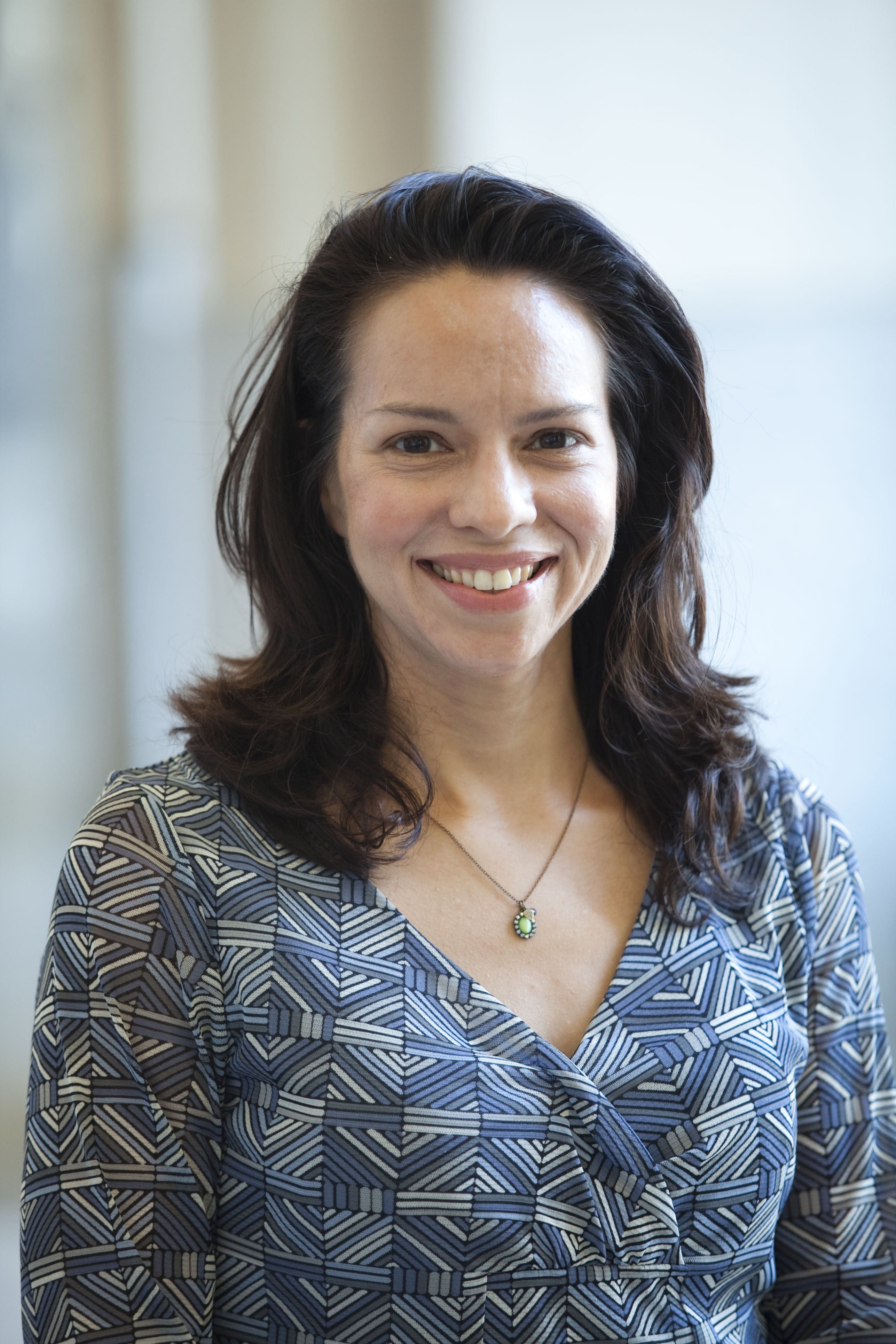
20110912_Fall Scholars 2011Dr. Vogel will describe a 1990s bioweapons threat assessment that involved setting up a mock bioweapons production facility as an “experiment”. The talk will discuss the difference between a scientific experiment and scientific demonstration and why it is important to interrogate what things are labeled as “experiments” and the implications that has for bioweapons assessments. Kathleen Vogel is an associate professor at Cornell, with a joint appointment in the Department of Science and Technology Studies and the Judith Reppy Institute for Peace and Conflict Studies. Vogel holds a Ph.D. in biological chemistry from Princeton University. Prior to joining the Cornell faculty, Vogel was appointed as a William C. Foster Fellow in the U.S. Department of State’s Office of Proliferation Threat Reduction in the Bureau of Nonproliferation. Vogel has also spent time as a visiting scholar at the Cooperative Monitoring Center, Sandia National Laboratories and the Center for Nonprolif­eration Studies, Monterey Institute of International Studies. Her research focuses on studying the social and technical dimensions of bioweapons threats and the production of knowledge in intelligence assessments on WMD issues.