This Week in DC: Events

Events this week are more international politics related.

DC EventsTuesday, June 11

The Case to Remove Cuba from the Terrorist List
CSIS
8:00AM – 9:00AM

Last week, in what has become an annual rite of passage since 1982, Cuba was placed on the U.S. State Department’s list of state sponsors of terrorism. Despite this, there are growing calls for Cuba to be taken off the list. Join us for a discussion and look at the arguments to be made for Cuba’s removal.

Open to the public; however, seating is limited. To RSVP, please send name and affiliation to the Americas Program at americas@csis.org.

Wednesday, June 12

Reform, Revolution or Status Quo? Regional Dynamics in a Changing Arab World
US Institute of Peace
10:00AM – 11:30AM

This meeting is co-sponsored by the Middle East Program at the Woodrow Wilson Center and the U.S.Institute of Peace.

Some experts predicted that the ‘Arab spring’ rebellions would widen the strategic, political, and even ideological gap between Arab states undergoing dramatic change and those defending the status quo. In fact, no such clear breach has occurred. Instead, Dr. Adeed Dawisha, distinguished professor of political science at Miami University, argues that sectarian tensions and economic constraints have dampened the potentially ‘incendiary’ effect of the Arab political revolts. Please join us at USIP for an engaging discussion on these dynamics in the Middle East with Dr. Dawisha, the State Department’s Dafna Rand, and USIP’s Daniel Brumberg on June 12, from 10:00am to 11:30am.

The U.S. and China: A New Kind of Great Power Relationship?
Brookings Institution
2:00PM – 3:30PM

This weekend’s meeting between Presidents Barack Obama and Xi Jinping at the former Annenberg Estate in California presents the two leaders with an opportunity to address a wide range of pressing issues, from flash points in the Korean peninsula to climate change and the global economy. To China’s leaders, this meeting will contribute to the development of a “new kind of great power relationship,” a concept that has been heavily promoted in recent months in state media and official pronouncements. On June 12, the John L. Thornton China Center at Brookings will host Madame Fu Ying, the spokeswoman for the China’s National People’s Congress (NPC) and the chair of the NPC’s Foreign Affairs Committee.

Thursday, June 13

After the Arab Uprisings
New America Foundation
9:00AM – 10:30AM

Two years after the Arab uprisings began, many countries in the Middle East and North Africa are undergoing complex political, social and economic transformations. Arab countries in transition are trying to articulate economic reform agendas amidst tumultuous internal developments and a challenging external environment. The divergent economic interests of governments and civil society groups further complicate the reform process. Alongside these near-term obstacles to economic stability, the region must contend with the medium-term challenges of diversifying their economies, creating jobs, and generating more inclusive growth. On June 13, New America Foundation’s Middle East Task Force will host Adnan Mazarei, the Deputy Director of the IMF’s Middle East and Central Asia Department, to discuss the region’s economic performance in 2012 and expectations for 2013.

Friday, June 14

The India-Pakistan Conundrum: Shooting for a Century
Brookings Institution
10:00AM – 11:30AM

The rivalry between India and Pakistan has proven to be one of the world’s most intractable international conflicts. In his new book, Shooting for a Century (Brookings Press, 2013), Brookings Senior Fellow Stephen P. Cohen explores the origins and costs of India-Pakistan hostility, various explanations of why the dispute endures, past and current efforts to normalize the relationship, as well as the consequences of nuclearization. He argues that the prospects for normalization are poor, but because of the stakes and urgency, it is a process deserving of bilateral effort and greater world attention. Cohen also outlines suggestions as to how the rivalry might end, as well as the approach he believes the United States should take vis-à-vis the rivalry. On June 14, the India Project at Brookings will host the launch of Shooting for a Century with a discussion on present and past ties between India and Pakistan, prospects for normalization, as well as what role, if any, the U.S. should play.
This Week in DC: Events

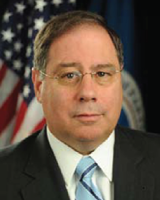
Don’t forget, our May Biodefense Policy Seminar,  featuring Dr. Daniel Gerstein, Deputy Under Secretary for Science & Technology in the Department of Homeland Security, is this Thursday evening! Dr. Gerstein’s talk, “National Security and Arms Control in the Age of Biotechnology”, will examine emerging threats at the nexus of arms control and advancements in biotechnology.  Come and ask questions at 7:20 PM in the Meese Conference Room, Mason Hall!

DC EventsTuesday, May 20

Threat and Response: Combating Advanced Attacks and Cyber-Espionage
Center for Strategic and International Studies
9:00 AM – 12:30 PM

Speakers from across the government and private sectors will discuss burgeoning threats in cybersecurity.

How Arab Public Opinion Is Reshaping the Middle East
Brookings Institution
3:00 – 4:00 PM

The Arab awakening that began in 2011 is transforming the Middle East in ways that continue to surprise seasoned observers. As new political leaders and movements struggle for power and work to shape the region’s future, one thing is clear: public opinion is more consequential now than it has arguably ever been. How Arabs view themselves and the world around them will have enormous consequences for the region and the larger international community in the years ahead. How are changes in Arab public opinion shaping the changes occurring across the region? Have the U.S. and its allies done enough to understand and support the voices of Arabs seeking greater representation and opportunity?

Wednesday, May 21st

Politics, Higher Education and Healthcare in the Austerity Era
Brookings Institution
9:00 AM – 12:00 PM

Since the onset of the Great Recession, public discussion has centered on whether spending or austerity is the best path to economic recovery. As evidenced by the sequestration, recurring debt ceiling fights and the ongoing euro crisis, clear policy prescriptions to kickstart anemic economies remain elusive. Often lost in the public discussion surrounding government budgets, though, is consideration of austerity’s implications for national politics and how policy is enacted and implemented. How has the debate surrounding spending versus budget-cutting shaped the political conversation in the United States? What has been austerity’s impact on the policy-making process?

Health Diplomacy as a Weapon in the Battle for Hearts and Minds
NextGen Foreign Policy Network
6:30PM – 8:00 PM

Global health is increasingly recognized as an important part of international relations, that can have a direct or indirect impact on national security. Health diplomacy enables countries to project a positive image in nations where they are not always welcome, but where their medical expertise is needed. At the same time, health diplomacy can also be an incredible human adventure, with floating hospitals treating thousands of patients on ships.

Thursday, May 23

National Security and Arms Control in the Age of Biotechnology
GMU Biodefense Policy Seminar Series
7:20PM – 8:30PM

The Biodefense Policy Seminars are the D.C. area’s premiere speaker series focused on biodefense and biosecurity issues. The monthly seminars – free and open to the public – feature leading figures within the academic, security, industry, and policy fields of biodefense. Past speakers have included Dr. Charles Bailey, Executive Director at the National Biodefense Center and Dr. Alexander Garza, former Assistant Secretary for Health Affairs and Chief Medical Officer of the Department of Homeland Security.

About the May Speaker: Dr. Daniel M. Gerstein has served as the Deputy Under Secretary for Science & Technology in the Department of Homeland Security since August 2011. He is also an Adjunct Professor at American University in Washington, DC at the School of International Service (SIS) where he teaches graduate level courses on biological warfare and the evolution of military thought. Dr. Gerstein has extensive experience in the security and defense sectors in a variety of positions while serving as a Senior Executive Service (SES) government civilian, in uniform, and in industry. Before joining DHS, he served as the Principal Director for Countering Weapons of Mass Destruction (WMD) within the Office of the Secretary of Defense (Policy). He has served on four different continents participating in homeland security and counterterrorism, peacekeeping, humanitarian assistance, and combat in addition to serving for over a decade in the Pentagon in various high level staff assignments.

Iran: The Battle for the Presidency
Woodrow Wilson International Center for Scholars
12:30 – 1:30 PM

Iran’s Council of Guardians will announce the list of candidates for the next president of Iran on May 22-23. Our panel of experts will discuss the candidates, their platforms, and their likely impact on future domestic and foreign policy.


May Biodefense Policy Seminar

Dan-Gerstein (1)May Seminar: National Security and Arms Control in the Age of Biotechnology
Speaker
: Dr. Daniel M Gerstein
When: 7:20PM, Thursday, May 23rd, 2013
Where: Meese Conference Room, Mason Hall, George Mason University

The Biodefense Policy Seminars are  the D.C. area’s premiere speaker series focused on biodefense and biosecurity issues. The monthly seminars – free and open to the public – feature leading figures within the academic, security, industry, and policy fields of biodefense. Past speakers have included Dr. Charles Bailey, Executive Director at the National Biodefense Center and Dr. Alexander Garza, former Assistant Secretary for Health Affairs and Chief Medical Officer of the Department of Homeland Security.

Dr. Daniel M. Gerstein has served as the Deputy Under Secretary for Science & Technology in the
Department of Homeland Security since August 2011. He is also an Adjunct Professor at American University in Washington, DC at the School of International Service (SIS) where he teaches graduate level courses on biological warfare and the evolution of military thought. Dr. Gerstein has extensive experience in the security and defense sectors in a variety of positions while serving as a Senior Executive Service (SES) government civilian, in uniform, and in industry. Before joining DHS, he served as the Principal Director for Countering Weapons of Mass Destruction (WMD) within the Office of the Secretary of Defense (Policy). He has served on four different continents participating in homeland security and counterterrorism, peacekeeping, humanitarian assistance, and combat in addition to serving for over a decade in the Pentagon in various high level staff assignments.

FAS President Charles Ferguson Keynote Speaker at Symposium at GMU

FAS President Dr. Charles Ferguson is giving the keynote speech at the VIP Global Net, LLC “Countering Nuclear and Radiological Threats” Symposium next week.

The symposium will bring together experts the government, academic, and industry spheres, including from the National Security Staff, Department of Homeland Security, Department of Defense, and the Department of Energy, to discuss the the policy, operations, acquisition, and technical challenges associated with nuclear and radiological threats facing the United States today.
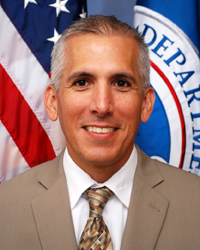
The symposium seeks to generate productive and pragmatic dialogue amongst all stakeholders regarding the nuclear and radiological threats faced by the US today.

Nonproliferation Law and Policy Mr. Chris Bidwell, JD will also speak at the symposium.

Featured speakers and agenda can be found here.

To register for the symposium click here.

About Charles Ferguson: Dr. Ferguson has been President of FAS since January of 2010. He brings to the symposium extensive experience in  the nuclear and radiological field. Prior to FAS, Dr. Ferguson served as the s the project director of the Independent Task Force on U.S. Nuclear Weapons Policy, as the scientist-in-residence at the Monterey Institute’s Center for Nonproliferation Studies, and as a physical scientist at the Office of the Senior Coordinator for Nuclear Safety at the U.S. Department of State. He also authored the book, The Four Faces of Nuclear Terrorism, and was lead author of the award-winning report “Commercial Radioactive Sources: Surveying the Security Risks”.

For his complete bio, including recent publications and media appearances, please see here

This Week in DC: Events

Don’t forget the Biodefense Brown Bag, “WMD” Terrorism? Ricin,  Boston, and Beyond, is this Thursday at 1:30PM in the PIA Conference room! Join us for a discussion with the faculty and students from the GMU graduate program in Biodefense. What is ricin? How afraid should we be of bioterrorism? Does ricin count as WMD? What about the pressure cooker bombs used by the Boston bombers? Should the U.S. government really be prosecuting Tsarnaev for using WMD? What are WMD and why does the answer matter?

We will discuss these and other important questions – bring your lunch and bring your questions!DC Events

Tuesday, May 7th

Does Spraying for Mosquitos Discourage Use of Nets? A Surprise Result from an RCT in Eritrea
Center for Global Development
12:00pm to 1:30pm

Does indoor residual spraying (IRS) for mosquitos discourage the use of bed nets, as some critics have alleged? A new paper from Pedro Carneiro and others using data from a randomized control trial in Eritrea finds the opposite: IRS actually encouraged net acquisition and use. Carneiro will present the findings and discuss the implications for the wider debate about under what conditions public health interventions crowd out private health investments.

Wednesday, May 8th

Case Study: Regulating the Private Health Sector in Afghanistan
O’Neill Institute for National and Global Health Law
12:00pm – 1:00pm

Afghanistan is transitioning from a system in which government provides services to one in which government is the regulator of a changing public health care system and a new emerging private health sector. In the years since the Taliban era ended, the Government of Afghanistan has taken many steps to encourage the development of a market economy and in 2012 its Cabinet passed a law to regulate the private health sector.Since last year, Professor Forzley has been working as a consultant and legal advisor to assist the Afghanistan MoPH to implement the new law in accordance with rule of law and good governance principles. Her presentation will cover a background on Afghanistan, its health system and the new private sector, the main functions of the new law, how procedures and systems are being developed to reflect good governance principle and future planned work.

Thursday, May 9th

“WMD”  Terrorism? Ricin, Boston, and Beyond
PIA Conference Room 251, Robinson Hall A, George Mason University
1:30 PM – 3:00PM

Bring your lunch and join us for a discussion on the ricin letters, Boston bombings, and the use of the word “WMD”.

U.S.-Russia Relations: “Reset Button” must include closer cooperation on Counterterrorism
American Foreign Policy Council
6:00 PM – 8:00 PM

…[T]he U.S. has now inherited one of Russia’s principal threats, Chechen terrorists. The Chechen connection to the Boston Marathon twin IED explosions has thrust U.S.-Russia counterterrorism cooperation back into the spotlight. Did the FBI drop the ball on intelligence provided by Russia on Tamerlan Tsarnaev in 2011 or have Putin’s autocratic actions against Russian dissidents undercut the credibility of his intelligence services? Or both?

Friday, May 10th

Mitigating Natural Disasters, Promoting Development: The Sendai Dialogue and Disaster Risk Management in Asia
Brookings Institution
10:00 AM – 5:00 PM

On May 10, the Center for Northeast Asian Policy Studies and the Brookings-LSE Project on Internal Displacement will co-host a discussion featuring experts on natural disasters and disaster risk management from the United States and Asia. Panelists representing the private, public, and international sectors will seek to refine some of the topics considered at the Sendai Dialogue. They will identify the lessons learned from 3/11; how these lessons can be applied to overseas economic assistance programs, focusing on DRM; the specific challenges of disaster risk management among Asian countries; and how DRM can be integrated and mainstreamed into development assistance across different platforms.

After each panel, the speakers will take audience questions.

Biodefense Brown Bag Series

ricin_boston

“WMD” Terrorism? Ricin, Boston, and Beyond

When: Thursday, May 9th 1:3o – 3:00 PM
Where: Public and International Affairs Conference Room, Room 251, Robinson Hall A, GMU

Join us for Biodefense Brown Bag discussion with the faculty and students from the GMU graduate program in Biodefense. What is ricin? How scared should we be about bioterrorism? Does ricin count as WMD? What about the pressure cooker bombs used by the Boston bombers? Should the U.S. government really be prosecuting Tsarnaev for using WMD? What is WMD and why does the answer matter?

We will discuss these and other important questions – bring your lunch and bring your questions!

For more info email Siddha Hover, shover@masonlive.gmu.edu

NRC Chair Allison Macfarlane to Discuss Current Issues in Environmental Policy

Allison MacFarlane

When: 12:00 – 1:30PM, Thursday, April 18th
Where: Research Hall, Room 163 George Mason University, Fairfax, VA

Come and hear Dr. Allison Macfarlane, Chair of the Nuclear Regulatory Commission, discuss the intersection of environmental policy and the NRC. Dr. Macfarlane is speaking as a part of the 2013 Harold Gortner Distinguished Speaker Series in Public Administration.

Recently re-appointed to serve a second term leading the NRC, Allison Macfarlane is on leave from GMU where she is an Associate Professor in the Environmental Science and Policy Program. She is co-author of the book Uncertainty Underground: Yucca Mountain and the Nation’s High-Level Nuclear Waste.

A reception will follow—please join us!

This Week in DC: Events

DC EventsOur next Biodefense Policy Seminar is this Thursday! The Biodefense Policy Seminar is  the D.C. area’s premiere speaker series focused on biodefense and biosecurity issues. The monthly seminars – free and open to the public – feature leading figures within the academic, security, industry, and policy fields of biodefense.

This Thursday’s seminar, “Health Threats in a Security World”, features Dr. Alexander Garza,  Assistant Secretary for Health Affairs and Chief Medical Officer at the Department of Homeland Security. Join us at 7:20 PM in the Meese Conference Room in Mason Hall, Thursday April 18th!

Monday, April 15th

North Korea and Policy Priorities for the United States
Brookings Institute
10:00AM – 11:30AM

On April 15, Foreign Policy at Brookings will host a discussion on the policy priorities for the United States in dealing with North Korea during and after the current crisis. Brookings experts will debate the threat to the United States and its allies and analyze steps that the United States can take to mitigate the danger, including sanctions, engaging allies and neighbors in the region, nonproliferation efforts and, if necessary, responding to aggressive actions by North Korea.

The Future of the U.S. Nuclear Deterrent: A Conversation with Amb. Linton Brooks
American Security Project
12:30PM – 1:30PM

The future form of today’s U.S. deterrent could change. Many call for reducing the number of nuclear weapons in the U.S. arsenal while plans for the future triad are in flux. 2013 could be a critical year for many of these issues. Join us for a conversation with Linton Brooks, Ambassador and former Administrator for the National Nuclear Security Administration (NNSA). Linton F. Brooks is an independent consultant on national security issues, a senior adviser at CSIS, a distinguished research fellow at the National Defense University, and an advisor to four of the U.S. Department of Energy national laboratories.

Tuesday, April 16th

The Syrian Conflict: Challenges & Opportunities for WMD Counterproliferation
Georgetown Law
12:00PM – 1:00PM

Public symposium and panel lecture on Syrian weapons of mass destruction.

Foreign Policy Panel Series: “Are North Korea’s Threats of War Real?”
World Affairs Council
6:30PM – 8:00PM

The recent threats of war by North Korea’s Kim Jong-un have caused serious alarm in the international community and tensions to rise on the Korean peninsula. This is not the first time such threats have been made. Should they be taken seriously, or are they part of a pattern of diplomatic strategy? How real is the threat of war from North Korea?

Wednesday, April 17th

‘Avoiding Armageddon: America, India, Pakistan, to the Brink and Back’
Hudson Institute
12:00PM – 2:00PM

Long-term stability in South Asia is critical to American national security. In the last 20 years, successive U.S. administrations have diplomatically intervened to keep tensions between the nuclear-armed nations of India and Pakistan from escalating into full-scale war. Moving forward, the health of the relationship between New Delhi and Islamabad will determine whether the region has a future of general stability and peace or chronic conflict. In light of this, Hudson Institute is pleased to invite you to a discussion between Senior Fellow and former Ambassador of Pakistan to the U.S. Husain Haqqani and Bruce Riedel, a Brookings Institution scholar and author of Avoiding Armageddon: America, India, and Pakistan to the Brink and Back. Lunch will be served.

Strategic Options for Iran: Balancing Pressure with Diplomacy
Woodrow Wilson Center
12:15 – 2:00PM

Former senior national security officials, military officers and experts with decades of Middle East experience have joined to present a balanced report on the strategic options for dealing with Iran. Moving the debate past politics and unexamined assumptions they argue that the time has come for Washington to strengthen the diplomatic track in the two track policy of pressure and diplomacy that has characterized current U.S. policy.

Public Presentation with Nils Daulaire, Assistant Secretary for Global Affairs, U.S. Department of Health and Human Services
Americas Society/Council of the Americas
3:15PM – 4:30PM

Please join the Council of the Americas for a public, on-the-record presentation by Dr. Nils Daulaire, assistant secretary for global affairs at the U.S. Department of Health and Human Services. With vast experience in public health in the world’s poorest communities, Daulaire will outline the United States’ health priorities in the hemisphere and highlight several key initiatives that are improving health in the region. Prior to his appointment at HHS in 2010, Daulaire served for more than a decade as president and CEO of the Global Health Council and as deputy assistant administrator for policy and senior international health advisor at USAID.

Thursday, April 18th

National Security & Foreign Policy Priorities in the FY 2014 International Affairs Budget
U.S. Senate Committee on Foreign Relations (Senate Dirksen 562)
9:30 AM

Witnesses: The Honorable John F. Kerry, Secretary of State, U.S. Department of State

Disaster Risk Reduction and Conflict Prevention
US Institute of Peace
1:00PM – 3:00PM

As the United Nations debates a new set of development priorities for the post-2015 revision of its Millennium Development Goals, USIP’s Center of Innovation for Science, Technology & Peacebuilding and the National Academy of Engineering jointly invite you to a discussion of the new challenges for peacebuilders presented by the interplay of these “natural” and political risks.

Health Threats in a Security World
Meese Conference Room, Mason Hall, George Mason University
7:20PM – 8:30PM

As the second speaker in the Biodefense Policy Seminar series, Dr. Alexander Garza will discuss emerging health threats in his capacity as the assistant secretary for health affairs and chief medical officer of the Department of Homeland Security. His bio includes managing the Department’s medical and health security matters, oversees the health aspects of contingency planning for all chemical, biological, radiological and nuclear hazards, and leads a coordinated effort to ensure that the Department is prepared to respond to biological and chemical weapons of mass destruction. Prior to joining the Department in August 2009, Dr. Garza spent 13 years as a practicing physician and medical educator.

Friday, April 19th

Nukes, Missiles, and Feints: The Real Deal on Iran and North Korea
Center for National Policy
9:30AM – 10:45AM

The rhetoric from North Korea has become increasingly hostile. Last Friday, April 12th, the country warned that “nuclear war is unavoidable” and declared that Tokyo would be its first target in the event of a war on the Korean Peninsula. This statement is just the latest in an escalating war of words and rising tensions between North Korean officials and the U.S. Join Truman Project President, just back from Japan, Rachel Kleinfeld and an expert panel as they discuss the current situation in North Korea, how the situation differs from that of Iran, and how we can better understand Asian hard security and the nuclear challenge.

Biodefense Policy Seminar: “Health Threats in a Security World”

Alexander Garza, MD, MPH, FACEPApril Seminar: ”Health Threats in a Security World”
Speaker: Dr. Alexander Garza
When: 7:20PM, Thursday April 18th, 2013
Where: Meese Conference Room, Mason Hall, George Mason University

The Biodefense Policy Seminar is  the D.C. area’s premiere speaker series focused on biodefense and biosecurity issues. The monthly seminars – free and open to the public – feature leading figures within the academic, security, industry, and policy fields of biodefense.

About the Speaker: Dr. Alexander Garza is the Assistant Secretary for Health Affairs and Chief Medical Officer of the Department of Homeland Security. He manages the Department’s medical and health security matters, oversees the health aspects of contingency planning for all chemical, biological, radiological and nuclear hazards, and leads a coordinated effort to ensure that the Department is prepared to respond to biological and chemical weapons of mass destruction. Prior to joining the Department in August 2009, Dr. Garza spent 13 years as a practicing physician and medical educator.

Refreshments will be available!

This Week in DC: Events

Roundup of the week’s most interesting (and free) international security, science & technology, and health events.

DC EventsTuesday, April 2nd

Middle East Turmoil and American Decline: Views from Singapore and Asia
Middle East Institute
12:00PM – 1:00PM

The relationships between the Middle East and maritime Asia are becoming ever more extensive. Against the backdrop of this deepening cross-regional interdependence with Asian economies and middle classes expanding rapidly, the Arab Middle East is grappling with profound political changes and challenges, and the United States is engaged in strategic “rebalancing.” Dr. Michael Hudson will discuss how the political upheaval in the Middle East and US involvement in the Arab world are viewed in Singapore and, more broadly, in maritime Asia.

Wednesday, April 3rd

NATO’s European Allies: Military Capability and Political Will
SAIS
10:00 – 11:30AM

At a time when Europe really has to lead in its own region, is it able to do? This is the first in-depth analysis of this key question for the transatlantic relationship. Janne Haaland Matlary, professor in the Department of Political Science at University of Oslo in Norway and co-editor of NATO’s European Allies: Military Capability and Political Will, will discuss this topic.

Russian Security and Defense Policy: Why Russia Is Not Stuck in the Cold War and Why That Is a Problem
SIAS
12:30 – 1:45PM

Celeste Wallander, associate professor and director of the International Politics Program at American University’s School of International Service and former U.S. deputy assistant secretary of Defense for Russia/Ukraine/Eurasia in the Office of the Under Secretary of Defense for Policy, will discuss this topic.Note: Attendees are welcome to bring their lunch to the event.

Thursday, April 4th

Mitigating the National Security Impact of Cost Cutting: How to Ensure Innovation & Development in Lean Times
Ronald Reagan Building (hosted by Government Executive)
7:30AM – 9:30AM

Ever increasing global threats coupled with the financial constraints our nation is addressing make it imperative that agencies and private sector stakeholders have the resources and path forward for a critical component to ensuring National Security. Join Nextgov and INSA on April 4th and hear from key leadership at IARPA, DIA, and the Applied Research Laboratory, Penn State University who will address these issues and more

U.S. Foreign Policy: The Next Four Years
George Washington University
6:00PM – 7:15PM

Panel discussion

Friday, April 5th

U.S. Policy Priorities for Global Health Diplomacy and Multilateral Engagement in the Second Obama Term
Center for Strategic and International Studies
10:30AM – 12:00PM

During the first Obama term, global health diplomacy took on elevated importance as a U.S. foreign policy objective. Both the Department of State and the Department of Health and Human Services appear poised to continue to raise the diplomatic profile of global health during the second Obama term. Over the next year, U.S. diplomats will be challenged to help ensure: smooth, sufficient replenishments of the GAVI Alliance, the World Bank International Development Association, and the Global Fund to Fight AIDS, Tuberculosis and Malaria; the articulation of a robust set of goals to advance the post-2015 Millennium Development agenda; and mutually beneficial relationships with emerging powers, many of which are active global health actors. This session will feature a lively discussion with high-level officials and experts from inside and outside the U.S. government.