Pandora Report 8.11.2023

This week’s Pandora Report covers recent cyberattacks targeting US hospitals in multiple states and other updates. New publications are listed, including a recent piece discussing the validity of Gabriel de Mussis’ account of the siege of Caffa. New events and announcements round out this week’s newsletter.

Hospitals in Three States Targeted by Cyberattacks

This week, Prospect Medical Holdings reported it was the target of a cyberattack, according to the AP, adding to a growing trend of violence and danger in the healthcare field. Prospect is an LA-based private equity company that runs 16 hospitals and 165 outpatient facilities in California, Connecticut, Pennsylvania, Rhode Island, and Texas. According to Axios, “The attack shuttered several emergency departments and required ambulances to be diverted from some hospitals, while health providers reverted to pen and paper in the immediate aftermath of the attack.”

“On Sunday, Eastern Connecticut Health Network’s website still reported closures of multiple services, including urgent care and elective surgeries, as it worked to restore systems. Pennsylvania-based Crozer Health and Rhode Island-based CharterCare still had posts on their websites alerting patients to the systemwide outage.”

“This is the latest in a surge of large-scale cyberattacks on health care facilities that have disrupted operations, with experts calling on better industry-wide efforts and federal regulations to harden defenses around America’s health care information infrastructure.”

Seiichi Morimura Dead at 90

Seiichi Morimura, author of the 1981 exposé, “The Devil’s Gluttony,” that detailed the horrors of Japan’s Unit 731, passed away on July 24 in Tokyo. The New York Times explained that “Mr. Morimura’s book sold more than 1.1 million copies within seven months of its publication. It was not the first account of Unit 731’s brutality — there were two others in the 1960s and ’70s — but Mr. Morimura’s was drawn from interviews with 60 Japanese participants in the program.”

‘“Mr. Morimura’s 246-page book is believed to be more accurate and more believable” than the others, The New York Times reported in 1982. The article quoted Mr. Morimura as saying: “This story should be told to all Japanese, to every generation. Japanese aggression should be written about to prevent another war.”’

Working Group on the Strengthening of the Biological Weapons Convention Convenes

The Working Group on the Strengthening of the Biological Weapons Convention is holding its second meeting currently in Geneva. CBW Events is posting daily updates about this and other working group meetings here.

20th CBRRNE Command Hosts Inaugural Joint Chemical, Biological, Radiological, Nuclear, Explosives Forum

Late last month, the Army’s 20th CBRNE Command hosted the first Joint Chemical, Biological, Radiological, Nuclear, Explosives Forum in Cockeysville, MD.

“Hosted by U.S. Army Brig. Gen. Daryl O. Hood, the commanding general of the 20th CBRNE Command, the event welcomed joint service Chemical, Biological, Radiological, Nuclear (CBRN) and Explosive Ordnance Disposal (EOD) personnel.”

“Headquartered on Aberdeen Proving Ground, Maryland, in Northeast Maryland’s science, technology and security corridor, the 20th CBRNE Command is home to 75 percent of the active-duty U.S. Army’s CBRN specialists and EOD technicians, as well as the 1st Area Medical Laboratory, CBRNE Analytical and Remediation Activity, five Weapons of Mass Destruction Coordination Teams and three Nuclear Disablement Teams.”

“This year’s forum highlighted the joint service personnel who confront and defeat CBRNE hazards in support of U.S. military operations around the world and civil authorities across the nation.”

“Catapulting Corpses? A Famous Case of Medieval Biological Warfare Probably Never Happened”

Matt Field discusses Jean Pascal Zanders‘ work critically assessing Gabriele de Mussi’s account of the siege of Caffa and the enduring belief that Mongol invaders engaged in medieval biological warfare by hurling the bodies of plague victims over the walls and into the city in this piece for The Bulletin of the Atomic Scientists. Field writes in part:

“Since de Mussi’s work was re-discovered in a university library in Poland in 1842, researchers of weaponry, the plague, and biological warfare have picked up parts of its narrative. Look up “The Black Death” in the Encyclopedia Britannica and it’s right there: “With his forces disintegrating, Janibeg used trebuchets to catapult plague-infested corpses into the town in an effort to infect his enemies. From [Caffa], Genoese ships carried the epidemic westward…” The medieval allegations are in YouTube and TikTok videos by the History Channel and others, some with millions of views. In the academic literature the anecdote can be found in reputable publications ranging from the Journal of the American Medical Association to the CDC’s Emerging Infectious Diseases.

“The problem is, there’s strong reason to doubt de Mussi.”

This piece offers good discussion of the historiography surrounding this story and how it gained traction, insight into the logistics of this hypothetical attack, and compelling arguments about the dangers of perpetuating false claims about historical biological warfare.

“Bird Flu Has Never Done This Before”

Katherine J. Wu discusses concerns that H5N1 may now be endemic in North America in this piece for The Atlantic. She explains in her introduction “At bird breeding grounds this spring and summer, the skies have been clearer and quieter, the flocks drastically thinned. Last year, more than 60 percent of the Caspian terns at Lake Michigan vanished; the flock of great skuas at the Hermaness reserve, in Scotland, may have shrunk by 90 percent. Now more broken bodies are turning up: a massacre of 600 arctic-tern chicks in the United Kingdom; a rash of pelicans, cormorants, gulls, and terns washed up along West African coasts. In recent months, Peruvian officials have reported the loss of tens of thousands of pelicans—by some estimates, up to 40 percent of the country’s total population.”

“The deaths are the latest casualties of the outbreak of H5N1 avian flu that’s been tearing its way across the world. In the past couple of years, more than 100 million domestic poultry have died, many of them deliberately culled; out in the wild, the deaths may be in the millions too—the corpses have just been too inaccessible and too numerous for scientists to count. “It’s been carnage,” Michelle Wille, a virologist at the Peter Doherty Institute for Infection and Immunity, told me. “For many species, we are losing decades of conservation work.”’

“Artificial Intelligence in Health Care: The Hope, the Hype, the Promise, the Peril”

From the National Academies: “The emergence of artificial intelligence (AI) in health care offers unprecedented opportunities to improve patient and clinical team outcomes, reduce costs, and impact population health. While there have been a number of promising examples of AI applications in health care, it is imperative to proceed with caution or risk the potential of user disillusionment, another AI winter, or further exacerbation of existing health- and technology-driven disparities.”

“This Special Publication synthesizes current knowledge to offer a reference document for relevant health care stakeholders. It outlines the current and near-term AI solutions; highlights the challenges, limitations, and best practices for AI development, adoption, and maintenance; offers an overview of the legal and regulatory landscape for AI tools designed for health care application; prioritizes the need for equity, inclusion, and a human rights lens for this work; and outlines key considerations for moving forward.”

“AI is poised to make transformative and disruptive advances in health care, but it is prudent to balance the need for thoughtful, inclusive health care AI that plans for and actively manages and reduces potential unintended consequences, while not yielding to marketing hype and profit motives.”

“Here’s the Intelligence Assessment of Donald Trump That the Government Can’t Write”

Schar School adjunct professor Donell Harvin recently published this Politico opinion piece. In it he explains that “Federal intelligence and national security agencies — from the FBI to DHS — are in universal agreement that domestic extremism and terrorism is the leading threat to the U.S. homeland. But homeland security officials are also trained to be apolitical, so here’s what they can’t tell you: Donald J. Trump poses a significant threat to homeland security.”

“While generally highly decentralized and fractured, violent extremist groups have begun to mesh over a unifying figure: Trump. The former president has become a focal point of domestic extremism, and by not denouncing them — and sometimes courting them — he has been adopted by these groups as a de facto spiritual leader. In some ways, Trump has also co-opted these groups to boost his own support. This, in my assessment, makes the former president a leading driver of domestic extremism, and an unprecedented danger to our security. The indictment of Trump for his push to overturn the 2020 election puts that in stark relief.”

Live Launch of the BWC National Implementation Measures Database

“At this side event to the BWC Working Group meeting, UNIDIR and VERTIC will launch the new BWC National Implementation Measures Database. The database is designed to strengthen the implementation of the BWC and enable States and Stakeholders to have a better understanding of different approaches to national implementation from around the world.”

“The event will consist of a demonstration of the Database website and will showcase the tool’s structure and functions. The demonstration will be followed by a Q&A session with the audience”

This event will take place on August 15 at 1:15 pm CEST. Register here.

Bio and Beer

Join the Institute for Biohealth Innovation for this event on August 23 at 4:30 pm in Manassas, VA with “special guest, Dr. Eric Van Gieson, who will discuss the journey and quest of exploring the host response and harnessing the epigenome as a diagnostic and prognostic landscape. He will provide insight into his time at DARPA and talk about future possibilities for universities and industry to jointly pursue biotechnology innovation. Enjoy an evening of networking, drinks, and fun!” RSVP here.

Empirical Research in Biosafety: Filling Key Data Gaps

This September 14 event will be hosted by Rocco Casagrande in Columbia, MD and virtually beginning at 5 pm EST.

“In this session, we will present data from our empirical work in biosafety and our work exploiting existing data sets to inform biosafety. We will discuss our methodological framework for studying aerosols generated by laboratory accidents, and present information on the aerosols produced by dropping microtiter plates and tissue culture flasks. Also in the physical sciences, we will present data on the rate that conical centrifuge tubes leak and the frequency that splashes occur when opening microcentrifuge tubes via various opening methods. We will discuss the rate of spills and splashes when pipetting as drawn from experiments using volunteers and blinded samples in clinical laboratories. Interestingly, this experiment also sheds light on the ability of the researcher to know when they are making mistakes and take corrective action. We will present data on the rate at which needle sticks can be expected in the laboratory. We will examine how biosafety findings are distributed amongst laboratories in several institutions and what can be learned about the culture of biosafety. We will discuss how knowledge of the frequency and causes of accidents can lead to means to improve reproducibility in the life sciences.”

Learn more and register here.

No Checkered Flag: The Perpetual Race Against Biological Threats

From the Bipartisan Commission on Biodefense: “The Commission’s next meeting, No Checkered Flag: The Perpetual Race Against Biological Threats, will be held on September 27, 2023 in Indianapolis, Indiana. The meeting will take place at the historic Indianapolis Motor Speedway, the home of the Indianapolis 500.”

“The focus of this meeting will be to provide the Bipartisan Commission on Biodefense with a better understanding of: (1) state and local efforts to strengthen public health and biodefense; (2) special security management of biological threats to mass gatherings; and (3) efforts to understand and mitigate the agricultural impact of biological threats to plants and animals.”

This all-day event will take place in Washington, DC on September 27 at 9 am EST. Learn more and register here.

Women Building Bio: Building Better

“Virginia Bio’s Women Building Bio Conference celebrates the contribution of women to the life sciences in the Commonwealth and beyond. The 8th annual conference theme, Building Better, will prompt us to explore how life sciences contribute to building a better future and highlight the increasingly significant role of women in it.”

This event will take place from 8:30-4 pm in Manassas, VA on September 28. Register here.

61st ISODARCO Course: Nuclear Order and International Security after Ukraine

“The war in Ukraine has had an enormous impact on global security, reviving nuclear fears, undermining the prospects for arms control, and shattering many of the norms and constraints that were the foundation of European security.  ISODARCO 2024 will examine the global nuclear order in light of the Ukraine war, focusing on the states, the policies and the technologies that will shape the future in a much more difficult environment.  How will we cope with this more dangerous world?”

This course will take place January 7-14, 2024, at the University of Trento. Learn more and register here.

Registration for GHS 2024 Now Open

Registration is now open for the Global Health Security 2024 conference in Sydney, Australia. This iteration will take place 18-21 June, 2024. The call for abstracts is also still open. “The mission of the Global Health Security conference is to provide a forum where leaders, researchers, policy-makers, and representatives from government, international organisations, civil society, and private industry from around the world can engage with each other, review the latest research and policy innovations, and agree solutions for making the world safer and healthier. To that end, our mission is to help foster a genuinely multidisciplinary community of practice that is committed to working collaboratively to enhance global health security and eliminate disease, irrespective of its origin or source.”

RUSI and NK News Launch New Nork Korea Reports Database

“A new RUSI and NK News initiative will provide access to high-quality, structured data from reports by the UN Panel of Experts on North Korea.”

“The database contains over 5,000 entities and their relationships, as described in successive reports by the UN Panel of Experts on North Korea from 2010 to 2023. The data allows countries and organisations to track sanctions compliance in a more easily accessible format. It is fully searchable and downloadable, and its fields are structured with ISO standards, making it easy to incorporate the data into existing databases.”

“This is a valuable tool for tracking sanctions compliance and promoting effective international sanctions implementation. It is particularly beneficial to smaller institutions, such as those in developing countries, who may often lack access to information and resources.”

Learn more and access the database here.

“Turning Listening into Action: A Proposal to Strengthen the NIH Guidelines”

A call from Acting NIH Associate Director for Science Policy, Lyric Jorgenson:

“As an unrepentant policy fanatic, I love talking about details, whether it be the implications of a strategically placed “shall” or where data should be in controlled access. However, most of the time, policymaking requires being a good listener.  Listening is an underrated skill and is more than just waiting for your turn to speak.  Typically, the scientific, ethical, legal, and social issues at the forefront of biomedical research are so complex that it is essential we turn to experts and members of the public to hear their perspectives before we can develop a policy responsive to their needs. Listening to this input and incorporating it into policymaking is vital to our work and to ensuring our policies hit the mark.”

“A recent case study in listening involves the Novel and Exceptional Technology and Research Advisory Committee, or as we like to call them, the NExTRAC.  In 2020, we asked this committee to think through the different scenarios that may be used in gene drive research to advise on whether/how we should think about updating our existing biosafety policy framework.  During its deliberations, the Committee also did a lot of listening, consulting with subject matter experts, and holding a public workshop. Ultimately, the NExTRAC produced some very thoughtful recommendations in its final report to the NIH.”

“Based on our internal deliberations and the NExTRAC’s recommendations, NIH is turning this listening into action by proposing some policy updates. The proposal is to revise the NIH Guidelines for Research Involving Recombinant or Synthetic Nucleic Acid Molecules (NIH Guidelines) to strengthen our infrastructure for ensuring this research continues to proceed responsibly. Specifically, the proposed revisions would incorporate specific considerations and requirements for NIH-supported research involving gene drive modified organisms in contained research settings.”

“It is important to emphasize that all the proposed actions at this time focus on working with gene drive modified organisms in contained research settings. This research is already performed around the globe in labs with biosafety precautions in place. However, as technology evolves, we must make sure that our policies keep pace. Thanks to the work of the NExTRAC, we believe this proposal will allow researchers to safely proceed with contained gene drive research.  I encourage all interested stakeholders to view the full proposal and provide us with your feedback.  Comments on the full proposal will be accepted until October 10, 2023, and must be submitted electronically.  I look forward to hearing your thoughts!”

Pandora Report 8.4.2023

This week covers the National Institutes of Health’s appointment of a new National Institute of Allergies and Infectious Diseases director, the expiration of the Chemical Facility Anti-Terrorism Standards program, growing challenges for ProMED, and the appointment of the United States Public Health Service Commissioned Corps’ first official mascot. Several new publications and more are also included.

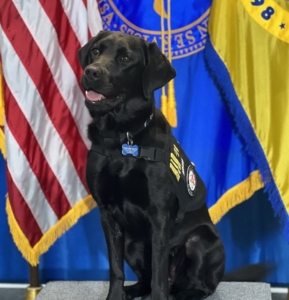
Pawsome News: USPHS Commissioned Corps Announces First Official Mascot, LCDR Abigail 🐾

The US Public Health Service Commissioned Corps recently announced its first official mascot-Lt. Cmdr. Abigail, a Labrador Retriever.

LCDR Abigail, Credit: HHS

According to HHS, “Lt. Cmdr. Abigail was named after the former First Lady of the United States, Abigail Adams, who has a historical connection to the service. The origin and history of the USPHS Commissioned Corps trace back to July 16, 1798, when Congress passed an Act, signed by President John Adams, creating the US Marine Hospital Service to protect against the spread of disease from sailors returning from overseas ports and thus began the story of the Public Health Service.”

“The concept of the service mascot originated during the COVID-19 pandemic, when Public Health Service officers deployed to respond to the largest public health emergency in modern times. The mascot is intended to improve mental well-being, enhance camaraderie, and assist with public health messaging. When first appointed, the mascot receives an honorary rank in the USPHS Commissioned Corps equal to that of the primary handler.”

Unfortunately for this good girl, “This honorary rank will not include any salary or retirement benefits.”

NIH Taps Jeanne Marrazzo to Lead National Institute of Allergy and Infectious Diseases

The National Institutes of Health recently named Jeanne M. Marrazzo, MD as Director of the National Institute of Allergy and Infectious Diseases (NIAID). NIH explained in their press release, “Dr. Marrazzo is currently the director of the Division of Infectious Diseases at the University of Alabama at Birmingham. She is expected to begin her role as NIAID Director in the fall. NIAID conducts and supports basic and applied research to better understand, treat and ultimately prevent infectious, immunologic and allergic diseases.”

“Dr. Marrazzo’s research in discovery and implementation science has focused on the human microbiome, specifically as it relates to female reproductive tract infections and hormonal contraception; prevention of HIV infection using biomedical interventions, including PrEP and microbicides; and the pathogenesis and management of bacterial vaginosis, sexually transmitted diseases in HIV-infected persons and management of antibiotic resistance in gonorrhea. She has been a principal investigator on NIH grants continuously since 1997 and has served frequently as a peer reviewer and advisory committee member. Dr. Marrazzo also has served as a mentor to trainees at all stages of professional development, including on NIH-funded training grants, and was the recipient of the American Sexually Transmitted Diseases Association’s Distinguished Career Award, the highest recognition of contributions to research and mentoring in the field.”

State Department Launches Bureau of Global Health, Security, and Diplomacy

This week, US Secretary of State Anthony Blinken announced that the “State Department is officially launching a new Bureau of Global Heath Security and Diplomacy.  The Bureau’s overarching mission is to fortify the global health security architecture to effectively prevent, detect, control, and respond to infectious diseases, including HIV/AIDS. By leveraging and coordinating U.S. foreign assistance, the Bureau aims to foster robust international cooperation, enhancing protection for the United States and the global community against health threats through strengthened systems and policies.”

He explained further that “The COVID-19 pandemic underscored the vital role the United States must play in addressing global health and health security issues. To ensure U.S. leadership is sustained moving forward, the Bureau will provide a unified voice of leadership on global health security and diplomacy, combining strengths, functions, personnel, and resources from various offices.”

“Ambassador-at-Large Dr. John N. Nkengasong, will lead the bureau, serving as Ambassador-at-Large, U.S. Global AIDS Coordinator, and Senior Bureau Official for Global Health Security and Diplomacy, and reporting directly to me.”

“This new Bureau will seamlessly integrate global health security as a core component of U.S. national security and foreign policy, underscoring the Department of State’s commitment to advancing human health worldwide.”

Senate Fails to Reauthorize Chemical Facility Anti-Terrorism Security Program

The US Senate last week did not pass legislation to reauthorize the Chemical Facility Anti-Terrorism (CFATS) program before its July 27, 2023 expiration date. According to Industrial Cyber, “The bill was to extend the authorization of the program of the Department of Homeland Security (DHS) until July 27, 2025. The failure of the Senate to reauthorize the CFATS program has significant implications for chemical facility security measures, potentially putting these facilities at risk.”

“Senator Rand Paul, a Republican from Kentucky, blocked the H.R. 4470 bill in the Senate that would re-authorize the U.S. program to address terrorism and site security, allowing it to expire at the end of Thursday…Paul feared that the bill was being rushed through the Senate. He said there were no hearings about CFATS or whether it was effective. “We tend to re-authorise things without ever examining whether they work, what works and what doesn’t work.” He conditioned his support for the re-authorization bill on an amendment that would create what he called a duplicative scoring system for every future proposal brought before legislators. The system would determine how many programs in the bill are duplicated by ones that already exist in the government.”

CISA, which oversees CFATS, explains the program on its site, stating “Under CFATS, a chemical facility is any establishment or individual that possesses or plans to possess any of the more than 300 chemicals of interest (COI) in Appendix A at or above the listed screening threshold quantity (STQ) and concentration. These facilities must report their chemicals to CISA via an online survey, known as a Top-Screen. CISA uses the Top-Screen information a facility submits to determine if the facility is considered high-risk and must develop a security plan. Learn more on the CFATS process webpage.”

“The CFATS regulation applies to facilities across many industries – chemical manufacturing, storage and distribution, energy and utilities, agriculture and food, explosives, mining, electronics, plastics, colleges and universities, laboratories, paint and coatings, and healthcare and pharmaceuticals, among others.”

“Chemical security is not a temporary issue. As threats evolve, CISA is committed to working with stakeholders to protect the nation’s highest-risk chemical infrastructure.”

CISA said in a statement about the expiration, “As of July 28, 2023, Congress has allowed the statutory authority for the Chemical Facility Anti-Terrorism Standards (CFATS) program (6 CFR Part 27) to expire.”

“Therefore, CISA cannot enforce compliance with the CFATS regulations at this time. This means that CISA will not require facilities to report their chemicals of interest or submit any information in CSAT, perform inspections, or provide CFATS compliance assistance, amongst other activities. CISA can no longer require facilities to implement their CFATS Site Security Plan or CFATS Alternative Security Program.”

“CISA encourages facilities to maintain security measures. CISA’s voluntary ChemLock resources are available on the ChemLock webpages.”

ProMED On Its Way Out?

ProMED, “the largest publicly-available system conducting global reporting of infectious disease outbreaks,” looks to be in jeopardy as of yesterday. STAT News’ Helen Branswell explained in her reporting that “A number of the senior moderators of ProMED-mail, a program operated by the International Society for Infectious Diseases, posted a letter of protest early Thursday, challenging a recently revealed plan to charge for subscriptions to the service. The group of 21 moderators, who announced they were suspending work for ProMED, expressed a lack of confidence in the ISID’s administrative operations, suggesting ProMED needs to find a new home.”

She explained the importance of this platform further, writing “Prior to its inception in 1994, governments — which often have incentives not to be forthcoming — were the main sources of information about disease events. ProMED takes tips from scientists who can remain anonymous to the general readership — though not the moderators. It was also created at a time when access to the internet and email was just taking off, allowing people from around the world to supply information to its moderators, information those moderators assessed, curated, and sent out to the broader world.”

“In February 2003, it was ProMED that alerted the world to the fact that a new disease that caused pneumonia had started to spread in China’s Guangdong province. That disease became known as SARS — severe acute respiratory syndrome. In September 2012, an Egyptian doctor working in Saudi Arabia wrote to ProMED to reveal he had treated a patient who died from pneumonia triggered by a new coronavirus, a camel virus we now know as MERS — Middle East respiratory syndrome. Just before midnight on Dec. 30, 2019, a ProMED “RFI” post — request for information — was the first warning the outside world received of a fast-growing outbreak in Wuhan, China. That was the start of the Covid-19 pandemic.”

“Chinese Academics Are Becoming a Force for Good Governance”

The Biodefense Graduate Program’s Sonia Ben Ouagrham-Gormley recently co-authored this article alongside Joy Zhang and Kathleen Vogel for Issues in Science and Technology. In it they offer insight into the work of the Chinese scientific community to improve policies guiding responsible research, in contrast to the “Wild East” reputation many attribute to Chinese biosciences research. They write in part “It reflects important changes in the domestic dynamics of Chinese science—particularly the increasingly prominent role of academics. Chinese academics have become a proactive, effective force demanding science governance in China, but international counterparts too often fail to recognize their role and so undermine their efforts. China still has much work to do to develop a trusted and accountable regulatory system worthy of its scientific advancement and ambition, but meaningful, sustainable reforms must come from within the country.”

“Gain-of-Function Research Is About Much More Than Dangerous Pathogens”

Biodefense Graduate Program alumni Saskia Popescu and Yong-Bee Lim recently co-authored this STAT News piece with Angela Rasmussen. They write in part, “However, focusing exclusively on this one type of research has created deep rifts across key communities that balance innovation with safety and security in the life sciences. These rifts have made it almost impossible to have necessary, productive conversations to address global problems while ensuring such work is done safely and securely. Narrowing the definition of gain of function to only pathogen modification that prevents or addresses pandemic-level disease outbreaks is impeding progress in this space.”

They discuss differences in risk tolerance and perspectives on this issue, explaining in their conclusion that “Concepts such as gain of function are exceptionally nuanced, complex, and have even changed over time. This creates perennial, dynamic challenges for the scientific, safety, and security communities to make substantive advances on these issues, let alone the nontechnical policymakers and public. Ultimately, these communities seek the same goal: innovative, safe, and secure life sciences research to help solve critical global issues.”

“Existential Terrorism: Can Terrorists Destroy Humanity?”

The Schar School’s Zachary Kallenborn recently co-authored this article alongside Gary Ackerman for the European Journal of Risk Regulation.

Abstract: “Mass-casualty terrorism and terrorism involving unconventional weapons have received extensive academic and policy attention, yet few academics have considered the broader question of whether such behaviours could pose a plausible risk to humanity’s survival or continued flourishing. Despite several terrorist and other violent non-state actors having evinced an interest in causing existential harm to humanity, their ambition has historically vastly outweighed their capability. Nonetheless, three pathways to existential harm exist: existential attack, existential spoilers and systemic harm. Each pathway varies in its risk dynamics considerably. Although an existential attack is plausible, it would require extraordinary levels of terrorist capability. Conversely, modest terrorist capabilities might be sufficient to spoil risk mitigation measures or cause systemic harm, but such actions would only result in existential harm under highly contingent circumstances. Overall, we conclude that the likelihood of terrorism causing existential harm is extremely low, at least in the near to medium term, but it is theoretically possible for terrorists to intentionally destroy humanity.”

“Coordinating the U.S. Government Approach to the Bioeconomy”

From the Federation of American Scientists: “The bioeconomy touches nearly every function of the U.S. government. The products of the bioeconomy compete in an international marketplace and include medicines, foods, fuels, materials, and novel solutions to broad challenges including climate and sustainability. The infrastructure, tools, and capabilities that drive the bioeconomy must be safeguarded to maintain U.S. leadership and to protect against misuse. The vast scale of these issues requires a cross-governmental approach that draws on input and engagement with industry, academia, nongovernmental organizations, and other stakeholders across the bioeconomy.”

“To achieve a durable and strategic interagency approach to the bioeconomy, the Office of Science and Technology Policy (OSTP) should establish and Congress should fund a Bioeconomy Initiative Coordination Office (BICO) to coordinate strategic U.S. government investments in the bioeconomy; facilitate efficient oversight and commercialization of biotechnology products; safeguard biotechnology infrastructure, tools and capabilities; and serve as a focal point for government engagement with nongovernmental partners and experts.”

“Unraveling the Knot: The Complex and Multi-Pronged Negotiations of Global Pandemic Response Reform”

In this Speaking of Medicine piece, PLOS Global Public Health guest contribute Yassen Tcholakov explains “The COVID-19 pandemic has exposed the vulnerabilities and shortcomings of the global health system. From strained healthcare infrastructures to inequitable vaccine distribution through a burned out workforce, the crisis has underscored the urgent need for comprehensive pandemic response reforms. In response to these challenges, the world has embarked on one of the most complex processes in recent history: a multi-pronged approach to pandemic response reforms. This approach comprises three key processes: the Intergovernmental Negotiating Body (INB) negotiations for a new Pandemic Treaty, the Working Group on Amendments to the International Health Regulations (WGIHR) working on targeted amendments to the existing regulations, and the United Nations’ High-Level Meeting (HLM) on Pandemic Prevention, Preparedness, and Response (PPR) fostering high-level discussions on pandemic response. This article aims to dissect these intricate negotiations, shedding light on the various facets of this endeavor.”

“EMS Infectious Disease Playbook Version 2.0”

From ASPR TRACIE: “This document was created in 2017 using official or best practice information taken from multiple organizations that was vetted and assembled by subject matter experts working for the Technical Resources, Assistance Center, and Information Exchange (TRACIE) at the request of the U.S. Department of Health and Human Services (HHS) Administration for Strategic Preparedness and Response (ASPR). The aim was not to develop novel guidance for emergency medical services (EMS) agencies, but to unify multiple sources of information in a single, concise planning document addressing the full spectrum of infectious agents for EMS agencies developing their service policies. This document does not represent official policy of HHS ASPR or other federal or private agencies.”

“The information contained in this playbook is intended as a planning resource and should be incorporated into agency standard operating procedures and reviewed by the EMS medical director. EMS agencies should review the playbook and understand that while the core principle is preventing exposure to potentially infectious body fluids, there are multiple types of personal protective ensembles that may be appropriate based on the biological threat. Donning and doffing procedures are dependent on the personal protective equipment (PPE) ensemble selected. Appropriate education and training are critical to the success of infection prevention and control protocols. The authors, ASPR TRACIE, and HHS ASPR do not take responsibility or bear liability for any clinical care outcomes, provider injury/illness, or inaccuracies in or resulting from this document. The playbook was revised in 2023 and all recommendations were current at the time of publication and vetted to the best of our ability.”

Trust & Verify Issue Number 172

VERTIC’s latest issue of Trust &Verify is now available here. “The Summer 2023 edition of T&V opens with a lead article examining the effectiveness of the BTWC and CWC for preventing weaponization of toxins and bioregulators. The rest of the edition covers issues ranging from criminal proceedings against a fraudulent ship registry scheme in the Federated States of Micronesia to VERTIC and UNIDIR’s upcoming BWC National Implementation Database.”

“Health Security Intelligence Capabilities Post COVID-19: Resisting the Passive “New Normal” Within the Five Eyes”

This article from Patrick Walsh, James Ramsay, and Ausma Bernot recently appeared in Intelligence and National Security: “This paper spotlights lessons for health security intelligence across the ‘Five Eyes’ countries. The COVID-19 pandemic and recent worldwide patterns related to climate change have highlighted the crucial supporting role intelligence analysis may play in comprehending, planning for, and responding to such global health threats. In addition to the human lives lost, the COVID-19 pandemic has revealed serious national security concerns, notably for economic, societal, and in some cases, political stability. In response, a greater emphasis must be placed on intelligence. The paper has three goals. First, it outlines the major thematic areas where key ‘Five Eyes’ intelligence communities’ (ICs) skills were tested in supporting the management of COVID-19: 1) the origins of SARS-CoV-2, 2) disinformation campaigns, and 3) early warning systems. The article then explores how such factors have impacted ICs’ ability to provide decision-making support during COVID-19. Finally, the article discusses how ‘Five Eyes’ ICs may strengthen capacity in the three crucial areas. The ‘Five Eyes’ ICs must act swiftly but methodically to assess the security-based analytic lessons learned during the COVID-19 pandemic to maximize preparation for the next inevitable pandemic, whether caused by a natural disaster, climate change, or state or non-state threat actors.”

“Navigating Infodemics and Building Trust During Public Health Emergencies: Proceedings of a Workshop-in Brief”

From the National Academies: “An infodemic is the rapid spread of large amounts of sometimes conflicting or inaccurate information that can impede the ability of individuals, communities, and authorities to protect health and effectively respond in a crisis. The National Academies Board on Health Sciences Policy hosted a two-day, public workshop in April 2023 to explore the history of public health infodemics, the impact of infodemics on trust in the public health enterprise, and tools and practices used to address infodemics. Attendees learned action-oriented strategies and tactics for inspiring public trust and about the roles, responsibilities, and partnerships among relevant organizations and agencies in managing infodemics during a public health emergency. This Proceedings of a Workshop-in Brief summarizes the discussions held during the workshop.”

61st ISODARCO Course: Nuclear Order and International Security after Ukraine

“The war in Ukraine has had an enormous impact on global security, reviving nuclear fears, undermining the prospects for arms control, and shattering many of the norms and constraints that were the foundation of European security.  ISODARCO 2024 will examine the global nuclear order in light of the Ukraine war, focusing on the states, the policies and the technologies that will shape the future in a much more difficult environment.  How will we cope with this more dangerous world?”

This course will take place January 7-14, 2024, at the University of Trento. Learn more and register here.

Registration for GHS 2024 Now Open

Registration is now open for the Global Health Security 2024 conference in Sydney, Australia. This iteration will take place 18-21 June, 2024. The call for abstracts is also still open. “The mission of the Global Health Security conference is to provide a forum where leaders, researchers, policy-makers, and representatives from government, international organisations, civil society, and private industry from around the world can engage with each other, review the latest research and policy innovations, and agree solutions for making the world safer and healthier. To that end, our mission is to help foster a genuinely multidisciplinary community of practice that is committed to working collaboratively to enhance global health security and eliminate disease, irrespective of its origin or source.”

Call for Papers on the Interconnectvity of Norms

“The Justus-Liebig University Gieβen in collaboration with CBWNet are accepting paper proposals for a conference to take place on 23-24 October 2023 in Gieβen, Germany. The conference, titled Chemical and Biological Weapons: The Interconnectivity of Norms will examine selected issues pertaining to the normative regimes against biological and chemical weapons. Submissions in line with the thematic area are welcome.”
“Paper proposals should be no longer than 250 words in length. All submissions should be sent through by 30 July 2023 and may be submitted by email to: Barry.de-Vries@recht.uni-giessen.de”

“Find the full call here: call-for-papers.pdf

Global Health Collaborators (GHC) –  Volunteer Application

“Are you passionate about global health and eager to make a meaningful impact? Look no further! We are excited to announce an open call for volunteers to join Global Health Collaborators (GHC), a youth-led movement dedicated to driving impactful change in the field of global health.”

“At GHC, we believe that collective action and diverse perspectives can create a healthier, more equitable world. As a volunteer, you’ll have the opportunity to collaborate with like-minded individuals, organizations, and communities across continents. Together, we’ll advocate for health equity and address global health challenges through impactful projects, research, and advocacy initiatives.”

“We have various volunteer positions available in our hubs across Africa, Asia, Australia & Oceania, Europe, Middle East, North America, Latin America, and South Asia. Within each hub, you can contribute to Committees dedicated to Grants, Project Management, Communications and Social Media, Internal Management, and Research.”

“To become a part of this transformative journey, simply fill out our Volunteer Application Form here: https://docs.google.com/forms/d/e/1FAIpQLSfmEqFQT-t1baFT0kwfixw4L5MvaX7BylvBuINKw2xCQMirIQ/viewform

Pandora Report 7.31.2023

This week covers recent actions from the Biden administration, including the launch of the Office of Pandemic Preparedness and Response Policy, the approval of Emergent BioSolutions’ anthrax vaccine, and action on AI risk management. Several new publications are included as well as new announcements.

White House Opens Office of Pandemic Preparedness and Response Policy

The White House announced last week that “As part of the President’s commitment to ensure that our country is more prepared for a pandemic than we were when he took office, the Administration is standing up the Office of Pandemic Preparedness and Response Policy (OPPR). This will be a permanent office in the Executive Office of the President (EOP) charged with leading, coordinating, and implementing actions related to preparedness for, and response to, known and unknown biological threats or pathogens that could lead to a pandemic or to significant public health-related disruptions in the United States. OPPR will take over the duties of the current COVID-19 Response Team and Mpox Team at the White House and will continue to coordinate and develop policies and priorities related to pandemic preparedness and response.”

“To lead this work, the President announced that Major General (ret) Paul Friedrichs will serve as the inaugural Director of OPPR and Principal Advisor on Pandemic Preparedness and Response as of August 7, 2023. Maj. Gen. (ret) Friedrichs’ unparalleled experience makes him the right person to lead this office. He is currently Special Assistant to the President and Senior Director for Global Health Security and Biodefense at the National Security Council (NSC). Maj. Gen. (ret) Friedrichs previously served as Joint Staff Surgeon at the Pentagon, where he coordinated all issues related to health services, provided medical advice to the Chairman of the Joint Chiefs of Staff and served as medical adviser to the Department of Defense (DoD) Covid-19 Task Force.”

Read more here.

Administration Obtains Voluntary Commitments from AI Companies to Help Manage Risks

The White House also released a statement last week explaining “Since taking office, President Biden, Vice President Harris, and the entire Biden-Harris Administration have moved with urgency to seize the tremendous promise and manage the risks posed by Artificial Intelligence (AI) and to protect Americans’ rights and safety. As part of this commitment, President Biden is convening seven leading AI companies at the White House today – Amazon, Anthropic, Google, Inflection, Meta, Microsoft, and OpenAI – to announce that the Biden-Harris Administration has secured voluntary commitments from these companies to help move toward safe, secure, and transparent development of AI technology.”

“These commitments, which the companies have chosen to undertake immediately, underscore three principles that must be fundamental to the future of AI – safety, security, and trust – and mark a critical step toward developing responsible AI. As the pace of innovation continues to accelerate, the Biden-Harris Administration will continue to remind these companies of their responsibilities and take decisive action to keep Americans safe.”

Read more here.

FDA Approves Cyfendus for Use

Emergent BioSolutions announced last week that the FDA approved its anthrax vaccine, Cyfendus, for use in adults ages 18-65. According to Reuters, “Emergent has been delivering Cyfendus to the U.S. Department of Health and Human Services since 2019, under pre-emergency use authorization status, and will continue to work with the U.S. government to transition to post-approval procurement, the company said.”

CEPI Announces Partnership to Use AI to Accelerate Vaccine Development for Disease X

Last week, the Coalition for Epidemic Preparedness Innovations and the Houston Methodist Research Institute “…announced a partnership to combine cutting-edge artificial intelligence (AI) technology with established laboratory techniques to speed up development of future vaccines against novel viral threats (also known as Disease X). HMRI will lead a consortium including experts from Argonne National Laboratory (University of Chicago), J Craig Venter Institute, La Jolla Institute, The University of Texas Medical Branch, and The University of Texas, Austin.”

“CEPI will provide up to US$4.98 million to HMRI to advance the application of AI to analyse the structures of viruses from priority viral families from which the next Disease X is likely to emerge. These AI approaches will be used to identify target pieces of protein in the virus that stimulate the immune system, known as epitopes. The HMRI-led consortium will initially focus their efforts on paramyxoviruses and arenaviruses, viral families which include the likes of Nipah virus and Lassa virus, respectively.”

“AI experts from the HMRI, University of Texas-Austin, La Jolla Institute, and Argonne National Laboratory (University of Chicago) will use machine-learning approaches to optimise the design of potential epitopes. The University of Texas Medical Branch will then validate the immunogenicity of these potential vaccine candidates using established preclinical models.”

Read more here.

“Biosecurity in the Americas: Regional Threat Assessment”

The Unconventional Weapons and Technology (UWT) Division at University of Maryland’s National Consortium for the Study of Terrorism and Responses to Terrorism (START) published and presented their joint publication “Biosecurity in the Americas: Regional Threat Assessment” with the Organization of American States (OAS/OEA) Inter-American Committee against Terrorism (CICTE) team in the Dominican Republic this past week.

The regional assessment publication, currently available in Spanish, was co-authored by UWT’s Dr. Steve S. Sin, Mr. Markus Binder, and Ms. Alexandra Williams, experts within the chemical, biological, and radiological defense fields. This publication provides a breadth and depth of focuses as a high-level assessment of the Central and South America regions and introduction to key topics as:

1. The needed expansion of understanding of the differences and areas of collaboration between the concepts of biosafety and biosecurity,

2. Existing international obligations to biosecurity through the BWC and UNSC Resolution 1540,

3. How biosecurity applies to and may differ in application across a variety of facility types that engage in biological research or production, whether private or public laboratories, agricultural or university-based facilities,

4. Biosecurity risks that include proliferation, bioterrorism, agroterrorism, and biocrime,

5. The five pillars and mechanisms of biosecurity,

6. Lastly, the application of biosecurity in the Central and South American regions.

Consequently, the publication concludes that despite there existing “limited or no direct biosecurity threat from external actors such as foreign states or Violent Non-State Actors (VSNAs),” within the Central and South America regions, considerable biosecurity risk exists in the potential for VSNA or likewise exploitation of “gaps in legislation or enforcement capabilities of states for the purposes of proliferation.” Furthermore, the publication notes that:

“all countries in the region have some level of legislation and regulation that addresses biosecurity; however, they are much less robust than legislation and regulation related to nuclear and chemical security…and do not yet have a fully comprehensive set of laws to meet all of the requirements of UNSCR 1540, BWC, or other international obligations….Engagement of governments and national legislatures in this process provides a foundation of experience that can serve as a basis for pursuing and implementing biosecurity legislation and other measures.”

This publication was also announced concurrently with the OEA-CICTE training conference held in Santo Domingo, Dominican Republic on July 17-21, 2023, focusing on UN Security Council Resolution 1540, the Biological Weapons Convention, and biosafety and biosecurity training and education for laboratory personnel. This conference was sponsored by the Dominican Republic’s Ministry of Defense, with additional support from the Ministry of Public Health, Ministry of Foreign Affairs and the General Directorate of Customs. Ms. Williams, GMU MS Biodefense ’18, represented UWT at this conference. Since graduating from George Mason’s Schar School of Policy and Government, Biodefense Masters Degree program, Ms. Williams has worked in the UWT division for the last 5 years on a variety of biological agent, biosecurity and WMD-related projects, and has served as the Biological Weapons and Technology Junior Researcher within UWT since 2020.

“America Has Immunized Troops Since George Washington’s Time. Here’s How to Improve Military (and Civilian) Vaccination Programs”

Biodefense PhD Program alumnus and Schar School adjunct professor Daniel Gerstein recently published this piece with the Bulletin of the Atomic Scientists. In it he discusses successful attributes of the United States’ anthrax, smallpox, and COVID-19 vaccination campaigns. He explains in his conclusion, “These attributes of military vaccination campaigns also provide an approach that should apply to a successful non-military vaccination campaign. Meeting communities where they are and taking the time to explain the rationale for vaccinations are important principles to be followed by leaders and public health authorities. This does not mean that all will be enticed to get vaccinated by these interventions, but the likelihood of gaining increased acceptance rises through community engagement and must be considered in the early stages of vaccine development as well as during the implementation of a vaccine program.”

“MATCH: Leveraging Blockchain for Chemical Weapons Nonproliferation”

“The Stimson Center’s Monitoring and Tracking Chemicals (MATCH) project has developed a proof-of-concept software platform to explore and test the feasibility of using distributed ledger technology (DLT), also known as blockchain technology, to reconcile discrepancies in the international transfer of dual-use chemicals covered under the Chemical Weapons Convention (CWC). The MATCH platform simulates global chemical trade and regulatory reporting using a hypothetical ecosystem based on real-world trade data and national CWC implementing legislation. With development and testing phases completed in spring 2023, the MATCH proof-of-concept demonstrates how DLT can be used to record transfers of dual-use chemicals as they are exported and imported between fictional CWC States Parties, streamlining reporting and reducing discrepancies in chemical transfer records while allowing industry and national authorities to share data using a single, permissioned digital ledger.”

Read more here.

“Biosecurity in the Age of AI”

“Technological advancements in life sciences research – turbocharged by new and emerging Artificial Intelligence (AI) capabilities – are furnishing incredible breakthroughs in human health, sustainable development, and other fields. This convergence promises world-changing benefits for health and well-being, including opportunities to achieve global goals for pandemic preparedness and response, improve cancer detection and treatment, and alleviate chronic diseases such as diabetes. More broadly, AI holds the potential to transform sectors ranging from agriculture and food security to defense to climate change and energy production. While these technologies will unlock incredible opportunities, they will also pose incredible challenges, with specific risks emerging at the intersection of AI and synthetic biology (AI Bioconvergence or AI-Enabled Biology).”

“In late May of 2023, the problem-solving organization Helena convened a small group of senior leaders from industry, government, think tanks, and academia to interrogate this risk landscape and pressure-test courses of action. Their conversations took place at The Rockefeller Foundation’s Bellagio Center.”

“The following report distills key recommendations emerging from those discussions. At the crux of the meeting in Bellagio was the following question: Imagine it is five years from now, and we are living in a world that has embraced the promise of AI-Enabled Biology, yet remains safe and secure from biorisk. What governance and policy decisions must we make now to arrive at this optimal future?”

“India–United States Track 1.5 Strategic Biosecurity Dialogue: Report from the Ninth Dialogue Session”

“On May 24 and 25, 2023, the Johns Hopkins Center for Health Security (“the Center”) co-hosted a dialogue (“the dialogue”) with the Regional Centre for Biotechnology of the Department of Biotechnology in the Indian Ministry of Science and Technology, in Washington, DC, to discuss biosecurity issues of importance to both India and the United States. The dialogue aimed to increase knowledge of prevention and response efforts for natural, deliberate, and accidental biological threats in India and the US; share best practices and innovations; examine opportunities for partnership and collaboration; develop and deepen relationships among dialogue participants; and identify issues that should be elevated to the attention of Indian or US government officials.”


“The meeting convened senior thought leaders, scientists, public health practitioners, and medical experts from the United States and India. In accordance with the dialogue format, participants offered insights based on personal expertise and did not represent the government of either country in an official capacity.”

“The dialogue focused on a variety of health security topics—including lessons learned from COVID-19, future pandemic preparedness and response, epidemic containment and disease surveillance, emerging technologies and potential dual-use concerns, and management and development of medical countermeasures (MCMs)—and identified priorities for discussion at the next India–US Biosecurity Dialogue and for joint action by India and the US. Crosscutting discussion points emerged during the meeting, including the need to elevate biosecurity issues for government-to-government engagement, especially in advance of an official state visit between US President Joe Biden and Indian Prime Minister Narendra Modi on June 22, 2023; work to overcome the destructive impact of misinformation and disinformation in future disease emergencies; understand biosecurity priorities through a One Health lens, breaking down the silos that separate animal, human, plant, and environmental health; ensure that biotechnology and bioscience is pursued safely and securely; and continue to learn from the COVID-19 pandemic to inform preparedness.”

Read more about this dialogue here.

“Key Biodefense Elements in the FY2024 President’s Budget Request”

Arushi Gupta, Rhys Dubin, and Lillian Parr with the Council on Strategic Risks recently published this briefer analyzing the Biden administration’s budget request. The explain in their conclusion “Although the budgets discussed in this briefer are unlikely to correspond precisely with the bill Congress passes at the end of the fiscal year, presidential requests provide a useful picture of an administration’s priorities. Spending on biosecurity makes up a small sliver of the proposed budget, but these investments need to rise, and it is promising to see the U.S. government allocating resources toward innovative new programs for pandemic preparedness and prevention…Finally, biosecurity is a highly complex and interdisciplinary issue that requires input from a diverse group of agencies—not all of which were covered by this overview. For a more granular look at the biodefense budget, the Nolan Center plans to publish a full breakdown of past spending and current funding requests from across the interagency later in 2023, and provide open tools and analysis to track trends over time.”

“Britain Backs Biosecurity in Its Revitalised National Strategy”

Richard Sullivan, Gemma Bowsher and Benjamin Wakefield recently published this piece for the Center for Global Development. In it, they explain in part “The new BSS aligns with the UK’s refreshed Integrated Defence Review, confidently pushing biosecurity onto a common strategic platform with national security planning. Clear in its goal for Britain to occupy space on the international stage as a “scientific soft superpower,” this strategy shows profound evolutions from the last rather sparse iteration in 2018.”

“The R&D landscape for infectious disease vaccines”

New from Yue et al. for Nature: “Vaccines have a tremendous impact on public health, and their importance has been emphasized by the COVID-19 pandemic. Here, we provide an overview of the current state of research and development (R&D) on prophylactic vaccine candidates for infectious diseases globally.”

“Handbook to Combat CBRN Disinformation”

“To produce this Handbook, UNICRI has monitored several social media platforms, paying specific attention to the role of violent non-state actors, namely: violent extremists; terrorist organizations (particularly those associated with ISIL, also known as Da’esh and Al-Qaida); and organized criminal groups.”

“The Handbook aims at enhancing understanding of CBRN disinformation on social media while developing competencies to prevent and respond to disinformation with a specific focus on techniques for debunking false information. It has been designed for individuals or agencies working in CBRN risk mitigation at different levels (communication, decision-making, managerial, operational, technical, etc.) who have been or could potentially be exposed to and targeted by disinformation.”

“The Handbook equips practitioners with the competencies to effectively analyse, understand and respond to CBRN disinformation in the media and on social media platforms.”

“Democratic Strength as the Basis of Pandemic Response: a Review of the Covid Crisis Group Report”

Nathan Paxton for NTI: “The CCG released a report in April—“Lessons from the COVID War”—that argues the upheaval that COVID caused in the United States was the result of basic failures in governance that were bipartisan in both origin and execution, and the fact that Americans have lost confidence in policy governance and problem-solving. While the CCG authors make some specific and action-oriented suggestions for reform, they could have more explicitly engaged with the vital question of the present: how we can use democratic collaboration to improve pandemic security.”

Read more here.

“The Ongoing Mystery of COVID’s Origin”

David Quammen recently published this piece for The New York Times Magazine, covering the COVID-19 origins saga and exploring why the public is so taken by the lab leak hypothesis. He writes in part, “Various factors may account for this public drift to the lab-leak hypothesis. In my view, a preponderance of empirical evidence is not one of them. I agree it’s important to remain open-minded toward a lab-leak possibility, but most of the arguments made in support of that possibility boil down to conjecture from circumstance and unsupported accusations.”

“To speak of a “lab-leak hypothesis” in the singular is, of course, misleading. There are multiple lab-leak hypotheses, just as there are multiple ways a natural spillover could have occurred. A more encompassing and emollient phrase is “research-related incident,” preferred by Jamie Metzl and some other critics. That covers several possibilities, including the chance that misbegotten gain-of-function research, at the W.I.V. or the Wuhan C.D.C. or who knows where, yielded a dangerous new hybrid virus that escaped through a malfunctioning autoclave or an infected technician or grad student. (In support of this scenario, proponents point to a grant proposal known as DEFUSE — made by EcoHealth Alliance to a U.S. defense research agency in 2018, though never funded — for experiments that some critics construe as potentially dangerous gain-of-function research.) Another “research-related” possibility: the nightmare that some Chinese biowarfare program created a murderous virus intentionally but let it escape to the world by some catastrophic goof. Still another: the notion that a scientific fieldworker became infected while taking samples from bats in, say, the Mojiang mine, where Zhengli Shi’s team found RaTG13.”

“Doctors Who Put Lives at Risk with COVID Misinformation Rarely Punished”

Lena H. Sun, Lauren Weber and Hayden Godfrey recently published this investigative piece for The Washington Post, describing their work as “The Post investigation, which included a review of more than 2,500 medical board documents, lawsuits and news stories as well as interviews with more than 130 current and former medical board staffers, physicians, patients, health officials and experts, is the most comprehensive national accounting of the consequences for doctors spreading medical misinformation related to the pandemic.”

Their findings offer insight into the limitations of state medical boards’ power in tackling misinformation spread by physicians.

“It’s Time to Close the Gene Synthesis Loophole That Could Lead to a Human-Made Pandemic”

Kelsey Piper authored this piece for Vox, writing in her intro “No US or international law requires companies that print DNA sequences to check what exactly they’re selling or who they’re selling it to. Nearly all of the companies working in this exciting new field — called DNA synthesis — check anyway because they want their pioneering industry to transform medicine and science, not call down a catastrophe. “If there’s an order for Ebola that’s being ordered by the CDC in Atlanta, that’s great,” James Diggans, director of Data Science and Biosecurity for Twist Bioscience, told me. “But if we get an order for Ebola to be shipped to North Korea, we won’t do it.”’

What We’re Listening To 🎧

Epidemic: ‘Eradicating Smallpox’

“To defeat smallpox in South Asia, public health workers had to navigate the region’s layered cultural ideas about the virus. They also dreamed big. In Episode 1, host Céline Gounder wonders how the U.S. might tap into similar “moral imagination” to prepare for the next public health crisis.”

Dan Gerstein-Tech Wars with Tim Ventura

“Dr. Daniel Gerstein discusses his book, “Tech Wars: Transforming U.S. Technology Development”, and offers insights into the 2022 CHIPS Act, US/China competition, decoupling & de-risking, trade reform & more.

Dan Gerstein is a National Security author with extensive experience in the security and defense sectors across a variety of positions. He is the author of numerous books on national security topics including leadership, strategy, technology innovation, arms control, immigration & border control, bioterrorism, and more.

Dan’s remarkable career includes experience in prestigious past roles such as the Acting & Deputy Under Secretary for Science & Tech at the Department of Homeland Security, the Principal Director for Countering Weapons of Mass Destruction, a full career in the US Army, retiring as a Col., and several C-level executive leadership roles in the private sector.

Dan has a PhD in Biodefense from George Mason University, a MNSS in National Security Strategy from National Defense University, an MMAS in National Security from the US Army Command & General Staff, an MSOR from Georgia Tech, and Graduated West Point as an engineer.”

Watch here.

ICYMI: What Young Americans Think about Nuclear Weapons

In case you missed it from the Chicago Council on Global Affairs: “Far removed from the days of Cold War “duck and cover” drills, are young Americans on the same page as their elders when it comes to nuclear weapons? To find out, the Council partnered with the Carnegie Corporation of New York to conduct a benchmark survey that gauges American awareness of nuclear issues across generational lines. Join our panel of experts on the [recorded] livestream as they dig into the data and weigh in on how to better engage the broader US public on nuclear policy. “

61st ISODARCO Course: Nuclear Order and International Security after Ukraine

“The war in Ukraine has had an enormous impact on global security, reviving nuclear fears, undermining the prospects for arms control, and shattering many of the norms and constraints that were the foundation of European security.  ISODARCO 2024 will examine the global nuclear order in light of the Ukraine war, focusing on the states, the policies and the technologies that will shape the future in a much more difficult environment.  How will we cope with this more dangerous world?”

This course will take place January 7-14, 2024, at the University of Trento. Learn more and register here.

Registration for GHS 2024 Now Open

Registration is now open for the Global Health Security 2024 conference in Sydney, Australia. This iteration will take place 18-21 June, 2024. The call for abstracts is also still open. “The mission of the Global Health Security conference is to provide a forum where leaders, researchers, policy-makers, and representatives from government, international organisations, civil society, and private industry from around the world can engage with each other, review the latest research and policy innovations, and agree solutions for making the world safer and healthier. To that end, our mission is to help foster a genuinely multidisciplinary community of practice that is committed to working collaboratively to enhance global health security and eliminate disease, irrespective of its origin or source.”

Call for Papers on the Interconnectvity of Norms

“The Justus-Liebig University Gieβen in collaboration with CBWNet are accepting paper proposals for a conference to take place on 23-24 October 2023 in Gieβen, Germany. The conference, titled Chemical and Biological Weapons: The Interconnectivity of Norms will examine selected issues pertaining to the normative regimes against biological and chemical weapons. Submissions in line with the thematic area are welcome.”
“Paper proposals should be no longer than 250 words in length. All submissions should be sent through by 30 July 2023 and may be submitted by email to: Barry.de-Vries@recht.uni-giessen.de”

“Find the full call here: call-for-papers.pdf

Global Health Collaborators (GHC) –  Volunteer Application

“Are you passionate about global health and eager to make a meaningful impact? Look no further! We are excited to announce an open call for volunteers to join Global Health Collaborators (GHC), a youth-led movement dedicated to driving impactful change in the field of global health.”

“At GHC, we believe that collective action and diverse perspectives can create a healthier, more equitable world. As a volunteer, you’ll have the opportunity to collaborate with like-minded individuals, organizations, and communities across continents. Together, we’ll advocate for health equity and address global health challenges through impactful projects, research, and advocacy initiatives.”

“We have various volunteer positions available in our hubs across Africa, Asia, Australia & Oceania, Europe, Middle East, North America, Latin America, and South Asia. Within each hub, you can contribute to Committees dedicated to Grants, Project Management, Communications and Social Media, Internal Management, and Research.”

“To become a part of this transformative journey, simply fill out our Volunteer Application Form here: https://docs.google.com/forms/d/e/1FAIpQLSfmEqFQT-t1baFT0kwfixw4L5MvaX7BylvBuINKw2xCQMirIQ/viewform

Pandora Report 7.21.2023

This week covers the Biden administration’s formal move to suspend funding for the Wuhan Institute of Virology and the introduction of multiple health security-related bills in the US House and Senate. Recent publications and several new upcoming events are also included.

Administration Suspends Funding for Wuhan Institute of Virology

The Biden administration announced this week that it has suspended funding for the Wuhan Institute of Virology (WIV), stating in a memo from the Department of Health and Human Services that the Institute ““is not compliant with federal regulations and is not presently responsible…”

Science Insider reports “A nine-page HHS memo made public by a House of Representatives subcommittee that’s investigating the pandemic’s origin suspends and proposes debarment of the Wuhan Institute of Virology (WIV) “from participating in United States Federal Government procurement and nonprocurement programs.” In effect, this bars WIV from receiving U.S. government funding now and possibly ever. The memo says the suspension is necessary “to mitigate any potential public health risk.”’

However, the memo does not allege the WIV had anything to do with the start of the pandemic. The same piece explains “The new memo focuses on WIV’s disclosures around mouse experiments it conducted as part of the 5-year grant that EcoHealth received from the National Institute of Allergy and Infectious Diseases (NIAID) in 2014 to study the risk of coronaviruses in China moving from bats to humans, possibly through animals sold at wildlife markets. EcoHealth subcontracted with WIV to conduct some of the research, including studies in mice with coronaviruses isolated from bats…HHS does not allege that the experiments created SARS-CoV-2, but faults WIV for refusing to share its laboratory notebooks and electronic files related to the experiment.”

Congress Introduces Two Bills Aimed at Protecting Bio and Health Security

Rep. Anna Eshoo and Sen. Edward J. Markey introduced bills this week aimed at improving American health security. Including the Health Impacts of Nuclear War Act and the Securing Gene Synthesis Act. The latter “would direct HHS to assess the uncertainties, risks, costs, and benefits of different regulations of gene synthesis products, and to require gene synthesis providers to enact screening protocols for their gene synthesis products. The legislation would also mandate any federal agency or entity receiving federal funds that buys gene synthesis products to only purchase them from suppliers who are compliant with screening regulations. Gene synthesis is a widely used technique to create DNA for applications such as research and drug production. However, there is increasing concern that gene synthesis could be used to create pathogens capable of causing a new pandemic. Requiring synthesis companies to screen their products would protect the public from dangerous synthetic DNA, while still allowing for scientific and industrial uses. The Securing Gene Synthesis Act is supported by the Johns Hopkins Center for Health Security, the Nuclear Threat Initiative, the Federation of American Scientists, and the Institute for Progress.”

‘“This proposed legislation is a pivotal chance to both reduce the risks posed by gene synthesis while at the same time ensuring that responsible companies are not disadvantaged by doing the right thing. Many leading U.S. gene synthesis companies already voluntarily screen orders and customers, but they now bear costs that other less responsible companies don’t have to carry. By making this screening a requirement, both for the companies that make these products and for the users of these products in the U.S., Congress can reduce the risks that dangerous viruses will be made from scratch and can strengthen the U.S. economy in the process,” said Dr. Tom Inglesby, Director of the Johns Hopkins Center for Health Security.”

Sen. Markey (along with Sen. Ted Budd) also helped introduce the Artificial Intelligence and Biosecurity Risk Assessment Act alongside the the Strategy for Public Health Preparedness and Response to Artificial Intelligence Threats Act. The former was also introduced in the House by Rep. Eshoo and Rep. Dan Crenshaw. It “…requires the Administration for Strategic Preparedness and Response (ASPR) to conduct risk assessments and implement strategic initiatives to address potential threats to public health and national security due to technical advancements in artificial intelligence or other emerging technology fields, including open source artificial intelligence and large language models.”

‘“As we navigate the emerging landscape of technology and its impact on public health and national security, the introduction of the Artificial Intelligence and Biosecurity Risk Assessment Act marks a crucial step toward identifying and addressing major new risks,” said Dr. Inglesby. “By establishing a proactive approach to address novel threats stemming from artificial intelligence and other emerging technologies, the bill aims to ensure our nation remains at the forefront of innovation while prioritizing the safety of the public. I want to commend this legislation as a very important tool in the efforts to shape a secure and resilient future.”‘

“Third International Summit on Human Genome Editing-Expanding Capabilities, Participation, and Access: Proceedings of a Workshop-In Brief”

“On March 6-8, 2023, at the Francis Crick Institute in London, the UK Royal Society and Academy of Medical Sciences, the U.S. National Academy of Sciences and National Academy of Medicine, and UNESCO-The World Academy of Sciences held the Third International Summit on Human Genome Editing. A follow-up to earlier international summits held in Washington, DC, in 2015 and in Hong Kong in 2018, the third summit examined scientific advances that have occurred since the previous summits and the need for global dialogue and collaboration on the safe and ethical application of human genome editing. The first two days of the summit focused largely on somatic human genome editing, where the cells being altered are non-reproductive cells – as a result genetic changes cannot be passed on to future generations. The third day of the summit broadened the discussion to include heritable human genome editing, in which genetic changes could be passed on to descendants. This publication highlights the presentations and discussion of the event.”

“Policy Pathways to Combat the Global Crisis of Antimicrobial Resistance”

From the American Society for Microbiology: “Antimicrobial resistance (AMR) is a top public health threat and national security issue, projected to cause 10 million deaths by 2050. As antimicrobial resistance grows, it will create increasingly complex challenges in the hospital, the lab, on the farm and in communities. A multifaceted problem like AMR requires a multidimensional approach, and microbiologists must be a part of the solution.”

“Policymakers need to understand the key components to tackling AMR and carefully coordinate policies to save lives. This report lays out clear, science-based solutions that, if taken together through a One Health framework, will address this problem from every angle. As the leading organization advancing the microbial sciences, the American Society for Microbiology (ASM) has identified areas where policies should be strengthened, emphasizing the role that microbiology plays in assessing the challenges and creating solutions. This paper aims to provide concrete action steps that policymakers, working together with microbiologists, can take to turn the tide.”

Read more from this report here.

ASM’s Briefing on the Antimicrobial Resistance Policy Paper

“Moderated by Colleen Kraft, M.D., MSc; ASM’s immediate past president and Associate Chief Medical Officer, Emory University Hospital, this panel promises to provide engaging discussion of the critical issues facing the U.S. as we ramp up efforts to combat AMR.” This panel will take place on July 21 at 12 pm EST. Learn more and register here.

Solving the Puzzle: Biological Intelligence and Information Sharing

“As the biological threat continues to evolve, biological intelligence gathering, analysis, and dissemination activities must increase to keep pace with the advances of our adversaries. At this upcoming meeting, the Commission intends to further explore the expanding nature of the biological threat, the federal biological intelligence enterprise, and information sharing with non-federal governments.”

This in-person event will be held from 10:30 am-3 pm EST on July 27. Learn more and register here.

Encouraging Congressional Action on Dual-Use Bioscience Research of Concern

“Rapid advances in modern bioscience and biotechnology hold the promise of a future that is more resilient to disease, food insecurity, and environmental instability and that also fosters a thriving U.S. bio-economy. However, these advances may increase the chances of a deliberate or accidental event with national and global consequences. Congress and others must act on dual-use research of concern to ensure a safer future.”  

“Join NTI’s Global Biological Policy and Programs (NTI | bio) for the lunchtime event: “Encouraging Congressional action on dual-use bioscience research of concern,” featuring” Dr. Gerald “Gerry” Parker and Dr. Jaime M. Yassif.”

“Drs. Parker and Yassif will discuss issues in emerging bioscience and biotechnology, such as the need to mitigate the risks of dual-use research with dangerous pathogens without stifling innovation, and the biosecurity risks posed by artificial intelligence enabled bio-design tools. NTI | bio Senior Director and former Congressional staffer Dr. Nathan A. Paxton will moderate the discussion. This invitation is transferable.”

This event will take place on July 25 at 12 pm EDT in 2044 Rayburn House Office Building. Register here.

PNNL-The Advancing Threat Agnostic Biodefense Webinar Series: Advances in Functional-Based Assays for Detection of Novel Pathogens

“Functional assays exploit host-pathogen interactions as the basis of pathogen detection and often rely on detecting host responses during infection. Common pathogenic traits assessed may be produced by the pathogen itself (e.g., toxin production) and by the interaction of the pathogen with the host (e.g., cell death). Unlike conventional detection methods that target specific microbial sequences, functional assays are based on pathogen strategies used during the infection process. Platforms for high-throughput functional characterization have been elusive due to the challenge of creating an integrated system for pathogen extraction, interrogation, and assessment. Here, the development of an end-to-end pipeline for discovery of pathogenic features and detection of pathogens in real-world environmental samples will be discussed.”

This event will take place on July 25 at 12 pm PT. Register here.

In-Person Event (July 26): Demystifying Russia’s Tactical Nukes and Raising the West’s Nuclear IQ

“Since the early days of its full-scale invasion of Ukraine in February 2022, Russia has consistently employed various means of nuclear blackmail in an effort to push Kyiv, and its Western supporters, to the negotiating table. Vladimir Putin and other government officials have not shied away from feigning nuclear strikes in an attempt to manage any escalation on the frontlines. Most recently, Moscow announced that it would station some of its tactical nuclear weapons on Belarusian territory. And while it remains unclear how these nukes might be used and even who will have control over them, these developments have raised considerable alarm in Kyiv and many Western capitals.”

“These concerns are all the more warranted following Russia’s destruction of the Kakhovka dam in southern Ukraine, which has had catastrophic effects for the environment and populations in the surrounding region. This act in turn has effectively compromised the Zaporizhzhia Nuclear Power Plant (ZNPP), as the water level for the nuclear reactors’ cooling ponds runs dangerously low. Moreover, reports are growing that Russian forces have mined the ZNPP as well as the Crimean Titan chemical plant, potentially in preparation for explosions similar to what transpired with the dam.”

“Given these recent provocations, it is critical for Western policymakers to understand the true probability for the Kremlin to resort to tactical nuclear weapons, as well as what affect they would have on Ukraine and its neighbors. Furthermore, the West must demonstrate a strong resolve to Putin in dissuading the Russian leader from seriously considering such a move. As such, The Jamestown Foundation is proud to host the in-person event “Demystifying Russia’s Tactical Nukes and Raising the West’s Nuclear IQ” on Wednesday, July 26, from 10:00 to 11:30 AM. The event will feature a panel of Russian and nuclear experts consisting of Dr. Phillip A. PetersenLt. Col. Jim GiffordCol. (ret.) Sam GardinerDr. Francesca Giovannini, and Admiral (ret.) Ihor Kabanenko. The panel will be moderated by Lt. Gen. (ret.) Ben Hodges and Jamestown President Glen E. Howard will offer introductory remarks.”

Learn more and register here.

Summer Certificate Course on Combating Transnational Organized Crime and Illicit Trade: A Focus on the Americas

“The University for Peace (UPEACE), the Terrorism, Transnational Crime and Corruption Center (TraCCC) at the George Mason University, and the Anti-Illicit Trade Institute (AITI) are pleased to offer the second edition of the online Summer Certificate Course on Combating Transnational Organized Crime and Illicit Trade: A Focus on the Americas.”

“The course aims to improve students’ comprehension of the dynamics of transnational organized crime, focusing on money laundering, corruption, illicit trade, security, trade zones, state fragility, and the UN Sustainable Development Goals (Agenda 2030). The main objective of the course is to identify how different types of crimes impact the capacity of the state to manage and mitigate internal and external threats. The course will also push participants to think about organized crime from a more nuanced perspective, specifically as an aspect of social conflict, emphasizing that the challenges for promoting peace are embedded in local, regional, and global contexts. Students will receive a certificate upon successful completion of the course.”

Learn more and register here.

61st ISODARCO Course: Nuclear Order and International Security after Ukraine

“The war in Ukraine has had an enormous impact on global security, reviving nuclear fears, undermining the prospects for arms control, and shattering many of the norms and constraints that were the foundation of European security.  ISODARCO 2024 will examine the global nuclear order in light of the Ukraine war, focusing on the states, the policies and the technologies that will shape the future in a much more difficult environment.  How will we cope with this more dangerous world?”

This course will take place January 7-14, 2024, at the University of Trento. Learn more and register here.

Registration for GHS 2024 Now Open

Registration is now open for the Global Health Security 2024 conference in Sydney, Australia. This iteration will take place 18-21 June, 2024. The call for abstracts is also still open. “The mission of the Global Health Security conference is to provide a forum where leaders, researchers, policy-makers, and representatives from government, international organisations, civil society, and private industry from around the world can engage with each other, review the latest research and policy innovations, and agree solutions for making the world safer and healthier. To that end, our mission is to help foster a genuinely multidisciplinary community of practice that is committed to working collaboratively to enhance global health security and eliminate disease, irrespective of its origin or source.”

Now Hiring: Chief Strategy & Bioeconomic Development Officer

“BioMADE is now hiring a Chief Strategy & Bioeconomic Development Officer (CSBO) to be responsible for creating, communicating, executing, and sustaining BioMADE’s strategic initiatives to advance the U.S. bioeconomy. This leader is responsible for understanding and developing BioMADE’s strategic priorities and affecting positive change across the domestic and global bioindustrial economy. In collaboration with the leadership team, this individual focuses on the long game by driving the development and implementation of strategic plans to ensure that BioMADE activities align with long-term goals.”

Learn more and apply here.

7th Annual Next Generation for Biosecurity Competition Open for Applications

“The seventh annual Next Generation for Biosecurity Competition is now open. NTI | bio, along with the Next Generation for Global Health Security (GHS) Network (NextGen), the iGEM Foundation, 80,000 HoursSynBio Africa, and the Global Health Security Network (GHSN), hosts this competition to provide a platform for the next generation of global leaders in biosecurity to produce and present original research to the wider biosecurity community.”

“Applicants for the 2023 competition should design a policy proposal that promotes biosecurity-by-design as a way to bolster emerging bioeconomies. Competition judges seek innovative and creative papers focused on safeguarding science and technology development against misuse by promoting responsible innovation in countries with emerging bioeconomies…”

“Winners of the Biosecurity Competition will be awarded the following:

  • Online publication of their paper on the NTI website
  • The opportunity of travel to, attend, and present during a side event at a prestigious international biosecurity event, such as the Biological Weapons Convention Meeting of States Parties”

Learn more here.

Weekly Trivia Question

You read the Pandora Report every week and now it’s time for you to show off what you know! The first person to send the correct answer to biodefense@gmu.edu will get a shout out in the following issue (first name last initial). Our question this week is: How did the Ames strain of B. anthracis gain its misleading name?

Our question last week was “What were 18th century British officers in India and other tropical areas prescribed to prevent malaria infections?” The answer is quinine, which was commonly made into the well-loved gin and tonic. Read more about this in Layla Eplett’s work for Scientific American.

Pandora Report 7.14.2023

This week covers the United States’ destruction of the last of its chemical weapons stockpile, COVID-19 origin Congressional reporting and hearings, and plenty of new publications, upcoming events, and announcements.

US Destroys Last of Its Chemical Weapons Stockpile

Late last week, the OPCW issued a press release saying “The Organisation for the Prohibition of Chemical Weapons (OPCW) confirms that the last chemical weapon from the stockpiles declared by all States Parties to the Chemical Weapons Convention (CWC) was verified as destroyed. The last chemical munition of the United States of America’s declared chemical weapons stockpile was irreversibly destroyed in accordance with the CWC on Friday, 7 July 2023 at the Blue Grass Chemical Agent-Destruction Pilot Plant in Kentucky.”

“I congratulate all States Parties, and the United States of America in this instance, on this major achievement for the international community. The end of destruction of all declared chemical weapons stockpiles is an important milestone for the Organisation. It is a critical step towards achieving its mission to permanently eliminate all chemical weapons,” said OPCW Director-General, Ambassador Fernando Arias.

President Biden said in a statement: “For more than 30 years, the United States has worked tirelessly to eliminate our chemical weapons stockpile. Today, I am proud to announce that the United States has safely destroyed the final munition in that stockpile—bringing us one step closer to a world free from the horrors of chemical weapons.”

“Successive administrations have determined that these weapons should never again be developed or deployed, and this accomplishment not only makes good on our long-standing commitment under the Chemical Weapons Convention, it marks the first time an international body has verified destruction of an entire category of declared weapons of mass destruction. I am grateful to the thousands of Americans who gave their time and talents to this noble and challenging mission for more than three decades.”

“Today—as we mark this significant milestone—we must also renew our commitment to forging a future free from chemical weapons. I continue to encourage the remaining nations to join the Chemical Weapons Convention so that the global ban on chemical weapons can reach its fullest potential. Russia and Syria should return to compliance with the Chemical Weapons Convention and admit their undeclared programs, which have been used to commit brazen atrocities and attacks. We will continue to stand with the Organization for the Prohibition of Chemical Weapons to prevent the stockpiling, production, and use of chemical weapons around the world. And together with our partners, we will not stop until we can finally and forever rid the world of this scourge.”

Select Subcommittee on the Coronavirus Pandemic Releases Interim Reports, Holds Controversial Hearing

The House Select Subcommittee on the Coronavirus Pandemic held a hearing this week titled “Investigating the Proximal Origin of a Cover Up,” alongside the release of an interim majority staff report titled “The Proximal Origin of a Cover-Up: Did the “Bethesda Boys” Downplay a Lab Leak?” The interim report’s executive summary reads:

“On February 16, 2020, Dr. Andrew Rambaut, on behalf of himself and his co-authors, Dr. Kristian Andersen, Dr. W. Tan Lipkin, Dr. Edward Holmes, and Dr. Robert Garry, posted “The Proximal Origin of SARS-Co V-2″ on the website Virological. One month later, on March 17, 2020, ‘The proximal origin of SARS-Co V-2” (Proximal Origin) was published in Nature Medicine. “

“Proximal Origin expressed two primary conclusions: (1) ” … [COVTD-19] is not a laboratory construct or a purposefully manipulated virus,” and (2) “we do not believe that any type of laboratory-based scenario is plausible.”‘

“Since Proximal Origin was published, it has been accessed 5.84 million times. Further, it has garnered the third most attention of any paper of a similar age across all journals and the second most attention of any paper of a similar age in Nature Medicine. Finally, it has received the fifth most attention of any paper ever tracked.”

“This is one of the single most impactful and influential scientific papers in history, and it expressed conclusions that were not based on sound science nor in fact, but instead on assumptions. The question is why.”

“Since April 2020, House Republicans, specifically the Select Subcommittee on the Coronavirus Pandemic (Select Subcommittee) and the Committee on Oversight and Accountability (Committee), have been investigating the origins of the COVID-19 pandemic.”

“This includes investigating whether government officials, particularly Dr. Anthony Fauci or Dr. Francis Collins, exerted any undue influence over Proximal Origin to wrongly downplay the theory that COVID-19 is the result of a laboratory or research related incident”

“As of July 11, 2023, the Select Subcommittee has received more than 8,000 pages of documents from the U.S.-based Proximal Origin contributors and conducted five transcribed interviews-resulting in almost 25 hours of testimony. This report is the culmination of that work.”

“On January 31, 2020, Dr. Fauci “suggested” directly to Dr. Andersen draft a paper regarding a possible lab leak of COVID-19. Dr. Fauci warned that if Dr. Andersen determined COVID-19 was the result of a lab leak, then he would need to contact law enforcement. The next day, February 1, this time on a conference call with 11 international scientists, and included Dr. Collins and Dr. Tabak, Dr. Fauci again suggested drafting a paper regarding a possible lab leak. It was these two suggestions that prompted Dr. Andersen to begin drafting. A draft of what would become Proximal Origin was completed within hours.”

“After publication, Proximal Origin was used to downplay the lab leak hypothesis and call those who believe it may be true conspiracy theorists. Dr. Fauci and Dr. Collins tracked the paper through the review and publication process. And finally, Dr. Collins expressed dismay when Proximal Origin did not successfully kill the lab leak theory. He subsequently asked Dr. Fauci if there was anything more they could do. The next day, Dr. Fauci directly cited Proximal Origin from the White House podium.”

“On January 31, 2020, Dr. Fauci prompted Proximal Origin, which’s goal was to “disproven the lab leak theory to avoid blaming China for the COVID-19 pandemic. Proximal Origin employed fatally flawed science to achieve its goal. And, finally, Dr. Collins and Dr. Fauci used Proximal Origin to attempt to kill the lab leak theory.”

“This is the anatomy of a cover-up.”

At the same time, the select subcommittee’s minority released their own staff report, titled “They Played No Role”…”Select Subcommittee Republicans’ Own Investigation Disproves Allegations That Dr. Fauci and Dr. Collins Suppressed the Lab Leak Theory Through the “Proximal Origins” Paper”. The report explains that “This Democratic Staff Report culminates a review of more than ten thousand pages of documents and transcribed interview testimony provided in response to Select Subcommittee Republicans’ requests to the “Proximal Origin” researchers. This report concludes, based on evidence provided to the Select Subcommittee to date, that there was no cover-up of the origins of the COVID-19 pandemic and no suppression of the lab leak theory on the parts of Dr. Fauci and Dr. Collins.”

It also finds that “Contrary to Select Subcommittee Republicans’ Allegations, Dr. Fauci and Dr. Collins Made No Effort to Suppress the Lab Leak Theory During the February 1, 2020, Conference Call on the Novel Coronavirus’s Origins and Had No Role in Organizing It,” and “Contrary to Select Subcommittee Republicans’ Allegations, Dr. Fauci and Dr. Collins Did Not Seek the Publication of “Proximal Origin” to Suppress the Lab Leak Theory and Had No Role in Leading, Overseeing, or Influencing the Drafting and Publication of the Paper.”

The subsequent hearing was full of energy. The Washington Post documented much of it, writing “Let me categorically say that these allegations are absurd and false,” Kristian Andersen, a Scripps Research scientist and co-author of the paper, testified in prepared remarks. The “conclusions stated in Proximal Origin were based on scientific data and analyses by a team of international scientists with extensive track records in studying virus emergence and evolution,” he said. “None of this work was influenced by Dr. Fauci.”

The Post also highlighted one member of the majority’s quote: ‘“This is not an attack on science. It’s not an attack on peer review,” Rep. Brad Wenstrup (R-Ohio), the chair of the House select subcommittee on the coronavirus pandemic, said in an opening statement at the oft-contentious hearing on Tuesday. “We are examining whether scientific integrity was disregarded in favor of political expediency, maybe to conceal or diminish the government’s relationship with the Wuhan Institute of Virology or perhaps its funding of risky gain-of-function coronavirus research.”’

The saga also ruffled feathers off the Hill, with the same article explaining “The hearing also prompted bitter recriminations from the paper’s authors, who said they have been wrongly and persistently maligned. “This is a black day for science. This is no more than a McCarthy-era show trial,” Edward Holmes, an Australian virologist and co-author of the paper, wrote in an email to The Washington Post. “We’ve experienced 3.5 years of harassment and lies for the apparent ‘crime’ of writing a scientific paper.”’

These ongoing efforts by Congressional Republicans to investigate the work of virologists has many concerned about the long term impacts this will have on scientific research and collaboration, in addition to potential damaging effects on pandemic preparedness and biosecurity.

“THE RED FLAG OF EMERGENCY USE AUTHORIZATION (EUA): Institutional Conflict Resulting in Different COVID-19 Testing Outcomes Comparing the United States and South Korea”

Dr. HyunJung (Henry) Kim, an alumnus of the Biodefense PhD Program, recently published this article in World Affairs. “This article points out that the U.S. EUA revealed limitations in its integration with public health surveillance, laboratory partnerships, and insurance systems, which hampered the rapid expansion of testing capacities during the early phase of the COVID-19 pandemic. This is because of the divergent origins of Emergency Use Authorization (EUA) policies between the United States and South Korea. the U.S. EUA’s homeland security objectives were specialized to deal with highly pathogenic biological agents that could be exploited for bioterrorism. On the other hand, the Korean EUA pursues disease containment purposes to strengthen mass-testing practices. Thereafter, once the limitations of the EUA were circumvented, the testing capacity of the United States began to catch up with that of South Korea, and later skyrocketed after solving these issues.”

“Schar School Scholar Warns of Existential Threats to Humanity by Terrorists”

The Schar School recently published this piece about Zachary Kallenborn, a policy fellow at the school whose research focuses on artificial intelligence, drones, and “how terrorists might use these emerging technologies to wipe out humanity”. The article explains “The rapidly circulating peer-reviewed study that has gripped the media describes existential terrorism as the desire to inflict damage of a magnitude so catastrophic that it threatens humanity’s survival. Even if the likelihood of such an event is minor, Kallenborn said it is vital to ask, “What if terrorists wanted to destroy all of humanity—what would that look like?” Most terrorists, he noted, are likely not interested in humanity’s annihilation “because [they] have constituencies and things they want to achieve.” Still, the possibility lingers.” Read more here.

“Future of the Nation’s Laboratory Systems for Health Emergency Response”

“The National Academies Forum on Medical and Public Health Preparedness for Disasters and Emergencies and Forum on Microbial Threats cohosted a two-day public workshop in March 2023 to explore U.S. laboratory and testing responses to past, present, and potential health emergencies (e.g., COVID-19, monkey pox, chemical, radiological or nuclear threats). Speakers addressed the future of laboratory capabilities, capacities, and coordination for national health emergencies response across public and private entities. The workshop culminated with a discussion envisioning the ideal structure, characteristics, components, capabilities, and functions of what could be considered a coordinated national laboratory system, a coordinated system of public and private laboratories, manufacturers, pharmacies, and other entities, that is prepared to respond to future public health threats and emergencies. This Proceedings of a Workshop-in Brief summarizes the discussions held during the workshop.”

“Artificial Intelligence: Possible Risks and Benefits for BWC and CWC”

CBWNet recently released this working paper in which they explain, “Artificial intelligence (AI) is an emerging technology with a dual-use character. Concerns have been raised that some of its applications in life sciences can be misused by nefarious actors for the development of biological and chemical weapons, prohibited by the Biological Weapons Convention (BWC), and the Chemical Weapons Convention (CWC). Areas of AI applications relevant to the BWC and CWC include rational drug design, retrosynthesis planning, and synthetic biology. Research in such areas might also unintentionally produce knowledge, products, or technologies that could be used by others to cause harm.”

“Most of the current limitations in the AI field will likely be overcome in the near future with the emergence of more efficient algorithms and the increasing amount and accessibility of the reported data. The threat landscape is also shaped by the availability of a great number of open-source tools to develop the respective AI-based computational tools “from scratch”. Therefore, a comprehensive legally binding framework is required to regulate AI in the context of biosecurity. The current solutions such as e.g. “Proposal for a Regulation laying down harmonised rules on artificial intelligence” of the EU (“AI Act”) are not sufficient to adequately address the biosecurity risks posed by some of the AI applications in life sciences. Last but not least, AI itself can play a role in strengthening biosecurity by expediting the development of vaccines and antidotes, introducing and improving detection methods, and supporting the implementation of BWC and CWC.”

“COVID-19: GAO Recommendations Can Help Federal Agencies Better Prepare for Future Public Health Emergencies”

From GAO: “The nation is still recovering from the public health and economic effects of the COVID-19 pandemic and needs to be ready for future emergencies.”

“In this report, we summarize our newer recommendations in key areas, including public health preparedness and the distribution of federal assistance. We also update our data on COVID-19 funds spent.”

“We’ve regularly reported on the federal government’s $4.7 trillion pandemic response since 2020. As of April 2023, we’ve made 386 recommendations to 26 federal agencies and 19 suggestions to Congress to strengthen response and preparedness. About 45% of those have been fully or partially addressed.”

“A Strategic Challenge: A Peddling Peril Index Analysis of Countries’ Restricted Russia Trade”

David Albright, Sarah Burkhard, and Spencer Faragasso discuss ways to mitigate Russia’s violations of sanctions and export controls in this report for the Institute for Science and International Security. They find, among other things, that “More action is needed to thwart Russia’s illicit acquisition of goods. The mature export control systems in many states provide a sound basis to create more effective tools to act against Russia’s threat to the system of international trade and security. At the same time, these countries can press nations with inadequate transshipment controls to both improve them and participate more actively in thwarting Russia’s illicit trade.”

“Funding Global Health Engagement to Support the Geographic Combatant Commands”

From RAND: “The combined challenges that the U.S. Department of Defense (DoD) faces in addressing the coronavirus disease 2019 (COVID-19) pandemic and preparing for a potential conflict with a near-peer adversary have made the need to protect the health and safety of U.S. forces more acute. Global health engagement (GHE) provides an important mechanism to work with allies and partners to develop their medical capacity and medical support capabilities and improve U.S. interoperability with allies and partners to help ensure U.S. force protection and medical readiness. Although the defense community has a broad remit to engage in global health activities with partner nations for the purpose of improving the health and safety of U.S. warfighters, it has not integrated GHE into combatant command operational or security cooperation planning, nor has it provided consistent funding for these activities.”

“In this report, the authors identify the evolving GHE priorities of five of the six geographic combatant commands (GCCs) and the challenges they face supporting combatant command objectives with current sources of funding. They reviewed the relevant GHE instructions and policies and engaged in discussion with more than 75 DoD policy and service leaders and members of the medical community in five GCCs and their service components, as well as members of the policy, legal, and financial communities across DoD. Based on these discussions and a series of follow-up group discussions, they propose several courses of action for providing more-targeted resources to conduct GHE activities in support of GCC objectives.”

“Narratives of the Middle East WMD-Free Zone: Drivers, Themes and Historical Accounts”

From UNIDIR: “The quest to establish a Zone free of nuclear weapons and, subsequently, all weapons of mass destruction in the Middle East has spanned nearly 50 years. While notable progress has been made, a treaty for such a Zone still remains a distant objective.”

“This study chronicles the narratives of key stakeholders – the Arab states, the Islamic Republic of Iran, Israel, the Russian Federation, and the United States of America – who have been closely involved in Zone-related processes since 1974. By distilling insights from these narratives, the study uncovers major drivers and themes that underlie the behaviour of these stakeholders toward the Zone. Additionally, it provides a comprehensive historical account of important Zone-related processes and events from all of these perspectives.” 

“The study draws upon information gathered through more than 80 interviews conducted with current and former officials as well as experts from over 20 states and regional and international organizations that have played significant roles in Zone-related processes. It also incorporates primary sources from UNIDIR’s Documents Depository.”

“The insights presented in this study offer a deeper understanding of the experiences and perspectives of contemporary witnesses involved in the ME WMDFZ issue throughout its history. The narratives shed light on how various stakeholders have perceived and interpreted historical events, revealing their diverse motivations, objectives, and perspectives assigned to other stakeholders, emphasizing the complexity and multifaceted nature of the Zone.”

“By identifying differing accounts and uncovering points of convergence, divergence, and misunderstanding about historical events, these narratives identify areas that require further dialogue and cooperation to bridge gaps and foster mutual understanding.”

“Cyber-Biosecurity: How Can India’s Biomedical Institutions Develop Cyber Hygiene?”

Shruti Sharma explains key cyber threats facing India’s biomedical institutions in this piece for Carnegie India, writing “Last year, cyber attacks exposed the increasing vulnerability of India’s biomedical institutions. This article serves as a primer for how such institutions can ensure the cybersecurity of their organizations.”

Release of the 2023 Nuclear Security Index

“Join NTI Co-Chair and CEO Ernest J. Moniz for the release of the 2023 NTI Nuclear Security Index—a comprehensive assessment of nuclear and radiological security across 175 countries and Taiwan.”

“The 2023 NTI Index provides new data-driven insights and recommendations on nuclear security trends at a critical time as nuclear materials and facilities face an array of dangers—from theft and sabotage to powerful storms fueled by climate change, and as made painfully clear over the past year-and-a-half, to global instability and active assaults from countries.”

“The NTI Index, developed by NTI and Economist Impact, uses publicly available information to track progress and recommend actions for governments, regulators, international institutions, industry, and civil society to take to better protect nuclear and radioactive materials and nuclear facilities around the world.”

This event will take place on July 18 at 10 am EDT. Streaming is available through YouTube. Learn more and register here.

Encouraging Congressional Action on Dual-Use Bioscience Research of Concern

“Rapid advances in modern bioscience and biotechnology hold the promise of a future that is more resilient to disease, food insecurity, and environmental instability and that also fosters a thriving U.S. bio-economy. However, these advances may increase the chances of a deliberate or accidental event with national and global consequences. Congress and others must act on dual-use research of concern to ensure a safer future.”  

“Join NTI’s Global Biological Policy and Programs (NTI | bio) for the lunchtime event: “Encouraging Congressional action on dual-use bioscience research of concern,” featuring” Dr. Gerald “Gerry” Parker and Dr. Jaime M. Yassif.”

“Drs. Parker and Yassif will discuss issues in emerging bioscience and biotechnology, such as the need to mitigate the risks of dual-use research with dangerous pathogens without stifling innovation, and the biosecurity risks posed by artificial intelligence enabled bio-design tools. NTI | bio Senior Director and former Congressional staffer Dr. Nathan A. Paxton will moderate the discussion. This invitation is transferable.”

This event will take place on July 25 at 12 pm EDT in 2044 Rayburn House Office Building. Register here.

PNNL-The Advancing Threat Agnostic Biodefense Webinar Series: Advances in Functional-Based Assays for Detection of Novel Pathogens

“Functional assays exploit host-pathogen interactions as the basis of pathogen detection and often rely on detecting host responses during infection. Common pathogenic traits assessed may be produced by the pathogen itself (e.g., toxin production) and by the interaction of the pathogen with the host (e.g., cell death). Unlike conventional detection methods that target specific microbial sequences, functional assays are based on pathogen strategies used during the infection process. Platforms for high-throughput functional characterization have been elusive due to the challenge of creating an integrated system for pathogen extraction, interrogation, and assessment. Here, the development of an end-to-end pipeline for discovery of pathogenic features and detection of pathogens in real-world environmental samples will be discussed.”

This event will take place on July 25 at 12 pm PT. Register here.

In-Person Event (July 26): Demystifying Russia’s Tactical Nukes and Raising the West’s Nuclear IQ

“Since the early days of its full-scale invasion of Ukraine in February 2022, Russia has consistently employed various means of nuclear blackmail in an effort to push Kyiv, and its Western supporters, to the negotiating table. Vladimir Putin and other government officials have not shied away from feigning nuclear strikes in an attempt to manage any escalation on the frontlines. Most recently, Moscow announced that it would station some of its tactical nuclear weapons on Belarusian territory. And while it remains unclear how these nukes might be used and even who will have control over them, these developments have raised considerable alarm in Kyiv and many Western capitals.”

“These concerns are all the more warranted following Russia’s destruction of the Kakhovka dam in southern Ukraine, which has had catastrophic effects for the environment and populations in the surrounding region. This act in turn has effectively compromised the Zaporizhzhia Nuclear Power Plant (ZNPP), as the water level for the nuclear reactors’ cooling ponds runs dangerously low. Moreover, reports are growing that Russian forces have mined the ZNPP as well as the Crimean Titan chemical plant, potentially in preparation for explosions similar to what transpired with the dam.”

“Given these recent provocations, it is critical for Western policymakers to understand the true probability for the Kremlin to resort to tactical nuclear weapons, as well as what affect they would have on Ukraine and its neighbors. Furthermore, the West must demonstrate a strong resolve to Putin in dissuading the Russian leader from seriously considering such a move. As such, The Jamestown Foundation is proud to host the in-person event “Demystifying Russia’s Tactical Nukes and Raising the West’s Nuclear IQ” on Wednesday, July 26, from 10:00 to 11:30 AM. The event will feature a panel of Russian and nuclear experts consisting of Dr. Phillip A. PetersenLt. Col. Jim GiffordCol. (ret.) Sam GardinerDr. Francesca Giovannini, and Admiral (ret.) Ihor Kabanenko. The panel will be moderated by Lt. Gen. (ret.) Ben Hodges and Jamestown President Glen E. Howard will offer introductory remarks.”

Learn more and register here.

Summer Certificate Course on Combating Transnational Organized Crime and Illicit Trade: A Focus on the Americas

“The University for Peace (UPEACE), the Terrorism, Transnational Crime and Corruption Center (TraCCC) at the George Mason University, and the Anti-Illicit Trade Institute (AITI) are pleased to offer the second edition of the online Summer Certificate Course on Combating Transnational Organized Crime and Illicit Trade: A Focus on the Americas.”

“The course aims to improve students’ comprehension of the dynamics of transnational organized crime, focusing on money laundering, corruption, illicit trade, security, trade zones, state fragility, and the UN Sustainable Development Goals (Agenda 2030). The main objective of the course is to identify how different types of crimes impact the capacity of the state to manage and mitigate internal and external threats. The course will also push participants to think about organized crime from a more nuanced perspective, specifically as an aspect of social conflict, emphasizing that the challenges for promoting peace are embedded in local, regional, and global contexts. Students will receive a certificate upon successful completion of the course.”

Learn more and register here.

Registration for GHS 2024 Now Open

Registration is now open for the Global Health Security 2024 conference in Sydney, Australia. This iteration will take place 18-21 June, 2024. The call for abstracts is also still open. “The mission of the Global Health Security conference is to provide a forum where leaders, researchers, policy-makers, and representatives from government, international organisations, civil society, and private industry from around the world can engage with each other, review the latest research and policy innovations, and agree solutions for making the world safer and healthier. To that end, our mission is to help foster a genuinely multidisciplinary community of practice that is committed to working collaboratively to enhance global health security and eliminate disease, irrespective of its origin or source.”

Call for Experts – Technical Advisory Group on Genomics

Deadline: 16 July 2023

“The World Health Organization (WHO) is seeking experts to serve as members one of the Technical Advisory Group on Genomics. This “Call for experts” provides information about the advisory group in question, the expert profiles being sought, the process to express interest, and the process of selection.”

Read the call here.

Now Hiring: Chief Strategy & Bioeconomic Development Officer

“BioMADE is now hiring a Chief Strategy & Bioeconomic Development Officer (CSBO) to be responsible for creating, communicating, executing, and sustaining BioMADE’s strategic initiatives to advance the U.S. bioeconomy. This leader is responsible for understanding and developing BioMADE’s strategic priorities and affecting positive change across the domestic and global bioindustrial economy. In collaboration with the leadership team, this individual focuses on the long game by driving the development and implementation of strategic plans to ensure that BioMADE activities align with long-term goals.”

Learn more and apply here.

7th Annual Next Generation for Biosecurity Competition Open for Applications

“The seventh annual Next Generation for Biosecurity Competition is now open. NTI | bio, along with the Next Generation for Global Health Security (GHS) Network (NextGen), the iGEM Foundation, 80,000 HoursSynBio Africa, and the Global Health Security Network (GHSN), hosts this competition to provide a platform for the next generation of global leaders in biosecurity to produce and present original research to the wider biosecurity community.”

“Applicants for the 2023 competition should design a policy proposal that promotes biosecurity-by-design as a way to bolster emerging bioeconomies. Competition judges seek innovative and creative papers focused on safeguarding science and technology development against misuse by promoting responsible innovation in countries with emerging bioeconomies…”

“Winners of the Biosecurity Competition will be awarded the following:

  • Online publication of their paper on the NTI website
  • The opportunity of travel to, attend, and present during a side event at a prestigious international biosecurity event, such as the Biological Weapons Convention Meeting of States Parties”

Learn more here.

Weekly Trivia Question

You read the Pandora Report every week and now it’s time for you to show off what you know! The first person to send the correct answer to biodefense@gmu.edu will get a shout out in the following issue (first name last initial). Our question this week is: What were 18th century British officers in India and other tropical areas prescribed to prevent malaria infections?

Shout out to Josh W. for correctly answering our trivia question last week! Our question was “The spread of bovine spongiform encephalopathy (commonly known as mad cow disease) to humans is believed to cause what disease?” The answer is variant Creutzfeldt–Jakob disease (vCJD), commonly referred to as “human mad cow disease.”

Pandora Report 7.7.2023

The summer heat is in full effect for many of us, but you can take a minute to cool off while you read this week’s newsletter. This edition covers the findings of the OPCW’s fact-finding mission in Kharbit Massasneh, Syria, the introduction of the Disease X Act of 2023 and a move to reauthorize the Pandemic and All-Hazards Preparedness Act in the Senate, and recent reporting on infectious disease-related consequences of climate change. New publications and other content, upcoming events, and more are also included. ☀️☀️☀️

OPCW Announces Conclusion of Fact-Finding Mission in Kharbit Massasneh, Syria

The Organisation for the Prohibition of Chemical Weapons announced this week that its Fact-Finding Mission “…concluded that there are no reasonable grounds to determine that chemicals were used as a weapon in the reported incidents which occurred in Kharbit Massasneh on 7 July 2017 and 4 August 2017.”

OPCW explained the situation further, writing “On 26 October 2017, the Syrian Arab Republic reported to the OPCW Technical Secretariat a “mortar attack with poisonous gas” on positions of the Syrian Arab Army in Kharbit Massasneh resulting in several casualties among soldiers. The Syrian Arab Republic requested the Technical Secretariat to investigate both incidents.”

“The FFM obtained information regarding the incidents from different sources, including interviews with witnesses, videos, and photographs of medical records. In addition, the FFM exchanged correspondence and held meetings with the Syrian Arab Republic to clarify inconsistencies observed in the course of its investigation.”

“Based on the examination of all data obtained and collected and on the analysis of all evidence taken as a whole, the FFM concludes that there are no reasonable grounds to determine that chemicals were used as a weapon in any of the two reported incidents.”

“The FFM report was shared with States Parties to the Chemical Weapons Convention as well as transmitted to the United Nations Security Council through the UN Secretary-General.”

The full report is available here.

Happenings On the Hill

Senators Baldwin and Tillis introduce Disease X Act of 2023

Last week, Senators Tammy Baldwin (D-WI) and Thom Tillis (R-NC) introduced the Disease X Act of 2023 in the US Senate after it was introduced in the House last month. As Sen. Baldwin’s office notes, “The Disease X Act of 2023 protects Americans by establishing a Disease X Medical Countermeasures Program at the Biomedical Advanced Research and Development Authority (BARDA) in the Department of Health and Human Services (HHS) by:

  • Providing funding of $40 million per year for five years specifically for Disease X MCMs;
  • Clarifying the HHS may award contracts, grants, and cooperative agreements, or enter into other transactions, to promote the development of Disease X MCMs;
  • Directing BARDA to accelerate and support the advanced research, development, and procurement of countermeasures and products to address Disease X threats; and
  • Requiring products developed using funding from the Disease X Program be substantially manufactured in the United States.”

“The Disease X Act of 2023 has been supported by the Johns Hopkins Center for Health Security, Biotechnology Innovation Organization, Infectious Diseases Society of America, Dr. Caroline Schuerger, Research Fellow, Georgetown Center for Security and Emerging Technology, Dr. Steph Batalis, Research Fellow, Georgetown Center for Security and Emerging Technology, Ginkgo Bioworks, Institute for Progress (IFP), Big Cities Health Coalition, FluGen Inc., US Biologic, Inc., Vir Biotechnology, The Gerontological Society of America, Helix, New Orleans BioInnovation Center, American Society for Microbiology, The Medical Countermeasures Coalition, 1Day Sooner, and Dr. Gregory D. Koblentz, Director, Biodefense Graduate Program, Schar School of Policy and Government, George Mason University.”

Senate HELP Committee Release Staff-Level Discussion Draft to Reauthorize Pandemic and All-Hazards Preparedness Act

This week, the staffs of Senator Bernie Sanders (I-VT) (Chairman of the Senate Health, Education, Labor and Pensions (HELP) Committee), Senator Bill Cassidy (R-LA) (Ranking Member of the HELP Committee), and Senators Bob Casey (D-PA) and Mitt Romney (R-UT) released and are seeking feedback on a staff-level bipartisan discussion draft to reauthorize the Pandemic and All-Hazards Preparedness Act (PAHPA).

According to the same press release, “Outside of the staff-level agreement, the Chair’s staff is requesting feedback on policy to require that all BARDA and CDC-supported products be sold to the Federal Government or in the U.S. commercial market at the lowest price among  G7 countries (Canada, France, Germany, Italy, Japan, and the United Kingdom) and at a reasonable price. Brackets surrounding this provision in Title VI – Additional Policies Outside the Staff Agreement for Stakeholder Feedback – indicate that this policy has not been agreed to.”

“Also outside of the staff-level agreement, the Ranking Member’s staff is requesting feedback on policy to incentivize the development of more medical countermeasures (MCMs) by extending the Priority Review Voucher program through the duration of PAHPA and (1) providing a new, non-transferrable priority review voucher to companies that develop new MCMs on top of the transferrable voucher they currently receive; and (2) including threats to the Armed Forces. Brackets surrounding this provision in Title VI – Additional Policies Outside the Staff Agreement for Stakeholder Feedback – indicate that this policy has not been agreed to.”

“The Senate HELP Committee is requesting comments on the discussion draft. Comments must be submitted to PAHPA2023Comments@help.senate.gov by Monday, July 10, at 10:00 a.m. ET, to be considered.”

“Last month, the HELP Committee held a hearing to consider the reauthorization of PAHPA and heard from experts including Assistant Secretary for Preparedness and Response Dawn O’Connell, CDC Director Rochelle Walensky, and FDA Commissioner Robert Califf.”

The full text of the draft is available here.

Worse Than High A/C Bills…Mosquitoes Are Thriving as Incidences of Certain Diseases Increase

With global hottest day records recently broken and frustration over experiencing climate change in action at a high, concerns about mosquitoes and a number of infectious disease are also rising. CNN reported this week “For the first time in decades, the US Centers for Disease Control and Prevention is warning of several locally acquired cases of malaria in the United States – news that has thrust mosquitoes into the spotlight. While it’s too soon to know whether these specific cases are connected to climate change, scientists have been warning that malaria could become more common in the US as temperatures rise there.”

“There have been locally spread outbreaks in Texas, Florida, Hawaii and Arizona. And last week, the European Centre for Disease Prevention and Control warned that the Aedes albopictus species – which can transmit dengue and chikungunya – is pushing northwards and westwards in Europe as climate change grips the world’s fastest warming continent.”

“This is a photograph depicting a female, Aedes aegypti mosquito, after taking her blood meal. Ae. aegypti is also known as the yellow fever mosquito.”| Credit: CDC PHIL

On a related note, MRI Global also recently posted a featured news piece discussing the spread of five disease drive by climate change, covering Sin Nombre virus, schistosomiasis, malaria, Lyme disease, and Valley fever. They explain in their introduction, “With recent changes in weather toward warm and humid conditions as a result of changes in climate, infectious diseases that are spread to humans through nonhuman vectors are candidates for changes in their geographic location. These changes will potentially affect the ability of those vectors to survive, both increasing and decreasing areas of disease prevalence. To address these vectors and resulting emerging infectious diseases, it is necessary to utilize AI/ML and “team science” across a variety of areas like infectious disease surveillance, animal-human-plant health, ecology, and the environment.”

They conclude with “While the multifaceted effects of climate change are complex, one of them is believed to be the increased incidence of infectious diseases. A team science approach is necessary to help mitigate the threat. “

“A New U.S. Foreign Policy for Global Health”

From CFR: ‘“The United States should, at long last, treat pandemics and global warming as [major] threats to its national interests—especially the vital interests of security and economic power,” argues Senior Fellow for Global Health and Cybersecurity David P. Fidler in a new Council Special Report. The United States needs “a new foreign policy on global health that protects those national interests through pandemic preparedness and climate adaptation strategies.”’

“The report, A New U.S. Foreign Policy for Global Health: COVID-19 and Climate Change Demand a Different Approach, examines U.S. global health policy before and during COVID-19 to identify why the United States failed “to protect vital national interests, develop public and global health capabilities, and maintain domestic and global solidarity against health threats.”’

‘“The United States,” Fidler writes, “was unprepared for a pandemic and is not ready for climate change—despite global health involvement, warnings about both threats, and no competition from authoritarian countries for global health leadership.”’

“Warning that “U.S. foreign policy on global health faces the worst domestic and international conditions it has ever encountered,” Fidler argues that a “new strategy for U.S. foreign policy on global health is needed to address the security, capability, and solidarity failures that COVID-19 and climate change have exposed.”’

“One Health High-Level Expert Panel Annual Report 2022”

From WHO: “This second annual report summarizes the activities and results achieved by the One Health High-Level Expert Panel (OHHLEP) during the year 2022, according to the updated work plan agreed by the Quadripartite Partners in 2021. The report highlights main outputs and deliverables produced by OHHLEP over the calendar year 2022.”

“2023 Emerging Technologies and Scientific Innovations: A Global Public Health Perspective”

From WHO: “This publication presents the findings of a global horizon scan of innovations in science and technology that could help solve global health challenges.  An expert group scored over 100 innovations for their potential impact and the chance of wide adoption within 5,  5–10 or > 10 years. They also discussed enablers that would facilitate adoption of the innovations.”

“Animal Markets and Zoonotic Disease in the United States”

This recent report from the Brooks McCormick Jr. Animal Law & Policy Program at Harvard Law School and the Center for Environmental & Animal Protection at New York University challenges assumptions and assesses the threats human-animal interactions pose to American public health. The authors explain in their introduction, “At the end of this discussion, we are left with the uneasy but unavoidable conclusion that, at present, the United States has no comprehensive strategy to mitigate zoonotic risk. While zoonotic risk cannot be eliminated, it can be reduced. Closer examination of these policy insights may foster ideas regarding how regulation can be better conceptualized and designed both to reflect and reduce such risk. This report provides a springboard for such conversations and begins laying the groundwork for much-needed reform. Recognizing the risks is an important first step, for only then will we be able to make clear-eyed appraisals of whether each practice is worth the danger it poses and what might be done to tip the scales in favor of prevention.”

“Pull Incentives for High-Value Antimicrobials”

From the Council of Canadian Academies: “Antimicrobial resistance (AMR) is a serious health threat with the potential to become a full-blown crisis as treatment options dwindle. In Canada, 26% of infections are resistant to the medicines generally first prescribed to treat an infection, a rate that could rise to 40% or beyond in the coming decades (see When Antibiotics Fail).

“Timely, secure, and stable access to effective antimicrobials will be essential to mitigate future infectious disease pandemics and AMR. However, new antimicrobials have limited profitability because to curb resistance development, they are intended to be used sparingly ― in severe cases as a treatment of last resort.”

“Due to poor returns on investment and other barriers, traditional market forces alone are not enough to ensure the commercial launch and market sustainability of new antimicrobials in Canada. Economic pull incentives offer one method through which high-value antimicrobials ― those used to treat infections in humans for which there are no or few other options ― may be introduced and remain available in the Canadian market.”

What We’re Watching 🍿

“MATCH Demonstrated How DLT Can Reconcile Discrepancies in International Trade of Dual-Use Chemicals”

From the Stimson Center: “Discrepancies in declared trade of dual-use chemicals controlled under the Chemical Weapons Convention are a challenge for national authorities and chemical industry to reconcile.”

“This animated video provides an overview of the Stimson Center’s Monitoring and Tracking Chemicals (MATCH) proof-of-concept, demonstrating how distributed ledger technology (DLT), also known as blockchain, can automate and streamline data sharing and regulatory reporting between industry trade partners and national authorities within the prototype’s fictional ecosystem.”

“MATCH was developed in partnership with DLT developer OARO, with financial contribution by Global Affairs Canada’s Weapons Threat Reduction Program.”

What We’re Listening To 🎧

Transmission Interrupted-Pathogens in Pop Culture: Contagion, Outbreak, and Pathogen Response

“On this episode of Transmission Interrupted, join hosts Lauren Sauer and Rachel Lookadoo, along with guest Syra Madad, as they discuss the impact of the COVID-19 pandemic on emergency management, public health, and health care systems. They explore the challenges faced by hospitals, social vulnerabilities highlighted by the pandemic, and the importance of investing in resources for communities.”

“Additionally, they delve into the prevalence of infectious disease outbreaks in pop culture, including the movies Outbreak and Contagion. The speakers also discuss the tools and strategies used for emergency preparedness and response, how these have evolved over time, and the importance of prevention in addition to preparedness. Tune in to learn more about the impact of infectious diseases and pandemics on our society and health care systems.”

Listen here.

Summer Certificate Course on Combating Transnational Organized Crime and Illicit Trade: A Focus on the Americas

“The University for Peace (UPEACE), the Terrorism, Transnational Crime and Corruption Center (TraCCC) at the George Mason University, and the Anti-Illicit Trade Institute (AITI) are pleased to offer the second edition of the online Summer Certificate Course on Combating Transnational Organized Crime and Illicit Trade: A Focus on the Americas.”

“The course aims to improve students’ comprehension of the dynamics of transnational organized crime, focusing on money laundering, corruption, illicit trade, security, trade zones, state fragility, and the UN Sustainable Development Goals (Agenda 2030). The main objective of the course is to identify how different types of crimes impact the capacity of the state to manage and mitigate internal and external threats. The course will also push participants to think about organized crime from a more nuanced perspective, specifically as an aspect of social conflict, emphasizing that the challenges for promoting peace are embedded in local, regional, and global contexts. Students will receive a certificate upon successful completion of the course.”

Learn more and register here.

Online Conversations: Reflections on the Fifth Review Conference and Looking Ahead

With the Fifth Five-Year Review Conference (RC-5) behind us and the end of United States chemical weapons stockpile destruction approaching, 2023 is a year of important milestones for the CWC. We will meet to assess the past, present, and future civil society participation in the CWC.

You are invited to join us for a CWC Coalition virtual discussion on Wednesday, July 12, 2023 at 4 pm CET. Topics will include:

  • A substantive overview of the Fifth Five-Year CWC Review Conference (if you missed it, here is the article from the June 2023 issue of Arms Control Today on the conference)
  • A discussion of civil society engagement at RC-5 and what can be improved for future Conferences of States Parties
  • Planning what is ahead: upcoming milestones, CWCC workshops, and other opportunities for civil society engagement

CWC Coalition Project Coordinator Mina Rozei will moderate a discussion on Coalition members’ thoughts on RC-5. Paul Walker, Chair of the CWC Coalition, will provide a brief update on the CWC Coalition’s work and upcoming plans for Coalition-organized events.

Please help us get your feedback by filling out this quick survey with your thoughts on the RevCon by Monday, July 10.

This discussion will be off-the-record. This session is open to all members of the CWC Coalition, and other members of civil society committed to supporting the goals of the Chemical Weapons Convention.

Register here.

Registration for GHS 2024 Now Open

Registration is now open for the Global Health Security 2024 conference in Sydney, Australia. This iteration will take place 18-21 June, 2024. The call for abstracts is also still open. “The mission of the Global Health Security conference is to provide a forum where leaders, researchers, policy-makers, and representatives from government, international organisations, civil society, and private industry from around the world can engage with each other, review the latest research and policy innovations, and agree solutions for making the world safer and healthier. To that end, our mission is to help foster a genuinely multidisciplinary community of practice that is committed to working collaboratively to enhance global health security and eliminate disease, irrespective of its origin or source.”

7th Annual Next Generation for Biosecurity Competition Open for Applications

“The seventh annual Next Generation for Biosecurity Competition is now open. NTI | bio, along with the Next Generation for Global Health Security (GHS) Network (NextGen), the iGEM Foundation, 80,000 HoursSynBio Africa, and the Global Health Security Network (GHSN), hosts this competition to provide a platform for the next generation of global leaders in biosecurity to produce and present original research to the wider biosecurity community.”

“Applicants for the 2023 competition should design a policy proposal that promotes biosecurity-by-design as a way to bolster emerging bioeconomies. Competition judges seek innovative and creative papers focused on safeguarding science and technology development against misuse by promoting responsible innovation in countries with emerging bioeconomies…”

“Winners of the Biosecurity Competition will be awarded the following:

  • Online publication of their paper on the NTI website
  • The opportunity of travel to, attend, and present during a side event at a prestigious international biosecurity event, such as the Biological Weapons Convention Meeting of States Parties”

Learn more here.

Journal of Responsible Innovation – Special Issue Call for Papers

How Do Scandals Shape the Understanding and Practice of Responsible Research and Innovation?

“Scientific scandals are particularly important to our understanding and practice of responsible research and innovation (RRI). There is a shared belief that research scandals are most instrumental in shaking up scientific systems (Robaey, 2014) and a shared recognition of a rising frequency of research misconduct (Fanelli 2009, Drenth, 2010, Kornfeld and Sandra, 2016, O’Gardy, 2021, Roy and Edwards, 2023). Yet there is a dearth of systematic examination on how irresponsible research activities shape governance and scientific norms and on how we should engage with scandals or scandalous individuals responsibly and effectively to inform the future (Vinck, 2010, Owen, Macnaghten and Stilgoe, 2012, Meyer, 2022). This special issue aims to fill this gap. We invite empirically grounded and conceptually rigorous investigations on the mutual impacts of scandals and RRI.”

Key deadlines: 300 words abstract by 15 October 2023. Full papers by 31 January 2024

Learn more and submit here.

Weekly Trivia Question

You read the Pandora Report every week and now it’s time for you to show off what you know! The first person to send the correct answer to biodefense@gmu.edu will get a shout out in the following issue (first name last initial). Our question this week is: The spread of bovine spongiform encephalopathy (commonly known as mad cow disease) to humans is believed to cause what disease?

Shout out to Drew F. for correctly answering our trivia question last week! Our question was “What 2002 book by Richard Preston, author of The Hot Zone, primarily focuses on smallpox and anthrax?” The answer is The Demon in the Freezer.

Pandora Report 6.30.2023

This week focuses on the recent release of a ten-page declassified report on the origins of COVID-19 from the Office of the Director of National Intelligence. New publications, an interview with a Biodefense PhD alumnus, upcoming events, and a new publishing opportunity are also covered.

ODNI Releases Declassified Report on Link Between Wuhan Institute of Virology and the Start of the COVID-19 Pandemic

The Office of the Director of National Intelligence (ODNI) released a highly anticipated declassified report on the origin of the COVID-19 pandemic late last week. The report was released in response to the passage of the COVID-19 Origin Act of 2023 in March which compelled the IC to release within 90-days intelligence related to the Wuhan Institute of Virology (WIV). Specifically, the act required the IC to release intelligence covering reported WIV researchers who fell ill in the fall of 2019, any connections between WIV and the PLA, and coronavirus research taking place at the facility.

The act specifically outlines that “…the Director of National Intelligence should declassify and make available to the public as much information as possible about the origin of COVID-19 so the United States and like minded countries can–

A) identify the origin of COVID-19 as expeditiously as possible, and

B) use that information to take all appropriate measures to prevent a similar pandemic from occurring again.”

Naturally, the short length of the document and the lack of information outside of what was outlined in the law has attracted criticism. Furthermore, the report also doesn’t provide much in the way of new information or insight into whether the community has come to favor one possible origin more in the months since the Department of Energy assessed with low confidence that the pandemic began with a lab leak. All this has many arguing this further demonstrates a serious need to improve awareness and funding for pandemic response-related programs across the government, with NTI’s Jaime Yassif telling Vanity Fair “The fact that it’s proven so challenging to answer this question in a way that is satisfying to everyone highlights that the capabilities in the United States and internationally to resolve these kinds of open questions are very weak…We have a lot of work to do domestically and internationally to shore up our capabilities.”’

The Bulletin of the Atomic Scientists‘ Matt Field summarized the report’s contents, writing “The report, The Potential Links Between the Wuhan Institute of Virology and the Origin of the COVID-19 Pandemic, disclosed a lot of information that has previously been reported about the virological research center in Wuhan, the city where the first cases of COVID-19 were detected in late 2019. Some biosafety standards and equipment at the facility were found to be lacking, including appropriate precautions for working with SARS-like coronaviruses and aging infrastructure. Workers at the lab had been ill at around the time the pandemic started. The lab held an incredibly large collection of bat samples, conducted genetic engineering experiments on coronaviruses, and conducted experimentation on making hybrid coronaviruses. Also previously reported, the lab had links to the Chinese military—reportedly for public health work.”

In addition to these criticisms and concerns in the United States has come alongside pushback from those working at the WIV in late 2019, particularly concerning allegations scientists at the lab were sick with a COVID-19-like illness at the time. Science reports ‘“The recent news about so-called ‘patient zero’ in WIV are absolutely rumors and ridiculous,” Ben Hu emailed Science in his first public response to the charges, which have been attributed to anonymous former and current U.S. Department of State officials. A WIV colleague who has also been named as one of the first COVID-19 cases denies the accusation as well.”

“Hu and two of his WIV colleagues were thrown into the furious COVID-19 origin debate on 13 June when an online newsletter called Public said the three scientists developed COVID-19 in November 2019. That was prior to the outbreak becoming public when a cluster of cases at the end of December 2019 surfaced in people linked to a Wuhan marketplace. Public’s report was quickly embraced by a camp that argues COVID-19 came from a virus stored, and possibly manipulated, at WIV, rather than from infected animal hosts, perhaps being sold at the Wuhan market. A Wall Street Journal (WSJ) article on 20 June that said it had “confirmed” the allegations against the three, without referring to any public evidence or named sources with direct knowledge, fueled the flames even more. Social media and other publications spread the charges—and the scientists’ names.”

Ultimately, not only did the report fail to include a “smoking gun” to settle the debate, but it also left many with more questions than answers about the IC’s ability to handle similar situations in the future and greater concern about the overarching state of the US government’s ability to effectively respond to pandemics.

“COVID-19, Religious Freedom and the Law: The United States’ Case”

Biodefense PhD Student Ryan Houser published an article with Acting Director of Health Law Programs at O’Neill Institute for National and Global Health Law, Andrés Constantin, in the American Journal of Law & Medicine.  During his master’s program at Georgetown University, Ryan was a Global Health Initiative student fellow, and he conducted research under Dr. Constantin to provide legal analysis of the policies meant to curb the COVID-19 pandemic and their implications for religious freedom.  During the COVID-19 pandemic, public health officials often exercised their police powers to combat the spread of the virus.  The pandemic-related legal interventions which were meant to promote the general welfare of the public, in defense of common good, were met with legal challenges, especially in opposition to interventions’ impact on the exercise of religion.  The aim of their piece was to contribute to future legal analyses concerning the balance between public health and religious freedom in the context of pandemic legal preparedness efforts.  The analysis sheds light on an ongoing dilemma faced by the United States, and other countries, whether religious freedom should supersede the protection of public health.  The article contributes to the ongoing discussions on pandemic legal preparedness and looks to guide future decision-making processes that protect public health.”

“Dan Gerstein – COVID, Bioterror & The Next Pandemic”

Tim Ventura interview Biodefense PhD program alumnus, Dr. Dan Gerstein in this video: “What can we learn from COVID, and can it prevent bioterrorism & future pandemics? Dr. Dan Gerstein, author of “Bioterror in the 21st Century”, provides insights into rapid disease response in the modern world.”

“Dr. Dan Gerstein is a National Security author with extensive experience in the security and defense sectors across a variety of positions. He is the author of numerous books on national security topics including leadership, strategy, technology innovation, arms control, immigration & border control, bioterrorism, and his latest title, “Assignment Pentagon”, published in 2019.”

“Dan’s remarkable career includes experience in prestigious past roles such as the Acting Under Secretary & Deputy Under Secretary for Science & Tech at the Department of Homeland Security, the Principal Director for Countering Weapons of Mass Destruction, a full career in the US Army, retiring as a Col., and several C-level executive leadership roles in the private sector.”

“Dan has a PhD in Biodefense from George Mason University, a MNSS in National Security Strategy from National Defense University, an MMAS in National Security from the US Army Command & General Staff, an MSOR from Georgia Tech, and Graduated West Point as an engineer.”

“Building Sustainable Infection Prevention in the Era of COVID-19”

In a recent article in Health SecurityDr. Saskia Popescu and Rebecca Leach discuss the importance of IPC as part of a holistic approach to healthcare biopreparedness. They explain in their introduction, “For years, many working in hospital infection prevention and control (IPC) and healthcare biopreparedness drew attention to the gaps in response and virtually nonexistent attention and funding that plagued the US healthcare infrastructure. IPC programs are responsible for reducing the risk of disease spread within a healthcare setting, but they also ensure education, training, epidemiological investigations of outbreaks, disease reporting and surveillance, and a multitude of other efforts to keep patients and healthcare workers safe.1 Unfortunately, IPC is often viewed as a cost center and not a revenue generator, meaning that these programs and departments have been inadequately funded and staffed.2 The COVID-19 pandemic highlighted the critical role that IPC departments have in biopreparedness efforts for healthcare settings. Unfortunately, even the mpox (monkeypox) outbreak during this pandemic could not avoid the institutional hurdles that led to woefully inadequate support for IPC programs. As the world inches toward a sustainable approach to managing COVID-19 and a growing realization that infectious disease threats are only increasing, there are several key lessons learned and strategic shifts needed for continuous IPC programs and healthcare biopreparedness efforts.”

“Personal Protective Equipment and Personal Protective Technology Product Standardization for a Resilient Public Health Supply Chain”

“The National Strategy for a Resilient Public Health Supply Chain lays out the U.S. government’s vision to protect the health and security of Americans by ensuring a supply chain for personal protective equipment (PPE) and technology (PPT), medical devices, medicines, and other public health supplies that is resilient against disruptions from pandemics and other biological threats. Additional forethought and collaboration amongst policy makers, manufacturers, and users is needed to make PPE and PPT innovation, standardization, stockpiling, and use more resilient.”

“The National Academies convened a public workshop in March 2023 to explore innovative approaches and technologies needed to update and streamline the U.S. standardization system for PPE and PPT in support of supply chain resiliency. Discussions included ways to improve the effectiveness, safety, supply stability, and accessibility of PPE and PPT designed for use in health care settings, by critical infrastructure workers, and by the general public. This Proceedings of a Workshop summarizes the discussions held during the workshop.”

“Review: The UK Government’s Updated Biological Security Strategy”

CSR’s Shannon L. Green and Skandan Ananthasekar discuss the UK’s new Biological Security Strategy in this piece, explaining that “The United Kingdom released its updated Biological Security Strategy on June 12, 2023. The UK has long had strong capabilities for addressing biological risks, yet more than ever its national strategy now recognizes the potential for biological threats to have catastrophic impacts and seeks to continue expanding on lessons from and capabilities developed during the COVID-19 pandemic. It also recognizes that future biological threats can be defeated through a combination of scientific innovation and government leadership and coordination with public, private, and international efforts.”

“…CSR applauds the efforts of experts and leaders from across the UK government in shaping the Biological Security Strategy. The strategy is an important step in improving health security in the UK and internationally. There will now need to be sustained attention on implementation, in addition to political leaders fully backing what its nation’s top experts recommend.”

“Will Invasive Fungal Infections be The Last of Us? The Importance of Surveillance, Public Health Intervention, and Antifungal Stewardship”

Rodríguez Stewart et al. discuss the growing threat of invasive fungal infections and the importance of antifungal stewardship in this article for the Expert Review of Anti-infective Therapy: “The video game-turned-HBO show ‘The Last of Us’ is a fanciful representation of a zombie apocalypse caused by a fungal infection. Although Ophiocordyceps, the ‘zombie fungi’ featured in the show, do not infect vertebrates, the show serves as a reminder that many fungi can cause life-threatening invasive fungal infections (IFIs). Candida and Aspergillus species are the most common and well-known causes of IFIs, but at least 300 species of opportunistic human pathogenic yeasts and molds exist.”

“Each year, IFIs are responsible for over 1.5 million deaths globally and, in the United States alone, impose health-care costs ranging from five to seven billion dollars [1,2]. During the COVID-19 pandemic, rates of death from fungal infections have increased [3], and the burden of IFIs is poised to grow given the expanding population of patients living with immunosuppressive conditions (e.g. solid organ and stem cell transplantation), increasing antifungal resistance, and potential climate-change related expansion of the geographic ranges in which pathogenic fungi live. Despite the morbidity and mortality associated with fungal infections and their growing public health importance, we still have much to learn about their diagnosis and management. In this review, we discuss gaps and global disparities in fungal laboratory capacity including antifungal susceptibility testing, the paucity of fungal surveillance, and the importance of antifungal stewardship, all against the backdrop of increasing antifungal resistance and a limited armamentarium of antifungal therapies.”

“Cyberattacks on Hospitals ‘Should Be Considered a Regional Disaster,’ Researchers Find”

Jenna McLaughlin breaks down the growing threat of cyberattacks targeting hospitals in this article for NPR, writing in part “According to Allan Liska, a ransomware expert at the cybersecurity firm Recorded Future, the numbers of attacks against hospitals dipped slightly in 2022, but are so far on track to increase in 2023. Part of the reason for that, Liska explained, is that the ransomware ecosystem is changing. For years, small-time cybercriminals were paying ransomware gangs to access their attack methods and malware. Ransomware gangs have professionalized over the years, and had some measure of control over their affiliates. But now, many of those groups’ hacking tools have been stolen and are easily accessible online. “Those guardrails, such as they were, are no longer in place,” said Liska.”

“What to Know About Malaria After U.S. Cases Were Reported”

Sareen Habeshian offers a quick rundown of malaria basics and answers FAQs in this piece for Axios after “The Centers for Disease Control and Prevention announced Monday that four people in Sarasota County, Florida, and a person in Cameron County, Texas, contracted the disease between late May to late June through local transmission.”

Online Conversations: Reflections on the Fifth Review Conference and Looking Ahead

With the Fifth Five-Year Review Conference (RC-5) behind us and the end of United States chemical weapons stockpile destruction approaching, 2023 is a year of important milestones for the CWC. We will meet to assess the past, present, and future civil society participation in the CWC.

You are invited to join us for a CWC Coalition virtual discussion on Wednesday, July 12, 2023 at 4 pm CET. Topics will include:

  • A substantive overview of the Fifth Five-Year CWC Review Conference (if you missed it, here is the article from the June 2023 issue of Arms Control Today on the conference)
  • A discussion of civil society engagement at RC-5 and what can be improved for future Conferences of States Parties
  • Planning what is ahead: upcoming milestones, CWCC workshops, and other opportunities for civil society engagement

CWC Coalition Project Coordinator Mina Rozei will moderate a discussion on Coalition members’ thoughts on RC-5. Paul Walker, Chair of the CWC Coalition, will provide a brief update on the CWC Coalition’s work and upcoming plans for Coalition-organized events.

Please help us get your feedback by filling out this quick survey with your thoughts on the RevCon by Monday, July 10.

This discussion will be off-the-record. This session is open to all members of the CWC Coalition, and other members of civil society committed to supporting the goals of the Chemical Weapons Convention.

Register here.

Registration for GHS 2024 Now Open

Registration is now open for the Global Health Security 2024 conference in Sydney, Australia. This iteration will take place 18-21 June, 2024. The call for abstracts is also still open. “The mission of the Global Health Security conference is to provide a forum where leaders, researchers, policy-makers, and representatives from government, international organisations, civil society, and private industry from around the world can engage with each other, review the latest research and policy innovations, and agree solutions for making the world safer and healthier. To that end, our mission is to help foster a genuinely multidisciplinary community of practice that is committed to working collaboratively to enhance global health security and eliminate disease, irrespective of its origin or source.”

Biorisks, Biosecurity And Biological Disarmament Conference

“Advances in science and technology are taking place at an unprecedented rate, making vital contributions to addressing major societal challenges. Yet, transformative developments in a wide range of fields can also pose risks to society. As such, it has become more important than ever to monitor opportunities and risks posed by advances in science and technology for the biosecurity regime. This cannot be done by any one actor alone, rather it will require collaborative efforts by states and stakeholders from civil society, academia and industry, along with other actors.”

“In order to facilitate multi-stakeholder engagement around biological security and biological disarmament, the United Nations Institute for Disarmament Research (UNIDIR) with the United Nations Office for Disarmament Affairs (UNODA) and the World Health Organization (WHO) are co-organizing a stakeholder conference designed to bring together actors from civil society, academia and industry, along with diplomats, to stimulate the exchange of ideas and thinking around how to build biosecurity and bolster biological disarmament. The event will provide an opportunity to discuss ongoing diplomatic processes and current and upcoming issues in the areas of biorisk, biosecurity and biological disarmament.”

This hybrid event will take place July 4-5. Learn more and register here.

Gordon Research Conference: Cross-Cutting Science Facilitating Collaboration Across the Threat-Science Research Community

“The Nonproliferation, Counterproliferation and Disarmament Science GRC is a premier, international scientific conference focused on advancing the frontiers of science through the presentation of cutting-edge and unpublished research, prioritizing time for discussion after each talk and fostering informal interactions among scientists of all career stages. The conference program includes a diverse range of speakers and discussion leaders from institutions and organizations worldwide, concentrating on the latest developments in the field. The conference is five days long and held in a remote location to increase the sense of camaraderie and create scientific communities, with lasting collaborations and friendships. In addition to premier talks, the conference has designated time for poster sessions from individuals of all career stages, and afternoon free time and communal meals allow for informal networking opportunities with leaders in the field.”

This conference will take place July 9-14 in Ventura, CA. Learn more and register here.

Journal of Responsible Innovation – Special Issue Call for Papers

How Do Scandals Shape the Understanding and Practice of Responsible Research and Innovation?

“Scientific scandals are particularly important to our understanding and practice of responsible research and innovation (RRI). There is a shared belief that research scandals are most instrumental in shaking up scientific systems (Robaey, 2014) and a shared recognition of a rising frequency of research misconduct (Fanelli 2009, Drenth, 2010, Kornfeld and Sandra, 2016, O’Gardy, 2021, Roy and Edwards, 2023). Yet there is a dearth of systematic examination on how irresponsible research activities shape governance and scientific norms and on how we should engage with scandals or scandalous individuals responsibly and effectively to inform the future (Vinck, 2010, Owen, Macnaghten and Stilgoe, 2012, Meyer, 2022). This special issue aims to fill this gap. We invite empirically grounded and conceptually rigorous investigations on the mutual impacts of scandals and RRI.”

Key deadlines: 300 words abstract by 15 October 2023. Full papers by 31 January 2024

Learn more and submit here.

Weekly Trivia Question

You read the Pandora Report every week and now it’s time for you to show off what you know! The first person to send the correct answer to biodefense@gmu.edu will get a shout out in the following issue (first name last initial). Our question this week is: What 2002 book by Richard Preston, author of The Hot Zone, primarily focuses on smallpox and anthrax?

Our question was “What does “yellow” in yellow fever refer to?” The answer, as PAHO explains, is that “The “yellow” in the name refers to the jaundice that affects some patients.”

Pandora Report 6.23.2023

This week covers recent speculation about the US Intelligence Community’s assessments of COVID-19’s origin, a recent biosecurity-focused meeting between China and Russia, and updates on the case of a 22-year-old Iranian man arrested on suspicions he was plotting an extremist attack using chemical agents in Germany. New publications, upcoming events, and new professional opportunities are also included.

US Intelligence Agencies Still Haven’t Released Expected COVID-19 Materials

President Biden signed the COVID-⁠19 Origin Act of 2023 into law in late March, setting up a requirement for the US Intelligence Community to release as much information possible about the origin of COVID-19. Earlier that month, the Department of Energy and Federal Bureau of Investigation attracted controversy for their low and moderate confidence assessments that the virus originated in a lab. Other agencies maintained their assessments that it originated naturally, and one refused to commit to either hypothesis, similar to the breakdown in the 2021 declassified assessment. This week, the Wall Street Journal released an article that included the names of three Wuhan Institute of Virology researchers who were ill in November of 2019. Some have speculated that one of these researchers could have been the first person infected with COVID-19. However, according to an article from the New York Times this week, this information did not sway any agencies’ assessments:

“This week, intelligence agencies are expected to release declassified material on what they have learned about Covid’s origins, a subject of intense interest and scrutiny among American lawmakers. But people briefed on the material say there is no smoking gun, no body of evidence that sways the intelligence community as a whole, or top C.I.A. analysts, that a lab leak was the more likely origin of the pandemic than natural transmission, or vice versa…In fact, senior intelligence officials remain more convinced than ever that the agencies are not going to be able to collect a piece of evidence that solves the puzzle. Local and national authorities in China, U.S. officials say, destroyed some virus samples and used up others in research, all of which might have helped answer the questions over Covid’s origins. But those officials also caution against overstating the importance of the destroyed samples.”

Lawrence Gostin and Dr. Gigi Gronvall recently authored a piece in the New England Journal of Medicine discussing this last part, in which they write “When health emergencies arise, scientists seek to discover the cause — such a how a pathogen emerged and spread — because this knowledge can enhance our understanding of risks and strategies for prevention, preparedness, and mitigation. Yet well into the fourth year of the Covid-19 pandemic, intense political and scientific debates about its origins continue. The two major hypotheses are a natural zoonotic spillover, most likely occurring at the Huanan Seafood Wholesale Market, and a laboratory leak from the Wuhan Institute of Virology (WIV). It is worth examining the efforts to discover the origins of SARS-CoV-2, the political obstacles, and what the evidence tells us. This evidence can help clarify the virus’s evolutionary path. But regardless of the origins of the virus, there are steps the global community can take to reduce future pandemic threats.”

Another important piece of the problem highlighted by the New York Times is that “American intelligence officials also believe the Chinese government impeded the international community’s efforts to better understand the coronavirus in the early months of the outbreak and refused to gather other information that could have aided the investigation.”

Irrespective of if SARS-CoV-2 came from a lab or not, the fact is the Chinese government delayed notifying the international community and has continuously refused to cooperate with ongoing efforts to respond appropriately to this pandemic. This should be addressed in future pandemic planning given the PRC’s past with this exact issue during earlier outbreaks.

Finally, this highlights the importance of transparency and good communications during global health crises. In the context of the Intelligence Community, however, this is more complicated. The IC has to protect its sources and methods, meaning declassification of even relatively mundane information may not always be possible. However, as mirrored by CDC’s challenges throughout this pandemic, it is still worth trying to release information when possible. As Zeynep Tufekci explained this week, “By keeping evidence that seemed to provide ammunition to proponents of a lab leak theory under wraps and resisting disclosure, U.S. officials have contributed to making the topic of the pandemic’s origins more poisoned and open to manipulation by bad-faith actors.”

“Treating crucial information like a dark secret empowers those who viciously and unfairly accuse public health officials and scientists of profiting off the pandemic. As Megan K. Stack wrote in Times Opinion this spring, “Those who seek to suppress disinformation may be destined, themselves, to sow it.”’

Biological Security Consultations Between China and Russia Take Place

This week, representatives of Russia and China met in Moscow for the first Russian-Chinese consultations on biological security. According to the Russian MID, “An exchange of biological security threat assessments was carried out. Particular attention was paid to the military and biological activities of the United States and strengthening the Biological and Toxin Weapons Convention (BTWC). The issues of bilateral cooperation in the field of biosecurity were discussed.”

“The meeting confirmed the unity of approaches of Russia and China to the biological security. The need for further close coordination and constructive interaction both in bilateral format and at relevant multilateral fora, primarily within the framework of the BTWC, the UN and the SCO was noted.”

The Russian News Agency TASS published multiple statements about the meeting from President Vladimir Putin, including ‘”Our country consistently advocates the strengthening of supranational mechanisms to prevent the development and proliferation of biological and toxin weapons,” the head of state said in his greeting telegram to the participants of the 4th International Scientific and Practical Conference ‘Global Threats to Biological Security: Problems and Solutions’.”

The same piece continued with “The president stressed that “in the current difficult international conditions, it is very important to preserve and strengthen the existing mechanisms of multilateral cooperation in combating various threats of a biological nature.” This concerns first and foremost the Biological and Toxin Weapons Convention, which entered into force almost half a century ago.”

‘”Unfortunately, the principles established by this fundamental document have recently been systematically violated,” the head of state said. “Useful initiatives to strengthen the relevant non-proliferation regime are often opposed by a number of states that seek to use existing international problems to ensure their own biological security at the expense of others,” Putin pointed out.’

Iranian Man Charged in Alleged Chemical Attack Plot in Germany

A 26-year-old Iranian man who was arrested in Castrop-Rauxel in January was charged with preparing to conduct a serious act of violence and terror financing in Dusseldorf this week. The man, known only as J.J., was arrested following a tip from US officials indicating he was “plotting an Islamist attack using ricin or cyanide,” according to German prosecutors. The man’s 32-year-old brother, who was initially suspected of also being involved in the plot, had his case dropped due to lack of sufficient evidence. Prosecutors “…said the younger man had decided by the end of October to carry out an attack in line with the ideology of the Islamic State group by spreading ricin or a cyanide compound, and intended to kill as many people as possible by spreading the chemicals.”

Documents from the Dusseldorf Attorney General also indicate the suspect allegedly was in contact with extremists on messaging apps, where they provided him with instructions for how to prepare and disseminate the agents. J.J. also allegedly acquired the materials needed for the attack. Details on the nature of the US tip were not made available. A court in Dortmund will decide if this case will go to trial.

“The Rise of Maximum Containment Laboratories”

The Bulletin of the Atomic Scientists interviews Dr. Filippa Lentzos in this video, “to review the four biosafety levels and to understand the benefits these labs provide for studying pandemic capable diseases, as well as the risks they pose in a future during which pandemics may become more common,” covering insights gained from the Global Biolabs project she co-directs with George Mason’s Dr. Gregory Koblentz.

“Response to the UK Government’s Refreshed Biological Security Strategy (BSS)”

Experts in biosecurity react to the UK’s new Biological Security Strategy in this piece from the Centre for Long-Term Resilience. Summary “We are pleased to see many important commitments to strengthening the UK’s capabilities for preventing, detecting and responding to biological threats in the Biological Security Strategy (BSS), published on 12 June 2023.”

“We particularly welcome commitments to formalise the Government’s biosecurity leadership, governance and accountability structures, to invest in the UK’s real-time biosurveillance and detection capabilities, and to lead internationally in establishing standards of best practice for responsible innovation.”

“We also commend the Government on allocating £1.5 billion per year to support this work, but urge the Government to continue to sustain a level of investment commensurate with the urgency and importance of implementing the BSS’ priority outcomes.”

“To facilitate the delivery of the Strategy’s 15 priority outcomes on such an ambitious timeline, we suggest the Government should:

  • Identify reporting milestones and specific, measurable targets for each of the priority outcomes within the Strategy.
  • Set out how it will develop thoughtful regulatory standards and practices for ensuring responsible innovation.
  • Establish mechanisms for identifying and accessing the diversity of relevant expertise needed to support the Strategy’s implementation.
  • Ensure a variety of intervention options are being evaluated and appropriately incorporated into future biological event response planning.”

“VIEWPOINT: U.S. Must Strengthen Biodefense, Reauthorize Laws”

In this piece for National Defense, Retired Brig. Gen. William King discusses the need to improve the United States’ biodefense policies. He writes in his introduction, “Many Americans are tired of the trauma, life challenges and losses of Covid-19 and the scare of continued pandemics and catastrophic weapon of mass destruction events. Over the past three years of living through this pandemic, more than 1.1 million Americans lost their lives, costing more than $30 trillion of national treasure…Despite this, the nation is still dragging its feet and — in some cases — reversing efforts already made to prepare for the next pandemic.”

“Epidemiology of Pathogens Listed as Potential Bioterrorism Agents, the Netherlands, 2009‒2019”

Broertjes et al. discuss the potential for bad actors to isolate bioterrorism agents from natural sources in the Netherlands in this recent article for Emerging Infectious Diseases. Abstract: “We provide incidences (cases/10 million persons) in the Netherlands during 2009–2019 for pathogens listed as potential bioterrorism agents. We included pathogens from the highest categories of the European Medicines Agency or the US Centers for Disease Control and Prevention. Notifiable diseases and recently published data were used to calculate the average annual incidence. Coxiella burnetii had the highest incidence because of a Q fever epidemic during 2007–2010. Incidence then decreased to 10.8 cases/. Pathogens with an incidence >1 were Brucella spp. (2.5 cases), Francisella tularensis (1.3 cases), and Burkholderia pseudomallei (1.1 cases). Pathogens with an incidence <1 were hemorrhagic fever viruses (0.3 cases), Clostridium botulinum (0.2 cases), and Bacillus anthracis (0.1 cases). Variola major and Yersinia pestis were absent. The generally low incidences make it unlikely that ill-meaning persons can isolate these pathogens from natural sources in the Netherlands. However, the pathogens are stored in laboratories, underscoring the need for biosecurity measures.”

“Have Chemical Weapons Been Used in Ukraine?”

This piece from RUSI discusses recent reports that Russia has used riot control agents in Ukraine and potential implications of these claims. The authors explain in their conclusion, “There appear to be minimal benefits for Russia in using CW in Ukraine, although conversely, there are not many downsides from a Russian perspective either. Negative public opinion certainly does not seem to concern those in the Kremlin, and the use of CW is unlikely to deter supporters of Moscow’s invasion of Ukraine, who already turn a blind eye to allegations of Russian forces breaking international law. Regardless, the indications are that Ukraine is collecting evidence for potential prosecution at the international level.”

“Could Chatbots Help Devise the Next Pandemic Virus?”

“Tech experts have been warning that artificial intelligence (AI) could turn against humanity by taking over everything from business to warfare. Now, Kevin Esvelt is adding another worry: AI could help someone with no science background and evil intentions order a virus capable of unleashing a pandemic.”

“Esvelt, a biosecurity expert at the Massachusetts Institute of Technology, recently asked students to create a dangerous virus with the help of ChatGPT or other so-called large language models, systems that can generate humanlike responses to broad questions based on vast training sets of internet data. After only an hour, the class came up with lists of candidate viruses and companies that could synthesize their genetic code and assemble the pieces.”

Read more at Science.

“The Impact of Chronic Underfunding on America’s Public Health System: Trends, Risks, and Recommendations, 2023”

From Trust for America’s Health: “This annual report tracks federal and state investment in public health and concludes that under-investment in public health programs leaves the nation less prepared for current and future health risks. One-time COVID-19 emergency funding helped control the pandemic but did not address structural weaknesses in the nation’s public health system.”

“Federal Research: NIH Could Take Additional Action to Manage Risks Involving Foreign Subrecipients”

This new report from the Government Accountability Office found that “All three of the selected Chinese entities GAO was asked to provide information on, received research funds in calendar years 2014 through 2021, whether directly through a federal award or indirectly through subawards to carry out part of the work of a federal award. Specifically, the National Institutes of Health (NIH) provided $200,000 in grant funding to Wuhan University, the only selected Chinese entity to receive funding directly from a federal agency. However, all three selected entities collectively received seven subawards, totaling over $2 million, from federal award recipients or a first-tier subrecipient…”

“Federal agencies and award recipients described efforts to assess risks, but gaps exist in NIH’s risk assessment efforts. In January 2023, the Health and Human Services Office of Inspector General recommended that NIH implement enhanced monitoring, documentation, and reporting requirements for award recipients with foreign subrecipients. To address this recommendation, NIH noted it may need additional authorities and plans to explore government-wide practices, which will take time. However, federal internal controls require that agencies take timely corrective actions to address risks. While NIH pursues long-term actions for award recipients, it has not conducted its own near-term assessments, which could enhance its internal oversight.”

“House GOP Inquiry Over Gain-of-Function Research Targets a Scientific Giant”

Helen Branswell discusses House Republicans’ interest in Bernie Moss’s work in this piece for STAT, writing in part “For more than half a century, scientist Bernard Moss has been commanding the attention of peers interested in prying biological secrets from poxviruses and other microbiological targets. Now he’s commanding the attention of a different audience: House Republicans….But last year, in an interview with Science, Moss said he planned to try to determine why one strain of mpox viruses, known as Clade 1, is so much more virulent than those in a second strain, Clade 2, by taking genes from the former and putting them into the latter. Clade 2 viruses are responsible for the ongoing mpox outbreak first detected in May 2022…Though the NIAID says Moss never actually conducted the work, his public expression of interest in research that might be seen as a so-called gain-of-function study appears to have been catnip to Republicans on the House Energy and Commerce Committee.”

“Cosmic Luck: NASA’s Apollo 11 Moon Quarantine Broke Down”

This piece from The New York Times discusses Dr. Dagomar Degroot’s article in Isis-“One Small Step for Man, One Giant Leap for Moon Microbes? Interpretations of Risk and the Limits of Quarantine in NASA’s Apollo Program”. The NYT piece explains “Dr. Degroot’s archival work also shows NASA officials knew that lunar germs could pose an existential (if low-probability) threat and that their lunar quarantine probably wouldn’t keep Earth safe if such a threat did exist. They oversold their ability to neutralize that threat anyway…This space age narrative, Dr. Degroot’s paper claims, is an example of the tendency in scientific projects to downplay existential risks, which are unlikely and difficult to deal with, in favor of focusing on smaller, likelier problems. It also offers useful lessons as NASA and other space agencies prepare to collect samples from Mars and other worlds in the solar system for study on Earth.”

CDC Virtual Town Hall on Regional Centers for Public Health Preparedness and Response

“On Wednesday, June 28, 2023, from 1 p.m. to 5 p.m. EDT, CDC will host a virtual town hall meeting. Public input from the town hall will help shape the creation of a network of regional centers. During the town hall, members of the public may share challenges and opportunities from preparedness and response experiences in their communities and organizations.”

Learn more and register here.

Registration for GHS 2024 Now Open

Registration is now open for the Global Health Security 2024 conference in Sydney, Australia. This iteration will take place 18-21 June, 2024. The call for abstracts is also still open. “The mission of the Global Health Security conference is to provide a forum where leaders, researchers, policy-makers, and representatives from government, international organisations, civil society, and private industry from around the world can engage with each other, review the latest research and policy innovations, and agree solutions for making the world safer and healthier. To that end, our mission is to help foster a genuinely multidisciplinary community of practice that is committed to working collaboratively to enhance global health security and eliminate disease, irrespective of its origin or source.”

Summer Webinar Series on Emerging Technology & National Security Policy Careers

“The Horizon Institute for Public Service, in collaboration with partners at the Scowcroft Center for International Affairs at the Bush School of Texas A&M University and SeedAI, is excited to announce an upcoming webinar series on US emerging technology policy careers to help individuals decide if they should pursue careers in this field. In line with Horizon’s and our partners’ focus areas, the series will focus primarily on policy opportunities related to AI and biosecurity.”

“Sessions will not be recorded and individuals must sign up to receive event access — you can express interest in attending here.” Learn more about the series here.

Biorisks, Biosecurity And Biological Disarmament Conference

“Advances in science and technology are taking place at an unprecedented rate, making vital contributions to addressing major societal challenges. Yet, transformative developments in a wide range of fields can also pose risks to society. As such, it has become more important than ever to monitor opportunities and risks posed by advances in science and technology for the biosecurity regime. This cannot be done by any one actor alone, rather it will require collaborative efforts by states and stakeholders from civil society, academia and industry, along with other actors.”

“In order to facilitate multi-stakeholder engagement around biological security and biological disarmament, the United Nations Institute for Disarmament Research (UNIDIR) with the United Nations Office for Disarmament Affairs (UNODA) and the World Health Organization (WHO) are co-organizing a stakeholder conference designed to bring together actors from civil society, academia and industry, along with diplomats, to stimulate the exchange of ideas and thinking around how to build biosecurity and bolster biological disarmament. The event will provide an opportunity to discuss ongoing diplomatic processes and current and upcoming issues in the areas of biorisk, biosecurity and biological disarmament.”

This hybrid event will take place July 4-5. Learn more and register here.

Gordon Research Conference: Cross-Cutting Science Facilitating Collaboration Across the Threat-Science Research Community

“The Nonproliferation, Counterproliferation and Disarmament Science GRC is a premier, international scientific conference focused on advancing the frontiers of science through the presentation of cutting-edge and unpublished research, prioritizing time for discussion after each talk and fostering informal interactions among scientists of all career stages. The conference program includes a diverse range of speakers and discussion leaders from institutions and organizations worldwide, concentrating on the latest developments in the field. The conference is five days long and held in a remote location to increase the sense of camaraderie and create scientific communities, with lasting collaborations and friendships. In addition to premier talks, the conference has designated time for poster sessions from individuals of all career stages, and afternoon free time and communal meals allow for informal networking opportunities with leaders in the field.”

This conference will take place July 9-14 in Ventura, CA. Learn more and register here.

CEPI Invites New Experts to Joins Its Scientific Advisory Committee

CEPI’s call for new individuals to join its Scientific Advisory Committee (SAC)—an external expert group providing guidance and recommendations to CEPI on R&D programmes and broader outbreak response efforts—is now open through 30 June 2023.  

CEPI is recruiting approximately 10 senior experts and global health professionals with extensive experience across relevant scientific and product development disciplines to join its SAC, and is particularly interested in those with expertise in the following areas:  

  • Structural vaccinology/antigen design  
  • mAb product development experience
  • mRNA
  • Use of Artificial intelligence and Machine Learning in the development and manufacturing of vaccines/biologics
  • Clinical development
  • Process CMC development (including QbD, tech transfer and process validation)
  • Analytical expertise 
  • Regulatory strategy

SAC member’s terms last three years and are renewable, starting in October 2023. Successful applicants’ scientific input, guidance and challenge will be critical in the continued implementation of the CEPI 2.0 strategy, which aims to accelerate the development of vaccines and other biological countermeasures to tackle emerging infectious diseases and enhance global preparedness for future threats. 

Interested individuals can apply using our online form linked here

NTI Internship Application – Fall 2023

“The Nuclear Threat Initiative (NTI), a non-profit whose mission is to transform global security by driving systemic solutions to nuclear and biological threats imperiling humanity, is now taking internship applications for FALL 2023.

“Our highly competitive program offers internship opportunities 3x a year to undergraduate students with at least two years of study, graduate students, and/or those who demonstrate co-equal qualifying experience. NTI also welcomes applicants from university-sponsored internship programs.”

“NTI Interns play a critical role within each of our teams by working to advance our mission objectives while learning more about existential risks to humanity. Our internships are substantive opportunities where interns are deeply embedded into NTI’s teams, contributing research and analysis to ongoing projects, but do include administrative components as needed. NTI’s internship program prioritizes building skills and experience and includes structured professional development opportunities — many intern alumni have gone on to have stellar careers in their chosen fields.”

Learn more and apply here.

Job Opening: Two Full-Time Researchers for Research Group on Chemical and Biological Weapons Control

“The positions are offered on a fixed-term basis until March 31, 2026 (under the terms of the WissZVG), with a possible extension until 31 December, 2026. The positions are part of the Research Group on Chemical and Biological Weapons Control that was recently established within the new Cluster for Natural and Technical Science Arms Control Research (CNTR) set up by PRIF in cooperation with the Technical University Darmstadt and Justus Liebig University Giessen (JLU). The Cluster is funded by the German Federal Foreign Office. The Research Group on CBW control is led by Prof. Dr. P. R. Schreiner (JLU, Institute of Organic Chemistry) and Dr. U. Jakob (PRIF). It aims to scrutinize current issues in biological and chemical weapons control in an interdisciplinary way from the perspectives of natural, technical and political sciences and to develop technologically-informed policy options for practitioners.”

Learn more and apply here. This application closes on June 30.

Weekly Trivia Question

You read the Pandora Report every week and now it’s time for you to show off what you know! The first person to send the correct answer to biodefense@gmu.edu will get a shout out in the following issue (first name last initial). Our question this week is: What does “yellow” in yellow fever refer to?

Shout out to Georgios P. for correctly answering last week’s question. Our question was “In 1893, the German physician Richard Pfeiffer incorrectly identified which microbe as that causative agent of influenza?” The answer is Haemophilus influenzae, formerly known as Bacillus influenzae or Pfeiffer’s bacillus.

Pandora Report 6.16.2023

This week we discuss the UK’s new Biological Security Strategy and a recent report from the United Nations Investigative Team for Accountability of Da’esh/ISIL on ISIL’s crimes in Iraq. Several new publications are included as well as multiple new job openings.

UK Announces New Biological Security Strategy

The United Kingdom recently unveiled its new Biological Security Strategy. The strategy describes a vision “…that, by 2030, the UK is resilient to a spectrum of biological threats, and a world leader in responsible innovation, making a positive impact on global health, economic and security outcomes.” The strategy is split into two parts. The first provides context, describing the strategic drivers of the strategy and identifying risks. The second outlines a strategic framework the country will use to meet its priorities. A concise high-level implementation plan is also included in the document.

However, despite initial praise for this strategy, it comes amid growing criticism of the UK’s dismantling of plans and programs put into place to respond to the COVID-19 pandemic. A recent piece from the Guardian outlines many of these concerns, with Dr. Clive Dix, the former chair of the UK’s vaccine taskforce describing this abandonment as “fraught with danger.” Dix was quoted saying “The government has basically put all their money on mRNA vaccines. They’ve gambled recklessly. They have basically assumed mRNA is going to solve the problem. ‘Let’s forget about all these other vaccine technologies. Let’s forget about manufacturing. Let’s just encourage the likes of Pfizer and Moderna to come to the UK, then we’re covered.’…That’s our pandemic preparedness. Quite frankly, it’s not just reckless. It’s fraught with danger.”’

UNITAD Releases Latest Report on Da’esh/ISIL Crimes, Including CW Use

The United Nations Investigative Team for Accountability of Da’esh/ISIL (UNITAD) recently released its tenth report to UNSC on crimes committed by ISIL. As the report’s summary explains, “Following previously reported investigative achievements, the Team successfully launched new lines of inquiry on the development and use of biological and chemical weapons, the destruction of cultural and religious heritage and the crimes committed against various communities of Iraq. The Team has started to be engaged in building criminal case files with its Iraqi counterparts – investigative judges, prosecutors and forensic and law enforcement experts – against Da’esh/ISIL perpetrators who escaped from Iraq and are residing in third States.”

The report outlines these findings in depth on page 5, explaining that substantial evidence to support the Team’s case assessment was found, and that its focus is on investigating main sites of CW production, better understanding ISIL/Da’esh’s delivery systems, and collecting and preserving evidence linked to 12 separate attacks.

During the UNSC meeting where this report was discussed, “…numerous Council members commended UNITAD’s progress in its investigative priorities, including the launch of new lines of inquiry on the development and use of biological and chemical weapons; the destruction of cultural and religious heritage; and crimes committed against different Iraqi communities.  However, several speakers emphasized that handing evidence over to the law enforcement and judicial bodies of Iraq is a key part of UNITAD’s mandate.”

UN coverage of that meeting recalls several council members’ comments on the report, explaining in part “While the number of attacks has decreased and its capability has been degraded, Da’esh “remains a critical threat in Iraq and globally”, said the representative of the United States.  Accordingly, he highlighted UNITAD’s essential role in reducing this threat by supporting the Government of Iraq in repatriating Iraqi Da’esh members from detention centres in north-east Syria to face justice before national courts. Also, the Team can help other countries prosecute the thousands of Da’esh foreign fighters in detention centres in Iraq and Syria.”

However, despite the praise for UNITAD’s work on this issue, there is still the question of if the international community or domestic authorities will actually do something about it. In another UN post on this topic, the author explained “Christian Ritscher, Special Adviser and Head of UNITAD, recalled that chemical weapons use is outlawed internationally and could constitute a crime against humanity, war crime or even contribute to genocide, if a specific group is targeted…“To the best of my knowledge, the use of chemical weapons by non-State actors has rarely been adjudicated, if at all, in any court – whether national or international – around the world. As UNITAD, we would like to play our part and aim to change this,” he said.”

“Building Sustainable Infection Prevention in the Era of COVID-19”

In a recent article in Health Security, Dr. Saskia Popescu and Rebecca Leach discuss the importance of IPC as part of a holistic approach to healthcare biopreparedness. They explain in their introduction, “For years, many working in hospital infection prevention and control (IPC) and healthcare biopreparedness drew attention to the gaps in response and virtually nonexistent attention and funding that plagued the US healthcare infrastructure. IPC programs are responsible for reducing the risk of disease spread within a healthcare setting, but they also ensure education, training, epidemiological investigations of outbreaks, disease reporting and surveillance, and a multitude of other efforts to keep patients and healthcare workers safe.1 Unfortunately, IPC is often viewed as a cost center and not a revenue generator, meaning that these programs and departments have been inadequately funded and staffed.2 The COVID-19 pandemic highlighted the critical role that IPC departments have in biopreparedness efforts for healthcare settings. Unfortunately, even the mpox (monkeypox) outbreak during this pandemic could not avoid the institutional hurdles that led to woefully inadequate support for IPC programs. As the world inches toward a sustainable approach to managing COVID-19 and a growing realization that infectious disease threats are only increasing, there are several key lessons learned and strategic shifts needed for continuous IPC programs and healthcare biopreparedness efforts.”

“Examining the Impacts of Title 42 in the Rio Grande Valley, Texas: Perceptions From Stakeholders in Immigrant Health and Wellbeing”

In this Health Security article, Dr. Christine Crudo Blackburn and Ava Garrett discuss the recently-expired Title 42 and its impact on the spread of COVID-19 in the Rio Grande Valley. They explain in their abstract, “During the initial weeks of the COVID-19 pandemic in the United States, the Department of Health and Human Services implemented a little-known public health law, referred to as “Title 42.” The law immediately received criticism from public health professionals and pandemic response experts around the country. Years after its initial implementation, however, the policy has been consistently maintained through numerous court decisions as necessary to prevent COVID-19. This article explores the perceived impact of Title 42 on COVID-19 containment and overall health security in the Rio Grande Valley, Texas, based on interviews conducted with public health professionals, medical professionals, nonprofit staff, and social workers. Our findings show that Title 42 was not perceived to prevent the spread of COVID-19 and likely decreased overall health security in this region.”

Applied Biosafety Biosafety Research Roadmap Special Issue

Applied Biosafety recently produced a special issue with multiple articles covering the new Biosafety Research Roadmap, a projected shared by the Organization for Animal Health, the WHO, and Chatham House. The introductory article explains the context behind this in its abstract:

Introduction: Lack of evidence-based information regarding potential biological risks can result in inappropriate or excessive biosafety and biosecurity risk-reduction strategies. This can cause unnecessary damage and loss to the physical facilities, physical and psychological well-being of laboratory staff, and community trust. A technical working group from the World Organization for Animal Health (WOAH, formerly OIE), World Health Organization (WHO), and Chatham House collaborated on the Biosafety Research Roadmap (BRM) project. The goal of the BRM is the sustainable implementation of evidence-based biorisk management of laboratory activities, particularly in low-resource settings, and the identification of gaps in the current biosafety and biosecurity knowledge base.”

Methods: A literature search was conducted for the basis of laboratory design and practices for four selected high-priority subgroups of pathogenic agents. Potential gaps in biosafety were focused on five main sections, including the route of inoculation/modes of transmission, infectious dose, laboratory-acquired infections, containment releases, and disinfection and decontamination strategies. Categories representing miscellaneous, respiratory, bioterrorism/zoonotic, and viral hemorrhagic fever pathogens were created within each group were selected for review.”

Results: Information sheets on the pathogens were developed. Critical gaps in the evidence base for safe sustainable biorisk management were identified.”

Conclusion: The gap analysis identified areas of applied biosafety research required to support the safety, and the sustainability, of global research programs. Improving the data available for biorisk management decisions for research with high-priority pathogens will contribute significantly to the improvement and development of appropriate and necessary biosafety, biocontainment and biosecurity strategies for each agent.”

“Once ‘Defanged,’ H5N1 Bird Flu is Gaining Teeth Again”

In this article for The Bulletin of the Atomic Scientists, Dr. Lynn C. Klotz discusses the potential for H5N1 to become a pandemic threat, writing in part “Now we are seeing the prolific spread of avian H5N1. Writing this year in The Lancet Infectious Diseases, scientists noted that for “the first time, in 2021, the virus remained present year-round in wild birds in Europe, spread to North America, and spread onwards to South America in 2022, where it is still expanding southward.” So far, H5N1 has caused the deaths of 100 million poultry birds in the United States and Europe. And worse still, repeated outbreaks among mammals could allow the virus to mutate and begin to pose a greater threat to humans, especially given worrying signs that mammals are already spreading the virus through the air. H5N1 has infected some 30 mammalian species and has sparked outbreaks and deaths in seals in North America and farmed mink in Spain. “It’s certainly plausible that those animals are spreading virus by droplet or aerosol to each other,” Tufts University veterinarian Jonathan Runstadler said of the seal outbreak in an interview with the Journal of the American Medical Association. “They’re having interactions at close range, and a lot of vocalizations…. But there’s other routes in that scenario that we can’t rule out.”

Biorisks, Biosecurity And Biological Disarmament Conference

“Advances in science and technology are taking place at an unprecedented rate, making vital contributions to addressing major societal challenges. Yet, transformative developments in a wide range of fields can also pose risks to society. As such, it has become more important than ever to monitor opportunities and risks posed by advances in science and technology for the biosecurity regime. This cannot be done by any one actor alone, rather it will require collaborative efforts by states and stakeholders from civil society, academia and industry, along with other actors.”

“In order to facilitate multi-stakeholder engagement around biological security and biological disarmament, the United Nations Institute for Disarmament Research (UNIDIR) with the United Nations Office for Disarmament Affairs (UNODA) and the World Health Organization (WHO) are co-organizing a stakeholder conference designed to bring together actors from civil society, academia and industry, along with diplomats, to stimulate the exchange of ideas and thinking around how to build biosecurity and bolster biological disarmament. The event will provide an opportunity to discuss ongoing diplomatic processes and current and upcoming issues in the areas of biorisk, biosecurity and biological disarmament.”

This hybrid event will take place July 4-5. Learn more and register here.

Gordon Research Conference: Cross-Cutting Science Facilitating Collaboration Across the Threat-Science Research Community

“The Nonproliferation, Counterproliferation and Disarmament Science GRC is a premier, international scientific conference focused on advancing the frontiers of science through the presentation of cutting-edge and unpublished research, prioritizing time for discussion after each talk and fostering informal interactions among scientists of all career stages. The conference program includes a diverse range of speakers and discussion leaders from institutions and organizations worldwide, concentrating on the latest developments in the field. The conference is five days long and held in a remote location to increase the sense of camaraderie and create scientific communities, with lasting collaborations and friendships. In addition to premier talks, the conference has designated time for poster sessions from individuals of all career stages, and afternoon free time and communal meals allow for informal networking opportunities with leaders in the field.”

This conference will take place July 9-14 in Ventura, CA. Learn more and register here.

Job Opening: Consultant-WHO Training On Responsible Use of the Life Sciences and Dual-Use Research

The WHO Science Division is currently hiring for a six-month consultancy focused on developing an online training on the responsible use of the life sciences and dual-use research. The post includes this background: “The Science Division, through the EPS Unit, issued a Global guidance framework for the responsible use of the life sciences: mitigating biorisks and governing dual-use research in September 2022. The guidance calls on WHO Member States and other stakeholders to mitigate biorisks and safely govern dual-use research, which has a clear benefit but can be misused to harm humans, other animals, agriculture and the environment. The framework underlines that there is no one-size-fits-all approach to mitigate biorisks and governing dual-use research. The framework adopts an integrated approach of biorisk management, which relies on three core pillars: biosafety, laboratory biosecurity and the oversight of dual-use research. The framework raises awareness about the importance of undertaking biorisk management within the context of the One Health approach to optimize the health of people, animals and ecosystems. To ensure uptake and use of these foundational elements, awareness raising, education, codes of conduct, ethical reviews, training and capacity-building are required for stakeholders in the research ecosystem. Therefore, the development of a training course to accompany the implementation of the different elements of the framework would be essential.”

The application and more information can be accessed here. This posting will close on June 23.

Job Opening: Two Full-Time Researchers for Research Group on Chemical and Biological Weapons Control

“The positions are offered on a fixed-term basis until March 31, 2026 (under the terms of the WissZVG), with a possible extension until 31 December, 2026. The positions are part of the Research Group on Chemical and Biological Weapons Control that was recently established within the new Cluster for Natural and Technical Science Arms Control Research (CNTR) set up by PRIF in cooperation with the Technical University Darmstadt and Justus Liebig University Giessen (JLU). The Cluster is funded by the German Federal Foreign Office. The Research Group on CBW control is led by Prof. Dr. P. R. Schreiner (JLU, Institute of Organic Chemistry) and Dr. U. Jakob (PRIF). It aims to scrutinize current issues in biological and chemical weapons control in an interdisciplinary way from the perspectives of natural, technical and political sciences and to develop technologically-informed policy options for practitioners.”

Learn more and apply here. This application closes on June 30.

Weekly Trivia Question

You read the Pandora Report every week and now it’s time for you to show off what you know! The first person to send the correct answer to biodefense@gmu.edu will get a shout out in the following issue (first name last initial). Our question this week is: In 1893, the German physician Richard Pfeiffer incorrectly identified which microbe as that causative agent of influenza?

Our question last week was “Boston opened a smallpox quarantine hospital on which island in 1717?” The answer is Spectacle Island.

Pandora Report 6.9.2023

This week is another mixed bag, covering suspected schoolgirl poisonings in Afghanistan, the introduction of the Disease X Act of 2023 in the US House of Representatives, and growing concern about generic drug safety in the Department of Defense. Several new publications, upcoming events, and announcements are also included.

Suspected Schoolgirl Poisonings in Afghanistan

Multiple poisonings of primary schoolgirls were reported this week in Afghanistan’s Sar-e-Pul province. The Guardian reports that nearly 80 girls were attacked and hospitalized in two separate incidents in the northern province, according to local education officials. According to CBS, “The first incident took place Saturday, when 63 people, including three female teachers, one male teacher, another school staffer and a parent of one student “were poisoned at Kabud Aab school” for girls, according to Mawlavi Sadruddin Adib Faroogi, the Sancharak district education director, who was quoted in the statement released by the governor’s office…In the second incident, which happened Sunday in the same district, the statement said 22 female students and four female teachers were poisoned at Faizabad school.”

This is not the first time Afghan schoolgirls have been deliberately poisoned, with the Taliban previously having been accused of conducting numerous similar attacks. For example, the Taliban was blamed for several attacks in multiple provinces in 2012. However, this is thought to be the first of this kind of attack since the Taliban took power in the country in August 2021.

CBS’ Ahmad Mukhtar explains, “Sodaba Bayani, an Afghan education and women’s rights activist, told CBS News she believed the Taliban authorities were “using chemicals to scare people off, and somehow prevent parents from letting their girls attend school, as this has occurred in Iran so many times.”‘

Disease X Act of 2023 Introduced

A bipartisan group of US representatives recently introduced the Disease X Act of 2023, which aims to ensure that the country is able to prepare for and rapidly develop medical countermeasures for future pandemics. This legislation would “Direct BARDA to accelerate and support the advanced research, development, and procurement of countermeasures and products to address Disease X threats,” and “Allow HHS to award contracts, grants, and cooperative agreements, or enter into other transactions, to promote the development of Disease X medical countermeasures for viral families with pandemic potential.”

Rep. Lori Trahan’s office explained in a press release about the bill “In addition to bipartisan support in Congress, the Disease X Act of 2023 is supported by leaders and experts in academia, industry, and think tanks, including Johns Hopkins Center for Health Security, Biotechnology Innovation Organization, Infectious Diseases Society of America, CEPI U.S., Dr. Caroline Schuerger, Research Fellow, Georgetown Center for Security and Emerging Technology, Dr. Steph Batalis, Research Fellow, Georgetown Center for Security and Emerging Technology, Ginkgo Bioworks, Institute for Progress (IFP), Big Cities Health Coalition, FluGen Inc., US Biologic, Inc., Vir Biotechnology, The Gerontological Society of America, Global Health Technologies Coalition, Helix, New Orleans BioInnovation Center, Medical Countermeasures Coalition, 1Day Sooner, and Dr. Gregory D. Koblentz, Director, Biodefense Graduate Program, Schar School of Policy and Government, George Mason University.”

A summary of the bill and relevant background is also available here.

Department of Defense Concerned About Quality of Generic Drugs

Bloomberg News reported this week that the Department of Defense is in talks with Valisure, an independent lab, to test the safety and quality of generic drugs purchased by the Department for servicemembers and their families. Bloomberg explains further: “The move raises questions about the Food and Drug Administration’s ability to adequately police generic medicines. With mounting drug shortages, most of which are caused by quality problems, military officials have gone so far as to call vulnerabilities in the drug supply chain a national security threat.”

“The FDA is responsible for ensuring that America’s drugs are safe, but it’s gotten harder for the agency to police quality because generic drugmakers have shifted operations to India and China where costs are lower and the US has little oversight. The Pentagon’s proposed program isn’t currently targeting the expensive, brand-name drugs advertised on TV, but rather the older copycat drugs that make up more than 9 out of 10 prescription medications that Americans take.”

“Aware of growing quality problems, the White House has convened a task force that’s exploring whether testing could be expanded more broadly in the US. If the Pentagon pilot is successful, it could serve as a model for Medicare or the Department of Veterans Affairs, people familiar with the matter said. But there are tensions in Washington: In conversations with the White House, the FDA has pushed back against additional quality checks, questioning the accuracy of third-party labs like Valisure.”

This comes after years of concerns about the safety and stability of the United States’ drug supply, such as those outlined in the 2018 book, China Rx, by Rosemary Gibson and Janardan Prasad Singh. The US Congress passed the Drug Quality and Security Act in November 2013. At the time, the FDA said of the act “…[it] outlines steps to achieve interoperable, electronic tracing of products at the package level to identify and trace certain prescription drugs as they are distributed in the United States. This will enhance FDA’s ability to help protect consumers from exposure to drugs that may be counterfeit, stolen, contaminated, or otherwise harmful. These requirements will also improve detection and removal of potentially dangerous drugs from the drug supply chain to protect U.S. consumers.”

“Chinese Media Is Wrong, US Funded Lab in Kazakhstan Is to Prevent Bioterrorism”

This piece by Polygraph.info’s Lin Yang tackles ongoing Chinese allegations that the US is creating in Central Asia pathogens for use in bioterrorist attacks. Yang writes in part, “On May 26, China’s state-run Global Times newspaper claimed that the U.S. is investing in building biological weapons in Central Asia:

“Funded by the United States Defense Threat Reduction Agency (DTRA), the Central Reference Laboratory near Almaty, Kazakhstan’s most populous metropolis, is researching lethal pathogens that could be used in bio-terrorist attacks like plague and cholera, according to media reports.”

“That is misleading…This is a recurring conspiracy theory, pushed by Russia and China, about U.S. funding of biological research facilities around the world. While the Central Reference Laboratory in Kazakhstan does conduct research on lethal pathogens, its mission is to prevent these dangerous pathogens from being used as biological weapons or becoming the next pandemic, exactly the opposite of what the Global Times claimed.”

This has coincided with pushback in Chinese state media against the BBC’s late May article-“Covid: Top Chinese scientist says don’t rule out lab leak“-that said the former director of the Chinese Center for Disease Control and Prevention, Dr. George Gao, told the BBC not to rule out the possibility that SARS-CoV-2 leaked from a laboratory. China Daily recently published an article on this, reporting “However, when guancha.cn sought verification from Gao regarding the accuracy of the story, Gao told them that John Sudworth and Simon Maybin, the co-authors of the BBC article, had never interviewed him, and he had not participated in any activities organized by the BBC recently….Gao stated that the BBC’s “outrageous” quotation of his words was taken out of context from an online conversation he had with several scientists at the end of 2022.”

“Preventing Pandemics by (Not) Seizing the Low-Hanging Fruit (Bat)”

This post from Cornell’s College of Veterinary Medicine discusses how faculty members are working with the Wildlife Conservation Society in a partnership with The Lancet Planetary Health to understand “…how such surges in deaths, illness, and suffering – as well as their economic costs – can be prevented in the future. One basic solution, the authors argue, may lie in a global taboo against harming or disturbing bats and their habitats.”

The post explains later that, “Given that most, but not all, of the identified bat-related activities of concern – such as bat hunting, consumption, and trade; bat guano harvesting, use, and trade; cave tourism; and incursions into key bat habitats with livestock, homesteads, mines, and crop agriculture at smallholder and industrial scales – occur in low-income and middle-income countries, the authors recognize the need to try to mitigate any socioeconomic or cultural burdens that voluntary changes in behavior would cause, and call for wealthier countries to provide logical forms of compensation. “Such compensation would undoubtedly be a small price to pay to lessen the risk of future pandemics,” said Osofsky, who believes that preventing pandemics at the source is the most equitable way to benefit all of humanity.”

“The key, the authors say, is not to fear, chase away or cull bats – which may be counterproductive, because dispersing the animals only increases the odds of zoonotic spillover. On the contrary, allowing bats to survive and thrive by letting them exist undisturbed in their habitats can pay other dividends around the world. The ecosystem services bats provide – from control of mosquitos and other harmful insects to crop pollination – are worth many billions of dollars annually.”

“Health Security Intelligence: Intelligence, Biosecurity, and the Bioeconomy”

In this article in International Studies, Gaudys L. Sanclemente and Fredy Rivera-Vélez uses the actor-network theory to better understand the intersection of security, intelligence, health, and cybersecurity. They write in their abstract: “Technology advancements and instruments present a beneficial influence in the bioeconomy at the intersection of security, intelligence, health, and cybersecurity. The actor–network theory inspires theoretical reflections on the importance of key actors interweaving in the information ecosystem, including human and nonhuman actors. Alliances, instruments, and public representation can raise awareness of research and development in the life sciences. The analysis focuses on the bioeconomy where the economy, biological sciences, and Big Data intersect as a source for understanding how boundary objects influence avenues of potential threats. As an emerging sector, the bioeconomy proposes using biological sciences and resources and transforming them into valuable products to enhance economic activity and drive innovation. However, the growth of the bioeconomy may lead to an expansion of security risks and threats. The increasing amount of information, coupled with data sharing and technology advancements in the biosphere, raises security concerns. The research reflects on two emerging fields, biosecurity and cyberbiosecurity, safeguarding the bioeconomy. This contribution highlights the value of knowledge production, preserving security, and awareness of vulnerabilities and risks regarding nefarious activities while not hindering research, development, and innovation in the bioeconomy. As the sector grows, more strategic protection may be necessary for the betterment of sustainable growth and development. The research contributes to the intelligence, security studies, and science and technology studies disciplines and as a source for military experts, security professionals, researchers, and intelligence analysts.”

What We’re Listening To 🎧

Fever: The Hunt for Covid’s Origin

“Cover-ups, coincidences, and conspiracy theories: where did Covid come from?”

“John Sudworth was the BBC’s China correspondent when an unexplained pneumonia started worrying Wuhan doctors in December 2019. Since then, he’s been investigating the origin of the virus that would turn into a devastating global pandemic.”

“From the beginning, there have been claims of certainty. Many scientists say the virus that causes Covid came from nature – probably carried from bats to other animals, and then to humans in a Wuhan market.”

“But an alternative possibility – that it leaked from a laboratory – has refused to go away. And other scientists claim there’s uncertainty. For them, the mystery of Covid’s origin remains unsolved.”

“So, where did Covid come from? For every one of the millions of lives lost, for every long sufferer, for the pain, the isolation, and the incalculable economic cost, the answer matters. It might also help us prevent another – maybe even worse – pandemic.”

“But it’s a debate that’s become politicised, toxic, and a bit crazy.”

Listen to all available episodes here.

FP Global Health Forum 2023

“Global health is more than a humanitarian issue — it’s a critical component of foreign policy, international security, and economic stability. The COVID-19 pandemic exposed glaring weaknesses in global healthcare systems and medical supply chains, prompting urgent calls for reform and resilience-building. Meanwhile, shifting demographics have increased the burden of non-communicable diseases that disproportionately impact some of the world’s most impoverished nations. Climate change further complicates the situation, as rising temperatures and extreme weather events impact well-being, and populations flee sea-level rise, drought, and resource scarcity to regions ill-equipped to handle an influx of migrants.”

“In the face of these unprecedented challenges, the global health community acknowledges the need to develop sustainable solutions that can withstand the trials of an ever-changing world. FP’s Global Health Forum is an opportunity to engage with those leading the charge, and to discuss how investments in health can ultimately strengthen resilience and stability around the globe.”

This hybrid event will take place June 13 from 8-11:30 am EST. Learn more and register here.

CSWMD 2023 Annual Symposium: WMD in the Decisive Decade

“The National Defense University’s Center for the Study of Weapons of Mass Destruction (CSWMD) invites you to join us on 14 June 2023 for the virtual Annual CSWMD Symposium, titled WMD in the Decisive Decade.”

“This year’s symposium will explore the cognitive impacts WMD has on strategic decision making and the challenges associated with operating in an environment where WMD has been employed. It will be an opportunity for the WMD community to engage with officials and thought leaders on current WMD challenges at the unclassified level, including keynote addresses by Richard Johnson, Deputy Assistant Secretary of Defense for Nuclear and CWMD Policy and Rebecca Hersman, Director of the Defense Threat Reduction Agency.”

“For more information and to register for this event click here. Please RSVP by 9 JUNE 2023.”

“We look forward to hosting you for the event. For more information about the WMD Center and reference our research, please visit our website at https://wmdcenter.ndu.edu/ and follow us on Twitter and on LinkedIn.”

Intelligent Immunity – Drawing from Innate Immune Mechanisms to Design Pathogen-agnostic Diagnostics for Emerging Threats

From PNNL: “Join us as we welcome Harshini Mukundan, program manager for the chemical and biological technologies at the Office of National Homeland Security (OHNS), and scientist in the biosciences area. Her talk, titled “Intelligent Immunity – Drawing from Innate Immune Mechanisms to Design Pathogen-agnostic Diagnostics for Emerging Threats” will be Thursday, June 15, at noon PT.

“The human innate immune system is a classic example of a pathogen agnostic diagnostic and therapeutic system. Mimicking innate immunity in the laboratory can allow for the universal identification of emerging threats, increasing our preparedness against future pandemics and biowarfare events. We have been working on understanding core principles guiding host-pathogen interactions and adapting them to design tailored assays for the direct detection of pathogen signatures in complex clinical samples. A snapshot of design to deployment of this approach – including preliminary clinical studies in blinded cohorts will be presented. Finally, we will touch on current work intended to expand the scale of this understanding in order to achieve a machine learning model of innate immunity that is truly agnostic.”

Register here.

Biorisks, Biosecurity And Biological Disarmament Conference

“Advances in science and technology are taking place at an unprecedented rate, making vital contributions to addressing major societal challenges. Yet, transformative developments in a wide range of fields can also pose risks to society. As such, it has become more important than ever to monitor opportunities and risks posed by advances in science and technology for the biosecurity regime. This cannot be done by any one actor alone, rather it will require collaborative efforts by states and stakeholders from civil society, academia and industry, along with other actors.”

“In order to facilitate multi-stakeholder engagement around biological security and biological disarmament, the United Nations Institute for Disarmament Research (UNIDIR) with the United Nations Office for Disarmament Affairs (UNODA) and the World Health Organization (WHO) are co-organizing a stakeholder conference designed to bring together actors from civil society, academia and industry, along with diplomats, to stimulate the exchange of ideas and thinking around how to build biosecurity and bolster biological disarmament. The event will provide an opportunity to discuss ongoing diplomatic processes and current and upcoming issues in the areas of biorisk, biosecurity and biological disarmament.”

This hybrid event will take place July 4-5. Learn more and register here.

Gordon Research Conference: Cross-Cutting Science Facilitating Collaboration Across the Threat-Science Research Community

“The Nonproliferation, Counterproliferation and Disarmament Science GRC is a premier, international scientific conference focused on advancing the frontiers of science through the presentation of cutting-edge and unpublished research, prioritizing time for discussion after each talk and fostering informal interactions among scientists of all career stages. The conference program includes a diverse range of speakers and discussion leaders from institutions and organizations worldwide, concentrating on the latest developments in the field. The conference is five days long and held in a remote location to increase the sense of camaraderie and create scientific communities, with lasting collaborations and friendships. In addition to premier talks, the conference has designated time for poster sessions from individuals of all career stages, and afternoon free time and communal meals allow for informal networking opportunities with leaders in the field.”

This conference will take place July 9-14 in Ventura, CA. Learn more and register here.

Job Announcement: Director, Office of Biodefense Research and Surety at National Institute of Allergy and Infectious Diseases

“The National Institute of Allergy and Infectious Diseases (NIAID) is seeking an exceptional and visionary leader to serve as director, Office of Biodefense Research and Surety (OBRS) reporting to the Deputy Director for Science Management, NIAID.”

“OBRS serves as the NIAID focal point for coordinating, planning, and implementing the biodefense research supported by NIAID. OBRS disseminates information on the Institute’s biodefense research programs, policies, and funding opportunities and coordinates biodefense and biodefense-related research issues across NIH. A key responsibility of OBRS is oversight of the Chemical Countermeasures Research Program (CCRP), which consists of an annual discovery research and early development budget of approximately $52M and includes the participation of eight NIH institutes and centers. OBRS oversees the NIAID Emergency Preparedness planning and Continuity of Operations planning offices. In addition, OBRS participates in the governance of the high-containment taskforce and serves as the NIAID liaison with the NIH Office of the Director, the Department of Health and Human Services, and other Federal departments and agencies regarding intelligence gathering and analysis which may impact NIH programs and operations.”

“The OBRS director provides overall executive direction and scientific leadership to this complex operation. The director oversees and coordinates both branches of the OBRS: the Biodefense Research Countermeasures Branch and the Surety and Preparedness Coordination Branch. Additionally, the director serves as principal advisor to the Director, NIAID and Deputy Director for Science Management on matters related to biosafety, biocontainment, and surety. The director represents NIAID/NIH on interagency and interdepartmental committees, working groups, and professional meetings, as well as international forums and symposia dealing with biodefense, emerging infections, biosecurity, and biocontainment. The director participates in the governance of the NIH High Containment Taskforce and provides support to the NIH Biodefense Research Coordination Committee, a central resource for trans-NIH communication and planning of biodefense activities.”

Learn more and apply to this position here.

Medical Countermeasures- Expanding Delivery and Increasing Uptake Through Public-Private Partnerships: A Workshop Series: Call for Experts

From the National Academies of Sciences, Engineering, and Medicine: “The National Academies of Sciences, Engineering, and Medicine is seeking nominations for experts to participate in a workshop planning committee for the “Medical Countermeasures- Expanding Delivery and Increasing Uptake Through Public-Private Partnerships: A Workshop Series”. This planning committee will plan and conduct a virtual workshop series to examine lessons learned and future opportunities for public-private partnerships to facilitate delivery, monitoring, uptake, and utilization of medical countermeasures (MCM) to the public during a public health emergency.”

“The workshop will build on lessons learned from various models deployed during the COVID-19 response, such as retail pharmacies as points of diagnosis and MCM dispensing, outpatient infusion centers and home health care providers as collaborators in administering monoclonal antibodies, employer-led initiatives, uses of telehealth, and collaborations between telehealth providers and various dispensing options to provide access to MCMs for the public.”

Learn more and submit nominations here.

Application for iGEM Judges Open Now

“Judging in iGEM is a fun, rewarding experience and requires commitment! Through the judging process, our judges will evaluate, celebrate, and help guide the next generation of synthetic biologists. Judges help the entire iGEM community celebrate the hard work and achievements of our iGEM teams.”

“We need judges — both experienced and new — who understand and value iGEM. Many of our judges come back year after year, and we gladly welcome new judges to apply as well.”

Learn more and apply here.

BARDA Announces New FDA Approval for Medical Countermeasures Supported by BARDA Under Novel-Public Private Partnerships

From BARDA: “BARDA is excited about the recent U.S. Food and Drug Administration (FDA) approval of OPVEE (nalmefene) nasal spray, an emergency opioid overdose reversal treatment, from our partner Indivior (through its wholly owned subsidiary, Opiant Pharmaceuticals, Inc). This drug-device combination product is approved as a fast and long-acting emergency treatment for known or suspected opioid overdoses. This decision marks the newest FDA approval for medical countermeasures supported by BARDA under novel public-private partnerships.”

Read more here.

Weekly Trivia Question

You read the Pandora Report every week and now it’s time for you to show off what you know! The first person to send the correct answer to biodefense@gmu.edu will get a shout out in the following issue (first name last initial). Our question this week is: Boston opened a smallpox quarantine hospital on which island in 1717?

Our question last week was “In what year did routine smallpox vaccination end for the US public?” The answer is 1972.