Pandora Report 9.29.2023

This week covers the recent UN political declaration on pandemic readiness, new efforts from the US Government to combat antibiotic resistance, the Sunak ministry’s increasing concerns about the potential misuse of AI to, among other things, aid in biological weapons development, and more. Several new publications and exciting upcoming events are also included. Finally, whether you’re celebrating Chuseok, Tsukimi, Tết Trung Thu, the Mid-Autumn Festival, or perhaps just enjoying tonight’s beautiful moon-have a great holiday weekend!

Join Us on October 5 for a Virtual Schar School Open House

“Prospective students are invited to attend a virtual open house to learn more about the Schar School of Policy and Government and our academic programs. During this online session, you will have the opportunity to hear from our Graduate Admissions Team about the Schar School and applying to graduate and certificate programs, as well as from program faculty about our graduate programs.”

This includes the Biodefense MS, which is available both online and in person.

Register here for this virtual open house taking place on October 5 at 7 pm EDT.

UN Approves Political Declaration on Pandemic Readiness

This month, after the UNGA held the first of its kind head-of-state summit on pandemic preparedness, global leaders approved a declaration outlining steps to prepare for the next pandemic. According to CIDRAP, “Among several measures, the declaration recognizes the need for member states to finish work on a Pandemic Accord, a legal instrument that would be used to ensure that countries are better prepared to prevent and respond to future pandemics.

“Work on the Pandemic Accord, designed to ease response problems laid bare by the COVID-19 pandemic, has been under way since February 2022, and a final proposal is due in May 2024…Today’s pandemic declaration also covers population sustainable and equitable access to medical countermeasures, steps to address misinformation, protect health systems, strengthen the World Health Organization (WHO), and boost the healthcare workforce and surveillance efforts.”

WHO Director-General Tedros Adhanom Ghebreyesus said in a statement that the declaration was a “historic milestone,” and that “The lived experience of people who suffered through the COVID-19 pandemic must be at the forefront of our minds going forward in order to realize the clear direction provided by world leaders…The devastating impacts of COVID-19 demonstrated why the world needs a more collaborative, cohesive and equitable approach to preventing, preparing for, and responding to pandemics.”

India Battling Nipah Virus Outbreak

An outbreak of Nipah virus is currently on the move in parts of Asia, having spread across India and into other countries including Bangladesh, Malaysia, and Singapore. Nature News reports “In the southern Indian state of Kerala, the bat-borne Nipah virus has infected six people — two of whom have died — since it emerged in late August. More than 700 people, including health-care workers, have been tested for infection over the past week. State authorities have closed some schools, offices and public-transport networks.”

“The Nipah outbreak is the fourth to hit Kerala in five years — the most recent one was in 2021. Although such outbreaks usually affect a relatively small geographical area, they can be deadly, and some scientists worry that increased spread among people could lead to the virus becoming more contagious. Nipah virus has a fatality rate between 40% and 75% depending on the strain, says Rajib Ausraful Islam, a veterinary physician who specializes in bat-borne pathogens at the International Centre for Diarrhoeal Disease Research, Bangladesh, in Dhaka. “Each outbreak is a concern,” he says. “Every outbreak is giving the pathogen an opportunity to modify itself.”’

“The virus can cause fever, vomiting, respiratory issues and inflammation in the brain. It is carried mainly by fruit bats, but can also infect domestic animals such as pigs, along with humans. It spreads through contact with bodily fluids from infected animals or people. There are no approved vaccines or treatments, but researchers are investigating candidates.”

“These three transmission electron microscopic (TEM) images reveal some of the ultrastructural morphology exhibited by the Nipah virus (NiV). The figure at the top depicts a negative stain electron microscopic (EM) image of a single long stranded nucleocapsid. On the bottom left, you see a thin section EM image of a mature virus particle, and the bottom right image depicts a thin section EM image of nucleocapsids show adjacent to the plasma membrane of an infected cell.” | Credit: CDC PHIL

Paul Hunter, a professor of medicine at the University of East Anglia, discussed some of the implications of this outbreak in a piece for the Conversation, writing in part “Although the Nipah virus causes a deadly infection there is no evidence that it is likely to spread widely outside of areas where people or their livestock come into contact with infected bats. However, outbreaks of Nipah virus may be another indication that habitat loss as a result of human incursion forces greater contact between humans and animals increasing the risk of animal-to-human transmission.”

Nature News discussed some ways of addressing this problem, writing “A key step in preventing outbreaks of Nipah and other bat-borne viruses is developing better ways of managing wildlife that lives close to communities, says Andrew Breed, a veterinary epidemiologist at the University of Queensland near Brisbane, Australia. Studies on Hendra virus — another bat-borne pathogen that’s closely related to Nipah — suggest that infected bats shed more virus particles when they’re stressed3, increasing the chance that the disease will spill over into domestic animals, and then on to humans, says Breed. One approach that could go a long way towards heading off future outbreaks is to restore forest areas to improve bat habitats, which would provide them with more a reliable food source and reduce the risk of spillover, says Breed.”

“Another way to reduce the risk of bat-borne diseases spreading to humans is to plant more trees that produce fruit that is appetizing to bats but not to humans, says Islam. This could help to keep infected bats from contaminating food. “We need to learn how to live safely with bats,” he says.”

As of September 22, six people were infected, two of whom are now dead and the rest of which were reported to have recovered early this morning. Nipah virus has a fatality rate somewhere between 40 and 75%.

ARPA-H Announces the Defeating Antibiotic Resistance through Transformative Solutions Project

The US Department of Health and Human Services announced this week via the Advanced Research Projects Agency for Health (ARPA-H) that it will launch a new project aimed at fighting the growing threat of antibiotic-resistant bacteria. AMR infections are a leading cause of death globally, accounting for more than 2.8 million infections in the US annually and over 35,000 deaths, according to the CDC’s 2019 Antibiotic Resistance Threat Report.

ARPA-H said in a statement, “To combat this crisis, ARPA-H is funding through its Open Broad Agency Announcement (Open BAA) the Defeating Antibiotic Resistance through Transformative Solutions (DARTS) project. DARTS focuses on developing a set of diagnostic and experimental platforms that that can reveal insights into how antibiotic resistance starts, search for new antibiotics, and rapidly identify the right antibiotic to prescribe for a particular infection in real time.”

“This initiative complements activities funded by other federal research and development agencies by taking a unique approach to develop an ultra-high-speed screening system that analyzes billions of bacteria individually. The technology, if successful, could rapidly identify bacteria that can evade antibiotic treatments and quickly find the right compound to treat a specific infection. The goal is to create a platform that can be easily employed at any hospital or clinic and would advance U.S. government efforts on surveillance and stewardship.”

“DARTS will aid in the stewardship of current antibiotics helping to ensure that patients get the antibiotics they need and not ones that they do not need. This is a critical component of the strategy to preserve the effectiveness of antibiotics over time and slow resistance to these drugs. The DARTS project further aims to serve as a rapid platform for the discovery of new antibiotics from natural samples. Harvard Medical School in Cambridge, Massachusetts leads the multi-institution research team under an agreement of up to $104 million.”

“The ARPA-H Open BAA seeks transformative ideas for health research or technology breakthroughs. Continued support of each award is contingent on projects meeting aggressive milestones. The Open BAA began accepting abstracts in March 2023 and is open until March 2024. Projects will be funded on a rolling basis. To learn more about projects as they are awarded, visit https://arpa-h.gov/engage/baa/awardees/.”

DOD Releases Unclassified Version of 2023 Strategy for Countering Weapons of Mass Destruction

This week, DOD released the unclassified version of its 2023 Strategy for Countering Weapons of Mass Destruction (CWMD). According to the Department, “The 2023 DOD CWMD Strategy seeks to account for current and emerging WMD challenges and threats, and provide tailored methods to address them. The Department will account for WMD threats holistically to prevent, mitigate, withstand, operate through, and recover from WMD attacks in close consultation with Allies and partners.”

‘”This Strategy lays the foundation for the Department to confront the complex and demanding challenges presented by WMD,” wrote Secretary of Defense Lloyd Austin in the Secretary’s Foreword.”

“In line with the 2022 National Defense Strategy, the CWMD Strategy recognizes the People’s Republic of China as the pacing challenge, Russia as the acute threat, and the DPRK, Iran, and violent extremist organizations as persistent threats.”‘

“Recognizing that different actors and threat modalities pose distinct challenges, the CWMD Strategy outlines a strategic approach that requires tailored investments and actions to address each challenge. The CWMD Strategy explains how the Department will align authorities, operations, activities, and investments based on the DoD’s unique current and emerging CWMD needs.”

‘”This Strategy reinforces other guidance provided in the Nuclear Posture Review, the Missile Defense Review, and the Biodefense Posture Review by clarifying the role of the CWMD mission within the Department’s overall approach to integrated deterrence and conflict,” said Secretary Lloyd Austin, “I am confident that the Department possesses the ingenuity and determination necessary to outpace current and future threats.”‘

This strategy replaces the 2014 Strategy for CWMD. It is available here.

UK Government Concerned About AI’s Potential to Create Advanced Weapons, Seek to Build Global Consensus Ahead of November AI Safety Summit

Members of the British government are reportedly touring the world aiming to build consensus over a joint statement warning about rogue actors using AI to cause large-scale death and destruction. This comes ahead of the first AI Safety Summit the UK will host in November that will focus in part on misuse risks, “…for example where a bad actor is aided by new AI capabilities in biological or cyber-attacks, development of dangerous technologies, or critical system interference. Unchecked, this could create significant harm, including the loss of life.”

The Guardian reports that PM Sunak and many in Downing Street are increasingly concerned about these risks and are looking to determine how best to address them through regulation. The same piece explains that “Government sources worry that a criminal or terrorist could use AI to help them work out the ingredients for a bioweapon, before sending them to a robotic laboratory where they can be mixed and dispatched without any human oversight.”

“Several world leaders are due to attend the summit, including Canada’s prime minister, Justin Trudeau, and the French president, Emmanuel Macron. The UK has invited China to attend, but is considering allowing officials from Beijing to attend only part of the summit, amid concern about Chinese espionage in western democracies.”

“Gain-of-Function Pathogen Research is Controversial and Widespread. Can It Be Regulated?”

The Bulletin of the Atomic Scientists’ Matt Field tackles growing public concerns about Gain-of-Function research and challenges in regulating this hot-button topic in this piece. He explains that “Gain of function essentially means giving an organism a new property or enhancing an existing one. In the new study, Georgetown researchers looked at 7,000 English-language scientific papers published between 2000 and 2022 that involved manipulating pathogens. They then selected a representative sample of 488 of the articles to characterize gain-of-function research overall. More than half the publications involved US-affiliated researchers, followed by 21 percent that involved China-affiliated scientists. About a quarter of the studies were related to vaccine development. And less than 1 percent involved pathogens that the Centers for Disease Control and Prevention (CDC) recommends be studied under the highest level of biosafety.”

He further explains the increasingly political nature of this debate, writing “In Florida, Gov. Ron DeSantis, who has made opposition to the public health and scientific establishment his calling card during a bid for the Republican presidential nomination, announced a ban on enhanced potential pandemic pathogen research in May. Other states, including Texas and Wisconsin, are considering their own restrictions.”

“The Georgetown report echoes concerns that new regulations could stifle important research. Gain of function will be difficult to regulate, it argues, because of its use in public health research and because it involves experiments utilizing different technologies and techniques. The study also looked at so-called “loss-of-function” research, which could be affected by new regulations on gain-of-function experiments, even though it doesn’t involve enhancing a pathogen’s capabilities.”

“Congressional Staffers Create Antibiotic-Resistant Bacteria. And That’s a Good Thing”

Allison Berke and Jassi Pannu recently published this piece in the Bulletin of the Atomic Scientists covering programs run by Stanford University and the Institute for Progress that aimed to introduce congressional staffers to synthetic biology because of their involvement in regulating lab work and making biosecurity policy. They explain the rationale for the programs, writing “Despite the COVID-19 pandemic, biosecurity education and training remains a niche activity that has yet to reach the variety of programs or breadth of scholarship that nuclear security has attained in the United States. According to the Peace and Security Funding Map project, 17 US-based organizations received philanthropic funding specifically for nuclear security issues in 2021, while just seven received funding specifically for biosecurity. Funding for biosecurity education and policy-focused work is highly concentrated. It comes from a small handful of funders, and the academic programs receiving the most funding are all in the DC area, limiting the reach of biosecurity-specific programs and courses. Along with task-specific education, such as for health care workers exposed to disease or laboratory personnel working with hazardous pathogens, the COVID-19 response has demonstrated the need for policy makers to have a broader understanding of the technologies they are tasked with regulating and developing, which many have likely never touched.”

Read more about how staffers gained knowledge of a number of pressing topics in this piece available here.

CEPI’s “The Viral Most Wanted”

The Coalition for Epidemic Preparedness Innovations (CEPI) is currently releasing installments of its Viral Most Wanted series. The organization explained this week: “There are 25 or so viral families known to have viruses that can infect people and spark epidemics and pandemics. Follow CEPI’s investigators as we explore these viral threats to humankind; join us as we explore The Viral Most Wanted.”

“Throughout history, disease detectives have been on the hunt for The Viral Most Wanted – mapping out prime suspects in each family, deciphering how they spread, investigating who or what they infect, and, in some cases, using that knowledge to develop protective vaccines.”

“By gathering critical intelligence about these viral families, combining global resources, and harnessing the latest advances in vaccine science, the world can get ahead of the next Disease X threat before it becomes a deadly pandemic.”

“Written by Kate Kelland, CEPI’s Chief Scientific Writer and author of DISEASE X – The 100 Days Mission to End Pandemics, the series seeks to deepen our understanding of the families of viruses that pose the greatest risk to human life.”

“Starting with the Flavivirus and Paramyxovirus families, the hunt begins for The Viral Most Wanted.”

Two entries are now available, one focused on the Paramyxoviruses and one on the Flaviviruses.

“Assessing and Improving Strategies for Preventing, Countering, and Responding to Weapons of Mass Destruction Terrorism, Biological Threats: Proceedings of a Workshop-in-Brief”

From NASEM: “In December 2020, Congress passed the National Defense Authorization Act for Fiscal Year 2021, which includes a request for a National Academies of Sciences, Engineering, and Medicine effort to address the adequacy of strategies to prevent, counter, and respond to weapons of mass destruction (WMD) terrorism, and identify technical, policy, and resource gaps. The assessment encompasses both state-sponsored and non-state actor terrorism and acquisition or misuse of technologies, materials, and critical expertise involved in conducting WMD attacks. In response to this request, the National Academies held a virtual workshop on July 25, 26, and 27, 2022, focusing on attribution, threats of mis- and disinformation campaigns, and policy and programmatic gaps critical for countering biological terrorism. This Proceedings of a Workshop-in Brief provides a summary of the topics addressed at the workshop.”

“How COVID-19 is Reshaping U.S. National Security Policy”

GIT’s Margaret Kosal recently published this article in Politics and the Life Sciences; “In the wake of the COVID-19 pandemic, the United States is actively reshaping parts of its national security enterprise. This article explores the underlying politics, with a specific interest in the context of biosecurity, biodefense, and bioterrorism strategy, programs, and response, as the United States responds to the most significant outbreak of an emerging infectious disease in over a century. How the implicit or tacit failure to recognize the political will and political decision-making connected to warfare and conflict for biological weapons programs in these trends is explored. Securitization of public health has been a focus of the literature over the past half-century. This recent trend may represent something of an inverse: an attempt to treat national security interests as public health problems. A hypothesis is that the most significant underrecognized problem associated with COVID-19 is disinformation and the weakening of confidence in institutions, including governments, and how adversaries may exploit that blind spot.”

“Allied Joint Publication-3.23, Allied Joint Doctrine for Countering Weapons of Mass Destruction in Military Operations”

From the UK Ministry of Defence: “Allied Joint Publication (AJP)-3.23, Allied Joint Doctrine for Countering Weapons of Mass Destruction in Military Operations (Edition A Version 1) provides guidance to military authorities and informs North Atlantic Treaty Organization (NATO) political and civil authorities of their recommended roles in CWMD efforts within a joint and multinational framework…AJP-3.23 issues guidance to NATO commanders and staffs on their CWMD authorities at the strategic and operational level and also informs NATO political and civil authorities of their proposed roles.”

In the Room with Peter Bergen– “Episode 23: 1-on-1 with Robert F. Kennedy, Jr.”

“RFK, Jr.’s views on vaccines and penchant for questioning official narratives have kept him on the fringes of American politics for years. His blistering critiques of the Biden Administration on everything from the pandemic to the war in Ukraine have earned him praise from Republicans. Now, he’s running to beat President Biden in the Democratic primaries. In this lengthy sit-down, Peter probes Kennedy’s unrelenting skepticism about a wide range of issues.”

CNN national security analyst Peter Bergen “probes Kennedy’s unrelenting skepticism about a wide range of topics,” including his infamous opinions on vaccines in addition to those on the war in Ukraine, 9/11, and the moon landing in this episode of his podcast.

A fair warning, however, as this episode includes things like the use of the term “the Ukraine” and multiple statements that are false or offensive in nature, such as this one in which Kennedy compares pandemic restrictions to the Holocaust: “Even in Hitler’s Germany, you could, you could cross the Alps into Switzerland. You can hide in an attic like Anne Frank did. I visited, in 1962, East Germany with my father and met people who had climbed the wall and escaped. So it was possible. Many died doing it, but it was possible. Today, the mechanisms are being put in place that will make it so none of us can run.”

NEW: Advancements and Challenges in Biosafety and Biosecurity Oversight in the United States

From the Harvard Kennedy School’s Belfer Center: “The life sciences are fundamental to driving scientific progress, benefiting everything from public health to agriculture and environmental preservation. Yet, it is vital to recognize and mitigate potential risks, especially in the realms of biosafety and biosecurity. Join us for a discussion with moderator, Dr. Syra Madad with a panel of experts as we dive into the nuances of research oversight policies such as the policies for oversight of Dual Use Research of Concern (DURC) and the Potential Pandemic Pathogen Care and Oversight (P3CO) Policy Framework.”

This online event will take place on October 5 at 10 am EST, and it will feature GMU’s Biodefense Graduate Program Director, Dr. Gregory Koblentz, as a panelist. RSVP here.

NEW: Advancing One Health in the United States through Interagency Collaboration

“The Centers for Disease Control and Prevention (CDC), the U.S. Department of Agriculture (USDA), and the Department of the Interior (DOI) are hosting two informational webinars to brief the public on the recently published Federal Register Notice for the draft National One Health Framework to Address Zoonotic Diseases and Advance Public Health Preparedness in the United States: A Framework for One Health Coordination and Collaboration across Federal Agencies (NOHF-Zoonoses).”

This will include a briefing for state, local, and tribal officials on October 3 at 10 am EST (valid government email address required), as well as public ones on October 13 at 12 pm EST and October 19 at 3 pm EST.

NEW: Lessons Learned from the Pediatric Tripledemic: Systems, Staff, Space, and Supplies

“The U.S. Department of Health and Human Services (HHS) Administration for Strategic Preparedness and Response, Technical Resources, Assistance Center, and Information Exchange (ASPR TRACIE) and ASPR’s Pediatric Disaster Care Centers of Excellence invite you to “Lessons Learned from the Pediatric Tripledemic: Systems, Staff, Space, and Supplies,” where panelists will share lessons learned from the 2022 2023 pediatric surge due to influenza, COVID-19, and respiratory syncytial virus (RSV). Participants will learn about successes and challenges in information sharing, the use of specialty resources in response (e.g., Medical Operations Coordination Centers), augmenting staff, the use of telemedicine, and coordination with supply chain and coalition partners on medication shortage solutions. These findings can help participants prepare for and respond to future surge events.”

Register here for this event taking place on October 17 at 1 pm EST.

Medical Countermeasures-Expanding Delivery and Increasing Uptake Through Public-Private Partnerships Upcoming Workshop Series

“WORKSHOP SERIES: Medical Countermeasures- Expanding Delivery and Increasing Uptake Through Public-Private Partnerships: A Workshop Series
WHEN: October 3, 12, 17, 26, and November 2, 2023

The National Academies Forum on Medical and Public Health Preparedness for Disasters and Emergencies will host a series of virtual public workshops to examine lessons learned and future opportunities for public-private partnerships to facilitate delivery, monitoring, uptake, and utilization of medical countermeasures to the public during a public health emergency. 

The workshop will be accessible via webinar. Learn more on the project page.”

2nd International One Health Conference

“Health is a key aspect of our modern society that requires a multidisciplinary approach and that needs to bring together professionals, academics and decision makers in order to bridge the gap between current scientific knowledge and policies.”
“The Conference aims to activate synergic dialogues among disciplinary research fields and action domains among researchers, experts and students.”

“The One health conceptual framework and the possible contribution from the One Health approach in the urban resilience capacities enhancement will be the core of the congress dialogues.”

“The international One Health Conference 2022 will be in hybrid form from 19 to 20 of October at the Colegio de Medicos in Barcelona.”

Learn more and register here.

2023 EPA International Decontamination Research and Development Conference-“Advancing Preparedness through Science and Collaboration”

“The clean-up of chemical, biological, or radiological (CBR) contamination incidents and natural disasters is a critical challenge for the United States. Understanding how to characterize and remediate affected areas of environmental contamination and waste is necessary for daily life to return.”

“The Decon Conference is designed to facilitate presentation, discussion, and further collaboration of research and development topics focused on an all-hazards approach to remediate contaminated indoor and outdoor areas, critical infrastructure, water distribution systems, and other environmental areas/materials.”

“This conference is free and open to the public. Content and presentations are geared towards the emergency response community, including local and state emergency mangers, homeland security officials, first responder coordinators, private sector industry, risk managers, educators in the field of emergency management, and others.”

This event will take place December 5-7 in Charleston, SC. Learn more and register here.

61st ISODARCO Course: Nuclear Order and International Security after Ukraine

“The war in Ukraine has had an enormous impact on global security, reviving nuclear fears, undermining the prospects for arms control, and shattering many of the norms and constraints that were the foundation of European security.  ISODARCO 2024 will examine the global nuclear order in light of the Ukraine war, focusing on the states, the policies and the technologies that will shape the future in a much more difficult environment.  How will we cope with this more dangerous world?”

This course will take place January 7-14, 2024, at the University of Trento. Learn more and register here.

Registration for GHS 2024 Now Open

Registration is now open for the Global Health Security 2024 conference in Sydney, Australia. This iteration will take place 18-21 June, 2024. The call for abstracts is also still open. “The mission of the Global Health Security conference is to provide a forum where leaders, researchers, policy-makers, and representatives from government, international organisations, civil society, and private industry from around the world can engage with each other, review the latest research and policy innovations, and agree solutions for making the world safer and healthier. To that end, our mission is to help foster a genuinely multidisciplinary community of practice that is committed to working collaboratively to enhance global health security and eliminate disease, irrespective of its origin or source.”

Notice with Comment Period: National One Health Framework To Address Zoonotic Diseases and Advance Public Health Preparedness in the United States: A Framework for One Health Coordination and Collaboration Across Federal Agencies

“The Centers for Disease Control and Prevention (CDC), in the Department of Health and Human Services (HHS), announces the opening of a docket to obtain comment on the draft National One Health Framework to Address Zoonotic Diseases and Advance Public Health Preparedness in the United States: A Framework for One Health Coordination and Collaboration across Federal Agencies (NOHF-Zoonoses). As directed by Congress through the House Appropriations Committee report accompanying the 2021 omnibus appropriations bill and the 2023 Consolidated Appropriations Act, CDC has partnered with the U.S. Department of the Interior (DOI), the U.S. Department of Agriculture (USDA), and other departments and agencies to develop this One Health framework to address zoonotic diseases and advance public health preparedness. This framework will facilitate One Health collaboration for zoonotic disease prevention and control across the United States Government for the next five years. It describes a common vision, mission, and goals for key federal partners involved in implementing a One Health approach to address zoonotic diseases and advance public health preparedness in the United States.”

“You may submit comments, identified by Docket No. CDC–2023–0075 by either of the methods listed below. Do not submit comments by email. CDC does not accept comments by email.”

Federal eRulemaking Portal: http://www.regulations.gov. Follow the instructions for submitting comments.

Mail: RE: NOHF-Zoonoses Public Comments, 1600 Clifton Road NE, Mailstop H16–5, Atlanta, Georgia 30329.

Instructions: All submissions received must include the agency name (Centers for Disease Control and Prevention) and Docket Number. All relevant comments received will be posted without change to http://regulations.gov, including any personal information provided. For access to the docket to read background documents or comments received, go to http://www.regulations.gov.”

One Health Day is Coming!

“Initiated in 2016 by the One Health Commission, the One Health Platform, and the One Health Initiative Team, International One Health Day is officially celebrated around the world every year on November 3. The One Health Platform closed its doors in 2021 so One Health Day was overseen in 2021 and 2022 by the One Health Commission and One Health Initiative Autonomous team.”

“The goal of One Health Day is to build the cultural will necessary for a sea change in how planetary health challenges are assessed and addressed and how professionals exchange information across disciplines. One Health Day brings global attention to the need for One Health collaborations and allows the world to ‘see them in action’.  The One Health Day campaign is designed to engage as many individuals as possible from as many arenas as possible in One Health education and awareness events and to generate an inspiring array of projects worldwide.”

“Events do not have to fall right on November 3 but can occur anytime during the calendar year.”

Learn more and register events here.

Pandora Report 9.22.2023

We’re back! This week we have updates on a few happenings from our break as well as numerous new publications, upcoming events, and announcements. Happy (almost) First Day of Fall!

Kazakhstan Latest Kremlin Bioweapons Disinformation Target

Kazakhstan has joined the ever-growing list of countries targeted by Russia’s constant barrage of bioloigcal weapons-related disinformation. As Wilder Alejandro Sánchez explained in the Diplomat, “A recent fake news post about Kazakhstan in a Russian Telegram channel highlights how Astana must continue to walk a fine line regarding its interactions with Moscow and Washington…A July 21 post by the Telegram channel Baraeva, which has 2,300 followers, originally (and falsely) posted that Astana “has already given the US State Department consent to the relocation of almost 30(!) Pentagon biological laboratories from Ukraine.” The post covers its tracks fast, arguing that it is “waiting for official confirmation,” but still goes on to note that Kazakhstan would become a “biological weapons testing site if the news is true [reminder: it isn’t]. And this is right next to China.”’

Alexander Kobrinsky, director of Russia’s Agency for Ethno-National Strategy, expanded on the Baraeva post in his own Telegram channel, Cobra, noting that Kazakhstan possesses Soviet-era labs which, “although in a semi-abandoned state, are suitable for the transfer of biological laboratories from Ukraine.” The transfer of these laboratories “is a threat not only to the host country and Russia but also to the whole of Southeast Asia,” including “China… India and Pakistan, [and] the entire Southeast Asia,” warned the Cobra channel. In so doing, it rephrased the Baraeva post, so it appears as if the fake agreement is a fact.”

The piece continues on, analyzing the absurdity of these claims targeting a country Moscow maintains a relatively warm relationship with. It seems nobody is safe from the Kremlin’s BW disinformation machine.

Wisconsin Legislature Considers Banning Gain of Function Research

Some state GOP lawmakers in Wisconsin have co-authored a bill that proposes a ban on gain of function research in response to incidents at the University of Wisconsin-Madison and amid growing similar sentiments in the Republican Party nationally. According to the Wisconsin Examiner, “Bill co-authors — Sen. Andre Jacque (R-DePere), Reps. Elijah Behnke (R-Oconto) and Ty Bodden (R-Hilbert) — stated in a memo that the “risks of these dangerous [gain of function] experiments are not only catastrophic, they are unnecessary.”’

“The University of Wisconsin-Madison has warned lawmakers against such a ban in a letter, saying it would stifle pathogen-related research and result in significant delays and uncertainty even for research that is not prohibited, including research being done to protect Wisconsin’s residents, crops and livestock.”

‘“Viruses mutate very rapidly all by themselves; they do not require humans conducting genetic engineering experiments to make them more lethally infectious,” the lawmakers said.”

Many worry that this will severely weaken the state’s contributions to scientific research and that this measure ignores the existing oversight GoF research has. Tom Still wrote in a piece for the Wisconsin Technology Council-“Wisconsin is Not Wuhan: Don’t Ban ‘Gain of Function Research'”-, “The Wisconsin legislation is a delayed reaction to accidents in 2013 and 2019 involving development of a potentially dangerous bird flu vaccine, and one in 2009 in which a lab broke federal rules by creating a drug-resistant strain of bacteria. The 2009 incident led to fines and the banning of a key scientist for five years. The 2013 and 2019 accidents were communicated properly and the UW-Madison complied with federal inspectors.”

Still continued, writing “These events happened, but what are the regulatory checks and balances today?”

“The UW-Madison has an Institutional Biosafety Committee and an Office of Biological Safety. Some “gain of function” experiments are run through the School of Veterinary Medicine and the Wisconsin Veterinary Diagnostic Lab, focusing on bacteria or viruses that can harm poultry, trigger bovine mastitis and cause blight in potatoes.”

“Federal oversight includes the Select Agent Program, which oversees the possession, use and transfer of many biological agents and toxins, and the National Institutes of Health Office of Science Policy. The Center for Disease Control also shares in the oversight, which was evident in a recent investigation of a mysterious biolab with Chinese ties near Fresno, Calif.  In short, internal and national reporting requirements are stringent.”

“Compare that to the black hole of information about Wuhan Institute for Virology, where Chinese authorities blocked investigations by the World Health Organization and others.”

He finished with an important question and call for existing oversight to be strictly enforced: “Let’s suppose that concern is real. What’s worse? Waiting for a foreign pathogen release, either accidental or deliberate, or allowing U.S. scientists to continue precautionary work?”

“Many safeguards are in place for “gain of function” research, and they should be strictly enforced. An outright ban on experiments in one state out of 50 causes more problems than it purports to solve.”

US Scraps DEEP VZN

In related news, the US government also recently ended the Discovery & Exploration of Emerging Pathogens – Viral Zoonoses (DEEP VZN) program. Matt Field covered this in the Bulletin of the Atomic Scientists, writing “Back in 2009, the US government initiated a controversial $200 million program to identify new viruses in animals that might jump the species barrier and spark human pandemics. Although the Trump administration unceremoniously ended the PREDICT program in 2020, the US Agency for International Development (USAID), which managed the effort, subsequently proceeded to double down on the virus-hunting strategy. DEEP VZN, an initiative begun in 2021, was supposed to go beyond the roughly 1,000 viruses that its predecessor had found and identify up to 12,000 new viruses in wild and domestic animals, sequencing the genomes of those that “pose the most risk to animal and human health.” The idea was to find dangerous pathogens before they cause problems.”

“But the critics of this type of predictive virus hunting—who see it as wasteful or dangerous—seem to have finally nudged the government toward their view. The UK medical journal The BMJ reported Thursday that USAID quietly wound down the DEEP VZN virus-hunting juggernaut over the summer.”

“USAID confirmed to the Bulletin that it began shuttering DEEP VZN as it assessed its “priorities and approach to pandemic preparedness,” an agency spokesperson said in a statement. “As a result, USAID and Washington State University began working together in July 2023 to end the DEEP VZN cooperative agreement.”’

“The agency’s years-long approach of partnering with organizations and researchers in far-flung corners of the world to seek out new viruses in animals was predicated on a seemingly obvious idea: By finding and characterizing viruses, researchers could understand which pathogens were poised to “spill over” to humans before an outbreak or pandemic began. Researchers could then monitor for dangerous viruses broadly. But critics argued this concept of pandemic prediction was inefficient and risky. By uploading to the web—as PREDICT has done—the genetic makeup of new viruses, the government could inadvertently offer up the recipes for potential bioweapons to terrorists or other bad actors.”

University of Birmingham PhD Student Allegedly Worked to Create Chemical Weapons Drone for IS

Late last month, a PhD student at the University of Birmingham reportedly “…plotted to supply Islamic State terrorists with a drone capable of delivering a bomb or chemical weapon, a terror trial jury has heard,” according to the Coventry Telegraph.

The same article explained: “Opening the Crown’s case, prosecutor Michelle Heeley KC told the court: “His home was searched and police found a drone. They also found material suggesting this defendant supported Islamic State, a terrorist organisation.”‘

“The court heard Al-Bared, who lived with his parents, was arrested while driving at the same time as the raid took place, and had a mobile phone which police also seized. A 3D printer, which could be used to make parts for the drone, was also found at the home of Al-Bared, who was studying for a PhD at the University of Birmingham, the court heard.”

“Written material saying the idea for the drone was ‘somewhat inspired by the design of the Tomahawk missile’ was put before the jury, in what the Crown claims was Al-Bared describing his build process. Of the evidence found on an electronic device, which also included reference to fuses, mechanical detonators and an explosive head, Ms Heeley added: “He is literally reporting back to someone about what it is that he is doing.”

“Public Health Position Available: Low Pay. Promise of Burnout and Harassment. Master’s Preferred.”

Biodefense PhD student and current Bulletin Editorial Fellow with the Bulletin of the Atomic Scientists recently published this piece discussing challenges in growing the United States’ public health workforce. She writes in her introduction, “Will there be another pandemic after COVID? Considering that there have been at least four major international disease crises in the last 20 years alone—plus a number of smaller but still serious outbreaks—smart money would say, “yes.” But a look at trends in the US public health workforce, at first glance, suggests that government agencies have taken the opposite bet. The state and local health departments responsible for disease surveillance, vaccination campaigns, and assistance in natural disasters like wildfires or hurricanes are hemorrhaging workers, with an additional 130,000 at risk of leaving the profession by 2025. Unless something changes soon, there will be too few new employees to backfill empty positions—or to make up for the loss of invaluable institutional knowledge.”

Journal of Science Policy & Governance, Special Issue-Policy and Governance on Science, Technology and Global Security

The Journal of Science Policy & Governance recently published a special issue in partnership with the APS Forum on Physics and Society, titled “Policy and Governance on Science, Technology and Global Security.” Multiple Schar School students, alumni, and staff published their work in this issue. These include Lewis Grant (Biodefense MS ’23), “Revisiting Presidential Nuclear Autonomy”; Layla M Hashemi (Public Policy PhD ’20 and current researcher at the Schar School’s Terrorism, Transnational Crime and Corruption Center), “Advertising with Anonymity and Impunity: The Harmful Consequences of Counterfeit PPE Supply Chains”; and Aishwarya Sriraman (Biodefense PhD Student), “Optimizing Chemical Agent Medical Countermeasures in the Strategic National Stockpile”.

“China’s Quest for Human Genetic Data Spurs Fears of a DNA Arms Race”

The Washington Post‘s Joby Warrick and Cate Brown recently published this article discussing how one Chinese company amassed even more genomic information throughout the COVID-19 pandemic. They explain “That collection effort, underway for more than a decade, has included the acquisition of U.S. genetics companies as well as sophisticated hacking operations, U.S. and Western intelligence officials say. But more recently, it received an unexpected boost from the coronavirus pandemic, which created opportunities for Chinese companies and institutes to distribute gene-sequencing machines and build partnerships for genetic research in places where Beijing previously had little or no access, the officials said.”

This detailed article identifies several key facts and goes in-depth on the network BGI Group has built in recent years, providing important context to growing concerns about the PRC’s access to this kind of information.

“The Biodefense Posture Review Needs Focus to Succeed”

Al Mauroni’s recent piece for War on the Rocks tackles historical and current challenges in properly focusing government biodefense efforts. He writes in part, “As the first of its kind, the Biodefense Posture Review does not examine military biodefense capabilities and does not illuminate the department’s readiness posture. Instead, it obfuscates the department’s biopreparedness concepts, takes authorities away from military agencies that address biological threats, and calls for duplicating efforts of other government agencies that have significant national biopreparedness roles.”

“The Cyber-Biosecurity Nexus: Key Risks and Recommendations for the United States”

Abi Olvera recently published this briefer with the Council on Strategic Risks’ Nolan Center. It “…provides an overview of the trends and critical risks at the nexus of cybersecurity and biosecurity. It then offers high-level recommendations for addressing these risks.”

Olvera writes in part, “Whether to deny service, steal intellectual property, or propagate disinformation, countries such as Russia and North Korea have shown their willingness and ability to conduct malicious cyber activities through times of crisis and relative repose. Attacks on critical infrastructure, biotechnology enterprises, and medical research institutions highlight the need to prioritize prevention, improve detection, and scale national response mechanisms amidst the growing sophistication of malicious actors at this nexus. Such issues, which are increasingly referred to as “cyber-biosecurity” risks, have become a new toolset in the growing sub-threshold arsenals of those that oppose the rules-based international order.”

“A New Species of Trouble: Strengthening Capacity and Capability for the Identification, Attribution, and Consequence Management of Accidental and Deliberate Pathogen Releases in Africa”

New from Brown’s School of Public Health’s Pandemic Center, this policy brief provides a roadmap for preparing for the release of a deadly biolgoical agent. Its executive summary explains “Determining the origin of disease outbreaks and developing effective protocols based on the specific cause is critical to controlling the spread of disease and protecting human, animal, and environmental health and welfare as well as economies and national security. Many African countries have policies to address naturally occurring outbreaks. However, African countries are by no means alone in lacking the tools to identify and manage incidents caused by accidental or deliberate pathogen release. Recent growth in laboratory systems and widespread access to innovative but potentially dangerous technologies is creating a new species of trouble requiring a re-evaluation of the threat landscape. This policy brief, focused on Africa, discusses established protocols and measures aimed at preventing and containing outbreaks. It then takes a broad approach by recommending policies related to assessment and handling of accidental and deliberate pathogen releases as an integral part of existing outbreak protocols. The proposals provide specific strategies for surveillance, rapid response, containment, investigation, and mitigation of these human-made outbreaks, emphasizing strong biosafety and biosecurity measures. They further emphasize the importance of training, capacity building, collaboration (including collaboration in developing diagnostics and medical countermeasures), and early warning mechanisms. To further support the guidelines, the authors recommend establishing national multidisciplinary outbreak assessment units and consequence-management systems, capacity building of relevant security and law enforcement personnel, and sustainable domestic financing. The authors recommend piloting the guidelines outlined in this policy brief.  Adopting the proposed strategies and instituting needed support structures will improve countries outbreak assessment and response capabilities and thus mitigate the health and economic consequences of accidental or deliberate infectious disease outbreaks.”

“Anthrax Revisited: How Assessing the Unpredictable Can Improve Biosecurity”

New from Sabra et al.: “B. anthracis is one of the most often weaponized pathogens. States had it in their bioweapons programs and criminals and terrorists have used or attempted to use it. This study is motivated by the narrative that emerging and developing technologies today contribute to the amplification of danger through greater easiness, accessibility and affordability of steps in the making of an anthrax weapon. As states would have way better preconditions if they would decide for an offensive bioweapons program, we focus on bioterrorism. This paper analyzes and assesses the possible bioterrorism threat arising from advances in synthetic biology, genome editing, information availability, and other emerging, and converging sciences and enabling technologies. Methodologically we apply foresight methods to encourage the analysis of contemporary technological advances. We have developed a conceptual six-step foresight science framework approach. It represents a synthesis of various foresight methodologies including literature review, elements of horizon scanning, trend impact analysis, red team exercise, and free flow open-ended discussions. Our results show a significant shift in the threat landscape. Increasing affordability, widespread distribution, efficiency, as well as ease of use of DNA synthesis, and rapid advances in genome-editing and synthetic genomic technologies lead to an ever-growing number and types of actors who could potentially weaponize B. anthracis. Understanding the current and future capabilities of these technologies and their potential for misuse critically shapes the current and future threat landscape and underlines the necessary adaptation of biosecurity measures in the spheres of multi-level political decision making and in the science community.”

“The Danger of ‘Invisible’ Biolabs Across the U.S.”

Dan Greene, Jassi Pannu, and Allison Berke recently published this piece discussing patchwork biosecurity regulations in the US and gaps in oversight, explaining in part “…bio labs in the U.S. fall through the cracks of government oversight if they are privately operated (i.e., not academic or government), do not receive funding from the government, and are not working with select agents. These “invisible” labs have much more leeway to work with pathogens that are not select agents but could still cause outbreaks, severe illness, and death—a category that includes some of the ones that the Reedley lab acquired. A forthcoming report by Gryphon Scientific, the biosafety and public health consultancy where one of us works, estimates that about ¼ of human pathogen research activities in the U.S. are performed by labs inside of private organizations, and about ¼ of those private organizations are “invisible.”’

“Impact Assessment of Research on Infectious Agents”

The American Society for Microbiology recently published this workshop summary. It explains in part “Infectious agents are a major source of death and disease worldwide. Research with infectious agents has provided many societal benefits but also has introduced concerns about the potential for negative impacts of modified pathogens on public health. There is an ongoing debate about what oversight, regulations and, potentially, legislative provisions are needed for a small subset of research with infectious agents commonly called gain of function research of concern (GOFROC) or enhanced potential pandemic pathogen (ePPP) research.”

“To develop a deeper scientific understanding, gathered from different perspectives of leading scientists who possess expertise on this issue, the American Society for Microbiology hosted a workshop. The goal of the event was to review the benefits and risks of GOFROC or ePPP research to science and society. The deliberation prompted 3 overarching recommendations from participants:

  1. The need for standardized research terminology and practices.
  2. Increased engagement and transparency with the public on infectious agents research.
  3. Strengthened biorisk management systems for safe, secure and responsible research.”

“Homeland Threat Assessment 2024”

The Department of Homeland Security’s Office of Intelligence and Analysis recently released its annual homeland threat assessment that covers several broad areas of homeland security, including a section dedicated to foreign misinformation, disinformation, and malinformation. “The Department of Homeland Security (DHS) Intelligence Enterprise Homeland Threat Assessment reflects insights from across the Department, the Intelligence Community, and other critical homeland security stakeholders. It focuses on the most direct, pressing threats to our Homeland during the next year and is organized into four sections. This assessment is organized around the Department’s missions that most closely align or apply to these threats—public safety, border and immigration, critical infrastructure, and economic security. As such, many of the threat actors and their efforts cut across mission areas and interact in complex and, at times, reinforcing ways.”

“Chemical Weapons: Status of Forensic Technologies and Challenges to Source Attribution”

New from the US Government Accountability Office: “Despite the Chemical Weapons Convention’s ban on their use, chemical weapons have been used in the past decade in assassinations and on civilian populations. To identify the use of a chemical weapon and then attribute that weapon back to its source, researchers rely on several technologies for chemical analysis. Chemical analysis is one piece of an overall chemical weapon investigation.”

“This report discusses (1) the status of key technologies available to identify a chemical agent or its source, including their strengths and limitations; (2) challenges researchers and investigators face in trying to identify a chemical agent or its source; and (3) policy options that may help address the challenges of using key technologies to identify a chemical agent and its source.”

“To conduct this technology assessment, GAO reviewed key reports and scientific literature; interviewed government, intergovernmental, and academic representatives; conducted site visits; and convened two meetings of experts with the assistance of the National Academies of Sciences, Engineering, and Medicine. GAO is identifying policy options in this report.”

“Conducting Public Health Workshops in Ukraine–Under Threat of Missile Attack”

Filippa Lentzos recently published this piece with the Bulletin of the Atomic Scientists in which she discusses her experience running training workshops in Ukraine for public health officials and laboratory leads. She writes, “I was in Ukraine to run a series of training workshops for laboratory leads and public health officials. Designed with my King’s College London colleague Gemma Bowsher, the workshops focused on responding to bio-incidents—part of a US Agency for International Development (USAID)-funded project run through the Swiss Centre for Tropical and Public Health. The war has drawn increased political attention to ambiguous disease outbreaks in which it is unclear whether the incident is natural, accidental, or deliberate in origin; the workshops were in part a response to that attention.”

“The unfolding outbreak of Legionnaire’s Disease in Rzeszow, Poland, a small town turned logistical war hub for the West, is a good example. The outbreak—already infecting several dozens by the time I whizzed past on my way to Ukraine—is most likely of natural in origin. But with this bacterial pneumonia spreading through the water network (as it does all over Europe on occasion), there was concern that, in the context of continuous hybrid warfare attacks, the outbreak could be the result of sabotage meant to sow panic among Ukraine’s allies. Unfounded rumors of Russian responsibility were already circulating.”

“Avian H5N1 Flu Deaths are Marching Forward (The Beat Goes On)” and “Commentary: New Avian Flu Attacking More than Birds”

Lynn Klotz, a senior science fellow at the Center for Arms Control and Non-Proliferation, has provided updates and continuations of his June work discussing a highly transmissible H5N1 virus-“Avian H5N1 Flu Deaths are Marching Forward (The Beat Goes On)” and “Commentary: New Avian Flu Attacking More than Birds”. In them, he explains “Before the year 2015, the H5N1 bird flu virus killed over 52% of poultry workers and others who had close contact with infected poultry. Fortunately, the virus was rarely transmissible among humans. From 2015 to 2020, avian H5N1 fatalities in humans had almost disappeared, since the strains from nature that appeared in poultry markets were no longer deadly to humans. They were, so to speak, “defanged.” We thought we were finished with H5N1 bird flu. We thought we were in a good place.”

In the latter, he explains “Since 2021, we are facing a new threat to birds and mammals, a deadly and highly transmissible H5N1 bird flu virus. Worldwide, this new virus is responsible for the death of and purposeful culling of nearly a billion poultry birds; and according to one estimate, the deaths of 10 million wild birds. Recent deaths of large numbers of birds and a much smaller number of deaths of mammals who otherwise would be alive is alarming and sad.”

“What is the danger of the new H5NI bird flu virus to humans? So far, there have been almost no human fatalities. A protein called BTN3A3 protects humans from the virus. Analysis for the BTN3A3 genes of some primates that include humans, which separated in evolution around 40 million to 44 million years from other primates, show that humans have the gene that makes the BTN3A3 protein. The other primate group does not make the protein. So, an accident of genome evolution that occurred millions of years ago protects us from the new avian flu virus, an extraordinary bit of luck. It is possible but not yet probable that the virus could begin to infect humans too.”

“Perhaps a hundred species of mammals, which don’t usually reside on the seacoast, have been infected, and the number is growing. One recent example is noteworthy: an infected mountain lion in the state of Montana. But Montana is not on the seacoast, how did the mountain lion become infected? We don’t really know. For whatever reasons, infected mammals are found far inland. and the numbers of species and the number of animal deaths keep growing. The beat goes on.”

“A Virtual Dialogue Between Animal Health and Public Health Experts on Dual-Use Research”

“Life sciences research and associated technologies play a critical role in improving global public health supporting healthier populations worldwide and promoting health equity for all to achieve the health related United Nations Sustainable Development Goals (SDGs). Likewise, advances and innovation in the life sciences are essential for animal and plant health, for veterinary medicine and agriculture, and the environment. However, developments and advances in this field may also pose safety and security risks caused by accidents, as well as inadvertent and deliberate misuse to cause harm”

“A virtual dialogue between animal health and public health experts was co-organized by the World Health Organization (WHO) and the World Organisation for Animal Health (WOAH) on 14 March 2023 to discuss experiences in working with dual-use research, the different perspectives and challenges associated with the oversight of dual-use research and key considerations and priorities for governing dual-use research within the context of One Health.”

“The dialogue facilitated the exchanges of experiences and perspectives on dual-use research and challenges associated with its oversight and allowed participants to raise issues and suggestions for joint actions at the global level. Follow-up actions could include the organization of a second dialogue with additional stakeholders from the One Health approach to discuss and agree on joint actions for the governance of dual use research; the joint development of key common lines of communication at international level (e.g., for WOAH and WHO to raise awareness on the governance of dual-use research) and cross-referencing relevant guidance and activities; the joint development of tools to strengthen the governance of dual-use research such as educational tools, advocacy and awareness raising tools in the context of One Health; the joint mobilization of resources to achieve common goals; and to explore the establishment of a mechanism to report biorisks and dual-use issues to enhance public trust. This dialogue is intended to be the beginning of a continuing discussion bringing together different organizations, sectors and perspectives to reach a concerted One Health approach on the governance dual-use research.”

The Era of Global Risk: An Introduction to Existential Risk Studies

“This innovative and comprehensive collection of essays explores the biggest threats facing humanity in the 21st century; threats that cannot be contained or controlled and that have the potential to bring about human extinction and civilization collapse. Bringing together experts from many disciplines, it provides an accessible survey of what we know about these threats, how we can understand them better, and most importantly what can be done to manage them effectively.”

“These essays pair insights from decades of research and activism around global risk with the latest academic findings from the emerging field of Existential Risk Studies. Voicing the work of world leading experts and tackling a variety of vital issues, they weigh up the demands of natural systems with political pressures and technological advances to build an empowering vision of how we can safeguard humanity’s long-term future.”

“The book covers both a comprehensive survey of how to study and manage global risks with in-depth discussion of core risk drivers: including environmental breakdown, novel technologies, global scale natural disasters, and nuclear threats. The Era of Global Risk offers a thorough analysis of the most serious dangers to humanity.”

“Inspiring, accessible, and essential reading for both students of global risk and those committed to its mitigation, this book poses one critical question: how can we make sense of this era of global risk and move beyond it to an era of global safety?”

NEW: Medical Countermeasures-Expanding Delivery and Increasing Uptake Through Public-Private Partnerships Upcoming Workshop Series

“WORKSHOP SERIES: Medical Countermeasures- Expanding Delivery and Increasing Uptake Through Public-Private Partnerships: A Workshop Series
WHEN: October 3, 12, 17, 26, and November 2, 2023

The National Academies Forum on Medical and Public Health Preparedness for Disasters and Emergencies will host a series of virtual public workshops to examine lessons learned and future opportunities for public-private partnerships to facilitate delivery, monitoring, uptake, and utilization of medical countermeasures to the public during a public health emergency. 

The workshop will be accessible via webinar. Learn more on the project page.”

NEW: 2nd International One Health Conference

“Health is a key aspect of our modern society that requires a multidisciplinary approach and that needs to bring together professionals, academics and decision makers in order to bridge the gap between current scientific knowledge and policies.”
“The Conference aims to activate synergic dialogues among disciplinary research fields and action domains among researchers, experts and students.”

“The One health conceptual framework and the possible contribution from the One Health approach in the urban resilience capacities enhancement will be the core of the congress dialogues.”

“The international One Health Conference 2022 will be in hybrid form from 19 to 20 of October at the Colegio de Medicos in Barcelona.”

Learn more and register here.

No Checkered Flag: The Perpetual Race Against Biological Threats

From the Bipartisan Commission on Biodefense: “The Commission’s next meeting, No Checkered Flag: The Perpetual Race Against Biological Threats, will be held on September 27, 2023 in Indianapolis, Indiana. The meeting will take place at the historic Indianapolis Motor Speedway, the home of the Indianapolis 500.”

“The focus of this meeting will be to provide the Bipartisan Commission on Biodefense with a better understanding of: (1) state and local efforts to strengthen public health and biodefense; (2) special security management of biological threats to mass gatherings; and (3) efforts to understand and mitigate the agricultural impact of biological threats to plants and animals.”

This all-day event will take place in Washington, DC on September 27 at 9 am EST. Learn more and register here.

Women Building Bio: Building Better

“Virginia Bio’s Women Building Bio Conference celebrates the contribution of women to the life sciences in the Commonwealth and beyond. The 8th annual conference theme, Building Better, will prompt us to explore how life sciences contribute to building a better future and highlight the increasingly significant role of women in it.”

This event will take place from 8:30-4 pm in Manassas, VA on September 28. Register here.

2023 EPA International Decontamination Research and Development Conference-“Advancing Preparedness through Science and Collaboration”

“The clean-up of chemical, biological, or radiological (CBR) contamination incidents and natural disasters is a critical challenge for the United States. Understanding how to characterize and remediate affected areas of environmental contamination and waste is necessary for daily life to return.”

“The Decon Conference is designed to facilitate presentation, discussion, and further collaboration of research and development topics focused on an all-hazards approach to remediate contaminated indoor and outdoor areas, critical infrastructure, water distribution systems, and other environmental areas/materials.”

“This conference is free and open to the public. Content and presentations are geared towards the emergency response community, including local and state emergency mangers, homeland security officials, first responder coordinators, private sector industry, risk managers, educators in the field of emergency management, and others.”

This event will take place December 5-7 in Charleston, SC. Learn more and register here.

61st ISODARCO Course: Nuclear Order and International Security after Ukraine

“The war in Ukraine has had an enormous impact on global security, reviving nuclear fears, undermining the prospects for arms control, and shattering many of the norms and constraints that were the foundation of European security.  ISODARCO 2024 will examine the global nuclear order in light of the Ukraine war, focusing on the states, the policies and the technologies that will shape the future in a much more difficult environment.  How will we cope with this more dangerous world?”

This course will take place January 7-14, 2024, at the University of Trento. Learn more and register here.

Registration for GHS 2024 Now Open

Registration is now open for the Global Health Security 2024 conference in Sydney, Australia. This iteration will take place 18-21 June, 2024. The call for abstracts is also still open. “The mission of the Global Health Security conference is to provide a forum where leaders, researchers, policy-makers, and representatives from government, international organisations, civil society, and private industry from around the world can engage with each other, review the latest research and policy innovations, and agree solutions for making the world safer and healthier. To that end, our mission is to help foster a genuinely multidisciplinary community of practice that is committed to working collaboratively to enhance global health security and eliminate disease, irrespective of its origin or source.”

Notice with Comment Period: National One Health Framework To Address Zoonotic Diseases and Advance Public Health Preparedness in the United States: A Framework for One Health Coordination and Collaboration Across Federal Agencies

“The Centers for Disease Control and Prevention (CDC), in the Department of Health and Human Services (HHS), announces the opening of a docket to obtain comment on the draft National One Health Framework to Address Zoonotic Diseases and Advance Public Health Preparedness in the United States: A Framework for One Health Coordination and Collaboration across Federal Agencies (NOHF-Zoonoses). As directed by Congress through the House Appropriations Committee report accompanying the 2021 omnibus appropriations bill and the 2023 Consolidated Appropriations Act, CDC has partnered with the U.S. Department of the Interior (DOI), the U.S. Department of Agriculture (USDA), and other departments and agencies to develop this One Health framework to address zoonotic diseases and advance public health preparedness. This framework will facilitate One Health collaboration for zoonotic disease prevention and control across the United States Government for the next five years. It describes a common vision, mission, and goals for key federal partners involved in implementing a One Health approach to address zoonotic diseases and advance public health preparedness in the United States.”

“You may submit comments, identified by Docket No. CDC–2023–0075 by either of the methods listed below. Do not submit comments by email. CDC does not accept comments by email.”

Federal eRulemaking Portal: http://www.regulations.gov. Follow the instructions for submitting comments.

Mail: RE: NOHF-Zoonoses Public Comments, 1600 Clifton Road NE, Mailstop H16–5, Atlanta, Georgia 30329.

Instructions: All submissions received must include the agency name (Centers for Disease Control and Prevention) and Docket Number. All relevant comments received will be posted without change to http://regulations.gov, including any personal information provided. For access to the docket to read background documents or comments received, go to http://www.regulations.gov.”

One Health Day is Coming!

“Initiated in 2016 by the One Health Commission, the One Health Platform, and the One Health Initiative Team, International One Health Day is officially celebrated around the world every year on November 3. The One Health Platform closed its doors in 2021 so One Health Day was overseen in 2021 and 2022 by the One Health Commission and One Health Initiative Autonomous team.”

“The goal of One Health Day is to build the cultural will necessary for a sea change in how planetary health challenges are assessed and addressed and how professionals exchange information across disciplines. One Health Day brings global attention to the need for One Health collaborations and allows the world to ‘see them in action’.  The One Health Day campaign is designed to engage as many individuals as possible from as many arenas as possible in One Health education and awareness events and to generate an inspiring array of projects worldwide.”

“Events do not have to fall right on November 3 but can occur anytime during the calendar year.”

Learn more and register events here.

Pandora Report 8.18.2023

This week’s edition covers the recently released Biodefense Posture Review from the Department of Defense, CDC’s looming budget cuts, and an illegal lab uncovered in Reedley, CA. Several recent publications, exciting upcoming events, and announcements are also included.

DOD Releases Biodefense Posture Review

The Department of Defense released its much anticipated Biodefense Posture Review (BPR), crafted under the leadership of the Under Secretaries of Defense for Policy and Acquisition and Sustainment. DOD’s press release reads in part, “We’re increasing collaboration and synchronizing efforts across the DOD enterprise—everything from policies and authorities, to research, acquisition, and investments—to meet the department’s biodefense requirements,” said William LaPlante, Under Secretary of Defense for Acquisition and Sustainment. “One of the most important reforms in the Biodefense Posture Review that we have already institutionalized is the Biodefense Council.”

“The Biodefense Council will build on the intense collaboration of the DOD biodefense enterprise over the past several years and will synchronize and integrate authorities and responsibilities to provide a more empowered and collaborative approach to biodefense.”

‘”The Biodefense Posture Review and the Biodefense Council will further enable the Department to deter biological weapons threats and, if needed, to operate in contaminated environments,” said John Plumb, Assistant Secretary of Defense for Space Policy. He adds, “As biological threats become more common and more consequential, the BPR’s reforms will advance our efforts not only to support the Joint Force, but also to strengthen collaboration with allies and partners.”‘

Biodefense Graduate Program alumna and assistant professor Saskia Popescu offered her comments on the BPR to the Council on Strategic Risks, saying “Ensuring agile preparedness and response measures through pathogen-agnostic means is a critical strategy for rapidly addressing emerging and evolving biological threats. From strengthening the Biological Select Agents and Toxins Biorisk Program through training and bias-reduction, to ensuring the capacity to characterize a biothreat within one week of sample acquisition, the emphasis within the Biodefense Posture Review on modernizing capabilities underscores the multifaceted response needed to address the complex threat landscape and the investments necessary to mitigate risk.”

“Perhaps one of the most challenging aspects of responding to a biological incident is cohesive and engaged partnerships across agencies and stakeholders. The Biodefense Posture Review directly calls out the need to strengthen these relationships through not only collaborative engagement with allies, but also interagency exercises that ensure alignment and role clarity.”

DOD summarized the findings of the BPR, stating “The BPR emphasizes the need for the combatant commands and services to improve readiness through training and exercises to identify and report capability shortfalls, aiding in the prioritization of the department’s modernization efforts.”

CDC Facing $1.5 billion Budget Cut

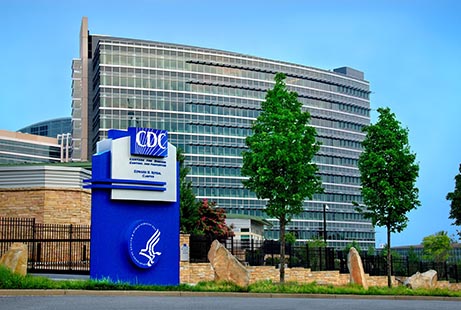
The CDC is facing about $1.5 billion in budget cuts as a result of the July debt ceiling negotiations, totaling about 10% of the agency’s total budget. STAT News explains the challenges this will likely pose beyond staffing, writing “What few realize is that more than three-quarters of the CDC budget goes to the states and contract research organizations in the form of public health and prevention activities by state and local health organizations and agencies, national public health partners and academic institutions. Among the many tasks undertaken by the CDC are those for surveillance, detection and mitigation of diseases ranging from sexually transmitted infections such as syphilis, chlamydia, gonorrhea, and trichomoniasis to viral pathogens like those causing influenza, SARS, MERS, Ebola and Covid-19.”

Photo Credit: CDC

“One glaring example of why there is a need for more, not less, CDC public health services is Mississippi’s 900% increase in cases of congenital syphilis over the past six years. Congenital syphilis is associated with the rapid rise in the number of stillbirths and infant deaths, both directly attributable to inadequate prenatal health care. If the CDC is unable to meet the current demands for controlling a well-studied disease like syphilis with current budget resources, it will be woefully unable to prepare for, much less deal with, the next vector or food-borne illness. It is not a question of whether such an illness will occur; it is simply a question of when.”

Illegal Laboratory Uncovered in California

Last week, the agricultural city of Reedley in Fresno County, CA reported that its lone full-time code enforcement officer discovered a particularly shocking violation: an illegal, Chinese-owned laboratory in a warehouse. According to the AP: “Jesalyn Harper, the only full-time code enforcement officer for the small, agricultural city of Reedley in California’s Central Valley, was responding to a complaint about vehicles parked in the loading dock of a cold-storage warehouse when she noticed a foul smell and saw a garden hose snaking into the old building.”

“A woman in a lab coat answered her knock, and behind her were two others in plastic gloves and blue surgical masks, packing pregnancy tests for shipping. Harper said they spoke broken English and told her they were from China. Walking through the lab, she found dozens of refrigerators and ultralow-temperature freezers hooked to illegal wiring; vials of blood and jars of urine in shelves and plastic containers; and about 1,000 white lab mice being kept in crowded, soiled containers.”

“The women said the owner lived in China, provided a phone number and email address and asked her to leave. Alarmed by what she saw, Harper, whose work mostly entails ensuring people have permits for yard sales and are keeping their lawns mowed, contacted Fresno County health officials and then the FBI.”

Fresno’s ABC30 wrote, ‘”I am mighty proud of our little city, this was a bad player company, a bad actor company that was kicked out of Canada, they went to Texas, they got kicked out of Texas, they came to California, they went to Fresno, kicked out of Fresno went to Tulare, kicked out of Tulare went back to Fresno, kicked out of Fresno, came to Reedley,” said Reedley City Manager, Nicole Zieba.”

“Scientific and Technological Developments: Benefits and Risks for the Biological Weapons Convention”

“This report encapsulates the outcomes of the two-day conference entitled ‘Scientific and Technological Developments: Benefits and Risks for the Biological Weapons Convention’ held in October 2022 in New Delhi, India. It was organised by the UNODA in partnership with the Manohar Parrikar Institute for Defence Studies and Analyses (MP-IDSA). The Conference’s primary objective was to review developments in science and technology relevant to the Biological Weapons Convention (BWC) and to prepare for the Ninth BWC Review Conference.”

“The Conference report provides expert insights on the evolving science and technology landscape in the context of the BWC, including in the fields of synthetic biology, public health responses, neurotechnology and digitalization.”

“ChatGPT Could Make Bioterrorism Horrifyingly Easy”

Jonas Sandbrink recently published this piece with Vox, explaining “Advances in artificial intelligence have tremendous potential to have positive impacts on science and health. Tools like ChatGPT are revolutionizing how society works and learns, and artificial intelligence applied to biology has led to solving the decade-old protein folding problem and is transforming drug discovery. However, as artificial intelligence raises the ceiling of biological engineering and helps distribute these powers to a tremendous number of individuals, there is a serious risk that it will enable ill-intentioned actors like Aum Shinrikyo, to potentially devastating effect. As I have discussed in a recent preprint paper, large language models (LLMs) like ChatGPT, as well as novel AI-powered biological design tools, may significantly increase the risks from biological weapons and bioterrorism.”

“Blood Simple. Several Russian Journalists and Activists Were Poisoned in Europe.”

Michael Weiss’ writes’ piece for The Insider opens with “Elena Kostyuchenko, Natalia Arno, and Irina Babloyan, have long worked to expose the Kremlin’s lies. While traveling through Europe in the last year, each was poisoned by unknown toxins. Their cases remain unsolved. Why?”

“JPEO-CBRND Embraces the Need for Speed in Biodefense: How JPEO is Shaping its Biological Defense and Medical Strategies”

The Army recently released this article discussing JPEO-CBRND’s efforts to improve national public health emergency responses. It explains “JPEO-CBRND’s Joint Project Lead for CBRN Defense Enabling Biotechnologies (JPL CBRND EB) has led a significant investment in platform technologies and programs to improve preparedness for future threats. Platform technology refers to the use of standardized processes and tools to rapidly develop and manufacture MCMs in response to a threat. This approach is like setting up an assembly line that can be turned on when needed, rather than building the line from scratch each time a product is required. The goal is to have the ability to quickly develop and manufacture MCMs in response to a threat.”

“In addition to the use of platform technologies, another practice to ensure rapid development of MCMs is to quickly pivot from a prototype to a product that can be distributed in compliance with U.S. Food and Drug Administration (FDA) regulations for emergency use. This puts safe and effective medicines and drugs into the hands of warfighters faster, leveraging processes such as emergency use authorization (EUA) on the path to full FDA licensure, since the licensure process can take nearly decades for countermeasures to be available.”

“GCBR Organization Updates – August 2023”

This quarterly newsletter “aims to provide…updates from organizations working to reduce global catastrophic biological risks (GCBRs).” It includes updates from  1Day Sooner, CLTR, Convergent Research, CSR, Effective Giving, Gryphon Scientific, IFP, CHS, NTI bio, Open Philanthropy, and SecureBio.

“In Conversation with David P. Fidler (CFR) on the Proposed Pandemic Treaty, Global Health, and India”

Animesh Roul interviews David P. Fidler in this piece for the Society for the Study of Peace and Conflict. It explains in part, ‘”I do not think a pandemic treaty is a good response to the COVID-19 pandemic. Nothing in the WHO-sponsored negotiation process so far has changed my perspective,” says global health expert David P. Fidler, Senior Fellow at Council on Foreign Relations (CFR) and the author of “A New U.S. Foreign Policy For Global Health: COVID-19 and Climate Change Demand a Different Approach” (June 2023). Animesh Roul asked Mr Fidler about the proposed global accord on pandemic prevention, preparedness and response; key challenges before the proposed treaty, including the much-emphasized accountability framework; geopolitics; and the possible role of India in the negotiation process and beyond.”‘

IDA Health Watch – Issue 5

“In this issue of IDA Health Watch, Rear Adm. Paul Reed, Deputy Assistant Secretary for Health and Director of the Office of Disease Prevention and Health Promotion, discusses resilience in the post-pandemic world, the Healthy People 2030 initiative and the trajectory of communications strategy in public health. Other articles comment on current recruiting challenges, interventions targeting the fitness of recruits, and the vital conditions framework and foreign influences.”

“ARPA-H Should Zero In on Pandemic Prevention”

In this recent piece for Issues in Science and Technology, Jassi Pannu, Janika Schmitt, and Jacob Swett write “With a smaller budget than hoped for, ARPA-H must focus. Here’s how the new agency can synergize existing government efforts and advance breakthrough technologies that protect us all.”

“Shaping Health Security: In Conversation with UKHSA’s Chief Scientist”

UK Health Security Agency Chief Scientists Isabel Oliver discusses the agency’s recently released science strategy in this interview for Civil Service World, writing in part “Our mission in the UK Health Security Agency is to protect people from infectious diseases and environmental hazards – that is radiation, chemical, extreme weather events. To do this, we need to generate and apply the best scientific evidence. We need to detect threats, we need to understand them and the risks they pose to our health. But also importantly, we need to understand how to best protect health from those. We can only do that through our scientific activities.”

“The other important aspect of this is that UKHSA was established from a pandemic and in the middle of a pandemic. So we’ve been doing a lot of reflection about what must be learned from the pandemic, and how to secure the legacy. There were a number of areas that we know had to be strengthened or developed very quickly during the pandemic – one example is genomic surveillance. We’re very keen to make sure that we learn from that experience, but also that we build on the capabilities that were strengthened during the pandemic. We’ve got a really tough job to do because unfortunately, we live in a context where the risk from pandemics and other threats to health is increasing because of factors such as climate and environmental change, for example.”

“The Monkeys Who Died to Fight COVID”

This Texas Monthly piece discusses the work done at the Texas Biomedical Research Institute in San Antonio and controversy surrounding its work with primates. It explains in part, “When weighing the risk of emerging global health crises against the accumulated suffering of research animals, judgments about the proper balance are inevitably subjective. Even before Pfizer reached out in early 2020 about testing its COVID-19 vaccine, Texas Biomed’s virologists, immunologists, and geneticists had already begun studying the novel coronavirus. Researchers infected dozens of primates—including baboons, macaques, and marmosets—with the pathogen to observe the course of the disease. These animals endured the little-understood effects of COVID to help determine which species would be best suited for testing the anticipated treatments to come. All the infected animals were eventually euthanized.”

“The Secret to Preventing the Next Pandemic Might Be in Our Poop”

Jackie Flynn Mogensen recently published this piece on wastewater surveillance in Mother Jones. She writes ‘“Wastewater surveillance”—the practice of monitoring sewage for pathogens, contaminants, or drugs—has since become a game-changer in the fight against Covid, particularly as at-home testing has eclipsed testing in clinics. As Palmer and his colleagues noted in a recent 151-page report for the National Academies of Sciences, Engineering, and Medicine, dozens of cities and states across the US have used sewer data to track Covid outbreaks, identify hotspots for vaccination outreach, decide where to allocate treatments like monoclonal antibodies, and serve as an early alarm for individual communities like schools or universities.”

“In other words, the data contained in our poop has likely saved lives. That lesson may come in handy the next time a pathogen threatens humanity.”

What We’re Listening To 🎧

Poisons and Pestilence 16 Bonus Episode: Before the Storm with Al Mauroni

“In this episode we examine preparations by the US in the advent of Operation Desert Storm (2003) for dealing with what was believed at the time to have been a large Iraqi CBW capability- with Al Mauroni.” Listen here.

NEW: The Department of Defense’s Newly Released Biodefense Posture Review

“Please join the CSIS Bipartisan Alliance for Global Health Security on Wednesday, August 23, from 10:30 am to 11:30 am ET for an event on the Department of Defense’s Biodefense Posture ReviewDirected by Secretary Austin in November 2021, the review is charged with synchronizing, modernizing, and elevating the Department’s approach to biodefense across the full spectrum of natural, accidental, and deliberate biological threats. The review drew upon both the office of the Assistant Secretary of Defense for Nuclear, Chemical, and Biological Defense Programs and the Assistant Secretary of Defense for Space Policy. Following a keynote address by Hon. Deborah Rosenblum, Assistant Secretary of Defense for Nuclear, Chemical, and Biological Defense Programs, CSIS Senior Associate RADM (ret.) Tom Cullison will moderate a roundtable conversation on the significance of the review, its priority elements, and how to move its recommendations forward. Participants will include Brandi Vann, Principal Deputy Assistant Secretary of Defense for Nuclear, Chemical, and Biological Defense Programs; Richard Johnson, Deputy Assistant Secretary of Defense for Nuclear and Countering Weapons of Mass Destruction Policy; and Asha George, Executive Director of the Bipartisan Commission on Biodefense.”

Register here.

NEW: Breaking Barriers 2023

CRDF’s Women in Science and Security Initiative is hosting the ninth annual Breaking Barriers event, which “will offer a variety of speakers, panels, and networking rooms to consider the ever-important topic of “Who Gets a Seat at the Table? Developing Diverse Spaces in Science and Security.” This event will take place on September 16 at 11:30 am EST on Zoom. Learn more and register here.

NEW: 2023 EPA International Decontamination Research and Development Conference-“Advancing Preparedness through Science and Collaboration”

“The clean-up of chemical, biological, or radiological (CBR) contamination incidents and natural disasters is a critical challenge for the United States. Understanding how to characterize and remediate affected areas of environmental contamination and waste is necessary for daily life to return.”

“The Decon Conference is designed to facilitate presentation, discussion, and further collaboration of research and development topics focused on an all-hazards approach to remediate contaminated indoor and outdoor areas, critical infrastructure, water distribution systems, and other environmental areas/materials.”

“This conference is free and open to the public. Content and presentations are geared towards the emergency response community, including local and state emergency mangers, homeland security officials, first responder coordinators, private sector industry, risk managers, educators in the field of emergency management, and others.”

This event will take place December 5-7 in Charleston, SC. Learn more and register here.

Bio and Beer

Join the Institute for Biohealth Innovation for this event on August 23 at 4:30 pm in Manassas, VA with “special guest, Dr. Eric Van Gieson, who will discuss the journey and quest of exploring the host response and harnessing the epigenome as a diagnostic and prognostic landscape. He will provide insight into his time at DARPA and talk about future possibilities for universities and industry to jointly pursue biotechnology innovation. Enjoy an evening of networking, drinks, and fun!” RSVP here.

Empirical Research in Biosafety: Filling Key Data Gaps

This September 14 event will be hosted by Rocco Casagrande in Columbia, MD and virtually beginning at 5 pm EST.

“In this session, we will present data from our empirical work in biosafety and our work exploiting existing data sets to inform biosafety. We will discuss our methodological framework for studying aerosols generated by laboratory accidents, and present information on the aerosols produced by dropping microtiter plates and tissue culture flasks. Also in the physical sciences, we will present data on the rate that conical centrifuge tubes leak and the frequency that splashes occur when opening microcentrifuge tubes via various opening methods. We will discuss the rate of spills and splashes when pipetting as drawn from experiments using volunteers and blinded samples in clinical laboratories. Interestingly, this experiment also sheds light on the ability of the researcher to know when they are making mistakes and take corrective action. We will present data on the rate at which needle sticks can be expected in the laboratory. We will examine how biosafety findings are distributed amongst laboratories in several institutions and what can be learned about the culture of biosafety. We will discuss how knowledge of the frequency and causes of accidents can lead to means to improve reproducibility in the life sciences.”

Learn more and register here.

No Checkered Flag: The Perpetual Race Against Biological Threats

From the Bipartisan Commission on Biodefense: “The Commission’s next meeting, No Checkered Flag: The Perpetual Race Against Biological Threats, will be held on September 27, 2023 in Indianapolis, Indiana. The meeting will take place at the historic Indianapolis Motor Speedway, the home of the Indianapolis 500.”

“The focus of this meeting will be to provide the Bipartisan Commission on Biodefense with a better understanding of: (1) state and local efforts to strengthen public health and biodefense; (2) special security management of biological threats to mass gatherings; and (3) efforts to understand and mitigate the agricultural impact of biological threats to plants and animals.”

This all-day event will take place in Washington, DC on September 27 at 9 am EST. Learn more and register here.

Women Building Bio: Building Better

“Virginia Bio’s Women Building Bio Conference celebrates the contribution of women to the life sciences in the Commonwealth and beyond. The 8th annual conference theme, Building Better, will prompt us to explore how life sciences contribute to building a better future and highlight the increasingly significant role of women in it.”

This event will take place from 8:30-4 pm in Manassas, VA on September 28. Register here.

61st ISODARCO Course: Nuclear Order and International Security after Ukraine

“The war in Ukraine has had an enormous impact on global security, reviving nuclear fears, undermining the prospects for arms control, and shattering many of the norms and constraints that were the foundation of European security.  ISODARCO 2024 will examine the global nuclear order in light of the Ukraine war, focusing on the states, the policies and the technologies that will shape the future in a much more difficult environment.  How will we cope with this more dangerous world?”

This course will take place January 7-14, 2024, at the University of Trento. Learn more and register here.

Registration for GHS 2024 Now Open

Registration is now open for the Global Health Security 2024 conference in Sydney, Australia. This iteration will take place 18-21 June, 2024. The call for abstracts is also still open. “The mission of the Global Health Security conference is to provide a forum where leaders, researchers, policy-makers, and representatives from government, international organisations, civil society, and private industry from around the world can engage with each other, review the latest research and policy innovations, and agree solutions for making the world safer and healthier. To that end, our mission is to help foster a genuinely multidisciplinary community of practice that is committed to working collaboratively to enhance global health security and eliminate disease, irrespective of its origin or source.”

NEW: Thematic Consultation on Potential Amendments to the Human Pathogens and Toxins Regulations

“Canada’s biomanufacturing sector has rapidly expanded, drawing attention to growth and new challenges to the oversight of Canada’s biosafety and biosecurity program. In response to this expansion, we are seeking input from interested and affected parties, to inform potential regulatory amendments under the Human Pathogens and Toxins Regulations (the Regulations).”

Learn more and participate in this consultation here through September 5.

RUSI and NK News Launch New Nork Korea Reports Database

“A new RUSI and NK News initiative will provide access to high-quality, structured data from reports by the UN Panel of Experts on North Korea.”

“The database contains over 5,000 entities and their relationships, as described in successive reports by the UN Panel of Experts on North Korea from 2010 to 2023. The data allows countries and organisations to track sanctions compliance in a more easily accessible format. It is fully searchable and downloadable, and its fields are structured with ISO standards, making it easy to incorporate the data into existing databases.”

“This is a valuable tool for tracking sanctions compliance and promoting effective international sanctions implementation. It is particularly beneficial to smaller institutions, such as those in developing countries, who may often lack access to information and resources.”

Learn more and access the database here.

“Turning Listening into Action: A Proposal to Strengthen the NIH Guidelines”

A call from Acting NIH Associate Director for Science Policy, Lyric Jorgenson:

“As an unrepentant policy fanatic, I love talking about details, whether it be the implications of a strategically placed “shall” or where data should be in controlled access. However, most of the time, policymaking requires being a good listener.  Listening is an underrated skill and is more than just waiting for your turn to speak.  Typically, the scientific, ethical, legal, and social issues at the forefront of biomedical research are so complex that it is essential we turn to experts and members of the public to hear their perspectives before we can develop a policy responsive to their needs. Listening to this input and incorporating it into policymaking is vital to our work and to ensuring our policies hit the mark.”

“A recent case study in listening involves the Novel and Exceptional Technology and Research Advisory Committee, or as we like to call them, the NExTRAC.  In 2020, we asked this committee to think through the different scenarios that may be used in gene drive research to advise on whether/how we should think about updating our existing biosafety policy framework.  During its deliberations, the Committee also did a lot of listening, consulting with subject matter experts, and holding a public workshop. Ultimately, the NExTRAC produced some very thoughtful recommendations in its final report to the NIH.”

“Based on our internal deliberations and the NExTRAC’s recommendations, NIH is turning this listening into action by proposing some policy updates. The proposal is to revise the NIH Guidelines for Research Involving Recombinant or Synthetic Nucleic Acid Molecules (NIH Guidelines) to strengthen our infrastructure for ensuring this research continues to proceed responsibly. Specifically, the proposed revisions would incorporate specific considerations and requirements for NIH-supported research involving gene drive modified organisms in contained research settings.”

“It is important to emphasize that all the proposed actions at this time focus on working with gene drive modified organisms in contained research settings. This research is already performed around the globe in labs with biosafety precautions in place. However, as technology evolves, we must make sure that our policies keep pace. Thanks to the work of the NExTRAC, we believe this proposal will allow researchers to safely proceed with contained gene drive research.  I encourage all interested stakeholders to view the full proposal and provide us with your feedback.  Comments on the full proposal will be accepted until October 10, 2023, and must be submitted electronically.  I look forward to hearing your thoughts!”

Pandora Report 8.11.2023

This week’s Pandora Report covers recent cyberattacks targeting US hospitals in multiple states and other updates. New publications are listed, including a recent piece discussing the validity of Gabriel de Mussis’ account of the siege of Caffa. New events and announcements round out this week’s newsletter.

Hospitals in Three States Targeted by Cyberattacks

This week, Prospect Medical Holdings reported it was the target of a cyberattack, according to the AP, adding to a growing trend of violence and danger in the healthcare field. Prospect is an LA-based private equity company that runs 16 hospitals and 165 outpatient facilities in California, Connecticut, Pennsylvania, Rhode Island, and Texas. According to Axios, “The attack shuttered several emergency departments and required ambulances to be diverted from some hospitals, while health providers reverted to pen and paper in the immediate aftermath of the attack.”

“On Sunday, Eastern Connecticut Health Network’s website still reported closures of multiple services, including urgent care and elective surgeries, as it worked to restore systems. Pennsylvania-based Crozer Health and Rhode Island-based CharterCare still had posts on their websites alerting patients to the systemwide outage.”

“This is the latest in a surge of large-scale cyberattacks on health care facilities that have disrupted operations, with experts calling on better industry-wide efforts and federal regulations to harden defenses around America’s health care information infrastructure.”

Seiichi Morimura Dead at 90

Seiichi Morimura, author of the 1981 exposé, “The Devil’s Gluttony,” that detailed the horrors of Japan’s Unit 731, passed away on July 24 in Tokyo. The New York Times explained that “Mr. Morimura’s book sold more than 1.1 million copies within seven months of its publication. It was not the first account of Unit 731’s brutality — there were two others in the 1960s and ’70s — but Mr. Morimura’s was drawn from interviews with 60 Japanese participants in the program.”

‘“Mr. Morimura’s 246-page book is believed to be more accurate and more believable” than the others, The New York Times reported in 1982. The article quoted Mr. Morimura as saying: “This story should be told to all Japanese, to every generation. Japanese aggression should be written about to prevent another war.”’

Working Group on the Strengthening of the Biological Weapons Convention Convenes

The Working Group on the Strengthening of the Biological Weapons Convention is holding its second meeting currently in Geneva. CBW Events is posting daily updates about this and other working group meetings here.

20th CBRRNE Command Hosts Inaugural Joint Chemical, Biological, Radiological, Nuclear, Explosives Forum

Late last month, the Army’s 20th CBRNE Command hosted the first Joint Chemical, Biological, Radiological, Nuclear, Explosives Forum in Cockeysville, MD.

“Hosted by U.S. Army Brig. Gen. Daryl O. Hood, the commanding general of the 20th CBRNE Command, the event welcomed joint service Chemical, Biological, Radiological, Nuclear (CBRN) and Explosive Ordnance Disposal (EOD) personnel.”

“Headquartered on Aberdeen Proving Ground, Maryland, in Northeast Maryland’s science, technology and security corridor, the 20th CBRNE Command is home to 75 percent of the active-duty U.S. Army’s CBRN specialists and EOD technicians, as well as the 1st Area Medical Laboratory, CBRNE Analytical and Remediation Activity, five Weapons of Mass Destruction Coordination Teams and three Nuclear Disablement Teams.”

“This year’s forum highlighted the joint service personnel who confront and defeat CBRNE hazards in support of U.S. military operations around the world and civil authorities across the nation.”

“Catapulting Corpses? A Famous Case of Medieval Biological Warfare Probably Never Happened”

Matt Field discusses Jean Pascal Zanders‘ work critically assessing Gabriele de Mussi’s account of the siege of Caffa and the enduring belief that Mongol invaders engaged in medieval biological warfare by hurling the bodies of plague victims over the walls and into the city in this piece for The Bulletin of the Atomic Scientists. Field writes in part:

“Since de Mussi’s work was re-discovered in a university library in Poland in 1842, researchers of weaponry, the plague, and biological warfare have picked up parts of its narrative. Look up “The Black Death” in the Encyclopedia Britannica and it’s right there: “With his forces disintegrating, Janibeg used trebuchets to catapult plague-infested corpses into the town in an effort to infect his enemies. From [Caffa], Genoese ships carried the epidemic westward…” The medieval allegations are in YouTube and TikTok videos by the History Channel and others, some with millions of views. In the academic literature the anecdote can be found in reputable publications ranging from the Journal of the American Medical Association to the CDC’s Emerging Infectious Diseases.

“The problem is, there’s strong reason to doubt de Mussi.”

This piece offers good discussion of the historiography surrounding this story and how it gained traction, insight into the logistics of this hypothetical attack, and compelling arguments about the dangers of perpetuating false claims about historical biological warfare.

“Bird Flu Has Never Done This Before”

Katherine J. Wu discusses concerns that H5N1 may now be endemic in North America in this piece for The Atlantic. She explains in her introduction “At bird breeding grounds this spring and summer, the skies have been clearer and quieter, the flocks drastically thinned. Last year, more than 60 percent of the Caspian terns at Lake Michigan vanished; the flock of great skuas at the Hermaness reserve, in Scotland, may have shrunk by 90 percent. Now more broken bodies are turning up: a massacre of 600 arctic-tern chicks in the United Kingdom; a rash of pelicans, cormorants, gulls, and terns washed up along West African coasts. In recent months, Peruvian officials have reported the loss of tens of thousands of pelicans—by some estimates, up to 40 percent of the country’s total population.”

“The deaths are the latest casualties of the outbreak of H5N1 avian flu that’s been tearing its way across the world. In the past couple of years, more than 100 million domestic poultry have died, many of them deliberately culled; out in the wild, the deaths may be in the millions too—the corpses have just been too inaccessible and too numerous for scientists to count. “It’s been carnage,” Michelle Wille, a virologist at the Peter Doherty Institute for Infection and Immunity, told me. “For many species, we are losing decades of conservation work.”’

“Artificial Intelligence in Health Care: The Hope, the Hype, the Promise, the Peril”

From the National Academies: “The emergence of artificial intelligence (AI) in health care offers unprecedented opportunities to improve patient and clinical team outcomes, reduce costs, and impact population health. While there have been a number of promising examples of AI applications in health care, it is imperative to proceed with caution or risk the potential of user disillusionment, another AI winter, or further exacerbation of existing health- and technology-driven disparities.”

“This Special Publication synthesizes current knowledge to offer a reference document for relevant health care stakeholders. It outlines the current and near-term AI solutions; highlights the challenges, limitations, and best practices for AI development, adoption, and maintenance; offers an overview of the legal and regulatory landscape for AI tools designed for health care application; prioritizes the need for equity, inclusion, and a human rights lens for this work; and outlines key considerations for moving forward.”

“AI is poised to make transformative and disruptive advances in health care, but it is prudent to balance the need for thoughtful, inclusive health care AI that plans for and actively manages and reduces potential unintended consequences, while not yielding to marketing hype and profit motives.”

“Here’s the Intelligence Assessment of Donald Trump That the Government Can’t Write”

Schar School adjunct professor Donell Harvin recently published this Politico opinion piece. In it he explains that “Federal intelligence and national security agencies — from the FBI to DHS — are in universal agreement that domestic extremism and terrorism is the leading threat to the U.S. homeland. But homeland security officials are also trained to be apolitical, so here’s what they can’t tell you: Donald J. Trump poses a significant threat to homeland security.”

“While generally highly decentralized and fractured, violent extremist groups have begun to mesh over a unifying figure: Trump. The former president has become a focal point of domestic extremism, and by not denouncing them — and sometimes courting them — he has been adopted by these groups as a de facto spiritual leader. In some ways, Trump has also co-opted these groups to boost his own support. This, in my assessment, makes the former president a leading driver of domestic extremism, and an unprecedented danger to our security. The indictment of Trump for his push to overturn the 2020 election puts that in stark relief.”

Live Launch of the BWC National Implementation Measures Database

“At this side event to the BWC Working Group meeting, UNIDIR and VERTIC will launch the new BWC National Implementation Measures Database. The database is designed to strengthen the implementation of the BWC and enable States and Stakeholders to have a better understanding of different approaches to national implementation from around the world.”

“The event will consist of a demonstration of the Database website and will showcase the tool’s structure and functions. The demonstration will be followed by a Q&A session with the audience”

This event will take place on August 15 at 1:15 pm CEST. Register here.

Bio and Beer

Join the Institute for Biohealth Innovation for this event on August 23 at 4:30 pm in Manassas, VA with “special guest, Dr. Eric Van Gieson, who will discuss the journey and quest of exploring the host response and harnessing the epigenome as a diagnostic and prognostic landscape. He will provide insight into his time at DARPA and talk about future possibilities for universities and industry to jointly pursue biotechnology innovation. Enjoy an evening of networking, drinks, and fun!” RSVP here.

Empirical Research in Biosafety: Filling Key Data Gaps

This September 14 event will be hosted by Rocco Casagrande in Columbia, MD and virtually beginning at 5 pm EST.

“In this session, we will present data from our empirical work in biosafety and our work exploiting existing data sets to inform biosafety. We will discuss our methodological framework for studying aerosols generated by laboratory accidents, and present information on the aerosols produced by dropping microtiter plates and tissue culture flasks. Also in the physical sciences, we will present data on the rate that conical centrifuge tubes leak and the frequency that splashes occur when opening microcentrifuge tubes via various opening methods. We will discuss the rate of spills and splashes when pipetting as drawn from experiments using volunteers and blinded samples in clinical laboratories. Interestingly, this experiment also sheds light on the ability of the researcher to know when they are making mistakes and take corrective action. We will present data on the rate at which needle sticks can be expected in the laboratory. We will examine how biosafety findings are distributed amongst laboratories in several institutions and what can be learned about the culture of biosafety. We will discuss how knowledge of the frequency and causes of accidents can lead to means to improve reproducibility in the life sciences.”

Learn more and register here.

No Checkered Flag: The Perpetual Race Against Biological Threats

From the Bipartisan Commission on Biodefense: “The Commission’s next meeting, No Checkered Flag: The Perpetual Race Against Biological Threats, will be held on September 27, 2023 in Indianapolis, Indiana. The meeting will take place at the historic Indianapolis Motor Speedway, the home of the Indianapolis 500.”

“The focus of this meeting will be to provide the Bipartisan Commission on Biodefense with a better understanding of: (1) state and local efforts to strengthen public health and biodefense; (2) special security management of biological threats to mass gatherings; and (3) efforts to understand and mitigate the agricultural impact of biological threats to plants and animals.”

This all-day event will take place in Washington, DC on September 27 at 9 am EST. Learn more and register here.

Women Building Bio: Building Better

“Virginia Bio’s Women Building Bio Conference celebrates the contribution of women to the life sciences in the Commonwealth and beyond. The 8th annual conference theme, Building Better, will prompt us to explore how life sciences contribute to building a better future and highlight the increasingly significant role of women in it.”

This event will take place from 8:30-4 pm in Manassas, VA on September 28. Register here.

61st ISODARCO Course: Nuclear Order and International Security after Ukraine

“The war in Ukraine has had an enormous impact on global security, reviving nuclear fears, undermining the prospects for arms control, and shattering many of the norms and constraints that were the foundation of European security.  ISODARCO 2024 will examine the global nuclear order in light of the Ukraine war, focusing on the states, the policies and the technologies that will shape the future in a much more difficult environment.  How will we cope with this more dangerous world?”

This course will take place January 7-14, 2024, at the University of Trento. Learn more and register here.

Registration for GHS 2024 Now Open

Registration is now open for the Global Health Security 2024 conference in Sydney, Australia. This iteration will take place 18-21 June, 2024. The call for abstracts is also still open. “The mission of the Global Health Security conference is to provide a forum where leaders, researchers, policy-makers, and representatives from government, international organisations, civil society, and private industry from around the world can engage with each other, review the latest research and policy innovations, and agree solutions for making the world safer and healthier. To that end, our mission is to help foster a genuinely multidisciplinary community of practice that is committed to working collaboratively to enhance global health security and eliminate disease, irrespective of its origin or source.”

RUSI and NK News Launch New Nork Korea Reports Database

“A new RUSI and NK News initiative will provide access to high-quality, structured data from reports by the UN Panel of Experts on North Korea.”

“The database contains over 5,000 entities and their relationships, as described in successive reports by the UN Panel of Experts on North Korea from 2010 to 2023. The data allows countries and organisations to track sanctions compliance in a more easily accessible format. It is fully searchable and downloadable, and its fields are structured with ISO standards, making it easy to incorporate the data into existing databases.”

“This is a valuable tool for tracking sanctions compliance and promoting effective international sanctions implementation. It is particularly beneficial to smaller institutions, such as those in developing countries, who may often lack access to information and resources.”

Learn more and access the database here.

“Turning Listening into Action: A Proposal to Strengthen the NIH Guidelines”

A call from Acting NIH Associate Director for Science Policy, Lyric Jorgenson:

“As an unrepentant policy fanatic, I love talking about details, whether it be the implications of a strategically placed “shall” or where data should be in controlled access. However, most of the time, policymaking requires being a good listener.  Listening is an underrated skill and is more than just waiting for your turn to speak.  Typically, the scientific, ethical, legal, and social issues at the forefront of biomedical research are so complex that it is essential we turn to experts and members of the public to hear their perspectives before we can develop a policy responsive to their needs. Listening to this input and incorporating it into policymaking is vital to our work and to ensuring our policies hit the mark.”

“A recent case study in listening involves the Novel and Exceptional Technology and Research Advisory Committee, or as we like to call them, the NExTRAC.  In 2020, we asked this committee to think through the different scenarios that may be used in gene drive research to advise on whether/how we should think about updating our existing biosafety policy framework.  During its deliberations, the Committee also did a lot of listening, consulting with subject matter experts, and holding a public workshop. Ultimately, the NExTRAC produced some very thoughtful recommendations in its final report to the NIH.”

“Based on our internal deliberations and the NExTRAC’s recommendations, NIH is turning this listening into action by proposing some policy updates. The proposal is to revise the NIH Guidelines for Research Involving Recombinant or Synthetic Nucleic Acid Molecules (NIH Guidelines) to strengthen our infrastructure for ensuring this research continues to proceed responsibly. Specifically, the proposed revisions would incorporate specific considerations and requirements for NIH-supported research involving gene drive modified organisms in contained research settings.”

“It is important to emphasize that all the proposed actions at this time focus on working with gene drive modified organisms in contained research settings. This research is already performed around the globe in labs with biosafety precautions in place. However, as technology evolves, we must make sure that our policies keep pace. Thanks to the work of the NExTRAC, we believe this proposal will allow researchers to safely proceed with contained gene drive research.  I encourage all interested stakeholders to view the full proposal and provide us with your feedback.  Comments on the full proposal will be accepted until October 10, 2023, and must be submitted electronically.  I look forward to hearing your thoughts!”

Pandora Report 8.4.2023

This week covers the National Institutes of Health’s appointment of a new National Institute of Allergies and Infectious Diseases director, the expiration of the Chemical Facility Anti-Terrorism Standards program, growing challenges for ProMED, and the appointment of the United States Public Health Service Commissioned Corps’ first official mascot. Several new publications and more are also included.

Pawsome News: USPHS Commissioned Corps Announces First Official Mascot, LCDR Abigail 🐾

The US Public Health Service Commissioned Corps recently announced its first official mascot-Lt. Cmdr. Abigail, a Labrador Retriever.

LCDR Abigail, Credit: HHS

According to HHS, “Lt. Cmdr. Abigail was named after the former First Lady of the United States, Abigail Adams, who has a historical connection to the service. The origin and history of the USPHS Commissioned Corps trace back to July 16, 1798, when Congress passed an Act, signed by President John Adams, creating the US Marine Hospital Service to protect against the spread of disease from sailors returning from overseas ports and thus began the story of the Public Health Service.”

“The concept of the service mascot originated during the COVID-19 pandemic, when Public Health Service officers deployed to respond to the largest public health emergency in modern times. The mascot is intended to improve mental well-being, enhance camaraderie, and assist with public health messaging. When first appointed, the mascot receives an honorary rank in the USPHS Commissioned Corps equal to that of the primary handler.”

Unfortunately for this good girl, “This honorary rank will not include any salary or retirement benefits.”

NIH Taps Jeanne Marrazzo to Lead National Institute of Allergy and Infectious Diseases

The National Institutes of Health recently named Jeanne M. Marrazzo, MD as Director of the National Institute of Allergy and Infectious Diseases (NIAID). NIH explained in their press release, “Dr. Marrazzo is currently the director of the Division of Infectious Diseases at the University of Alabama at Birmingham. She is expected to begin her role as NIAID Director in the fall. NIAID conducts and supports basic and applied research to better understand, treat and ultimately prevent infectious, immunologic and allergic diseases.”

“Dr. Marrazzo’s research in discovery and implementation science has focused on the human microbiome, specifically as it relates to female reproductive tract infections and hormonal contraception; prevention of HIV infection using biomedical interventions, including PrEP and microbicides; and the pathogenesis and management of bacterial vaginosis, sexually transmitted diseases in HIV-infected persons and management of antibiotic resistance in gonorrhea. She has been a principal investigator on NIH grants continuously since 1997 and has served frequently as a peer reviewer and advisory committee member. Dr. Marrazzo also has served as a mentor to trainees at all stages of professional development, including on NIH-funded training grants, and was the recipient of the American Sexually Transmitted Diseases Association’s Distinguished Career Award, the highest recognition of contributions to research and mentoring in the field.”

State Department Launches Bureau of Global Health, Security, and Diplomacy

This week, US Secretary of State Anthony Blinken announced that the “State Department is officially launching a new Bureau of Global Heath Security and Diplomacy.  The Bureau’s overarching mission is to fortify the global health security architecture to effectively prevent, detect, control, and respond to infectious diseases, including HIV/AIDS. By leveraging and coordinating U.S. foreign assistance, the Bureau aims to foster robust international cooperation, enhancing protection for the United States and the global community against health threats through strengthened systems and policies.”

He explained further that “The COVID-19 pandemic underscored the vital role the United States must play in addressing global health and health security issues. To ensure U.S. leadership is sustained moving forward, the Bureau will provide a unified voice of leadership on global health security and diplomacy, combining strengths, functions, personnel, and resources from various offices.”

“Ambassador-at-Large Dr. John N. Nkengasong, will lead the bureau, serving as Ambassador-at-Large, U.S. Global AIDS Coordinator, and Senior Bureau Official for Global Health Security and Diplomacy, and reporting directly to me.”

“This new Bureau will seamlessly integrate global health security as a core component of U.S. national security and foreign policy, underscoring the Department of State’s commitment to advancing human health worldwide.”

Senate Fails to Reauthorize Chemical Facility Anti-Terrorism Security Program

The US Senate last week did not pass legislation to reauthorize the Chemical Facility Anti-Terrorism (CFATS) program before its July 27, 2023 expiration date. According to Industrial Cyber, “The bill was to extend the authorization of the program of the Department of Homeland Security (DHS) until July 27, 2025. The failure of the Senate to reauthorize the CFATS program has significant implications for chemical facility security measures, potentially putting these facilities at risk.”

“Senator Rand Paul, a Republican from Kentucky, blocked the H.R. 4470 bill in the Senate that would re-authorize the U.S. program to address terrorism and site security, allowing it to expire at the end of Thursday…Paul feared that the bill was being rushed through the Senate. He said there were no hearings about CFATS or whether it was effective. “We tend to re-authorise things without ever examining whether they work, what works and what doesn’t work.” He conditioned his support for the re-authorization bill on an amendment that would create what he called a duplicative scoring system for every future proposal brought before legislators. The system would determine how many programs in the bill are duplicated by ones that already exist in the government.”

CISA, which oversees CFATS, explains the program on its site, stating “Under CFATS, a chemical facility is any establishment or individual that possesses or plans to possess any of the more than 300 chemicals of interest (COI) in Appendix A at or above the listed screening threshold quantity (STQ) and concentration. These facilities must report their chemicals to CISA via an online survey, known as a Top-Screen. CISA uses the Top-Screen information a facility submits to determine if the facility is considered high-risk and must develop a security plan. Learn more on the CFATS process webpage.”

“The CFATS regulation applies to facilities across many industries – chemical manufacturing, storage and distribution, energy and utilities, agriculture and food, explosives, mining, electronics, plastics, colleges and universities, laboratories, paint and coatings, and healthcare and pharmaceuticals, among others.”

“Chemical security is not a temporary issue. As threats evolve, CISA is committed to working with stakeholders to protect the nation’s highest-risk chemical infrastructure.”

CISA said in a statement about the expiration, “As of July 28, 2023, Congress has allowed the statutory authority for the Chemical Facility Anti-Terrorism Standards (CFATS) program (6 CFR Part 27) to expire.”

“Therefore, CISA cannot enforce compliance with the CFATS regulations at this time. This means that CISA will not require facilities to report their chemicals of interest or submit any information in CSAT, perform inspections, or provide CFATS compliance assistance, amongst other activities. CISA can no longer require facilities to implement their CFATS Site Security Plan or CFATS Alternative Security Program.”

“CISA encourages facilities to maintain security measures. CISA’s voluntary ChemLock resources are available on the ChemLock webpages.”

ProMED On Its Way Out?

ProMED, “the largest publicly-available system conducting global reporting of infectious disease outbreaks,” looks to be in jeopardy as of yesterday. STAT News’ Helen Branswell explained in her reporting that “A number of the senior moderators of ProMED-mail, a program operated by the International Society for Infectious Diseases, posted a letter of protest early Thursday, challenging a recently revealed plan to charge for subscriptions to the service. The group of 21 moderators, who announced they were suspending work for ProMED, expressed a lack of confidence in the ISID’s administrative operations, suggesting ProMED needs to find a new home.”

She explained the importance of this platform further, writing “Prior to its inception in 1994, governments — which often have incentives not to be forthcoming — were the main sources of information about disease events. ProMED takes tips from scientists who can remain anonymous to the general readership — though not the moderators. It was also created at a time when access to the internet and email was just taking off, allowing people from around the world to supply information to its moderators, information those moderators assessed, curated, and sent out to the broader world.”

“In February 2003, it was ProMED that alerted the world to the fact that a new disease that caused pneumonia had started to spread in China’s Guangdong province. That disease became known as SARS — severe acute respiratory syndrome. In September 2012, an Egyptian doctor working in Saudi Arabia wrote to ProMED to reveal he had treated a patient who died from pneumonia triggered by a new coronavirus, a camel virus we now know as MERS — Middle East respiratory syndrome. Just before midnight on Dec. 30, 2019, a ProMED “RFI” post — request for information — was the first warning the outside world received of a fast-growing outbreak in Wuhan, China. That was the start of the Covid-19 pandemic.”

“Chinese Academics Are Becoming a Force for Good Governance”

The Biodefense Graduate Program’s Sonia Ben Ouagrham-Gormley recently co-authored this article alongside Joy Zhang and Kathleen Vogel for Issues in Science and Technology. In it they offer insight into the work of the Chinese scientific community to improve policies guiding responsible research, in contrast to the “Wild East” reputation many attribute to Chinese biosciences research. They write in part “It reflects important changes in the domestic dynamics of Chinese science—particularly the increasingly prominent role of academics. Chinese academics have become a proactive, effective force demanding science governance in China, but international counterparts too often fail to recognize their role and so undermine their efforts. China still has much work to do to develop a trusted and accountable regulatory system worthy of its scientific advancement and ambition, but meaningful, sustainable reforms must come from within the country.”

“Gain-of-Function Research Is About Much More Than Dangerous Pathogens”

Biodefense Graduate Program alumni Saskia Popescu and Yong-Bee Lim recently co-authored this STAT News piece with Angela Rasmussen. They write in part, “However, focusing exclusively on this one type of research has created deep rifts across key communities that balance innovation with safety and security in the life sciences. These rifts have made it almost impossible to have necessary, productive conversations to address global problems while ensuring such work is done safely and securely. Narrowing the definition of gain of function to only pathogen modification that prevents or addresses pandemic-level disease outbreaks is impeding progress in this space.”

They discuss differences in risk tolerance and perspectives on this issue, explaining in their conclusion that “Concepts such as gain of function are exceptionally nuanced, complex, and have even changed over time. This creates perennial, dynamic challenges for the scientific, safety, and security communities to make substantive advances on these issues, let alone the nontechnical policymakers and public. Ultimately, these communities seek the same goal: innovative, safe, and secure life sciences research to help solve critical global issues.”

“Existential Terrorism: Can Terrorists Destroy Humanity?”

The Schar School’s Zachary Kallenborn recently co-authored this article alongside Gary Ackerman for the European Journal of Risk Regulation.

Abstract: “Mass-casualty terrorism and terrorism involving unconventional weapons have received extensive academic and policy attention, yet few academics have considered the broader question of whether such behaviours could pose a plausible risk to humanity’s survival or continued flourishing. Despite several terrorist and other violent non-state actors having evinced an interest in causing existential harm to humanity, their ambition has historically vastly outweighed their capability. Nonetheless, three pathways to existential harm exist: existential attack, existential spoilers and systemic harm. Each pathway varies in its risk dynamics considerably. Although an existential attack is plausible, it would require extraordinary levels of terrorist capability. Conversely, modest terrorist capabilities might be sufficient to spoil risk mitigation measures or cause systemic harm, but such actions would only result in existential harm under highly contingent circumstances. Overall, we conclude that the likelihood of terrorism causing existential harm is extremely low, at least in the near to medium term, but it is theoretically possible for terrorists to intentionally destroy humanity.”

“Coordinating the U.S. Government Approach to the Bioeconomy”

From the Federation of American Scientists: “The bioeconomy touches nearly every function of the U.S. government. The products of the bioeconomy compete in an international marketplace and include medicines, foods, fuels, materials, and novel solutions to broad challenges including climate and sustainability. The infrastructure, tools, and capabilities that drive the bioeconomy must be safeguarded to maintain U.S. leadership and to protect against misuse. The vast scale of these issues requires a cross-governmental approach that draws on input and engagement with industry, academia, nongovernmental organizations, and other stakeholders across the bioeconomy.”

“To achieve a durable and strategic interagency approach to the bioeconomy, the Office of Science and Technology Policy (OSTP) should establish and Congress should fund a Bioeconomy Initiative Coordination Office (BICO) to coordinate strategic U.S. government investments in the bioeconomy; facilitate efficient oversight and commercialization of biotechnology products; safeguard biotechnology infrastructure, tools and capabilities; and serve as a focal point for government engagement with nongovernmental partners and experts.”

“Unraveling the Knot: The Complex and Multi-Pronged Negotiations of Global Pandemic Response Reform”

In this Speaking of Medicine piece, PLOS Global Public Health guest contribute Yassen Tcholakov explains “The COVID-19 pandemic has exposed the vulnerabilities and shortcomings of the global health system. From strained healthcare infrastructures to inequitable vaccine distribution through a burned out workforce, the crisis has underscored the urgent need for comprehensive pandemic response reforms. In response to these challenges, the world has embarked on one of the most complex processes in recent history: a multi-pronged approach to pandemic response reforms. This approach comprises three key processes: the Intergovernmental Negotiating Body (INB) negotiations for a new Pandemic Treaty, the Working Group on Amendments to the International Health Regulations (WGIHR) working on targeted amendments to the existing regulations, and the United Nations’ High-Level Meeting (HLM) on Pandemic Prevention, Preparedness, and Response (PPR) fostering high-level discussions on pandemic response. This article aims to dissect these intricate negotiations, shedding light on the various facets of this endeavor.”

“EMS Infectious Disease Playbook Version 2.0”

From ASPR TRACIE: “This document was created in 2017 using official or best practice information taken from multiple organizations that was vetted and assembled by subject matter experts working for the Technical Resources, Assistance Center, and Information Exchange (TRACIE) at the request of the U.S. Department of Health and Human Services (HHS) Administration for Strategic Preparedness and Response (ASPR). The aim was not to develop novel guidance for emergency medical services (EMS) agencies, but to unify multiple sources of information in a single, concise planning document addressing the full spectrum of infectious agents for EMS agencies developing their service policies. This document does not represent official policy of HHS ASPR or other federal or private agencies.”

“The information contained in this playbook is intended as a planning resource and should be incorporated into agency standard operating procedures and reviewed by the EMS medical director. EMS agencies should review the playbook and understand that while the core principle is preventing exposure to potentially infectious body fluids, there are multiple types of personal protective ensembles that may be appropriate based on the biological threat. Donning and doffing procedures are dependent on the personal protective equipment (PPE) ensemble selected. Appropriate education and training are critical to the success of infection prevention and control protocols. The authors, ASPR TRACIE, and HHS ASPR do not take responsibility or bear liability for any clinical care outcomes, provider injury/illness, or inaccuracies in or resulting from this document. The playbook was revised in 2023 and all recommendations were current at the time of publication and vetted to the best of our ability.”

Trust & Verify Issue Number 172

VERTIC’s latest issue of Trust &Verify is now available here. “The Summer 2023 edition of T&V opens with a lead article examining the effectiveness of the BTWC and CWC for preventing weaponization of toxins and bioregulators. The rest of the edition covers issues ranging from criminal proceedings against a fraudulent ship registry scheme in the Federated States of Micronesia to VERTIC and UNIDIR’s upcoming BWC National Implementation Database.”

“Health Security Intelligence Capabilities Post COVID-19: Resisting the Passive “New Normal” Within the Five Eyes”

This article from Patrick Walsh, James Ramsay, and Ausma Bernot recently appeared in Intelligence and National Security: “This paper spotlights lessons for health security intelligence across the ‘Five Eyes’ countries. The COVID-19 pandemic and recent worldwide patterns related to climate change have highlighted the crucial supporting role intelligence analysis may play in comprehending, planning for, and responding to such global health threats. In addition to the human lives lost, the COVID-19 pandemic has revealed serious national security concerns, notably for economic, societal, and in some cases, political stability. In response, a greater emphasis must be placed on intelligence. The paper has three goals. First, it outlines the major thematic areas where key ‘Five Eyes’ intelligence communities’ (ICs) skills were tested in supporting the management of COVID-19: 1) the origins of SARS-CoV-2, 2) disinformation campaigns, and 3) early warning systems. The article then explores how such factors have impacted ICs’ ability to provide decision-making support during COVID-19. Finally, the article discusses how ‘Five Eyes’ ICs may strengthen capacity in the three crucial areas. The ‘Five Eyes’ ICs must act swiftly but methodically to assess the security-based analytic lessons learned during the COVID-19 pandemic to maximize preparation for the next inevitable pandemic, whether caused by a natural disaster, climate change, or state or non-state threat actors.”

“Navigating Infodemics and Building Trust During Public Health Emergencies: Proceedings of a Workshop-in Brief”

From the National Academies: “An infodemic is the rapid spread of large amounts of sometimes conflicting or inaccurate information that can impede the ability of individuals, communities, and authorities to protect health and effectively respond in a crisis. The National Academies Board on Health Sciences Policy hosted a two-day, public workshop in April 2023 to explore the history of public health infodemics, the impact of infodemics on trust in the public health enterprise, and tools and practices used to address infodemics. Attendees learned action-oriented strategies and tactics for inspiring public trust and about the roles, responsibilities, and partnerships among relevant organizations and agencies in managing infodemics during a public health emergency. This Proceedings of a Workshop-in Brief summarizes the discussions held during the workshop.”

61st ISODARCO Course: Nuclear Order and International Security after Ukraine

“The war in Ukraine has had an enormous impact on global security, reviving nuclear fears, undermining the prospects for arms control, and shattering many of the norms and constraints that were the foundation of European security.  ISODARCO 2024 will examine the global nuclear order in light of the Ukraine war, focusing on the states, the policies and the technologies that will shape the future in a much more difficult environment.  How will we cope with this more dangerous world?”

This course will take place January 7-14, 2024, at the University of Trento. Learn more and register here.

Registration for GHS 2024 Now Open

Registration is now open for the Global Health Security 2024 conference in Sydney, Australia. This iteration will take place 18-21 June, 2024. The call for abstracts is also still open. “The mission of the Global Health Security conference is to provide a forum where leaders, researchers, policy-makers, and representatives from government, international organisations, civil society, and private industry from around the world can engage with each other, review the latest research and policy innovations, and agree solutions for making the world safer and healthier. To that end, our mission is to help foster a genuinely multidisciplinary community of practice that is committed to working collaboratively to enhance global health security and eliminate disease, irrespective of its origin or source.”

Call for Papers on the Interconnectvity of Norms

“The Justus-Liebig University Gieβen in collaboration with CBWNet are accepting paper proposals for a conference to take place on 23-24 October 2023 in Gieβen, Germany. The conference, titled Chemical and Biological Weapons: The Interconnectivity of Norms will examine selected issues pertaining to the normative regimes against biological and chemical weapons. Submissions in line with the thematic area are welcome.”
“Paper proposals should be no longer than 250 words in length. All submissions should be sent through by 30 July 2023 and may be submitted by email to: Barry.de-Vries@recht.uni-giessen.de”

“Find the full call here: call-for-papers.pdf

Global Health Collaborators (GHC) –  Volunteer Application

“Are you passionate about global health and eager to make a meaningful impact? Look no further! We are excited to announce an open call for volunteers to join Global Health Collaborators (GHC), a youth-led movement dedicated to driving impactful change in the field of global health.”

“At GHC, we believe that collective action and diverse perspectives can create a healthier, more equitable world. As a volunteer, you’ll have the opportunity to collaborate with like-minded individuals, organizations, and communities across continents. Together, we’ll advocate for health equity and address global health challenges through impactful projects, research, and advocacy initiatives.”

“We have various volunteer positions available in our hubs across Africa, Asia, Australia & Oceania, Europe, Middle East, North America, Latin America, and South Asia. Within each hub, you can contribute to Committees dedicated to Grants, Project Management, Communications and Social Media, Internal Management, and Research.”

“To become a part of this transformative journey, simply fill out our Volunteer Application Form here: https://docs.google.com/forms/d/e/1FAIpQLSfmEqFQT-t1baFT0kwfixw4L5MvaX7BylvBuINKw2xCQMirIQ/viewform

Pandora Report 7.31.2023

This week covers recent actions from the Biden administration, including the launch of the Office of Pandemic Preparedness and Response Policy, the approval of Emergent BioSolutions’ anthrax vaccine, and action on AI risk management. Several new publications are included as well as new announcements.

White House Opens Office of Pandemic Preparedness and Response Policy

The White House announced last week that “As part of the President’s commitment to ensure that our country is more prepared for a pandemic than we were when he took office, the Administration is standing up the Office of Pandemic Preparedness and Response Policy (OPPR). This will be a permanent office in the Executive Office of the President (EOP) charged with leading, coordinating, and implementing actions related to preparedness for, and response to, known and unknown biological threats or pathogens that could lead to a pandemic or to significant public health-related disruptions in the United States. OPPR will take over the duties of the current COVID-19 Response Team and Mpox Team at the White House and will continue to coordinate and develop policies and priorities related to pandemic preparedness and response.”

“To lead this work, the President announced that Major General (ret) Paul Friedrichs will serve as the inaugural Director of OPPR and Principal Advisor on Pandemic Preparedness and Response as of August 7, 2023. Maj. Gen. (ret) Friedrichs’ unparalleled experience makes him the right person to lead this office. He is currently Special Assistant to the President and Senior Director for Global Health Security and Biodefense at the National Security Council (NSC). Maj. Gen. (ret) Friedrichs previously served as Joint Staff Surgeon at the Pentagon, where he coordinated all issues related to health services, provided medical advice to the Chairman of the Joint Chiefs of Staff and served as medical adviser to the Department of Defense (DoD) Covid-19 Task Force.”

Read more here.

Administration Obtains Voluntary Commitments from AI Companies to Help Manage Risks

The White House also released a statement last week explaining “Since taking office, President Biden, Vice President Harris, and the entire Biden-Harris Administration have moved with urgency to seize the tremendous promise and manage the risks posed by Artificial Intelligence (AI) and to protect Americans’ rights and safety. As part of this commitment, President Biden is convening seven leading AI companies at the White House today – Amazon, Anthropic, Google, Inflection, Meta, Microsoft, and OpenAI – to announce that the Biden-Harris Administration has secured voluntary commitments from these companies to help move toward safe, secure, and transparent development of AI technology.”

“These commitments, which the companies have chosen to undertake immediately, underscore three principles that must be fundamental to the future of AI – safety, security, and trust – and mark a critical step toward developing responsible AI. As the pace of innovation continues to accelerate, the Biden-Harris Administration will continue to remind these companies of their responsibilities and take decisive action to keep Americans safe.”

Read more here.

FDA Approves Cyfendus for Use

Emergent BioSolutions announced last week that the FDA approved its anthrax vaccine, Cyfendus, for use in adults ages 18-65. According to Reuters, “Emergent has been delivering Cyfendus to the U.S. Department of Health and Human Services since 2019, under pre-emergency use authorization status, and will continue to work with the U.S. government to transition to post-approval procurement, the company said.”

CEPI Announces Partnership to Use AI to Accelerate Vaccine Development for Disease X

Last week, the Coalition for Epidemic Preparedness Innovations and the Houston Methodist Research Institute “…announced a partnership to combine cutting-edge artificial intelligence (AI) technology with established laboratory techniques to speed up development of future vaccines against novel viral threats (also known as Disease X). HMRI will lead a consortium including experts from Argonne National Laboratory (University of Chicago), J Craig Venter Institute, La Jolla Institute, The University of Texas Medical Branch, and The University of Texas, Austin.”

“CEPI will provide up to US$4.98 million to HMRI to advance the application of AI to analyse the structures of viruses from priority viral families from which the next Disease X is likely to emerge. These AI approaches will be used to identify target pieces of protein in the virus that stimulate the immune system, known as epitopes. The HMRI-led consortium will initially focus their efforts on paramyxoviruses and arenaviruses, viral families which include the likes of Nipah virus and Lassa virus, respectively.”

“AI experts from the HMRI, University of Texas-Austin, La Jolla Institute, and Argonne National Laboratory (University of Chicago) will use machine-learning approaches to optimise the design of potential epitopes. The University of Texas Medical Branch will then validate the immunogenicity of these potential vaccine candidates using established preclinical models.”

Read more here.

“Biosecurity in the Americas: Regional Threat Assessment”

The Unconventional Weapons and Technology (UWT) Division at University of Maryland’s National Consortium for the Study of Terrorism and Responses to Terrorism (START) published and presented their joint publication “Biosecurity in the Americas: Regional Threat Assessment” with the Organization of American States (OAS/OEA) Inter-American Committee against Terrorism (CICTE) team in the Dominican Republic this past week.

The regional assessment publication, currently available in Spanish, was co-authored by UWT’s Dr. Steve S. Sin, Mr. Markus Binder, and Ms. Alexandra Williams, experts within the chemical, biological, and radiological defense fields. This publication provides a breadth and depth of focuses as a high-level assessment of the Central and South America regions and introduction to key topics as:

1. The needed expansion of understanding of the differences and areas of collaboration between the concepts of biosafety and biosecurity,

2. Existing international obligations to biosecurity through the BWC and UNSC Resolution 1540,

3. How biosecurity applies to and may differ in application across a variety of facility types that engage in biological research or production, whether private or public laboratories, agricultural or university-based facilities,

4. Biosecurity risks that include proliferation, bioterrorism, agroterrorism, and biocrime,

5. The five pillars and mechanisms of biosecurity,

6. Lastly, the application of biosecurity in the Central and South American regions.

Consequently, the publication concludes that despite there existing “limited or no direct biosecurity threat from external actors such as foreign states or Violent Non-State Actors (VSNAs),” within the Central and South America regions, considerable biosecurity risk exists in the potential for VSNA or likewise exploitation of “gaps in legislation or enforcement capabilities of states for the purposes of proliferation.” Furthermore, the publication notes that:

“all countries in the region have some level of legislation and regulation that addresses biosecurity; however, they are much less robust than legislation and regulation related to nuclear and chemical security…and do not yet have a fully comprehensive set of laws to meet all of the requirements of UNSCR 1540, BWC, or other international obligations….Engagement of governments and national legislatures in this process provides a foundation of experience that can serve as a basis for pursuing and implementing biosecurity legislation and other measures.”

This publication was also announced concurrently with the OEA-CICTE training conference held in Santo Domingo, Dominican Republic on July 17-21, 2023, focusing on UN Security Council Resolution 1540, the Biological Weapons Convention, and biosafety and biosecurity training and education for laboratory personnel. This conference was sponsored by the Dominican Republic’s Ministry of Defense, with additional support from the Ministry of Public Health, Ministry of Foreign Affairs and the General Directorate of Customs. Ms. Williams, GMU MS Biodefense ’18, represented UWT at this conference. Since graduating from George Mason’s Schar School of Policy and Government, Biodefense Masters Degree program, Ms. Williams has worked in the UWT division for the last 5 years on a variety of biological agent, biosecurity and WMD-related projects, and has served as the Biological Weapons and Technology Junior Researcher within UWT since 2020.

“America Has Immunized Troops Since George Washington’s Time. Here’s How to Improve Military (and Civilian) Vaccination Programs”

Biodefense PhD Program alumnus and Schar School adjunct professor Daniel Gerstein recently published this piece with the Bulletin of the Atomic Scientists. In it he discusses successful attributes of the United States’ anthrax, smallpox, and COVID-19 vaccination campaigns. He explains in his conclusion, “These attributes of military vaccination campaigns also provide an approach that should apply to a successful non-military vaccination campaign. Meeting communities where they are and taking the time to explain the rationale for vaccinations are important principles to be followed by leaders and public health authorities. This does not mean that all will be enticed to get vaccinated by these interventions, but the likelihood of gaining increased acceptance rises through community engagement and must be considered in the early stages of vaccine development as well as during the implementation of a vaccine program.”

“MATCH: Leveraging Blockchain for Chemical Weapons Nonproliferation”

“The Stimson Center’s Monitoring and Tracking Chemicals (MATCH) project has developed a proof-of-concept software platform to explore and test the feasibility of using distributed ledger technology (DLT), also known as blockchain technology, to reconcile discrepancies in the international transfer of dual-use chemicals covered under the Chemical Weapons Convention (CWC). The MATCH platform simulates global chemical trade and regulatory reporting using a hypothetical ecosystem based on real-world trade data and national CWC implementing legislation. With development and testing phases completed in spring 2023, the MATCH proof-of-concept demonstrates how DLT can be used to record transfers of dual-use chemicals as they are exported and imported between fictional CWC States Parties, streamlining reporting and reducing discrepancies in chemical transfer records while allowing industry and national authorities to share data using a single, permissioned digital ledger.”

Read more here.

“Biosecurity in the Age of AI”

“Technological advancements in life sciences research – turbocharged by new and emerging Artificial Intelligence (AI) capabilities – are furnishing incredible breakthroughs in human health, sustainable development, and other fields. This convergence promises world-changing benefits for health and well-being, including opportunities to achieve global goals for pandemic preparedness and response, improve cancer detection and treatment, and alleviate chronic diseases such as diabetes. More broadly, AI holds the potential to transform sectors ranging from agriculture and food security to defense to climate change and energy production. While these technologies will unlock incredible opportunities, they will also pose incredible challenges, with specific risks emerging at the intersection of AI and synthetic biology (AI Bioconvergence or AI-Enabled Biology).”

“In late May of 2023, the problem-solving organization Helena convened a small group of senior leaders from industry, government, think tanks, and academia to interrogate this risk landscape and pressure-test courses of action. Their conversations took place at The Rockefeller Foundation’s Bellagio Center.”

“The following report distills key recommendations emerging from those discussions. At the crux of the meeting in Bellagio was the following question: Imagine it is five years from now, and we are living in a world that has embraced the promise of AI-Enabled Biology, yet remains safe and secure from biorisk. What governance and policy decisions must we make now to arrive at this optimal future?”

“India–United States Track 1.5 Strategic Biosecurity Dialogue: Report from the Ninth Dialogue Session”

“On May 24 and 25, 2023, the Johns Hopkins Center for Health Security (“the Center”) co-hosted a dialogue (“the dialogue”) with the Regional Centre for Biotechnology of the Department of Biotechnology in the Indian Ministry of Science and Technology, in Washington, DC, to discuss biosecurity issues of importance to both India and the United States. The dialogue aimed to increase knowledge of prevention and response efforts for natural, deliberate, and accidental biological threats in India and the US; share best practices and innovations; examine opportunities for partnership and collaboration; develop and deepen relationships among dialogue participants; and identify issues that should be elevated to the attention of Indian or US government officials.”


“The meeting convened senior thought leaders, scientists, public health practitioners, and medical experts from the United States and India. In accordance with the dialogue format, participants offered insights based on personal expertise and did not represent the government of either country in an official capacity.”

“The dialogue focused on a variety of health security topics—including lessons learned from COVID-19, future pandemic preparedness and response, epidemic containment and disease surveillance, emerging technologies and potential dual-use concerns, and management and development of medical countermeasures (MCMs)—and identified priorities for discussion at the next India–US Biosecurity Dialogue and for joint action by India and the US. Crosscutting discussion points emerged during the meeting, including the need to elevate biosecurity issues for government-to-government engagement, especially in advance of an official state visit between US President Joe Biden and Indian Prime Minister Narendra Modi on June 22, 2023; work to overcome the destructive impact of misinformation and disinformation in future disease emergencies; understand biosecurity priorities through a One Health lens, breaking down the silos that separate animal, human, plant, and environmental health; ensure that biotechnology and bioscience is pursued safely and securely; and continue to learn from the COVID-19 pandemic to inform preparedness.”

Read more about this dialogue here.

“Key Biodefense Elements in the FY2024 President’s Budget Request”

Arushi Gupta, Rhys Dubin, and Lillian Parr with the Council on Strategic Risks recently published this briefer analyzing the Biden administration’s budget request. The explain in their conclusion “Although the budgets discussed in this briefer are unlikely to correspond precisely with the bill Congress passes at the end of the fiscal year, presidential requests provide a useful picture of an administration’s priorities. Spending on biosecurity makes up a small sliver of the proposed budget, but these investments need to rise, and it is promising to see the U.S. government allocating resources toward innovative new programs for pandemic preparedness and prevention…Finally, biosecurity is a highly complex and interdisciplinary issue that requires input from a diverse group of agencies—not all of which were covered by this overview. For a more granular look at the biodefense budget, the Nolan Center plans to publish a full breakdown of past spending and current funding requests from across the interagency later in 2023, and provide open tools and analysis to track trends over time.”

“Britain Backs Biosecurity in Its Revitalised National Strategy”

Richard Sullivan, Gemma Bowsher and Benjamin Wakefield recently published this piece for the Center for Global Development. In it, they explain in part “The new BSS aligns with the UK’s refreshed Integrated Defence Review, confidently pushing biosecurity onto a common strategic platform with national security planning. Clear in its goal for Britain to occupy space on the international stage as a “scientific soft superpower,” this strategy shows profound evolutions from the last rather sparse iteration in 2018.”

“The R&D landscape for infectious disease vaccines”

New from Yue et al. for Nature: “Vaccines have a tremendous impact on public health, and their importance has been emphasized by the COVID-19 pandemic. Here, we provide an overview of the current state of research and development (R&D) on prophylactic vaccine candidates for infectious diseases globally.”

“Handbook to Combat CBRN Disinformation”

“To produce this Handbook, UNICRI has monitored several social media platforms, paying specific attention to the role of violent non-state actors, namely: violent extremists; terrorist organizations (particularly those associated with ISIL, also known as Da’esh and Al-Qaida); and organized criminal groups.”

“The Handbook aims at enhancing understanding of CBRN disinformation on social media while developing competencies to prevent and respond to disinformation with a specific focus on techniques for debunking false information. It has been designed for individuals or agencies working in CBRN risk mitigation at different levels (communication, decision-making, managerial, operational, technical, etc.) who have been or could potentially be exposed to and targeted by disinformation.”

“The Handbook equips practitioners with the competencies to effectively analyse, understand and respond to CBRN disinformation in the media and on social media platforms.”

“Democratic Strength as the Basis of Pandemic Response: a Review of the Covid Crisis Group Report”

Nathan Paxton for NTI: “The CCG released a report in April—“Lessons from the COVID War”—that argues the upheaval that COVID caused in the United States was the result of basic failures in governance that were bipartisan in both origin and execution, and the fact that Americans have lost confidence in policy governance and problem-solving. While the CCG authors make some specific and action-oriented suggestions for reform, they could have more explicitly engaged with the vital question of the present: how we can use democratic collaboration to improve pandemic security.”

Read more here.

“The Ongoing Mystery of COVID’s Origin”

David Quammen recently published this piece for The New York Times Magazine, covering the COVID-19 origins saga and exploring why the public is so taken by the lab leak hypothesis. He writes in part, “Various factors may account for this public drift to the lab-leak hypothesis. In my view, a preponderance of empirical evidence is not one of them. I agree it’s important to remain open-minded toward a lab-leak possibility, but most of the arguments made in support of that possibility boil down to conjecture from circumstance and unsupported accusations.”

“To speak of a “lab-leak hypothesis” in the singular is, of course, misleading. There are multiple lab-leak hypotheses, just as there are multiple ways a natural spillover could have occurred. A more encompassing and emollient phrase is “research-related incident,” preferred by Jamie Metzl and some other critics. That covers several possibilities, including the chance that misbegotten gain-of-function research, at the W.I.V. or the Wuhan C.D.C. or who knows where, yielded a dangerous new hybrid virus that escaped through a malfunctioning autoclave or an infected technician or grad student. (In support of this scenario, proponents point to a grant proposal known as DEFUSE — made by EcoHealth Alliance to a U.S. defense research agency in 2018, though never funded — for experiments that some critics construe as potentially dangerous gain-of-function research.) Another “research-related” possibility: the nightmare that some Chinese biowarfare program created a murderous virus intentionally but let it escape to the world by some catastrophic goof. Still another: the notion that a scientific fieldworker became infected while taking samples from bats in, say, the Mojiang mine, where Zhengli Shi’s team found RaTG13.”

“Doctors Who Put Lives at Risk with COVID Misinformation Rarely Punished”

Lena H. Sun, Lauren Weber and Hayden Godfrey recently published this investigative piece for The Washington Post, describing their work as “The Post investigation, which included a review of more than 2,500 medical board documents, lawsuits and news stories as well as interviews with more than 130 current and former medical board staffers, physicians, patients, health officials and experts, is the most comprehensive national accounting of the consequences for doctors spreading medical misinformation related to the pandemic.”

Their findings offer insight into the limitations of state medical boards’ power in tackling misinformation spread by physicians.

“It’s Time to Close the Gene Synthesis Loophole That Could Lead to a Human-Made Pandemic”

Kelsey Piper authored this piece for Vox, writing in her intro “No US or international law requires companies that print DNA sequences to check what exactly they’re selling or who they’re selling it to. Nearly all of the companies working in this exciting new field — called DNA synthesis — check anyway because they want their pioneering industry to transform medicine and science, not call down a catastrophe. “If there’s an order for Ebola that’s being ordered by the CDC in Atlanta, that’s great,” James Diggans, director of Data Science and Biosecurity for Twist Bioscience, told me. “But if we get an order for Ebola to be shipped to North Korea, we won’t do it.”’

What We’re Listening To 🎧

Epidemic: ‘Eradicating Smallpox’

“To defeat smallpox in South Asia, public health workers had to navigate the region’s layered cultural ideas about the virus. They also dreamed big. In Episode 1, host Céline Gounder wonders how the U.S. might tap into similar “moral imagination” to prepare for the next public health crisis.”

Dan Gerstein-Tech Wars with Tim Ventura

“Dr. Daniel Gerstein discusses his book, “Tech Wars: Transforming U.S. Technology Development”, and offers insights into the 2022 CHIPS Act, US/China competition, decoupling & de-risking, trade reform & more.

Dan Gerstein is a National Security author with extensive experience in the security and defense sectors across a variety of positions. He is the author of numerous books on national security topics including leadership, strategy, technology innovation, arms control, immigration & border control, bioterrorism, and more.

Dan’s remarkable career includes experience in prestigious past roles such as the Acting & Deputy Under Secretary for Science & Tech at the Department of Homeland Security, the Principal Director for Countering Weapons of Mass Destruction, a full career in the US Army, retiring as a Col., and several C-level executive leadership roles in the private sector.

Dan has a PhD in Biodefense from George Mason University, a MNSS in National Security Strategy from National Defense University, an MMAS in National Security from the US Army Command & General Staff, an MSOR from Georgia Tech, and Graduated West Point as an engineer.”

Watch here.

ICYMI: What Young Americans Think about Nuclear Weapons

In case you missed it from the Chicago Council on Global Affairs: “Far removed from the days of Cold War “duck and cover” drills, are young Americans on the same page as their elders when it comes to nuclear weapons? To find out, the Council partnered with the Carnegie Corporation of New York to conduct a benchmark survey that gauges American awareness of nuclear issues across generational lines. Join our panel of experts on the [recorded] livestream as they dig into the data and weigh in on how to better engage the broader US public on nuclear policy. “

61st ISODARCO Course: Nuclear Order and International Security after Ukraine

“The war in Ukraine has had an enormous impact on global security, reviving nuclear fears, undermining the prospects for arms control, and shattering many of the norms and constraints that were the foundation of European security.  ISODARCO 2024 will examine the global nuclear order in light of the Ukraine war, focusing on the states, the policies and the technologies that will shape the future in a much more difficult environment.  How will we cope with this more dangerous world?”

This course will take place January 7-14, 2024, at the University of Trento. Learn more and register here.

Registration for GHS 2024 Now Open

Registration is now open for the Global Health Security 2024 conference in Sydney, Australia. This iteration will take place 18-21 June, 2024. The call for abstracts is also still open. “The mission of the Global Health Security conference is to provide a forum where leaders, researchers, policy-makers, and representatives from government, international organisations, civil society, and private industry from around the world can engage with each other, review the latest research and policy innovations, and agree solutions for making the world safer and healthier. To that end, our mission is to help foster a genuinely multidisciplinary community of practice that is committed to working collaboratively to enhance global health security and eliminate disease, irrespective of its origin or source.”

Call for Papers on the Interconnectvity of Norms

“The Justus-Liebig University Gieβen in collaboration with CBWNet are accepting paper proposals for a conference to take place on 23-24 October 2023 in Gieβen, Germany. The conference, titled Chemical and Biological Weapons: The Interconnectivity of Norms will examine selected issues pertaining to the normative regimes against biological and chemical weapons. Submissions in line with the thematic area are welcome.”
“Paper proposals should be no longer than 250 words in length. All submissions should be sent through by 30 July 2023 and may be submitted by email to: Barry.de-Vries@recht.uni-giessen.de”

“Find the full call here: call-for-papers.pdf

Global Health Collaborators (GHC) –  Volunteer Application

“Are you passionate about global health and eager to make a meaningful impact? Look no further! We are excited to announce an open call for volunteers to join Global Health Collaborators (GHC), a youth-led movement dedicated to driving impactful change in the field of global health.”

“At GHC, we believe that collective action and diverse perspectives can create a healthier, more equitable world. As a volunteer, you’ll have the opportunity to collaborate with like-minded individuals, organizations, and communities across continents. Together, we’ll advocate for health equity and address global health challenges through impactful projects, research, and advocacy initiatives.”

“We have various volunteer positions available in our hubs across Africa, Asia, Australia & Oceania, Europe, Middle East, North America, Latin America, and South Asia. Within each hub, you can contribute to Committees dedicated to Grants, Project Management, Communications and Social Media, Internal Management, and Research.”

“To become a part of this transformative journey, simply fill out our Volunteer Application Form here: https://docs.google.com/forms/d/e/1FAIpQLSfmEqFQT-t1baFT0kwfixw4L5MvaX7BylvBuINKw2xCQMirIQ/viewform

Pandora Report 7.21.2023

This week covers the Biden administration’s formal move to suspend funding for the Wuhan Institute of Virology and the introduction of multiple health security-related bills in the US House and Senate. Recent publications and several new upcoming events are also included.

Administration Suspends Funding for Wuhan Institute of Virology

The Biden administration announced this week that it has suspended funding for the Wuhan Institute of Virology (WIV), stating in a memo from the Department of Health and Human Services that the Institute ““is not compliant with federal regulations and is not presently responsible…”

Science Insider reports “A nine-page HHS memo made public by a House of Representatives subcommittee that’s investigating the pandemic’s origin suspends and proposes debarment of the Wuhan Institute of Virology (WIV) “from participating in United States Federal Government procurement and nonprocurement programs.” In effect, this bars WIV from receiving U.S. government funding now and possibly ever. The memo says the suspension is necessary “to mitigate any potential public health risk.”’

However, the memo does not allege the WIV had anything to do with the start of the pandemic. The same piece explains “The new memo focuses on WIV’s disclosures around mouse experiments it conducted as part of the 5-year grant that EcoHealth received from the National Institute of Allergy and Infectious Diseases (NIAID) in 2014 to study the risk of coronaviruses in China moving from bats to humans, possibly through animals sold at wildlife markets. EcoHealth subcontracted with WIV to conduct some of the research, including studies in mice with coronaviruses isolated from bats…HHS does not allege that the experiments created SARS-CoV-2, but faults WIV for refusing to share its laboratory notebooks and electronic files related to the experiment.”

Congress Introduces Two Bills Aimed at Protecting Bio and Health Security

Rep. Anna Eshoo and Sen. Edward J. Markey introduced bills this week aimed at improving American health security. Including the Health Impacts of Nuclear War Act and the Securing Gene Synthesis Act. The latter “would direct HHS to assess the uncertainties, risks, costs, and benefits of different regulations of gene synthesis products, and to require gene synthesis providers to enact screening protocols for their gene synthesis products. The legislation would also mandate any federal agency or entity receiving federal funds that buys gene synthesis products to only purchase them from suppliers who are compliant with screening regulations. Gene synthesis is a widely used technique to create DNA for applications such as research and drug production. However, there is increasing concern that gene synthesis could be used to create pathogens capable of causing a new pandemic. Requiring synthesis companies to screen their products would protect the public from dangerous synthetic DNA, while still allowing for scientific and industrial uses. The Securing Gene Synthesis Act is supported by the Johns Hopkins Center for Health Security, the Nuclear Threat Initiative, the Federation of American Scientists, and the Institute for Progress.”

‘“This proposed legislation is a pivotal chance to both reduce the risks posed by gene synthesis while at the same time ensuring that responsible companies are not disadvantaged by doing the right thing. Many leading U.S. gene synthesis companies already voluntarily screen orders and customers, but they now bear costs that other less responsible companies don’t have to carry. By making this screening a requirement, both for the companies that make these products and for the users of these products in the U.S., Congress can reduce the risks that dangerous viruses will be made from scratch and can strengthen the U.S. economy in the process,” said Dr. Tom Inglesby, Director of the Johns Hopkins Center for Health Security.”

Sen. Markey (along with Sen. Ted Budd) also helped introduce the Artificial Intelligence and Biosecurity Risk Assessment Act alongside the the Strategy for Public Health Preparedness and Response to Artificial Intelligence Threats Act. The former was also introduced in the House by Rep. Eshoo and Rep. Dan Crenshaw. It “…requires the Administration for Strategic Preparedness and Response (ASPR) to conduct risk assessments and implement strategic initiatives to address potential threats to public health and national security due to technical advancements in artificial intelligence or other emerging technology fields, including open source artificial intelligence and large language models.”

‘“As we navigate the emerging landscape of technology and its impact on public health and national security, the introduction of the Artificial Intelligence and Biosecurity Risk Assessment Act marks a crucial step toward identifying and addressing major new risks,” said Dr. Inglesby. “By establishing a proactive approach to address novel threats stemming from artificial intelligence and other emerging technologies, the bill aims to ensure our nation remains at the forefront of innovation while prioritizing the safety of the public. I want to commend this legislation as a very important tool in the efforts to shape a secure and resilient future.”‘

“Third International Summit on Human Genome Editing-Expanding Capabilities, Participation, and Access: Proceedings of a Workshop-In Brief”

“On March 6-8, 2023, at the Francis Crick Institute in London, the UK Royal Society and Academy of Medical Sciences, the U.S. National Academy of Sciences and National Academy of Medicine, and UNESCO-The World Academy of Sciences held the Third International Summit on Human Genome Editing. A follow-up to earlier international summits held in Washington, DC, in 2015 and in Hong Kong in 2018, the third summit examined scientific advances that have occurred since the previous summits and the need for global dialogue and collaboration on the safe and ethical application of human genome editing. The first two days of the summit focused largely on somatic human genome editing, where the cells being altered are non-reproductive cells – as a result genetic changes cannot be passed on to future generations. The third day of the summit broadened the discussion to include heritable human genome editing, in which genetic changes could be passed on to descendants. This publication highlights the presentations and discussion of the event.”

“Policy Pathways to Combat the Global Crisis of Antimicrobial Resistance”

From the American Society for Microbiology: “Antimicrobial resistance (AMR) is a top public health threat and national security issue, projected to cause 10 million deaths by 2050. As antimicrobial resistance grows, it will create increasingly complex challenges in the hospital, the lab, on the farm and in communities. A multifaceted problem like AMR requires a multidimensional approach, and microbiologists must be a part of the solution.”

“Policymakers need to understand the key components to tackling AMR and carefully coordinate policies to save lives. This report lays out clear, science-based solutions that, if taken together through a One Health framework, will address this problem from every angle. As the leading organization advancing the microbial sciences, the American Society for Microbiology (ASM) has identified areas where policies should be strengthened, emphasizing the role that microbiology plays in assessing the challenges and creating solutions. This paper aims to provide concrete action steps that policymakers, working together with microbiologists, can take to turn the tide.”

Read more from this report here.

ASM’s Briefing on the Antimicrobial Resistance Policy Paper

“Moderated by Colleen Kraft, M.D., MSc; ASM’s immediate past president and Associate Chief Medical Officer, Emory University Hospital, this panel promises to provide engaging discussion of the critical issues facing the U.S. as we ramp up efforts to combat AMR.” This panel will take place on July 21 at 12 pm EST. Learn more and register here.

Solving the Puzzle: Biological Intelligence and Information Sharing

“As the biological threat continues to evolve, biological intelligence gathering, analysis, and dissemination activities must increase to keep pace with the advances of our adversaries. At this upcoming meeting, the Commission intends to further explore the expanding nature of the biological threat, the federal biological intelligence enterprise, and information sharing with non-federal governments.”

This in-person event will be held from 10:30 am-3 pm EST on July 27. Learn more and register here.

Encouraging Congressional Action on Dual-Use Bioscience Research of Concern

“Rapid advances in modern bioscience and biotechnology hold the promise of a future that is more resilient to disease, food insecurity, and environmental instability and that also fosters a thriving U.S. bio-economy. However, these advances may increase the chances of a deliberate or accidental event with national and global consequences. Congress and others must act on dual-use research of concern to ensure a safer future.”  

“Join NTI’s Global Biological Policy and Programs (NTI | bio) for the lunchtime event: “Encouraging Congressional action on dual-use bioscience research of concern,” featuring” Dr. Gerald “Gerry” Parker and Dr. Jaime M. Yassif.”

“Drs. Parker and Yassif will discuss issues in emerging bioscience and biotechnology, such as the need to mitigate the risks of dual-use research with dangerous pathogens without stifling innovation, and the biosecurity risks posed by artificial intelligence enabled bio-design tools. NTI | bio Senior Director and former Congressional staffer Dr. Nathan A. Paxton will moderate the discussion. This invitation is transferable.”

This event will take place on July 25 at 12 pm EDT in 2044 Rayburn House Office Building. Register here.

PNNL-The Advancing Threat Agnostic Biodefense Webinar Series: Advances in Functional-Based Assays for Detection of Novel Pathogens

“Functional assays exploit host-pathogen interactions as the basis of pathogen detection and often rely on detecting host responses during infection. Common pathogenic traits assessed may be produced by the pathogen itself (e.g., toxin production) and by the interaction of the pathogen with the host (e.g., cell death). Unlike conventional detection methods that target specific microbial sequences, functional assays are based on pathogen strategies used during the infection process. Platforms for high-throughput functional characterization have been elusive due to the challenge of creating an integrated system for pathogen extraction, interrogation, and assessment. Here, the development of an end-to-end pipeline for discovery of pathogenic features and detection of pathogens in real-world environmental samples will be discussed.”

This event will take place on July 25 at 12 pm PT. Register here.

In-Person Event (July 26): Demystifying Russia’s Tactical Nukes and Raising the West’s Nuclear IQ

“Since the early days of its full-scale invasion of Ukraine in February 2022, Russia has consistently employed various means of nuclear blackmail in an effort to push Kyiv, and its Western supporters, to the negotiating table. Vladimir Putin and other government officials have not shied away from feigning nuclear strikes in an attempt to manage any escalation on the frontlines. Most recently, Moscow announced that it would station some of its tactical nuclear weapons on Belarusian territory. And while it remains unclear how these nukes might be used and even who will have control over them, these developments have raised considerable alarm in Kyiv and many Western capitals.”

“These concerns are all the more warranted following Russia’s destruction of the Kakhovka dam in southern Ukraine, which has had catastrophic effects for the environment and populations in the surrounding region. This act in turn has effectively compromised the Zaporizhzhia Nuclear Power Plant (ZNPP), as the water level for the nuclear reactors’ cooling ponds runs dangerously low. Moreover, reports are growing that Russian forces have mined the ZNPP as well as the Crimean Titan chemical plant, potentially in preparation for explosions similar to what transpired with the dam.”

“Given these recent provocations, it is critical for Western policymakers to understand the true probability for the Kremlin to resort to tactical nuclear weapons, as well as what affect they would have on Ukraine and its neighbors. Furthermore, the West must demonstrate a strong resolve to Putin in dissuading the Russian leader from seriously considering such a move. As such, The Jamestown Foundation is proud to host the in-person event “Demystifying Russia’s Tactical Nukes and Raising the West’s Nuclear IQ” on Wednesday, July 26, from 10:00 to 11:30 AM. The event will feature a panel of Russian and nuclear experts consisting of Dr. Phillip A. PetersenLt. Col. Jim GiffordCol. (ret.) Sam GardinerDr. Francesca Giovannini, and Admiral (ret.) Ihor Kabanenko. The panel will be moderated by Lt. Gen. (ret.) Ben Hodges and Jamestown President Glen E. Howard will offer introductory remarks.”

Learn more and register here.

Summer Certificate Course on Combating Transnational Organized Crime and Illicit Trade: A Focus on the Americas

“The University for Peace (UPEACE), the Terrorism, Transnational Crime and Corruption Center (TraCCC) at the George Mason University, and the Anti-Illicit Trade Institute (AITI) are pleased to offer the second edition of the online Summer Certificate Course on Combating Transnational Organized Crime and Illicit Trade: A Focus on the Americas.”

“The course aims to improve students’ comprehension of the dynamics of transnational organized crime, focusing on money laundering, corruption, illicit trade, security, trade zones, state fragility, and the UN Sustainable Development Goals (Agenda 2030). The main objective of the course is to identify how different types of crimes impact the capacity of the state to manage and mitigate internal and external threats. The course will also push participants to think about organized crime from a more nuanced perspective, specifically as an aspect of social conflict, emphasizing that the challenges for promoting peace are embedded in local, regional, and global contexts. Students will receive a certificate upon successful completion of the course.”

Learn more and register here.

61st ISODARCO Course: Nuclear Order and International Security after Ukraine

“The war in Ukraine has had an enormous impact on global security, reviving nuclear fears, undermining the prospects for arms control, and shattering many of the norms and constraints that were the foundation of European security.  ISODARCO 2024 will examine the global nuclear order in light of the Ukraine war, focusing on the states, the policies and the technologies that will shape the future in a much more difficult environment.  How will we cope with this more dangerous world?”

This course will take place January 7-14, 2024, at the University of Trento. Learn more and register here.

Registration for GHS 2024 Now Open

Registration is now open for the Global Health Security 2024 conference in Sydney, Australia. This iteration will take place 18-21 June, 2024. The call for abstracts is also still open. “The mission of the Global Health Security conference is to provide a forum where leaders, researchers, policy-makers, and representatives from government, international organisations, civil society, and private industry from around the world can engage with each other, review the latest research and policy innovations, and agree solutions for making the world safer and healthier. To that end, our mission is to help foster a genuinely multidisciplinary community of practice that is committed to working collaboratively to enhance global health security and eliminate disease, irrespective of its origin or source.”

Now Hiring: Chief Strategy & Bioeconomic Development Officer

“BioMADE is now hiring a Chief Strategy & Bioeconomic Development Officer (CSBO) to be responsible for creating, communicating, executing, and sustaining BioMADE’s strategic initiatives to advance the U.S. bioeconomy. This leader is responsible for understanding and developing BioMADE’s strategic priorities and affecting positive change across the domestic and global bioindustrial economy. In collaboration with the leadership team, this individual focuses on the long game by driving the development and implementation of strategic plans to ensure that BioMADE activities align with long-term goals.”

Learn more and apply here.

7th Annual Next Generation for Biosecurity Competition Open for Applications

“The seventh annual Next Generation for Biosecurity Competition is now open. NTI | bio, along with the Next Generation for Global Health Security (GHS) Network (NextGen), the iGEM Foundation, 80,000 HoursSynBio Africa, and the Global Health Security Network (GHSN), hosts this competition to provide a platform for the next generation of global leaders in biosecurity to produce and present original research to the wider biosecurity community.”

“Applicants for the 2023 competition should design a policy proposal that promotes biosecurity-by-design as a way to bolster emerging bioeconomies. Competition judges seek innovative and creative papers focused on safeguarding science and technology development against misuse by promoting responsible innovation in countries with emerging bioeconomies…”

“Winners of the Biosecurity Competition will be awarded the following:

  • Online publication of their paper on the NTI website
  • The opportunity of travel to, attend, and present during a side event at a prestigious international biosecurity event, such as the Biological Weapons Convention Meeting of States Parties”

Learn more here.

Weekly Trivia Question

You read the Pandora Report every week and now it’s time for you to show off what you know! The first person to send the correct answer to biodefense@gmu.edu will get a shout out in the following issue (first name last initial). Our question this week is: How did the Ames strain of B. anthracis gain its misleading name?

Our question last week was “What were 18th century British officers in India and other tropical areas prescribed to prevent malaria infections?” The answer is quinine, which was commonly made into the well-loved gin and tonic. Read more about this in Layla Eplett’s work for Scientific American.

Pandora Report 7.14.2023

This week covers the United States’ destruction of the last of its chemical weapons stockpile, COVID-19 origin Congressional reporting and hearings, and plenty of new publications, upcoming events, and announcements.

US Destroys Last of Its Chemical Weapons Stockpile

Late last week, the OPCW issued a press release saying “The Organisation for the Prohibition of Chemical Weapons (OPCW) confirms that the last chemical weapon from the stockpiles declared by all States Parties to the Chemical Weapons Convention (CWC) was verified as destroyed. The last chemical munition of the United States of America’s declared chemical weapons stockpile was irreversibly destroyed in accordance with the CWC on Friday, 7 July 2023 at the Blue Grass Chemical Agent-Destruction Pilot Plant in Kentucky.”

“I congratulate all States Parties, and the United States of America in this instance, on this major achievement for the international community. The end of destruction of all declared chemical weapons stockpiles is an important milestone for the Organisation. It is a critical step towards achieving its mission to permanently eliminate all chemical weapons,” said OPCW Director-General, Ambassador Fernando Arias.

President Biden said in a statement: “For more than 30 years, the United States has worked tirelessly to eliminate our chemical weapons stockpile. Today, I am proud to announce that the United States has safely destroyed the final munition in that stockpile—bringing us one step closer to a world free from the horrors of chemical weapons.”

“Successive administrations have determined that these weapons should never again be developed or deployed, and this accomplishment not only makes good on our long-standing commitment under the Chemical Weapons Convention, it marks the first time an international body has verified destruction of an entire category of declared weapons of mass destruction. I am grateful to the thousands of Americans who gave their time and talents to this noble and challenging mission for more than three decades.”

“Today—as we mark this significant milestone—we must also renew our commitment to forging a future free from chemical weapons. I continue to encourage the remaining nations to join the Chemical Weapons Convention so that the global ban on chemical weapons can reach its fullest potential. Russia and Syria should return to compliance with the Chemical Weapons Convention and admit their undeclared programs, which have been used to commit brazen atrocities and attacks. We will continue to stand with the Organization for the Prohibition of Chemical Weapons to prevent the stockpiling, production, and use of chemical weapons around the world. And together with our partners, we will not stop until we can finally and forever rid the world of this scourge.”

Select Subcommittee on the Coronavirus Pandemic Releases Interim Reports, Holds Controversial Hearing

The House Select Subcommittee on the Coronavirus Pandemic held a hearing this week titled “Investigating the Proximal Origin of a Cover Up,” alongside the release of an interim majority staff report titled “The Proximal Origin of a Cover-Up: Did the “Bethesda Boys” Downplay a Lab Leak?” The interim report’s executive summary reads:

“On February 16, 2020, Dr. Andrew Rambaut, on behalf of himself and his co-authors, Dr. Kristian Andersen, Dr. W. Tan Lipkin, Dr. Edward Holmes, and Dr. Robert Garry, posted “The Proximal Origin of SARS-Co V-2″ on the website Virological. One month later, on March 17, 2020, ‘The proximal origin of SARS-Co V-2” (Proximal Origin) was published in Nature Medicine. “

“Proximal Origin expressed two primary conclusions: (1) ” … [COVTD-19] is not a laboratory construct or a purposefully manipulated virus,” and (2) “we do not believe that any type of laboratory-based scenario is plausible.”‘

“Since Proximal Origin was published, it has been accessed 5.84 million times. Further, it has garnered the third most attention of any paper of a similar age across all journals and the second most attention of any paper of a similar age in Nature Medicine. Finally, it has received the fifth most attention of any paper ever tracked.”

“This is one of the single most impactful and influential scientific papers in history, and it expressed conclusions that were not based on sound science nor in fact, but instead on assumptions. The question is why.”

“Since April 2020, House Republicans, specifically the Select Subcommittee on the Coronavirus Pandemic (Select Subcommittee) and the Committee on Oversight and Accountability (Committee), have been investigating the origins of the COVID-19 pandemic.”

“This includes investigating whether government officials, particularly Dr. Anthony Fauci or Dr. Francis Collins, exerted any undue influence over Proximal Origin to wrongly downplay the theory that COVID-19 is the result of a laboratory or research related incident”

“As of July 11, 2023, the Select Subcommittee has received more than 8,000 pages of documents from the U.S.-based Proximal Origin contributors and conducted five transcribed interviews-resulting in almost 25 hours of testimony. This report is the culmination of that work.”

“On January 31, 2020, Dr. Fauci “suggested” directly to Dr. Andersen draft a paper regarding a possible lab leak of COVID-19. Dr. Fauci warned that if Dr. Andersen determined COVID-19 was the result of a lab leak, then he would need to contact law enforcement. The next day, February 1, this time on a conference call with 11 international scientists, and included Dr. Collins and Dr. Tabak, Dr. Fauci again suggested drafting a paper regarding a possible lab leak. It was these two suggestions that prompted Dr. Andersen to begin drafting. A draft of what would become Proximal Origin was completed within hours.”

“After publication, Proximal Origin was used to downplay the lab leak hypothesis and call those who believe it may be true conspiracy theorists. Dr. Fauci and Dr. Collins tracked the paper through the review and publication process. And finally, Dr. Collins expressed dismay when Proximal Origin did not successfully kill the lab leak theory. He subsequently asked Dr. Fauci if there was anything more they could do. The next day, Dr. Fauci directly cited Proximal Origin from the White House podium.”

“On January 31, 2020, Dr. Fauci prompted Proximal Origin, which’s goal was to “disproven the lab leak theory to avoid blaming China for the COVID-19 pandemic. Proximal Origin employed fatally flawed science to achieve its goal. And, finally, Dr. Collins and Dr. Fauci used Proximal Origin to attempt to kill the lab leak theory.”

“This is the anatomy of a cover-up.”

At the same time, the select subcommittee’s minority released their own staff report, titled “They Played No Role”…”Select Subcommittee Republicans’ Own Investigation Disproves Allegations That Dr. Fauci and Dr. Collins Suppressed the Lab Leak Theory Through the “Proximal Origins” Paper”. The report explains that “This Democratic Staff Report culminates a review of more than ten thousand pages of documents and transcribed interview testimony provided in response to Select Subcommittee Republicans’ requests to the “Proximal Origin” researchers. This report concludes, based on evidence provided to the Select Subcommittee to date, that there was no cover-up of the origins of the COVID-19 pandemic and no suppression of the lab leak theory on the parts of Dr. Fauci and Dr. Collins.”

It also finds that “Contrary to Select Subcommittee Republicans’ Allegations, Dr. Fauci and Dr. Collins Made No Effort to Suppress the Lab Leak Theory During the February 1, 2020, Conference Call on the Novel Coronavirus’s Origins and Had No Role in Organizing It,” and “Contrary to Select Subcommittee Republicans’ Allegations, Dr. Fauci and Dr. Collins Did Not Seek the Publication of “Proximal Origin” to Suppress the Lab Leak Theory and Had No Role in Leading, Overseeing, or Influencing the Drafting and Publication of the Paper.”

The subsequent hearing was full of energy. The Washington Post documented much of it, writing “Let me categorically say that these allegations are absurd and false,” Kristian Andersen, a Scripps Research scientist and co-author of the paper, testified in prepared remarks. The “conclusions stated in Proximal Origin were based on scientific data and analyses by a team of international scientists with extensive track records in studying virus emergence and evolution,” he said. “None of this work was influenced by Dr. Fauci.”

The Post also highlighted one member of the majority’s quote: ‘“This is not an attack on science. It’s not an attack on peer review,” Rep. Brad Wenstrup (R-Ohio), the chair of the House select subcommittee on the coronavirus pandemic, said in an opening statement at the oft-contentious hearing on Tuesday. “We are examining whether scientific integrity was disregarded in favor of political expediency, maybe to conceal or diminish the government’s relationship with the Wuhan Institute of Virology or perhaps its funding of risky gain-of-function coronavirus research.”’

The saga also ruffled feathers off the Hill, with the same article explaining “The hearing also prompted bitter recriminations from the paper’s authors, who said they have been wrongly and persistently maligned. “This is a black day for science. This is no more than a McCarthy-era show trial,” Edward Holmes, an Australian virologist and co-author of the paper, wrote in an email to The Washington Post. “We’ve experienced 3.5 years of harassment and lies for the apparent ‘crime’ of writing a scientific paper.”’

These ongoing efforts by Congressional Republicans to investigate the work of virologists has many concerned about the long term impacts this will have on scientific research and collaboration, in addition to potential damaging effects on pandemic preparedness and biosecurity.

“THE RED FLAG OF EMERGENCY USE AUTHORIZATION (EUA): Institutional Conflict Resulting in Different COVID-19 Testing Outcomes Comparing the United States and South Korea”

Dr. HyunJung (Henry) Kim, an alumnus of the Biodefense PhD Program, recently published this article in World Affairs. “This article points out that the U.S. EUA revealed limitations in its integration with public health surveillance, laboratory partnerships, and insurance systems, which hampered the rapid expansion of testing capacities during the early phase of the COVID-19 pandemic. This is because of the divergent origins of Emergency Use Authorization (EUA) policies between the United States and South Korea. the U.S. EUA’s homeland security objectives were specialized to deal with highly pathogenic biological agents that could be exploited for bioterrorism. On the other hand, the Korean EUA pursues disease containment purposes to strengthen mass-testing practices. Thereafter, once the limitations of the EUA were circumvented, the testing capacity of the United States began to catch up with that of South Korea, and later skyrocketed after solving these issues.”

“Schar School Scholar Warns of Existential Threats to Humanity by Terrorists”

The Schar School recently published this piece about Zachary Kallenborn, a policy fellow at the school whose research focuses on artificial intelligence, drones, and “how terrorists might use these emerging technologies to wipe out humanity”. The article explains “The rapidly circulating peer-reviewed study that has gripped the media describes existential terrorism as the desire to inflict damage of a magnitude so catastrophic that it threatens humanity’s survival. Even if the likelihood of such an event is minor, Kallenborn said it is vital to ask, “What if terrorists wanted to destroy all of humanity—what would that look like?” Most terrorists, he noted, are likely not interested in humanity’s annihilation “because [they] have constituencies and things they want to achieve.” Still, the possibility lingers.” Read more here.

“Future of the Nation’s Laboratory Systems for Health Emergency Response”

“The National Academies Forum on Medical and Public Health Preparedness for Disasters and Emergencies and Forum on Microbial Threats cohosted a two-day public workshop in March 2023 to explore U.S. laboratory and testing responses to past, present, and potential health emergencies (e.g., COVID-19, monkey pox, chemical, radiological or nuclear threats). Speakers addressed the future of laboratory capabilities, capacities, and coordination for national health emergencies response across public and private entities. The workshop culminated with a discussion envisioning the ideal structure, characteristics, components, capabilities, and functions of what could be considered a coordinated national laboratory system, a coordinated system of public and private laboratories, manufacturers, pharmacies, and other entities, that is prepared to respond to future public health threats and emergencies. This Proceedings of a Workshop-in Brief summarizes the discussions held during the workshop.”

“Artificial Intelligence: Possible Risks and Benefits for BWC and CWC”

CBWNet recently released this working paper in which they explain, “Artificial intelligence (AI) is an emerging technology with a dual-use character. Concerns have been raised that some of its applications in life sciences can be misused by nefarious actors for the development of biological and chemical weapons, prohibited by the Biological Weapons Convention (BWC), and the Chemical Weapons Convention (CWC). Areas of AI applications relevant to the BWC and CWC include rational drug design, retrosynthesis planning, and synthetic biology. Research in such areas might also unintentionally produce knowledge, products, or technologies that could be used by others to cause harm.”

“Most of the current limitations in the AI field will likely be overcome in the near future with the emergence of more efficient algorithms and the increasing amount and accessibility of the reported data. The threat landscape is also shaped by the availability of a great number of open-source tools to develop the respective AI-based computational tools “from scratch”. Therefore, a comprehensive legally binding framework is required to regulate AI in the context of biosecurity. The current solutions such as e.g. “Proposal for a Regulation laying down harmonised rules on artificial intelligence” of the EU (“AI Act”) are not sufficient to adequately address the biosecurity risks posed by some of the AI applications in life sciences. Last but not least, AI itself can play a role in strengthening biosecurity by expediting the development of vaccines and antidotes, introducing and improving detection methods, and supporting the implementation of BWC and CWC.”

“COVID-19: GAO Recommendations Can Help Federal Agencies Better Prepare for Future Public Health Emergencies”

From GAO: “The nation is still recovering from the public health and economic effects of the COVID-19 pandemic and needs to be ready for future emergencies.”

“In this report, we summarize our newer recommendations in key areas, including public health preparedness and the distribution of federal assistance. We also update our data on COVID-19 funds spent.”

“We’ve regularly reported on the federal government’s $4.7 trillion pandemic response since 2020. As of April 2023, we’ve made 386 recommendations to 26 federal agencies and 19 suggestions to Congress to strengthen response and preparedness. About 45% of those have been fully or partially addressed.”

“A Strategic Challenge: A Peddling Peril Index Analysis of Countries’ Restricted Russia Trade”

David Albright, Sarah Burkhard, and Spencer Faragasso discuss ways to mitigate Russia’s violations of sanctions and export controls in this report for the Institute for Science and International Security. They find, among other things, that “More action is needed to thwart Russia’s illicit acquisition of goods. The mature export control systems in many states provide a sound basis to create more effective tools to act against Russia’s threat to the system of international trade and security. At the same time, these countries can press nations with inadequate transshipment controls to both improve them and participate more actively in thwarting Russia’s illicit trade.”

“Funding Global Health Engagement to Support the Geographic Combatant Commands”

From RAND: “The combined challenges that the U.S. Department of Defense (DoD) faces in addressing the coronavirus disease 2019 (COVID-19) pandemic and preparing for a potential conflict with a near-peer adversary have made the need to protect the health and safety of U.S. forces more acute. Global health engagement (GHE) provides an important mechanism to work with allies and partners to develop their medical capacity and medical support capabilities and improve U.S. interoperability with allies and partners to help ensure U.S. force protection and medical readiness. Although the defense community has a broad remit to engage in global health activities with partner nations for the purpose of improving the health and safety of U.S. warfighters, it has not integrated GHE into combatant command operational or security cooperation planning, nor has it provided consistent funding for these activities.”

“In this report, the authors identify the evolving GHE priorities of five of the six geographic combatant commands (GCCs) and the challenges they face supporting combatant command objectives with current sources of funding. They reviewed the relevant GHE instructions and policies and engaged in discussion with more than 75 DoD policy and service leaders and members of the medical community in five GCCs and their service components, as well as members of the policy, legal, and financial communities across DoD. Based on these discussions and a series of follow-up group discussions, they propose several courses of action for providing more-targeted resources to conduct GHE activities in support of GCC objectives.”

“Narratives of the Middle East WMD-Free Zone: Drivers, Themes and Historical Accounts”

From UNIDIR: “The quest to establish a Zone free of nuclear weapons and, subsequently, all weapons of mass destruction in the Middle East has spanned nearly 50 years. While notable progress has been made, a treaty for such a Zone still remains a distant objective.”

“This study chronicles the narratives of key stakeholders – the Arab states, the Islamic Republic of Iran, Israel, the Russian Federation, and the United States of America – who have been closely involved in Zone-related processes since 1974. By distilling insights from these narratives, the study uncovers major drivers and themes that underlie the behaviour of these stakeholders toward the Zone. Additionally, it provides a comprehensive historical account of important Zone-related processes and events from all of these perspectives.” 

“The study draws upon information gathered through more than 80 interviews conducted with current and former officials as well as experts from over 20 states and regional and international organizations that have played significant roles in Zone-related processes. It also incorporates primary sources from UNIDIR’s Documents Depository.”

“The insights presented in this study offer a deeper understanding of the experiences and perspectives of contemporary witnesses involved in the ME WMDFZ issue throughout its history. The narratives shed light on how various stakeholders have perceived and interpreted historical events, revealing their diverse motivations, objectives, and perspectives assigned to other stakeholders, emphasizing the complexity and multifaceted nature of the Zone.”

“By identifying differing accounts and uncovering points of convergence, divergence, and misunderstanding about historical events, these narratives identify areas that require further dialogue and cooperation to bridge gaps and foster mutual understanding.”

“Cyber-Biosecurity: How Can India’s Biomedical Institutions Develop Cyber Hygiene?”

Shruti Sharma explains key cyber threats facing India’s biomedical institutions in this piece for Carnegie India, writing “Last year, cyber attacks exposed the increasing vulnerability of India’s biomedical institutions. This article serves as a primer for how such institutions can ensure the cybersecurity of their organizations.”

Release of the 2023 Nuclear Security Index

“Join NTI Co-Chair and CEO Ernest J. Moniz for the release of the 2023 NTI Nuclear Security Index—a comprehensive assessment of nuclear and radiological security across 175 countries and Taiwan.”

“The 2023 NTI Index provides new data-driven insights and recommendations on nuclear security trends at a critical time as nuclear materials and facilities face an array of dangers—from theft and sabotage to powerful storms fueled by climate change, and as made painfully clear over the past year-and-a-half, to global instability and active assaults from countries.”

“The NTI Index, developed by NTI and Economist Impact, uses publicly available information to track progress and recommend actions for governments, regulators, international institutions, industry, and civil society to take to better protect nuclear and radioactive materials and nuclear facilities around the world.”

This event will take place on July 18 at 10 am EDT. Streaming is available through YouTube. Learn more and register here.

Encouraging Congressional Action on Dual-Use Bioscience Research of Concern

“Rapid advances in modern bioscience and biotechnology hold the promise of a future that is more resilient to disease, food insecurity, and environmental instability and that also fosters a thriving U.S. bio-economy. However, these advances may increase the chances of a deliberate or accidental event with national and global consequences. Congress and others must act on dual-use research of concern to ensure a safer future.”  

“Join NTI’s Global Biological Policy and Programs (NTI | bio) for the lunchtime event: “Encouraging Congressional action on dual-use bioscience research of concern,” featuring” Dr. Gerald “Gerry” Parker and Dr. Jaime M. Yassif.”

“Drs. Parker and Yassif will discuss issues in emerging bioscience and biotechnology, such as the need to mitigate the risks of dual-use research with dangerous pathogens without stifling innovation, and the biosecurity risks posed by artificial intelligence enabled bio-design tools. NTI | bio Senior Director and former Congressional staffer Dr. Nathan A. Paxton will moderate the discussion. This invitation is transferable.”

This event will take place on July 25 at 12 pm EDT in 2044 Rayburn House Office Building. Register here.

PNNL-The Advancing Threat Agnostic Biodefense Webinar Series: Advances in Functional-Based Assays for Detection of Novel Pathogens

“Functional assays exploit host-pathogen interactions as the basis of pathogen detection and often rely on detecting host responses during infection. Common pathogenic traits assessed may be produced by the pathogen itself (e.g., toxin production) and by the interaction of the pathogen with the host (e.g., cell death). Unlike conventional detection methods that target specific microbial sequences, functional assays are based on pathogen strategies used during the infection process. Platforms for high-throughput functional characterization have been elusive due to the challenge of creating an integrated system for pathogen extraction, interrogation, and assessment. Here, the development of an end-to-end pipeline for discovery of pathogenic features and detection of pathogens in real-world environmental samples will be discussed.”

This event will take place on July 25 at 12 pm PT. Register here.

In-Person Event (July 26): Demystifying Russia’s Tactical Nukes and Raising the West’s Nuclear IQ

“Since the early days of its full-scale invasion of Ukraine in February 2022, Russia has consistently employed various means of nuclear blackmail in an effort to push Kyiv, and its Western supporters, to the negotiating table. Vladimir Putin and other government officials have not shied away from feigning nuclear strikes in an attempt to manage any escalation on the frontlines. Most recently, Moscow announced that it would station some of its tactical nuclear weapons on Belarusian territory. And while it remains unclear how these nukes might be used and even who will have control over them, these developments have raised considerable alarm in Kyiv and many Western capitals.”

“These concerns are all the more warranted following Russia’s destruction of the Kakhovka dam in southern Ukraine, which has had catastrophic effects for the environment and populations in the surrounding region. This act in turn has effectively compromised the Zaporizhzhia Nuclear Power Plant (ZNPP), as the water level for the nuclear reactors’ cooling ponds runs dangerously low. Moreover, reports are growing that Russian forces have mined the ZNPP as well as the Crimean Titan chemical plant, potentially in preparation for explosions similar to what transpired with the dam.”

“Given these recent provocations, it is critical for Western policymakers to understand the true probability for the Kremlin to resort to tactical nuclear weapons, as well as what affect they would have on Ukraine and its neighbors. Furthermore, the West must demonstrate a strong resolve to Putin in dissuading the Russian leader from seriously considering such a move. As such, The Jamestown Foundation is proud to host the in-person event “Demystifying Russia’s Tactical Nukes and Raising the West’s Nuclear IQ” on Wednesday, July 26, from 10:00 to 11:30 AM. The event will feature a panel of Russian and nuclear experts consisting of Dr. Phillip A. PetersenLt. Col. Jim GiffordCol. (ret.) Sam GardinerDr. Francesca Giovannini, and Admiral (ret.) Ihor Kabanenko. The panel will be moderated by Lt. Gen. (ret.) Ben Hodges and Jamestown President Glen E. Howard will offer introductory remarks.”

Learn more and register here.

Summer Certificate Course on Combating Transnational Organized Crime and Illicit Trade: A Focus on the Americas

“The University for Peace (UPEACE), the Terrorism, Transnational Crime and Corruption Center (TraCCC) at the George Mason University, and the Anti-Illicit Trade Institute (AITI) are pleased to offer the second edition of the online Summer Certificate Course on Combating Transnational Organized Crime and Illicit Trade: A Focus on the Americas.”

“The course aims to improve students’ comprehension of the dynamics of transnational organized crime, focusing on money laundering, corruption, illicit trade, security, trade zones, state fragility, and the UN Sustainable Development Goals (Agenda 2030). The main objective of the course is to identify how different types of crimes impact the capacity of the state to manage and mitigate internal and external threats. The course will also push participants to think about organized crime from a more nuanced perspective, specifically as an aspect of social conflict, emphasizing that the challenges for promoting peace are embedded in local, regional, and global contexts. Students will receive a certificate upon successful completion of the course.”

Learn more and register here.

Registration for GHS 2024 Now Open

Registration is now open for the Global Health Security 2024 conference in Sydney, Australia. This iteration will take place 18-21 June, 2024. The call for abstracts is also still open. “The mission of the Global Health Security conference is to provide a forum where leaders, researchers, policy-makers, and representatives from government, international organisations, civil society, and private industry from around the world can engage with each other, review the latest research and policy innovations, and agree solutions for making the world safer and healthier. To that end, our mission is to help foster a genuinely multidisciplinary community of practice that is committed to working collaboratively to enhance global health security and eliminate disease, irrespective of its origin or source.”

Call for Experts – Technical Advisory Group on Genomics

Deadline: 16 July 2023

“The World Health Organization (WHO) is seeking experts to serve as members one of the Technical Advisory Group on Genomics. This “Call for experts” provides information about the advisory group in question, the expert profiles being sought, the process to express interest, and the process of selection.”

Read the call here.

Now Hiring: Chief Strategy & Bioeconomic Development Officer

“BioMADE is now hiring a Chief Strategy & Bioeconomic Development Officer (CSBO) to be responsible for creating, communicating, executing, and sustaining BioMADE’s strategic initiatives to advance the U.S. bioeconomy. This leader is responsible for understanding and developing BioMADE’s strategic priorities and affecting positive change across the domestic and global bioindustrial economy. In collaboration with the leadership team, this individual focuses on the long game by driving the development and implementation of strategic plans to ensure that BioMADE activities align with long-term goals.”

Learn more and apply here.

7th Annual Next Generation for Biosecurity Competition Open for Applications

“The seventh annual Next Generation for Biosecurity Competition is now open. NTI | bio, along with the Next Generation for Global Health Security (GHS) Network (NextGen), the iGEM Foundation, 80,000 HoursSynBio Africa, and the Global Health Security Network (GHSN), hosts this competition to provide a platform for the next generation of global leaders in biosecurity to produce and present original research to the wider biosecurity community.”

“Applicants for the 2023 competition should design a policy proposal that promotes biosecurity-by-design as a way to bolster emerging bioeconomies. Competition judges seek innovative and creative papers focused on safeguarding science and technology development against misuse by promoting responsible innovation in countries with emerging bioeconomies…”

“Winners of the Biosecurity Competition will be awarded the following:

  • Online publication of their paper on the NTI website
  • The opportunity of travel to, attend, and present during a side event at a prestigious international biosecurity event, such as the Biological Weapons Convention Meeting of States Parties”

Learn more here.

Weekly Trivia Question

You read the Pandora Report every week and now it’s time for you to show off what you know! The first person to send the correct answer to biodefense@gmu.edu will get a shout out in the following issue (first name last initial). Our question this week is: What were 18th century British officers in India and other tropical areas prescribed to prevent malaria infections?

Shout out to Josh W. for correctly answering our trivia question last week! Our question was “The spread of bovine spongiform encephalopathy (commonly known as mad cow disease) to humans is believed to cause what disease?” The answer is variant Creutzfeldt–Jakob disease (vCJD), commonly referred to as “human mad cow disease.”

Pandora Report 7.7.2023

The summer heat is in full effect for many of us, but you can take a minute to cool off while you read this week’s newsletter. This edition covers the findings of the OPCW’s fact-finding mission in Kharbit Massasneh, Syria, the introduction of the Disease X Act of 2023 and a move to reauthorize the Pandemic and All-Hazards Preparedness Act in the Senate, and recent reporting on infectious disease-related consequences of climate change. New publications and other content, upcoming events, and more are also included. ☀️☀️☀️

OPCW Announces Conclusion of Fact-Finding Mission in Kharbit Massasneh, Syria

The Organisation for the Prohibition of Chemical Weapons announced this week that its Fact-Finding Mission “…concluded that there are no reasonable grounds to determine that chemicals were used as a weapon in the reported incidents which occurred in Kharbit Massasneh on 7 July 2017 and 4 August 2017.”

OPCW explained the situation further, writing “On 26 October 2017, the Syrian Arab Republic reported to the OPCW Technical Secretariat a “mortar attack with poisonous gas” on positions of the Syrian Arab Army in Kharbit Massasneh resulting in several casualties among soldiers. The Syrian Arab Republic requested the Technical Secretariat to investigate both incidents.”

“The FFM obtained information regarding the incidents from different sources, including interviews with witnesses, videos, and photographs of medical records. In addition, the FFM exchanged correspondence and held meetings with the Syrian Arab Republic to clarify inconsistencies observed in the course of its investigation.”

“Based on the examination of all data obtained and collected and on the analysis of all evidence taken as a whole, the FFM concludes that there are no reasonable grounds to determine that chemicals were used as a weapon in any of the two reported incidents.”

“The FFM report was shared with States Parties to the Chemical Weapons Convention as well as transmitted to the United Nations Security Council through the UN Secretary-General.”

The full report is available here.

Happenings On the Hill

Senators Baldwin and Tillis introduce Disease X Act of 2023

Last week, Senators Tammy Baldwin (D-WI) and Thom Tillis (R-NC) introduced the Disease X Act of 2023 in the US Senate after it was introduced in the House last month. As Sen. Baldwin’s office notes, “The Disease X Act of 2023 protects Americans by establishing a Disease X Medical Countermeasures Program at the Biomedical Advanced Research and Development Authority (BARDA) in the Department of Health and Human Services (HHS) by:

  • Providing funding of $40 million per year for five years specifically for Disease X MCMs;
  • Clarifying the HHS may award contracts, grants, and cooperative agreements, or enter into other transactions, to promote the development of Disease X MCMs;
  • Directing BARDA to accelerate and support the advanced research, development, and procurement of countermeasures and products to address Disease X threats; and
  • Requiring products developed using funding from the Disease X Program be substantially manufactured in the United States.”

“The Disease X Act of 2023 has been supported by the Johns Hopkins Center for Health Security, Biotechnology Innovation Organization, Infectious Diseases Society of America, Dr. Caroline Schuerger, Research Fellow, Georgetown Center for Security and Emerging Technology, Dr. Steph Batalis, Research Fellow, Georgetown Center for Security and Emerging Technology, Ginkgo Bioworks, Institute for Progress (IFP), Big Cities Health Coalition, FluGen Inc., US Biologic, Inc., Vir Biotechnology, The Gerontological Society of America, Helix, New Orleans BioInnovation Center, American Society for Microbiology, The Medical Countermeasures Coalition, 1Day Sooner, and Dr. Gregory D. Koblentz, Director, Biodefense Graduate Program, Schar School of Policy and Government, George Mason University.”

Senate HELP Committee Release Staff-Level Discussion Draft to Reauthorize Pandemic and All-Hazards Preparedness Act

This week, the staffs of Senator Bernie Sanders (I-VT) (Chairman of the Senate Health, Education, Labor and Pensions (HELP) Committee), Senator Bill Cassidy (R-LA) (Ranking Member of the HELP Committee), and Senators Bob Casey (D-PA) and Mitt Romney (R-UT) released and are seeking feedback on a staff-level bipartisan discussion draft to reauthorize the Pandemic and All-Hazards Preparedness Act (PAHPA).

According to the same press release, “Outside of the staff-level agreement, the Chair’s staff is requesting feedback on policy to require that all BARDA and CDC-supported products be sold to the Federal Government or in the U.S. commercial market at the lowest price among  G7 countries (Canada, France, Germany, Italy, Japan, and the United Kingdom) and at a reasonable price. Brackets surrounding this provision in Title VI – Additional Policies Outside the Staff Agreement for Stakeholder Feedback – indicate that this policy has not been agreed to.”

“Also outside of the staff-level agreement, the Ranking Member’s staff is requesting feedback on policy to incentivize the development of more medical countermeasures (MCMs) by extending the Priority Review Voucher program through the duration of PAHPA and (1) providing a new, non-transferrable priority review voucher to companies that develop new MCMs on top of the transferrable voucher they currently receive; and (2) including threats to the Armed Forces. Brackets surrounding this provision in Title VI – Additional Policies Outside the Staff Agreement for Stakeholder Feedback – indicate that this policy has not been agreed to.”

“The Senate HELP Committee is requesting comments on the discussion draft. Comments must be submitted to PAHPA2023Comments@help.senate.gov by Monday, July 10, at 10:00 a.m. ET, to be considered.”

“Last month, the HELP Committee held a hearing to consider the reauthorization of PAHPA and heard from experts including Assistant Secretary for Preparedness and Response Dawn O’Connell, CDC Director Rochelle Walensky, and FDA Commissioner Robert Califf.”

The full text of the draft is available here.

Worse Than High A/C Bills…Mosquitoes Are Thriving as Incidences of Certain Diseases Increase

With global hottest day records recently broken and frustration over experiencing climate change in action at a high, concerns about mosquitoes and a number of infectious disease are also rising. CNN reported this week “For the first time in decades, the US Centers for Disease Control and Prevention is warning of several locally acquired cases of malaria in the United States – news that has thrust mosquitoes into the spotlight. While it’s too soon to know whether these specific cases are connected to climate change, scientists have been warning that malaria could become more common in the US as temperatures rise there.”

“There have been locally spread outbreaks in Texas, Florida, Hawaii and Arizona. And last week, the European Centre for Disease Prevention and Control warned that the Aedes albopictus species – which can transmit dengue and chikungunya – is pushing northwards and westwards in Europe as climate change grips the world’s fastest warming continent.”

“This is a photograph depicting a female, Aedes aegypti mosquito, after taking her blood meal. Ae. aegypti is also known as the yellow fever mosquito.”| Credit: CDC PHIL

On a related note, MRI Global also recently posted a featured news piece discussing the spread of five disease drive by climate change, covering Sin Nombre virus, schistosomiasis, malaria, Lyme disease, and Valley fever. They explain in their introduction, “With recent changes in weather toward warm and humid conditions as a result of changes in climate, infectious diseases that are spread to humans through nonhuman vectors are candidates for changes in their geographic location. These changes will potentially affect the ability of those vectors to survive, both increasing and decreasing areas of disease prevalence. To address these vectors and resulting emerging infectious diseases, it is necessary to utilize AI/ML and “team science” across a variety of areas like infectious disease surveillance, animal-human-plant health, ecology, and the environment.”

They conclude with “While the multifaceted effects of climate change are complex, one of them is believed to be the increased incidence of infectious diseases. A team science approach is necessary to help mitigate the threat. “

“A New U.S. Foreign Policy for Global Health”

From CFR: ‘“The United States should, at long last, treat pandemics and global warming as [major] threats to its national interests—especially the vital interests of security and economic power,” argues Senior Fellow for Global Health and Cybersecurity David P. Fidler in a new Council Special Report. The United States needs “a new foreign policy on global health that protects those national interests through pandemic preparedness and climate adaptation strategies.”’

“The report, A New U.S. Foreign Policy for Global Health: COVID-19 and Climate Change Demand a Different Approach, examines U.S. global health policy before and during COVID-19 to identify why the United States failed “to protect vital national interests, develop public and global health capabilities, and maintain domestic and global solidarity against health threats.”’

‘“The United States,” Fidler writes, “was unprepared for a pandemic and is not ready for climate change—despite global health involvement, warnings about both threats, and no competition from authoritarian countries for global health leadership.”’

“Warning that “U.S. foreign policy on global health faces the worst domestic and international conditions it has ever encountered,” Fidler argues that a “new strategy for U.S. foreign policy on global health is needed to address the security, capability, and solidarity failures that COVID-19 and climate change have exposed.”’

“One Health High-Level Expert Panel Annual Report 2022”

From WHO: “This second annual report summarizes the activities and results achieved by the One Health High-Level Expert Panel (OHHLEP) during the year 2022, according to the updated work plan agreed by the Quadripartite Partners in 2021. The report highlights main outputs and deliverables produced by OHHLEP over the calendar year 2022.”

“2023 Emerging Technologies and Scientific Innovations: A Global Public Health Perspective”

From WHO: “This publication presents the findings of a global horizon scan of innovations in science and technology that could help solve global health challenges.  An expert group scored over 100 innovations for their potential impact and the chance of wide adoption within 5,  5–10 or > 10 years. They also discussed enablers that would facilitate adoption of the innovations.”

“Animal Markets and Zoonotic Disease in the United States”

This recent report from the Brooks McCormick Jr. Animal Law & Policy Program at Harvard Law School and the Center for Environmental & Animal Protection at New York University challenges assumptions and assesses the threats human-animal interactions pose to American public health. The authors explain in their introduction, “At the end of this discussion, we are left with the uneasy but unavoidable conclusion that, at present, the United States has no comprehensive strategy to mitigate zoonotic risk. While zoonotic risk cannot be eliminated, it can be reduced. Closer examination of these policy insights may foster ideas regarding how regulation can be better conceptualized and designed both to reflect and reduce such risk. This report provides a springboard for such conversations and begins laying the groundwork for much-needed reform. Recognizing the risks is an important first step, for only then will we be able to make clear-eyed appraisals of whether each practice is worth the danger it poses and what might be done to tip the scales in favor of prevention.”

“Pull Incentives for High-Value Antimicrobials”

From the Council of Canadian Academies: “Antimicrobial resistance (AMR) is a serious health threat with the potential to become a full-blown crisis as treatment options dwindle. In Canada, 26% of infections are resistant to the medicines generally first prescribed to treat an infection, a rate that could rise to 40% or beyond in the coming decades (see When Antibiotics Fail).

“Timely, secure, and stable access to effective antimicrobials will be essential to mitigate future infectious disease pandemics and AMR. However, new antimicrobials have limited profitability because to curb resistance development, they are intended to be used sparingly ― in severe cases as a treatment of last resort.”

“Due to poor returns on investment and other barriers, traditional market forces alone are not enough to ensure the commercial launch and market sustainability of new antimicrobials in Canada. Economic pull incentives offer one method through which high-value antimicrobials ― those used to treat infections in humans for which there are no or few other options ― may be introduced and remain available in the Canadian market.”

What We’re Watching 🍿

“MATCH Demonstrated How DLT Can Reconcile Discrepancies in International Trade of Dual-Use Chemicals”

From the Stimson Center: “Discrepancies in declared trade of dual-use chemicals controlled under the Chemical Weapons Convention are a challenge for national authorities and chemical industry to reconcile.”

“This animated video provides an overview of the Stimson Center’s Monitoring and Tracking Chemicals (MATCH) proof-of-concept, demonstrating how distributed ledger technology (DLT), also known as blockchain, can automate and streamline data sharing and regulatory reporting between industry trade partners and national authorities within the prototype’s fictional ecosystem.”

“MATCH was developed in partnership with DLT developer OARO, with financial contribution by Global Affairs Canada’s Weapons Threat Reduction Program.”

What We’re Listening To 🎧

Transmission Interrupted-Pathogens in Pop Culture: Contagion, Outbreak, and Pathogen Response

“On this episode of Transmission Interrupted, join hosts Lauren Sauer and Rachel Lookadoo, along with guest Syra Madad, as they discuss the impact of the COVID-19 pandemic on emergency management, public health, and health care systems. They explore the challenges faced by hospitals, social vulnerabilities highlighted by the pandemic, and the importance of investing in resources for communities.”

“Additionally, they delve into the prevalence of infectious disease outbreaks in pop culture, including the movies Outbreak and Contagion. The speakers also discuss the tools and strategies used for emergency preparedness and response, how these have evolved over time, and the importance of prevention in addition to preparedness. Tune in to learn more about the impact of infectious diseases and pandemics on our society and health care systems.”

Listen here.

Summer Certificate Course on Combating Transnational Organized Crime and Illicit Trade: A Focus on the Americas

“The University for Peace (UPEACE), the Terrorism, Transnational Crime and Corruption Center (TraCCC) at the George Mason University, and the Anti-Illicit Trade Institute (AITI) are pleased to offer the second edition of the online Summer Certificate Course on Combating Transnational Organized Crime and Illicit Trade: A Focus on the Americas.”

“The course aims to improve students’ comprehension of the dynamics of transnational organized crime, focusing on money laundering, corruption, illicit trade, security, trade zones, state fragility, and the UN Sustainable Development Goals (Agenda 2030). The main objective of the course is to identify how different types of crimes impact the capacity of the state to manage and mitigate internal and external threats. The course will also push participants to think about organized crime from a more nuanced perspective, specifically as an aspect of social conflict, emphasizing that the challenges for promoting peace are embedded in local, regional, and global contexts. Students will receive a certificate upon successful completion of the course.”

Learn more and register here.

Online Conversations: Reflections on the Fifth Review Conference and Looking Ahead

With the Fifth Five-Year Review Conference (RC-5) behind us and the end of United States chemical weapons stockpile destruction approaching, 2023 is a year of important milestones for the CWC. We will meet to assess the past, present, and future civil society participation in the CWC.

You are invited to join us for a CWC Coalition virtual discussion on Wednesday, July 12, 2023 at 4 pm CET. Topics will include:

  • A substantive overview of the Fifth Five-Year CWC Review Conference (if you missed it, here is the article from the June 2023 issue of Arms Control Today on the conference)
  • A discussion of civil society engagement at RC-5 and what can be improved for future Conferences of States Parties
  • Planning what is ahead: upcoming milestones, CWCC workshops, and other opportunities for civil society engagement

CWC Coalition Project Coordinator Mina Rozei will moderate a discussion on Coalition members’ thoughts on RC-5. Paul Walker, Chair of the CWC Coalition, will provide a brief update on the CWC Coalition’s work and upcoming plans for Coalition-organized events.

Please help us get your feedback by filling out this quick survey with your thoughts on the RevCon by Monday, July 10.

This discussion will be off-the-record. This session is open to all members of the CWC Coalition, and other members of civil society committed to supporting the goals of the Chemical Weapons Convention.

Register here.

Registration for GHS 2024 Now Open

Registration is now open for the Global Health Security 2024 conference in Sydney, Australia. This iteration will take place 18-21 June, 2024. The call for abstracts is also still open. “The mission of the Global Health Security conference is to provide a forum where leaders, researchers, policy-makers, and representatives from government, international organisations, civil society, and private industry from around the world can engage with each other, review the latest research and policy innovations, and agree solutions for making the world safer and healthier. To that end, our mission is to help foster a genuinely multidisciplinary community of practice that is committed to working collaboratively to enhance global health security and eliminate disease, irrespective of its origin or source.”

7th Annual Next Generation for Biosecurity Competition Open for Applications

“The seventh annual Next Generation for Biosecurity Competition is now open. NTI | bio, along with the Next Generation for Global Health Security (GHS) Network (NextGen), the iGEM Foundation, 80,000 HoursSynBio Africa, and the Global Health Security Network (GHSN), hosts this competition to provide a platform for the next generation of global leaders in biosecurity to produce and present original research to the wider biosecurity community.”

“Applicants for the 2023 competition should design a policy proposal that promotes biosecurity-by-design as a way to bolster emerging bioeconomies. Competition judges seek innovative and creative papers focused on safeguarding science and technology development against misuse by promoting responsible innovation in countries with emerging bioeconomies…”

“Winners of the Biosecurity Competition will be awarded the following:

  • Online publication of their paper on the NTI website
  • The opportunity of travel to, attend, and present during a side event at a prestigious international biosecurity event, such as the Biological Weapons Convention Meeting of States Parties”

Learn more here.

Journal of Responsible Innovation – Special Issue Call for Papers

How Do Scandals Shape the Understanding and Practice of Responsible Research and Innovation?

“Scientific scandals are particularly important to our understanding and practice of responsible research and innovation (RRI). There is a shared belief that research scandals are most instrumental in shaking up scientific systems (Robaey, 2014) and a shared recognition of a rising frequency of research misconduct (Fanelli 2009, Drenth, 2010, Kornfeld and Sandra, 2016, O’Gardy, 2021, Roy and Edwards, 2023). Yet there is a dearth of systematic examination on how irresponsible research activities shape governance and scientific norms and on how we should engage with scandals or scandalous individuals responsibly and effectively to inform the future (Vinck, 2010, Owen, Macnaghten and Stilgoe, 2012, Meyer, 2022). This special issue aims to fill this gap. We invite empirically grounded and conceptually rigorous investigations on the mutual impacts of scandals and RRI.”

Key deadlines: 300 words abstract by 15 October 2023. Full papers by 31 January 2024

Learn more and submit here.

Weekly Trivia Question

You read the Pandora Report every week and now it’s time for you to show off what you know! The first person to send the correct answer to biodefense@gmu.edu will get a shout out in the following issue (first name last initial). Our question this week is: The spread of bovine spongiform encephalopathy (commonly known as mad cow disease) to humans is believed to cause what disease?

Shout out to Drew F. for correctly answering our trivia question last week! Our question was “What 2002 book by Richard Preston, author of The Hot Zone, primarily focuses on smallpox and anthrax?” The answer is The Demon in the Freezer.