Pandora Report: 2.25.2022

As the world focuses its attention on Russia’s invasion of Ukraine, we begin this week by trying to understand what this evolving event means for global health security. This comes as much of the US and world continue to try to find ways to “get back to normal”, turning away from masking in hopes of treating COVID-19 like an endemic threat, which has not gone without criticism. Finally, in addition to our varied coverage this week, we are sad to also cover the death of Dr. Paul Farmer, a legendary figure in global health and pioneer of social medicine.

What Russia’s Invasion of Ukraine Means for Global Health Security

In his new piece in Think Global Health, David Fidler, Senior Fellow for Global Health and Cybersecurity at the Council on Foreign Relations, argues that Russia’s decision to invade Ukraine has nothing to do with the COVID-19 pandemic, but it does have implications for global health. He states, “The COVID-19 pandemic has wrought all kinds of havoc, but it has played no role in producing the threat of a Russian invasion of Ukraine that would reset the balance of power in Europe,” before continuing on to argue that Russia’s troop build up does not seem to have been timed to exploit any challenges brought by the pandemic to the US and her NATO allies. He also asserts that, “Arguments that stronger pandemic preparedness and response (PPR) capabilities produce meaningful strategic advantages in a world subject to balance-of-power politics do not hold up.” In support of this, he offers the example of US and Taiwanese officials becoming worried earlier in the pandemic that the Chinese would invade Taiwan, something that he notes could only be prevented if the US defended the island. As Taiwan has done fairly well throughout the pandemic, he concludes this means, “…international cooperation on PPR produces outcomes that are not responsive to the strategic threats that balance-of-power politics create.” He builds on this by discussing the Russian calculation to invade Ukraine, which he notes is based on the belief the US and her NATO allies will not send their forces into Ukraine, not on how it perceives the US military has managed the pandemic.

The Motherland Monument in Kyiv. Photo by Petkevich Evgeniy on Pexels.com

He discusses too the impact this conflict is likely to have on Ukrainians’ health outcomes, particularly as the conflict interrupts ongoing medical care and the damaged system becomes burdened by military and civilian casualties. Though he notes war historically helps facilitate the spread of disease, he writes ” A Russian invasion would disrupt Ukraine’s efforts against COVID-19, but in a delta- and omicron-saturated world, such a disruption is unlikely to change the course of the pandemic.” Importantly, he explains how this conflict will not just have acute ramifications for Ukraine’s healthcare system, but the vulnerability of displaced Ukrainians and the impact on their economic status and other social determinants of health will be of consequence in the long term.

The WMD angle to this is also incredibly important. Dr. Hanna Notte and Sarah Bidgood recently discussed the nuclear concern in War on the Rocks, writing, “The consequences of a Russian military escalation against Ukraine could well be catastrophic from an arms-control perspective. While Washington would probably find it extremely difficult to continue its Strategic Stability Dialogue with Moscow — commenced last summer in the wake of the U.S.-Russian presidential summit — the deleterious impact on global nonproliferation efforts would not likely be confined to the two countries’ bilateral agenda, should there be a war. And even if military escalation can be avoided, protracted tensions between Russia and the West are set to further frustrate efforts to prevent the spread of nuclear weapons across the board.”

Online rumors have also again circulated false information asserting Russia is targeting US BW labs near its borders, a notion the US has dispelled time and time again. It is important now to recall Russia’s attempts to sow disinformation regarding DTRA’s Cooperative Threat Reduction program, including false claims the US is supporting biological weapons laboratories in Ukraine and Georgia. The United States’ Biological Threat Reduction Program‘s work in Ukraine, as the Bulletin of the Atomic Scientists highlighted recently, involves “consolidat[ing] and secur[ing] pathogens of concern” and helping the country “detect and report outbreaks caused by dangerous pathogens before they pose security or stability threats.” This program has helped Ukrainian government agencies manage everything from the country’s COVID-19 response to helping them conduct work on agricultural pathogens and mentor scientists pursuing One Health- related research. To be clear, these facilities are run by the Ukrainian government, not the United States.

California Releases New Pandemic Plan

Late last week, California released its new SMARTER Plan: The Next Phase of California’s COVID-19 Response, which the Newsom administration bills as being designed to take the state from “pandemic to endemic”. SMARTER stands for Shots, Masks, Readiness, Testing, Education, and Rx, highlighting the core features of the state plan. Key points include maintaining a state capacity to provide at least 200,000 vaccines per day, maintaining a stockpile of at least 75 million high quality masks, increasing community engagement with over 150 relevant community-based organizations, continuing to sequence at least 10% of all positive COVID-19 test specimens, maintaining the capacity to administer 500,000 of COVID-19 tests per day, and using federal partnerships to ensure Californians can access necessary therapeutics in under 48 hours. This plan marks the first release of what some are calling “state endemic virus plans”. This comes amid waves of US state and foreign governments, including those of blue states, changing course on mask mandates in favor of a “return to normal”. Despite changes like these, as GMU Biodefense Assistant Professor Dr. Saskia Popescu recently explained to The Washington Post, travel remains a murky area, a negative test is required to return to the United States, and it is important for travelers to still be cautious and aware of the risk they are taking and creating. It is important to consider too that the Omicron variant surge in the US has driven up the rate of COVID-19 patients who acquired their infection in the hospital while seeking treatment for other conditions. This peaked at a record 4,700 hospital acquired infections per day in January, compared to the peak of 1,100/ day during the Delta wave and 2,050 during the first winter surge. While policies are changing, the threat is still present and it is important to take these very real risks into consideration when making these personal choices now.

Global Health and the National Security Council at a Critical Juncture

Dr. Beth Cameron is transitioning from her post as the National Security Council’s (NSC) Senior Director for Global Health Security and Biodefense, with Dr. Raj Panjabi, a PCP, former CEO of Last Mile Health, and President Biden’s current US Global Malaria Coordinator, taking her place. As Stat recently highlighted, this is a critical point for Panjabi as the moment is very uncertain. The pandemic has absolutely unearthed serious deficiencies in US public health preparedness, compounded by factors like climate change and widening socioeconomic inequities, but the world is fatigued from this pandemic and “International negotiations to bolster pandemic preparedness have been delayed by contested normative and pragmatic approaches to health security.” Arush Lal of London School of Economics highlighted recently three potential priorities for Panjabi as he joins the NSC, including shifting focus from one-off disease events to building functioning health systems, focusing on building up equity globally to help prepare for future emergencies, and focusing on addressing fragmentation in critical public health emergency leadership. He concludes by arguing that Panjabi should tie COVID-19 investments to local health systems specifically, helping address some of the challenges of patch-work public health funding in the US. This holistic approach, Lal argues, will help the US better deal with complex, ever-changing public health threats, including COVID-19 as the situation continues to evolve.

Republic of Korea Named WHO Global Biomanufacturing Training Hub

Outgoing South Korean President Moon Jae-in and the WHO Academy announced this week that the country was selected to be the WHO’s global biomanufacturing training hub. This will serve low- and middle- income countries interested in producing biologicals, like vaccines, insulin, monoclonal antibodies, and various cancer treatments. Echoing the successful establishment of a global mRNA vaccine technology transfer hub in South Africa, this program will see the WHO and ROK coordinate to create a comprehensive general biomanufacturing curriculum for attendees to help build stronger workforces and regulatory systems in targeted countries. The South Korean Minister of Health and Welfare, Kwon Deok-cheol, stated, “Just 60 years ago, Korea was one of the poorest countries in the world…With the help and support of WHO and the international community, we have transitioned into a country with a strong public health system and bio-industry. Korea deeply cherishes the solidarity that the international community has shown us during our transition. By sharing these lessons we’ve learnt from our own experience in the past, we will strive to support the low- and middle-income countries in strengthening their biomanufacturing capabilities so that we could pave the way together towards a safer world during the next pandemic.”

US Fast Tracks Proposals to Alter WHO International Health Emergency Response Rules

Amid calls that the WHO was underpowered when the COVID-19 pandemic began, the US has issued a proposal for major changes to the rules of the International Health Regulations. According to Health Policy, these have been discussed in a number of closed-door meetings of WHO member states who are considering ways to reform the existing IHRs and possibly advance an entirely new WHO convention or other international framework for pandemic prevention and response. The US proposal includes changes to the WHO’s early warning reporting criteria, updates to the time allotted to report outbreaks of international concern and acceptable methods of communication, and the time in which the WHO must seek verification and begin coordinating next steps of action. Other potential changes to the IHRs include improved sharing of data and genome sequences of emerging pathogens, rules on equitable vaccine distribution, and incentives for reporting new pathogens and variants. The EU is also pushing for a ban on wildlife markets. The US opposed creation of a new binding treaty overall, though it is still taking part in the talks, particularly concerning IHR amendments.

WHO Says BA.2 is Not More Virulent

The BA.2 subvariant now accounts for more than one third of global COVID-19 cases, based on recently submitted samples to GISAID. While it does seem to be up to 30% more infectious than the original Omicron, BA.1, the WHO says it is not actually more virulent than the original subvariant and it does not merit a separate designation with its own Greek letter. Importantly, the WHO also stressed that Omicron is not “mild”. Rather, it is less severe than Delta generally. There are about 40 mutations between BA.1 and BA.2 relative to the original strain of SARS-CoV-2, which some scientists argue is enough to label BA.2 as its own independent variant of concern. This all comes amid numerous studies and reports that Omicron does not increase the risk of hospitalization, despite a pre-print Japanese study showing the opposite in hamsters bringing concern in some circles.

Finafloxacin Shows Promise in Treating Both Plague and UTIs

Finafloxacin, a novel 5th generation fluoroquinolone, has shown success against plague and melioidosis in studies coordinated by academia, industry, and DTRA. Finafloxacin currently is already approved for its systemic and topical formulations to treat conditions caused by Pseudomonas aeruginosa and Staphylococcus aureus bacteria. Though research is ongoing, if successful, this will offer an alternative medical countermeasure to help combat diseases globally, which is incredibly important as antimicrobial resistance continues to rise globally. It is also rare to find an antibiotic that works against multiple pathogens, as Dr. Sarah Harding explained to Global Biodefense, so finafloxacin demonstrating potential as prophylaxis and treatment against both F. tularensis and Y. pestis. has some folks very excited.
Biotechnology Innovation Organization- The State of Innovation in Antibacterial Therapeutics

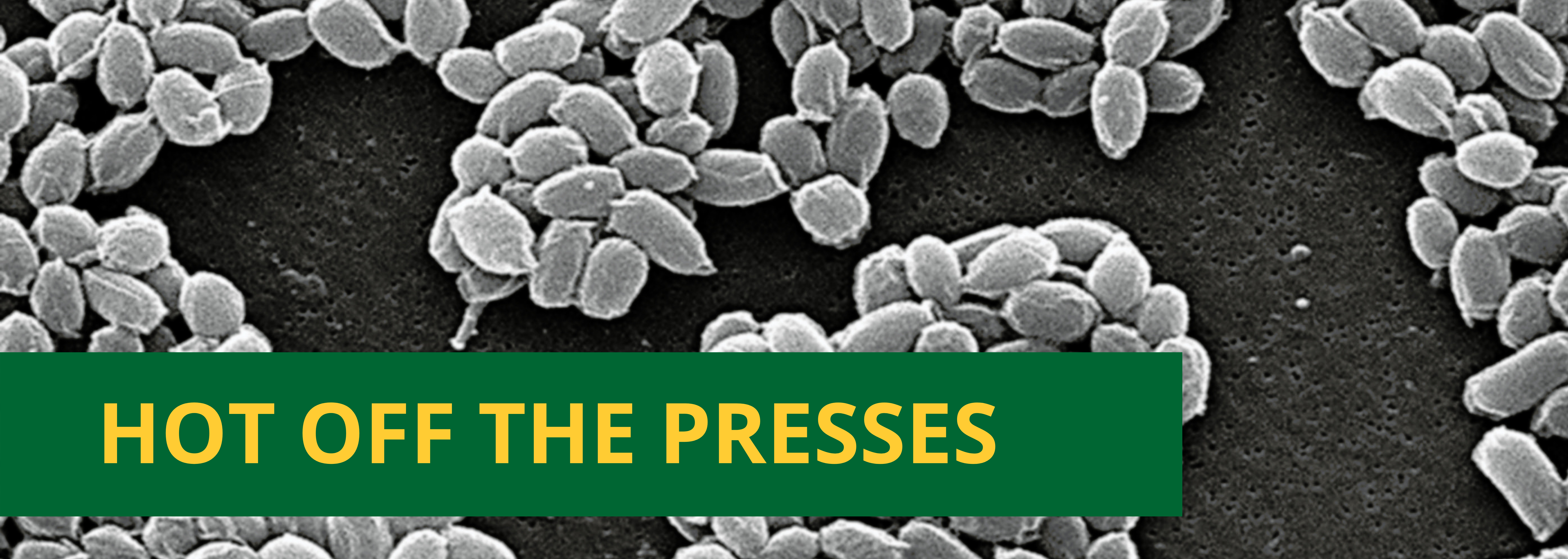
The Biotechnology Innovation Organization, or BIO, recently released its new report, “The State of Innovation in Antibacterial Therapeutics”, assessing the insufficiencies of the clinical antibacterial pipeline in meeting the growing threat of antibiotic-resistant pathogens. BIO has previously published research indicating that, “…drug development investment for many common chronic diseases was found to be declining and low relative to total healthcare burden on society,” according to the new report, further adding to these concerns. Highlights of this report include the facts that only one new molecular target NCE (new chemical entity) has been approved by the FDA in the last 35 years even though 164 direct-acting antibacterial NCEs have been approved since the early 1990s, clinical trial success rates are more than double the overall industry success rate (7.8% vs. 16.3%) for antibacterial NCEs from 2011-2020, and clinical trial initiations for these NCEs declined 33% in recent years. There are only 64 NCEs in clinical trials right now, 20 of which are candidates for tuberculosis and Clostridioides difficile, compared to the 260 COVID-19 antivirals and 158 breast cancer oncology drugs in clinical development in 2020-2021. The Pioneering Antimicrobial Subscriptions to End Upsurging Resistance (PASTEUR) Act, introduced in the House and Senate in 2021, is designed to combat this by aiming “…to incentivize antibiotic development by creating a subscription-style model for new antibiotics, under which companies that develop critically needed antibiotics for resistant infections would receive a contract from the federal government ranging from $750 million to $3 billion.” This would decouple the ROI for new antibiotics from the volume actually sold, helping incentivize companies to pursue such research. Solutions such as this are discussed at length in the report, including a number of government and non-profit funding solutions, regulatory incentives, and market-based solutions to this critical challenge.

The President’s Malaria Initiative Operations Plans, Fiscal Year 2022

The President’s Malaria Initiative (PMI) has released its FY 2022 Malaria Operational Plans (MOPs), which are detailed one-year implementation plans for each PMI country program. These outline USAID’s support to national malaria strategic priorities and try to complement investments made by other partners by expanding malaria-related services. PMI operates in 24 focus countries in Africa and also supports three programs in the Greater Mekong Subregion of Southeast Asia, which combined represent about 90% of the world’s malaria burden. This year’s MOPs are available here on the PMI website.

Photo by Pragyan Bezbaruah on Pexels.com

Lentzos and Koblentz on Hybrid Coronaviruses

Dr. Gregory Koblentz, Director of the Biodefense Graduate Program at George Mason University, and Dr. Filippa Lentzos, Co-Director of the Centre for Science & Security Studies at King’s College London, recently published their article, “Have hybrid coronaviruses already been made? We simply don’t know for sure, and that’s a problem“, in The Conversation. In it they discuss the possibility that chimeric coronaviruses have already been made, stating that it unclear as US labs do not have to publicly report such experiments, drawing attention to what they believe is a large problem- lack of opportunity for public discourse on high-risk life science research. They begin by discussing the CDC’s 2021 addition of chimeric viruses, “viruses that contain genetic material derived from two or more distinct viruses”, to the Department of Health and Human Services’ (HHS) List of Select Agents and Toxins. The CDC then designated research pertaining to such viruses as restricted experiments which require approval from the secretary of HHS under the belief that such regulatory oversight is critical to prevent the release of such viruses, according to the authors. They discuss one US lab’s interest in conducting such research before getting into why this reporting structure prevents broader public discourse on the merits and risks of such research. They conclude that, “Knee-jerk regulatory responses to individual experiments, and treating safety, security and dual-use risks in isolation, must stop. It is high time for a new global architecture for life science governance that takes a comprehensive and coherent approach to biorisk management and that revisits how high-risk life sciences research, funding and publication processes are conducted.”

Book Launch Event: New War Technologies and International Law: The Legal Limits to Weaponizing Nanomaterials

King’s College London’s Centre for Science and Security Studies (CSSS) is offering an event introducing Dr. Kobi Leins’ new book, New War Technologies and International Law: The legal limits to weaponizing nanomaterials. This event will include Dr. Leins in conversation with Dr. Helen Durham, Director of the International Committee of the Red Cross (ICRC). The discussion will be moderated by Dr. Filippa Lentzos, Co-Director of CSSS. The event will occur on March 10, 3- 4 pm BST online and in-person. Register here.

Schar School- The Risk of Climate Change to International Security

The Schar School recently hosted a policy exchange on the intersection of climate change and international security issues, featuring a wide variety of faculty members covering unique facets of this nexus. The video of the event is available here. Featured faculty included:

Professor Ken Reinert serves as director of the Master’s in International Commerce and Policy program. He has consulted for the World Trade Organization, the World Bank, the OECD Development Center, and the U.S. Department of Commerce.

Associate Professor Greg Koblentz serves as director of the Biodefense Graduate program.  He is an associate faculty member at the Center for Security Policy Studies at Mason and a member of the Scientist Working Group on Biological and Chemical Security at the Center for Arms Control and Non-Proliferation.

Associate Professor Bonnie Stabile serves as associate dean of student and academic affairs and director of the Master’s in Public Administration program. She is the founder and director of the Schar School’s Gender and Policy (GAP) Center. 

Adjunct Professor Erin Sikorsky is the director of the Center for Climate and Security and the International Military Council on Climate and Security, as well as an adjunct professor at the Schar School.

Dr. Paul Farmer is Dead at the Age of 62

Dr. Farmer, a world-renowned medical anthropologist and physician known for his work in social medicine and global health, passed away on February 21 at the age of 62 due to an “acute cardiac event,” according to The New York Times. Dr. Farmer was the co-founder of Partners in Health, an international non-profit that works to provide direct health services while also working to alleviate poverty conditions of the sick under the idea that such conditions only further exacerbate illness and must be addressed structurally. His work influenced greatly public health strategies to respond to everything from TB, to HIV/AIDS and Ebola. He was also critical of international aid, despite his focus, often preferring to work directly with local providers and populations to achieve the best outcomes, moving his family to Rwanda and Haiti to do so. Many across the world are grieving the loss of Dr. Farmer, including Drs. Anthony Fauci and Peter Hotez, who both fondly recalled Farmer and his impact on so many lives.

Biodefense MS Program Alumna Elected Coordinator of Next Generation Global Health Security Network

Kate Kerr, Biodefense MS Class of 2019, was recently elected as Next Generation Global Health Security Network, an affiliate of the Global Health Security Agenda which is a collaboration founded in 2014 by representatives from 44 countries (now 69) and organizations, including the World Health Organization. NextGen is an international organization of nearly 1,000 early- to mid-stage professionals and students who work on the full spectrum of issues related to global health, ranging from combating antibiotic resistance to preventing the next pandemic. Kate previously served as the organization’s Deputy Coordinator and will now head the entirety of the global organization. The Biodefense Program has a history of producing leaders in this organization, including several country-level coordinators and global leaders. A big congratulations to Kate and all of the other newly elected leadership! We are so proud of you all and cannot wait to see where you take this organization next.
Pandora Report: 2.18.2022

This week offers a mixed bag, covering everything from the possibility that the infamous Russian flu was in fact caused by a coronavirus to Robert Califf’s return to the FDA. We also cover updates to Switzerland and the UK’s approaches to CBW concerns, Scientific American’s great new special edition on what COVID has taught us, a whole slew of events, and a number of exciting updates from the Biodefense Program!

Was the “Russian Flu” of the Late 19th Century Actually a Coronavirus?

Gina Kolata recently wrote in the New York Times about how scientists are increasingly speculating the famous Russia flu that emerged in 1889 may have actually been driven by a coronavirus. As she explains, it emerged in Bukhara, then part of the Russian Empire, before spreading globally, overwhelming hospitals and killing the elderly in droves. She explains that much of what happened sounds eerily familiar in 2022 writing, “Schools and factories were forced to close because so many students and workers were sick. Some of the infected described an odd symptom: a loss of smell and taste. And some of those who recovered reported a lingering exhaustion.” After a few years and at least three waves, the Russian flu drew to a close. This pattern and noted symptoms have sparked interest from virologists and historians of medicine who are curious if this pandemic was caused by a coronavirus and, if so, what that might tell us about the COVID-19 pandemic. Though it is extremely challenging to make a definitive ruling on this, she explains that molecular biologists are now able to find old virus in preserved lung tissues from Russian flu patients, prompting some researchers to go on the hunt for jars that might contain these lungs. Harald and Lutz Brüssow published in Microbial Biotechnology last year their work examining clinical evidence that the Russian flu pandemic may in fact have been caused by a coronavirus- “Clinical Evidence That the Pandemic from 1889 to 1891 Commonly Called the Russian Flu Might Have Been an Earlier Coronavirus Pandemic.” In it they note the similarities of characteristics writing, “Most notable are aspects of multisystem affections comprising respiratory, gastrointestinal and neurological symptoms including loss of taste and smell perception; a protracted recovery resembling long covid and pathology observations of thrombosis in multiple organs, inflammation and rheumatic affections. ” They also note that, as with COVID-19 but unlike with influenza, the elderly were severely impacted while children fared much better during the Russian flu.

Dr. Robert Califf to Head the FDA

Dr. Robert Califf is again the Commissioner of the Food and Drug Administration, a position he previously held under President Obama from 2016 to 2017. He was very narrowly confirmed by the Senate as concerns about his close ties to the pharmaceutical industry, as well as GOP opposition to his stance on birth control, nearly prevented him from securing the 50-46 vote. The Duke University cardiologist faces serious challenges at FDA, which has lacked a political leader for 13 months now, though he should be more able to guide policies and the administration’s regulatory agenda than he was during Obama’s lame duck period. Nicholas Florko at Stat News recently highlighted six key decisions likely to either make or break his first year back at FDA, including controversy surrounding pediatric COVID-19 vaccinations.

One Health Commission Launches New Websites Tracking Strategic Action Plans

The One Health Commission recently launched two new websites, one compiling national One Health strategic action plans and another compiling One Health antimicrobial resistance strategic plans. These efforts have been ongoing since 2019, demonstrating the Commission’s efforts and dedication to making this information more readily available and easy to access. Both pages are organized into national strategies, with the AMR one including sections for IGO and regional union strategic plans in addition to country-specific ones. The Commission states the creation of these websites was a global One Health community effort, further demonstrating the growing momentum of this movement and the importance of its goal of addressing human, animal, and environmental health as closely connected and necessary to view together to get the best outcomes.

Swiss Federal Council Adopts Arms Control and Disarmament Strategy 2022-2025

At its February 2022 meeting, the Federal Council of Switzerland adopted its first ever arms control and disarmament strategy. The strategy sets out goals and measures in five areas of action, including nuclear weapons, chemical and biological weapons, conventional weapons, autonomous weapons, and cyberspace and outer space. The Council states, “Current developments in Eastern Europe and Asia demonstrate how high security-related tensions currently are. This makes Switzerland’s commitment to peace and security even more important. Disarmament and arms control is an important instrument in this context. The opportunities and risks entailed by new technological developments are becoming more significant. The strategy places a particular emphasis on the development of norms concerning autonomous weapons, cyberspace and outer space.” The impetus behind this, according to the Council, was increasing great power competition necessitating better ensuring international arms control and disarmament architectures are maintained and further developed.

COVID-19 Remains a Threat to the Military, According to Biodefense Program Alumnus

Biodefense program alumnus Dr. Yong-bee Lim recently published an article with the Bulletin of the Atomic Scientists explaining how COVID-19 was and still is a threat to the US military. In his piece, “Even as Omicron Infections Trend Down, Long COVID Remains a Threat to the Military,” he highlights how two particular examples, the early 2020 outbreak of COVID-19 on the USS Roosevelt and Secretary of Defense Lloyd Austin testing positive for the virus, demonstrate the multitude of ways this can hurt military readiness. He explains that disease threats can harm operational capacity, as was the case with the Roosevelt when she was forced to make an emergency port call in Guam for months as she was de-contaminated and her sailors quarantined, as well as to critical leadership in the Pentagon.

He also goes into great depth regarding the long-term impacts long COVID could have on readiness and retention for the services. Dr. Lim writes, “In the military, leaders will have to grapple with how to maintain the size of the armed forces and how to respond should long COVID affect key people in the chain of command. Already, Austin is having the Department of Defense undertake a Biodefense Posture Review. The first review of its kind in Defense Department history, it is meant to “assess the biological threat landscape and establish the Department’s approach to biodefense, to include clarifying biodefense priorities, roles, responsibilities, authorities, capabilities, and posture.” The Pentagon should finish review in mid-2022. It is an opportunity to consider a variety of issues, including how long COVID could impact service members and key individuals in both the military and civilian chain of command.” Similar issues were highlighted by Biodefense PhD student Danyale C. Kellogg in her article in National Defense.

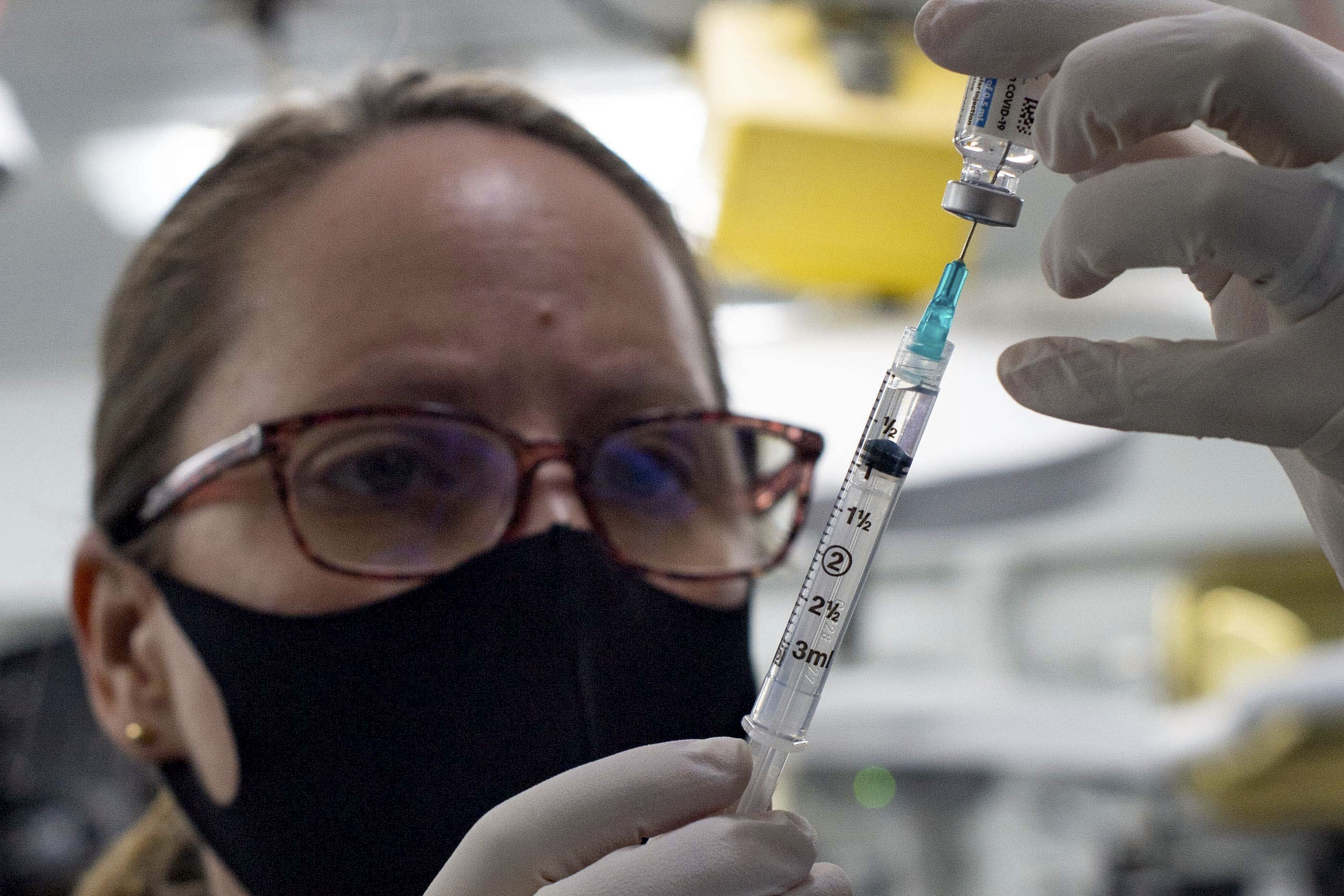
PACIFIC OCEAN (April 30, 2021) – U.S. Navy Lt. Cmdr. Michelle Lane, from San Diego, draws the COVID-19 vaccine into a syringe aboard the aircraft carrier USS Theodore Roosevelt (CVN 71) April 30, 2021. The Theodore Roosevelt Carrier Strike Group is on a scheduled deployment conducting routine operations in U.S. 3rd Fleet. (U.S. Navy photo by Mass Communication Specialist 3rd Class Nicholas V. Huynh)

French President Refuses COVID-19 Test in Russia

French President Emmanuel Macron refused to take a COVID-19 test when he arrived in Moscow to meet with Russian President Vladimir Putin last week, citing concerns about giving the Russians access to his DNA and resulting in the pair keeping an almost comical distance from one another as they discussed the Ukraine crisis. This prompted some outlets to question why the French president would be so concerned about the Kremlin getting a hold of his DNA and speculate that he is just being paranoid. However, this is hardly anything new. During the Obama administration, this concern stemmed from the idea that an adversary’s access to the president’s DNA could lead to the creation of a customized bioweapon for an assassination attempt, an idea similar to the concept of an ethnic bioweapon. This threat extends beyond world leaders too. Just a couple of weeks ago, the National Counterintelligence and Security Center issued a bulletin warning US companies and persons to be aware of this threat when picking testing contractors and companies. In recent years, too, the Department of Defense has warned servicemembers not to use at home DNA testing kits, such as 23 and Me, for fear that they are helping adversaries amass data on US military members for nefarious use later. Amid the massive increase in this type of testing during the COVID-19 pandemic, fears about foreign powers amassing data on US citizens have grown. Early in the pandemic, as the US struggled to build testing capacity and states could not run their own tests in their state labs, BGI Group (formerly known as Beijing Genomics Institute) targeted US state governments with cheap tests that promised to rapidly increase their capacity. The problem, however, was that BGI is known to have used its NIFTY test, a prenatal test used by pregnant people globally, to collect data in collaboration with the People’s Liberation Army, the military wing of the PRC and CCP. Similar concerns surround the rise of personalized medicine too, further demonstrating Macron is not just being unnecessarily paranoid.

Biodefense PhD Program Alumni, LCDR Jennifer Osetek (USCGR) and Dr. Keith Ludwick, Publish New Chapter in Handbook of Security Science

Drs. Jennifer Osetek and Keith Ludwick recently published their chapter in Springer’s new volume, Handbook of Security Science, entitled “Societal Security and COVID-19”. In it they explore non-medical obstacles that pose threats to healthcare delivery, spanning security, logistics, communications, and cultural challenges within this category. They discuss issues such as attacks on healthcare workers and cybersecurity vulnerabilities, offering insights into how experiences of these during COVID-19 should inform future pandemic planning. Dr. Osetek defended her dissertation, “The Last Mile: Removing Non-medical Obstacles in the Pursuit of Global Health Security,” in 2018 and is now an Assistant Professor of Public Health Sciences at Pennsylvania State’s College of Medicine, a faculty member in the Public Health Preparedness option of the Master of Professional Studies in Homeland Security, and a Senior Consultant at Dynamo Technologies supporting the US Coast Guard’s Office of Specialized Capabilities. Dr. Ludwick defended his dissertation, “The Legend of the Lone Wolf: Categorizing Singular and Small Group Terrorism” in 2016 and is now an Associate Professor in the American Public University System, having retired from the FBI.

Strengthening Controls on Novichoks

Dr. Gregory Koblentz, Biodefense Program Director, recently published with Dr. Stefano Costanzi in The Nonproliferation Review. Their article, “Strengthening controls on Novichoks: a family-based approach to covering A-series agents and precursors under the chemical-weapons nonproliferation regime,” discusses how the CWC can be strengthened to better handle Novichoks by adding families of Novichok agents with guanidine branches. They also offer an approach for the CWC and Australia Group to base their control of Novichok precursors on families of chemicals instead of individually enumerated chemicals. Free e-prints of the article are available using this link.

How COVID Changed the World

Scientific American has released this special edition which discusses lessons from the last two years dealing with the pandemic. Articles in the collection discuss emergency science, sociological analysis of the pandemic and attitudes about rugged individualism, and how the pandemic showed how fragile our health institutions really are. They also include a piece on how long COVID is drawing more attention to chronic illnesses, which are commonly misunderstood and mischaracterized as well as discussion on the future of in-office work, nasal spray vaccines, and the pandemic’s widening of societal divisions.

Judicial Enforcement of BWC and CWC Implementing Legislation

VERTIC, the Verification Research, Training, and Information Centre, has just released a brief authored by Thomas Brown discussing ongoing challenges in effectively enforcing the Biological and Chemical Weapons Conventions. He determines through analysis of two case studies that national stakeholders struggle with creating legislation to implement these treaties due to struggles with incorporating expert technical knowledge into the drafting of legislation, challenges in international cooperation, and creating legislation that is understandable despite the often highly technical nature of it all. The report concludes with a number of recommendations for national stakeholders in the process of creating relevant legislation, highlighting assistance programs available to help in this process if needed. Access the brief here.

Ten Years of Chemical Weapons Use in Syria: A Look Back and a Look Ahead

The Chemical Weapons Coalition and Arms Control Association are hosting a webinar on CW use in Syria February 22 and 10 am ET. The expert panel will assess the progress that has been achieved to eliminate Syria’s chemical arsenal, what is left to be done, and how to ensure chemical weapons are never used again. 

Opening Remarks: 

  • H.E. Fernando Arias, Director-General of the OPCW

Speakers:

  • Joby Warrick, author and journalist at The Washington Post, and author of the book, Red Line: The Unraveling of Syria and America’s Race to Destroy the Most Dangerous Arsenal in the World. He will discuss the events surrounding the removal of Syria’s chemical weapons stockpile;
  • Amb. Ahmet Uzümcü, former Director-General of the OPCW will describe the lessons that can be learned from this period, including from the experience of the OPCW Fact-Finding Mission, and the Declaration Assessment Team;
  • Izumi Nakamitzu, UN High Representative for Disarmament Affairs, will review ongoing efforts to address questions and concerns about Syria’s chemical weapons program, and international efforts to reinforce the norm against chemical weapons use.

The panel discussion will be followed by a Q&A session. This discussion will be on the record, and a recording of the event will be posted on the CWC Coalition website shortly after the event. Please click here to download a PDF of speaker bios. Register here.

Next Generation Masks and Respirators: How the Strategic National Stockpile Can Better Protect Essential Workers and the Public During Pandemics

Johns Hopkins Center for Health Security is hosting the Capitol Hill Steering Committee on Pandemic Preparedness and Health Security webinar, Next Generation Masks and Respirators: How the Strategic National Stockpile Can Better Protect Essential Workers and the Public During Pandemics. Masks and respirators have played an important role in keeping people safe in both community and healthcare settings throughout the COVID-19 pandemic. In a future large-scale outbreak or pandemic, it is possible to increase the protection of healthcare workers and the public from infection through more efficient, certified, well-fitting, and comfortable masks. This session will focus on the current status of mask and respirator stockpiling, the scientific advances that could lead to more effective and accessible masks, and policies that the U.S. government could support to build this capacity in anticipation of future public health threats.

Moderator:

  • Anita Cicero, JD, Deputy Director, Johns Hopkins Center for Health Security

Opening Remarks:

  • Representative Lori Trahan (D-MA) (Invited)

Speakers:

  • Mr. Steven Adams, Director of the Strategic National Stockpile, U.S. Department of Health and Human Services
  • Dr. Eric Toner, Senior Scholar, Johns Hopkins Center for Health Security

A Q&A session will follow the moderated panel.

The webinar will be hosted Thursday, February 24, 2022 at 11 am ET. Register here.

National Science Advisory Board for Biosecurity to Host Its First Meeting in Two Years

The National Science Advisory Board for Biosecurity (NSABB) is a federal advisory committee that addresses issues related to biosecurity and dual use research at the request of the United States Government, hosted by NIH’s Office of Science Policy. It has up to 25 voting members at a time who span a broad range of expertise, including molecular biology, microbiology, infectious diseases, biosafety, public health, veterinary medicine, plant health, national security, biodefense, law enforcement, scientific publishing, and other related fields. On the meeting’s draft agenda there is a discussion of where NSABB will go next and what its charge is, offering what is sure to be an interesting discussion given what has transpired since its last meeting two years ago. The meeting will occur virtually on February 28 at 12 pm ET and is available to the public (information on attendance is available here).

Council on Strategic Risks- COVID-19 Response Technologies & Their Future Role in Pathogen Early Warning

Join the Council on Strategic Risks for COVID-19 Response Technologies & Their Future Role in Pathogen Early Warning on Wednesday, February 23 from 12:00–12:45 EST. RSVP here. This discussion will be hosted by Christine Parthemore, CEO of the Council on Strategic Risks. Panelists hosted are from two companies that have led the way in developing innovative COVID-19 response technologies:

Dr. Mariana Matus, CEO and Cofounder of Biobot Analytics, will share how Biobot has pioneered wastewater testing to detect COVID-19 outbreaks and variant trends — and how this technology will be critical in early warning for future biological threats.  

Matthew McKnight, Chief Commercial Officer at Ginkgo Bioworks, and leader of Concentric by Ginkgo, will discuss Concentric’s K-12 COVID-19 testing program and the future of this effort.

The panel discussion will be followed by an audience Q&A. This event will be recorded and open to the public, including members of the press. 

Teaching Climate Change as a National Security Threat

The Schar School recently released this story, adapted from the Fall/Winter Schar School Pulse Magazine, discussing the various intersections of climate change and national security. It discusses some of the ways the impacts of climate change threaten military readiness, its relationship with transnational crime, how the administration is working to integrate it into national security planning, and how the Schar School has long since recognized this threat and integrated it into our programs. This comes in advance of the Schar School’s Risk of Climate Change to International Security talk this Wednesday, February 23 at 5:30 pm ET, which can be attended by registering here.

US Senate- Addressing the Gaps in America’s Biosecurity Preparedness

The Senate held this hearing yesterday, February 17, featuring Christopher Currie of GAO’s Homeland Security and Justice section, Dr. Asha George of the Bipartisan Commission on Biodefense, and Dr. Gerald Parker of Texas A&M University’s College of Veterinary Medicine and Biomedical Sciences and Bush School of Government and Public Service as witnesses. The hearing, held by the Homeland Security and Governmental Affairs Committee, discussed key challenges and next steps for improving American biosecurity. The recording and testimonies are available here.

Biodefense Graduate Program Added to the UN Office of Disarmament Affairs List of Specialized Courses and Degrees

The Schar School’s Biodefense Program has been added to UNODA’s list of specialized courses and degrees in the field of disarmament. The list highlights courses around the world noted for their strong offerings in this area. The Biodefense Programs offers graduate degrees, an MS (both in-person and online), and a PhD. Find more information on our programs here.

Biodefense PhD Alumnus Named Deputy Directory of the Janne E. Nolan Center on Strategic Weapons, Council on Strategic Risks

Dr. Yong-Bee Lim recently was promoted to Deputy Director of CSR’s Nolan Center! He is also currently a member of the Bulletin of the Atomic Scientists’ Bulletin Editorial Fellows Program. While in the Biodefense Program, he was selected for the prestigious Emerging Leaders in Biosecurity Initiative Fellowship at Johns Hopkins University’s Center for Health Security and was also a Presidential Scholar in the Schar School. His prior work includes research with the Departments of Defense, Energy, and Health and Human Services. Congrats to Dr. Lim!

UK Biological Security Strategy Refresh: Call for Evidence

The United Kingdom has opened a call for evidence to help revamp its Biological Security Strategy. The country seeks to revamp its approach to these issues as the COVID-19 pandemic has exposed critical shortcomings in its ability to respond to biological threats. The Financial Times reported recently that this was, in part, also triggered by a critical assessment from parliament that outlined several of these shortcomings. The UK’s Biological Security Strategy, published in July 2018, brought together for the first time the work that takes place across government to protect the UK from significant biological risks. The 2018 strategy identifies several significant biological security risks relating to human health, animal and plant health, the environment, accidental release, and deliberate attack, including:

  • a major health crisis (such as pandemic influenza or new infectious disease)
  • antimicrobial resistance
  • a deliberate biological attack by state or non-state actors (including terrorists)
  • animal and plant diseases, which themselves can pose risks to human health
  • accidental release and dual-use research of concern

Pandora Report: 2.11.2022

It’s the Valentine’s Day Special Edition! Because we love our readers so much, we are bringing you a couple of special Valentine’s features in addition to our normal round up of updates, releases, and events, including Beth Cameron’s departure from the NSC. And no, it isn’t just you- masks really do make people look more attractive, according to one recent study! Finally, because we want you all to share the biodefense love, we have created special Pandora Report Valentine’s Day cards to be shared with all those dear to you. XOXO -The Pandora Report.

Dr. Beth Cameron to Leave the National Security Council

After a year in her position as the NSC Senior Director for Global Health Security and Biodefense, Dr. Cameron will soon leave the position. She previously held the same position under President Obama from 2016 to 2017, helping author a pandemic playbook for the administration. In 2018, President Trump opted to eliminate the office she once led, moving its staffers onto other teams, drawing sharp criticism in 2020 as the pandemic began. She will be replaced by Dr. Raj Panjabi, the Global Health Malaria Coordinator at USAID and former CEO of Last Mile Health, a nonprofit that helps develop community healthcare systems globally. Panjabi’s transition comes as there is tension and debate within the administration about the direction of Biden’s COVID-19 response at home and abroad, including arguments that global vaccine donation efforts targeted at the developing world lack transparency.

Public Health Vaccines Announces Its First Clinical Trial Evaluating Its Nipah Vaccine

The Coalition for Epidemic Preparedness Innovations (CEPI) recently announced that its development partner, Public Health Vaccines, has initiated the first clinical trial for its Nipah virus vaccine. First identified in 1999, Nipah virus, the inspiration for the fictional MEV-1 virus in the film Contagion, is a zoonotic virus normally found in fruit bats that is known to cause illness in pigs and humans. Its case fatality rate ranges from 40% to 75%, treatment consists of supportive care, and clinical presentations can range from asymptomatic infections (subclinical) to acute respiratory infection and fatal encephalitis. The Cambridge, MA company announced on Wednesday that its single-dose PHV02 vaccine started its Phase 1 clinical trial to evaluate its safety and immunogenicity. As the virus can spread person-to-person, Nipah virus is a priority pathogen for the WHO and a category C bioterrorism agent for the CDC. In light of this, CEPI has invested over $100 million in four promising Nipah vaccine candidates, with the first, Auro Vaccines and PATH’s HeV-sG-V vaccine candidate, reaching clinical trials in March of 2020.

Department of State Established the Chemical Forensics International Technical Working Group

The US Department of State established the Chemical Forensics International Technical Working Group (CFITWG) “to address gaps in chemical forensic science and capabilities through an international partnership of experts from science, policy, academic, law enforcement, and export-control organizations.” The State Department website explains that, “The effort is an ad hoc and voluntary association of practitioners of chemical forensics, including participation by policy makers, members of the Organisation for the Prohibition of Chemical Weapons (OPCW) designated laboratories network and Scientific Advisory Board (SAB), academic institutions, and the law enforcement community. The group’s efforts have contributed to the work of the SAB to help strengthen the OPCW’s investigative options in the future. The group meets biennially.” Areas of interest for this group include “Identification of chemical attribution signatures and associated data analytics capabilities for selected classes of chemical threat agents including toxic industrial chemicals (TICs), chemical warfare agent surrogates, explosives, pharmaceutical agents (including counterfeits), drugs of abuse, pesticides, and toxins; Development of forensic tools such as analytical and chemometric procedures and standardize methods of data handling and security for advancement of best practices to support forensic-based analyses (such as those governed by the legal standards of admissible evidence and criminal procedure); and Investigation of chemical analysis tools and capabilities from other fields for forensic and retrospective analytical purposes (to include survey, compilation, and analysis of reports and publications, in the public sphere).”

Medicare Penalizes Highly-Rated Hospitals for Having High Numbers of Patient Infections

According to a recent article Kaiser Health News, Medicare has penalized 764 hospitals, nearly 40 of which it also happens to rate as the best in the country, for having some of the highest numbers of patient infections and potentially avoidable complications. The penalty is a 1% reduction in Medicare payments over 12 months and is based on experiences of Medicare patients discharged from hospitals between July 2018 and the end of 2019. The penalties are designed to force hospitals to focus on reducing things like bedsores, hip fractures, blood clots, and hospital acquired infections. Top names on the list of penalized hospitals include Cedars-Sinai Medical Center, Northwestern Memorial Hospital, Cleveland Clinic, and two Mayo Clinic hospitals in Red Wing and Phoenix. 2,046 hospitals have been penalized at least once in the near decade since the Hospital-Acquired Condition Reduction Program began. Some researchers continue to cast doubt on whether or not these penalties motivate hospitals to improve their efforts to prevent these issues, which some attribute to the system’s arguable incentivization for hospitals to simply not report the number of these incidents that occur in their facilities accurately. Critics also point to the fact that the Affordable Care Act mandates these penalties be directed at the 25% of hospitals with the highest rates of these issues, even if they have improved or simply fall in the wrong place in a numbers game. Academic institutions argue too that they are disproportionately targeted by these penalties because they are more diligent in reporting such occurrences.

Russian Media Spreading Disinformation About US Bioweapons Amid Build-Up on Ukrainian Border

Tim Kirby, a US ex-patriate and host on Russian state-owned media network RT, recently alleged on his YouTube channel that the US is developing biological weapons in a network of laboratories in Eastern Europe. As the Bulletin of the Atomic Scientists recently highlighted, Kirby was quoted saying, “Someone I’ve known for a few years has come forward,” Kirby told the almost 60,000 viewers who’ve watched the video so far, “to put together a picture of a network of bioweapons laboratories in Ukraine, that is very large and very Washington-supported that could be quite dangerous for us all.” The Bulletin continues, however, by explaining that Kirby is not alone and that this is being echoed at the top levels of the Russian government. This comes as Russia and China recently released a joint statement condemning supposed US bioweapons activities. Both China and Russia have historically stoked false allegations about US BW development and use, including throughout their histories of the Korean War. In 2021, China offered an alternative version of events in which the US military introduced COVID-19 into the country when it sent members of the US Army from Ft Detrick to Wuhan for the Military World Games in late 2019. The Chinese now also claim the Omicron variant entered the country on a piece of mail from Canada, further demonstrating how eager these countries are to avoid responsibility and sow disinformation. In particular, the Russians have focused on DTRA’s Cooperative Threat Reduction Program, prompting DTRA and the Department of State to make multiple statements fully denying the claims, particularly those made about the Richard G. Lugar Center for Public Health Research in Tbilisi, Georgia. However, as Russia starts a new round of such false claims while also amassing troops on its border with Ukraine, some point to the pattern of previous Soviet/Russian BW claim-making as potential evidence they are trying to sow distrust of the US in Ukraine and the rest of the Russian periphery ahead of an invasion.

Valentine’s Day Special Highlights

If You Don’t Have a Valentine This Year, the Kissing Bugs Might Have Your Back

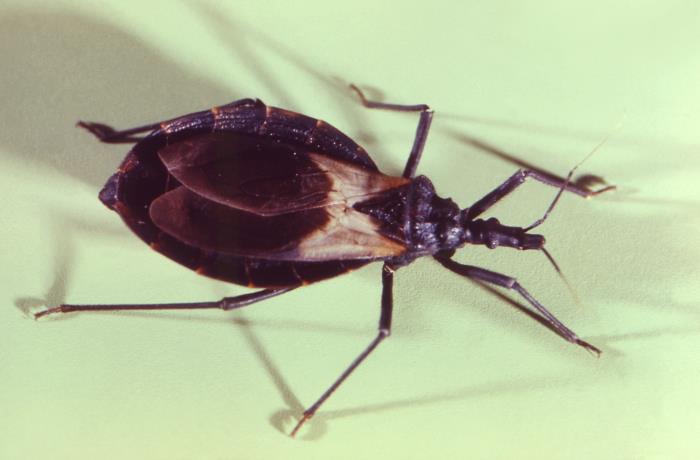
Nothing says “I love you” quite like a deep dive on a spreading neglected tropical disease, right? We missed wishing you all an informative World Neglected Tropical Diseases Day on January 30, but we will take the chance now to discuss this specific NTD and some of the research currently being done on it. Chagas disease, also sometimes referred to as American trypanosomiasis, is a disease caused by the parasite, Trypanosoma cruzi, and is spread primarily by insects of the Triatominae subfamily, known as kissing bugs. Generally, the bugs climb onto people as they sleep, taking a blood meal before walking away. They defecate on people when doing so, allowing the parasite to infect them and cause the disease. As is the case in general with NTDs, there is an established link between poverty and Chagas transmission, associated largely with factors like poor housing and inadequate access to healthcare. Furthermore, according to a January 2022 study on seroprevalence of Chagas in children in New York, there is an “… estimated 1% to 5% risk of transplacental infection among children born to mothers with Chagas disease. This leads to chronic infection among children who may never visit an endemic region. Although up to 40% of neonates with congenital Chagas disease have signs of infection, neonatal diagnosis is rare in the US due to limited clinician awareness. Additionally, Chagas disease treatment with benznidazole is highly effective and well-tolerated during childhood, making pediatric diagnosis ideal for reducing future morbidity.,” further demonstrating how urgent this problem is.

This insect was a species of Triatoma, or kissing bug. Definitely not the kind of kiss you want this Monday…

Though screening is not common in the US, it is estimated by the CDC that approximately 238,000 to 347,000 individuals in the United States are infected with T. cruzi, highlighting that this is not an “over there” issue, though many were infected in Latin America. According to Johns Hopkins, some experts estimate as many as 11 million people in South and Central America and Mexico have the disease, with most not even knowing they have it (up to 70% are asymptomatic). Chagas does not go away on its own and, without treatment, can lead to death and is known to cause irreversible cardiac damage in 30% of patients and neurological and digestive lesions in 10%. Treatment is mostly limited to benznidazole and nifurtimox, which bring long administration periods, frequent side effects, and low efficacy once the disease is in its chronic phase. This means that combination therapies, as a study from this year re-affirmed, are important as they allow for more effective dosing and shorter treatment periods, though they are most effective in the acute phase of the disease (including in cases of congenital transmission), diminishing as it progresses. This disease poses a potential massive burden both economically and in terms of human cost, making further research into treatments that are effective in the chronic stage and slowing the spread of the disease incredibly important.

Do you want to learn more about Chagas disease? Check out the This Podcast Will Kill You episode on it here. If you live in an area where there are kissing bugs, consider sending found bugs to Kissing Bugs & Chagas Disease in the United States, a community science program run by Texas A&M University working to use a One Health approach in their research while building clinician awareness of this disease nationally.

But If You Still Don’t Have a Valentine…At Least Your Mask Might Make You Look More Attractive

According to a January 2022 study published by researchers at Cardiff University, “Beyond the beauty of occlusion: medical masks increase facial attractiveness more than other face coverings,” face masks increased the rate at which female participants rated male faces as attractive. This, they explain, is contrary to the sanitary-mask effect, or the finding that medical face masks tend to prompt an image of disease, causing people to perceive masked faces as less attractive. The researchers acknowledge that faces could have been rated higher due to occlusion of negative features in general, rather than occlusion specifically with a face mask. However, their participants rated male faces as most attractive when wearing medical face masks as well as more attractive when wearing cloth masks than when not occluded at all. Base attractiveness was not shown to interact with the type of occlusion, suggesting that this effect was not due to simple occlusion of negative features. After two years perfecting smiling with just our eyes, it makes sense!

Photo by cottonbro on Pexels.com

Envisioning a New Strategy to Counter Great Power Use of Weapons of Mass Destruction

The US Air Force Center for Strategic Deterrence Studies at Air University has just released this new report authored by Albert J. Mauroni as part of “The Counterproliferation Papers.” The report argues that the past several administrations have been intentionally vague in defining how the US should prevent the proliferation of WMD globally, addressing general threats like weapons systems, natural diseases, and classes of weapons instead of specific threats. The author argues that, “In particular, this behavior has resulted in an erosion as to the norms and rules on the conduct of great powers using non-nuclear WMD in contemporary security scenarios. As a result, the U. S government requires a new strategic approach to countering WMD that adequately addresses CBRN-specific threats in the context of great power competition.” He goes on to argue that interagency efforts to coordinate counter-WMD efforts need to be more focused solely on nuclear, biological, and chemical weapons developed by nation-states specifically for military operations. Suggestions in the report include 1) creation of a new National Strategy for Countering WMD that explains how the US government wants to prioritize WMD threat sources and align its resources accordingly, 2) abandon what is described as the “agnostic view” of current national/DoD strategies “so as to adequately address Chinese/Russian WMD challenges as well as acknowledge the differences between peer/near-peer and lesser states, as well as violent extremist organizations,” and 3) encourage a more engaged NSC staff which oversees strategies developed by relevant executive agencies.

Council on Strategic Risks- How are Biological Threats Evolving?

On Friday, February 18 from 12:30pm – 2:00pm EST, join the Council on Strategic Risks as we host How are Biological Threats Evolving in a World with COVID-19, a webinar featuring a keynote address from Assistant Secretary of Defense (ASD) Deborah Rosenblum and discussion from a panel of experts. RSVP here. This webinar will center on understanding how biological threats are evolving, including how the COVID-19 pandemic has influenced these risks. Hon. Sherri Goodman, Chair of the Board at CSR, will introduce Hon. ASD Rosenblum, who will provide her perspective on key biological threats and DoD’s efforts to address them. 

The discussion will feature three fantastic panelists: 

  • Dr. Filippa Lentzos, Senior Lecturer and Co-Director of the Centre for Science & Security at King’s College London, who will provide a geopolitical lens and discuss changing norms in bioweapons and biosecurity
  • Dr. Kevin Esvelt, Associate Professor and Leader of the Sculpting Evolution Group at MIT, who will explore the influence of technological change on biological threats 
  • Christine Parthemore, CEO of the Council on Strategic Risks, who will share CSR’s soon-to-be-released report on how COVID-19 may influence state and non-state actors’ motivations regarding biological weapons.

The panel discussion will be followed by an audience Q&A. This webinar will be recorded and open to the public, including members of the press.

Meetings of the Presidential Advisory Council on Combating Antibiotic-Resistant Bacteria

As stipulated by the Federal Advisory Committee Act, the Department of Health and Human Services (HHS) is hereby giving notice that a meeting is scheduled to be held for the Presidential Advisory Council on Combating Antibiotic-Resistant Bacteria (PACCARB). The meeting will be open to the public via Zoom and teleconference; a pre-registered public comment session will be held during the meeting. Pre-registration is required for members of the public who wish to present their comments at the meeting via Zoom/teleconference. Individuals who wish to send in their written public comment should send an email to CARB@hhs.gov. Registration information is available on the website http://www.hhs.gov/​paccarb and must be completed by February 25, 2022 for the March 2, 2022 Public Meeting. Additional information about registering for the meeting and providing public comment can be obtained at http://www.hhs.gov/​paccarb on the Upcoming Meetings page. The meeting is scheduled to be held on March 2, 2022, from 10:00 a.m. to 4:00 p.m. ET (times are tentative and subject to change). The confirmed times and agenda items for the meeting will be posted on the website for the PACCARB at http://www.hhs.gov/​paccarb when this information becomes available. Pre-registration for attending the meeting is strongly suggested and should be completed no later than February 25, 2022.

Inaugural Public Meeting of the National Advisory Committee on Children and Disasters (NACCD)

The inaugural public meeting of the National Advisory Committee on Children and Disasters (NACCD) will be held on Thursday, February 17 from 11:00am – 4:00pm ET.  Pre-registration for this event is required and can be accessed along with additional meeting information through the online event page

Join the new advisory committee, as they are sworn in along with the presentation and discussion of challenges, opportunities, and priorities for national public health and medical preparedness, response and recovery, specific to the needs of children and their families in disasters.  In addition to having an opportunity to introduce and meet the new advisory committee, we will have presentations from the ASPR Pediatric Disaster Centers of Excellence, HRSA Regional Pandemic Preparedness Network and subject matter experts and colleagues on current challenges, including the COVID-19 pandemic and related mental health crisis impacting children and families.                                                   

Following the presentations, committee members are inviting subject matter experts from industry, academia, health systems, health consumer organizations, and state, local, tribal, and territorial public health, and emergency management agencies to provide comments to the NACCD.  Those wishing to speak during the meeting or who wish their written remarks to be addressed during the meeting, may email NACCD@hhs.gov.  Individual remarks during the meeting are limited to 4 minutes each and displaying images and/or slides for public speakers will not be available. For inclusion in the public speaking portion of the agenda, please provide name, position title, organizational or sectoral association, and a brief summary of planned comments.  Those selected for public comments will receive confirmation by email prior to the meeting with additional instructions.  The floor will be opened to as many relevant comments as possible.

Westminster Health Forum- Priorities for the UK Health Security Agency and Preparedness for Future Health Threats

This conference will discuss priorities for the new UK Health Security Agency. It will be an opportunity to discuss priorities and future outlook for the new agency – and key issues for the development and implementation of its role in improving national public health and responding to future health threats. Sessions in the agenda look at:

  • the UKHSA’s role – scope, priorities and opportunities for collaboration
  • prevention and mitigation – key issues for resources, use of data, and health surveillance capabilities
  • public health research – priorities for investment and funding, innovation, and collaboration
  • community health and local healthcare  – collaboration and local responses, reducing inequalities, and the role of the UKHSA
  • international collaboration – priorities for development and opportunities for UK leadership
  • lessons from COVID 19 – the UK’s response, the role of genomics, and preparing for future health threats

A keynote session will be offered by Dame Jenny Harries, Chief Executive, UKHSA. There will be further keynote contributions from Professor Dame Sarah Gilbert, Saïd Professorship of Vaccinology, Jenner Institute & Nuffield Department of Clinical Medicine, University of Oxford; Professor Kate Ardern, Director of Public Health, Wigan Council and Lead Director of Public Health for Health Protection and Emergency Planning, Greater Manchester Combined Authority; Dr. Laura Blackburn, Head of Science, PHG Foundation; and Richard Sloggett, Founder and Programme Director, Future Health; and former Special Adviser to the Secretary of State for Health and Social Care. This will be taking place April 27, 9 am- 1 pm GMT. More information and registration is available here.

Michigan State- 2022 Innovation Forum: Bridging Technologies and Market Needs

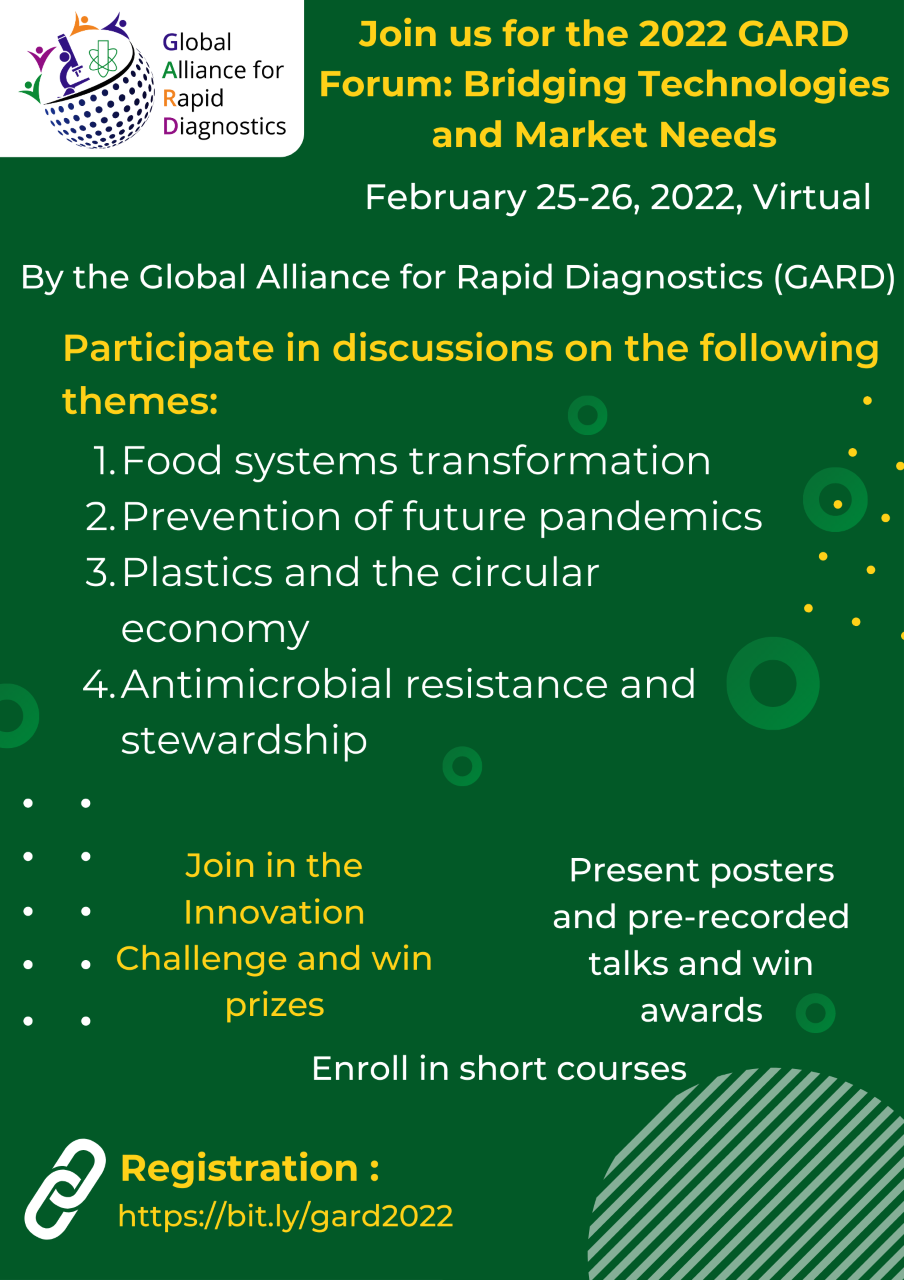
Free registration is now open for the “2022 Innovation Forum: Bridging Technologies and Market Needs,” held virtually on February 25-26, 2022. It is sponsored by the Global Alliance for Rapid Diagnostics (GARD), a multidisciplinary group of researchers and practitioners from around the world committed to improving global health by reducing the spread of infectious diseases through early diagnosis. The focus of this symposium is to serve as a marketplace where innovative technologies can match the customers’ needs. Through this symposium, you will have the opportunity to meet and learn from people worldwide so that we can come together to develop solutions to help those in low-resource populations, prevent future pandemics, and save lives. Register at this link.

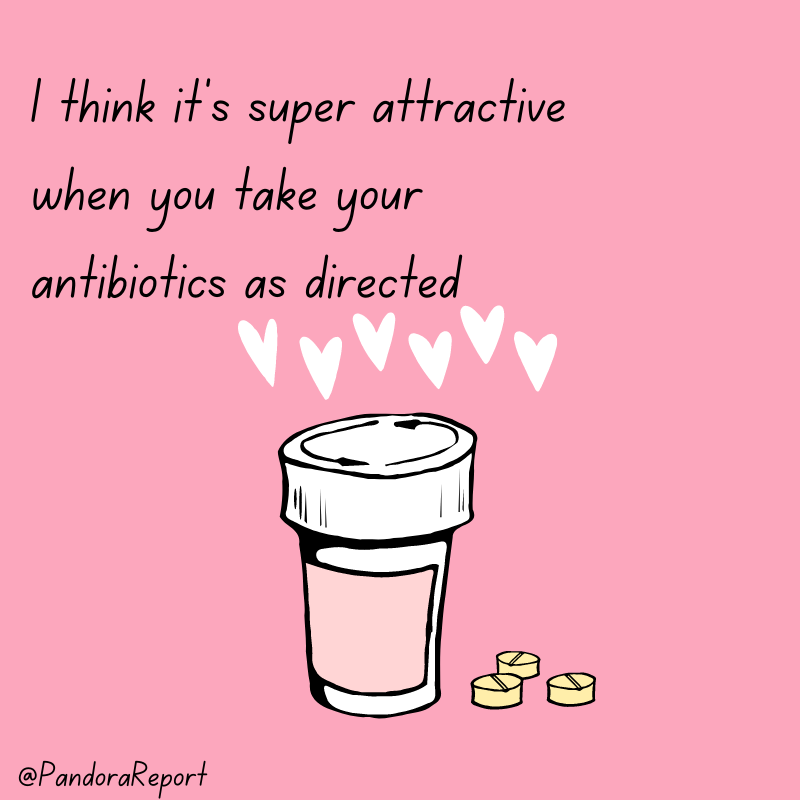
Pandora Report Valentine’s Day Cards

Nothing says “I love and am thinking of you” in the middle of a pandemic quite like these Valentine’s cards. Send a couple to your friends and share them on your socials to spread the love. Don’t forget to tag us on Twitter @PandoraReport and on Instagram @thepandorareport!

Pandora Report: 2.4.2022

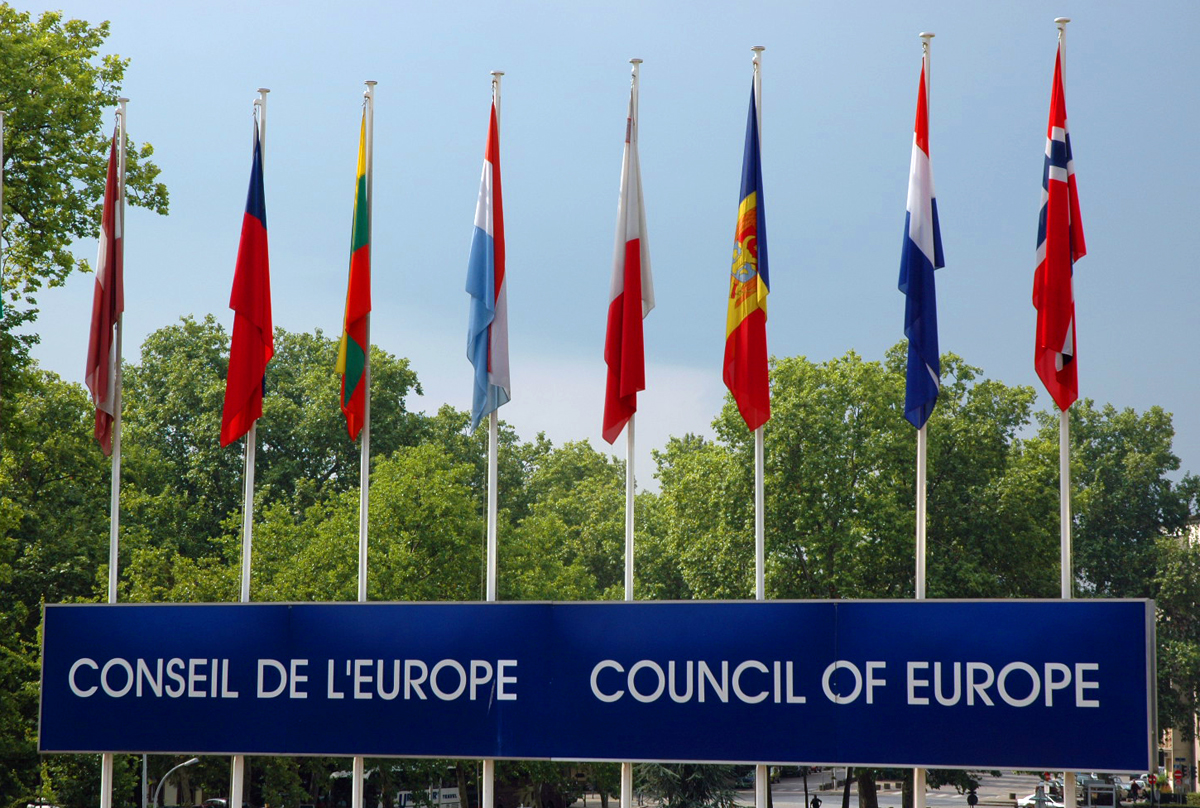
This edition brings more updates from the CW world as the Council of Europe adopts resolutions calling on Russia to release Navalny and the OPCW releases the report from its Fact Finding Mission’s investigation of alleged use of chemical weapons in Kafr Zeita, Syria in 2016. We also cover the NCSC’s new bulletin discussing threats foreign exploitation poses to US citizens’ health data, excess deaths in the United States since the pandemic began, an opportunity to join us in the biodefense program at the Schar School, and much more.

Parliamentary Assembly of the Council of Europe Calls on Russia to Investigate Navalny’s Poisoning and Comply with the CWC

The Parliamentary Assembly of the Council of Europe (PACE) noted during a plenary session last week “the ample medical evidence” indicating Alexei Navalny was poisoned with an organophosphorus cholinesterase inhibitor structurally related to the Novichok family. The PACE highlighted that five different tests determined its similarity to the family of nerve agents known only to have been produced in state laboratories of the USSR and, reportedly, Russia. PACE adopted a resolution calling on Russia to fulfill its obligations under the European Convention on Human Rights “by launching an independent and effective investigation into the poisoning of Alexei Navalny.” According to the organization, “PACE also called on the Russian Federation to “immediately release Mr Navalny” under the interim measure indicated by the European Court of Human Rights on 16 February 2021. The adopted resolution called on the Russian Federation “to investigate the alleged development, production, stockpiling, and use of a chemical weapon on Russian territory”, providing concrete replies to questions posed by other States parties to the Chemical Weapons Convention as soon as possible. Finally, PACE called on the Russian Federation to reach agreement “on a technical assistance visit by the Organisation for the Prohibition of Chemical Weapons” at the very earliest opportunity.” A supporting report authored by the Committee on Legal Affairs and Human Rights cited two articles co-authored by Drs. Gregory Koblentz and Stefano Costanzi- “Updating the CWC: How We Got Here and What Is Next,” and “Controlling Novichoks after Salisbury: Revising the Chemical Weapons Convention Schedules.”

OPCW Issues Fact-Finding Mission Report on Chemical Weapons Use Allegation in Kafr Zeita, Syria, on 1 October 2016

The Organisation for the Prohibition of Chemical Weapons’ Fact Finding Mission (FFM) released its report on the FFM’s investigation regarding incidents of alleged use of toxic chemicals as weapons in Kafr Zeita, Governorate of Hama, Syrian Arab Republic in October 2016. The report concludes that industrial chlorine cylinder “barrels” were used as weapons in this incident. The FFM report was shared with States Parties to the Chemical Weapons Convention. The report will also be transmitted to the United Nations Security Council through the UN Secretary-General. The FFM was established in 2014 in response to ongoing claims of CW attacks in Syria with the mandate of determining if the weapons were used or not- not who used them. The FFM has previously determined that the use of chlorine, sulfur mustard, and sarin as chemical weapons took place in other incidents in the Syrian Arab Republic. See the Arms Control Association’s timeline of Syrian CW activity from 2012-2021 here.

White House Releases New Fact Sheet Reiterating Biden Administration’s Commitment to Global Health

The White House released its new fact sheet discussing the administration’s commitment to global health, boasting that the US remains the largest global health donor in the world, writing “In Fiscal Year (FY) 2021, the United States appropriated over $9 billion in global health programs, in addition to almost $16 billion in emergency supplemental funding for COVID-19.” The fact sheet states that, in addition to fighting the COVID-19 pandemic, the administration remains interested in, “strengthening health systems and institutions; advancing global health security; combatting HIV/AIDS, malaria, and tuberculosis; advancing sexual and reproductive health and rights, and maternal, neonatal, and child health; closing gaps in nutrition and non-communicable diseases; and accelerating efforts towards universal health coverage and the Sustainable Development Agenda.” Among the priorities listed in the fact sheet are supporting and strengthening the WHO, leading the global pandemic response, advancing sexual and reproductive health and rights, continuing global leadership in combatting HIV/AIDS, malaria, and tuberculosis, and building health security capacities. The fact sheet also notes that the US will rejoin the WHO’s Executive Board in May 2022, and will launch a strategic dialogue with WHO to ensure US and WHO mutual priorities are fully aligned. Other major points include improving pandemic preparedness broadly and accelerating global COVID-19 response efforts through the roll out of the Initiative for Global Vaccine Access.

Russia’s New Biosafety Regulations

Russia has drafted two new laboratory biosecurity regulations, one targeted at the physical protection of collections of pathogenic microorganisms and viruses and another approving a list of potentially dangerous biological objects, and measures to prevent accidents involving such objects and limit biological contamination from such accidents. Russian President Vladimir Putin approved measures to re-examine existing chemical and biological safety policies in 2019, with the government noting there are nearly 10,000 potentially dangerous chemical and biological enterprises in the country, most of which are located in cities with populations over 100,000 people. This was followed by Putin’s signing of the 2020 Law On Biological Safety in the Russian Federation, which “defines the principles for ensuring biological safety, the main biological threats and a set of measures to protect the public and the environment from dangerous biological factors, to stave off biological threats, to create and develop a system for monitoring biological risks, combat the spread of infectious diseases, form, preserve and develop collections of pathogenic microorganisms and viruses, plan the creation of production facilities and reserves, including the state material reserve of products to ensure the safety of the public, and to provide medical help to people.” Provisions in these proposals include creating a system for hazardous facilities protection which identifies and accounts for all pathogens, builds fences around facilities to prevent unauthorized access, and ensures that the number of people allowed to work with pathogens is limited.

US COVID Cases On the Rise- The Pandemic’s Uncounted Deaths

As the official number of COVID-19 deaths in the United States approaches 900,000, a recent Wall Street Journal article draws attention to the 987,456 excess deaths the country has suffered since the pandemic began at the time of writing. The article explains that, since the start of the pandemic, 6.8 million Americans have died- nearly one million more than expected in that time period. It explains that these excess deaths, as expected, are overwhelmingly attributed to COVID-19, but that the remainder likely includes improperly recorded COVID-19 deaths as well as deaths from other causes amplified by the pandemic. Examples of the latter include disruptions in healthcare and a spike in overdoses nationally. The article offers a particularly sobering statistic- “Covid-19 has left the same proportion of the population dead—about 0.3%—as did World War II, and in less time.” Important to consider too is how this pandemic has particularly impacted seniors, front-line workers, and minority populations, something that could not be said about the 1918 flu pandemic or major wars, which primarily impact younger people. Worse yet, the United States’ COVID-19 deaths per capita are the highest among large, high-income countries, according to The New York Times. This is the case despite hopes that Omicron’s generally milder nature might spare the US the struggles and destruction of previous waves. However, the Times notes, “Deaths have now surpassed the worst days of the autumn surge of the Delta variant, and are more than two-thirds as high as the record tolls of last winter, when vaccines were largely unavailable.” The United States’ experience with Omicron has differed than those of many comparable countries as hospital admissions continue to climb and vaccination rates lag, particularly among children.

Health Data Security Threatened by Foreign Exploitation

The National Counterintelligence and Security Center (NCSC) released a new Safeguarding Our Future bulletin focused on the threats foreign exploitation poses to US health data. The bulletin warns that efforts by the Chinese government to exploit this data, particularly DNA-related data, via hacking and partnering with US organizations have increased over the course of the pandemic. The bulletin goes on to detail risks posed to personal privacy, intelligence, the economy, and military this poses, urging US organizations to exercise caution in partnering with low-cost diagnostic testing organizations or services. Earlier in the pandemic, BGI Group (formerly known as Beijing Genomics Institute) specifically targeted at least eleven US states, sometimes aggressively, with attempts to get their tests in government-run labs as states struggled to build testing capacity. BGI also came under scrutiny in at least five countries for its NIFTY test, a prenatal test that collects DNA from women, which was proven to have been used to amass data from over eight million women globally on behalf of the PLA. While the Pentagon warned in 2019 of the dangers posed to US servicemembers by at-home DNA testing kits, this NCSC bulletin marks a more blunt warning issued to US companies and consumers alike.

NIAID Pandemic Preparedness Plan Targets ‘Prototype’ and Priority Pathogens

The National Institute of Allergy and Infectious Diseases is re-focusing on preparing for a myriad of other viral threats that could cause future public health emergencies, building on decades of major research responses and medical countermeasure development undertaken by the agency. According to NIAID’s new Pandemic Preparedness Plan, the institute will direct its preparedness efforts on two fronts. First, researchers will identify “prototype pathogens” — viruses within viral families with the potential to cause significant human disease. Knowledge gained from studying prototype pathogens will also build a framework for a rapid research and product development response for other viruses within that virus family should an outbreak occur. For example, NIAID’s earlier research on SARS-CoV-1 and MERS-CoV informed rapid vaccine development for SARS-CoV-2 in 2020. The plan’s second key research focus is on priority pathogens — viruses already known to be capable of causing significant human illness or death, such as Zika virus. This plan was informed by a November 2021 workshop NIAID hosted with members of the scientific community to facilitate discussions on the development of a pandemic response strategy and prioritization of prototype pathogens from viral families of concern. This plan also includes support for critical basic and preclinical studies to characterize these prototype and priority pathogens, including understanding viral biology and structure, host-immune responses, mechanisms of immune evasion, disease pathogenesis, and animal models of disease. This is in addition to efforts to support novel epidemiology and pathogen discovery programs, pre-clinical and clinical infrastructure capacity, technology enhancements to hasten therapeutic and vaccine development, and a robust and coordinated communication structure, according to the plan.

Predicting the Next Variant Surge- Dr. Rick Bright’s New York Times Opinion Essay

Dr. Rick Bright, an immunologist, virologist, and vaccine expert at the Pandemic Prevention Institute, recently published an opinion piece in the New York Times– “The Clues to the Next Variant Surge Are All Around Us.” In it he discusses how, often times, by the time a new variant is noticed and analyzed, it is already spreading in a community, if not beyond it. Of this he writes, “This analysis process is like testing every piece of hay in a stack to see whether it’s a needle — or, really, the equivalent of choosing and testing just 1 percent of the haystack.” He continues on to argue that scientists should focus their attention on sewage and the air in order to find new variants faster as people can shed the virus in their feces and exhaled breath, meaning the virus can be spotted before people have been tested or begin showing symptoms. He points to wastewater monitoring during the Omicron surge in places like New York City, Boston, Minneapolis, and St. Paul, which helped these cities identify where in the surge they were at. He writes, too, that far less attention has been paid to testing of air samples, though the Chinese reportedly have developed an air detection system for use at the 2022 Winter Olympics and UC Davis has begun monitoring air filters in elementary schools in the surrounding community. Though these methods offer innovative ways to tackle the challenge of tracking new variants, Bright acknowledges there are hurdles to them, such as how much “background noise” environmental samples contain (such as other viruses, bacteria, and fungi found in human waste) and how these methods would likely fall victim to online misinformation. He concludes that these methods do not offer a singular solution, but that they will be best used alongside other data sources to create a more holistic view of the virus’s spread around the world.

International Union for Conservation of Nature Releases New Situation Analysis

IUCN has released a new publication by Drs. Richard Kock and Hernan Caceres-Escobar, both veterinarians and One Health experts, detailing the roles and risks of wildlife in the emergence of human infectious diseases. This situation analysis presents an evidence-based examination of the relationship between wildlife and zoonosis, wildlife and emerging human pathogens and associated diseases, their origins, drivers, and risk factors. The report highlights key knowledge, and provides perspective on where research, policy, interventions, and capacity building are needed to reduce risks of zoonoses and emergent animal-origin human diseases globally. The publication is available here.

United Nations Office for Disarmament Affairs Releases Newsletter Discussing Secretary-General’s Mechanism

UNODA has just released its third edition of its newsletter detailing updates on the Secretary-General’s Mechanism (UNSGM), a framework that helps facilitate the investigation of alleged use of chemical, biological, or toxin weapons in violation of relevant rules or customs of international law. The issue covers UNODA’s briefing on the UNSGM for member states, the nomination process for the mechanism’s roster, and expertise represented on it. It also includes an interview with Gabriele Kraatz-Wadsack, a German microbiologist and veterinarian who carried out more than 25 UNSCOM inspection missions (eight of which as Chief Inspector) focused on Iraqi biological weapons.

NDIA Releases Vital Signs 2022

The National Defense Industrial Association’s third annual Vital Signs report is now available. The report features a collaborative study between the NDIA Strategy & Policy team and NDIA Emerging Technologies Institute. With a length of approximately 60 pages, each iteration of the Vital Signs report is able to capture the health of the industrial base in an accessible format for the wider public. Since the report is annual, it serves as an important reference when viewing trends within the defense industrial base and can be used by policymakers, industry professionals, and students alike. In addition to Vital Signs’ standard coverage of competition, emerging technologies, industrial security, and workforce issues, this edition covers the impacts of the COVID-19 pandemic on both supply chain and surge readiness of the defense industrial base. The report is available for download here.

Schar School of Policy and Government Master’s Degree and Graduate Certificate Open House

The Schar School is offering a virtual open house on Thursday, February 10 at 6:30 pm to allow prospective students the opportunity to become more acquainted with our programs as well as meet Schar School Dean Mark Rozell, program directors, current students, alumni, and the admissions team! This will include opportunities to learn about the Biodefense MS program and graduate certificates, so be sure to register for the event here. Prospective master’s and graduate certificate students who attend this event will be provided with an application fee waiver for the Fall 2022 graduate application.

Strengthening the Public Health Workforce

Join the de Beaumont Foundation and the Public Health National Center for Innovations (PHNCI) at the Public Health Accreditation Board (PHAB) for a webinar entitled Strengthening the Public Health Workforce on February 10 at 1pm EST to learn about the first-of-its-kind research-based estimation of the number of public health workers needed in state and local health departments. Presenters will discuss the national initiative called Staffing Up, which determined workforce levels needed to serve public health services to the nation, including how health departments can use this work to advocate for additional staffing. A conversational format will allow participants to submit questions directly to the presenters. Please register here.

DHS S&T Seeks Innovative Tech to Defense Against Chemical and Biological Threats

The Department of Homeland Security (DHS) Science and Technology Directorate (S&T) released a Request for Information (RFI) encouraging chemical and biological defense companies to bring their innovative technologies for test and evaluation in the Chemical and Biological Advanced Capability Testbed (CBT) in the New York City subway system. The deadline for submitting applications to the RFI is 5:00 p.m. EST on February 24, 2022. Qualifying applicants will be invited to participate in the Chemical and Bio-defense Testbed in the NYC subway system, which tests and evaluates cost-effective technologies to detect chemical and biological threats inside an actual subway environment, as well as mitigation strategies if threats are discovered. All applicants will be notified no later than March 9, 2022, if they’ve been chosen to participate. The project team will start integrating the selected technology this spring. This project is a collaboration between S&T, the Massachusetts Institute of Technology (MIT) Lincoln Laboratory, Sandia National Laboratories and Argonne National Laboratory. For more information, visit the SAM.gov and https://cbt.ll.mit.edu/ or contact: 2022ChemicalandBiologicalDefenseTestbed@hq.dhs.gov.

CDC Seeking Feedback on New Rules for Verification of ABSL/BSL-4 Safety Standards

Late last month, the Federal Select Agent Program published a Federal Register Notice seeking public comment on a draft policy statement that describes verification requirements for Biosafety Level 4 (BSL-4)/Animal BSL-4 laboratory facilities, including heating, ventilation, and air conditioning (HVAC) systems testing. These requirements are designed to help ensure facilities meet design parameters and operational procedures that help meet biosafety requirements in the select agent and toxin regulations. Comments on this notice will be accepted through March 21, 2022. More information on the notice is available for download here.

WHO Seeking Experts for Technical Advisory Group on Biosafety

The World Health Organization (WHO) is seeking experts to serve as members of the Technical Advisory Group on Biosafety (TAG-B). TAG-B is composed of technical experts in various areas of biological science, evolving technology, transport, safety and security. The TAG-B provides independent advice to the WHO including its strategic priorities and plans of action on specific topics relating to biosafety and biosecurity. The TAG-B will be multidisciplinary, with members who have a range of technical knowledge, skills and experience relevant to biosafety and biosecurity. Approximately 15 members may be selected. Instructions for submitting expressions of interest, as well as more information about the call for experts, is available here. The call closes on February 28.

Pandora Report: 1.28.2022

This week we bring you a number of updates from the chemical warfare world, including Navalny’s surprise premier at the Sundance Film Festival and the OPCW’s findings on the use of chemical blistering agents in Syria. We continue our coverage of Omicron, including a startling new graphical representation of the latest surge and what this variant means for China as we approach the 2022 Winter Olympics. We also bring more events, new information about antimicrobial resistance globally, and a special feature about the United States’ greatest nuclear defenders- bottlenose dolphins and sea lions in the US Navy Marine Mammal Program.

Navalny Makes Waves at Sundance

The Sundance Film Festival’s mysterious tenth competitor in the US Documentary section, originally known only as “Untitled LP9,” made headlines this week when it turned out to actually be a 90-minute film from Daniel Roher using fly-on-the-wall footage of the Russian opposition leader, Alexei Navalny, healing for several months in Germany after surviving an attack using a Novichok nerve agent in 2020. The film, which included a sequence in which Navalny made a prank call from the Black Forest to someone he believed to be a member of the hit squad that targeted him, convincing the individual to reveal several details about that attack by pretending to be an irate security services boss, drew shock and instant attention across the world. The Guardian explains how people at the festival reacted, with many panicking and wondering if they should get rid of the footage or call the police. Roher, working with Bulgarian investigator Christo Grozev, originally intended to make a film on another subject, but decided to focus on the Navalny poisoning after it made headlines in 2020. The pair sough out information about who may have perpetrated the attack, purchasing telephone and flight records from Russia on the dark web, allowing them to locate a group of eight men from the FBS security services who appeared to have followed Navalny around Russia for several years. Grozev then contacted Navalny in Russia, arranging to meet with him and share what they had found with Roher tagging along to film. The article explains that Navalny was already considering making a film and agreed to work with the pair. The film, which has since sold out subsequent screenings, concludes with Navalny’s January 2021 return to Russia, during which he was detained upon arrival at the airport and promptly sentenced to nearly three year’s in prison for supposedly violating the terms of his sentencing for a prior conviction largely thought to be politically-motivated.

Japan’s COVID-19 Successes

Dr. Hitoshi Oshitani, a virologist at Tohoku University Graduate School of Medicine in Japan, recently published an op-ed, “What Japan Got Right About COVID-19,” in The New York Times. Oshitani begins with the country’s struggle as cases first appeared on the Diamond Princess cruise ship, drawing international attention as repatriation flights form Hubei Province in China continued amid historic lockdowns. Nine healthcare workers and quarantine officials who responded to the cruise ship outbreak became infected, though Oshitani contests the official reason provided for them becoming infected (via infectious droplets and contaminated surfaces) and instead contends that each actually failed to wash their hands properly. He goes on to discuss the initial discovery of asymptomatic transmission internationally and what this looked like at the Japanese Ministry of Health, as well as how the country was unique in that it used retrospective contact tracing, an approach where tracers identify an infected person and look back to determine when and where they were infected and who might have been infected simultaneously with them. He explains that this approach allowed the Japanese to determine that it was a small number of infected individuals largely spurring the spread by causing super-spreader events, mostly in closed, indoor environments, all before the end of February 2020. This, he writes, became the basis of Japan’s COVID-19 strategy, even before the WHO declared the novel coronavirus a pandemic. He then discusses how containment was not possible with this disease, unlike with SARS which tends to cause pneumonia, making it easier to identify cases. This led the Japanese to adopting the “Three Cs,” which means “avoid…closed spaces, crowded places, and close-contact settings,” a phrase which was declared buzzword of the year in Japan for 2020. He argues that Japan never implemented lockdowns (which Japanese law prohibits) or went beyond giving strongly-worded warnings to citizens because the country’s strategy from the onset was to find ways to live with COVID-19. He explains that he thinks others have misunderstood Japan’s response, arguing that it was successful despite its challenges and economic and livelihood costs. However, others argue that Japan’s response was fragmented or that it relied too heavily on barring cases from entering the country instead of actively seeking out cases via aggressive testing like that implemented in South Korea, as highlighted by our own HyunJung (Henry) Kim (Biodefense PhD graduate) in early 2020. Oshitani’s advice for learning to live with COVID-19 globally is to embrace the Three Cs whenever there is a surge, which is good advice in general when dealing with an infectious disease, though it does not necessarily solve the problems countries like the United States have with high rates of unvaccinated individuals- especially for a country where the COVID-19 vaccines are readily available- causing them to continue to struggle with hospitalization rates and their downstream effects.

China’s Winter Olympics Woes

With the Olympics starting just one week from today, the pressure has been on for China to stick to its promise of “zero COVID.” While the PRC has claimed to have had just over 150,000 cases total since the novel coronavirus’s initial emergence in Wuhan, many have called into question whether or not the country’s case count is at all accurate. This is especially true as the Omicron variant proves to spread more easily than prior variants, though China’s reporting on case counts of the variant remain questionable at best. The current official story offered by China is that the Omicron variant entered the country on a piece of mail originating in Canada. This claim has been alluded to in news media published around the anniversary of Wuhan’s 2020 lockdown, such as on this cover of the Wuhan Evening News showing an employee in a hazmat suit fumigating a postal office. The Olympics represent an opportunity for Xi Jinping, the most powerful leader of the country since Mao Zedong himself, to demonstrate that his country is the world-class superpower he claims it is, using the prestige and abundance hosting an Olympiad brings to further legitimize the CCP and his rule. Creating a COVID-19-free bubble for the Olympics, too, allows the CCP to further propagate the idea that they have effectively managed COVID-19 and are continuing to manage it well, even as the games bring an influx of foreign athletic delegations to the capital. This COVID-free image is likely to be especially critical for the Chinese to maintain as several countries, including the US, UK, Australia, and Canada, make a diplomatic boycott of the games, citing China’s human rights violations against the minority Uyghur population in Xinjiang and its actions in Tibet and Hong Kong as some of the reasons for the boycott. Even major companies like Coca-Cola find themselves under increasing pressure to withdraw their sponsorship from the games, a sticky situation for foreign companies working hard to appease China’s sensitive nature. Talk of the Olympics has somewhat overshadowed the attention previously afforded to Chinese tennis player, Peng Shuai, a mainstay on the women’s tour who disappeared after accusing a CCP official of sexually assaulting her. After mounting pressure from the Women’s Tennis Association (WTA) came down on China, a mysterious email, which the WTA insisted was not from Peng, was sent claiming Peng was safe and well. This was just the latest demonstration of how swiftly any challenging of the Party, even from an internationally-loved tennis star, can be silenced. All this to say- the Olympics represent a huge opportunity for Xi and the CCP to further legitimize themselves and present an attractive image to countries in the developing world China is currently targeting for things like debt traps or switching their diplomatic recognition to the PRC from Taiwan. However, this could be disastrous if the games bring a spike in cases while international press is present en masse, though the Party likely would still not acknowledge the scope if that were to happen. We will keep you posted on how this develops over the next couple of weeks.

Beijing National Stadium, popularly referred to as the Bird Nest, was originally constructed for the 2008 Summer Olympics in Beijing. It will be used this year as well to host events for the 2022 Winter Olympics. The stadium holds 80,000, though Beijing announced ticket sales to the general public would be halted in an effort to limit the number of people inside the games’ bubble this year.

ASPR TRACIE: 2021 At-a-Glance and Looking Forward

The Assistant Secretary for Preparedness and Response’s Technical Resources, Assistance Center, and Information Exchange (TRACIE) has just released their Year-in-Review report, featuring more than 100 resources they published in calendar year 2021. The have also released their At-a-Glance and Looking Forward video which highlights how the program’s partnerships have supported their work over the last several years. The report explains how TRACIE supported over 1.2 million site visitors and responded to nearly 10,000 technical assistance requests (3,000 of which pertained to COVID-19) in 2021 alone. The organization is looking forward to offering resources on issues like climate change and healthcare system resilience in the year ahead. They also are creating tools to assist hospital planners better prepare for disasters and learn from challenges faced during the COVID-19 pandemic.

AMR On the Rise Globally

NPR released a piece this week discussing the rise of superbugs, or drug-resistant bacteria, viruses, parasites, and fungi, globally in the last several years. Superbugs now kill more people annually than HIV/AIDS or malaria, with low- and middle-income countries being hit the hardest by the rise in drug-resistant infections. Once thought to be a problem isolated to the wealthiest countries of the developed world, these drug-resistant infections directly killed 1.2 million people and contributed to the deaths of over 5 million globally in 2019 alone, though deaths were highest in sub-Saharan Africa (24 deaths per 100,000 population/yr. vs. an average of 13 deaths per 100,000/yr. in high-income countries). A new article in The Lancet discusses these numbers in great depth, providing what is thought to be the most comprehensive assessment of annual AMR-associated deaths. The higher rates of AMR-related deaths in the developing world exist partly because, as Dr. Fiorella Krapp Lopez, an infectious disease physician in Lima, discussed in the NPR article, there are a myriad of reasons these infections are on the rise in lower income countries. These include 1) antibiotics are often available to people in these countries without a prescription, increasing the chances of misuse and overuse, allowing microbes to gain resistance to them, 2) systems to flag potentially drug-resistant infections are generally not as sophisticated in these countries, 3) these countries generally have higher rates of healthcare-associated infections, which are more likely to become drug-resistant, and 4) while there are some new, more potent drugs in development, these lower income countries tend to rely on older, cheaper, and less-effective drugs. These challenges are compounded by the fact that major pharmaceutical companies often lack the financial incentives, or are not willing to take on the massive risks, needed now to create new antibiotics, which are increasingly limited in their applicability. In fact, this has been a problem since at least the 1960s, as this Nature article highlighted in 2020, and Alexander Fleming even warned of this in his 1945 Nobel Prize lecture when he accepted the prize for his role in discovering Penicillin. Worse yet, the NPR article concludes that the further rise of this throughout the developing world may be compounded by the pandemic as healthcare facilities struggle just to keep patients breathing, forcing testing for samples showing resistance to be placed on the back burner. This challenge presents a serious threat to global health, international development, and national security, demonstrating how a myriad of factors in the day-to-day operations of healthcare facilities can have grave, long-lasting implications for us all.

The Bioeconomy Revolution Can End the Panic-and-Neglect Cycle in Health Security”

Ryan Morhard’s new piece in ThinkGlobalHealth explains how progress in biotech can improve pandemic defenses drastically in the coming decades. Morhard is the director of policy at Gingko Bioworks, Inc., an affiliate of the Georgetown University Center for Global Health Science and Security, and term member of the Council on Foreign Relations. In this article, he provides two scenarios, a hypothetical one in which SARS-CoV-2 emerged in 2009 (“COVID-09”) and one in which COVID-19 as we know it exists. He highlights how the world responded to the 2009-10 H1N1 pandemic, paying particular attention to vaccines and detecting/tracking variants, contrasting the 350 million doses of influenza vaccine administered during the H1N1 pandemic to the more than 9.8 billion doses of COVID-19 vaccine administered so far following unprecedented development and deployment. He also highlights how, during the H1N1 pandemic, just 10,000 influenza samples were sequences compared to the more than 7 million SARS-CoV-2 sequences shared with GISAID Initiative, aided by the use of AI to analyze all this, something he writes “would have been science fiction in 2009.” He uses these comparisons, which are imperfect given the scope and devastation caused by the COVID-19 pandemic versus that of the 2009 H1N1 pandemic, to argue that, similar to how the advancements we have seen in the last decade improved COVID-19 response, advancements in the coming decade will drastically change future pandemic response, though he does highlight how the world failed to take the pandemic threat seriously even after H1N1. He argues that the bioeconomy, which is expanding away from purely medical applications, will allow this to take place, writing “The response to the COVID-19 pandemic has shown that, when combined with public sector leadership and support, the bioeconomy offers ready capacity for biosurveillance, environmental monitoring, and continuous development and large-scale production of diagnostics, therapeutics, and vaccines.” He concludes that adopting policies which take advantage of the growing global bioeconomy is our best shot at ending the panic-and-neglect cycle in pandemic policies by allowing us to develop better tools to detect, respond, and prevent epidemics and pandemics. His piece is very hopeful and does little to address other factors that come with this rapid advancement, including AI governance issues, privacy concerns, and ongoing challenges with mis- and disinformation that plague this era. Nonetheless, he brings valid points about the potential for rapid technological advancement to bring immeasurable good if it is complemented by policy improvements in the coming years.

The Omicron Surge Visualized

Felix Richter, a data journalist with Statista, created this graphic this week depicting how sharply the Omicron surge increased global case counts, pushing them to unthinkable levels. He writes, “According to the World Health Organization, the seven-day average of daily new cases climbed to 3.33 million on January 26, which is quite literally off the charts compared to previous waves. And while some have called Omicron a blessing in disguise, a “natural vaccine” that will bring us closer to the end of the pandemic, most health officials don’t seem to share that sense of optimism. “It’s dangerous to assume that Omicron will be the last variant or that we are in the endgame,” Dr. Tedros Adhanom Ghebreyesus, head of the WHO, said an executive board meeting of the organization on Monday. “Globally, the conditions are ideal for more variants to emerge.””

World Health Organization Executive Board 150 Convenes

The WHO’s Executive Board gathered to conduct a variety of business this week, including nominating Dr. Tedros Adhanom Ghebreyesus to continue in his role as WHO Director-General (to be confirmed at the 75th World Health Assembly in May). The Executive Board is comprised of 34 technically qualified members elected for three-years terms. At this annual meeting, the board agrees upon the agenda for the WHA and what resolutions to be considered at the assembly. This year’s Executive Board meeting runs through tomorrow and is being livestreamed and archived here.

This comes amid concerns about the United States’ commitment to the WHO, with Reuters reporting that multiple sources indicate President Biden remains skeptical of the organization and is weary of calls to make the agency function more independently. The US is the WHO’s biggest funder, though it has been resistant to proposals made to increase each member state’s standing annual contribution to the the agency, according to a WHO document dated January 4. This is part of a broader plan to reform the organization in light of issues and limitations it faced in responding to the current pandemic. The US is said to be skeptical that the agency can actually do much more, particularly when it comes to countering health threats from China, as some US officials explained to Reuters. The US is pushing instead for a separate fund to be created, directly controlled by the donors, that could finance prevention and control of health emergencies, striking to the heart of debates about how best to handle global health crises amid growing international tensions between major powers. However, HHS’ Office of Global Affairs released a tweet indicating the US successfully led efforts to build consensus on strengthening the International Health Regulations, a resolution which the Executive Board did adopt brought by the US and over 40 co-sponsors, indicating the US is still committed to improving these regulations and their enforcement.

America’s Strongest Line of Defense- Nuke-Guarding Dolphins?

Despite all the technological advancements warfare has seen in the last century, the US Navy proves that, sometimes, the natural option does the job just right. As Military.com recently reported, the Navy has trained dolphins and sea lions since 1967 for various military applications like mine clearing, force protection, and recovery missions under the US Navy Marine Mammal Program. Dolphins deployed as early as the Vietnam War and as recently as the 2003 US-led invasion of Iraq. Based at Naval Information Warfare Center Pacific, animals in the program train in San Diego Bay and have allowed the Navy to contribute more than 1,200 open scientific publications discussing the animals’ health, physiology, sensory systems, and behavior to the body of academic literature on them. They continue to serve an important mission at home, including defending the waters around Bangor, Washington, which is the largest single nuclear weapons site in the world. This stockpile contains about 25% of the United States’ 9,962 nuclear warheads and has done so since 2010. Information about the program was only declassified in the 1990s, and the US remains the only known country to have such a program currently. The Soviets trained dolphins for similar harbor protection missions, though their program status remained in limbo after the USSR collapsed, though Russia possibly sold the animals to Iran in 2000, according to Military.com. The article concludes with, “Russia is said to have been looking to update its training program, and may even have used them in Syria.” The US military, particularly the Air Force, has publicly struggled with disciplinary and oversight issues at sites tasked with guarding nuclear weapons, including the 2007 incident in which six AGM-129 ACM cruise missiles were flown over the United States on a B-52H heavy bomber and the time USAF Maj. Gen. Michael Carey (then head of the 20th Air Force- the United States’ main nuclear ICBM strike force) was relieved of his duties after a drunken escapade in a Moscow Mexican restaurant while leading a high-level delegation’s trip to meet their Russian nuclear counterparts. The Navy’s marine mammals, however, remain stalwart guardians of the United States’ most sensitive weapons and vigilant companions as they continue to sniff out mines and other munitions, including a rare 19th century Howell torpedo discovered off the coast of Coronado, CA in 2013. You can check out the archived version of the Navy’s “A Brief History of the Navy’s Marine Mammal Program” here.

HT2 Christopher Burgess, assigned to EOD Mobile Unit 1, works with a bottlenose dolphin prior to a training exercise. EODMU-1 uses bottlenoses to locate and mark mines on that are present on the sea floor, tethered in the water column, or in shallow water. Source: DVIDS.

OPCW Issues Fact-Finding Mission Report on Chemical Weapons Use Allegation in Marea, Syria, in September 2015

The Organisation for the Prohibition of Chemical Weapons issued the report of its fact-finding mission (FFM) into the alleged use of toxic chemicals as a weapon in Marea, Aleppo Governorate, Syrian Arab Republic, on 1 and 3 September 2015 this week. The FFM conducted several interviews with witnesses in addition to obtaining environmental samples and digital evidence over the course of their investigation. They write, “On 1 and 3 September 2015, the town of Marea was subject to shelling with both conventional munitions as well as projectiles filled with chemicals that fell in various locations and neighbourhoods in Marea. In some of the targeted locations, a black substance was observed, and in others, a yellow powder was observed. Individuals exposed to the substances developed blisters a few hours after exposure. Affected individuals displayed similar signs and symptoms in both incidents.” This report does conclude that a chemical blister agent was used as a weapon in this case, adding to the list of agents the FFM confirmed have been used in the Syrian Arab Republic, including chlorine, sulfur mustard, and sarin. The OPCW is tasked with implementing the Chemical Weapons Convention, having overseen the destruction of 99% of declared chemical weapon stockpiles globally under its verification, receiving the 2013 Nobel Peace Prize for doing so. Our own Dr. Gregory Koblentz published an article in The Nonproliferation Review in 2020 discussing OPCW’s efforts to hold the Assad regime responsible for use of CW during the Syrian Civil War, “Chemical-weapon use in Syria: atrocities, attribution, and accountability,” which can be found here.

Johns Hopkins Science Policy Group- Impacting Policy Through Science

Gain inside knowledge about how science is communicated to policymakers, by joining JHSPG for the second session in our “Science Communication” series, with Dr. Leah Cairns, Ph.D. Dr. Cairns will discuss her current work at the National Academies, and how reports and the policy recommendations within them are produced and communicated. Cairns is a Program Officer in the Board on Health Sciences Policy at the National Academies of Sciences, Engineering, and Medicine. Her primary interests include health policy and biomedical research. Prior to joining the National Academies, she served as a AAAS Science and Technology Policy Fellow working as legislative staff for a member of Congress focusing on health policy and appropriations. Dr. Cairns also previously served as a Christine Mirzayan Science & Technology Policy Fellow at the National Academies in the Policy and Global Affairs Division. Dr. Cairns received her Ph.D. in biophysics from the Johns Hopkins University School of Medicine, and a B.A. in biochemistry and molecular biology from Hamilton College. This event will be on February 3 from 12:00-1:00 pm ET. Register here.

CSIS- Covid-19 Vaccine Confidence at One Year

The Center for Strategic and International Studies will host a livestream discussing COVID-19 vaccines’ first year on February 4 from 10:00- 11:00 am ET. A little over a year since Covid-19 vaccines became available, more than 60 percent of the world’s population has received at least one dose. But the global distribution of Covid-19 vaccines is uneven. At least 75 percent of people in the United States have received at least one dose of Covid-19 vaccine, but the same is true for just 10 percent of the population in low-income countries. As efforts to improve equity in vaccine supply and delivery advance, more countries are also now confronting the challenge of securing community trust – the final step needed to deliver shots into arms. While countries work to expand vaccine access and accelerate the uptake of vaccines, misinformation and rumors about Covid-19 vaccines crowd the information environment, politicizing vaccines, and undermining efforts to improve health security. What strategies can best equip people to make informed decisions about Covid-19 vaccines for themselves and their families? One year into the distribution of vaccines, are there still opportunities to change people’s minds?

The session will begin with a keynote presentation from Heidi J. Larson, professor of anthropology, risk, and decision science, and director of the Vaccine Confidence Project™ at the London School of Hygiene & Tropical Medicine. Her presentation will be followed by a panel discussion featuring Mollyann Brodie, executive vice president, COO, and executive director of public opinion and survey research at the Kaiser Family Foundation; James A. Lewis, senior vice president and director of the CSIS Strategic Technologies Program; and J. Stephen Morrison, senior vice president and director of the CSIS Global Health Policy Center. Katherine E. Bliss, senior fellow and director of immunizations and health systems resilience at the CSIS Global Health Policy Center, will moderate the discussion. Register here.

Biodefense PhD Student Selected for U.S.-Japan Next Generation Leaders Initiative

Danyale C. Kellogg, a first year in the Biodefense PhD program and current Managing Editor of the Pandora Report, was recently chosen to be part of Pacific Forum’s US Japan Next Generation Leaders Initiative. This program is sponsored by The US Embassy in Tokyo and Tokyo International University and selects ten cohort members annually. Members span academia, industry, military, and public policy and are chosen based on strength of application and their research proposal. Cohort members spend several months researching various facets of the US-Japan alliance, receiving mentorship from scholars and practitioners from both countries. They will have the opportunity to present their research in Tokyo later this year, travel restrictions permitting. Kellogg’s research will focus on how the US and Japan can better collaborate on global health security matters moving forward, paying particular attention to the challenge China poses regionally and globally in this area. She is interested in better understanding how the US can balance both encouraging China to improve its outbreak response and reporting record while also acknowledging its past failures, preparing for the security threat this poses, and cooperating with regional allies like Japan and South Korea appropriately.

Image shared by Pacific Forum announcing the 2021-22 cohort

Pandora Report: 1.21.2022

As the United States continues to struggle amid rising case counts, we again find ourselves addressing a recurring issue- lack of public trust and bad information. That is what much of this week’s issue covers, including the CDC’s current battle to regain the public’s trust, DTRA’s response to allegations it’s running BW labs internationally, and a new study warning of the media’s influence on pandemic response. We also cover a number of new developments before rounding out with fresh publications, events, and a couple of special announcements.

The Biden Administration and CDC’s Ongoing Struggles

As we reached the one year anniversary of the Biden administration’s announcement of its more than 200-page long National Strategy for the COVID-19 Response and Pandemic Preparedness, experts have taken time to reflect on the year since it was introduced. While the plan itself was well-articulated, encouraging, and created a sharp contrast to the prior administration by providing an actual pandemic exit strategy for the country, the U.S. is still struggling with the latest surge. Among other criticisms, some noted the patchwork of masking policies across the country, arguing the Biden administration has missed many opportunities to be more comprehensive in its approach to this measure in favor of pushing others, such as distributing COVID-19 rapid tests to American households. This is echoed in critiques of the decentralized structure of school and business re-openings nationally as yet more argue school districts have essentially been left to fend for themselves. Still, others continued to praise the administration for making the best it can of the situation, particularly amid uphill political battles. The lack of consistency and failure to deliver on some of the key promises of the administration’s initial COVID-19 plan, combined with focusing on certain mitigation measures, some argue, has allowed variants to push the nation’s healthcare system to its brink. However, it is worth noting that the new administration has made good progress on its vaccination goals and did manage to pass COVID-19 relief packages.

Still, one of the biggest concerns that has emerged is waning faith in the CDC and its leader, Dr. Rochelle Walensky. While the CDC once enjoyed broad public trust, it has suffered as pandemic fatigue grows and it struggles to cope with providing new guidance backed by imperfect science. While President Biden entered office promising to restore CDC’s reputation, this has proved difficult, especially in recent months as even some in the public health community have criticized the agency for what they view as hastily issued guidance (such as last spring, when they declared vaccinated people no longer needed to mask or social distance, or recently when they made major changes to isolation and quarantine guidance), inconsistent communication, and, most recently, controversial statements about whom is most impacted by the Omicron variant. As the administration’s ongoing challenges in curbing the pandemic in the U.S. suggest, all the good intentions in the world quickly mean very little without sound policy implementation and effective communication. While we cannot necessarily fault the administration for struggling to adapt to new variants, the breakdown in communication at CDC is a major problem, particularly as some in the public latch onto changes in guidance as evidence that the threat is overblown or the administration has no idea what to do. Dr. Walensky acknowledges that she should have been more explicit about how her agency’s guidance was likely to change as the situation evolved, but it remains to be seen if this will translate into more effective communication from CDC moving forward.

The Continued Fight Against Mis- and Disinformation

DTRA Responds to Cooperative Threat Reduction Program Allegations

The Department of Defense has responded to recurrent Russian allegations that the United States is producing bioweapons in various laboratories around the world. One lab in particular, the Richard G. Lugar Center for Public Health Research in Tbilisi, Georgia, has repeatedly been targeted by such accusations. These claims, which were first issued by the Russians in 2017, have been refuted by many, most notably the U.S. State Department, Dr. Filippa Lentzos, and Roger Roffey and Anna-Karin Tunemalm of the Swedish Defence Research Agency. The Lugar Center is part of the Cooperative Threat Reduction (CTR) Program, which works with foreign partners to “eliminate WMD-related systems and materials, consolidate and secure WMD-related systems and materials, and detect and interdict WMD-related trafficking or outbreaks of especially dangerous diseases.” This program was established to respond to the legacy of the Soviet Union’s WMD programs, which, at the time of the USSR’s collapse, still boasted an estimated 30,000 nuclear weapons, 40,000 tons of chemical weapons, and a “robust biological capability” spread over 15 sovereign states, according to DTRA. The video below includes the statement by Chris Park, Deputy Head of Delegation to the Biological Weapons Convention from the U.S. State Department, refuting the claims once more in November 2021. The United States wholly refutes claims it is developing biological weapons, that these laboratories in the CTR Program violate international law, and that it is unwilling to work with the UN and other countries to strengthen the BWC.

Analyzing Natural Herd Immunity Media Discourse in the United Kingdom and the United States

This new article in PLOS Global Public Health analyzes news media publications focused on herd immunity in the U.S. and U.K. from March 11, 2020, through January 21, 2021, totaling 400 U.K. and 144 U.S. articles. The researchers found that government figures and a small but especially vocal group of academics played the most prominent roles in promoting natural herd immunity in the media, while critics of this idea largely stemmed from academia and public health. The researchers argue that this false sense of balance in news media coverage contributed to false belief among the general public that natural herd immunity was a legitimate approach to pandemic response while potentially undermining more widely accepted mitigation techniques. They ultimately conclude that, “The presentation of herd immunity in news media underscores the need for greater appreciation of potential harm of media representations that contain false balance.”

New from GAO- HHS is Solely in Charge of COVID-19 Vaccines Now, but it Remains Unclear if the Department is Ready to Handle Them Alone

A new report issued from the Government Accountability Office on 1/19/2021 discusses how federal efforts to develop, manufacture, and distribute COVID-19 vaccines (previously known as Operation Warp Speed) has transitioned from being led by both the Departments of Defense and Health and Human Services. GAO determined that it is unclear if HHS is ready to assume all of this responsibility, particularly in the areas once led by DOD, writing that, though HHS has assessed its workforce capabilities, it has not reconciled the loss of specialized DOD personnel. Of note too, multiple experts have cautioned that the FDA and CDC, both under HHS, struggle to work together cohesively, which doesn’t bode well for this or future pandemics. The report concludes with five recommendations to help HHS better assume this responsibility and coordinate with external stakeholders and prompt the Secretary of Defense to expand the Countermeasures Acceleration Group’s lessons-learned review. Check out this new report here on the GAO website.

Is There Time for Cautious, Preemptive Post-Omicron Optimism?

As many have latched onto the idea that Omicron is “mild” compared to the original and Delta strains, attention has also begun to shift to how Omicron might change the landscape of the pandemic after it dies down. We discussed last week how preliminary studies from South Africa indicate asymptomatic carriage of Omicron may be even more of an important feature than it was with previous strains, but we also have information that, though case counts and hospitalizations are on the rise, the disease is generally more moderate now. This has led some to argue we may have a reprieve after this variant ebbs, though this is hardly encouragement to let down our guard. Rather, it’s a lesson in what relativity looks like in the third year of a pandemic. While some are also insisting Omicron is the last wave of the pandemic, Dr. Fauci argues we are still in the first phase of the pandemic, or “the truly pandemic- where the world is really very negatively impacted as we are right now,” as he explained at the World Economic Forum’s Davos Agenda on Monday. This would mean we still need to get through deceleration, control, elimination, and eradication, the latter of which seems increasingly unlikely as more and more countries begin to seek strategies for living with endemic COVID-19. While the potential for an Omicron-specific booster and the newest data about how a less-severe variant has the potential to weaken COVID-19 overall are hope-inspiring, it’s important to be honest about where we are with the pandemic- the U.S. is still struggling to get it under control at home and vaccination rates continue to lag in much of the developing world, potentially creating more opportunities for new variants to emerge and prolong global suffering. Finally, as Nature recently highlighted, we likely do not even have a correct global death toll for COVID-19. While the current global total is at over 5.57 million, global excess deaths- a number that compares all deaths recorded with those that are expected- are estimated at double to quadruple this number since the pandemic began. So, while we might be able to cautiously prepare to turn a corner, it is important to consider what all we still have to contend with in order to get anywhere near an end to this pandemic.

Walgreens Steps Up to the Plate, Launches COVID-19 Tracking Tool

The pharmacy chain Walgreens launched its COVID-19 Index this week, according to USA Today. The index, which you can access here, provides an overview of national positivity rates and variant proportions by state dating back to 12/21/2021, an Omicron proportion tracker dating back to 11/25/2021, and a variant tracker dating back to 5/2/2021. This index uses data gathered at 5,000 Walgreens stores across the country, using a portion of the PCR tests conducted in storefronts to allow Aegis Sciences Corps. to process the data and update the index every 24-48 hours. Dr. Kevin Ban, Chief Medical Officer for Walgreens, stated that he hopes this national data can “drive down into the state level…and make it actionable.”

2022 Doomsday Clock Still at 100 Seconds to Midnight

The Bulletin of the Atomic Scientists unveiled the 2022 Doomsday Clock, revealing that it is at 100 seconds to midnight once again. The clock represents the potential for a global, man-made catastrophe and has been maintained by the Bulletin since 1947. The furthest the clock has been from midnight was 17 minutes in 1991, with the closest being 100 seconds (which it has stayed at since 2020). Among top factors influencing the Clock’s time this year were nuclear issues, climate change, disruptive technology and disinformation, and what the Bulletin described as the “burgeoning biological threat to civilization.” Check out Cambridge’s Centre for the Study of Existential Risk’s statement on the 2022 announcement here.

New Proceedings of a Workshop Available from National Academy of Medicine

The National Academies Press has just released the proceedings from its International Workshop on COVID-19 Lessons to Inform Pandemic Influenza Response, hosted in May 2021. The current pandemic has made clear weaknesses in global and domestic preparedness, highlighting the need to improve our planning for future influenza pandemics. The global response to COVID-19 has also demonstrated how quickly we can respond to novel diseases, including through rapid vaccine research and roll-out. As such, the National Academies convened this workshop in an attempt to better understand how we can improve our response capabilities for both seasonal flu and future pandemics. This publication offers a high-level summary of the various presentations and discussions that occurred over the course of the workshop. Sections include global coordination, partnerships, and financing, vaccine R&D, vaccine distribution, and research translation and communication. You can purchase a physical copy or download a free PDF here and watch the workshop’s recording here.

New from CSIS Commission on Strengthening America’s Health Security

The Center for Strategic and International Studies has released their report, “2022 Is the Year of Decision,” detailing the Commission’s conclusion that, amid the Omicron surge, it’s time for the country to re-think its approaches at home and abroad to not only curtailing this pandemic, but preparing for future global health security threats. Recommendations made in the report include “launch a U.S. international pandemic initiative; appoint a presidential global health security envoy; prioritize vaccines as the backbone of both the domestic and international response; make therapies and tests among the highest priorities; take a strategic approach to developing future vaccines, therapies, and diagnostic technologies; prioritize the establishment and resourcing of a pandemic fund and high-level leaders’ council; elevate the global role of the Department of Defense; and pursue détente with China on global health security.”

“Innovative vaccine approaches- a Keystone Symposia report”

The Annals of the New York Academy of Sciences has released a new Concise Original Report detailing expert discussion from June 28-30, 2021, on vaccine research, development, manufacturing, and deployment from the eSyposium, “Innovative Vaccine Approaches”. This report spans a wide variety of topics, including differential outcomes of oral vaccines and use of reverse vaccinology to develop an antigen-based vaccine. It also features a write-up of the symposium’s keynote address from Dr. Rino Rappuoili, entitled “10 months to a COVID-19 vaccine- how did we get here?” The report is available here.

Public Health On Call

This podcast, produced by Johns Hopkins Bloomberg School of Public Health, has recently released new episodes on the COVID-19 pandemic. This includes one with Dr. Monica Gandhi, an infectious disease physician at UC San Francisco and HIV expert, discussing what the pandemic may look like throughout this year as well as an update episode on COVID-19 vaccines and immunocompromised patients. The podcast continues to offer near real-time updates and expert commentary as the pandemic progresses. Give it a listen here.

Strengthening the Implementation of the Chemical Weapons Convention

The UN Institute for Disarmament Research is offering this webinar on January 25 at 7 am EST to present findings of the newly published UNIDIR paper, “Enhancing the Management and Enforcement of Compliance in the Regime Prohibiting Chemical Weapons” (link here), and offer an update on the institute’s work on gender and the Chemical Weapons Convention. Speakers will include Dr. Ralf Trapp (independent consultant on CBW), Mr. Cheng Tang (former chair of the Organisation for the Prohibition of Chemical Weapons Scientific Advisory Board), Dr. Una Jakob (senior researcher at the Peace Research Institute Frankfurt), Ms. María Garzón Maceda (research assistant at UNIDIR WMD Programme), Dr. Renata Hessmann Dalaqua (UNIDIR Gender and Disarmament Lead), and Dr. James Revill (UNIDIR WMD and Other Strategic Weapons Programme Lead). Register for this event here.

Emerging Technologies and Customs Enforcement of United Nations Security Council Resolution 1540

The Strategic Trade Research Institute (STRI) along with representatives from the Republic of Korea and the UN Office for Disarmament Affairs are offering this online event to discuss emerging technologies available to customs, their applications, and national experiences integrating these technologies into customs enforcement. Discussants will include Dr. Andrea Viski (Director of STRI and Schar School Adjunct Professor teaching courses on strategic trade controls), Ms. Milena Budimirović (Senior Technical Office at the World Customs Organization), and Mr. Sanaullah Abro (Director of Risk Management Systems at Pakistan Customs). It will convene on January 27 at 9 AM EST. RSVP here.

Reimagining Preparedness in the Era of COVID-19

Registration for the 2022 Preparedness Summit, entitled Reimagining Preparedness in the Era of COVID-19, is open. While we continue to combat COVID-19 and concurrent all-hazard events, it is important to come together as a professional community to assess where our preparedness and response efforts have fallen short, met the mark, or exceeded expectations, and to explore opportunities to refocus, plan, and reimagine the future. The Summit will provide an opportunity to reflect on lessons learned from current and previous responses, and highlight tools, resources, and learnings that we can be applied in the future. The summit will take place from April 3-7 in Atlanta, Georgia. To learn more, please visit their site here.

Earth Emergency Now Streaming Through 1/28/2022

This revealing film examines how human activity is setting off dangerous warming loops that are pushing the climate to a point of no return – and what we need to do to stop them. With captivating illustrations, stunning footage and interviews with leading climate scientists as well as support from Greta Thunberg, Earth Emergency adds the missing piece of the climate puzzle. Click here to stream it from the PBS website. Other documentaries are also available currently, including Hunting the Nightmare Bacteria, which discusses ongoing challenges with antimicrobial resistance, and China’s COVID Secrets.

14th Annual Nuclear Deterrence Summit

The Annual Nuclear Deterrence Summit will be hosted from February 7 through 9 at the Hyatt Regency Crystal City (Reagan National Airport) in Arlington, VA. This conference will bring together leaders in nuclear deterrence from across academia, government, and industry to discuss the future of the nuclear deterrence mission and allow attendees to network with one another. Registration is still open here.

Work with Dr. Filippa Lentzos of King’s College London and Dr. Gregory Koblentz of George Mason University

Drs. Lentzos and Koblentz are now seeking a Research Associate for their ongoing project, GlobalBioLabs.org. Two positions are available (one for six months and one for nine months). The job description is as follows:

Job description

The post holder will be required to undertake and support original, high-quality research to map high biocontainment laboratories globally and biorisk management tools and practices locally. The post is part of a project to update and expand the publicly accessible interactive map of global labs and biorisk governance available at GlobalBioLabs.org. The successful candidate will join a project team led by Dr Filippa Lentzos at King’s College London and Dr Gregory Koblentz at George Mason University. This post will be offered on part time (50% FTE), fixed term contract for 9 months.

Serve as an Editor for Upcoming Collection of One Health Resources Launched by CABI

CABI, the Centre for Agriculture and Bioscience International, has released a call for editors for its One Health Resources Initiative. CABI explains, “Established over a hundred years ago, CABI is an international, inter-governmental, not-for-profit organization that improves lives worldwide by providing information and applying scientific expertise to solve problems in agriculture and the environment. It puts information, skills and tools into people’s hands. CABI’s 49 Member Countries guide and influence its work which is delivered by scientific staff based in its global network of centres.” This initiative will consist of CABI One Health (a new Open Access journal focused on the full-scope of One Health), Collection of One Health Cases (a curated collection of real-world examples of One Health in practice), and the One Health Knowledge Bank.

Editor-in-Chief of CABI’s One Health resources, Professor Jakob Zinsstag, and Deputy Editor, Dr Lisa Crump – both of the Swiss Tropical and Public Health Institute – are now recruiting a global editorial board of Senior and Associate Editors for this integrated collection of resources.  Senior Editors should have demonstrated significant One Health research output in leading journals, with previous membership of journal editorial boards and experience of peer review. They should have a strong international network of collaborators and partners who could contribute research articles and case studies. Associate Editors should have evidence of an active and relevant One Health publication record for their current career stage, and experience of peer reviewing articles. Experience of delivering One Health educational programs is also desirable. Those interested in responding to this open call for editorial board members of the new CABI One Health resources are invited to contact the Editors at CABIOneHealth@cabi.org for more information. Article and case submissions will open in early 2022, with the first content to publish later this year. The Editors would also love to hear from researchers or practitioners who may have research or practical One Health case studies ready to share.

Pandora Report: 1.14.2022

It’s Friday, which means we have all made it through one more week of being hit left-and-right with all the Omicron news as the global case count reaches 320 million. That won’t stop now as this issue tracks a number of Omicron updates, including some preliminary information from studies in South Africa indicating that this variant is spreading so much because more people are carrying it asymptomatically. We round out this week with an assortment of other items, including multiple new publications and virtual events to stay at home with as hospitalizations continue to climb.

OMICRON, OMICRON, AND MORE OMICRON

From NPR: What we know about Omicron and when to get tested

As cases of the Omicron variant continue to surge globally, it is clear now that these cases can present differently than those with other strains, especially as the cough is often milder or non-existent while fever generally remains less common. This comes amid new changes in testing requirements and guidance, creating more confusion for many of us. To help you keep on top of all this new information, keep up with NPR’s ongoing reporting on Omicron symptoms and updates and changes in testing guidelines.

Preliminary findings from studies in South Africa indicate that Omicron has a much higher rate of asymptomatic ‘carriage’ than other variants of concern

These findings, part of the preliminary ones from the paper, “High Rate of Asymptomatic Carriage Associated with Variant Strain Omicron,” suggest the higher number of people carrying the Omicron variant while remaining asymptomatic likely is a major factor in the variant’s global spread- even within populations with previous high rates of COVID-19 infections. The studies these findings come from are ongoing, with the researchers seeking to better understand what Omicron asymptomatic carriage looks like in long-term care facilities and hospitals where high-risk populations might become infected more often. This all comes as the U.S. healthcare system once again is pushed to its limit, despite so much attention being paid to this variant’s milder nature. Though there are more incidental COVID-19 cases among those reporting to hospitals for other emergencies or routine procedures who then test positive, these still present hospitals with dangerous opportunities for the variant to spread internally, as Emily Anthes of the New York Times recently covered in an episode of The Daily. Researchers at Case Western Reserve University conducted research which preliminarily suggests the risk of being admitted to the hospital or ICU amid the Omicron surge is about half the risk there was during the Delta surge which, amid staggering numbers of hospitalizations, again emphasizes the importance of considering how asymptomatic carriers may drive outbreaks and threaten the healthcare system.

A National Strategy for the “New Normal” of Life With COVID

As the world breaks its previous record by adding another 100 million cases in just five months, world leaders are increasingly turning to the idea of living with COVID-19 as some sort of new normal. Before the Omicron surge, in fact, countries like South Korea even began to implement plans designed to help their people learn to live somewhat as they used to while remaining aware of the risk. Late last week, the New York Times reported that three opinion articles were published in JAMA by some of President Biden’s top transition advisors, including Drs. David Michaels and Ezekiel Emanuel, urging him to create a new domestic pandemic strategy designed to accept living with COVID-19 indefinitely rather than wiping it out. While it might seem odd for the authors to publish these articles in the journal rather than discussing their suggestions with the administration directly, the authors indicated they did so because they struggled to make progress in talking directly with the White House. Following their publication, Dr. Anthony Fauci declined to comment on them while the White House press secretary, Jen Psaki, dodged questions about whether or not POTUS is warming up to the idea or not. However, some point to recent CDC guidance and President Biden’s efforts to keep schools and businesses open as evidence that he does favor this approach. As South Korea’s swift reversal on its planning and the current crisis state of the U.S. healthcare system indicate, the situation that was present when many such calls for living with the virus were made last year is not the one we are living in right now.

Tuberculosis Mortality Increases for the First Time in Over a Decade Amid COVID-19

A recent article in the New England Journal of Medicine discusses how, as most of us have witnessed in some capacity, the COVID-19 pandemic has harmed other public health efforts, especially tuberculosis services. The article, “Covid-19’s Devastating Effect on Tuberculosis Care — A Path to Recovery,” explains how inequities in global health continue to exacerbate this problem. For example, just 8% of people in low-income countries had received at least one COVID-19 vaccine dose by the end of last year, combining higher poverty rates with more chances for new variants to emerge in these areas, further limiting access to tuberculosis care. The researchers explain the WHO estimates almost 10 million people contracted TB in 2020, though only 5.8 million were reported, marking an 18% decrease in reported cases from 2019. However, the decrease was concentrated in 16 countries, with those in Asia (particularly India, Indonesia, the Philippines, and China) having the biggest decreases in reporting, all of which also experienced major COVID-19 outbreaks and healthcare disruptions during this period. They note that, in 2020, about 1.5 million people died from TB globally, the first year-over-year increase since 2005. This came with a 15% reduction in the number of people treated for drug-resistant TB (an increasingly pressing challenge globally) and a 21% decrease in people seeking preventative treatment for TB. It’s important to note, too, that this comes as the WHO continues to struggle and seek out a new TB vaccine as the Bacillus Calmette-Guérin vaccine is over a century old and is variably effective against adult pulmonary TB. This article serves as a good reminder that the COVID-19 pandemic does not exist in a vacuum and it is actively exacerbating ongoing global health challenges.

OTHER ITEMS OF INTEREST

World Economic Forum Releases 2022 Global Risks Report

The World Economic Forum’s 2022 Global Risks Report, as expected, is in large part defined by how the world continues to change as the pandemic drags on. The report discusses how the great gap between the developing and developed worlds in ongoing economic recovery risks deepening global divisions “at a time when societies and the international community urgently need to collaborate to check COVID-19, heal its scars and address compounding global risks.” Such risks identified in this edition include disorderly climate transition, digital dependencies and cyber vulnerabilities, barriers to migration, and space competition. Importantly, as Saadia Zahidi, managing director at the WEF, notes in the report, “Last year’s edition of the Global Risks Report warned of potential knock-on economic risks that are now clear and present dangers. Supply chain disruptions, inflation, debt, labour market gaps, protectionism and educational disparities are moving the world economy into choppy waters that both rapidly and slowly recovering countries alike will need to navigate to restore social cohesion, boost employment and thrive.” The last portion of the report also discusses how most countries have seen both great success stories and complete failures at different times throughout their pandemic response, indicating the need to develop flexible response strategies at the national level that use whole-of-society approaches for future pandemics.

Cultivating the Biosafety Profession

The International Federation of Biosafety Associations (IFBA) has just launched its new initiative, Cultivating the Biosafety Profession. Under this program, IFBA will place a priority on “formalizing biosafety and biosecurity as a career path within the higher education university system in selected universities around the globe.” This comes as many countries around the world suffer shortages of professionals trained to ensure biosafety in laboratory facilities that most need them. As such, this initiative will work to ensure that this profession is formalized while trying to attract young scientists and students to this less-visible profession, ultimately scaling up a skilled workforce that is better able to implement the WHO’s Laboratory Biosafety Manual. This will include a pilot undergraduate program at the Masinde Muliro University of Science and Technology in Kenya, which IFBA hopes will later serve as a model for other universities and help normalize degree programs specific to biosafety and biosecurity. For more information on the initiative, read here.

Possible Link Between Epstein-Barr Virus and Multiple Sclerosis

Acclaimed New York Times health reporter and author of Flu, Gina Kolata, discussed in her article this week a new study from Science discussing the prevalence of multiple sclerosis (MS) in U.S. service members who were infected with the Epstein-Barr virus (EBV). The study, “Longitudinal analysis reveals high prevalence of Epstein-Barr virus associated with multiple sclerosis,” analyzed a cohort of over 10 million active duty service members over two decades, ultimately finding that 955 of them were diagnosed with MS while serving. The researchers, led by Dr. Alberto Ascherio at Harvard’s T.H. Chan School of Public Health, determined that the risk of developing MS increased 32x after infection with EBV while it did not increase after infection with other viruses. They note that their findings are not explained by known risk factors for MS and suggest that EBV might be a leading cause of MS. In fact, among the study’s group of service members who were not infected until later in their service, 32 of the 33 were infected with EBV before they developed MS. Kolata notes that the disease is rare, with the risk of developing it sitting at .5%. However, she continues, EBV is known to infect nearly all of us at some point (and stays in the body for life), though most of us will never notice. Other risk factors include things like smoking or low vitamin D levels, which these researchers also identified in their data. For more information, read Kolata’s article here.

HOT OFF THE PRESSES

The past, the present and the future are in our hands – Chemical, Biological, Radiological and Nuclear Risk Mitigation

The United Nations Interregional Crime and Justice Research Institute has just released their new edition of Freedom From Fear Magazine detailing how the pandemic has highlighted global CBRN vulnerabilities, particularly as criminal elements take advantage of the disorder caused by the pandemic. While there is some debate about whether or not the pandemic will inspire terrorists and criminals to consider using biological weapons, this issue highlights how the CBRN field is often prone to fragmentation, which the authors argue causes threats to be studied in isolation, creating a counterproductive lack of coordination and more vulnerabilities. They advocate for the UNICRI’s CBRN Center of Excellence’s approach to global good governance and cooperation in this area by discussing what the 62 countries involved in the iniative have done in this area since the pandemic started. They conclude that, “A key lesson learned from the CBRN programme is the importance of protecting communities.  Awareness of CBRN risks must be raised across the public at large, starting in local communities with CBRN stakeholders and extending to community leaders, NGOs, media, universities, students, and parents.”

Systematizing the One Health Approach in Preparedness and Response Efforts for Infectious Disease Outbreaks

One Health month brings us a new publication from the National Academies, this time documenting the proceedings of a workshop convened by the Forum on Microbial Threats on February 23-25, 2021. This workshop considered in particular “research opportunities, multisectoral collaboration mechanisms, community-engagement strategies, educational opportunities, and policies that speakers have found effective in implementing the core capabilities and interventions of One Health principles to strengthen national health systems and enhance global health security.” This proceedings of a workshop summarizes the presentations and discussions from the event and is available for pre-order from the National Academies Press here.

Finally- a book on health security intelligence

Routledge has just published the first book on health security intelligence, aptly named Health Security Intelligence, edited by an all-star team comprised of Drs. Michael S. Goodman, James M. Wilson, and Filippa Lentzos. Check out the blurb:

Health Security Intelligence introduces readers to the world of health security, to threats like COVID-19, and to the many other incarnations of global health security threats and their implications for intelligence and national security.

Disease outbreaks like COVID-19 have not historically been considered a national security matter. While disease outbreaks among troops have always been a concern, it was the potential that arose in the first half of the twentieth century to systematically design biological weapons and to develop these at an industrial scale, that initially drew the attention of security, defence and intelligence communities to biology and medical science. This bookcharts the evolution of public health and biosecurity threats from those early days, tracing how perceptions of these threats have expanded from deliberately introduced disease outbreaks to also incorporate natural disease outbreaks, the unintended consequences of research, laboratory accidents, and the convergence of emerging technologies. This spectrum of threats has led to an expansion of the stakeholders, tools and sources involved in intelligence gathering and threat assessments.

This edited volume is a landmark in efforts to develop a multidisciplinary, empirically informed, and policy-relevant approach to intelligence-academia engagement in global health security that serves both the intelligence community and scholars from a broad range of disciplines.

The chapters in this book were originally published as a special issue of the journal, Intelligence and National Security.

This book is available for purchase here and, at the time of writing, Routledge is currently offering it for 20% off.

EVENTS

COVID-19 Guidance and Mental Health Resources for K-12 Schools

The Federal School Safety Clearinghouse is hosting an information webinar on current COVID-19 guidance and resources for schools hosting grades kindergarten through grade 12. It will be hosted on January 20, from 3:00 to 4:00 pm EST on Adobe Connect and will feature guest speakers from the CDC and Mental Health Technology Transfer Network. Presenters will provide attendees with an overview of the guidance and share resources to help address mental health challenges in students, parents, teachers, and school personnel. Register here.

Bulletin of the Atomic Scientists- 75th Anniversary Doomsday Clock Announcement

The Bulletin of the Atomic Scientists will host a live virtual news conference at 10:00 am EST on January 20, to announce the 2022 Doomsday Clock time. This year marks the Clock’s 75th anniversary, with it acting as a metaphor for how close humanity is to self-annihilation since 1947. This has served as a call to action in order to move the Clock’s hands backwards, which has happened a total of eight times…though they have moved forward sixteen times. This year’s event will feature Hank Green (science communicator known for his science communication work and appearances on SciShow, Crash Course, and Vlogbrothers), Dr. Rachel Bronson (president and CEO, Bulletin of the Atomic Scientists), Dr. Asha M. George (executive director, Bipartisan Commission on Biodefense, and member, Science and Security Board (SASB), Bulletin of the Atomic Scientists), Dr. Herb Lin (senior research scholar for cyber policy and security at the Center for International Security and Cooperation and Hank J. Holland Fellow in Cyber Policy and Security at the Hoover Institution at Stanford University, and member, Science and Security Board (SASB), Bulletin of the Atomic Scientists), Sharon Squassoni (research professor at the Institute for International Science and Technology Policy, Elliott School of International Affairs, at the George Washington University, and co-chair, Science and Security Board (SASB), Bulletin of the Atomic Scientists), Dr. Scott D. Sagan (Caroline S.G. Munro Professor of Political Science, the Mimi and Peter Haas University Fellow in Undergraduate Education, and Senior Fellow at the Center for International Security and Cooperation (CISAC) and the Freeman Spogli Institute (FSI) at Stanford University, and member, Science and Security Board (SASB), Bulletin of the Atomic Scientists), and Dr. Raymond Pierrehumbert (Halley Professor of Physics at the University of Oxford, lead author on the IPCC Third Assessment Report, and member, Science and Security Board (SASB), Bulletin of the Atomic Scientists). More information, including access to links, can be found here.

Stunting the Surge: What Leaders Need to Know for 2022 Pandemic Planning

The Naval Post Graduate School’s Center for Homeland Defense and Security is hosting this event on January 25 at 2:00 pm EST. This webinar will feature senior officials from the executive branch who will provide updates and guidance on the Omicron variant and planning considerations for state and local leadership moving into the new year. Panelists include ADM Rachel L. Levine, Dr. Barbara Mahon, Dawn O’Connel, and James Blumenstock. Participants are also encouraged to submit questions in advance! Register here.

CBRN Winter Quarterly Forum

The National Defense Industrial Association (NDIA) is virtually hosting their winter CBRN quarterly forum on January 19, from 10:00 am to 12:00 pm EST. This event will explore various factors affecting a healthy CBRN industrial base and resilient CBRN supply chain. The workshop is interactive, capitalizing on attendees’ expertise to create recommendations on improving the health and resiliency of the CBRN industrial base and supply chain. Register here.

How are emerging technologies (re)-shaping the security landscape?

King’s College London’s War Studies at 60 seminars continue with the Centre for Science and Security Studies’ panel of global experts addressing the intersection of emerging technology, society, and global order. The expert panel will feature Dr. Hassan Elbahtimy, Sean Ekins, Dr. Filippa Lentzos, Dr. Time Stevens, and Dr. Kathleen M. Vogel. Questions to be addressed include, “How do we identify and assess the opportunities and risks of these advances? What new actors and networks are gaining currency in this space? Do these technologies carry the potential to disrupt the existing order or can they be a tool to stabilise it? How can they be most effectively governed and regulated? And ultimately Do they enhance or undermine peace and security?” This event will take place on January 19 from 6:30 pm to 8:00 pm GMT. Register here.

Pandora Report: 1.7.2022

Happy New Year from the Pandora Report! We hope everyone had a jolly and healthy holiday season! January is One Health Awareness Month to promote the approach of greater cross-sectoral collaboration and communication across the human-animal-environment interface. In big news, Danyale C. Kellogg, a Biodefense PhD student, is taking over as the Managing Editor of the Pandora Report and we cannot wait to see more of her insights and expertise.

Remembering Stephanie Smith

The Biodefense Graduate Program is sad to report the recent passing of alumna Stephanie Smith (MS ’17). Stephanie had a love of science, boundless curiosity, a keen mind, and engaging personality. She made the most of her time in the program and in her role as the Science and Technical Advisor to the US Postal Inspection Service she exemplified the Biodefense program’s ideal of bridging the gap between science and policy.  The Biodefense Program offers her family and friends our deepest condolences.

January Is One Health Awareness Month!

To promote collaboration between animal, environmental, plant and public health scientists, on December 19, 2019 the US Senate unanimously passed a bipartisan Senate Resolution 462 (S Res 462) introduced by Senators Dianne Feinstein (Democrat-California) and Martha McSally (Republican-Arizona) designating January 2020 as “National One Health Awareness Month” in the US. Excitingly, the campaign was picked up and promoted by One Health advocates around the world. Help keep the momentum going! To help spread the word, you can use the hashtags #OneHealth and #OneHealthAwarenessMonth!

3 Issues to Watch in Global Health in 2022

As we enter the third year of COVID-19, STAT has identified three issues in the world of global health and infectious diseases that are worth keeping an eye on. (1) Will 2022 be the year Covid starts to settle down, to show signs of being more endemic, less pandemic? This year, COVID-19 vaccine doses should become more widely used in lower income nations. But, will these vaccines need to be updated to better combat the emerging variants? (2) What will happen with the World Health Organization (WHO) this year? The WHO has come under much scrutiny the last couple years, and funding has been a struggle. Also, the World Health Assembly will soon vote on whether to give Tedros another five years at the helm. (3) How will vaccination rates fair in 2022? Lower income countries have struggled to get their hands on enough doses, but that will hopefully change in 2022. On the other hand, the US has seen great opposition to COVID-19 vaccine mandates and many are still unvaccinated.

10 Key Global Health Moments From 2021

The World Health Organization (WHO) shared 10 global highlights from 2021 ranging from innovation in vaccines to inequities in vaccine distribution, but also a new malaria vaccine and a drop in tobacco use. The COVID-19 pandemic has continued to strain the health systems of nations in conflict, such as Yemen and Syria. The WHO states that the pandemic is “likely to halt two decades of global progress towards universal health coverage (UHC), having triggered the worst economic crisis since the 1930s and badly disrupted health services.” Health systems overcoming the challenges of 2021 are doing so in large part thanks to the “huge sacrifices of the women who represent 70% of the health and social workforce.” 2021 marked the 100th anniversary of the discovery of insulin and the WHO launched a Global Diabetes Compact to “speed up action on the prevention and treatment of diabetes.” Read more here.

Multi-Service Tactics, Techniques, and Procedures for Domestic Chemical, Biological, Radiological, and Nuclear Response

This publication provides doctrinal guidance for executing domestic chemical, biological, radiological, and nuclear CBRN response operations under the auspices of defense support of civil authorities (DSCA) and describes Department of Defense (DOD) roles and responsibilities in conducting domestic CBRN responses. It also describes the framework for domestic response, operational fundamentals, and DSCA.

Chapters are oriented around DOD support for domestic CBRN incidents as a component of the National Response Framework (NRF) to provide organizational understanding and knowledge of response activities in support of a domestic CBRN response. The publication contains appendixes that present additional details on specific domestic CBRN response organizations and their associated capabilities and selected related topics. This publication reflects changes in the capabilities within the CBRN response enterprise and recent changes in associated guidance, methodology, and terminology.

Chapter 1 provides an overview of the national frameworks for US domestic response. Chapter 2 focuses on initial planning and anticipation of CBRN incident response and activities, in line with the CBRN response phases of shape and anticipate. Chapter 3 focuses on the phases of respond and operate. Chapter 4 focuses on the phases of stabilize and transition. Read the publication here.

CBRN Terrorism Interdictions (1990–2016) and Areas for Future Inquiry

The pursuit and use of chemical, biological, radiological, and nuclear (CBRN) weapons has been examined by scholars for more than two decades. What has not been examined are the cases in which non-state actors were prevented from obtaining or using these weapons and agents and the corresponding reasons for successful interdiction. This article uses the Profiles of Incidents Involving CBRN and Non-State Actors (POICN) database to carry out an exploratory analysis of CBRN interdictions around the world from 1990–2016. Using basic descriptives and cross-tabulations, this study finds that successful interdictions often resulted from probable cause searches, surveillance operations, but also from other, unknown reasons. However, there is a tremendous amount of variation when it comes to modes of interdiction and actor motivation. The same goes for jurisdiction, whether international collaboration aided the interdiction, and weapon acquisition and delivery. This text is intended to serve as a foundation for the study of CBRN terrorism interdiction as it seeks to undercover why some law enforcement efforts fail while others succeed. The author, Dr. Wesley D. McCann, is an Assistant Professor in the Department of Criminology, Law and Society at GMU. Read the article here.

A Handbook for Ending Catastrophic Biological Risks: How the United States Can Prevent Future Pandemics and Deter Biological Weapons

In a time of daily confusion in the public discourse on the current pandemic, the Janne E. Nolan Center on Strategic Weapons, an institute of the Council on Strategic Risks (CSR), is releasing A Handbook for Ending Catastrophic Biological Risks: How the United States Can Prevent Future Pandemics and Deter Biological Weapons. Authored by some of the nation’s top experts in combating biological risks, this unique guide presents a “clear, viable and improved path” toward addressing them. It calls for a US government surge of investments in addressing biological threats of all origins, with detailed recommendations for improving US government programs and cooperative partnerships.

The Handbook for Ending Catastrophic Biological Risks starts with a bold, moonshot-level vision that can drive transformative changes—not the incremental improvements the US government has often pursued in the past. That vision has two critical parts:

The Handbook promotes an ideal yet achievable vision on naturally-arising biological risks: preventing future pandemics – moving beyond simply enduring them and accepting the lives lost and damage to health security, national security, and the economy that pandemics can cause.

The Handbook also details a complementary vision regarding deliberate biological risks (one which will require far more significant shifts in the nation’s goals and policies), asserting that: The United States should lead the world in making biological weapons the first category of weapons of mass destruction to be effectively eliminated or rendered obsolete. To advance this vision, the report recommends that national security leaders adopt a deterrence by denial strategy that focuses on denying an attacker success in their likely aims regarding biological weapons, such as causing mass casualties, mass confusion, and erosion of operational capabilities.

Dr. Yong-Bee Lim, recent graduate of the Biodefense PhD program, is among the authors of The Handbook. Find The Handbook here.

Second WHO Consultative Meeting on a Global Guidance Framework to Harness the Responsible Use of Life Sciences

On 7 September 2021, 47 participants attended the second World Health Organization (WHO) consultative meeting on the development of the global guidance framework to harness the responsible use of life sciences. Participants were drawn from all six WHO regions and brought a wide range of expertise, representing academia, scientists and researchers, publishers and editors, public health officers, policymakers, research donors, and representatives from regional and United Nations entities.

The objectives of the meeting were to discuss the findings and recommendations of the three working groups, which were established as a follow-up activity of the first consultative meeting held on 11 March 2011. In addition, participants were invited to discuss the next steps in the development of the global guidance framework to harness the responsible use of life sciences (the Framework). Finally, this meeting was intended to pursue the consultation and engagement processes on this area of work.

Participants welcomed and supported the findings and recommendations of the three working groups. The set of guiding values and principles underpinning the Framework was adopted and common understanding was reached on tools and mechanisms for governance and awareness raising, education, capacity building and engagement activities. It was agreed to link and cross reference the three documents developed by the working groups, noting the need for consistent language and terminologies across the three documents. The comprehensiveness of these documents was highlighted along with the need to have a practical and actionable Framework, which would refer to the current working groups’ themes.

Future activities include the development a glossary of key terminologies and the work on a series of case studies and scenarios to test the utility of the Framework and to demonstrate how the different elements of the Framework could be used in real and hypothetical situations. Two working groups will be established to carry out these activities. WHO will continue to consult with relevant individuals, groups, Member States and the regions on the development, dissemination and implementation of the Framework in the coming months. Read the report here.

ALL THINGS COVID-19

The Latest on Omicron

The Omicron variant of SARS-CoV-2 is spreading more easily than the original virus, but it “likely carries a lower chance of getting seriously ill.” There is preliminary evidence that the “risk of being admitted to the hospital or the intensive care unit during the omicron surge in the US is about half of the risk observed during the delta surge.” According to Dr. Pamela Davis, who’s a pulmonologist at Case Western Reserve University, “in the older age group, it’s still a nasty disease, even if it’s less [nasty] than the delta variant.” Now, in the US, there are 126,000 hospitalizations and more than a quarter of ICU beds are filled by COVID-19 patients. A recent study showed that vaccination reduces a person’s risk of severe illness and hospitalization.

Dr. Eric Topol provides an easy-to-follow overview of the Omicron variant of COVID-19, including how the vaccines combat this variant. Topol states, “while we have a very smart immune system that is vaccine- trained to defend surprisingly well against severe disease by a hyper-mutated, hyper -transmissible virus, too many humans have not gotten on board. We’ll nevertheless win this battle, fortunate to have 2 major points in our favor.”

700 Sheep and Goats Were Arranged in the Shape of a Syringe to Encourage Vaccinations

South of Hamburg, Germany, 700 sheep and goats were arranged into the shape of a 330-foot syringe. Shepherd Wiebke Schmidt-Kochan spent several days practicing with her animals to create the syringe as encouragement for people who are still hesitating to get vaccinated. In Germany, 71.2% of the population has received at least two shots and 38.9% has received a booster shot.

The US COVID-19 Vaccination Program at One Year: How Many Deaths and Hospitalizations Were Averted?

Nearly 800,000 Americans have died so far during the US COVID-19 pandemic, with more than half those deaths occurring during 2021. One year into the US vaccination effort, much attention has focused on the stubborn persistence of the pandemic, which has been fueled by new, more- transmissible variants and the millions of Americans who have not gotten their shots. However, the positive impact of the rapid development and deployment of highly effective vaccines — the reduction in deaths and hospitalizations — has been less obvious.

In July, The Commonwealth Fund reported that the US vaccination program had averted 279,000 deaths and 1.25 million hospitalizations, primarily by blunting a surge in the Alpha variant during spring 2021. Since that report, nearly all of the US has experienced a wave of infections, hospitalizations, and deaths caused by the highly transmissible Delta variant. More than 1,000 Americans are dying each day.

In an updated report, The Commonwealth Fund updates its estimates, through the end of November 2021, of COVID-related deaths and hospitalizations avoided because of the US vaccination program. Briefly, the agent-based computer model analyzes features of the coronavirus, its transmission, and its effects to compare the observed pandemic trajectory (infections, hospitalizations, and deaths) to a counterfactual scenario in which no vaccination program exists. The model incorporates the transmission dynamics of previous variants other than Omicron, which is only now beginning to appear in the US. The model accounts for waning immunity and changes in population behavior over time as schools and businesses have reopened and travel has increased.

In the absence of a vaccination program, there would have been approximately 1.1 million additional COVID-19 deaths and more than 10.3 million additional COVID-19 hospitalizations in the US by November 2021. Without the US vaccination program, COVID-19 deaths would have been approximately 3.2 times higher and COVID-19 hospitalizations approximately 4.9 times higher than the actual toll during 2021. If no one had been vaccinated, daily deaths from COVID-19 could have jumped to as high as 21,000 per day — nearly 5.2 times the level of the record peak of more than 4,000 deaths per day recorded in January 2021. Read the full report here.

17 Pandemic Innovations That Are Here to Stay

POLITICO asked its reporters to “identify the pandemic-induced policy innovations that have changed life in America over the last year and a half.” Following are a handful of the ways that the pandemic “spurred innovation in America, mostly for the better”:

  • Cocktails-to-go
  • Telehealth
  • mRNA vaccines
  • Robot deliveries
  • “Warp speed” government investing
  • “Streateries”

10 Lessons I’ve Learned From the COVID-19 Pandemic

STAT writer Helen Branswell looks back on the COVID-19 pandemic thus far and highlights 10 lessons learned from the last two years. The first is the “you gotta act fast,” especially in an outbreak of a novel pathogen. In early 2020, the world had hesitated too long and lost its chance to quickly contain the virus. Another hard lesson is that “even in the face of a deadly pandemic, politics override public health.” The pandemic showed that “political leaders [will] put the lives of their citizens at risk by downplaying or downright lying about a disease outbreak, just because telling the truth might jeopardize their political fortunes.” Much of the US response to COVID-19 has been “broken down along political lines.” This is exemplified by the lower vaccine rates red counties versus blue. Read more about COVID-19 lessons learned here.

Department of Defense Contributions to the US COVID-19 Response, at Home and Abroad

The US Department of Defense (DOD) should be systematically incorporated into any US government vision on international global health security. The United States should build on what has been learned and achieved through DOD support at home to the civilian-led COVID-19 response, as well as past DOD contributions to pandemic response overseas, and incorporate long-standing DOD international capabilities against biological threats. DOD should contribute to responding to the acute phase of the pandemic and build long-term preparedness capacities.

DOD has considerable assets in three areas that can and should be included, when appropriate, to support the US civilian-led international response:

  • Logistics, lift, and planning;
  • Biosurveillance and infectious disease research and development; and
  • Relationships built through decades of international collaboration in biosecurity and biosafety, ongoing global health engagements, and work in overseas laboratories.

DOD already is playing a significant role in the procurement and delivery of 1 billion doses of the Pfizer-BioNTech vaccine, which President Biden has pledged to the COVAX vaccine solidarity mechanism to benefit 92 low- and lower-middle-income countries. A process of strategic planning for other likely DOD contributions to contain the global COVID-19 pandemic should begin right away. Read the full commentary from the Center for Strategic and International Studies (CSIS) here.

COVID Helped Cause the Biggest Drop in US Life Expectancy Since WWII

The pandemic has helped take 1.8 years off the average life expectancy for Americans in 2020, based on the latest federal mortality data. This marks the greatest change in the average American lifespan since World War II. In 2020, COVID-19 was the “third-most common cause of death in the United States, with one out of 10 fatalities due to the virus.” Dr. Zinzi Diana Bailey, a social epidemiologist at the University of Miami’s Miller School of Medicine, said, “A loss of two years seems limited, but that’s rolling back decades and decades of progress.” Death rates increased for all people aged 15 years or older in 2020. Though people ages 85 years or more died more frequently than the other age groups, people aged 35-44 years saw the biggest increase in death rates. One spot of good news is that the national infant mortality rate dropped 2.9%, a record low according to the Centers for Disease Control and Prevention.

EVENTS

Online International Symposium: COVID-19 Under the Pandemic Mass Gathering Events and Public Health Measures

When holding a mass gathering event represented by a large-scale international event such as the Olympic Games, it is necessary to prepare and respond to various risks. Japan has experienced many large international mass gathering events. In Japan, the focus has been on securing emergency medical care and mass disaster systems for such events, but in recent years there has been increasing interest in public health crisis management systems for infectious diseases and the like. The outbreak of the SARS-CoV-2 pandemic provided an opportunity to draw attention to the public health crisis management system in mass gathering. In addition to ensuring the safety of event participants, mass gathering is also required to be prepared to have a negative impact on the local health and public health system. The purpose of this symposium is to look back on the measures against mass gathering in the pandemic disaster and to obtain suggestions for future measures against mass gathering and measures against new coronavirus infectious diseases. This Zoom webinar will be held on 13 January. Register here.

Pandora Report: 12.17.2021

Congratulations to our new graduates: Dr. Henry Kim, Bianca Cruz, Nathaniel Morra, Deborah Cohen, Stephanie Clute, and Ashley Gonzalez-Bunce! The Pandora Report will be taking the holidays off – we wish you and your loved ones a happy holiday and wonderful New Year! We will see you again in 2022!

Congratulations to the New Graduates of the Biodefense Graduate Program!

This month, 6 students the Biodefense Graduate Program are graduating! Congratulations to newly minted Dr. Henry Kim! Congratulations to Bianca Cruz and Nathaniel Morra on graduating with the MS in Biodefense! Congratulations to Deborah Cohen, Stephanie Clute, and Ashley Gonzalez-Bunce for completing the certificate program! We wish you the best in your future professional endeavors! To all alumni, please stay connected by clicking here.

Army Training Emphasizes the Importance of Education in Preventing Chemical and Biological Attacks

Danyale C. Kellogg, a PhD student in the Biodefense Program, recently attended the Medical Management of Chemical and Biological Casualties course (MCBC), offered by the US Army Medical Research Institute of Chemical Defense (USAMRICD) and the US Army Medical Research Institute of Infectious Disease (USAMRIID) at USAMRICD’s facility in Edgewood, MD. She learned from instructors at these two legendary institutions how to identify chemical and biological warfare (CBW) agents, diagnose the conditions they cause, and mitigate their impacts. Upon applying to the Biodefense PhD program at the Schar School of Policy and Government at George Mason, she could not have predicted that during the first semester of she would be cutting a classmate out of Mission Oriented Protective Posture (MOPP) gear in the Maryland woods as part of a hands-on training exercise. This course was an incredibly informative, fascinating, and fun opportunity that was an excellent supplement to my graduate education. As an aspiring scholar-practitioner, understanding how the boots-on-the-ground manage these types of events and how such an event could impact broader operations and foreign policy is invaluable. Read about Kellogg’s takeaways here.

Jaime Yassif on Safeguarding Bioscience to Prevent Catastrophic Lab Accidents and Bioweapons Development

If a rich country were really committed to pursuing an active biological weapons program, there’s not much we could do to stop them. With enough money and persistence, they’d be able to buy equipment, and hire people to carry out the work. But what we can do is intervene before they make that decision. A recent guest on the 80,000 Hours Podcast with Rob Wiblin, Jaime Yassif — Senior Fellow for global biological policy and programs at the Nuclear Threat Initiative (NTI) — thinks that stopping states from wanting to pursue dangerous bioscience in the first place is one of our key lines of defense against global catastrophic biological risks (GCBRs). Links to learn more, summary and full transcript. It helps to understand why countries might consider developing biological weapons. Jaime says there are three main possible reasons: (1) fear of what their adversary might be up to; (2) belief that they could gain a tactical or strategic advantage, with limited risk of getting caught; and (3) belief that even if they are caught, they are unlikely to be held accountable. In response, Jaime has developed a three-part recipe to create systems robust enough to meaningfully change the cost-benefit calculation. The first is to substantially increase transparency. If countries aren’t confident about what their neighbors or adversaries are actually up to, misperceptions could lead to arms races that neither side desires. But if you know with confidence that no one around you is pursuing a biological weapons program, you won’t feel motivated to pursue one yourself. The second is to strengthen the capabilities of the United Nations’ system to investigate the origins of high-consequence biological events — whether naturally emerging, accidental or deliberate — and to make sure that the responsibility to figure out the source of bio-events of unknown origin doesn’t fall between the cracks of different existing mechanisms. The ability to quickly discover the source of emerging pandemics is important both for responding to them in real time and for deterring future bioweapons development or use. And the third is meaningful accountability. States need to know that the consequences for getting caught in a deliberate attack are severe enough to make it a net negative in expectation to go down this road in the first place. But having a good plan and actually implementing it are two very different things, and today’s episode focuses heavily on the practical steps we should be taking to influence both governments and international organizations, like the WHO and UN — and to help them maximize their effectiveness in guarding against catastrophic biological risks. Jaime and Rob explore NTI’s current proposed plan for reducing global catastrophic biological risks. Listen to this podcast here.

Dr. Brian Mazanec Featured on FedScoop Podcast

Dr. Brian Mazanec, an alumnus of the Biodefense Graduate Program and a Schar School adjunct professor, serves as the Director of Defense Capabilities at the Government Accountability Office (GAO) and was interviewed on the FedScoop podcast on 13 December about the government’s security clearance process. The clearance process has been on GAO’s High-Risk List since 2018. In a newly released report from the GAO, Personnel Vetting: Actions Needed to Implement Reforms, Address Challenges, and Improve Planning, evaluates the extent to which personnel vetting processes have implemented a reform based on the Security, Suitability, and Credentialing Performance Accountability Council (PAC) Principals. This report recommends that Congress consider requiring the Director of National Intelligence (DNI) to develop performance measures for continuous evaluation. GAO also recommends that that DOD revise the National Background Investigation Services (NBIS) schedule to fully meet the characteristics of a reliable schedule and establish a milestone to complete strategic workforce planning. Listen to the episode here.

Congress Passes Defense Policy Bill

The fiscal year 2022 National Defense Authorization Act will allocate $768 billion to the national defense budget and mandate a number of policy changes within the Department of Defense. The bill is now awaiting the signature of the president, and it is expected to be signed into law before the end of 2021. This legislation was passed by the Senate in a vote of 89-10 on Wednesday, and passed by the House earlier this month with a 363-70 vote.  A Biden administration proposal would “cut spending on Defense Department programs that detect and counter diseases, even as COVID-19’s US death toll exceeds 800,000 people.” Under both the Biden and Trump administrations, the Pentagon has “asked Congress to scale back funding for the Biological Threat Reduction Program, despite successes that include funding a lab in Thailand that in January 2020 first detected the coronavirus outside of China.” Funding for the Chemical and Biological Defense Program, which works on the development of “everything from vaccines to protective suits” has also contracted. The Chemical and Biological Defense Program also helped Swine flu therapeutics, a vaccine for the Ebola virus and supported Operation Warp Speed. The National Defense Authorization Act would “add money above Biden’s requested amount for both of these programs. But appropriators, who provide the funds, are divided about how much to spend.”

Public Health Forward: Modernizing the US Public Health System

Public health serves a critical yet often invisible role in health. Although a disproportionate amount of attention is placed on medical care and the treatment of diseases, illnesses, and injuries, public health takes a communitywide approach to improving health and the social factors that contribute to good health. Healthy behaviors, social and economic factors, the physical environment, and other issues account for 80% of health outcomes, while clinical care is responsible for only 20%. Through such activities as promoting healthy eating and active living, controlling infectious disease outbreaks, and preventing injuries, public health efforts allow Americans to live longer, healthier lives and is essential to the viability and prosperity of communities across the country. However, many Americans do not recognize the value that public health systems bring to their communities until these systems are most needed.

Public Health Forward: Modernizing the US Public Health System defines a vision for health in the 21st century and provides a practical, prioritized, bipartisan set of actions for policymakers and public health officials to guide strategic investments and decision-making to achieve this vision. These actions are informed by evidence, build on previous consensus frameworks and objectives, and represent work by national thought leaders that has the support of public health practitioners across the country. The nation’s safety, security, and economic prosperity depends on a strong public health system. We respectfully urge state and local policymakers to act now to fully realize the potential of this unique moment and secure the future of the public’s health.

In 2026, the United States is becoming a healthier nation because elected and public health officials seized the historic opportunity to invest in new and transformative ways to modernize the governmental public health system. The system is prepared to respond to a range of public health challenges, including a pandemic, obesity, mental illness, substance abuse, and climate change. Read the report here.

Stakeholder Engagement Workshop on the Implementation of the United States Government Policy for Institutional Oversight of Life Sciences Dual Use Research of Concern: Workshop Report

A new report documents the discussions of the 2017 Stakeholder Engagement Workshop on the Implementation of the United States Government Policy for Institutional Oversight of Life Sciences Dual Use Research of Concern. It is not an official record of the Stakeholder Engagement Workshop. It was compiled to assist the research and policy communities as they consider updating US Government policies on Dual Use Research of Concern (DURC). Neither the National Institutes of Health nor the National Science Advisory Board for Biosecurity (NSABB) produced a report out of the workshop, and it is hoped that this summary of the discussion, based on analysis of the videos of the workshop, will be useful for those interested in the development of the United States Policies on dual use research of concern.

Daniel Greene and Sam Weiss Evans analyzed the workshop, and drew together four themes from the discussions:

  • There are many different ways that institutions have composed their Institutional Review Entities (IREs), which are responsible for assessing the DURC potential of research carried out at the institution.
  • While there were a wide array of mitigation strategies employed, institutions rarely used redaction or blocked publications, instead focused on tailoring communication of the scientists, emphasizing the value of the research to the public and avoiding being inflammatory or drawing attention to misuse. Institutions also increased safety and security measures after conducting DURC reviews, and modified experiments to reduce the risks they posed.
  • While most of the speakers at the workshop said that DURC policies had minimal impact on research productivity, several participants noted examples of research slowdown, and claimed that oversight burdens had disincentivized potential DURC research, with specific examples of researchers stopping their projects once it became apparent that their research might be DURC.
  • The question of whether the overall scope of implementation of the policy was sufficient to capture concerning research appeared throughout the conversations as a central and ongoing challenge. At least six participants at the workshop noted examples of research that either had been done or could be done that could merit the label “DURC”, but that did not involve the 15 agents and 7 experiments of concern named in the USG DURC policy.

United Nations Secretary-General’s Mechanism

Shortly before the end of the conflict between Iran and Iraq, the UN General Assembly passed a resolution in 1987 that established the UN Secretary-General’s Mechanism for Investigation of Alleged Use of Chemical and Biological Weapons (UNSGM). This mechanism serves as a verification instrument of the Geneva Protocol for investigating alleged uses of chemical and biological weapons.

In the framework of the UNSGM, two lists are compiled: one with experts and one with laboratories that can be supported by the UN member states. Spiez Laboratory is on one hand nominated as a designated analytical laboratory and on the other hand provides experts for a mission team in benefit of the UNSGM. For their fact-finding mission in Syria, the UN relied on the laboratory network of the Organisation for the Prohibition of Chemical Weapons (OPCW). The OPCW’s designated laboratories – including Spiez Laboratory – are internationally accredited and subjected to stringent quality tests every year. Since the Chemical Weapons Convention entered into force in 1997, these laboratories have validated their analytical procedures and precisely laid down the criteria for reporting the results.

While there are strict quality standards in the field of chemical weapons, there are no corresponding controls in the biological field. In the case of a UN mission investigating the alleged use of biological weapons, lab analyses might therefore more easily be questioned or even rejected. This is why Spiez Laboratory is committed to establishing corresponding quality assurance and reporting requirements for biological laboratories, so that future UN fact-finding missions relating to biological weapons can also be accepted both politically and scientifically without any reservations.

Apart from the establishment of standards in quality control, continuous advancement of analytical methodology is an important pillar. The developed methods are exchanged between laboratories to further international capacity building in detection of agents. Spiez Laboratory supports these efforts with the organization of a workshop series for designated laboratories of the UNSGM.

Spiez CONVERGENCE intends to inform participants about latest advances on chemistry making biology and biology making chemistry, as well as the adoption of such advances by the biotechnology and chemical industries. Participants discuss how such developments may affect production technologies for toxic chemicals, toxins and microorganisms and assess potential implications for chemical and biological arms control. Read the reports here and here.

Israeli Airstrikes in Syria Targeted Chemical Weapons Facilities, Officials Say

In the middle of the night on 8 June, Israeli warplanes conducted a “highly unusual airstrike deep inside Syrian territory.” The strikes killed seven soldiers, including an engineer who worked at a top-secret Syrian military lab. Following standard operating procedure, the Israel Defense Forces declined to comment on the incursion into Syrian airspace. This attack targeted Syrian military facilities, not the usual Iranian targets. The Washington Post reports that “According to current and former intelligence and security officials briefed on the matter, the June 8 strike was part of a campaign to stop what Israeli officials believe was a nascent attempt by Syria to restart its production of deadly nerve agents.” Dr. Gregory Koblentz, Director of the Biodefense Graduate Program, said, “Syria’s procurement of this chemical, even through black-market channels, is not indicative of a nefarious purpose.” Koblentz further described that “Syria has been hiding key components of its chemical weapons program ever since it signed the Chemical Weapons Convention in 2013.” And given the fact that Syria has regained control over most of its territory, “it makes sense that the Assad regime would want to rebuild its chemical-weapons program to serve once again as a strategic deterrent against its longtime adversary, Israel.”

ALL THINGS COVID-19

Building Apollo’s Arsenal: Acquiring COVID-19’s Lessons Learned for Government – Bioeconomy Partnership

A new brief concludes the CSIS Defense-Industrial Initiative Group’s series on enhancing future biosecurity, examining three cross-national case studies and aspects of the US response, to provide lessons learned from the overall project. The case studies include aspects of three government responses to the COVID-19 pandemic: South Korea’s strategy for testing and diagnostics, New Zealand’s strategy for data management, and China’s strategy for laboratory research. The brief then examines aspects of current US government biosecurity preparations and responses, including the flagship Apollo Project. Lessons learned highlight the importance of accessible, effective data management for both biosurveillance and dispatching supplies to outbreak hotspots. The bioeconomy has the potential to act as surge capacity and innovation reservoir—if mechanisms for coordination and production are established ahead of crisis periods to take advantage of this resource. Likewise, biosecurity research and development (R&D) is a peacetime priority to ensure that resources are ready when they are needed: biosecurity-related defense R&D spending remained relatively flat through the first year of the COVID-19 pandemic, demonstrating that many of the technologies that turned the tide of a pandemic were developed over the years and decades before. Read the report here.

Analyzing COVID-19 Outcomes in the Context of the 2019 Global Health Security Index

The Global Health Security (GHS) Index benchmarks countries’ capacities to carry out the functions necessary to prevent, detect and respond to biological threats. The COVID-19 pandemic served as an opportunity to evaluate whether the Index contained the correct array of variables that influence countries’ abilities to respond to these threats; assess additional variables that may influence preparedness; and examine how the impact of preparedness components change during public health crises. Linear regression models were examined to determine the relationship between excess mortality per capita for the first 500 days of countries’ COVID-19 pandemic and internal Index variables, as well as external variables including social cohesion; island status; perceived corruption; elderly population size; previous epidemic experience; stringency of non-pharmaceutical interventions; and social and political polarization. COVID-19 outcomes were significantly associated with sociodemographic, political and governance variables external to the 2019 Index: social cohesion, reduction in social polarization and reduced perceptions of corruption were consistently correlated with reduced excess mortality throughout the pandemic. The association of other variables assessed by the Index, like epidemiological workforce robustness, changed over time. Fixed country features, including geographic connectedness, larger elderly population and lack of prior coronavirus outbreak experience were detrimental to COVID-19 outcomes. Finally, there was evidence that countries that lacked certain capacities were able to develop these over the course of the pandemic. Additional sociodemographic, political and governance variables should be included in future indices to improve their ability to characterize preparedness. Fixed characteristics, while not directly addressable, are useful for establishing countries’ inherent risk profile and can motivate those at greater risk to invest in preparedness. Particular components of preparedness vary in their impact on outcomes over the course of the pandemic, which may inform resource direction during ongoing crises. Future research should seek to further characterize time-dependent impacts as additional COVID-19 outcome data become available. Read the article here.

Global Percentage of Asymptomatic SARS-CoV-2 Infections Among the Tested Population and Individuals with Confirmed COVID-19 Diagnosis: A Systematic Review and Meta-analysis

What is the percentage of asymptomatic individuals with positive test results for SARS-CoV-2 among tested individuals and those with confirmed COVID-19 diagnosis? In a systematic review and meta-analysis, the authors evaluated the percentage of asymptomatic infections among individuals undergoing testing (tested population) and those with confirmed COVID-19 (confirmed population). The review included cross-sectional studies, cohort studies, case series studies, and case series on transmission reporting the number of asymptomatic infections among the tested and confirmed COVID-19 populations that were published in Chinese or English. From the analysis of 95 unique studies with 29,776,306 individuals undergoing testing, the pooled percentage of asymptomatic infections was 0.25% among the tested population and 40.50% among the population with confirmed COVID-19. The high percentage of asymptomatic infections highlights the potential transmission risk of asymptomatic infections in communities. Read the article here.

How COVID Vaccines Shaped 2021 in 8 Powerful Charts

A year ago, vaccine drives against COVID-19 were just beginning. Now, more than 4.4 billion people have had one or more dose — about 56% of the world population. The vaccination of so many in such a short space of time, so soon after the unparalleled rapid development of the vaccines, has saved huge numbers of lives and is a triumph for science and research. Sadly, the vaccines have not been shared or taken up equitably across the world, nor even, sometimes, within nations. But the extraordinary roll-out of a plethora of COVID-19 vaccines — or the lack thereof — has been a major force shaping politics, science and everyday human experience in 2021. In a graphic-led story, available here, Nature offers a guide to the successes, failures and impact of COVID-19 vaccines in 2021.

The Government Asked Us Not to Release Records From The CDC’s First Failed COVID Test. Here They Are.

In February 2020, nine officials at the Centers for Disease Control and Prevention (CDC) convened with an expert from the Food and Drug Administration (FDA) to figure out why the nation’s first coronavirus test failed. The CDC had already sent out thousands of flawed test kits to nearly 50 public health labs across the country. It turned out the reagents of the tests were likely contaminated at the small, underfunded Respiratory Virus Diagnostic (RVD) Lab. A short report from the Department of Health and Human Services (HHS) was released in June 2020 and it summarizes that “the findings of the Office of the General Counsel (OGC) regarding the Centers for Disease Control and Prevention (CDC) manufacturing of the initial COVID-19 test kits that could not be validated by public health laboratories.” An email sent from a lab official to CDC leadership three days after the report was released “called into question the central conclusion that the respiratory virus lab was to blame.” This email stated that “the report contained false statements and that HHS investigators had received genetic test results showing that the real source of the contamination was the core lab positive controls — revealed by their distinct genetic signature.” Another email stated that the contamination in the COVID test kits did “not match the cloned coronavirus gene made by the RVD lab to serve as positive controls.” To date, the CDC has not released an official explanation of the problem, nor has the HHS inspector general released their report.

We Have Enough COVID Vaccines for Most of the World. But Rich Countries Are Stockpiling More Than They Need for Boosters.

It has now been two years since SARS-CoV-2 first emerged in humans, and pharmaceutical companies have pushed out “enough vaccines to inoculate most of the world against COVID-19.” Yet, dozens of developing nations are struggling with dire shortages as rich countries develop their stockpiles with “hundreds of millions more doses than they need.” According to Duke’s Global Health Innovation Center and the COVID Collaborative, there are about 11 billion COVID-19 vaccine doses will have been manufactured by the end of 2021. STAT emphasizes that “overall, 56% of the global population has received at least one dose, but those vaccines are wildly unevenly distributed, with just 7.1% of people in low-income countries having received at least one dose.” About 847 million more doses are needed to bring all countries up to the 40% vaccination rate. Analyses show, shockingly, that the “vaccine shortage for low-income countries is less than the surplus vaccines within the G7 countries and the European Union.” According to STAT, “vaccines could be distributed internationally faster if wealthier countries allowed COVAX or countries in dire need to take newly created vaccines first; just Switzerland and the US have done so.” The Access to COVID-19 Tools (ACT) Accelerator, which brings together governments and global health organizations including the WHO and Gavi, the Vaccine Alliance, recently announced an additional $23.4 billion is needed for vaccine distribution by September 2022.

Playing With Fire: Terrifying COVID Lab Leak Feared to Have Infected Dozens in Taiwan in Chilling Echo of Wuhan

A female laboratory worker in Taipei tested positive for coronavirus and may have caught it from working on experiments in a Biosafety Level-3 lab. Authorities have started tracing over 85 people as contacts of the infected worker. This incident follows research by Dr. Filippa Lentzos and Dr. Gregory D. Koblentz regarding high containment labs across the world. Their work highlights the significant risks created by these labs amid the pandemic. More specifically, BSL-4 labs are designed to work with dangerous viruses for which there are no vaccine or treatments. Lentzos and Koblentz emphasize that the “risks of work with dangerous pathogens mean that extremely high-levels of safety and security protection must be applied and that the work must be conducted responsibly.”

Army Training Emphasizes the Importance of Education in Preventing Chemical and Biological Attacks

By Danyale C. Kellogg, Biodefense PhD Student

In October of 2021, I had the privilege of attending the Medical Management of Chemical and Biological Casualties course (MCBC), offered by the U.S. Army Medical Research Institute of Chemical Defense (USAMRICD) and the U.S. Army Medical Research Institute of Infectious Disease (USAMRIID) at USAMRICD’s facility in Edgewood, MD. I learned from instructors at these two legendary institutions how to identify chemical and biological warfare (CBW) agents, diagnose the conditions they cause, and mitigate their impacts. When I applied to the Biodefense PhD program at the Schar School of Policy and Government at George Mason, I could not have predicted that during the first semester of my doctoral studies I would be cutting a classmate out of Mission Oriented Protective Posture (MOPP) gear in the Maryland woods as part of a hands-on training exercise. This course was an incredibly informative, fascinating, and fun opportunity that was an excellent supplement to my graduate education. As an aspiring scholar-practitioner, understanding how the boots-on-the-ground manage these types of events and how such an event could impact broader operations and foreign policy is invaluable.

As the course was hosted entirely at USAMRICD due to the ongoing COVID-19 pandemic, the course felt a bit more focused on chemical warfare (CW) than biological warfare (BW). However, I found this almost more enjoyable as I had virtually no understanding of CW, making this an excellent opportunity to be immersed in learning about these agents. While I understood major concepts like the supposed chemical weapons taboo and global nonproliferation efforts from my prior studies in international relations, this course offered much more in-depth, niche knowledge. For example, I learned at MCBC that mustard-lewisite (military designation HL), two chemical weapons used together, might be a desirable agent for an actor to use, depending on the target and situation in question. This is because HL has certain properties of both agents, such as a lower freeing temperature, making it better suited for both aerial spraying and ground dispersal. Understanding concepts like these are useful from an academic perspective since it provides a better understanding of how an enemy might think about using chemical weapons and how we might prioritize defensive measures in light of such threats.

Bridging the divide between academia and practice requires scholars to learn what real-world elements of their fields look like, which this course provided through its classroom and practical portions. Though this course is explicitly targeted at healthcare providers, I think the in-depth knowledge I gained about chemical and biological agent identification and attack mitigation will improve my work, which lies at the intersection of global health and defense policy. Because of this course, I now have a deeper understanding of how difficult it is to triage victims in a CBW mass casualty event and how time-consuming and complicated it would be to manage decontamination, evacuation, and treatment of victims. I now know how many autoinjectors personnel usually carry in their gas mask carrier to use for buddy aid, what types of drugs different types of military hospitals normally have supplied, and what that all means for their response capabilities in a mass casualty scenario. While the specific, little details may not be critically important to my work, having this context is extremely helpful and, hopefully, will allow me to conduct more rigorous research and make more-informed recommendations over the course of my career.

Finally, deterrence in the CBW realm is dependent on the existence of effective countermeasures and would-be attackers perceiving that their targets are able to successfully mitigate potential attacks. Having attended this training, I am confident that USAMRICD and USAMRIID are succeeding in helping strengthen that deterrent through this and other courses. While our class had about fifty people (the vast majority military personnel) in it, I constantly heard instructors stressing that this information should be taken back to attendees’ units, shared, and used to improve training back home, increasing the chances for this information to reach those responsible for responding to a chemical or biological attack. I heard numerous encouragements for officers to coordinate more closely with their units’ Chemical Corps folks or request food supply inspections from the Veterinary Corps when in doubt about food safety while deployed. It was reassuring to see instructors encouraging servicemembers to use this information proactively, particularly when so much of what our program focuses on is strong preparedness and prevention as deterrents for CBW attacks.

This course was an excellent opportunity for me to interact with professionals in fields entirely unlike my own while having fun and learning a ton. I enjoyed gaining more hands-on knowledge about CBW agents and military medicine while contemplating what this course represents in overall U.S. biodefense.