Pandora Report: 5.28.2021

The 74th World Health Assembly is underway in Geneva; you can watch the webcast here! Listen here as Dr. Saskia Popescu, an assistant professor in the Biodefense Graduate Program as well as an alumna, will be interviewed on the With Good Reason podcast today, 28 May. The lab leak theory for the origin of COVID-19 is gaining traction.

Schar School Open House

You’re invited to attend a virtual open house to learn more about the Schar School of Policy and Government and our academic programs. The online session will provide an overview of our master’s degree programs and graduate certificate programs, student services, and admissions requirements. Attendees will be provided with an application fee waiver for the Fall 2021 graduate application. Biodefense applicants are eligible for funding from the Diane Davis Spencer Foundation Scholarship. The fall application deadline is July 15th. The Open House will be held virtually on 9 June at 6 PM EST. Register here.

74th World Health Assembly

The 74th World Health Assembly (WHA) is underway until 1 June, and it is taking place virtually. The WHA is the decision-making body of World Health Organization (WHO), and it is attended by delegations from all WHO Member States. The primary functions of the WHA are to determine the policies of the WHO, appoint the Director-General, supervise financial policies, and review and approve the proposed budget. The theme of this year’s meeting is, “Ending this pandemic, preventing the next: building together a healthier, safer and fairer world.” On Monday, United Nations Secretary-General Antonio Guterres called for the “application of wartime logic in the international battle against COVID-19.” Guterres explains the pandemic as being “at war with the virus.” WHO Director-General Tedros Adhanom Ghebreyesus lamented the “scandalous inequity” of vaccine distribution that is perpetuating the pandemic. Though COVID-19 is the main topic of this year, other issues include proposals for WHO reforms and the exclusion of Taiwan. Taiwan maintains hope that it will be granted a seat at the WHA meeting. The nation’s successful handling of COVID-19 for more than a year and a half has brought renewed attention to Taiwan’s absence from the WHA.”

MCMi Program Update on FDA

The Food and Drug Administration (FDA) plays a critical role in protecting the United States from chemical, biological, radiological, nuclear, and emerging infectious disease threats. The FDA ensures that medical countermeasures (MCMs)—including drugs, vaccines and diagnostic tests—to counter these threats are safe, effective, and secure. The FDA works closely with interagency partners through the US Department of Health and Human Services (HHS) Public Health Emergency Medical Countermeasures Enterprise (PHEMCE, or Enterprise) to build and sustain the MCM programs necessary to effectively respond to public health emergencies. The FDA also works closely with the US Department of Defense (DoD) to facilitate the development and availability of MCMs to support the unique needs of American military personnel. The Pandemic and All-Hazards Preparedness Reauthorization Act of 2013 (PAHPRA), requires the FDA to issue an annual report detailing its medical countermeasure activities. This report responds to that requirement for the latest fiscal year available. The FY 2020 report includes a snapshot of the Agency’s COVID-19 response efforts through September 30, 2020. Read the report here.

DHS Exploring New Methods to Replace BioWatch and Could Benefit from Additional Guidance

The Department of Homeland Security (DHS) is following the agency’s acquisition policy and guidance to acquire Biological Detection for the 21st Century (BD21). This system-of-systems concept—an assembly of technologies to gain higher functionality—is intended to combine various technologies, such as biological sensors, data analytics, anomaly detection tools, collectors, and field screening devices to enable timelier and more efficient detection of an aerosolized attack involving a biological agent than the current biodetection system. The BD21 program is early in the acquisition lifecycle and DHS has not yet selected the technologies to be used. Potential technologies are still being analyzed to demonstrate that certain components of the overall concept are feasible, such as an anomaly detection algorithm.

However, BD21 faces technical challenges due to inherent limitations in the technologies and uncertainties with combining technologies for use in biodetection. For example, biological aerosol sensors that monitor the air are to provide data on biological material in the environment, but common environmental material such as pollen, soil, and diesel exhaust can emit a signal in the same range as a biological threat agent, thereby increasing false alarm rates. Program officials report that the risk of false alarms produced by biological sensor technologies could be reduced by using an anomaly detection algorithm in addition to the sensor. However, it is too early to determine whether integration of an anomaly detection algorithm will successfully mitigate the false alarm rate. Specifically, because the algorithms have never been developed and used for the purpose of biodetection in an urban, civilian environment.

BD21 program is following the agency’s acquisition policy and guidance to mitigate technological risks in acquisition programs, and plans to conduct technology readiness assessments (TRA) along the way. In 2020, DHS issued a TRA guide, but it lacked detailed information about how the department will ensure objectivity and independence, among other important best practices GAO has identified. If DHS follows GAO’s best practices guide, decision makers and program managers will be in a better position to make informed decisions at key acquisition decision events. Read the report here.

The Eroding Norms Against Chemical Weapons Use Will Need More Than Another Syria Censure to Survive

Last month, the members of the Chemical Weapons Convention (CWC) voted to suspend Syria’s rights and privileges under the treaty. The CWC prohibits the use, production, and stockpiling of chemical weapons. The suspension is a “modest step” toward holding Syria accountable for its chemical weapons attacks and reinforcing the global norm of prohibition against chemical weapons use. In 2013, Syrian forces deployed nerve gas on neighborhoods near Damascus, killing about 1,300 people. Unfortunately, the international responses to Syria’s atrocities have been lackluster. Despite the latest vote, the “Assad regime could continue to maintain, expand, and employ its illegal chemical weapons arsenal as a terror weapon against opposition forces and civilians.” A possible next step in the event that Syria does not comply with the CWC is to refer Syria to the UN Security Council (UNSC). Another option would be to “demand a challenge inspection in Syria pursuant to Article IX of the CWC to clarify outstanding inconsistencies with its stockpile declaration.”

Will Biden Blink Over Navalny?

This week, Jen Psaki, the White House Press Secretary, announced that President Biden and Russian President Putin will meet in Geneva, Switzerland on 16 June. This highly anticipated meeting comes as relations between the US and Russia plummet to a historic low since the Cold War. The US is compelled to respond to the use of chemical weapons as a result of the first round of sanctions under the Chemical and Biological Weapons Control and Warfare Elimination Act. This first set of penalties was in response to the Novichok attack on Alexei Navalny, and included “personal sanctions on seven senior Russian officials believed to have been involved in the decision to poison and later imprison the opposition leader, who was arrested upon his return to Moscow in January, as well as penalties on several entities involved in Russia’s chemical weapons program.” Thus far, Russia has not made any effort to signal its intent to not use these weapons again, so a second round of sanctions is required by law. The administration hopes that the upcoming meeting will “restore predictability and stability to the US-Russia relationship.” The Biden administration must tread carefully, however, as severe sanctions before the summit could derail the interaction but overly mild sanctions could be perceived as “too soft.” Dr. Gregory Koblentz, Director of the Biodefense Graduate Program, explains, “There’s a tension between wanting to punish Russia for its use of chemical weapons but, at the same time, allowing for the relationship to improve between the countries on strategic issues.”

Launch of GlobalBioLabs.org

GlobalBioLabs.org has officially launched! This is an interactive web-based map of global Biosafety Level-4 facilities and biorisk management policies. An accompanying policy brief, entitled Mapping Maximum Biological Containment Labs Globally, was also released. This brief is offered by Dr. Filippa Lentzos of King’s College London & Dr. Greg Koblentz of George Mason University. The map is available here and the report is available here.

COVID-19 Lab Leak Theory

On Wednesday, President Biden implored the US intelligence community to “redouble their efforts” in determining the origin of SARS-CoV-2. This is an about-face from the previous reliance on the World Health Organization to investigate the origins of the pandemic. This is a shift from the assessment that the novel coronavirus emerged naturally, jumping from an animal species to humans. The theory that the virus may have escaped from the Wuhan Institute of Virology in China is gaining traction, but is far from conclusive. The Adminsitration’s message follows a letter from 18 prominent biologists published in the journal Science that calls for a new investigation into all conceivable origins of the novel coronavirus, and implores Chinese laboratories and agencies to “open their records” for independent analysis. They write:

“As scientists with relevant expertise, we agree with the WHO director-general, the United States and 13 other countries, and the European Union that greater clarity about the origins of this pandemic is necessary and feasible to achieve. We must take hypotheses about both natural and laboratory spillovers seriously until we have sufficient data. A proper investigation should be transparent, objective, data-driven, inclusive of broad expertise, subject to independent oversight, and responsibly managed to minimize the impact of conflicts of interest. Public health agencies and research laboratories alike need to open their records to the public. Investigators should document the veracity and provenance of data from which analyses are conducted and conclusions drawn, so that analyses are reproducible by independent experts.”

On the other hand, many researchers find the tone of growing demands for an investigation to be “unsettling.” There are worries that the “volatility of the debate could thwart efforts to study the virus’s origins.” These demands are also exacerbating existing tensions between the US and China, an unfortunate development with crucial meetings about curbing the pandemic and preparing for future health emergencies underway and upcoming. Global health policy experts assert that it is critical for the world to “work together to curb the pandemic and prepare the world for future outbreaks.” Actions needed immediately include the expansion of vaccine distribution and the reform of biosecurity rules, such as standards for reporting virus-surveillance data.

Event – Pandemics and Global Health Security Workshop

COVID-19 has exposed just how unprepared governments, corporations, and societies are for a global pandemic. While the SARS-CoV-2 virus is only the most recent threat to global health security, it will certainly not be the last. Threats to global health security continue to evolve due to the emergence of new infectious diseases, globalization, advances in science and technology, and the changing nature of conflict. Pandemics and Global Health Security is a three-day virtual, non-credit workshop designed to introduce participants to the challenges facing the world at the intersection of pandemic preparedness and response, public health, national security, and the life sciences. Over the course of three days, participants will discuss how the biology and epidemiology of SARS-CoV-2 contributed to the emergence of that virus as a global pandemic, lessons learned from Operation Warp Speed about the development of medical countermeasures, obstacles to hospital biopreparedness, challenges to science communication during a pandemic, the bioethics of resource allocation during a public health emergency, the future of global health security, and the role of science and technology in preventing and responding to pandemics. The workshop faculty are internationally recognized experts from the government, private sector, and academia who have been extensively involved in research and policy-making on public health, biodefense, and security issues. Live, interactive sessions will include Dr. Rick Bright, The Rockefeller Foundation; Dr. Nicholas G. Evans, University of Massachusetts-Lowell; Dr. Andrew Kilianski, Department of Defense; Dr. Gregory D. Koblentz, George Mason University; Dr. Jennifer Nuzzo, Johns Hopkins Center for Health Security; Dr. Saskia Popescu, George Mason University; Dr. Angela L. Rasmussen, Vaccine and Infectious Disease Organization-International Vaccine Centre; and Jessica Malaty Rivera, COVID Tracking Project. The workshop is organized by the Biodefense Graduate Program at the Schar School of Policy and Government at George Mason University and will be held virtually on July 19-21, 2021. Each day will run from 9am to 12:30pm ET. Prior to June 18, the course fee is $400. Starting June 18, the course fee is $500. Register here.

Pandora Report: 5.21.2021

Congratulations to Dr. Yong-Bee Lim and Madeline Roty, MS for being awarded as Outstanding Students of the Biodefense Graduate Program! Register now for the early bird rate to the Pandemics and Global Health Security Workshop. Dr. Angela Rasmussen discusses the latest changes to the CDC’s COVID-19 guidance.

Outstanding Students of the Biodefense Graduate Program

This year’s Outstanding Biodefense Master’s student is Madeline Roty, who graduated from the University of Michigan School of Nursing in May 2019. Her interests include healthcare preparedness, global health, and health education. Maddie was an active and vibrant member of the Biodefense community and served as President of the George Mason chapter of the NextGen Global Health Security Network. She was also an active contributor to Biodefense program’s blog and newsletter, The Pandora Report, and co-authored an article on Mynamar’s chemical weapons program that we published in the Bulletin of the Atomic Scientists.

Yong-Bee Lim is this year’s outstanding Biodefense PhD student. Yong-Bee earned a Presidential Fellowship when he entered the PhD program after completing his MS in Biodefense. Yong-Bee’s promise as a biosecurity expert was recognized by the Center for Health Security at Johns Hopkins University when they selected him for the prestigious Emerging Leaders in Biosecurity Initiative. Yong-Bee’s dissertation on community labs and the do-it-yourself (DIY) biology movement has generated new knowledge and insights into this important and poorly understood community. His research identified the assumptions and flaws in the narratives used by the DIYBio and biorisk communities to discuss the risks and benefits DIYBio labs. His research will play a key role in helping bridge the gaps between the DIYBio and biorisk communities.

Event – Launch of GlobalBioLabs.org

You are invited to a public webinar, held on the side lines of the seventy-fourth World Health Assembly, to launch www.globalbiolabs.org, an interactive web-based map of global Biosafety Level-4 facilities and biorisk management policies. An accompanying policy brief, entitled Mapping Maximum Biological Containment Labs Globally, will also be released. This briefing is offered by Dr. Filippa Lentzos of King’s College London & Dr. Greg Koblentz of George Mason University. Register here.

An Israeli Airstrike Damaged Gaza’s Only Lab for Processing Coronavirus Tests, Officials Said.

The only laboratory in Gaza capable of processing COVID-19 tests has been rendered temporarily inoperable due to an Israeli airstrike. The strike targeted a nearby building in Gaza City, but shrapnel and debris damaged the laboratory and the administrative offices of the Hamas-run Health Ministry. According to Dr. Majdi Dhair, director of the ministry’s preventive medicine department, the damage will force the laboratory to shut down for at least a day, and testing will be paused. This means a delay in COVID-19 testing but also other tests for diseases like HIV and hepatitis C. Based on official data, merely 1.9% of the two million people in Gaza have been fully vaccinated.

Health Systems Resilience in Managing the COVID-19 Pandemic: Lessons from 28 Countries

Health systems resilience is key to learning lessons from country responses to crises such as coronavirus disease 2019 (COVID-19). In this perspective, a new article in Nature Medicine reviews COVID-19 responses in 28 countries using a new health systems resilience framework. Through a combination of literature review, national government submissions and interviews with experts, the researchers conducted a comparative analysis of national responses. They report on domains addressing governance and financing, health workforce, medical products and technologies, public health functions, health service delivery and community engagement to prevent and mitigate the spread of COVID-19. This work synthesizes four salient elements that underlie highly effective national responses and offer recommendations toward strengthening health systems resilience globally. Read the article here.

New International Expert Panel to Address the Emergence and Spread of Zoonotic Diseases

The launch of the new One Health High-Level Expert Panel is intended to “improve understanding of how diseases with the potential to trigger pandemics, emerge and spread.” The new panel will advise four international organizations: The Food and Agriculture Organization of the United Nations (FAO); The World Organisation for Animal Health (OIE); The United Nations Environment Programme (UNEP); and The World Health Organization (WHO). The goal is to develop a “long-term global plan of action to avert outbreaks of diseases like H5N1 avian influenza, MERS, Ebola, Zika, and, possibly, COVID-19.” The panel will function under the One Health approach, which “recognizes the links between the health of people, animals, and the environment and highlights the need for specialists in multiple sectors to address any health threats and prevent disruption to agri-food systems.”

US Lags Behind Russia and China in Sending COVID-19 Vaccines to Struggling Nations in Need

At present, about 37% of Americans are fully vaccinated, but many nations are struggling to vaccinate their populations and are turning to Russia and China for more doses. On Monday, Biden announced that the US will send 20 million doses of COVID-19 doses to nations in need; this is in addition to the 60 million doses of AstraZeneca’s COVID-19 vaccine. The US has ordered enough COVID-19 vaccines to inoculate its population two-fold, but the world needs billions more doses. The World Health Organization announced that the world is at risk of “vaccine apartheid.” Dr. David Agus, a CBS News medical contributor, described worldwide vaccinations as a “moral imperative.” Agus asserts that if other countries do not or cannot vaccinate their people, new COVID variants could arise and endanger us all. In total, the US has offered to pledged to provide 80 million doses; however, China and Russia are set to deliver around 600 million doses each globally.

Event – Pandemics and Global Health Security Workshop

COVID-19 has exposed just how unprepared governments, corporations, and societies are for a global pandemic. While the SARS-CoV-2 virus is only the most recent threat to global health security, it will certainly not be the last. Threats to global health security continue to evolve due to the emergence of new infectious diseases, globalization, advances in science and technology, and the changing nature of conflict. Pandemics and Global Health Security is a three-day virtual, non-credit workshop designed to introduce participants to the challenges facing the world at the intersection of pandemic preparedness and response, public health, national security, and the life sciences. Over the course of three days, participants will discuss how the biology and epidemiology of SARS-CoV-2 contributed to the emergence of that virus as a global pandemic, lessons learned from Operation Warp Speed about the development of medical countermeasures, obstacles to hospital biopreparedness, challenges to science communication during a pandemic, the bioethics of resource allocation during a public health emergency, the future of global health security, and the role of science and technology in preventing and responding to pandemics. The workshop faculty are internationally recognized experts from the government, private sector, and academia who have been extensively involved in research and policy-making on public health, biodefense, and security issues. Live, interactive sessions will include Dr. Rick Bright, The Rockefeller Foundation; Dr. Nicholas G. Evans, University of Massachusetts-Lowell; Dr. Andrew Kilianski, Department of Defense; Dr. Gregory D. Koblentz, George Mason University; Dr. Jennifer Nuzzo, Johns Hopkins Center for Health Security; Dr. Saskia Popescu, George Mason University; Dr. Angela L. Rasmussen, Vaccine and Infectious Disease Organization-International Vaccine Centre; and Jessica Malaty Rivera, COVID Tracking Project. The workshop is organized by the Biodefense Graduate Program at the Schar School of Policy and Government at George Mason University and will be held virtually on July 19-21, 2021. Each day will run from 9am to 12:30pm ET. Register here.

The Evolving Nature of China’s Military Diplomacy: From Visits to Vaccines

A new report by Meia Nouwens of the International Institute of Strategic Studies details the Chinese military’s place in China’s COVID-19-related foreign policy. The People’s Liberation Army’s (PLA) military-to-military cooperation in response to the global coronavirus pandemic signals a growing role for the military within China’s diplomatic activities. Historically, the PLA played a minor role in Chinese foreign policy. However, in the wake of a more nationalist and assertive Chinese foreign policy, the PLA’s role in national diplomacy and security strategy has grown to serve both strategic and operational goals and has reached new heights in the context of the coronavirus pandemic. Military-to-military COVID-19-related engagement has taken place within a larger context of Beijing’s expanded diplomatic efforts to improve China’s global reputation following its initial delayed and mishandled response at the start of the coronavirus outbreak in 2020. Publicly available data shows that COVID-19 military diplomacy began in March 2020, when the PLA sent protective equipment and clothing to Iran. In February 2021, the PLA began to donate COVID-19 vaccines to overseas militaries. The PLA’s vaccine assistance to 13 countries globally fits within a wider vaccine-centric diplomatic effort by the Chinese government but so far has been far smaller in scale. Geographically, the PLA mostly engaged with countries in the Asia–Pacific and Africa. The PLA’s activities were usually framed within the ‘responsible stakeholder’ narrative that China sought to promote through its civilian aid diplomacy. It is likely that the PLA sought to cooperate with militaries wherever it could and focused on countries with which it already enjoyed established friendly relations, rather than using the PLA’s military diplomacy to establish new strategic relations. The PLA’s military diplomatic activities relating to the coronavirus demonstrate that the PLA will increasingly play a greater role in China’s foreign diplomacy, in line with President Xi’s instructions. Read the report here.

Why Did the CDC Change Its Mask Guidance Now?

Last week, the Centers for Disease Control and Prevention (CDC) updated its guidance on mask wearing and social distancing such that vaccinated individuals are now able to go mask-free much more often. Though the underlying science is “solid,” the communication of these new recommendations was given with little prior notice and without satisfactory explanation to the public. Dr. Angela Rasmussen, a research scientist at the University of Saskatchewan’s Vaccine and Infectious Disease Organization, discusses these latest changes. Animal studies, clinical trials, and real-world data are showing that the “vaccines provide exceptional protection against symptomatic COVID-19.” Indeed, vaccinated individuals are unlikely to get sick when exposed to the virus. The data are also showing that the COVID-19 vaccines are “very effective at preventing infection in the majority of those vaccinated, with the exception of older people and those who are immune compromised.” Rasmussen also points out that recent studies reveal that “most vaccinated people who do get infected are not shedding enough infectious virus to spread it efficiently to others.” Though there have been “sustained declines” in new cases, prevalence and immunization rates differ by region and community. Many states and businesses have lifted their mask requirement policies, but the lack of a vaccination verification system leaves only the honor system. The guidance is intended to incentivize vaccination, but vaccine accessibility remains low for many people. Rasmussen encourages public health leaders to improve transparency and public engagement with guidance in the future.

Opinion: Vaccines Didn’t Stop the Yankees’ COVID-19 Outbreak. But the Case Proves How Well They Work.

Dr. Zach Binney, a sports epidemiologist and assistant professor at Oxford Oxford College of Emory University, and Dr. Angela Rasmussen, a research scientist at the University of Saskatchewan’s Vaccine and Infectious Disease Organization, examined the New York Yankees as a case showing the efficacy of the COVID-19 vaccines. Last week, nine fully vaccinated members of the Yankees tested positive for SARS-CoV-2. Among the nine cases, at least seven show no symptoms. So far, the only individual to exhibit symptoms is third-base coach Phil Nevin, and it is possible that Nevin will be the only case in which the vaccine “failed.” Put simply, Nevin may have been able to develop a high enough viral load to spread the virus to the other eight cases, but their “vaccinated bodies likely fought it off quickly before they could develop symptoms or transmit it.” Though vaccines do not eliminate the possibility of infection, they do eliminate the risk of severe disease and death. “It is likely the vaccine worked as expected on the Yankees: it prevented many more cases, only allowed the virus to spread from one person and reduced disease severity.”

Just 12 People Are Behind Most Vaccine Hoaxes on Social Media, Research Shows

Research has found that 12 people – dubbed the “Disinformation Dozen” – are the sources of most of the misleading claims and falsities about COVID-19 vaccines, which have spread across Facebook, Instagram, and Twitter. It is estimated that the Disinformation Dozen are responsible for 65% of the shares of anti-vaccine misinformation on social media platforms. The group includes anti-vaccine activists, alternative health entrepreneurs, and physicians, some of whom have multiple accounts across platforms. Though these dozen culprits have not been completely ejected from the platforms, their posts have been labeled misleading and false claims have been removed. Despite the efforts to counter misinformation and disinformation, false narratives continue to take hold.  A survey of US parents found that more than 25% do not intend to vaccinate their children.

Implementation of the International Health Regulations (2005)

The Review Committee provided for in Chapter III of Part IX of the International Health Regulations 2005 (IHR) released its report on the implementation of the IHR. The main objectives of the report were to: (1) assess the functioning of the IHR; (2) assess the ongoing global response to pandemic H1N1; and (3) identify lessons learned to strengthen preparedness and response for future public health emergencies. The three overarching conclusions are: (1) core national and local capacities called for in the IHR are not yet fully operational and are not now on a path to timely implementation worldwide; (2) WHO performed well in many ways during the pandemic, confronted systemic difficulties and demonstrated some shortcomings; and (3) the world is ill-prepared to respond to a severe influenza pandemic or to any similarly global, sustained and threatening public-health emergency. The report’s recommendations include streamlining the management of guidance documents, reinforcing evidence-based decisions on international travel and trade, and developing and applying measures to assess severity. Read the report here.  

Pandora Report: 5.14.2021

The Biodefense Graduate Program will be hosting the Pandemics and Global Health Security Workshop in July! Danyale Kellogg, an incoming student to the Biodefense PhD program, highlights the security concerns related to the ending of smallpox vaccinations. Several states are devising incentives to increase their rates of COVID-10 vaccinations.

Event – Pandemics and Global Health Security Workshop

COVID-19 has exposed just how unprepared governments, corporations, and societies are for a global pandemic. While the SARS-CoV-2 virus is only the most recent threat to global health security, it will certainly not be the last. Threats to global health security continue to evolve due to the emergence of new infectious diseases, globalization, advances in science and technology, and the changing nature of conflict. Pandemics and Global Health Security is a three-day virtual, non-credit workshop designed to introduce participants to the challenges facing the world at the intersection of pandemic preparedness and response, public health, national security, and the life sciences. Over the course of three days, participants will discuss how the biology and epidemiology of SARS-CoV-2 contributed to the emergence of that virus as a global pandemic, lessons learned from Operation Warp Speed about the development of medical countermeasures, obstacles to hospital biopreparedness, challenges to science communication during a pandemic, the bioethics of resource allocation during a public health emergency, the future of global health security, and the role of science and technology in preventing and responding to pandemics. The workshop faculty are internationally recognized experts from the government, private sector, and academia who have been extensively involved in research and policy-making on public health, biodefense, and security issues. Live, interactive sessions will include Dr. Rick Bright, The Rockefeller Foundation; Dr. Nicholas G. Evans, University of Massachusetts-Lowell; Dr. Andrew Kilianski, Department of Defense; Dr. Gregory D. Koblentz, George Mason University; Dr. Jennifer Nuzzo, Johns Hopkins Center for Health Security; Dr. Saskia Popescu, George Mason University; Dr. Angela L. Rasmussen, Vaccine and Infectious Disease Organization-International Vaccine Centre; and Jessica Malaty Rivera, COVID Tracking Project. The workshop is organized by the Biodefense Graduate Program at the Schar School of Policy and Government at George Mason University and will be held virtually on July 19-21, 2021. Each day will run from 9am to 12:30pm ET. Register here.

Toward A Whole-of-Society Framework for Countering Disinformation

Disinformation is the deliberate dissemination of false or erroneous information in order to discredit a person, organization, product, or notion. Disinformation is used as a tactic by actors ranging from Russia’s campaign to weaken democratic and international institutions to terrorist groups’ recruitment efforts to the growing anti-vaccine movement. JD Maddox, Casi Gentzel, and Adela Levis describe a framework for countering disinformation that would entail not only “counter messaging but also of proactive measures that use facts to inform audiences, reduce the impact of disinformation, and promote freedom of expression.” The framework categorizes efforts as communication, resilience, disruption, or regulation. Proactive communication before disinformation (or misinformation) can gain a foothold is critical and requires “implementation of the full spectrum of communication capabilities.” Further, increasing transparency and building trust in democratic values and institutions are needed. Building resilience to disinformation will include activities such as improving digital literacy; promoting independent, fact-based, investigative journalism; and leveraging public diplomacy. Disruption leverages technology to prevent the spread of disinformation through various tools and techniques such as blocking or cyberspace operations. Regulation – including legislation and international cooperation – should seek input from local and national legislators, media associations, internet platforms and the broader tech sector, and international organizations. JD Maddox will be teaching a course for the Schar School next semester on countering disinformation. Read the article here.

The Overlooked, Dangerous Nexus Between National Security and Public Health: The Case of Smallpox

Danyale Kellogg, an incoming student to the Biodefense PhD program, highlights the security concerns related to the ending of smallpox vaccinations for the civilian population after the disease’s eradication in 1980. Today, only the US and Russia maintain official samples of the variola virus that causes smallpox; however, other nations possess unofficial samples of the virus, including North Korea. This sparks concerns that a country possessing samples could deploy them as a weapon, an attack that the US is ill-equipped to combat. Additionally, there are worries regarding the use of artificial gene synthesis to recreate smallpox. In fact, in 2017, a Canadian research team synthesized the horsepox virus, which as a relative to smallpox could serve as a roadmap to recreating the eradicated scourge. Preparing for a possible smallpox attack would require “strengthening public health at all levels, ensuring the stability and efficacy of the Strategic National Stockpile, and making sure healthcare providers and private healthcare systems are prepared should they be presented with a case.”

Top Researchers are Calling for a Real Investigation into the Origin of COVID-19

Eighteen prominent biologists published a letter in the journal Science calling for a new investigation into all conceivable origins of the novel coronavirus, and imploring that Chinese laboratories and agencies “open their records” to independent analysis. They write:

“As scientists with relevant expertise, we agree with the WHO director-general, the United States and 13 other countries, and the European Union that greater clarity about the origins of this pandemic is necessary and feasible to achieve. We must take hypotheses about both natural and laboratory spillovers seriously until we have sufficient data. A proper investigation should be transparent, objective, data-driven, inclusive of broad expertise, subject to independent oversight, and responsibly managed to minimize the impact of conflicts of interest. Public health agencies and research laboratories alike need to open their records to the public. Investigators should document the veracity and provenance of data from which analyses are conducted and conclusions drawn, so that analyses are reproducible by independent experts.”

The controversial theory that the virus could have escaped from the Wuhan Institute of Virology (WIV) remains a point of contention, but the letter calls for a thorough examination of all possibilities. Dr. Shi Zhengli, chief scientist for emerging disease at WIV, said that the “letter’s suspicions were misplaced and would damage the world’s ability to respond to pandemics.”

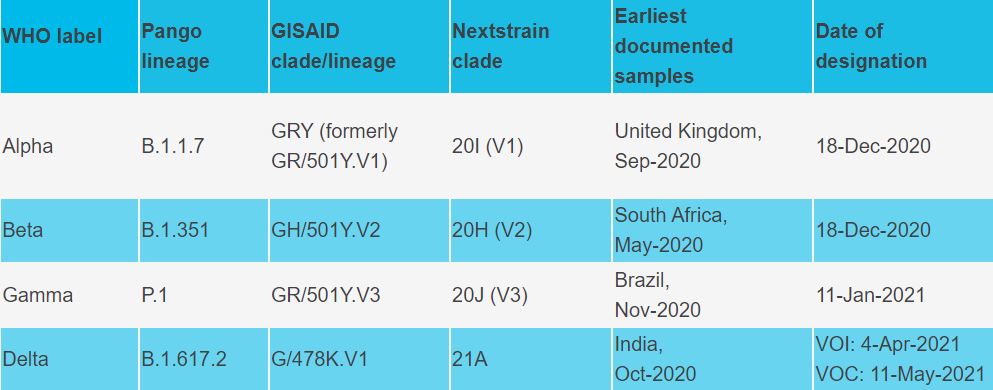
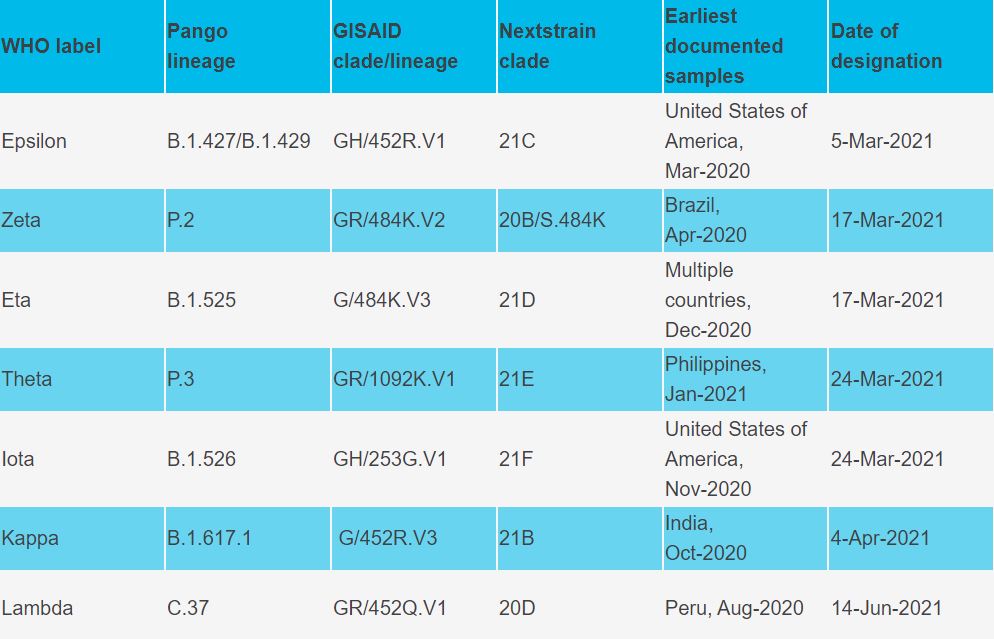
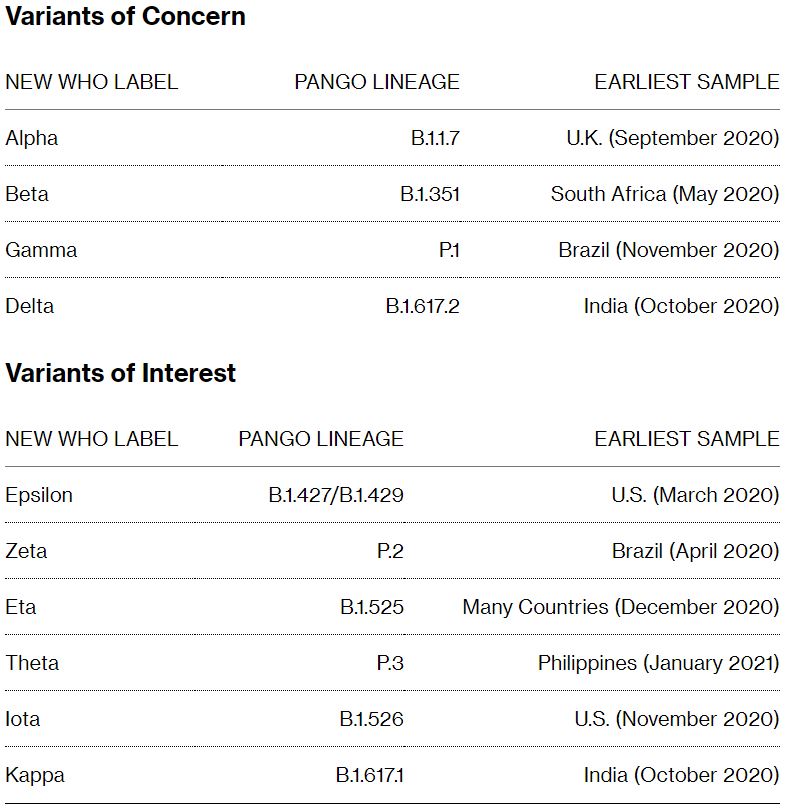
Infographic on SARS-CoV-2 Variants of Concern with Dr. Angela Rasmussen

Dr. Angela Rasmussen, a virologist and research scientist with the Georgetown Center for Global Health Science and Security and VIDO-InterVac at the University of Saskatchewan, developed an infographic explaining the most important features of the newest SARS-CoV-2 variants.

NTI and the Next Generation GHS Network Launch 5th Annual Next Generation for Biosecurity Competition

NTI | bio is partnering with the Next Generation Global Health Security (GHS) Network to launch the fifth annual Next Generation for Biosecurity Competition to foster biosecurity professional development within the Next Generation GHS Network. We are seeking innovative and creative papers for online publication by NTI | bio and the NextGen GHS Network focused on responsible conduct of life science research. The winning team also will receive travel and lodging support to attend and present during a side-event at the 2021 Biological Weapons Convention Meeting of States Parties in Geneva.

As emerging biological risks continue to grow with the rapid pace of biotechnology advances, safe, secure, and responsible conduct of life science research is increasingly important. For this year’s competition, submissions should address the following questions and subordinate considerations: What life science research should not be conducted, if any? Should red lines in life science research be drawn? If so, by whom?

Information regarding submission criteria and eligibility can be found here. The deadline is 28 June 2021 at 11:59 PM EST.

Expert Independent Panel Calls for Urgent Reform of Pandemic Prevention and Response Systems

A panel of leading experts is calling on the global community to end the COVID-19 pandemic by immediately implementing a series of bold recommendations to redistribute, fund, and increase the availability of and manufacturing capacity for vaccines, and to apply proven public health measures urgently and consistently in every country. The Panel is also recommending that national governments and the international community immediately adopt a package of reforms to transform the global pandemic preparedness and response system and prevent a future pandemic. The Independent Panel for Pandemic Preparedness and Response was appointed by the World Health Organization (WHO) Director-General in response to a World Health Assembly resolution calling for an independent, impartial, and comprehensive review of experiences gained and lessons to be learned from the current pandemic. The review was also asked to provide recommendations to improve capacity for global pandemic prevention, preparedness, and response. The Panel released its findings and recommendations today in its main report: COVID-19: Make it the Last Pandemic. The report demonstrates that the current system—at both national and international levels— was not adequate to protect people from COVID-19. The time it took from the reporting of a cluster of cases of pneumonia of unknown origin in mid-late December 2019 to a Public Health Emergency of International Concern being declared was too long. February 2020 was also a lost month when many more countries could have taken steps to contain the spread of SARS-CoV-2 and forestall the global health, social, and economic catastrophe that continues its grip. The Panel finds that the system as it stands now is clearly unfit to prevent another novel and highly infectious pathogen, which could emerge at any time, from developing into a pandemic. Recommended reforms include: establishing a Global Health Threats Council; establishing a new global system for surveillance based on full transparency; investing in national preparedness now; and creating an International Pandemic Financing Facility.

Poll Finds Public Health Has A Trust Problem

A poll conducted by the Robert Wood Johnson Foundation and the Harvard T.H. Chan School of Public Health surveyed 1,305 people from mid-February to mid-March of this year to examine trust in key public health groups. The survey found that merely 52% of respondents have a great deal of trust in the Centers for Disease Control and Prevention (CDC), but other agencies saw even lower figures. Only 37% said they had a lot of trust in the National Institutes of Health (NIH) or the Food and Drug Administration (FDA). Forty-one percent trust state health departments and 44% trust local health departments. This growing mistrust is unsurprising given the many missteps that have occurred in the COVID-19 pandemic including political interference, incomplete information, and confusing messaging. Interestingly, the survey showed the political divide in trust: only 27% of Republicans greatly trust the CDC, compared to 76% of Democrats.

Modeling of Future COVID-19 Cases, Hospitalizations, and Deaths, by Vaccination Rates and Nonpharmaceutical Intervention Scenarios

A recent Morbidity and Mortality Weekly Report (MMWR) from the Centers for Disease Control and Prevention (CDC) modelled the expected COVID-19 cases, hospitalizations, and deaths. Increases in COVID-19 cases in March and early April occurred despite a large-scale vaccination program. Increases coincided with the spread of SARS-CoV-2 variants and relaxation of nonpharmaceutical interventions (NPIs). Data from six models indicate that with high vaccination coverage and moderate NPI adherence, hospitalizations and deaths will likely remain low nationally, with a sharp decline in cases projected by July 2021. Lower NPI adherence could lead to substantial increases in severe COVID-19 outcomes, even with improved vaccination coverage. High vaccination coverage and compliance with NPIs are essential to control COVID-19 and prevent surges in hospitalizations and deaths in the coming months.

What Has COVID-19 Taught Us about Strengthening the DOD’s Global Health Security Capacities?

A new report from the Center for Strategic and International Studies (CSIS) details five recommendations for “how the Biden-Harris administration and members of Congress can help steer impending deliberations over the future of the DOD’s contributions to global health security.” The COVID-19 pandemic has cost millions of lives and sickened many more, destabilizing economies and security. Though we are not yet out of the woods with this pandemic, we should prepare to face biological threats in the future. Broad US military expertise in health, biosecurity, and biosafety has contributed to the ongoing response and will continue to contribute substantially to coordinated, interagency global health security efforts. These recommendations are designed to “complement the excellent and extensive recent analysis by Mark Cancian and Adam Saxton of the CSIS International Security Program on how the US military responded to Covid-19 to guarantee the protection and readiness of US forces and how it supported the civilian pandemic response at home.” The recommendations are: (1) elevate biological threats; (2) protect and strengthen operational assets; (3) secure the future of the DOD’s medical skill base; (4) launch a military-to-military health security cooperation initiative; and (5) transition existing DOD international health engagement activities into sustainable, integrated programs. Read the report here.

Upcoming Meeting of the National Biodefense Science Board

The National Biodefense Science Board (NBSB) provides expert advice and guidance to the Secretary of the US Department of Health and Human Services and the Assistant Secretary of Preparedness and Response on scientific, technical, and other matters related to public health emergency preparedness and response. The NBSB will host a public teleconference to discuss new recommendations to HHS that address remaining public health emergency preparedness and response challenges. In light of the numerous health emergencies and disasters that have affected the United States since 2007, NBSB continues to provide recommendations related to health emergency preparedness, response, and recovery. Meetings of the NBSB are open to the public. This meeting will be held on 26 May 2021 at 11 AM EST. Register here.

Event – Get Set: Lessons Learned for The Biological and Toxin Weapons Convention Review Conference

The United Nations Institute for Disarmament Research (UNIDIR) is hosting an online discussion on Lessons Learned for the Biological and Toxin Weapons Convention (BWC) Review Conference. This is the second in a series of events the Institute is hosting in preparation for the Review Conference of the Biological and Toxin Weapons Convention. The event will contribute to enhancing understandings of BWC review conferences and identifying lessons to be learned from past experiences. Speakers for this event include Ambassador Dr. György Molnár, Special Representative of the Minister of Foreign Affairs and Trade for Arms Control, Disarmament and Non-Proliferation MFAT Hungary and President of the Eighth BWC Review Conference; Dr. Una Jakob, research associate at the Peace Research Institute Frankfurt (PRIF) in Germany; and Mr. Zahid Rastam, charge d’Affaires ad-interim, High Commissioner of Malaysia to United Kingdom. The panel will be moderated by UNIDIR researcher, James Revill and will include a question-and-answer session with the audience. The event will be held 20 May 2021 at 1 PM CEST. Register here.

Ineffective Past, Uncertain Future

In 2016, in the face of relentless attacks on health care in situations of conflict, the UN Security Council adopted Resolution 2286. This committed UN member states to taking action to prevent attacks on health care and ensure accountability for perpetrators. In the five years since, they have done neither. In annual reports in the years since Resolution 2286 was adopted, the Safeguarding Health in Conflict Coalition (SHCC) and Insecurity Insight reported a total of more than 4,000 unique incidents of violence against health care in situations of armed conflict – on average more than two incidents a day. Because the reporting of such incidents is limited in many countries, this number is likely a significant undercount. The violence has taken myriad forms: airstrikes against and shelling of hospitals and clinics; kidnappings and killings of health workers; damage to, the destruction of, and looting of health care facilities and vehicles; actions that prevent those in need from accessing health care; violent interference with emergency medical responders, vaccinators and others and; arrests of health workers. During 2020, the COVID-19 pandemic resulted in more violence against health care, including in countries not at war, such as India and Mexico. Violence causes not only immediate death, injury, and destruction, but often results in an enormous psychological and physical toll on health workers and the people in the communities they serve. Hidden in each incident is the loss of family members and colleagues, livelihoods, homes, and, sometimes, a way of life. The true cost of the attacks also includes the lasting impacts on health workers’ mental health and on communities’ ability to access care for chronic illness, safe childbirth, immunization, and more. Fewer health workers are available to provide care as doctors and nurses flee the violence. The report – Ineffective Past, Uncertain Future – presents the documented threats and violence against health care between January 2016 and December 2020. An interactive map developed by Insecurity Insight and MapAction for the Safeguarding Health in Conflict Coalition shows incidents of violence and threats against health care. Read the report here and view the map here.

Incentives to Vaccinate

In effort to encourage COVID-19 vaccination, several states have devised clever incentivizes to increases their rates as demand declines. In Louisiana, the vaccine is easily accessible, but to inspire more people to join the fight against the pandemic, a vaccination event in New Orleans also offered a pound of free boiled crawfish. In Ohio, there will be five weekly lottery drawings for $1 million open to residents who received at least one dose of a COVID-19 vaccine. Similarly, there is a lottery for teenagers that offers a full, four-year scholarship to a public university in Ohio – room and board included. Maryland launched an incentive of $100 to state employees who opt to get fully vaccinated. New Jersey introduced its “Operation Jersey Summer” campaign to reach the state’s goal of vaccinating 70% of the adult population by the end of June. As part of the campaign, vaccinees aged 21 years or older can participate in the “Shot and a Beer” program that provides a free beer with COVID-19 vaccinations beginning this month.

Pandora Report: 5.7.2021

Surgeon General Dr. Vivek Murthy shared new tools to find vaccines near you! You can text ZIP code to 438829 (GETVAX) or 822862 (VACUNA). You can also visit vaccines.gov or vacunas.gov. The shot emoji gets a makeover. WHO and Germany launch the WHO Hub for Pandemic and Epidemic Intelligence.

The ‘Vaccine’ Emoji Gets a New Look This Week

This month, the most popular emoji on Twitter was the one with its mouth agape and tears streaming down, depicting the pandemic mood of being overwhelmed with either anguish or relief as the vaccines roll out. The microbe emoji has also surged in use over the last year to describe SARS-CoV-2. The face mask and shot emojis are also quite popular, promoting these countermeasures. To better represent vaccines, the vaccine emoji has been redesigned from syringe with a bright red barrel and a drop of blood coming out from the needle to a syringe with a blue-gray hue without the blood droplet.

COVID-19 Vaccine Nationalism Will Cost Lives Worldwide

Tedros Adhanom Ghebreyesus, Director-General of the World Health Organization, called the hoarding of COVID-19 vaccines by wealthy nations as a “catastrophic moral failure.” By mid-March, 14% of the global population had access to more than half of the vaccines in the world, and modeling suggests that this hoarding will lead to nearly twice as many deaths as would happen if vaccines were shared across the globe. “Vaccine nationalists” advocate for vaccinating the people in their own country by any means necessary, whereas “globalists” seek more equitable approaches for vaccine allocation that are based on need rather than payment. The US possesses an excess of the AstraZeneca vaccine that it anticipated would gain emergency authorization. After much pressure, the Biden administration decided to donate that stockpile, some 60 million doses, to nations in need. “Vaccines don’t save lives, vaccination does.” Equitable vaccination should be the default policy and action, not requiring pressure. In order to protect or strengthen the public health of a nation, we need to protect and strengthen the public health of all nations.

WHO, Germany Launch New Global Hub for Pandemic and Epidemic Intelligence

The World Health Organization (WHO) and the Federal Republic of Germany will establish a new global hub for pandemic and epidemic intelligence, data, surveillance and analytics innovation. The WHO Hub for Pandemic and Epidemic Intelligence will be a global platform for pandemic and epidemic intelligence, creating shared and networked access to vital multi-sectoral data, driving innovations in data analytics and building the communities of practice needed to predict, prevent, detect, prepare for, and respond to worldwide health threats. The Hub, based in Berlin and working with partners around the world, will lead innovations in data analytics across the largest network of global data to predict, prevent, detect prepare for and respond to pandemic and epidemic risks worldwide. It will be a new global collaboration of countries and partners worldwide, driving innovations to increase availability and linkage of diverse data; develop tools and predictive models for risk analysis; and to monitor disease control measures and infodemics.

Mitigating Future Respiratory Virus Pandemics: New Threats and Approaches to Consider

Despite many recent efforts to predict and control emerging infectious disease threats to humans, we failed to anticipate the zoonotic viruses which led to pandemics in 2009 and 2020. The morbidity, mortality, and economic costs of these pandemics have been staggering. We desperately need a more targeted, cost-efficient, and sustainable strategy to detect and mitigate future zoonotic respiratory virus threats. Evidence suggests that the transition from an animal virus to a human pathogen is incremental and requires a considerable number of spillover events and considerable time before a pandemic variant emerges. A new article in Viruses view argues for the refocusing of public health resources on novel respiratory virus surveillance at human–animal interfaces in geographical hotspots for emerging infectious diseases. Where human–animal interface surveillance is not possible, a secondary high-yield, cost-efficient strategy is to conduct novel respiratory virus surveillance among pneumonia patients in these same hotspots. When novel pathogens are discovered, they must be quickly assessed for their human risk and, if indicated, mitigation strategies initiated. In this review, the authors discuss the most common respiratory virus threats, current efforts at early emerging pathogen detection, and propose and defend new molecular pathogen discovery strategies with the goal of preempting future pandemics. Read the article here.

Insider Q&A: Ex-Biodefense Chief on Stopping the Next COVID

Dr. Rick Bright is a former director of the Biomedical Advanced Research and Development Authority (BARDA), a government office tasked with procuring and developing medical countermeasures for chemical, biological, radiological and nuclear (CBRN) threats along with emerging diseases. One year ago, Bright submitted a whistleblower complaint regarding the improper use of hydroxychloroquine, a malaria drug, to treat COVID-19; the medication was later considered ineffective and too risky. In retaliation, Bright was demoted and he ultimately resigned from his position. Bright is now the Senior Vice President of Pandemic Prevention and Response at the Rockefeller Foundation.  In a conversation with AP News, Bright explains that, in the early days of the pandemic, he wishes there had been a “reliable, nonpolitical, early warning signal.” The lack of a strong signal, transparency, and information sharing needs to change before the next biological event. He also points out there is not necessarily a lack of data or information, rather there is a need to be able to “aggregate all that information in a trusted source that’s not beholden to politics or money.”

Event – The Global Health Security Index: A Tool for Decision Makers in Latin America

The Global Health Security Index – developed by the Nuclear Threat Initiative (NTI), the Johns Hopkins Center for Health Security (JHU), and The Economist Intelligence Unit (EIU) – is the first comprehensive assessment and benchmarking of health security and related capabilities across 195 countries. On 12 May, NTI and the Cayetano Heredia Peruvian University are hosting an event, “The Global Health Security Index: A Tool for Decision Makers in Latin America.” Panelists include Javier Rodriguez Zulato, Director of the Initiative for Global Security (IGS); Luciana Vazquez, Biosecurity and Biosafety Program Coordinator at IGS; Dr. Ricardo Teijeiro, IGS Biosafety and Biosecurity Program Argentine Society of Infectology (SADI); Luis Carrerra Fox, North America Liaison IGS/PandemichTech; Jessica Bell, Senior Program Officer at NTI; and Ernesto Gozzer, Professor at Universidad Peruana Cayetano Heridia. Register here for the virtual webinar on 12 May at 2 PM EST.

Superspreaders of Malign and Subversive Information on COVID-19: Russian and Chinese Efforts Targeting the United States

The RAND Corporation released a report as part of its Countering Truth Decay initiative that examines the Russian and Chinese efforts to target the US through information manipulation. Activities to spread COVID-19-related malign and subversive information have been underway throughout the pandemic, but the report assesses evidence from the January to July 2020 period. Two types of sources were used: those formally linked to Russia and China and those shown to have indirect links to Russian or Chinese governments or networks. Using exploratory qualitative analysis, several trends were found, including: both countries falsely accused the United States of developing and intentionally spreading the virus; both countries modified their COVID-19-related messaging over time, focusing on conspiracy theories about the virus’s origins and impacts; Russia deployed wide-ranging media and targeted a variety of audiences, while China’s approach was ideologically uniform and appeared to target audiences that were less varied. Read the report here.

Virologist Angela Rasmussen on the Controversy Surrounding Russia’s Sputnik V COVID-19 Vaccine

Dr. Angela Rasmussen is a virologist and research scientist with the Georgetown Center for Global Health Science and Security and VIDO-InterVac at the University of Saskatchewan. STAT had a conversation with Rasmussen about the controversy surrounding Russia’s Sputnik V COVID-19 vaccine, which is based on technology similar to that of the Johnson and Johnson as well as AstraZeneca vaccines. According to a study published in The Lancet, the Sputnik vaccine showed 91.6% efficacy, ranking it as one of the most effective in the world. When asked why Brazil rejected the Sputnik vaccine, Rasmussen explained that with the adenovirus component, the virus could potentially replicate and cause downstream complications. Another issue is the worry about quality control of Russia’s COVID-19 vaccine, specifically, there may be “discrepancies in the manufacturing process.” In terms of soft power diplomacy, the concerns regarding the Sputnik vaccine may be dealing a blow to Russia’s attempt to assume a leadership role in the global vaccine efforts.

Listen to the full conversation here.

Event – Reinforcing the Norm Against Chemical Weapons: The April 20-22 Conference of States Parties to the Chemical Weapons Convention

At the second session of the 25th Conference of States Parties held in The Hague last month, the member states took several important steps to reinforce the norm against chemical weapons use and to hold Chemical Weapons Convention violators accountable. Foremost among these was the decision to suspend the rights and privileges of Syria under the Convention. The Chemical Weapons Convention Coalition, in cooperation with the Arms Control Association, will host a briefing to review the results and implications of the 25th Conference of States Parties for the work of the Organisation for the Prohibition of Chemical Weapons and the CWC regime. Panelists include Amb. Lisa Helfand, Permanent Representative of Canada to the OPCW (confirmed); Amb. Gudrun Lingner, Permanent Representative of Germany to the OPCW; Dr. Jean Pascal Zanders, independent disarmament and security researcher at The Trench; and Dr. Paul Walker, moderator, Coordinator, Chemical Weapons Convention Coalition. Opening remarks will be given by H.E. Fernando Arias, Director-General of the OPCW. The panel will be held on 10 May 2021 at 10 AM EST. Register here.

Cheminformatics at the Stimson Center

As recent international incidents amply demonstrate, chemical weapons remain an enduring and very real challenge to international peace and security. However, frontline officers for border security and trade controls, as well as chemical industry employees, struggle to identify whether a chemical can be utilized as a chemical warfare agent and precursor. This challenge stems from at least three sources: (1) lists of controlled chemicals identify chemicals of concern through names and registry numbers – however, the lists may not cover the specific chemical in question, given that chemicals have a multitude of synonymous names and different variants of the same chemical; (2) some lists of controlled chemicals do not identify individual chemicals only chemical families, which can make the lists difficult to interpret by non-chemists; and (3) lists of controlled chemicals are subject to change and must be kept current. The Stimson Center is developing a tool to help overcome these challenges.

The Cheminformatics tool is composed of an up-to-date database of relevant lists of controlled chemicals to help address problems inherent to the way in which the identification of such chemicals is currently conducted by converting any entered chemical name or registry number into a chemical structure, and automatically checking whether that structure matches any entry of the database. Through September 2021, the Cheminformatics team will work to lay the groundwork for the development of a database tool that will allow frontline officers for border security and trade controls as well as chemical industry employees to easily assess if a given chemical falls within the scope of a national or international control list of chemical warfare agents and precursors. A demonstration of the prototype was given in late February to showcase its ability to query a database of controlled chemicals and verify if a specific chemical is included on a control list.

A Revolution Is Sweeping the Science of Ancient Diseases

Dr. Johannes Krause, director of the archaeogenetics department at the Max Planck Institute for Evolutionary Anthropology, co-authored the book A Short History of Humanity, which synthesizes twenty years of work with ancient DNA from humans and pathogens. In the past decade, ancient DNA have been used to study diseases – the plague, syphilis, hepatitis B, and a mysterious “cocoliztli” epidemic – using techniques based on decoding the genome of the Neanderthal. This has enabled a “boom” in ancient pathogen DNA examination and revealed information of forgotten or extinct diseases. Krause explains that the teeth from ancient remains are used to collect blood samples; this is because the pathogens of interest are blood-borne. In the DNA of Yersinia pestis, the causal agent for plague, scientists found that the “Black Death is literally the common ancestor, the mother of 80% of the strains that circulate in the world today.” Krause and his colleagues have found evidence of bacteria that look like Yersinia pestis from teeth in Europe that date back almost 5,000 years. Though Krause cannot specifically identify the disease, he does describe it as likely lethal, but not transmissible via fleas. Read the full interview here.

Pandora Report: 4.30.2021

This is World Immunization Week! The US is donating up to 60 million doses of the Astra Zeneca COVID-19 vaccine to the global vaccine effort. This week also marks the first 100 days of the Biden administration, which has already seen 200 million COVID-19 doses administered in the US.

World Immunization Week

The last week of April is World Immunization Week! World Immunization Week promotes the use of vaccines to protect people of all ages from disease. Every year, vaccines save millions of lives as one of the most successful health interventions. Despite their efficacy, nearly 20 million children worldwide are not vaccinated, leaving them vulnerable. This year’s theme is “Vaccines bring us closer,” which urges “greater engagement around immunization globally to promote the importance of vaccination in bringing people together, and improving the health and wellbeing of everyone, everywhere throughout life.” The World Health Organization’s campaign aims to increase trust, confidence, and investments in vaccines.

In great news, a vaccine against malaria, a disease that kills over 400,000 people each year, has proven 77% effective in early trials. The trial included 450 children in Burkina Faso and the shot was found to be safe and showed “high-level efficacy” over one year of follow up.

Epidemics That Didn’t Happen

In this COVID-19 era, we are constantly reminded of gaps or failures in pandemic preparedness; however, a new resource is offering examples of effective preparedness by showcasing epidemics that never hit or that were largely tempered. The examples include Yellow Fever in Brazil, Ebola in Uganda, Anthrax in Kenya, Monkeypox in Nigeria, and COVID-19 in Mongolia and Senegal.

Though anthrax is often associated with bioterrorism, it is an ancient disease that is found naturally in soil. The anthrax bacterium can infect livestock and wildlife, which, in turn, infect humans when their contaminated meat is consumed. In 2019, a local herder and two students located in a town in Kenya became very ill after eating the meat from a dead cow. All three were diagnosed with anthrax. A volunteer who had been trained by the Kenya Red Cross Society’s Community-Based Surveillance system, immediately sent an SMS alert to the system. This alert notified local health and veterinary authorities, and quickly spurred action to contain the outbreak. Ultimately, there were four human cases and one death. This and the other case studies highlight that outbreaks can be contained and epidemics can be prevented with strong preparedness and response measures, protocols, and activities.

Spillover or Endemic? Reconsidering the Origins of Ebola Virus Disease Outbreaks by Revisiting Local Accounts in Light of New Evidence from Guinea

New research published in the BMJ Global Health journal finds that the 2021 outbreak of Ebola virus disease (EVD) in Guinea originated in viral resurgence from a persistently infected survivor from the major 2013–2016 epidemic 5–7 years ago, prompting an urgent need to re-evaluate whether past EVD epidemics hitherto considered as independent zoonotic spillovers may have had similar origins. In the article, researchers reconsider local accounts from the West African epidemic that trace its origins to people, dismissed until now as implausible. The authors reinterpret existing scientific accounts of other alleged spillovers, finding that several past outbreaks probably originated in persistent infections over even longer latency. By recalibrating the balance between “spillover” and “flare-up,” they suggest that EVD manifests less as a series of discrete epidemics and more as an endemic disease in humans over long timescales and wide areas, helping to account for the increasing frequency of episodes. The authors recommend that more collaborative, respectful approaches with local communities are needed to understand the origins of outbreaks, to address them and to support rather than stigmatize sufferers and survivors. Read the article here.

India’s COVID-19 Crisis Prompts Global Response

India is currently experiencing a severe surge in COVID-19 cases, the worst in the pandemic. In fact, India broke the global daily record for the number of COVID-19 cases for a fifth straight day, with more than 350,000 new infections reported. Hospitals are facing critical shortages of oxygen and remdesivir, an antiviral used to treat hospitalized COVID-19 patients. Tedros Adhanom Ghebreyesus, Director-General of the World Health Organization, said, “the situation in India is beyond heartbreaking.” President Biden spoke with Indian Prime Minister Narendra Modi about sending raw materials for its Covishield vaccine to help quell the crisis.

How COVID-19 Prepared the Military for Future Biological Warfare

Although the COVID-19 pandemic shut down much of society or transitioned it into a remote format, the vast majority of the military’s missions continued. These missions include activities ranging from air transportation to basic training. Since most of these activities cannot be conducted over Zoom, the military was forced to improvise and adapt operations to keep forces healthy, and were largely successful. According to Lt. Gen. Brian Robinson, deputy commander of Air Mobility Command, the pandemic is one of the few, if not only, times in which the military has “faced a true challenge to how it commands and controls its forces on a global scale.” The COVID-19 outbreak on the aircraft carrier Theodore Roosevelt provided important lessons about how to respond in a biological attack. The disease spread rapidly on the ship and led to the ship’s skipper pleading with Navy leadership for help, a plea that was leaked to the media. Lt. Cmdr. Brian Pike stated that the ship’s outbreak reveals the need to consider deploying technical experts in the detection and surveillance of biological threats on Navy ships to contain infectious diseases. Dr. Gregory Koblentz, Director of the Biodefense Graduate Program, asserts that improving detection capabilities on a vessel should entail monitoring the health of the crew and preparing for a situation in which the first sign of an attack is the presentation of symptoms. To do so, the Navy may need to add personnel that are skilled in disease surveillance or specially train existing personnel.  

Navalny’s Novichok Poisoning Was Putin Sending the World A Message, Experts Say

In August 2020, Alexei Navalny, an Russian opposition leader, was poisoned with a Novichok, an agent banned by the Chemical Weapons Convention. After being hospitalized in Germany, Navalny returned to Russia and was imprisoned. In response to rising international pressure, Putin gave a “fiery state of the nation speech” that warned other nations to not attempt to cross the unspecified “red lines” in regard to Navalny. Navalny’s recent court appearance saw him at the end of a three-week hunger strike, and there are fears he may be close to death. He is not the first to be poisoned with a Novichok; Sergei and Yulia Skripal were poisoned in 2018. According to Dr. Gregory Koblentz, Director of the Biodefense Graduate Program, prior to the Skripals, the Novichok was not thought to be a weapon of assassination. Further, at that time, only about a dozen laboratories in the world were equipped to detect it. This means that the number of other enemies of the Kremlin that have been victims of a Novichok is unknown. As a clear and odorless agent, it is among the most lethal nerve agents known. Some experts are interpreting the Novichok poisonings as warnings to those who oppose Putin, but also as a message to NATO nations that “Russia is using a forbidden chemical weapon that Russia says it doesn’t have — that it can harm not only its own citizens but citizens in any city, any country outside of Russia.”

Harris to Tell UN Body It’s Time to Prep for Next Pandemic

On Monday, Vice President Kamala Harris will address the United Nations in a virtual speech to make the case that “now is the time for global leaders to begin putting the serious work into how they will respond to the next global pandemic.” This speech will come near the 100-day mark of the Biden-Harris administration. According to excerpts, Harris will provide an overview of what the administration wants to focus on: improving accessibility to healthcare; investing in science, healthcare workers, and the well-being of women; and boosting capacity for personal protective equipment (PPE) and vaccine and diagnostic test manufacturing.

Pandora Report: 4.23.2021

State Department releases its annual reports assessing arms control compliance and adherence. Dr. Brian Mazanec, an alumnus of the Biodefense PhD Program, receives the Arthur S. Flemming Awards Honor Outstanding Federal Employees. Globally, to date, there have been nearly 145 million cases of COVID-19 and over 3 million deaths from the novel coronavirus. In much-needed good news, all adults (16 years and older) in the US are now eligible for a COVID-19 vaccine.

State Department Releases Arms Control Compliance Reports

The US Department of State released its reports regarding compliance with arms control, nonproliferation, and disarmament agreements and commitments. The report assesses the adherence of the US as well as other nations, including Iran, North Korea, Syria, China, and Russia. In short, the activities of the US in 2020 were “consistent with the obligations set forth in the Biological Weapons Convention (BWC).” Additionally, the US has “provided a full and complete declaration of its chemical weapons (CW) and associated CW facilities, and continues to work toward completing the destruction of CW and associated CW facilities, in accordance with its CWC obligations.” Turning to the activities of other countries, there are concerns about BWC compliance in China and Iran. North Korea and Russia are suspected of maintaining offensive biological weapons programs, which violates Article I of the BWC.

State’s 2021 report on CWC compliance alleges that Iran and Myanmar are in violation of the CWC for failing to declare former chemical weapons facilities. GMU’s Biodefense Program Director Dr. Gregory Koblentz and master’s student Madeline Roty encourage the US to help Myanmar come clean about its chemical weapons program in an article released in March 2020. The motivation and objective of the clandestine weapons program remains unclear, but speculation includes defense or offense measures against domestic insurgencies or neighboring countries. Despite its continued denial of the program, Myanmar seems to be moving toward transparency with its willingness to address concerns about its adherence (or lack thereof) to the Chemical Weapons Convention. The State Department also raises concerns about Chinese research with pharmaceutical-based agents (PBAs) and toxins with dual-use applications. Similarly, there are worries about Iran’s work with PBAs. In August 2020, Russia violated the CWC by deploying a Novichok nerve agent in an attempted assassination of Alexi Navalny. The US also accuses Syria of being in non-compliance with the CWC due to its repeated use of chemical weapons and its failure to fully declare its CW program and destroy chemical agents and munitions. Read the reports here and here.  

Watchdog Group Votes to Punish Syria for Chemical Weapons Use

The Organization for the Prohibition of Chemical Weapons (OPCW), the entity tasked with enforcing the Chemical Weapons Convention (CWC), voted to remove the membership rights of Syria, which can no longer cast votes or hold committee positions. This determination is a response to Syria’s use of chemical weapons against its own citizens. The measure required a two-thirds majority: 87 countries approved the measure, 14 opposed, and 34 abstained. Dr. Gregory Koblentz, Director of the Biodefense Graduate Program, weighed in on the measure: “The penalties imposed today are a slap on the wrist compared to the magnitude of Syria’s egregious behavior, [but] they send a strong signal that chemical weapons cannot be used with impunity.”

Dr. Brian Mazanec Receives the Arthur S. Flemming Awards Honor Outstanding Federal Employees

Dr. Brian Mazanec, an alumnus of the Biodefense PhD Program, is among the recipients of the Arthur S. Flemming Awards Honor Outstanding Federal Employees. The award recognizes a dozen exceptional public servants for “performing outstanding service in the fields of applied science and engineering, basic science, leadership and management, legal achievement, and social science.” Dr. Mazanec serves as the director responsible for the strategic warfare and intelligence portfolio of the US Government Accountability Office (GAO). He has “demonstrated outstanding leadership, innovation, and excellence in improving the efficiency and effectiveness of the national security enterprise, particularly the intelligence community, better preparing Congress and agencies to address critical emerging threats and challenges.” Mazanec has led work in intelligence and counterintelligence, counterterrorism, building foreign partner capacity, cybersecurity, and foreign military financing and sales. Congratulations, Dr. Mazanec!

Global Health Security: USAID and CDC Funding, Activities, and Assessments of Countries’ Capacities to Address Infectious Disease Threats before COVID-19 Onset

The US Government Accountability Office (GAO) released its findings of a study about the Global Health Security funds used US Agency for International Development (USAID) and the Centers for Disease Control and Prevention (CDC). USAID and the CDC invest in global health security to help other nations build their capacities to deal with infectious diseases. The GAO study found that USAID and the CDC had dispersed roughly $1 billion as of 31 March 2020 for global health security activities. This money went to at least 34 countries, including 25 recognized as partner countries with the Global Health Security Agenda (GHSA). This support helped build capacity in 17 GHSA partner countries, which helps them address infectious disease threats. Also, by the end of fiscal year 2019, most of those 17 nations possessed some capacity in each of the 11 technical areas, but continued to face various challenges. Read the report here.

‘Building Back Better’ Requires a New Approach to US Science and Technology

Dr. Daniel Gerstein, alumnus of the Biodefense PhD Program and senior policy researcher at the RAND Corporation, discusses the need for a new approach to US science and technology (S&T). Over the last several decades, there have been organizational and process changes to the US science and technology enterprise. Such changes include the establishment of the National Science Foundation (NSF), NASA, and the Defense Advanced Research Projects Agency (DARPA), as well as new US leadership in scientific research and development. Gerstein asserts that a makeover – based on a coherent plan – of the US S&T enterprise is needed to improve economic prosperity and national security.

Billions Spent on Coronavirus Fight, But What Happens Next?

Thus far, Congress has allocated billions of dollars to help state and local public health departments respond to the COVID-19 pandemic. As the pandemic recedes, these funds may also dry up, leaving many public health departments with meager budgets yet again. Rolling back funding will leave communities – and the nation – unprepared for another health crisis, a lesson we should have learned well from the lingering pandemic. Dr. Mysheika Roberts, a health commissioner in Ohio, points out that more funding is needed consistently, not as a surge once an emergency has already started. According to Trust for America’s Health, money for public health emergency preparedness was cut nearly in half between the 2003 and 2021 fiscal years, accounting for inflation. Democratic US Senator Patty Murray of Washington leads several lawmakers aiming to “end the boom-bust cycle with legislation that would eventually provide $4.5 billion annually in core public health funding.”

How Safe Are You from COVID When You Fly?

A new interactive created by The New York Times details how air circulates in an aircraft. Dr. Nereyda Sevilla, graduate of the GMU Biodefense PhD Program, focused her dissertation on the transmission and risks of airplane-borne infectious diseases. Sevilla’s research analyzed the impact of air travel on the spread of pneumonic plague, a disease with a high mortality rate. Her results indicate that transmission via air travel depends on the type of disease, specifically, its duration of illness. Nereyda makes the following recommendations: (1) expand the definition of close contact on aircraft, (2) require health contact information with all plane tickets purchases, (3) expand self-sanitizing measures, (4) improve travel alerts and advisory notices during the ticket sales process, (5) perform temperature checks on a limited and random basis, and (6) improve crisis communication. Dr. Saskia Popescu, an assistant professor in the Biodefense Graduate Program as well as an alumna, points out that passengers may also be exposed to the virus in airport terminals, where crowding makes social distancing quite difficult.

Pandora Report: 4.16.2021

The FDA and CDC recommend a pause on the Johnson & Johnson COVID-19 vaccine due to a rare but severe blood clot. The OPCW’s IIT releases its second report on the chlorine attack on Saraqib in Syria. Russia aims to prevent the OPCW from holding perpetrators accountable for using chemical weapons.

FDA & CDC Urge Pause on Use of Johnson & Johnson COVID-19 Vaccine

On Tuesday, the Food and Drug Administration (FDA) along with the Centers for Disease Control and Prevention (CDC) released a joint statement recommending a pause on the administration of the COVID-19 vaccine developed and produced by Johnson & Johnson. Thus far, over 6.8 million doses of the Johnson & Johnson vaccine, an adenovirus vector vaccine, have been given. Among those doses, six cases of a rare and severe type of blood clot – a cerebral venous sinus thrombosis (CVST) – are under investigation, prompting the pause. These six cases have arisen only in women between the ages of 18 and 48 years, and symptoms presented 6-13 days after vaccination. Treatment of a CVST differs from treatment of other types of blood clots, which generally call for heparin, an anticoagulant; heparin may be dangerous in treating a CVST. The CDC convened a meeting of the Advisory Committee on Immunization Practices (ACIP) on Wednesday to further assess these cases and their possible significance. The FDA is also investigating these rare but severe cases.

The Race for Antiviral Drugs to Beat COVID — and the Next Pandemic

In 2003, several infectious diseases emerged – two lethal influenza strains made the jump from birds to humans in Hong Kong as well as the Netherlands, and a new coronavirus that causes severe acute respiratory syndrome (SARS) appeared. These glaring warning flags were heeded by Robert Webster, a leading authority on avian influenza, who urged scientists and policymakers to prepare for the next outbreak by developing and stockpiling medications that target an extensive range of viral pathogens. Webster’s recommendation was unheeded. Webster stated: “The scientific community really should have developed universal antivirals against SARS. Then we would have had something in the stockpile for the emergence of COVID.” Remdesivir, a broad-spectrum antiviral, is the creation of the Antiviral Drug Discovery and Development Center (AD3C), a project launched seven years ago and backed by the National Institutes of Health (NIH). Unfortunately, though remdesivir was ready to go when SARS-CoV-2 hit, study findings were inconclusive on its benefits to COVID-19 patients. Additionally, this antiviral is “expensive, difficult to manufacture and must be given intravenously in a hospital — all undesirable attributes in the middle of a pandemic.” Another antiviral studied prior to the pandemic, molnupiravir, is easier to synthesize and is showing promise in shortening the duration of infectiousness among symptomatic COVID-19 cases. The nature of viruses – their compact genomes and lack of cellular anatomy – means they offer few “druggable targets.” According to John Young, Head of Infectious Diseases at Roche Pharma Early Research & Development, the COVID-19 pandemic is a “wake-up call” that industry needs to prepare for the next biological event. To better prepare, new projects have popped up that are dedicated to developing broad-spectrum antivirals for coronaviruses or influenza viruses.

Chemical Weapons in Syria

On 4 February 2018, the town of Saraqib in Syria was attacked with chlorine gas, a toxic chemical weapon banned under the Chemical Weapons Convention (CWC). The Investigation and Identification Team (IIT) of the Organisation for the Prohibition of Chemical Weapons (OPCW) released its second report on the use of chemical weapons in Syria in early February 2018. The report “reiterates its mandate, the legal and practical challenges of its work, and the findings of the investigation focusing on the incident in Saraqib, Syrian Arab Republic, on 4 February 2018.” Additionally, the IIT’s investigation concluded that there are “reasonable grounds to believe that, at approximately 21:22 on 4 February 2018, a military helicopter of the Syrian Arab Air Force under the control of the Tiger Forces hit eastern Saraqib by dropping at least one cylinder.”

The Syrian Arab Air Force (SyAAF) has served as Assad’s “primary means of inflicting violence and suffering on civilians in opposition-held communities.” The Global Public Policy Institute (GPPI) has identified at least 336 chemical attacks using Sarin and chlorine that have been carried out by Syrian government forces. At least 34,000 Syrians have died from the air attacks dropping barrel bombs and other weapons. Many more have been injured and forced from their homes. Research by GPPI “outlines the Syrian air force’s transformation as a military organization, and offers a thorough account of its current state and operational patterns.”

Last month, the Biodefense Graduate Program hosted an event about the future of chemical weapons arms control. The repeated use of chemical weapons by Syria and Russia threatens to undermine international efforts to eliminate these weapons. The panelists discussed the challenges posed by the current Russian and Syrian chemical weapons programs, the status of international efforts to strengthen accountability for use of chemical weapons, and the implications for global chemical weapons arms control. Find the recording and presenters’ slides here.

OPCW Member States Must Counter Russian Obstruction

The Organisation for the Prohibition of Chemical Weapons (OPCW) is the implementing body for the Chemical Weapons Convention (CWC). The OPCW’s Conference of States Parties will resume on 20 April and there is a draft decision pending vote on declaring Syria non-compliant with the CWC. A memorandum published by the Foundation for Defense of Democracies (FDD) is the “first publicly available analysis of the voting patterns of the OPCW’s 193 member states.” There are two primary groups of non-cooperative states: one comprised of US adversaries that actively side with Russia and the other comprised of member states that tend to abstain. The group that abstains adds to the difficulty of reaching the threshold of two-thirds of the vote to pass decisions in the Executive Council, a key decision-making body. This analysis assigns 27 member states to the “adverse-voter category” and 38 to the “frequent-abstainer category.” The US maintains positive ties to many of the countries that often abstain. The memo recommends that the US “leverage these relationships to secure votes that uphold the integrity of the Chemical Weapons Convention (CWC) and the OPCW.” Read the analysis here.

New RFP Includes CBW Topics

The Department of State has released a Broad Agency Announcement (BAA) “seeking ambitious, innovative research proposals to address priority science and technology requirements for arms control, nonproliferation, and disarmament-related monitoring and verification.” This request for proposal (RFP) is from the Key Verification Assets Fund, or V Fund, under State’s Bureau of Arms Control, Verification and Compliance (AVC). Several of the topics center around chemical and biological weapons: identifying additional measures and reinforcing existing measures to deter chemical weapons use; chemical weapons (CW) forensic and investigative science; promoting measures/existing provisions to increase compliance with and adherence to the Biological Weapons Convention; and promoting and coordinating international capacity-building measures in support of the UN Secretary General’s Mechanism for investigations of alleged use of biological weapons.

Coronavirus Origins: How Unseen Wuhan Research Notes Could Hold the Answers – And Why Lab-Leak Rumours Refuse to Die

After a string of illnesses from an unknown coronavirus began in Wuhan, Dr. Shi Zhengli, Director of the Centre for Emerging Infectious Diseases at the Wuhan Institute of Virology (WIV), began to worry that these cases were caused by an escaped virus. Shi’s team performed a genetic analysis of the novel coronavirus (SARS-CoV-2) and found that it did not match any of the stored samples in the WIV laboratory. Shi, nicknamed the “Bat Woman,” is considered the global authority on coronaviruses for her revolutionary research on the origins of the 2002 SARS outbreak, which likely emerged in horseshoe bats. Despite her impressive credentials and expertise, the genetic analysis has not assuaged many worries that the virus escaped WIV. Dr. Gregory Koblentz, Director of the Biodefense Graduate Program, cites the Chinese government’s requirement that all COVID-19 related research be approved before publication, which effectively serves as a “gag order” on Chinese scientists. According to Koblentz, “[government censorship] makes it much more difficult to discern how much of the information being provided is legitimate and genuine, and how much of it is part of a broader government-run effort to deflect blame from China and onto other parties for starting the outbreak.” Turning to the investigation into the origins of COVID-19, Koblentz states that the “search should include an independent audit of all labs in Wuhan working on bat coronaviruses and researching SARS.”

Pandora Report: 4.9.2021

Yong-Bee Lim, a Biodefense PhD candidate, and Andrew Weber propose a new funding vision for US biodefense. A new interactive, web-based tool will help prevent and control disease outbreaks. An open letter calls for further and more comprehensive inquiries into the origins of SARS-CoV-2.

10 + 10 Over 10: A Funding Vision for the US Fight Against Biological Threats

Andrew Weber, a Senior Fellow at the Council on Strategic Risks, and Yong-Bee Lim, a Biodefense PhD candidate, propose a new funding vision for the US to fight biological threats. The authors point out that the US must establish “a vision of significant, sustained and stable government funding to drive focused and rapid private sector-developed solutions.” Their 10+10 Over 10 plan proposes that the US dedicate $10 billion per year to the Department of Defense (DOD) and $10 billion per year to Health and Human Services (HHS), all for biodefense-related programs and initiatives. These funding levels should be maintained for 10 years. The COVID-19 pandemic emphasized the threat of naturally-emerging pathogens with pandemic potential, and spurred a reminder of the weaponizable potential of pathogens. The Biden administration has announced its commitment to tackling natural, accidental, and deliberate biological dangers as a top priority for national security, but this commitment requires adequate resources. The history of biodefense funding tends to include cuts made at critical times in order to fund other defense priorities. To better protect the nation from biological threats, the US must dedicate secure funding towards biodefense activities.

SpillOver

A recent article in the Proceedings of the National Academy of Sciences (PNAS) debuts a new framework and interactive web tool, SpillOver, which “estimates a risk score for wildlife-origin viruses, creating a comparative risk assessment of viruses with uncharacterized zoonotic spillover potential alongside those already known to be zoonotic.” SpillOver was created because the threat of zoonotic viral threats continues to rise, and “strategies are needed to identify and characterize animal viruses that pose the greatest risk of spillover and spread in humans and inform public health interventions.” The tool was designed using data from 509,721 tested samples of 74,635 animals, then the spillover potential of 887 wildlife viruses were ranked. The SpillOver platform, which is publicly accessible, “can be used by policy makers and health scientists to inform research and public health interventions for prevention and rapid control of disease outbreaks.” It is described as a “living, interactive database” that will be improve over time to better the “quality and public availability of information on viral threats to human health.” Access the SpillOver platform here.

Michael Krug, a graduate of the Biodefense MS program, wrote an article in late 2019 that highlights the critical need for comprehensive and quick biosurveillance tools – like SpillOver – to aid in pandemic preparedness. In November 2019, the decision was made to end USAID’s PREDICT project. PREDICT was established in 2009 to help develop wide-ranging detection capabilities; it was a component of the early-warning system. the project identified 1,200 viruses – including 160 novel coronaviruses – with the potential to induce a pandemic. Beyond identification, the project trained and supported staff across 60 foreign laboratories, such as the Wuhan Institute of Virology.

Special Issue of World Medical & Health Policy on Climate Change

The COVID-19 pandemic has held the limelight for the last year, but many other threats continue to strengthen. The latest issue of World Medical and Health Policy is dedicated to one of those powerful threats: climate change. The collection is a call to action for climate scientists, clinicians, activists, scholars of the medical and health humanities, and political scientists. The issue features a wide range of important and diverse research, commentaries, and book reviews. The articles cover climate crises and health inequities; improving the environmental sustainability of the operating room; and energy justice as a climate change and public health solution. Read the ungated issue here.

Calls for Further Inquiries into Coronavirus Origins

An open letter signed by several scientists and science communicators calls for a full investigation into the origins of the COVID-19 pandemic – how SARS-CoV-2 emerged and how it jumped into humans. This letter was prompted by the shortcomings of the China-World Health Organization (WHO) joint team’s report from their own investigation. The letter outlines several specific deficiencies in the team’s report: the study prioritized the discovery of a zoonotic origin rather than the full examination of all possible sources; critical records and biological samples that could provide essential insights into pandemic origins remain inaccessible; and different evidentiary standards were used to assess the four origin theories considered in the report. The scientists and science communicators calling for further inquiries provide three recommendations for next steps: (1) revise the existing Terms of Reference between the WHO and China; (2) pass a new World Health Assembly resolution regarding a comprehensive investigation; and (3) establish a parallel international investigation. Read the letter here.

KHN and Guardian US Win Batten Medal for “Lost on the Frontline”

Kaiser Health News (KHN) and the Guardian US were awarded the 2021 Batten Medal for Coverage of the Coronavirus Pandemic by the News Leaders Association (NLA). KHN and the Guardian conducted a year-long investigation – “Lost on the Frontline” – aimed at documenting the lives of the over 3,600 healthcare workers in the US who died of COVID-19 contracted on-the-job. “Lost on the Frontline” started with the death of Frank Gabrin, the first emergency room doctor to have perished from COVID-19, in April 2020. The project maintains a database of those lost on the medical frontlines. The Batten Medal is one of the NLA’s highest honors, and it recognizes “coverage of the pandemic that reflects the previously unthinkable challenges that newsrooms had to overcome in the face of this once-in-a-generation crisis.”

Research Indicates Environment is Unlikely to Affect Transmissibility of SARS-COV-2 Variants

According to new research from the Science and Technology Directorate (S&T) of the Department of Homeland Security (DHS), the “deactivating effects of heat and sunlight on SARS-CoV-2…are consistent across different variants of the virus.” This finding suggests that the “increased transmissibility of certain variants is not due to any difference in environmental survivability in aerosols.” The key takeaways from S&T’s research include: decay rates of infectious virus are strongly affected by simulated sunlight, and it seems that decay rates do not vary greatly among currently circulating variants. The National Biodefense Analysis and Countermeasures Center (NBACC) at Fort Detrick has been studying the effects of environmental conditions on the stability of single isolates of SARS-CoV-2, including isolates from new strains of the novel coronavirus. Scientists have found that “while certain variants may spread faster or be more lethal, they survive similarly in the environment, and therefore differences in transmissibility are likely not due to differences in aerosol stability.”

Chesapeake Bay Biosafety Association (ChABSA)

The Chesapeake Area Biological Safety Association (ChABSA) is an affiliate of the American Biological Safety Association (ABSA), and it encompasses the unique knowledge base found in the Maryland-DC-Virginia region. ChABSA is dedicated to expanding biological safety awareness and reducing the potential for occupational illness and adverse environmental impact from infectious agents or biologically derived materials. ChABSA provides its members with numerous technical biosafety seminars throughout the year, which include local and national biosafety representatives. Student membership to ChABSA is $5 per year, which will also unlock discounts on upcoming seminars, workshops, and symposiums; inclusion on the job board distribution list; and scholarship opportunities for budding biosafety students. On 7-9 June, ChABSA will host a Virtual Scientific Symposium as an opportunity for biosafety and biodefense science students to convene. Register for the Symposium here.  

Pandora Report: 4.2.2021

March 26th marked the 46th anniversary of when the Biological Weapons Convention (BWC) entered into force. England just launched the UK Health Security Agency to plan for, prevent, and respond to external health threats. On 7 April, the Schar School of Policy and Government is hosting a virtual open house to showcase its graduate programs.

Event – Schar School Master’s and Certificate Virtual Open House

The Schar School of Policy and Government is hosting its last virtual open house of the spring semester! This online session will provide an overview of our master’s degree programs and graduate certificate programs, student services, and admissions requirements. The open house is scheduled or 7 April at 6:30 PM EST. Register here.

WHO Report on Pandemic’s Origins

The World Health Organization (WHO) released a report about the origins of the COVID-19 pandemic, which was written by 17 international experts selected by the WHO and approved by China. The standout conclusion of the report is that it is “extremely unlikely that SARS-CoV-2 leaked out of a Chinese laboratory that was already studying coronaviruses, the Wuhan Institute of Virology (WIV).” The report describes four likely scenarios: (1) transmission from an animal reservoir, such as a bat, to another host and then humans; (2) direct spillover into humans from an animal reservoir; (3) spillover from the frozen meat of an infected animal; and (4) a laboratory incident. These four scenarios range from “very likely” to “extremely unlikely,” respectively. Fourteen countries, including the US, have cast their doubts about the report and its veracity based on the lack of data and samples. Tedros Adhanom Ghebreyesus, Director-General of the WHO, acknowledged that the “experts found it difficult to get raw data and that the report did not gather sufficient evidence from which to garner concrete conclusions.” The report also points out the zoonotic source of SARS-CoV-2 remains unknown and that it is “not possible to determine precisely how humans in China were initially infected with SARS-CoV-2.”

Mason has 8 Graduate Programs Listed Among Top 25 Nationally

Eight graduate programs at George Mason University were listed in the top 25 nationally by the US News & World Report. At the Schar School of Policy and Government, the homeland security and international policy programs were among the top 10 nationally for public universities. Five of the Schar School’s specialties – homeland security, international policy, local government management, public management, and nonprofit management – ranked as the top program in the state and two – homeland security and international policy – ranked in the top five in the country among public institutions. GMU is the largest public research university in Virginia, spanning three campuses in Fairfax, Arlington, and Manassas.

New UK Health Security Agency

On 1 April, the UK Health Security Agency (UKHSA) was established with Dr. Jenny Harries at the helm as the Chief Executive. This new agency will plan for, prevent, and respond to external health threats, including infectious diseases. The UKHSA will be England’s “leader for health security, providing intellectual, scientific and operational leadership at national and local level, as well as on the global stage.” Dr. Harries has served on the Joint Committee for Vaccination and Immunisation (JCVI) and she played critical roles in England’s responses to COVID-19, Ebola, Zika, monkeypox, MERS, and the Novichok attacks.

BWC Newsletter from UNODA

The United Nations Office for Disarmament Affairs (UNODA) released its latest issue of the BWC newsletter. Last week, on 26 March, marked the 46th anniversary of when the Biological Weapons Convention (BWC) entered into force. There is a revised schedule for the 2021 BWC meetings: The Meetings of Experts are planned to take place from 30 August to 8 September 2021 and the Meeting of States Parties is planned to take place from 22 to 25 November 2021. All meetings will take place in Geneva, Switzerland. Upcoming BWC activities include the second series of informal webinars for informal discussions and exchanges of views to precede the Meeting of Experts, and the launch of Fiji’s National Preparedness Programme with online training for the Preparation and Submission of Confidence Building Measures under the BWC. Read the latest newsletter here.

CBRN Defence Capabilities Within the Biological Defence Domain Based on COVID-19 Lessons Learned

The COVID-19 pandemic has revealed how unprepared the world and NATO were to handle a public health emergency of this magnitude, despite improvements in civil and military biodefense as well as emergency management informed by previous pandemics. NATO’s security and resilience are contingent upon the organization and its member states being prepared for future epidemics and pandemics. The Joint CBRN Defence Centre of Excellence (JCBRND Defence COE) introduced a comprehensive report to address chemical, biological, radiological, and nuclear (CBRN) defense capabilities within the biodefense space based on observations, lessons identified, and lessons learned from the COVID-19 pandemic. The JCBRN Defence COE intends to provide CBRN expertise and experience to the benefit of the Alliance in prevention, protection, and recovery. In addition, “the JCBRN Defence COE intends to continue to provide operations support to NATO’s current and future crisis efforts; especially with its CBRN reachback, modelling and simulation, and strategic-level and operational-level planning.” See a presentation of the report here.

Syria’s Chemical Weapons: A Decade of Atrocities and the Path to a Global Zero Use Policy

More than ten years ago, the people of Syria peacefully protested the government of Bashar al-Assad, which responded with gunfire, arbitrary detentions, and torture. The atrocities continue with the regime’s most horrendous tactic, deploying chemical weapons against Syrian civilians over 300 times. To discuss the history of Syria’s chemical weapons program and the steps the US and the world can take to address the threat of chemical weapons in Syria, Joby Warrick, Washington Post national security reporter and author of the recently published book, Red Line: The Unraveling of Syria and America’s Race to Destroy the Most Dangerous Arsenal in the World, joined FDD experts Anthony Ruggiero, Andrea Stricker, and David Adesnik. The event, hosted by the Foundation for Defense of Democracies (FDD) and its International Organizations Program, provided granular detail on steps the Organisation for the Prohibition of Chemical Weapons (OPCW) has taken to hold the Syrian government to account, the obstructionist role the Russian Federation has played, and what the United States and international partners can do to achieve the goal of a global zero chemical weapons use policy in the future. Listen to the event or read the transcript here.

Schar School Students Advance to Final Rounds of Pandemic Controlling Simulation Competition

The NASPAA-Batten Student Simulation Competition is a day-long event that allows graduate students in public policy and related fields to test their skills on real-world data in simulations developed by the Center for Leadership Simulation and Gaming at the University of Virginia’s Frank Batten School of Leadership and Public Policy. This year, five graduate students from the Schar School participated with more than 400 students representing 120 universities from across 30 countries. Three of the five Schar graduate students advanced to the final round! This simulation used data from past pandemics and the current COVID-19 pandemic to paint a situation akin to what the world is experiencing now. Dr. Gregory Koblentz, Director of the Biodefense Graduate Program, described the importance of these simulations: “These crisis simulations help students think through the challenges of pandemic response and understand what we need to do today to be better prepared for tomorrow. The simulation also reinforces a key lesson from COVID-19: That pandemics pose threats not just to public health, but to the economy, political stability, and national security.”

Podcast — Episode 22: The Coronavirus as Rubik’s Cube, Part 2

The latest episode of GMU’s Access to Excellence podcast features Dr. Saskia Popescu, an assistant professor in the Biodefense Graduate Program as well as an alumna, and Dr. Gregory Washington, President of the university. Their discussion covers public health, public policy, and the false dichotomy between public health and the economy. Listen here.

Pandora Report: 3.26.2021

New research finds fascinating new information on the Black Death. Chris Quillen, a Biodefense PhD student, shares his review of Toxic: A History of Nerve Agents, from Nazi Germany to Putin’s Russia by Dan Kaszeta. Dr. Saskia Popescu shares her insight on vaccine passports and transmission of SARS-CoV-2 without symptoms.

Book Review – Toxic: A History of Nerve Agents, from Nazi Germany to Putin’s Russia

Nerve agents are very much in the news these days. Bashar al-Assad’s government in Syria repeatedly used Sarin against its own people during that country’s civil war. The Putin regime employed Novichoks in both Russia and the United Kingdom against citizens it deemed insufficiently loyal to Moscow. North Korea’s Kim Jong Un utilized VX in the assassination of his brother at an airport in Kuala Lumpur, Malaysia. Across the globe, the use of nerve agents is challenging the international nonproliferation regime in numerous ways. Against this backdrop, Dan Kaszeta’s Toxic: A History of Nerve Agents, from Nazi Germany to Putin’s Russia provides welcome background and context on these specific types of chemical weapons. A former Chemical Officer in the US Army with decades of chemical weapons experience including multiple stints at the White House, Kaszeta offers much-needed technical expertise on the invention, production, and investigation into nerve agents. Chris Quillen, a Biodefense PhD student, provides an informative review of the book. Read Quillen’s review here.

Did the Black Death Rampage Across the World a Century Earlier Than Previously Thought?

Monica Green, a historian, published a landmark article, “The Four Black Deaths,” in the American Historical Review that provided an update on the story of the Black Death, which is frequently considered the largest pandemic in human history. Between 1346 and 1353 CE, the plague hit the Black Sea, the Mediterranean, the Middle East, North Africa, and western Europe. Green traced the bacterial descendants of four distinct genetic lineages of the plague’s causative agent, Yersinia pestis, finding “concrete evidence that the plague was already spreading from China to central Asia in the 1200s.” This discovery shifts the origins of the Black Death by over a century, so the disease was slowly invading populations over several decades. Like SARS-CoV-2, the plague is a zoonotic disease, a threat that we need to take seriously. When asked what she thinks this means for the present-day pandemic, Green said, “The story I have reconstructed about the Black Death is 100 percent an emerging infectious disease story…an ‘emerging’ disease lasted for 500-600 years!!!”

ICYMI: Chemical Weapons Arms Control at a Crossroads

This week, the Biodefense Graduate Program hosted a live webinar about Russia, Syria, and the future of the Chemical Weapons Convention (CWC). The repeated use of chemical weapons by Syria and Russia threatens to undermine international efforts to eliminate these weapons. How will states parties to the Chemical Weapons Convention, which bans the development and use of chemical weapons, respond to these violations of the treaty at their annual meeting in April? The panelists discussed the challenges posed by the current Russian and Syrian chemical weapons programs, the status of international efforts to strengthen accountability for use of chemical weapons, and the implications for global chemical weapons arms control.

Dr. John R Walker is a Senior Associate Fellow at the European Leadership Network and a Senior Associate Fellow at the Royal United Services Institute. Una Jakob is a research associate at the Peace Research Institute Frankfurt (PRIF) in Germany who specializes in arms control, disarmament, and non-proliferation. Hanna Notte is a Senior Non-Resident Scholar with the James Martin Center for Nonproliferation Studies (CNS), focusing on arms control and security issues involving Russia and the Middle East. This event was moderated by Gregory D Koblentz, Director of the Biodefense Graduate Program.

Find the recording and presenters’ slides here.

Homeland Security for Radiological and Nuclear Threats

Mary Sproull, a biologist in the Radiation Oncology Branch of the National Cancer Institute at the National Institutes of Health (NIH) and a Biodefense PhD candidate, discusses the current state of homeland security for radiological and nuclear threats as well as the areas in need of improvement. Sproull lists the many available guidelines for emergency response, the organizations that provide guidance on emergency management of radiation events, and other resources for radiation injury. Given that exposure comes in a variety of forms – external and internal exposure to a radioactive isotope or external exposure to ionizing radiation energy – she asserts that the “greatest operational challenge of a radiological or nuclear event is diagnosing radiation injury.” Radiation is invisible to the naked eye, so an event results in a sizeable population of “worried well,” defined as individuals who do not have other physical injuries but are concerned about whether they have received a radiation exposure, may overwhelm available medical resources. In response to this operational challenge, there has been support for the development of new radiation biodosimetry diagnostics, which “estimate the dose of radiation a person has received” and are “used both for population screening to assure the worried well and to support existing triage algorithms.” Several of these diagnostics are expected to be added to the Strategic National Stockpile (SNS). Additionally, several radiation-specific medical countermeasures have been granted Food and Drug Administration (FDA) licensure for radiation injury treatment and have already been added to the SNS. Despite these achievements in preparedness for large scale emergencies involving radiation exposure, there still exist important areas in need of improvement: “capacity to manage burn victims and the overall willingness of first responders and other medical personnel to work with patients who have been either exposed and/or contaminated with radiation or radioactive materials.”

10 Breakthrough Technologies 2021

The MIT Technology Review released its list of 10 breakthrough technologies for 2021, an annual catalog published for the last two decades. The collection names a couple technologies related to biology and health. Unsurprisingly, mRNA vaccines are the first on the list. This is the technology behind the Pfizer and Moderna COVID-19 vaccines that received emergency use authorization from the Food and Drug Administration (FDA). Digital contact tracing through smartphone apps used Bluetooth or GPS to determine which individuals came into close proximity of each other. So, if an individual tested positive for COVID-19, others could be alerted of a possible exposure. The other breakthrough technologies include: GPT-3, a natural language computer model; TikTok recommendation algorithms that power the “For You” feed; lithium-metal batteries for electric vehicles; data trusts, “a legal entity that collects and manages people’s personal data on their behalf”; green hydrogen for clean energy; hyper-accurate positioning; remote everything; and multi-skilled AI.

SARS-CoV-2 Transmission Without Symptoms

Severe acute respiratory syndrome coronavirus 2 (SARS-CoV-2) has a potentially long incubation period and spreads opportunistically among those who are unaware they are infected. Asymptomatic COVID-19 cases are those that do not develop symptoms for the duration of infection, whereas presymptomatic cases develop symptoms later in the course of infection, but both are crucial drivers of transmission. Transmission without symptoms poses specific challenges for determining the infectious timeline and potential exposures. Early in the pandemic, most transmission was from undocumented cases, suggesting that spread was driven by people who were either asymptomatic or experiencing such mild disease that it was not recognized as COVID-19. Contagious people without observable signs of illness make infection prevention efforts vulnerable to compliance with masking, distancing, hand hygiene, symptom screening, and ultimately, people staying home when possible. The lack of widespread testing in asymptomatic individuals further complicates COVID-19 mitigation and control efforts. Dr. Angela Rasmussen, a virologist at Georgetown University, and Dr. Saskia Popescu, an assistant professor in the Biodefense Graduate Program as well as an alumna, share their insights on the SARS-CoV-2 transmission without symptoms in a new perspective piece in Science.

Vaccine Passports Won’t Stop the Spread of COVID

Dr. Saskia Popescu, an assistant professor in the Biodefense Graduate Program, and Dr. Alexandra Phelan, a global health lawyer at Georgetown University, emphasize that “until coronavirus vaccines are distributed equitably and nations agree to immunization standards, vaccination passes will not end the spread of COVID-19.” Thus far, globally, almost 450 million doses of COVID-19 vaccine have been administered, but many countries lack an adequate supply of vaccines to inoculate their populations. Other nations are rolling out vaccine certificate systems that provide proof of inoculation so that immunized people can enjoy relaxed restrictions. For international travel, entities like the World Economic Forum and IBM are developing vaccine passport systems, but there are some key challenges. For example, international law does allow countries to require proof of vaccination against diseases, but vaccines against SARS-CoV-2 are new and none are yet authorized for use throughout the world. Further, a nation may decide to only accept proof provided within its own borders. From an efficacy standpoint, not every vaccine may be effective against new variants of SARS-CoV-2. Though we are all keen for the pandemic to end and for normalcy to be restored, “any moves to institute vaccine passports must be coordinated internationally and should be coupled with global and equitable access to vaccines.”

Event – Drones and the Future of Chemical, Biological, and Radiological (CBRN) Threats

This panel will explore the risks posed by the convergence of chemical, biological, radiological, and nuclear (CBRN) weapons and drones. Drones allow terrorists to collect intelligence prior to an attack, bypass ground-based physical barriers, and carry out highly effective chemical and biological weapons attacks. For state actors, the growth and proliferation of drone swarms offer new, sophisticated ways to carry out CBRN attacks, defeat traditional CBRN weapons, and respond to a successful attack. At the same time, the United States Department of Defense is working hard to combat these threats and recently issued a new strategy around countering small drones. The underlying question spanning the panel is: how well prepared is the United States and the global community to tackle the challenges drones pose for CBRN warfare? And what more can be done? This webinar will be held 26 March at Noon EST. Register here.