GMU Biodefense Graduate Student Awards – 2020

OUTSTANDING BIODEFENSE MS STUDENT AWARD

This year’s Outstanding Biodefense Master’s student is Michael Krug. Michael entered the program with a background in biochemistry but he quickly mastered the policy aspects of biodefense as well and graduated with an impressive GPA of 3.97. Michael also took an active leadership role in the Biodefense program and co-founded the George Mason chapter of the Next Generation Global Health Security Network which is composed of students and young professionals around the world who work on issues at the next of health and security. This group brought in outside speakers, including former Senate Majority leader Thomas Daschle, and held several social events for students. Michael was also busy off-campus with internships in the U.S. Department of Health and Human Services and with the Nuclear Threat Initiative think tank where he worked on their comprehensive survey of how well countries are prepared for pandemics and other threats to global health security. Michael is now working as a global health officer in the Office of Pandemics and Emerging Threats in the U.S. Department of Health and Human Services. Michael’s passion for bridging the gap between science and policy and strengthening global health security makes him an outstanding choice for this award.

OUTSTANDING BIODEFENSE PHD STUDENT

Saskia Popescu is this year’s outstanding Biodefense PhD student. Saskia has long been fascinated by the intersection of health and security. She entered the program with an MPH and Master’s in International Security. Saskia’s dissertation, “How Cost Containment Undermines Disease Containment: Political and Economic Obstacles to Investing in Infection Prevention and Control,” used concepts from political economy to explain why hospitals don’t spend enough on infection prevention and control programs despite their huge value to public health. Saskia also has extensive experience working in a hospital as an infection preventionist so her dissertation was able to combine both theory and practice. Unfortunately, her work was prescient in predicting the types of shortages and infection control failures we’ve seen throughout the country during the current pandemic. Saskia has also been busy with extracurricular activities. In 2017, Saskia was chosen for the prestigious Emerging Leaders in Biosecurity Initiative at the Center for Health Security at Johns Hopkins University. In 2018, she was selected to be a George Mason Global Health Security Student Ambassador and attend the 5th Global Health Security Agenda Summit in Bali, Indonesia. Saskia has also made a huge contribution to the Biodefense Program as the managing editor of The Pandora Report, our weekly newsletter which provides news and analysis on global health security issues to thousands of readers every week. Saskia has a knack for discussing complex issues in a jargon-free way and throwing in a little snark on the side. Saskia exemplifies the type of scholar the Biodefense PhD program is designed to produce: data-driven, science-based, theoretically-informed, analytically-rigorous, policy-relevant, and passionate about changing the world for the better.

FRANCES HARBOUR AWARD

The Frances Harbour Award is given to a biodefense student in recognition of his or her community leadership. Frances Harbour was an associate professor of government in the School, and a founding member and past president of the International Ethics Section of the International Studies Association. She was also a Social Science Research Council/John D. and Catherine T. MacArthur Fellow in International Peace and Security Studies

This year’s award goes to Yong-Bee Lim, who is (hopefully) in the final year of his dissertation on the do-it-yourself biology movement. Yong-Bee has been a visible and vocal part of the Biodefense program since he started as a Master’s student. Yong-Bee earned a Presidential Fellowship when he entered the PhD program and worked closely with several faculty members in the Biodefense program. Yong-Bee was a pleasure to work with and has consistently impressed the faculty with his work ethic and creativity. Along the way, Yong-Bee has worked at prestigious institutions such as the Center for Global Security Research at Lawrence Livermore National Lab and the Center for the Study of Weapons of Mass Destruction at National Defense University. In 2018, Yong-Bee was chosen for the prestigious Emerging Leaders in Biosecurity Initiative at the Center for Health Security at Johns Hopkins University. Yong-Bee has also been a fantastic ambassador for the program and was always willing to volunteer his time to help recruit new students and mentor existing ones. We can’t wait for him to finish his dissertation and graduate—but we’ll also be very sad to see him go.

Pandora Report: 5.15.2020

The Coronavirus Chronicles
We recently introduced our new series,The Coronavirus Chronicles, which is a collection of stories, based on the personal and professional experiences of the faculty, students, and alumni of the Biodefense Graduate Program, about life during the pandemic. From lab safety to parenting and even healthcare work, The Coronavirus Chronicles have detailed the lives of so many of our students and alumni working in COVID-19 response. We hope these stories help the public better understand the challenges posed by COVID-19 and how current and former members of the Biodefense Graduate Program have responded to these challenges and contributed to the pandemic response at the local, national, and international levels. This week, we’re launching a new story by biodefense doctoral alum Jomana Musmar, who shares how she’s responding to COVID-19 with HHS while multitasking as a mother and spouse to an ED physician. Jomana’s experiences provide insight into the challenges we’re facing in terms of pandemic response and lesson we can all take away, noting that “Another important lesson learned is the need for everyone—from households to corporations to governments—to have a Plan B for continuity of operations for every aspect of life. Our reliance on the internet, laptops, and mobile phones has shown how pivotal a role this technology plays in being able to survive.”

COVID-19 Reopening and Recovery: Proposed Plans for the US
GMU biodefense doctoral student and Pandora Report associate editor Rachel-Paige Casey is breaking down the recovery plans to help get the U.S. back from COVID-19. “Throughout April, strategies regarding the reopening of the US economy and its associated public health factors were published by the White House with the Centers for Disease Control and Prevention (CDC), the Center for Health Security at Johns Hopkins University, the Rockefeller Foundation, and the Edmond J Safra Center for Ethics at Harvard University. The four strategies discussed here either outline phases for resuming activity or describe systems to enable and assist safe reopening.” Casey details the four strategies, their phases, and provides a risk assessment in this detailed review of what experts are suggesting for COVID-19 recovery. Read more here.

Schar School Event- Public Policy in the Pandemic Age: How COVID-19 is Reshaping our Government, Economy, and Society
Join the Schar School Faculty, Alumni, Schar Alumni Chapter, and Dean Mark Rozell for an engaging virtual panel on the future of public policy post COVID-19 – COVID-19: How the Pandemic is Reshaping our Government, Economy, and Society. This virtual event will be moderated by Biodefense Graduate Program director Dr. Gregory Koblentz, and will be held from 2-3:30pm EST on Wednesday, May 20, 2020. The COVID-19 pandemic is presenting unprecedented challenges to the United States and the rest of the world. Not since the “Spanish Flu” of 1918 have we experienced a pandemic of this scale and severity. Aside from the steep and growing human toll of the outbreak, virtually every aspect of our personal and professional lives are being affected. The sheer breadth of issues impacted by COVID-19 is overwhelming: public health, medicine, government, the economy, international trade, education, national security, politics, and technology, to name just a few. The effects of the pandemic are also magnified by existing cleavages within our society ranging from hyperpartisanship to racial disparities to socioeconomic inequalities. You can read more about our distinguished panel members and register for the event here.

The Future Bioweapons Threat: Lessons from the COVID-19 Pandemic
Looking for a webinar to discuss lessons learned from COVID-19 and the implications for bioweapons threat analysis? The Council on Strategic Risks (CSR) is thrilled to present its first LIVE webinar on May 28 from 3:00-4:30pm EST, which will examine the future bioweapons threat from the perspective of the COVID-19 pandemic. Panelists include Max Brooks, author of World War Z and Devolution, Nonresident Fellow at The Modern War Institute and Atlantic Council, Honorable Andrew C. “Andy” Weber, Senior Fellow at Council on Strategic Risks, former Assistant Secretary of Defense for Nuclear, Chemical, and Biological Defense Programs at the Pentagon, GMU Biodefense alum Dr. Saskia Popescu, Epidemiologist and Senior Infection Preventionist, HonorHealth, and Dr. Alexander Titus, Chief Strategy Officer, Advanced Regenerative Manufacturing Institute and Senior Fellow at Council on Strategic Risks. Register for event here.
 Social Distancing During Pandemics According to the GAO
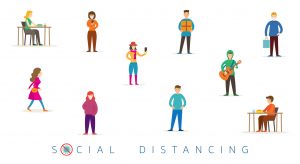
The US Government Accountability Office (GAO) released a brief report about the science behind social distancing to curb the spread of COVID-19. Based on historical studies, the Centers for Disease Control and Prevention (CDC) asserts that the area of highest risk is within 3 feet of an infected individual, but a buffer radius of 6 feet is recommended. These recommendations are founded on studies in the fields such as fluid mechanics, epidemiology, and microbiology. Other studies found that infectious droplets can travel beyond 6 feet, but the degree of infectivity of particles that travel relatively long distances is uncertain. The distance that an infectious droplet can travel depends on several factors such droplet size, humidity level, and air currents. For instance, the smaller the droplet, the farther it can potentially travel. The goal of social distancing (keeping a personal bubble with a 6-foot radius) is to reduce the rate of transmission; however, it is not a perfect non-medical countermeasure. The speeds and distances of viral particle travel from coughing or sneezing are difficult to determine with absolute precision. Additional challenges beyond the science and calculations are related to the difficulty in application: the psychological impacts of social distancing and isolation are yet to be fully realized. Read the full two-page here.

DHS S&T Launches Indoor Predictive Modeling Tool for Coronavirus Stability
This week, the Science and Technology Directorate (S&T) of the Department of Homeland Security (DHS) released a predictive modeling tool that estimates the natural decay of SARS-CoV-2 based on temperature within the 70-95°F range and relative humidity between 20-60%. The current iteration of the model is for stainless steel or ABS plastic surface types; nitrile (a compound used in disposable gloves) surface type will be available soon. For example, on a stainless steel or ABS plastic surface with a temperature of 77°F/25°C and relative humidity of 33%, the half-life of the virus is 11.52 hours, or 0.48 days. This model was developed to inform response efforts regarding the persistence of the virus on certain surfaces (fomites) and under specific combinations of conditions. Additional enhancements in the pipeline for this model include droplets in the air vs. on a surface, expanded temperature and humidity ranges, different surfaces. The model can be found here.

Pandemic dispatch: An infection-prevention expert on shortages, misinformation, and health worker strain on the coronavirus front line
GMU Biodefense doctoral alum and infection prevention epidemiologist Saskia Popescu discusses her experiences on the frontlines during the COVID-19 pandemic. “For the past four months, I’ve had a front row seat to the coronavirus pandemic. Working in a major hospital system, I’ve seen first-hand the issues that have come to define the crisis: the concerns about supplies, the torrent of misinformation, and the critical problem of health care worker exposure to COVID-19. Infection preventionists such as myself work in hospitals to stop the spread of infections among patients, staff, and visitors alike. Despite our training, the coronavirus has tested hospital programs like mine, forcing us to drastically change our daily practices.” Read more here.

News of the Weird: Pajama Sales in a Pandemic
Though many industries are struggling to survive as sales have plummeted during the response to COVID-19. Pajamas, however, are in high demand as many of us remain at home; pajama sales have soared by 143%since lockdown. Real pants are optional when working from home.   According to CNN Business, eCommerce sales were up almost 50% in April, because in-person retail shopping is currently limited, if not impossible. Other items with growing demand include beer and liquor and creative audio equipment like sound mixers.

News of the Weird: Cocktail-Friendly Face Masks
Artist Ellen Macomber designed an unconventional face mask that sports a small hole fit for a straw that allows the wearer to enjoy cocktails in Covid-19. Macomber is based in the Big Easy, also called New Orleans, a city known for its round-the-clock party life. These bedazzled and flamboyant face masks run $60 a pop. She does admit that the masks are not the “best form of prevention” given its opening right into the mouth.

Biosecurity Is the Lesson We Need to Learn from the Coronavirus Pandemic
Dr. Daniel Gerstein, graduate of the Biodefense PhD program, and Dr. James Giordano wrote in The National Interest about the biosecurity lessons we need to learn from the coronavirus pandemic. Though there is no scientific evidence that the novel coronavirus was human-made, humans do bear some the blame for this pandemic. Humans disrupt and destroy the environment and its habitats, mix species as bush meat in wet markets, and experiment with dangerous pathogens. The COVID-19 pandemic and the human behavior that encouraged it signal the need to develop a new approach to biosafety and biosecurity that “addresses the full range of biological threats that humankind and the global environment will face in the future.” As humans continue to intrude into natural habitats, the risk of zoonotic disease spillover continues to increase. Over the last thirty years, 30 new human pathogens have been found, most of which originated in animals. Gerstein and Giordano encourage the expansion of biosafety and biosecurity to include consideration of the global biological ecosystem. Read the full article here.

WHO Announces the Launch of New Informational Apps
The World Health Organization (WHO) launched two COVID-19 apps for smartphones. One is for healthcare workers and the other is for the general public. For healthcare workers, the WHO Academy app provides information on COVID-19 resources, guidance, training, and virtual workshops. For the general public, the WHO Info app provides access to the latest COVID-19 news and developments. Both apps can be downloaded for free from the Google Play Store and the Apple App Store.
 

COVID-19 Reopening and Recovery: Proposed Plans for the US

By Rachel-Paige Casey

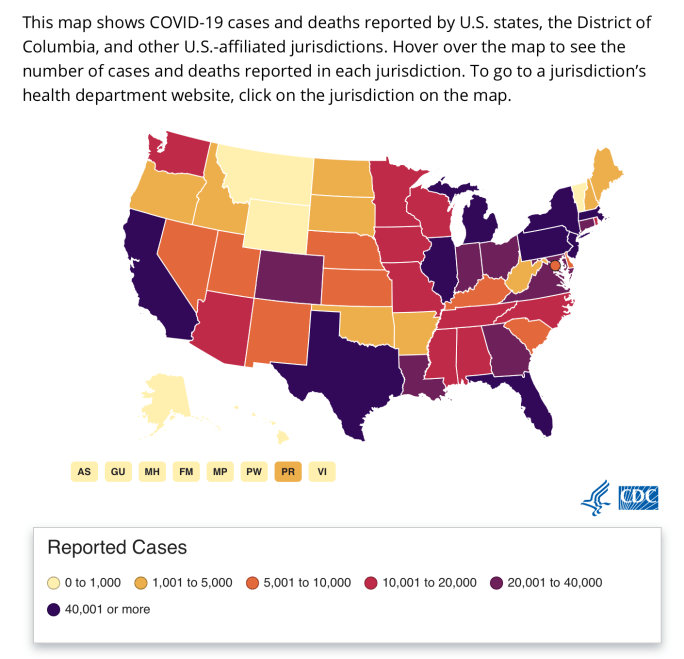
Throughout April, strategies regarding the reopening of the US economy and its associated public health factors were published by the White House with the Centers for Disease Control and Prevention (CDC), the Center for Health Security at Johns Hopkins University, the Rockefeller Foundation, and the Edmond J Safra Center for Ethics at Harvard University. The four strategies discussed here either outline phases for resuming activity or describe systems to enable and assist safe reopening. All these plans consider the importance of testing to continue slowing the spread of COVID-19 as normal life gradually resumes. Other nations, such as South Korea, have successfully built high-capacity testing and tracing infrastructures in the wake of COVID-19. Unfortunately, the US has failed to develop its own robust testing and tracing system. At present, US testing capacity has plateaued at about 150,000 tests per day, equating to a little over 1 million tests per week, a figure deemed insufficient by experts in public health and medicine. Continue reading “COVID-19 Reopening and Recovery: Proposed Plans for the US”

Groundhog Day 2020

Jomana F. Musmar, MS, PhD, Public Health Advisor in the Office of Infectious Diseases and HIV/AIDS Policy within the Office of the Assistant Secretary for Health, U.S. Department of Health and Human Services.

Disclaimer: This narrative does not represent the views of the U.S. Department of Human Health Services. They only represent Jomana Musmar’s personal perspectives and experiences.

Daniel Tiger sings about handwashing in the background while tiny hands covered in peanut butter attempt to give mommy a new hairstyle, all while I’m taking a 1-hour conference call and typing out action items to work on the following day. This is our new normal, multitasking at its finest. When chatter about a novel coronavirus in Wuhan first began in late 2019, the numbers didn’t make sense and my biodefense training immediately triggered the notion that any day now, it’s going to be in our backyard. We’ve learned about preparedness and resilience from SARS, H1N1, Amerithrax, and the tragedies of 9/11, but the transmissibility, high rate of infection, and unpredictable mortality rate for this particular pathogen make it scarier than these past experiences. While my training and expertise prepared me for the tsunami of response activities nationwide, I wasn’t prepared for the impact it would have on our daily lives, especially on my family. My husband, an ER physician who has been on the front-lines seeing COVID-19 patients in 18-hour shifts, my 81-year old mother who is in the highest risk category for COVID-19 and my fun-loving, 24-hour it’s-circus-time kids, all need my attention and all the time. We are the definition of a full-on frontline responder, high-risk of infection-type home. My mother needs frequent grocery deliveries to circumvent her urge to drive out and do her own shopping. Because of the possibility that my husband might bring home an unwanted biological ‘guest,’ my fear that one of us might get infected but be asymptomatic until the dreaded symptoms emerge keeps me up every night. Did my daughters just cough? Was it wet or dry? Is that a fever? Is my throat dry or is it allergies? Can I drop off my mother’s groceries or should I wipe down every single item I touched? The questions are endless. The juggle to sustain a daily ‘norm’ for all of us while realizing the reality of where we are and what’s to come has been a struggle, but we’re figuring it out day by day.  Continue reading “Groundhog Day 2020”

Pandora Report: 5.8.2020

Welcome to your weekly report on all things global health security – have you been wondering if a gym or coffee shop is safer to visit when things re-open? Check out this review here – but don’t forget to wash your hands!

The Coronavirus Chronicles
Last week we introduced our new series,The Coronavirus Chronicles, which is a collection of stories, based on the personal and professional experiences of the faculty, students, and alumni of the Biodefense Graduate Program, about life during the pandemic. We hope these stories help the public better understand the challenges posed by COVID-19 and how current and former members of the Biodefense Graduate Program have responded to these challenges and contributed to the pandemic response at the local, national, and international levels. This week, we’re launching three more stories – doctoral student Janet Marroquin discusses conducting analyses of various chemical, biological, radiological, and nuclear defense capabilities while also starting a PhD and parenting during the pandemic. One feature you’ll see this week is a focus on how labs are working to reopen in the midst of COVID-19. David Grimm noted this recently as “one of the biggest challenges labs face is how to keep their members physically distanced to limit any potential spread of SARS-CoV-2.” Check out our two lab-based stories in this week’s Coronavirus Chronicles for insight into how this unique, but critical work environment is trying to safely reopen. One of our graduate students delves into working in the laboratory setting and the challenges of biosafety and research, followed by Travis Swaggard who is a senior biologist and discusses what it’s like working with SARS-CoV-2 and testing different regions of the SARS-CoV-2 genome from synthetically derived sections of the virus. Read their full stories here in The Coronavirus Chronicles.

Schar School Event- Public Policy in the Pandemic Age: How COVID-19 is Reshaping our Government, Economy, and Society
Join the Schar School Faculty, Alumni, Schar Alumni Chapter, and Dean Mark Rozell for an engaging virtual panel on the future of public policy post COVID-19 – COVID-19: How the Pandemic is Reshaping our Government, Economy, and Society. This virtual event will be moderated by Biodefense Graduate Program director Dr. Gregory Koblentz, and will be held from 2-3:30pm EST on Wednesday, May 20, 2020. The COVID-19 pandemic is presenting unprecedented challenges to the United States and the rest of the world. Not since the “Spanish Flu” of 1918 have we experienced a pandemic of this scale and severity. Aside from the steep and growing human toll of the outbreak, virtually every aspect of our personal and professional lives are being affected. The sheer breadth of issues impacted by COVID-19 is overwhelming: public health, medicine, government, the economy, international trade, education, national security, politics, and technology, to name just a few. The effects of the pandemic are also magnified by existing cleavages within our society ranging from hyperpartisanship to racial disparities to socioeconomic inequalities. You can read more about our distinguished panel members and register for the event here.

Complications and Misinterpretations about COVID-19 Testing
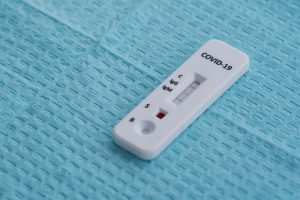
The development and employment of rapid and reliable diagnostic tests for SARS-CoV-2 infection are a hot topic as we continue to combat the COVID-19 pandemic. In the first several weeks of the pandemic, the US failed to launch an adequate testing infrastructure that would enable sufficient testing capacity with reliable and valid testing methods. Molecular diagnostic techniques, such as polymerase chain reaction (PCR) test for COVID-19, are espoused for their sensitivity (true positive rate), specificity (true negative rate), and safety. Molecular diagnostics can be performed on inactivated samples and are capable of detecting microbial DNA and RNA that are heavily diluted. An additional advantage of the molecular tests is their ability to distinguish between strains of the same virus, bacteria, or fungus. Serologic techniques look for the antibodies that are produced by the immune system to fight off a microbe; these types of tests can also detect exposure after an infection has resolved. Serology helps identify cases that occurred with very mild or no symptoms. Within the discussions about the need for diagnostic testing for COVID-19, the focus has recently shifted from molecular to serologic tests. It is important to note that these tests do not guarantee whether an individual has developed immunity to a specific pathogen. As of 5 May, the FDA has issued Emergency Use Authorizations (EUAs) to 60 test kit manufacturers and commercial laboratories producing molecular and serological tests, but only a dozen of these are received approval for serological diagnostics. Most of these EUAs are for diagnostics to be conducted in laboratories certified under the Clinical Laboratory Improvements Amendments of 1988 (CLIA) to perform high complexity tests; some are approved for use in laboratories certified to perform moderate complexity tests. A recent survey of New York City discovered that 1 in 5 residents carried antibodies for the novel coronavirus, which indicates that they were exposed to the virus. This result confirms the fear of many experts that the lack of testing has led to an underestimation of the number of infections; for NYC, the estimated was one-tenth of the true number of infections. The fact that 20% of the NYC population may carry the antibodies does not necessitate that all those individuals developed immunity to COVID-19. Dr. Saskia Popescu, a Biodefense PhD graduate, pointed out that epidemiology for COVID-19 is leaning heavily on these imperfect tests, a dangerous move given that many individuals remain susceptible to infection. Popescu’s concerns echoes the cautions raised by other scientists that the presence of antibodies does not signify immunity, and even those who were infected but asymptomatic may be at risk of a second infection. Additional improved tests are needed to better assess the significance of antibodies in previously infected patients.

GMU Institute for Sustainable Earth – Pandemic Webinars
The disruptions caused by the COVID-19 pandemic reveal both fragilities and resiliencies in our global society. Mason’s Institute for a Sustainable Earth is hosting a webinar series to investigate some of these dimensions of the current health and economic crises through the lens of sustainability science. In moderated discussions with sustainability experts, these webinars will also explore how society could recover to a more resilient and sustainable state. Each week you can attend a new webinar regarding everything from preparedness and social resilience, ecological health, and social inequalities and the disparities of impact. Make sure you catch the Preparedness and Social Resilience event next week on Tuesday, May 12th from 2-3pm, which will include Dr. Gregory Koblentz, Associate Professor of Government and Politics and Director of the Biodefense Graduate Program.

The Conspiracy Continues: Theories Persist that COVID-19 Came from a Lab
Despite a throng of scientists and researchers debunking the theories that COVID-19 was born from a Chinese laboratory, the accusations and fears that the pandemic is the result of a laboratory release linger. On 3 May, Secretary of State Mike Pompeo said that there is “enormous evidence” that the novel coronavirus originated from the Wuhan Institute of Virology (WIV), a claim made despite the assessment of the intelligence community concluding that the virus is neither human-made nor genetically modified. The magnitude of this supposed evidence is repeatedly stated but the specifics of it are not. Actual scientific evidence supports the expectation that SARS-CoV-2 is naturally-occurring and originated from bats before spilling over into the human population. Dr. Greg Koblentz, Director of the GMU Biodefense Graduate Program, further squashed the idea that the novel coronavirus was created in a laboratory based on what is known about the biology of the virus. Koblentz points out that there is little evidence suggesting a cover-up by the Chinese government for a supposed lab breach. The WIV’s transparency regarding genomic sequencing of the virus supports the more reasonable conclusion that they are not the source. Some of these conspiracy theories use the WIV’s extensive research on deadly bat viruses as a foundation for their claims. Such research activities are not hidden and much is event detailed in over 40 published studies and academic papers. Though the source of the virus is quite unlikely to be a villainous origin, its origin may not be isolated to the Huanan Seafood Wholesale Market in Wuhan. Dr. Filippa Lentzos of King’s College London encourages carrying out a credible investigation to unveil a complete picture of the origin of the coronavirus pandemic. Further, though there is minimal hard evidence that the pandemic could have been the result of a laboratory failure, even a remote possibility brings into question the stringency and efficacy of safety in basic scientific research. A study published in March found that only 45% of the first 435 COVID-19 patients had connections to the seafood market in Wuhan, supporting the notion that the virus was present in other settings from the beginning. That said, this evidence does not indicate that the origin is the WIV or another laboratory that developed the novel coronavirus through manipulation. The pathogen is almost certainly a product of nature, but a comprehensive understanding of the factors and conditions that led to this pandemic will provide valuable insight for handling the next outbreak.

Arizona Puts Politics Above Pandemic Response
Earlier this week an infectious disease modeling team from Arizona State University, which had been providing models to the state health department and through publicly-available resources, was quietly release from their duties and told to return the data. Not long after, the rumblings of concern that this was a politically-motivated decision, became increasingly loud. The suspension of the COVID-19 modeling working group was just after President Trump visited Phoenix, AZ (where the group is based) and ultimately, their findings weren’t aligning with Gov. Ducey’s sudden push to re-open the state. In fact, the decision to disband the modeling team was made just hours after Gov. Ducey decided to rapidly accelerate the opening of the state. Originally set for May 15th, it was announced earlier this week that businesses like salons and restaurants would re-open starting on Friday, May 8th. The concerns for this as a politically motivated decision were quickly made by AZPHA in their post here, which noted that “The letter asking them to stop work didn’t provide any reason for the request except that it was at the direction of ADHS’ senior leadership. The only remaining predictive model that the state health department is now using has been developed by FEMA.  Neither that model nor the predictive modeling results from the FEMA model are publicly available. Last night’s action to disband the Arizona COVID-19 Modeling Working Group begs the question of whether the Modeling Working Group was discontinued because they had been producing results that were inconsistent with messaging and decisions being made by the executive branch.” Within a few days, it got national attention and gave rise to concern that the push to prematurely re-open states could be impeding public health efforts. “But experts said Arizona’s dismissal of academics, whose analysis seems at odds with the state’s approach, marked an alarming turn against data-informed decision-making.”

Bright, BARDA, and Whistleblowing
Ripples were sent this week as former director of BARDA, Rick Bright, filed a whistleblower complaint on Tuesday regarding his removal from office and reported pressure from Robert Kadlec, leader of ASPR, to “to buy drugs and medical products for the nation’s stockpile of emergency medical equipment from companies that were linked politically to the administration and that he resisted such efforts.” The 89-page complaint was a searing document that noted Bright’s removal due to his efforts to “prioritize science and safety over political expediency.” As biodefense expert Dr. Gregory Koblentz notes, “Rick Bright’s whisteblower complaint contains a litany of disturbing details about the failures of the Department of Health and Human Services and the White House to respond quickly and forcefully to the COVID-19 pandemic. The complaint shines a bright on the Trump Administration’s poor judgment, bureaucratic in-fighting, politically-driven decision-making, disregard for science, corruption, and incompetence.”

How Will We Know When to Reopen? Looking to South Korea Might Help
The hot topic right now in the United States is – when can we reopen? That’s not an easy question to answer though and people may not like the complicated answer. A phased approach means that people will need to slowly reopen businesses and resume normal practices, but this will rest precariously on the public’s ability to maintain infection control measures, social distancing, and businesses to establish safe processes. GMU Biodefense doctoral student HyunJung Kim discusses this and how South Korea’s reopening plan might be helpful, especially since it’s backed up by data. “The South Korean government’s approach to COVID-19, based on massive diagnostic testing, has successfully employed the so-called 3T practices–testing, tracing and treatment–to help continue decreasing the number of newly reported COVID-19 cases in South Korea. As of May 5, there have been 640,000 tests conducted in the country. Nearly 20,000 people were tested per day in the peak period (early March), and as of early May, 3,000 to 5,000 tests were still being conducted daily, even though the number of daily cases had fallen into single-digit territory.” Read more here about how South Korea is shedding light on some efficacious ways to address a pandemic and reopen society.
The Federal Research Enterprise and COVID-19 – The House Committee on Science, Space and Technology on the “Federal Research Enterprise and COVID-19
On Tuesday, this group virtually met to discuss critical research during this time and GMU Biodefense alum Dr. Daniel Gerstein remarked to the group – “There is much to be done to get through the current crisis, and it is too early to be developing a comprehensive “lessons learned” assessment. However, it is not too early to understand recent shortfalls and examine ways to steer the United States and international community through the current crisis. Even now, there are many unanswered questions about COVID-19. What percentage of the population that is exposed becomes infected? What accounts for the variations in symptoms and the vast differences in outcomes, ranging from asymptomatic infections to death? Can people become reinfected? What role did humans play in the disease spillover into humans? These, as well as many other questions surrounding COVID-19, will need to be addressed. Filling our knowledge gaps will be crucial to dealing with this pandemic and preparing for the next one.” You can read his full written remarks here.

A Day in the Life of a Molecular Biologist

By Travis Swaggard

I am a Senior Biologist working for a Repository in Manassas VA that stores and handles various microorganisms, media products, and cell lines. We also grow and culture viruses, that now include SARS-CoV-2, to develop products that can be sold to clinical laboratories, academia, and pharmaceutical companies for biomedical research and diagnostic testing.  My work since COVID-19 became a pandemic and a serious threat to global health has focused almost entirely on testing different regions of the SARS-CoV-2 genome from synthetically derived sections of the virus. This is done using the same technique used to screen clinical samples in hospitals and laboratories, known colloquially in our field as qPCR, or quantitative polymerase chain reaction. This is the same methodology used in the testing kits provided by the CDC. Most undergraduate molecular biology students (and, perhaps even high schoolers specializing in AP biology coursework) should understand this technique fairly well: using the same principles of traditional PCR, a region of DNA (or RNA, in the case of SARS-CoV-2) is targeted using specialized primers that complement the RNA sequence. From there, under specific temperatures, a polymerase enzyme will add nucleotides using the primers as a guide. A special molecular probe is also included that will emit fluorescence, but only when the enzyme has completed polymerization of the target region of RNA. Continue reading “A Day in the Life of a Molecular Biologist”

Research Labs Aren’t Ready for Social Distancing

By Current Biodefense Graduate Student (wishing to stay anonymous)

As the scientific community ramps up for more intensive research efforts in the field of COVID-19 vaccine research, the larger question of how to conduct laboratory research under social distancing conditions remains unaddressed. For example, the National Institute for Allergy and Infectious Disease has announced their strategic plans for COVID-19 research, which are heavily dependent on benchwork and animal studies.   And both basic research fields and industry are now subject to unprecedented pressure to compress established timelines for development of new medical countermeasures.  These timelines have traditionally been held as necessary for vigorous demonstration of efficacy and safety of new drugs and vaccines before licensure for use in human populations. Continue reading “Research Labs Aren’t Ready for Social Distancing”

Pandemic Pandemonium

By Janet Marroquin

When I began my doctorate studies part-time in August 2019 while working full-time, I thought long and hard about my commitment to growing the biodefense knowledge base.  I understood the demands that the program would have on my time and mental fortitude, which were already stretched thin as a single parent of a middle schooler. Nonetheless, I felt confident in my time management skills and perseverance to overcome the cognitive barriers inherent to graduate school.  The first semester was an abrupt reminder that things never go as planned.  After struggling through all sixteen weeks of the fall semester, I was ready to implement my lessons learned to spring 2020 and start off with a clean slate.  I had a set schedule that actually worked for my son and me, I was doing group exercise classes to squeeze in social interactions with fitness, and I liked my projects at work: I had it all figured out.  A little more than a month later, I was back to square one of fall semester, a reminder that things do not always go as planned. Continue reading “Pandemic Pandemonium”

A Pandemic Juggling Act

By LCDR Jen Osetek, Ph.D.

All of us have stories of how COVID-19 changed not only the world but our individual worlds.   We have had to change our personal and professional roles and adopt new ones. For me, it has had a profound adaptation of 4 different roles in my life: Contractor for the U.S. Coast Guard (USCG), a USCG Reserve Officer, a Public Health Preparedness professor, and Mom.

As a contractor with the USCG’s Office of Specialized Capabilities, I work with the Chemical, Biological, Radiological, and Nuclear Program. Decisions about personal protective equipment (PPE) are nothing new; neither are discussions of biological threats. Coronavirus PPE quickly came to dominate a good part of our time. Working with experts across the USCG, we were involved in workgroups including those focused on protecting our members in the field, decontamination procedures, taking care of those who got sick, and deciding how to safely bring people back to work after exposures.  Instead of sitting across a conference table, our job is currently done over the phone and with screen shared documents. The logistics have changed but the dedication to our people and mission has not.

In my Coast Guard Reserve capacity, we organized a virtual drill weekend for the first time. While not the same as being together, this was a way to deliver required, position-specific training while keeping all our members healthy….and ready to deploy for the COVID response if needed. Like the other branches of the military, the USCG could not stop during a national emergency. Continue reading “A Pandemic Juggling Act”

Masks Aren’t for Mental Health

By Madeline Roty

The COVID-19 pandemic has had a dramatic impact on physical health, but it is also taking a less obvious toll on our mental health. Based on my background in nursing, I know that physical and mental health are interdependent, and it is difficult to promote one without the other. For example, mental health disorders have been linked with an increased risk for cardiovascular disease. While the negative impact of COVID-19 on mental health has been acknowledged in the media and scholarly literature, the pandemic represents an opportunity to normalize conversations about mental health which has been stigmatized for far too long. But as people have rushed to buy cleaning supplies and personal protective equipment to protect their physical health and the health of others, I have also witnessed friends and family neglect their own mental well-being. Masks will not protect your mental health. In fact, masking your feelings will harm your mental health.
I have been fortunate; my family and friends have been healthy and safe. Like many people, I have had classes moved online, plans cancelled, and a job restructured. I thought that if people are experiencing far worse suffering than mine, why should my problems matter? Then I got a phone call from a friend. She said she had had a really hard month, but she didn’t tell me earlier because it didn’t seem like a big deal with everything else going on in the world. Then another friend called, overwhelmed by the little stresses that had accumulated over time because she thought they weren’t important in the grand scheme of things. That’s when it struck me. Many people I know were not taking the time to acknowledge the impact of the pandemic on their mental health. Instead they were dismissing their personal feelings because other people were suffering more or because it seemed selfish. Continue reading “Masks Aren’t for Mental Health”