Pandora Report: 7.27.2018

Happy Friday! While everyone is celebrating the last few weeks of summer, your favorite source for all things biodefense isn’t slowing down. Make sure to read Laurie Garrett’s comments on why we’re in the next HIV pandemic and how the global strategy is seriously flawed.

 NASEM Report: Biodefense in the Age of Synthetic Biology
GMU Biodefense student and Research Fellow for Institute for Philosophy and Public Policy, Sarah W. Denton, recently attended the NASEM public briefing on their new report – Biodefense in the Age of Synthetic Biology. Denton notes that “While the framework draws on previous works (e.g., Tucker 2012and the 2004 Fink report), what makes this report unique is its use of the Design-Build-Test (DBT) process as the foundation for its capability-assessment. DBT is the ‘iterative process of designing a prototype, building a physical instantiation, testing the functionality of the design, learning from its flaws, and feeding that information back into the creation of a new, improved design’.” Check out her detailed recap of the event and the report, including the noticeable absence of “the potential benefits and safety concerns related to developments in synthetic biology”.


DARPA’s Prepare Program 
Filippa Lentzos and Jez Littlewood are asking – what exactly does DARPA’s Prepare program actually prepare for? “Called ‘Prepare’ (short for ‘Pre-emptive Expression of Protective Alleles and Response Elements’), the program aims to develop programmable modulators that temporarily boost protective genes, either before or after exposure, to biological, chemical, or radiological health threats. Inadvertently, however, the project may contribute to rising international tensions in the biological field. The program might push the limits of what is allowable under international security treaties, particularly the 1972 Biological and Toxin Weapons Convention (BTWC).” Underscoring the importance of the US being a role model for BTWC compliance, they note that programs like Prepare further the gray zone of biodefense that makes communication of intent that much more important. “The Prepare program continues to expand US biodefense gray-zone activities—and states keeping a close eye on the US biodefense enterprise may well question the program’s intent. Some might feel threatened by it. A small number—concerned about new threats highlighted by US activities, or in preparation for a sudden change in the US attitude toward the absolute prohibition of biological weapons—might even take reciprocal action, initiating additional gray-zone biodefense activities of their own. The result could be a downward security spiral in which greater offensive know-how on all sides leads to increased danger of biological attack against more states.” Lentzos and Littlewood note that programs of this nature must work to proactively disclose information regarding intent through compliance reports and encourage the peer review of national biodefense programs as a confidence-building measure.

DRC Declares Ebola Outbreak Over
The DRC has officially declared the end of the outbreak after it was initially identified in early May. This outbreak marks the 9th that the DRC has seen and involved 54 cases and 33 deaths. “Though the country is experienced in managing Ebola outbreaks, health minister Oly Ilunga Kalenga, MD, said in a statement today that officials noted early warning signs that the outbreak had the potential to evolve into a major crisis. Illnesses emerged in two remote, heavily forested health zones at the same time and health workers were infected, a factor known to intensify the spread of the virus.” This news comes as scientists announced that women may be able to transmit the disease well over a year after infection. The trigger for this realization was a female patient in Liberia at the end of the outbreak in 2015. The woman fell ill after giving birth, which has raised questions regarding the immune suppression that occurs during pregnancy and how that may trigger Ebola relapses. This finding has raised considerable concern for not only the spread of the disease, but also stigma for survivors.

The Hot Zone Turns Into A TV Show
We’ve all read, or at least heard of, the infamous Ebola book, The Hot Zone, by Richard Preston. While the theatrics of its more dramatic moments can be laughed at, for many, it inspired us to get into the field of biodefense or infectious diseases. National Geographic is now working to bring it to the small screen with a scripted miniseries. It’s been a disappointing road for those of us yearning for a decent infectious disease show, but I’m cautiously optimistic based off National Geographic’s recent efforts to bring truth to TV in their Genius series. Production begins this fall in Toronto and South Africa.

 The Frustrating Predicament of PPE Compliance
GMU Biodefense doctoral student and infection preventionist Saskia Popescu is shedding light on some painful truths about healthcare worker PPE compliance. “I’ve heard lectures on Clostridium difficile where the presenters commented on how prevalent isolation failures are when caring for C diff patients, noting that it’s often best to just accept this reality and instead emphasize environmental cleaning and good hand hygiene to combat the spread. The truth is that health care workers, especially nurses, are moving a million miles a minute and running in and out of patient rooms, which makes the burden of PPE understandable. Unfortunately, this doesn’t mean lax isolation precautions should be accepted or encouraged.” Popescu points to a recent study that evaluated PPE failures and that “a total of 280 failures were observed, including 102 violations (deviations from practice), such as entering an isolation room without PPE or not wearing the PPE correctly, etc.”

Blue Ribbon Study Panel – The Cost of Resilience: Impact of Large-Scale Biological Events on Business, Finance, and the Economy
Don’t miss this event next week regarding biothreats and economic impacts. “Despite recognition of the important role of industry and other private sector elements in defending the nation against biological threats, the United States has yet to adequately plan for and support private sector engagement in preparing for biological incidents. To examine private sector roles and responsibilities before, during, and after the response to large-scale biological events, the Blue Ribbon Study Panel on Biodefense will hold a public special focus meeting on July 31, 2018 to address The Cost of Resilience: Impact of Large-Scale Biological Events on Business, Finance, and the Economy.”

Low Antibiotic Levels in the Environment Encourage Resistance 
It doesn’t get more One Health than antimicrobial resistance. AMR is the perfect example to reveal how the environment, animal, and human health are all tied together and a new study is highlighting this through the role of environmental antibiotic levels and their role in resistance. “In a study published in the journal mBio, researchers with the University of Exeter Medical School, the University of Hong Kong, and drug-maker AstraZeneca report that even when bacterial communities in wastewater are exposed to small amounts of the antibiotic cefotaxime, selection pressure for clinically important antibiotic-resistant genes occurs. Moreover, they also found that the selection pressure for resistance may be just as strong as when exposed to high concentrations of the drug. The findings are important because they suggest that environments that are commonly found to have trace amounts of antibiotics, such as hospital effluent and rivers and streams that receive wastewater, could be an important, and overlooked, breeding ground for antibiotic-resistant bacteria”. You can read the study here.

Stories You May Have Missed:

  • 23andMe Teams Up With Glaxo – If you’ve used 23andMe, your DNA is likely to be used for the development of new drugs due to a new partnership (with consent of course.). “Home DNA test results from the 5 million customers of 23andMe will now be used by drug giant GlaxoSmithKline to design new drugs, the two companies announced Wednesday. It’s the biggest partnership yet aimed at leveraging the increasingly popular home genetic testing market, in which customers pay for mail-in saliva tests that are analyzed by various companies.”

NASEM Report: Biodefense in the Age of Synthetic Biology

Written by: Sarah W. Denton, Research Fellow, Institute for Philosophy and Public Policy, George Mason University; Research Assistant, Science and Technology Innovation Program (STIP), The Woodrow Wilson International Center for Scholars

On June 19, 2018, the National Academies of Sciences, Engineering, and Medicine (NASEM) held a public briefing timed with the release of a new report titled, Biodefense in the Age of Synthetic Biology. The panel – comprised of the committee chair, Dr. Michael Imperiale, and four authors of the report, Dr. Patrick Boyle, Dr. Peter Carr, Dr. Diane DiEuliis, and Dr. Jill Taylor– gathered to present their research to the public and provide an opportunity for an in-person and online question and answer session.

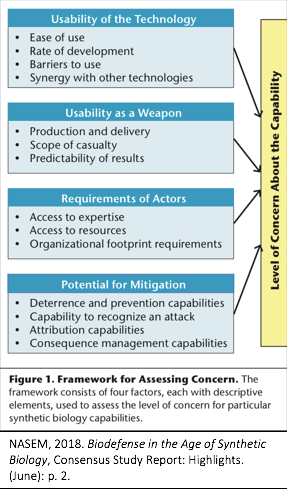
During this briefing, the panel discussed the study’s concern-assessment framework (Figure 1). The framework consists of four factors that can be used to assess the level of concern for current and future synthetic biology capabilities. Notably, rather than attempting to assess the levels of concern presented by various technologies (e.g., CRISPR/Cas9), this framework focuses instead on assessing capabilities “that potentially pose a concern because of the harm they might enable.”[i]

While the framework draws on previous works (e.g., Tucker 2012and the 2004 Fink report), what makes this report unique is its use of the Design-Build-Test (DBT) process as the foundation for its capability-assessment. DBT is the “iterative process of designing a prototype, building a physical instantiation, testing the functionality of the design, learning from its flaws, and feeding that information back into the creation of a new, improved design.”[ii]Specifically, the committee found it useful to conceptualize current and future technological developments in terms of the ways in which they enable the DBT cycle, granting that it is entirely possible for some technologies to have impacts across    multiple phases of the DBT cycle.[iii]For example, the committee identified potential points of concern in all phases of the DBT process in their analysis of the level of concern relating to the re-creation of known pathogens.[iv] Continue reading “NASEM Report: Biodefense in the Age of Synthetic Biology”

Pandora Report: 7.20.2018

Summer Workshop on Pandemics, Bioterrorism, and Global Health Security
This week Schar Biodefense hosted a three-day workshop on all things health security, from anthrax to Zika. Highlights from the first two days include a rousing discussion by Dr. Robert House surrounding medical countermeasures and the potential for nefarious actors to highjack the immune system, Sandy Weiner delving into the history of the 1976 influenza pandemic, GMU professor and virologist Dr. Andrew Kilianski breaking down some hard realities of biosurveillance, and Edward You of the FBI discussing the importance of working with the DIY biohacker community and protecting the bioeconomy. While the workshop continues through today, make sure to check back next week for more coverage.

 Vaccine Causing Polio in Africa? Context From An Expert
GMU Biodefense PhD alum Christopher K. Brown sat down with Lucien Crowder of the Bulletin of the Atomic Scientists to discuss vaccine derived polio and the implications of these outbreaks. Brown discussed the vaccine production process, how they can cause an “infection light”, and the current outbreak in the DRC. “In the Democratic Republic of the Congo, a vaccine-derived type 2 poliovirus is responsible for the current outbreak, even though it is no longer a component of the live, attenuated oral vaccine that most countries use (when, that is, an oral, attenuated vaccine is used instead of a fully inactivated injectable formulation that is safer but potentially less effective). Despite a World Health Organization–led switch from the three-type, or trivalent, vaccine to a bivalent preparation, the vaccine-derived type 2 virus continued to spread from person to person undetected, slowly mutating to regain the neurovirulence that can cause paralysis in those who are infected. Now, to stop the current outbreak, health officials are deploying a monovalent vaccine formulated specifically for type 2 poliovirus. The key is to reach susceptible individuals—namely, those who did not receive the trivalent option previously—with the vaccine before the virulent strain of the virus does. If enough people are vaccinated, the mutated, vaccine-associated strain will not continue to infect new people and the outbreak will subside.” Brown took care to discuss how these incidents are high-jacked by the anti-vaccination movement, but that “the argument that vaccines cause injury often focuses on the myth that certain chemicals in vaccines—including preservatives, like Thiomersal, that are no longer used in vaccine formulations—cause autism. The polio outbreak in the Democratic Republic of the Congo is a case in which a strain of virus that was rendered safe for vaccinating most people has regained some of its disease-causing abilities through genetic mutation. That’s sort of similar to why bugs that are more common problems in developed countries, like staphylococcus and gonorrhea, stop responding to antibiotics: They acquire genetic mutations that make them resistant to certain drugs. What is most important here is to consider the level of risk associated with vaccine-linked outbreaks, or cases of paralysis, compared to the effects of polio in an unvaccinated population. While the attenuated poliovirus in the vaccine itself may lead to no more than four or five cases of paralysis among every million individuals vaccinated, there would likely be thousands of cases of serious disease among a million exposed, unvaccinated people.”

Why Aren’t We More Worried About The Next Epidemic?
In the past couple of months, we’ve seen outbreaks of Ebola, MERS, Zika, Nipah virus, Rift Valley fever, and Lassa fever – so why aren’t we more worried about the next epidemic? Globalization makes the movement of people and goods easier and faster – consider that 107 countries received frozen vegetables now being recalled for Listeria. The good news is that information technology allows us to know about these outbreaks and have the ability to notify necessary agencies and resources at a rapid pace. “Several major factors are to blame for why the world is seeing more of these increasingly dangerous pathogens. The combination of massive widespread urbanization, explosive population growth, increased global travel, changing ecological factors, steady climate change and the exploitation of environments is driving an era of converging risk for outbreaks, experts say.” Dr. Thomas Inglesby, director of the Johns Hopkins Center for Health Security, noted that ‘We don’t know when the next Ebola outbreak will come but we do know it will come again, and again, and again’.” Outbreaks like SARS and Ebola have shown the devastating impact outbreaks have on not only the healthcare system, but also the economy. Unfortunately, emergency preparedness and healthcare response is a tough problem to fix. The CDC director of the Center for Global Health, Rebecca Martin, stated that “Gaps in public health emergency response capabilities remain a serious vulnerability for the entire world,” she added. “While we don’t know when or where the next pandemic will occur, we know one is coming”. We know the next pandemic is coming, the unknowns are from where, when, and what it will look like. This makes response, including medical countermeasures, that much more difficult. R&D is a critical component to this, but as Dr. Inglesby noted, “The problem with public health in particular and with R&D is what we’re ultimately trying to do is prevent bad things from happening. When you succeed, it’s relatively invisible ― so the public doesn’t get to see why investment is so important.” Inglesby also recently highlighted the six ways countries can prepare for the next pandemic. From enhancing capabilities to develop new vaccines/medical countermeasures, to investing in more robust public health systems, there are several ways we can facilitate stronger national capacity to respond to pandemics.

Crucial Steps Forward: the National Academies of Science’s 2018 Study, “Enhancing Global Health Security through International Biosecurity and Health Engagement Programs”
GMU biodefense MS student Alexandra Williams recently attended the NASEM meeting regarding global health security through international biosecurity and health engagement programs. Within her recap, Williams discusses the background of CBEP (Cooperative Biological Engagement Program) and CTR (the DoD’s Cooperative Threat Reduction program), noting their efforts to strengthen health security within the U.S. and abroad. “As challenges continue to arise in timely and accurately detecting and responding to disease outbreaks—as we saw in 2014 with Ebola in West Africa, and in 2016 with Zika—U.S. health and security agencies are working to better meet these challenges, and examine how they need to evolve to meet unforeseen hurdles that lay ahead. This NASEM study is timely and critical because it addresses and examines these issues head-on, and will serve as the launch point for how the U.S. can rethink, reshape, and improve its already critical and successful work in biosecurity and global health security.”

Book Review – Dirty War: Rhodesia and Chemical Biological Warfare
Glenn Cross, GMU biodefense PhD alum, has taken great care to investigate and detail the history of Rhodesia’s chemical and biological warfare program against insurgents from 1975 to 1980. If you’re on the fence about adding a new book to your reading list, check out Ryan Shaffer’s latest review. “Organized topically, the book’s preface offers a brief overview of Rhodesia’s colonial history and demographics, discussing the ethnic and racial divisions arising from a white minority’s control of the government over a disenfranchised and mostly rural black African population. Cross describes the Rhodesian War with emphasis on “the regime’s inability to defeat decisively a growing guerrilla insurgency through conventional arms alone.” (39) He explains the conflict’s evolution in the context of post-war British decolonization and the manner in which the Unilateral Declaration of Independence was designed to maintain white minority rule, as well as the ensuing international sanctions that isolated Rhodesia. By the late 1960s, government opponents shifted strategy, believing the only way to change the country was to forcibility seize control. Meanwhile, the CIO had penetrated the opponents’ ranks, gathering intelligence and setting up the Selous Scouts to work against the guerrillas.” Shaffer notes that “the book is a well-researched study that sheds light on the reasons a government broke international norms to use CBW, a tactic more likely to target local non-state actors than foreign militaries.”

 Antibiotic Prescribing Failures in Urgent Care Centers
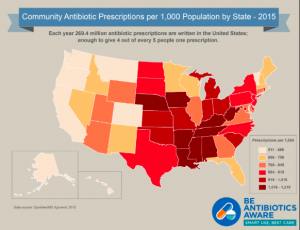
Disrupting antibiotic resistance is challenging due to not only the vast array of sectors that play a role, but also the cultural components. Prescribing habits are one of those culturally-engrained practices that can be difficult to alter. A new study has found that antibiotic stewardship is desperately needed in urgent care facilities. “Researchers with the Centers for Disease Control and Prevention (CDC), the University of Utah, and the Pew Charitable Trusts report that 45.7% of patients who visited urgent care centers in 2014 for respiratory illnesses that don’t require antibiotics end up with prescriptions for those conditions, followed by 24.6% of patients treated in emergency departments (EDs), 17% of patients who went to medical offices, and 14.4% of patients who visited retail clinics. The findings are based on analyses of 2014 claims data from patients with employer-sponsored health insurance. Previous estimates of outpatient antibiotic prescribing by some of the same researchers had pegged the amount of unnecessary prescribing at 30%, a number that some experts believe is conservative. Study coauthor David Hyun, MD, a senior officer with Pew’s antibiotic resistance project, said the findings suggest that could very well be the case.” The sad reality is that these numbers are likely to be higher across the U.S. as inappropriate prescribing practices are a systemic issue. This finding is one piece of the puzzle, which underscores the progress that needs to be made. Fortunately, countries are working to reduce antimicrobial resistance and while it’s slow, some movement forward is better than none at all.

Rift Valley Outbreak in Uganda
Uganda has reported an outbreak of Rift Valley fever across two districts. Rwanda is also reporting cases in animals and potential cases in humans. “The WHO said the affected districts are in the ‘cattle corridor’ that stretches from the southwest to the northeast regions of the country. ‘The outbreak in Uganda is occurring at a time when Kenya is having a large RVF outbreak and Rwanda is experiencing an epizootic, with suspected human cases,’ the WHO said. In Kenya, where an outbreak has been under way since May, four more Rift Valley fever cases have been reported, raising the outbreak total as of Jul 4 to 94, 20 of them confirmed. Ten deaths have been reported. Illnesses have been reported in three counties: Wajir, Marsabit, and Siaya. The country’s agriculture ministry has reported several outbreaks in animals over the past few months, especially in areas that had experienced flooding after heavy rainfall.”

Stories You May Have Missed:

  • The Strange and Curious Case of the Deadly Superbug Yeast- Maryn McKenna discusses the latest resistant bug we’re worrying about – “It’s a yeast, a new variety of an organism so common that it’s used as one of the basic tools of lab science, transformed into an infection so disturbing that one lead researcher called it “more infectious than Ebola” at an international conference last week. The name of the yeast is Candida auris. It’s been on the radar of epidemiologists only since 2009, but it’s grown into a potent microbial threat, found in 27 countries thus far.”

Crucial Steps Forward: the National Academies of Science’s 2018 Study, “Enhancing Global Health Security through International Biosecurity and Health Engagement Programs”

By: Alexandra Williams, GMU MS Biodefense ‘18

This past Monday, July 16, 2018, the National Academies of Sciences, Engineering, and Medicine (NASEM) held an important meeting at their headquarters in Washington, D.C. At this meeting, they discussed with U.S. government security and health agencies the future of global health security, disease surveillance, and biosecurity, as well as the challenges and gaps that exist in meeting international and domestic health security missions and mandates. This second and final NASEM committee public meeting was a follow-up to their first meeting in April 2018. In these two meetings, NASEM was charged with examining and better understanding the Cooperative Biological Engagement Program (CBEP) of the U.S. Department of Defense (DoD)’s Cooperative Threat Reduction (CTR) program—CBEP being a forefront program for biosecurity and health security—and other U.S. government stakeholders in health security. An overview of the July 16, 2018 meeting can be found here. Additional information can be found via the National Academies of Sciences project information page. Continue reading “Crucial Steps Forward: the National Academies of Science’s 2018 Study, “Enhancing Global Health Security through International Biosecurity and Health Engagement Programs””

Pandora Report – 7.13.2018

Workshop on Pandemics, Bioterrorism, & Health Security – From Anthrax to Zika
The Summer Workshop on Pandemics, Bioterrorism, and Health Security is next week and if you’re not able to attend, make sure to check out our Twitter @PandoraReport and look for a recap in next week’s newsletter. Fair warning though- after you’ve read about it, you’ll want to attend in 2019!

Biodefense Scholars – Meet the Faces of GMU’s Biodefense: Greg & Saskia
If you’ve ever talked to one of our Schar biodefense graduate students, you know one thing for certain – they’re passionate about the field. This week, we’re excited to show off two of our biodefense doctoral students – Saskia and Greg. “Greg Witt is a fourth-generation engineer who, just three years after graduating with a bachelor’s degree from Penn State, worked his way up to being the lead reactor systems engineer on new nuclear plants for Westinghouse Electric Company in Pittsburgh.” That’s right, Greg came from the world of nuclear reactors and if you’re wondering how that works in a program that focuses on catastrophic biological incidents, program director Gregory Koblentz sums it up like this – “Greg’s experience working at Westinghouse as a nuclear systems engineer might seem to make him an odd fit for the Biodefense Program, but biodefense is a highly interdisciplinary field, so he fits right in.” Next, there’s Saskia Popescu, who is an “epidemiologist working to control infections in Phoenix-area pediatric hospitals. Popescu still volunteers there when she’s at home in Arizona, but her career is on hold as she works on her doctoral dissertation in the Biodefense Program in the Schar School of Policy and Government at George Mason University, where she’s also a graduate research assistant.” Saskia’s dissertation work focuses on healthcare utilization of infection control and how that might leave us vulnerable when it comes to the next outbreak. Dr Koblentz pointed out that “the continuing threat of emerging infectious diseases and rise of antimicrobial resistance around the world means we need people like Saskia who can skillfully bridge the gap between science and policy now more than ever.” These are just two examples of the passionate students at Schar Biodefense – what can we say, the biodefense nerdom is strong at GMU!

AAAS Science Diplomacy & Leadership Workshop 2018                        GMU Biodefense MS student Christopher Lien recently participated in the Science Diplomacy & Leadership Workshop hosted by the American Academy for the Advancement of Science, and his account of the five-day experience will get you thinking about the complexities of international science cooperation. The first day highlighted the three main questions the workshop would address – how does science inform diplomacy, how does diplomacy inform science, and what does science in diplomacy look like today? Lien noted that “Aligning educational policy with science, gaining talent from abroad, facilitating networking across the diaspora communities – these are some of the tasks the scientists are working toward.” In his recap, Lien discusses that following a simulation game regarding international cooperation and science diplomacy, “it became ever clearer to the group that mixing science with diplomacy, and vice-versa, is no easy feat – it takes tactful negotiation, the will to make concessions, and a mutual understanding to bring about meaningful and effective results.”

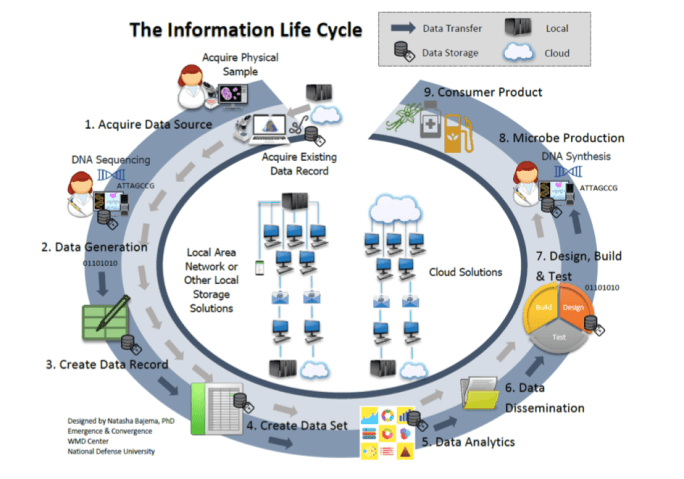
The Digitization of Biology: Understanding the New Risks and Implications for Governance                                                                          Email viruses? We’re not talking about the spam ones, but rather the ability to send genomes of pathogens via email. If you’re confused, GMU biodefense doctoral student Yong-Bee Lim (I told you they were a passionate group!), Charles Lutes, Diana DiEullis, and Dr. Natasha Bajema, from the WBD Center are here to help clarify with their latest researcher paper – The Digitization of Biology: Understanding the New Risks and Implications for Governance. While everyone is focusing on CRISPR, this team led by Dr. Bajema, sought to address an issue we may be neglecting – the digitization of biology. “The volume of digitized genomic data is on the rise. Over the past several years, scientists have responded to dramatic reductions in the cost of DNA sequencing and synthesis, computing power, and data storage by sequencing greater numbers of gene sequences and the genomes of living organisms and digitizing this information for storage in online databases and analysis on computers. To simplify the creation and modification of living organisms, scientists are identifying standard, interchangeable DNA sequences that code for certain functions, and are building online catalogs to make this information available.” The paper discusses the rapid movement of biological information between the physical and digital worlds and how this exacerbates traditional security risk analysis with select agents. Within the paper, the authors discuss data storage, the information life cycle, and implications for governance, noting that “Developing effective governance to simultaneously manage the risks and promote the opportunities of the life sciences is a difficult undertaking. To address emergent genomic data issues, policymakers must strike a balance between two factors: the perceived risks of genomic data and the incentives to share and use genomic data to foster innovation.”

NTI | bio Competition
Looking to help improve global health security? NTI | bio and the Next Generation Global Health Security Network just announced the 2018 competition for those looking to make a difference. “The NTI | bio program and the Next Generation Global Health Security Network announce the 2018 Next Generation for Biosecurity Competition. This year, NTI | bio will invest up to $15,000 to allow the winning team to implement their proposal with mentorship from experts in the field. Team members also will attend the 5th Annual High Level Global Health Security Agenda (GHSA) Ministerial in Bali, Indonesia on November 5-6, where they will present their proposal to health security leaders from around the world. Each 2018 Next Generation for Biosecurity Competition team can include up to three people and should propose either: (1) develop training and networking opportunities for professionals of all levels to develop an interest and further proficiency in the biosecurity and biosafety fields; or (2) an educational outreach project to raise public awareness around the importance of biosecurity and biosafety. Each team is also asked to engage one or more experts in biosecurity and/or biosafety to assist in implementing their project proposal.”

Health Security Downgraded at the White House
A new commentary from the Center for Strategic & International Studies is drawing attention to the diminishing focus that health security is getting within the Trump Administration. Pointing to the lack of representation within the NSC regarding health security and the dismantling of the global health security and biothreats directorate, J. Stephen Morrison noted that “The decision was simultaneously a slap at Obama’s legacy of elevating health security, investing $1 billion in building capacity to detect and respond to dangerous outbreaks in weak states, under the auspices of the international alliance, the Global Health Security Agenda. With the directorate gone, Trump could be Trump. No longer in his midst is a senior official who might argue on public health grounds for a regular flow of health workers and travelers in the event of another outbreak like Ebola. How big will the price be for eliminating the White House global health security and biothreats directorate?”

Startup Does Gene Editing In-House
For those looking to do in-house gene editing, the lack of experience and laboratory space can be a hindrance. A new company is looking to change that. Hoping to make gene editing and CRISPR more accessible, Synthego will send people a CRISPR-modified cell via mail. Buyers have to provide credentials to show their affiliation with a university or institution, but this removes a lot of the tacit barriers. “For researchers who want to do their own gene editing, the company also makes kits to simplify that. A researcher chooses the gene they want to knock out, and the startup uses its own software and automated factory to make one step in the process–the synthetic guide RNAs that direct a protein to the right place in DNA to make a cut. For those who don’t want to edit cells, Synthego’s scientists use the same guide RNAs to quickly perform edits themselves. The company works on human cells, rather than plant or animal cells, for researchers who want to develop cures and treatments for disease, and in the future, potentially develop ways to prevent disease.”

Novichok Exposure
Sadly, one of the two people exposed to the nerve agent, died on July 8th. “’We have seen a small but significant improvement in the condition of Charlie Rowley. He is in a critical but stable condition, and is now conscious,’ said Lorna Wilkinson, Director of Nursing at Salisbury District Hospital. ‘While this is welcome news, clearly we are not out of the woods yet. Charlie is still very unwell and will continue to require specialist, round-the-clock care here at Salisbury District Hospital.’ Russian double agent Sergei Skripal and his daughter Yulia fell ill after being targeted with the nerve agent in Salisbury on 4 March. Scientists at the UK’s Defence Science and Technology Laboratory Porton Down confirmed on 4 July that Sturgess and Rowley had been exposed to novichok.”

 How Anti-Vaxxers Might Bring Back Hendra
Hendra virus is an ugly disease and one that can brutally take down humans and horses alike. The good news is that we have a vaccine for horses to prevent the transmission. Unfortunately, the anti-vaxxer movement has extended to veterinary vaccines now, which leaves many to worry that this BSL-4 virus could pose a larger public health threat. Starting with the history of the vaccine for horses, this latest article provides a detailed account of the disease and the current issues when getting horse owners to vaccinate, especially in the era of anti-vaxxer belief in vaccine-induced autism. “Similarly inflated concerns have begun to turn some pet owners away from mainstream veterinary medicine. An article last year in the Brooklyn Paper quoted a vet who had an owner refuse to vaccinate her dog for fear it would develop autism. ‘We’ve never diagnosed autism in a dog,’ the vet said. ‘I don’t think you could.’ No anti-vaccine movement among animal owners has ever gained quite as much traction—or posed such a threat—as the one surrounding the Hendra cases in Australia. Initially, Australian horse owners were reluctant to vaccinate simply because of the cost—about $100 every six months, a significant burden for breeders and rural owners with dozens of animals. But when horse owners began to feel that they were being forced to do something that might just harm the animals they loved, a full-fledged anti-Hendra-vaccine movement blossomed.”

Stories You May Have Missed:

  • Rescued Thai Soccer Team in Quarantine – “In addition to treating the boys for potential dehydration, malnutrition and oxygen deprivation, their doctors also plan to closely monitor them for symptoms of diseases that may have been transmitted by animals living in the cave system. The boys and their family members have been told to watch for symptoms such as headache, nausea, muscle pain or difficulty breathing, the reports added.”
  • Post-Campylobacter Infection Guillain Barre Syndrome– A new study has reported the incidence of GBS following campylobacter infection. Guillain Barré syndrome (GBS), which is triggered by autoantibodies produced in response to antigenic stimuli such as certain infections and vaccinations, is the most common cause of acute flaccid paralysis worldwide. Campylobacter, the most common bacterial enteric infection in the USA, is reported to be the most commonly diagnosed antecedent of GBS, yet little information is available about the risk of post-Campylobacter GBS.”

AAAS Science Diplomacy & Leadership Workshop 2018

Christopher Z. Lien – Biodefense, M.S. student

In late June, I attended the Science Diplomacy & Leadership Workshop 2018, a five day workshop held at the American Association for the Advancement of Science (AAAS) headquarters in Washington, D.C. Our class included 28 participants representing 15 countries including Spain, Latvia, Puerto Rico, Costa Rica, Pakistan, Austria, Portugal, Australia, and the United States. Participants came from varied professional disciplines (a large portion in the physical and biological sciences) and many are currently in graduate programs or already hold PhDs. Most of the discussions held were subject to Chatham House Rules, where the information presented may be used freely, but the speakers’ and other participants’ names and affiliations are not to be attributed to said information.

The first day posed the three main questions the workshop would address:

  • How does science inform diplomacy?
  • How does diplomacy inform science?
  • What does science in diplomacy look like today?

The second day began with a breakfast at the Embassy of France with The Science Diplomats Club of Washington, D.C. Science and technology representatives from the embassies of Poland, Canada, France, Switzerland, Italy, and from EURAXESS Links North America spoke to us regarding their countries’ scientific diaspora communities and how engaged these communities are in taking an international approach to science. Aligning educational policy with science, gaining talent from abroad, facilitating networking across the diaspora communities – these are some of the tasks the scientists are working toward. Continue reading “AAAS Science Diplomacy & Leadership Workshop 2018”

Pandora Report 7.6.2018


We hope you had a lovely holiday this week and are ready to get back into the world of biodefense! News is still unfolding regarding the two British citizens who were hospitalized after exposure to the nerve agent, Novichok, but we’ll keep you updated as more information becomes available.

Summer Biodefense Workshop – Pandemics, Bioterrorism, and Global Health Security
In less than two weeks the summer workshop on all things health security, from anthrax to Zika, will be taking place – are you registered? This three-day workshop will cover everything biodefense from the most recent Ebola outbreak, to DIY biohackers and vaccine development, and also the challenges of defending against biothreats. Speakers include experts in the field like David R. Franz, who was the chief inspector on three United Nations Special Commission biological warfare inspection missions to Iraq and served as technical advisor on long-term monitoring. His current standing committee appointments include the Department of Health and Human Services National Science Advisory Board for Biosecurity (NSABB), the National Academy of Sciences Committee on International Security and Arms Control, the National Research Council Board on Life Sciences, and the Senior Technical Advisory Committee of the National Biodefense Countermeasures Analysis Center. Jens H. Kuhn will also be speaking on filoviruses and what it was like to be the first western scientist with permission to work in a former Soviet biological warfare facility, SRCVB “Vektor” in Siberia, Russia, within the US Department of Defense’s Cooperative Threat Reduction (CTR) Program. These are just two of our speakers who will be leading discussions over the three days – come join the conversation at our workshop from July 18-20!

All Hands on Deck – U.S. Response to Ebola in West Africa
Princeton University’s Innovations for Successful Societies has just released their report on the quality of the U.S. response to Ebola. The case study is part of a series on Liberian response to the outbreak and includes great information on coordination, political response, and the challenges of international outbreak management. “Although the deployment, which scaled up earlier assistance, took place five months after the first reported cases and required extensive adaptation of standard practices, it succeeded in helping bring the epidemic under control: the total number of people infected—28,616—was well below the potential levels predicted by the CDC’s models. This US–focused case study highlights the challenges of making an interagency process work in the context of an infectious disease outbreak in areas where health systems are weak.”

Bats and Military Defense
Sure, your first inclination might be a vampire or Batman joke, but there’s actually a significant history regarding the U.S. military and utilization of these mammals. Historically, efforts focused on employing them as bombs in Japan but a more modern plan focuses on their uncanny ability to carry deadly diseases. “‘What we are trying to do is to study bat immunology, but that turned out to be a very difficult thing to do when starting from scratch,’ said Thomas Kepler, a professor of microbiology at Boston University. It took decades to create the reactive substances necessary to study human or mouse antibodies. With bats, he explained, they were starting from zero.” Battling potential Russian bioweapons means thinking outside of the box, right? The truth is that fruit bats have a pretty amazing weapon of their own – a super immunity that might just lend itself to curing Marburg and other devastating infections. “The Marburg virus is classed as a Category A bioterrorism agent by the Centers for Disease Control and Prevention, and Kepler’s study was supported by the Defense Threat Reduction Agency, a Defense Department division established during the Manhattan Project era to combat weapons of mass destruction. If the virus is ever deployed as biological warfare, the fruit bat’s super-immunity may hold the answer to preventing its spread. But it may also go some way toward redeeming the bat in the eyes of the U.S. military — and could even make the animal an unlikely hero.”

 NASPAA Pandemic Simulation
How would you handle a pandemic? GMU’s Schar School team qualified for the final round of the Network of Schools of Public Policy, Affairs, and Administration (NASPAA) pandemic simulation, in which student teams had to respond to a constantly evolving situation and make real-time decisions regarding quarantine, trade, etc. “‘The simulation is an especially valuable experience for the biodefense students since the pandemic crisis provided students with complex problems like those that they will tackle in their professional careers,’ said director of the Schar School’s biodefense graduate program, Gregory Koblentz. ‘These exercises also test the students’ ability to bridge the gap between the science and policy-making, a key goal of the biodefense programs’.”

Gene Editing – Last Week Tonight With John Oliver and How DARPA Wants to Boost Body Defense Through Gene Editing
This week’s episode of Last Week Tonight featured one of our favorite topics – gene editing! While there’s only so much you can cover in the span of 20 minutes, it was nice to see some of the complexities, personalities, and technical hurdles, covered by John Oliver. From biohackers to germline edits, Oliver mixed humor into a discussion on the very real issues surrounding gene editing technologies like CRISPR (although his version of the acronym is much more comical – Crunchy Rectums In Sassy Pink Ray-bans). Make sure to check out the episode to get a humorous overview on this gene-editing technology. Meanwhile, DARPA (the Defense Advanced Research Projects Agency) is actually working to harness gene editing to make your body’s natural defenses that much stronger through specific gene expressions. The project is called PREPARE (PReemptive Expression of Protective Alleles and Response Elements) and works to provide temporary boots to your natural defenses. “In contrast to recent gene-editing techniques, such as CRISPR, which focus on permanently changing the genome by cutting DNA and inserting new genes, the PREPARE program will concentrate on techniques that don’t make permanent changes to DNA. These techniques target the ‘epigenome,’ or the system that controls gene expression. Genes can be turned on or off by making external modifications to DNA, which don’t change the DNA sequence, but instead affect how cells ‘read’ genes. To start, the PREPARE program will focus on four key health challenges: influenza viral infection, opioid overdose, organophosphate poisoning (from chemicals in pesticides or nerve agents) and exposure to gamma radiation, the statement said.” While there are a lot of hurdles to overcome, the overall goal is to extend the platform to known and unknown threat application.

Improving Mass Casualty Management: The Role of Radiation Biodosimetry 
How would we handle the medical response of large-scale radiological exposure? GMU Biodefense PhD student Mary Sproull presented on this very topic and the work she and her team are doing, which is aimed at making testing more efficient and effective. “Drs. Sproull and Camphausen are working to make the medical management process more efficient and effective in the event of a mass casualty radiation exposure. Specifically, they are developing a dosimetry dose prediction model to determine how radiation biodosimetry diagnostics can help physicians estimate just how much radiation exposure a patient has experienced. (Radiation biodosimetry diagnostics estimate a person’s radiation exposure by measuring changes in biological markers that include cytogenic assays like dicentric chromosome assay.)”

Everything You Need to Know About Ricin
A few weeks back a Tunisian man was arrested by German police regarding suspected plans for a bioterrorism attack with ricin. German police were searching his residence in Cologne and found enough ricin for 1,000 toxic doses. During the fervor of the news, it was reported that such a a plot could have been more devastating than 9/11 – but what’s the reality behind ricin? Check out this comprehensive review of what ricin is (a naturally occurring biological poison), its history as a biological weapon and WMD, and more. “In summary, ricin’s status as a biological weapon is quite mixed. In terms of actual potential for harm, it is more at the level of knives than bombs. Its status as a WMD is a legal one, not so much a practical one. It would be useful to the public debate and our general social assessment of risk if the media could reflect this, rather than churn out hysterical reporting.”

Stories You May Have Missed:

  • VA Study Reveals Antibiotic Prescribing Habits – “A team of researchers establishing baseline data on antibiotic use by the Veterans Administration (VA) healthcare system in Pittsburgh found that about 75% of all antibiotic prescriptions were inappropriate, meaning they were either not indicated or were used for a duration that’s not recommended. The study, which took place over 12 months, looked at prescribing information, medical records, and charts of 40,734 patients, who were written 3,880 acute antibiotic prescriptions by 76 primary care providers (PCPs). The median antibiotic index was 84 antibiotic prescriptions per 1,000 patients per year.”
  • Drone Crashes Into French Nuclear Plant – “GREENPEACE activists say they have crashed a drone into a French nuclear plant to highlight the lack of security around the facility. The drone, which was decked out to resemble a tiny Superman, slammed into the tower in Bugey, 30 kilometers (20 miles) from the eastern city of Lyon, according to a video released Tuesday by Greenpeace. The environmental group says the drone was harmless but it showed the lax nuclear security in France, which is heavily dependent on nuclear power, using it for about 75 percent of its energy needs.”

Pandora Report 6.29.2018

The month of June is nearly over, which means there’s only a few more weeks to register for the Workshop on Pandemics, Bioterrorism, and Global Health Security. Don’t miss out on the early registration discount if you sign up before July 1st!

Cost Analysis of 3 Concurrent Public Health Response Events: Financial Impact of Measles Outbreak, Super Bowl Surveillance, and Ebola Surveillance in Maricopa County
Have you ever wondered the cost of public health response for local health departments during a crisis? Imagine that within the course of six months, your county sees a measles outbreak, super bowl surveillance requirements, and Ebola surveillance. A new article is addressing the cost of this trifecta for the largest county health department in Arizona. GMU biodefense PhD student Saskia Popescu was a part of not only this response, but also aided in developing the research so that we can truly address the financial burden of public health events. “Maricopa County Department of Public Health (MCDPH) in Arizona. The nation’s third largest local public health jurisdiction, MCDPH is the only local health agency serving Maricopa’s more than 4 000 000 residents. Responses analyzed included activities related to a measles outbreak with 2 confirmed cases, enhanced surveillance activities surrounding Super Bowl XLIX, and ongoing Ebola monitoring, all between January 22, 2015, and March 4, 2015. Total MCDPH costs for measles-, Super Bowl-, and Ebola-related activities from January 22, 2015, through March 4, 2015, were $224,484 (>5800 hours). The majority was for personnel ($203,743) and the costliest response was measles ($122,626 in personnel costs). In addition, partners reported working more than 700 hours for these 3 responses during this period.” Public health is chronically underfunded, but the response efforts can be immensely expensive. Based off these events and the cost of response, perhaps it’s time we start investing more in public health.

Forget RoboCop, Meet the DNA Cops
Biotechnology is moving at a rapid pace and the ability for DIY biohacking means that frank conversations need to be had regarding the potential for someone to build a lethal biological weapon. Ginkgo Bioworks has just the team to overcome this herculean task. Remember that horsepox synthesis last year? “The study’s publication ‘crosses a red line in the field of biosecurity,’ wrote Gregory Koblentz, a professor in the biodefense department at George Mason University, in a public comment to the journal. ‘The synthesis of horsepox virus takes the world one step closer to the reemergence of smallpox as a threat to global health security’.” Hoping to get a leg up on the threat, the intelligence community is working with Ginkgo Bioworks to address the science, security, and safety. “Gingko quickly saw the potential security risks in its work. It began working with Weber, the former Obama administration official, in 2016 to get advice on how to best preserve national security.  ‘We are doing more of this genetic engineering than anybody, we think we’re going to get better at it than anybody, so we have a responsibility to be keeping our eye on both sides of that coin,’ Kelly said. ‘How do we protect and defend against that while protecting our ability to get all the positive outputs of biotechnology?’” Synthetic biology has the potential to do damage, but also the chance to counter these threats (and even emerging infectious diseases) through vaccine development. Joint efforts like those between Ginkgo Bioworks and agencies like IARPA, are critical during this time when the technology is still spreading and evolving.

Genome Editing and Security: Governance of Non-Traditional Research Communities?
GMU Biodefense doctoral student Katherine Paris has provided a detailed account of the latest National Academies webinar on gene editing and biosecurity/biosafety developments. Paris notes that “at the workshop, concerns were expressed over the extent that advancements in technology allow a greater range of people to access, and possibility misuse, genome editing technologies.  Dr. Millet and Dr. Kuiken addressed these concerns during the webinar by describing what two non-traditional research communities—the International Genetically Engineered Machine (iGEM) competition and do-it-yourself biology (DIYbio) community laboratories—are doing to foster biosafety and biosecurity.” Check out her account of this informative talk to learn more about how iGEM is demonstrating real-world application of biosecurity and biosafety practices.

The Culture of Biosafety, Biosecurity and Responsible Conduct in the Life Sciences
Curious about biosecurity, biosafety, and what it means to have a culture of responsibility in the life sciences? Look no further than this amazingly comprehensive literature review by ABSA International, which happens to include former GMU Biodefense student Kathleen Danskin and current doctoral student Elise Rowe. Identifying over four thousand unique articles published between 2001 and 2017, they reviewed 326 articles to truly evaluate the literature on ways to strengthen the biosafety/biosecurity culture. “We found that while there were discussions in the literature about specific elements of culture (management systems, leadership and/or personnel behavior, beliefs and attitudes, or principles for guiding decisions and behaviors), there was a general lack of integration of these concepts, as well as limited information about specific indicators or metrics and the effectiveness of training or similar interventions. We concluded that life scientists seeking to foster a culture of biosafety and biosecurity should learn from the substantial literature in analogous areas such as nuclear safety and security culture, high-reliability organizations, and the responsible conduct of research, among others.”

Roadmap for Implementing Biosecurity and Biodefense Policy in the U.S. 
This new report and roadmap from Gryphon Scientific, National Defense University, and Parsons, analyzes biosecurity and biodefense policy within the United States. “We developed a framework for analyzing opportunity costs of new or changing regulations (the opportunity cost analysis framework), and a framework for evaluating the successful implementation of biosecurity and biodefense policies. These analyses enabled the development of a roadmap for implementing U.S. biosecurity and biodefense policy to maximally leverage science and technology advances while simultaneously, minimizing risks. This project was funded by a generous grant from the U.S. Air Force Academy and Defense Threat Reduction Agency under their Program on Advanced Systems and Concepts for Countering Weapons of Mass Destruction.” The report includes policy and opportunity cost case studies, as well as evaluation metrics framework.

How Will Trump Lead During A Pandemic and How Well Prepared Is Your Country?
Between several science vacancies within the administration and the fundamental truth that a global epidemic is on the horizon, many are concerned about what a response would be like under Trump. “’There is a real reason for us to be scared of the idea of facing this threat with Donald Trump in the White House,’ said Ron Klain, who served as President Obama’s Ebola czar, at the Spotlight Health Festival, which is co-hosted by the Aspen Institute and The Atlantic. Klain said the ‘president is anti-science’ and ‘trades in conspiracy theories. All those things would lead to the loss of many lives in the event of an epidemic in the United States, where we need the public not to trade in conspiracy theories, not to believe that the news was fake, but to respect scientific expertise,’ said Klain, a veteran Democratic operative who served in both the Clinton and Obama administrations.” Klain underscores the importance of having pro-science leadership, which isn’t exactly something the current administration is known for. He points to several gaps within U.S. preparedness – funding, leadership, science, policy, etc. “But the biggest gap, he said, is the global gap: ‘We can’t be safe here in America when there’s a risk of pandemics around the world,’ Klain said. ‘The world’s just too small. Diseases spread too quickly … There is no wall we can build that is high enough to keep viruses and the disease threat out of the United States. We have to engage in the world’.” If you’re curious about the current state of preparedness around the globe, check out the latest site from Resolve to Save Lives, the initiative run by former CDC director Dr. Tom Frieden. Prevent Epidemics is a tool that rates countries from 0-100 on their ability to find, stop, and prevent outbreaks. “ReadyScore is calculated using data from the Joint External Evaluation (JEE), a rigorous, objective and internationally-accepted epidemic preparedness assessment developed by the World Health Organization (WHO) and other partners. The ReadyScore consolidates key information from the JEE about a country’s preparedness in the form of a simple and easy-to-understand number that makes it easy for countries to measure their preparedness gaps and fill them”

UK, Allies – Empower Chemical Arms Watchdog to Assign Blame For Attacks
The UK, US, and EU are pushing a new proposal to increase the powers of the Organization for the Prohibition of Chemical Weapons (OPCW) in efforts to strengthen the ban on chemical weapons and the ability to hold countries, like Syria, accountable for use. “‘The widespread use of chemical weapons by Syria in particular threatens to undermine the treaty and the OPCW,’ said Gregory Koblentz, a non-proliferation expert at George Mason University, in the United States. ‘Empowering the OPCW to identify perpetrators of chemical attacks is necessary to restoring the taboo against chemical weapons and the integrity of the chemical weapons disarmament regime’.”

Stories You May Have Missed:

  • Pull Incentives – A New Strategy for AMR – The World Economic Forum is supporting these initiatives to help spur the development of new antibiotics and facilitate their profitability. The financial challenges for antibiotic development can be significant hurdles – demand is unpredictable, stewardship efforts seek to decrease use which decreases sales, and clinical trials are costly. “Existing incentives for developing new antibiotics are mostly of the ‘push’ type, the report notes. Push incentives provide support for research and development, but they don’t ensure that a company can get an adequate return on a new antibiotic once it wins approval. The concept of pull incentives has attracted increasing attention in recent years. A chart in the report shows that 10 current research and development initiatives on antimicrobial resistance (AMR) involve push incentives, while no such initiatives involve pull incentives exclusively. Combinations of push and pull incentives are being used to support four existing R&D initiatives, the chart indicates, but it doesn’t give any details on those.”

Thank you for reading the Pandora Report. If you would like to share any biodefense news, events, or stories, please contact our Editor Saskia Popescu (biodefense@gmu.edu) or via Twitter: @PandoraReport

Genome Editing and Security: Governance of Non-Traditional Research Communities?

By Katherine Paris*

In a recent webinar hosted by the U.S. National Academies of Sciences, Engineering, and Medicine, Dr. Piers Millet and Dr. Todd Kuiken explored their work on the development of safety and security practices in non-traditional research communities (i.e., communities that are outside of private or academic research institutions). The webinar expanded on discussions from the international workshop on “Assessing the Security Implications of Genome Editing Technology” held in Germany in October 2017.  At the workshop, concerns were expressed over the extent that advancements in technology allow a greater range of people to access, and possibility misuse, genome editing technologies.  Dr. Millet and Dr. Kuiken addressed these concerns during the webinar by describing what two non-traditional research communities—the International Genetically Engineered Machine (iGEM) competition and do-it-yourself biology (DIYbio) community laboratories—are doing to foster biosafety and biosecurity.

To begin, Dr. Millet, Vice President of Safety and Security at iGEM, described the system put in place at iGEM to manage and mitigate biosafety and biosecurity risks. The iGEM competition is an international synthetic biology competition in which teams of students use standard biological parts to genetically engineer organisms to address real world problems.  Last year, approximately 6,000 participants from 45 countries were part of the iGEM competition. At iGEM, everyone is responsible for safety, so teams, supervisors, and principal investigators are expected to take an active role. Resources on the iGEM Safety and Security Hub support the projects. iGEM also has its own Safety Committee to meet the needs of participants and ensure the projects are safe. Commercial partners augment the screening process and help to flag potential risks, which are resolved directly with teams or referred to the iGEM Safety Committee.  Another commercial partner screens the parts used in the competition. Overall, parts used in the competition are not dangerous; however, parts that could pose a risk if used a certain way in a certain organism are flagged. Projects that wish to use flagged parts must provide additional justification before permission is granted. Continue reading “Genome Editing and Security: Governance of Non-Traditional Research Communities?”

Pandora Report 6.22.2018

 US Military Asks – What Would A SynBio Weapon Look Like?
A new study ordered by the DoD seeks to evaluate the potential for synthetic biology to be a biodefense threat. The report, Biodefense in the Age of Synthetic Biology, was issued by the National Academies of Sciences, and provides an actual ranking of national security threats that genetic engineering technology, like CRISPR, pose. “’Synthetic biology does expand the risk. That is not a good-news story,’ says Gigi Gronvall, a public health researcher at Johns Hopkins and one of the report’s 13 authors. ‘This report provides a framework to systematically evaluate the threat of misuse’.” The report includes a framework for assessing synbio capabilities as well as concerns related to the production of chemicals or biochemicals, bioweapons that alter the human host, pathogens, etc. The report also includes a section on related developments that impact the ability to effect an attack using a synthetic biology-enabled weapon, where the authors note several mitigation challenges posed by synbio. Some of the challenges to deterrence and prevention include accessibility of biotechnology, pointing to DIY biohackers, the iGEM competition, and traditional pathways like academic laboratories. Regarding the challenges in recognizing and attributing an attack, they note that “synthetic biology could also confound the ability to identify the causative agent in a biological attack. Despite the breadth and depth of available repository resources, there would not always be a reference specimen to use as comparator, particularly if the agent is markedly different from natural pathogens or toxins.” “According to the report, the US must now also track ‘enabling developments’ including methods, widely pursued by industry, to synthesize DNA strands and develop so-called chassis’ organisms designed to accept genetic payloads.” Consider the recent de novo synthesis of the horsepox virus by researchers in Canada that has opened up Pandora’s box regarding synbio and biosecurity. GMU Biodefense professor and graduate program director Gregory Koblentz noted that “Synthetic biology has provided the tools necessary to recreate the smallpox virus,” and “Safeguards against the misuse of those tools are weak and fragmented.”  “The US government should pay close attention to this rapidly progressing field, just as it did to advances in chemistry and physics during the Cold War era,” says Michael Imperiale, a microbiologist at the University of Michigan. The recent tabletop hosted by the Center for Health Security (Clade-X) even presented some real-world scenarios and gaps for dealing with a bioterrorism event that involved an engineered organism.

Gene Drives and Frank Discussions With CRISPR Scientists
Speaking of gene editing…GMU Biodefense professor Sonia Ben Ouagrham-Gormley recently sat down with Vox to discuss the good and bad side of gene drives in the context of genetically modified mosquitos and their place in the fight against malaria. Malaria kills hundreds of thousands a year and despite eradication efforts, it’s still a monumental task for public health. “We have eliminated malaria from the rich world; it used to be endemic to France just as it is to Mali today. And now, with CRISPR gene drives, we have the potential to wipe it out globally and save millions of lives. Gene drives allow humans to change the genetic makeup of a species by changing the DNA of a few individuals that then spread the modification throughout an entire population. In the case of malaria, the idea is to change the three species of mosquito most responsible for its transmission — Anopheles gambiae, Anopheles coluzzii, and Anopheles arabiensis — so that all their offspring would be male, effectively leading to the species’ extinction.” The debate though is that if gene drive was used poorly, it could cause irreversible changes in the ecosystem. Many worry about the potential for weaponization of gene drives or nefarious actors using it, but several biosecurity experts have pointed to the limitations of gene drive when it comes to making diseases more potent. “The biosecurity experts I talked to are deeply skeptical of those nightmare scenarios. Sonia Ben Ouagrham-Gormley, a professor in the biodefense program at George Mason University, says she doubts gene drives will be militarily effective in targeting rival countries’ harvests. ‘Animals and plants that are raised for food are generally monitored, and a gene drive can be easily detected in the genome of the animal,’ she explained. ‘Because of that regular monitoring, I don’t think gene drives would be a good tool for affecting a country via agriculture.’ Biosecurity experts like Ben Ouagrham-Gormley and Filippa Lentzos have concerns that are more social. “What happens if one of the few thousand fruit fly biologists around the world decides to act unilaterally and throws international talks on the matter into chaos? What if a grad student creates a gene drive that can’t reliably hurt people but can reliably terrify them?” If she wasn’t busy enough, Sonia Ben Ouagrham-Gormley recently returned from a research trip to China where she met with several CRISPR scientists and toured their laboratories. She discussed CRISPR developments in China and gave a talk at the University of the Chinese Academy of Sciences in Beijing (UCAS) on the technological, regulatory and technical challenges of CRISPR.

Summer Workshop on Pandemics, Bioterrorism, and Global Health Security
We’re less than a month away from the workshop on all things health security, are you registered? Since we’re on the topic of biotechnology and biosecurity, our workshop is a great chance to hear from Supervisory Special Agent Edward You of the FBI’s WMD Directorate, Biological Countermeasures Unit. “Mr. You is responsible for creating programs and activities to coordinate and improve FBI and interagency efforts to identify, assess, and respond to biological threats or incidents. These efforts include expanding FBI outreach to the Life Sciences community to address biosecurity. Before being promoted to the Weapons of Mass Destruction Directorate, Mr. You was a member of the FBI Los Angeles Field Office Joint Terrorism Task Force and served on the FBI Hazardous Evidence Response Team.” Don’t miss Mr. You’s talk on the bioeconomy and biosecurity threats during this three-day workshop on all things biodefense!

WHO Releases New International Classification of Disease (ICD11)
The World Health Organization (WHO) released the latest ICD-11, which includes 55,000 codes for specific injuries, diseases, and causes of death. “The ICD is also used by health insurers whose reimbursements depend on ICD coding; national health programme managers; data collection specialists; and others who track progress in global health and determine the allocation of health resources. The new ICD-11 also reflects progress in medicine and advances in scientific understanding. For example, the codes relating to antimicrobial resistance are more closely in line with the Global Antimicrobial Resistance Surveillance System (GLASS). ICD-11 is also able to better capture data regarding safety in healthcare, which means that unnecessary events that may harm health – such as unsafe workflows in hospitals – can be identified and reduced.”

Ebola Virus Disease Outbreak Updates
The DRC has reported 5 more suspected cases in the Iboko health zone, which brings the total to 60 cases, included 28 deaths (38 confirmed, 14 probable, and 8 suspected) as of June 19th. The case fatality rate for this outbreak is at 47% and “‘The number of contacts requiring follow-up is progressively decreasing, with a total 1,417 completing the mandatory 21-day follow-up period,’ the WHO said. As of Jun 17, a total of 289 contacts were still being monitored.” WHO Director General Tedros Adhanom Ghebreyesus recently tweeted “Just over a month into the response in , further spread has largely been contained. In spite of progress, there should be no room for laxity and complacency until it’s finally over. This is a collaborative effort led by

 MERS Trends in Saudi Arabia – Hospitals and Households
Since January of this year, the WHO has reported 75 laboratory confirmed MERS-CoV cases and 23 deaths in Saudi Arabia. 21 of these cases were involved in four clusters (2 household and 2 healthcare) – “Cluster 1: From 2 through 4 February, a private hospital in Hafer Albatin Region reported a cluster of three (3) health care workers in addition to the suspected index case (four [4] cases in total). Cluster 2: From 25 February through 7 March, a hospital in Riyadh reported six (6) cases, including the suspected index. No health care workers were infected. Cluster 3: From 8 through 24 March, a household cluster of 3 cases (index case and 2 secondary cases) was reported in Jeddah. No health care workers were infected. Cluster 4: From 23 through 31 May, a household cluster was reported from Najran region with eight cases including the suspected index case. This cluster is still under investigation at the time of writing. As of 31 May, no health care workers have been infected and the source of infection is believed to be camels at the initial patient’s home.” The total number of MERS cases since 2012 is now 2,220. These clusters underscore the role of hospitals as amplifiers for MERS transmission during outbreaks and the importance of infection prevention efforts.

Infection Prevention Gaps Found Across Critical Access Hospitals
GMU Biodefense doctoral student Saskia Popescu addresses infection prevention failures and gaps within the United States and specifically in critical access hospitals. “These findings are not novel as staffing issues are problematic across the country in all types of hospital systems. The importance of having IPs within health care and ensuring they have access to training and the ability to focus on infection control activities—not just reporting tied to CMS reimbursement—is critical. IPs need time for activities such as education, rounding, antibiotic stewardship, and more. This study supports the notion that not only should hospitals be ensuring proper staffing and support for infection prevention programs, but that significant gaps exist across CAHs. In the areas where CAHs are the only health care patients may access, it is vital that infection prevention processes be supported and followed”

How Ready Is the United States For The Next Anthrax Attack?
This week the CDC reviewed their recommendations for mass vaccination in the event of an anthrax attack. “The way that people think about [nuclear weapons] is on a much, much grander scale than biological weapons, and I think that’s a misperception,” said Dr. Amesh Adalja, a senior scholar at the Johns Hopkins Center for Health Security. “If you use a contagious infectious disease, you really could create havoc on a different scale.” The Amerithrax attack was in 2001 and since then we’ve seen SARS, MERS, and Ebola as potential infectious disease threats that reveal a rather large spectrum of avenues for microbial events. “But there’s still a long way to go in terms of preparedness, Redlener said, adding that no city is fully prepared. Questions remain about what dosage of the vaccine to use for children, the safety of the vaccine for the general public, delivery and distribution of the vaccine and medications. ‘I think a vaccination program would be a nightmare. Who would administer it? Who would pay for it? Who would manufacture it? The cost of complications that may occur. I don’t think it would be practical,’ Redlener said.”

Stories You May Have Missed:

  • Gene-edited Farm Animals – “The team edited the animals’ DNA to make them resist the deadly respiratory disease known as PRRS – a move that could prevent billions of pounds in losses each year. However, consumers have traditionally been reluctant to eat genetically altered animals and crops. This poses a significant barrier to farmers owning gene-edited pigs. And because genome, or gene, editing (GE) is relatively new, the absence of regulation currently prevents their sale anyway.”
  • FDA Releases New Food Defense Guidance – “Today the US Food and Drug Administration (FDA) released the first of three installments of draft guidance on the intentional adulteration (IA) rule, part of the Food Safety and Modernization Act (FSMA). The rule is meant to guide the food industry on reducing the risk of exposing food facilities to IA, such as acts of terrorism. Unlike other FSMA rules that address specific foods or hazards, IA will require preventive measures for reducing vulnerabilities at all domestic and foreign companies that are required to register with the FDA as food facilities.”