Pandora Report 4.6.2018

Are You Prepared For the Next Pandemic?
Attend the GMU biodefense workshop on pandemics, bioterrorism, and global health security from July 18-20 to learn about pandemic preparedness, vaccine production, health security, and more!  From anthrax to Zika, we’re covering all things biodefense. Register before May 1stand you’ll even get an early-bird discount!  

Recounting the Anthrax Attacks
Wanting a new book for your biodefense book club? Look no further than Scott Decker’s account of the Amerithrax attacks in 2001. One of the chief scientific lead investigators, Decker provides a first hand look into the investigative process and innovative forensics that were used. “Decker provides the first inside look at how the investigation was conducted, highlighting dramatic turning points as the case progressed until its final solution. Join FBI agents as they race against terror and the ultimate insider threat—a decorated government scientist releasing powders of deadly anthrax. Walk in the steps of these dedicated officers while they pursue numerous forensic leads before more letters can be sent until finally they confront a psychotic killer.” This is a great account of one of the largest FBI investigations in the past two decades, the science behind it, and what it was like from the inside of Amerithrax.
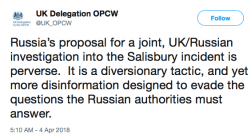
 Russia Proposes Joint Investigation Into Salisbury Attack
As if it couldn’t get more uncomfortable…tensions are running high after a meeting of the Organization of the Prohibition of Chemical Weapons (OPCW) between London and the Kremlin. “Russia had demanded the emergency gathering of the OPCW’s top body in The Hague, after being blamed by the UK Government for the poisoning of ex-spy Sergei Skripal and his daughter Yulia.” Following this meeting, the UK delegation to the OPCW tweeted “Russia’s proposal for a joint, UK/Russian investigation into the Salisbury incident is perverse. It is a diversionary tactic, and yet more disinformation designed to evade the questions the Russian authorities must answer.” In response, Russian officials are pushing back and stating that their position is “fact-driven” and supported by 14 other nations.

GAO Report on Ebola Recovery & USAID Funds
The 2014/2015 Ebola outbreak was not only devastating, but also severely financially impacting. Response efforts alone cost billions, but what about recovery? USAID (US Agency for International Development) was given the task of supporting recovery efforts in Guinea, Liberia, and Sierra Leone however, their fiscal responsibility is being called into question. A new GAO report found that USAID was provided with $1.6 billion for Ebola recovery, of which $411.6 million was obligated for 131 recovery projects. “As of September 2017, USAID had completed 62 of its 131 planned Ebola recovery projects, had 65 projects that were ongoing, and had 4 planned projects that it had not yet started. Of the 62 completed projects, USAID had completed 39 within original time frames and budgeted costs and extended 23. Of the 65 ongoing projects, USAID expected to implement 46 within original time frames and costs, but had extended 19. USAID extended projects, in part, to complete host-government actions, hire staff, finalize project activities, and continue and expand food assistance.” The GAO report found several discrepancies in the data between USAID and its contractors. “In addition, as of December 2017 USAID has not ensured that the contractor has a complete and accurate inventory, which it said is also useful for informing and improving its ability to respond to future global health emergencies. The GAO said it looked at the contractor’s evaluation plan and found some incomplete or unclear elements, which have since been addressed by USAID and the contractor. The report also recommended that the USAID administrator ensure that a complete and accurate inventory of Ebola recovery project is compiled for ongoing evaluations.”

Enhancing Global Health Security Through Biosecurity and Engagement Programs 
The National Academics of Science, Engineering, and Medicine (NASEM) will be hosting this event April 23rd (12:30-5:30pm) and April 24th (9am-5pm) at the Keck Center of NASEM. “For over two decades, the Defense Threat Reduction Agency’s Cooperative Biological Engagement Program (CBEP) has endeavored to reduce the threat posed by especially dangerous pathogens and related materials and expertise, as well as other emerging infectious disease risks. Through collaboration with other U.S. government agencies and international partners, CBEP identifies and addresses gaps in human and animal public health systems, enhance biosafety and biosecurity standards and procedures, and strengthens the ability of human and animal public health laboratories to detect, diagnose, and report outbreaks of infectious disease. Recently, CBEP collaboration has increased with the U.S. Centers for Disease Control and Prevention (CDC) on the Global Health Security Agenda (GHSA), enabling CBEP to advance its security goals across the GHSA countries. Recognizing that it must coordinate with a host of domestic and international agencies and organizations, CBEP has requested a consensus study to be conducted by the National Academies of Sciences, Engineering, and Medicine (NAESM) to engage key partners of biological and health-security support, and to assist in articulating a vision for a coherent and harmonized set of programs that align with the larger DTRA, DOD, and USG missions. The overall objectives of the NASEM study are to help CBEP and its sister programs to be as effective as possible while ensuring that critical opportunities are not inadvertently missed.”

 ProMed April Fool’s
If you’re a subscriber to the International Society for Infectious Disease’s ProMed email alerts, you may have come across this little gem on Monday. Little did people realize, the source from the Scotland Sunday Herald was a satirical article. Regarding Anthrax Island in the UK and a possible purchase- “A group of Russian oligarchs is bidding to buy Gruinard Island off the north west coast of Scotland.” “One British source said: ‘If Gruinard had an active volcano under which they could build a lair, replete with shark tank, lasers and dozens of goons in uniform, then this move would make sense. As Gruinard is basically a contaminated hell-hole where we once bombed sheep to death with bio-weapons in the hope of doing the same to Germans, then I cannot for the life of me understand what these oligarchs would want with the place.’ A Kremlin source said: ‘Why should a group of shadowy billionaires not buy up your land of Scotch and haggis? To raise questions about this is typical of lick-spittle imperialist lackeys who see conspiracies by Russia at every turn.’ When asked how anyone could survive on an island contaminated with anthrax, the source initially said that Russia ‘had years of experience with this type of thing’, before adding: ‘You cannot report that. We didn’t say that’.” ProMed issued an alert the following day, after it was notified by readers that the Scottish Herald article was in fact, an annual April Fool’s joke. Who says we don’t have fun in biodefense?

CARB-X Specific Diagnostics Award
A novel partnership may help the battle against antimicrobial resistance. A new $1.7 million award to Specific Diagnostics will help support the company’s antibiotic susceptibility testing (AST), which would significantly help early screening and rapid diagnostics, as well as lowering costs. “CARB-X funding will support the development and testing of Specific’s product, which is designed to quickly detect the emitted volatile molecules that are the first sign of bacterial growth in the blood and to determine which antibiotic is most suited to kill the bacteria. Rapid diagnostics provide quick answers to doctors and can take the guesswork out of treatment decisions in the first critical few hours and days of illness, reducing the chance of life-threatening sepsis and other urgent complications of blood infections. Currently, it can take days of laboratory testing to diagnose a lethal bacterial infection in the bloodstream. Faster diagnosis will enable medical staff to treat the patient quickly with appropriate antibiotics.”

NextGen Happy Hour
Looking to meet other people who are passionate about global health security? Next Generation Global Health Security Network is hosting a happy hour at Penn Commons (700 6th St NW, Washington, DC 20001) on April 26th at 5pm. This is a great opportunity to meet other NextGen members, the 2018 Next Generation Global Health Security Proteges, and other health security colleagues. Please confirm your attendance by April 20th by emailing nextgenghsa@gmail.com.

CDC Makes Gains in AMR Struggle
The CDC is reporting containment of new multidrug-resistant organisms in their latest MMWR. Utilizing data from the National Healthcare Safety Network (NHSN) regarding infections, researchers calculated changes in annual proportion of specific organisms that were highly resistant (CRE and ESBL). “The percentage of ESBL phenotype Enterobacteriaceae decreased by 2% per year (risk ratio [RR] = 0.98, p<0.001); by comparison, the CRE percentage decreased by 15% per year (RR = 0.85, p<0.01). From January to September 2017, carbapenemase testing was performed for 4,442 CRE and 1,334 CRPA isolates; 32% and 1.9%, respectively, were carbapenemase producers. In response, 1,489 screening tests were performed to identify asymptomatic carriers; 171 (11%) were positive.” The new strategy the CDC is relying on (and unveiled in 2017) involves rapid detection, on-site infection control assessments, screening of exposed contacts to identify asymptomatic colonization, coordination of the response among facilities, and continuing these interventions until transmission has been controlled. “The proportion of Enterobacteriaceae infections that were CRE remained lower and decreased more over time than the proportion that were ESBL phenotype. This difference might be explained by the more directed control efforts implemented to slow transmission of CRE than those applied for ESBL-producing strains. Increased detection and aggressive early response to emerging antibiotic resistance threats have the potential to slow further spread.”

Prepare For Pandemics – Reauthorize the Preparedness Act
The CDC’s elite team of disease detectives, the Epidemic Intelligence Service (EIS), is one of our greatest tools against microbial threats, so why do we keep cutting funding? The EIS program was initially established in the 1950s, when biological weapons programs were at trending and smallpox was not yet eradicated. EIS officers are deployed to public health events, and that doesn’t just mean infectious diseases, but can include natural disasters as well. “Over the last decade, however, cuts in funding for hospital and public health programs have diminished resources and capacities to identify and contain infectious disease outbreaks. Rising costs of graduate medical education, combined with disparities between public sector and private salaries for physicians have resulted in fewer physicians applying to the EIS fellowship program. While CDC once had the authority to offer student loan repayment to EIS fellows (as the National Health Service Corps and the National Institutes of Health and do for clinicians in underserved areas and scientists), CDC’s authority expired in 2002.” This can be challenging though as EIS fellows serve two years and repayment requires three years of service. In response to these budgetary cuts, Congress could, within the reauthorization of the Pandemic and All Hazards Preparedness Act (PAHPA), “reinstate CDC’s loan repayment authority and conform the commitment to CDC employment to the term of current fellowship programs.” This would encourage and better support the development of more EIS officers, as they are vital to global health security, but also a critical component to public health after their service is completed.

Stories You May Have Missed:

  • One Health Day 2018 Promotional Launch– November 3rd is the official day we celebrate global One Health Day, and three global partners are launching promotional activities to make sure we get the word out. “Anyone, from academia to government to corporate to private individuals can plan and implement a One Health Day Event which can be organized any time of the year and does not have to fall right on 3 November (unless participating in the student events competition). The global One Health Day Events webpage and map provides an impressive account of registered One Health Day events. Online registration is free of charge and yields special benefits: promotion on the One Health Day website, free use of the One Health Day logo and other materials and –anew benefit in 2018 – the chance for a surprise visit by a renowned One Health leader at selected One Health Day events.”
  • Department of Health and Human Services FY2019 Budget Request – “This report provides information about the FY2019 budget request for the Department of Health and Human Services (HHS). The report begins by reviewing the department’s mission and structure. Next, the report offers a brief explanation of the conventions used for the FY2018 estimates and FY2019 request levels in the budget documents released by the HHS and the Office of Management and Budget (OMB). The report also discusses the concept of the HHS budget as a whole, in comparison to how funding is provided to HHS through the annual appropriations process. The report concludes with a breakdown of the HHS request by agency, along with additional HHS resources that provide further information on the request. A table of CRS key policy staff is included at the end of the report.”

Thank you for reading the Pandora Report. If you would like to share any biodefense news, events, or stories, please contact our Editor Saskia Popescu (biodefense@gmu.edu) or via Twitter: @PandoraReport
Pandora Report 3.30.2018

Happy Friday! On March 26th, we celebrated the anniversary of the BWC entering into force in 1975! While it was initially ratified by 22 countries, the BWC now has 180 States Parties.

Antimicrobial Resistance – The Troublesome Truth
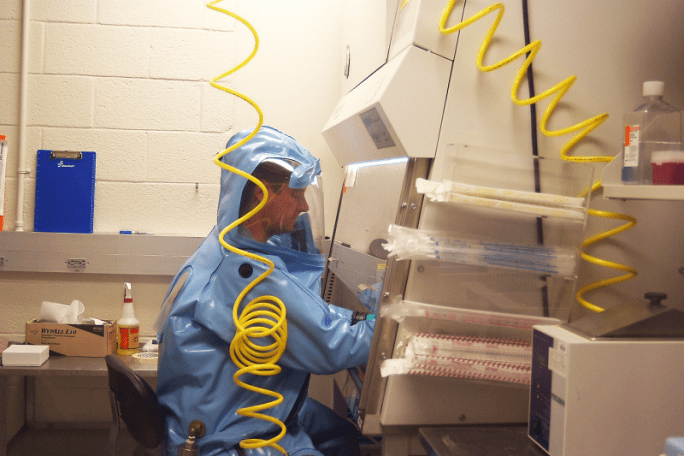
AMR isn’t that flashy and it doesn’t require the kind of PPE or laboratories that might lend itself to eye-catching photographs. AMR may not be the kind of biological threat that people think of when they consider pandemics, but one thing it undeniable is… is a growing threat of international proportion. A recent Proceedings of the National Academies of Sciences shed some light on a pretty horrific truth – in over 76 countries, antibiotic use has risen by 65% in the last 16 years and it’s fueled by economic growth. “In this study, we analyzed the trends and drivers of antibiotic consumption from 2000 to 2015 in 76 countries and projected total global antibiotic consumption through 2030. Between 2000 and 2015, antibiotic consumption, expressed in defined daily doses (DDD), increased 65% (21.1–34.8 billion DDDs), and the antibiotic consumption rate increased 39% (11.3–15.7 DDDs per 1,000 inhabitants per day). The increase was driven by low- and middle-income countries (LMICs), where rising consumption was correlated with gross domestic product per capita (GDPPC) growth (P = 0.004).” High-income countries had modest antibiotic consumption increases, but there was no correlation with GDPPC. “Global antibiotic use rose by 65% from 2000 through 2015, while the antibiotic consumption rate increased by 39%.” The positive association of growing antimicrobial consumption and GDP is a scary notion. Researchers suggest that this relationship may be due to increasing capabilities to afford such medications. Not only does AMR have a substantial cost in terms of morbidity and mortality, but it also carries a hefty financial burden. A new study found that AMR has a price tag of $2 billion a year in the United States and costs an additional $1,400 for each infection in terms of medical treatment. These expenditures are due to increasing costs of inpatient treatments that are necessary when they have failed to respond to initial antibiotic treatment(s). Imagine how much the care for the UK’s first case of high-level resistant gonorrhea costs.  Fighting these infections is increasing challenging though, as AMR crosses several industries (agriculture, medicine, etc.) but from just the medical standpoint, it poses unique obstacles. Prescribing habits are always the first be addressed, as a new study even found that a significant proportion of antibiotics given to children are unnecessary. “Nearly a third of hospitalized children are receiving antibiotics to prevent bacterial infections rather than to treat them, and in many cases are receiving broad-spectrum antibiotics or combinations of antibiotics. The authors of the study say this high rate of prophylactic prescribing in pediatric patients and frequent use of broad-spectrum agents suggests a clear overuse of antibiotics in this population and underscores the need for pediatric-specific antibiotic stewardship programs.” Prescribing practices are one issue, but Maryn McKenna recently drew attention to the role patients have in driving physicians to overprescribe for fear of bad online reviews. “Some health care workers and researchers are beginning to talk about an uncomfortable explanation: Doctors feel pressured by what patients may say about them afterward. The fear of bad patient-satisfaction scores, or negative reviews on online sites, may be creating a ‘Yelp effect’ that drives doctors to provide care that patients don’t actually need.” Just these handful of examples underscore the complexity of the clash against antimicrobial resistance. To fight the battle of the resistant bug, we need all hands on deck. A new release from APIC and SHEA called out the importance of infection prevention and control programs in antibiotic stewardship efforts. “According to the paper, when AS programs are implemented alongside IPC programs, they are more effective than AS measures alone, verifying that a well-functioning IPC program is fundamental to the success of an AS strategy. ’It is important that all clinicians depend on evidence-based IPC interventions to reduce demand for antimicrobial agents by preventing infections from occurring in the first place, and making every effort to prevent transmission when they do’.” This is a single piece of the puzzle when it comes to reducing AMR and we all play a vital role. Just another reason why antimicrobial resistance is an underrated biological threat.

NBACC Funding Restored
The National Biodefense Analysis and Countermeasures Center (NBACC) is no longer in immediate jeopardy as the federal omnibus spending bill that was released on Wednesday evening provided full funding for the Fort Detrick laboratory. “The bill fully restores funding for federal laboratories the Trump administration proposed to close, including continued operational costs of $44.3 million for the National Biodefense Analysis and Countermeasures Center (NBACC). The Fort Detrick facility includes two high-level laboratories that handle federal select agents and toxins, including the Ebola virus, ricin and avian influenza.” Within NBACC, there is the National Bioforensic Analysis Center, which aids in the processing of evidence surrounding biological events, and the National Biological Threat Characterization Center, which seeks to study the complexities of biological threats.

 Summer Workshop – Are You Registered Yet?
From July 18-20, you can attend a workshop on all things health security – from pandemic flu to DIY genome editing, and all the outbreaks in between. Are you prepared to respond to the next pandemic? Attend our workshop and you’ll not only learn about how the U.S. has worked to better prepare, but also what future threats may look like. From anthrax to Zika, we’re covering all things biodefense. Register before May 1st and you’ll even get an early-bird discount!  

ABSA 61st Annual Biological Safety Conference Call for Papers                          You are now able to submit proposals for ABSA’s 61st Annual Biological Safety Conference. The conference will take place October 12-17, 2018 in Charleston, South Carolina. We anticipate having 650 attendees and 80 commercial exhibits. The pre-conference courses will take place Friday, October 12 to Sunday, October 14. The conference presentations will take place Monday, October 15 to Wednesday, October 17. The Call for Papers submission deadline is March 30, 2018 at 12 (Noon) pm CDT. 2018 Call for Papers Submission Site

GMU Biodefense Student Awarded ASIS National Capital Chapter Scholarship
We’re proud to announce that GMU Biodefense MS student Mariam Awad has been selected to receive the American Society for Industrial Security (ASIS) Chapter scholarship! Mariam will receive the award at the Chapter’s Annual Scholarship Night on April 11th. ASIS is the world’s largest membership organization for security management professionals. Congrats to Mariam for all her hard work and showing off the dedication GMU biodefense study have to the field!

Global Health Security 2019 Conference 
The first international conference on global health security will be taking place from June 18-20 in Sydney, Australia. “The conference will: Bring together stakeholders working in global health security to measure progress, determine gaps, and identify new opportunities to enhance national, regional and global health security; Provide a venue for government officials and International Organizations to share policy developments, hear from the research community, and create a space for side meetings that advance the health security agenda; Establish and solidify a health security ‘community of practice’ and guiding principles; Through an open call for abstracts, highlight work from partners around the world, bringing cutting edge, evidence-based research to the community; Provide an opportunity for students to showcase their research; Consider creating a professional association for global health security; and Develop and endorse a ‘Sydney Statement’ on global health security.” They also have a call for abstracts on April 27th “We are at a critical juncture in the field of global health security and it is appropriate to organize the community around a set of common principles, goals, and objectives. Like the London Declaration for Neglected Tropical Diseases or the Oslo Ministerial Declaration on global health, this Conference aims to bring together the global health security community to agree on a set of principles to guide the field and set priorities. The Conference themes will address the following topics.”

First Responder Safety
Dr. Robert Kadlec, Assistant Secretary for Preparedness and Response (ASPR) highlighted the importance of protecting Americans from threats like biological weapons. “It is imperative for first responders to keep themselves safe, so that in turn, they can provide care to those who are injured or ill,”. “For example, first responders should become familiar with the ASPR’s Primary Response Incident Scene Management (PRISM) series, which Kadlec said has been developed to provide evidence-based guidance on mass casualty disrobe and decontamination during a chemical incident. The PRISM guidance is based on scientific evidence gathered under a research program sponsored by the Biomedical Advanced Research and Development Authority (BARDA), which is overseen by ASPR. What many first responders may not realize is that studies during the BARDA research showed that disrobing and wiping skin with a dry cloth removes 99 percent of decontamination, Kadlec said.”

ASM Washington DC Branch & GMU Student Chapter Meeting
Join DC area microbiologists (professionals and students) for an exciting evening of microbiology, networking, and refreshments! Submit an abstract for an oral or poster presentation by March 30th! This even will be held at the GMU Fairfax campus (Exploratory Hall, Room 3301), on April 5th from 6:30-9pm.

Stories You May Have Missed:

  • Clade X Exercise – The Johns Hopkins Center for Health Security will be hosting a tabletop exercise in Washington, D.C. in May. “The goal of this exercise (‘Clade X’) is to illustrate high-level strategic decisions and policies that the United States and the world will need to pursue in order to diminish the consequences of a severe pandemic. It will address a pressing current concern, present plausible solutions, and be experientially engaging. Clade X is designed for national decision-makers in the thematic biosecurity tradition of the Center’s two previous exercises, Dark Winter (2001) and Atlantic Storm (2005). The day-long exercise will simulate a series of Cabinet meetings among prominent players who previously occupied similar leadership positions in past Presidential administrations. Players will be presented with a scenario that highlights unresolved real-world policy issues that could be solved with sufficient political will and attention now and into the future.”
  • Rubber Ducky: Bacterial Deathtrap– Sure, this might be a little dramatic, but if you saw the inside of these beloved bath toys, you’d be pretty grossed out. “Swiss and American researchers counted the microbes swimming inside the toys and say the murky liquid released when ducks were squeezed contained ‘potentially pathogenic bacteria’ in four out of the five toys studied. The bacteria found included Legionella and Pseudomonas aeruginosa, a bacterium that is ‘often implicated in hospital-acquired infections’.”

Thank you for reading the Pandora Report. If you would like to share any biodefense news, events, or stories, please contact our Editor Saskia Popescu (biodefense@gmu.edu) or via Twitter: @PandoraReport
Pandora Report 3.23.2018

TGIF and Pandora Report day! Tomorrow is World TB Day, in which we celebrate the progress made to eradicate TB, but also recognize the work that still needs to be done. Did you know that 53 million lives were saved through effective TB diagnosis and treatment from 2000-2016? In 2016 alone, there were nearly 500,000 cases of multidrug-resistant TB around the world and it takes $2.3 billion a year to fill the resources needed for existing TB interventions. If you happen to be traveling by air anytime soon, make sure to read these tips from public health experts.

How Prepared Are You For the Next Pandemic? Summer Workshop on Pandemics, Bioterrorism, and Global Health Security
Three days filled with global health security and all things biodefense from anthrax to Zika – what more could you want in a workshop? Learn from the top minds in the field when it comes to pandemic preparedness, vaccine development, biosecurity, etc. Between the centennial of the 1918 influenza pandemic, the recent horsepox synthesis, and the lift on the gain-of-function research moratorium, these three days will be packed with exciting topics and discussions. From July 18-20th, come get your biodefense on with us in Arlington, VA – registration prior to May 1st also gets an early bird discount!

Shining A Spotlight On Soviet Nerve Agents
A nerve agent attack in the UK has made the poison, Novichok, a household name, but also pointed a very large spotlight on Russia’s scientists and defense labs. “Few experts in the rarefied area of chemical weapons defense are willing—or able—to shed further light on them. Information about the Novichok nerve agents is classified, says one U.S. military scientist who, like other U.S. government scientists, declined to speak with Science.” Whatever the plan, this failed attempt for the quick deaths of Skripal and his daughter have left many questions about delivery of the agent and how this heavily guarded secret nerve agent found its way onto UK soil. An article from The Trench discusses the use of these nerve agents, formal accusations from the UK, and compliance of the Chemical Weapons Convention (CWC). “The OPCW experts travel to the UK under Article VIII, 38(e), which qualifies their activity as a ‘Technical Assistance Visit’ to help with the evaluation of an unscheduled chemical (the Novichock agent) is not listed in any of the three schedules in the Annex on Chemicals).  They will likely visit the sites of investigation and collect their own samples (if for no other reason than to validate any laboratory samples they may receive), take all materials and documents related to the forensic investigation back to the Netherlands where the sample will be divided up and sent to two or more designated OPCW laboratories.” On Wednesday, Russian diplomatic and military officials reportedly accused the UK of hiding evidence in the investigation of the attack. “Speaking to a lecture hall of diplomats, Vladimir Yermakov, deputy head of the ministry’s department for non-proliferation, suggested that the UK was ‘hiding facts’ about the case that may later ‘disappear’.” British diplomat Emma Nottingham noted that “Russia has offered us so far no explanation of how this agent came to be used in the United Kingdom and no explanation as to why Russia has an undeclared chemical weapons programme in contravention of international law,”.

Pandemic Preparedness
“Are we prepared for the next pandemic?” Such a question pulls at the string of a much larger web that tends to leave many feeling unsettled. The scary truth is that we’re not ready. We know there will be a pandemic – history, science, and society, all tell us this. Encroachment on nature, increasing globalization and populations, and struggles against more frequent threats like seasonal flu and even antimicrobial resistance, all reveal a severe vulnerability to infectious diseases. Lessons from HIV, Ebola, and Zika, are just the latest and on the centennial of the 1918/1919 influenza pandemic, many hope that we learned from such events and can help prevent future ones. Predictions trickle across many sectors – loss of healthcare worker lives, financial and economic struggle, etc. “Such a pandemic could cause a global stock market crash that obliterates the livelihoods and savings of millions of survivors. ‘A severe and prolonged global pandemic could … hit global GDP by as much as 5-10% in the first year,’ noted the authors of the Bank of America/Merrill Lynch 2015 Global Pandemics Primer report. Oxford Economics has suggested that the cost of a global pandemic, including spillover across industry sectors, could be as great as $3.5tn – an impact far greater than the magnitude of the great financial crisis of 2008.” With funding for the GHSA in peril, the question of preparedness becomes even more relevant…and pessimistic. The tricky thing about infectious disease threats is that we’re not sure where the next one will come from. We have hints and sometimes we’ll get a whiff of which way the wind is blowing before the storm hits, but ultimately, there is so much we can’t predict. Given these challenges, prevention efforts, like those of the GHSA, should be seen as even more critical. Infectious disease prevention strategies are always a good return on an investment. It’s also the unexpected that impacts disease control and surveillance efforts. Local news is one that doesn’t often come to mind when considering epidemiology and infectious disease forecasting. “Epidemiologists rely on all kinds of data to detect the spread of disease, including reports from local and state agencies and social media. But local newspapers are critical to identifying outbreaks and forecasting their trajectories. ‘We rely very heavily on local news. And I think what this will probably mean is that there are going to be pockets of the U.S. where we’re just not going to have a particularly good signal anymore,’ said Majumder, a Ph.D. candidate at the Massachusetts Institute of Technology.”

GMU Biodefense MS Open House & PhD Information Session
Looking to earn a Masters or PhD in a field that’s at the nexus of foreign policy and public health? GMU Biodefense is just the place for that. We’re hosting two information sessions for our biodefense graduate degrees – the MS Open House is next Wednesday at 6:30pm (Arlington Campus) and the next PhD Information Session is on Wednesday, April 18th at 7pm, in Arlington, VA. These are great opportunities to hear from faculty and students in each biodefense program about not only the application process, but also the classes and what it’s like to study what you love!

CDC Selects New Director
Dr. Robert R. Redfield was just announced as the new director for the CDC. Redfield will take over for interim director Dr. Ann Schuchat, who many were hoping would take post. The new director has a background in HIV and is said to be a dedicated researcher and physician. Unfortunately, Redfield also comes with a rather novel history for CDC directors – he has never worked for a public health department. “Critics also point to a resume marred with controversy. In the 1990s, Redfield was accused of falsifying data about an experimental HIV vaccine he worked on. He was eventually cleared of those charges, but the data had to be corrected.” On Tuesday, Sen. Patty Murray (Wash.) raised concerns regarding his appointment, noting that, “This pattern of ethically and morally questionable behavior leads me to seriously question whether Dr. Redfield is qualified to be the federal government’s chief advocate and spokesman for public health.”

Brazil Calls for Country-Wide Yellow Fever Vaccination
Brazil has been battling a yellow fever outbreak since 2017 and vaccine shortages have only fueled the challenges of outbreak response. “Brazil announced yesterday that all citizens should be vaccinated against yellow fever. The country is currently experiencing a spike in cases in what has shaped up to become the largest yellow fever outbreak to hit the country since the 1940s.The Associated Press (AP) reported that Ricardo Barros, Brazil’s health minister, said all 27 of Brazil’s states will be targeted in a vaccination campaign that will aim to reach 78 million people by 2019. Before the announcement, the vaccine was recommended in all but four Brazilian states.”

Importance of GHSA
GMU Biodefense PhD student Saskia Popescu wants clinicians to understand the importance of the GHSA and why US investment is critical. “Like many components of public health and infectious disease, the importance of prevention is often forgotten until an outbreak occurs. Hospital preparedness and infection prevention were not necessarily ‘big ticket’ items in the United States until we had Ebola in Dallas, Texas, but it only takes 1 laboratory incident to remind us of the importance of biosecurity and biosafety.”

Food Defense Conference
The Food Protection and Defense Institute will be hosting this conference on May 22 & 24th in Minneapolis, MN. “As the food system is becoming ever more global, companies need to be prepared to protect not only their products but also their reputation. The Food Protection and Defense Institute will be hosting a 2-day Food Defense Certification Training Course on May 21 & 22, 2018 that will teach food industry professionals how to navigate basic food defense principles, recognize vulnerabilities, and create a tailored food defense plans.”

Stories You May Have Missed:

Thank you for reading the Pandora Report. If you would like to share any biodefense news, events, or stories, please contact our Editor Saskia Popescu (biodefense@gmu.edu) or via Twitter: @PandoraReport
Pandora Report 3.16.2018

Calling all owners of pet turtles – make sure you’re practicing some outstanding hand hygiene as there’s been a big Salmonella outbreak associated with the tiny reptiles.

Nerve Agent Attack in UK – Novichok
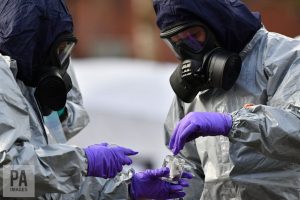
It’s been a whirlwind since the attempted murder of former Soviet spy Sergei Skripal and his daughter last week in Salisbury. It is now being reported that the Russian nerve agent “Novichok” was used. On Monday, British Prime Minister Theresa May spoke to MPs and said she would give Russia time to explain how they either lost control of the military-grade nerve agent or engaged in a direct attack on British soil. “The nerve agent was top secret back then, especially sensitive because the Soviet Union, under Mikhail Gorbachev, had renounced the use and production of chemical weapons. Its existence came to light thanks to the scruples of a brave scientist named Vil Mirzayanov, who had worked at the State Union Scientific Research Institute for Organic Chemistry and Technology. The institute was described by one of its top officials as ‘the leader in the technology of chemical destruction’.” Novichok is reportedly 5-8 times more toxic than the nerve agent VX and considered more sophisticated. You can read the joint statement from leaders of France, Germany, the United States, and the United Kingdom here, in which they state that “This use of a military-grade nerve agent, of a type developed by Russia, constitutes the first offensive use of a nerve agent in Europe since the Second World War. It is an assault on UK sovereignty and any such use by a State party is a clear violation of the Chemical Weapons Convention and a breach of international law. It threatens the security of us all.” The UK has also expelled 23 Russian diplomats in the wake of the attack.

Bill & Melinda Gates Discuss Bioweapons As Biggest Threat To Humanity
Melinda Gates recently spoke at South by Southwest this past weekend and underscored the vulnerability within the United States to bioterrorism. Both Melinda and Bill have repeatedly cited the vulnerability and seriousness of biothreats, regardless of origin, in our highly connected world. “As the two wrote in their recently released ‘Goalkeepers’ report, disease — both infectious and chronic — is the biggest public health threat the world faces in the next decade. And although Bill Gates said on a press call at the time that ‘you can be pretty hopeful there’ll be big progress’ on chronic disease, we are still unprepared to deal with the infectious variety.” While many are curious as to the reality of this threat, the truth is that infectious diseases are already causing significant damage – consider influenza, Ebola, or even antimicrobial resistance. These are naturally occurring events but there is also the risk of a laboratory incident or a nefarious actor releasing a bioweapon. Response and preparedness efforts are some of our biggest challenges. “In New York City’s hazard mitigation plan, the city indicates that a bioterror attack could have an impact on a similar scale as that of a nuclear weapon. And they say that the likelihood of bioterror attack is far greater.” Just another reason to invest in global health security efforts!

 Summer Workshop on Pandemics, Bioterrorism, and Global Health Security
Have you signed up for our workshop yet? From July 18-20th, you can engage with biodefense experts in the field and those on the front lines of global health security. Our workshop will not only cover pandemic preparedness and vaccine development (it’s the centennial of the 1918/1919 pandemic after all!), but also biosecurity in this age of DIY genome editing and the future of the GHSA.

The Missile Technology Control Regime at 30
A few weeks ago, the James Martin Center for Nonproliferation Studies held an event on the Missile Technology Control Regime and two of GMU’s biodefense graduate students were able to attend and report back to us. Christopher Lien and Shauna Triplett have provided us with detailed accounts of the talks incase you missed the event. Lien notes that “A recurring theme in the discussion centered on the need for consensus within the nonproliferation community. Ambassador Piet de Klerk, former Chair of the MTCR, emphasized that one must maintain a realistic yet ambitious agenda when interfacing with both member states and non-member states. Learning where the ‘red lines’ are in each individual state’s case and crafting an appropriate plan of action lends itself to fostering a culture of consensus.” Triplett highlighted some of the successes and failures, noting that “The reflection of accomplishments also calls for the acknowledgement of shortcomings. The biggest concern for the regime is its inability to keep up with technology. Controls are harder to place on complicated weaponry and strategies have not become any simpler to achieve. The regime is faced with the task to update its objectives in order to meet these long-term challenges.”

Implementing the Global Health Security Agenda: Progress and Impact from U.S. Government Investments
The latest report has been released from USAID on the GHSA and U.S. support. As funding for global health security is being jeopardized but the threat of infectious diseases has not waned, the future of the GHSA and U.S. involvement is highly concerning. “In 2017, there were more than 25 reported public health emergencies in U.S.-assisted GHSA countries. Partner countries detected, led the response to, and contained outbreaks, including dengue fever in Burkina Faso and the Marburg virus in Uganda, by using the improved capacities built with the help of the United States and other GHSA partners. USAID’s broad-base development programs have helped to build capacity in countries to train the next generation of health care workers, strengthen community-based surveillance and improve long-term capabilities to prevent, detect and respond to outbreaks.” Within the report, you can find sections on U.S. government investments in building global health security capacities and examples of implementation across each action package. For example, within the Antimicrobial Resistance (AMR) action package, one example was “In Guinea, Liberia, and Sierra Leone, about 38,000 health care workers, community health agents, and others who come in contact with patients were trained in infection prevention and control (IP ) standards and practices. In Sierra Leone alone, 303 health facilities received training and mentoring to improve IP and prevent the spread of AMR.” In the Real-Time Surveillance action package, “Vietnam piloted event-based surveillance with community engagement in detecting and reporting unusual health events and more than 100 local outbreaks were reported in the first six months as a result. This initial success lead to a plan for national scale-up in 2018.”

U.S. Antibiotic Resistance Surveillance Findings 
CDC surveillance efforts for AMR across several states have found some worrying incidence rates of multi-drug resistance infections. Joint efforts between the CDC and local health departments are a newer approach to not only understanding the burden of AMR within the United States, but also developing response capabilities. Currently, surveillance efforts are scattered, which means that a true understanding of the scope and magnitude of this complex biological burden is rather limited. The latest joint efforts “report that the overall annual incidence of carbapenem-nonsusceptible Acinetobacter baumannii is 1.2 cases per 100,000 persons, and that nearly all the cases were healthcare-associated. The incidence rate is lower than those reported for other invasive, healthcare-associated bacterial pathogens, including carbapenem-resistant Enterobacteriaceae (CRE), methicillin-resistant Staphylococcus aureus (MRSA), and Clostridium difficile.” Interestingly, they found that 99% of patients had some exposure to a healthcare facility or to an indwelling device (catheter, central line, etc.).

Stories You May Have Missed:

  • One Health Commission Opportunities Bulletin Board – “The global One Health Community has long called for a mechanism to share and identify relevant educational, employment, and funding opportunities. In past years there have been challenges in making the world aware that the Commission is trying to help in this way, receiving announcement requests, getting them posted on the Opportunities webpage and included in One Health Happenings News Notes in a timely manner.
     Starting in 2018, we are trying a more interactive, honor system-driven, series of online One Health Opportunity Bulletin Boards that will include links to ongoing One Health educational programs. The global One Health Community is encouraged to both submit and review announcements here. (https://goo.gl/58raog).”
  • PLOS Disease Forecasting & Surveillance Channel– PLOS has a great new source for forecasting and surveillance research. You can find articles from syndromic approaches to examining viral agents among febrile patients, global influenza seasonality, and more.

Thank you for reading the Pandora Report. If you would like to share any biodefense news, events, or stories, please contact our Editor Saskia Popescu (biodefense@gmu.edu) or via Twitter: @PandoraReport
The Missile Technology Control Regime at 30

We’re please to provide an overview of this event from the James Martin Center for Nonproliferation Studies on February 14, 2018, by two GMU biodefense graduate students – Christopher Lien and Shauna Triplett.

PART I – Christopher Lien
I had the pleasure of attending an in-depth discussion on the work of the Missile Technology Control Regime (MTCR), now celebrating its 30th year of operation. Emphasizing the MTCR’s decades of efforts in slowing the spread of unmanned systems designed to carry and deliver weapons of mass destruction (WMD), the discussion highlighted various topics of concern and challenges that face the nonproliferation community in today’s ever-evolving technological and political environment. I detail a few of the key talking points herein.

A recurring theme in the discussion centered on the need for consensus within the nonproliferation community. Ambassador Piet de Klerk, former Chair of the MTCR, emphasized that one must maintain a realistic yet ambitious agenda when interfacing with both member states and non-member states. Learning where the “red lines” are in each individual state’s case and crafting an appropriate plan of action lends itself to fostering a culture of consensus.

Richard Speier of the RAND Corporation provided a summary of the MTCR’s history, from its launch in 1987 up to the present day, and left us with some thoughts for the regime’s future. He briefly detailed the evolution of the definition of an MTCR Category 1 item[1] – complete rocket and unmanned aerial vehicle (UAV) systems capable of carrying a payload of at least 500 kilograms a distance of at least 300 kilometers. These items and their major subsystems, related technology and software, and even their dedicated production facilities are all subject to ‘strong presumption of denial’ of export. This 300-kg/500-km threshold becomes important again later on.

Several challenges inevitably present themselves with rapid innovations in missile technology. For example, satellite launch vehicles (SLVs) are inherently dual-use in that their technology can be used to carry valuable satellites into orbit while also being interchangeable with large ballistic missiles. Speier highlights the case of Brazil’s space program that, between the 1980s-1990s, concerned United States policy makers – the same solid fuel propellants used to launch satellites into geosynchronous orbit could also have been diverted toward the world’s largest solid fuel intercontinental ballistic missile (ICBM).

Michael Elleman, a Senior Fellow at the International Institute for Strategic Studies, usefully pointed out that too often SLV programs are equated with ICBM programs – to date no state has ever successfully converted an SLV into an ICBM. He maintains that space programs are not a shortcut to ICBM development and instead directed attention toward the need for countermeasures against newer threats such as hypersonic cruise missiles (HCMs) and penetration aids. Hypersonic missiles confound the MTCR 300/500 threshold since they can be effective solely with their kinetic energy for destructive power and oftentimes do not carry any payload. I asked Elleman what existing policies might be or already have been adapted to address this modern threat or if there is a perceived need for the creation of new policies. The encouraging response from both Elleman and Speier was that hypersonic technologies have not been overlooked and research has been conducted studying the methods of hindering hypersonic missile proliferation. Since HCMs rely on advanced propulsion methods such as turbofan engines or scramjets, export controls may be imposed on these engines and their components, fuels for hypersonic use, sensors and navigation items, and other systems used in developing hypersonic vehicles.[2]

Amid the rapid pace of innovations in drone technology and maneuverable re-entry vehicles, political tensions precluding comprehensive nonproliferation cooperation, and questions about the MTCR’s adaptability to these issues, how is the MTCR moving forward?

Today 35 nations strong, the MTCR continues facilitating intelligence sharing on proliferant programs and upholding bilateral cooperation among member states while seeking to establish productive relations with would-be members. Vann Van Diepen, former Principal Deputy Assistant Secretary of State for International Security and Nonproliferation, delivered the event’s keynote address focusing on several key accomplishments of the MTCR in its 30 years of operation. The regime deals not only with tangible items subject to export control but also intangibles such as the sharing of technological information. Its control lists have served as models for those of other states, bolstering the environment of consensus among the nonproliferation community. Van Diepen states that the MTCR is now beyond just export control – it is now a full-fledged nonproliferation regime. The MTCR is not a panacea to the proliferation issue, but the regime and its mission continue to be needed.

[1] The Cat. 1 & Cat. 2 definitions are found at #13 in the FAQ section, I as unable to figure out how to anchor the hyperlink to go to that specific spot in the webpage.

[2] These recommended items for export control taken from the document that I hyperlinked in “hypersonic cruise missiles”;
Richard Speier, George Nacouzi, Carrie Lee, and Richard Moore, “Hypersonic Missile Proliferation: Hindering the Spread of a New Class of Weapons,” RAND Corporation (2017), p. 45.

PART II –Shauna Triplett
The Missile Technology Control Regime is wrapping up its 30th year anniversary. This time calls for reflection on the MTCR’s achievements and shortcomings. At this year’s MTCR 30th Year of Operations event at the James Martin Center for Nonproliferation Studies, MTCR experts reflected on the past three decades. Here are five takeaways:

ACCOMPLISHMENTS
            Since its founding in 1987, the MTCR has been expanded its regime to 35 nations. Vann Van Diepen, the U.S. Department of States’ Principal Deputy Assistant Secretary of the Bureau of International Security and Nonproliferation, outlined the MTCR’s key accomplishments.  He notes these accomplishments as the ability to place successful controls on pace, a strong focus on terrorism, and effective catch-all controls. He notes that the absence of the MTCR would have led to a stronger future for Iran and North Korea’s nuclear intentions. There is no doubt that the MTCR has been necessary over these past 30 years.

SHORTCOMINGS
            The reflection of accomplishments also calls for the acknowledgement of shortcomings. The biggest concern for the regime is its inability to keep up with technology. Controls are harder to place on complicated weaponry and strategies have not become any simpler to achieve. The regime is faced with the task to update its objectives in order to meet these long-term challenges.

ARE REGIMES FOR THE HAVES AND HAVE-NOTS?
            Ambassador Piet de Klerk of the Netherlands highlighted the stigma that regimes are for the “haves and have-nots”. Looking at the MTCR’s membership would make one believe that it is an elite group for developed nations. Although 35 members are included in the MTCR, it should be noted that only three nations have been added this century. The need for expansion is important now more than ever. In this era of nuclear threat, the MTCR must have a stronger presence and focus on expansion. Although there is a concern of free riders, this is the also the time for the regime to consider whether it is promoting an environment of the “haves and have-nots’. Or is this even a concern to be addressed?

THE ROLE OF DRONES
            Rachel Stohl, the Managing Director of the Henry L. Stimson Center, raised the concern of a drone’s place in the MTCR. UADs are expanding massively and Stohl acknowledged that the framework of the MTCR does not fit well with drones due to new technology capabilities. Although Stohl is skeptical of the future of drones in the MTCR, this anniversary is a time to reflect on how to adapt the regime to the expanding technologies of drone capabilities.

FUTURE
            The MTCR may be wrapping up its 30th year, but there’s more work to be done. Richard Speier of the RAND Corporation, notes that the MTCR’s focus should be directed towards DPRK and Iran while being cautious in regard to Turkey, Syria, the Arabian Peninsula, Taiwan, and Japan/Australia. Elleman acknowledges the need to overcome guidance challenges that counter-measures such as maneuverable re-entry vehicles face. He also advises the MTCR to find a strategy that would place controls on short range cruse missiles as well strategize the utilization of high altitude endurance UAVs.

There is no doubt that the MTCR is still necessary, but the regime must be prepared for an increase in challenges. There should be a re-focus on the regimes’ objectives, a better attempt to place controls on new technology, and an expansion of membership. With the increasing threat of nuclear warfare, the anniversary and need for reflection could not have come at a more appropriate time. Now, the MTCR must commit to action.

Pandora Report 3.9.2018

Nerve agent attacks, horsepox synthesis, and funding global health security, oh my! On top of all the biodefense news we’ve got in store for you this week, we’re also thoroughly excited to announce the 2018 summer workshop on pandemics, bioterrorism, and global health security.

Summer Workshop on Pandemics, Bioterrorism, and Global Health Security – From Anthrax to Zika
We’re delighted to release the dates for the summer workshop on all things global health security. The recent publication of the horsepox synthesis study, uncertain future of U.S. investment in global health security, and a severe flu season, are just a handful of the topics we’ll be addressing in this three-day workshop from July 18-20, 2018. Did I mention that it’s also the centennial of the 1918/1919 pandemic? We face unprecedented microbial challenges in this modern age – whether it be the risk of nefarious actors misusing genome editing, antimicrobial resistance, or the speed at which a disease can circumvent the globe. Our workshop is the perfect place to learn from experts in the field and meet with a diverse group of fellow biodefense gurus. If you register before May 1st or are a returning member or GMU alum, you can even get a discount! From anthrax to Zika, our July workshop is the place to be for all things health security.

 The Herculean Challenge of Assessing the De Novo Synthesis of Horsepox 
Nine-headed Hydra or cleaning out the Augean stables? None of these tasks were particularly easy, and neither is truly assessing the risks and benefits of the recent horsepox synthesis. Two of the latest articles analyzing the implications of this research have been released this week in mSphere.  In the editorial, Michael J. Imperiale points to the increased attention on DURC and the debate surrounding the benefits of a new vaccine versus the potential for a nefarious actor to misuse the process. “The two articles posted today come from Gregory Koblentz at George Mason University, who argues that this work was poorly justified on two fronts, scientifically and commercially, and from Diane DiEuliis and Gigi Gronvall from National Defense University and the Center for Health Security at Johns Hopkins University Bloomberg School of Public Health, respectively, who discuss this study in the larger context of how the risks and benefits of dual use research are assessed and managed. (mSphere asked the leadership of Tonix to submit a manuscript, but we received no response.)” Koblentz first underlines the weak scientific foundation for the claim that the horespox synthesis aids in the development of a new smallpox MCM. He states that the “combination of questionable benefits and known risks of this dual use research raises serious questions about the wisdom of undertaking research that could be used to recreate variola virus.” Within his commentary, Koblentz addresses the scientific and commercial rationale for synthesizing the virus as well as the weak scientific basis for its use as a safer alternative for human vaccine use and the lack of demand for a new smallpox vaccine. “At the heart of the dual use research dilemma is the need to assess and balance the benefits and risks presented by an experiment or line of research. This is a difficult task given the largely theoretical risks posed by unknown adversaries in the future and the enticing yet uncertain benefits that the research may eventually yield. Indeed, measuring risks and benefits and weighing them can be a wicked problem that defies simple or straightforward conclusions. The difficulty of the task, however, does not excuse researchers, funders, or journal editors from trying to do so. While the benefits of biotechnology and life sciences research are beyond question, we should not take for granted the benefits of specific experiments or avenues of dual use research.” In their counterpoint article, Diane DiEuliis and Gigi Kwik Gronvall emphasize that the horsepox researchers went through due biosecurity diligence at their research institution, the importance of utilizing an analytical framework for assessing the risks and benefits of DURC, and discuss “relevant components of biosecurity policy and the biodefense enterprise (including the acquisition of medical countermeasures) in the United States.” DiEuliis and Kwik Gronvall point to the horespox synthesis (and the controversy) as an opportunity to evaluate how dual-use risks should be handled, the complicated approach to stockpiling MCM, and “the challenges of forecasting risks and benefits from a particular scientific discovery or technology”. They highlight the National Academies Imperiale report framework for evaluating the capacity for technology to be misused, which includes factors like weighing the use of the technology itself against consequence management, etc. They also note three issues that have been raised by the horespox paper that require additional consideration – “The decision of what to do with a technology or research area that is dual use cannot be black or white, MCMs cannot be a check-the-box procedure for the USG, The synthesis of and booting up of a pathogen should serve as strategic warning that current biosecurity controls and preparedness are insufficient.” DiEuliis and Kwik Gronvall note that “Now that the work has been published, the authors examined the research according to the Imperiale report framework, which aims to provide a systematic way to evaluate biosecurity risks. We again found that while dual use information would benefit highly experienced actors who are intent on misuse, the recreation of smallpox virus may require additional research and development steps than have been described in this publication: smallpox virus is less similar to horsepox virus than horsepox virus is to vaccinia virus, the tools to recreate horsepox virus were originally developed for vaccinia virus, and they might require additional troubleshooting for re-creation of smallpox virus.”

NTI Launches GHS Video: Act Now to Protect U.S. Investment in Global Health Security
The Nuclear Threat Initiative (NTI) has launched a new video urging Congress to act now and ensure funding for global health security. Dr. Elizabeth Cameron, NTI VP, global biological policy and programs, is spear-heading the endeavor to turn the tides and ensure sustained funding for global biodefense. “Without sufficient funding of $208 million a year for the Center for Disease Control (CDC) and $172 million a year at the United States Agency for International Development (USAID), we weaken the global network of protection, increase risk to American lives, and threaten investments from other governments and the private sector. Urge Congress to act now to provide sustained funding for global biodefense.” Cameron notes that “in response to the devastating Ebola crisis of 2014, the United States Congress authorized over $900 million in supplemental funding to support the Global Health Security Agenda (GHSA) for five years to help countries prepare for and address biological threats. This critical funding runs out at the end of fiscal year 2019, placing up to 80% of our global health security efforts abroad – offices, personnel, and programs – at risk. Also at risk?  U.S. health security and extended biodefenses. Without sufficient funding of $208.2 million a year for the Center for Disease Control (CDC) and $172.5 million a year at the United States Agency for International Development (USAID), we weaken the global network of protection, increase risk to American lives, and threaten investments from other governments and the private sector.”

Ominous Biosecurity Trends Under Putin
If you ever needed a reminder of the importance of investing in global health security, this just might provide that cold dose of reality. The latest book from Raymond Zilinskas and Philippe Mauger, Biosecurity in Putin’s Russia, assesses Russia’s actions regarding DURC and biosecurity measures. “They investigate — solely through open sources — the current Russian position. They especially dig into issues such as ‘genetic weapons’ (bioweapons aimed at damaging DNA, potentially of specific individuals or groups) and biodefence research. Their underlying intention throughout seems to be to examine the likelihood that the Russian government is itself willing to engage in banned activities related to biowarfare agents. The book thus becomes a technical-scientific detective story.” This is an in-depth analysis by two top biological weapons specialists – definitely worth the read!

A Nerve Agent, An Ex-Russian Spy, And A Bench in the U.K. 
Speaking of Russia…..a former Russian spy was recently found alongside his daughter in critical condition on a bench in Salisbury. The former spy, Sergi Skripal, and his daughter, Yulia, were found slumped over on Sunday and in desperate need of medical attention. It is now being reported that they were poisoned by a nerve agent, which has raised the suspicion that this was an assassination attempt. “The development forces the British government to confront the possibility that once again, an attack on British soil was carried out by the government of President Vladimir V. Putin, which Western intelligence officials say has, with alarming frequency, ordered the killing of people who have crossed it. Prime Minister Theresa May and her cabinet ministers held a meeting on Wednesday of the government’s emergency security committee to discuss the matter. ‘This is being treated as a major incident involving attempted murder by administration of a nerve agent,’ said Mark Rowley, Britain’s chief police official for counterterrorism and international security.” Twenty-one people are also being treated for exposure to the nerve agent in connection to the attack.

Netflix Documentary – Rajneesh Salad Bar Bioterrorism
Get ready for some Netflix and nerdom on March 16th as the documentary on the largest bioterrorist attack in the United States is released. “In 1984, more than 700 people in The Dalles, OR, contracted Salmonella infections after followers of Rajneesh sprinkled the pathogen on salad bar ingredients in 10 local restaurants. The action was an effort to swing the results of an election.” Don’t miss out on the biosecurity twitter activity during a virtual viewing party – @pandorareport!

#NoImpunity: Will The Newest International Effort to Stop Chemical Attacks in Syria Succeed?
How can we stop the use of chemical weapons if there is no authority on attribution? GMU professor Gregory Koblentz is delving into the latest strategy to hold the Assad regime accountable for their continued use of chemical weapons. Between Russian vetoes that halt OPCW efforts and the death of the Joint Investigation Mechanism, many worry that the lack of punishment will encourage further CW use by the Assad regime. “To fill this gap in the global anti-chemical weapon architecture, France launched an international initiative in January to pressure the Assad regime to halt its use of chemical weapons. The Partnership Against Impunity, which uses the hashtag #NoImpunity on Twitter, is a group of 25 countries motivated by the twin goals of deterring future chemical attacks and bringing to justice the perpetrators of past attacks.” Sure, the sanctions by some of these countries are ultimately more symbolic than behavior-changing, but they are now infusing a dose of public shaming into the mix. “First, by curating a public database that lists all of the front companies and procurement agents used by the SSRC, the Partnership Against Impunity makes it easier for other countries and companies around the world to avoid doing business with Syria’s chemical weapons program. While sanctioning these shadowy companies and middlemen is like playing ‘whack-a-mole,’ it is an essential element of preventing Syria from rebuilding the capabilities that the OPCW destroyed after Syria joined the Chemical Weapons Convention.” The Partnership Against Impunity is also laying “the groundwork for future prosecutions of military officers and government officials who engaged in war crimes” and establishing a “concrete manifestation of the noble goal enshrined in the preamble of the Chemical Weapons Convention ‘to exclude completely the possibility of the use of chemical weapons’.”

 Assessing CRISPR – The Dread And the Awe
Genome editing is a hot topic – both in terms of future possibilities, but also potential peril. GMU biodefense professor Sonia Ben Ouagrham-Gormley and doctoral student Saskia Popescu are teaming up to review two new books on this gene editing technology. First, A Crack in Creation by Jennifer Doudna, one of CRISPR’s creators, who discusses the revolutionary marvel with a mixture of hope and dread. “Doudna became aware of this paradox soon after publishing the seminal 2012 article that announced her discovery. She was surprised and delighted by the technology’s rapid spread and its use in a variety of fields, yet some applications—such as the use of Crispr to edit human embryos, as performed for the first time by Chinese scientists in 2015—made her uneasy about the future of the technology. Unscrupulous individuals’ interest in using Crispr for pure profit made her uneasy as well.” Next, Modern Prometheus by computational biologist and freelance writer, Jim Kozubek. “He ponders the power of genetic manipulation as a gateway to the dehumanization of medicine and the objectification of human beings. Kozubek draws comparisons with ‘Jurassic Park’ and Mary Shelley’s Frankenstein to pose larger questions about genetic engineering—and also to point out that, though people are fascinated with technological advances, they often neglect to consider technologies’ implications, notably on people themselves.”

The U.S. and Global Health Security At A Time of Transition
The Kaiser Family Foundation will be hosting this free event on Monday, March 12th from 2-3:30pm EDT at the Kaiser Family Foundation Barbara Jordan Conference Center in Washington, D.C. This event will seek to explore the future of U.S. global health security efforts, what role the U.S. will play in the future of the GHSA, and more through a panel of experts. “Jen Kates, Vice President and Director of Global Health and HIV Policy, will provide opening remarks, and Anne Schuchat, Acting Director, Centers for Disease Control and Prevention (CDC), will give a keynote address on U.S. global health security efforts. Josh Michaud, Associate Director of Global Health Policy at the Kaiser Family Foundation, will moderate a follow up discussion with Beth Cameron, Vice President for Global Biological Policy and Programs at the Nuclear Threat Initiative (NTI); Rebecca Katz, Associate Professor and Co-Director of the Center for Global Health Science and Security at Georgetown University; Nancy Knight,Director of the Division of Global Health Protection at CDC; and J. Stephen Morrison, Senior Vice President and Director of the CSIS Global Health Policy Center.”

New Paradigms for Global Health: Building Capacity through Science and Technology Partnerships
The American Association for the Advancement of Science and Hitachi Ltd. will be hosting this event on March 21st from 11:30am-12:30pm at the AAS headquarters in New York City. “Why are science and technology partnerships — and science diplomacy — more critical to global health than ever before? Jimmy Kolker, former U.S. ambassador to Uganda and to Burkina Faso and the Obama Administration’s chief HHS health diplomat, offers a practitioner’s perspective on new ways of integrating and advancing global health science, security, and assistance. Public-private and technical partnerships can enable the best experts to build sustainable capacity in low- and middle-income countries, strengthening global health science, policy, systems, and delivery.”

Stories You May Have Missed:

  • The Troubling Truth About Medicine’s Supply Chain –  Maryn McKenna (author of Big Chicken and all around global health guru) is lifting back the curtain on the painful reality that is America’s hospital supply chains. While not something the public generally considers, it’s something we need to start fixing. “Missing IV bags and missing pharmaceuticals seem like unrelated problems, a temporary disruption layered on top of a longstanding problem. But in fact, they are unavailable for the same reason. The United States has allowed the manufacturing of most of its drugs and medical devices to drift offshore, at the end of long, thin supply chains.”

Thank you for reading the Pandora Report. If you would like to share any biodefense news, events, or stories, please contact our Editor Saskia Popescu (biodefense@gmu.edu) or via Twitter: @PandoraReport
Peppermint, Ponies, and Unicorns: Unraveling the Post-Cold War Myth and Preparing for 21st Century Threats

by Stephen Taylor

“Things have changed in a very significant way.”  This was Dr. Robert Kadlec’s, Assistant Secretary for Preparedness and Response (ASPR), opening line at the February 12th, 2018 ASM Biothreats keynote address.  Coming out of the Cold War era, Dr. Kadlec elaborated, defense leaders asserted that the United States had “won history”.  For a brief time, U.S. global military dominance seemed immutable and the security of the American people against foreign threats enduring.  Today, however, the threat landscape includes sophisticated state actors, such as China and Russia, as well as less sophisticated, but still effective countries like Iraq and Syria, which have shown few scruples in developing and deploying chemical weapons like sarin and chlorine gas.  The Islamic State of Iraq and the Levant, though in retreat, still poses a multi-state threat in the Middle East.  Additionally, pandemics such as Ebola and Highly Pathogenic Avian Influenza have become increasingly common in our interconnected world.  Dr. Kadlec also acknowledged that global climate change will continue to contribute to unpredictable and intense weather events with potentially disastrous consequences.  The post-Cold War days of peppermint, ponies, and unicorns, Dr. Kadlec emphasized, were short-lived. Continue reading “Peppermint, Ponies, and Unicorns: Unraveling the Post-Cold War Myth and Preparing for 21st Century Threats”

Pandora Report 3.2.2018

Happy Friday! We’ve got a full plate of biodefense news this week, so we hope you’re hungry for everything from ASM Biothreats 2018 coverage to Gain of Function research, and a side of pandemic budgeting.

ASM Biothreats 2018 – GMU Biodefense Coverage
We’re excited to present our annual coverage of the ASM Biothreats conference from some of GMU’s very own biodefense graduate students. Our overview is a great way to catch up on some of the hot topics and captivating breakout sessions from the conference. You can find a landing page for all the reviews here, which will have links and a brief synopsis for each section the students wrote. GMU biodefense graduate students covered a variety of sessions – from artificial intelligence in biosecurity to the GHSA, future DoD programs in biodefense policy, and BARDA/DARPA projects- we’re reporting it all!

New Pathogen Research Rules: Gain of Function, Loss of Clarity
GMU Biodefense professor and graduate program director Gregory Koblentz is teaming up with Lynn Klotz (co-managing director of Bridging BioScience and BioBusiness LLC), to evaluate the December 2017 release of the latest Gain of Function (GoF) research rules. The DHHS release finally lifted the funding moratorium on GoF research following the controversial projects involving H5N1 in 2011. While the DHHS policy (or “Framework for guiding funding decisions about proposed research involving enhanced potential pandemic pathogens”) is similar to the Office of Science and Technology Policy guidance that was released in January 2017 (the “P3C0 Framework”), it came with the bonus of restoring funding for such research. Unfortunately, there are still considerable concerns with how GoF research is evaluated and if these frameworks have really addressed the gaps. “We, the authors, harbor concerns about adequate oversight of potentially dangerous research, and the framework incorporates several elements that address those concerns. The framework is thorough. It does a good job of laying out the principles and processes through which the Health and Human Services Department will make funding decisions regarding research that involves enhanced potential pandemic pathogens. The framework’s approach to dual-use research of concern is not based on lists of experiments or on specific pathogens, but instead takes a risk-based approach that focuses on the attributes of modified organisms. While the identity of starting organisms is central to existing oversight policy for dual-use research of concern, the framework emphasizes the importance of organisms’ properties once the experiment is over. This more comprehensive approach to dual-use research is a welcome change. Some elements of the new framework, however, remain worrisome.” Koblentz and Klotz point to several limitations of the new framework – it’s too narrow and not broad enough in that it only applies to research funded by DHHS, the terminology and definitions are lacking (especially in the definition of a potential pandemic pathogen), and the review process that was created is a limited. The framework also has new criteria for risks and benefits, which is “inherently problematic” and agreement is often never achieved. “The criteria used to judge which experiments involving enhanced potential pandemic pathogens warrant review by the Health and Human Services Department—and how the risks, benefits, and ethical aspects of such experiments are measured and weighed—are ambiguous enough to provide departmental reviewers wide latitude in their funding decisions. The process and outcomes must be transparent in order to demonstrate that the process is conducted in good faith and that policy is implemented appropriately. The framework, though it recognizes the importance of transparency for maintaining public trust in science, does not go far enough in actually providing the requisite level of transparency.” Lastly, Koblentz and Klotz point to the international considerations as a considerable weakness within the new framework. Sadly, it only applies to research done within the United States and the truth is that this is an international issue and needs global consideration and collaboration.

 2018 NASPAA Student Simulation – Global Health Security
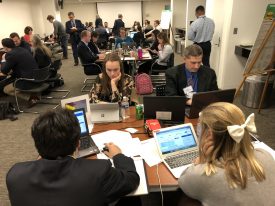
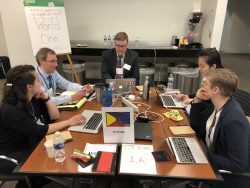
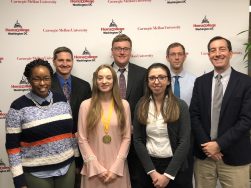
How did you spend your Saturday? Battling a virtual pandemic? We were fortunate to participate as judges at an international collaboration and simulation to test students on their response during a pandemic. The NASPAA-Batten simulation (Network of Schools of Public Policy, Affairs, and Administration) involved a total of 563 students in 117 teams, from 159 universities across 27 countries. Teams represented approximately 336 million fictitious people in 4 fictitious countries per 1 fictitious world and were battling 1 seriously tough outbreak. GMU’s Schar School and the biodefense program were represented in both participants and judges. Professor and graduate program director Gregory Koblentz and PhD student Saskia Popescu were judges while six Schar students participated (four of which were biodefense students!) at the Carnegie Mellon University site in DC – Alexandra Williams (Biodefense MS), Annette Prietto (Biodefense MS), Stephen Taylor (Biodefense MS), Justin Hurt (Biodefense PhD), Fleciah Mburu (MPA), and Ryan Kennedy (MPP). The two finalist teams from the CMU site included biodefense MS students Alexandra and Justin, which means they’ll now move on to the global round where they are competing for the $10,000 prize. GMU biodefense students know how to battle a pandemic – whether it’s simulated or real! From a judge’s perspective, this was a great experience to not only observe how people respond to the complexities of a global outbreak, but also pose questions that help them see all the moving pieces in response.

Blue Panel Study Panel on Biodefense Calls For Strategic Budgeting Tied to New National Biodefense Strategy
The Blue Ribbon Study Panel has released a statement on the desperate need for decision-makers to commit to biodefense funding and recognize it as an imperative component to national security.  “We would do well to remind ourselves that we are really just as vulnerable now as we were then. In addition to the enormous potential toll on human health that intentional or natural outbreaks can inflict, the cost of the relentless rise of outbreaks is also entirely unsustainable based on current funding approaches. Emergency appropriations reach into the billions in direct outlays to the U.S. government. Economic impacts of a catastrophic outbreak could reach into the trillions.” You can also read the OpEd by Sen. Joe Lieberman and Former Gov. Tom Ridge, stating that American lives are worth budgeting for biodefense. “We call upon the president to release the National Biodefense Strategy soon and ensure that his next budget request to Congress conforms to the priorities in this strategy, showing how money requested for biodefense programs support the National Strategy’s goals and objectives.”

CDC Plans for New High Containment Lab
The CDC is asking congress for $350 million to start building the high containment continuity laboratory on their main campus to replace the existing one that has been used since 2005, but requires replacement by 2023. “The existing facility contains a number of BSL4 labs and labs that are one step down the biosafety and biosecurity ladder, BSL 3 enhanced. That’s where research on dangerous avian influenza viruses like H5N1 and H7N9 is conducted. Buildings that house these types of labs simply require a lot of maintenance, explained Dr. Dan Jernigan, head of the CDC’s influenza branch. ‘We’re just faced with the realities of what it takes to maintain something as complex as the high containment lab,’ he said.” The complex design of high containment labs makes them both expensive to build and maintain.

Battelle Takes On Biological Threats With New Software
Between naturally occurring outbreaks, bio-error, and bio-terror, there are a lot of ways infectious diseases can pose a threat to human life and safety. Battelle is seeking to change this through a new software for the U.S. government that “would screen small bits of DNA and assess whether they belong to potentially dangerous genetic sequences.The local research institution is one of six groups awarded an $8.7 million, two-and-a-half-year grant by the Intelligence Advanced Research Projects Activity (IARPA), an organization within the Office of the Director of National Intelligence.” The growing application of CRISPR and other genome editing technologies has underlined the gaps in DNA sequence screening for biosecurity concerns, especially when one considers the recent horsepox synthesis. “In the absence of national or international policy that would monitor bioengineering activity — and the technological gap for keeping an eye on never-before-encountered organisms — Battelle and the other groups awarded the federal contract are trying to figure out how to stay a step ahead. ‘At first I thought it would be too big of a lift for us,’ Dickens said. At the end of January, Battelle researchers completed a first version of the software, which they are now testing and optimizing. It can, for example, analyze a small fraction of an influenza virus’ genetic code and identify or predict whether it has the potential to make people, animals or the environment sick. The tool then assigns the genetic scrap a threat level: dangerous, potentially hazardous or safe. The tool is artificially intelligent enough to detect whether the sample is related to any known specimens, such as botulism or anthrax, and predict the function of never-seen-before DNA sequences.”

Workshop on Women’s Health In Global Perspective
GMU Schar School is hosting this free workshop on March 7-8th in Arlington,VA – don’t miss out! “The Workshop on Women’s Health in Global Perspective seeks to contribute to understanding and improve policy on women’s health and wellbeing around the world. The program includes panels on Communicable and Non-Communicable Disease; Health and Wellbeing; Maternal Health; and Reproductive Technology and Family Planning. It will cover topics such as HPV Vaccine Awareness, Maternal Mortality, and Cross-border Reproductive Care.”

GMU Biodefense Alum Leads NEIC Laboratory 
We love getting to brag about the amazing things that GMU Biodefense students and alum do with their passion for health security. Biodefense MS alum Francisco Cruz was recently named the Chief of the EPA’s National Enforcement Investigations Center (NEIC) Laboratory Branch! “The branch’s primary responsibility is conducting forensics analysis on environmental samples related to criminal and civil cases. The lab is a fully accredited forensics laboratory staffed by 21 chemists who can not only conduct the lab analysis, but also testify in court regarding the science behind the analysis. Additionally, the lab is capable of developing novel analytical methods for rare and difficult matrices that most labs cannot analyze. The lab supports EPA and other federal law enforcement partners with either lab analysis or technical consultation on how to process a sample.” Biodefense alums – don’t forget to stay connected so we can recognize you for all the amazing biodefense work you do!

DARPA Names Pandemic Prevention Platform Researchers
Launched in 2017, the P3 program from DARPA hopes to stop the spread of an outbreak before it becomes a pandemic. “In contrast with state-of-the-art medical countermeasures, which typically take many months or even years to develop, produce, distribute, and administer, the envisioned P3 platform would cut response time to weeks and stay within the window of relevance for containing an outbreak.” DARPA recently announced the institutions that are contracted for the program and will hopefully make progress in the fight against pandemics – MedImmune, Abcellera Biologics Inc., Duke University, and Vanderbilt University.

 The WHO – What Went Wrong from Swine Flu to Ebola?
The WHO has struggled to find its strong foot since 2009’s H1N1 influenza pandemic and then the 2014/2015 Ebola outbreak. With new leadership, many are hoping the WHO’s abilities can be strengthened and some faith restored in their capacity to prevent and respond to international health events. One particular evaluation of this can be found in a chapter of Political Mistakes and Policy Failures in International Relations. “This chapter examines a series of mistakes and the structural, cultural, political and epidemiological factors that contributed to the WHO’s mishandling of the first pandemic of the twenty-first century and the world’s largest ever outbreak of Ebola. The chapter then concludes by examining the reforms currently being implemented to strengthen the WHO’s global health security capabilities and what these signify for the future.”

Stories You May Have Missed:

  • CDC Epidemiologist Missing – “Police investigators are bewildered as they work through the “extremely unusual” circumstances surrounding the missing-person case of Timothy Cunningham, a researcher who vanished Feb. 12, shortly after hearing why he had been passed over for a promotion at the Centers for Disease Control and Prevention (CDC). Cunningham, 35, told colleagues he was not feeling well and left work at CDC headquarters in Atlanta, not long after speaking with his supervisor about why he had not been promoted, Atlanta Police Maj. Michael O’Connor told reporters. Cunningham works in the chronic disease unit at the CDC, not in the part of the CDC that deals with infectious disease, according to authorities.”
  • Iraqi, Dutch, Vietnamese Officials Report Avian Flu Outbreaks – Several countries reported new avian flu outbreaks, including two more H5N8 events at commercial poultry farms in Iraq, an H5 outbreak at a poultry farm in the Netherlands, and the first known H5N6 detection of the year in Vietnam. In Iraq, which has reported ongoing H5N8 activity since early January, authorities reported new outbreaks in Diyala and Baghdad province that began on Feb 13 and Feb 14, respectively, according to a report yesterday from the World Organization for Animal Health (OIE). The investigation said the source of the virus was contact with wild species.”
  • 11 Fall Ill After Suspicious Letter Arrives At Military Base– “Eleven people fell ill after a suspicious letter was opened in an administrative building at Joint Base Fort Myer-Henderson Hall in Arlington, Virginia, on Tuesday, according to the Arlington County Fire Department. A law enforcement official said field tests for the letter all came back negative for any harmful substance, but the FBI is transporting it tonight to its lab in Quantico for further analysis. The law enforcement official said the text of the letter contained derogatory, at time unintelligible and ranting language, and was addressed to a commanding officer at the base. Investigators are still determining what relationship, if any, the sender had with the base. A corporal, gunnery sergeant and a colonel all exhibited symptoms of a burning sensation on their hands and face, according to Specialist Nicholas Hodges who spoke to CNN from the base.”

Thank you for reading the Pandora Report. If you would like to share any biodefense news, events, or stories, please contact our Editor Saskia Popescu (biodefense@gmu.edu) or via Twitter: @PandoraReport
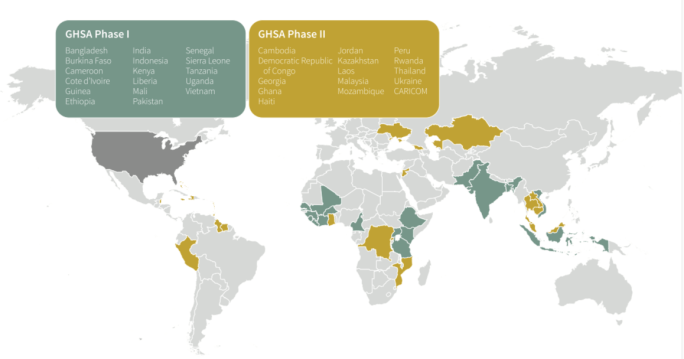
ASM Biothreats 2018

We’re the source for all things biodefense and the annual ASM Biothreats conference is no different. GMU’s biodefense program was fortunate to send several students to attend and report back on some of the enlightening and captivating sessions during the biothreat event. Below you’ll find several commentaries from each student who attended – happy reading!

Mariam Awad – Biodefense MS Student
Mariam is a graduate student with a background in biochemistry and foreign affairs and is reporting on breakout sessions on the international landscape of biodefense and artificial intelligence for biosurveillance. “During this talk, speakers addressed both bilateral and multilateral research projects in various regions around the world led by various US agencies including State Department and defense threat reduction agency.” Next, Awad discusses “how we can utilize machine learning for creating situational awareness of both intentional and naturally occurring biological incidents. One of the current hurdles in conducting biosurvillance for Bacillus Anthracis and pandemic influenza include lack of tools that can rapidly structure, integrate and analyze large, disparate data with little human exposure and intervention.”

Jessica Smrekar – Biodefense MS Student
Jessica has a background in biology and biotechnology and is giving us insight into one of the keynote speakers, Dr. Ilaria Capua, and her frank talk about the relationship between the government and science. “This particular keynote described her story of shame, falsification, and the effects populism on the scientific community. She began by stating this was the hardest speech she has ever had to give and that we would understand why by the end of it.  She then set the scene by speaking of the turmoil of the modern age and how this age has brought along hard times for everyone.” Next, Smrekar evaluates one of the more controversial discussions – the future of P3C0, noting that “A large portion of the session was dedicated to analyzing the risk of gain of function studies with PPPs and how these risks compare to the benefits from such research.”

Anthony Falzarano – Biodefense MS Student
Anthony, having just attended the GHSA Kampala summit, delves into global approaches to threat reduction through OneHealth. “This new concept that we must consider all the health-related disciplines to truly understand and address the challenges faced in public health has grown to be the backbone of forward-thinking health initiatives like the Global Health Security Agenda.” Next, Falzarano is also giving his perspective on the panel on the international landscape of biodefense. “While these threats may be from natural or man-made infectious disease events, they all share a similar connection in that pathogenic diseases do not respect borders or political lines. This session featured speakers from the United States Department of State, Defense Threat Reduction Agency, and Edgewood Chemical and Biological Center. These entities are working both together and in parallel to address the biosecurity risks posed against our country and to the world.”

Justin Hurt – Biodefense PhD Student
Justin is providing us with a detailed account of the breakout session on planning for the future and the DoD programs to help inform biodefense policy. “One such player that has not only significant expertise, but also a robust research and development capability in countering biological threats is the Department of Defense (DoD). Joined by its partner agencies in the national security enterprise, the DoD leads a wide-ranging portfolio of projects geared toward preventing, preparing for, and mitigating the possibility of a future biological attack or public health crisis.”

Stephen Taylor – Biodefense MS Student
Stephen, also a GHSA Kampala Summit attendee, is delving into the talk from DARPA and BARDA researchers regarding prevention planning against the next pandemic. “Justin Yang, a project officer at BARDA, spoke about BARDA’s vision to shrink the gap between patients and treatment, both physically and temporally. For instance, U.S. healthcare providers have access to a myriad of influenza diagnostics. Using these tools in a timely manner, however, is problematic.” Stephen also provides an overview of Dr. Robert Kadlec’s keynote address. “The Islamic State of Iraq and the Levant, though in retreat, still poses a multi-state threat in the Middle East.  Additionally, pandemics such as Ebola and Highly Pathogenic Avian Influenza have become increasingly common in our interconnected world.  Dr. Kadlec also acknowledged that global climate change will continue to contribute to unpredictable and intense weather events with potentially disastrous consequences.  The post-Cold War days of peppermint, ponies, and unicorns, Dr. Kadlec emphasized, were short-lived.”


Breakout Session – Planning for the Future: Department of Defense Programs and Processes to Inform Biodefense Policy

By Justin Hurt

Any future approach to countering potential biological threats will require a multi-faceted, integrated effort by many players to ensure that all appropriate methodologies and scenarios are considered in developing policies and solutions. One such player that has not only significant expertise, but also a robust research and development capability in countering biological threats is the Department of Defense (DoD). Joined by its partner agencies in the national security enterprise, the DoD leads a wide-ranging portfolio of projects geared toward preventing, preparing for, and mitigating the possibility of a future biological attack or public health crisis.

In a discussion moderated by Dr. Jeffrey “Clem” Fortman of the Office of the Assistant Secretary of Defense for Nuclear, Chemical, and Biological Defense, several experts from the federal agencies associated with combating biological threats discussed emerging trends in the field of biodefense. Joined by Ms. Robin Wales of the Defense Threat Reduction Agency’s (DTRA) Global Futures Office, Dr. Brad Ringeisen of the Defense Advanced Research Projects Agency (DARPA) Biotechnologies Office, and Dr. David Shepard of the Department of Homeland Security’s Science and Technology Directorate, Dr. Fortman outlined the current DoD priorities and projects in the biodefense realm. The DoD’s multi-layered approach, informed by the June 2014 DoD Strategy for Countering Weapons of Mass Destruction (WMD), includes being the federal government’s technical lead for biothreat response, leveraging a range of internal and external experts, and interagency partners.

Collaboration between the internal service components of the DoD, including the Army, Air Force, and Navy provides the warfighter’s viewpoint on addressing biodefense needs in military environments. Through a series of ongoing studies and workshops, the services are providing perspectives to the myriad partners the DoD has in research and development, including bringing external experts and emerging leaders into the defense establishment through programs such as the American Association for the Advancement of Science’s Science and Technology Policy Fellows Program and the Vannevar Bush Faculty Fellowship. The DoD is currently working with such experts and interagency partners on a final report sponsored by the National Academy of Science on “Strategies for Identifying and Addressing Biodefense Vulnerabilities posed by Synthetic Biology.” This document, with a framework to identify and describe gaps in knowledge and technology as well as generate ideas for mitigation options, is expected in a final format in late Spring 2018. Continue reading “Breakout Session – Planning for the Future: Department of Defense Programs and Processes to Inform Biodefense Policy”