

This week’s Pandora Report covers a new interim staff report from the House Select Subcommittee on the Coronavirus Pandemic, the new United States Government Policy for Oversight of Dual Use Research of Concern and Pathogens with Enhanced Pandemic Potential, the OPCW’s statement on Russia’s alleged use of toxic chemicals as weapons in Ukraine, and more.
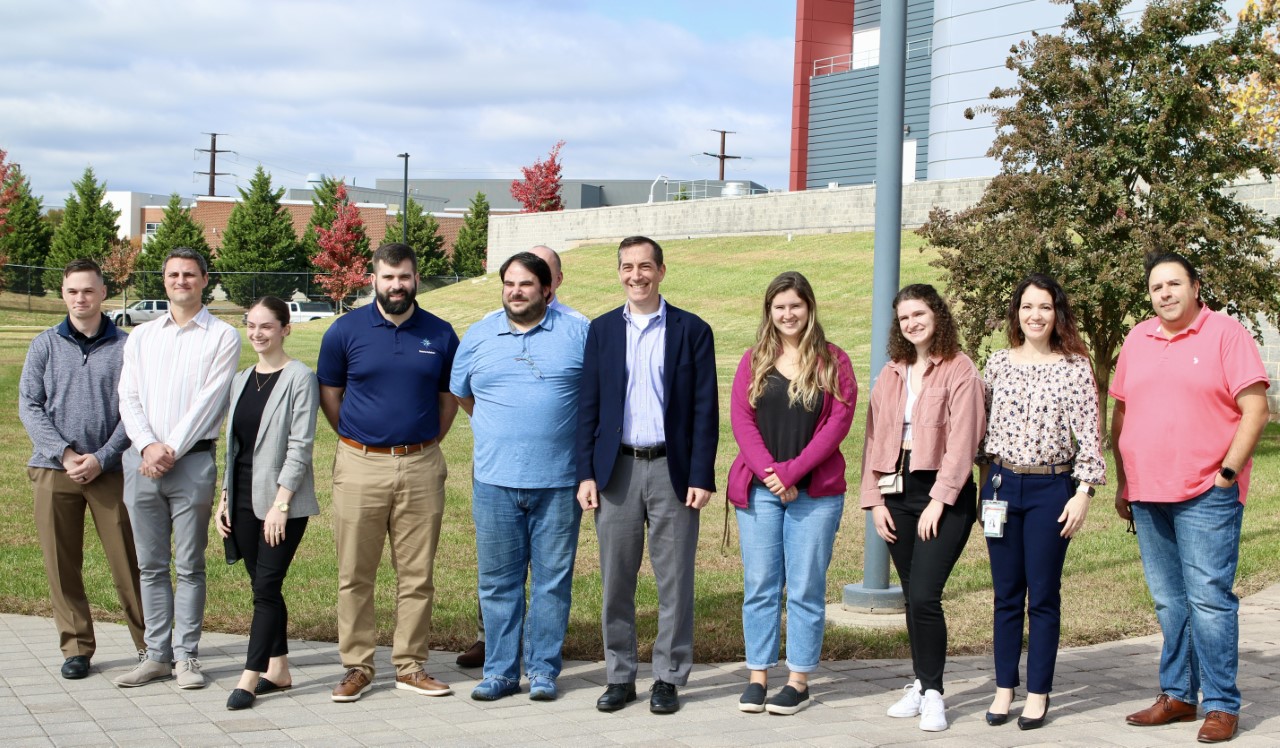
GMU Biodefense Students Visit National Museum of Health and Medicine
“Late last month a cadre of students from the Schar School of Policy and Government’s biodefense graduate program visited the National Museum of Health and Medicine in Silver Spring, Maryland, not far from the George Mason University campuses.”
“The 150-year-old museum is known for its collections that depict the human anatomy and everything that can befall it, in sometimes stark and gory detail. What else would you expect from a museum with a pathology guide with listings for “bilateral nephrolithiasis (kidney stones),” “liver, hydatid cyst from tape worm,” and an all-time-favorite, “trichobezoar (human hairball from stomach).”’
Read more about this visit here on the Schar School’s website.

Select Subcommittee on the Coronavirus Pandemic Interim Staff Report Calls for Daszak, EcoHealth Alliance Debarment
Earlier this month, the House Select Subcommittee on the Coronavirus Pandemic’s chairman, Rep. Brad Wenstrup (R-OH), released an interim staff report-“An Evaluation of the Evidence Surrounding EcoHealth Alliance, Inc.’s Research Activities”. The press release explains in part, “This report details the Select Subcommittee’s comprehensive investigation into the U.S. government’s funding and lack of oversight of gain-of-function research, EcoHealth Alliance (EcoHealth), and the Wuhan Institute of Virology (WIV). The report reveals serious, systemic weaknesses in the National Institute of Allergy and Infectious Diseases (NIAID) and National Institutes of Health’s (NIH) grant procedures and examines how these failures enabled EcoHealth President Dr. Peter Daszak to fund dangerous gain-of-function research in Wuhan, China without sufficient oversight.”
The select subcommittee’s recommendations include:
- “The Select Subcommittee on the Coronavirus Pandemic recommends that EcoHealth Alliance and Dr. Peter Daszak are formally debarred and cut off from receiving any future U.S. taxpayer funding.”
- “The Select Subcommittee also recommends that the U.S. Department of Justice conduct a formal investigation into Dr. Daszak.”
- “Further, the Select Subcommittee recommends eight improvements to NIAID and NIH procedures that will improve grant compliance, increase biosafety and biosecurity of high-risk research, and advance transparency and accountability in America’s federal health agencies.”
Daszak testified before the select subcommittee on the day the report was released, which was covered by Matt Field in The Bulletin of the Atomic Scientists. Field explains in his coverage that Daszak was grilled by members of both major political parties during the subcommittee’s hearing on May 1, writing “On Wednesday, however, members of both US political parties came armed with blistering criticism for Peter Daszak, the head of the nonprofit EcoHealth Alliance, questioning his honesty in dealing with federal agencies and skewering his alleged conflicts of interests as he attempted to assume the role of a leading scientific voice on the pandemic’s origins. Beginning in 2014, EcoHealth ran a US-funded, multimillion-dollar project to identify hotspots where patterns of interaction between humans and animals could spark disease outbreaks.”
He later writes, “They hammered away on one of the plot points in the origins debate, EcoHealth’s transparency in reporting on its studies to the National Institutes of Health (NIH). Over the course of one five-year grant, EcoHealth was supposed to submit annual reports. One of those, covering 2018-2019, came two years late. Daszak claimed that EcoHealth had tried to submit the report, but the NIH had a problem with its computerized reporting platform. According to a report by the subcommittee’s Democrats, however, a forensic audit found no evidence for this assertion.”
Chairman Wenstrup said in a statement, ““EcoHealth Alliance President Dr. Peter Daszak is not a good steward of U.S. taxpayer dollars and should never again receive funding from the U.S. taxpayer. Dr. Daszak and his organization conducted dangerous gain-of-function research at the WIV, willfully violated the terms of a multi-million-dollar NIH grant, and placed U.S. national security at risk. This blatant contempt for the American people is reprehensible. It is imperative to establish higher standards of oversight at the NIH. The Select Subcommittee’s detailed and comprehensive report today holds Dr. Daszak and EcoHealth Alliance accountable and sheds light on severe shortcomings in our public health systems.”
US Agencies Set to Tighten Gain-of-Function Research Oversight
This White House announced this week the new United States Government Policy for Oversight of Dual Use Research of Concern and Pathogens with Enhanced Pandemic Potential and accompanying implementation guidance, following years of public debate and recommendations made by the National Science Advisory Board for Biosecurity. As the New York Times explains, “The new policy, which applies to research funded by the federal government, strengthens the government’s oversight by replacing a short list of dangerous pathogens with broad categories into which more pathogens might fall. The policy pays attention not only to human pathogens, but also those that could threaten crops and livestock. And it provides more details about the kinds of experiments that would draw the attention of government regulators.”
Read Max Kozlov’s summary and discussion of this new policy in Nature.
Emergent BioSolutions Announces Layoff Plans, Plant Closures
Emergent BioSolutions, the Gaithersburg-based company best known for producing Narcan, has announced it is shuttering its Maryland manufacturing facilities and laying off about 300 employees. This includes its Baltimore-Bayview Drug Substance manufacturing facility and its Rockville Drug Product facility, according to The Baltimore Banner. The company has also said it will eliminate 85 currently vacant positions. This is all on top of the more than 230 Maryland employees Emergent laid off last year.
Emergent drew national attention in the summer of 2021 after the company, which had secured a government contract to produce COVID-19 vaccines on behalf of Johnson & Johnson and AstraZeneca, came under Congressional scrutiny for potentially contaminating at least 75 million vaccine doses. Furthermore, as The New York Times highlighted at the time, “With its stock price cut in half, Emergent faces several shareholder lawsuits accusing it of securities fraud, and a pension fund filed a complaint last Tuesday claiming that some executives and board members — including several former federal officials — had engaged in insider trading by unloading more than $20 million worth of stock over the past 15 months.”
An investigation found that Emergent was forced to destroy or discard up to 400 million doses’ worth of ingredients for COVID-19 vaccines. ABC News explained in a piece about the report that “Congressional investigators probing the Maryland-based biotech company found that Emergent executives had privately raised urgent quality-control concerns even before the company began manufacturing the vaccines’ key ingredient — despite publicly expressing confidence in their ability to deliver on their multimillion-dollar government contract.”
‘”Despite major red flags at its vaccine manufacturing facility, Emergent’s executives swept these problems under the rug and continued to rake in taxpayer dollars,” House Oversight and Reform Committee Chairwoman Carolyn Maloney, D-N.Y., said of the report, which determined that the company’s “manufacturing failures and deceptive tactics” led to the large-scale waste of ingredients that could have helped make millions of vaccine doses.”
Emergent’s stock price did jump following the announcement of the layoffs, finishing yesterday at $4.37 up from $1.93 on May 1, a far cry from the $130 its shares were traded for in August 2020. According to The Baltimore Banner, “The company estimated that the restructuring will cost up to $21 million this year and save the company about $80 million annually. In a filing with the U.S. Securities and Exchange Commission, Emergent said most of those initial costs will be related to severance and benefits.”
OPCW Releases Statement on Ukraine
The OPCW released this week a statement about Russia’s alleged use of toxic chemicals as weapons in Ukraine. It reads in part “The Secretariat of the Organisation for the Prohibition of Chemical Weapons (OPCW) has been monitoring the situation on the territory of Ukraine since the start of the war in February 2022 in relation to allegations of use of toxic chemicals as weapons…The information provided to the Organisation so far by both sides, together with the information available to the Secretariat, is insufficiently substantiated.”
Read more here.
Mason Biodefense Graduate Program Director Discusses AI, Biological Weapons Risks with CNN
Biodefense Graduate Program Director Gregory Koblentz was recently interviewed in this May 5 CNN Newsroom segment covering AI and biological weapons proliferation risks. It was filmed ahead of the release of an episode of CNN’s “How It Really Happened” focused on the 2001 Amerithrax attacks.
“2024 U.S. Department of State Report on North Korea’s ‘Genetic Scissors’ Technology and Capabilities and Its National Security Implications”
This report from the Institute for National Security Strategy was co-authored by Biodefense PhD Program alumnus Hyun Jung Kim: “The recent U.S. State Department’s report, titled “2024 Adherence to and Compliance with Arms Control, Nonproliferation, and Disarmament Agreements and Commitments,” articulates that North Korea has acquired the capability to genetically engineer biological products utilizing CRISPR. This report raises alarms over the potential transformation of this genetic engineering technology into an offensive biological weapons program. CRISPR, often referred to as ‘genetic scissor’ technology, renowned for its ability to precisely cut and replace sections of the genome, holds promise for groundbreaking developments in medicine, agriculture, and energy sectors. However, this technology also faces several challenges, including ethical and institutional issues and safety concerns. The national security threats posed by the advancement of North Korea’s genetic engineering technology include unconventional warfare tactics such as terrorism and targeted assassinations, the potential leakage of genetically modified bioagents due to laboratory accidents, and the proliferation of weapons of mass destruction. Furthermore, the same report notes the development of ‘dual-use marine toxins’ by the Chinese People’s Liberation Army, which may imply possible strategic cooperation and coordination between China and North Korea in the development of biological toxins, posing a significant challenge to the international security landscape.”
“China, Biotechnology, and BGI: How China’s Hybrid Economy Skews Competition”
Anna Puglisi and Chryssa Rask recently published this issue brief with Georgetown’s Center for Security and Emerging Technology: “As the U.S. government considers banning genomics companies from China, it opens a broader question about how the United States and other market economies should deal with China’s “national champions.” This paper provides an overview of one such company—BGI—and how China’s industrial policy impacts technology development in China and around the world.”
“The National Blueprint for Biodefense: Immediate Action Needed to Defend Against Biological Threats”
This latest report from the Bipartisan Commission on Biodefense urges policymakers to adopt several measures to help sustain and grow US biodefense, including establishing a congressional working group focused on biodefense at the start of each Congress, making amendments to the Public Health Service Act in order to “produce a research and development plan for reducing pathogen transmission in built environments,” and replacing BioWatch.
In addition to the report linked above, Axios’ Alison Snyder has summarized the report and provided context to its recommendations here.
“Twenty Years of Preparedness: Reflecting on the Legacy of the Project BioShield Act of 2004”
Adey Pierce-Watkins and Tanima Sinha recently published this report for BDO: “This July 2, 2024, marks the 20th anniversary of The Project BioShield Act of 2004 (P.L. 108-276); legislation enacted in response to the anthrax attacks of September 2001, which revealed the need for development and acquisition of medical countermeasures (vaccines, therapeutics, and diagnostics) to protect the U.S. population from chemical, biological, radiological, and nuclear (CBRN) threats. This Act, and associated Congressional Appropriations, established a Special Reserve Fund (SRF) of $5.593B advanced funding available over a 10-year period for the advanced development and procurement of medical countermeasures with the intent of initiating a new posture of national preparedness.1 Simultaneously, this legislation created new market incentives for pharmaceutical and biotech companies to engage in the development of CBRN medical countermeasures and transformed the partnership between the federal government and industry into a shared responsibility for increasing preparedness against CBRN threats. As a result, this legislation and the SRF created a “guaranteed market” for pharmaceutical companies to produce CBRN medical countermeasures for which there previously was no commercial demand…In recognition of the 20th Anniversary of The Project BioShield Act, it is fitting to highlight the impact and milestones of this legislation based on its intended purpose and outcomes to date.”
“It Shouldn’t Be Easy to Buy Synthetic DNA Fragments to Recreate the 1918 Flu Virus”
Kevin M. Esvelt recently authored this piece for STAT News, writing in part “It should be hard — exceedingly hard — to obtain the synthetic DNA needed to recreate the virus that caused the deadly 1918 influenza pandemic without authorization. But my lab found that it’s surprisingly easy, even when ordering gene fragments from companies that check customers’ orders to detect hazardous sequences…Our experiment demonstrates that the immense potential benefits of biotechnology are profoundly vulnerable to misuse. A pandemic caused by a virus made from synthetic DNA — or even a lesser instance of synthetic bioterrorism — would not only generate a public health crisis but also trigger crippling restrictions on research.”
Applied Biosafety Special Issues on Biosafety and Biosecurity for Synthetic Genomics
Applied Biosafety‘s first and second special issues focused on biosafety and biosecurity for synthetic genomics is now available online. Articles include “Enhancing Gene Synthesis Security: An Updated Framework for Synthetic Nucleic Acid Screening and the Responsible Use of Synthetic Biological Materials,” “Developing a Common Global Baseline for Nucleic Acid Synthesis Screening,” Biosecurity Risk Assessment for the Use of Artificial Intelligence in Synthetic Biology,” “Biosecurity Assessments for Emerging Transdisciplinary Biotechnologies: Revisiting Biodefense in an Age of Synthetic Biology,” and more.
“Supporting Follow-Up Screening for Flagged Nucleic Acid Synthesis Orders”
Tessa Alexanian and Sella Nevo recently published this briefer with CSR’s Nolan Center, writing in part “Medical diagnostics, biomanufacturing, and many other parts of the bioeconomy rely on synthetic DNA and RNA purchases, which are ordered from commercial providers and shipped to laboratories around the globe. In addition to enabling beneficial biotechnology, affordable and accessible nucleic acid synthesis raises biosecurity concerns: some sequences can be used to reconstruct pathogen genomes or engineer dangerous biological agents, and it’s necessary to ensure those sequences are not misused by actors seeking to cause harm.”
“Most commercial synthesis providers screen the orders they receive to identify sequences of concern that could facilitate the construction of dangerous biological agents. When sequences in an order are flagged, follow-up screening determines whether the order is fulfilled. This screening centers on the customer: do they have a legitimate, peaceful purpose for obtaining the flagged sequences of concern?”
“This follow-up screening is the subject of this briefer. Between July and August 2023, we interviewed industry contacts and other policy and biosecurity experts. In the subsequent months, we conducted independent research and solicited expert feedback on report drafts. This process made clear that today, the follow-up screening process is ad-hoc. The customer service representatives, bioinformaticians, and security experts conducting follow-up screening often lack support for handling ambiguous cases, and there is little infrastructure to support information-sharing with other synthesis providers or law enforcement…”
“Developing a Customer Screening Framework for the Life Sciences”
A new report from Blueprint Biosecurity: “Since the 1970’s and the advent of recombinant DNA, biology has consistently become easier to engineer, and the pace of these advances is increasing. Many tools and capabilities for engineering biology are becoming more powerful, more affordable, and more widely available. These capabilities are critical for basic scientific research as well as advances in health, agriculture, and a wide range of applications in the burgeoning bioeconomy. However, access to these tools also raises the possibility that they could be accidentally or deliberately misused to cause harm by enabling development of toxins, pathogens, or other dangerous biological agents, including some not found in nature. Potential biological harms include high-consequence events such as the development and release of an engineered pathogen that causes a global catastrophe as well as a wide range of lower-consequence, higher-likelihood events. To prevent this type of misuse, policy experts have recommended expanding customer screening practices and policy frameworks to include a broad range of life sciences products, services, and infrastructure (Carter and DiEuliis, 2019a). Recent advances in artificial intelligence (AI) have increased this type of risk and have intensified these calls for action (Carter, et al., 2023; Helena, 2023).”
“To Combat Cow Flu Outbreak, Scientists Plan to Infect Cattle with Influenza in High-Security Labs”
Science’s Kai Kupferschmidt discusses current efforts to better understand H5N1 in this piece, writing in part “The avian influenza virus that has been infecting dairy cows and spreading alarm in the United States was expected to reach Germany this week. But that’s actually good news. A shipment of samples of the H5N1 virus from Cornell University virologist Diego Diel is destined for the Federal Research Institute for Animal Health in Riems, which has one of the rare high-security labs worldwide that are equipped to handle such dangerous pathogens in cattle and other large animals. There, veterinarian Martin Beer will use the samples to infect dairy cows, in search of a fuller picture of the threat the virus poses, to both cattle and people, than researchers have been able to glean from spotty data collected in the field.”
“Biodiversity Loss is Biggest Driver of Infectious Disease Outbreaks, Says Study”
This piece from The Guardian discusses the findings of a recent Nature meta-analysis: “New infectious diseases are on the rise and they often originate in wildlife. In meta-analysis published in the journal Nature, researchers found that of all the “global change drivers” that are destroying ecosystems, loss of species was the greatest in increasing the risk of outbreaks. Biodiversity loss was followed by climate change and introduction of non-native species.”
“Washington Accuses Russia of Chemical Weapons Attacks in Ukraine”
Andrea Stricker and Anthony Ruggiero recently authored this piece for the Foundation for Defense of Democracies that summarizes the United States’ claim that Russia has used CW in Ukraine, writing in part “The United States last week accused Russia of using chemical weapons against Ukrainian troops and sanctioned 12 Russian entities and individuals associated with Vladimir Putin’s ongoing chemical weapons program. The finding points to yet another instance of Moscow’s violation of international norms and conventions through the continued possession, stockpiling, and use of chemical weapons.”
“The Alleged Use of Chemical Weapons in Ukraine: How the International Community Can Investigate”
Ahmet Üzümcü recently authored this commentary piece for the European Leadership Network, explaining in part “I have summarised above the different mechanisms employed in the recent past to investigate allegations of the use of chemical weapons. I believe that one of them might be activated to investigate reported incidents in Ukraine. Whichever is selected may not enjoy the support of the whole membership; however, if one of the options is chosen, it needs to be practical and produce concrete results despite the challenges associated with the ongoing conflict. One of the strengths of the OPCW’s robust verification and compliance regime has always been its level of expertise and objectivity in the area of chemical weapons. The international community could leverage these strengths to test the veracity of the allegations that have been levelled against Russia about chemical weapons use during the armed conflict in Ukraine. The States Parties to the Chemical Weapons Convention should support such an initiative for two reasons: first, to provide a deterrent effect against further alleged uses of chemical weapons, and second, to uphold the integrity and credibility of the Chemical Weapons Convention, which is one of the pillars of the rules-based international order.”

ICYMI: Biological Weapons Convention Scientific and Technological Advisory Mechanism
From the UN Institute for Disarmament Research: “The Friends of the Chair, together with UNIDIR and @unitednations_disarmament, organized this informal webinar on a BWC scientific and technological advisory mechanism. This webinar was designed to support ongoing activities of the BWC Working Group and to stimulate thinking and discussion around a mechanism during the intersessional period. The event consisted of an expert panel followed by a moderated question-and-answer session with the audience.”
Watch here.
NEW-Slaves to the Bomb: The Role & Fate of N. Korea’s Nuclear Scientists
“The Committee for Human Rights in North Korea (HRNK) is delighted to invite you to the rollout of its latest report, Slaves to the Bomb: The Role & Fate of North Korea’s Nuclear Scientists by Robert Collins. The event will be open to the press and on the record. The report will be published on HRNK’s website on the day of the report rollout.”
This event will take place on May 17, at 3 pm EST. Learn more and RSVP here.
NEW-Getting Ahead of Avian Influenza: Why Organizations Need to Prepare Today
From Bluedot: “Highly Pathogenic Avian Influenza A(H5N1), commonly referred to as bird flu, has been making headlines around the world, as the virus rapidly spreads to new animal species. Already the cause of a panzootic (global animal pandemic), last month a human H5N1 case was reported in the U.S. after likely contracting it from infected dairy cattle. The virus has now been detected in dairy herds across multiple states, with evidence to suggest it has been spreading more widely than previously thought — begging the question: Are we at risk for an avian influenza-instigated pandemic?”
“Join us for a deep dive into avian influenza as we explore why and how organizations should prepare to safeguard against bird flu. Together, through collaborative efforts and informed decision-making, we can mitigate the risk of increased transmission to humans. BlueDot’s experts have been closely monitoring the situation and potential risks, issuing multiple alerts on H5N1 — and other avian influenzas — over the past 15 months.”
This event will take place on May 23, at 11 am ET. Learn more and register here.
Biosafety and the Origin of the COVID-19 Pandemic: Evidence and Policy Implications
From Brookings: “The world just lived through the COVID-19 pandemic, with more than 7 million reported direct deaths globally, more than 775 million reported cases, more than 14 million indirect excess deaths, and likely millions more unreported deaths. Despite the devastating effects on people and economies around the world, we still do not know with certainty how the pandemic originated, with the two most likely hypotheses either a natural spillover from an animal host or a research lab leak. Finding an answer to this question is not just a matter of doing justice to the millions of victims of COVID-19—it will have significant ramifications for policy implementation to help prevent the next pandemic.”
“Importantly, the catastrophic impact of the COVID-19 disease has shown us that preventing the next pandemic and biosafety in general should be top of mind for researchers, regulators, policymakers and public health officials, and it will likely require an array of measures by private, public, and nongovernmental organizations. This includes reconsidering our early warning systems for emergent diseases from the natural world, and taking a closer look at research with dangerous pathogens in biolabs. Identifying the origins of the recent pandemic can help target those efforts.”
“On May 14, the Brookings Center on Regulation and Markets will address these complex questions. First, Alina Chan, scientific advisor at the Broad Institute, and Alison Young, Curtis B. Hurley chair in public affairs reporting at the University of Missouri School of Journalism, will explain why the origin of the SARS-CoV-2 virus matters for public policy. Then, a balanced expert panel will debate the two most likely origins: natural spillover or a leak from a lab. A final panel of biosafety experts will discuss what measures would be best suited to improve biosafety and reduce the risks for research-related lab incidents as well as future pandemics. This event is a part of the CRM series on Reimagining Modern-day Markets and Regulations.”
This online event will take place on May 14 at 1:30 pm EDT. Learn more and access the event here.
Addressing the Challenges Posed by Chemical and Biological Weapons: Intensive Online Introductory Course for Students of Technical Disciplines
“SIPRI and the European Union Non-Proliferation and Disarmament Consortium (EUNPDC) invite graduate and postgraduate students of the technical or natural science disciplines to apply for an intensive online introductory course on chemical and biological weapons—their proliferation, the efforts to eliminate them, the various mechanisms used to control their spread—and endeavours underway to reduce the risk of chemical or biological agents in terrorist attacks. The course will take place online, during four half-days on 28–31 May 2024, 14:00 to 18:00 Central European Summer Time (CEST).”
“The course will cover the fundamentals of chemical and biological weapons as well as of missiles and other means of delivery; the history of chemical and biological warfare; the evolution of international norms against these weapons; the threats associated with potential terrorist uses of chemical and biological material; bioweapons and other related scientific advances; the current challenges posed by chemical weapons; arms control treaties; and mechanisms to curb the spread of dangerous substances, including export controls.”
“The course will also discuss the role of the EU institutions and industry to address the challenges mentioned above. The course will be instructed by renowned experts on non-proliferation, arms control, disarmament, export controls, verification and related subjects from SIPRI, other European research centres, think tanks and international organizations.”
Learn more and apply here.
Registration for GHS 2024 Now Open
Registration is now open for the Global Health Security 2024 conference in Sydney, Australia. This iteration will take place 18-21 June, 2024. The call for abstracts is also still open. “The mission of the Global Health Security conference is to provide a forum where leaders, researchers, policy-makers, and representatives from government, international organisations, civil society, and private industry from around the world can engage with each other, review the latest research and policy innovations, and agree solutions for making the world safer and healthier. To that end, our mission is to help foster a genuinely multidisciplinary community of practice that is committed to working collaboratively to enhance global health security and eliminate disease, irrespective of its origin or source.”
SBA.3 International Synthetic Biology, and Biosecurity Conference in Africa
“Join us for the SBA.3 International Synthetic Biology and Biosecurity Conference in Africa, a groundbreaking event that brings together experts, researchers, and enthusiasts in the field of synthetic biology. This in-person conference will take place at the Laico Regency Hotel from Wed, Jul 17, 2024 to Friday, Jul 19, 2024.”
“Get ready to dive into the exciting world of synthetic biology and explore its potential applications in Africa. From cutting-edge research to innovative solutions, this conference offers a unique opportunity to learn, network, and collaborate with like-minded individuals.”
“Discover the latest advancements, trends, and challenges in synthetic biology through engaging keynote speeches, interactive workshops, and thought-provoking panel discussions. Immerse yourself in a vibrant atmosphere where ideas flow freely and new connections are made.”
“Whether you’re a seasoned professional or just starting your journey in synthetic biology, this conference provides a platform to expand your knowledge, exchange ideas, and contribute to the growth of the field in Africa.”
“Don’t miss out on this extraordinary event that promises to shape the future of synthetic biology and biosecurity in Africa. Mark your calendars and join us at the SBA.3 International Synthetic Biology and Biosecurity Conference in Africa!”
Learn more and register here.

IBBIS Announces The Common Mechanism
The International Biosecurity and Biosafety Initiative for Science (IBBIS) recently launched The Common Mechanism, “An open-source, globally available tool for DNA synthesis screening.” The organization explains on its website that “The Common Mechanism helps providers of synthetic DNA and RNA to effectively screen orders to prevent synthesis technology from being exploited. We provide free, distributed, open-source, automated software for screening sequences of nucleic acids (including DNA and RNA) as well as resources to facilitate customer screening.”
Learn more and access the tool here.

 The Pandora Report