Pandora Report 1.12.2024

This week’s Pandora Report covers the passing of Graham Pearson, the winners of the 2023 Arms Control Person(s) of the Year contest, growing global COVID-19 case counts, the launch of ERINHA’s INTERCEPTOR project, and more.

Graham Pearson Dead at 88

Famed British scientist, civil servant, and author of The UNSCOM Saga: Chemical and Biological Weapons Non-Proliferation, Graham Pearson, died this month at the age of 88.

An obituary written by his cousin, Oliver Pickering, explains “Arising from a growing interest in arms control, which led him while still in post to work on verification methods to enforce the Biological Weapons Convention, in 1996 he joined Bradford University’s Department of Peace Studies as an honorary visiting research fellow in international security. His skills as an organiser, analyser and writer, helped by his boundless energy and genial personality, involved him in numerous meetings designed to strengthen the BWC, including in Geneva during Pugwash conferences on science and world affairs. He published widely in the field of chemical and biological weapons. Subsequently a visiting professor, he was made a DUniv of Bradford in 2018.”

Read more here.

2023 Arms Control Person(s) of the Year Winner Announced

The Arms Control Association announced the winners of its annual Arms Control Person of the Year contest. This year’s winners are the workers and technicians at the US Army Pueblo Chemical Depot in Colorado and the Blue Grass Army Depot in Kentucky. According to the Association’s press release, “The workers and technicians at the two chemical stockpile depots were nominated for their successful and safe completion of eliminating the last vestiges of the United States’ once-enormous declared stockpile of lethal chemical munitions as required by the 1997 Chemical Weapons Convention…Under the supervision of the U.S. Army’s Office of Assembled Chemical Weapons Alternatives, the last mustard gas munition was destroyed in June at Pueblo; Blue Grass destroyed the last missile loaded with Sarin nerve agent in July. The elimination program cost an estimated $13.5 billion.”

Read more here.

WHO Director-General Says Holiday Gatherings and JN.1 Variants Responsible for Increcased COVID-19 Cases Globally

WHO Director-General Tedros Adhanom Ghebreyesus told reporters Wednesday that a combination of holiday gatherings and the global spread of the JN.1 variant led to increased transmission of COVID-19 last month. Ghebreyesus said in a statement from Geneva, “Although 10,000 deaths a month is far less than the peak of the pandemic, this level of preventable deaths is not acceptable.”

The Director-General further added that it is “certain” cases are on the rise in places that have failed to report cases in a call to governments to increase surveillance and provide access to treatments and vaccines. The US CDC now estimates that the JN.1 variant is responsible for over 44% of COVID-19 cases nationally.

VOA explained in their article on the topic that, “Maria Van Kerkhove, technical lead at WHO for COVID-19, cited an increase in respiratory diseases across the globe due to the coronavirus but also flu, rhinovirus and pneumonia. “We expect those trends to continue into January through the winter months in the northern hemisphere,” she said, while noting increases in COVID-19 in the southern hemisphere — where it’s now summer…While bouts of coughs, sniffling, fever and fatigue in the winter are nothing new, Van Kerkhove said this year in particular, “We are seeing co-circulation of many different types of pathogens.”‘

European Research Infrastructure on Highly Pathogenic Agents Announces INTERCEPTOR Project

ERINHA recently announced the launch of its INTERCEPTOR project in a statement explaining, “INTERCEPTOR, short for INTERnational Cooperation of high containment research infrastructures: from Epidemic Preparedness TO Response, is a groundbreaking initiative led by the European Research Infrastructure on Highly pathogenic Agents (ERINHA) in collaboration with key high containment laboratories (HCLs) from Europe and around the world.”

“Emerging infectious diseases (EIDs) pose a global catastrophic risk, transcending borders and threatening humanity, akin to climate change and biodiversity loss. The recent COVID-19 pandemic underscored the critical importance of global cooperation, research coordination, and the sharing of data and expertise in effectively preparing for and responding to EIDs. Despite these lessons, significant challenges persist, hindering seamless cooperation among HCLs.”

“ERINHA, in partnership with other leading institutions, has taken a bold step to address these challenges by initiating the INTERCEPTOR project. The project’s consortium aims to establish and strengthen interactions with HCL research infrastructures worldwide, with a primary focus on enhancing pandemic preparedness and response capacities.”

DTRA, US Army Developing Treatment to Combat BW Threat Posed by Tularemia and Other Bacterial Agents

Researchers with the Defense Threat Reduction Agency, the United States Army Medical Research Institute of Infectious Diseases, and Walter Reed Army Institue of Research are working together to develop new antibiotics to treat tularemia as well as anthrax, plague, glanders, and melioidosis. “The partnered institutions seek to address increasing antibiotic resistance among these common bacteria, aiming to counteract the threat of antibiotic-resistant pathogens, both naturally occurring and those possibly engineered for malicious purposes,” according to Army Technology

Read more about this collaboration and the history of tularemia as a biological agent in this piece by Andrew Salerno-Garthwaite.
“Fifty-Five Hours of Risk: The Dangerous Implications of Slow Attack Attribution”

Schar School adjunct professor JD Maddox recently published this article with West Point’s Modern War Institute in which he discusses the delayed attribution of the Islamic State’s dual suicide bombings in Kerman, Iran, earlier this month. He writes in part, “While the United States was not the target of the Islamic State’s physical attacks in Kerman, it was a target of intentional information releases, and the United States’ narrative vulnerability was on full display. Immediately after the attacks, a notorious US-based social media account claiming expertise in open-source intelligence alleged that the supreme leader of Iran ordered the Iranian military to stand down, and the posting attracted nearly seven hundred thousand views by the end of the first day, with thousands of likes and reposts—demonstrating the uncritical acceptance of unchecked information. Meanwhile, anti-Israel accounts on social media were quick to conflate Israel’s actions against Hamas with Israel’s purported attacks in Kerman, and the posts remained online even after Islamic State attribution. Furthermore, op-eds by activist anti-Israel publications like Tasnim News and the Tehran Times appeared after the attack, blaming Israel and the United States for the bombings. Posts like these are the kernels of misinformation from which deliberate disinformation campaigns can be grown.”

“The Evolving Landscape of U.S. Economic Security: The Confluence of Trade, Technology, and National Security”

Schar School adjunct professor Andrea Viski recently published this article in the Korea Economic Institutes journal, Korea Policy: “This paper examines the current evolution of U.S. economic security discourse to demonstrate the implications, challenges, and shortcomings of U.S. economic security tools and the catalyzing impact of technology. While component economic security considerations are broad and encompass issues from natural disaster planning to cybersecurity, this paper focuses specifically on the impact of trade and technology in the economic security context. It discusses the main influences and features of U.S. economic security policy as it relates to trade, technology, and the security of the supply chain. The paper includes sections on evolving notions of the dual-use concept; the need to manage and respond to technology flows with more effective strategies, and new foreign policy efforts and tools to strengthen economic security. The paper focuses on the trends forging the path for the United States to define economic security so closely with national security, and in exploring these trends, it delineates how the United States has implemented policies and adopted, reoriented, or created new policy tools designed to strengthen economic security. The paper also explores why the rapid evolution of emerging technologies has played such a defining role. Finally, the paper examines the effectiveness of the U.S. approach to economic security and its challenges and offers insights into how it can be strengthened in the future”

“ASPR Looks Back at 2023”

Dawn O’Connell, Assistant Secretary for Preparedness and Response, reflects on the last year at her agency in this piece, writing in part “We don’t have quiet, slow years at ASPR. We have years that require us to move quickly, to innovate often, and to get the most out of our teams and resources. 2023 was no exception. Looking back, I want us to remember the great work we did on behalf of the American people as we helped our country prepare for, respond to, and recover from public health emergencies and disasters. In 2023, great work happened throughout ASPR, here are some highlights…”

“National Security Commission on Emerging Biotechnology Interim Report”

The National Security Commission on Emerging Biotechnology (NCSEB) recently released an interim report following its first year of work. The report’s executive summary explains in part, “Continued U.S. leadership in biotechnology development is not guaranteed. Researchers, inventors, and investors agree that there are significant policy and investment roadblocks that could hinder biotechnology growth and innovation in the United States. One such roadblock is U.S. Government oversight for biotechnology, which needs to be clarified and streamlined. Another roadblock is a lack of both physical infrastructure and the workforce required to operate it. An investment in both human capital and physical infrastructure is critical to continued U.S. leadership in biotechnology. This investment need not come just from government but should draw on both public and private sources of funding, as did the CHIPS and Science Act.”

“After Grilling Fauci on COVID Origins, House Republicans Want to Consider New Rules for Foreign Research”

Sarah Owermohle details the outcome of a recent closed-door briefing during which House GOP members grilled former NIAID Director, Anthony Facui, in this article for STAT News. She explains, “That included lengthy interrogations about federal oversight of foreign labs that received U.S. funding, including the Wuhan Institute of Virology, a Chinese research establishment that has been central to unproven theories that the virus was leaked from a lab rather than spread to humans from animal contact. In April 2020, President Trump ordered the National Institutes of Health to terminate a coronavirus-focused research project by EcoHealth Alliance based at the Wuhan lab…GOP lawmakers told STAT they were unsatisfied by Fauci’s answers on those grants and the agency’s requirements for funding infectious disease research abroad.”

She continues later in the piece, writing “Those potential improvements include a “better vetting process” for grantees working with labs outside the U.S., and ways to hold them to higher biosafety requirements like properly ventilated spaces, Griffith said.”

“Global Health Security and Diplomacy in 2024: Lead, Leverage, and Elevate”

Hillary H. Carter and Thomas J. Bollyky recently published this piece in Think Global Health discussing key ways to improve human and environmental health in 2024. They focus on turning the themes of lead, leverage, and elevate from “buzzwords to action,” discussing leading through partnerships, leveraging investments for global health security, and elevating health security as a foreign policy priority. They write in their conclusion, “If cooperation, coordination, collaboration, and communication are the cornerstones of efforts to strengthen global health security in 2024 and beyond, diplomacy can harness humanity’s collective potential to meet the health security challenges of the days and years ahead.”

“Interpreting the Biological Weapons Convention – What Are “Necessary Measures” Under Article IV of the Convention?”

Sally Longworth recently published this report with the Swedish Defence Research Agency. She explains in her summary, “Article IV of the Biological Weapons Convention 1972 (BWC) requires States Parties to implement national implementation measures to prohibit and prevent the development, production, stockpiling, retention, acquisition, transfer, and use of biological agents, toxins and weapons in violation of the Convention. No definition of “national implementation measures” is included in the treaty, but there has been over 50 years of State practice in implementing this obligation, which can provide guidance on how States Parties interpret the obligations under Article IV. The Final Declarations agreed by consensus by States Parties at the Convention Review Conferences held every five years are particularly useful tools in understanding what measures are required and what, if any, development there has been in interpreting Article IV. Using legal methods to interpret international treaties, this memo first analyses the obligations set out in Article IV and then considers the interpretative value of the Final Declarations in relation to the BWC. It goes on to highlight a number of measures identified by the States Parties considered necessary in the implementation of the obligations contained in Article IV and important developments in what must be covered.”

“STCE Implementation Guide 2023 Version”

From the World Customs Organization: “The Strategic Trade Control Enforcement Implementation Guide has been the backbone of the STCE programme since its inception in 2016. The latest update of the Guide is currently available in English, and it contains, among other things, updated HS codes of strategic commodities, as well as new Annexes on Post Control Audit and Investigations. Other language versions will follow in 2024.”

NEW: Advancing Threat Agnostic Biodefense Webinar Series

From PNNL: “Join us as we welcome Dr. Betsy Pugel, Planetary Protection Group Lead at the NASA Goddard Space Flight Center. Her talk, titled “Planetary Protection and the Interaction Potential for Fragments Returned to the Earth’s Biosphere from Asteroid or Cometary Material” will be Tuesday, January 16, at noon PT.”

“Is there evidence to ponder the re-evaluation of threats from Unrestricted Earth Returns? When NASA returns samples from planetary bodies, those extraterrestrial samples can be subject to containment if the environment may support life as we currently know it. The temperature, presence of water, and levels of ionizing and non-ionizing radiation present may support that life and so, interaction potential between those extraterrestrial samples and Earth are reduced by taking containment or sterilization measures, known as Restricted Earth Return.”

Register here.

“When Medicine Stops Saving Us: The Antimicrobial Resistance Crisis”

“Interim Dean Abel Valenzuela and the UCLA Division of Social Sciences present an exclusive screening of a new documentary from the team behind the award winning NETFLIX documentary, RESISTANCE. This genre-bending short film, HOLOBIOME, features the harrowing story of UCLA graduate Bradley Burnam’s personal encounter with a deadly superbug. Through a variety of creative elements, HOLOBIOME examines the need for innovation in AMR and questions the overall human relationship with infectious disease and the microbial world. The screening will be followed by an interdisciplinary panel discussing the looming AMR crisis through the lenses of sociology, public policy, industry, and public health.”

This event will be moderated by Biodefense PhD Program alumna Jomana Musmar. It will take place on January 22, at 5 pm PST. Learn more and register here.

AI Executive Order Report Card Reviewing the First 90 Days

“On October 30, 2023, the Biden Administration issued a call to action outlining a host of requirements and deliverables for U.S. government agencies on artificial intelligence. The executive order touched on a range of AI-relevant issues, including testing and evaluation of new AI systems, developing a healthy and capable U.S. AI workforce, and ensuring U.S. competitiveness in the years to come.”

“Join CSET researchers on January 31, 2024, for a discussion of what the U.S. Government has accomplished so far, what have we learned, and what’s left to do to complete the EO’s ambitious goals.”

This online event will begin at 12 pm EST. Learn more and register here.

International Conference, CBRNE Research & Innovation

“The last 40 years have demonstrated that both military and civilian populations could be exposed to highly hazardous CBRNE agents following conflicts, natural outbreaks and disasters, industrial incidents or terrorist attacks.”

“Worldwide, researchers, responders and industrial capacities have been commited to provide adapted response to these challenges.”

“Building on the success of the first 5 International Conferences « CBRNE Research and Innovation » which took place in Antibes (2015), Lyon (2017), Nantes (2019), on line (2021) and Lille (2022), we want to give you a new opportunity to build up or strengthen collaborative networks in Strabourg (March 19th – 21rst 2024).”

“The CBRNE R&I Conference is specifically devoted to scientific updates, responders’ feedbacks and expression of needs. It also includes workshops and demonstrations of innovative materials, technologies and procedures, according to the following themes: DETECTION – IDENTIFICATION, PROTECTION – DECONTAMINATION, MEDICAL COUNTERMEASURES, RISKS & CRISIS MANAGEMENT.”

“Looking forward to your proposals for communication and to welcoming you at Strasbourg in March 2024!”

Learn more here.

Registration for GHS 2024 Now Open

Registration is now open for the Global Health Security 2024 conference in Sydney, Australia. This iteration will take place 18-21 June, 2024. The call for abstracts is also still open. “The mission of the Global Health Security conference is to provide a forum where leaders, researchers, policy-makers, and representatives from government, international organisations, civil society, and private industry from around the world can engage with each other, review the latest research and policy innovations, and agree solutions for making the world safer and healthier. To that end, our mission is to help foster a genuinely multidisciplinary community of practice that is committed to working collaboratively to enhance global health security and eliminate disease, irrespective of its origin or source.”

Pandora Report 3.10.2023

This week we tackle the addition of three subsidiaries of BGI Group (formerly the Beijing Genomics Institute) to the US Entity List, the ongoing discussion regarding DOE’s recent COVID-19 origins assessment, congressional hearings on the same subject, and updates on the suspected poisonings of school girls in Iran. This issue also has several new publications and upcoming events, including one discussing the outcome of Germany’s intervention in a suspected IS-inspired plot using ricin and an upcoming book talk with Dr. Katherine Paris, an alumna of the Biodefense PhD program.

US Department of Commerce Adds Three BGI Subsidiaries to Entity List

Effective March 2, 2023, the US Department of Commerce officially added three subsidiaries of BGI Group, formerly the Beijing Genomics Institute, to the Entity List. The Entity List is published by the Department of Commerce’s Bureau of Industry and Security (BIS) and requires foreign persons, entities, and governments to meet US licensing requirements for export and transfer of certain items. Placement on the list does not prohibit companies and persons in the US from purchasing from or doing business with these entities. About 600 Chinese entities are on the list, including many known to have aided the PLA in creating artificial islands throughout the South China Sea. The Biden administration has added over 110 Chinese entities to the list, in large part because of the PRC’s military-civil fusion policies and the two-way transfers they have facilitated between companies, research institutions, universities, and the People’s Liberation Army (PLA).

The BIS announcement read in part: “The ERC [End-User Review Committee] determined to add BGI Research; BGI Tech Solutions (Hongkong) Co., Ltd.; and Forensic Genomics International, to the Entity List, under the destination of China, pursuant to § 744.11 of the EAR. The addition of these entities is based upon information that indicates their collection and analysis of genetic data poses a significant risk of contributing to monitoring and surveillance by the government of China, which has been utilized in the repression of ethnic minorities in China. Information also indicates that the actions of these entities concerning the collection and analysis of genetic data present a significant risk of diversion to China’s military programs. These entities are added with a license requirement for all items subject to the EAR.”

BGI released a statement in response to the announcement, saying “We believe the BIS’s decision may have been impacted by misinformation and we are willing and able to clarify. BGI Group’s work strictly abides by local, regional, and global moral and ethical standards, and adheres to all required laws and regulations. BGI Group does not condone and would never be involved in any human-rights abuses. None of BGI Group is state-owned or state-controlled, and all of BGI Group’s services and research are provided for civilian and scientific purposes.”

As we discussed early last year, BGI is known to have used its NIFTY test, a prenatal test used globally, to collect data in collaboration with the PLA. Furthermore, early in the pandemic, as the US struggled to build testing capacity and states could not run their own tests in their state labs, BGI Group targeted US state governments with cheap tests that promised to rapidly increase their capacity. The company also worked with the PLA on projects aiming to make ethnic Han Chinese people less susceptible to altitude sickness, though BGI Group claims this work was purely academic in nature. The all adds to growing concerns that foreign entities are using seemingly harmless products, such as at-home DNA tests like 23andMe or AncestryDNA, can be exploited by adversaries.

COVID-19 Origins…Familiar Arguments, Renewed Vitriol

Predictably, discussion of last week’s announcement that the Department of Energy assesses with low confidence that SARS-CoV-2 very likely originated in a laboratory has continued with much fervor this week. This section covers some recent publications discussing this as well as the recent congressional hearing focused on the matter.

Updates on Discussion of DOE and FBI’s Assessments

As we discussed last week, there has been a lot of online discussion of the updated intelligence assessment from DOE that inadequately explains what the Department actually found and what it means. Cheryl Rofer explains in her recent Scientific American piece that 90 day intelligence estimates are not the end-all and be-all, especially in a situation like this. She writes that “An intelligence assessment isn’t a scientific conclusion. They are different beasts. The summary itself observes that different agencies weigh intelligence reporting and scientific publications differently. The important factor for intelligence assessments is the veracity of sources, whereas scientific conclusions depend on data and the coherence of the argument the data support. However, data from a scientist who has proved unreliable in the past will weigh less heavily in scientific conclusions, and intelligence analysts will regard fanciful stories from an otherwise reliable informant skeptically. The scientific data are available to the public, unlike the reporting that underlies the intelligence assessments.”

Rofer also explains how the intelligence divisions of national laboratories work, writing “Cutting-edge science is the expertise of the Department of Energy, however, which runs 17 national laboratories, several studying SARS-CoV-2 and its origins. Intelligence professionals in the national laboratories work with scientists to develop assessments. Because they are embedded in the laboratories, they can develop working relationships to explore puzzles of science and intelligence. Because I was responsible for a similar environmental cleanup site at Los Alamos National Laboratory, a question that I was involved in during the 1990s was whether the Soviets had done hydrodynamic tests at the Semipalatinsk Nuclear Test Site, scattering metallic plutonium chunks. Members of the intelligence division came to me and other chemists, and our physicist colleagues, to learn how and why such tests would have been performed, and what clues they would leave behind for analysts to spot. Eventually, we found that indeed tests were run in this way. A joint program with Russia and Kazakhstan recovered 100 kilograms of plutonium that might have gone to scavengers, as a result of this detective work.”

Furthermore, as Drs. Angela Rasmussen and Saskia Popescu (assistant professor in the Schar School Biodefense Program) explain in their piece for the Washington Post, “No new evidence is available for public scrutiny. It is impossible to evaluate the Energy Department’s claims. Yet they have been repeated in many quarters as if they were proof of a lab origin — a belief that fuels demands to curtail work on dangerous infectious agents…This circus makes the United States and the world less prepared, not more, to defend itself against emerging pathogens that could lead to pandemics, including the alarming influenza strain H5N1 spreading globally in animals or the deadly Marburg virus outbreakin Equatorial Guinea.”

In their piece, Rasmussen and Popescu highlight the critical oversight of the risk that cities where people and animals live in close contact pose. They write “Only in a city with a large, mobile, interactive population of people and animals could the virus establish sustained onward transmission from person to person. This pandemic could have just as easily begun in Beijing, Shanghai or Guangzhou — where SARS-CoV-1 emerged in 2002, also as a direct result of the sale of live animals at “wet markets.”

Promised Congressional Hearings Kick-Off with House Oversight Select Subcommittee on the Coronavirus Pandemic Hearing

Rasmussen and Popescu summarize much of the problems and concerns with the congressional hearing in their piece mentioned previously, writing “Deepening partisanship on covid-19 hinders progress at home and abroad. None of the witnesses called so far by the House Select Subcommittee on the Coronavirus Pandemic for its first hearing this week has technical expertise on SARS-CoV-2 origins science. Few have experience within the covid-19 response effort. All have promoted pro-lab leak opinions without providing any evidence to support their claims. It is easier to place blame than to address systemic issues that led to more than a million covid deaths in the United States.”

The majority’s witnesses included Dr. Jamie Metzl, a historian of Southeast Asia whose career has largely centered on humanitarian policy; Nicholas Wade, a former science editor at the New York Times who drew criticism for his 2014 book that asked, in reference to economic issues in many African countries, whether “variations in their nature, such as their time preference, work ethic and propensity to violence, have some bearing on the economic decisions they make.”; and Dr. Robert Redfield, a physician who was the CDC director during the Trump administration and has ample clinical research experience, largely focused on HIV/AIDS. The minority witness was Dr. Paul Auwaerter, an infectious disease physician whose researcher includes work on Lyme Disease and EBV.

As Jon Cohen explains in Science Insider-“Some scientists and legislators might have hoped this morning’s U.S. congressional hearing on the origin of the COVID-19 pandemic would move beyond partisan politics and seriously investigate what has become a deeply divisive debate. But members of the House of Representatives’ Select Subcommittee on the Coronavirus Pandemic mostly hammered home long-standing Republican or Democratic talking points, shedding no new light on the central question: Did SARS-CoV-2 naturally jump from animals to humans or did the virus somehow leak from a laboratory in Wuhan, China?”

Of course, much of the witness statements and questions focused on the EcoHealth Alliance and its role in projects with the Wuhan Institute of Virology. In response to several of the statements, the EcoHealth Alliance issues these corrections to assertions made at the hearing. Of particular interest is the status of the DEFUSE proposal that was submitted to DARPA, a frequent talking point in online lab-leak discussions. Of this, the Alliance writes plainly “…the proposal was not funded and the work was never done, therefore it cannot have played a role in the origin of COVID-19.”

Bloomberg also published a piece discussing how this drawn out, unproductive discourse obscures the rise globally of high-security biolabs, which features the work of Biodefense Graduate Program Director Dr. Gregory Koblentz and Dr. Filippa Lentzos of King’s College London. Of the politicization this has brought, Dr. Koblentz was quoted saying “Nobody wants lab accidents…Unfortunately this issue has become politicized and polarized. That’s because the people with the loudest voices have had the microphone.

Iran Poisonings

According to NBC, at least 2,000 people in Iran have reported symptoms since concerns about deliberate poisonings of schoolgirls in the country first emerged, though some members of parliament estimate that number could be as high as 5,000. This comes as videos circulate of young girls coughing profusely as they are escorted out of school, with others showing girls slumped over and struggling to breathe in hospitals. So far, 30 schools in at least 10 provinces have reported cases of girls mysteriously falling ill. This has led to mounting protests in Tehran, which is particularly troubling in light of recent protests over the death of Mahsa (Jina) Amini, a young Kurdish woman, in police custody after she was arrested by the Islamic religious police for allegedly violating modesty standards.

President Ebrahim Raisi spoke out this week about the issue, ordering investigations and telling the cabinet that these incidents are “an inhumane crime” aimed “at intimidating the students, our dear children, and their parents,” according to state media. The supreme leader, Ayatollah Ali Khamene, also said that, if these allegations are confirmed, that they constitute a “great and unforgivable crime” and that “the culprits must face the toughest of punishments.”

“Can a 1975 Bioweapons Ban Handle Today’s Biothreats?”

In this piece for the Bulletin of the Atomic Scientists, Matt Field writes “Rapid advances in biotechnology and the lack of an enforcement mechanism are challenging the Biological Weapons Convention. Amid swirling allegations that countries are violating the treaty, are slow-moving attempts to update it enough to prevent biological doom?” In it, he discusses challenges in adapting the treaty to current issues, quoting Biodefense Graduate Program Director Dr. Gregory Koblentz, writing “It is worrisome that states parties can’t agree on relatively simple propositions that would ensure that the Article 1 prohibition on developing biological weapons includes biological agents produced or modified via emerging technologies such as genome editing,” Koblentz, the George Mason University biosecurity expert, said.”

“Model Law for National Implementation of the 1972 Biological and Toxin Weapons Convention and Related Requirements of UN Security Council Resolution 1540”

New from VERTIC: “This Model Law was developed to assist countries in drafting legislation to implement the 1972 Biological and Toxin Weapons Convention and the biological weapons-related provisions of UN Security Council Resolution 1540.”

“It can be used to identify all the relevant measures that should be included in national legislation to give effect to the BWC and related provisions of UNSCR 1540. It can further be used during the legislative drafting process. As there is no “one size fits all” approach for the drafting of national implementing legislation, each state should determine the type of implementing measures it requires in accordance with its constitutional processes, legal tradition, existing legal framework, activities in the field of bioscience and other national circumstances. The Model Law is therefore intended to provide a useful basis to draft BWC implementing legislation and can be used to draft new legislation, or amend existing laws and/or regulations.”

“Ricin’s Round Two: Germany Prevents Another Islamic State-Motivated Bioterrorism Attack”

Herbet Maack’s piece in the Terrorism Monitor discusses the outcomes of Germany’s January intervention in a suspected IS-inspired attack. Maack writes in his conclusion, “The disrupted plot of Monir J. and Jalal L. shows the continued threat from loosely IS-connected and IS-inspired individuals. It also underscores the continued interest of Islamist-motivated perpetrators in bioterrorism and their desire to inflict significant losses of life. For Germany, the disrupted plot was already the second one involving ricin. While US-German counterterrorism intelligence cooperation seems to be functioning well, the potentially catastrophic consequences for any failure should cause Berlin to consider strengthening its own domestic counter-terrorism intelligence gathering capabilities.”

“Diverse Voices in International Security: NTI’s Gabby Essix on Promoting Diversity, Equity, and Inclusion in the Biosecurity Field”

This interview with Grabby Essix, a Bio Program Officer at the Nuclear Threat Initiative, discusses DEI efforts in the biosecurity field: “NTI is committed to highlighting and supporting diversity, equity, and inclusion (DEI) in the peace and security field. During February, Black History Month, NTI Deputy Vice President for Communications Rachel Staley Grant sat down with NTI | bio Program Officer Gabrielle (Gabby) Essix to discuss DEI efforts in the biosecurity field. Essix supports NTI’s efforts to increase global action on biological and health security through the Global Biosecurity Dialogue and the Global Health Security Index and she leads NTI’s annual Next Generation for Biosecurity Competition. Since 2017, this competition has fostered professional development for rising global leaders in the field of biosecurity and biosafety, and it promotes DEI within the global health security community.”

“Toxic Inheritance: Assessing North Korea’s Chemical Weapons Capability”

This essay from Royal United Services Institute discusses ongoing work using open source research and remote sensing technologies to assess the DPRK’s CW capabilities and production capacity. This essay provides a review of historical documents related to the program and identifies 33 sites of interest in the country, with the promise of creating a map of more sites at a later date with alleged links to CW production.

“Verification of Exposure to Chemical Warfare Agents Through Analysis of Persistent Biomarkers in Plants”

De Bruin-Hoegée et al. discuss the possibility of using plant biomarkers in forensic reconstructions of chemical warfare attacks in their article in Analytical Methods. Abstract: “The continuing threats of military conflicts and terrorism may involve the misuse of chemical weapons. The present study aims to use environmental samples to find evidence of the release of such agents at an incident scene. A novel approach was developed for identifying protein adducts in plants. Basil (Ocimum basilicum), bay laurel leaf (Laurus nobilis) and stinging nettle (Urtica dioica) were exposed to 2.5 to 150 mg m−3 sulfur mustard, 2.5 to 250 mg m−3 sarin, and 0.5 to 25 g m−3 chlorine gas. The vapors of the selected chemicals were generated under controlled conditions in a dedicated set-up. After sample preparation and digestion, the samples were analyzed by liquid chromatography tandem mass spectrometry (LC-MS/MS) and liquid chromatography high resolution tandem mass spectrometry (LC-HRMS/MS), respectively. In the case of chlorine exposure, it was found that 3-chloro- and 3,5-dichlorotyrosine adducts were formed. As a result of sarin exposure, the o-isopropyl methylphosphonic acid adduct to tyrosine could be analyzed, and after sulfur mustard exposure the N1- and N3-HETE-histidine adducts were identified. The lowest vapor exposure levels for which these plant adducts could be detected, were 2.5 mg m−3 for sarin, 50 mg m−3 for chlorine and 12.5 mg m−3 for sulfur mustard. Additionally, protein adducts following a liquid exposure of only 2 nmol Novichock A-234, 0.4 nmol sarin and 0.2 nmol sulfur mustard could still be observed. For both vapor and liquid exposure, the amount of adduct formed increased with the level of exposure. In all cases synthetic reference standards were used for unambiguous identification. The window of opportunity for investigation of agent exposure through the analysis of plant material was found to be remarkably long. Even three months after the actual exposure, the biomarkers could still be detected in the living plants, as well as in dried leaves. An important benefit of the current method is that a relatively simple and generic sample work-up procedure can be applied for all agents studied. In conclusion, the presented work clearly demonstrates the possibility of analyzing chemical warfare agent biomarkers in plants, which is useful for forensic reconstructions, including the investigation into alleged use in conflict areas.”

“Twenty Years Ago in Iraq, Ignoring the Expert Weapons Inspectors Proved To Be a Fatal Mistake”

In this essay for the Stockholm International Peace Research Institute, Robert E. Kelley discusses the US invasion of Iraq in 2003 and faulty claims about Iraqi WMD programs that drove the decision to invade. He writes in part, “I was in Iraq in those final months before the 2003 invasion as Deputy for Analysis of the International Atomic Energy Agency (IAEA) Action Team tasked with the nuclear side of the weapons inspections, while the UN Monitoring, Verification and Inspection Commission (UNMOVIC) worked in parallel, looking for biological and chemical weapons, as well as illicit missile programmes. We studied a few outstanding questions regarding the Iraqi nuclear weapons programme that had been discovered and dismantled in the early 1990s; we looked for new evidence and investigated leads and suspicions passed on to us by national governments; we inspected many sites and interviewed Iraqi scientists and officials in person; and we analysed the data. By early 2003 we knew at a very high level of confidence that there was no nuclear weapons effort of any kind in Iraq, and we were regularly passing this information back to the UN Security Council. We were not wrong.”

“ChatGPT: Opportunities and Challenges for the Nuclear Agenda”

In this work published by the James Martin Center for Nonproliferation Studies, Yanliang Pan discusses the potential for misuse of ChatGPT in academia, politics, and cybersecurity, focusing on the nuclear agenda. He writes in part, “However, just as AI instruments can be used to advance the nuclear agenda, they also present risks that cannot be ignored. For instance, ChatGPT’s potential to enhance the capabilities of malign cyber actors represents a serious danger to nuclear security. With the digitalization of instrumentation and control systems, nuclear facilities are increasingly vulnerable to cyber threats, including malware and phishing attacks that ChatGPT is most proficient in assisting.  Testing shows, for example, that the AI model has no qualms about writing fake emails to nuclear facility employees asking for access credentials – in different languages and styles of writing as requested…Indeed, it has no way of knowing whether the email is fake at all as it lacks the ability to check the user’s credentials. Upon the user’s request, the AI model will also identify common vulnerabilities in specific systems of a nuclear facility and list the malware that has been used in the past to target those systems…”

“Now AI Can Be Used to Design New Proteins”

In this piece for TheScientist, Dr. Kamal Nahas explains advancements in AI, writing “Artificial intelligence algorithms have had a meteoric impact on protein structure, such as when DeepMind’s AlphaFold2 predicted the structures of 200 million proteins. Now, David Baker and his team of biochemists at the University of Washington have taken protein-folding AI a step further. In a Nature publication from February 22, they outlined how they used AI to design tailor-made, functional proteins that they could synthesize and produce in live cells, creating new opportunities for protein engineering. Ali Madani, founder and CEO of Profluent, a company that uses other AI technology to design proteins, says this study “went the distance” in protein design and remarks that we’re now witnessing “the burgeoning of a new field.”

“Trust In US Federal, State, And Local Public Health Agencies During COVID-19: Responses And Policy Implications”

From Health Affairs: “Public health agencies’ ability to protect health in the wake of COVID-19 largely depends on public trust. In February 2022 we conducted a first-of-its-kind nationally representative survey of 4,208 US adults to learn the public’s reported reasons for trust in federal, state, and local public health agencies. Among respondents who expressed a “great deal” of trust, that trust was not related primarily to agencies’ ability to control the spread of COVID-19 but, rather, to beliefs that those agencies made clear, science-based recommendations and provided protective resources. Scientific expertise was a more commonly reported reason for “a great deal” of trust at the federal level, whereas perceptions of hard work, compassionate policy, and direct services were emphasized more at the state and local levels. Although trust in public health agencies was not especially high, few respondents indicated that they had no trust. Lower trust was related primarily to respondents’ beliefs that health recommendations were politically influenced and inconsistent. The least trusting respondents also endorsed concerns about private-sector influence and excessive restrictions and had low trust in government overall. Our findings suggest the need to support a robust federal, state, and local public health communications infrastructure; ensure agencies’ authority to make science-based recommendations; and develop strategies for engaging different segments of the public.”

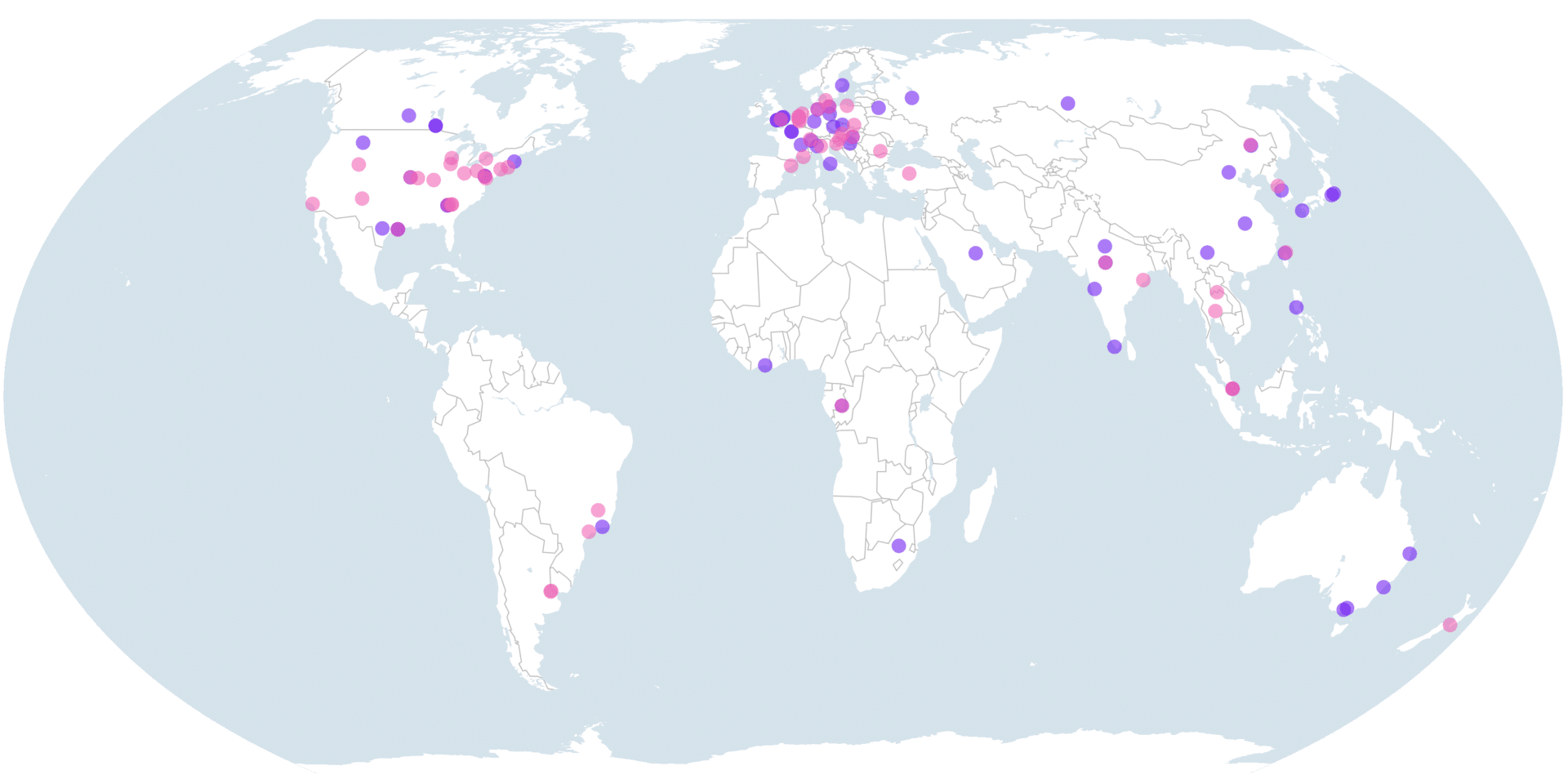
Global BioLabs 2023 Launch- “High Consequence Bio Labs: Growing Risks and Lagging Governance”

“The Global Biolabs Initiative is proud to announce the launch of its new report, Global BioLabs 2023, and an updated interactive map of BSL4 and BSL3+ labs. With the global expansion of BSL4 and BSL3+ labs, gaps in biosecurity and biosafety governance are widening. Since its inception in 2021, the Global Biolabs Initiative has tracked the proliferation of the highest containment labs, identified several key trends in their construction and operation, developed biorisk management scorecards to measure how well countries are governing biosafety, biosecurity, and dual-use research, and mapped the global biorisk management architecture. The pace of BSL4/BSL3+ labs expansion is outpacing current biosafety and biosecurity regulations, and coordinated international action is needed to address increasing biorisks.”

“Dr Filippa Lentzos, King’s College London, and Dr Gregory Koblentz, George Mason University, will present the Global BioLabs 2023 report, describe key trends, and discuss recommendations for strengthening global biorisk management. The event will also feature a demonstration of the interactive map: globalbiolabs.org.”

This event will take place March 16, 2023, 1 pm GMT. Register for the Zoom webinar here and access Global Biolabs tools and resources at globalbiolabs.org.

Credit: The BulletinGlobal Biolabs

Penetrate, Exploit, Disrupt, Destroy – with Dr. Craig J. Wiener

From the Alperovitch Institute: “Join us on Wednesday, March 15th at 5pm at the SAIS Hopkins Kenney Auditorium. Dr. Craig J. Wiener is recognized as an expert in major foreign adversary espionage, sabotage and strategic capabilities that pose threats to the U.S. Government (USG) and North Atlantic Treaty Organization. Dr. Wiener’s previous position was as the Senior Technical Analyst for the Department of Energy’s (DOE) Office of Intelligence and Counterintelligence where he fulfilled a role as DOE’s lead all source cyber threat analyst, the Department’s representative to the National Security Council for Cyber Operations, a key member of National Intelligence Council Special Analytic Groups, and a government briefer and/or advisor for Defense Science Board studies on Cyber as a Strategic Capability, Homeland Defense, Strategic Surprise and the future of US Military Superiority among other topics. Additionally, Dr. Wiener initiated and led studies for special nuclear weapons related threat and vulnerability analyses and advanced technical security threats to USG equities by foreign adversaries and engaged in the development, planning and operationalization of counter-adversary strategies across multiple domains of operations. Dr. Wiener joined the MITRE Corporation as a Technical Fellow in early-2020, where he supports key U.S. Government (USG) national security initiatives. He was recently appointed by the Secretary of Energy to the Electricity Advisory Committee to advise DOE on current and future electric grid reliability, resilience, security, sector interdependence, and policy issues.”

Dr. Wiener is an alumnus of the Biodefense PhD Program! Learn more and register for this event here.

Online Event: Discussion with Amb. van der Kwast About What to Expect at the 5th CWC Review Conference

“The Fifth Five-Year Review Conference (RC-5) for the 1997 Chemical Weapons Convention will be held in the Hague from May 15-19, 2023.”

“At the conference, member states and the broader chemical weapons disarmament community will gather to assess past achievements, treaty implementation, and compliance, and discuss plans to strengthen the CWC in the years ahead.”

“You are invited to join a virtual discussion with Ambassador Henk Cor van der Kwast, the chair-designate for the Review Conference, who will share his hopes and expectations for the conference’s outcomes.”

“Paul Walker, the Chair of the CWC Coalition, will moderate. Amb. van der Kwast’s remarks will be followed by a Q&A session.”

“This discussion will be on the record.”

“This special event will be open to all members of the CWC Coalition, and other interested members of the public, journalists, and diplomats.”

This webinar will take place on March 21 at 11 am EST. Register here.

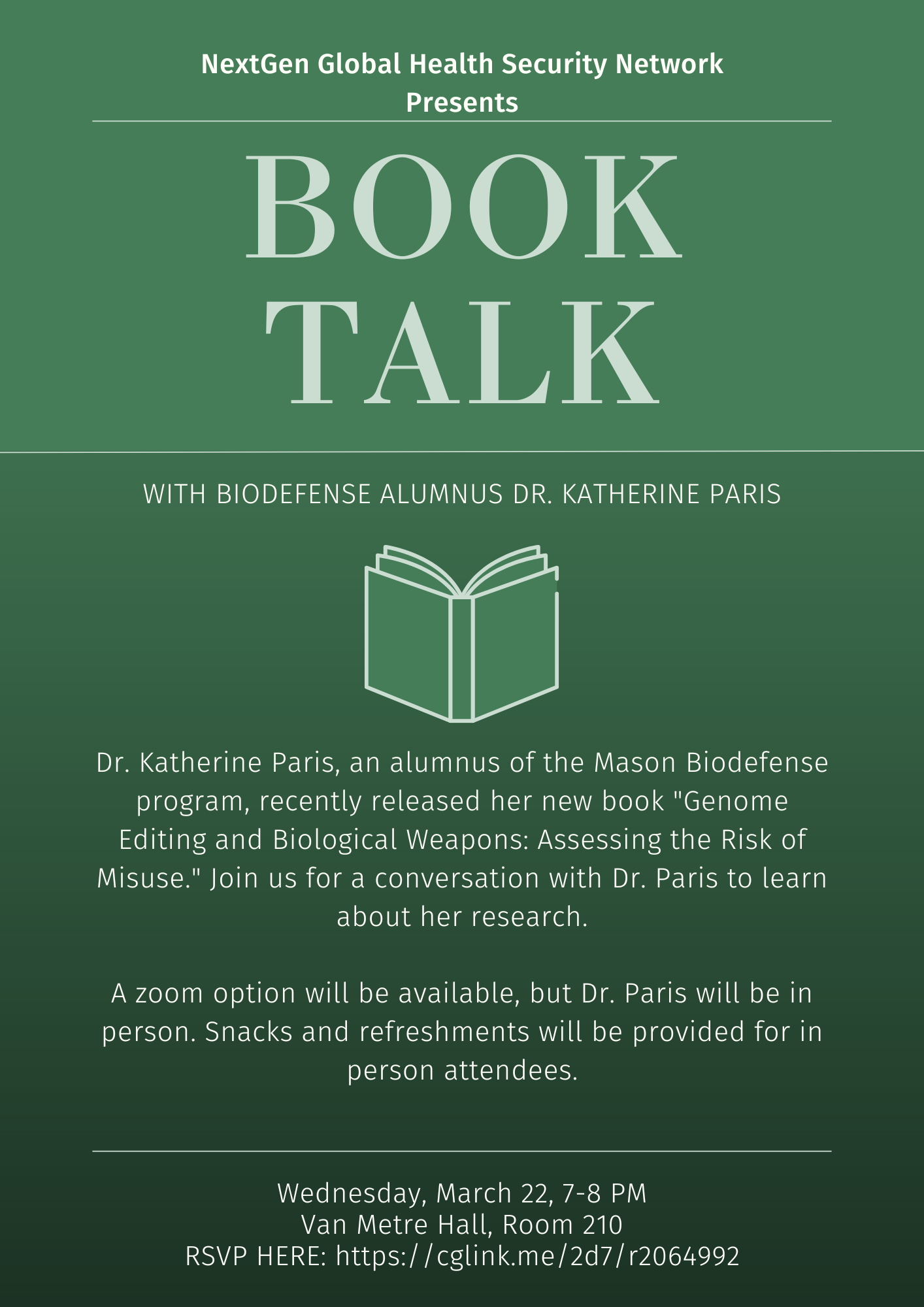
Book Talk with Dr. Katherine Paris on “Genome Editing and Biological Weapons: Assessing the Risk of Misuse”

“Dr. Katherine Paris, an alumnus of the Mason Biodefense PhD program, recently released her new book “Genome Editing and Biological Weapons: Assessing the Risk of Misuse.” Join the NextGen Global Health Security Network for a conversation with Dr. Paris to learn about her research!” This event will take place on Wednesday, March 22, from 7-8 PM. Register for the Zoom here: https://cglink.me/2d7/r2064992

Intelligence Studies Consortium

“On March 24, 2023, the Intelligence Studies Consortium is convening its third symposium, entitled New Perspectives in Intelligence Studies. This year, George Mason’s Schar School of Policy and Government is hosting. The symposium will be from 8 AM to 4 PM in Rooms 125-126 Van Metre Hall, 3351 Fairfax Drive, Arlington, VA. The closest Metro is Virginia Square/GMU on the Orange and Silver lines.

The symposium will feature student presentations in four panels:

  • Russia and China
  • Violent Non-State Actors
  • Emerging Technologies
  • Transnational Challenges

There will be an 8:30 AM keynote address from the Assistant Secretary of the Treasury, Shannon Corless, and a lunchtime conversation with General Michael V. Hayden.

We encourage students to attend in person. We have also provided a livestream option for those not in the Washington DC area.”

Learn more and register here.

Weekly Trivia Question

You read the Pandora Report every week and now it’s time for you to show off what you know! The first person to send the correct answer to biodefense@gmu.edu will get a shout out in the following issue (first name last initial). Our question this week is: In 1978, Georgi Markov, a Bulgarian dissident, was poisoned with what agent?

Shout out to Scott H. for winning last week’s trivia! The correct answer to last week’s question, “This chemical agent features in Roald Dahl’s famous short story, The Landlady, in which the main character is given a tea that tastes of bitter almonds. What is the name of this agent?” is potassium cyanide.