Pandora Report 1.24.2025

This edition of the Pandora Report focuses on public and global health developments from the first week of the second Trump administration. This includes the executive order to withdraw the US from the WHO, the pause on communications from the Department of Health and Human Services, and more.

HHS Formally Debars Peter Daszak and EcoHealth Alliance

Last week, following eight months of investigation, the Department of Health and Human Services (HHS) severed all funding and formally debarred EcoHealth Alliance Inc. and its former president, Dr. Peter Daszak, for a period of five years. House Committee on Oversight and Government Reform Chairman James Comer said in a statement about the formal announcement that, “Justice for the American people was served today. Bad actor EcoHealth Alliance and its corrupt former President, Dr. Peter Daszak, were formally debarred by HHS for using taxpayer funds to facilitate dangerous gain-of-function research in China. Today’s decision is not only a victory for the U.S. taxpayer, but also for American national security and the safety of citizens worldwide.”

He continued, “In May 2024, Select Subcommittee on the Coronavirus Pandemic Chairman Brad Wenstrup released evidence that EcoHealth repeatedly violated the terms of its NIH grant. EcoHealth routinely ignored government oversight requests, failed to report dangerous gain-of-function experiments conducted at the Wuhan Institute of Virology, and produced a required research report two years late. HHS cited all of these discoveries as key reasons for formally debarring EcoHealth and Dr. Daszak. Given that a lab-related incident involving gain-of-function research is the most likely origin of COVID-19, EcoHealth and its former President should never again receive a single cent from the U.S. taxpayer.”

RFK Jr. Petitioned FDA to Revoke COVID-19 Vaccine EUAs

The New York Times reported last week that Robert F. Kennedy Jr., President Trump’s pick to lead HHS, filed a petition with the FDA in May 2021 that demanded the agency rescind emergency use authorizations for COVID-19 vaccines and refrain from approving any such vaccines in the future. In the petition, Kennedy and Meryl Nass (a physician on the Children’s Health Defense Scientific Advisory Board, an organization founded by Kennedy), claimed, in reference to COVID-19 vaccines in 2021, that “…the current risks of serious adverse events or deaths outweigh the benefits, and because existing, approved drugs provide highly effective prophylaxis and treatment against COVID, mooting the EUAs.”

These “effective prophylaxis and treatment” drugs include ivermectin and hydroxychloroquine, both of which had already been proven ineffective against COVID-19. Furthermore, at the time the petition was filed, some estimates were already showing that the rapid rollout of these vaccines had saved around 140,000 lives in the US alone. While the petition garnered little attention at the time, it is now a demonstration of the profound lack of understanding RFK Jr. has of medicine and public health. His confirmation hearing as the nominee to become the Secretary of HHS is scheduled for January 29.

Trump Issues Executive Order to Withdraw the US from the WHO

On January 20, President Trump issued an executive order stating the intention of the US to withdraw from the World Health Organization. The order explains in part, “The United States noticed its withdrawal from the World Health Organization (WHO) in 2020 due to the organization’s mishandling of the COVID-19 pandemic that arose out of Wuhan, China, and other global health crises, its failure to adopt urgently needed reforms, and its inability to demonstrate independence from the inappropriate political influence of WHO member states.  In addition, the WHO continues to demand unfairly onerous payments from the United States, far out of proportion with other countries’ assessed payments.  China, with a population of 1.4 billion, has 300 percent of the population of the United States, yet contributes nearly 90 percent less to the WHO.”

However, these numbers are at odds with those tallied by the WHO itself. While President Trump asserted that the US gives the WHO $500 million in contrast to $39 million from China, the US was set to contribute $706 million while China is at $184 million in the organization’s 2024-25 budget.

Furthermore, WHO funding comes from two pots. The first is based on the UN’s assessment of a country’s “capacity to pay,” which is calculated based on countries’ populations and wealth. For the US and China, these numbers are sat at $264 million and $181 million respectively. This pot makes up less than 20% of WHO’s budget. The other, much larger pot, involved voluntary contributions that come not just from member states, but from philanthropic organizations, corporations, NGOs, and even private citizens. The US is projected to contribute $442 million to this fund, while China is on track to contribute just $2.5 million. While China is not contributing as much as the US, it is meeting its assessed contributions capacity to pay as determined by the UN. (Source: NPR)
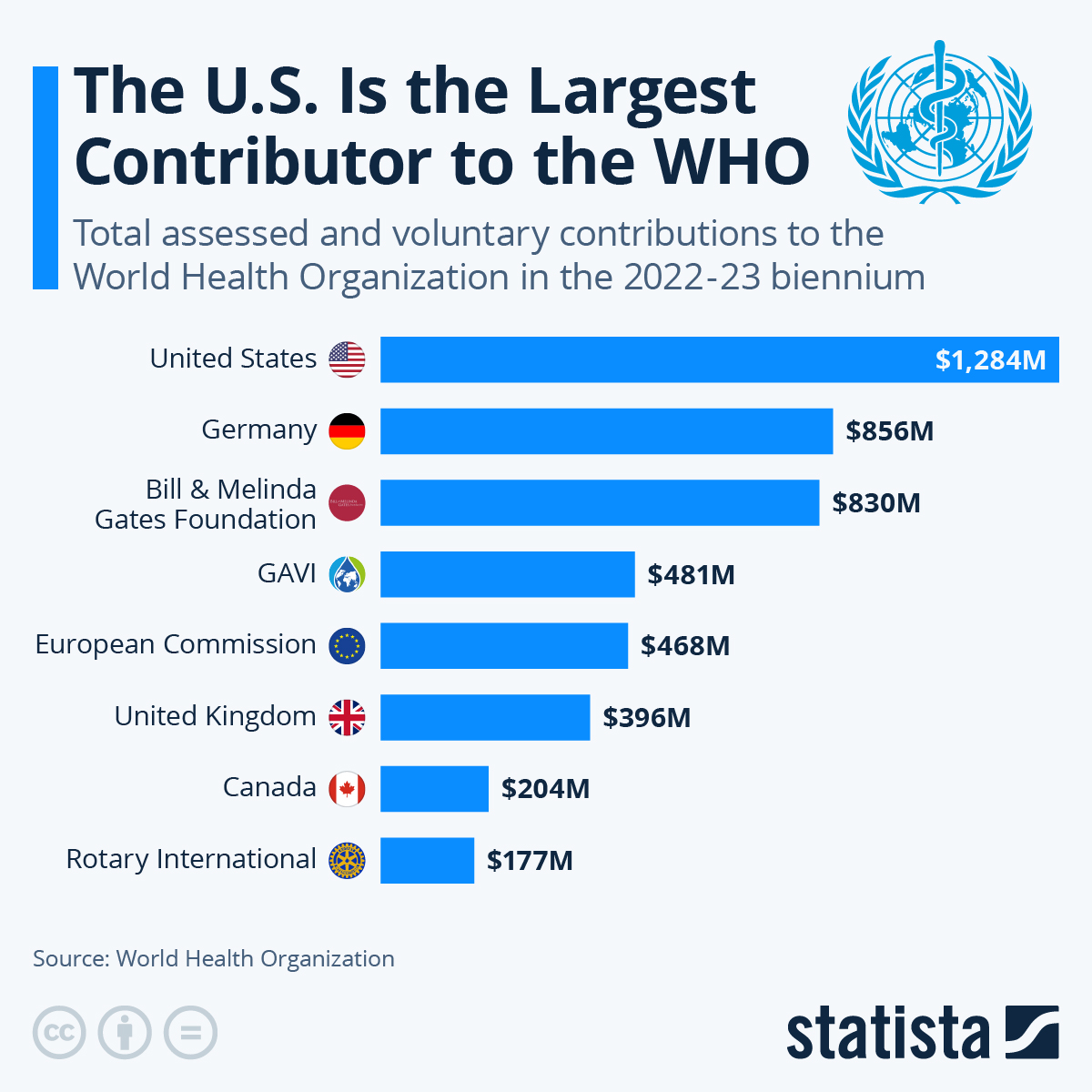
Chart showing total assessed and voluntary contributions to WHO from 2022-23| Source: Statista, https://www.statista.com/chart/33800/top-contributors-to-the-world-health-organization/

As the EO alludes to, Trump tried to withdraw the US from the WHO during his first administration, with his administration formally notifying the UN Secretary-General of this intention on July 6, 2020. The United States entered into WHO membership in 1948 following a joint resolution of Congress. This resolution was signed by President Truman, who then used this to sign the Instrument of Acceptance of the Constitution of the World Health Organization. Because of this, there are questions about the legality of this 2020 order.

Some have cited the ruling in Youngstown Sheet & Tube Co. v. Sawyer as a legal precedent that would prevent Trump’s unilateral withdrawal from WHO. In this case, the US Supreme Court found that President Truman lacked statutory authority conferred by Congress (or the Constitution) in seizing control of steel production during the Korean War. Justice Hugo Black wrote in the majority opinion, “When the President takes measures incompatible with the expressed or implied will of Congress, his power is at its lowest ebb…”

This has formed the basis for legal arguments against Donald Trump’s previous efforts to withdraw the US from WHO membership as withdrawing without express approval from Congress would therefore violate US law. This is in addition to requirements for the US to pay its financial obligations to the WHO for the current fiscal year.

Perhaps most importantly, US withdrawal from the WHO would harm global health as a whole and represent yet further decline of US global leadership. Severing this relationship would only be detrimental to global health, which certainly cannot be good for the United States as it will undermine the country’s capacity to respond to health emergencies. Furthermore, this move would weaken US influence and diplomacy. This would also potentially present China with a greater opportunity to take leadership and reshape global norms to suit its interests, something that President Trump should be worried about.

The World Health Organization is not perfect, and it never will be. The way to address problems in the WHO, however, is by working collaboratively with the organization itself and other Member States. This has proven effective over the last several years, during which WHO has implemented the largest set of reforms in its history. The US will lose its leverage in pushing for reform by abandoning its membership, and it will also lose its place in an organization that has helped make the world a safer, healthier place for everyone.

Further Reading: “Memo to Trump: Invest in Global Health Security,” Saskia Popescu, The Bulletin of the Atomic Scientists

Trump Administration Halts Federal Health Agencies’ Communications

The Trump administration has ordered federal health agencies to pause all external communications through February 1, including health advisories, weekly scientific reports, updates to websites, and social media posts. The instructions provided to staff at HHS agencies (including the FDA, CDC, and NIH) cited a review as the reason for this pause, though it is broader in scope than expected.

As The Washington Post explains, “The pause on communications includes scientific reports issued by the CDC, known as the Morbidity and Mortality Weekly Report (MMWR); advisories sent out to clinicians on CDC’s health alert network about public health incidents; data updates to the CDC website; and public health data releases from the National Center for Health Statistics, which tracks myriad health trends, including drug overdose deaths.”

One anonymous official told the Post that CDC was scheduled to publish several MMWR reports this week, three of which are about H5N1 avian influenza. It remains unclear if this guidance exempts urgent communications for things like foodborne disease outbreaks, drug approvals, or new bird flu cases, though the memo explains some exceptions can be made on a case-by-case basis.

Trump Freezes NIH Meetings, Travel, and Hiring

President Trump’s administration has also implemented far-reaching pauses at the NIH. In addition to the overarching pause on HHS communications, the administration has cancelled NIH meetings like grant review panels in addition to placing a freeze on hiring (which is in effect across the federal government) and an indefinite ban on travel. Science Insider describes the confusion and uncertainty this has caused, writing in part “…officials halted midstream a training workshop for junior scientists, called off a workshop on adolescent learning minutes before it was to begin, and canceled meetings of two advisory councils. Panels that were scheduled to review grant proposals also received eleventh-hour word that they wouldn’t be meeting.”

These pauses have reportedly left many at NIH and elsewhere with great uncertainty and unease. Many research meetings with teams of people at numerous institutions were cancelled suddenly, delaying important work. The travel pause can be especially damaging for younger scientists, including graduate students and postdocs, who need conference presentations to get feedback on their work and network in their fields. The travel pause also prevents NIH employees from traveling to other NIH locations, and has required some already traveling to return home prematurely.

Possible Executive Order Pausing Gain of Function Research Funding Ahead

The Trump administration is reportedly drafting an executive order that would pause federal funding for gain of function research. In 2014, the NIH imposed a moratorium on federal funding for certain studies involving GoF research. This stemmed from concerns about two studies involving modified H5N1 viruses and concerns about safety issues at CDC and NIH. Furthermore, the NIH stated at the time that this moratorium would “…be effective until a robust and broad deliberative process is completed that results in the adoption of a new US Government gain-of-function research policy.” By 2017, the National Science Advisory Board for Biosecurity (NSABB) had developed a framework for assessing funding decisions for research that involved enhanced potential pandemic pathogens.

Debate over federal funding for this kind of research grew once again amid the COVID-19 pandemic. This has included multiple congressional hearings, commentary, and the introduction of a bill in the Senate, the Viral Gain-of-Function Research Moratorium Act. The Biden administration released in May 2024 the United States Government Policy for Oversight of Dual Use Research of Concern and Pathogens with Enhanced Pandemic Potential, which the NIH recently released guidance on. However, the executive order is expected to supersede at least a portion of this policy.
New Book on Gain of Function

Nicholas Evans, Associate Professor and Chair of the Department of Philosophy at the University of Massachusetts Lowell, has a new book out that examines the controversial and poorly understood domain of “gain of function” research. Published by MIT Press, Gain of Function describes what this kind of research is, what it isn’t, and why a small number of scientific experiments continue to make headlines. The book explains what gain-of-function research means in science and in the context of government policy, traces the history of the original research that sparked the initial controversy, and describes efforts to assess the risks and benefits of this research and to regulate it. The book concludes with Evans’ assessment of the future of gain of function, including how debates about this type of research will influence politics, science and public health for years to come. Use the promo code MITPCONF for a 30% discount.

New NSABB Working Group on in silico Research and Computational Models

The National Science Advisory Board for Biosecurity (NSABB) has established a new Working Group on in silico Research and Computational Models. The working group, co chaired by Rachel Levinson of Arizona State University (and chair of the NSABB) and Sarah Carter of Science Policy Consulting LLC, is “charged with developing strategies for identifying, and options for mitigating, potential risks associated with in silico research, computational models (including biological design tools), and datasets in life sciences settings. The NSABB is to especially focus on identifying approaches  that could inadvertently or deliberately result in the development of dual-use information or models directly enabling the design of a pathogen with enhanced pandemic potential (PEPP) or a novel biological agent or toxin that could pose significant threat to public health, including datasets that could be used to develop such models and in silico experiments that could meet the definition of dual use research of concern (DURC) outlined in the Policy. In conducting this evaluation, the NSABB should consider how in silico research and computational models could enable the design, development, enhancement, or acquisition of transmissible biological agents with specific attributes, such as increased virulence, transmissibility, environmental survivability, immune evasion, difficulty of detection and attribution, or similar characteristics.”

“Envisioning an Independent Bioresponsibility Authority to Safeguard U.S. Leadership in the Life Sciences”

From the Scowcroft Institute: “This report by the Texas A&M Biosecurity and Pandemic Policy Center proposes an independent federal agency to oversee the safety and security of pathogen research conducted in the United States or funded by the U.S. government. Taking a more comprehensive and collaborative approach, the agency would pair expanded regulatory oversight with technical assistance, non-punitive incident reporting, funding for biosafety and biosecurity research, and education and training efforts. It would consolidate and streamline requirements and remain flexible as technology advances. This approach to the safe, secure, and ethical conduct of life science research merits a new term: bioresponsibility.”

“Global Risks Report 2025”

This edition of the World Economic Forum’s Global Risk Report “…reveals an increasingly fractured global landscape, where escalating geopolitical, environmental, societal and technological challenges threaten stability and progress.” It includes a section on biotech and the challenges posed by the current lack of global ethical boundaries for biotech developments.

“Russia Used Chemical Weapons 434 Times in December, Ukraine’s General Staff Says”

This article from the Kyiv Independent analyzes recent reporting from the General Staff of Ukraine’s Armed Forces. It explains in part, “Russia has been intensifying its use of chemical agents on the battlefield in Ukraine. A Kyiv Independent investigation from August 2024 showed that instances of gas attacks are rising, and the Organization for the Prohibition of Chemical Weapons (OPCW) confirmed on Nov. 18 that a riot control agent known as CS has been used in Ukraine.”

“Fact-Checking Russia’s Claims on Chemical Weapons”

In this piece from Vox Ukraine, John V. Parachini, Khrystyna Holynska, and Kateryna Ionova breakdown Russia’s CW disinformation and attempts to abuse its leadership position within OPCW: “For years, Russia positioned itself as a staunch advocate for the nonproliferation of chemical weapons. By asserting that it had eliminated the largest stockpile of chemical weapons and actively worked to deter other countries from developing and using them, Russia claimed to have a right to a leadership position in the Organization for the Prohibition of Chemical Weapons (OPCW). When accusations arose against Russia or its allies regarding the contrary, Russia vehemently denied all such claims and accused Western nations of orchestrating disinformation campaigns aimed at discrediting it.”

NEW: Advanced Data Sharing to Strengthen One Health Effectiveness: Building Trust for Effective Collaboration

From NASEM: “Applying a One Health approach requires collaboration at multiple levels to address complex challenges. Actors, such as government agencies, non-government and private entities, citizens, and the research community must have reason to believe that they will receive benefits and credit for data shared without threat of retaliation, exploitation, or misapplication. Trust enables the free flow of information and resources between stakeholders and fosters an environment where diverse groups can unite towards a common goal. Without trust, efforts to tackle these challenges become fragmented and inefficient. In this webinar, invited speakers will share how their successful One Health programs establish and maintain trust, thereby supporting innovative solutions that no single discipline could achieve alone.”

This event will take place on January 28 at 4 pm EST. Learn more and register here.

NEW: The Future of Syria’s Chemical Weapons Stockpile

From the Arms Control Association: “The CWC Coalition will host a webinar on Wednesday, January 29 on the future of Syria’s chemical weapons stockpile after the fall of the Assad regime.”

“The collapse of the Assad regime and the resulting political transition in Syria leaves questions about the fate of the country’s remaining chemical weapons stockpile. Since 2022, high level disarmament discussions at the UN have repeatedly remarked on the “gaps, inconsistencies, and discrepancies” remaining in Syria’s declaration of its chemical stockpile, while human rights groups have pressed for justice for victims of the chemical attacks.”

“We will discuss how can the OPCW, CWC member states, and civil society can approach the transitional government as an opportunity to bring Syria into compliance with its obligations under the CWC, have accountability for perpetrators, and justice for victims.”

Gregory Koblentz, Director of the Biodefense Graduate Program, will be one of the speakers. His commentary will be based on his recent article with Natasha Hall, the other speaker, in Foreign Affairs.

This webinar will take place 10-11 am EST. RSVP here.

NEW: Schar School Open House

The Schar School of Policy and Government will be hosting an in-person Arlington Graduate Open House along with the Costello College of Business, Antonin Scalia Law School, and the Carter School for Peace and Conflict Resolution. Explore the different degree programs we offer at the master’s, doctoral, and professional levels, as well as our graduate-level certificates. Representatives will be in attendance to discuss our various graduate programs and how you can further your studies while continuing to work. Gregory Koblentz, Director of the Biodefense Graduate Program, will also be in attendance.

This event will take place on February 4 between 5:30 and 7 pm EST. Register here.

NEW: Biodefense MS Information Session

“Prospective students are invited to attend a information session to hear more about the Biodefense M.S. program offered at the Schar School. The online session will provide an overview of the program, as well as the application process, student experience and graduate outcomes. This session admissions will be led by the Graduate Admissions team.”

This sessions will take place at 12 pm EST on February 13. Learn more and register here.

Upcoming PACCARB Public Meeting

“The Presidential Advisory Council on Combating Antibiotic-Resistant Bacteria (PACCARB) provides advice, information, and recommendations to the U.S. Secretary of Health and Human Services (HHS Secretary). The council supports and evaluates U.S. government activities focused on fighting antimicrobial resistance (AMR) in human health, animal health, and environmental health. Using this One Health approach, members of the PACCARB have a wide range of backgrounds, including academia, industry, public health, advocacy, veterinary, and agricultural production.”

“The PACCARB was established under Executive Order 13676 and is included in the Pandemic and All-Hazards Preparedness and Advancing Innovation Act of 2019 (PAHPAIA). Since 2019, the President of the United States has given authority to the HHS Secretary as the primary recipient of PACCARB recommendations. Additional information on the authority and activities of the PACCARB can be found on the About Us page in the charter.”

“As a federal advisory committee, the PACCARB looks to engage with the public and all AMR stakeholders. The council holds several public meetings every year both in person and live streamed on the HHS.gov website. These meetings are open to anyone with an interest in combating AMR.”

The next PACCARB Public Meeting will take place January 28-29 at the Ritz-Carlton, Pentagon City. Learn more and register to attend here.

Preparedness in Rural Communities: National and State/Local Perspectives and Plans

From Penn State: “The COVID-19 pandemic and recent hurricanes have thrust the preparedness of rural communities into the national spotlight. At the federal level, the Administration for Strategic Preparedness and Response and the Centers for Disease Control and Prevention have recently released national goals and plans for preparedness of rural communities. The overall objective of this virtual, 2-day mini-symposium is to identify opportunities in public health and agricultural preparedness and response in rural communities. The mini-symposium will focus upon national perspectives on Thursday, January 30 and the state/local perspectives on Friday, January 31. Speakers include representatives of the Administration for Strategic Preparedness and Response, the Department of Homeland Security, US Department of Agriculture, the USA Center for Rural Public Health Preparedness, and state/local leaders.”

This event will take place on January 30 and 31, from 11 am to 2 pm ET each day. Learn more and register here.

Rise of the Zombie Bugs: The Surprising Science of Parasitic Mind-Control

Johns Hopkins APL’s colloquium will feature Mindy Weisberger, author of the upcoming book Rise of the Zombie Bugs: The Surprising Science of Parasitic Mind-Control: “Zombies are all around us—insect zombies, that is. In Rise of the Zombie Bugs, Mindy Weisberger explores the eerie yet fascinating phenomenon of real-life zombification in the insect class and among other invertebrates. Zombifying parasites reproduce by rewriting their victims’ neurochemistry, transforming them into the “walking dead”: armies of cicadas, spiders, and other hosts that helplessly follow a zombifier’s commands, living only to serve the parasite’s needs until death’s sweet release (and often beyond).”

Learn more about this January 31 event here.

Cyberbiosecurity Summit

From Johns Hopkins APL and Bio-ISAC: “Advancements in biomanufacturing and biotechnology drive the science we need to thrive, everything from apples to vaccines. The Cyberbiosecurity Summit 2025 convenes leading experts in biotechnology, biosecurity, and cybersecurity to explore the intersection of these fields and discuss the strategies to create a safe, secure future for us all.”
This event will take place February 25-26 in Laurel, MD. Register here and review the call for sessions here (closes 12/12).

Sustainable Manufacturing: Building and Preserving a Resilient Medical Industrial Base

“Join industry and government partners for our second annual industry summit! During this event, leaders from IBMSC will share our strategic vision and organizational priorities. Speakers will also share potential opportunities for building and preserving the medical industrial base.  This event will be in-person only and space is limited!”

This event will take place March 11-12 in Washington, DC. Learn more and register here.

Exciting Update: The BWC NIM Database Is Complete!

UNIDIR is glad to announce that the BWC National Implementation Measures Database, developed in partnership with VERTIC, has reached a significant milestone: profiles for all 187 States Parties to the Biological Weapons Convention are now live! This comprehensive online tool provides detailed insights into each country’s national implementation measures under the BWC, supporting transparency, trust, and international cooperation.

All profiles are available in English, and the team is committed to translating them into all official UN languages throughout 2025. Updates to the profiles will also be made regularly to ensure they remain accurate and relevant.

Explore the database at bwcimplementation.org.

Enhancing UK Biosecurity: DASA Launches Microbial Forensics Competition

“On behalf of the Defence Science and Technology Laboratory(Dstl), the Defence and Security Accelerator (DASA) is pleased to launch a new Themed Competition called Future-proofing Biosecurity by Strengthening the UK’s Microbial Forensic Capability. The competition is being run in response to the 2023 UK Biological Security Strategy which aims to implement a UK-wide approach to biosecurity that will strengthen deterrence and resilience to a spectrum of biological threats.”

“Dstl is leading the creation of the United Kingdom Microbial Forensics Consortium (UKMFC) which is being developed in support of the Detect Pillar of the Biological Security Strategy. It will comprise a network of biosurveillance laboratories from all four nations of the UK, operating under a One Health doctrine. This competition seeks novel technology options or technical approaches that can directly support the UKMFC initiative.”

Learn more and submit proposals here.

Pandora Report 1.17.2025

This week’s Pandora Reports includes news from the Biodefense Graduate Program in addition to discussion of China’s newly-implemented export control regulations, recently-announced US export controls on biotechnology, and the United States’ new National One Health Framework.

Two Biodefense Students Earn Distinguished Fellowship

This portion was written by Meredith Fletcher, a first-year student in the Biodefense MS program with a special interest in terrorism and the use of pathogens as weapons.

The Emerging Leaders in Biosecurity (ELBI) fellowship, offered by the Center for Health Security at the Johns Hopkins Bloomberg School of Public Health, is the most distinguished and prestigious fellowship available to those in the biosecurity profession. Two students in the Schar School of Policy and Government’s Biodefense PhD program, Janet Marroquin and Katie Dammer, were chosen for this honor and will be joining 29 other young professionals in the fellowship’s 2025 cohort. During their fellowship, participants will participate in biosecurity workshops, networking events, and research symposiums, both in Washington DC and abroad. Dr. Gregory Koblentz, director of the Biodefense Graduate Program, congratulated both students on this impressive accomplishment, “Janet and Katie are rising stars in biosecurity so it’s very gratifying to see their potential recognized by the leading think tank in the field.”

Janet graduated in 2019 with her M.S. in Biodefense and is currently pursuing a PhD in Biodefense. Her dissertation examines Russia’s motivation and strategy for using vaccine-related narratives in its disinformation operations. She currently works as a full-time research analyst for a federally funded research and development center. Her work focuses on analyzing national security challenges related to emerging biotechnologies and CBRNE weapons.  Janet says, “I’m most excited to engage with international perspectives on common problems, especially science communication and public trust in state institutions.” Her time at George Mason helped prepare her for both her career and the fellowship because of the nature of the program, the diverse student backgrounds and its comprehensive approach to biosecurity. According to Janet, “The biodefense courses exposed me to the vulnerabilities that we as a global society have to the spread of disease due, in no small part, to inadequate preparedness.” Her favorite classes were Dr. Koblentz’s course on biodefense strategy and Dr. Estela Blaisten’s challenging, but rewarding, course on numerical methods.

Katie is a first-year student in the Biodefense PhD program. The ELBI program and those who speak highly of it have surrounded her since her undergraduate studies, so she jumped at the chance to learn more about this ever-changing field. She says, “I am so grateful to the Center for Health Security for the acceptance and to colleagues and ELBI alumni for all of the kind words I have received since this year’s cohort was announced. Every year brings changes, but it is exciting to know that this will be a key piece of my professional development throughout 2025.” Her focus is on the intersection of national security and science policy, and her current role covers a variety of natural, accidental, and deliberate threats. Katie is most excited to build a biosecurity community and take time away from her career to “nerd out” over the many topics presented during the fellowship. Katie hopes that her time as a fellow will both complement and enhance her research and discussion skills, and she looks forward to engaging with pioneers across the public health and policy fields. Katie feels she owes a special thanks to her dad, who as a career academic has been an inspiration as she started her PhD journey and the fellowship ahead of her.

Janet and Katie join a number of other Biodefense students and alum who have served as ELBI fellows including Siddha Hover MS ’14 (ELBI Class of 2016), Francisco Cruz MS ’15 (ELBI Class of 2016), Saskia Popescu PhD ’19 (ELBI Class of 2017), Yong-Bee Lim MS ‘13 PhD ’21 (ELBI Class of 2018), Justin Hurt PhD ’23 (ELBI Class of 2019), and Matthew Ferreira MS ’22 (ELBI Class of 2023).

Janet Marroquin:

Katie Dammer:

China Implements New Export Control Regulations

The Regulations of the People’s Republic of China on Export Control of Dual-Use Items, which were adopted in September of last year, went into effect on December 1, 2024. These regulations are designed to support the existing Export Control Law, which went into effect in late 2020 and was the country’s first comprehensive framework aimed at controlling exports of military and dual-use items as well as technology for national security purposes. The new regulations provide more specific guidance on jurisdiction, restricted party lists, export licensing systems, and end-user/user-end requirements. Furthermore, they require third parties to report suspected violations of the regulations. They also offer a framework for extraterritorial regulation.

These regulations will repeal and replace existing rules on dual-use exports from the PRC. These previous rules include Regulation on Export Control of Nuclear Dual-Use Items and Related Technologies (2007), Regulations on Export Control of Missiles and Related Items and Technologies (2002), Regulation on Export Control of Biological Dual-Use Items and Related Equipment and Technologies (2002), and Measures for Export Control of Relevant Chemicals and Related Equipment and Technologies (2002). However, the 2011 Controlled Chemicals Regulations and 2002 Military Products Regulation will still apply in two cases: “For the export control of dual-use controlled chemicals, the Controlled Chemicals Regulation shall apply; matters not provided for in the Controlled Chemicals Regulation shall be analogically governed by the Export Control Law and the Regulation.” AND “For the export control of certain missiles and related items and technologies listed on the first part of the “Export Control List of Missiles and Related Items and Technologies”, the Military Products Regulation shall apply.”

These regulations also established a Watch List, similar to the United State’s Unverified List. Using this new system, Chinese authorities will be able to designate parties who are not cooperative with end-user/user-end verification requirements. Exporters who are working with entities on the Watch List are barred from applying for general licenses and obtaining export certificates. Rather, they must submit risk assessment reports and compliance commitments before applying for licenses.

Importantly, these regulations allow China’s Ministry of Commerce to extend its reach extraterritorially. They allow authorities to regulate and investigate the exportation of Chinese dual-use items, including those that originate from, contain, or are manufactured using Chinese dual-use items. This is true even if they are produced or traded outside of China, potentially leaving foreign entities and individuals subject to these regulations.

Shi Xiaoli of China University of Political Science and Law wrote of the new regulations, “Preventing the proliferation of weapons of mass destruction (nuclear weapons, biological weapons, chemical weapons) and their delivery vehicles is important to international peace, security and stability. In order to encourage the international community to strengthen non-proliferation efforts to meet global challenges, the United Nations has adopted a series of resolutions and treaties. China has actively participated in and conscientiously fulfilled its obligations, transformed important international obligations into domestic laws, and established and improved an effective export control legal system to prevent related items from being used for purposes related to weapons of mass destruction after export.”

A machine translation of China’s new regulations is available here.

US Announces New Export Controls on Biotechnology, Citing China Concerns

Last week, a bipartisan group of lawmakers called on the Biden administration to consider restricting the export of US biotechnology to China’s military. In a letter sent last Thursday to Secretary of Commerce Gina Raimondo, lawmakers asked her “to study imposing a licensing restriction on U.S. pharmaceutical companies working with Chinese medical entities under military ownership.”

While it is too late for Raimondo to make much progress on this request, the Department of Commerce did announce this week it is imposing new export controls on biotechnology equipment and related technology due to national security concerns related to AI and data science. These new export controls restrict shipments to China and other countries without a US license. They are for high-parameter flow cytometers and certain mass spectrometry equipment, which the Department says can “generate high-quality, high-content biological data, including that which is suitable for use to facilitate the development of AI and biological design tools.”

This is the latest effort on the part of the Biden administration to restrict China’s access to US technology and part of a broader environment of concern and distrust surrounding US dealings with the PRC. Just this Monday, the Department of Commerce announced new regulations that will cap the number of AI chips that can be exported to most countries and allow unlimited access to US AI technology for the United States’ closest allies. The aim of this is to maintain a firm block on exports to China, Russia, Iran, and North Korea. This also all coincides with steady concerns about China’s access to Americans’ personal health and genetic information. Furthermore, lawmakers renewed calls in August for the FDA to increase scrutiny of US clinical trials conducted in China, citing concerns about intellectual property theft and the possibility of forced Uyghur participation in such trials.

Further Reading:

USG Releases First National One Health Plan

Last week, the Centers for Disease Control and Prevention (CDC), US Department of Agriculture (USDA), and US Department of the Interior (DOI) released the first ever National One Health Framework to Address Zoonotic Diseases and Advance Public Health Preparedness in the United States. The CDC’s press release explains that, “At the direction of Congress in the 2023 Consolidated Appropriations Act, CDC, USDA, and DOI developed this framework to address zoonotic diseases and advance public health preparedness in the United States. CDC, USDA, and DOI are responsible for protecting public health, domestic animal health, and wildlife and environmental health, respectively, and as such are representatives of key One Health sectors for the US government. All three agencies historically address One Health issues and work to help control zoonotic diseases that affect both people and animals. The framework seeks to inform One Health collaboration across the U.S. government for the next five years, describing a common vision, mission, and goals for key federal partners involved in implementing the One Health approach to address zoonotic diseases within the United States.”

Biopower: Securing American Leadership in Biotechnology

Vivek Chilukuri and Hannah Kelley recently authored this report from the Center for New American Security. “The report identifies key strengths and challenges for U.S. biotechnology leadership, surveys biotechnology-leading nations abroad—with a particular focus on China—and outlines an ambitious strategy to help secure U.S. biotechnology leadership for a generation. For the first time, the report introduces the concept of “biopower”—a nation’s capacity to harness emerging biotechnologies to enhance national and economic security—and describes its vast potential applications for defense, health, energy, and food security.”

“Joint External Evaluation of the International Health Regulations (2005) Core Capacities of the United States of America: Mission Report”

The WHO recently released the United States’ most recent Joint External Evaluation (JEE). The report explains in its executive summary that, “During the JEE mission, which took place in Washington, DC and Atlanta, Georgia from 18 to 25 September 2024, the United States’ capacities in 19 technical areas were evaluated through a peer-topeer, consultative process. This process brought together a multisectoral group of national subject matter experts and the multinational, multidisciplinary expert JEE team for a week of discussion, interaction and selected site visits…After a week of collaborative talks this process led to consensus on scores, as well as JEE recommendations for priority actions across the 19 technical areas.”

“The evaluation also generated eight wider, overarching recommendations that, if implemented, will consolidate the United States’ progress and remove bottlenecks that might impede implementation of the agreed priority actions. These recommendations, outlined below, address cross-cutting challenges affecting the capacities of the United States across many of the different technical areas that were explored in greater depth in the JEE process.”

Read the JEE here.

“The Second Trump White House Could Drastically Reshape Infectious Disease Research. Here’s What’s at Stake.”

ProPublica’s Anna Maria Barry-Jester parses out what may lie ahead for infectious disease research under the incoming Trump administration in this article, explaining in part, “Donald Trump’s pick to lead the federal health agency has vowed to replace hundreds of staffers and shift research away from infectious diseases and vaccines. Such an overhaul could imperil the development of life-saving treatments, experts warn.”

“REPORT: The Biden-⁠Harris Administration Roadmap for Pandemic Preparedness and Response”

The White House released this report this week that, “outlines the numerous actions the Biden-Harris Administration took to combat COVID-19 both nationally and globally, and it serves as a roadmap for how the U.S. can effectively respond to pandemics and public health threats in the future. In addition to this public-facing report, this Administration is leaving behind a three-step playbook that future Administrations can use to continue to protect the nation and effectively respond to any future biological threat.”

“Bird Flu Is a National Embarrassment”

Jatherine J. Wu makes the argument that the US should have been taking steps to respond to avian influenza more than a year ago in this piece from The Atlantic.

“The Teeth and Bones That Hold the Key to This Century’s Worst Chemical Weapons Attack”

Henry Bodkin and Heathcliff O’Malley report on how the families of 1,500 victims of a 2013 sarin gas attack in Eastern Ghouta are hunting for justice. Read this article from The Telegraph here.

“Victims of Chemical Weapons Attacks Gather in Damascus to Demand Accountability”

This post from the Middle East Monitor describes a gathering in Damascus on Tuesday during which victims of the Assad regime’s use of CW demanded that those responsible for those “chemical massacres” be held accountable. Read here.

“Sudan’s Military Has Used Chemical Weapons Twice, U.S. Official Say”

Declan Walsh and Julian E. Barnes discuss on recent revelations about CW use in Sudan in this article from The New York Times. They explain that, “Sudan’s military has used chemical weapons on at least two occasions against the paramilitary group it is battling for control of the country, four senior United States officials said on Thursday…The weapons were deployed recently in remote areas of Sudan, and targeted members of the Rapid Support Forces paramilitaries that the army has been fighting since April 2023. But U.S. officials worry the weapons could soon be used in densely populated parts of the capital, Khartoum.”

“The revelations about chemical weapons came as the United States announced sanctions on Thursday against the Sudanese military chief, Gen. Abdel Fattah al-Burhan, for documented atrocities by his troops, including indiscriminate bombing of civilians and the use of starvation as a weapon of war.”

NEW: Upcoming PACCARB Public Meeting

“The Presidential Advisory Council on Combating Antibiotic-Resistant Bacteria (PACCARB) provides advice, information, and recommendations to the U.S. Secretary of Health and Human Services (HHS Secretary). The council supports and evaluates U.S. government activities focused on fighting antimicrobial resistance (AMR) in human health, animal health, and environmental health. Using this One Health approach, members of the PACCARB have a wide range of backgrounds, including academia, industry, public health, advocacy, veterinary, and agricultural production.”

“The PACCARB was established under Executive Order 13676 and is included in the Pandemic and All-Hazards Preparedness and Advancing Innovation Act of 2019 (PAHPAIA). Since 2019, the President of the United States has given authority to the HHS Secretary as the primary recipient of PACCARB recommendations. Additional information on the authority and activities of the PACCARB can be found on the About Us page in the charter.”

“As a federal advisory committee, the PACCARB looks to engage with the public and all AMR stakeholders. The council holds several public meetings every year both in person and live streamed on the HHS.gov website. These meetings are open to anyone with an interest in combating AMR.”

The next PACCARB Public Meeting will take place January 28-29 at the Ritz-Carlton, Pentagon City. Learn more and register to attend here.

How to Avoid Human-Made Pandemics

From the Asia Centre for Health Security: “Studying viruses that could potentially cause outbreaks is one of the most effective ways to reduce the risk of pandemics. However, this type of research—especially when it involves collecting samples from the field and manipulating pathogens—can unintentionally lead to a pandemic if not managed carefully. Dr Lentzos will discuss her findings from the Pathogen Project, which brought together an international taskforce of scientists, biosecurity and public health experts, ethicists, and civil society leaders to seek consensus on this question: Can we agree on ways to manage research that carries pandemic risk as safely, securely and responsibly as possible?”

This event will take place on January 23 at 8 pm (GMT +8:00) via Zoom. RSVP here.

Preparedness in Rural Communities: National and State/Local Perspectives and Plans

From Penn State: “The COVID-19 pandemic and recent hurricanes have thrust the preparedness of rural communities into the national spotlight. At the federal level, the Administration for Strategic Preparedness and Response and the Centers for Disease Control and Prevention have recently released national goals and plans for preparedness of rural communities. The overall objective of this virtual, 2-day mini-symposium is to identify opportunities in public health and agricultural preparedness and response in rural communities. The mini-symposium will focus upon national perspectives on Thursday, January 30 and the state/local perspectives on Friday, January 31. Speakers include representatives of the Administration for Strategic Preparedness and Response, the Department of Homeland Security, US Department of Agriculture, the USA Center for Rural Public Health Preparedness, and state/local leaders.”

This event will take place on January 30 and 31, from 11 am to 2 pm ET each day. Learn more and register here.

Rise of the Zombie Bugs: The Surprising Science of Parasitic Mind-Control

Johns Hopkins APL’s colloquium will feature Mindy Weisberger, author of the upcoming book Rise of the Zombie Bugs: The Surprising Science of Parasitic Mind-Control: “Zombies are all around us—insect zombies, that is. In Rise of the Zombie Bugs, Mindy Weisberger explores the eerie yet fascinating phenomenon of real-life zombification in the insect class and among other invertebrates. Zombifying parasites reproduce by rewriting their victims’ neurochemistry, transforming them into the “walking dead”: armies of cicadas, spiders, and other hosts that helplessly follow a zombifier’s commands, living only to serve the parasite’s needs until death’s sweet release (and often beyond).”

Learn more about this January 31 event here.

Cyberbiosecurity Summit

From Johns Hopkins APL and Bio-ISAC: “Advancements in biomanufacturing and biotechnology drive the science we need to thrive, everything from apples to vaccines. The Cyberbiosecurity Summit 2025 convenes leading experts in biotechnology, biosecurity, and cybersecurity to explore the intersection of these fields and discuss the strategies to create a safe, secure future for us all.”
This event will take place February 25-26 in Laurel, MD. Register here and review the call for sessions here (closes 12/12).

Sustainable Manufacturing: Building and Preserving a Resilient Medical Industrial Base

“Join industry and government partners for our second annual industry summit! During this event, leaders from IBMSC will share our strategic vision and organizational priorities. Speakers will also share potential opportunities for building and preserving the medical industrial base.  This event will be in-person only and space is limited!”

This event will take place March 11-12 in Washington, DC. Learn more and register here.

Exciting Update: The BWC NIM Database Is Complete!

UNIDIR is glad to announce that the BWC National Implementation Measures Database, developed in partnership with VERTIC, has reached a significant milestone: profiles for all 187 States Parties to the Biological Weapons Convention are now live! This comprehensive online tool provides detailed insights into each country’s national implementation measures under the BWC, supporting transparency, trust, and international cooperation.

All profiles are available in English, and the team is committed to translating them into all official UN languages throughout 2025. Updates to the profiles will also be made regularly to ensure they remain accurate and relevant.

Explore the database at bwcimplementation.org.

Enhancing UK Biosecurity: DASA Launches Microbial Forensics Competition

“On behalf of the Defence Science and Technology Laboratory(Dstl), the Defence and Security Accelerator (DASA) is pleased to launch a new Themed Competition called Future-proofing Biosecurity by Strengthening the UK’s Microbial Forensic Capability. The competition is being run in response to the 2023 UK Biological Security Strategy which aims to implement a UK-wide approach to biosecurity that will strengthen deterrence and resilience to a spectrum of biological threats.”

“Dstl is leading the creation of the United Kingdom Microbial Forensics Consortium (UKMFC) which is being developed in support of the Detect Pillar of the Biological Security Strategy. It will comprise a network of biosurveillance laboratories from all four nations of the UK, operating under a One Health doctrine. This competition seeks novel technology options or technical approaches that can directly support the UKMFC initiative.”

Learn more and submit proposals here.

Connecting and Building Collaborations between AI and Synthetic Biology Communities

From AI for SynBio: “Our primary goal for this symposia is to begin to connect and build mutually beneficial collaborations between the AI and the synthetic biology communities.”

“Synthetic biology is the systematic design and engineering of biological systems. Synthetic biology holds the potential for revolutionary advances in medicine, environmental remediation, and many more. For example, some synthetic biologists are trying to develop cellular programs that will identify and kill cancer cells, while others are trying to design plants that will extract harmful pollutants like arsenic from the ground.”

Read more and submit abstracts here.

Biosecurity Game Changers Fellowship

“A new fellowship at the Pandemic Center at the Brown University School of Public Health launches with the announcement of the inaugural class of Biosecurity Game Changers, eight individuals who represent the next generation of leaders responsible for preventing and preparing for the worst case health security challenges.”

“The Brown Pandemic Center is partnering with the Coalition for Epidemic Preparedness Innovations (CEPI), Gavi, the Vaccine Alliance, the International Biosecurity and Biosafety Initiative for Science (IBBIS), Pandemic Action Network (PAN), and the Biological Weapons Convention Implementation Support Unit (BWC ISU) to provide an operational base for the fellows, selected for their potential to impact and lead in biosecurity and pandemic preparedness and response. The program is informed by consultation with international and normative entities, including the Africa Centres for Disease Control and Prevention and the World Health Organization Global Health Emergency Corps.”

“The year-long fellowship kicks off in September with an in-person meeting in Addis Ababa, Ethiopia and a policymaking workshop for early-to-mid-career public health champions, including the fellows. During the year, fellows will collaborate on an operational project with either the Pandemic Center or one of the partner organizations focused on a specific aspect of improving biosecurity, biosafety and/or pandemic preparedness and response. Each fellow will also receive a Brown faculty appointment for the duration of their fellowship.”

Learn more here.

Pandora Report 1.10.2025

Happy New Year! This week’s Pandora Report covers late former President Jimmy Carter’s decades of global health work, updates on H5N1 in the United States, the launch of the Biosafety and Biosecurity Innovation Initiative, and more.

Former President Carter’s Global Health Legacy

The passing of former US President Jimmy Carter marks the end of an incredible life dedicated to serving others. Carter leaves behind a beautiful legacy that stems from much more than his time in the White House. In the decades after his presidency, Carter oversaw many initiatives focused on improving global health through the Carter Center. One example is his work to eradicate Guinea worm disease of which, as the WHO explained in a statement, “Under his championship cases dropped from 3.5 million in the mid-1980s to just 11 so far in 2024.”

Carter also supported WHO’s African Programme for Onchocerciasis Control, trachoma elimination programs across sub-Saharan Africa, mass drug administration campaigns for schistosomiasis, and the International Task Force for Disease Eradication, helping set the global agenda for eliminating multiple NTDs. In addition to this, Carter spent his life post-presidency doing everything from negotiating with the likes of Kim Il-sung to building homes as a Habitat for Humanity volunteer, continuously demonstrating his dedication to helping others.

Further Reading:

H5N1 Updates

First US Bird Flu Death Reported

A person has died in Louisiana after being admitted to the hospital with a severe case of avian influenza. This marks the first death in the US as a result of an H5 infection. The person fell ill after exposure to a backyard flock and wild birds. They were over the age of 65 and had multiple underlying medical conditions. There is no sign yet that the virus is spreading from person-to-person in the United States. As of January 6, 2025, there have been 66 confirmed human cases of H5N1 bird flu in the United States since 2024 and 67 since 2022.

Biden Administration Ramps Up Preparedness Efforts

The Biden administration is making a final effort to improve the country’s pandemic preparedness ahead of President-elect Trump’s inauguration by announcing it will nearly double the amount of money committed to addressing bird flu in humans. The administration announced this week that it is committing $306 million to improving hospital preparedness, early stage research on therapeutics, diagnostics, and vaccines. Furthermore, $103 million of this will be aimed at helping state and local efforts to track cases and test people exposed to infected animals, in addition to worker outreach for those handling livestock and others at higher risk.

Further Reading:

Launch of the Biosafety and Biosecurity Innovation Initiative

In December 2024, the Department of Health and Human Services (HHS) launched the Biosafety and Biosecurity Innovation Initiative (BBII) to reduce biological risks associated with advances in biotechnology and biomanufacturing in accordance with the September 2022 Executive Order on Advancing Biotechnology and Biomanufacturing Innovation for a Sustainable, Safe, and Secure American Bioeconomy.

The BBII is designed to coordinate and prioritize support for biorisk research and incentivize biosafety and biosecurity innovation across all sectors that support the bioeconomy. The BBII Plan for the Bioeconomy serves as a framework for U.S. government coordination of BBII, led by NIH, and recommends investment in strengthening opportunities for biosafety and biosecurity research and innovation; incentivizing development and implementation of evidence-based best biological risk management practices, carried out by a competent workforce; and fostering a culture of biosafety and biosecurity to encourage trust and norms. 

United Nations Human Rights Office Says Israeli Attacks on Gaza Push Healthcare in Enclave “to Brink of Collapse”

The United Nations Human Rights Office (OHCHR) issued a report late last month documenting attacks carried out by Israel in Gaza between October 12, 2023, and June 30, 2024, and their impact on healthcare facilities and personnel. The report raises serious concerns about Israel’s compliance with international law, under which medical personnel and hospitals are specifically protected. In a statement, the UN High Commissioner for Human Rights said, “As if the relentless bombing and the dire humanitarian situation in Gaza were not enough, the one sanctuary where Palestinians should have felt safe in fact became a death trap…The protection of hospitals during warfare is paramount and must be respected by all sides, at all times.”

Read more about the report here.

“Development of Effective Medical Countermeasures Against the Main Biowarfare Agents: The Importance of Antibodies”

Arnaud Avril, Sophie Guillier, and Christine Rasetti-Escargueil  recently published this article in Microorganisms: “The COVID-19 and mpox crisis has reminded the world of the potentially catastrophic consequences of biological agents. Aside from the natural risk, biological agents can also be weaponized or used for bioterrorism. Dissemination in a population or among livestock could be used to destabilize a nation by creating a climate of terror, by negatively impacting the economy and undermining institutions. The Centers for Disease Control and Prevention (CDC) classify biological agents into three categories (A or Tier 1, B and C) according to the risk they pose to the public and national security. Category A or Tier 1 consists of the six pathogens with the highest risk to the population (Bacillus anthracisYersinia pestisFrancisella tularensis, botulinum neurotoxins, smallpox and viral hemorrhagic fevers). Several medical countermeasures, such as vaccines, antibodies and chemical drugs, have been developed to prevent or cure the diseases induced by these pathogens. This review presents an overview of the primary medical countermeasures, and in particular, of the antibodies available against the six pathogens on the CDC’s Tier 1 agents list, as well as against ricin.”

“Research and Development of Medical Countermeasures for Emerging Infectious Diseases, China, 1990–2022”

Jiyan Ma, Yang Yang, and Yangmu Huang published this article in Emerging Infectious Diseases: “Since the severe acute respiratory syndrome outbreak in 2003, China has invested substantial efforts in promoting scientific and technological advances for medical countermeasures against high-threat pathogens. The examination of China’s landscape identifies progress and gaps in research and development (R&D) and also highlights management and regulatory issues that should be of concern to other countries. Our study examined the current state of R&D of medical countermeasures in China during 1990–2022. The findings showed a robust and diversified pipeline responding quickly to disease outbreaks and policy changes. However, proactive and highly innovative candidates are limited, and a large proportion of vaccines and drugs stagnate at the early development stage. A paradigm shift involving a preemptive R&D agenda and persistent investment, innovative technology development, and accelerated research translation is urgently needed to prepare for the next pandemic.”

“Strategic Report on Research and Development in Biotechnology for Defense Innovation”

From NASEM: “At the request of the National Security Commission on Emerging Biotechnology, Strategic Report on Research and Development in Biotechnology for Defense Innovation provides an overview of the current landscape of artificial intelligence and machine learning (AI/ML)-enabled biotechnology, the opportunities it presents, and the challenges it poses. This report offers a strategic vision for connecting scientists and technologists to build on, leverage, and tailor advances at the intersection of AI/ML, automated experimentation, and biotechnology to drive innovation in defense-related biotechnologies. Strategic Report on Research and Development in Biotechnology for Defense Innovation makes recommendations to address long-standing challenges that have limited research, development, prototyping, testing and evaluation, and eventual use of biotechnologies. Addressing these challenges will help to advance U.S. national security and defense by improving the performance of existing capabilities, enabling the creation of domestic supply chains of valuable products, reducing reliance on processes and chemicals that are harmful to the environment, and/or adding new capabilities not currently possible with established technologies.”

“COVID 5 Years Later: Learning from a Pandemic Many Are Forgetting”

Jon Cohen discusses reflections on the COVID-19 pandemic in the scientific community in this piece from Science, writing in part “Yet 5 years after a coronavirus dubbed SARS-CoV-2 first surfaced in Wuhan, China, scientists are still intensively trying to make sense of COVID-19. “We would each have to read over 240 papers every single day to actually keep up with all of the [COVID-19] literature that’s come out” in 2024, Cherilyn Sirois, an editor at Cell, noted…Despite the flood of insights into the behavior of the virus and how to prevent it from causing harm, many at the meeting worried the world has turned a blind eye to the lessons learned from the pandemic. “I feel this massive gravitational pull to go back to what we were doing before,” Van Kerkhove said. “There’s no way we should be going back.”’

“The SARS-CoV-2 Test Scale-Up in the USA: An Analysis of the Number of Tests Produced and Used Over Time and Their Modelled Impact on the COVID-19 Pandemic”

Santos et al. recently published this article in The Lancet Public Health: “Background: Rapid, accessible, and accurate testing was paramount to an effective US COVID-19 response. Federal partners supported SARS-CoV-2 testing scale-up through an interagency-coordinated approach that focused on expanding supply chains, research and development, validation, and improving patient access. We aimed to provide an overview of the federal efforts to scale up the testing response and study the impact of scale-up.”

“Methods: In this descriptive analysis, we mapped federal partner activities and milestones using the US Government Testing and Diagnostics Working Group (TDWG) and participating agency and department data from Jan 1, 2020, to Dec 31, 2022. Tests produced (TDWG), reported test positivity (US Centers for Disease Control and Prevention [CDC]’s COVID-19 Electronic Laboratory Reporting system and the Federal Direct Report testing data), reported COVID-19 case counts (CDC), hospitalisations (Department of Health and Human Services Unified Hospital Data Surveillance System and the CDC’s National Healthcare Safety Network), and deaths (CDC) were analysed over time. We then developed an agent-based model to evaluate the impact testing had on COVID-19 outcomes using different scenarios. The scenarios were (1) if efforts led to substantially fewer tests produced, (2) if scale-up was delayed, affecting test access, and (3) if efforts led to substantially more tests produced.”

“Findings: Approximately 6·7 billion SARS-CoV-2 tests, including over 1·5 billion laboratory-based, 1·9 billion point-of-care (POC), and 3·2 billion over-the-counter (OTC) tests, were produced, and approximately 2·7 billion tests were performed between Jan 1, 2020, and Dec 31, 2022. Testing capacity exhibited various expansion phases, with laboratory-based capacity growing from approximately 6 million tests per month in March, 2020 to approximately 34 million tests per month in July, 2020; POC increased to approximately 126 million tests per month by December, 2020, and OTC increased to approximately 986 million tests per month by February, 2022. Comparison between the baseline (actual) and delay-in-testing scenario suggests the increased testing capacity potentially saved upwards of 1·4 million lives and averted 7 million hospitalisations.”

“Interpretation: Our study suggests that early development, manufacturing, and distribution of tests had a great impact on reducing severe COVID-19 outcomes. These results highlight the importance of robust and rapid test development, production, and distribution when addressing future public health threats.”

“Global Health’s Evolution and Search for Identity”

Kevin M. De Cock recently published this article in Emerging Infectious Diseases: “Despite earlier attempts to define global health, the discipline’s boundaries are unclear, its priorities defined more by funding from high-income countries from the Global North than by global health trends. Governance and resource allocation are challenged by movements such as decolonizing global health. Inherent contradictions within global health derive from its historical evolution from tropical medicine and international health, as well as recent trends in infectious diseases. Demographic, socioeconomic, and epidemiologic transitions, including the rise in noncommunicable diseases, have eroded the concept of a binary world of developed and developing countries. Competitive tension has emerged between aspirations for global health security and health equity. Dominant principles should focus on vulnerable populations, transnational challenges such as migration and climate change, appropriate prevention and care, and epidemic preparedness and response capacity. As the 2030 target date for the United Nations Sustainable Development Goals approaches, reconceptualization of global health is required, or the discipline risks losing identity and relevance.”

“The Elusive Payoff of Gain-of-Function Research”

Charles Schmidt discusses the potential risks of GOF research in this piece for Undark, writing in part “But that’s not necessarily true of studies that alter dangerous pathogens to assess how they might become more virulent or transmissible. Public controversies have erupted over this sort of research, but in fact few such studies have been performed so far. The research might reveal mutations that turn pathogens into bigger human health problems. Armed with that knowledge, scientists could look for those genetic changes during disease surveillance, with an aim to identify and prepare for looming outbreaks.”

“Interview: Overseeing the Research That Might Start a Pandemic”

“Biosecurity expert Gerald Epstein discusses how certain high-risk science should be regulated,” in this Undark piece by Sara Talpos: “The risks of this research “do not disappear merely because no government funds are involved,” wrote Epstein in an article published last year in the Bulletin of the Atomic Scientists. Epstein isn’t sure if this type of work is happening in the private sector, but if it is, it is largely unregulated. Epstein would like to see oversight broadened, possibly through new legislation, expansion of certain government regulations, or increased scrutiny from companies that provide liability insurance.”

“For Science That Comes With Risks, a Key Question: Who Decides?”

Michael Schulson and Peter Andrey Smith discuss research oversight in this piece for Undark, explaining in part “The extent of oversight also varies across disciplines, both domestically and across the globe, with pathogen research being much more regulated than the more emergent fields of AI and geoengineering. For AI and pathogen research, our focus is limited to the United States — reflecting both a need to limit the scope of our reporting, and the degree to which American science currently leads the world in both fields, even as it faces stiff competition on AI from China.”

“With those caveats in mind, we offer a sampling — illustrative but by no means comprehensive — of people who are part of the decision-making chain in each category as of late 2024. Taken as a whole, they appear to be a deeply unrepresentative group — one disproportionately White, male, and drawn from the professional class. In some cases, they occupy the top tiers of business or government. In others, they are members of lesser-known organizational structures — and in still others, the identities of key players remain entirely unknown.”

Pathogenesis: How Germs Made History

In this revelatory book, Dr Jonathan Kennedy argues that germs have shaped humanity at every stage, from the first success of Homo sapiens over the equally intelligent Neanderthals to the fall of Rome and the rise of Islam.

How did an Indonesian volcano help cause the Black Death, setting Europe on the road to capitalism? How could 168 men extract the largest ransom in history from an opposing army of eighty thousand? And why did the Industrial Revolution lead to the birth of the modern welfare state?

The latest science reveals that infectious diseases are not just something that happens to us, but a fundamental part of who we are. Indeed, the only reason humans don’t lay eggs is that a virus long ago inserted itself into our DNA, and there are as many bacteria in your body as there are human cells. We have been thinking about the survival of the fittest all wrong: evolution is not simply about human strength and intelligence, but about how we live and thrive in a world dominated by microbes.

By exploring the startling intimacy of our relationship with infectious diseases, Kennedy shows how they have been responsible for some of the seismic revolutions of the past 50,000 years. Provocative and brimming with insight, Pathogenesis transforms our understanding of the human story.

Learn more about this book here.

“Best Biosecurity Coverage of 2024”

Matt Field highlights last year’s biosecurity coverage in this piece for The Bulletin of the Atomic Scientists, explaining in his intro “A through line in much of the Bulletin’s biosecurity coverage of 2024 was a focus on infectious diseases—the toll they can exact (did one fell the mighty Roman empire?), the role climate change is playing in their spread, and even the non-natural routes by which they may jump into humans.”

“Richard Hatchett Reflects on a “Banner Year for Viruses” and Looks Ahead to 2025″

CEPI’s CEO Dr Richard Hatchett shares his personal reflections on the year and looks ahead to 2025 in this post, writing in part “One can always choose to be discouraged.  The context in which we are working to prevent epidemics and pandemics is shaped by the polarization of our societies and pathologies of our geopolitics. And these are genuinely discouraging.  Some of the governments that have done most to support this work are in transition, with the uncertainty that all democratic change brings. Others are in disarray due to the splintering of governing coalitions or loss of public confidence. Others face elections in the coming year, at a moment when anti-incumbent sentiment is high.  All are grappling with serious fiscal constraints and security challenges that demand attention and resources.  Global health institutions are struggling to secure funding, and major initiatives are in jeopardy.  Just one example are the intractable differences between the negotiating parties on certain key issues that have stymied progress and paralyzed negotiations on the Pandemic Accord for months. The prospects for a successful conclusion to this critical process seem increasingly dim.”

“All these facts acknowledged and notwithstanding, I have arrived at the end of this complicated year feeling upbeat.  Progress, particularly in areas driven by the evolution of science and technology, seldom follows a neat and linear course (think, for example, of the creative destruction that has characterized the growth of the internet and our digital economy over the last several decades).  Progress is organic.  It grows. Its roots extend continuously and often out of sight, even in the cold and bleak times. Progress materializes – emerges – in ways that can be surprising and sudden, like the spring after winter’s dreariness.  In my effort to describe the year that has been, I will point repeatedly at signs and signifiers of this global organic development. It is these, rather than the foam of political processes, that give cause for optimism.”

Written in DNA

“Asimov Press’ latest anthology features nine essays and three works of science fiction. Embracing the book’s technology theme, we did something very special: With the help of three companies — CATALOG, Imagene, and Plasmidsaurus — we’ve encoded a complete copy of the book into DNA, thus merging bits with atoms.”

“This is the first commercially-available book to be written in DNA and sold in both mediums; as physical books and nucleic acids. We are deeply grateful to those who helped make it possible.”

Learn more here.

“Trump Should Get Tough Again on Chemical Weapons States”

FDD’s Andrea Stricker discusses her thoughts on US foreign policy towards CW states in this piece, writing in part of the incoming Trump administration, “The team should announce a new policy to enact targeted financial sanctions against states that develop and use chemical weapons. In practice, this means the U.S. would freeze assets held by financial institutions that transact with foreign chemical weapons-related entities and individuals and would restrict those institutions from accessing the U.S. financial system. Executive Order 13382, already on the books since 2005, authorizes the president to sanction weapons of mass destruction proliferators and supporters and block related property and transactions, but a new executive order specific to chemical weapons could help.”

“Future for Syria and the Chemical Weapons Convention: The Legislative Implications”

From VERTIC: “This article, by Eliza Walsh, Thomas Brown and Larry MacFaul, identifies priorities and actions addressing chemical weapons and Syria, from the perspective of implementing the Chemical Weapons Convention and reviewing national legislation both in Syria itself and other countries.”

“Syrian Medics Say Were Coerced Into False Chemical Attack Testimony”

Layal Abou Rahal reports in this piece from AFP, explaining in part “Two Syrian doctors and a nurse told AFP in a series of interviews over the weekend that Bashar al-Assad’s government coerced them into providing false testimony to international investigators after a deadly 2018 chlorine attack…The three, who treated the wounded at a field hospital in the rebel-held town of Douma near Damascus after the April 7, 2018 attack, said they were summoned to national security headquarters in the capital.”

“‘Nobody Was Spared’: Damascus Suburbs Still Haunted by Assad Regime’s Chemical Attacks”

Johan Bodin’s reporting for FRANCE 24: “The Ghouta area east of Damascus witnessed some of the most vicious and sustained fighting of the Syrian civil war, including deadly chemical weapons attacks launched by ousted strongman Bashar al-Assad’s regime. FRANCE 24 reporters visited Ghouta’s bombed-out ruins and spoke to residents haunted by the horror they endured.”

“If Syrian Chemical Weapons Were Found, the U.S. Army Could Safely Destroy Them”

John Ismay discuss the US’s ability to destroy chemical weapons and how it may apply to Syria’s remaining stock in this piece for The New York Times: “For decades chemical weapons were usually destroyed by incinerating them, but the United States largely abandoned the practice because of safety concerns near disposal sites raised by the public.”

“A process called hydrolysis became the preferred technique. That involves chemically breaking apart the lethal properties of liquid agents by combining them with hot water and a substance akin to commercially available drain cleaner.”

“It is the same method the Pentagon used to destroy the last of its own chemical weapons stockpile last year. But while that process took place in a series of warehouses spread over dozens of acres, a new portable hydrolysis system developed in Aberdeen was packed into just two standard 20-foot shipping containers.”

Compass Issue 3

The third issue of Compass, UN Interregional Crime and Justice Research Institute’s journal dedicated to the objectives of UNSCR 1540, is available now here. This issue includes articles like “Ensuring Compliance with UNSCR 1540 through Kenya’s Nuclear Regulatory Framework,” “Japan’s Practice to Secure Nuclear Facilities: Evolving Implementation of OP 3 (a) and (b),” and “Supporting Resolution 1540 with CISA Chemical Security’s ChemLock Programme.”

NEW: Sustainable Manufacturing: Building and Preserving a Resilient Medical Industrial Base

“Join industry and government partners for our second annual industry summit! During this event, leaders from IBMSC will share our strategic vision and organizational priorities. Speakers will also share potential opportunities for building and preserving the medical industrial base.  This event will be in-person only and space is limited!”

This event will take place March 11-12 in Washington, DC. Learn more and register here.

Understanding the Introduction of Pathogens into Humans- Preventing Patient Zero: A Workshop

“The past few decades have seen the emergence of several diseases with drastic public health and economic consequences. Understanding routes of pathogen emergence and transmission is critical to preventing and mitigating disease spillover and amplification. The National Academies Forum on Microbial Threats will host a hybrid public workshop to address gaps in understanding of disease emergence, with a focus on human-animal interaction and laboratory biosafety. The workshop will explore how applications of existing policy structures, emerging technologies, and actionable research can improve biosecurity measures and prevention of future disease emergence.”

This event will take place on January 15 and 16. Learn more and register here.

How to Avoid Human-Made Pandemics

From the Asia Centre for Health Security: “Studying viruses that could potentially cause outbreaks is one of the most effective ways to reduce the risk of pandemics. However, this type of research—especially when it involves collecting samples from the field and manipulating pathogens—can unintentionally lead to a pandemic if not managed carefully. Dr Lentzos will discuss her findings from the Pathogen Project, which brought together an international taskforce of scientists, biosecurity and public health experts, ethicists, and civil society leaders to seek consensus on this question: Can we agree on ways to manage research that carries pandemic risk as safely, securely and responsibly as possible?”

This event will take place on January 23 at 8 pm (GMT +8:00) via Zoom. RSVP here.

Preparedness in Rural Communities: National and State/Local Perspectives and Plans

From Penn State: “The COVID-19 pandemic and recent hurricanes have thrust the preparedness of rural communities into the national spotlight. At the federal level, the Administration for Strategic Preparedness and Response and the Centers for Disease Control and Prevention have recently released national goals and plans for preparedness of rural communities. The overall objective of this virtual, 2-day mini-symposium is to identify opportunities in public health and agricultural preparedness and response in rural communities. The mini-symposium will focus upon national perspectives on Thursday, January 30 and the state/local perspectives on Friday, January 31. Speakers include representatives of the Administration for Strategic Preparedness and Response, the Department of Homeland Security, US Department of Agriculture, the USA Center for Rural Public Health Preparedness, and state/local leaders.”

This event will take place on January 30 and 31, from 11 am to 2 pm ET each day. Learn more and register here.

Rise of the Zombie Bugs: The Surprising Science of Parasitic Mind-Control

Johns Hopkins APL’s colloquium will feature Mindy Weisberger, author of the upcoming book Rise of the Zombie Bugs: The Surprising Science of Parasitic Mind-Control: “Zombies are all around us—insect zombies, that is. In Rise of the Zombie Bugs, Mindy Weisberger explores the eerie yet fascinating phenomenon of real-life zombification in the insect class and among other invertebrates. Zombifying parasites reproduce by rewriting their victims’ neurochemistry, transforming them into the “walking dead”: armies of cicadas, spiders, and other hosts that helplessly follow a zombifier’s commands, living only to serve the parasite’s needs until death’s sweet release (and often beyond).”

Learn more about this January 31 event here.

Cyberbiosecurity Summit

From Johns Hopkins APL and Bio-ISAC: “Advancements in biomanufacturing and biotechnology drive the science we need to thrive, everything from apples to vaccines. The Cyberbiosecurity Summit 2025 convenes leading experts in biotechnology, biosecurity, and cybersecurity to explore the intersection of these fields and discuss the strategies to create a safe, secure future for us all.”
This event will take place February 25-26 in Laurel, MD. Register here and review the call for sessions here (closes 12/12).

Exciting Update: The BWC NIM Database Is Complete!

UNIDIR is glad to announce that the BWC National Implementation Measures Database, developed in partnership with VERTIC, has reached a significant milestone: profiles for all 187 States Parties to the Biological Weapons Convention are now live! This comprehensive online tool provides detailed insights into each country’s national implementation measures under the BWC, supporting transparency, trust, and international cooperation.

All profiles are available in English, and the team is committed to translating them into all official UN languages throughout 2025. Updates to the profiles will also be made regularly to ensure they remain accurate and relevant.

Explore the database at bwcimplementation.org.

Enhancing UK Biosecurity: DASA Launches Microbial Forensics Competition

“On behalf of the Defence Science and Technology Laboratory(Dstl), the Defence and Security Accelerator (DASA) is pleased to launch a new Themed Competition called Future-proofing Biosecurity by Strengthening the UK’s Microbial Forensic Capability. The competition is being run in response to the 2023 UK Biological Security Strategy which aims to implement a UK-wide approach to biosecurity that will strengthen deterrence and resilience to a spectrum of biological threats.”

“Dstl is leading the creation of the United Kingdom Microbial Forensics Consortium (UKMFC) which is being developed in support of the Detect Pillar of the Biological Security Strategy. It will comprise a network of biosurveillance laboratories from all four nations of the UK, operating under a One Health doctrine. This competition seeks novel technology options or technical approaches that can directly support the UKMFC initiative.”

Learn more and submit proposals here.

Connecting and Building Collaborations between AI and Synthetic Biology Communities

From AI for SynBio: “Our primary goal for this symposia is to begin to connect and build mutually beneficial collaborations between the AI and the synthetic biology communities.”

“Synthetic biology is the systematic design and engineering of biological systems. Synthetic biology holds the potential for revolutionary advances in medicine, environmental remediation, and many more. For example, some synthetic biologists are trying to develop cellular programs that will identify and kill cancer cells, while others are trying to design plants that will extract harmful pollutants like arsenic from the ground.”

Read more and submit abstracts here.

Biosecurity Game Changers Fellowship

“A new fellowship at the Pandemic Center at the Brown University School of Public Health launches with the announcement of the inaugural class of Biosecurity Game Changers, eight individuals who represent the next generation of leaders responsible for preventing and preparing for the worst case health security challenges.”

“The Brown Pandemic Center is partnering with the Coalition for Epidemic Preparedness Innovations (CEPI), Gavi, the Vaccine Alliance, the International Biosecurity and Biosafety Initiative for Science (IBBIS), Pandemic Action Network (PAN), and the Biological Weapons Convention Implementation Support Unit (BWC ISU) to provide an operational base for the fellows, selected for their potential to impact and lead in biosecurity and pandemic preparedness and response. The program is informed by consultation with international and normative entities, including the Africa Centres for Disease Control and Prevention and the World Health Organization Global Health Emergency Corps.”

“The year-long fellowship kicks off in September with an in-person meeting in Addis Ababa, Ethiopia and a policymaking workshop for early-to-mid-career public health champions, including the fellows. During the year, fellows will collaborate on an operational project with either the Pandemic Center or one of the partner organizations focused on a specific aspect of improving biosecurity, biosafety and/or pandemic preparedness and response. Each fellow will also receive a Brown faculty appointment for the duration of their fellowship.”

Learn more here.

Pandora Report 8.23.15

We’re starting this update with some big blog news, are you sitting down? This will actually be the last weekend update…at least for a while. We’re in discussion with how to proceed with the blog and social media for GMU Biodefense. Please check back at pandorareport.org and on twitter @PandoraReport for updates as they happen.

Looking back, there have been times since I’ve started as managing editor that the news has been sad, or, frankly, downright depressing. So, for this edition, lets focus on some of the good in the world. The first story comes from (probably the nicest human on the face of the Earth) Jimmy Carter. We’ve also got good news about Polio. Then, of course, we’ve got stories you may have missed.

Thank you for reading… and don’t forget to wash your hands!

Jimmy Carter Wants to See the Last Guinea Worm Die Before He Does

This week, former President Jimmy Carter announced that his cancer had spread to his brain. Though many members of his immediate family died from cancer, Carter said “I’m perfectly at ease with whatever comes.” Rather than fear or sadness over his diagnosis, Carter instead focused on meeting one of the long-term goals of his nonprofit organization—the Carter Center—the eradication of Guinea worm. In 1986 when the Carter Center began its work there were 3.5 million cases of across 21 countries. In 2014 there were 126 cases; today, there are 11.

The Huffington Post—“When Guinea worm has been eradicated, it will be only the second time in human history that a disease has been totally wiped out. The first, smallpox, was eradicated in 1977, according to the World Health Organization. Experts from the Centers for Disease Control and Prevention estimate that Guinea worm will meet the same fate — a final piece in Carter’s legacy.”

WHO Declares Africa Free of ‘Wild’ Cases of Polio

According to the World Health Organization, Africa has been free of wild cases of Polio since July. This doesn’t mean that there are no cases on the continent; there is still ongoing work in Somalia, Kenya, and Ethiopia, but transmission of the illness has been interrupted. The director of the Polio Global Eradication Initiative has said that even though Africa is now free of wild cases, there are still challenges when it comes to eradication, for example, surveillance of the disease.

io9—“The goal of the Initiative has been to interrupt the natural transmission (wild cases) of the virus, which seems to be the case so far. The next step, according to WHO, will be to continue to monitor the region for additional cases. If none appear in the next two years, the continent will be certified Polio-Free.”

Stories You May Have Missed


Image Credit: Commonwealth Club