
Pandora Report 8.16.2024

This week’s Pandora Report discusses the recent mpox PHEIC declaration, updates on H5N1, and more.

World Health Organization Declares Mpox PHEIC

Mpox (formerly known as monkeypox) is a viral illness caused by the monkeypox virus, which is part of the genus Orthopoxvirus. Two clades exist (clade I and clade II). Clade IIb caused a global outbreak of mpox in 2022-23 that also resulted in a PHEIC (public health emergency of international concern) declaration. Now, the WHO has declared an outbreak of clade I mpox a PHEIC as case counts in the Democratic Republic of the Congo (DRC) and neighboring countries swell. 548 people have been killed by the disease in 2024, according to the DRC government.

WHO Director-General Tedros Adhanom Ghebreyesus made the declaration “on the advice of an IHR Emergency Committee of independent experts who met earlier in the day to review data presented by experts from WHO and affected countries. The Committee informed the Director-General that it considers the upsurge of mpox to be a PHEIC, with potential to spread further across countries in Africa and possibly outside the continent.”

Tedros said in a statement, “The emergence of a new clade of mpox, its rapid spread in eastern DRC, and the reporting of cases in several neighbouring countries are very worrying. On top of outbreaks of other mpox clades in DRC and other countries in Africa, it’s clear that a coordinated international response is needed to stop these outbreaks and save lives.”

According to WHO “The monkeypox virus was discovered in Denmark (1958) in monkeys kept for research and the first reported human case of mpox was a nine-month-old boy in the Democratic Republic of the Congo (DRC, 1970). Mpox can spread from person to person or occasionally from animals to people. Following eradication of smallpox in 1980 and the end of smallpox vaccination worldwide, mpox steadily emerged in central, east and west Africa.”
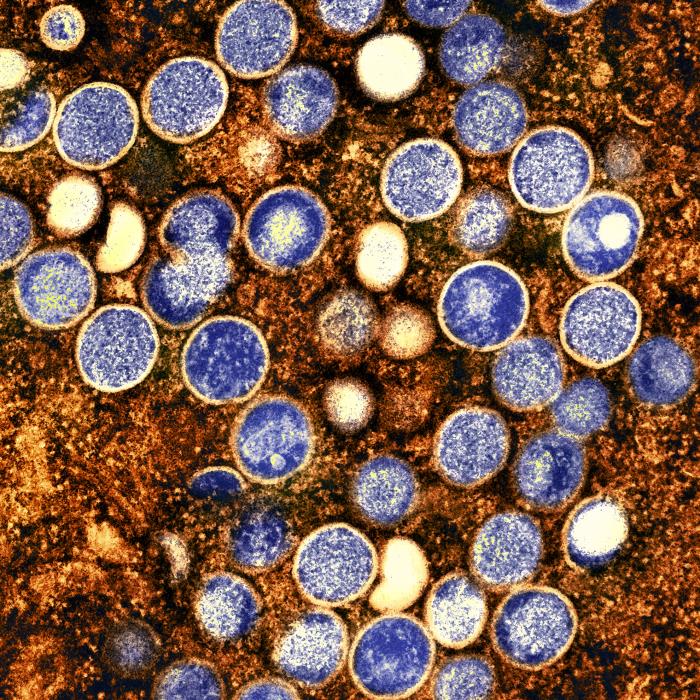
Image Credit: CDC PHIL| “This is a colorized transmission electron microscopic image of mpox virus particles (purple), which were found within an infected cell (brown), having been cultured in the laboratory. The image was captured and color-enhanced at the National Institute of Allergy and Infectious Diseases (NIAID), Integrated Research Facility (IRF), located in Fort Detrick, Maryland.”

Sweden Reports First Clade I Case Outside Africa, ECDC Raises Risk Alert Level

The Public Health Agency of Sweden reported on Thursday that the country has recorded the first case of mpox caused by clade I outside of Africa. Health and Social Affairs Minister Jakob Forssmed said in a news conference, “We have now also during the afternoon had confirmation that we have one case in Sweden of the more grave type of mpox, the one called clade 1.” State Epidemiologist Masnus Gisslen said in an official statement that the patient was infected while visiting “the part of Africa where there is a major outbreak of mpox clade 1.”

Following Sweden’s announcement, the European Centre for Disease Prevention and Control (ECDC) raised its risk level for mpox from ‘low’ to ‘moderate,’ for sporadic cases appearing in the EU. The agency also asked countries to maintain high levels of awareness regarding those traveling from affected areas. The ECDC says the overall risk to the EU population has gone up from “very low” to “low” and that it expects there will be more imported cases in the coming weeks.

United States Announces Further $424 Million in Assistance for the DRC

This week the US, through the United States Agency for International Development, announced “…nearly $424 million in humanitarian and health assistance to address the ongoing catastrophe in the Democratic Republic of the Congo (DRC). This includes $414 million in humanitarian assistance to support people experiencing persistent humanitarian needs resulting from conflict and displacement. This announcement, made in Kinshasa by the U.S. Ambassador to the DRC Lucy Tamlyn and U.S. Representative to the United Nations Agencies for Food and Agriculture Jeffrey Prescott, also includes an additional $10 million in health assistance to respond to the current mpox outbreak in the DRC and in other affected countries in the region. USAID is also donating 50,000 mpox vaccines to the DRC, which is the country most impacted by this outbreak.”

The statement later explained that “The United States is the largest provider of humanitarian assistance to the DRC and the largest bilateral donor to DRC’s health sector. This Fiscal Year, the U.S. provided more than $256 million in health assistance through bilateral programs including the President’s Emergency Plan for AIDS Relief (PEPFAR), the President’s Malaria Initiative (PMI), and the Global Health Security program, which enabled more than seven million people to receive lifesaving treatment for diseases including TB, HIV, and malaria.”

European Commission Coordinates Procurement and Donation of 215,000 Bavarian Nordic Doses to Africa CDC

The European Commission’s Health Emergency Preparedness and Respons Authority (HERA) announced on Wednesday that it “will procure and donate 175,420 doses of the MVA-BN® vaccine, the only FDA and EMA-approved mpox vaccine, as an immediate response to the mpox outbreak in Africa. In addition, the pharmaceutical company Bavarian Nordic will donate 40,000 doses to HERA. The Africa CDC will distribute the vaccines according to regional needs.”

The announcement came in response to Africa CDC’s call for the international community to assist in mobilizing two million vaccines to stop this outbreak. The Commission said in its statement that “Through the Africa CDC, these vaccines will be distributed to affected countries. Furthermore, HERA is in collaboration with the Africa CDC with the aim to expand access to mpox diagnostics and sequencing in the region, with a €3.5 million grant foreseen for early autumn.”

Bavarian Nordic Wins $157 Million Contract to Replenish US JYNNEOS Vaccine Supply

The Biomedical Advanced Research and Development Authority (BARDA) has reached an agreement with the Danish company Bavarian Nordic to “partly replenish” its stockpile of JYNNEOS vaccine following the 2022 mpox outbreak. This $156.8 million deal follows a similar one made last year by the US government totaling $120 million.

Further Reading

H5N1 Threat Persists but Remains Low

Despite the renewed focus on mpox, concern still remains about the spread of avian influenza globally, particularly H5N1, which has infected thirteen farmworkers in the United States so far this year. Despite the relatively low risk, Seqirus has begun producing and storing doses of its new vaccine targeting H5N1 in its facility outside of Raleigh, NC. In total, the company has agreed to produce 4.8 million doses in exchange for $22 million from the federal government. The government has also given Moderna $176 million to develop mRNA vaccines for influenza, including H5N1.

The CDC explained in a recent summary about its Influenza Risk Assessment Tool that “The current overall individual and population health risk to the general public posed by the avian influenza A(H5N1) virus presently spreading in cows, poultry, and other mammals remains low. Systematic comparisons of data related to this avian influenza A(H5N1) virus using the Influenza Risk Assessment Tool (IRAT) to data from other influenza A viruses has scored this virus’s future pandemic potential as “moderate risk” based on information through June 26, 2024. This is similar to previous assessments of earlier avian influenza A(H5N1) viruses.”

Furthermore, the WHO released an updated assessment on recent H5N1 events in collaboration with the Food and Agriculture Organization of the United Nations and the World Organisation for Animal Health. The assessment found that “At the present time, based on available information, FAO-WHO-WOAH assess the global public health risk of influenza A(H5N1) viruses to be low, while the risk of infection for occupationally exposed persons is low to moderate depending on the risk mitigation measures in place. Transmission between animals continues to occur and, to date, a limited number of human infections have been reported. Although additional human infections associated with exposure to infected animals or contaminated environments are likely to continue to occur, the overall public health impact of such infections at a global level is minor.”

DOD, NNSA Inaugurate New Supercomputing System Dedicated to Biological Defense

Earlier this month, the Department of Defense (DOD) and the National Nuclear Security Administration (NNSA) announced a new supercomputing system that is dedicated to biological defense at Lawrence Livermore National Laboratory. According to DOD, the Department “…is working with NNSA to significantly increase the computing capability available to our national biodefense programs. The collaboration has enabled expanding systems of the same system architecture as LLNL’s upcoming exascale supercomputer, El Capitan, which is projected to be the world’s most powerful supercomputer when it becomes operational later this year.”

“The biodefense-focused system will provide unique capabilities for large-scale simulation and AI-based modeling for a variety of defensive activities, including bio surveillance, threat characterization, advanced materials development, and accelerated medical countermeasures. DoD and NNSA intend to allow the U.S. Government interagency, International Allies and partners, and academia and industry to access the supercomputing capability.”

Learn more here.

Schumer Pledges to Block Any Senate Effort to Significantly Cut CDC Budget

Senate Majority Leader Chuck Schumer (D-NY) told The Associated Press this week that he would block any legislation from passing the Senate that proposes significant cuts to the budget of the Centers for Disease Control and Prevention (CDC). Schumer further said that such cuts “would wreak havoc and chaos on food safety funding mechanisms and tracking operations at a core level.” As the AP explains, “Democrats said the proposal in a House bill includes a reduction of the CDC’s proposed budget by $1.8 billion, or about 22%, that would harm public health. The Republican-led effort also would mean a major cut in programs designed to address firearm injuries and opioid overdose prevention.”

The House Appropriations Committee passed the measure on a party-line vote last month.
“AIxBio: Opportunities to Strengthen Health Security”

Aurelia Attal-Juncqua, Anita Cicero, Alex Zhu, and Thomas Inglesby recently authored this published this preprint on SSRN: “Artificial Intelligence (AI) has the potential to revolutionize biosecurity, health security, biodefense, and pandemic preparedness by offering groundbreaking solutions for managing biological threats. This landscape review explores recent advancements in AI across these fields, drawing from both grey literature and peer-reviewed studies published between January 2019 and February 2024. AI has demonstrated potential in predicting viral mutations, which could enable earlier detection of outbreaks, and streamlining resource allocation by analyzing diverse data sources. It could also play a crucial role in accelerating the development and deployment of medical countermeasures, such as vaccines and therapeutics. Additionally, use of AI may enhance laboratory automation, reducing human error and increasing biosafety. Despite these promising advancements, significant challenges and risks related to the potential misuse of AI, data security, and privacy concerns necessitate careful implementation and robust governance. This paper highlights the rapid progress and vast potential of AI in biosecurity, and provides key recommendations for U.S. policymakers to effectively harness AI’s capabilities while ensuring safety and security. These recommendations include expanding access to advanced computing resources, fostering collaboration across sectors, and establishing clear regulatory frameworks to support the safe and ethical deployment of AI technologies.”

“Emerging Biosecurity Threats in the Age of AI”

Suryesh K Namdeo and Pawan Dhar recently published this piece with IndiaBioscience: “As artificial intelligence (AI) enables the transformation of biology into an engineering discipline, an effective governance model that uses threat forecasting, real-time evaluation, and response strategies is urgently needed to address accidental or deliberate misuse. This article talks about the risks at the interface of AI and biosecurity and what could India do to better prepare for potential AI-biorisks.”

“2023 Biorisks, Biosecurity and Biological Disarmament Conference Report”

From UNIDIR: “To facilitate multi-stakeholder engagement around biological risks, biological security and biological disarmament, the United Nations Institute for Disarmament Research (UNIDIR), the United Nations Office for Disarmament Affairs (UNODA) and the World Health Organization (WHO) co-organized a stakeholder conference designed to bring together actors from civil society, academia and industry, as well as diplomats, to stimulate the exchange of ideas and thinking around how to build biosecurity and bolster biological disarmament.”

“The Biorisks, Biosecurity and Biological Disarmament Conference took place in Geneva, Switzerland, on 4–5 July 2023. The event provided an opportunity to discuss ongoing diplomatic processes and current and upcoming issues in the areas of biorisk, biosecurity and biological disarmament.”

“More than 80 individuals from 30 countries, representing 60 institutions, participated in the discussion in person, and a further 334 individuals joined the discussion virtually from around the world. The participants included diplomats, public health professionals, security experts and scientists from a wide range of organizations.”

“The Conference consisted of seven substantive panels, which explored a range of topics, centred on advances in science and technology and their related risks and benefits, biosecurity implementation, dual-use governance, disease response, international cooperation, and verification technologies. The discussions that took place during all seven panels are summarized in this conference report.”

“Launching the Global Biosecurity Accelerator at the Helsinki Biosecurity Dialogue”

Christopher East covers the launch of the Global Biosecurity Accelerator in this post from the Council on Strategic Risks, writing in part “This is a core driver of why CSR launched the Global Biosecurity Accelerator, of which the Helsinki Biosecurity Dialogue was the first multinational convening. The Global Biosecurity Accelerator’s mission is to accelerate global resilience to the full spectrum of biological threats— natural, accidental, or deliberate. In addition to promoting strong biosecurity strategies across nations, Accelerator events will raise insights from the range of actions that nations take—from enhancing biodefense, to embedding biosecurity in a whole-of-society approach, to One Health initiatives. Designed with interoperability and depth of defense in mind, CSR aims for the Global Biosecurity Accelerator to help jumpstart a ‘whole-of-globe’ approach to resilience against biological threats.”

“Russian Influence in Eastern Europe is Aggravating HIV Epidemic, Say Experts”

The Guardian‘s Kat Lay discusses the role of Russian propaganda in deterring people in eastern Europe from accessing necessary healthcare as AIDS deaths are up 34% compared to 2010. Lay writes in part, “Efforts to improve treatment and prevent infections are being hampered by Russian-linked propaganda against targets including opioid replacement therapy services, which reduce the risk of HIV infection among people using drugs, and the LGBTQ+ community…Meanwhile, “foreign agent” laws in a number of countries, following a pattern established in Russia, require charities and organisations receiving overseas funding to register and impose onerous reporting requirements. This has forced some charities to withdraw, a media briefing at the 25th international Aids conference was told.”

“Ebola: Ten Years Later – Lessons Learned and Future Pandemic Preparedness”

Krutika Kuppalli recently authored this post for PLOS Global Public Health‘s Speaking of Medicine and Health blog, writing in part “In early December 2013, a 2-year-old boy in the remote village of Meliandou, Guinea fell ill with a mysterious disease and succumbed to the illness a few days later.1 The disease spread rapidly, resulting in 49 cases and 29 deaths before being identified as the Zaire strain of the Ebola virus and officially declared an outbreak on March 23, 2014.2 Over the ensuing months, the outbreak spread to neighboring Liberia and Sierra Leone, with cases also emerging in Senegal, Nigeria, Mali, the United States and Europe.3 On August 8, 2014, the World Health Organization (WHO) Director-General declared the outbreak a Public Health Emergency of International Concern (PHEIC), the highest global health alert, signifying the outbreak posed a public health risk to other Member States and necessitated a coordinated international response.4 Despite global efforts to control the outbreak, it lasted for over two years, resulting in over 28,000 cases and more than 11,000 deaths by the time it was declared over on June 9, 2016.3 This crisis exposed significant weaknesses in global health systems, prompting a re-evaluation of pandemic preparedness and response strategies. A decade later, it is essential to reflect on the lessons learned from the West Africa Ebola crisis and their impact on current and future pandemic preparedness efforts. These lessons are outlined using the Health Emergency Preparedness and Response (HEPR) architecture developed by WHO, focusing on strengthening five core health emergency components: collaborative surveillance, safe and scalable care, community protection, access to countermeasures, and emergency coordination.”

“Déjà Vu All Over Again — Refusing to Learn the Lessons of Covid-19”

Michael S. Sinha, Wendy E. Parmet, and Gregg S. Gonsalves recently published this perspective piece in the New England Journal of Medicine, in which they explain “The spread of H5N1 avian influenza among cattle and other farm animals as well as to agricultural workers in the United States has raised concerns about the potential for an influenza pandemic. Although the threat of pandemic H5N1 doesn’t appear to be imminent — this variant has yet to show the potential to be transmitted from human to human — the federal government’s initial response suggests that, rather than heeding the lessons from Covid-19, elected officials and other key decision makers may be relying on a dangerous type of revisionism that could lead to more deaths, should H5N1 cause a pandemic.”

“The World Is Not Ready for the Next Pandemic”

Michael Osterholm and Mark Olshaker call for greater government investment in new and better vaccines in this Foreign Affairs article: “It is impossible to know when a new pandemic will arise, or which specific pathogen will be its cause. H5N1 is just one of the viruses that could mutate into something that will start a pandemic. But eventually, one will happen. It is therefore time to move away from vague recommendations and best practices to a far larger-scale program aimed at producing new and better vaccines, antiviral drugs and other countermeasures, and building the infrastructure at the scale needed to protect entire populations. Although such efforts will be costly, failing to take these steps could be catastrophic.”

NEW: AI and the Evolution of Biological National Security Risks

“In the wake of a global pandemic and rapidly advancing AI technologies, scientists and government leaders from around the world have sounded alarms about a changing biothreat landscape. Between dire warnings of more widely accessible bioterrorism capabilities, novel superviruses, and next generation bioweapons, how should policymakers and weigh the impacts of AI on biosecurity? Where are risks really changing, and where have they been overblown? What actions need to be taken now, and what emerging capabilities need to be monitored for future threats?”

“Please join the Center for a New American Security on Wednesday, August 21, from 10:30–11:30 a.m. ET for a panel discussion on these questions and more. Bill Drexel, Fellow in CNAS’s Technology and National Security Team, will be joined by leading biosecurity experts inside and outside government grappling with the nexus of AI and emerging biotechnologies.”

“This panel is part of CNAS’s AI Safety and Stability project, which aims to better understand AI risks and identify specific steps to improve AI safety and stability in national security applications. The event will build upon the project’s new report, AI and the Evolution of Biological National Security Risks: Capabilities, Thresholds, and Interventions in which Bill Drexel and Caleb Withers provide a clear-eyed overview of the emerging effects of AI on the biothreat landscape and propose actionable solutions to avoid the worst outcomes.”

This panel will feature Sonia Ben Ouagrham-Gormley, Associate Professor and Deputy Director of George Mason’s Biodefense Graduate Program, who reviewed and provided interviews to the report’s authors.

NEW-Safeguarding the Food Supply: Integrating Diverse Risks, Connecting with Consumers, and Protecting Vulnerable Populations – A Workshop

From the National Academies: “On September 4-5, the Food Forum will host a workshop that explores the state of the science around hazard- and risk-based approaches to safeguarding both domestic and global food systems. Workshop presenters will examine nutrition, economic, and equity implications in food safety decision-making, and considerations and strategies for communicating hazard and risk across sectors. The workshop will also include national and international perspectives on risk assessment and tools to mitigate risk, as well as opportunities for the future of risk management and assessment, food safety, and public health.”

Learn more and register for this virtual event here.

Assessing and Navigating Biosecurity Concerns and Benefits of Artificial Intelligence Use in the Life Sciences – August Information Gathering Meeting
From the National Academies: “This is the first in-person meeting of the consensus study, Assessing and Navigating Biosecurity Concerns and Benefits of Artificial Intelligence Use in the Life Sciences. The open session of this information gathering meeting will include initial briefings containing information relevant to study issues. The committee will also meet in closed session for project planning and review of topics and speakers for remaining meetings.”

This event will take place on August 13 and 14. Learn more and register here.

Call for Experts-Enhancing the Resilience of Healthcare and Public Health Critical Infrastructure

From the National Academies: The National Academies Forum on Medical and Public Health Preparedness for Disasters and Emergencies is seeking experts to participate in an upcoming workshop that will examine strategies, policies, and innovative actions to improve the resilience of health care and public health critical infrastructure to impacts from disasters and other emergencies.

Approximately 8-10 volunteer experts are needed to serve on the workshop planning committee. Expertise in the following areas is desired:

  • Healthcare operations and management
  • Public health, emergency management, and environmental health
  • IT, data science, and cybersecurity
  • Infrastructure systems, engineering, and supply chain
  • Risk assessment and mitigation
  • Insurances, cost management, and health economics
  • Community resilience and lived experience
  • Public policy

We are also collecting information for potential speakers, participants, and peer reviewers for any publications resulting from the activity.

Please submit nominations by August 23, 2024. For any additional questions regarding the workshop, please view the project page or email Shalini Singaravelu at SSingaravelu@nas.edu.

Learn more and submit nominations here.
Call for Experts-Potential Research Priorities to Inform Readiness and Response to Highly Pathogenic Avian Influenza A (H5N1): A Workshop

From the National Academies: The National Academies is seeking suggestions for experts to participate in a new workshop exploring research priorities to inform readiness and response to the ongoing Highly Pathogenic Avian Influenza (HPAI) A (H5N1) outbreak in the United States. Recognizing the interconnection between people, animals, and their shared environment, the workshop will take a One Health approach to bring together federal government agencies, the academic community, and the private sector, as well as other relevant stakeholders across the health, agriculture, and food safety sectors and will focus primarily on basic science and research questions of specific concern. 

Approximately 8-10 volunteer experts are needed to build a committee for a future workshop and any publications resulting from this activity. Expertise in the following areas is desired:

  • One Health and emerging infectious diseases
  • National, state, and/or local public health and medical readiness and response
  • Epidemiology and surveillance
  • Medical countermeasures (diagnostics, vaccines, therapeutics)
  • Agricultural and veterinary health and sciences
  • Food safety
  • Social sciences, risk communication, and community engagement
  • Modeling, risk assessment, and strategic foresight
  • Regulatory issues

Please submit nominations by August 30, 2024. For any additional questions regarding the forum, please view the project page or email Shalini Singaravelu at SSingaravelu@nas.edu.

Learn more and submit nominations here.

Pandora Report 2.16.2024

This week’s issue covers the death of Aleksei Navalny, OSTP’s recently released updated Critical and Emerging Technologies List, and the recent death of a Kenai Peninsula man who contracted Alaskapox in September. As always, new publications and upcoming events are included.

Russian Authorities Report Aleksei Navalny Dies in Prison

Aleksei Navalny, a prominent political opponent of Vladimir Putin who was poisoned by a Novichok agent in 2020, was reported dead today by authorities with Russia’s Federal Penitentiary Service. Navalny, 47, reportedly lost consciousness on Friday morning after going on a walk. Navalny was serving multiple prison sentences in a penal colony 40 miles north of the Arctic Circle at the time of his death. The charges included a nine-year sentence for embezzlement and fraud and a 19-year sentence for “extremism.” Critics and Navalny’s supporters argue that the charges were politically motivated.

The New York Times explained in its announcement that “Leonid Volkov, Navalny’s longtime chief of staff, said he was not yet ready to accept the news that Mr. Navalny was dead. “We have no reason to believe state propaganda,” Volkov wrote on the social platform X. “If this is true, then it’s not ‘Navalny died,’ but ‘Putin killed Navalny,’ and only that. But I don’t trust them one penny.”’

President Biden said in a statement at the White House “We don’t know exactly what happened, but there is no doubt that the death of Navalny was a consequence of something that Putin and his thugs did.” Biden also “warned there could be consequences, saying he was “not surprised” but “outraged” by the opposition leader’s passing.”

White House OSTP Releases Updated Critical and Emerging Technologies List

The White House Office of Science and Technology Policy released this week an updated list of critical and emerging technologies (CETs) that it deems potentially significant to US national security. This year’s updated list includes biotechnologies. ‘“This list supports our ongoing efforts to grow and strengthen U.S. technological leadership,” said OSTP Deputy Director for National Security Stephen Welby. “It will also be a useful resource as we continue to engage allies and partners to ensure that CETs yield tangible benefits for society and are aligned with our democratic values.”’

As the White House’s press release explains, “The National Security Strategy notes that technology is central to today’s geopolitical competition and to the future of our national security, economy and democracy. United States and allied leadership in technology and innovation has long underpinned our economic prosperity and military strength. In the next decade, critical and emerging technologies are poised to retool economies, transform militaries, and reshape the world. The United States is committed to a future where these technologies increase the security, prosperity, and values of the American people and like-minded democracies. Today’s update to the CET list builds upon earlier lists and may inform government-wide and agency-specific efforts supporting U.S. technological competitiveness and national security. More information and the full update can be found here.”

Alaskapox: First Death Reported

Health officials in Alaska recently reported that a man died in January after contracting Alaskapox virus (AKPV). “Alaskapox is a type of orthopoxvirus that infects mammals, including humans, and causes skin lesions. Other orthopoxviruses include the now-eradicated smallpox virus as well as mpox, which was previously known as monkeypox and experienced an outbreak of thousands of cases worldwide in 2022,” NPR explains.

Authorities have warned that immunocompromised people may be at higher risk for becoming severely ill from the virus, but so far the only known cases have been confined to Alaska. The same NPR article explains further that “…officials believe that last month’s case is the first fatality from the newly discovered virus — as well as the first known case outside the state’s interior — and authorities are now urging doctors across the state to be on the lookout for signs of the disease.”

According to Prevention, “The Alaskapox virus was first identified in a patient in Fairbanks, Alaska, in 2015, and since then, six additional cases have been reported in the area. While the disease has a small number of documented cases so far, after news broke of the first reported death from the virus, it’s understandable to be concerned.”

The virus is thought to spread through contact with infected animals and there have been no documented cases of it spreading from person to person. However, because of the transmission modes of other viruses in the same family, officials are advising those with Alaskapox lesions to cover them with bandages.

“Emerging Technology and Risk Analysis”

From the RAND Corporation: “RAND researchers working in the Homeland Security Operational Analysis Center (HSOAC), an FFRDC operated by RAND on behalf of the U.S. Department of Homeland Security, examined the effects of emerging technologies on DHS missions and capabilities. This series of reports considers how increases in the pace of technological innovation and adoption will affect components across the Department’s mission areas.”

“The first works in this series include a volume on risk factors from additive manufacturing. While the risks posed by 3D printed firearms are a common feature of news stories, the authors describe other malign uses, such as producing illicit materials and manufacturing counterfeit goods. Additional volumes in the series describe the potential risks of synthetic pandemics, and the increasing threat of intelligent drone swarms. New reports will be added to this page in the coming months.”

This effort is led by Daniel M. Gerstein, a Senior Policy Researcher at RAND and an alumnus of the Biodefense PhD Program.

“COLUMN: Is Pakistan a New Safe Haven for ISIS and Al Qaeda?”

Schar School associate professor Mahmut Cengiz recently authored this column for Homeland Security Today. In it, he writes in part, “Ongoing debates revolve around whether ISIS and Al Qaeda have lost their operational capacity and strength in the Middle East and intensified their attacks in the Sahel region, confirmed by increasing terror attacks in Mali, Niger, and Burkina Faso. Still, both groups have grown their attacks in Pakistan as well, which has recorded exponentially rising terror attacks since the Taliban overthrew the Afghan government in August 2021. The Taliban’s takeover has dramatically impacted terrorism trends in the region. ISIS-Khorasan (ISIS-K), an ISIS affiliate based in Afghanistan, has received greater attention and filled the vacuums left by the Taliban that deployed terrorist tactics and got a victory in its two-decade-long clashes against the US-backed Afghan governments. Taliban’s weak performance in the government has caused growing grievances that have generated a favorable environment for ISIS-K to flourish in the region and spread its influence in all provinces of Afghanistan.”

“Mind the Gap: America Needs an Office of Technology Net Assessment”

Vivek Chilukuri recently authored this piece for Lawfare arguing that recent misses on technologies like semiconductors and 5G point to a need for the US to create an Office of Technology Net Assessment to help better understand long-term technology trends. They write in part, “Today, there is a grave and growing gap in Washington’s long-term analysis: technology competition. Although the ONA has done laudable analyses of key technology trends, its focus on how those trends specifically affect the U.S. military misses the ever-expanding role technology plays in national and economic security. And within the ONA, technology competes with many other analytic priorities, even as technology leadership becomes more central to national power and the U.S.-China strategic competition in particular.”

Disease X – The 100 Days Mission to End Pandemics

“An important new book on pandemic control, DISEASE X – The 100 Days Mission to End Pandemics, will be published in the UK on 2nd February. This compelling narrative by Kate Kelland, Chief Scientific Writer at the Coalition for Epidemic Preparedness Innovations (CEPI), draws on her unique access to key players and their experiences at the frontlines of pandemic planning and response and takes the reader inside global efforts to prevent future outbreaks from exploding into deadly crises.”

“Distilling insights from health security experts, examining epidemics and pandemics of the past and present, and analysing what governments, societies and their people got right and wrong in the response to COVID-19 and other devastating disease outbreaks, Kelland explores why and how viruses—tiny as they are—can wreak enormous havoc on our way of life. But she also tells a story of hope, giving readers a glimpse of a future where the threat of pandemics has been neutralised by a prepared and collaborative world.”

Learn more here and purchase here.

“New Biosecurity Groups Aims to Prevent Biotech Disasters”

Robert Service covers the recently launched International Biosecurity and Biosafety Initiative for Science (IBBIS) in this news piece for Science: “Biosecurity experts today launched a new international nonprofit designed to prevent modern biotechnology from causing harm. Known as the International Biosecurity and Biosafety Initiative for Science (IBBIS), the group aims to develop technological and policy guardrails to reduce the risk that biotech tools, such as the ability to synthesize and edit DNA, are accidentally or deliberately used to create deadly toxins and pathogens.”

“New Report to Offer a Responsible Path Forward for Research With Pandemic Risks”

Sarah Starkey recently published this piece discussing the upcoming publication of the final report from the Bulletin of the Atomic Scientists‘ Independent Task Force on Research with Pathogen Risk. It explains “On February 28, 2024, at 10:00 a.m. ET. the Bulletin of the Atomic Scientists will release the final report of its Independent Task Force on Research with Pathogen Risk at the United Nations headquarters in New York. The report will offer recommendations on how to make research with pandemic risks more safe, secure, and responsible. The task force is composed of members with expertise in biosafety, biosecurity, epidemiology, ethics, governance virology, and other related areas.”

“WHO Member States Are Negotiating a Pandemic Treaty. But Will Countries Follow the New Rules?”

Elliot Hannon, Nina Schwalbe, and Susanna Lehtimaki recently authored this piece for The Bulletin of the Atomic Scientists. They explain in their piece: “When the negotiations first began, the world was still mired in the pandemic, creating a sense of urgency and optimism that stronger commitments, greater authority, increased accountability, and dedicated resources could be had. The aim was to create a new set of state commitments, improving a number of key areas: building resilient national health systems as a first line of defense, strengthening surveillance measures to quickly detect outbreaks, and enhancing equitable access to pandemic countermeasures such as vaccines, among other issues.”

“The negotiations have revolved around these issues, but remarkably little attention has been paid to state compliance and implementation of the accord. No matter how these larger differences get resolved, other existing international treaties have shown that without greater accountability to generate compliance with the agreement, the best intentions of the pact won’t matter. The response to COVID-19 laid bare that reality: Signing an accord, even one that is legally binding, does not mean that countries will implement it.”

“CDC’s Labs Are Making a Comeback. Now They Need Support”

Jill Taylor, Ewa King, and Scott Becker recently published this opinion piece in Scientific American covering CDC’s failures in the early days of the COVID-19 pandemic, particularly its release of a flawed diagnostic test for SARS-CoV-2. They explain in part, “Several published reports have documented in significant detail the events and decision points at CDC that led to its test’s failure. Ultimately, it originated in the fact that testing laboratories at CDC have historically not had adequate levels of staff and resources consistent with the agency’s responsibility as the nation’s premier public health laboratory. Its laboratories have also not had appropriate organizational standing or fiscal authority to drive policy and process for test development and deployment in biological emergencies. Few CDC scientists have the federal qualifications required of a diagnostic laboratory director, and most of CDC’s laboratory leaders report to senior health professionals who lack the specific education and training needed to oversee essential laboratory quality and performance standards. We think that CDC should rely more on special federal pay authorities for health care professionals and scientists to address the urgent need for clinically qualified staff for these laboratory oversight roles, similar to how the NIH and the Veterans Administration handle positions needing specialized expertise.”

“Investment Map: Funding in Your State”

From CDC: “The Antimicrobial Resistance (AR) Investment Map showcases CDC activities in the U.S. and abroad to combat antimicrobial resistance. Users can get printable global-, state-, and city-specific fact sheets that describe how CDC is investing directly in the response to antimicrobial resistance at each level.”

“The map currently shows fiscal year 2023 extramural funds that support CDC’s antimicrobial resistance activities. CDC distributed the largest extramural portion of funding to support all 50 state health departments, several local health departments, and Puerto Rico, Guam, and the U.S. Virgin Islands. The map also includes fact sheets highlighting CDC’s innovation work with partners to combat antimicrobial resistance. The information is updated yearly.”

Learn more here.

“Creating Support Systems for Employees and Researchers Receiving Public Harassment”

Tara Kirk Sell and Beth Resnick describe the FlagIt report and response system and the development of similar systems in this piece for JPHMP Direct, writing in their introduction “Since the COVID-19 pandemic, many members of the public health community have been subject to pushback against public health measures and harassment from members of the public. This harassment can take many forms, including harmful or vulgar emails, social media posts, or phone calls; doxxing (making private identifying information public); and other intimidation or bullying against the recipient. After Johns Hopkins Bloomberg School of Public Health (Bloomberg School) faculty and staff reported receiving such harassment related to their public health work, the School established the FlagIt report and response system to support any individuals (faculty, staff, or students) within the Bloomberg School community facing such harassment. Development of this system is described in our JPHMP article entitled, “Development of the FlagIt Report and Response System for Concerning or Harassing Messages Related to Public Health Work.”

“Practical Playbook for Addressing Health Information”

New from Johns Hopkins Center for Health Security, this playbook “…guides users in preparing for and responding to health misinformation, which is a growing public health challenge.”

“The playbook takes a hands-on approach to help public health practitioners, medical professionals, and health communicators recognize and respond to health-related rumors and misinformation. It provides detailed tools, checklists, templates, and examples written in plain language to support users in:

  • preparing for health-related rumors
  • deciding when to act to address rumors
  • determining which actions to take to address misinformation
  • developing relevant and timely messaging, and
  • gathering feedback about those messages.”

“UV Light Kills Viruses. Why Isn’t It Everywhere?”

Vox covers the pros and cons of using UV light to help disinfect spaces: “Ultraviolet light is an incredibly powerful disinfectant. Study after study has proven that it can obliterate viruses and bacteria, and yet it’s not often thought about as a defense against germs. In fact, when most people think of UV, they think of the harmful rays from the sun that cause cancer — not the PR you want when advertising, obviously. Luckily, a few years after the pandemic lockdowns, researchers have found a type of UV that isn’t strong enough to penetrate human skin but still effectively stops the germs. Could it be our next defense?”

“Chemical Plants, Terrorism and Regulations May Be Back on the Agenda”

Jeff Johnson discusses the expirations of CFATS in this piece for the Society of Environmental Journalists, focusing in large part how executives at multiple chemical industry associations are pushing for renewal of the regulations: “Last month, the manufacturers announced at a briefing their intention to refire efforts to get a federal bill and regulations into a law that would make DHS the enforcer with oversight, inspection and auditing authority.”

“The novelty of industrial chemical makers pushing for greater government regulations and inspections was not lost on speakers at the Jan. 16 briefing.”

‘“I spend a good portion of my day job pushing back against federal regulatory overreach,” said Chris Jahn, CEO of the American Chemistry Council, a trade association of chemical makers. “But this is a unique situation in which regulators and industry are aligned. Our companies should not be forced to go it alone; we need a partner that can provide threat information and security expertise.”’

What We’re Listening To 🎧

Science Diction Podcast | Synthetic Biology

“MRIGlobal’s Science Diction podcast dives in with research scientists to offer insight into synthetic biology—how it works like circuitry, the diseases it may help defeat, and how it is changing the landscape of diagnostics, biosecurity, and even food security.”

Listen here.

New: Disarmament Courses Series in French

From UNIDIR: “Les progrès de la biotechnologie génèrent de nouvelles opportunités, mais engendrent également certains risques en matière de double usage des agents biologiques et à toxines et vis-a-vis du respect de la Convention sur l’interdiction des armes biologiques (CIABT) de 1972.”

“Ce premier évènement en 2024 d’une série de rencontres francophones sur le désarmement présentera la CIABT et fournira une analyse plus approfondie des risques biologiques contemporains y compris en lien avec l’intelligence artificielle et le cyber. L’événement offrira également un éclairage sur les perspectives des travaux en cours du groupe de travail de la CIABT institué par la 9ème Conférence d’examen en novembre 2022.”

This event will take place on February 20 at 9 am CET in the Palais des Nations. It will take place in French with no interpretation into other UN official languages provided. Learn more and register here.

New: Regulating Risky Research: The Science and Governance of Pathogens of Pandemic Potential

From AEI: “The COVID-19 pandemic has renewed public interest in gain-of-function (GOF) research of concern on pathogens of pandemic potential. Are laboratory experiments to make pathogens more transmissible or virulent necessary for scientific progress? Do such experiments pose unacceptable risk? As Congress and the executive branch consider regulatory reforms, we sorely need constructive, evidence-based discussions of the benefits and drawbacks of GOF research of concern, including which policy changes best serve the public interest.”

“Please join AEI and distinguished guests for a two-part conversation examining the science and policy of GOF research of concern. Panelists will grapple with issues related to biosecurity and risk, pandemic preparedness, oversight and the role of Congress, scientific freedom and ethical responsibility, and possible avenues for reform.”

This hybrid event will take place on February 21 at 2:45 pm. Learn more and RSVP here.

New: Launch of the 2024 National Blueprint on Biodefense

From the Bipartisan Commission on Biodefense: “On the 10th anniversary of its inception, the Bipartisan Commission on Biodefense will release its 2024 National Blueprint on Biodefense: Immediate Action Needed to Defend Against Biological Threats.”

“Please join us for this momentous event at the Congressional Auditorium, Capitol Visitor Center, on April 17th at 4:30pm.”

“The Bipartisan Commission on Biodefense (formerly the Blue Ribbon Study Panel on Biodefense) was established in 2014 to provide a comprehensive assessment of the state of United States biodefense efforts and to issue recommendations that foster change.  Subsequently, the Commission has briefed White House Administrations (including then Vice President Biden); testified before Congress; convened numerous meetings with experts; released 12 reports; produced the graphic novel Germ Warfare; and mobilized biodefense conversations and actions in the private and public sectors.”

Learn more and register here.

ICYMI-“Event Summary: Kazakhstan’s Actions to Address Nuclear and Biological Risks”

This summary from the Council on Strategic Risks covers a discussion panel hosted by the Council and the Carnegie Endowment for International Peace focused on Kazakhstan’s leadership in the reduction of nuclear and biological weapons risks. The “summary highlights key themes from the discussion and builds upon the publication of a new report from the Council on Strategic Risks written by Christine Parthemore and Andy Weber titled “Lessons From Kazakhstan: On the Front Lines on Nuclear and Biological Risks.” The discussion centered around the complexities faced by Kazakhstan in those early years of independence from the Soviet Union, including the brave decision to relinquish its nuclear arsenal and its biological weapons program. The discussion turned to the current security environment and Kazakhstan’s vision for advancing nonproliferation and biosecurity through its role as chair of the Treaty on the Non-Proliferation of Nuclear Weapons (NPT) Preparatory Committee and its proposal for an International Agency for Biological Security.”

ICYMI-February 8, 2024: The Capitol Hill Steering Committee on Pandemic Preparedness & Health Security

From Johns Hopkins Center for Health Security: “Policy Frontiers: Realizing the Benefits, Managing the Risks of Artificial Intelligence-Driven Biotechnology”

“The in-person panel discussion delved into the impact and implementation of the President’s AI Executive Order related to the convergence of AI and biotechnology, challenges and opportunities that still need to be addressed, and Congress’ role in governance of these rapidly evolving technologies.”

Watch here.

Enhancing the Global Food System’s Resilience to Biological Threats

“This virtual event, hosted by the Scowcroft Institute of International Affairs at Texas A&M, will take place on February 20, 1:00-2:30 PM [EST].”

“A year after the Biden Administration’s National Security Memorandum on Strengthening the Security and Resilience of United States Food and Agriculture (NSM-16), Scowcroft is convening stakeholders from across industry, academia, and government to identify the policies and technologies needed to safeguard the world’s food system against biological threats. Planned topics include microbial food production, AI-enabled crop disease surveillance, and genomic engineering to improve plant disease resistance, among others.”

“For more details, find a draft agenda here

Speakers include:

  • David Stiefel, National Security Policy Analyst, National Security Division, USDA and former Director for Biodefense on the National Security Council
  • Nils Justen, Policy Analyst, National Security Commission on Emerging Biotechnology (NSCEB)
  • Shannon Nangle, CEO and Co-Founder, Circe Biosciences 
  • Seth Murray, Professor Butler Chair, Soil and Crop Sciences, Texas A&M University
  • Yiping Qi, Professor, Plant Sciences and Landscaping, University of Maryland”

Register here.

The Advancing Threat Agnostic Biodefense Webinar Series

From PNNL: “Join us as we welcome Dr. Tony Goldberg, professor in the School of Veterinary Medicine at the University of Wisconsin-Madison. His talk, titled “Assessing the Zoonotic Risk of Pre-emergent Viruses” will be Tuesday, February 20, at noon PT.

“Exploration of the “virosphere” is in its golden age. The sheer number of new viruses discovered daily, and the fact that most cannot be cultured, creates enormous uncertainty about where to allocate attention and resources. It is not an intractable problem, however, to distinguish those few viruses that are likely to emerge as zoonoses from the many others that are not. This talk describes two diametric approaches to addressing this problem.”

Learn more and register here.

Presidential Advisory Council on Combating Antibiotic-Resistant Bacteria Public Meeting

“The 24th PACCARB public meeting will be held virtually on February 22, 2024. This will be the second of two meetings to address the task provided to the PACCARB by the Secretary of HHS to address antimicrobial resistance globally. The focus of the meeting will be on international implementers and the gaps, challenges, and opportunities they see to combat AMR globally – specifically focusing on low- and middle-income countries. Current times are tentative and subject to change.”

This event will take place on February 22, at 9 am. Submit public comments and register to attend here.

GP Nonproliferation and Strategic Trade Hub Virtual Launch & Demo  

“The Strategic Trade Research Institute (STRI) invites you to participate in the Global Partnership Nonproliferation and Strategic Trade Hub Virtual Launch and Demo event taking place on February 27, 2024, from 9:00-10:00 am EST.”

“Please join us to learn about the main features of the Hub, how to use it, and how it can be useful and impactful for nonproliferation and export control professionals. The event will feature Andrea Viski, Director of STRI, as well as introductory remarks from the Hub’s sponsor, the United Kingdom’s Counter-proliferation and Arms Control Center (CPACC).”

Learn more and register here.

International Conference, CBRNE Research & Innovation

“The last 40 years have demonstrated that both military and civilian populations could be exposed to highly hazardous CBRNE agents following conflicts, natural outbreaks and disasters, industrial incidents or terrorist attacks.”

“Worldwide, researchers, responders and industrial capacities have been commited to provide adapted response to these challenges.”

“Building on the success of the first 5 International Conferences « CBRNE Research and Innovation » which took place in Antibes (2015), Lyon (2017), Nantes (2019), on line (2021) and Lille (2022), we want to give you a new opportunity to build up or strengthen collaborative networks in Strabourg (March 19th – 21rst 2024).”

“The CBRNE R&I Conference is specifically devoted to scientific updates, responders’ feedbacks and expression of needs. It also includes workshops and demonstrations of innovative materials, technologies and procedures, according to the following themes: DETECTION – IDENTIFICATION, PROTECTION – DECONTAMINATION, MEDICAL COUNTERMEASURES, RISKS & CRISIS MANAGEMENT.”

“Looking forward to your proposals for communication and to welcoming you at Strasbourg in March 2024!”

Learn more here.

Artificial Intelligence and Automated Laboratories for Biotechnology: Leveraging Opportunities and Mitigating Risks

From the National Academies’ Board on Life Sciences: “Please join us April 3-4, 2024 for a hybrid workshop on the opportunities and mitigation of risks of the use of artificial intelligence and automated laboratories (i.e., self-driving labs) for biotechnology.”

“The workshop will consider opportunities to leverage AI and laboratory automation capabilities for discovery and development, explore methods and approaches to identify, track, and forecast the domestic and international development of such technologies, and convene experts across sectors to highlight recent advances and explore implications for the development and use of these technologies.”

Learn more and register here.

Registration for GHS 2024 Now Open

Registration is now open for the Global Health Security 2024 conference in Sydney, Australia. This iteration will take place 18-21 June, 2024. The call for abstracts is also still open. “The mission of the Global Health Security conference is to provide a forum where leaders, researchers, policy-makers, and representatives from government, international organisations, civil society, and private industry from around the world can engage with each other, review the latest research and policy innovations, and agree solutions for making the world safer and healthier. To that end, our mission is to help foster a genuinely multidisciplinary community of practice that is committed to working collaboratively to enhance global health security and eliminate disease, irrespective of its origin or source.”

SBA.3 International Synthetic Biology, and Biosecurity Conference in Africa

“Join us for the SBA.3 International Synthetic Biology and Biosecurity Conference in Africa, a groundbreaking event that brings together experts, researchers, and enthusiasts in the field of synthetic biology. This in-person conference will take place at the Laico Regency Hotel from Wed, Jul 17, 2024 to Friday, Jul 19, 2024.”

“Get ready to dive into the exciting world of synthetic biology and explore its potential applications in Africa. From cutting-edge research to innovative solutions, this conference offers a unique opportunity to learn, network, and collaborate with like-minded individuals.”

“Discover the latest advancements, trends, and challenges in synthetic biology through engaging keynote speeches, interactive workshops, and thought-provoking panel discussions. Immerse yourself in a vibrant atmosphere where ideas flow freely and new connections are made.”

“Whether you’re a seasoned professional or just starting your journey in synthetic biology, this conference provides a platform to expand your knowledge, exchange ideas, and contribute to the growth of the field in Africa.”

“Don’t miss out on this extraordinary event that promises to shape the future of synthetic biology and biosecurity in Africa. Mark your calendars and join us at the SBA.3 International Synthetic Biology and Biosecurity Conference in Africa!”

Learn more and register here.