Abrin: More Deadly and Less Common than Ricin

By Chris Healey

Abrin was among toxins found during an apartment search of a San Francisco man charged with possessing explosive material. An FBI affidavit states the suspect told investigators he acquired abrin to ease the suffering of cancer patients.

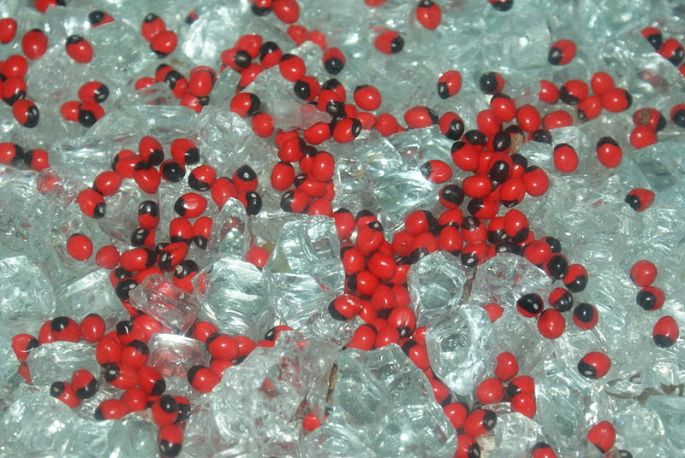
Abrin is a protein-based toxin from the jequirity bean, colloquially known as a rosary bead. The toxin is lethal in minute doses and causes serious symptoms in even smaller amounts. It is almost identical to a better-known toxin—ricin. Abrin is more lethal than ricin. Toxicologists estimate abrin’s lethal dose between .1 and 1 microgram per kilogram. In comparison, ricin is lethal between 5 and 10 micrograms per kilogram.

Both abrin and ricin consist of two proteins, A chain and B chain, linked by a disulfide bond. The proteins work together to enter the cell and disrupt its activity. B chain grants cell entry, while A chain transports to the ribosome and destroys it. Cells die shortly after ribosome destruction.

Abrin’s nonuse despite toxic superiority to ricin is ostensibly due to a matter of availability. As a byproduct of castor oil, an ingredient in soap and mechanical lubricant, ricin is very common. Conversely, rosary beads serve a limited purpose in prayer and are not consumed or destroyed in their role. One set of rosary beads can last for years before replacement is necessary. Their limited and reusable role makes them uncommon.

Availability also contributes to abrin and ricin’s historical precedence. According to a study conducted by the Federation of American Scientists, ricin has been maliciously used 37 times since 1983. Malicious abrin use is almost nonexistent except for several reports in India and Sri Lanka in the early 20th century.

Abrin is released from crushed jequirity beans. Individuals who handle beans whole and unaltered, as in prayer, are not exposed. Even in cases of jequirity bean ingestion, intoxication is dependent on how thoroughly beans are chewed. Symptoms include nausea, vomiting, diarrhea, abdominal pain, and colic. Some less common symptoms include irregular heartbeat, irrationality, hallucinations, and seizures. In fatal cases, cause of death has been traced to gastrointestinal damage.

Abrin is a select agent designated by the Department of Health and Human Services. It is illegal to manufacture or possess any quantity of the toxin. Although jequirity beans contain abrin, they are not illegal. The law is broken when abrin toxin is isolated from a bean.


(Image Credit: Satdeep gill)

Pandora Report 05.24.14

Highlights include the CIA and their “Immunization Campaigns,” Ricin Sentencing, Dengue Warning for the World Cup, and Bacteria and E-Cigarettes. Have a safe and wonderful Memorial Day weekend!!

CIA Drops Vaccination Cover Story in the Wake of Polio Outbreak

Shakil Afridi, a Pakistani doctor, provided polio vaccinations in the city of Abbottabad as a cover for the CIA-backed effort to obtain DNA samples from children at a compound where Osama bin Laden was later found and killed in 2011. This week, however, the White House assured the deans of prominent U.S. Public Health Schools that the CIA will no longer use vaccination programs as a cover for spy operations. The agency also agreed not to use genetic materials obtained through such programs.  This announcement comes at a time when Polio cases are growing and spreading in Pakistan—in 2013 cases in Pakistan accounted for more than 20% of all new polio cases worldwide.

CBC—“The CIA’s use of a polio vaccine program to spy on bin Laden’s compound undercut Obama’s own high-profile speech to the Muslim world in 2009, in which he touted U.S. efforts to slash the growth of polio in Pakistan, Afghanistan and Nigeria. With Obama administration assurances, Muslim scholars in two international groups issued religious decrees urging parents to vaccinate their children.”

Mississippi Man Sentenced in Ricin Letter Investigation

This week, James Dutschke was sentenced to 25 years in prison for developing and possessing Ricin. Dutschke mailed the ricin-laced letters to the President, U.S. Senator Roger Wicker, and a Lee County Mississippi Judge.

FBI—“Following an investigation, Dutschke was arrested on April 27, 2013, and indicted by a federal grand jury on June 3, 2013. A superseding indictment was filed on November 20, 2013. Dutschke pled guilty on January 17, 2014, to one count of developing and possessing ricin and three subsequent counts of mailing threatening letters laced with the substance. According to the plea agreement between Dutschke and the U.S. Attorney’s Office that was filed in U.S. District Court in Oxford, Dutschke had agreed to serve a 300-month prison sentence and had waived his right to appeal.”

Scientists Warn of Dengue Fever Risk during Brazil’s World Cup

This topic has been circulating for weeks, if not months, but with the beginning of the World Cup a few weeks away, this story has been popping up in the news on a daily basis. Of the 12 World Cup host cities, the risk of Dengue fever has prompted a high alert in three—Natal, Fortaleza, and Recife—and an increased risk in four—Rio, Belo Horizonte, Salvador, and Manaus.

Dengue fever, sometimes called “breakbone fever,” is a viral infection transmitted by the Aedes aegypti mosquito. It can range from a mild, flu-like illness to a potentially deadly one, which occurs in approximately 5% of patients. There are no vaccines or effective treatments for Dengue Fever. Brazil has had more cases of the disease than anywhere in the world—more than seven million infections between 2000 and 2013.

Chicago Tribune—“Rachel Lowe, from the Catalan Institute of Climate Sciences in Barcelona, who helped develop the warning system, said the possibility of an outbreak during the World Cup large enough to infect visitors and spread back to their home countries will depend on a combination of factors. This include having large numbers of mosquitoes, a susceptible population and a high rate of mosquito-human contact, she said.”

Here’s Why Bacteria Like E-Cigs

Many, including everyone’s favorite anti-vaxxer Jenny McCarthy, claim that e-cigs are safer for their health than traditional cigarettes. However, it addition to the harm cigarettes inflict on the immune cell, it turns out that either type of cigarette may be just as bad for the body’s natural bacteria.

Time—“Dr. Laura Crotty Alexander, from the University of California at San Diego and the VA San Diego Healthcare System, found that the vapor from e-cigs prompts bacteria to become more resistant to antibiotics. In the presence of e-cig vapor, for example, methicillin resistant staphylococcus aureus (MRSA) became more resistant to the natural anti-microbial agents that the body makes. Cigarette smoke also produces the same effect, but Crotty Alexander was surprised that the e-cig vapors did as well, given that they were not supposed to contain the health-harming carcinogens that tobacco smoke does.”


Image Credit: Wikimedia Commons

Breaking News

The news never stops, not even on the weekend.

We’re covering two breaking stories about two extremely serious biological threat agents: ricin and ebola.


Ebola in West Africa

In early February 2014, health agents began tracking a case of viral hemorrhagic fever in Guinea, in Western Africa.  On March 21, Drs. Sylvain Baize and Delphine Pannetier from the National Reference Center for Viral Hemorrhagic Fevers at the Pasteur Institue in Lyon, France were able to identify the Ebola virus, subtype Zaire, in 6 of 7 clinical case samples from the outbreak. Since February 9, there have been 59 deaths from 80 reported cases of Ebola Zaire virus.

Over this weekend there has been growing concern that the virus may have crossed over into neighboring Sierra Leone. “Sierra Leone’s Chief Medical Officer Dr. Brima Kargbo said authorities were investigating the case of a 14-year-old boy who died in the town of Buedu in the eastern Kailahun District. The boy had travelled to Guinea to attend the funeral of one of the outbreak’s earlier victims.”

Ricin in Pennsylvania

A 19 year old Pennsylvania man was arrested last week and charged with attempted murder and risking catastrophe for allegedly sending a scratch-and-sniff birthday card laced with ricin to a man now dating his ex-girlfriend. Bucks County District Attorney David Heckler stressed that the toxin was extremely potent.

When the suspect was initially questioned about the card in early March, he told police he had coated the card with sodium hydroxide because it resembles Anthrax toxin. It was during lab testing that the card tested positive for ricin toxin. The man is being held without bail in Bucks County, PA.

For more on Ricin, check out Dr. Alexander Garza’s backgrounder.

Pandora Report 3.21.14

BREAKING NEWS

Positive Tests for Ricin at Georgetown University

Earlier this week, a white, powdery substance that tested positive for ricin, was found in a dorm room at Georgetown University. The 19 year-old student suspect who lived in the room reported that he made it and the Georgetown Voice spoke with a source who indicated the suspect possibly “intended to use the substance on another student.” Weapons-grade ricin is an extremely lethal toxin that has no available anti-toxin.

The Washington Post– “In an e-mail sent campus-wide, the university said there was no danger to the community. Law enforcement officials said they did not think that the case was connected to terrorism. School officials received no reports of anyone being exposed to the toxin, authorities said. D.C. health officials advised the school that symptoms of ricin exposure typically present themselves within 24 hours. “This window has passed and there are no reports consistent with ricin exposure,” the statement said.”


And now, our regularly scheduled Friday news…

Highlights include Polio-like virus in California, destruction of Syrian chemical weapons, the cost of Anti-Vaxxers, and domestic illness in pigs (or…the end of bacon?!) Happy Friday and have a great weekend!

Doctors continue the hunt for a Polio-like virus in California

Since September 2012, over two-dozen children in California have displayed symptoms of a rare Polio-like illness that has caused sudden paralysis, while doctors and health officials are still hunting for the cause. One possible suspect may be some sort of enterovirus, but more testing is required as the mystery continues.

San Francisco Chronicle—“Viruses can be difficult to detect after patients have been sick for a couple of weeks, and especially if they’ve already undergone treatment that can muddy test results. In the California cases, most children weren’t tested until many weeks or even months after they became sick. Waubant, a UCSF neurologist, said she is hoping to get funding to conduct immunoglobulin testing, which would determine whether the patients with polio-like illness have certain antibodies suggesting that they’d all been infected with the same virus.”

PEDv threatens future of pork industry

Are the days of available bacon coming to an end? A report coming out of the Dakotas paints a scary picture of the effect porcine epidemic diarrhea virus is having on the entire domestic pork industry. PEDv is a relatively new disease afflicting pigs but is has become widespread and with little known about the virus containment has become a top priority of both the pork industry and scientists.

Farm Forum—“‘PEDv has a significant economic impact,” Dr. Oedekoven, South Dakota State veterinarian said. “There is a high death rate in the naïve (newborn) population where 80 to 100 percent death losses are reported. The young piglets have no natural immunity and there is no vaccine. It’s a pretty terrible recipe. Biosecurity and sanitation are the tools being used in the industry to prevent the introduction of the disease into herds.’”

A Medical opinion on the anti-vaccination movement

With celebrities like Jenny McCarthy and Kristin Cavallari appearing in the media on an almost daily basis loudly championing the virtues of being “anti-vaxxer,” a medical doctor weighs in on the cost of that movement.

Forbes—“The result is an erosion in health gains, both individual and collective. And in some parts of the country, we are witnessing a reversal of what many believe is one of the greatest advances in medical science in the last century. And as a society, before we allow misinformation to threaten public health, we must recognize that vaccines today are safe and effective. Anything less is irresponsible. We owe it to our children and our communities to make vaccination universal.”

Will Syria meet the deadline for chemical weapon disarmament?

A deadline of June 30 has been set for Syria to hand over and destroy their chemical weapons arsenal. However, there are concerns that rocket strikes in Syria could delay this process and means the deadline will pass without completion.

Al Bawaba—“The Syrian government has repeatedly blamed security issues for its failure to meet the specified deadlines for removing its chemical weapon stockpile from the country. Damascus said last month that convoys carrying chemical weapons were subject to two attempted attacks while they attempted to transport the materials to Latakia.”

But, the U.S.-Russian brokered deal is not in danger, Russian authorities say.

ITAR/TASS—“‘We are not inclined to dramatize the fact that the milestone for their removal, February 5 this year, was not met, as it was planned by the decision of the Executive Council of the Organization for the Prohibition of Chemical Weapons (OPCW),” the ministry said. “It can be explained by the objective security situation around chemical weapons storage facilities and on the route of convoys’ movement, as well as by problems related to the logistical support of the operation. However, there is no reason at all to call into question the deadline for the liquidation of the Syrian chemical weapons potential – the first half of the current year.’”

(image courtesy of Wikimedia Commons)

The Pandora Report 11.22.13

Highlights this week include dengue in New York, detecting ricin, a suspected al Qaeda biological weapons expert, the evolution of flu, and polio and the Taliban. Happy Friday, and have a bacteria-free Thanksgiving!

‘Locally-Acquired’ Dengue Fever Case Reported In New York

For the first time, a locally-acquired case of dengue fever has popped up in the state of New York. The infected individual had not left the region at any point during the incubation period. This suggests that the probable route of infection was a mosquito which had taken a blood meal from an infected person before biting the New York patient. The patient has made a full recovery. However, this case highlights the truly global nature of infectious disease today. Dengue  is considered a “neglected disease” by the WHO, meaning its research on its treatment and cure receive comparatively less funding. This is especially unfortunate as the virus, which is considered “pandemic-prone” causes an estimated 100 million infections every year in 100 different countries. It’s easy to dismiss dengue as a disease which affects other people in far-flung parts of the world, but this simply isn’t the case anymore.  The prevalence of international travel means relative geographical isolation is no longer the protective boundary it once was.

Global Dispatch – “‘Given the recent introduction of Aedes albopictus into New York State and the high level of travel in New York to areas of the world endemic for dengue, it is not surprising that a locally acquired case of dengue has been found in the state,’ said State Health Commissioner, Nirav R. Shah, M.D., M.P.H. ‘This finding emphasizes the need for physicians to be aware of signs and symptoms of diseases common in tropical countries, but may occasionally present themselves in New York.'”

Army Scientists Improve Methods to Detect Ricin

The CDC has sponsored research on decontaminating ricin. While the utility of spending large amounts of money on vaccine development against certain pathogens can sometimes be questionable, decon is an area of real importance that is under-researched. A letter containing ricin may not kill a lot of people, but its particles can linger for a very long time at each of the mail facilities it traveled through.

Military News – “The paper, which is entitled, ‘Surface Sampling of a Dry Aerosol Deposited Ricin,’ examines swab materials commonly used to sample biological threat agents from surfaces. The paper documents his studies, which demonstrates the need for accurate dissemination techniques to effectively evaluate sampling technologies in an environment mimicking the ‘real-world’ environment where the toxin may be present.”

Israel Holding Suspected al-Qaida Bio Weapons Expert

Israel is currently in a bit of a bind over it’s holding of a suspected biological weapons expert. According to court documents released this week,  Samer Hilmi Abdullatif al-Barq was trained as a microbiologist in Pakistan, had military training in Afghanistan, and eventually was recruited by Ayman al-Zawahiri into the al Qaeda weapons program. Israeli courts have yet to try al-Burq, due to lack of sufficient evidence, but his actions in the area, including attempted recruitment of others into al Qaeda, render him too dangerous to release. Moreover, attempts to release him into the custody of neighboring states have been politely declined. It’s clearly a complicated case.

New York Times – “In a document presented to the court, the military prosecutors described Mr. Barq as an operative in the global Qaeda organization with ‘a rich background in the field of nonconventional weapons, with an emphasis on the biological field,’ having studied microbiology in Pakistan. The prosecutors argued that Mr. Barq’s release at this time to the West Bank, where he is a resident, would constitute ‘a point of no return in the development of a significant global jihadist infrastructure in the area.'”

Scientists zero in on flu virus defenses

A recent study published in the journal Science details novel research on the hemagglutinin protein (HA) of the H3N2 flu strain. The work examined mutations in the protein between 1968 and 2003 which prompted structural changes.  In doing so, researchers were able to pinpoint changes in seven key amino acids that prompted evolutionary change in the virus.  Better understanding the virus’ points and methods of evolution could help in the creation of more efficacious vaccines.

ABC Australia – “The researchers confirmed their findings by engineering changes to these seven amino acids and testing the antibody response to the new virus in ferrets. Importantly, the amino acids singled out by Barr and colleagues are close to the site on the HA protein that binds to host cells. This limits the number of amino acid substitutions that are possible as many changes will alter the protein’s structure, interfering with the virus binding process. ‘The virus can evolve in a number of different directions,” says Barr. “If we can narrow that down to a small number of directions then we’ve got a better chance of trying to work out which particular virus might be the one which is going to turn up in a year’s time.'”

The Surge

Wired has an excellent long-form piece on polio vaccinations and the Taliban. The six-part article is interactive, and includes audio interviews, photo galleries, and infographics on why eradicating polio is so important and so challenging. Obviously, we highly recommend it!

Excerpts – “The virus typically infects only the mucosal tissues of the gastrointestinal system for a few weeks, where the immune system clears it before any harm is done. After that, the infected person would be immune to future infections from the same strain. However, in less than 1 percent of infections, the virus attacks the central nervous system and causes paralysis. Typically this affects just the legs. But in 5 to 10 percent of paralytic cases (that is, 0.05 percent of total infections), polio paralyzes the breathing muscles, meaning that without artificial respiration the patient will suffocate. All this explains why polio is so difficult to annihilate. For every one person who actually gets sick, nearly 200 are carrying the virus and infecting others…

“[T]he math of cost-benefit analyses runs aground when it comes to eradication campaigns, because the benefits, in theory, are infinite. That is: No one will ever die from—or spend a dime on vaccinating against—smallpox for the remainder of human history, barring a disaster involving one of the few lingering military stockpiles. According to a 2010 study, polio eradication would generate $40 billion to $50 billion in net benefits by 2035.”

(image:  Sgt. Mike R. Smith, National Guard Bureau)

Ricin: The Very Poor Man’s Toxic Terror Weapon

GMU Biodefense is pleased to announce the launch of its Backgrounder series. The Backgrounder, produced by GMU Biodefense faculty and affiliate research scientists, aims to concisely present fundamental knowledge on critical CBRN issues. Our first Backgrounder, produced by Dr. Alexander Garza, aims to put the true nature of the ricin threat into perspective, while also providing a general overview of US programs of detection and response.

Excerpt:

Within the past three months at least five letters containing the toxin ricin have been mailed to local and Federal government officials and a non-profit gun control organization.  To date no one has become ill from the effects of the toxin in the letters and yet the media tends to conflate the threat posed by these primitive ricin preparations with highly lethal ricin weapons developed by state actors.  There is no debate that ricin is a formidable toxin.  To truly appreciate the risk to individuals and the public at large, however, the threat posed by “ricin letters” must be placed in context with attention to the amount of toxin, its purity, the means of delivery and how it stacks up to other chemical and biological threats.  With this sudden spike in the use of ricin as a weapon of terror, this is an opportune time to review its history, capacity as a terrorist weapon, its toxic properties and countermeasures developed by the United States.  This review will put the threat and risk of ricin into perspective as well as give a broad look at US programs towards combating ricin as a terrorist weapon.”

Read the full brief here.

The Pandora Report

Highlights include patenting the NCoV, swine flu’s preference for the young, H7N9 and ferrets (always ferrets), getting closer to a universal flu vaccine, synthetic biology and a H7N9 vaccine, and ricin. Happy Friday!

SARS-like virus patent complicating diagnosis: Saudi

If you’re shaking your head at recent news detailing the spread of the novel coronavirus, and wondering why officials in these countries can’t seem to keep the virus contained, wait a second. One of the reasons health officials in the Middle East are struggling with quick diagnosis is that Saudi Arabia already entered into bilateral agreements with certain drug companies, resulting in the patenting of the virus. This means that every time a new lab (say in a new country or region) wants to work with the virus (due to its emergence locally), they need to get permission. Now, the virus was patented for reasons of vaccine and anti-viral drug development. However, instances like this get to the heart of the ongoing difficulties in the relationship between big pharma and government in relation to vaccines and drug development.

AFP – “WHO chief Margaret Chan expressed outrage at the information. ‘Why would your scientists send specimens out to other laboratories on a bilateral manner and allow other people to take intellectual property right on new disease?’ she asked. ‘Any new disease is full of uncertainty,’ she said…’I will follow it up. I will look at the legal implications together with the Kingdom of Saudi Arabia. No IP (intellectual property) should stand in the way of you, the countries of the world, to protect your people,’ she told the [WHO] delegates to thundering applause.”

Swine Flu Pandemic of 2009 More Deadly for Younger Adults

It’s good to be young, unless a swine flu pandemic happens to be raging. According to new study, the 2009 H1N1 virus was especially virulent in the population under 65. Why? Those over 65 years had some degree of prior immunity, due to exposure to similar strains in their past – a phenomena known as “antigenic recycling”.

Science Daily – “The bulk of pneumonia and influenza deaths typically occur in people older than 65, but when H1N1 became the dominant flu strain in 2009, the accompanying rise in pneumonia and flu deaths took place within age groups that usually have low mortality rates. Overall, there were 53,692 pneumonia and influenza deaths in 2009, of which 2,438 were considered “excess,” or above the number expected. In 2010, there were about 50,000 deaths from pneumonia and flu, of which 196 were considered excess.”

H7n9 Bird Flu Virus Is Capable of Human Spread, Ferret Studies Show

Life is hard for ferrets (image credit: B. Lilly/Flickr)

In case you were wondering, H7N9 is in fact entirely capable of spread between humans. In a study which will no doubt launch another round of polemic debate, researchers in China infected ferrets with the virus strain, and recorded transmission of the virus to other ferrets located four inches away. The research is expected to help Chinese containment and response efforts, should the virus become more virulent. The last new case of H7N9 occurred on May 8th.

Bloomberg – “The findings support the need to reconsider management of live poultry markets, especially in urban areas, in case H7N9 becomes endemic in poultry, increasing the opportunities for the virus to evolve ‘to acquire human-to-human transmissibility,’ the authors said. ‘If this virus acquires the ability to efficiently transmit from human-to-human, extensive spread of this virus may be inevitable, as quarantine measures will lag behind its spread,’ the Chinese researchers said.”

Universal flu jab ‘edges closer’

The pharmaceutical company Sanofi has developed a virus/protein hybrid that may protect against multiple strains of flu. The vaccine fuses the highly conserved H1 glycoproteins to a “transporter protein”, which then (for some reason) form spontaneous spheres. In ferret trials, the vaccine offered protection to numerous different H1 strains. Still, flu viruses are notoriously good at mutating – no word yet on if the virus would remain viable in instances of antigenic drift.

BBC News– “Prof Sarah Gilbert, who works on universal vaccines at Oxford University, told BBC News: ‘It is an improvement on the current vaccine. It’s not a ‘universal vaccine’ but it’s definitely a step in the right direction.’ She said it might be able to get over the problems of ‘mis-match’ when there are differences between the seasonal vaccine and the flu being targeted. However, the vaccine has not yet been tested in people. Clinical grade vaccine has not yet been developed so even safety trials are thought to be a year away.”

Synthetic Biologists Engineer A Custom Flu Vaccine In A Week

Within a week of receiving a strain of H7N9 close to the one circulating in China, researchers at Novartis and the J. Craig Venter Institute had synthesized a vaccine. Yes, there are still hurdles to effective mass production, and no the FDA has not yet approved the new strategy, but a week turnaround time is phenomenal. It is significantly easier to send a virus’ genetic code around the world, and have scientists build their own vaccine than to it is to carefully package and send the virus itself.

Popular Science – “That turnaround time is weeks faster than the current best vaccine-making methods…The new method uses synthetic biology, or the creation of biological materials, such as viruses, without using nature’s usual reproductive methods…’I think it does have great potential for more rapidly preparing vaccines for new strains as they evolve,’ Robert Finberg, chair of the University of Massachusetts Medical School and a flu researcher, told the Boston Globe.”

 In case you missed it:

Man arrested in Spokane ricin letter scare

The Ricin Letters: Is it Terrorism?

(image via NCTC)

UPDATE: All charges have been dropped against Curtis, and he has subsequently been released.

The Background

The mailing of three letters containing ricin to Senator Roger Wicker, President Obama, and a Mississippi judge rocked the nation last week.  As developments in the case continue,  Paul Kevin Curtis, a Mississippi Elvis impersonator, has emerged as the leading suspect. Curtis was arrested last Wednesday, and appeared in a court hearing Friday.  Due to the ongoing security concerns involved with the case, Curtis was charged before forensic analysis of his car and home was finished.  However, the use of certain language in the letters was identical to language used by Curtis in a Facebook posting, and indentations on the envelopes used matched Curtis’ address.

Why Ricin?

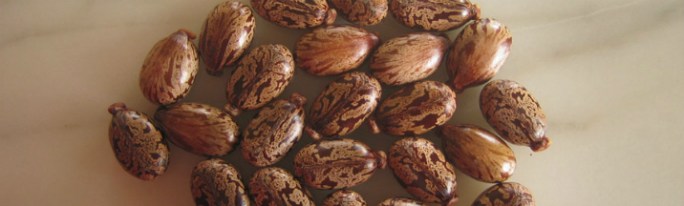
Ricin, as all of you by now probably know, is derived from the castor bean (pictured at left), and indeed is a natural waste-product in castor oil production. When weaponized, just 1.7 mg of the substance can kill an adult male. Ricin is a tempting, if often inefficient, bioterror agent – castor beans can be purchased online, as can relatively simple production instructions. However, the toxicity of this cruder form of ricin is often much lower than weapons-grade ricin.  The FBI has yet to release information regarding the toxicity of the ricin included in last week’s attack.

Is it Terrorism?

Tentatively, yes. Let’s look at how the FBI defines domestic terrorism:

“Domestic terrorism is the unlawful use, or threatened use, of force or violence by a group or individual based and operating entirely within the United States or Puerto Rico without foreign direction committed against persons or property to intimidate or coerce a government, the civilian population, or any segment thereof in furtherance of political or social objectives” (source here)

While this definition is not complete or final (we could spend this entire post debating the meaning of terrorism), it hits the main points.  The letters meet all of the above criteria. Use of the letters falls under domestic terrorism because Curtis is believed to have acted alone, independently of any foreign group. Mailing letters containing ricin, a deadly toxin, is an unlawful attempt to cause morbidity (illness) or mortality. The political nature of the ricin letters is illustrated both by the targets – the President, a Senator – and the reason behind the attacks – Curtis’ desire to draw attention to a believed conspiracy involving the illicit sale of harvested organs. As things stand now, it looks like terrorism.

What now?

Now, we wait as more evidence is collected. Unsatisfying, we know. While we wait, let’s all take a minute to be grateful that no one was hurt,  to appreciate the sensitivity of the mail sensors at the two sorting facilities, and to hope this is the last time Mason Biodefense has to blog about ricin for a good, long, time.

Breaking News: Ricin in envelope to Senator Roger Wicker

According to CNN, “an envelope that tested positive for the deadly poison ricin was intercepted Tuesday afternoon at the U.S. Capitol’s off-site mail facility in Washington, congressional and law enforcement sources tell CNN”.

Politico has reported through anonymous sources that the letter was addressed to the office of Senator Roger Wicker, R-Miss. More news to come.