
Welcome to this week’s Pandora Report! This issue highlights key takeaways from the 4th Global Health Security Conference 2026 in Kuala Lumpur, alongside outbreak updates on Australia’s first detections of H5N1 avian influenza and rising New World screwworm cases in Texas. It also features new research on scientific advocacy and dissent in China and Russia, as well as upcoming biosecurity, AI-enabled biology, and dual-use research training and policy events.
Highlights from the 4th Global Health Security Conference 2026
By Dara Russell, MPH, Biodefense Ph.D. Student
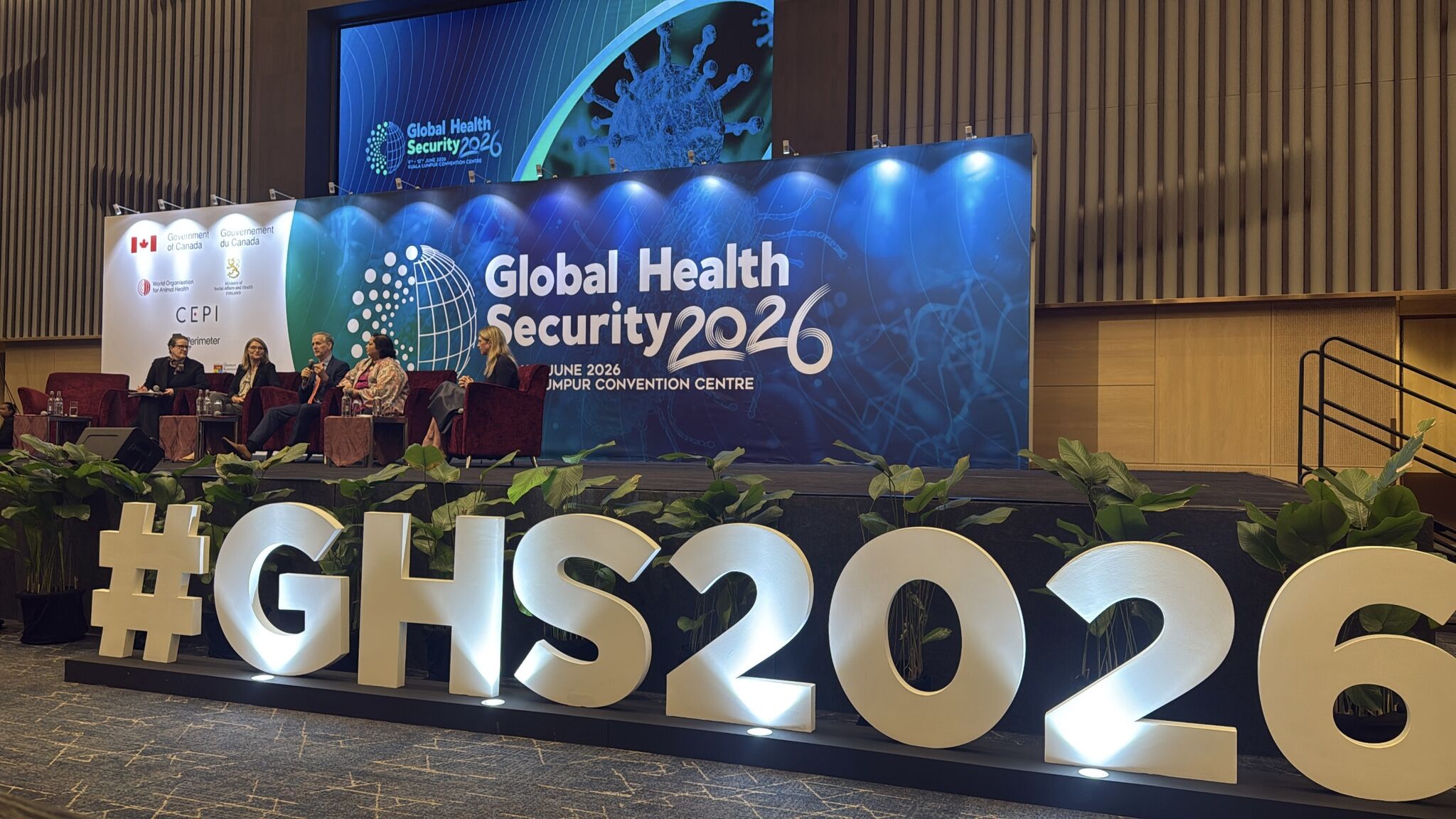
This year, I had the privilege of attending the 4th Global Health Security Conference from 9-12 June 2026 in Kuala Lumpur, Malaysia. Hosted by the Global Health Security Network (GHSN), the conference brought together approximately 1,300 global leaders, researchers, practitioners, and policymakers from 88 countries to exchange knowledge and ideas, strengthen global partnerships, and shape the future of health security.
Opening the conference, Dr. Saskia Popescu, CEO of GHSN and a GMU Biodefense Ph.D. ’19 alumna emphasized that the current Ebola outbreak is a reminder that global health security is being tested like never before. Infectious diseases do not respect national borders, she noted, but instead act as bridges in an increasingly interconnected world, making health security a shared global responsibility and underscoring the need to move beyond discussion to collective action in building a stronger global architecture for health security that unites partners across regions, disciplines, and pathogen domains.
Among dozens of sessions, three stood out as particularly insightful.
Countering Deliberate Biothreats
This plenary session examined how governance systems can keep pace with an increasingly complex and evolving biological threat landscape. Panelists discussed that the absence of detected biological attacks does not necessarily mean they have not occurred, but rather that an attack has not been detected, particularly when considering novel outbreaks of unknown origin.
Speakers emphasized that a biological event that goes undetected for weeks or months can result in high morbidity and mortality, citing lessons learned from the Ebola outbreak and the consequences of delayed detection. As technology continues to evolve and lower barriers to designing pathogens, participants stressed the need to get ahead of emerging risks rather than continually reacting to them. A consistent theme throughout the discussion was that investments in detection today will directly impact future biodeterrence and the wider biodefense threat landscape. Panelists stressed the importance of keeping pace with the growing number of high-risk research projects and the increasing number of high-containment laboratories, with one panelist urging the integration of biosecurity into the grant, not just as a side component. Specifically, recommending that biosafety and biosecurity be built into technology development and highlighting efforts such as CEPI’s integrated biosecurity oversight as a model for responsible vaccine research. Additional recommendations included strengthening biosafety programs in low-income countries, creating opportunities for rising biosecurity leaders, and increasing biosecurity investments between the health, defense, and agriculture sectors.
Bluetooth-Powered Tabletop Exercise with Operation Outbreak
In lieu of a traditional panel session, the team at Operation Outbreak conducted an interactive, Bluetooth-enabled tabletop exercise simulating the spread of a fictional pathogen across participating phones. The exercise allowed users to simulate a high-risk infectious disease outbreak in a cohesive, hands-on learning environment, allowing users to engage in critical thinking and preparedness strategies to detect, mitigate, and respond during a simulated disease outbreak. The tabletop exercise was facilitated by the group’s CEO, Kian Sani, COO, Curtis Hoffmann, and the group’s Biosecurity Education Lead, Dr. Susan Cropp. During the exercise, participants used simulated data generated by the app to evaluate ongoing disease dynamics, simulating how individuals, including those focused on the technical aspect, would coordinate with policymakers during a developing biosecurity incident with an unknown pathogen. Groups had to work together to decide what resources to invest in, including diagnostics, medical countermeasures, and personal protective equipment (PPE) such as vaccines, tests, and masks, as well as when, how, and to whom to distribute them to as the outbreak progressed. The exercise challenged decision-making under conditions in which case rates were increasing, but disease information was limited and continually evolving.
Mirror Life: A One Health Imperative for Global Health Security
Of all the sessions throughout the 4-day conference, this one was a completely new topic I was not yet aware of, and I found it to be one of the most interesting sessions. Dr. Tom Inglesby began with a high-level overview of mirror life and a clear explanation of chirality, outlining how biological molecules in our world naturally spin in one direction, and how mirror versions of these molecules are now being explored through synthetic biology. Noting that mirror bacteria pose a unique biosecurity challenge because the human immune system may fail to recognize mirror proteins, as they do not interact with antibodies and immune cells in the same way. Additionally, pathogen diagnostics may fail to detect mirror organisms, while some antibiotics may be ineffective because their mechanisms of action target biological structures based on chirality. Panelists noted that mirror molecules can exist without mirror organisms, and that while no one is actively working to create mirror life organisms, researchers are actively working on functional components such as mirror ribosomes and other components. Panelists then discussed the importance of anticipatory governance, arguing that policy discussions should occur before capabilities mature rather than rely solely on surveillance and response measures. Given the uncertainty surrounding future advances in synthetic biology, speakers stressed the need for anticipatory governance and international norms to guide future research and prevent scientific advances from outpacing policy development.
Attending the 4th Global Health Security Conference in Kuala Lumpur, Malaysia, not only served as an incredible learning opportunity but also provided invaluable cultural and networking opportunities with key leaders in the global health security and biosecurity. This conference continues to serve as the gold standard for advancing health security through exchange on emerging infectious disease threats, strengthening surveillance and early warning capabilities, and deepening international collaboration across research, policy, and operational communities.
While the Global Health Security Network has not yet announced the location of the 5th conference, the next biannual meeting is expected to convene in 2028. I strongly encourage anyone working or studying in global health and biosecurity to plan to attend!
Australia Confirms First Cases of Bird Flu
By Margeaux Malone, Pandora Report Associate Editor
Australia, long the only continent without a confirmed mainland case of the H5N1 strain of avian influenza that has plagued wild bird and mammal populations since 2021, has confirmed its first case of bird flu. Last week, authorities confirmed that a brown skua tested positive in Western Australia’s Cape Le Grand National Park. Within days a second case was reported, followed closely by detection in a migratory bird in a second state, South Australia. Western Australia said it expects to confirm a third case of the virus after additional samples were sent for testing following dozens of reports of sick or dead birds.
The virulent H5 strain has spread through global wild bird and mammal populations since 2021, killing millions of animals and infecting poultry farms, dairy operations, and some farmworkers. In response to the recent confirmed cases, authorities have ramped up ground surveillance and drone surveys at sea lion breeding sites, augmenting previous preparation which included tightened farm biosecurity, shore bird testing, vaccination of vulnerable species, and response simulations. The confirmed cases briefly prompted Papua New Guinea, Australia’s largest poultry export market, to suspend imports, though restrictions were later lifted with some caveats. Wildlife experts warn the virus could devastate native species, including endangered shorebirds, coastal raptors, and the precarious Australian sea lion population.
Screwworm Cases Climb in Texas
Meanwhile, the United States has confirmed four new cases of New World screwworm in Texas (a lamb, two calves, and a goat), bringing the total to 16. The USDA’s primary weapon is the release of millions of sterile male flies, which curb reproduction since female screwworms mate only once. However, North America has just one production facility operating at maximum capacity, falling far short of the roughly 500 million flies weekly that experts say eradication requires. The incursion has triggered partisan finger-pointing over staffing cuts and border policy, as well as disagreement over whether to pair sterilization with other tools like genetically engineered flies or insecticide baits. The US government currently produces about 100 million sterile flies per week from the active facility in Panama. A second facility in Metapa, Mexico, is expected to come online at the end of the week and will eventually add 100 million more, though building to that capacity will take time. USDA officials testified they expect to produce only about 9 million flies per week there by the end of July. A domestic facility at Moore Air Base in Edinburg, projected to open in late 2027, should contribute another 100 million when it launches, with an eventual capacity of 300 million sterile flies per week. Even with additional flies to slow the spread, there likely still won’t be enough to eradicate the parasitic fly from the US.
Further Reading:
- “Tasmanian devils, swift parrots, black swans: the animals at risk if bird flu takes off in Australia,” Graham Readfearn and Lisa Cox, The Guardian
- “The New World screwworm has returned to the U.S. Now what?” Fechi Inyama, ScienceNews
- “Screwworm could be the first species targeted by an ‘extinction drive’,” Michael Le Page, New Scientist
GMU Biodefense Professor Coauthors Paper on Scientific Advocacy and Dissent in China and Russia
Dr. Sonia Ben Ouagrham-Gormley, an Associate Professor in the Schar School of Policy and Government at George Mason University, coauthored a new paper in Health Security that discusses the different ways scientific communities in China and Russia express dissent and advocate for the responsible conduct of research. By analyzing local scientific communities’ responses to controversial human germline genome editing experiments conducted by He Jiankiu in China and proposed by Dennis Rebrikov in Russia, the article shows how local scientific communities have engaged with the public and government authorities to shape public discourse in debates and deliberations around controversies involving science and technology, and what they can achieve, even in the confined space permitted by authoritarian regimes.

BioSafe Advocacy Network High-Level Virtual Workshop 2026: Dual-Use Research of Concern (DURC) and the Responsible Use of Life Sciences
From the BioSafe Advocacy Network: “Looking to strengthen your understanding of the responsible use of life sciences? Join us for an engaging workshop featuring practical case studies, interactive sessions, and expert-led discussions on responsible conduct in the life sciences.
Participants will gain valuable insights into:
• Responsible research and innovation practices
• Risk-informed approaches to biosafety and biosecurity
• Real-world case studies and scenario-based learning
• Frameworks aligned with World Health Organization (WHO) guidance.
As a mandatory prerequisite, all applicants must complete the WHO Academy course, “Dual-Use Research and the Responsible Use of the Life Sciences.”
This virtual workshop will take place from July 22-23, 2026. The application deadline is June 30. Learn more and apply here.
Preparing for a Future of AI-Enabled Biology
From the National Academy of Medicine (NAM): “Artificial intelligence (AI) is transforming the life sciences, including how researchers study biology, develop vaccines and treatments, and detect disease outbreaks. While these advances could improve public health and preparedness, they also raise important questions about safety, security, and the possibility of misuse.
To better understand these issues, the National Academy of Medicine, in collaboration with the National Academies of Sciences, Engineering, and Medicine and with support from the Coalition for Epidemic Preparedness Innovations (CEPI), will convene a two-day workshop on preparing for the future of AI-enabled biology.
The workshop will bring together experts from public health, medicine, biotechnology, artificial intelligence, biosecurity, government, and industry to explore how AI-enabled biological risks may evolve over the next decade.”
This hybrid event will take place on August 11-12, 2026. Learn more and register here.
Ninth Session of the Working Group on the Strengthening of the Biological Weapons Convention
From the United Nations Office for Disarmament Affairs (UNODA): “We will convene the Ninth Session of the Working Group on the Strengthening of the Biological Weapons Convention (BWC). Chaired by Ambassador Frederico S. Duque Estrada Meyer of Brazil, the meeting will bring together State Parties, international organizations, academic institutions, and civil society representatives to continue discussions on strengthening the Convention and advancing efforts to address biological threats. Public sessions will be webcast through UN Web TV, and side events are expected throughout the week.
This event will take place from August 17-21 at the Palais des Nations in Geneva, Switzerland. Learn more and register by July 31 here.
Biosecurity Simulation Exercise (BSX 2026): Laboratory Incidents & Deliberate Biothreats
From the Asia Centre for Health Security: “This table-top simulation exercise aims to enhance inter-sectoral and inter-disciplinary preparedness for laboratory biosafety and biosecurity (LBB) and deliberate biothreat events (DBE). Through lectures, discussions, and structured, scenario-driven exercises, participants will explore decision-making to detect, risk-assess, and manage high-consequence biological incidents under conditions of incomplete information and unfolding events. Participants will collaborate in teams, building on expert perspectives to address issues in surveillance, diagnostics, public health response, security assessment, and risk communication.”
This in-person event will be held from August 27-28. Learn more and register here.
Training Course on ‘Biotechnology Innovation and Biosecurity’
From the International Centre for Genetic Engineering and Biotechnology (ICGEB) and the Biological Weapons Convention Implementation Support Unit: “This training focuses on strengthening capacities in biosecurity, biosafety, and biological risk management in the context of rapid advances in biotechnology with an integrated, interdisciplinary approach to manage biothreats at the intersection of humans, animals, plants and the environment. It addresses the governance, technical, and operational dimensions of preventing, detecting, and responding to biological threats, while promoting responsible and peaceful scientific research and innovation in accordance with article X of the Biological Weapons Convention (BWC).”
This in-person event will be held from October 12 – 16 in New Delhi, India. Learn more and apply here.

