Week in DC: Events

April 6, 2015

The Fate of South Africa’s Nuclear Material
Date: April 6, 9:00am
Location: Carnegie Endowment for International Peace, 1779 Massachusetts Ave NW, Washington DC

South Africa, the only nation ever to build a nuclear arsenal and voluntarily dismantle it, proudly regards itself as a champion of disarmament and nonproliferation. But for almost two decades, the United States and South Africa have struggled over the handling of highly enriched uranium (HEU) stockpiles that have remained after the closure of its bomb program. What is the dispute over South Africa’s stocks of HEU, and how is it playing out? What are its roots? And what are the consequences for global security?

The Center for Public Integrity’s Douglas Birch and R. Jeffrey Smith will explain how the two countries have interacted under presidents Obama and Zuma. Harvard University’s Matthew Bunn will discuss South Africa’s HEU in the context of efforts to improve nuclear security around the globe. Former ambassador Thomas Wheeler of South Africa will join by video from Johannesburg to offer his views on the subject. Carnegie’s Togzhan Kassenova will moderate.

Outpost: Life on the Frontlines of American Diplomacy: A Memoir with Author Amb. Christopher R. Hill
Date: April 6, 12:00pm
Location: Johns Hopkins School of Advanced International Studies, 1740 Massachusetts Ave NW, Washington DC

From Peace Corps volunteer in Cameroon to U.S. Ambassador in Iraq, Christopher R. Hill has worked in some of the most dangerous hotspots of the past few decades. In his new book Outpost: Life on the Frontlines of American Diplomacy: A Memoir, published by Simon & Schuster, he brings readers inside the rooms where modern history has been made. Hill’s story is a vivid, insightful account of 33 years with the Foreign Service, and a witty, often wry take on life in the Foreign Service – from his childhood in Belgrade and Haiti, where his father was a diplomat, to the Peace Corps, working with credit unions in Cambodia, and after that, to his life in the State Department. Hill’s perspective is crisp and no-nonsense, pulling no punches but not out to settle scores. Instead, it’s a tour of the people, places and events that have been so crucial to world events in recent history. Throughout the book, readers get a sense of what it was like to be in some of the world’s most dangerous areas, attempting to negotiate under the highest pressure.

RSVP here.

U.S. – Russia Relations: What Went Wrong and is There a Way Out of the Current Crisis?
Date: April 6, 6:00pm
Location: Elliott School of International Relations, Lindner Commons 601, 1957 E Street NW, Washington DC

The current crisis in Ukraine, which many see as a geopolitical confrontation between Russia and the United States, underscores the urgent need for developing a new foreign policy agenda that will benefit both American and Russian long-term strategic interests. As the deterioration of conditions in Ukraine continues, the world may face not only the return of the Cold War, but also even more dangerous scenarios. However, the United States and Russia have fundamentally compatible interests on issues such as terrorism, the proliferation of weapons of mass destruction, piracy, illegal cyber activity, drug trafficking, and climate change. It may be worth recalling that even in the most dangerous periods of the Cold War the risks of military confrontation were defused by the administrations of Eisenhower, Kennedy and Reagan.

RSVP here.

April 7, 2015

Tracking Arms In Conflict—Lessons from Syria and Iraq
Date: April 7, 11:00am
Location: The Stimson Center, 1211 Connecticut Ave NW, 8th Floor, Washington DC

For countries in conflict, the unfettered transfer of weapons can pose a significant risk to armed forces and civilian populations, as well as to long-term security and stability. Better understanding of the complex global arms trade can help curb these risks and has the benefit of providing insight on the inner-workings of illicit networks around the world. Identifying and tracking weapons being used in armed conflicts is, therefore, a vital and often dangerous task. At times this is done by investigators on the ground, but often relies on footage and other evidence viewed from afar.

Join us April 7, when Jonah Leff, Director of Operations, Conflict Armament Research, will report on findings of field investigations and the new iTrace system of nearly 40,000 weapons and rounds of ammunition discovered in the Middle East. Leff will discuss the prevalence of U.S. weapons found among Islamic State fighters; findings of newly manufactured Russian, Iranian, and Sudanese ammunition; evidence of supply to Syrian rebels from Saudi Arabia; and large scale industrial production and use of improvised explosive devices (IEDs) in Syria and Iraq. Matt Schroeder, Senior Researcher, Small Arms Survey, will share examples using YouTube and other footage to track the proliferation of increasingly sophisticated shoulder-fired missiles (MANPADS) by fighters in the Middle East.

This event is co-hosted by the Forum on the Arms Trade and the Stimson Center and is the third in a Stimson series on missing and illicit weapons. Previous events were held on missing weapons in Libya and the risk of unauthorized retransfers.

RSVP here.

Next Steps in Missile Defense
Date: April 7, 1:00pm
Location: Center for Strategic and International Studies, 1616 Rhode Island Ave NW, 2nd Floor Conference Room, Washington DC

The Center for Strategic and International Studies welcomes experts to discuss both policy and programmatic aspects of the next steps in missile defense.

Register here.

Ambassador Lukman Faily on the Future of Iraq
Date: April 7, 3:00pm
Location: Johns Hopkins School of Advanced International Studies, 1619 Massachusetts Ave NW, Room 806, Washington DC

As Iraq tries to re-take territory from ISIS, what are the challenges it faces? How are efforts to re-integrate Sunni fighting forces proceeding, and what steps have been taken toward a more inclusive government? Baghdad’s relations with Iraqi Kurdistan are still fraught. Oil prices are dramatically lower than once expected. The country’s most important friends – the United States and Iran – are trying to reach a nuclear deal even as they support opposing forces in Syria and Yemen. How will lraq manage in this turbulent and challenging environment?

The Middle East Institute (MEI) and the Conflict Management Program at Johns Hopkins School of Advanced International Studies (SAIS) are pleased to host the Ambassador of Iraq, His Excellency Lukman Faily, and Abbas Kadhim (SAIS) in a discussion about Iraq and its future.

Register here.

Islam and the Dynamics of Ethno-Confessional Regimes in Russia, 1990-2012
Date: April 7, 4:00pm
Location: Elliott School of International Affairs, Voesar Conference Room, 1957 E Street NW, Suite 412, Washington DC

Why would a secular state change its policies toward religion? Research on secularism and state policies toward religion suggests several models of interaction. However, these models are often better at describing static relationships than they are at explaining change. This study advances a framework for the conditions that presage the transformation of state-religion relations by examining significant differences between Russian state attitudes toward Islam in the early 1990s and the 2000s. In particular, it focuses on notable changes in the licensing of Imams, the building permissions granted for mosques, and registration requirements for religious organizations. The study largely explains the dynamics of Russian state attitudes toward the largest minority religion in the country during the first two decades after the collapse of the Soviet state and offers predictive insights on the dynamic nature of state-Islam relations in other secular states with considerable Muslim populations.

Bulat Akhmetkarimov is a Ph.D. candidate at the Johns Hopkins School of Advanced International Studies (SAIS). His publications appeared in Religion, State & Society, SAISPHERE, Rivista, and Alternatives: Turkish Journal of International Relations. His research interests include ethnic conflict, federalism, and secularism in Russia.

RSVP here.

WIIS-GWU Mentoring Roundtable featuring Tara Sonenshine
Date: April 7, 7:00pm
Location: Elliott School of International Affairs, 805 21st Street NW, MPA 411, Washington DC

Tara D. Sonenshine is a former Shapiro Fellow and Distinguished Fellow at George Washington University’s School of Media and Public Affairs. She is the former Under Secretary for Public Diplomacy and Public Affairs for the Department of State and previously served as the Executive Vice President of the United States Institute of Peace (USIP).  Prior to joining USIP, she was a strategic communications adviser to many international organizations including USIP, the International Crisis Group, Internews, CARE, The American Academy of Diplomacy, and the International Women’s Media Foundation. Ms. Sonenshine served in various capacities at the White House during the Clinton Administration, including Transition Director, Director of Foreign Policy Planning for the National Security Council, and Special Assistant to the President and Deputy Director of Communications.   Prior to serving in the Clinton Administration, Ms. Sonenshine was an Editorial Producer of ABC News’ Nightline, where she worked for more than a decade.  She was also an off-air reporter at the Pentagon for ABC’s World News Tonight and is the recipient of 10 News Emmy Awards for coverage of international affairs.  She holds a B.A. in Political Science from Tufts University.

RSVP here.

April 8, 2015

Morocco’s Contribution to Countering Violent Extremism in Africa and the Middle East
Date: April 8, 10:00am
Location: Atlantic Council, 1030 15th Street NW, 12th Floor, West Tower, Washington DC

The recent terrorist attack on the Bardo National Museum in Tunis underscores the growing danger extremist ideologies and violence pose to the North African region and beyond. Countries still unsettled by the tumult of the Arab Spring are now confronting the radicalizing influence of ISIS and other extremist organizations as thousands of North Africans flock to join the militants.

The Kingdom of Morocco has not been spared the challenge of radicalization as more than one thousand of its citizens have joined terrorist organizations in Iraq and Syria in recent years. However, Morocco’s innovative counter-radicalization program, launched after terrorist attacks in the early 2000s, continues to expand and offers hope to the entire region. Its comprehensive approach provides social services and economic opportunities specifically targeted at young people. It also focuses on combatting radical ideologies on the religious level by training students and imams in the moderate Maliki rite of Sunni Islam and Sufi traditions for service in Morocco as well as elsewhere in Africa and even in Europe.

Register here.

U.S. Customs and Border Protection Today
Date: April 8, 10:00am
Location: Brookings Institution, Saul Room/ Zilkha Lounge, 1775 Massachusetts Ave NW, Washington DC

With more than 60,000 employees, U.S. Customs and Border Protection (CBP), one of the world’s largest law enforcement organizations, is charged with keeping terrorists and their weapons out of the United States while facilitating lawful international travel and trade. And as the world’s first full-service border entity, CBP takes a comprehensive approach to border management and control, combining customs, immigration, border security, and agricultural protection into one coordinated and supportive activity.

On April 8, the Governance Studies program at Brookings will host an event to discuss the agency’s mission, accomplishments, challenges, and future goals. CBP Commissioner R. Gil Kerlikowske will discuss insights from his first year leading the agency. Commissioner Kerlikowske will also share highlights of his vision for the future for CBP, offering new details from his “Vision and Strategy 2020.” The CBP Vision and Strategy 2020 recommits the agency to countering terrorism and transnational crime; advancing comprehensive border security and management; and enhancing U.S. economic competitiveness by enabling lawful trade and travel.

After the program, there will be audience Q&A. Register here.

The Conservative Case for Surveillance Reform (Lunch Briefing)
Date: April 8, 12:00pm
Location: Rayburn House Office Building, Room B354, Washington DC

Two years ago, major revelations about the NSA’s massive invasion into the lives of all Americans jumpstarted a heated national debate about the Fourth Amendment government intrusion into our personal lives.

With key sections of the Patriot Act set to expire on May 31st, Congress must address the constitutionality and effectiveness of the NSA’s mass surveillance programs.

Our panel will feature a dynamic discussion addressing concerns of gun owners, harm to the U.S. economy, and runaway executive power. Panelists will include: R Street’s Mike Godwin, Cato’s Patrick Eddington, Wayne Brough of FreedomWorks, Golden Frog’s Sunday Yokubaitis, and others.

RSVP here.

Cyber Risk Wednesday: The Future of Iranian Cyber Threat
Date: April 8, 4:00pm
Location: Atlantic Council, 1030 15th Street NW, 12th Floor, West Tower, Washington DC

Few other events have so far dominated 2015 as the P5+1 negotiations to limit Iranian nuclear capabilities. Against the backdrop of the negotiations, it is likely that Iran, Israel, and the United States are gathering their strength for a renewal of cyber conflict of the past several years.

The confrontations include attacks both from Iran, such as disruption of the US banking sector and against Gulf energy companies, and against Iran, such as Stuxnet and the Wiper worm.

Should the talks fail, what are the chances of an escalating cyber conflict?

The moderated panel discussion will analyze the latest developments in Iranian cyber capabilities and discuss the chances of larger cyber conflict.

Register here.

Patronal Politics: Eurasian Regime Dynamics in Comparative Perspective
Date: April 8, 4:00pm
Location: Elliott School of International Affairs, Voesar Conference Room, Suite 412, 1957 E Street NW, Washington DC

Professor Hale’s new book proposes an innovative way of understanding events throughout the world that are usually interpreted as democratization, rising authoritarianism, or revolution. Where the rule of law is weak and corruption pervasive, what may appear to be democratic or authoritarian breakthroughs are often just regular, predictable phases in longer-term cyclic dynamics – patronal politics. This is shown through in-depth narratives of the post-1991 political history of all post-Soviet polities that are not in the European Union. Professor Hale’s book also includes chapters on czarist and Soviet history and on global patterns.

Professor Timothy Colton is Morris and Anna Feldberg Professor of Government and Russian Studies and Chair of the Government Department at Harvard University. His main area of interest is Russian and post-Soviet government and politics. He is the author of Commissars, Commanders, and Civilian Authority: The Structure of Soviet Military Politics (1979), The Dilemma of Reform in the Soviet Union (1986); Moscow: Governing the Socialist Metropolis (1995), Transitional Citizens: Voters and What Influences Them in the New Russia (2000); Popular Choice and Managed Democracy: The Russian Elections of 1999 and 2000 (with Michael McFaul, 2003), and Yeltsin: A Life (Basic Books, 2008).

RSVP here.

DPE Presents: The Role of New Technologies in Disaster Resilience and Response Panel
Date: April 8, 7:00pm
Location: Elliott School of International Affairs, 1957 E Street NW, Room 213, Washington DC

Nearly half of the world’s 7 billion people are exposed to at least one natural disaster. Disasters, in the face of climate change and rapid development, continue to pose an overarching threat to societies across the globe. In today’s modern era, technology is playing a vital role in reducing risk and enhancing policy-makers abilities to manage natural and man-made disasters.

Join Delta Phi Epsilon Professional Foreign Service Sorority and experts from the World Bank, American Red Cross, USAID, and the George Washington University for a panel discussion on the salient role of new technology in building resilience, engaging local communities, and reducing risk from disasters, both natural and man-made.

Register here.

April 9, 2015

The Search for International Consensus on Syria and Beyond
Date: April 9, 10:00am
Location: Brookings Institution, Falk Auditorium, 1775 Massachusetts Ave NW, Washington DC

In 2013, the international community came together to protect the Syrian population by committing to the elimination of Syria’s declared stockpile of chemical weapons, a feat achieved the following year. Together, the United Nations and the Nobel-Prize winning Organization for the Prohibition of Chemical Weapons (OPCW) are credited with achieving one of the few breakthroughs in containing the ongoing crisis in Syria. What lessons can be learned for application in other conflict areas, especially as OPCW continues its work destroying chemical weapons facilities in Syria this year?

On April 9, the Foreign Policy program at Brookings and The Hague Institute for Global Justice will host OPCW Director General Ambassador Ahmet Üzümcü for a discussion about the process of dismantling Syria’s chemical weapons stockpile and implications for peace, security, and accountability. This event marks the second annual Justice Stephen Breyer International Law Lecture, which addresses critical issues of international law and policy. Brookings Executive Vice President Martin Indyk will introduce Ambassador Üzümcü. Deputy Mayor of The Hague Ingrid van Engelshoven will provide brief opening remarks, and Abiodun Williams, president of The Hague Institute for Global Justice, will moderate the discussion. Senior fellow at the Middle East Institute Robert S. Ford (U.S. Ambassador to Syria, 2010-2014) and Deputy Assistant Secretary of State Mallory Stewart will join the discussion with Ambassador Üzümcü, following his keynote address. After the program, the speakers will take audience questions.

Register here.

Grave New World: Global Challenges in the 21st Century
Date: April 9, 6:00pm
Location: Elliott School of International Affairs, Lindner Commons, Room 602, 1957 E Street NW, Washington DC

Join the Elliott School for it’s Leadership in International Affairs: Lessons Learned series, featuring Dean Michael Brown. This session is moderated by Diana Henriques, Contributing Writer for The New York Times.

Michael E. Brown is the Dean of the Elliott School of International Affairs and Professor of Political Science and International Affairs at the George Washington University. He has held these positions since August 2005. Before coming to GW, he held senior positions at Georgetown University’s School of Foreign Service, Harvard University’s Kennedy School of Government, and the International Institute for Strategic Studies in London. He was Co-Editor of International Security, the leading academic journal in the security studies field, for twelve years.

Dean Brown is the author of Flying Blind: The Politics of the U.S. Strategic Bomber Program, which won the Edgar Furniss National Security Book Award. He is the editor or co-editor of 22 books, including: Grave New World: Security Challenges in the 21st CenturyEthnic Conflict and International Security; and Going Nuclear: Nuclear Proliferation and International Security in the 21st Century. Dean Brown received his Ph.D. in Government from Cornell University. He has traveled to more than 70 countries.

The goal of the Leadership in International Affairs: Lessons Learned series is to draw on the insights and experiences of prominent individuals who have participated in major international developments, to learn more about key events as well as the broader leadership lessons that individuals, organizations, and countries should derive for the future.

Register here.

April 10, 2015

U.S. Cyber and Space Security—Challenges and Opportunities
Date: April 10, 9:00am
Location: TechAmerica Offices, 1525 Wilson Boulevard, 2nd Floor Conference Center, Arlington, VA

The issues surrounding both cyber and space security are becoming increasingly intertwined. As such, the U.S. national security community has been hard at work, examining the challenges and opportunities that are impacting both sectors.

The evolution and increased complexity of information technology capabilities, which are a key component of space systems architectures, have made the systems more vulnerable to cyber attacks. The growing concern over cyber threats has made us focus more intently on mission resilience.

The George C. Marshall Institute and the TechAmerica Space Enterprise Council have brought together a panel of top national security experts to discuss the latest on how industry and government are addressing emerging cyber threats that threaten information assurance and mission resilience.

Register here.

Germany in Europe: The Cautious Leader
Date: April 10, 12:00pm
Location: The Wilderness Society, 1615 M Street NW, Washington DC

Dr. Karen Donfried assumed the leadership of the German Marshall Fund as president in April 2014. Donfried most recently was the special assistant to the president and senior director for European affairs on the National Security Council at the White House. In this capacity, she was the president’s principal advisor on Europe and led the interagency process on the development and implementation of the president’s European policies.

Prior to the White House, Donfried served as the national intelligence officer (NIO) for Europe on the National Intelligence Council, the intelligence community’s center for strategic thinking. As NIO, she directed and drafted strategic analysis to advance senior policymakers’ understanding of Europe. Donfried first joined GMF in 2001 after having served for ten years as a European specialist at the Congressional Research Service. From 2003 to 2005, she was responsible for the Europe portfolio on the Department of State’s Policy Planning Staff. Her second term of service at GMF was 2005 to 2010, first as senior director of policy programs and then as executive vice president.

Donfried has written extensively on German foreign and defense policy, European integration, and transatlantic relations. She received the Cross of the Order of Merit from the German Government in 2011, became an officer of the Order of the Crown of Belgium in 2010, and received a Superior Honor Award from the Department of State in 2005 for her contribution to revitalizing the transatlantic partnership. She has a PhD and MALD from the Fletcher School at Tufts University, a Magister from the University of Munich, and a bachelor’s from Wesleyan University. Donfried is fluent in German.

Register here, $25 for members, $40 for non-members.

Israel and the EU: Perceptions in a Complex Relationship
Date: April 10, 12:00pm
Location: Middle East Institute, 1761 N Street NW, Washington DC

The Middle East Institute is pleased to host Professor Sharon Pardo for a presentation on Israel’s vital relationship with the European Union (EU). With over half a billion people in its 28 member states, the EU is Israel’s largest trade partner. EU countries and Israel enjoy rich cultural exchanges as well as close security cooperation treating the Eastern Mediterranean. At the same time, the EU is a significant donor to the Palestinian Authority, and public sentiment in Europe regarding Israel’s settlement and occupation policies is broadly negative.

Pardo and co-author Neve Gordon recently examined the complexities of the relationship in an article published by MEI in The Middle East Journal. He will discuss Israeli perceptions of the EU and paths the relationship may take in Prime Minister Netanyahu’s new term.

Register here.

Japan’s Foreign Policy Debates and China-Japan Relations
Date: April 10, 4:30pm
Location: Johns Hopkins School of Advanced International Studies, The Rome Building, Room 806, 1740 Massachusetts Ave NW, Washington DC

This lecture examines significant shift of Japanese foreign policy focusing on its China policy. It first reviews the two major previous crossroads and related decisions which Japanese foreign policy faced in recent history. In conducting a case study on Japan’s China policy, it puts the debates on Japan’s policy choices in the context of ongoing dynamic of Asia Pacific international relations, including the Tokyo-Washington-Beijing triangle. Note: This event is off the record.

RSVP here.

April 11, 2015

Rising Tides: A Simulation of Geopolitical Conflict and Competition in the South China Sea
Date: April 11, 11:00am
Location: George Washington University Crisis Simulations, Washington DC

The South China Sea has been one of the most sought after regions in the world since the turn of the 21st century. A relatively small body of water that comprises barely 1% of the world’s oceans, the South China Sea is hotly contested by several regional actors including China, Taiwan, Malaysia, the Philippines, Vietnam, and Brunei. Though the exact territorial claims vary from state to state, all of the actors have held firm in their demands, and none are eager to lose even an inch of their claim. This tension is fueled by the tremendous strategic and economic value of the waterway; the South China Sea is home to an abundance of marine life and rich fishing grounds, in addition to a number of vast oil and gas fields suspected to be hidden beneath the waves. If natural resources did not raise tensions enough, nearly half of the world’s oil tanker and merchant fleet traffic sail through the South China Sea every year, making it one of the busiest and oceanic regions in the world.

This simulation will examine the complex maze that actors must negotiate when dealing with the tense social, political, and military dilemmas currently occurring in the South China Sea. Participants will assume the roles of policymakers and must work with both state and non-state regional actors to execute comprehensive and multilateral government responses to issues ranging from great power politics, piracy, and natural resource conflicts, to state bargaining dilemmas, humanitarian assistance, and collective action problems. Participants will have the unique opportunity to grapple with serious questions of national interest through the eyes of either the government of the United States of America or the People’s Republic of China. Participants will need to develop policies in line with their team’s objectives in order to manage a variety of crises and react to actions from the opposing team.

Whether through the Politburo or the National Security Council, the Pentagon or the Central Military Commission, the Ministry of State Security or the Central Intelligence Agency, participants will be challenged to work together to develop policy solutions for the complex myriad of issues that will determine the fate of the South China Sea.

Register here.

Demystifying Syria
Date: April 11, 7:00pm
Location: Unitarian Universalist Church of Rockville, 100 Welsh Park Drive, Rockville, MD

Come learn more about the bitter and largely misunderstood situation on the ground in Iraq and Syria, including the U.S. military and political responses and alternative solutions to the crisis, as we hear from some of the most well-informed analysts in the U.S. You will have an opportunity to ask questions following their presentations and discuss options we can take to curtail the violence.

Following the speaker presentations and Q&A, refreshments will be served providing you an opportunity to talk informally with the speakers and the other members of the audience. Don’t miss this exciting forum!

Pandora Report 4.5.15

I love when the stories find me, so we’ve got some big ones this week including the nuclear deal with Iran and the arrival of multi-drug resistant Shigella in the United States. We’ve also got an Ebola update and other stories you may have missed.

Enjoy your (Easter) Sunday, have a great week and see you back here next weekend!

An Iran Nuclear Deal Built on Coffee, All-Nighters and Compromise

For months—many, many, months—there has been discussion of potential for Iranian nuclear weapons and what the U.S. planned to do about it. This week, those questions were finally answered as a nuclear agreement between American and Iranian officials was reached in Lausanne, Switzerland.

New York Times—“The agreement calls for Tehran to slash its stockpile of nuclear materials and severely limit its enrichment activities, theoretically bringing the time it would take to produce a nuclear weapon to a year — a significant rollback from the current estimate of two to three months.

Both sides made significant compromises. For the United States, that meant accepting that Iran would retain its nuclear infrastructure in some shrunken form. For Iran, it meant severe limits on its production facilities and submitting to what Mr. Obama has called the most intrusive inspections regime in history.”

Drug-Resistant Food Poisoning Lands in the U.S.

Before I travelled to China in 2012, my doctor prescribed me ciprofloxacin. It was, in his opinion, almost guaranteed I would come into contact with some sort of bacteria that would result in the dreaded “travel tummy.” Now, Cipro-resistant Shigella (a bacterial infection of the intestines) is becoming a growing problem in Asia and around the world. Over the past year, the resistant strain has shown up in 32 U.S. states and was linked with international travel to India, the Dominican Republic, and Morocco. However, in many instances, people who got sick hadn’t travelled outside the U.S. meaning the strain has already started to circulate unrelated to international travel. This could be a real problem.

NPR—“‘If rates of resistance become this high, in more places, we’ll have very few options left for treating Shigella with antibiotics by mouth,” says epidemiologist Anna Bowen, who led the study. Then doctors will have to resort to IV antibiotics.

Shigella is incredibly contagious. It spreads through contaminated food and water. “As few as 10 germs can cause an infection,” Bowen says. “That’s much less than some other diarrhea-causing germs.’”

This Week in Ebola

It’s been awhile since we’ve had an Ebola update, which should mostly be interpreted as a good sign. And there are good signs, like the two experimental trials of Ebola vaccine candidates have proven to be both safe and effective. However, during a three-day countrywide shutdown in Sierra Leone, 10 new cases of Ebola were found. The good news is that there were not hundreds of hidden cases, as some feared, and the Head of Sierra Leone’s Ebola Response has said the small figures indicate that the country is now at the “tail end” of the epidemic. If things are going relatively well in Liberia and Sierra Leone, Ebola still remains entrenched in Guinea. This week Guinea closed its border with Sierra Leone as an effort to stamp out the virus. Even those who aren’t sick, or have recovered, must still deal with the after effects of the disease. This week, the Liberian government recommended that all Ebola survivors practice “safe sex indefinitely” until more information can be collected on the length of time the virus may remain present in bodily fluids. All these stories should serve as a reminder that even though Ebola may not be as present in the news, the disease is still affecting people around the world.

Stories You May Have Missed

Image Credit: Zeynel Cebeci

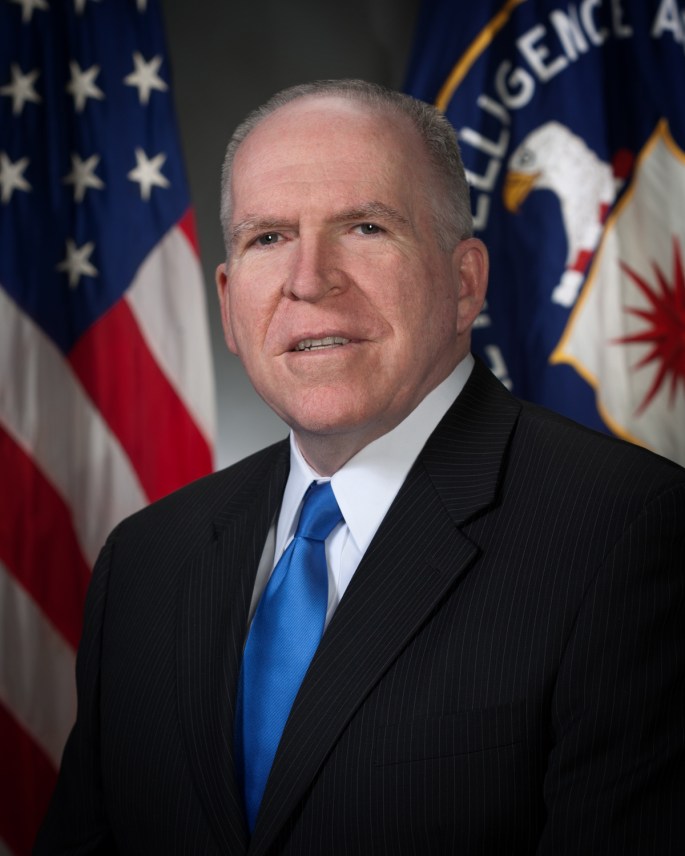
The CIA’s New Hats: Some Thoughts on John Brennan’s Reorganization Plan

By Greg Mercer

In March, CIA Director John Brennan announced his plan for restructuring the Central Intelligence Agency in his “Blueprint for the Future”—the unclassified version of which is available on the CIA’s website.  The plan, structured as a memo to CIA personnel, provides a broad overview of the coming administrative changes proposed by Brennan’s Study Group.  Brennan identifies two key areas of national security that prompted the changes: “The first,” Brennan says, “is the marked increase in the range, diversity, complexity, and immediacy of issues confronting policymakers; and the second is the unprecedented pace and impact of technological advancements.”  New issues and new technology seem like pretty common themes in Washington these days.  Let’s look at what Brennan plans to do about them.

To respond to these policy areas, the memo outlines four themes: enhancing talent and human capital, addressing the digital revolution, modernizing the business process, and integrating capabilities to address mission areas.  I’ll talk mostly about the digital and integration themes here.

Probably the most radical change is the addition of a new directorate to address the rapidly expanding need for cyber offense and defense capabilities.  This is where the new Directorate of Digital Innovation comes in.  This is the largest change to the CIA’s structure since the creation of the Office of the Director of National Intelligence by the Intelligence Reform and Terrorism Prevention Act of 2004.  Brennan doesn’t go into detail about the specific operations of the new directorate beyond “overseeing… standards of our digital tradecraft.”  “Digital tradecraft” is a vague, amorphous term that can broadly refer to any number of activities within the cyber domain, all of which would likely be highly classified.  Generally, though, “tradecraft” means “spycraft.”

U.S. Cyber Command (USCYBERCOM)—a joint military command co-located at Fort Meade, Maryland, with the National Security Agency (NSA), the primary signals intelligence agency—represents the bulk of U.S. cyber presence right now.  The CIA’s history of covert actions and the existence of a military cyber command raise concern over whether the U.S. is developing simply cyber defenses or cyberwarfare capabilities.  The best evidence for the latter is the Stuxnet computer worm, discovered in 2010, which targeted Iranian nuclear equipment and is largely attributed—at least partially—to the U.S.  The creation of a new CIA directorate devoted entirely to cyber activities is a response to the overwhelming academic and industry consensus that the cyber domain poses imminent threats to the U.S. However, the new directorate isn’t unique, given the existence of USCYBERCOM and the NSA, and might represent the condensing of existing CIA cyber activities into a single structure.  It is hard to glean any details about the CIA’s cyber intentions moving forward, but the new directorate is a major organizational change and a huge signal that the government is continuing to respond to the rise of the cyber domain.

Speaking of consolidating activities, Brennan also announced the creation of new Missions Centers and changes to existing directorates.  Citing the need to address varying threats and U.S. national security interests, Brennan explained that Mission Centers, each led by an Assistant Director, will incorporate activities from across the agency to address a specific topic.  Functionally, this seems to mean that Brennan intends to close the long-standing divide between analysis and covert action that has defined the CIA since its inception, and he has announced administrative changes to support this.  The National Clandestine Service, which runs all of the CIA’s undercover activities, will be renamed the Directorate of Operations, and the Directorate of Intelligence will become the Directorate of Analysis.  While these seem like minor name changes, they reflect the greater forces at play—Brennan intends for the directorates to train quality operatives and analysts to contribute to the Mission Centers.  The Assistant Directors will have “accountability and responsibility for the delivery of excellence in their respective occupations across all of the Centers.” This setup seems to be modeled on the National Counterterrorism Center or the Bin Laden unit, crosscutting organizations within the intelligence community that combined strengths from many disciplines.  This will, however, take a great deal of proactive administrative attention to ensure that cooperation and coordination are paramount.  Shared missions are powerful motivator, but they are often not enough to convince large organizations to coordinate successfully.  This will take time and a great deal of work at every level.

A focus on personnel runs throughout the memo.  While it might not seem this way to current graduate students and job seekers, the CIA has historically had major problems attracting qualified, competent employees, especially following the fall of the Soviet Union, when the agency found itself flooded with Soviet experts and woefully unprepared to address the host of new threats and interests around the world.  The CIA has had a long and often sordid history (I highly recommend Tim Weiner’s Legacy of Ashes for a comprehensive look), and often found itself the target of harsh criticism by Congress and the presidency, but Brennan seems to be targeting major, long-standing flaws with his reform plan.  This is a laudable, noble pursuit, and I hope it has a positive impact.  The intelligence community usually sees its soul searching come after major failures or during times of national crisis.  Coming on the tail of revelations about U.S. interrogation programs, these changes seem to aim to fix the system before disaster strikes again (though it is certainly accurate to call the decade-plus of detention and interrogation abuses a disaster).  Let’s hope Brennan’s plan is sound.

Image Credit: CIA

New from the Biodefense Faculty

Bulletin of the Atomic Scientists, in their Agree to Disagree roundtable, is hosting a Winter-Safe Deterrence Debate. The premise of the debate follows:

In a recent opinion column for the Bulletin, “Deterrence, without nuclear winter,” Seth Baum argued that the biggest danger posed by world nuclear arsenals is a nuclear winter that could be sparked by even a limited exchange of nuclear weapons. Baum’s piece went on to suggest that “the world’s biggest nuclear powers [might] meet their deterrence needs without keeping the large nuclear arsenals they maintain today. They could practice a winter-safe deterrence, which would rely on weapons that pose no significant risk of nuclear winter.”

Baum’s column and the study from which it draws, “Winter-safe Deterrence: The Risk of Nuclear Winter and Its Challenge to Deterrence,” published in the journal Contemporary Security Policy, have been vigorously disputed in social media. In this roundtable, security experts Gregory Koblentz, Martin Furmanski, Brett Edwards, Gigi Kwik Gronvall, and Sonia Ben Ouagrham-Gormley and Baum debate his column and winter-safe deterrence ideas in more depth.

GMU Biodefense Faculty members Gregory Koblentz and Sonia Ben Ouagrham-Gormley have each offered two replies in the debate which are available here and here for Koblentz and here and here for Ouagrham-Gormley.

All replies in the debate are available here.

Yemen: A Snapshot from the Global War on Terror

By Erik Goepner

The remaining cadre of American military personnel pulled out of Yemen last week following the evacuation of U.S. Embassy staff in February. Six months earlier, President Obama hailed the U.S.-Yemen partnership as a model worthy of emulation in the fight against the Islamic State. For a decade and a half, America has expended substantial effort in the war on terror, yet the results which followed were often unanticipated and problematic.

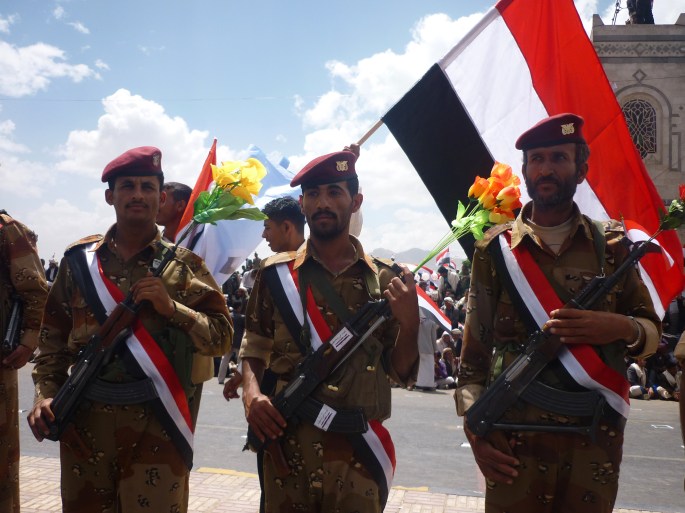
In 2013, President Obama hosted President Hadi at the White House and thanked him for Yemen’s strong cooperation in countering terror, specifically mentioning the success enjoyed in pushing al Qaeda back in the Arabian Peninsula. If the Sunni-comprised AQAP was pushed back, it now looks like that vacuum has been filled by a different terrorist organization, this one Shia dominated. These Houthi rebels, predominately from Yemen’s north, have been in conflict with the Yemeni government for the past 11 years.

Iran appears responsible for at least part of their success. Reports indicate Iran has provided some level of assistance to the Houthi rebels—possibly arms, funds, and training. A senior Houthi advisor denied any arms support, but agreed they were otherwise working with Iran as “part of a shared vision in ‘confronting the American project’” in the region.

By some analysts count, the fall of Sana’a into the hands of Houthi rebels represents yet another victory in the making for Iran. They point to Beirut, Damascus, Baghdad, and now Sana’a as the fourth Arab capital to politically ally itself with the Persian state.

No doubt there is much history yet to unfold, but to date, America’s war on terror has delivered a number of unanticipated outcomes: a five-fold increase in global terror attacks, two on-going civil wars in the nations America invaded, and an ever-increasing Iranian influence in the region.

Image Credit: Ibrahem Qasim

Week in DC: Events

March 30, 2015

Central Asia: What’s Next?
Date: March 30, 9:30am
Location: Georgetown University, Copley Formal Lounge, 3700 O Street NW, Washington DC

Hosted by the Center for Eurasian, Russian and East European Studies in Georgetown University’s Edmund A. Walsh School of Foreign Service, this one-day conference aims to discuss political, economic and security developments in Central Asia following the NATO withdrawal from Afghanistan.

Full schedule available here. Register here.

Islam in the Turkish Republic: The Discourse and Praxis of Islamic Modernism
Date: March 30, 12:15pm
Location: Georgetown University, CCAS Boardroom, ICC 241, 3700 O Street NW, Washington DC

Islam in modern Turkey is usually discussed in the context of a supposed cultural dichotomy between Islam and social progressivism (frequently glossed as a never-ending struggle between “Islamists” and “Secularists”). This presentation, however, will discuss how this dichotomous characterization of Islam in Turkey obscures the close interaction of social progressivism and Islamic thought since the beginning of the Turkish Republic. This talk will shed light on the history of Islamic Modernism in modern Turkey, an Islamic theological movement that since the late 19th century has argued for progressive social change and reform. It will discuss how some of the basic tenets of Islamic theological modernism have helped shape Islamic praxis in the Turkish Republic, and how the discursive framework of Islamic modernism has helped lay the groundwork for a wide variety of Islamic discourses since the early 1920s.

Register here.

General Wesley Clark: Exclusive Briefing from Ukraine’s Front Lines
Date: March 30, 4:30pm
Location: Atlantic Council, 1030 15th Street NW, 12th Floor, West Tower, Washington DC

Despite the Minsk II ceasefire agreement, Russia continues to supply weapons, equipment and troops to support separatists in Ukraine’s east. In February, the key city of Debaltseve fell to Russian separatists. The port city of Mariupol is the likely next target and tensions spread further to the northeastern city of Kharkiv, Ukraine’s second largest city. As Ukraine prepares for another assault from Russian-backed separatists, what steps should the United States and NATO take to help Ukraine withstand Russian aggression?

Register here to attend in person or here to watch live online.

March 31, 2015

Salafists and Sectarianism: Twitter and Communal Conflict in the Middle East
Date: March 31, 9:30am
Location: The Stimson Center, 1211 Connecticut Ave NW, 8th Floor, Washington DC

The Stimson Center invites you to join a discussion on the role of social media in spreading sectarian sentiment in the Middle East.

Social media has a powerful effect on much of what happens in the world today. From inciting people to join protests on the streets of Cairo to recruiting young girls to join ISIS, social media can be seen as both a blessing and a curse. In fact, radical groups, such as the Islamic State, have social media to thank for much of their success. While these groups dominate much of the headlines, other non-violent radicals, such as Sunni Salafists, are also using these platforms to disseminate sectarian ideologies. A close analysis of their Twitter accounts opens a window into their universe and the strategies they are using to increase animosity toward the Shi’a, who they believe are not real Muslims.

RSVP here.

To Vote or Not to Vote: Egypt’s Diverse Electorate
Date: March 31, 12:00pm
Location: Atlantic Council, 1030 15th Street NW, 12th Floor, West Tower, Washington DC

Islamic religious education in Europe and the United States has become a subject of intense debate after Muslims raised in the West carried out attacks against their fellow citizens. People worry their states are doing too little or too much to shape the spiritual beliefs of private citizens.

In her new Brookings paper, Jenny Berglund explains the differences in publicly-funded Islamic education in Europe and the United States. Her report details existing religious education programs, teacher training, and ongoing political debates, grounded in the historical and religious norms of the countries. Berglund also recommends good practices for governments to further their citizens’ knowledge about Islam and promote inclusive citizenship and respect.

On April 2, the Project on U.S. Relations with the Islamic World will host Berglund and an American expert on Islamic religious education to discuss current programs and best practices in Europe and the United States. After the discussion, the panelists will take audience questions.

Register here and join the conversation on Twitter using #IslamicEd.

Kazakhstan’s Challenging Geopolitical Environment or the Rubik’s Cube of Kazakhstan’s Geopolitics
Date: March 31, 5:00pm
Location: Johns Hopkins School of Advanced International Studies, 1619 Massachusetts Ave NW, Rome Auditorium, Washington DC

Kazakhstan, Central Asia’s largest economy, faces daunting geopolitical challenges. How will Kazakhstan address developments in Ukraine, the Eurasia Economic Union, and Afghanistan?  Three experts from Kazakhstan share their thoughts on these and related issues.

Register here.

Europe and the Iran Negotiations: EES Seminar Series with Valerie Lincy
Date: March 31, 6:00pm
Location: Johns Hopkins School of Advanced International Studies, 1619 Massachusetts Ave NW, Rome 806, Washington DC

Ms. Valerie Lincy is Executive Director of the Wisconsin Project. She oversees the Project’s two principal projects, the Risk Report database and the Iran Watch website. She provides training as head of the Risk Report team that visits foreign countries. As the editor and principal investigator for Iran Watch, she bears the main responsibility for building, populating and maintaining the site, as well as writing articles for publication, organizing and presiding at roundtables, and conducting associated research. Ms. Lincy graduated from Smith College, cum laude, and received an M.S. in foreign service from Georgetown University. Before coming to the Project, she worked as a researcher in the Paris bureau of the New York Times and as a researcher in Washington-based non-profit institutes.

Register here.

April 1, 2015

American Diplomacy at Risk
Date: April 1, 10:00am
Location: Elliott School of International Affairs, 1957 E Street NW, Washington DC

Please join us as American Academy of Diplomacy (AAD) Chairman Ambassador Thomas Pickering and Vice Chairman Ambassador Marc Grossman present an overview of the new AAD report, which aims to stimulate changes necessary to prepare American diplomacy for the challenges and opportunities of the twenty-first century.

The report looks in two directions: first, at the politicization of the State Department and the reduction of the role of the Foreign Service, which weakens the State Department and American diplomacy and must be resisted; and second, at potential reforms for both the Civil and Foreign Service to improve professional education, formation and quality.

RSVP here.

Deal of No Deal? Negotiating with Iran
Date: April 1, 10:00am
Location: Brookings Institution, 1775 Massachusetts Ave NW, Falk Auditorium, Washington DC

Talks aimed at producing a political framework to resolve the Iran nuclear issue are likely to come down to the wire before the  deadline at the end of March, but already leaders in the United States and Iran are facing an intense debate among key constituencies at home. Iranian hardliners have criticized potential regime concessions, while opponents of a deal in the U.S. Congress are advancing legislation that could undermine the Obama administration’s ability to implement an agreement.

On April 1, the Center for Middle East Policy and the Arms Control and Non-Proliferation Initiative at Brookings will host a discussion examining diplomatic progress to date, the components of a credible deal, Iran’s objectives and concerns, and the politics in the United States.  After the program, the panelists will take audience questions.

Register here.

Tomorrow’s Army: The Future of Landpower and Army Innovation
Date: April 1, 10:30am
Location: Center for Strategic and International Studies, 1616 Rhode Island Ave NW, Room 212-A, Washington DC

Please join us for a conversation with Under Secretary Carson to discuss the Army’s vision for the role of landpower in future operations. Secretary Carson will also discuss the Army’s approach to innovation, technological and otherwise.

Register here.

Making Sense of Chaos in the Middle East: Multiple Wars, Multiple Alliances
Date: April 1, 12:00pm
Location: Washington Institute for Near East Policy

Volcanic changes in the region are under way, with the outbreak of Sunni-Shiite wars in Iraq, Syria, and Yemen, unprecedented tension between Washington and Israel, and U.S.-Iranian nuclear talks that appear on the verge of breakthrough.

To discuss the urgent and longer-term implications of this unfolding chaos, The Washington Institute will host a Policy Forum with senior fellows James Jeffrey, Dennis Ross, and Robert Satloff, moderated by Michael Singh.

Watch live online here.

Information Sharing for Cybersecurity
Date: April 1, 12:30pm
Location: Center for Strategic and International Studies, 1616 Rhode Island Ave NW, Washington DC

Information sharing to improve cybersecurity has been a goal for the U.S. since the 1990s. After almost two decades of experience, some successful models have emerged, but obstacles and uncertainties continue to slow information exchanges. One major challenge is defining the role of government.

Should government participate, facilitate or control the sharing of cyber threat intelligence by and between government and commercial critical infrastructure? Is it possible for the government to take an active role in cybersecurity without creating the perception of risk to privacy and civil liberties of US persons? Are existing US privacy protections, written decades before the advent of the Internet, adaptable to the internet environment?

CSIS will assemble leading experts to discuss these challenges. The event will begin with a keynote speech on the larger issues pertaining to information sharing. Next, a panel will look through the prism of the Department of Energy’s Cybersecurity Risk Information Sharing Program (CRISP). CRISP started as a small pilot funded by the U.S. Department of Energy, but on August 14, 2014, the North American Electric Reliability Corporation (NERC) agreed to manage CRISP for the Electricity Subsector, with each new company funding its own participation. The panel will discuss how CRISP might serve as a model for future information sharing and critical infrastructure protection programs.

Register here.

Food Court: The Role of Litigation in Safeguarding Food in the U.S.
Date: April 1, 1:30pm
Location: O’Neill Institute for National and Global Health Law, 600 New Jersey Ave NW, McDonough Hall, Room 437, Washington DC

Aliza Y. Glasner, J.D., is an Associate at the O’Neill Institutefor National and Global Health Law.Her area of expertise is in food and drug law. Aliza’s research at O’Neill has focused on the role of voluntary data sharing in stimulating development and innovation of medical products, tobacco control, and preventing antimicrobial resistance. Aliza’s work also focuses on domestic healthcare law and the Affordable Care Act. Before joining Georgetown, she was the Manager of Product Development at the Food and Drug Law Institute in Washington, DC. There, she worked in collaboration with industry and government experts to develop programs and publications addressing legal, policy and regulatory issues in the food and drug sector. Aliza previously practiced law at Cadwalader, Wickersham and Taft in New York. Aliza holds a law degree from Fordham University and a B.A. in International Affairs from the George Washington University. This event is open to all students, faculty, staff, and interested members of the public.

For more information on O’Neill Institute events, please visit www.law.georgetown.edu/oneillinstitute/index.cfm

Politburo 2.0: Can Putin’s Inner Circle Survive the Crisis?
Date: April 1, 5:30pm
Location: Johns Hopkins University SAIS, 1619 Massachusetts Ave NW, Rome 806, Washington DC

Russian President Vladimir Putin’s surprising moves throughout the Ukrainian crisis have highlighted the opaque nature of the decision-making process at the highest levels of the Kremlin. Who are the individuals who most influence Putin’s decisions? What does the changing balance of power within Putin’s inner circle suggest about Russia’s future trajectory? And can Western sanctions eventually turn Putin’s ‘politburo’ against him?

Please join CGI for a discussion with Evgeny Minchenko, a leading Russian political consultant who was rated first among political analysts consulted by Russian journalists in 2013, on the findings of his breakout study, “Politburo 2.0,” that maps the changing dynamics of Putin’s inner circle.

A wine reception will follow. Space is limited: please RSVP to reserve your spot.

Restraint: A New Foundation for U.S. Grand Strategy
Date: April 1, 5:30pm
Location: Elliott School of International Affairs, 1957 E Street NW, Room 602, Washington DC

The United States, Barry R. Posen argues in Restraint, has grown incapable of moderating its ambitions in international politics. Since the collapse of Soviet power, it has pursued a grand strategy that he calls “liberal hegemony,” one that Dr. Posen sees as unnecessary, counterproductive, costly, and wasteful. Written for policymakers and observers alike, Restraint explains precisely why this grand strategy works poorly and then provides a carefully designed alternative grand strategy and an associated military strategy and force structure. In contrast to the failures and unexpected problems that have stemmed from America’s consistent overreaching, Dr. Posen makes an urgent argument for restraint in the future use of U.S. military strength.

After setting out the political implications of restraint as a guiding principle, Dr. Posen sketches the appropriate military forces and posture that would support such a strategy. He works with a deliberately constrained notion of grand strategy and, even more important, of national security (which he defines as including sovereignty, territorial integrity, power position, and safety). His alternative for military strategy, which Dr. Posen calls “command of the commons,” focuses on protecting U.S. global access through naval, air, and space power, while freeing the United States from most of the relationships that require the permanent stationing of U.S. forces overseas.

Copies of this book will be available for sale at the event.

RSVP here.

Framework to Agreement: Hope or Disappointment for Iran Nuclear Deal?
Date: April 1, 6:30pm
Location: Offices of KPMG, 1801 K Street NW, Washington DC

Secretary of State John Kerry has spent much of the last month in Lausanne, Switzerland in talks with Iran’s Foreign Minister Mohammad Javad Zarif to negotiate a conceptual framework by a March 31st deadline.   This framework would lay the foundation for a future nuclear deal with Iran. Join us as we welcome back Amb. John Limbert and Dr. Trita Parsi for an update on a process which began in October 2013 and a look ahead to the potential outcomes of the talks. What can we expect after March 31st? What impact, if any, did the open letter to Ayatollah Khomeini from 46 United States Senators have on negotiations? With Saudi Arabia calling to receive the same deal as Iran, what is at stake for the United States and the world?

Barbara Slavin will moderate the discussion.

Register here.

April 2, 2015

Iraq: Now and After ISIS
Date: April 2, 12:00pm
Location: Woodrow Wilson International Center for Scholars, 1300 Pennsylvania Ave NW, 5th Floor, Washington DC

The Middle East Program at the Woodrow Wilson Center hosts a conversation with Samir Sumaida’ie, Diplomat in Residence at the Woodrow Wilson Center and former Iraqi Ambassador to the United States.

Ambassador Sumaida’ie, who recently returned from Iraq, will discuss the evolution of the struggle in Iraq is both complex and consequential. The outcome is going to be a major factor in determining the future shape of the region, and will have a significant impact on global geopolitics. The United States as well as other players should have a clear eyed assessment of where things are heading, and what needs to be done if the direction of events is not palatable.

RSVP here.

America’s Future Role in Afghanistan
Date: April 2, 12:30pm
Location: SEIU Conference Center, 1800 Massachusetts Ave NW, Washington DC

The Middle East Institute is pleased to host former American Ambassadors to Afghanistan Zalmay Khalilzad (service in Kabul 2003-2005), Ronald Neumann (2005-2007), and Ryan Crocker (2011-2012) for a panel discussion about the ongoing U.S. role in Afghanistan. President Ashraf Ghani has promised a decade of transformation, but to succeed he must face down growing security concerns and political and economic uncertainty. The panelists will examine the current situation in the country and the future of the U.S. role there in light of resurgent threats from al-Qa’ida and the Taliban.  Marvin Weinbaum, director of the Center for Pakistan Studies at The Middle East Institute, will moderate.

Register here.

ISIS and al-Qaeda: Assessing Terrorist Threats to the Homeland and Beyond
Date: April 2, 12:30pm
Location: Atlantic Council, 1030 15th Street NW, 12th Floor, West Tower, Washington DC

The rise of the Islamic State of Iraq and al-Sham (also known as ISIS) as a violent extremist group with global aspirations has raised concerns over a potential terrorist attack on US soil. As ISIS pursues its objective of establishing a state in various parts of the Middle East, it continues to recruit foreign fighters from North Africa and Europe in order to plan for attacks against the West. Recently, Belgian and Australian authorities uncovered ISIS-inspired cells on their territories and succeeded in foiling terrorist plots. So could the US homeland be an ISIS target?

Meanwhile, al-Qaeda – the terrorist organization that actually attacked the United States on September 11, 2001 – is still alive and operational in Yemen and other poorly governed spaces in the region, and continues to pose a threat to the US homeland and regional interests. How should we assess the global terrorist threats posed by ISIS and al-Qaeda? Should al-Qaeda continue to be a counterterrorism priority for the United States? Are al-Qaeda and ISIS equally dangerous, but in different ways?

Please join the Atlantic Council on Thursday, April 2, from 12:30 p.m. to 2:00 p.m. for a discussion of the potential differences between ISIS and al-Qaeda and how the US government should be analyzing and countering both groups simultaneously.

Register here.

Islamic Religious Education in Europe and the United States
Date: April 2, 2:00pm
Location: Brookings Institution, 1775 Massachusetts Ave NW, Saul/Zilkha Rooms, Washington DC

Islamic religious education in Europe and the United States has become a subject of intense debate after Muslims raised in the West carried out attacks against their fellow citizens. People worry their states are doing too little or too much to shape the spiritual beliefs of private citizens.

In her upcoming Brookings paper, Jenny Berglund explains the differences in publicly-funded Islamic education in Europe and the United States. Her report details existing religious education programs, teacher training, and ongoing political debates, grounded in the historical and religious norms of the countries. Berglund also recommends good practices for governments to further their citizens’ knowledge about Islam and promote inclusive citizenship and respect.

On April 2, the Project on U.S. Relations with the Islamic World will host Berglund and an American expert on Islamic religious education to discuss current programs and best practices in Europe and the United States. After the discussion, the panelists will take audience questions.

Register here to attend.

Stopfake.org: Combatting Kremlin Disinformation about Ukraine
Date: April 2, 4:00pm
Location: Elliott School of International Affairs, 1957 E Street NW, Suite 412, Voesar Conference Room, Washington DC

The Stopfake project, an independent Ukrainian website launched by young journalists on March 2, 2014, counters false information about Ukraine, especially in pro-Kremlin media. The website publishes articles, video newscasts, and informational material to educate readers about propaganda and ways in which the news is distorted. The Stopfake team has already verified tens of thousands of articles, photos, and videos and has revealed nearly 400 instances of false reporting.

RSVP here.

April 3, 2015

Russia Today: Evaluating the Media Environment in 2015
Date: April 3, 10:30am
Location: Human Rights Campaign, Equality Forum, 1640 Rhode Island Ave NW, Washington DC

Since the start of the Ukrainian crisis, the Russian government has increased its editorial and regulatory control over the media. At the same time, the dominant narrative has turned more nationalistic and anti-Western. Recent public opinion polls suggest that a vast majority of the Russian population strongly supports these official positions and the regime. How has the Kremlin achieved this level of domestic cohesion, and what factors of Russia’s media landscape have enabled this trend? What are the long-term consequences of today’s hostile environment, and can independent media still find a voice? How have conditions changed for Western journalists working in Russia?

The Center on Global Interests is pleased to invite you to a conversation with David Satter and Jill Dougherty on evaluating Russia’s current media environment and political culture.

Light refreshments will be served. Space is limited: please RSVP to reserve your spot.

Pandora Report 3.28.15

This week we’re covering a new treatment for inhalation anthrax, Russian nuclear threats, chlorine accelerating antibiotic resistance and other stories you may have missed.

Have a great week and see you back here next weekend!

FDA Approves Emergent BioSolutions’ Inhaled Anthrax Treatment

Considered one of the most likely agents to be used in biological warfare, Anthrax now has a new enemy—Anthrasil. This treatment, developed by Emergent BioSolutions Inc., neutralizes toxins of Bacillus anthracis and requires only two doses to confer immunity, versus the three of BioThrax (the current treatment for inhaled anthrax).

Reuters—“The company developed the treatment, Anthrasil, as part of a $160 million contract it signed in 2005 with the Biomedical Advanced Research and Development Authority (BARDA), a part of the HHS. Anthrasil, which is approved in combination with other antibacterials, is already being stored in the U.S. Strategic National Stockpile, the company said on Wednesday. The drug is made using plasma from healthy, screened donors who have been immunized with Emergent Bio’s Anthrax vaccine, BioThrax, the only FDA-licensed vaccine for the disease. Anthrasil has an orphan drug designation and qualifies for seven years of market exclusivity.”

Russia Threatens to Aim Nuclear Missiles at Denmark Ships if it Joins NATO Shield

Denmark has said that in August it will contribute radar capacity on some of its warships to NATO’s missile defense system. Russia has now threatened to aim nuclear missiles at Danish warships if Copenhagen goes through with its actions. Moscow opposes the system arguing that it reduces the effectiveness of the Russian nuclear arsenal and could lead to a new Cold War-style arms race.

The World Post—“‘We have made clear that NATO’s ballistic missile defense is not directed at Russia or any country, but is meant to defend against missile threats. This decision was taken a long time ago, so we are surprised at the timing, tone and content of the statements made by Russia’s ambassador to Denmark,” [NATO spokeswoman Oana Lungescu] said. “Such statements do not inspire confidence or contribute to predictability, peace or stability.’”

Chlorine Treatment Can Accelerate Antibiotic Resistance, Study Says

Research presented at the American Chemical Society meeting last week shows that chlorine treatment of wastewater may actually encourage the formation of new antibiotics—rather than eliminating the drug residues. While scientists are looking for new antibiotics, this isn’t good news. ACS says that upon re-entering the environment, the new drugs—in theory—can promote the growth of antibiotic resistant bacteria. In a test, doxycycline was exposed to chlorine; the results are described below.

Gizmodo—“The study evaluated the changes in the antibacterial activity of the products that form in the reaction between doxycycline and chlorine using antibiotic resistance assays. The results showed that some of the transformation products have antibiotic properties. The products of chlorination were also examined…and several chlorinated products were detected. These transformation products may still select for antibiotic resistant micro-organisms in the environment even in the absence of the parent doxycycline molecule. This suggests that re-evaluation of wastewater disinfection practices may be needed.”

Stories You May Have Missed

Image Credit: The U.S. Food and Drug Administration

Week in DC: Events

March 23, 2015

Maidan. Ukraine. Road to Freedom.
Date: March 23, 4:00pm
Location: Elliott School of International Affairs, Art Gallery, Second Floor, 805 21st Street NW, Washington DC

What began as a peaceful protest on November 21, 2013 in Kyiv’s Independence Square ultimately turned into a national socio-political revolution against corruption, authoritarianism, and opaque governance. Instead of heeding protestors’ call for change, the government opened fire on its own citizens, thereby galvanizing protests across the country and catalyzing an entire chain of events known as “EuroMaidan,” the repercussions of which are still palpable today. What may perhaps escape the attention of the average person is artists’ critical role in this movement. This exhibition brings together photographs, paintings, and music from activist-artists, as well as original artifacts from the Kyiv uprisings. The curator, Serhiy Fomenko, is a cultural and social activist and founder of the popular band Mandry.

Register here to attend.

New Trends and Dilemmas in Military Ethics
Date: March 23, 5:15pm
Location: Berkley Center for Religion, Peace, & World Affairs, 3307 M Street NW #200, Washington DC

From violent non-state actors to failed states, the contemporary security environment challenges the norms associated with the law of armed conflict.  How should governments respond ethically to these challenges? The Ashgate Companion on Military Ethics brings together over two dozen experts from around the world to consider the depth of these challenges.

Four contributors to the book will discuss the frontiers of military ethics in the twenty-first century: just war historian James Turner Johnson (Rutgers University); Eric Patterson (Berkley Center) on the ethics of post-conflict; Mary Manjikian (Regent University) on preemption; and intelligence and counter-terrorism expert Keith Pavlischek (USMC, ret.) on asymmetric warfare.

RSVP here.

March 24, 2015

China’s Foreign Policy in a New Era of Sino-Latin American Relations
Date: March 24, 9:00am
Location: Woodrow Wilson International Center for Scholars, 1300 Pennsylvania Ave NW, 6th Floor Flom Auditorium, Washington DC

China has become a major economic and political force in Latin America. Chinese leader Xi Jinping has made two trips to the region in 13 months. At a Beijing meeting of the Community of Latin American and Caribbean States this past January, he pledged $250 billion in investment to Latin America over the next ten years. A Chinese company is planning to build a canal in Nicaragua and the government has announced plans for a space satellite base in Argentina. China is the primary market for Latin American natural resources and a driver of regional infrastructure projects.

The Wilson Center’s Latin American Program, Kissinger Institute on China and the United States, and China Environment Forum, in collaboration with the Institute of the Americas, are pleased to invite you to a seminar exploring China’s evolving political engagement with Latin America. We hope you will join noted Chinese and international experts to examine the latest developments in China-Latin American relations, their place in China’s foreign policy, and the political and economic logic that drive Chinese engagement in the region.

RSVP here.

Subcommittee Hearing: Oversight of the State Department and Agency for International Development Funding Priorities for the Western Hemisphere
Date: March 24, 11:00am
Location: U.S. House Committee on Foreign Affairs, 2255 Rayburn House Office Building, Washington DC

Chairman Duncan on the hearing: “This hearing will examine the Administration’s FY2016 budget request, which gives nearly $2 billion for countries in Latin America and the Caribbean and represents a whopping 35% increase over the FY2014 funding level. Some of the dubious priorities the Administration has for the region include $6.6 million to implement the U.S.-Cuba policy shift by converting the U.S. Interests Section in Havana into a full U.S. Embassy, $1 billion for Central America (225% more than the FY2014 funding level), and $75.5 million for climate change programs. In contrast, total U.S. security assistance for the region would decline by about $4 million under the Administration’s request. I look forward to conducting vigorous oversight of the State Department and USAID’s funding priorities and holding these agencies accountable by eliminating any mismanagement or waste in their operations, terminating programs that aren’t working and applying those funds to the deficit, and ensuring that any U.S. foreign assistance given to countries in the region advances U.S. national security and economic interests.

Germany’s Role in World Politics
Date: March 24, 12:00pm
Location: Georgetown University, Edward B. Bunn, S.J. Intercultural Center, 701, ECR, 37th and O Street NW, Washington DC

The BMW Center invites you to another installment of the Remapping Europe, 1989-2014 event series, “Germany’s Role in World Politics” with Dr. Helga Haftendorn, Freie Universität Berlin, on Tuesday, March 24, 2015.

Dr. Haftendorn will present a short historical overview on how Germany has evolved from a country that says “no” to one that is prepared to take over greater responsibilities. The latter part of the lecture will deal with current international issues such as trying to cope with the war in the Ukraine and to solve the financial crisis in the European Union. In doing so, Dr. Haftendorn will also discuss Germany’s volatile domestic basis for this policy.

Register here.

The Vietnam Forum with Ambassador of Vietnam Pham Quang Vinh and Ambassador of the United States to Vietnam Ted Osius
Date: March 24, 12:00pm
Location: Center for Strategic and International Studies, 1616 Rhode Island Ave NW, Washington DC

The CSIS Sumitro Chair for Southeast Asia Studies is pleased to host a discussion with His Excellency Pham Quang Vinh, ambassador of Vietnam to the United States, and The Honorable Ted Osius, ambassador of the United States to Vietnam. They will discuss the twentieth anniversary of the normalization of U.S.-Vietnam diplomatic relations, and the opportunities and challenges facing the bilateral relationship in the years ahead.

Ambassador Vinh was appointed by President Truong Tan Sang as the fifth ambassador of Vietnam to the United States in July 2014. Previously, he served as deputy minister of foreign affairs, overseeing Vietnam’s relations with South Asia, Southeast Asia, and the South Pacific. Ambassador Vinh also served as Vietnam’s senior official to the ASEAN Senior Officials Meeting from 2007 to 2014. His earlier postings include New York and Thailand.

Ambassador Osius was sworn in as U.S. ambassador to Vietnam in December 2014. He served previously as associate professor at the National War College from 2013 to 2014, and as a senior State Department visiting fellow at the Center for Strategic and International Studies from 2012 to 2013. A career diplomat, Ambassador Osius served as deputy chief of mission at the U.S. Embassy in Jakarta, Indonesia, from 2009 to 2012. His earlier postings include India, the Philippines, Thailand, and Vietnam.

Click here to RSVP

ISIS and the State of Terror: The Genesis, Evolution, and Impact of the Islamic State
Date: March 24, 2:00pm
Location: Brookings Institution, 1775 Massachusetts Ave NW, Washington DC

Though insurgent groups are a fixture of contemporary politics and warfare, the Islamic State or ISIS is unprecedented in its mix of brutality, media savvy, territorial gain, and recruitment.

In ISIS: The State of Terror, two of America’s leading experts on violent extremism and terrorism explain the genesis, evolution, and impact of the Islamic State. Drawing on their unique access to intelligence and law enforcement and through their own groundbreaking research, Jessica Stern and J.M. Berger detail ISIS’s strategies and techniques – and challenge our own conceptions of terrorism in a rapidly changing jihadi landscape.

On March 24, the Project on U.S. Relations with the Islamic World will host Berger and Stern to discuss the threat posed by ISIS. The authors will outline their recommendations for government responses to the ISIS threat. After the discussion, the panelists will take audience questions.

Register here.

Subcommittee Hearing: Iran’s Noncompliance with Its International Atomic Energy Agency Obligations
Date: March 24, 2:00pm
Location: U.S. House Committee on Foreign Affairs, 2172 Rayburn House Office Building, Washington DC

Chairman Ros-Lehtinen on the hearing: “The latest IAEA reports show that Iran is still not complying with its obligations to either the IAEA or the P5+1. Outstanding questions on the possible military dimension are very troubling and indicate Iran is attempting to deceive and circumvent the international community. If Iran won’t comply with the IAEA now, we’ll have an even harder time verifying its nuclear program if a comprehensive agreement is reached. This just goes to show what many of us fear, and what the administration continues to ignore: there is no way to fully monitor and verify Iran’s program, and that’s why the only option must be a complete dismantling of its nuclear program. This hearing will give our Members an opportunity to hear from experts in the field on exactly what Iran’s noncompliance with the IAEA means for U.S. and global security as well as the nuclear negotiations.”

March 25, 2015

Facing Terrorism: A Lebanese Perspective
Date: March 25, 12:00pm
Location: Woodrow Wilson International Center for Scholars

Voices of Civil Society in Iraq
Date: March 25, 12:00pm
Location: National Endowment for Democracy

Belarus on the Eve of Presidential Elections
Date: March 25, 12:30pm
Location: Freedom House

Afghanistan: The Next Phase
Date: March 25, 2:30pm
Location: Woodrow Wilson International Center for Scholars

A Conversation with H.E. Mohammad Ashraf Ghani: President of the Islamic Republic of Afghanistan
Date: March 25, 5:00pm
Location: United States Institute of Peace

Cross-Border Successions Under the New European Regulation 2012
Date: March 25, 5:00pm
Location: American University Washington College of Law

PONI Live Debate—If Failure in Iran, Then What?
Date: March 25, 5:30pm
Location: Center for Strategic and International Studies

March 26, 2015

Fragility and Extremism in Yemen, Again
Date: March 26, 9:00am
Location: Bipartisan Policy Center

March National Security Task Force Meeting
Date: March 26, 9:00am
Location: U.S. Chamber of Commerce

The Way Forward in the U.S.-Afghanistan Security Partnership
Date: March 26, 11:00am
Location: Heritage Foundation

The Modern Mercenary: Private Armies and What They Mean for World Order
Date: March 26, 12:00am
Location: The College of International Security Affairs, National Defense University

March 27, 2015

States of Fragility: Post-2015 Ambitions; OECD Releases Annual Report on Fragility
Date: March 27, 10:30am
Location: United States Institute of Peace

Pandora Report 3.21.15

This week we’ve got stories about pets and antibiotic resistance, a new Ebola patient in Liberia, rapid neutralization of chemical weapons, and other stories you may have missed.

Have a great week and see you back here next weekend!

Antibiotic Use in Pets Could Give Rise to Superbugs, Experts Warn

We all know that the overuse and over-prescription of antibiotics is leading to the end of antibiotic effectiveness and the rise of antibiotic resistant bacteria. According to Health Canada, this extends beyond humans to our furry friends, too. Many pet owners are purchasing the drugs at pet stores, but just like with humans, pets require monitored use of antibiotics and appropriate prescriptions for antibiotic treatment.

CBC News—“‘It might be cheaper, but it might cost you more in the long run if you don’t treat it right — if the dog gets another problem or needs a different antibiotic, or gets sicker, or dies because of inappropriate treatment. Or it might be that it builds up a resistance bacterium, then it gets an infection later that’s harder to treat or passes it to you and you get the disease,” said [Dr. Scott] Weese [infectious disease specialist at the Ontario Veterinary College at the University of Guelph].

Liberia Officials: New Patient Tests Positive for Ebola

This week, 16 Americans were flown from West Africa (via a really cool plane) back to the U.S. after exposure to Ebola from an infected Partners in Health co-worker. And lest those fighting the outbreak become too complacent, a new case of the virus has been diagnosed in Liberia. This news is especially devastating because the last patient with Ebola in Liberia was discharged on March 5 and the country was in the midst of the 42-day countdown that ensures the country is disease free. This new patient arrived in the emergency room of a Monrovia hospital on Thursday night, March 20.

Time—“She was identified as a suspected Ebola case and transferred to the hospital’s transit unit, where she could be isolated while awaiting test results. She is now at a treatment center. In a worrying sign, it is not clear where the woman became infected. She doesn’t seem to be linked to any of the people on an Ebola contacts list, [Dr. Francis]Kateh [acting head of Liberia’s Ebola Incident Management Team] said.”

A New Synthetic Compound Can Neutralize Chemical Weapons in Minutes 

A team of scientists from Northwestern University have developed a new compound that can deactivate chemical weapons in minutes. A naturally occurring enzyme usually produced by bacteria—called phosphotriesterases—can deactivate some pesticides, and nerve gases, in milliseconds. Researchers attempted to reproduce the same effects using a synthetic catalyst.

Gizmodo—“In tests published in Nature Materials, the team used their catalyst to deactivate a pesticide similar to nerve agents but safer to use in the lab. Experiments showed that the new compounds—known as NU-1000—deactivated half of the pesticide in 15 minutes. Further testing by U.S army facilities has shown that it neutralizes half of the nerve agent GD—more toxic than the well-known sarin—in just three minutes. The researchers claim that that’s 80 times faster than any previous compound has managed.”

Stories You May Have Missed

Image Credit: Lhixon

Islamic State Update

By Erik Goepner

The Battle for Tikrit

An estimated 20,000 to 30,000 pro-Iraqi government fighters appear poised to eject the remaining IS fighters from Tikrit, the birthplace of Saddam Hussein. Concerning on-going sectarian tensions, Shia militia reportedly constitute the vast majority of the pro-government fighting force, supported by approximately 3,000 Iraqi troops and a small group of Sunnis. No surprise, then, that U.S. officials expressed concerns over the potential for similar “sectarian alienation” between Sunnis and Shias, which left Iraq vulnerable to ISIS in the first place. In addition, Iranian advisors are participating, with the commander of Iran’s Revolutionary Guard Quds Force, General Qasem Soleimani, helping to lead the battle. Soleimani’s presence in Iraq appears to be in violation of a 2007 U.N.-imposed travel ban stemming from the terrorist support provided by the Quds force he commands. The U.S. is not taking part in the operation, with U.S. officials saying they were not asked by Iraq to participate.

~~~~~

Foreign fighters

Twenty-thousand foreign fighters from 81 countries are estimated to have joined the Islamic State in Syria and Iraq, with a fifth coming from western European nations. For additional information see “Foreign Fighters in Syria” by Richard Barrett and the Munich Security Report 2015 (p. 38).

Image Credit: U.S. Army