Video: Dr. Paul Walker’s talk on Chemical Weapons Destruction

For those of you unable to attend our October Biodefense Policy Seminar last week, Dr. Paul Walker gave a very interesting and timely presentation on the challenges of chemical weapons destruction, both in Syria and globally. See the first part of his presentation below, and then head over to our YouTube channel to watch the rest. His slides are also included below.

Dr. Walker’s Slides: October Biodefense Policy Seminar_Dr. Paul Walker

This Week in DC: Events

Monday, October 21st, 2013

The New Political Landscape of Afghanistan’s Neighborhood After ‘2014’
Wilson Center
12:00 – 1:00PM

So much attention is being devoted to the changing security situation in Afghanistan as US/NATO forces prepare to end the current mission and begin a new status in the country. Already, Afghanistan’s immediate neighbors (and somewhat distant, such as Russia) are addressing what they see as the key concerns of the coming years. Some focus on the security challenges and the potential for civil war. Others are hedging their bets and look to the economic gains that could be made by dealing with a stable Afghanistan. Pessimists and optimists alike are looking to regional organizations as necessary in the coming years. Roger Kangas will speak about potential regional outcomes as the balance of security changes in the coming years.

Climate And Security: Views From The Global North And South
Stimson Center
1:00 – 2:30PM

The fourth installment of Stimson’s 2013 Environment and Security Discussion Series will explore the various ways that climate change is impacting the national security and economic development of two key countries in the Global North and Global South, respectively. Shiela Riordon will discuss the intersection of climate and security from a Canadian perspective, highlighting how a warming Arctic is influencing commercial shipping and economic development in Canada’s far north. Ambassdor Djalal will provide insights into how climate change is viewed through the lens of the Global South, discussing environmental pressures as they pertain to natural disasters, sea-level rise, and natural resource management in Indonesia.

Tuesday, October 22nd

2013 FPI Forum: Will America Lead?
Foreign Policy Initiative
9:00AM – 4:00PM

Featuring panels on: ‘Choosing to Lead – A Conversation with General John R. Allen’, ‘What Defense Does America Need?’, ‘The Crisis in Syria’, ‘Afghanistan 2014: What are the Stakes?’,’Assessing the Asia Rebalance’

Food Security and Sociopolitical Stability
Wilson Center
10:00AM

Global food price spikes in 2008 and again in 2011 coincided with a surge of political unrest in low- and middle-income countries. Citizens took to the streets in scores of nations, and in some places food riots turned violent. Governments and philanthropic foundations have begun redoubling efforts to resuscitate agricultural research and technology transfer, as well as to accelerate the modernization of food value chains to deliver high quality food inexpensively, faster, and in greater volumes to urban consumers. But is this enough? This seminar presents a newly published Oxford University Press volume that explores the complex relationship between food security and sociopolitical stability. A key message of the study is that actions taken in an effort to address food security stressors may have consequences for food security, stability, or both, that ultimately matter far more than the direct impacts of biophysical drivers such as climate or land or water scarcity. The means by which governments, firms, and private philanthropies tackle the food security challenge of the coming decade will fundamentally shape the relationship between food security and sociopolitical stability.

Securing The Nuclear Enterprise: What Nuclear Crises Teach Us About Future Security Threats
Stimson Center
11:30AM – 1:00PM

Next spring, the U.S will join other world governments and organizations in The Hague for the 2014 Nuclear Security Summit. Like previous gatherings in 2010 and 2012, the upcoming summit will include debate about the steps the global community must take to prevent nuclear materials from falling into the hands of non-state actors. Central to this objective is the ability of nuclear armed states to maintain control over their weapons and sensitive materials. One way the U.S. can identify existing gaps in the control regime and prepare for the summit is by carefully studying previous nuclear weapons crises. During its Cultural Revolution, China nearly lost control of its nuclear arsenal. This history – little known in the U.S. – is both chilling and critical to understanding Chinese attitudes towards nuclear security. In the Nonproliferation Policy Education Center’s (NPEC) new study, Nuclear Weapons Security Crises: What Does History Teach?, Chinese nuclear weapons management expert and Executive Director of Project 2049 Institute Mark Stokes tells the story of China’s near-nuclear crisis and the lessons that can be learned from it. Come join us to celebrate the release of NPEC’s latest book and learn more about this important history. Lunch will be served and free copies of Nuclear Weapons Security Crises: What Does History Teach? will be available.

The Terrorist’s Dilemma: Managing Violent Covert Organizations
New America Foundation
12:15 – 1:30PM

In his new book, The Terrorist’s Dilemma: Managing Violent Covert Organizations, Dr. Jacob Shapiro uses an agency theory, a broad range of historical case studies, and the terrorists’ own documents to answer these questions. The first book to systematically examine the structural differences between terrorist groups, The Terrorist’s Dilemma discusses the core managerial challenges these groups face, and illustrates how the organizations are affected by their political goals and operational environments. Shapiro provides a historically-informed explanation for why some groups have little hierarchy, while others resemble miniature firms. Looking at groups in Africa, Asia, Europe, and North America, he highlights how consistent and widespread the terrorist’s dilemma — balancing the desire to maintain control with the need for secrecy — has been since the 1880s. Please join the New America Foundation’s National Security Studies Program for a conversation about how Dr. Shapiro’s findings inform our current understanding of al-Qaeda, as it increasingly operates as a network of powerful regional affiliates.

Countering Violent Extremism
Johns Hopkins SAIS
4:00 – 6:30PM

Azar Nafisi, executive director of SAIS Cultural Conversations and SAIS Foreign Policy Institute (FPI) fellow, and Mahnaz Afkhami, president and founder of the Women’s Learning Partnership for Rights, will discuss this topic.

Wednesday, October 23rd

Cybersecurity: 21st Century Threats, Challenges, and Opportunities
CSIS
8:30AM – 10:00AM

Join the Center for Strategic & International Studies (CSIS) and the Financial Services Roundtable on October 23rd, 2013, at 8:30 AM for a panel discussion (Cybersecurity: 21st Century Threats, Challenges, and Opportunities) moderated by FSR CEO and former Minnesota Governor Tim Pawlenty. Topics discussed will include cyber espionage threats from foreign nations, defending the financial services sector from cyberterrorism, and how both the private and public sector can work together to strengthen American cybersecurity.

The Chemicals, the Conflict, and the Challenges in Syria

American Association for the Advancement of Science
5:00 – 6:30PM

On October 23, the American Association for the Advancement of Science’s Center for Science, Technology and Security Policy and the Federation of American Scientists are convening a panel to discuss the science and security involved in the implementation of the Chemical Weapons Convention and U.N. Security Council Resolution 2118 in Syria. The speakers will explore the technical, political, and regional issues surrounding chemical weapons in Syria, including: the technical solutions and expertise required to ensure accelerated destruction of chemical weapons; the broader regional impact of Syria’s accession to the Chemical Weapons Convention; and the challenges involved in carrying out destruction in a civil war environment.

State and Local Fusion Centers: Key Challenges for the Next Decade
Homeland Security Policy Institute (GW)
9:30 – 11:30AM

State and local fusion centers were established in the years after the attacks of September 11th as a bottom-up response to the need for enhanced state and local connectivity to U.S. federal homeland security and counterterrorism activities. Over the past decade, nearly every state and many major urban areas have established a network of 78 fusion centers, which serve as key nodes for federal, state and local coordination on homeland security and terrorism activities.. Fusion centers also address many critical local and regional public safety issues. The Homeland Security Policy Institute is hosting a policy forum to discuss the roles played by state and local fusion centers, examine the challenges that they face, and look ahead to priorities for the future. The conference will feature keynote remarks by The Honorable Michael T. McCaul, Chairman, House Committee on Homeland Security, who recently released (along with former Committee Chairman Peter King) a staff report that examined the issue of state and local fusion centers.

SPP Brown Bag Seminar: Perspectives on the NSA Controversy and Related Surveillance Issues
GMU School of Public Policy
12:00 – 1:00PM

Join General Michael Hayden, former Director of the CIA and Distinguished Visiting Professor at GMU SPP as he discusses the NSA controversy at this brown bag seminar.

Thursday, October 23rd

God’s Century? Assessing the ‘Clash’ of Secular & Religious Trends in the Middle East and North Africa – First Panel and Keynote
Center for Contemporary Arab Studies (Georgetown)
3:30PM – 7:45PM

This conference will feature expert observers of the region from the Georgetown University main campus and from the School of Foreign Service in Qatar, as well as invited scholars from other institutions. The papers presented will address a variety of themes pertaining to the development of secular & religious trends in the Middle East and North Africa (MENA), focusing on different countries and sub-regions, and highlighting the impact of these trends on education; gender relations; family, clan and tribal bonds; print and electronic media; occupational and professional careers; religious beliefs and behavior; as well as political attitudes, political party affiliations, and electoral behavior. They will examine numerous and diverse causal roots, ranging from demography to globalization, and their major consequences, both violent and non-violent, for the political and social evolution of all these states.

Friday, October 25th

Dangerous World? Threat Perception and U.S. National Security
CATO Institute
8:30 – 10:45AM

Last year, Chairman of the Joint Chiefs of Staff Gen. Martin Dempsey contended that “we are living in the most dangerous time in my lifetime, right now.” This year, he was more assertive, stating that the world is “more dangerous than it has ever been.” Is this accurate? At this conference, experts on international security will assess, and put in context, the supposed dangers to American security. Speakers will examine the most frequently referenced threats, including wars between nations and civil wars within nations. Panelists will also discuss the impact of rising nations, weapons proliferation, general unrest, transnational crime, and state failures, as well as technological developments, climate change, and the requirement to maintain a stable global economic system.


The Pandora Report 10.18.13

Highlights include a MERS-free hajj?, Craig Venter and bioterrorism, coronaviruses in hedgehogs,  DoD contributing to key biodefense infrastructure, bacteriophages eating superbugs, and (briefly) the Ebola cure and the oh-so-secret botulinum toxin. Happy Friday!

Hajj Numbers Down In 2013 By 1 Million Over MERS Virus Fears

Public health officials globally have kept a nervous eye on Saudi Arabia over the last week, as hajj brought 1.5 million pilgrims into Mecca, and potentially into contact with MERS. However hajj is concluding, and so far, not  a single case of MERS has emerged from the Muslim holy city. While it’s too early to tell with certainty whether this year’s hajj has been totally MERS-free, credit where credit is due.  Saudi Arabia was careful to institute a slew of preventative measures designed to prevent the virus’ spread, including severely limiting visas to susceptible populations, mandating mask-wearing in high density spaces, and a broad information campaign emphasizing good hygiene. We’re impressed (and grateful!).

International Business Times – “Hajj placed 1.75 million foreign pilgrims in contact with 1.4 million Saudi pilgrims last year, and officials feared that such contact could prove a deadly mix for a disease that has been, thus far, largely contained within the kingdom. Interior Minister Prince Mohammed bin Nayef said international numbers were down 21 percent to 1.37 million pilgrims from 188 countries this year, while the number of pilgrims from within the kingdom is believed to be half of what it was last year…Saudi Minister of Health, Abdullah bin Abdulaziz Al-Rabeeah, announced late Saturday that all health facilities were ready for hajj pilgrims, with some 22,000 health workers (3,000 more than previous years) on standby to help the ill or injured. He added that there had been no epidemic or coronavirus cases among pilgrims thus far.”

Craig Venter (briefly) Discusses Bioterrorism 

If you’re even tangentially involved in the biosciences, you already know that Craig Venter was the lead scientists of the Human Genome Project, which was the first to successfully characterize an entire human genome. It took Venter and his team thirteen years and nearly three billion dollars to sequence his genome. Today, it’s possible to sequence a human genome in less than a month at under $5,000, leading many scientists to worry about the potential of terrorists simply sequencing highly pathogenic bugs. Popular Mechanics caught up with Venter in advance of his new book, Life at the Speed of Light: From the Double Helix to the Dawn of Digital Life, and asked him about, amongst other things, synthetic biology and biological terrorism.

Popular Mechanics – [Venter, on his biggest concern for synthetic biology] “Certainly the biggest concern is the potential for bioterrorism. But using synthetics for bioterrorism is a huge, huge, huge, challenge. Right now there are so many sources of materials for bioterrorism that it’s unlikely that somebody would go to all the difficulty to synthetically make it. For example, anthrax exists on most cattle farms. Any dead cow has a good chance of having anthrax in it, so it’s not like you need to get anthrax from some high security lab. But certainly, in theory, people could make things like smallpox that aren’t readily available. My main concern is people doing biology in their kitchens. It’s great that so many people are curious about biology, but without proper training these DIY biologists don’t learn the right safety approaches and mechanisms. Someone could inadvertently cause harm to a lot of people. Like any new frontier with powerful technology, people have to think about it carefully. What are its implications? How can we regulate it without over-regulating it?”

Bacteria-eating viruses ‘magic bullets in the war on superbugs’

Researchers at the University of Leicester have isolated a new strain of bacteriophage – viruses which infect and kill bacteria – which specifically targets the bacteria Clostridium difficile. The use of phages instead of comparatively indiscriminate antibiotics in treatment would help diminish the over-prescription antibiotics, reduce the likelihood of antibiotic resistance, and preserve healthy host bacteria. One of the researchers raises a very good point – with fewer and fewer new antibiotics discovered, and more and more cases of antibiotic resistance, an earnest search for viable alternatives is necessary.

University of Leicester – “Dr. Clokie and her team have achieved the remarkable feat of isolating and characterising the largest known set of distinct C. diff phages that infect clinically relevant strains of C. diff. Of these, a specific mixture of phages have been proved, through extensive laboratory testing, to be effective against 90% of the most clinically relevant C. diff strains currently seen in the U.K. As a testament to their therapeutic potential, these phages, that are the subject of a patent application, have been licensed by AmpliPhi Biosciences Corporation – a US-based biopharmaceutical company and pioneers in developing phage-based therapeutics. AmpliPhi have already made progress in developing phages targeted against Pseudomonas aeruginosa, a pathogen that causes acute, life-threatening lung infections in cystic fibrosis patients. They were also the first biopharmaceutical company to demonstrate the effectiveness of Pseudomonas phages in controlled and regulated human clinical trials.”

DOD Funding Contributes to U.S. Biodefense Infrastructure

The Department of Defense has co-funded the Texas A&M Center for Innovation in Advanced Development and Manufacturing, which was created in response to the 2009 influenza pandemic. The Center’s primary focus is flexible and fast development of therapeutics in response to novel disease outbreaks. Its primary investigator, Dr. Brett P. Giroir, formerly of DARPA, describing the need for the Center explained that “[l]iterally, what once took weeks during medical school to produce in a multimillion-dollar laboratory can be done [today] in an afternoon on a benchtop by someone with a relatively less degree of scientific training…So the barriers to entry have decreased’. We couldn’t agree more.

DoD – “The facility is called the National Center for Therapeutics, or NCTM, and a key feature there is the use of modular and mobile stand-alone biopharmaceutical clean rooms, called modular clear rooms, or MCRs. The initial MCR concept was funded by DOD through DARPA and the Army Research Office, Giroir said. NCTM is the core facility and main site for developing and manufacturing medical countermeasures and vaccines against chemical, biological, radiological and nuclear threats for the Texas A&M Center for Innovation, he added. Another part of the Center for Innovation’s biomanufacturing infrastructure is the Caliber Biotherapeutics Facility, Giroir said. Caliber was developed and built through Texas A&M and G-CON Manufacturing, with funding from the DARPA Blue Angel Program. According to a 2012 DARPA news release, the Blue Angel Program demonstrated a flexible and agile capability for DOD to rapidly react to and neutralize any natural or intentional pandemic disease.”

Characterization of a novel betacoronavirus related to MERS-CoV in European hedgehogs

It’s understood that bats are the established hosts for viruses similar to human coronaviruses, which prompted researchers to wonder if hedgehogs, which are closely related to bats, carry similar viruses. Researchers at the  University of Bonn in Germany acted on this hunch, and discovered a  novel “sister” betacoronavirus species in European hedgehogs. We’re disappointed – staying away from bats is fine because we don’t want rabies and bats are odd-looking, but hedgehogs? Really?

Journal of Virology – “58.9% of hedgehog fecal specimens were positive for the novel CoV (EriCoV) at 7.9 Log10 mean RNA copies per ml. EriCoV RNA concentrations were higher in the intestine than in other solid organs, blood and urine. Detailed analyses of the full hedgehog intestine showed highest EriCoV concentrations in lower gastrointestinal tract specimens, compatible with viral replication in the lower intestine and fecal-oral transmission. 13 of 27 (48.2%) hedgehog sera contained non- neutralising antibodies against MERS-CoV. The animal origins of this betacoronavirus clade including MERS-CoV may thus include both bat and non-bat hosts.”

In Case You Missed It:

Working on Ebola: We are very supportive of any treatment which helps mitigate our very real fear of Ebola. 
– Scientists Withhold Details of New Botulinum Toxin: We get it. We even agree. We’re curious if you do too.

(image credit: Michael Gäbler)

Working on Ebola

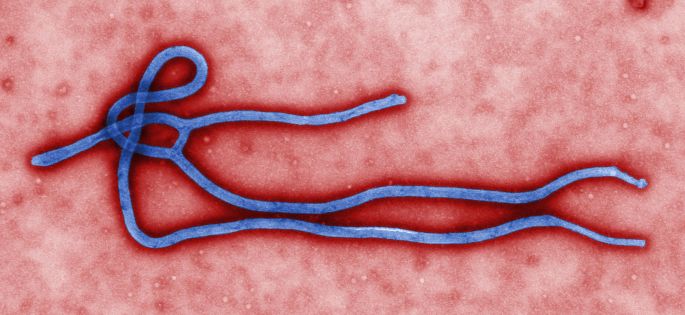
Scientists at the University of Winnipeg in Canada have developed an Ebola treatment drug cocktail which has proven effective in 6 of seven monkeys (three cynomolgus and four rhesus) up to three days post infection. 

CTV – “The work builds on earlier research which showed a cocktail of three cloned antibodies saved four of four primates when given 24 hours after infection and two of four treated 48 hours after infection. This time the researchers added interferon-alpha, a chemical made by the immune system, to the treatment regime. Two of four primates survived when they were given the chemical one day after infection, and then the antibody cocktail four days later. In order for a treatment to be useful against the five types of Ebola viruses or their cousin, the Marburg virus, it must be something that can enhance survival when given days after infection, which is when cases would typically come to light.”

 Read more here

(Image: The easily recognizable ebola virus’ distinct, filamentous morphology, via CDC)

Image of the Week: Malaria!

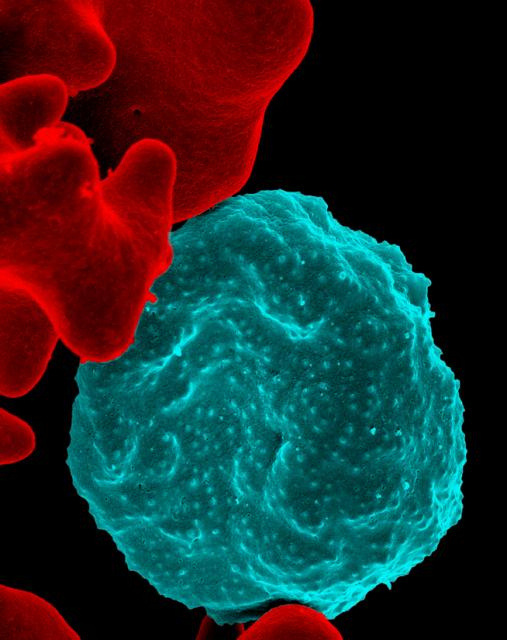
Pictured below is a red blood cell infected with malaria, false colored in blue – you can see the malaria virions as the brighter blue spots within the cells. To the left, uninfected red blood cells are shown in red, their surfaces smooth.

malaria

mala


Event: The Chemicals, The Conflict, & The Challenges in Syria

Speakers: Dr. Paul Walker, Green Cross International, Michael Moodie, International CBW Commentator, Dr. Chen Kane, Center for Nonproliferation Studies
Event Location: American Association for the Advancement of Science, 2nd Floor, 1200 New York Avenue NW, Washington DC 20005
Event Details:  October 23, 2013  5:00 – 6:30pm
Light refreshments to follow
RSVP

The use of chemical weapons by any nation constitutes a significant threat to international peace and security. Nevertheless, in 2013 chemical weapons were used in Syria, sparking international outrage and condemnation. With pressure from the U.S. and Russia, Syria acceded to the Chemical Weapons Convention in September 2013 and agreed to participate in an accelerated process to destroy the chemical weapons. While this has been received as an unexpected yet positive development, the implementation of such a process raises significant science and security issues.

On October 23, the American Association for the Advancement of Science’s Center for Science, Technology and Security Policy and the Federation of American Scientists are convening a panel to discuss the science and security involved in the implementation of the Chemical Weapons Convention and U.N. Security Council Resolution 2118 in Syria.

The speakers will explore the technical, political, and regional issues surrounding chemical weapons in Syria, including: the technical solutions and expertise required to ensure accelerated destruction of chemical weapons; the broader regional impact of Syria’s accession to the Chemical Weapons Convention; and the challenges involved in carrying out destruction in a civil war environment.

This Week in DC: Events

Our October Biodefense Policy Seminar is this Wednesday! Dr. Paul Walker, chemical weapons destruction expert, 2013 Right Livelihood laureate, and Director at Green Cross International will discuss chemical weapons disarmament in Syria. For more information, please see below or visit our Biodefense Policy Seminar page here.

Tuesday, October 15

DARPA Director Dr. Arati Prabhakar
Elliot School of International Affairs
3:30PM

Arati Prabhakar, Director, Defense Advanced Research Projects Agency (DARPA) A reception will follow. RSVP: spi@gwu.edu Sponsored by the Center for International Science and Technology Policy.

Wednesday, October 16

Featured Event: “Syria and Chemical Weapons: Building a World Free of Weapons of Mass Destruction” – GMU Biodefense Policy Seminar
Speaker: Dr. Paul Walker
Location: Meese Conference Hall, GMU Fairfax Campus
Time: 7:20PM

Paul Walker will join us to discuss Syrian proliferation concerns. Dr. Walker is the International Director of the Environmental Security and Sustainability (ESS) Program for Green Cross International (GCI) and manages the Washington DC office for GCI and its US national affiliate, Global Green USA. The ESS Program is an international effort to facilitate and advocate the safe and environmentally sound demilitarization, nonproliferation, and remediation of nuclear, chemical, biological, and conventional weapons stockpiles. Walker has worked, spoken, and published widely in the related areas of international security, threat reduction, non-proliferation, weapons demilitarization, and environmental security for over three decades and took part in the first on-site inspection by US officials of the Russian chemical weapons stockpile at Shchuch’ye in the Kurgan Oblast in 1994. Since that time he has worked closely with the Organization for the Prohibition of Chemical Weapons (OPCW), US and Russian officials, the US Cooperative Threat Reduction (CTR) Program, the G-8 Global Partnership, and other multilateral regimes to help foster cooperative, timely, and safe elimination of nuclear, chemical, and biological weapons and related systems. He has helped to permanently eliminate over 50,000 tons of chemical weapons and millions of munitions in six countries to date. Dr. Walker was also recently awarded the 2013 Right Livelihood Award, widely known as the alternate Nobel Peace Prize. To read more about the award and Dr. Walker’s work, visit their website here.

“Minimum Deterrence: Examining the Evidence”
Hudson Institute
12:00 – 1:00PM

Recently, President Obama called for large reductions in the U.S. nuclear arsenal from the New Strategic Arms Reduction Treaty levels. Such reductions could leave the U.S. with roughly 1,000 weapons. The President’s announcement has renewed the debate over the appropriate size of the U.S. nuclear weapons arsenal.

Turkey and the Syrian Crisis: Unending Challenges of an Unending War
Georgetown University
1:00PM

Even though no country in the region has been immune from the fallout effects of the Syrian war, Turkey has been particularly hit hard. In addition to the ever-growing refugee problem, the war has also exacerbated Turkey’s own sectarian balance. The growing Kurdish autonomy in Northern Syria is also posing its own set of challenges to the Turkish government which is faced with mounting domestic opposition and a fragile Kurdish peace process. Join this discussion on the U.S and Turkish policies on Syria, the role of the Kurds in the war, and security and humanitarian challenges faced by Turkey.

A Statesman’s Forum with United Nations Deputy Secretary-General Jan Eliasson
Brookings Institution
2:15 – 3:15 PM

On October 16, Foreign Policy at Brookings will host United Nations Deputy Secretary-General Jan Eliasson for a Statesman’s Forum focusing on the United Nations’ current agenda and upcoming work. Among the key issues to be addressed by Ambassador Eliasson are the conflict in Syria, Iran’s diplomatic openings, developments in Afghanistan and the UN and its post-2015 development strategy. Brookings Acting Vice President and Director of Foreign Policy Ted Piccone will moderate the discussion.

Thursday, October 17

Launching the World Nuclear Industry Status Report 2013
Natural Resources Defense Council (NRDC)
12:30 – 2:30PM

The Heinrich Böll Foundation, the Natural Resources Defense Council (NRDC) and the Federation of American Scientists (FAS) are delighted to invite you to a luncheon discussion with Mycle Schneider, the lead author of the World Nuclear Industry Status Report 2013. The plummeting natural gas prices, sovereign debt crisis, proliferation concerns and improved economic conditions for renewable energy sources have created a challenging global environment for nuclear power. Contrary to what the nuclear industry would have us believe that we are seeing a global renaissance in nuclear power, nuclear power the world over is on the decline. This is especially true in the US, where operating reactors are being closed as uneconomic for the first time in 15 years. The World Nuclear Industry Status Report provides a vital reality check to the current situation of the global nuclear industry as well as identifying important nuclear trends

Friday, October 18

Viruses: Evolution Friend or Foe?
Georgetown University Medicine
12:00PM

Presented By: Chuan (River) Xiao, Assistant Professor of Biochemistry, Department of Chemistry University of Texas at El Paso.

The Pandora Report 10.11.13

A briefer report this week due staff illness (one of the many drawbacks of studying biodefense is the crippling hypochondria that comes with it  – we’re pretty sure we’ve come down with MERS). Highlights include actual cases of MERS, Hajj starting and outbreak fears, dengue in Houston, and the government shutdown leaving us exposed. Happy Friday!

Event Note: The Organization for the Prohibition of Chemical Weapons was awarded the Nobel Peace Prize for the efforts in destroying chemical weapons. Our October Biodefense Policy Seminar, happening Wednesday Oct. 16th, features Dr. Paul Walker, who was recently rewarded the prestigious Swedish Rights Livelihood Award for his personal contributions to the destruction of chemical weapons. Join us and Dr. Walker as we discuss disarmament of Syria’s chemical weapons stockpile Wednesday evening

Virus hangs over Islamic pilgrimage to Mecca

Hajj is finally upon us, will millions of pilgrims flooding the Saudi Arabian city of Mecca for the annual muslim pilgrimige, culminating on October 15th. Doctors in hospitals across Southern California have been alerted by state health departments to watch for fever and respiratory symptoms in individuals returning from the Middle East. Here’s to hoping for the best.

LA Times – “The hajj, which typically draws more than 10,000 from the U.S. and culminates Oct. 15 this year, is just the sort of environment where a virus can spread efficiently. Conditions can be hot and crowded, said Jihad Turk, a religious advisor for the Islamic Center of Southern California in Los Angeles and president of Bayan Claremont, an Islamic graduate school in Claremont. Pilgrims retrace the steps of the biblical Abraham, his wife Hagar and their son Ishmael, considered the founders of the Islamic people. In one key ritual, they march seven times around the cube-shaped Kaaba in Mecca, said to have been built by Abraham and Ishmael.’You have a million people all at the same time walking around the Kaaba,’ said Turk, who has participated in the hajj twice. ‘It’s like being in a crowded subway in New York for hours and hours at a time.”

Genome studies link MERS origin to bats

Speaking of MERS, another study has emerged linking the virus’ origins to bats. To date there have been 136 cases of the resipatory syndrome, with 58 fatalities.

Infectious Disease News – “Previous research suggested that MERS uses the DPP-4 receptor to enter the cell. Researchers from Marie Bashir Institute for Infectious Diseases and Biosecurity at the University of Sydney in Australia analyzed seven bat genomes to determine the sequence of the DPP4 gene. They compared these findings with those from other mammalian species. They found three residues in bat DPP-4 receptors that directly interact with the viral surface glycoprotein. The mutations in the bat genes also occurred at a faster rate, which suggests that the virus existed in bats for a long period and has evolved before it began to infect humans.”

Study: Dengue fever found in Houston

Dengue, the mosquito-borne virus which ravages so much of the developing world, has re-emerged in Houstan. According to a new study from Baylor College, antibodies to the disease where present in 47 individuals sampled as part of a larger West Nile study, suggesting an outbreak in 2003.

Houston Chronicle – “‘Dengue virus can cause incredibly severe disease and death,’ [study researcher] Murray said. ‘This study shows that Houston may be at risk of an outbreak, that people need to be on the lookout.’ While no blood and cerebrospinal fluid samples from after 2005 are available for study, Murray said the virus likely is still in Houston. Dengue fever is widespread in other parts of the world. Whenever it appears in the U.S., local officials hope to contain it. It can cause severe body aches, high fever and rash. Its most severe forms can cause severe bleeding and death. In central Florida, 20 cases of dengue fever have been reported this year.”

Idle CDC Worries Experts as Flu Season Starts

We can attest first hand that flu season has definitely started. As we mentioned last week, it’s happening without the watchful eye of the CDC surveillance system. While there has been some private industry pull-through, the supplemental surveillance isn’t enough to provide a good national picture of flu trends.

MedPage – “But it’s not just data and it’s not just flu, according to Gregory Poland, MD, an infectious diseases specialist at the Mayo Clinic in Rochester, Minn.’There are an endless number of infectious disease threats that, as we often say, are an airplane ride away from us,’ Poland said. And the CDC is the ‘only entity’ that tracks infectious disease on a national scale, he added. ‘So now you’ve got a week, 2 weeks, who knows how long, where there’s no one really responsible for watching what’s happening nationally.’ He painted a grim picture of what might happen while the agency is all-but-shuttered.

“‘Worst-case scenario is a novel infectious disease is imported into the U.S.,’ he said, with cases scattered at first across a dozen states. ‘Nobody understands that it’s happening simultaneously in real time and we don’t have 12 cases, we have 1,200 cases before we realize what’s going on.'”

Scientists Withhold Details on New Botulinum Toxin

Scientists have discovered a new form of botulinum toxin, but have taken the unusual measure of withholding key details of the discovery, citing concerns over bioterrorism. What does everyone think? We’d love to hear your comments.

NPR – “That’s because botulinum toxin is one of the most poisonous substances known. It causes botulism, and the newly identified form of it can’t be neutralized by any available treatment. The researchers published two reports describing their work online in The Journal of Infectious Diseases. The information in those reports is deliberately incomplete, to prevent anyone from using it as the recipe for a potent new bioweapon. ‘This is not the usual process for publishing manuscripts. We thought in this case an exception was appropriate,’ says David Hooper, an infectious disease specialist at Massachusetts General Hospital who serves as one of the editors of the journal. Normally, the journal would require that the scientists disclose the genetic sequences needed to make the toxin. In this case, however, the researchers didn’t want to do that because of the security risk.”

Read more here and then come back and tell us what you think!

Walker, October Seminar Speaker, on Destroying Chemical Weapons

As destruction efforts in Syria seem to be continuing apace, the question many of us have asked ourselves is how does one destroy a chemical weapon? Dr. Paul Walker concisely addresses this in his recent Bulletin of Atomic Scientists piece, “How to destroy chemical weapons?”. To hear more, be sure to join us next Wednesday evening for our October Biodefense Policy Seminar featuring Dr. Walker, who will discuss efforts to destroy Syrian CW at length. For more information, please visit our events page.

Bulletin of Atomic Scientists – “The recent news that Syrian President Bashar al-Assad is willing to accede to the international Chemical Weapons Convention (CWC) has raised the question: How might one actually go about eliminating Syria’s chemical munitions?

The CWC entered into force in 1997. Seven CWC member countries have declared existing chemical weapons stockpiles—Albania, India, Iraq, Libya, Russia, South Korea, and the United States. Three of these—Albania, India, and South Korea—completed stockpile destruction in the last few years. Three more—Libya, Russia, and the US—expect to complete their destruction programs over the next decade. And Iraq, which joined the convention in 2009, is planning the destruction of its chemical weapons equipment and agents left from the 1991 Gulf War.

There are essentially three broad categories of destruction approaches, all used successfully in the above programs. These approaches can be mixed and matched, depending on the type, size, quantity, and condition of the agents, munitions, and containers…”

Read more here.

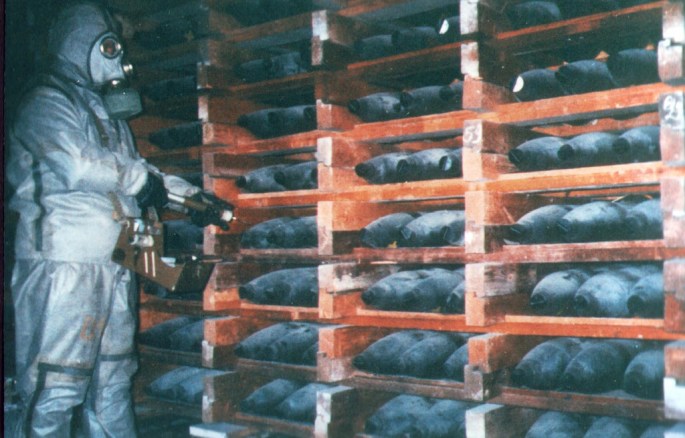
(image: Jen Spie/Flickr)