TONIGHT: February Biodefense Policy Seminar feat. Charles Duelfer

Our February Biodefense Policy Seminar is tonight! The Biodefense Policy Seminars are monthly talks focused on biodefense and biosecurity broadly conceived. Free and open to the public they feature leading figures within the academic, security, industry, and policy fields. Launched in the Spring of this last year, the Seminars have been a tremendous success.

cduelferFebruary Biodefense  Policy Seminar
Speaker: Charles Duelfer
Date: Tuesday, February 11th, 2014
Time: 7:20 PM
Location: Research Hall, Room 163, GMU Fairfax Campus

We  are delighted to announce our February speaker, renowned WMD expert Mr. Charles Duelfer. Charles Duelfer was the Special Advisor to the Director of Central Intelligence for Iraq WMD. He led the Iraq Survey Group (ISG) investigation in Iraq, which conducted the investigation of Iraq’s WMD programs. The ISG was a unique intelligence organization of over 1600 military and civilian staff that investigated Iraq WMD programs. It used all possible collection and analytic capabilities in a hostile environment. The Duelfer Report (2004) is the definitive work on the relationship of the Saddam Regime to WMD.

Previously, Mr. Duelfer was the Deputy Executive Chairman of the UN Special Commission on Iraq (UNSCOM) from 1993 until its termination in 2000. For the last several months of its existence he was the acting chairman.

Duelfer also served in the Political-Military Bureau of the State Department for several years in a variety of capacities including directing regional security programs in Africa (including Somalia, Sudan and Chad), Latin America, and the Middle East. He also participated in the policy development for nuclear weapons and arms control subjects.

From 2006-2008, Duelfer was chairman and CEO of Transformational Space Corporation, a small entrepreneurial company developing a launch system for transportation to low earth orbit. Presently he is Chairman of Omnis, Inc, a consulting firm in McLean, Virginia.

He is the author numerous articles on security and intelligence and the book, Hide and Seek: The Search for Truth in Iraq (Public Affairs Books 2009).

Spike in H7N9 Cases Elicit new warnings

From Shanghai Daily – “At least 31 people died from H7N9 bird flu in China this year, the government announced yesterday, while health experts predicted more H7N9 cases in the near future. A total of 127 human H7N9 cases have been confirmed so far this year, with Zhejiang and Guangdong provinces the worst affected, according to a statement by the National Health and Family Planning Commission. The number is almost as high as for the whole of last year, when China had 144 confirmed cases, including 46 deaths. The commission said that there will continue to be sporadic reports of H7N9 infections. Flu viruses are seasonal and the first human cases emerged in February 2013, so that the outbreak did not encompass all of last winter. It has reignited fears that a bird flu virus could mutate to become easily transmissible between people, threatening a pandemic.”

Read more here.

This Week in DC: Events 2.10.14

Our featured event for this week is Tuesday’s February Biodefense Policy Seminar, featuring former Deputy Executive Chairman of the UN Special Commission on Iraq (UNSCOM) Charles Duelfer. Mr. Duelfer will discuss the politics of WMD destruction in Iraq and Syria. Dinner will be provided by Cafe Rio  – join us!

Monday, February 10, 2014 

The Muslim Brotherhood: Evolution of an Islamist Movement
Elliot School of International Affairs
12:00 PM

Carrie Rosefsky Wickham will discuss her recent release: The Muslim Brotherhood: Evolution of an Islamist Movement. Wickham’s current research focuses on the origins of political opposition in authoritarian settings, focusing on the rise of Islamic activism in Egypt and other Arab states. She is also the author of Mobilizing Islam: Religion, Activism, and Political Change in Egypt. Limited copies of the book will be available for students. A light lunch will be served with a book signing to follow.

Will a Counterterrorism Operation in Pakistan Succeed under Current Conditions?
Atlantic Council
1:00 PM

Pakistan’s new government has yet to announce its long-awaited new security strategy. Prime Minister Nawaz Sharif, on January 28, announced the formation of a four-member committee to pursue dialogue with the Tehrik-e Taliban Pakistan (TTP). Many expected the government to abandon efforts to bring the TTP to the table after similar moves failed last year. The TTP, while expressing interest in dialogue, has continued violent attacks within Pakistan, leading Prime Minister Sharif to condition peace talks on a cessation of attacks. The prime minister continues to entertain a military option, stating, “We have to win this fight, whether by dialogue or by war.” What are the conditions under which the military of Pakistan can and will tackle the internal insurgency? Is the civilian component of the impending plan ready? Imtiaz Gul, an Islamabad-based expert will review Pakistan’s likely counterterrorism strategy and its potential for success.

International Uranium Film Festival
Heinrich Böll Foundation
Monday – Wednesday, starting at 4:00 PM

The Heinrich Böll Foundation and the Goethe-Institut are pleased to invite you to The International Uranium Film Festival in Washington DC. The International Uranium Film Festival is the first festival of its kind that addresses the problems and challenges related to nuclear and radioactive issues. After premiering in Rio de Janeiro in 2011, the festival has traveled to major cities around the world, including São Paulo, Recife, Salvador & Fortaleza in Brazil; Lisbon and Porto in Portugal; Berlin and Munich in Germany; and ten major cities in India including New Delhi, Hyderabad and Mumbai. The festival is now – for the first time – coming to Washington DC. Screenings will take place on three consecutive nights, followed by a panel discussion featuring some of the film directors and policy experts.

 Tuesday, February 11, 2014

Process and Politics of WMD Destruction: Iraq and Syria
GMU Biodefense Policy Seminar
Research Hall, Room 163, GMU Fairfax Campus
7:20 PM

The February Biodefense Policy Seminar speaker is former Deputy Executive Chairman of the UN Special Commission on Iraq (UNSCOM) Mr. Charles Duelfer. Charles Duelfer was the Special Advisor to the Director of Central Intelligence for Iraq WMD. He led the Iraq Survey Group (ISG) investigation in Iraq, which conducted the investigation of Iraq’s WMD programs. The ISG was a unique intelligence organization of over 1600 military and civilian staff that investigated Iraq WMD programs. It used all possible collection and analytic capabilities in a hostile environment. The Duelfer Report (2004) is the definitive work on the relationship of the Saddam Regime to WMD. Previously, Mr. Duelfer was the Deputy Executive Chairman of the UN Special Commission on Iraq (UNSCOM) from 1993 until its termination in 2000. For the last several months of its existence he was the acting chairman. Duelfer also served in the Political-Military Bureau of the State Department for several years in a variety of capacities including directing regional security programs in Africa (including Somalia, Sudan and Chad), Latin America, and the Middle East. He also participated in the policy development for nuclear weapons and arms control subjects. From 2006-2008, Duelfer was chairman and CEO of Transformational Space Corporation, a small entrepreneurial company developing a launch system for transportation to low earth orbit. Presently he is Chairman of Omnis, Inc, a consulting firm in McLean, Virginia. He is the author numerous articles on security and intelligence and the book, Hide and Seek: The Search for Truth in Iraq (Public Affairs Books 2009).

Cryptocurrencies: The New Coin of the Realm?
New America Foundation
12:15 PM

In 2009, the mysterious and pseudonymous Satoshi Nakamoto launched Bitcoin, the world’s first online cryptocurrency. Backed by no government or hard assets, the currency’s value has skyrocketed and plunged repeatedly. And yet, a diverse group of entrepreneurs, businesses and would-be money launders has followed Bitcoin’s trajectory avidly. The receptivity indicates a real demand for an Internet-centric medium of exchange, without banks and without fees. Yet the rise of “criminal eBays” like the Silk Road, which allow for the anonymous purchase of illegal items with the cryptocurrency, have also brought the digital cash to the attention of government authorities. Beyond monitoring illicit activity, should regulators have a role in this new financial system? Could Bitcoin-or another cryptocurrency-become a universal alternative currency? Will we ever be able to use a cryptocurrency at our local bodega?

Wednesday, February 12, 2014

Rethinking State-Building in Muslim-Majority States: Grounded View From Somalia
SAIS
12:30 PM

William Reno, professor of political science and program director for the Department of African Studies at Northwestern University, will discuss this topic.

Thursday, February 13, 2014

Inside Aleppo: New Tools for Understanding the Syrian Conflict
American Security Project
8:30 AM

The American Security Project will host Dr. David Kilcullen and Mr. Nate Rosenblatt of Caerus Associates who will provide a briefing on findings from what may be the most detailed, publicly available assessment of the ongoing conflict in Syria to date. Findings will be based on four months of in-depth, time-series research from within Aleppo, Syria’s largest, most diverse, and most economically relevant city. Today, Aleppo is one of the most divided cities in the country. Tomorrow, its future may resemble that of other, large, non-capital cities in post-conflict Middle Eastern states such as Libya’s Benghazi or Iraq’s Mosul.

Will China Democratize?
National Endowment for Democracy
4:00 PM

A year ago the International Forum for Democratic Studies convened a panel entitled “China at the Tipping Point?” based on the series of articles that appeared under that title in the January 2013 Journal of Democracy. It is also approximately a year since the turnover of power within the Chinese Communist Party that brought President Xi Jinping to the country’s top leadership position. Many observers expected that Xi would prove to be a reformer, but so far there is little evidence that this has been the case, at least with respect to political reform. This panel will evaluate developments over the past year and examine in what ways China may be moving closer to or farther from a “tipping point.” The panelists are contributors to Will China Democratize?, a Journal of Democracy book edited by Andrew J. Nathan, Larry Diamond, and Marc F. Plattner that was published by Johns Hopkins University Press in the fall of 2013.

(Image: Dell/Flickr)

The Pandora Report 2.6.14

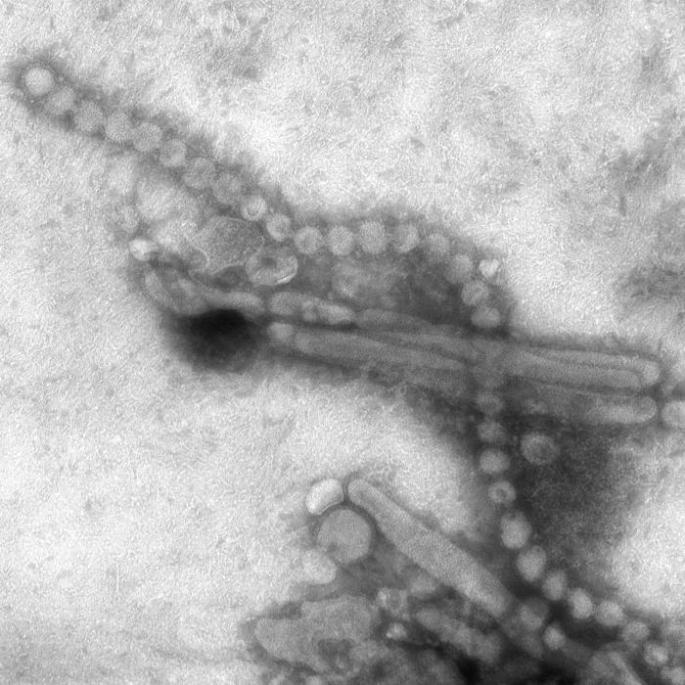
Highlights include H10N8, H7N9’s second wave, MERS-CoV update, and a Burholderia antrimicrobial. Happy Friday!

New China bird flu a reminder of mutant virus risk

We covered this story when it first came out, but the emergence of a novel strain of highly pathogenic avian influenza (HPAI) is noteworthy enough to mention twice.  It’s H10N8 everyone and it’s in humans. There have been just two cases since the virus jumped from birds to humans in December of 2013, including one fatality. There are a couple things about H10N8 which is troubling scientists. The first is that it’s jumped host, and in the process, opened up a completely naive population (us) to infection. The second is that it’s thought to be reassorted – a mix of a couple other strains of avian flu. Reassortment scares everyone – if it can mutate once to be able to infect humans, it can mutate twice to become readily transmissible person-t0-person. Still, we’re novel hosts, which means the virus isn’t yet well-adapted to us. It’s also worth mentioning here that H7N9 also made the jump from poultry to person, and it remains poorly suited to human hosts.

Reuters – “The death of a woman in China from a strain of bird flu previously unknown in humans is a reminder of the ever-present potential pandemic threat from mutating animal viruses, scientists said on Wednesday. The new strain, called H10N8, has so far infected only two people – a fatal case in a 73-year-old and another in a woman who is critically ill in hospital. But the fact it has jumped from birds to humans is an important warning, they said. ‘We should always be worried when viruses cross the species barrier from birds or animals to humans, as it is very unlikely that we will have prior immunity to protect us’, said Jeremy Farrar, director of Wellcome Trust and an expert on flu.”

China reports 11 new H7N9 human cases

Chinese health authorities have reported a further 11 laboratory-confirmed cases of H7N9, bringing the number of second wave infections up to 181, and the total number of cases up to 317. The majority of the cases are coming from just two Chinese provinces, Guandong and Zhejiang. While the influx of cases in Hong Kong are all thought to originate from poultry imports, there has been no evidence to indicate the virus has been transmitted internationally. Also, aside from one cluster, there has been no evidence of sustained person-to-person transmission.

Xinhua – “Eleven Chinese people were confirmed to be infected with the H7N9 bird flu on Wednesday in four regions, with 8 in critical condition, according to local health authorities. The southern province of Guangdong reported 4 new cases, including a 5-year-old girl and a 42-year-old man in Zhaoqing City, a 49-year-old man in Foshan City and a 56-year-old man in Shenzhen City, said the provincial health and family planning commission. The girl and the man from Foshan are in stable condition while the other two remain in critical condition, according to the commission. The eastern province of Zhejiang, the region hit hardest by the H7N9 virus, confirmed four new human cases on Wednesday, bringing the total number of affected cases to 69 in the province so far this year, said the provincial health and family planning commission.”

Middle East respiratory syndrome coronavirus (MERS-CoV) – update

With H7N9 picking up and H10N8 emerging, MERS-CoV has been flying under the comparative radar. Speaking anecdotally, the number of cases seems to be declining, with just one new case in the last two weeks. Globally, there have been 181 cases to date. While camels remain the likely culprit, no vector or reservoir has been confirmed.

WHO – “The case is a 60-year-old man from Riyadh who became ill on 19 January and who had underlying medical conditions. He was hospitalized on 24 January and died on 28 January. Respiratory specimens were collected and sent to the central laboratory in Riyadh and confirmed positive for MERS-CoV on 28 January. Details of his possible contact with animals are unknown, and he has no history of contact with a laboratory-confirmed case. WHO has also been informed by the United Arab Emirates of the death on 16 January of a previously reported case of a 33 year-old male healthcare worker from Dubai (see Disease Outbreak News update from 3 January 2014).”

U.S. Eyes $90 Million Contract for Bioterror Treatments

The Department of Health and Human Services (HHS) awarded a $19.8 million dollar contract to a company working on  antimicrobials against the agents Burkholderia mallei, the causative agent of glanders,  and B. pseudomallei, the causative agent of melioidosis, respectively.  B. mallei, it should be noted, may have been used during WWI by the Germans, in an ill-fated attempt to use infected horses to spread the disease across the Russian front lines. While B. mallei does cause serious disease in horses and donkeys, cases of human infection are rare.

NTI – “The contract award marked a new investment in ‘broad-spectrum antimicrobials’ by the federal agency’s Biomedical Advanced Research and Development Authority. Such treatments are designed to be of use in responding to a potential biological strike, as well as for handling other health threats. ‘Antibiotic resistance adversely impacts our nation’s ability to respond effectively to a bioterrorism attack and to everyday public health threats,’ BARDA Director Robin Robinson said in a statement. ‘By partnering with industry to develop novel antimicrobial drugs against biothreats that also treat drug-resistant bacteria, we can address health security and public health needs efficiently.’

(image: James Jin/Flickr)

First H10N8 Fatality in Humans due to reassortment?

Nobody panic! There have been only two cases and it’s not yet documented as being readily transmissible person-to-person (yes we understand that’s a lot of caveats). Unsurprisingly, live poultry is thought to be the source of the infection. It remains unclear why or how the virus has jumped to humans. Chinese health authorities are, as always, very closely monitoring the situation. Can we have a moment of silent appreciation for Chinese epidemiologists and biosurveillance professionals? Just as H7N9 starts to pick up again (301st case this week),  a brand new, potentially-pandemic strain never before seen in humans pops up. Same for the Saudi epidemiologists trying to work out MERS and the health authorities in any country in which Ebola is endemic (good grief).

From the Lancet: “Human infections with different avian influenza viruses—eg, H5N1, H9N2, and H7N9—have raised concerns about pandemic potential worldwide. We report the first human infection with a novel reassortant avian influenza A H10N8 virus. A woman aged 73 years presented with fever and was admitted to hospital on Nov 30, 2013. She developed multiple organ failure and died 9 days after illness onset. A novel reassortant avian influenza A H10N8 virus was isolated from the tracheal aspirate specimen obtained from the patient 7 days after onset of illness. Sequence analyses revealed that all the genes of the virus were of avian origin, with six internal genes from avian influenza A H9N2 viruses. The aminoacid motif GlnSerGly at residues 226—228 of the haemagglutinin protein indicated avian-like receptor binding preference. A mixture of glutamic acid and lysine at residue 627 in PB2 protein—which is associated with mammalian adaptation—was detected in the original tracheal aspirate samples. The virus was sensitive to neuraminidase inhibitors. Sputum and blood cultures and deep sequencing analysis indicated no co-infection with bacteria or fungi. Epidemiological investigation established that the patient had visited a live poultry market 4 days before illness onset. The novel reassortant H10N8 virus obtained is distinct from previously reported H10N8 viruses. The virus caused human infection and could have been associated with the death of a patient.”

The full article is available behind their paywall, or summarized on the BBC.

Image of the Week: Chikungunya

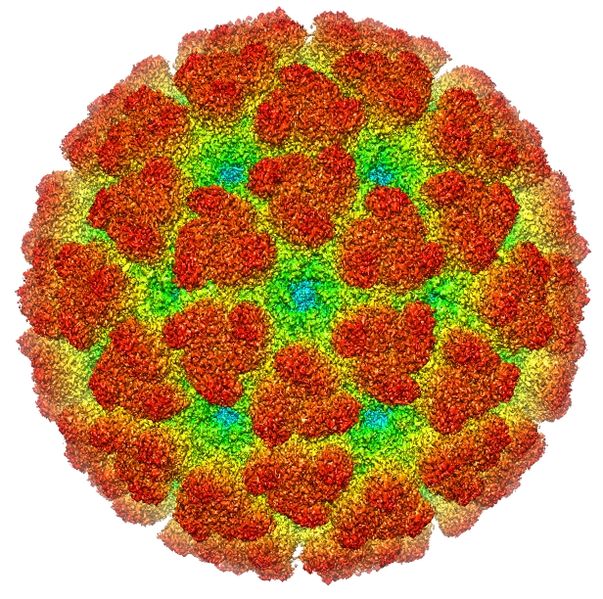
This week’s image is of Chikungunya, the mosquito-transmitted virus currently making its way across the Caribbean.  There have been over 1,000 laboratory-confirmed infections since the virus first appeared on St. Martin in December of last year. The virus causes symptoms similar to dengue (ouch), including febrility and severe joint pain. Luckily the disease is rarely fatal, with symptoms usually resolving within ten days.

chikungunya

Delving Deeper: Everything You Want to Know about PHSBPRA (Part One!)

By GMU PhD Student, Yong-Bee Lim

“Bioterrorism is a real threat to our country. It’s a threat to very nation that loves freedom. Terrorist groups seek biological weapons; we know some rogue states already have them…It’s important that we confront these real threats to our country and prepare for future emergencies.” – George W. Bush, 06/12/2002

I.  Introduction: Biosecurity or Bio-insecurity

Following the back-to-back tragedies of 9/11 and the Amerithrax Letter attacks, the United States (U.S) government realized how ill-prepared it was to handle the challenges associated with preparing for, and responding to, acts of terrorism. The Amerithrax Letter attacks, which successfully managed to infiltrate targeted congressional buildings, highlighted the inadequacies of security, preparedness, and response policies relating to bioterrorism events.[1] Thus, introduced in the immediate wake of the attacks and signed into law six short months later, the Public Health Security and Bioterrorism Preparedness and Response Act of 2002 (PHSBPRA) promised to be a major tool in the federal government’s fight against bioterrorism.

However, like many bills proposed and ratified in the wake of 9/11, unintended consequences arose from the PHSBPRA that have ultimately undermined U.S. national security against bioterrorism. In conjunction with the Uniting (and) Strengthening America (by) Providing Appropriate Tools Required (to) Intercept and Obstruct Terrorism of 2001 (USA PATRIOT Act), the PHSBPRA has not only undermined domestic national security, but has also contributed to the tarnishing of U.S. prestige in the international arena. Domestically, a combination of increased funding for biodefense research on select agents and insufficient measures in certain security areas have compromised laboratory security by increasing risks for laboratory incidents and insider threats;[2] however, other security areas were overly regulated, which prompted the loss of foreign technical workers as well as creating great impediments in the free dissemination of scientific information.[3] These hurdles continue to impede basic scientific research, which ultimately inhibit the creation of new therapeutics and medical countermeasures (MCMs) to deal with pathogens in the event of a bioterrorist attack.[4]

Internationally, the U.S. had already faced great criticism for rejecting the ratification of generous redrafting of the Biological Weapons Convention. This redraft, commonly referred to as “The Chairman’s Text” sought to accommodate the U.S.’s concerns in regards to verification protocols within the BWC. The international perception following this rejection was that the “U.S. is…taking a position that can only be read as an insistence that other nations should lay themselves open to intrusive inspection, which the U.S. accepts no obligations.”[5] This post seeks to highlight relevant details in the events leading up to 9/11 and Amerithrax, provide an overview of the PHSBPRA, and highlight the consequences following its enactment.

II.  Historical Climate: How Bioterrorism and Bio-preparedness were Perceived Before 9/11 and Amerithrax

While Amerithrax was the major bioterrorism event that launched biodefense considerations to the forefront of American consciousness, bioterrorism attempts and acts have been implemented at various points throughout history and all over the globe. Internationally, both World Wars ultimately contributed to the use of unconventional weapons, which are commonly referred to as “weapons of mass destruction” (WMDs) in the modern day.[6] In regards to biological weapons, glanders was used by German undercover agents to infect the livestock of Allied countries with the highly contagious Burkholderia mallei during World War I.[7] During World War II, the infamous Japanese Unit 731 investigated biological weapons in occupied Manchuria; these investigations included the use of plague and other biological agents on prisoners and Chinese nationals.[8]

In an age of asymmetric warfare, focus of potential biological weapons production and use has shifted from nation-states to violent non-state actors (VNSAs).[9] In the modern day, a Japanese terrorist cult, called Aum Shinrikyo, attempted to manufacture and disseminate biological weapons (including aerosolized anthrax) to bring about an apocalypse.[10] Other groups labeled as terrorist organizations, such as Al-Qaeda, have expressed considerable interest in obtaining biological weapons.[11]

Despite the case studies mentioned previously, the realm of bioterrorism and offensive bioweapon attacks is filled with far more failures than successes. The only successful modern-day bioterrorism attack that tends to be unchallenged was the act of a cult which used Salmonella typhimurium at a salad bar in Oregon to get over 700 individuals sick with severe food poisoning.[12] The cult’s motivation for this attack was to try to get enough individuals sick to take over the local county government.

The paucity of successes in the use of biological weapons was reflected in the paucity of biopreparedness actions and policies in the U.S. pre-9/11. Two biodefense policies followed, but did not result from, the cult’s attack. In 1989, the Biological Weapons Anti-Terrorism Act was passed to pave the way for the implementation of the Biological Weapons Convention (BWC) in the United States.[13] This act sought to implement the BWC by imposing criminal penalties for violating the articles of the Convention, defining biowarfare terms, and limited possession of biological agents.[14] In 1996, the Antiterrorism and Effective Death Penalty Act of 1996 was created and passed to curb domestic actions of terrorism, as well as limiting the access to materials with WMD implications.[15],[16]

Following the Amerithrax Letter Attacks, the USA Patriot Act of 2001 went further in biodefense policy by both establishing certain controls over select agents to ensure that no “restricted person” transports, ships, or possess select agents, as well as imposing strict criminal penalties for the possession of certain biological agents or toxins; the only way to avoid criminal penalties is if the reason for the possession of the agent or toxin was for justified prophylactic, protective, bona fide research, or other peaceful purposes.[17]

Pt. 2 Next Week: Public Health Security and Bioterrorism Preparedness Response Act of 2002: Purpose and Implementation


Yong-Bee Lim is a PhD student in Biodefense at George Mason University. He holds a B.S. in Psychology and an M.S. in Biodefense from George Mason University as well. Contact him at ylim3@masonlive.gmu.edu or on Twitter @yblim3.

[1] “Biodefense for the 21st Century,” The White House: Office of the Press Secretary, accessed on 02/01/2013, http://www.fas.org/irp/offdocs/nspd/biodef.html

[2] Sonia Ben Ouagrham-Gormley, “History of US Biodefense Strategy and Policy” (lecture, Biodefense 609 at GMU, Fairfax, VA, September 5, 2012)

[3] GJ Knezo, “Possible Impacts of Major Counter-Terrorism Security Actions on Research, Development, and Higher Education,” Washington, DC: Congressional Research Service Report to Congress, Library of Congress; 2002

[4] Kendall Hoyt, Long Shot: Vaccines for National Defense (Cambridge, MA: Harvard University Press, 2012), Loc 118

[5] “US Policy and the BWC Protocol,” The Journal of the Federation of American Scientists: FAS Public Interest Report, accessed on 01/15/2014, http://www.fas.org/faspir/2001/v54n3-4/bwc.htm

[6] Joseph Cirincione, Jon B. Wolfsthal, and Miriam Rajkumar, Deadly Arsenals: Nuclear, Biological, and Chemical Threats (Washington, DC: The Brooking Institution Press, 2005): Loc 228

[7] Robert J. Hawley and Edward M. Eitzen, Jr. “Biological Weapons – A Primer for Microbiologists,” Annual Review of Microbiology, Vol. 55 (2001): pp. 235 – 253

[8] Ibid.

[9] Cirincione et al., Deadly Arsenals: Loc 268

[10] Richard Danzig, Marc Sageman, Terrance Leighton, Lloyd Hough, Hidemi Yuki, Rui Kotani, & Zachary M. Hosford. Aum Shinrikyo: Insights Into how Terrorists Develop Biological and Chemical Weapons, (Washington DC: Center for a New American Security, 2011): p. 8

[11] Milton Leitenberg, Assessing the Biological Weapons and Bioterrorism Threat (Carlisle, PA: Strategic Studies Institute, U.S. army War College, 2005): p. 26

[12] Jonathan B. Tucker, ed., Toxic Terror: Assessing Terrorist Use of Chemical and Biological Weapons, (Cambridge, MA: MIT Press, 2000): pp. 115 – 138

[13] “Bill Text: 101st Congress (1989 – 1990): S 993.ENR,” The Library of Congress (Thomas), accessed 01/16/2014, http://thomas.loc.gov/cgi-bin/query/z?c101:S.993.ENR:

[14] Ibid.

[15] “Bill Text: 104th Congress (1995 – 1996): S 735.ENR,” The Library of Congress (Thomas), accessed 01/16/2014, http://thomas.loc.gov/cgi-bin/query/z?c104:S.735.ENR:

[16] Ibid.

[17] “Bill Summary and Status: 107th Congress (2001 – 2001), H R.3162, CRS Summary,” The Library of Congress (Thomas), accessed 03/16/2013, http://thomas.loc.gov/cgi-bin/bdquery/z?d107:HR03162:@@@D&summ2=m&

Koblentz on Nazi Scientists and Malaria bombs

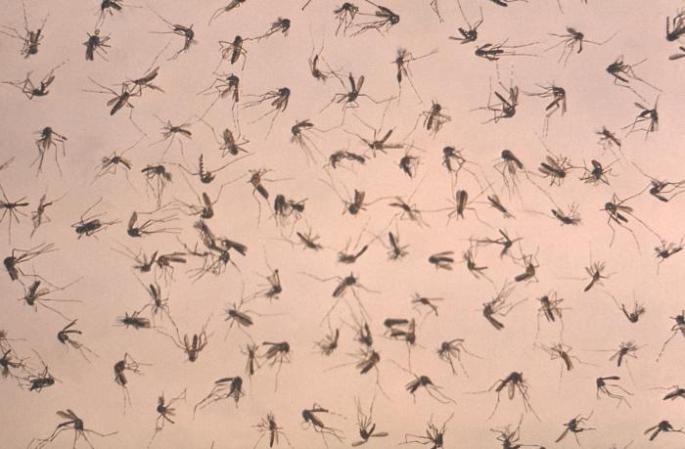
Dr. Gregory Koblentz was interviewed in a National Geographic article discussing recent research potentially indicating an offensive German biological weapons program during WWII.  Read the full article at the link below.

From National Geographic: “Gregory Koblentz of George Mason University’s biodefense graduate program remains unconvinced of the offensive nature of the Dachau work. ‘Research to assess the threat posed by different biological agents and vectors, such as May’s research on mosquitoes and malaria, is especially hard to categorize as offensive or defensive,” Koblentz says. “Even if May’s intent was offensive, it was very preliminary-many steps away from actually producing a viable insect-borne biological weapon.’

(image: CDC)

This Week in DC: Events

Some of the best of the week’s free and open to the public events on security, health, and policy.

Monday, February 3, 2014

Complexity-Aware Monitoring
Aspen Institute
8:15 – 9:45AM

How can we monitor effectively in a dynamically changing and unpredictable situation? Many monitoring approaches measure the predicted – desired results, planned implementation strategies and forecasted pathways of change – using indicators expected to provide useful information over the life of the project. Complexity-aware monitoring is intended to compliment performance monitoring by tracking the unpredictable. Three principles and five recommended approaches monitor the unforeseen and unforeseeable so that projects can remain relevant and responsive. Recommended approaches include sentinel indicators, stakeholder feedback, process monitoring of impacts, most significant change, and outcome harvesting. Complexity is commonly misconstrued as synonymous with conflict. However, most development contexts contain a mix of simple, complicated and complex aspects. Complex aspects are characterized by interrelationships, non-linear causality, and emergence. Complexity-aware monitoring approaches are useful in a wide variety of programming contexts. USAID’s “Complexity-Aware Monitoring Discussion Note” is intended to raise questions, stimulate dialogue, and — most of all — inspire experimentation. At this breakfast, Heather Britt and Melissa Patsalides will discuss complexity-aware monitoring and USAID’s efforts to support experimentation with these approaches in the Agency.

Tuesday, February 4, 2014

Negotiations on Iran’s Nuclear Program
U.S. Senate Committee on Foreign Relations
10:00AM

Witnesses: The Honorable Wendy Sherman, Under Secretary for Political Affairs, U.S. Department of State; The Honorable David S. Cohen, Under Secretary for Terrorism and Financing, U.S. Department of Treasury; Mr. David Albright, President, Institute for Science and International Security; Mr. Mark Dubowitz, Executive Director, Foundation for Defense of Democracies.

Peace and Stability in Afghanistan Post-2014: What Role for Regional Actors?
Atlantic Council
2:00PM

In 2012, the Friedrich Ebert Foundation (FES) established a network of policy groups in Afghanistan, Central Asia, India, and Pakistan for a regional project entitled “Envisioning a Secure and Independent Afghanistan Post 2014. Perspectives and Strategies for Constructive Conflict Resolution from the Neighborhood.” The project participants—high-ranking and influential policymakers, scholars, and journalists—met on a regular basis to build trust and mutual understanding and to formulate policy guidelines for the region, resulting in a joint declaration to be presented at this discussion. Khalid Aziz, Convener, Pakistan Policy Group; Ashok Mehta, Convener, India Policy Group; Sanat Kushkumbayev, Convener (Kazakhstan), Central Asia Policy Group; and Haron Amin, Facilitator, Afghanistan Policy Group will also join the discussion.

Subcommittee Hearing: Terrorist Groups in Latin America: The Changing Landscape
U.S. House Foreign Affairs
2:00PM

Panel I: Gino Costa, Ph.D., President, Ciudad Nuestra.
Panel II: Ms. Celina B. Realuyo, William J. Perry Center for Hemispheric Defense Studies, Professor of Practice of National Security Affairs, National Defense University; Mr. Douglas Farah, Senior Associate, Americas Program, Center for Strategic and International Studies; Mr. Michael Shifter, President, Inter-American Dialogue.

Wednesday, February 5, 2014

Hearing: Al-Qaeda’s Resurgence in Iraq: A Threat to U.S. Interests
U.S. House Committee on Foreign Affairs
10:00AM

Chairman Royce on the hearing: “Al-Qaeda controls more territory today than it ever has before, and much of that is in western Iraq where it has recently captured significant cities. These terrorists continue to exploit sectarian conflicts that the Iraqi government has failed to resolve, and Iraq is now on the verge of civil war. Our hearing will examine al-Qaeda’s resurgence in Iraq and its threat to regional and global security.”

Thursday, February 6, 2014

NIH Global Health Interest Group 2014 Symposium: The Role of Genomics Research in Global Health
Global Health Interest Group
10:00AM – 4:00PM

Symposium featuring Scientific topics in genomics and global health, including: Microbiome Infectious diseases Inherited/genetic conditions Non-communicable diseases Genetic engineering. Sessions on global health careers will also be included. Please click the link for more information on confirmed speakers.

Conversations in Bioethics
Georgetown Medicine
5:00PM

The Kennedy Institute of Ethics is proud to invite you to the inaugural Conversations in Bioethics, an annual campus-wide discussion of a crucial bioethics issue. This year’s topic is medical error. Did you know that preventable medical error is the third leading cause of death in the US today? One sixth of all deaths in the US can be traced to medical error, the equivalent of a jumbo jet crashing each day. Shouldn’t we be talking about this? We think so. Join distinguished national experts John James, PhD, former chief toxicologist at NASA and founder of Patient Safety America, Brian Goldman, MD, emergency physician-author and host of the CBC’s White Coat, Black Art, and Beth Daley Ullem, MBA, nationally-recognized advocate for patient safety and quality and SFS alum, for a lively discussion and Q&A moderated by Maggie Little, PhD, Director of the Kennedy Institute of Ethics.

Friday, February 7, 2014

Brian Kelley Memorial Lecture: Counterintelligence after Snowden
Institute of World Politics
6:30 PM

Featuring William M. Nolte, Former Director of Education and Training, Office of the Director of National Intelligence.

The Pandora Report 1.31.14

Highlights include abrin poisoning, norovirus on another couple cruises, a B. anthracis bacteriophage, and H7N9 fears in Hong Kong. Happy Friday!

Bank worker, 36, ‘spiked her Magistrate mother’s Diet Coke with deadly poison’
A woman in the UK is standing trial for attempting to poison her mother with abrin, by spiking her Diet Coke soda with the toxin. As we mentioned last week after a man tried to sell abrin hidden in candles, abrin is 75 times more toxic than it’s bean-derived cousin, ricin. No word yet on the source of the toxin in the case. The woman was arrested following a counterterrorism effort in the UK – she will not, however, be charged with acts of terrorism or violations of the BWC. She maintains her innocence.

London Evening Standard – “Abrin strikes at the liver, stomach and kidneys and is potentially fatal. It costs between £600 and £900. Kuntal Patel, 36, is accused of spiking a Diet Coke with abrin…Patel was arrested after a hunt for toxic chemicals at her home following information passed to the Met from the US. She has said the substance was intended for a suicide bid which she later abandoned.”

Cruise ship back in Houston after nearly 200 fall ill
We’d like to say upfront that we have a degree of admiration for anyone still willing to go on cruise ships. While we understand that hundreds of ships plow through various bodies of water without issue everyday, when things go wrong on a cruise ship, they have the unique capacity to go spectacularly wrong. In 2013 alone, there were nine outbreak of gastrointestinal illnesses on US-based cruise ships  – 7 caused by norovirus and one caused by E. coli (the cause of the ninth case rather ominously remains “unknown”). Compared to, for instance, last February’s incident involving a week of no power or working toilets, this week’s two incidents – one norovirus outbreak on a ship sickening 170, and another sickening 700, seem relatively tame.

Houston Chronicle – “The Caribbean Princess left the Port of Houston on Jan. 25 bound for the Western Caribbean with more than 4,200 people on board. The vessel was scheduled to return on Saturday. According to CDC spokesman Llelwyn Grant, 162 of the 3,102 passengers and 11 of the 1,148 crew members had reported illness by late Thursday afternoon. Ship employees implemented some of the agency’s recommendations for preventing further infections, he said…Caribbean Princess passengers will remain on the ship until they are cleared by U.S. Customs authorities, which will take several hours, according to Princess Cruises spokeswoman Julie Benson. Besides overnight accommodations in Houston, the cruise line said passengers would be offered a 20 percent credit toward a future cruise.”

Newly-discovered virus has voracious appetite for anthrax
The Tsamsa virus, a surprisingly large, newly-discovered bacteriophage (bacteria-eating virus), seems to have a preferential appetite for Bacillus anthracis. This appetite can hopefully be one day harnessed  The virus was discovered in a zebra carcass in Namibia by an international team of scientists, led by researchers from Universities Berkeley and KwaZulu-Natal  from universities around the world. And people say academia isn’t glamorous.

UC Davis PR– “The virus was isolated from samples collected from carcasses of zebras that died of anthrax in Etosha National Park, Namibia. The anthrax bacterium, Bacillus anthracis, forms spores that survive in soil for long periods. Zebras are infected when they pick up the spores while grazing; the bacteria multiply and when the animal dies, they form spores that return to the soil as the carcass decomposes.”

Hong Kong reports third H7N9 death
China has culled 22, 604 birds following a batch of poultry testing positive for H7N9. Adding to fears over the virus’ spread, yesterday another patient died following an H7N9 infection, the third in the last month. Hong Kong has also shut it’s live poultry market for three weeks to allow for thorough disinfection. The most recent death, which comes just one day before the Chinese new year, has definitely not helped assuage fears. Still no sign of sustained person-to-person transmission

Economic Times – “The 75-year-old man had previously travelled to the neighbouring Chinese city of Shenzhen and died Wednesday morning, a Department of Health spokesman confirmed to AFP without elaborating. Fears over avian flu have grown following the deaths of two men from the H7N9 strain of the virus in Hong Kong since December. A 65-year-old man with H7N9 died on January 14 and an 80-year old man died on Boxing Day last year. Both had recently returned from mainland China.”

(image courtesy of Matt Wade/Wikicommons)