Iceland, Horses, and Hendra: Greg thinks about infectious disease when he’s supposed to be on vacation

By Greg Mercer

I recently visited Iceland, which in addition to being naturally beautiful and having weird day/night cycles thanks to its latitude, is something of an ecological paradise with an excellent renewable energy record. I was surprised to learn about their horses and the restrictions placed upon them, partially for the prevention of disease.

The Icelandic horse is notable for being fairly small (pony-sized, but don’t call it a pony), adaptable, hardy, and having 5 types of gaits, a detail which is basically meaningless to me but is apparently of great significance to horse dressage enthusiasts. My companions and I stopped at a stable, where one of the breeders told us about the breed, its history, and its unique international commerce status. I haven’t met too many horses but these ones seemed pretty nice.

Icelandic horses are popular around the world, and are frequently exported to foreign buyers for work or show. Imports of horses to Iceland, however, are banned. Once they leave, they can’t go back home, and horses born outside the country aren’t allowed in. Allegedly, this has been the case for about a thousand years. It’s hard to pin down a start date for that, but the policy is in effect today. There are two reasons for this: Icelandic horses are prized for being purebred and having a heritage that dates back to Viking settlers. They’re the only breed of horse in Iceland, so maintaining these traits is easy. Presumably the 80,000 horses in the country are enough to avoid a population bottleneck (I must reiterate that I am no horse expert).

But the import ban also guards against disease. Iceland has few natural horse diseases, and the breeder I spoke to said that Icelandic horses are frequently unvaccinated, which would be very unusual in the rest of the world. When they’re exported, they have to be treated as if they don’t have any immune protection. The import ban prevents foreign diseases from entering the country (via other horses, anyway).

Horse vaccines are big business. Throughout the rest of the world, horse owners can vaccinate their horses against West Nile Virus, Influenza, Potomac Horse Fever, Rabies, and other diseases. It makes a lot of sense: horses represent a major investment. For a horse owner, the cost of vaccination could be a fraction of the financial loss from a fatal horse disease. Plus, people tend to like their horses, and want to keep them from getting sick.

Even if you aren’t a horse dressage enthusiast or otherwise equine-inclined, horse diseases are no joke. Consider Hendra virus: Named for the suburb of Brisbane, Australia, where it was first isolated, Hendra is a Henipavirus, in the same family as Nipah virus. It’s found in Australia, Southeast Asia, India, and Madagascar. It can be transmitted from horses to humans via exposure to a horse’s bodily fluids, tissues, or excretions, and can prove fatal in both humans and horses. It’s likely that horses are exposed to the virus from the urine of flying foxes, a type of large bat. The details of the fatal Brisbane outbreak are detailed in David Quammen’s excellent book, Spillover.

This is all to say that Icelandic horses have a unique situation. As long as no new equine diseases enter the country, it’s more or less a closed system. The Icelandic Food and Veterinary Authority takes this equilibrium very seriously, offering warnings about foreign disease and guidelines for preventing infection.

DoD Biosafety Failures

By Stevie Kiesel

On April 29, 2016, the Department of Defense Office of Inspector General (OIG) published “Evaluation of DoD Biological Safety and Security Implementation” (Report No. DODIG-2016-078).  This report had two objectives: (1) examine the application of biosafety and biosecurity policy and guidance across DoD laboratories that work with biological select agents and toxins (BSAT) and (2) evaluate biological safety and security oversight, compliance with applicable policy, and actions on recommendations from previous assessments. Although this review was initiated six months before the highly publicized Dugway Proving Ground anthrax inactivation incident, such biosafety and biosecurity lapses have made this report all the more relevant today.  The OIG ultimately found four areas of deficiency in federal BSAT labs, with potentially grave consequences for public health and safety.

First, DoD did not maintain biosafety and biosecurity program management, oversight, and inspections of BSAT labs in accordance with the applicable governing documents. Because of this lack of standardization (which had been noted in previous reviews), the military Services conducted laboratory inspections based on Service-level guidance and procedures that was not standardized, and went beyond being tailored to suit individual Services’ needs. In some cases, inspection procedures even varied within a Service. Specifically, the inspection procedures varied because of (1) a lack of standardized training, (2) a lack of the requisite professional experience and/or expertise among inspection team members, and (3) failure to track inspection findings and ensure long-term implementation of recommendations. These deficiencies occurred because there is no single DoD entity that can track and correct deficiencies and implement standardization procedures. Therefore, the OIG recommended that the Deputy Secretary of Defense appoints an Executive Agent for Biosafety and Biosecurity, who would conduct standardized oversight and inspections, track and follow up on inspection results, improve training, and ensure that members of the inspection teams are adequately qualified.

Second, the BSAT labs did not consistently undergo internal or external technical or scientific peer reviews, which are essential for proper oversight. Although DoD guidance required the formation of institutional-level Biological Safety Committees (which must meet at least quarterly), implementation of this requirement varies widely among the many BSAT labs. Current guidance does not contain a requirement for a similar committee on biosecurity, nor does the guidance require reporting or tracking of incidents related to physical security or personnel reliability. There is also no mechanism currently in place for incorporating lessons learned. The OIG recommended two courses of action to mitigate these shortcomings: (1) the Executive Agent should implement an external technical and scientific peer review process that addresses both biosafety and biosecurity issues, and (2) the Under Secretary of Defense for Acquisitions, Technology, and Logistics (USD [AT&L]) should issue guidance that requires all DoD BSAT labs to implement such a peer review process. Continue reading “DoD Biosafety Failures”

How to (Make Chemical Weapons) Disappear Completely

By Greg Mercer

Let’s say you’ve just had an authoritarian leader surrender his chemical weapons stockpile to you, or you’re a major world power and you’ve agreed to eliminate your chemical arsenal. How do you destroy chemical weapons?

Chemical weapons became a global security issue in the early 20th century. They were most famously used in World War I, though some early international efforts were made to prevent their use before they were actually developed and used. The horrors of their use in World War I is frequently credited with preventing their use in later conflicts (though hardly comprehensively; the Holocaust saw their pervasive use, and Iraq is no stranger to chemical weapons, to name but two examples). The modern chemical weapons prohibition as we know it, however, came to be with the 1990 Chemical Weapons Accord and 1993 Chemical Weapons Convention. These agreements thoroughly strengthened the chemical weapons control regime, and the latter created the Organization for the Prohibition of Chemical Weapons.

So, when chemical weapons need destroying, there are a few options to turn to. Two methods are commonly employed in the U.S.: incineration and neutralization.

Incineration is the Department of Defense’s (DoD) preferred method. Chemical munitions are drained from their delivery mechanisms and burned, rendering the end products either harmless or controllable. Empty warheads and shells are treated to the same heat to ensure the offending substances are completely destroyed. Incineration takes place at a handful of sites in Utah, Alabama, Oregon, and the Johnston Atoll in the Pacific.

Alternatively, the DoD has neutralized chemical agents via chemical hydrolysis, where water and a caustic agent are mixed with the agent, rendering it inert. VX nerve agent being stored in Newport, Indiana was destroyed this way. Once the process is complete, the end product must be stored.

Chemical weapons weren’t always disposed of so carefully, though. The James Martin Center for Nonproliferation Studies (CNS) cites at least 74 instances of the U.S. dumping chemical weapons at sea from 1918 to 1970. Soviet dumping was prolific but poorly documented. This was banned internationally by a 1972 convention but could still have latent effects. Deaths and injuries from exposure to chemical agents have been recorded among fishermen. When militaries dumped chemical weapons into the oceans, little thought was given to whether they would stay in one place or be distributed by currents. In 2007, the Congressional Research Service prepared a report for Congress on dealing with future ramifications from the dumping. The latent effects remain to be seen.

Retaking Ramadi and the “Afghan Model”: Stephen Biddle, Air Power, and Maneuver Warfare

By Greg Mercer
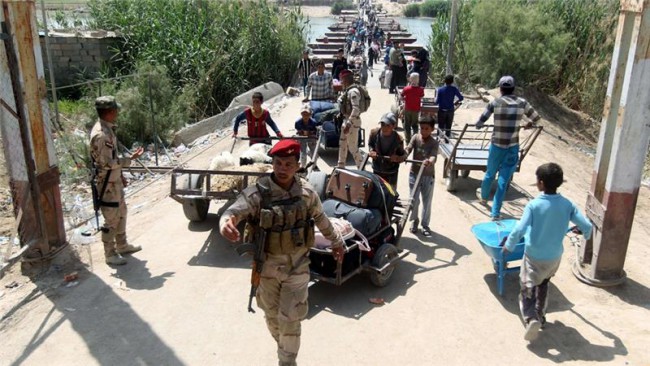
On December 29, 2015, Iraqi forces recaptured the city of Ramadi, which was controlled by ISIS. While there remains resistance (in up to 25% of Ramadi), the victory is being hailed by some as a sign that ISIS is in retreat and losing momentum. An editorial in the New York Times lays out the situation and addresses where the US stands in the fight.

Many questions remain about the conflict- where it will go, how it will resolve, the political effort it will require from intervening forces, and ultimately what kind of conflict this is.

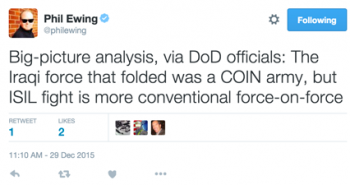
Twitter speculation is prescient, as always:

Screen Shot 2016-01-13 at 9.07.17 PM


That’s NPR’s defense writer Phil Ewing.

To assess this question of COIN-or-conventional, consider the theories of security studies hero and frequent commentator Stephen Biddle.

I have no interest in (mis)representing Biddle’s own opinions on ISIS, which have appeared in the Washington Post’s excellent Monkey Cage blogthe Atlantic, and the Council on Foreign Relations. Instead, I’m interested in two of his works addressing recent US conflicts- his seminal Military Power: Explaining Victory and Defeat in Modern Battle and his paper, Afghanistan and the Future of Warfare: Implications for Army and Defense Policy, wherein he spent a great deal of effort arguing against the idea of a Revolution in Military Affairs (RMA in Pentagonese).[1]

Military Power sees Biddle arguing that war hasn’t really changed all that much since artillery-aided maneuver warfare (Biddle calls this the “Modern System”) emerged in the First World War. This style of combat sees offenses where entrenched enemies are softened up with artillery barrages[2] and then overrun by infantry, using fire-and-maneuver tactics. Biddle supports this claim with a combination of case studies, statistical analysis of conflicts, and computer simulations. It’s something of a methodological cornerstone.

Afghanistan and the Future of Warfare takes on the dueling ideas that early American involvement in Northern Afghanistan, characterized by a Special Forces-Air Power-local allies triumvirate, is either so revolutionary as to herald a new “Afghan Model” of warfare or that it’s a complete topographical fluke unlikely to be repeated elsewhere. Biddle argues it was neither of these, but rather a fairly conventional war between two land forces characterized by its use of Special Forces to target precision guided munitions.

The Afghan Model, if it existed, would allow American air power dominance to “make conquerors” of local allies. Biddle’s test for whether Afghanistan represents a new model (the way some have said that it does) consists of three features:

  • Special Operations Forces and standoff sensors must have been able to find key targets for precision engagement;
  • PGMs must have been able to kill the targets found, at standoff ranges; and,
  • The indigenous allies’ role must have been undemanding.[3]

Basically, the aggregate of these features is a war wherein the US can take care of all of the actual finding and killing of targets with precision munitions targeted from the air, from orbit, or by small Special Forces teams, causing the enemy force structure to collapse, thus allowing local allies to take care of a few remnants and capture the territory. Biddle finds that initial operations in Afghanistan didn’t meet this standard.

These features are also a useful test for the war against ISIS. Again, the best-case-scenario is one where the 630 air strikes conducted by the US and its allies pave the way for local forces (in this case, the Iraqi Army[4]) to retake ISIS-held territory. This has been partially successful, and the Iraqis probably wouldn’t have been nearly as successful if not for friendly skies. But by Biddle’s conditions above, it would be premature to call this a new way of war. The US certainly hasn’t been able to conduct an entirely removed air war, opting to place forces on the ground. Identifying targets hasn’t been easy—ISIS occupies cities and villages populated by the civilians that the US and Iraqis seek to protect. Further complications arise from the proliferation of independent groups and actors on the ground (just look at the debate over what constitutes a Western-friendly moderate worth arming). The role of the allies on the ground has been anything but undemanding. So when we apply Biddle’s reasoning on the 2003 Iraq War and the 2002 Afghanistan War, the war against ISIS begins to look much more like a technologically advanced shade of good old maneuver warfare than a new type of conflict.

The idea of conducting an entire war from the air is compelling, though. What would it take to identify every enemy target and deliver precise munitions? The US already possesses some of the best[5] remote sensing equipment and military hardware out there, but it still requires targeting from allies on the ground or American Special Forces (as we saw in the case of the bombing of the Doctors Without Borders Hospital in Afghanistan, this is not a perfect system). To advance the art of air power to the point where it displaces land war requires near-omniscience and the ability to strike targets anywhere in the world in real time. Technologically or doctrinally, this just doesn’t exist.

Russia is simultaneously conducting airstrikes against ISIS and providing military assistance to allies on the ground. We’ve seen Russian airstrikes kill US-backed rebels and more recently, the leader of an insurgent group resisting Syrian President Bashar al-Assad’s control in Damascus. This begs the question of whether the Russian military sees itself following a conventional model of warfare, an Afghan Model, or some other model entirely. Following this, what happens when two powers try to “make conquerors” of their own local forces?

Finally, what of political solutions? The Times editorial notes that defeating ISIS militarily can’t alone solve the power vacuum and sense of Sunni disenfranchisement in Iraq that ISIS uses to build power. It’s widely understood that this requires a stable political solution, whether from within or without. Carl von Clausewitz tells us that war is an extension of politics, and in this case too we’ll have to see a military resolution and a political one.

[1] More explicitly in the former, but the latter certainly has shades of this.

[2] Biddle says that in WWI, this could mean firepower in the magnitude of nuclear weapons, dispelling the notion of boring-old-conventional-weapons.

[3] Biddle, Afghanistan and the Future of Warfare, 24

[4] And with regards to Ramadi, just the Iraqi Army. The Kurds and Iran-backed Shiites were excluded in favor of US-trained local Sunnis.

[5] Ok, the best.


The Revolving Door of Biosafety

By Scott McAlister

Have you ever seen a science fiction movie that starts with a lab accident? A scientist drops a vile with the biohazard label on it and next thing you know, boom, the zombie apocalypse is in full force.  In the real world, lab accidents probably won’t lead to a zombie outbreak, but the reality is still pretty concerning.  We have seen accidents in the last couple years that should lead to some uneasy feelings about the biosafety and biosecurity protocols and practices we have in this country.  In response to these incidents, the White House released issued a memorandum to highlight recommendations and implementation timelines to fix these problems.  This report, however, looks eerily similar to a report filed by the Trans-Federal Task Force on Optimizing Biosafety and Biocontainment Oversight in 2009.  The failure of the 2009 report to include concrete implementation made it all too easy to overlook.  Hopefully, the more prominent report released by the White House, including the implementation timelines, will be effective in curbing future lab accidents and improving biosafety.

Continue reading “The Revolving Door of Biosafety”

It’s Definitely Maybe World War 3

It’s Definitely Maybe World War 3
By Greg Mercer

The Washington Post
The Washington Post

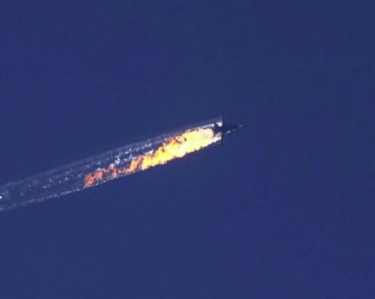
On November 24, Turkish F-16s shot down a Russian SU-24 bomber which had been flying over Syria, after an alleged violation of Turkish airspace.[1] Needless to say, the details are still emerging and the facts are still highly contested. The New York Times has an excellent comparison of claims made by Turkish and Russian officials, including the radar maps released by each country showing the airspace violation (or lack thereof).[2] Russian President Vladimir Putin called the shootdown a “stab in the back” and promised harsh consequences. Turkey called for an emergency meeting of NATO.

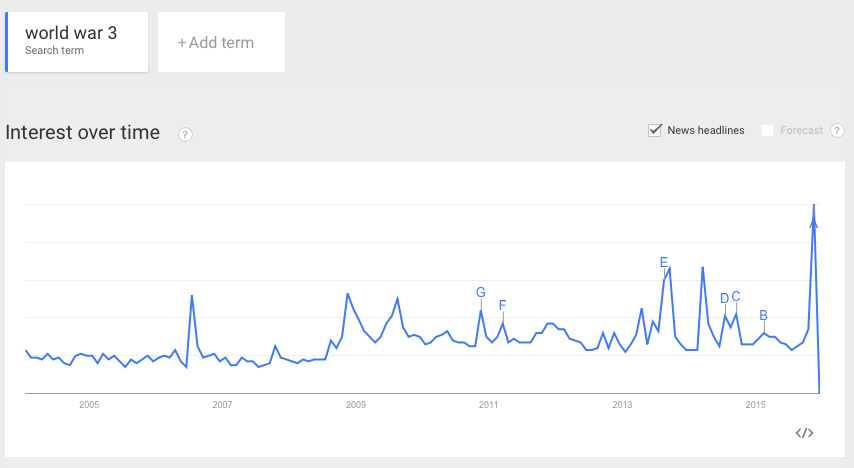
This incident and its bellicose rhetoric sparked immediate buzz about declarations of war, what exactly NATO owes Turkey vis-à-vis Russia[3], and the possibility of military confrontation between Russia and the West.  One particular phrase was cautioned against by reputable folks and seriously considered by less-than-stellar[4] sources: World War 3. I think this is really interesting, so I turned to good old search analytics to see how the internet reacted:
Screen Shot 2015-12-03 at 9.59.08 AM


Continue reading “It’s Definitely Maybe World War 3”

The Candidates on Nonproliferation Part III

The Candidates on Nonproliferation – Part 3
By Greg Mercer

I initially set out to write this as a candidate-by-candidate look at what the 2016 crop had to say about an issue near and dear to Biodefense students’ hearts: nonproliferation. As it turns out, though, not many candidates have well-developed stances on highly specific policy issues (or any issues, depending on how serious a candidate we’re talking about) more than a year from the general election. Lucky for us though, there’s been a major nonproliferation news event to drive the foreign policy debate: the Iran nuclear deal. So this is a rundown of what’s been said and is being said about nonproliferation and WMD policy in the 2016 election.

See part 1 here
And part 2 here

I’m spending even more time on campaign sites to see what the 2016 election looks like for nonproliferation.

This time, I’ll take a look at top Democrat contenders. In contrast to the Republicans, most Democrats support the Iran deal, and generally tend to favor international arms control regimes.

Hillary Clinton:
In the Democratic debate, Hillary Clinton named loose nukes among the paramount threats to the US.  This issue is commonly understood to hinge on loose radiological material from the former Soviet Union (which is notoriously poorly controlled) and other states maintaining poor control of their nuclear weapons.  The Associated Press recently released an investigation into the Moldovan nuclear black market and Islamic extremists.  She has also strongly endorsed the Iran deal, and has a unique role in the debate, having helped to implement sanctions and launch negotiations with Iran as former Secretary of State.  The Politico story linked notes that she was more hawkish than Obama on Iran in the past.  (Her support of the Iraq War in Congress has been a recurring talking point for opponents).  Now, though, their views seem to be pretty closely aligned.  Hillary’s national security issues page also leans heavily on her experience at the State Department (in addition to being pretty relentlessly on-brand).  Among the usual issues- ISIS, Russia, Israel, the Iran deal- is a very interesting one: “Highly contagious diseases are a constant threat. Warmer and drier conditions caused by global climate change, along with our increasingly interconnected world, enable germs to spread more quickly across the globe. America must remain vigilant and do more to prevent and contain outbreaks.”   This is an uncommonly specific stance, and is placed alongside cyberattacks and climate change to make up an emerging threats triumvirate.  So far, though, there hasn’t been much elaboration on actual policy options to combat this threat, or what makes it a defense issue versus, say, an international development one.

Bernie Sanders:
In 2009, Bernie Sanders echoed President Obama’s call for “a world without nuclear weapons.”  While this obviously hasn’t happened, Sanders released a statement calling for an end to the production of weapons-grade uranium and stopping the spread of nuclear weapons.  In March of 2015, Sanders cosponsored a bill to reduce American spending on nuclear weapons by $100 billion over 10 years (in grand Congressional naming convention, the Smarter Approach to Nuclear Expenditures Act, aka SANE).  A House and Senate version have been introduced, but are part of a much larger budget fight.  Sanders’ issues page supports the Iran deal, though it interestingly says the “agreement is not perfect,” but ultimately concludes that it is a far superior option to military action. As usual, Sanders officially gives his support to Obama and Secretary of State Kerry’s negotiations.  This page also does the thing where a first-person snippet introduces a long set of third-person position statements, but the personal statement highlights Sanders’ votes against the first and second Gulf Wars.  This casts him pretty clearly as anti-military intervention to prevent proliferation, but with the caveat that it remains an option.  There is also a separate, editorial-style section on just the Iran Deal, which offers more detail about uranium and centrifuge reductions.  Once again, it calls war “the last option.”  Much of Sanders’ campaign so far has hinged on economic and social issues, however, and he even said in the most recent debate that climate change is the most pressing national security threat.  When looking for threats to security, Sanders mostly looks beyond weapons of mass destruction.

Continue reading “The Candidates on Nonproliferation Part III”

The Candidates on Nonproliferation – Part II

The Candidates on Nonproliferation – Part 2
By Greg Mercer

I initially set out to write this as a candidate-by-candidate look at what the 2016 crop had to say about an issue near and dear to Biodefense students’ hearts: nonproliferation.  As it turns out, though, not many candidates have well-developed stances on highly specific policy issues (or any issues, depending on how serious a candidate we’re talking about) more than a year from the general election.  Lucky for us though, there’s been a major nonproliferation news event to drive the foreign policy debate: the Iran nuclear deal.  So this is a rundown of what’s been said and being said about nonproliferation and WMD policy in the 2016 election.

 See part 1 here.

So I’m continuing to take a look at what the 2016 election looks like for nonproliferation.

As with the previous post, Republicans in general tend to oppose the Iran deal, but let’s take a closer look at some more candidates, and move a little more toward the fringes.

Rand Paul:
Rand Paul opposes the Iran deal (surprise), and the section of his website devoted to Iran echoes Bibi Netanyahu’s “bad deal” language.  Let me tell you though, as far as issues pages go, it doesn’t get much better than this.  Not only does he have the most extensive set of issues pages I’ve seen so far, Rand’s camp has helpfully noted specific quotes, sources, and bill numbers for his voting record.  I don’t even have to go on THOMAS.  Thanks, Rand site devs!  For example, the site notes that he was a co-sponsor of The Iran Nuclear Agreement Review Act, which attempted to challenge the administration’s negotiations.  Rand didn’t always used to be this way, though.  Having gradually (and recently, not-so-gradually) drifted from a libertarian stance into one more in line with mainstream conservative thinking, he’s changed his tune a bit on Iran.  Bloomberg chronicles his shift from cautioning against military action and arguing that Iran didn’t pose a threat, in 2007, to his current position.  Rand doesn’t have much else to say about nonproliferation.   He does say that Republican hawkishness contributed to the rise of ISIS, though, which caused him to get into a fight with Sean Hannity.

Carly Fiorina:
If Rand Paul has a great website, then Carly Fiorina has the worst one yet. Her issues page isn’t accessible from the home page, and when you do find it, it’s all videos.  Carly uses some of these videos to underscore just how anti-Iran deal she is.  During the September debate, she said that if elected president, “I will make two phone calls, the first to my good friend to Bibi Netanyahu to reassure him we will stand with the state of Israel. The second, to the supreme leader, to tell him that unless and until he opens every military and every nuclear facility to real anytime, anywhere inspections by our people, not his, we, the United States of America, will make it as difficult as possible and move money around the global financial system.”  So far, she hasn’t had much to say about nonproliferation or biological weapons beyond the Iran deal.  Like Donald Trump, she’s compared the negotiating diplomatic deals to business deals, citing her experience as CEO of computer giant Hewlett-Packard.  There’s a catch there, though, and it’s one worth reading about in full other than my snarky at-a-glance version:  according to Bloomberg View, while she was CEO, “Hewlett-Packard used a European subsidiary and a Middle East distributor to sell hundreds of millions of dollars of printers and other computer equipment to Iran,” circumventing the sanctions regime.  While likely not illegal, it’s certainly been controversial.

Ben Carson:
Ben Carson’s security platform is centered on countering “Russian transgressions” and supporting Israel.  The Russia issues page features pictures of scary missiles but doesn’t explicitly mention nuclear policies.  Carson argues that Russian aggression has a destabilizing effect on Ukraine and the Middle East, ultimately threatening Europe.  He calls on the US to lead NATO and non-NATO allies “from a position of strength” and that “all options should remain on the table” when dealing with Putin.  No specific mention of nuclear weapons, but “all” is pretty broad.  On Israel, he promises unwavering support, but offers no details to this end.  To most conservative voters though, this can be read as anti-Iran deal, at least.  Carson offered another interesting claim about nonproliferation, though.  In the August debate, Carson said, “You know, Ukraine was a nuclear-armed state. They gave away their nuclear arms with the understanding that we would protect them. We won’t even give them offensive weapons.”  The excellent Politifact evaluated this claim, and concluded that it isn’t really accurate for two reasons: first, Ukraine wasn’t “nuclear-armed” because while Soviet warheads briefly resided there following the collapse of the Soviet Union, Ukraine would never have been able to launch them (according to Harvard nuclear specialist Matthew Bunn), and that while the US agreed to respect the sovereignty of- and not attack- Ukraine, it didn’t formally offer a guarantee of protection.  Implicit in Carson’s statement is the argument that Ukraine, if it had retained (and, hypothetically controlled) the nuclear weapons left after the collapse, wouldn’t have been subject to Russian aggression.  This paints Carson as a strong believer in nuclear deterrence.