This Week in DC: Events

 June 3, 2014

Technology and Military Escalation in South Asia
Date: June 3, 9:00 am
Location: Carnegie Endowment for International Peace, 1779 Massachusetts Ave NW, Washington DC 20036

In recent years, India has gained unprecedented access to high-quality, sensitive military equipment from the West. But rather than focus on qualitative advances to its arsenal utilizing these technologies, Delhi continues to focus on quantitative improvements to its conventional forces, which is perceived as threatening to India’s neighbors. Abhijit Iyer-Mitra will explore the technological and doctrinal fault lines between India’s hardware purchases and its lack of operational gains. Carnegie’s Toby Dalton will moderate the discussion.

Register here.

Military Strategy Forum: The Honorable Michael Vickers on Intelligence and National Security
Date: June 3, 9:00 am
Location: Center for Strategic and International Studies, 2nd Floor Conference Room, 1616 Rhode Island Ave, NW, Washington DC 20036

The CSIS International Security Program cordially invites you to a Military Strategy Forum discussion of: Intelligence and National Security

Featuring, The Honorable Michael Vickers, Under Secretary of Defense for Intelligence. With an introduction by, Dr. John Hamre, President and CEO, and The Pritzker Chair, CSIS; and moderated by, Dr. Kathleen H. Hicks,
Senior Vice President, Henry A. Kissinger Chair, and Director, International Security Program, CSIS

RSVP here.

US-Iran Relations Past, Present, and Future
Date: June 3, 9:30 am
Location: Atlantic Council, 1030 15th Street NW, Washington DC

The Atlantic Council’s Iran Task Force and Search for Common Ground invite you to a conversation with Seyyed Hossein Mousavian, former Iranian diplomat and author of a new book, Iran and the United States: An Insider’s View on the Failed Past and the Road to Peace, and John Marks, president and founder of Search for Common Ground.  Mousavian will offer insights from his twenty-five years representing Iran in posts including ambassador to Germany and nuclear negotiating team spokesman under former President Mohammed Khatami. Markswill reflect on eighteen years of experience in Track II dialogue and cultural exchanges with Iran. The speakers will discuss the current negotiations with Iran and the outlook for better relations under President Hassan Rouhani.

The Iran Task Force, chaired by Ambassador Stuart E. Eizenstat, seeks to perform a comprehensive analysis of Iran’s internal political landscape, its role in the region and globally, and any basis for an improved relationship with the West. This project is generously supported by the Ploughshares Fund.  Search for Common Ground is a peacebuilding and conflict transformation organization with offices in thirty-four countries.

Register here.

Voices from Japan: National Security Speaker Series
Date: June 3, 10:30 am
Location: The Stimson Center, 1111 19th Street NW, 12th Floor, Washington DC

Voices from Japan: National Security Speaker Series” is an annual public symposium that aims to bring high-profile, senior-level Japanese individuals to Washington, DC for discussions about how the US and Japan can tackle today’s global security challenges under the US-Japan alliance and in partnership with like-minded nations. It aims to provide a unique platform for senior-level Japanese officials to share their insights and concerns on a range of international issues.

On June 3, Stimson Center will host General Ryoichi Oriki (ret. Japan Ground Self-Defense Force), 3rd Chief of Staff of Joint Staff, Japan Self-Defense Force (2009-2011).

The security environment surrounding Japan has been rapidly changing in the last several years. More than ever, Japan’s defense establishment is facing an urgent need to reconsider some of the critical guiding principles of Japan’s postwar defense policies, rehash its defense policies to reflect the newly established principles and realign the JSDF to support the newly set priorities. General Oriki, based on the transformative experience he personally experienced through commanding JSDF operations in the aftermath of the 2011 Great Eastern Japan Earthquake, will share his thoughts about the complexities of security challenges Japan faces today, and the significance of deep defense relations between the United States and Japan.

RSVP here.

25 Years After Tiananmen: A Discussion with Chen Guangcheng
Date: June 3, 2:00 pm
Location: American Enterprise Institute, 1150 17th Street NW, Washington DC 20036

Twenty-five years after the 1989 Tiananmen Square massacre, the democratic aspirations of student protesters in China are no closer to fruition, remaining firmly at odds with the new “China dream” espoused by President Xi Jinping. The recent arrest of prominent human rights lawyer Pu Zhiqiang, whose clients included artist Ai Weiwei, is only the latest indicator of the increasingly inhospitable environment in which China’s dissidents find themselves.

On the eve of the massacre’s 25th anniversary, AEI will welcome prominent activist Chen Guangcheng, a self-taught lawyer and champion of victims of the one-child policy. In a conversation with AEI President Arthur Brooks, Chen will describe the human rights situation in China; speak to the evolution of free society, rule of law, and democracy; and discuss ways to enhance public understanding of the moral foundation of free societies.

If you are unable to attend, we welcome you to watch the event live on this page. Full video will be posted within 24 hours.


Check back later Tuesday for the full listing of the week’s events!

Meet Your 2014 Summer Program Faculty: Charles Ferguson

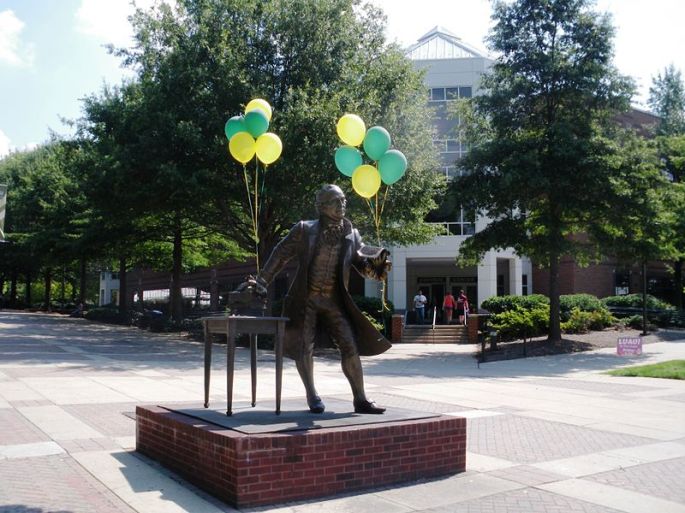
In preparation for the GMU Summer Program in International Security, this week we will highlight the course directors. EARLY BIRD REGISTRATION HAS BEEN EXTENDED TO JUNE 15! Register by June 15 to save $300 on a three-day course and $200 on a two-day course. Use the links below for more details including registration.  Questions? Comment to this post or email spis@gmu.edu.


ferguson

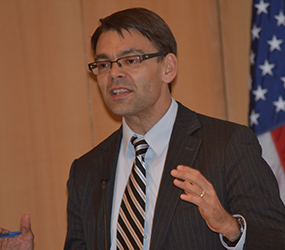
Dr. Charles D. Ferguson, President of the Federation of American Scientists (FAS), is the course director for this summer’s CBRN Weapons: Science & Policy in the Summer Program in International Security. This course will run July 7-9.

With more than twenty years’ experience in policy and national security, Dr. Ferguson has researched and written extensively on energy policy, nuclear nonproliferation, missile defense, and prevention of nuclear and radiological terrorism. His publications include 2011’s Nuclear Energy: What Everyone Needs to Know, The Four Faces of Nuclear Terrorism (with William Potter) in 2005, and the report Commercial Radioactive Sources: Surveying the Security Risks, which was the first in-depth, post-9/11 study of the “dirty bomb” threat. This report won the 2003 Robert S. Landauer Lecture Award from the Health Physics Society.

Dr. Ferguson has worked as the Philip D. Reed senior fellow for science and technology at the Council on Foreign Relations (CFR), consulted with Sandia National Laboratories and the National Nuclear Security Administration on improving the security of radioactive sources, and as a physical scientist in the Office of the Senior Coordinator for Nuclear Safety at the U.S. Department of State. He graduated with distinction from the United States Naval Academy, served in the U.S. Navy as a nuclear engineering officer, and earned a PhD in physics from Boston University. He has previously taught as an adjunct professor at Georgetown University and the Johns Hopkins University.

Click here to register for CBRN Weapons: Science & Policy.

This Week in DC: Events

May 28, 2014

The United States and Global Missile Defense
Date: May 28, 8:30 am
Location: Atlantic Council, 1030 15th Street NW, 12th Floor (West Tower) Washington DC

Please join the Atlantic Council’s Brent Scowcroft Center on International Security for our annual Global Missile Defense conference, which will take place on May 28, 2014 at the Atlantic Council headquarters.

Our annual conferences have enabled the Atlantic Council to take an active, leading role in discussions and debate concerning the role of missile defense in US security policy. Building upon last year’s conversations, this year’s event will focus on the recent developments concerning the emerging regional missile defense architectures in Europe, the Middle East, and Asia and, it will feature a panel addressing how missile defense operations are likely to evolve out to 2030.

Full schedule of events available here; Register here.

Statesman Forum on Cybersecurity Policy and Diplomacy
Date: May 28, 11:00 am
Location: School of Media and Public Affairs, Jack Morton Auditorium, 805 21st Street NW, Washington DC 20052

On Wednesday, May 28, 2014, the George Washington University Cybersecurity Initiative will host Toomas Hendrik Ilves, President of the Republic of Estonia, for a wide-ranging discussion on the state of play of the current cyber threat; policies and actions that Estonia has taken to address the challenge; the significance of U.S.-Estonia cooperation on cybersecurity; the role of other international alliances and organizations, including NATO; and recent political and military events in the region.

Following President Ilves’ opening remarks, the Chairman and Ranking Member of the House Permanent Select Committee on Intelligence, Mike Rogers and Dutch Ruppersberger, and Ambassador Paula Dobriansky, will join in a moderated Q&A session on cybersecurity, as well as U.S. perspectives on the geopolitical implications of the conflict in Ukraine.

Register here.

Fighting to the End: The Pakistan Army’s Way of War” Book Talk
Date: May 28, 12:00 pm
Location: Hudson Institute, 1015 15th Street NW, 6th Floor, Washington DC 20005

What was said of the Prussian state and its military is true of Pakistan: It is an army with a state. Pakistan’s army has dominated the state ever since its independence in 1947. Pakistan’s security-intelligence establishment has locked the country in an enduring rivalry with India that has included four full-scale wars, none of them a clear-cut Pakistani victory, and one of them (in 1971) resulting in the loss of Pakistan’s most populous province, modern Bangladesh, to independent statehood. Unable to compete with India using conventional military forces, Pakistan’s army has employed non-state actors and continued to build its nuclear arsenal.

In Fighting to the End, Dr. C. Christine Fair answers the critical question: “Why does Pakistan’s army persist in pursuing revisionist policies that have come to imperil the very viability of the state itself?” After analyzing decades’ worth of the army’s own defense publications, Fair concludes that “from the army’s distorted view of history, it is victorious as long as it can resist India’s purported drive for regional hegemony as well as the territorial status quo. Simply put, acquiescence means defeat.”

To discuss Fighting to the End in the context of Pakistan, its army, and the U.S.-Pakistan relationship, Hudson Institute will host a book talk with Dr. Fair, assistant professor in the Peace and Securities Studies program at Georgetown University’s Edmund A. Walsh School of Foreign Service. Hudson Senior Fellow and former Ambassador of Pakistan to the United States Husain Haqqani will moderate the event.

Books will be available for purchase and signing by the author. Register here.

From Dayton to Europe: A New Beginning for Post-war Bosnia and Herzegovina?
Date: May 28, 2:00 pm
Location: U.S. Institute of Peace, 2301 Constitution Ave NW, Washington DC

After several failed attempts to move Bosnia-Herzegovina beyond political and economic stalemate, last month’s joint commitment by top leaders to European values and identity, a social market economy and the rule of law might mark an opportunity for change.  Five major political parties from Bosnia’s two entities reached agreement to sign the joint declaration amid the deepest institutional crisis since the end of the war in 1995. It remains to be seen whether the parties will be able to generate support for their united stance in the run-up to the October 2014 elections.

Please join us on May 28, 2014, for a conversation with Martin Raguž, a Member of the Parliament of Bosnia-Herzegovina and President of the HDZ 1990 Party, and Edward P. Joseph, Senior Fellow at Johns Hopkins SAIS Center for Transatlantic Relations who has worked for a dozen years in the Balkans most recently as Deputy Head of the Organization for Security and Cooperation in Europe (OSCE) Mission in Kosovo. They’ll discuss the recent turmoil in Bosnia, the significance of the joint declaration by the five parties, the upcoming elections and how to move the country forward. USIP’s Renata Stuebner will moderate the discussion, which will include presentations by the two speakers and a question-and-answer period. This event follows an April 2 discussion at USIP with a Bosnian civic activist and two other panelists on the ramifications of protests for the October elections.

RSVP here.


May 29, 2014

What Good is Grand Strategy? Power and Purpose in American Statecraft from Harry S. Truman to George W. Bush
Date: May 29, 12:00 pm
Location: Heritage Foundation, Lehrman Auditorium, 214 Massachusetts Ave NE, Washington DC

Grand strategy is one of the most widely used and abused concepts in the foreign policy lexicon. In his new book, Hal Brands explains why grand strategy is a concept that is so alluring – and so elusive – to those who make American statecraft. He explores what grand strategy is, why it is so essential, and why it is so hard to get right amid the turbulence of global affairs and the chaos of domestic politics. At a time when “grand strategy” is very much in vogue, Brands critically appraises just how feasible that endeavor really is.

Brands takes a historical approach to this subject, examining how four Presidents – Harry S. Truman, Richard Nixon, Ronald Reagan and George W. Bush – and their administrations sought to “do” grand strategy at key inflection points in the history of modern U.S. foreign policy. As examples from the early Cold War to the Reagan years to the War on Terror demonstrate, grand strategy can be an immensely rewarding undertaking – but also one that is full of potential pitfalls on the long road between conception and implementation.

Hal Brands, Ph.D. is an Assistant Professor of Public Policy and History at Duke University’s Sanford School of Public Policy. He is an affiliate of the Duke Program in American Grand Strategy and serves on the Executive Board of the Triangle Institute for Security Studies. Previously, he worked at the Institute for Defense Analyses outside of Washington, D.C. and has served as a member of the RAND Corporation Grand Strategy Advisory Board.

RSVP here or watch online.

Sting of the Drone: A Book Event featuring Richard A. Clarke
Date: May 29, 6:00 pm
Location: Middle East Institute, 1761 N Street NW, Washington DC 20036

The Middle East Institute is pleased to host Richard A. Clarke, chairman of MEI’s board of governors, for a discussion of his latest book, Sting of the Drone (Thomas Dunne Books, 2014). Drawing upon over 30 years of experience in U.S. government agencies, including the Pentagon, the State Department, and the White House National Security Council, Clarke will discuss his fictional account of military and defense personnel working in the U.S. drone program. Afterwards, Clarke will sign copies of his book.

Register here.


May 30, 2014

Al-Qaeda and its Regional Affiliates: A Movement in Transformation
Date: May 30, 8:30 am
Location: Carnegie Endowment for International Peace, 1779 Massachusetts Ave NW, Washington DC 20036

This conference will bring together leading scholars and practitioners from the United States, Europe, and the Arab world to examine the complex dynamics underway within al-Qaeda. This will include its role in Syria, Iraq, Yemen, and North Africa, as well as European influence on the movement, and the broader political and social context within which al-Qaeda operates today.

Full conference schedule available here; Register here.

Russian Military Modernization and Military Operations in the Crimea, North Caucasus and Georgia
Date: May 30, 12:00 pm
Location: Heritage Foundation, Lehrman Auditorium, 214 Massachusetts Ave NE, Washington DC

Russia’s military actions in the Crimea and Eastern Ukraine have shattered two decades of relative peace in post-Cold War Europe. Twenty-two years after the collapse of the Soviet Union, Russia is rebuilding its military strength and once again rising in regional influence.

President Vladimir Putin has committed a considerable portion of the Russian GDP toward modernizing its military over the next 10 years. Russia’s aggression in the Crimea clearly demonstrates that its military has come a long way from the defeats in Chechnya in the 1994-1996 war and its lackluster performance in Georgia in 2008. The Russian military has also learned lessons from its prolonged counterinsurgency operations in the North Caucasus. If successful, the Putin military modernization will allow Russia to increase its power relative to its former Soviet and NATO neighbors and expand influence along its periphery – in the former Soviet republics, in Central and Eastern Europe, and in the Middle East – presenting further challenges for the United States and its Western allies and their decision makers.

This discussion will be based on the recent monograph, “Russia’s Counterinsurgency in North Caucasus: Performance and Consequences,” published by the U.S. Army War College in March and on a new Heritage Foundation Backgrounder, “A U.S. Response to Russia’s Military Modernization,” both authored by Ariel Cohen.

RSVP here.


MARK YOUR CALENDARS!

June 5, 2014

Pakistan’s Polio Fight
Date: June 5, 9:30 am
Location: Atlantic Council, 1030 15th Street NW, 12th Floor (West Tower,) Washington DC

Pakistan is one of just three countries where polio remains endemic. With sixty-six cases reported in the country this year and a grave warning issued by the World Health Organization (WHO) of a resurgence, the disease threatens not just Pakistan but countries across the world that have waged successful polio-eradication campaigns.  Pakistan’s health system faces challenges in addressing this threat, including limited access to remote areas and violence against polio campaign workers. Yet, increasing amounts of funding, steadily developing science, and modified organizational plans have consistently failed to surpass these challenges. Pakistan is reportedly ramping up efforts after an international travel ban issued by the WHO will prevent individuals from leaving Pakistan without proof of vaccination as of June 1. Dr. Samia Altaf will talk about measures Pakistan is taking to tackle the polio threat in Pakistan, reactions to the WHO travel ban, and the role of foreign aid.

The US-Pakistan Program is a comprehensive approach to US-Pakistan relations, focusing on the key areas of security, economic development, and public policy. The program explores these issues and their relevance, in order to develop a long-term, continuous dialogue between the United States and Pakistan. This project is generously supported by the Carnegie Corporation of New York.

Register here.

This Week in DC: Events

May 19, 2014

PONI Live Debate: The Role of Tactical Nuclear Weapons in Responding to the Crisis in Crimea
Date: May 19, 6:00 – 8:00 pm
Location: Center for Strategic and International Studies, 2nd Floor, Hess Room, 1616 Rhode Island Ave NW, Washington DC 20036

The Project on Nuclear Issues (PONI) is pleased to invite you to a live debate about U.S. and NATO nuclear strategy in Central and Eastern Europe.

In the NATO-Russia Founding Act of 1997, NATO attested that it had “no intention, no plan and no reason” to locate nuclear weapons on the territory of Central and Eastern European states. But today, as tensions over the Crimea crisis continue to escalate, many have begun to call for a reexamination of this policy. Would the presence of tactical nuclear weapons provide stability and assurance to NATO’s Eastern European members, or would such a move spark more skirmishes with an antagonized Russia? Mr. Peter B. Doran, Director of Research at the Center for European Policy Analysis, and Mr. Kingston Reif, Director of Nuclear Non-Proliferation at the Center for Arms Control and Non-Proliferation, will debate these questions at the next PONI Live Debate.

The live, in-person, debate will be also be webcast live. Viewers can ask questions of the debaters in real-time by emailing PONI@csis.org. Tune in here for the livestream. To attend in person, register here.


May 20, 2014

Revelations About the NSA: A Talk with James Bamford
Date: May 20, 12:00 – 2:00 pm
Location: Institute for Policy Studies, 1112 16th Street NW, Suite 600, Washington DC

Join us in our conference room for a conversation with James Bamford about the Edward Snowden revelations and what they mean for the country.

Bamford is an American bestselling author and journalist noted for his writing about United States intelligence agencies, especially the National Security Agency (NSA).

Al-Qaeda in Afghanistan and Pakistan: An Enduring Threat
Date: May 20, 2:00 pm
Location: U.S. House Committee on Foreign Affairs, 2200 Rayburn House Office Building, Washington DC 20515

The Subcommittee on Terrorism, Nonproliferation, and Trade welcomes the following witnesses to dicsuss Al-Qaeda in Afghanistan and Pakistan: Mr. Thomas Joscelyn, Senior Fellow at the Foundation for Defense of Democracies and Mr. David Sedney, the Former Deputy Assistant Secretary for Afghanistan, Pakistan, and Central Asia at the U.S. Department of Defense.

Watch the hearing online here.


May 21, 2014

Boko Haram: The Growing Threat to Schoolgirls, Nigeria, and Beyond
Date: May 21, 9:45 am
Location: U.S. House Committee on Foreign Affairs, 2172 Rayburn House Office Building, Washington DC 20515

Witnesses Honorable Sarah Sewall, Under Secretary for Civilian Security, Democracy, and Human Rights at the U.S. Department of State and Ms. Amanda J. Dory, Deputy Assistant Secretary of Defense for African Affairs at the U.S. Department of Defense discuss Boko Haram.

Watch the hearing online here.

The Humanitarian Crisis in Syria: Views from the Ground
Date: May 21, 2:00 pm
Location: U.S. House Committee on Foreign Affairs, 2172 Rayburn House Office Building, Washington DC 20515

The Subcommittee on the Middle East and North Africa welcomes the following witnesses to Syria: Ms. Andrea Koppel, Vice President of Global Engagement and Policy at Mercy Corps; Ms. Holly Solberg, Director of Emergency and Humanitarian Assistance at CARE; Ms. Pia Wanek, Director in the Office of Humanitarian Assistance at Global Communities; Mr. Zaher Sahloul, M.D., President of the Syrian American Medical Society; Ms. Bernice Romero, Senior Director of Policy and Advocacy at Save the Children.

Watch the hearing online here.

NATO’s Balancing Act
Date: May 21, 3:00 pm
Location: U.S. Institute of Peace, 2301 Constitution Ave NW, Washington DC 20037

Russia’s invasion of Crimea poses an urgent and serious challenge for the venerable Atlantic Alliance. Some argue that in response NATO needs to prioritize collective defense, its original mission, and deemphasize the crisis management and cooperative security roles that have involved the Alliance in conflicts from Afghanistan to Libya.

The impact of the Ukraine crisis on NATO’s balancing among these three tasks remains to be seen. Will the 28 NATO member countries agree on a common analysis of the threat? What is the role of individual NATO members, and to what extent are they willing to invest in new capabilities? These questions will be at the forefront of September’s NATO Summit in South Wales, the first since the 2012 Chicago meeting.

Join us for a discussion exploring the Alliance’s future with four world-renowned NATO experts, including David S. Yost, author of NATO’s Balancing Act.

RSVP here.


May 22, 2014

The Good Spy: The Life and Death of CIA Legend Robert Ames
Date: May 22, 9:00 – 10:30am
Location: Brookings Institution, Falk Auditorium, 1775 Massachusetts Ave NW, Washington DC 20036

On April 18, 1983, the Hezbollah-led bombing of the United States embassy in Beirut, Lebanon killed 63 individuals, including eight Central Intelligence Agency officers, one of whom was the agency’s Director of the Office of Near East and South Asia Analysis Robert C. Ames. A CIA legend, Ames was known for having established remarkable back-channel connections with Yasir Arafat’s Palestine Liberation Organization when it was still banned as a terrorist organization by the U.S. government.

In a new book, The Good Spy: The Life and Death of Robert Ames, Pulitzer Prize-winning historian and biographer Kai Bird explains how Ames was able to make these contacts, focusing in particular on Ames’ unique ability to develop friendships and ascertain shared values with a wide array of interlocutors. Bird chronicles also Ames’ rise within the CIA, his passion for the Middle East and the details of the fateful Beirut embassy bombing.

On May 22, the Brookings Intelligence Project will host author Kai Bird to examine the life and death of Robert Ames, how relations between the Arab world and West might have been different had he lived and the lessons that can be learned from Ames’ personable, human approach toward intelligence and enduring foreign policy challenges. Brookings Senior Fellow Bruce Riedel, director of the Intelligence Project, will provide introductory remarks and moderate the discussion. Following their remarks, Riedel and Bird will take questions from the audience.

Register here.


May 23, 2014

The Perils of Responsibility: Germany’s New Foreign Policy and the Ukraine Crisis
Date: May 23, 10:00 – 11:30 am
Location: Brookings Institution, Falk Auditorium, 1775 Massachusetts Ave NW, Washington DC 20036

In an orchestrated series of speeches earlier this year, Germany’s President Joachim Gauck, Defense Minister Ursula von der Leyen and Foreign Minister Frank-Walter Steinmeier called upon their nation to reconsider its reticence to confront geopolitical challenges. Touted as a paradigm shift in Germany’s foreign policy, the coordinated addresses urged Germany to adopt a more assertive voice and assume greater responsibility on global issues. At the same time, the architects of Germany’s “New Foreign Policy” reaffirmed the country’s long-standing culture of multilateralism and military restraint. The intent of the coordinated messages appeared to be two-fold: to assure Germany’s allies that it would take on a greater share of the burden of promoting global stability, and to provoke a domestic debate on Germany’s use of traditionally unpopular foreign policy tools.

On May 23, the Center on the United States and Europe (CUSE) at Brookings with the Heinrich Böll Foundation North America and the Friedrich-Ebert-Stiftung in Washington will host a panel discussion to assess Germany’s new foreign policy and the challenges posed by the crisis in Ukraine. The panelists will be Brookings Senior Fellow and CUSE Director Fiona Hill, President of the Heinrich Böll Foundation Ralf Fücks and Olaf Böhnke, head of the Berlin office of the European Council on Foreign Relations (ECFR). Brookings Visiting Fellow Jutta Falke-Ischinger will moderate the discussion.

Register here.

This Week in DC: Events

May 12, 2014

Morocco’s Approach to Countering Violent Extremism
Date: May 12, 12:00 pm
Location: Washington Institute for Near East Policy, 1828 L Street NW, Suite 1050, Washington DC 20036

Morocco’s traditionally strong counterterrorism efforts are now being challenged by the spread of terrorism to even the most stable parts of the region. At a time when al-Qaeda in the Islamic Maghreb is posing a formidable threat to the neighborhood, the crisis in Syria continues to serve as a magnet for aspiring jihadists, including Moroccans. Meanwhile, prisons in the region often facilitate radicalization rather than deter it, raising questions about how best to prevent and counter extremism and terrorism.

To discuss these and other aspects of Morocco’s threat environment, The Washington Institute is pleased to host a Policy Forum with Mohamed Salah Tamek who is the delegate-general of Morocco’s Penitentiary and Reintegration Administration. Previously, he served as governor of the Oued Eddahab province, chief of staff to the interior minister, ambassador to Norway, and head of the security portion of the U.S.-Morocco Strategic Dialogue.

Space is limited. RSVP here.

Meet the Syria Opposition
Date: May 12, 3:00 – 4:00 pm
Location: New America Foundation, 1899 L Street NW, Suite 400, Washington DC 20036

The Syrian conflict just entered its fourth year and according to some estimates the death toll is approaching 150,000 killed. A revolution that began peacefully has morphed into one of the most violent wars in recent memory, creating not just bloodshed but an unparalleled humanitarian crisis. “Victory” for any party remains elusive, the Geneva talks proved fruitless and the UN’s Syria envoy is preparing to leave the task for someone else. So what possible solutions exist for Syria? After years of fighting, a fractured society, unspeakable brutality and a lack of commitment from the international community, is Syria’s future anything but bleak?

Join us for a conversation with members of the Syrian opposition delegation currently visiting Washington, DC for meetings with senior U.S. officials. They will discuss the opposition’s vision for a new Syria and what solutions, if any, exist for the current impasse. In addition, they will address the growing global concern over the rising power of extremists and what efforts are currently underway to counter these trends. Finally, the delegation will provide the latest updates and developments from the field as well as a blueprint for the future.

RSVP here.

Ivory Towers and Palace Guards: The Disconnect between Outside Expertise and Policymaking
Date: May 12, 4:00 – 5:30 pm
Location: Woodrow Wilson International Center for Scholars, 1300 Pennsylvania Ave NW, Washington DC 20004

How does advice and information from outside experts and scholars reach top policymakers—or does it? Terms like “echo chamber” and “information bubble” are often employed to describe an environment where it is difficult for outside information to penetrate or influence the policy process. Author and consultant Suzanne Massie will share the inside story of her interactions with Ronald Reagan and how she provided him with an outside voice at a vital time. Reagan turned to Massie for her advice on understanding and dealing with Russians, and carried her suggestions — including the now famous Russian proverb, “trust but verify” — into his meetings with the new Russian leader, Mikhail Gorbachev. You can read about her latest book here.

RSVP here.

A Time to Attack: The Looming Iranian Nuclear Threat
Date: May 12, 5:00 – 7:00 pm
Location: Atlantic Council, 1030 15th Street NW, 12th Floor, Washington DC

As diplomats return to the negotiating table on May 13 in an attempt to negotiate a comprehensive nuclear deal with Iran, it is a propitious time to review the prospects for a negotiated settlement and our options for resolving the Iranian nuclear challenge if the talks do not succeed. President Obama has vowed that he is willing to do whatever it takes, including using military force, if necessary, to keep Tehran from the bomb. If not stopped, a nuclear-armed Iran would pose a grave threat to international peace and security, including the potential for a nuclear arms race in the region and around the world, and an increased risk of nuclear war, among other major threats.

In A Time to Attack: The Looming Iranian Nuclear Threat, Matthew Kroenig, internationally recognized as one of the world’s leading authorities on Iran’s nuclear program, explains why the United States must be prepared to conduct a limited strike on Iran’s key nuclear facilities if diplomacy fails to resolve the Iranian nuclear challenge.

Register here.

May 13, 2014

The Countdown Begins: All You Need to Know about an Iran Nuclear Deal
Date: May 13, 9:30 – 11:00 am
Location: U.S. Institute of Peace, 2301 Constitution Ave NW, Washington DC 20037

The clock is ticking on a nuclear deal with Iran. The deadline is July 20. An unprecedented coalition of eight Washington think tanks is hosting three discussions on the pivotal diplomacy to coincide with the last three rounds of talks. The first event—”The Rubik’s Cube of a Final Agreement”—on May 13 will explore the 10 disparate issues to be resolved and the many formulations for potential solutions.

The coalition includes the U.S. Institute of Peace, RAND, the Woodrow Wilson Center, the Arms Control Association, the Center for a New American Security, the Stimson Center, the Partnership for a Secure America, the Ploughshares Fund, and staff from the Brookings Institution and the Center for Non-Proliferation Studies.

RSVP here.

Pakistan’s Bilateral and Regional Trade Priorities
Date: May 13, 3:30 pm
Location: Atlantic Council, 1050 15th Street NW, 12th Floor, Washington DC

Economic issues are at the forefront of Pakistan’s priorities and regional connectivity is central in improving the business and economic environment there. Khurram Dastgir Khan, federal minister for commerce, has supported greater regional cooperation and led trade and commerce negotiations with India. Khan will share the government’s trade priorities, and progress made on improving regional economic connectivity and business and economic conditions in Pakistan.

The US-Pakistan Program is a comprehensive approach to US-Pakistan relations, focusing on the key areas of security, economic development, and public policy. The program will explore these issues and their relevance, in order to develop a long-term, continuous dialogue between the United States and Pakistan. This project is generously supported by the Carnegie Corporation of New York.

Register here.

Counterinsurgency and Counterterrorism in Pakistan
Date: May 13, 3:30 – 5:00 pm
Location: Carnegie Endowment for International Peace, 1779 Massachusetts Ave NW, Washington DC 20036

Pakistan is currently facing failed negotiations with the Taliban, increased jihadi terrorist attacks in its major cities, and an uncertain presidential transition in neighboring Afghanistan. While these developments have major implications for U.S. policy in the region, they pose near-existential threats to Pakistan, as well as fundamental challenges to the transition in Afghanistan. Samina Ahmed and Mark Schneider of the International Crisis Group will introduce a discussion on these challenges and what can be done to address them. Carnegie’s Frederic Grare will moderate.

Register here.

May 14, 2014

Disrupting Defense: Dynamic Security in an Age of New Technologies
Date: May 14, 8:00 am – 6:00 pm
Location: Atlantic Council, 1030 15th Street NW, 12th Floor, Washington DC

Please join the Atlantic Council’s Brent Scowcroft Center on International Security on May 14, when we will convene experts to discuss how the United States and its allies can manage the security-related challenges and possibilities of disruptive technologies.

This high-level event will focus on four topics:

  1. How emerging technologies already are disrupting geopolitics
  2. Defining a new US strategy to operate in this new environment
  3. How the US Department of Defense funds technological breakthroughs
  4. Leveraging the creativity of artists and screenwriters to envision future wars

The conference will conclude with live technology demonstrations and a reception in which participants will see first-hand examples of these disruptive technologies.

Register here.

New Terrorism Meets New Media
Date: May 14, 9:00 – 11:00 am
Location: Woodrow Wilson International Center for Scholars, 1300 Pennsylvania Ave NW, 6th Floor Boardroom, Washington DC

The Internet proves to be a useful instrument for modern terrorists who use it for a wide range of purposes – from recruitment, radicalization and propaganda to data-mining and online instruction and training. However, cyber-savvy terrorists found the need to update their online presence. There is a clear trend of terrorist “migration” to online social media, including YouTube, Twitter and Facebook. Moreover, this trend is expanding to the newest online platforms such as Instagram, Flickr, and others. Rephrasing von Clausewitz, the new media should be regarded as “an increasing continuation of war by other means.” This new arena of open and social systems presents new challenges and requires dramatic shifts in strategic thinking regarding national security and countering terrorism.

This event will not be audio or video recorded. RSVP here.

India, China, and Russia: Prospects for Cooperation
Date: May 14, 1:00 – 5:15 pm
Location: Carnegie Endowment for International Peace, 1779 Massachusetts Ave NW, Washington DC 20036

India, China, and Russia are all set to play a major role on the global stage throughout the rest of the twenty-first century. The relationships between the three nations are complex, however, with opportunities for cooperation in areas of convergent interests often being hamstrung by long-standing disputes and rivalries. This half-day conference will explore how New Delhi, Beijing, and Moscow are likely to cooperate—or clash—on major questions of international order, including energy security, defense cooperation, and regional dynamics. It will also consider the likely implications for the West.

Register here.

May 15, 2014

Ukraine Between East and West
Date: May 15, 11:00 am
Location: Woodrow Wilson International Center for Scholars, 1300 Pennsylvania Ave NW, 6th Floor Boardroom, Washington DC 20004

Ambassador Lamberto Zannier, Secretary General of the Organization for Security and Co-operation in Europe (OSCE) will discuss the unfolding crisis in Ukraine.

In recent weeks, Zannier has travelled to Kiev on numerous occasions, as well as to Moscow and other European capitals, to attempt to defuse the crisis. The Geneva Statement has called on the OSCE Special Monitoring Mission to Ukraine, which reports on security conditions throughout the country, to play a leading role in assisting Ukrainian authorities and local communities to implement de-escalation measures.

In a conversation with Wilson Center President Jane Harman, Zannier will present the OSCE’s priorities for restoring stability in Ukraine and discuss the impact of the crisis on European and Euro-Atlantic security.

RSVP here.

Meet Your 2014 Summer Program Faculty: Alexander Garza

In preparation for the GMU Summer Program in International Security, this week we will highlight the course directors. Remember, EARLY BIRD REGISTRATION ENDS MAY 15! Register by May 15 to save $300 on a three-day course and $200 on a two-day course. Use the links below for more details including registration.  Questions? Comment to this post or email spis@gmu.edu.


Alexander Garza, MD, MPH, FACEP

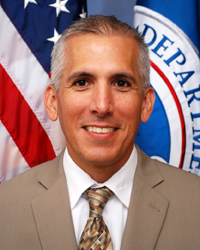
Dr. Alexander Garza, Associate Dean for Public Health Practice and Associate Professor of Epidemiology at St. Louis University in the College for Public Health and Social Justice, is the director for this summer’s Biosurveillance: National and International Levels course in the Summer Program in International Security. This course will run July 24-25.

Dr. Garza is a fellow in the American College of Emergency Physicians and a member of the American Public Health Association. He is a Senior Editor for the Oxford Handbook in Disaster Medicine and has authored numerous chapters in medical texts and published multiple articles and peer-reviewed publications.

Dr. Garza served as Assistant Secretary for Health Affairs and the Chief Medical Officer of the Department of Homeland Security from 2009-2013 and prior to that was a practicing physician and medical educator—serving as the Director of Military Programs at the ER One Institue at Washington Hospital Center, the Associate Medical Director of Emergency Medical Services for the State of New Mexico, and the Director of Emergency Medical Services The Kansas City, MO Health Department. He has served as a professor at Georgetown University, the University of New Mexico and the University of Missouri-Kansas City.

Dr. Garza served in the U.S. Army Reserve and was a battalion surgeon and public health team chief during Operation Flintlock in Dakar, Senegal. He also served as a public health team chief during Operation Iraqi Freedom and as a special investigator and medical expert for Major General Raymond Odierno. He holds a medical degree from the University of Missouri – Columbia School of Medicine, a Master of Public Health from the Saint Louis University School of Public Health and a Bachelor of Science in biology from the University of Missouri – Kansas City.

Click here to register for Biosurveillance: National and International Levels.

Meet Your 2014 Summer Program Faculty: Sonia ben Ouagrham-Gormley

In preparation for the GMU Summer Program in International Security, this week we will highlight the course directors. Remember, EARLY BIRD REGISTRATION ENDS MAY 15! Register by May 15 to save $300 on a three-day course and $200 on a two-day course. Use the links below for more details including registration.  Questions? Comment to this post or email spis@gmu.edu.


GormleyDr. Sonia ben Ouagrham-Gormley, Associate Professor of Government and International Affairs and member of the Biodefense faculty at George Mason University, is the director for this summer’s WMD Export Controls course in the Summer Program in International Security. This course will run July 10-11 and aims to increase participants’ awareness and understanding of WMD proliferation, export controls and trafficking of related materials.

Dr. Ouagrham-Gormley’s research and teaching focuses on WMD and proliferation issues. Her recent publications include “The social context shaping bioweapons (non) proliferation,” “An Unrealized Nexus? WMD-Related Trafficking, Terrorism and Organized Crime in the Former Soviet Union,” and “Banking on Nonproliferation: Improving the Implementation of Financial Sanctions.”  Her forthcoming book from Cornell University Press, Barriers to Bioweapons, extends on her article by the same name and provides the most detailed examination to date of how and why biological weapons programs succeed or fail.

Prior to joining George Mason, Dr. Ouagrham-Gormley served 10 years as a Senior Research Associate at the Monterey Institute of International Studies, Center for Nonproliferation Studies (CNS), and Editor-in-Chief of the International Export Control Observer, a monthly newsletter devoted to the analysis of WMD export control issues in the world. Dr. Ouagrham-Gormley was also an adjunct professor at the School of Advanced International Studies (SAIS), Johns Hopkins University, where she taught a course on WMD in the former Soviet Union (FSU). She received her Ph.D. in Economics of Development at the Advanced School of Social Sciences in Paris, France.

Click here to register for WMD Export Controls.

Meet Your 2014 Summer Program Faculty: Gregory Koblentz

In preparation for the GMU Summer Program in International Security, this week we will highlight the course directors. Remember, EARLY BIRD REGISTRATION ENDS MAY 15! Register by May 15 to save $300 on a three-day course and $200 on a two-day course. Use the links below for more details including registration.  Questions? Comment to this post or email spis@gmu.edu.


Koblentz

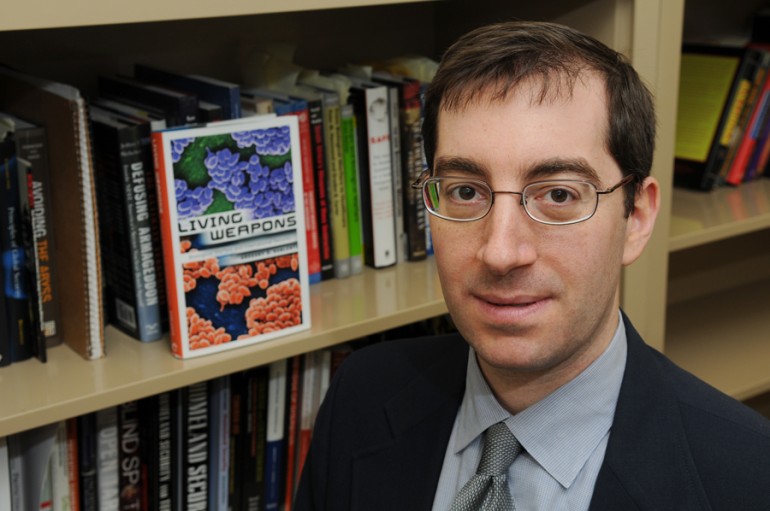
Dr. Greg Koblentz, Associate Professor of Government and International Affairs and Deputy Director of the Biodefense Program at George Mason University, is the course director for this summer’s short course: Pandemics, Bioterrorism, and International Security. The course will run July 21-23.

Dr. Koblentz’s research and teaching focus on international security, biosecurity, and weapons of mass destruction. His recent publications include “Biosecurity reconsidered: Calibrating biological threats and responses.” and “The threat of pandemic influenza: why today is not 1918.” His book, Living Weapons: Biological Warfare and International Security, remains one of the most influential publications in the field of biodefense since its publication in 2009. In fact, we often tell prospective students to read his book for a “one book version” of our Biodefense Master’s program. He is at work now on a book on nuclear proliferation.

Dr. Koblentz is also a Research Affiliate with the Security Studies Program at the Massachusetts Institute of Technology and a member of the Scientist Working Group on Chemical and Biological Weapons at the Center for Arms Control and Non-Proliferation in Washington, DC. He received his PhD in political science from the Massachusetts Institute of Technology, his Master in Public Policy from the John F. Kennedy School of Government at Harvard University, and his Bachelor of Arts from Brown University.

Click here to register for Pandemics, Bioterrorism, and International Security.

Meet Your 2014 Summer Program Faculty: Charles Blair

In preparation for the GMU Summer Program in International Security, this week we will highlight the course directors. Remember, EARLY BIRD REGISTRATION ENDS MAY 15! Register by May 15 to save $300 on a three-day course and $200 on a two-day course. Use the links below for more details including registration.  Questions? Comment to this post or email spis@gmu.edu.


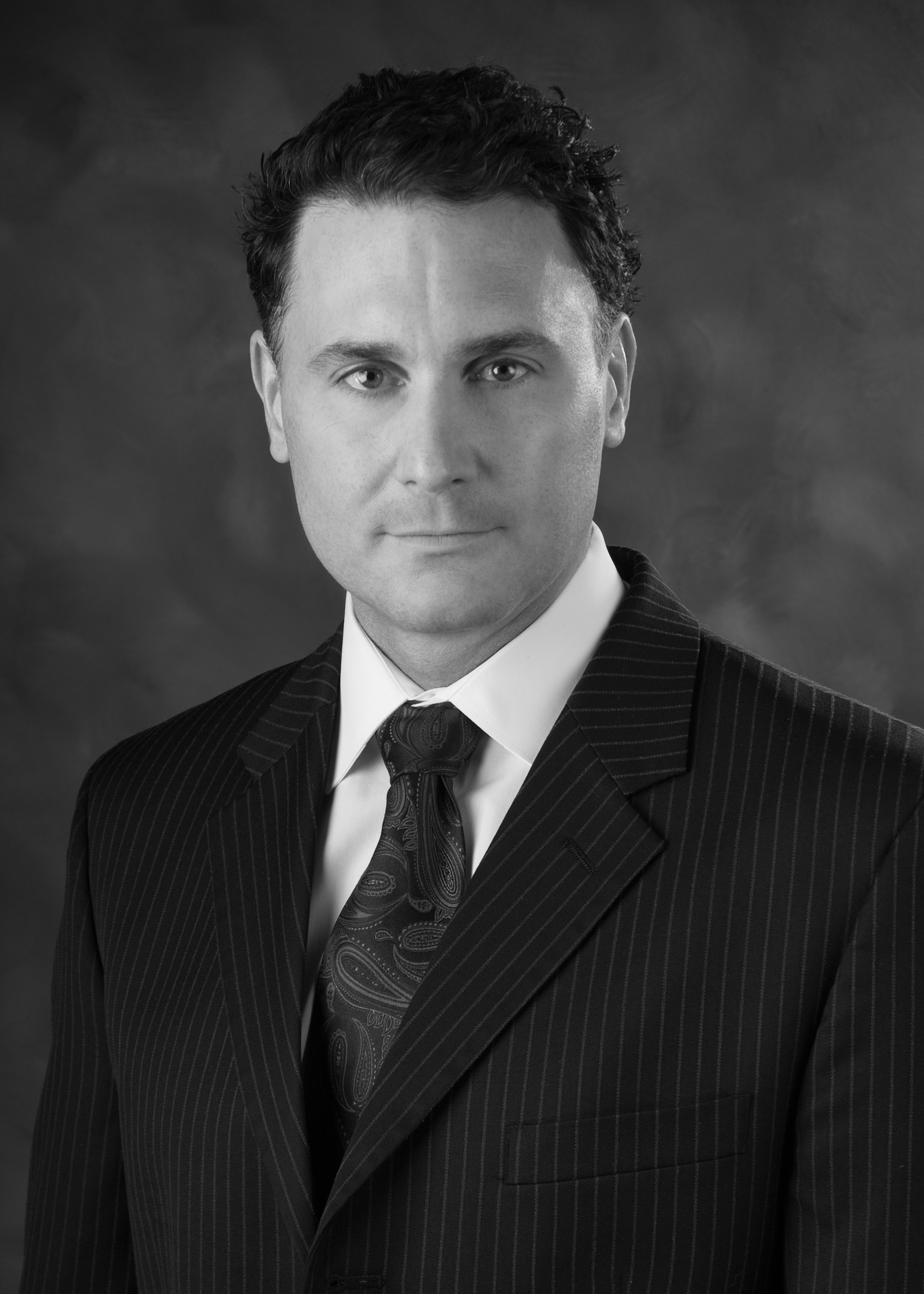
Headshot_BlairCharles P. Blair is a Washington, D.C.-based university instructor, researcher, writer, and thinker specializing in terrorism and the history, technical underpinnings, and potential futures of Weapons of Mass Destruction. He is the director for two courses in the Summer Program in International Security: 21st Century Terrorism: Emerging Trends and Evolving Tactics which runs July 14-16 and Terrorism Analysis: Quantitative and Qualitative Research Methodologies and Tools which runs July 17-18.

Since visiting Moscow as a student in 1985, Blair has worked on issues relating to globalization and the diffusion and diversification of WMD in the context of the rise of mass casualty terrorism incidents. He teaches graduate-level classes on terrorism and the technology of WMD at Johns Hopkins University and George Mason University and is a columnist for the Bulletin of the Atomic Scientists.

Recent works include: “Terrorist Nuclear Command and Control,” which was completed under the auspices of the Department of Homeland Security; a two-year DHS-backed study which investigated the U.S. extreme right-wing and radiological and nuclear terrorism; “Target Sochi: The threat from the Caucasus Emirate,”; and  “Barely Lethal: Terrorists and Ricin.”

Mr. Blair is a Senior Fellow on State and Non-State Threats at the Federation of American Scientists. Before joining FAS, he has worked at the National Consortium for the Study of Terrorism and Responses to Terrorism (START), the James Martin Center for Nonproliferation Studies, the National Nuclear Security Administration, the Anti-Defamation League, and the Center for Terrorism and Intelligence Studies.

Click here to register for 21st Century Terrorism: Emerging Trends and Evolving Tactics.

Click here to register for Terrorism Analysis: Quantitative and Qualitative Research Methodologies and Tools

Meet Your 2014 Summer Program Faculty: Charles Ferguson

In preparation for the GMU Summer Program in International Security, this week we will highlight the course directors. Remember, EARLY BIRD REGISTRATION ENDS MAY 15! Register by May 15 to save $300 on a three-day course and $200 on a two-day course. Use the links below for more details including registration.  Questions? Comment to this post or email spis@gmu.edu.


ferguson

Dr. Charles D. Ferguson, President of the Federation of American Scientists (FAS), is the course director for this summer’s CBRN Weapons: Science & Policy in the Summer Program in International Security. This course will run July 7-9.

With more than twenty years’ experience in policy and national security, Dr. Ferguson has researched and written extensively on energy policy, nuclear nonproliferation, missile defense, and prevention of nuclear and radiological terrorism. His publications include 2011’s Nuclear Energy: What Everyone Needs to Know, The Four Faces of Nuclear Terrorism (with William Potter) in 2005, and the report Commercial Radioactive Sources: Surveying the Security Risks, which was the first in-depth, post-9/11 study of the “dirty bomb” threat. This report won the 2003 Robert S. Landauer Lecture Award from the Health Physics Society.

Dr. Ferguson has worked as the Philip D. Reed senior fellow for science and technology at the Council on Foreign Relations (CFR), consulted with Sandia National Laboratories and the National Nuclear Security Administration on improving the security of radioactive sources, and as a physical scientist in the Office of the Senior Coordinator for Nuclear Safety at the U.S. Department of State. He graduated with distinction from the United States Naval Academy, served in the U.S. Navy as a nuclear engineering officer, and earned a PhD in physics from Boston University. He has previously taught as an adjunct professor at Georgetown University and the Johns Hopkins University.

Click here to register for CBRN Weapons: Science & Policy.