WHO: MERS update

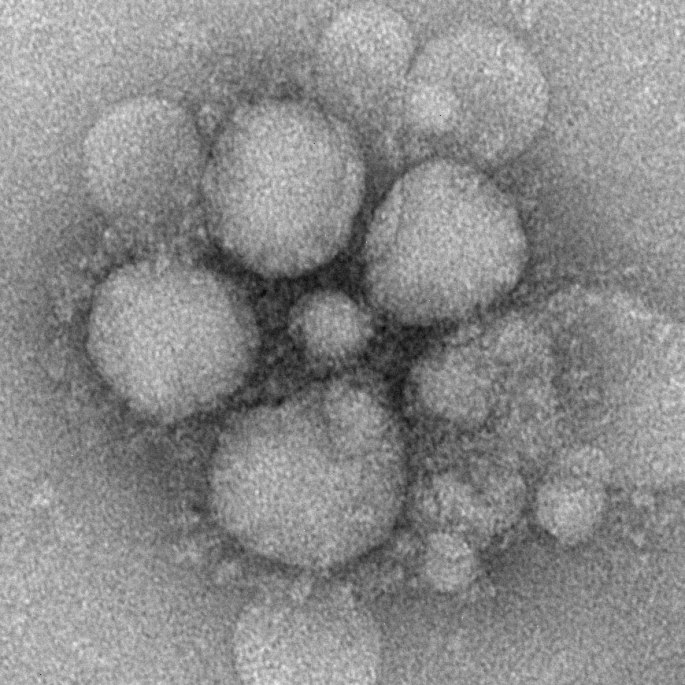
The World Health Organization released an update on MERS cases today. According to this most recent report, a further three cases of MERS have been detected in Saudi Arabia in the last week. Of the three patients, aged 73, 65, and 37 respectively, two had underlying medical conditions, and two have subsequently died, each within two weeks of becoming symptomatic. None of the three cases had prior, documented exposure to animals.

These most recent cases bring the global count up to 160 laboratory-confirmed cases, with 68 deaths.

For the full update, visit the WHO website here.

Decoding Nipah, One Protein at a Time

Researchers at the Scripps Research Institute have used X-ray crystallography to solve the structure of a key protein in Nipah’s pathogenicity. The decoding of the protein’s structure has provided researchers with further information on Nipah’s mechanism of replication. Nipah, which many of you may recognize as the basis for the virus in the film Contagion, is a zoonotic virus capable of causing symptoms ranging from respiratory distress and comas to  severe, fatal encephalitis. Currently, there is no vaccine or effective theraputic against the virus, which has an average case fatality rate of 75%.

From Science Daily – “When the scientists solved the crystal structure of the P protein, they found that it forms a tetramer, with four proteins that join to form a single unit. ‘It was surprising to us that this structure is so similar to those from measles and mumps viruses, even though they are only 5 to 26% identical in sequence,’ [first author and researcher Jessica] Bruhn said. ‘If two proteins have high sequence identity then you would expect that they would have similar 3D structures, but to see such similarity in proteins with such low identity was surprising.’ She said this speaks to the importance of structural conservation over sequence conservation — meaning that regardless of whether a protein has an identical sequence of amino acids or not, the structure could still be similar, especially when that structure has the important function of replicating the virus’s RNA genome. ”

Read more here.

(image: Mike Lehmann/Wikimedia)

First Human Infection with H6N1 Bird Flu virus

For the first time, the H6N1 Influenza A virus has successfully infected a human. A study published today in The Lancet Respiratory Medicine details the case, which occurred in May of this year. The patient, a 20-year-old woman living in Taiwan, had no prior contact with poultry, nor were any infected poultry detected in the farms near her home – the method of infection therefore remains unknown. The patient presented primarily with mild pneumonia, and successfully recovered  following a routine course of Tamiflu.

According to the Center for Disease Control in Taiwan, sequencing of the virus discovered  a mutation enabling a “G228S substitution in the haemagglutinin (HA) protein that might increase its ability to infect human cells”. After a thorough epidemiological investigation, no further cases of the virus were detected. H6N1 is a relatively low pathogenic strain of influenza.

For the Taiwanese CDC press release, see here.

(Image: Robert Sharp/Flickr)

MERS Confirmed in Camel

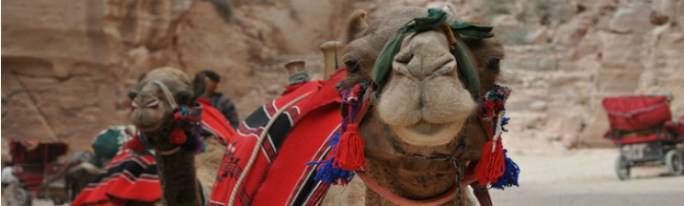
For the first time since the virus’ emergence earlier this year, the Middle East Respiratory Syndrome (MERS) has been confirmed in an animal host. The virus itself, rather than the antibodies against it, has been found in a camel belonging to a man also infected with MERS. Tests are currently underway to isolate the virus strains in the man and camel respectively. The Saudi Health Ministry is quoted as saying that if the strains are identical,  it “would be a first scientific discovery worldwide, and a door to identify the source of the virus.”  In three prior outbreak clusters, the first patient to become ill had prior contact with camels.

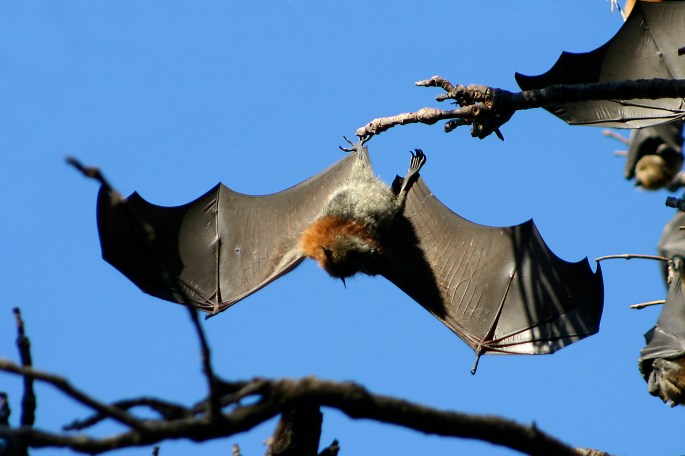
The presence of the virus in camels seems to support the most popular theory of the virus’ transmission, involving bats as the primary reservoir and camels as the main vector. However, it is still unclear what contributes to the virus’ selective infection within camels, as previous studies sampling the animals have returned negative for presence of the virus or its antibodies.

According to the most recent WHO numbers, there have been 153 laboratory-confirmed cases of MERS, including 64 deaths. The virus most commonly causes symptoms associated with severe respiratory illness (fever, cough, shortness of breath), but can also cause diarrhea, renal failure, and shock.

Fourth Case of H7N9 in China

Chinese health officials have confirmed the fourth case of H7N9 in China in the last three weeks. The most recent case, involving a 64-year-old woman, was confirmed on October 30th in the Zhejiang province on China’s eastern shore.  At this point, the scattered cases are in keeping with expected patterns of infection, and are not yet a cause for concern. It remains too early to tell if this is simply indicative of normal numbers of H7N9 cases due to cooler weather, or if another outbreak may occur. We’ll keep you posted.

(Image: A Chinese poultry shop, via Jing Photography/Flickr)

Delving Deeper: Synthetic Biology and National Security Policy

By Yong-Bee Lim

Synthetic Biology and National Security Policy: Balancing Risk and Innovation to Address the Dual-use Dilemma

Mankind’s knowledge of technology, and the building blocks of life, has rushed forward in leaps and bounds over the past 50 years. Using various techniques and databases stored with genome data, analyses are now available to health practitioners and researchers to, among other things:

  1. Spot differences between virulent (capable of causing a disease) and avirulent (incapable of causing disease) strains of a pathogen
  2. Apply epidemiological information to estimate mortality/morbidity rates of pathogens
  3. Help create innovative new preventative and prophylactic measures to deal with pathogens ranging from naturally-occurring diseases to potential biological weapons

One new biological technology that has roused interest in the science and security fields is called synthetic biology (synbio). This multi-disciplinary science (which combines elements of scientific and engineering fields) seeks to create new biological systems, or recreate older systems with novel/ enhanced characteristics by using chemically-synthesized DNA as building blocks; in essence, this is a field that seeks to build living things (biology) from the ground up (engineering).

Although synbio has only been around for a decade, it potentially offers tremendous benefits for the world, including:

  1. Diminishing World Hunger: Scientists are looking to develop plants that produce more food per harvest by findings ways to increase photosynthesis (the ability of plants to convert sunlight and nutrients into energy).
  2. Producing Energy without Fossil Fuels: Synbio scientists are researching ways to use types of algae to secrete biodiesel and other fuels.
  3. Cleaning Environmental Damage: While microbes are already used at oil spill sites to clean up petroleum, synbio scientists are looking for ways to help these microbes do a faster job.
  4. Promoting Health: Synbio scientists are finding novel ways to approach issues with drug and treatment development. Synbio has actually been used to artificially engineer the rare chemical precursor to the antimalarial drug artemisinin, which has allowed larger quantities of artemisinin to be produced than ever before.

While synthetic biology comes with many potential benefits, it also comes with a number of risks. Like many technologies, synbio suffers from the “dual use dilemma” – a phrase that refers to how scientific procedures, materials, and knowledge may be used for both beneficial and harmful purposes. The same synbio technology that produces better medicines and environmental cleaning mechanisms may also contribute to the intentional modification of an existing disease or the creation of a novel, highly pathogenic biological agent by states or terrorist organizations.

Gaps and concerns in policies have already been highlighted in regards to synbio. In 2006, journalists from The Guardian were able to order a segment of the smallpox genome from a DNA synthesis company without offering any legitimate reason for the purchase. In 2010, the National Science Advisory Board for Biosecurity (NSABB) noted that the interdisciplinary nature of synbio may mean that practitioners are not biologists that are aligned with a university or institutional setting; therefore, individual practitioners of synbio such as engineering, materials sciences, or chemistry may not follow commonly accepted principles and practices of biological risk assessment and biocontainment. The fact that synbio has been used to recreate the Spanish Flu of 1918, as well as the SARS virus for research purposes highlights the potential danger of this technology in the wrong hands.

So what should be done about synthetic biology? It is clear that the potentials for misuse of synthetic biology constitute both a national threat. However, the potentials for positive good to come from synbio highlights a need to balance security with innovation in policy. While this is not a comprehensive list, U.S. policymakers should focus on addressing the following issues related to synbio:

  1. Dealing with access to genomic data: Synbio is a field that is primarily driven by genomic knowledge and information. The first step in recreating/producing a particular pathogen involves knowing the genomic code of a particular pathogen. Crafting policies that balance the restriction of this information while providing access to researchers is a key to foster both security and innovation.
  2. Dealing with regulatory policies related to the ordering of synthetic biology materials and products: Currently, places that receive federal funding must follow certain reporting requirements to the type and purpose of their research (including why they would purchase particular materials and products). Furthermore, HHS adopted codes of conduct that issued some customer and screening guidelines for the sale of synthetic genes in 2010. While this has proven successful so far, future policies that are crafted must continue to balance the restriction of the materials and products while providing access to researchers to foster both security and innovation.
  3. Enhancing and expanding good laboratory practices (including ethical training) for all practitioners of synbio: Raising awareness and good practices for practitioners of synbio would help contribute to a culture of responsible conduct of research that mitigates the risks of synbio misuse.
  4. Increasing funding and resources for biosurveillance and response capabilities: While preventative measures would be all that is necessary in an ideal world, mitigating the effects of the misuse of synbio is a necessity in modern times. Resources should be poured into state and federal entities (such as the CDC and the USDA) to both enhance epidemiological surveillance capabilities, as well as enhance response capabilities in the event of a biological incident.

———————————————————————————————————————
Yong-Bee Lim is a PhD student in Biodefense at George Mason University. He holds a B.S. in Psychology and an M.S. in Biodefense from George Mason University as well. Contact him at ylim3@masonlive.gmu.edu or on Twitter @yblim3.

(image: Martin Hieslmair/Ars Electronica/Flickr)

New MERS Case in France

French health officials have reported a new case of the Middle Eastern Respiratory Virus in an individual returning from a trip to Saudi Arabia. The individual is in stable condition, and has been in isolation since October 28th.

Globally, there have been 144 cases of the respiratory virus to date, with 62 fatalities. In the last few weeks, transmission of the virus seemed to have slowed, before Saudi Arabia experienced a further five cases in a three day period.  The virus usually presents with respiratory symptoms, although more severe cases can result in rapid kidney failure. MERS’ primary host, reservoir, vector, and mode of transmission are all uncertain.

Read more.

Frankenstein Bug

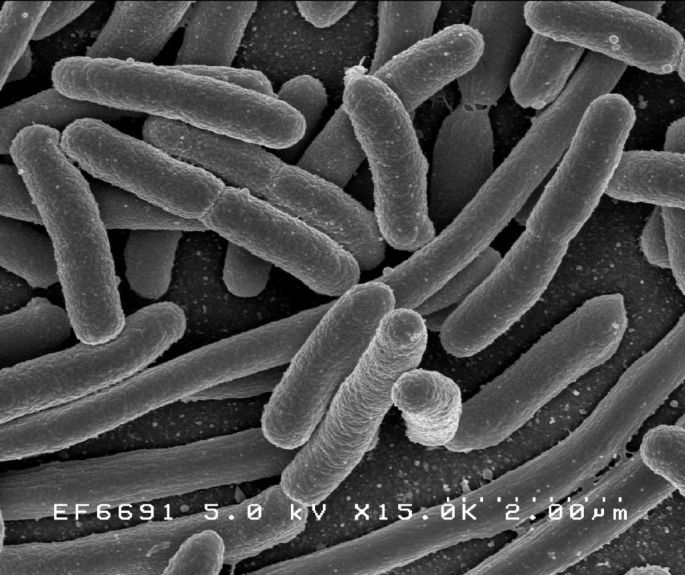
Scientists at the Universities of Yale and Harvard have rewritten the entire genome of E.coli bacteria, re-engineering the bug to be resistant to viral infection. Their successful rewriting of E.coli is the first instance in which a genome was completely altered through human agency.

“‘This is the first time the genetic code has been fundamentally changed,’ said Farren Isaacs, assistant professor of molecular, cellular, and developmental biology at Yale. ‘Creating an organism with a new genetic code has allowed us to expand the scope of biological function in a number of powerful ways.’ Isaacs co-authored the study published in the Science journal this month with George Church of Harvard Medical School and the research is based out of the field of synthetic biology, which seeks to re-design natural biological systems for useful purposes. To change the bacteria, Isaacs worked with other researchers to substitute different codons or letters (that make up the nucleic acids of DNA) to create amino acids not found in nature. ”

Read more here.

(Image of E.coli courtesy of NIAID)

Video: Dr. Paul Walker’s talk on Chemical Weapons Destruction

For those of you unable to attend our October Biodefense Policy Seminar last week, Dr. Paul Walker gave a very interesting and timely presentation on the challenges of chemical weapons destruction, both in Syria and globally. See the first part of his presentation below, and then head over to our YouTube channel to watch the rest. His slides are also included below.

Dr. Walker’s Slides: October Biodefense Policy Seminar_Dr. Paul Walker

Working on Ebola

Scientists at the University of Winnipeg in Canada have developed an Ebola treatment drug cocktail which has proven effective in 6 of seven monkeys (three cynomolgus and four rhesus) up to three days post infection. 

CTV – “The work builds on earlier research which showed a cocktail of three cloned antibodies saved four of four primates when given 24 hours after infection and two of four treated 48 hours after infection. This time the researchers added interferon-alpha, a chemical made by the immune system, to the treatment regime. Two of four primates survived when they were given the chemical one day after infection, and then the antibody cocktail four days later. In order for a treatment to be useful against the five types of Ebola viruses or their cousin, the Marburg virus, it must be something that can enhance survival when given days after infection, which is when cases would typically come to light.”

 Read more here

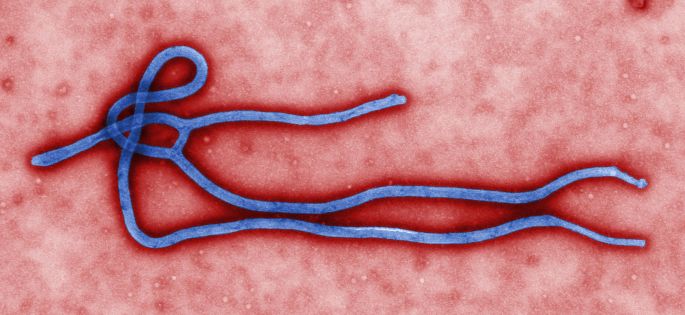
(Image: The easily recognizable ebola virus’ distinct, filamentous morphology, via CDC)