In-Depth: The Syrian “Red Line” and the Importance of Multilateral Action

The Chemical Weapons Red Line: a tedious response to the Syrian crisis and how international treaties should guide multilateral reaction

By Chris Brown, PhD Candidate

Inspectors from the United Nations (UN) are expected to report their findings on Saturday about whether chemical weapons (CW) were used in rocket attacks in Syria last week. Depending on the degradation rate and other properties of a chemical agent, if any, used in the attack, the UN investigation may also reveal what kind of weapon(s) was deployed. Sarin and VX nerve agents top the list of likely possibilities given the types of symptoms and number of casualties reported after the attacks. But determining if and which chemical agent(s) was used in Syria is only the beginning of what should be a far more complex investigation before any international action occurs. It is crucial to determine who used the agent, against whom, and what international legal obligations the user was bound by at the time of use. Only then can the international community establish a clear basis for action in Syria.

Popular opinion at present holds that Syrian President Bashar al-Asaad’s forces likely deployed CW against rebel groups and civilians. Despite the fact that the regime risks loss of power by inviting international intervention as a result of CW use, and that CW use would signal waning confidence in its forces’ ability to maintain control through conventional tactics; international opposition to the al-Asaad government, led largely by the U.S., maintains that the ruling government is to blame. “There is also very little doubt, and should be no doubt for anyone who approaches this logically, that the Syrian regime is responsible for the use of chemical weapons on August 21st outside of Damascus,” White House Spokesman Jay Carney said Tuesday.[1] Claims that Syrian rebel forces have the know-how and motivation to launch CW attacks lose strength given that the alleged CW-containing rockets were fired on a rebel-controlled region of Damascus, where civilians in the area sympathize with opposition forces.[2]

Given the assumption that Syrian forces used CW against rebels, the international intolerance for the use of CW on moral grounds alone seems to compel some sort of action. But there is little legal footing on which to base an intervention under the 1993 Chemical Weapons Convention (CWC), the primary international agreement aimed at preventing this kind of behavior by outlawing production, stockpiling and use of CW. Why? Syria never signed the treaty.

Other international agreements can and should be invoked in this situation, however. Despite not being a state party to the CWC, Syria has been a party to the Geneva Protocol since 1968.[3] The Geneva Protocol prohibits use of CW, but does not outlaw development and stockpiling, an omission that is commonly interpreted as prohibiting only first-use of CW in conflicts. Unless more conclusive evidence surfaces that rebel forces deployed CW against Syrian troops first, Syria is presumably in violation of its obligations under the Geneva Protocol, breaches of which are handled through the United Nations (UN) Security Council.

However, the formal channel of redress for Geneva Protocol violations pits the U.S. against China and, perhaps more importantly, Russia, a fairly reliable backer of the al-Asaad government. Despite the fact that Russian and Chinese participation in diplomatic efforts failed to stop alleged Syrian CW use several weeks before reports of other gas attacks in the spring leaves both states less than poised to veto U.N. security council authorization of action, Russia is reportedly bolstering its naval forces in the Mediterranean Sea. At best, this is a sign of solidarity with al-Asaad and surely an indicator that Obama and U.N. Ambassador Samantha Power will have no easy time securing the security council nod for military strikes against Syria.

Though some indirect options for continuing to support rebel forces in Syria remain viable—providing them with effective medical countermeasures and protective equipment against the state forces’ CW, for instance—direct military intervention (e.g., missile strikes) may be the only effective action left in the U.S. toolbox. However, direct U.S. action stands to produce a number of negative consequences that must be considered, including provocation of Syria’s allies, including Iran; and loss of support from Russia and China against other atrocities in the ongoing Syrian conflict. Moreover, the U.S. must be able to guarantee the stability of any new Syrian government and its ability to safely and securely handle whatever CW, biological weapons (BW), or other weapons of mass destruction may be in al-Asaad’s stockpile if and when he is ousted.

With either course of action—continued indirect support or new direct intervention—it is worth considering two additional tasks: first, at the outset of any new Syrian government, implementation of the same type of coercive diplomacy that was employed in dealing with Iraq’s BW programs in the early 1990s. The terms of the ceasefire with Iraq after the first Gulf War required Iraq to ratify the Biological and Toxin Weapons Convention.[4] If the international community (or the U.S. alone) helps a new government ascend to power in Syria, or intervenes to defeat or subdue the al-Asaad regime, it would be wise to insist that Syria accede to the CWC. Second, Syria’s alleged acquisition or development from component chemicals of sarin gas may also warrant further investigation into the supplier of materials or foreign assistance. The CWC prohibits any export of Schedule 1 chemicals (including sarin and its methylphosphonyl difluoride precursor). A state party to the CWC guilty of helping Syria acquire or develop sarin would likely be in violation of the treaty and should face appropriate consequences.

Chris Brown is a PhD candidate in biodefense at George Mason University. He holds a Master of Public Health in biostatistics and epidemiology from the University of Nebraska Medical Center, and received his undergraduate degree in biology with a minor in Spanish from the University of Louisville. Contact him at cbrown12@gmu.edu or on Twitter @ckbrow07.


[1] Jay Carney, “Press Briefing by Press Secretary Jay Carney,” August 27, 2013, accessed August 28, 2013, http://www.whitehouse.gov/the-press-office/2013/08/27/press-briefing-press-secretary-jay-carney-8272013/.

[2] Eyder Peralta, “Is It Possible the Syrian Rebels (Not Assad) Used Chemical Weapons?,” National Public Radio, August 27, 2013, accessed August 28, 2013, http://www.npr.org/blogs/thetwo-way/2013/08/27/216172145/is-it-possible-the-syrian-rebels-not-assad-used-chemical-weapons.

[3] “Protocol for the Prohibition of the Use of Asphyxiating, Poisonous or Other Gases, and of Bacteriological Methods of Warfare,” June 17, 1925, accessed May 1, 2013, http://www.icrc.org/applic/ihl/ihl.nsf/States.xsp?xp_viewStates=XPages_NORMStatesParties&xp_treatySelected=921B4414B13E58B8C12563CD002D693B/.

[4] “NTI Country Profiles, Iraq, Overview,” Nuclear Threat Initiative, December 2011, accessed May 1, 2013, http://www.nti.org/country-profiles/iraq/.

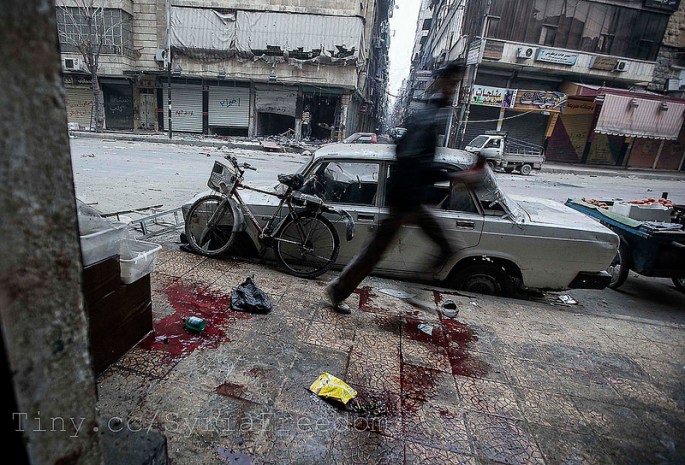
(image courtesy of Syria Freedom House/Flickr)
Qatar announces new Mers case

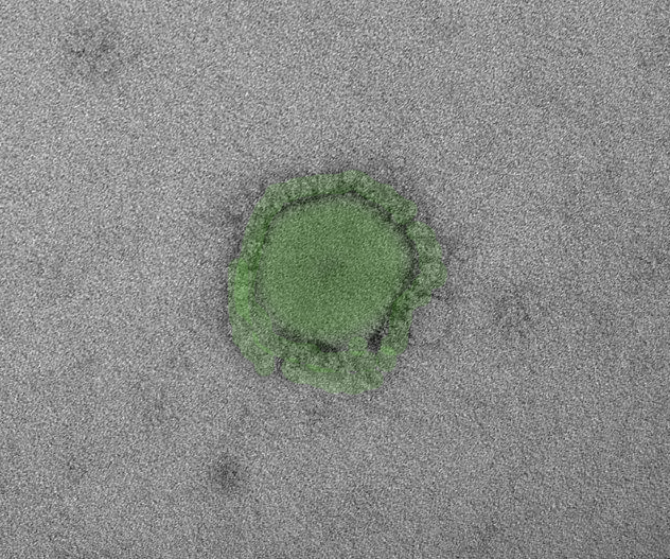
Qatar just confirmed it’s second case of Middle Eastern Respiratory Syndrome (MERS) virus in just a week. The patient is a 29-year old male, who is believed to have become infected with the virus following interaction with an infected individual. The patient is in intensive care in Doha, and is listed as in critical condition. It is unknown whether the newest patient had underlying health conditions which rendered him immunocompromised.

Read more here.

(image of MERS virus via Cynthia Goldsmith/Azaibi Tamin/CDC with false color added)

Blair discusses Syrian CW use on Rachel Maddow Show

GMU Biodefense Adjunct Professor and Federation of American Scientist Senior Fellow on State and Non-State Threats Charles Blair was interviewed by MSNBC’s Rachel Maddow yesterday on Syrian chemical weapons use. Blair discussed the difficulty of ascertaining, as outsiders, whether or not the claims of chemical weapons use against the Syrian rebels are legitimate. Watch the full interview below.

Eastern Equine Encephalitis confirmed in Maryland horse

A horse in Worcester County, Maryland has tested positive for Eastern equine encephalitis (EEE),  a mosquito-bourne virus which can be fatal to horses and cause serious disease in humans. Although the County is spraying for mosquitoes, horse owners in the area are  strongly encouraged to discuss vaccinations with their veterinarians.

The US averages 15 cases of EEE a year, usually within southern and eastern states. Symptoms of EEE in humans include fever, vomiting, photophobia (fear of light), and headache, with siezures, coma and eventual death possible as secondary symptoms. The case fatality in humans can be as high as 60%, with survivors often experiencing severe brain damage.

For more information of the Worcester case, see here.

(image courtesy of CDC)

2013 Biological Weapons Convention Meeting of Experts underway

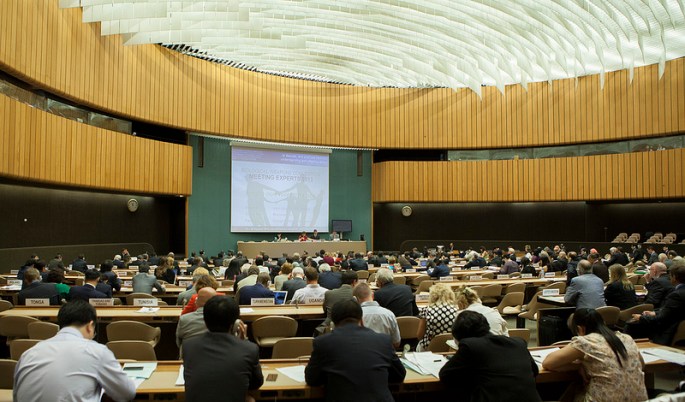
The 2013 Biological Weapons Convention (BWC)  Meeting of Experts is in its penultimate day at the Palais des Nations in Geneva.  The biennial meetings, which began in 2007 following the Sixth Review Congress,   bring together stakeholders from State Parties, NGOs, research institutions, and the sciences for collaboration both on the treaty itself and issues of importance to it. Agenda items for this year’s meeting include bolstering cooperation and assistance, particularly under Article X of the BWC, increasing the dismally low participation in the annual Confidence-building Measures (CBM), increasing national implementation of the treaty, and examining germane developments in scientific research.

A full list of all official documents, including papers submitted by State Parties, is available here (our favorite is the UK & Northern Ireland’s aptly titled paper, “We Need to Talk About Compliance“). The meetings, which began on Monday, will conclude tomorrow.

(Image courtesy of the US Mission Geneva/Flickr)

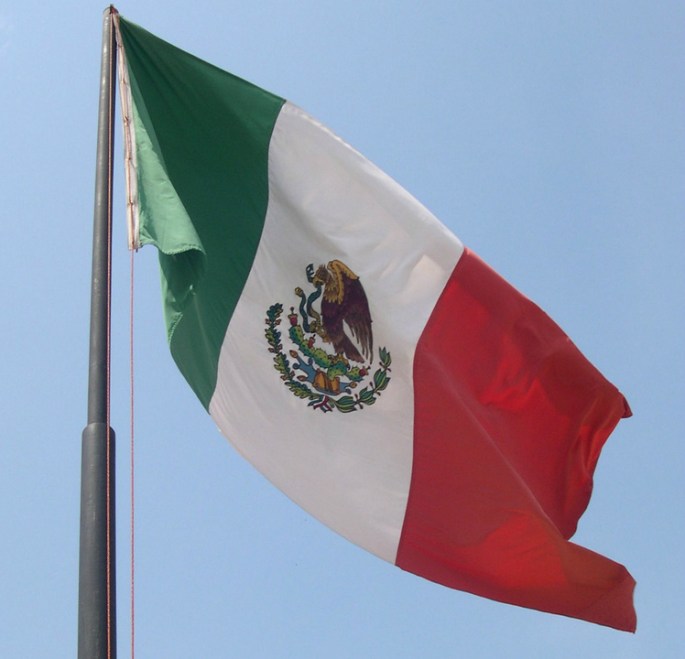
Mexico joins Australia Group

For those of you unfamiliar with the name, the Australia Group is an informal consortium of countries seeking to restrict unintentional transfer of dual-use chemical/biological materials, through participation in voluntary export controls. The group arose in 1984, following Iraq’s ability to purchase chemical weapons components through legitimate international channels. The Australia Group fills a critical niche internationally, helping to prevent the unintentional proliferation of WMD components. The group has since expanded from its 15 founding members to include 42 countries and the European Union, with Mexico joining yesterday as its 42 member.

From the press release:

In warmly welcoming Mexico to the Group, the other Australia Group members recognised the Government of Mexico’s steadfast efforts to bring Mexico’s export control system fully into line with AG common control lists and guidelines, and its determination to contribute even more effectively to the global effort to prevent the proliferation of CBW in the security interests of all members of the international community. Mexico has also underlined its continuing commitment to WMD non-proliferation and to strengthening international standards for best practice export controls.

In joining the Group, the Government of Mexico said it would contribute constructively to the achievement of the Group’s objectives and to support its principles, in the interest of disarmament, global security and non-proliferation. As an AG Participant, Mexico would also promote the fulfilment of international obligations created under the Biological Weapons Convention (BWC), the Chemical Weapons Convention (CWC) and UN Security Council Resolution 1540, among others.

Read the full release here.

(image via Kate Sheets/Flickr)

Researchers mutating H7N9, increasing virulence and P2P transmission

Twenty-two researchers from labs across the world submitted a letter to Nature and Science yesterday detailing their proposed “gain-of-function” research on the avian influenza virus H7N9. Their work would genetically engineer H7N9 to make it both more virulent and more readily transmissible person-to-person. The research sounds controversial, not the least because one of the scientists involved is Dr. Ron Fouchier, whose on gain-of-function work on H5N1 ingnited furious debate over what should research should and shouldn’t be published. However, there is a very real possibility that H7N9 will naturally mutate to transmit effectively between people. We already know that the virus is just a single amino acid mutation away from becoming easily transmissible between people. Indeed, news of the first confirmed case of such transmission was published in the British Medical Journal this week. With a 60% fatality rate and a completely naive global population, the results would be catastrophic. The proposed research would give us an idea of potential pandemic scenarios, giving us a head start on potential vaccine and antiviral development.  It may be controversial, but it’s absolutely necessary.

For the full letter, see here.

(image credit: Yoshihiro Kawaoka University of Winsconsin, Madison)

CDC’s Cyclospora update

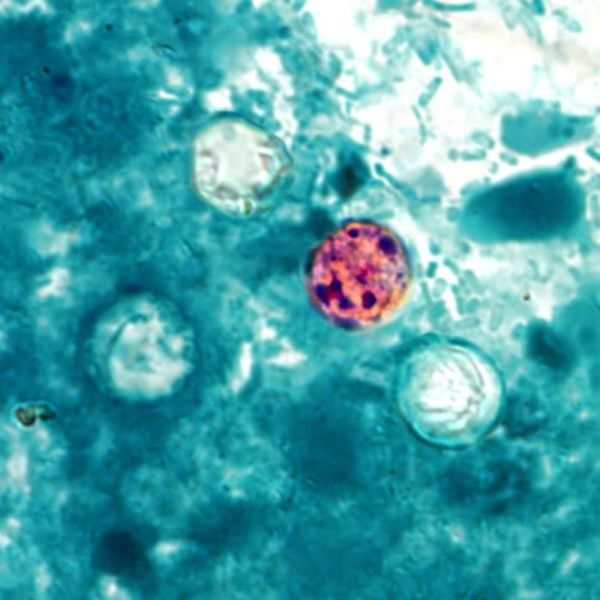
As we’re sure most of you know, the parasite Cyclospora cayetanensis, a protozoan currently causing gastrointestinal symptoms in 397 people in 16 states and New York City. The source of the outbreak is thought to be pre-packaged salad mix in Iowa.

Via the CDC: “Nebraska and Iowa have performed investigations within their states and have shared the results of those investigations with CDC. Based on their analysis, Cyclospora infections in their states are linked to a salad mix. CDC will continue to work with federal, state, and local partners in the investigation to determine whether this conclusion applies to the increase in cases of cyclosporiasis in other states. It is not yet clear whether the cases from all of the states are part of the same outbreak.”

For more information, see here.

Costa Rica experiencing dual outbreaks of Dengue and H1N1

Public health officials in Costa Rica are scrambling to contain two ongoing outbreaks of dengue and H1N1 respectively. Dengue, one the WHO’s “neglected tropical diseases”, has been making the rounds in Central America, with limited outbreaks of dengue in Nicaragua and Honduras. Costa Rica is currently working on vector control to stop the spread of the mosquito-bourne virus. Meanwhile, Costa Rica is also working to contain a limited H1N1 outbreak, but is struggling with maintaining sufficient numbers of vaccines.

Costa Rica Star – “According to online news daily Costa Rica Hoy, health officials from la Caja estimate that more than $500 million have been spent on treatment and paid sick leave of patients who fall ill from dengue fever. According to actuaries studying figures from La Caja’s hospital and epidemiological expenditures, the costs in 2013 have not only been higher than in the previous year; they are also higher than similar costs during 2008 and 2009 combined. Dengue hemorrhagic fever, which can be fatal, has already claimed a couple of lives in Costa Rica. The Ministry of Health has been actively involved in controlling the vector population of Aedes aegypti, the carrier mosquito that breeds in stagnant pools of water located in the tropics. Efforts in controlling this potentially deadly insect include habitat destruction and fumigation.”

Read more here.


Read Now: Nature Report on Bioterrorist Attack Scenario

We know we live in a globalized world, which we all know means in one 48-hour period, a person can get from California to Hong Kong to London and back. What we don’t know is what this means for bioterrorism. If a bioterrorist were to release pneumonic plague in Delhi, how long would it take it spread to New York City? How many people would it infect along the way? How many fatalities would have to occur before we noticed? Nature looks at these questions, in metapopulation modelling detail, in its recent Scientific Report, Human mobility and the worldwide impact of intentional localized highly pathogenic virus release. They selected smallpox (which we think is kind of an obvious choice, to each their own) and developed a couple models of spread, with the most likely being bioterrorist “suicide bombers” – terrorists who infect themselves with the pathogen and then intermix with populations in large, metropolitan cities. The results are frightening. 

Abstract: “The threat of bioterrorism and the possibility of accidental release have spawned a growth of interest in modeling the course of the release of a highly pathogenic agent. Studies focused on strategies to contain local outbreaks after their detection show that timely interventions with vaccination and contact tracing are able to halt transmission. However, such studies do not consider the effects of human mobility patterns. Using a large-scale structured metapopulation model to simulate the global spread of smallpox after an intentional release event, we show that index cases and potential outbreaks can occur in different continents even before the detection of the pathogen release. These results have two major implications: i) intentional release of a highly pathogenic agent within a country will have global effects; ii) the release event may trigger outbreaks in countries lacking the health infrastructure necessary for effective containment. The presented study provides data with potential uses in defining contingency plans at the National and International level.”

Read the full report here