The Pandora Report

Highlights include lyssavirus, a treatment for Ebola, predicting the next pandemic, stressing out bacteria, weapons inspection in Syria, and Flu’s grappling hooks. Happy Friday!

Experts Sound Global Alert Over Deadly Bat Virus

Lyssavirus is a close cousin of rabies, both in terms of presentation and its potentially years-long incubation period. The virus does not transmit well person-to-person, though the possibility of such was enough to prompt a terse warning from the doctors involved is this case – “In short, people should stay away from bats.”

The Jakarta Globe – “Experts on infectious diseases on Thursday warned people to stay away from bats worldwide after the recent death of an eight-year-old boy bitten in Australia. The boy last month became the third person in the country to die of Australian bat lyssavirus (ABLV), for which there is no effective treatment…Other lyssavirus strains circulate in bats in the United States and Europe and the experts said their warning applies to wherever bat or flying fox populations exist.”

Chemical Compounds That Halt Virus Replication Identified

It has been literal months since we’ve mentioned Ebola, which is actually pretty good news. What better way to break the radio silence than with news of a potential treatment?

Science Daily – “In this study, researchers identified a new chemical class of compounds that effectively blocked genetically diverse viruses from replicating by limiting RNA production by the virus in cell culture. These indoline alkaloid-type compounds inhibited a number of viruses from replicating, including Ebola…’Because the production of viral RNA is the first step in successful replication, it appears that we have uncovered an Achilles heel to halt virus replication,’ said [lead author] Filone. ‘These compounds represent probes of a central virus function and a potential drug target for the development of effective broad-spectrum antivirals for a range of human pathogens.'”

UCLA-led team predicts China, Egypt could be new-flu hot spots

The team cross-referenced areas with high incidences of  H3N2 (in humans) and H5N1 (in birds) respectively, while also looking for large numbers of swine (which can be infected with both strains from both hosts, and can therefore reassort the virus before passing it along). The results? China and Egypt.

Los Angeles Times – “UCLA postdoctoral researcher Trevon Fuller and colleagues published their work online on March 13 in the U.S. Centers for Disease Control and Prevention journal Emerging Infectious Diseases…Fuller and his colleagues used new techniques to assess conditions in a number of places to see how likely a reassortment event might be. While a new pandemic could possibly emerge from a number of combinations of flu strains, the team focused on reassortment between human H3N2, a version of which was prevalent in the U.S. this flu season; and avian H5N1, a widespread bird fluthat has been rare in humans so far but has proven deadly among the hundreds of people it has infected.”

Bacterial byproduct offers route to avoiding antibiotic resistance

Researchers at Princeton are using bacteria’s natural susceptibility to oxidative stress to develop safer antibiotics. Contrary to popular  belief, “oxidative stress” does not refer to one’s state of being upon entering the Metro, but rather is a bacterial state induced as a result of increasing bacterial production of reactive oxygen species [ROS].

Princeton News – “In a recent paper in the journal Nature Biotechnology, first author Mark Brynildsen, a Princeton assistant professor of chemical and biological engineering, reported that scientists can force bacteria to increase their production of a class of molecules called reactive oxygen species, which can either kill the bacteria outright or make them far more vulnerable to antibiotics. Bacteria normally produce reactive oxygen species during growth. Small amounts don’t hurt them because of certain protective enzymes within the bacteria, but too much of the substances can lead to “oxidative stress.” The researchers decided this weakness could be exploited.”

Syria’s chaos complicates task for chemical weapons investigators

Syria continues apace, with rebels and the Assad regime swapping allegations regarding chemical weapons use. Now it’s just the simple matter of getting an inspections team into the middle of a civil war to attempt to collect biological samples. Weapons inspecting – not for the weak.

NBC News – “Secretary-General Ban Ki-moon said Thursday that he had agreed to conduct an investigation of allegations of an attack in the northern city of Aleppo. The government and the opposition have accused each other of carrying out that attack on Tuesday…Ralf Trapp, a German who works on disarmament and non-proliferation issues, specializing on chemical and biological weapons, said…a big question will be how soon the UN and the Organization for the Prohibition of Chemical Weapons – of which Trapp is a former official — can get a team into Aleppo. He said the team would have to be large and varied, with security officers and medical officers as well as inspectors. But each day lost will influence the speed with which the investigation can be concluded, he said, because as more time elapses before biological sampling occurs, more sophisticated DNA and other toxicological testing is required.”

A viral grappling hook: Flu virus attacks like a pirate boarding party

Included in part because there was a pirate simile in the title. Leave me alone, it’s Friday. But also, read the article, because it’s an interesting presentation of flu’s mechanism,  and because it used a pirate simile in the title.

Phys.org – “When the virus encounters a cell—in your lung, for example—that cell may engulf the virus inside an internal membrane called an endosome. To escape that bubble, the virus fuses its membrane with the endosome’s, opening a window into the cell’s interior…To fuse the two membranes, the virus carries a protein called hemagglutinin (the “H” in H1N1). Triggered by the acidic environment of an endosome, that protein will extend from the viral membrane and attach, like a grappling hook, to the endosome’s membrane. When enough hooks are set, they draw the membranes together until they fuse.”

 

“After SARS: A New Virus in Saudi Arabia Underscores the Need to Police Disease in Animals”

Good opinion piece on the need for greater animal health monitoring (most of the scariest pandemic threats are, in fact, zoonotic):

“Animal health gets just a fraction of the resources that human health does, which is why we are rarely able to detect new viruses before it’s too late and they’ve already crossed the species barrier. In the wake of SARS and the avian flu flare-ups over the past decade, however, that is beginning to change. I’ve written before about the virologist Nathan Wolfe and his Global Viral Forecasting group, which tries to use on-the-ground surveillance and computer modeling to predict when and where new viruses will emerge to threaten the human race. But there other groups working to police the boundaries between human and animal health, and one of them — the New York City–based EcoHealth Alliance — has a new paper out that demonstrates just how many unknown coronaviruses are out there, competing to be the next SARS.”

Read more

Image of the Week!

E.Coli Fireworks!


Description via the American Society for Microbiology:

“Each bright dot marks a surface protein that tells the bacteria to move toward or away from nearby food and toxins. Using a new imaging technique, researchers can map the proteins one at a time and combine them into a single image. This lets them study patterns within and among protein clusters in bacterial cells, which don’t have nuclei or organelles like plant and animal cells. Seeing how the proteins arrange themselves should help researchers better understand how cell signaling works.”

Credit Line
Derek Greenfield and Ann McEvoy, University of California, Berkeley”

This Week in DC: Events

Don’t forget the Biodefense Policy Series inaugural lecture  is this Wednesday at 7:20PM! The seminar will feature Dr. Charles Bailey, Executive Director of the National Center for Biodefense and Infectious Diseases. Click here for more details – we hope to see you there! 

DC EventsTuesday, March 19th

Setting Priorities for American Leadership: A New National Security Strategy for the U.S.’
12:30 – 2:00PM
Johns Hopkins University SAIS

Jim Goldgeier, co-chair of the Project for a United and Strong America and dean of American University’s School of International Studies; Kurt Volker, co-chair of the Project for a United and Strong America, executive director of Arizona State University’s McCain Institute for International Leadership and senior fellow at the SAIS Center for Transatlantic Relations (CTR); and Hans Binnendijk (moderator), CTR senior fellow and visiting scholar, will discuss this topic.

Wednesday, March 20th

Awareness and Impressions of Synthetic Biology: Results of the 2013 Poll
12:00 – 2:00PM
Woodrow Wilson Center

In our latest survey, conducted in January 2013, three-fourths of respondents say they have heard little or nothing about synthetic biology, a level consistent with that measured in 2010. While initial impressions about the science are largely undefined, these feelings do not necessarily become more positive as respondents learn more. The public has mixed reactions to specific synthetic biology applications, and almost one-third of respondents favor a ban on synthetic biology research until we better understand its implications and risks…Please join us Wednesday, March 20, 2013, at noon to discuss the complete results from the latest poll. A light lunch will be served beginning at 11:30 am.

Counterterrorism Policies and Priorities: Addressing the Evolving Threat
2:15PM
U.S. Senate Committee on Foreign Relations (Senate Dirksen 419)

Witnesses include: Jane Harman (President, CEO Woodrow Wilson International Center for Scholars), Michael E. Leiter (Senior Counselor to the CEO, Palantir; former Director of the National Counterterrorism Center), Kenneth L. Wainstein (Partner, Cadwalader, Wickersham & Taft LLP; Former Assistant to the President for Homeland Security and Counterterrorism)

Biodefense Policy Series
7:20 PM
George Mason University (Johnson Center Meeting Room B)

Dr. Charles Bailey is the Executive Director of the National Center for Biodefense and Infectious Diseases. He manages a Biosafety Level -3 containment laboratory and conducts translational research aimed at developing diagnostics, antiviral drugs, therapeutics and vaccines against biological threat pathogens or newly emerging infectious diseases. Prior to joining George Mason, Dr. Bailey served in the US Army for 25 years where he conducted research on arthropod borne viral diseases in the US, Southeast Asia and Africa. Dr. Bailey also served as a senior analyst with the Defense Intelligence Agency and as an analyst for the Battelle Memorial Institute.

Thursday, March 21st

Why this defense drawdown must be different for the Pentagon
9:00 AM
American Enterprise Institute

America’s military drawdown is well underway. For years, the Pentagon has been cutting capability and capacity, scaling back war plans, absorbing ever more efficiencies, canceling weapons systems, and reducing readiness in response to roughly $1 trillion in defense budget cuts before sequestration. The onset of sequestration means that this approach is no longer feasible…At this event, AEI’s Marilyn Ware Center for Security Studies will host a panel of defense experts to discuss the right and wrong ways to further cut the defense budget.

Friday, March 22nd

Phantom Menace or Looming Danger?: A New Framework for Assessing Bioweapons Threats
12:00PM – 1:30PM
Woodrow Wilson Center

This book discussion event with author Kathleen Vogel is part of an ongoing series that provides a forum for policy specialists from Congress and the Executive, business, academia, and journalism to exchange information and share perspectives on current nonproliferation issues.

The Pandora Report

Highlights include NCov’s mechanism of action, Dengue in Key West (Spring Breakbone?)(sorry, very sorry), the ongoing debate around stocking up on vaccines we may never use, will Assad use biological weapons?, Zithromax and irregular heartbeats, and using bacteria to deliver vaccines for us. Happy Friday!

Novel Virus Entry Portal Found

On the heels of the WHO confirming the 15th case of NCov, it’s now known that the virus utilizes the DPP4 host cell protein for entry.

The Scientist – “Dutch researchers have identified the host cell protein that allows a recently discovered coronavirus to enter its target cells, according to a study published today (March 13) in Nature. The structure of the protein, called DPP4, appears to be conserved between bats and humans, suggesting that the new findings will help shed light on zoonotic transmission of the virus, as well as provide a target for potential vaccines.”

Mosquito-borne dengue virus lands in Key West

Dengue, also known as “breakbone fever”, continues to be one of the most significant “neglected” tropical diseases, with its occurence  seeing a 30-fold increase over the last five decades. It’s re-emergence in the US, therefore, is disturbing but unfortunately not especially surprising.

LA Times – Although the mosquito-borne dengue virus was thought to be fully eradicated in the continental United States, the Centers for Disease Control and Prevention confirmed Wednesday that the tropical disease had indeed returned…after reviewing 93 dengue cases diagnosed in Florida in 2009 and 2010, study authors identified a specific strain of the virus in patients who had not recently traveled outside the country. The strain differed from those cases in which the patient had recently traveled.”

Wary of Attack With Smallpox, U.S. Buys Up a Costly Drug

This debate strikes at the heart of preparedness – do we invest in the smallpox vaccine now, in the off chance a bioterrorist attack with the pathogen occurs, or spend the money elsewhere and risk catastrophic casualties? While those of you born before 1980 (the year we stopped vaccinating) may be shrugging internally, there is some debate about the potency of the vaccine 20 years on. There’s not an easy answer.

New York Times -“The United States government is buying enough of a new smallpox medicine to treat two million people in the event of a bioterrorism attack, and took delivery of the first shipment of it last week. But the purchase has set off a debate about the lucrative contract, with some experts saying the government is buying too much of the drug at too high a price.”

Syria might be prepared to use chemical and biological weapons – US national intelligence director

Meanwhile, in Syria, (unverfiable) reports continue that Assad has already begun using chemical weapons on the rebels. Once again, it’s a poorly-kept secret that Syria had (has?) a clandestine BW program.

Radio Free Russia – “The erosion of the Syrian regime’s authority is accelerating and the ‘increasingly beleaguered’ government, which has been unable to defeat insurgents with conventional weapons, might be prepared to use chemical weapons, according to James R. Clapper, the director of national intelligence.”

FDA says Zithromax can cause fatal irregular heart rhythm

Zithromax, an anti-biotic used to treat everything from respiratory infections to STDs, is now known to cause “potentially fatal” tachycardia.

Reuters – “Last May, a study in the New England Journal of Medicine compared the risk of cardiovascular death in patients who took Zithromax with those who took several other antibiotics, including amoxicillin. It found that patients who took Zithromax, made by Pfizer Inc, had higher rates of fatal heart rhythms.”

Researchers trick bacteria to deliver a safer vaccine

Ha! Stupid bacteria. No, we’re kidding – any step towards development of elderly-, child-, and immunocompromised-friendly vaccines is good news.

R&D Magazine – “Vaccines that employ weakened but live pathogens to trigger immune responses have inherent safety issues, but Yale University researchers have developed a new trick to circumvent the problem—using bacteria’s own cellular mistakes to deliver a safe vaccine. The findings, published online in Nature Communications, suggest new ways to create novel vaccines that effectively combat disease but can be tolerated by children, the elderly, and the immune-compromised who might be harmed by live vaccines.”

Image of the Week: Petri Paintings

Klari Reis’ “Petri projects” was too pretty not to pass along, even if they’re not technically bacteria. Our favorite, “Prince”, is pictured below. Check out more of the artist’s work on her website.

Klari Reis' work, "Prince"
Klari Reis’ work, “Prince”

This Week in DC: Events

The George Mason Biodefense Policy Series inaugural lecture is 7:20 PM March 20th, 2013. The event will feature Dr. Charles Bailey, Executive Director of the National Center for Biodefense and Infectious Diseases who also manages a Biosafety Level -3 containment laboratory. For more information see here. We hope to see you there!

DC Events

 Tuesday, March 12th, 2013

  1. Talking to Terrorists
    12:15 – 1:45PM
    New America Foundation

    Dr. Anne Speckhard, Adjunct Associate Professor of Psychiatry at Georgetown University Medical School, spent over a decade conducting research in the field and engaging terrorists in dialogue. She traveled through the West Bank and Gaza, into the prisons in Iraq, down the alleyways of the Casa Blanca slums, inside Chechnya, and into the radicalized neighborhoods of Belgium, the UK, France and the Netherlands. Please join the New America Foundation’s National Security Studies Program for a conversation with Dr. Speckhard about her experiences and the conclusions she draws in her new book, Talking to Terrorists: Understanding the Psycho-Social Motivations of Militant Jihadi Terrorists, Mass Hostage Takers, Suicide Bombers and Martyrs.
  2. How Post 9/11 Antiterror Laws are Being [Used] Globally to Crush Press Freedom panel
    6:30PM
    National Press Club
    According to the Committee to Protect Journalists, a record-high 231 journalists were in prison in 2012. Of that number, at least 132 journalists were imprisoned on anti-state charges such as terrorism, treason and subversion. Notable standouts in this category include Turkey, which at present is calculated to have incarcerated at least 42 journalists and four media workers…The panel will be moderated by NPC Press Freedom Committee Vice Chair Rachel Oswald and will be followed by a question and answer session.

Wednesday, March 13th, 2013

  1. Uranium is not just a Rock: The Case of Arctic Yellowcake
    9:00-10:30AM
    CSIS
    The Kvanefjeld project in Greenland is potentially the world’s fifth largest reserve of uranium. For the past 25 years, extracting uranium in Greenland has been prohibited by a ‘zero tolerance’ policy on mining radioactive elements in both Greenland and Denmark. In 2009, however, the Greenland Self-Government acquired full authority over its natural resources, a major step for the island’s development and economic independence. Today, the public debate centers not only on whether to lift the ban and allow uranium extraction as a by-product of Kvanefjeld’s massive reserves of rare earth elements, but also how to ensure a nationally-appropriate and robust regulatory body is built from scratch. CSIS and the Danish Institute for International Studies (DIIS) are pleased to invite you to a discussion with Cindy Vestergaard, a visiting fellow in the CSIS Proliferation Prevention Program, as we explore the challenges facing Denmark and Greenland as they consider how Greenland might become one of the world’s top five suppliers of uranium
  2. Security Challenges During a Time of Transition: The 21st Century Defense Initiative’s Fourth Annual Military and Federal Fellow Research Symposium
    10:00AM – 4:00PM
    Brookings Institution
    On March 13, the 21st Century Defense Initiative at Brookings will host its fourth annual Military and Federal Fellow Research Symposium, featuring the independent research produced by the members of each military service and the federal agencies who have spent the last year serving at think tanks and universities across the nation. Organized by the fellows themselves, the symposium provides a platform for building greater awareness of the cutting-edge work that America’s military and governmental leaders are producing on key policy issues.
  3. Behind the Firewall at DHS: One-on-One with Richard Spires
    11:00AM – 2:15PM
    Center for National Policy
    As a result of the recent expansion of the government’s cyber security program, CNP Fellow for Cybersecurity Jessica Herrera-Flanigan and DHS Chief Information Officer Richard Spires discuss the potential threats posed by sequestration on the DHS cyber mission, the growing importance of the cyber security field to national security and what it means for the Department of Homeland Security.

Thursday, March 14th, 2013

  1. Strategy, Not Math: The Emerging Consensus on National Security in an Era of Austerity
    12:00PM
    CATO Institute
    In November 2010 Secretary of Defense Robert Gates complained that the military cuts outlined by the Bowles-Simpson Deficit Reduction Commission were exercises in math, not strategy. Since then, a number of high-profile studies have done the opposite: they have focused on revising the Pentagons roles and missions following the end of the war in Iraq and ongoing troop reductions in Afghanistan, and documented the savings that might result from a change in strategy. The authors of three recent studies will discuss and compare their major recommendations. Although these reports differ on the military’s core missions and the force structure those missions may require, they agree that change is needed. Wise strategists must recognize the new fiscal reality and decide to adapt before hard choices are forced upon them.
  2. How Americas War on Terror became a Global War on Tribal Islam
    3:00-5:00PM
    Brookings Institution
    Brookings Nonresident Senior Fellow Akbar Ahmed-the Ibn Khaldun chair of Islamic Studies at American University and former Pakistani high commissioner to the United Kingdom- examines the tribal societies on the borders between nations who are the drones’ primary victims. He provides a fresh and unprecedented paradigm for understanding the war on terror, based in the broken relationship between these tribal societies and their central governments. Following Ahmed’s presentation, Mowahid Shah, a former Pakistani minister, and Sally Quinn, editor-in-chief of the Washington Post’s ‘On Faith,’ will join the conversation. Khalid Aziz, a leading official from Pakistan, formerly in charge of Waziristan, will offer recorded remarks via video.
  3. Containing Russias Nuclear Firebirds: Harmony and Change at the International Science and Technology Center
    4:00 – 5:30PM
    Woodrow Wilson Center
    In Containing Russias Nuclear Firebirds, Glenn E. Schweitzer explores the life and legacy of the International Science and Technology Center in Moscow. He makes the case that the centers unique programs can serve as models for promoting responsible science in many countries of the world.

Fridays are pretty slow in DC. Check back next Monday for next week’s events! 

The Pandora Report

Highlights include our CRE soapbox (it’s only 4%!), NCov updates, the surprising news about flu droplets (oh it’s surprising), Hong Kong  and the risks of high population density, the resilience of viruses, and an overview of pandemics. Happy Friday!

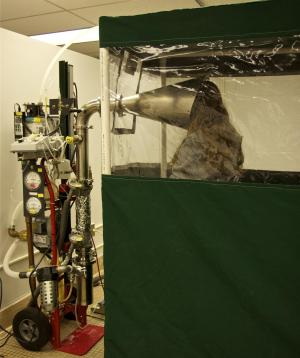
The Gesundheit II machine collects the breath exhaled from flu sufferers.   (Credit: Donald Milton)
The Gesundheit II machine collects the breath exhaled from flu sufferers.
(Credit: Donald Milton)

CDC- Making Health Care Safer

Drug-resistant CRE (carbapenem-resistant Enterobacteriaceae) has been in the news often this week, following the CDC’s warning about the bacteria. Now, clearly this is a concern, but before we freak out let’s look at some of the figures behind this story. First, the statistic regarding CRE’s case fatality- almost every news source we’ve seen has indicated it’s 50% – aren’t what they seem. What the sources don’t say is that it’s 50% if, and only if, the infection becomes septicemic. Septicemia as a result of almost any bacterial infection is very dangerous. Second, CRE is really only of concern amongst the immunocompromised and those in long-term treatment for prior conditions. If you’re a healthy adult in possession of an active immune system, you’re chances of becoming infected are minuscule. Third, yes the rate of infection from CRE has increased in the last decade, but again let’s keep the actual number in mind – four percent.

Antibiotic-resistant pathogenic bacteria are a real concern, and steps should absolutely be taken to mitigate their growth and prevent their spread. However, disproportionately scaring the public is not the way to do that, and can be detrimental in the long run – the “boy who cried wolf” anyone? But our soapbox aside, check out the CDC’s review if you haven’t already.

CDC – “Untreatable and hard-to-treat infections from CRE germs are on the rise among patients in medical facilities. CRE germs have become resistant to all or nearly all the antibiotics we have today. Types of CRE include KPC and NDM. By following CDC guidelines, we can halt CRE infections before they become widespread in hospitals and other medical facilities and potentially spread to otherwise healthy people outside of medical facilities.”

Novel coronavirus infection – update

Yesterday the WHO reported another fatality from the novel coronavirus, bringing the total number of cases up to 14 and the fatalities to eight. This case is of special concern because it remains unclear how the man became infected.

WHO – “The Ministry of Health in Saudi Arabia has informed WHO of a new confirmed case of infection with the novel coronavirus (NCoV). The patient, a 69-year-old male, was hospitalized on 10 February 2013 and died on 19 February 2013. Preliminary investigation indicated that the patient had no contact with previously reported cases of NCoV infection and did not have recent history of travel.”

Study provides new clues to how flu virus spreads

According to this study, the tiny aerosol droplets of flu we exhale when sick contain nine-times the amount of virus than the larger cough/sneeze generated droplets. So the next time an infected colleague/friend/loved one walks toward you, make them stop four feet away and calmly explain that their breath is infectious. (GMU Biodefense is not responsible for the implications of you calling the breath of a colleague/friend/loved one infectious).

Medical Express – “People may more likely be exposed to the flu through airborne virus than previously thought, according to new research from the University of Maryland School of Public Health. The study also found that when flu patients wear a surgical mask, the release of virus in even the smallest airborne droplets can be significantly reduced. ‘People are generally surprised to learn that scientists don’t know for sure how flu spreads,’ says Donald Milton, M.D., Dr.P.H., who directs the Maryland Institute for Applied Environmental Health and led the study of influenza virus aerosols published in the journal PLoS Pathogens…”

Hong Kong Prison Homes Spur Virus Risk Decade After SARS

Population density remains an important factor in understanding pandemic potential, and Hong Kong is close to the top of the list in terms of people-per-square-mile. As housing prices continue to increase, many of the city’s 7.2 million residents are settling for smaller and more cramped living quarters.

Bloomberg – “Hong Kong electrician Chan, who shares a mold-stained toilet with his neighbors, says he’d move out if it weren’t for the rising cost of accommodation. Last year, residents were forced to bathe using a shared kitchen sink for six months when a plastic shower hose in the communal bathroom broke, Chan said…Chan Sung-ming says the coughs and sneezes echoing through the plywood walls of his windowless, 60- square foot Hong Kong apartment get him thinking: is there a bug going around and could it be deadly?”

Virus overcomes ‘enormous hurdle’ to survive

Wonderful. As if viruses aren’t good enough at surviving against all possible odds in the first place. For things that technically aren’t alive (I know, I know, I read the piece about viral immune systems as well – they’re still undead in my book), they are disturbingly resilient.

Futurity – “Researchers have uncovered a virus inside a host with a non-standard nuclear genetic code—one that differs from the standard genetic code that almost all living things use to produce proteins.’The finding is significant because it shows that these viruses can overcome what appears to be an insurmountable change in the host genome,’ says researcher Derek J. Taylor, professor of biological sciences at the University at Buffalo.’So the fact that we haven’t previously seen any viruses in these species with a modified genetic code may not be because the viruses can’t adapt to that shift. It may be that we haven’t looked hard enough.'”

Bioterrorism and the Pandemic Potential

A good overview of the basics of pandemics (I tend to disagree with their bioterror assessment, but to each their own!)

STRATFOR – “”The potential for a disease to spread is measured by its effective reproduction number, or R-value, a numerical score that indicates whether a disease will propagate or die out. When the disease first occurs and no preventive measures are in place, the reproductive potential of the disease is referred to as R0, the basic reproduction rate. The numerical value is the number of cases a single case can cause on average during its infectious period. An R0 above 1 means the disease will likely spread (many influenza viruses have an R0 between 2 and 3, while measles had an R0 value of between 12 and 18), while an R-value of less than 1 indicates a disease will likely die out. Factors contributing to the spread of the disease include the length of time people are contagious, how mobile they are when they are contagious, how the disease spreads (through the air or bodily fluids) and how susceptible the population is. The initial R0, which assumes no inherent immunity, can be decreased through control measures that bring the value either near or below 1, stopping the further spread of the disease.”

Image of the Week

[Technically a video, but there you have it] – Insect wings lacerating bacteria. Yes, lacerating.

From Nature – “The veined wing of the clanger cicada kills bacteria without any chemical action — one of the first natural surfaces found to do so. An international team of biophysicists now has now come up with a detailed model (and some cool CGI) of how this defence works on the nanoscale.”

Biodefense Policy Seminar

George Mason Biodefense is very excited to launch the Biodefense Policy Seminar, the D.C. area’s premiere speaker series focused on biodefense and biosecurity issues. The monthly seminars – free and open to the public – feature leading figures within the academic, security, industry, and policy fields of biodefense. Our speakers for the next few months include Dr. Charles Bailey, Executive Director at the National Biodefense Center, Dr. Alexander Garza, Assistant Secretary for health affairs and Chief Medical Officer of the Department of Homeland Security, and Dr. Daniel Gerstein, Deputy Undersecretary for Science & Technology at the Department of Homeland Security.

Bailey-picMarch Seminar Speaker: Dr. Charles Bailey
When: Wednesday, March 20th, 2013, 7:20 – 8:30PM
Where: Johnson Center Meeting Room B, George Mason University, 4400 University Drive, Fairfax, VA 22030

Charles Bailey is the Executive Director of the National Center for Biodefense and Infectious Diseases. He manages a Biosafety Level -3 containment laboratory and conducts translational research aimed at developing diagnostics, antiviral drugs, therapeutics and vaccines against biological threat pathogens or newly emerging infectious diseases. Prior to joining George Mason, Dr. Bailey served in the US Army for 25 years where he conducted research on arthropod borne viral diseases in the US, Southeast Asia and Africa. Dr. Bailey also served as a senior analyst with the Defense Intelligence Agency and as an analyst for the Battelle Memorial Institute.
RSVP